Posted tagged ‘Islamic integration’

France: After the Third Jihadist Attack

July 23, 2016

France: After the Third Jihadist Attack, Gatestone InstituteGuy Millière, July 23, 2016

(Please see also, Another Day, Another Jihad Massacre. — DM)

♦ Successive French governments have built a trap; the French people, who are in it, are thinking only of how to escape. The situation is more serious than many imagine. Whole areas of France are under the control of gangs and radical imams.

♦ Prime Minister Manuel Valls repeated what he already said 18 months ago: “France is at war.” He named an enemy, “radical Islamism,” but he was quick to add that “radical Islamism” has “nothing to do with Islam.” He then repeated that the French will have to get used to living with “violence and attacks.”

♦ The French are increasingly tired of attempts to exonerate Islam. They know perfectly well that all Muslims are not guilty. But they also know that all those who committed attacks in France in recent years were Muslims. The French have no desire to get used to “violence and attacks.” They do not want to be on the losing side and they feel that we are losing.

Nice, July 14, 2016: Bastille Day. The evening festivities were ending. As the crowd watching fireworks was beginning to disperse, the driver of a 19-ton truck, zig-zagging, mowed down everyone in his way. Ten minutes and 84 dead persons later, the driver was shot and killed. Dozens were wounded; many will be crippled for life. Dazed survivors wandered the streets of the city for hours.

French television news anchors quickly said that what happened was almost certainly an “accident,” or when the French authorities started to speak of terrorism, that the driver could just be a madman. When the police disclosed the killer’s name and identity, and that he had been depressed in the past, they suggested that he had acted in a moment of “high anxiety.” They found witnesses who testified that he was “not a devout Muslim” — maybe not a Muslim at all.

President François Hollande spoke a few hours later and affirmed his determination to “protect the populace.”

Prime Minister Manuel Valls repeated what he already said 18 months ago: “France is at war.” He named an enemy, “radical Islamism,” but he was quick to add that “radical Islamism” has “nothing to do with Islam.” He then repeated what he emphasized so many times: the French will have to get used to living with “violence and attacks.”

The public reaction showed that Valls convinced hardly anyone. The French are increasingly tired of attempts to exonerate Islam. They know perfectly well that all Muslims are not guilty. They also know that, nevertheless, all those who committed attacks in France in recent years were Muslims. They do not feel protected by François Hollande. They see that France is attacked with increasing intensity and that radical Islam has declared war, but they do not see France declaring war back. They have no desire to get used to “violence and attacks.” They do not want to be on the losing side and they feel that we are losing.

Because the National Front Party uses more robust language, much of the public votes for its candidates. The National Front’s leader, Marine Le Pen, will undoubtedly win the first round of voting in the presidential election next year. She will probably not be elected in the end, but if nothing changes quickly and clearly, she will have a very good chance next time.

Moderate politicians read the public opinion polls, harden their rhetoric, and recommend harsher policies. Some of them might demand harsher measures, such as the expulsion of detained terrorists who have dual citizenship and the detention of people that praise attacks. Some have even called for martial law.

Calm will gradually return, but it is clear that the situation in France is approaching the boiling point.

The recent attacks served as an accelerant. Four years ago, when Mohamed Merah murdered soldiers and Jews in Toulouse, the population did not react. Most French did not feel directly concerned; soldiers were just soldiers, and Jews were just Jews. When, in January 2015, Charlie Hebdo cartoonists were slaughtered, an emotional reaction engulfed the country, only to quickly vanish. A huge demonstration was organized in the name of “freedom of speech” and the “values of the republic.” Hundreds of thousands claimed, “Je Suis Charlie” (“I am Charlie”). When, two days later, Jews were murdered again in a kosher grocery store, hardly anyone said “I am a Jew.”

Those who tried to speak of jihad were promptly reduced to silence. Not even a year later, in November, the Bataclan Theater bloodbath did not lead to protests, but was a deeper shock. The mainstream media and the government could no longer hide that it was an act of jihad. The number killed was too overwhelming; one could not just turn the page. The mainstream media and the government did their best to downplay anger and frustration and to emphasize sadness.Solemn ceremonies with flowers and candles were everywhere. A “state of emergency” was declared and soldiers were sent into the streets.

But then the feeling of danger faded. The Euro 2016 soccer championship was organized in France, and the French team’s good performance created a false sense of unity.

The Nice attack was a wake-up call again. It brutally reminded everyone that the danger is still there, deadlier than ever, and that the measures taken by the authorities were useless gesticulations. Memories of the previous killings came back.

Attempts to hide that Mohamed Lahouaiej-Bouhlel, the terrorist in Nice, was a jihadist fooled no one. Instead, it just created more anger, more frustration, and more desire for effective action.

Days before the Nice attack, the media reported that the parliamentary inquiry commission report on the Bataclan Theater attack revealed that the victims had been ruthlessly tortured and mutilated, and that the government had tried to cover up these facts. Now the entire public discovered the extent of the horror, adding fuel to the fire.

France seems now on the verge of a revolutionary moment; it would not take much to cause an explosion. But the situation is more serious than many imagine.

Whole areas of France are under the control of gangs and radical imams. The government delicately calls them “sensitive urban zones.” Elsewhere they are bluntly called “no go zones.” There are more than 570 of them.

Hundreds of thousands of young Muslims live there. Many are thugs, drug traffickers, robbers. Many are imbued with a deeply rooted hatred for France and the West. Recruiters for jihadists organizations tell them — directly or through social networks — that if they kill in the name of Allah, they will attain the status of martyrs. Hundreds are ready. They are unpinned grenades that may explode anywhere, anytime.

Although possessing, carrying and selling weapons are strictly regulated in France, weapons of war circulate widely. And, of course, the Nice attack has shown once again that a firearm is not necessary to commit mass murder.

Twenty-thousand people are listed in the government’s “S-files,” an alert system meant to identify individuals linked to radical Islam. Most are unmonitored. Toulouse murderer Mohamed Merah, the murderers of the Charlie Hebdo cartoonists, and many of the terrorists who attacked the Bataclan Theater were in the S-files. Mohamed Lahouaiej-Bouhlel, the terrorist who acted in Nice, was not.

France’s intelligence chief said recently that more attacks are to come and that many potential killers wander freely, undetected.

Doing what the French government is doing today will not improve anything. On the contrary. France is at the mercy of another attack that will set the powder keg ablaze.

Doing more will lead to worse before matters get better. Regaining control of many areas would entail mobilizing the army, and leftists and anarchists would certainly add disorder to disorder.

Imprisoning whoever could be imprisoned in the name of public safety would imply more than martial law; it would mean the suspension of democratic freedoms, and even so, be an impossible task. The jails in France are already full. The police are outnumbered and showing signs of exhaustion. The French army is at the limit of its capacity for action: it already patrols the streets of France, and is deployed in Africa and the Middle East.

1578 (1)The French army is at the limit of its capacity for action: it already patrols the streets of France and is deployed in Africa and the Middle East. Pictured above: French soldiers guard a Jewish school in Strasbourg, February 2015. (Image source: Claude Truong-Ngoc/Wikimedia Commons)

Successive governments have built a trap; the French, who are in it, are thinking only of how to escape.

President François Hollande and Prime Minister Manuel Valls bear all the guilt. For years, many in France supported any movement that denounced “Islamophobic racism.” They passed laws defining criticism of Islam as a “hate crime.” They relied more and more on the Muslim vote to win elections. The most important left-wing think tank in France, Terra Nova, which is considered close to the Socialist Party, published several reports explaining that the only way for the left to win elections is to attract the votes of Muslim immigrants and to add more Muslims to the France’s population.

The moderate right is also guilty. President Charles de Gaulle established the “Arab policy of France,” a system of alliances with some of the worst dictatorships in the Arab-Muslim world, in the belief that France would regain its lost power thanks to this system. President Jacques Chirac followed in the footsteps of de Gaulle. President Nicolas Sarkozy helped overthrow the Gaddafi regime in Libya and bears a heavy responsibility for the mess that followed.

The trap revealed its lethal effects a decade ago. In 2005, riots across France showed that Muslim unrest could lead France to the brink of destruction. The blaze was extinguished thanks to the appeals for calm from Muslim organizations. Since then, France has been at the mercy of more riots.

The choice was made to practice appeasement. It did not stop the rot gaining ground.

François Hollande made hasty decisions that placed France at the center of the target. Seeing that strategic interests of France were threatened, he launched military operations against Islamist groups in sub-Saharan Africa. Realizing that French Muslims were going to train and wage jihad in Syria, he decided to engage the French army in actions against the Islamic State.

He did not anticipate that Islamist groups and the Islamic State would hit back and attack France. He did not perceive the extent to which France was vulnerable — hollowed out from within.

The results put in full light a frightening landscape. Islamists view the landscape and do not dislike what they see.

On their websites, they often quote a line from Osama bin Laden: “When people see a strong horse and a weak horse, they will naturally want to side with the strong horse.”

They appear to think that France is a weak horse and that radical Islam can bring France to its knees in a pile of dust and rubble. Time, they seem to think, is on their side as well — and demography. Muslims now make up about 10% of the French population; 25% of teenagers in France are Muslims.

The number of French Muslims who want Islamic sharia law applied in France increases year after year, as does the number of French Muslims who approve of violent jihad. More and more French people despise Islam, but are filled with fear. Even the politicians who seem ready to fight do not take on Islam.

Islamists seem to think that no French politician will to overcome what looks more and more like a perfect Arab storm. They seem to feel that the West is already defeated and does not have what it takes to carry the day. Are they wrong?
Another Day, Another Jihad Massacre

July 23, 2016

Another Day, Another Jihad Massacre, Front Page MagazineRobert Spencer, July 22, 2016

munich massacre

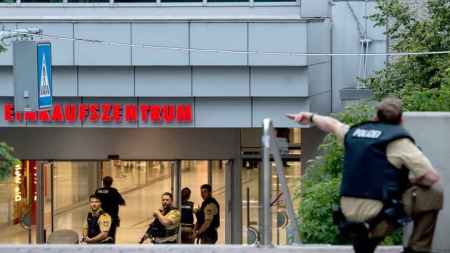
The events unfolded in predictable fashion: a young Iranian Muslim opened fire at a shopping mall in Munich while screaming “Allahu akbar,” and initial mainstream media reports were that the gunman was a “right-wing extremist,” lashing out on the fifth anniversary of the Norwegian madman Anders Breivik’s massacre, while screaming out his hatred for foreigners. 

As it happened, it was someone else screaming his hatred for foreigners at the jihad murderer, not the other way around, but once again, the lie had gotten halfway around the world before the truth had a chance to put on its shoes.

And the same old comedy, the familiar one that plays out every week now in modern, multicultural Europe and North America, duly played out again, to an increasingly bored and indifferent crowd. Munich police chief Hubertus Andrae informed the world that the young jihadi had no known links to jihad terror groups, and added: “The motive or explanation for this crime is completely unclear.”

Unclear? Really? What is it about “Allahu akbar” and the gunning-down of innocent civilians that you don’t understand, Herr Andrae? And the answer, of course, is: everything. Hubertus Andrae, and Angela Merkel, and Theresa May, and Manuel Valls, and John Kerry, and Barack Obama, and every last one of the other Western leaders are resolutely and determinedly ignorant about what it means when a young Iranian Muslim screaming “Allahu akbar” opens fire in a shopping mall.

What, after all, could it possibly mean? This young man must have come from a troubled home, no? He must have grown up in poverty and been denied access to all sorts of economic opportunities that were open to native Germans of his age, right? He must have been “radicalized on the Internet” by shadowy forces that somehow possess the magic power to turn benign, peaceful Muslims who are a benefit and asset to every Western nation into misunderstanders of their own religion who suddenly and inexplicably discard the peaceful Islamic teachings they have imbibed from youth in their Western mosques, in favor of a twisted and hijacked version of their religion that leads them to think that treason and mass murder are not only commendable, but blessed by the Almighty – isn’t that the case?

The Munich shooter’s motive is completely unclear, because we don’t yet know if he was teased in school or on the job, or if he had trouble getting a job in the first place, or if he had psychological problems, or if he was a brooding loner who always left his moderate Muslim friends disquieted – the only thing we do know is that he couldn’t possibly have been motivated by a religion that exhorts its adherents to “slay them wherever you find them” (cf. Qur’an 2:191, 4:89, 9:5).

No, none of that is true, and one wonders if even the European and North American political and media elites believe in their own nonsense anymore. The Munich mass murderer was motivated by Islam, pure and simple – by its teachings of warfare against unbelievers and the necessity to subjugate them. His war cry of “Allahu akbar,” revered by jihadis for its power to “strike terror in the hearts of the enemies of Allah” (Qur’an 8:60), demonstrates that.

The Islamic State’s repeated calls for the mass murder of civilians in Western countries also demonstrate that. Hubertus Andrae, and Angela Merkel, and Theresa May, and Manuel Valls, and John Kerry, and Barack Obama, and every last one of the other Western leaders persist in pretending that incidents such as the mass murder in Munich on Friday, and the mass murders in Nice, Orlando, Brussels, Paris, San Bernardino, Chattanooga, and elsewhere recently are all separate, discrete criminal acts, unrelated to one another and all requiring extensive investigation to determine the motives of the perpetrators.

That proposition is not only false; it’s a Goebbelsian Big Lie. These are not criminal acts. These are not the acts of the psychopathic or the disenfranchised. These are acts of war, battles in a larger war that has been going on for 1,400 years and is picking up speed in our own age, courtesy of our willfully myopic and feckless leaders. Unless and until Western authorities begin to treat each of these incidents as part of a larger war, they will continue to misdiagnose the problem and apply the wrong solutions.

And that is the one thing they are certain to do. And so there will be many, many more Munichs. Watch this space next week for my comments on the next jihad massacre and the next flurry of predictable denials and obfuscations. My comments next week will be much like my comments here, because the actions of the elites after the next jihad attack will be much like what they have been today. What is it going to take to get leaders who are in touch with reality? Seriously, is that really too much to ask?

The President’s Beloved Islamic Grievance Monger

July 22, 2016

The President’s Beloved Islamic Grievance Monger, Front Page MagazineDiscover The Networks, July 22, 2016

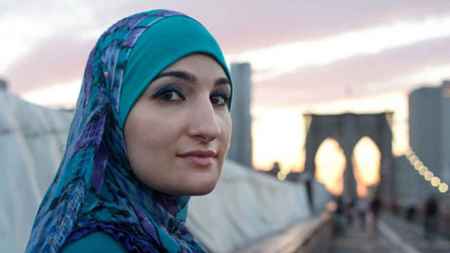
linda-sarsour

Linda Sarsour – a well-trained grievance monger whose very livelihood is founded upon her ability to convince large numbers of people that they are victims of an irredeemably bigoted and oppressive American society. In short, she has a great deal in common with President Obama. No wonder she’s always welcome at the White House.

***********************

Linda Sarsour is a Palestinian-American community activist who since 2005 has served as executive director of the Arab American Association of New York (AAANY), which views the U.S. as a nation awash in racism and Islamophobia. She is also a board member of the Muslim Democratic Club of New York, whose mission is to help elect as many Democrats as possible to political office.

An outspoken critic of Israel, Sarsour supports the Boycott, Divestment & Sanctions (BDS) movement, a Hamas-inspired initiative that uses various forms of public protest, economic pressure, and court rulings to advance the Hamas agenda of permanently destroying Israel as a Jewish nation-state.

Vis-a-vis the ongoing Arab-Israeli conflict, Sarsour favors a one-state solution where an Arab majority and a Jewish minority would live together within the borders of a single country. She made clear her opposition to Israel’s existence as a Jewish state when she tweeted in October 2012 that “nothing is creepier than Zionism.”

Falsely maintaining that “Palestine existed before the State of Israel,” Sarsour seeks to help “bring back a Palestinian State for the Palestinian people.” To advance this agenda, Sarsour has tweeted images of fraudulent maps claiming to depict the “Palestinian loss of land” that supposedly occurred between 1946 and 2000.

As the head of AAANY, Sarsour has played a central role in pressuring the New York Police Department to terminate its secret surveillance of Muslim mosques and organizations suspected of promoting extremism or terrorism, and to curtail its use of “stop-and-frisk” anti-crime measures. In 2011 she worked in conjuction with Communities United for Police Reform, a coalition to advance the passage of the Community Safety Act (which expanded the definition of bias-based profiling and created an independent inspector general to review police policy in New York City). Sarsour also succeeded in pressuring City Hall to close New York’s public schools for the observance of the Islamic holidays Eid al-Fitr and Eid al-Adha.

In May 2012 Sarsour tweeted that the so-called “underwear bomber,” an al-Qaeda operative who on Christmas Day 2009 had tried to blow up a Detroit-bound passenger jet with explosives hidden inside his underwear, was actually a CIA agent participating in America’s “war on Islam.”

In a February 2015 appearance on Rachel Maddow‘s television program, Sarsour lamented that a nationwide epidemic of “Islamophobia” was responsible for “anti-sharia bills trying to ban us [Muslims] from practicing our faith,” “mosques being vandalized,” and Muslim “kids being executed” in the United States.

In August 2015 Sarsour spoke out in support of the incarcerated Palestinian Islamic Jihad member Muhammad Allan, a known recruiter of suicide bombers.

In October 2015, Sarsour posted on Twitter a photo of a young Palestinian boy clutching two stones as he stared down a group of Israeli soldiers, and labeled it “The definition of courage.” When numerous Twitter users, including Queens Councilman Rory Lancman, subsequently criticized Sarsour’s controversial post, she tweeted in response: “The Zionist trolls are out to play. Bring it. You will never silence me.”

On Melissa Harris-Perry‘s television program on December 12, 2015, Sarsour lamented the allegedly long list of “attacks on [Muslim] individuals and on mosques” that had been perpetrated by Americans who — by misperceiving all Muslims as potential terrorists — were themselves “engaging in terrorism against the innocent [Muslim] community that has nothing to do with [terrorism].” Sarsour also scoffed at the notion of Muslim integration into American society: “We can’t change who we are. This is how we look [with Muslim attire]. We can’t integrate and assimilate…. We’re gonna look like this when we walk out into the streets of our cities when we’re traveling in this country.”

According to CounterJihad.com, Sarsour “has attended numerous rallies sponsored by Al-Awdapromoted and solicited donations for their events, and … spoken at their rallies. Sarsour has also solicited donations for the Hamas-affiliated Palestine Children’s Relief Fund.

Over the years, Sarsour’s activism has extended also to racial matters within the United States. For instance, when the black, hoodie-donning Florida teenager Trayvon Martin was killed by a “white Hispanic” man in an infamous 2012 altercation, Sarsour penned an article titled “My Hijab Is My Hoodie” and declared herself “among the millions mourning the killing of Trayvon.” “Blacks in America continue to face racism on a daily basis,” she wrote, “from the workplace to interactions with law enforcement. And yet racism against African-Americans is publicly acknowledged as unacceptable…. Unfortunately, that’s not the case for Muslims in America. Bigotry against Muslims is quite acceptable.”

In the aftermath of an August 2014 incident where a white policeman in Ferguson, Missouri had shot and killed a violent black criminal named Michael Brown, Sarsour co-founded Muslims for Ferguson, to draw a parallel between the respective forms of oppression allegedly suffered by black and Muslim Americans.

According to a New York Times report, Sarsour is “deeply involved in the Black Lives Matter movement.”

In October 2011, Sarsour, who holds free-market economics in low regard, expressed, on behalf of “Muslim New Yorkers,” “solidarity and support” for the anti-capitalist Occupy Wall Street movement. In 2011 as well, the Obama Administration honored Sarsour as a “champion of change.” Thus far, she has visited the Obama White House on seven different occasions.

This, then, is Linda Sarsour – a well-trained grievance monger whose very livelihood is founded upon her ability to convince large numbers of people that they are victims of an irredeemably bigoted and oppressive American society. In short, she has a great deal in common with President Obama. No wonder she’s always welcome at the White House.


Germany: The Terrifying Power of Muslim Interpreters

July 22, 2016

Germany: The Terrifying Power of Muslim Interpreters, Gatestone InstituteStefan Frank, July 22, 2016

♦ “Everything I told you then is true. … But the interpreter there told me that a faithful woman must not use words like sex and rape. Words like that would dishonor my husband and our family. She also said that I was a blasphemer, because I went to the police. No woman should report her own husband. The husband must be honored.” — “Sali,” in an apparent suicide note to her lawyer, Alexander Stevens.

♦ “I am aware of statements in which interpreters have pressed and supposedly said to Christians on the way to the police or beforehand: If you complain, you can forget your application for asylum. I often noticed that statements were retracted because Christians were threatened.” — Paulus Kurt, Central Committee of Eastern Christians in Germany (ZOCD).

♦ “The interpreters are neither employed by the Federal Agency, nor are they in any way sworn in to the legal system of the Federal Republic of Germany. Ultimately, examination of the asylum application is left solely to these interpreters… In our view, a decision-making process such as this, which is practiced on a massive scale, is not in keeping with due process.” — Open letter from employees of Germany’s Federal Agency for Migration and Refugees.


Alexander Stevens is a lawyer at a Munich law firm specializing in sexual offenses. In his recent book, Sex in Court, he describes some of his strangest and most shocking cases. One such case raises the question: What do you do when interpreters working for the police and courts lie and manipulate? As no one monitors translators, it is likely that in many instances, the dishonesty of interpreters goes undetected — Stevens’ book chronicles the devastating effects one dishonest interpreter had on a case.

The parents of a Syrian girl, “Sali,” had promised their daughter to a man named Hassan, who, at the time, was still living in Syria. The arrangement was seen as mutually beneficial: Sali’s parents would receive money and Hassan would be allowed to enter Germany. Sali would never willingly have married a man 34 years her senior, but the family’s honor required it. However, Sali did not receive any benefits from this arrangement. Hassan’s interest in Sali was apparently confined to her body. He forced Sali to perform all kinds of sexual practices several times a day, and brutally abused the girl in the process.

Sali was unable to hide the fact that she took no pleasure in these rapes and she became ill, so Hassan reproached her and “openly threatened to demand a large compensation payment from her family, for the cost of the wedding reception and lost pleasures of love.” Sali sought help from a women’s shelter, where an employee took her to a lawyer: Stevens. At the shelter, Sali described her misfortune, but was careful repeatedly to come to her husband’s defense. She was more worried about her family’s honor, should Hassan decided to divorce her, than about herself.

“After two hours of painstaking depictions of sexual abuse, corporal punishment, and mental humiliation,” Stevens writes, “I had no doubt that everything had actually happened as she said.”

The next day, Stevens tried to get an appointment for questioning with the police and an interpreter. But he was surprised when he got to the shelter. Sali was like a different person. Suddenly, she wanted nothing to do with him or the women’s shelter employee.

Sometime later, an employee of the women’s shelter sent him a letter that Sali had left behind for him. It read:

Dear Mr. Stevens,

I am very sorry to have caused you so much inconvenience. Please believe me when I say I did not want to. Everything I told you then is true. I also wanted to make a statement to the police regarding what I told you. But the interpreter there told me that a faithful woman must not use words like sex and rape. Words like that would dishonor my husband and our family. She also said that I was a blasphemer, because I went to the police. No woman should report her own husband. The husband must be honored. I did not know what to do, Mr. Stevens. Because I think she is right. I should never have disgraced my husband and my family. Therefore, I would ask you not to tell anyone. I do not want to create any more trouble for my family and my husband’s family. Please forgive me. You were very good to me.

Sali

By this time, Sali was already dead. According to the employee from the women’s shelter, the police suspected suicide.

Interpreters Decide on Asylum

Non-Muslim refugees, in particular, complain of the pressure exerted on them by Muslim interpreters. As Gatestone Institute has already reported, Christians and other non-Muslims are beaten, threatened, and harassed in German refugee homes. One of the reasons that German authorities do not intervene has to do with the Muslim interpreters, says Paulus Kurt, head of the work groups for the Central Committee of Eastern Christians in Germany (ZOCD):

“Interpreters belonging to the Islamic religion often stick with the defendants. I am aware of statements in which interpreters have pressured and supposedly said to Christians, on the way to the police or beforehand: ‘If you complain, you can forget your application for asylum.’ I often noticed that statements were retracted because Christians were threatened.”

The effects of these abuses of power are devastating: interpreters in Germany have great influence on who is granted asylum. In a November 2015 open letter to Frank-Jürgen Weise, the head of their agency, employees of the Federal Agency for Migration and Refugees (BAMF), pointed out the potential problems of this system within their agency:

“A Syrian is someone who identifies himself as a Syrian in writing (checks the proper box on the questionnaire), and the interpreter (usually not sworn in, or from Syria) confirms it. The interpreters are neither employed by the Federal Agency, nor are they in any way sworn in to the legal system of the Federal Republic of Germany. Ultimately, examination of the asylum application is left solely to these interpreters — insofar as it involves the verification of nationality and, therefore, the country of persecution. In our view, a decision-making process such as this, which is practiced on a massive scale, is not in keeping with due process.”

Television Reports

In May 2016, the German public television station Bayerischer Rundfunk broadcast a report on Muslim interpreters who lie. The report, entitled “Treason in the Refugee Home: When Translators Mistranslate,” exposed several instances of the same issue:

Moderator: With the growing number of refugees, the demand for interpreters has also rapidly increased. Ultimately, translators play a central role in the asylum procedures, for example. Since there is an overall shortage of qualified and sworn interpreters, the Federal Agency for Migration and Refugees has recently been advertising for translators with this flyer [title: “We are Looking for Interpreters”]. Inside, it says: “You take on great responsibility in your work, and we expect you to be neutral and reliable.” But there is often a gaping hole between expectations and reality.

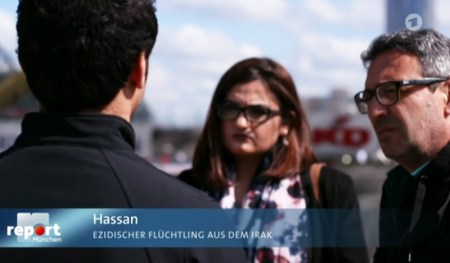
Reporter: Bullied and threatened by other refugees. A nightmare, what this Iraqi refugee is telling us. He asks one of the translators for help, but he [the translator] takes the side of the attacker.

Hassan: “They wanted to beat us; they insulted us. And the interpreter thought about everything while translating, and alleged that none of it had happened.”

Reporter: Hassan, as we call the young man, belongs to a small religious community of Yezidis. Radical Sunni Muslims despise Yezidis, even in Germany. Instead of conveying the message, the translator cheated him.

Hassan: “The interpreter translated that we merely had a dispute on the street.”

Reporter: That was a conscious mistranslation. Not an isolated incident, says Gian Aldonani. She fled to Germany as a young Yezidi girl. As a student in Cologne, she got involved in working with refugees. In the process, it became apparent to her again and again:

Gian Aldonani: “It is purposefully mistranslated. At first, we thought these were isolated cases out of Cologne and the surrounding area. But in documenting all of the cases, we recognized that translators all over Germany were very purposefully mistranslating. […] The social workers are reliant on the translators. The translators take advantage of this situation. These people are doing the same thing here that they do with minorities in their countries of origin.”

1706Hasan (left), a Yezidi refugee in Germany who was threatened by Muslims, speaks to a reporter from German public television about how a government-employed translator deliberately mistranslated his complaint and took the side of his attackers. (Image source: Bayerischer Rundfunk video screenshot)

More “Isolated Cases”

Similar cases — always labelled “isolated cases” — are found in German and Austrian newspapers again and again.

In Austria, in June 2016, the Salzburg regional court sentenced a jihadist to two years in prison. He had fought for the Al-Nusra Front in Syria. Incidentally, it became known that: “The 29-year-old came to Salzburg as a refugee in October 2015 and helped at the Freilassing border crossing as an interpreter.”

Regarding “interpreter and cultural mediator Besnik S.,” the Hamburger Morgenpost newspaper wrote:

“Besnik S. also interpreted for the young refugees — until one of his colleagues became suspicious of him. Besnik S. was consistently translating incorrectly. Instead of facilitating communication for the young men, he allegedly tried to bring them closer to his ideology. “

Particularly grotesque is the March 2016 case of a Chechen interpreter, who worked as a court translator in Graz, Austria:

“The interpreter had already interpreted several people’s statements. As another witness was supposed be questioned at that point, the woman [interpreter] explained that the witness in question was her husband. But she claimed that he could not come that day, and sent his apologies, because he was in Russia at the moment and had already informed the court of that. The man was accused in another proceeding of a similar type. … Observers had already noticed that, during recesses in the proceedings, the interpreter had talked with about 20 Chechens among the courtroom spectators.”

Alexander Stevens, the Munich lawyer, often gets the impression that there is a “fraternal solidarity” between interpreters and criminal defendants, he tells Gatestone. From his own experience and from conversations with judges, prosecutors, and fellow attorneys, he knows that Muslim interpreters in particular often violate their duty of neutrality:

“My personal feeling is that not only the defendants [but also the interpreters] of Islamic society are cunning, sly, and sometimes crafty. In this room, organized crime, gang violence, theft, and fraud are frequently dealt with. They are often very smart, and there is an incredible cohesion within the respective cultural and religious community, particularly among Albanians, Turks, Syrians and Moroccans. The common denominator is possibly Islamist conditioning. They are very close, almost like family, but without being related by blood.”

Negligence on the Part of the Authorities

This problem is well known among judges and defense lawyers, says Stevens: “It starts as soon as the judge asks: ‘What is your name?'” Instead of simply translating those three words, the interpreter often talks “forever.”

“Conversely, the interpreter then only says one sentence where you expect a lengthy testimony. Often, you are not really sure what the interpreter and the defendant are discussing.”

Stevens cites negligence on the part of German authorities as exacerbating this problem. While there are strict admission requirements for court interpreters in languages such as English or Spanish, this is not the case in Germany for many other languages. He points out that the German state of Bavaria’s Court Interpreters Act clearly states: “The recognition of foreign degrees falls under the responsibility of the Bavarian Ministry of Education” — meaning that even applicants with flimsy degrees can be hired if the Ministry feels that there is a shortage of interpreters in a particular language.

Stevens criticizes the naïveté of the Germans:

“The swearing-in process goes like this: The judge reads aloud to him from the Judiciary Act, proclaiming that he [the interpreter] will translate faithfully and diligently. That’s it! With that, he is sworn in, and according to German law, he is absolutely credible.”

Stevens points out that although this problem has existed for a long time, it has become even more harmful since the start of “the refugee problem, which involves a whole potpourri of crime, including sexual assault.”

Human Rights Activists: “No Trust for Muslim Translators”

Karl Hafen, the former longtime Executive Chairman of the German section of the International Society for Human Rights (ISHR), is concerned about the situation faced by non-Muslims in German refugee housing, where interpreters seem complicit. He told Gatestone that

“Most of what is reported to us about translators involves threats that they will not translate if the affected victims blame Muslims for their misfortune, or that interpreters try to point out that what happened is mandated by the Koran.”

Many refugees are already intimidated by the mere presence of a Muslim interpreter.

“Some victims complain that they can no longer speak openly when an interpreter reveals she is Muslim by wearing a headscarf. Others tell us that they are afraid to go to the doctor with a Muslim interpreter, because based on what was done to them, they cannot trust her.”

Hafen does not want to label those interpreters as Islamists — they are normal, conservative Muslims:

“Again, there is a strong return to Islamic rules, a kind of de-integration. It also depends on how the interpreters themselves live, whether alone or in a family that practices Islam. The Muslim interpreters refuse to believe that what happened actually took place as described. And among other things, this practice is encouraged, because part of our media — but especially politicians and bishops — downplay the brutalities and simply refuse to recognize that the people who have become victims, or who have had to witness crimes with their own eyes, no longer trust Muslims.”

We cannot allow translators to continue misrepresenting and manipulating an already vulnerable refugee population. The German authorities need to reform the system for employing translators for courts, police and government agencies, so that all refugees receive the due process they deserve.

The UK’s Broken Labour Party

July 20, 2016

The UK’s Broken Labour Party, Gatestone Institute, Douglas Murray, July 20, 2016

(As the morass continues, how will the UK deal with its exit from the European Union? — DM)

♦ With the prospect of another Labour leadership election now gathering pace, tens of thousands more activists have joined the Labour party. It seems unlikely that they will be “moderates.”

♦ The election of an Islamist-sympathising, terrorist-sympathising, Israel-bashing hardliner at the head of the second largest party in the House of Commons undoubtedly changes the parameters of political discourse in the UK.

♦ However solidly Theresa May’s new Conservative government performs, it will always seem the point — so long as Corbyn is in office — that you are either for Britain or against it, for the Conservative party or against the country.

♦ A fractured and in-fighting opposition also means that there is no meaningful, organised voice challenging the government in Parliament. That principle — the principle on which our system is based — needs to work well even (perhaps especially) if you support the government of the day, because the government of the day needs to be kept alert to error and on top of sensible criticisms if it is going to pass the best legislation it can for the country.


Herbert Stein’s law, “Things that cannot go on, won’t,” is one of the best laws of politics. It works for fiscal issues and it usually works for politics as a whole. The British Labour party, however, is currently working to try to disprove this rule. To do them justice they are having a good stab at doing so, which suggests that the maxim should perhaps be re-written: “Things that cannot go on sometimes do.”

Consider the latest developments in the party’s recent unhappy history. Earlier this month the party’s specially commissioned inquiry into anti-Semitism within the party found the party not guilty of this bigotry for the second time in six months. Yet at the launch of these findings, a grassroots member of Jeremy Corbyn’s wing of the party verbally bullied a female Jewish Labour MP until she left in tears, and Jeremy Corbyn himself appeared to compare the Jewish state with ISIS. Although this episode captured some headlines, it was a mere footnote alongside the other catastrophes in the Labour party.

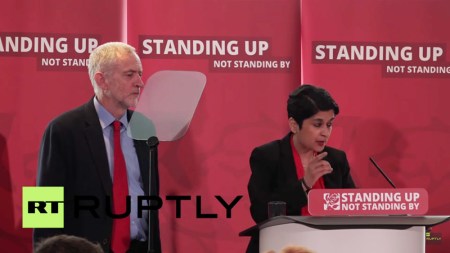
1678UK Labour party leader Jeremy Corbyn (left) appears at a press conference with left-wing campaigner Shami Chakrabarti (right), to present the findings of an inquiry into the Labour party’s anti-Semitism, June 30, 2016.

At the same time as this was going on, Labour MPs attempted a coup to get Jeremy Corbyn out of his position as head of the party. A carefully orchestrated set of resignations from his Shadow Cabinet came in every couple of hours until almost all of the Shadow Cabinet had resigned. Corbyn also lost the support of the deputy leader of the party, Tom Watson. A no-confidence motion saw 172 Labour MPs vote to say that they had no confidence in their party leader, while only 40 Labour MPs supported the party leader. This move meant that Jeremy Corbyn began to have significant trouble finding enough supporters in the Parliamentary Labour party to fill up his shadow cabinet. The joke in Westminster was that those few who did stay loyal to him would find themselves having to hold multiple briefs, so that somebody might easily find themselves being appointed Shadow Home Secretary and Shadow Foreign Secretary.

The trouble appears that all of Corbyn’s politics has a distinctly unfunny, nasty air. It emerged this week (from another declaration of no confidence in the leader) that earlier this year the Labour MP Thangam Debbonaire was both appointed and then sacked as the party’s Culture spokesperson, all within 24 hours and all without even being told, while she was undergoing treatment for cancer. Such stories of non-communication and cruelty towards individual MPs have fanned the rather understandable feeling that Jeremy Corbyn may not be suited to the highest peaks of politics.

Unfortunately for the Labour party, it is not only MPs who have a say. Under new rules unwisely drawn up under Corbyn’s predecessor, Ed Miliband, the Labour party can now be joined by anyone with £3 to spare. All such people then have the right to vote on who the Labour leader should be. Although the idea of having a say in any political party’s future for little more than the price of a cup of coffee may sound appealing, it also leaves a party open to the possibility of a hostile takeover from the most fanatical people in the country — whether they have the Labour party’s interests at heart or not. This is exactly what happened last year when Mr. Corbyn entered the Labour leadership race. Tens of thousands of people from the grassroots, who were soon to form themselves into the ‘Momentum’ movement, saw their chance to bring hard-left politics into the UK mainstream. Jeremy Corbyn won almost 60% of the vote in that election. In recent weeks, despite the formal no-confidence vote of the Labour MPs, this grassroots support for Corbyn only appears to have galvanised further. With the prospect of another Labour leadership election now gathering pace, tens of thousands more activists have joined the Labour party. It seems unlikely that they will be “moderates.”

Nevertheless, two “moderate” candidates for leader stepped forward, inevitably splitting the anti-Corbyn vote, until they seemed to realise this and one dropped out. Nevertheless, polls of party members suggest it looks overwhelmingly likely that in the coming weeks Corbyn will entrench his position by winning a landslide in a second ballot of the party’s members within a year.

Why does this matter? For two reasons. First, because the election of Corbyn has poisoned British politics. The election of an Islamist-sympathising, terrorist-sympathising, Israel-bashing hardliner at the head of the second largest party in the House of Commons undoubtedly changes the parameters of political discourse in the UK. However solidly Theresa May’s new Conservative government performs, it will always seem the point — so long as Corbyn is in office — that there is no party of the decent left available for the large proportion of voters who would like such a thing. This leaves countless patriotic, left-wing voters without a meaningful voice in Parliament.

A fractured and in-fighting opposition also means that there is no meaningful, organised voice challenging the government in Parliament. That principle — the principle on which our system is based — needs to work well even (perhaps especially) if you support the government of the day, because the government of the day needs to be kept alert to error and on top of sensible criticisms if it is going to pass the best legislation it can for the country.

The other reason why this principle matters is because it suggests that vested interests matter more than truth. Herbert Stein’s dictum lacked one crucial ingredient: people’s desire to look after themselves. There are Labour party MPs already looking for a way out, including looking to found a new party or parties. But they fear that way lies electoral oblivion. So they stay, in a party wracked with in-fighting and led by the most corrosive person their party has ever chosen in what had been a noble history. And all the while that person in charge of their party is busily mainstreaming the worst bigotries of our time. When pushed to decide between their morals and their careers, the dictum holds in the Labour party that things that cannot go on, find some way to do so.

Sharia in Denmark – Part II

July 20, 2016

Sharia in Denmark – Part II, Gatestone InstituteJudith Bergman, July 20, 2016

♦ “All the bullying happens in Arabic… The hierarchy of the Arab boys creates a very violent environment. … I have filmed the particularly vile bullying of a Somali boy. You can see the tears in his eyes. They are destroying him; it is very violent. ” — From a dissertation by Jalal El Derbas, Ph.D.

♦ Danish teachers are the least respected and are spoken of in denigrating and humiliating terms.

♦ “I am not saying that all the Arab children did ugly things, but we witnessed on a regular basis… using derogatory Arabic language towards Somalis and girls.” — Lise Egholm, former head of the Rådmandsgade school in Copenhagen.

♦ Whether Danish parliamentarians wish to acknowledge this problem or not, they are up against far wider issues than that of religious incitement in mosques by radical preachers.

After the television documentary, “Sharia in Denmark“, embarrassed Danish authorities by revealing how widespread the preaching of sharia is in mosques in Denmark, the Danish government, in May, concluded a political agreement about “initiatives directed against religious preachers who seek to undermine Danish laws and values and who support parallel legal systems”.

“We are doing everything we can without compromising the constitution and international agreements,” Bertel Haarder, the Minister for Culture and Church, said about the political agreement.

The agreement centers on a number of initiatives, which are supposed to compensate for the detrimental effects of all the years in which sharia was allowed to spread in Denmark while most authorities paid only scant attention to what was happening. Part of the new effort, therefore, will be the mapping of all existing mosques in Denmark.

It will now be obligatory, according to the agreement, for all priests, imams and others who are not part of the Church of Denmark, and who wish to be able to perform weddings — as well as for foreign preachers who apply for residence permits — to learn about Danish family law, freedom and democracy. At the end of the course, all will have to sign a statement that they will accept Danish law, including freedom of speech and religion, gender equality, freedom of sexual orientation, non-discrimination and women’s rights.

The government will examine how to create more transparency in foreign donations to faith communities in Denmark, including controlling and, if necessary, preventing such donations. As part of this work, on May 4 the government presented a law making it a crime to receive funding from a terror organization to establish or run an institution in Denmark, including schools and mosques.

Another element in the political agreement is the establishment of national lists with the names of traveling foreign (non-EU) religious preachers who will be excluded from entry into Denmark on the grounds that they are a threat to public order in Denmark. These named preachers will not be granted an entry visa and will be denied entry at the border. In addition, a non-public list, containing the names of such preachers who are EU citizens, will be established. The purpose of this list is to create awareness of the existence of these preachers, as, due to EU rules on free movement, they cannot be denied entry.

The final component of the agreement is the criminalization of certain speech. According to the agreement, it will become illegal explicitly to support terrorism, murder, rape, violence, incest, pedophilia, the use of force and polygamy as part of religious training, and whether or not the speech was made in private or in public. Both the activities of religious preachers and the activities of others, who speak as part of religious training, are included in the criminalization.

The political agreement is expected to become law when the Danish parliament reconvenes after the summer vacation.

Danish parliamentarians are aware that it will be difficult to measure whether these initiatives have any effect — how do you measure whether religious preachers are indeed not explicitly supporting terrorism, murder, rape and pedophilia, unless you place them under constant surveillance? But lawmakers are nevertheless confident that the new initiatives will have an effect. “This will have an impact on what people put up with from their religious leaders.” Culture and Church Minister Bertel Haarder says.

Another parliamentarian, Naser Khader, who appears more realistic, says,

“We are well aware that more initiatives are needed. But this stops hate preachers from coming to Denmark, preachers who only want to come here in order to sow discord between population groups and who encourage violence, incest and pedophilia.”


1703After the documentary “Sharia in Denmark” embarrassed Danish authorities, the government reached a new a political agreement, which Danish Member of Parliament Naser Khader supported, saying, “this stops hate preachers from coming to Denmark, preachers who only want to come here in order to sow discord between population groups and who encourage violence, incest and pedophilia.”

While Danish politicians have taken yet another step on an uncertain road that may or may not succeed in stemming the rise of sharia in Denmark, other problems abound, which compound the impression that this initiative will not amount to much more than a symbolic band-aid.

A recent Ph.D. dissertation by Jalal El Derbas, as reported by the Danish newspaper, Berlingske Tidende, shows that in several Danish schools with Arab students, the latter, mainly boys, use Arabic as a means to sexually and racially harass and bully other students as well as their teachers, especially girls, Somalis and ethnically Danish teachers, who do not understand the insults hurled at them in Arabic.

According to the article, El Derbas was shocked when he went through the video footage of 12- and 13-year-olds in two different Danish public schools with a majority of pupils with minority background. The purpose of his Ph.D. was to examine the possible causes of why bilingual boys — who speak both Danish and Arabic — continue to lag behind other Danish students. He wanted to see what those bilingual boys actually do in the classroom. The footage was taken over five months and it displayed a world characterized by hierarchy, sexual and religious harassment, bullying and racism, in which the first language of the students, Arabic, played a central and leading role. According to El Derbas:

“I could see that the students used Arabic as a secret code and they only used it negatively to disturb the schoolwork. If they did not want to do the work, they simply shifted to Arabic. The schools were very flexible and allowed the students to use Arabic both inside and outside the classroom. But all that this freedom accomplished was that the students shifted from Danish to Arabic if they were getting into a fight and if there was a teacher nearby whom they did not want to understand what they were saying.”

The video footage also revealed a hierarchy consisting of sexual harassment and racism, because the Arab boys consider themselves higher-ranking than girls and Somali students.

“All the bullying happens in Arabic. All the ugly and mean words are uttered in Arabic. The hierarchy of the Arab boys creates a very violent environment. I have video footage of severe sexual harassment against Arab girls and I have filmed the particularly vile bullying of a Somali boy. You can see the tears in his eyes. They are destroying him; it is very violent.”

According to El Derbas, Sunni and Shia Muslim strife is also imported into the grounds of these Danish schools. With the majority of the boys being Sunni Muslims, they look down on the Shia Muslim students and a teacher who is a Shia Muslim is called “Satan” or “witch”, whereas a Sunni Muslim teacher is addressed courteously as “uncle” or “aunt”. Danish teachers are the least respected, and are spoken of in denigrating and humiliating terms.

El Derbas, stressed that the pupils come from ghetto areas, saying:

“Many of the teachers have given up on engaging the parents in any way, but if this is to change it has to happen through the parents. Maybe it would help if the parents took turns of being present in the classroom to see how their children behave. Most of them [the parents] are not working or studying anyway. I think that could lead to an improvement. Because no parents will accept that their children behave in this manner”.

The results of the dissertation come as no surprise to Lise Egholm, now retired, but who for 18 years, until 2013, was the head of Copenhagen’s Rådmandsgade school, which has many Arab students.

“I am not saying that all the Arab children did ugly things,” says Egholm, “but we witnessed on a regular basis exactly the phenomenon of using derogatory Arabic language towards Somalis and girls… Back then the biggest group of children in the school was Arabic speaking, and the words which in Arabic mean ‘whore’ and ‘f— your mother’ they all knew.”

In a written statement to Berlingske Tidende, Minister of Education, Ellen Trane Nørby, wrote,

“It is never all right to bully, whether this happens in Danish, Arabic, or in a third language. That is why I have initiated a large initiative, which has as its purpose to prevent and combat bullying. The teachers have to signal very strongly that there has to be room for all children and that you have to treat other pupils with respect. If some pupils do not understand this and speak in ‘code language’ or use a language that excludes and bullies other pupils, the schools must intervene. Danish is the language used for teaching in Denmark, and pupils should not be excluded or bullied because of parallel languages in school”.

However, what the minister of education fails to mention is that the problems with this kind of behavior are not likely to remain inside the school, but will inevitably spill into the streets. Then what? No amount of lists of radical religious preachers and laws is going to change that fact.

Whether Danish parliamentarians wish to acknowledge this problem or not, they are up against far wider issues than that of religious incitement in mosques by radical preachers. Notably, El Derbas’s findings have not caused any debate remotely resembling that, which was caused by the “Sharia in Denmark” documentary. They should.

Why is Virginia a Haven for Would-be Jihadists?

July 18, 2016

Why is Virginia a Haven for Would-be Jihadists? Investigative Project on Terrorism, Abigail R. Esman, July 18, 2016

1709

What is it about Virginia?

Already this year, six men from the “Cavalier State” have been arrested on terror-related charges – two of them in July alone. Another man has joined the Islamic State in Syria. Two of those charged were stopped from making a similar trip.

These most recent arrests, one on July 3, the other on July 8, were based on charges of planning to provide material support to ISIS. Mohamed Bailor Jalloh, a former member of the National Guard who was arrested July 3, allegedly discussed planning an attack against U.S. military in the homeland inspired by fellow Virginian Nidal Hasan’s 2009 shooting at Fort Hood. According to court documents, Jalloh quit the Guard and later attempted to obtain funds and weapons for a domestic attack after being inspired by Anwar al Awlaki’s videos on YouTube.

Five days later, Virginia law enforcement arrested Haris Qamar, following an extended FBI sting operation. According to an FBI affidavit, Qamar made statements to an informant such as, “By-bye, DC, stupid a— kufar [infidels], kill ’em all,” and posted to his Twitter account a prayer for “strength to the mujahedeen to slaughter every single US military officer.”

Earlier arrests this year – two in June and one in January – involved men planning to join the jihad in Syria, rather than waging domestic battles. In one case, Mohamad Jamal Khweis, who had already joined the Islamic State, surrendered to Kurdish forces in Iraq in an apparent effort to escape the hell of life in the new caliphate. Now awaiting sentencing in the United States, he faces up to 20 years in prison and a $250,000 fine.

Why does this keep happening in Virginia? What makes its young Muslims more susceptible to the radical messages from Awlaki and ISIS social media?

Virginia has proved to be an active center for radical Islamist activity over the years and has bred more than its share of terrorists since 9/11. It was at the Hamas-linked Dar al Hijrah mosque in Falls Church, for instance, that terrorist icon Anwar al-Awlaki, the Yemeni-American whom counter-terrorism officials say inspired hundreds of other Muslims to take arms in violent jihad, once served as imam. Among his disciples: Fort Hood shooter Nidal Hasan; Ahmed Omar Abu Ali, convicted in 2005 of collaborating with al-Qaida and plotting to assassinate President George W. Bush; and several of the 9/11 hijackers.

And it was in Virginia that, in the still fragile and bewildered aftermath of 9/11, “Beltway snipers” John Allen Mohammed and Lee Boyd Malvo shot and killed more than 12 people, including an FBI analyst, in October 2002.

While internet and social media remain powerful weapons in the terrorist recruitment arsenal, personal connections remain the most potent tool. Honor student Ali Shukri Amin, charged with soliciting donations for ISIS, is also suspected of helping another Virginian, Reza Niknejad, travel to Syria.

While none of the recent cases implicate specific mosques, the influence of Dar al Hijrah and some of its imams appears to have been widespread.

To some extent, this could be thanks to its current imam, Shaker Elsayed. In 2002, hetold a conference hosted by the Muslim American Society and Islamic Circle for North America that deciding whether suicide bombers were martyrs was “an in house business” for Muslims.

In a dramatic speech available online since 2013, Elsayed rants against the West and calls for “the power of faith” and “the power of armament.” In the post-9/11 world, he observes, even world leaders have “bowed down” to the Western pressure. “We the Muslim masses should never bow down except to Allah!” he says, “and this will give us our dignity back.”

But other Virginia religious leaders have gone further. Ali al-Timimi, a cancer researcher, was the “spiritual leader” of a group of 11 men convicted of terrorism in 2003 and 2004, Al-Timimi is now serving a life sentence for recruiting Muslims to travel to Pakistan and train for holy war.

Shortly after 9/11, according to the New York Times’ coverage of his trial, al-Timimi invited a group of young Muslim men to dinner, where he told them they had a religious duty to fight with the Taliban against American forces. Prosecutors described that statement as “treason,” calling al-Timimi a “purveyor of hate and war.”

More than 10 years after his conviction, al-Timimi remains a figurehead among radical groups in Virginia and the Capitol district. The Peace and Justice Foundation, which defended al-Timimi and his followers, refers in online documents to a government conspiracy, while numerous web sites offer recordings of al-Timimi’s lectures. In addition, a Facebook page devoted to his appeal with more than 2,000 “likes,” has built a community in his support. (Followers even raised $12,000 for his mother’s medical care.)

The Saudi-sponsored Islamic Saudi Academy, which shut down abruptly last month,faced criticism for its textbooks that promote Wahhabism, an extreme version of Islam practiced by the Saudis. The textbooks contained passages “that extolled jihad and martyrdom, called for victory over one’s enemies, and said the killing of adulterers and apostates was ‘justified,'” the Washington Post reported. Those passages were found in school textbooks two years after U.S. officials, shocked by the texts in use in 2006, ordered they be revised. Pre-revision books included statements like, “It is said: the apes are the people of the Sabbath, the Jews. The swine are the unbelievers of Jesus’ table, the Christians.”

The school’s 1999 valedictorian, Ahmed Omar Abu Ali, was convicted in 2005 for supporting al-Qaida and planning to assassinate the president. (Notably, he also taught Islamic Studies at Dar Al Hijrah.)

As Seamus Hughes of the Program on Extremism at George Washington University’s Center or Cyber & Homeland Security told Fox News, “Northern Virginia has a disproportionate number of people that are drawn to this.”

Ramy Zamzam is a poster child for this observation. He was among five young men who disappeared from their northern Virginia neighborhood in late 2009, only to be arrested by Pakistani authorities who caught them trying to cross into Afghanistan to join jihadists there.

“We are not terrorists,” he said outside a hearing. “We are jihadists, and jihad is not terrorism.”

Muslim groups expressed their horror over the incident and promised a program aimed at de-radicalization.

It’s not clear that any such plan ever emerged. If it did, it’s clearly not working.

How Serious Is Sweden’s Fight against Islamic Terrorism and Extremism?

July 17, 2016

How Serious Is Sweden’s Fight against Islamic Terrorism and Extremism? Gatestone InstituteNima Gholam Ali Pour, July 17, 2016

♦ Jihadists who come to Sweden know that there are many liberal politicians looking for invisible “right-wing extremists”, and feminists who think what is really important is using “gender perspective” in the fight against extremism and terrorism.

♦ Perhaps the Swedish government has a secret plan to convince jihadists to become feminists? As usual, Swedish politicians have chosen to politicize the fight against extremism and terrorism, and address the issue as if it were about parental leave instead of Sweden’s security.

♦ “As soon as these people… say ‘Asylum’, the gates of heaven open.” — Inspector Leif Fransson, Swedish border police.

♦ Experts in Sweden’s security apparatus have clearly expressed that violent Islamism is a clear and present danger to the security of Sweden, but the politicized debate about Islamic terrorism and extremism does not seem capable of absorbing this warning.

Like all other European countries, Sweden is trying to fight against jihadists and terrorists, but it often seems as if the key players in Sweden have no understanding of what the threats are or how to deal with them.

In 2014, for instance, the Swedish government decided to set up a post called the “National Coordinator Against Violent Extremism.” But instead of appointing an expert as the national coordinator, the government appointed the former party leader of the Social Democrats, Mona Sahlin. Apart from Sahlin having a high school degree, she is mostly known for a corruption scandal. As a party leader of the Social Democrats, she lost the 2010 election, and as a minister in several Socialist governments, she has not managed to distinguish herself in any significant way. Göran Persson, who was Prime Minister of Sweden from 1996 to 2006, described Mona Sahlin this way:

“People believe she has a greater political capacity than she has. What comes across her lips is not so remarkable. Her strength is not thinking, but to convey messages.”

With such a background, it was no surprise that she was ineffective as National Coordinator Against Violent Extremism. But the fact that she used her high government agency to help her friends came as a shock to the Swedish public. Sahlin had hired her former bodyguard for a position at her agency and signed a false certificate that he earned $14,000 dollars monthly, so that he could receive financing to purchase a $1.2-million-dollar home.

Sahlin also gave the man’s relative an internship, even though the application had been declined. Before Sahlin resigned in May 2016, she said, “I help many of my friends.”

Despite the fact that Sweden has a Ministry of Justice responsible for issues that would seem far more related to violent extremism, Sweden has, for some reason, placed the agency to combat violent extremism under the Ministry of Culture.

While the U.S sees the fight against Islamic extremism as a security issue, Sweden evidently believes that combating violent extremism should be placed in a ministry responsible for issues such as media, democracy, human rights and national minorities. With such a delegation of responsibility, the government seems either to be trying to hamper efforts to combat violent extremism, or it does not understand the nature of the threat.

The lack of understanding of violent extremism, combined with politicizing the problem, has been evident, for instance, in Malmö, Sweden’s third largest city. After the November 2015 terrorist attacks in Paris, the city councilor responsible for safety and security in Malmö, Andreas Schönström, said that European right-wing extremism is a bigger threat than violent Islamism. And on June 5, 2016, Jonas Hult, Malmö’s security manager, wrote: “The right-wing forces in Malmö are the biggest threat.”

With such statements, one would think that perhaps Malmö is a city filled with neo-Nazi gangs. Not so. Malmö is a city that usually ends up in the news because of Islamic anti-Semitism or extremist activists working to destroy Israel. There have been no reports of any neo-Nazi movements in Malmö in the recent past.

When supporters of Pegida (an anti-Islamic migration political movement in Europe) came to Malmö, they had to be protected by the police due to thousands of extremist activists and Muslims protesting the presence of Pegida. Of Malmö’s residents, 43.2% were either born abroad or their parents were.

Further, the Social Democrat politicians have held local municipal power in Malmö since 1919. To say that Malmö is somehow a place where right-wing extremism is a threat is simply not based on facts. Instead of seriously combating violent extremism, many in Sweden have chosen — possibly imagining it easier — to politicize the problem.

Sweden also has not yet reached the point where the authorities distance themselves from violent extremism. The association Kontrakultur (a cultural and social association in Malmö)receives about $37,000 annually from the municipal cultural committee of Malmö. On its website, Kontrakultur writes that it cooperates with an organization called Förbundet Allt åt alla (“The Association Everything for Everyone”). This organization, in turn, according to the National Coordinator Against Violent Extremism, consists of violent extremist activists.

The idea that municipal funds should in no way go to organizations that cooperate with violent extremists is something not yet rooted in Sweden. In June 2016, for example, a 46-year-old Islamic State jihadi arrived in Malmö. He was taken into custody by the police for speedy deportation. But when he applied for asylum, the Swedish Migration Agency took over the matter to examine his asylum application, and ordered the deportation stopped. Inspector Leif Fransson of the border police described the situation:

“As soon as these people throw out their trump card and say ‘Asylum’, the gates of heaven open.”

In August 2015, the Swedish government submitted a document to Parliament outlining the Swedish strategy against terrorism. Among other things, the document stated:

“It is important that there is a gender perspective in efforts to prevent violent extremism and terrorism.”

Under the headline “Gender Perspective” in a committee directive from the Swedish government on the mission of the National Coordinator Against Violent Extremism you can observe:

“The violent extremist environments consist mainly of men, and in the extremist movements there are individuals who oppose gender equality and women’s rights. It is therefore important that there is a gender perspective in efforts to prevent violent extremism, and that norms that interact and contribute to the emergence of violent environments are effectively counteracted.”

Perhaps the Swedish government has a secret plan to convince jihadists to become feminists? But as usual, Swedish politicians have chosen to politicize the fight against extremism and terrorism, and address the issue as if it were about parental leave instead of Sweden’s security.

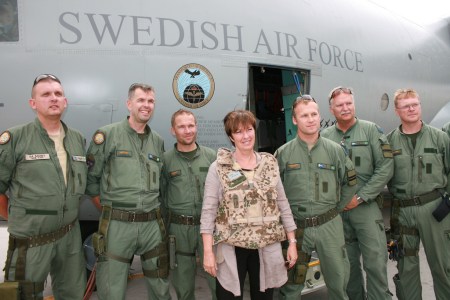
914Mona Sahlin, who was Sweden’s “National Coordinator Against Violent Extremism,” until she resigned in May amid corruption allegations, is shown posing with Swedish soldiers in Afghanistan in July 2010. The Swedish government’s directives to her agency stressed that it is “important that there is a gender perspective in efforts to prevent violent extremism.” (Image source: Social Democratic Party)

There is no evidence that “gender perspective” is relevant or useful in the fight against extremism and terrorism, yet we see that the Swedish government, in several documents related to terrorism and extremism, evidently believes that “gender perspective” is what should be used in the fight against those threats. This gives just some idea of how strenuously Sweden wants to disregard the problem, or even ask experts for help.

One might argue that this is because Sweden has never been exposed to Islamic terrorism or that extremism is not something that concerns the nation. Sweden has, however, had experience in facing Islamic terrorism. On December 11, 2010, a jihadist blew himself up in central Stockholm. Taimour Abdulwahab did not manage to hurt anyone, but Sweden got a taste of Islamic terrorism and has every reason to want to defend itself against more of it.

Islamic extremism is, unfortunately, becoming more widespread, especially in Sweden’s major cities. Gothenburg, for example, has been having major problems with it. In November 2015, there were reports that 40% of the 300 Swedish jihadists in Syria and Iraq came from Gothenburg. The only country that has, per capita, more of its citizens as jihadists in Iraq and Syria than Sweden, is Belgium.

As facts accumulate, there is much information indicating that Sweden has huge problems dealing with Islamic extremism and jihadism. The Swedish Security Service (Säpo), in the beginning of 2015, published a press release using the words “historic challenge” to describe the threat from violent Islamism. Already in May 2015 the head of Säpo, Anders Thornberg, expressed doubts that the agency could handle the situation if the recruitment of jihadists in Sweden continued or increased.

Experts in Sweden’s security apparatus have clearly expressed that violent Islamism is a clear and present danger to the security of Sweden, but the politicized debate about Islamic terrorism and extremism does not seem capable of absorbing this warning.

This general politicization, combined with the failure to prioritize the fight against terrorism and extremism, is the reason Sweden is, and continues to be, a magnet for extremists and terrorists. Jihadists who come to Sweden know that there are many liberal politicians looking for invisible “right-wing extremists”, and that there are feminists who think what is really important is using “gender perspective” in the fight against extremism and terrorism.

Jihadists also know that there are large gaps in the Swedish bureaucracy and legislation that can be exploited. These are the policies that have been created by Swedish politicians. One can therefore only question if Sweden seriously wants to fight the threats of terrorism and extremism.

France: The Coming Civil War

July 16, 2016

France: The Coming Civil War, Gatestone InstituteYves Mamou, July 16, 2016

♦ For French President François Hollande, the enemy is an abstraction: “terrorism” or “fanatics”.

♦ Instead, the French president reaffirms his determination to military actionsabroad: “We are going to reinforce our actions in Syria and Iraq,” the president said after the Nice attack.So confronted with this failure of our elite who were elected to guide the country across nationals and internationals dangers, how astonishing is it if paramilitary groups are organizing themselves to retaliate?

♦ “Western elites, with a suicidal obstinacy, oppose naming the enemy. Confronted with attacks in Brussels or Paris, they prefer to imagine a philosophical fight between democracy and terrorism, between an open society and fanaticism, between civilization and barbarism”. — Mathieu Bock-Côté, sociologist, in Le Figaro

♦ In France, the global elites made a choice. They decided that the “bad” voters in France were unreasonable people too stupid to see the beauties of a society open to people who often who do not want to assimilate, who want you to assimilate to them, and who threaten to kill you if you do not.

♦ Similarly, the British took the first tool that was given to them to express their disappointment at living in a society they did not like anymore. They did not vote to say: “Kill all these Muslims who are transforming my country or stealing my job or soaking up my taxes”. They were just protesting a society that a global elite had begun to transform without their consent.

♦ The global elite made a choice: they took the side against their own old and poor because those people did not want to vote for them any longer. They also made a choice not to fight Islamism because Muslims vote collectively for this global elite.


1697French police shoot dead a Tunisian-born Islamist terrorist who murdered 84 people in Nice, France, July 14, 2016. (Image source: Sky News video screenshot)

“We are on the verge of a civil war.” That quote did not come from a fanatic or a lunatic. No, it came from head of France’s homeland security, the DGSI (Direction générale de la sécurité intérieure), Patrick Calvar. He has, in fact, spoken of the risk of a civil war many times. On July 12th, he warned a commission of members of parliament, in charge of a survey about the terrorist attacks of 2015, about it.

In May 2016, he delivered almost the same message to another commission of members of parliament, this tme in charge of national defense. “Europe,” he said, “is in danger. Extremism is on the rise everywhere, and we are now turning our attention to some far-right movements who are preparing a confrontation”.

What kind of confrontation? “Intercommunity confrontations,” he said — polite for “a war against Muslims.” “One or two more terrorist attacks,” he added, “and we may well see a civil war.”

In February 2016, in front of a senate commission in charge of intelligence information, he said again: ” We are looking now at far-right extremists who are just waiting for more terrorist attacks to engage in violent confrontation”.

No one knows if the truck terrorist, who plowed into the July 14th Bastille Day crowd in Nice and killed more than 80 people, will be the trigger for a French civil war, but it might help to look at what creates the risk of one in France and other countries, such as Germany or Sweden.

The main reason is the failure of the state.

1. France is at War but the Enemy is Never Named.

France is the main target of repeated Islamist attacks; the more important Islamist terrorist bloodbaths took place at the magazine Charlie Hebdo and the Hypercacher supermarket of Vincennes (2015); the Bataclan, its nearby restaurants and the Stade de France stadium, (2015); the failed attack on theThalys train; the beheading of Hervé Cornara (2015); the murders at a school in Toulouse (2012); the three week torture and murder of young Ilan Halimi (2006); the assassination of two policemen in Magnanville in June (2016), and now the truck-ramming in Nice, on the day commemorating the French Revolution of 1789.

Most of those attacks were committed by French Muslims: citizens on their way back from Syria (the Kouachi brothers at Charlie Hebdo), or by French Islamists (Larossi Abballa who killed a police family in Magnanville last June) who later claimed their allegiance to Islamic State (ISIS). The truck killer in Nice was also French, of Tunisian descent, living quietly in Nice until he decided to murder more than 80 people and wound dozens more.

At each of these tragic episodes, the head of state, President François Hollande, refused to name the enemy, refused to name Islamism — and especially refused to name French Islamists — as the enemy of French citizens.

For Hollande, the enemy is an abstraction: “terrorism” or “fanatics”. Even when the president does dare to name “Islamism” the enemy, he refuses to say he will close all Salafist mosques, prohibit the Muslim Brotherhood and Salafist organizations in France, or ban veils for women. No, instead, the French president reaffirms his determination for military actions … abroad: “We are going to reinforce our actions in Syria and Iraq,” the president said after the Nice attack.

For France’s head of state, the deployment of soldiers on the national ground is for defensive actions only: a dissuasive policy, not an offensive rearmament of the Republic against an internal enemy.

So confronted with this failure by our elite — who were elected to guide the country across national and international dangers — how astonishing is it if paramilitary groups are organizing themselves to retaliate?

As Mathieu Bock-Côté, a sociologist in France and Canada says in Le Figaro: “Western elites, with a suicidal obstinacy, oppose naming the enemy. Confronted by attacks in Brussels or Paris, they prefer to imagine a philosophical fight between democracy and terrorism, between an open society and fanaticism, between civilization and barbarism”.

2. The Civil War Has Already Begun and Nobody Wants to Name It.

The civil war began sixteen years ago, with the second Intifada. When Palestinians invented suicide attacks in Tel Aviv and Jerusalem, French Muslims began to terrorize Jews living peacefully in France. For sixteen years, Jews — in France —were slaughtered, attacked, tortured and stabbed by French Muslim citizens supposedly to avenge Palestinian people in the West Bank.

When a group of French citizens who are Muslims declares war on another group of French citizens who are Jews, what do you call it?

For the French establishment, it is not a civil war, just a regrettable misunderstanding between two “ethnic” communities.

Until now, no one has wanted to establish a connection between these attacks and the murderous attack in Nice against people who were not necessarily Jews — and name it as it should be named: a civil war.

For the very politically correct French establishment, the danger of a civil war will begin only if anyone retaliates against French Muslims; if everyone just submits to their demands, everything is all right. Until now, no one thinks that the terrorist attacks against Jews by French Muslims; against Charlie Hebdo’s journalists by French Muslims; against an entrepreneur who was beheaded a year ago by a French Muslim; against young Ilan Halimi by a group of Muslims; against schoolchildren in Toulouse by a French Muslim; against the passengers on the Thalys train by a French Muslim, against the innocent people in Nice by a French Muslim were the symptoms of a civil war. These bloodbaths remain, still today something like a climatic catastrophe, a kind of tragic mistake.

3- The French Establishment Considers the Enemy the Poor the Old and the Disappointed

In France, who most complains about Muslim immigration? Who most suffers from local Islamism? Who most likes to drink a glass of wine or eat a ham-and-butter sandwich? The poor and the old who live close to Muslim communities, because they do not have the money to move someplace else.

Today, as a result, millions of the poor and the old in France are ready to elect Marine Le Pen, president of the rightist Front National, as the next president of the Republic for the simple reason that the only party that wants to fight illegal immigration is the Front National.

Because, however, these French old and poor want to vote for the Front National, they have become the enemy of the French establishment, right and left. What is the Front National saying to these people? “We are going to restore France as a nation of French people”. And the poor and the old believe it – because they have no choice.

Similarly, the poor and the old in Britain had no choice but to vote for Brexit. They took the first tool given them to express their disappointment at living in a society they did not like anymore. They did not vote to say, “Kill these Muslims who are transforming my country, stealing my job and soaking up my taxes”. They were just protesting a society that a global elite had begun to transform without their consent.

In France, the global elites made a choice. They decided that the “bad” voters in France were unreasonable people too stupid to see the beauties of a society open to people who often who do not want to assimilate, who want you to assimilate to them, and who threaten to kill you if you do not.

The global elites made another choice: they took the side against their own old and poor because those people did not want to vote for them any longer. The global elites also chose not to fight Islamism, because Muslims vote globally for the global elite. Muslims in Europe also offer a big “carrot” to the global elite: they vote collectively.

In France, 93% of Muslims voted for the current president, François Hollande, in 2012. In Sweden, the Social Democrats reported that 75% of Swedish Muslims voted for them in the general election of 2006; and studies show that the “red-green” bloc gets 80-90% of the Muslim vote.

4. Is the Civil War Inevitable? Yes!

If the establishment does not want to see that civil war was already declared by extremist Muslims first — if they do not want to see that the enemy is not the Front National in France, the AfD in Germany, or the Sweden Democrats — but Islamism in France, in Belgium, in Great Britain, in Sweden — then a civil war will happen.

France, like Germany and Sweden, has a military and police strong enough to fight against an internal Islamist enemy. But first, they have to name it and take measures against it. If they do not — if they leave their native citizens in despair, with no other means than to arm themselves and retaliate – yes, civil war is inevitable.


Newt Gingrich: Deport every Muslim who believes in Sharia

July 15, 2016

Newt Gingrich: Deport every Muslim who believes in Sharia, Fox News via YouTube, July 14, 2016