Archive for the ‘Islam – submission’ category

How Islamists Are Slowly Desensitizing Europe And America

April 9, 2016

How Islamists Are Slowly Desensitizing Europe And America, The Federalist, April 8, 2016

(Compare and contrast the views of this Saudi TV hostess on Islam and terror with what seems to be the emerging European view. — DM)

[T]he overarching message is that Europe has slowly let this happen year by year, decade by decade, like a frog in a pot slowly brought to a boil. Post-colonial guilt and shame have stopped Europeans from openly loving and defending their own culture. The state of things in Europe today is the natural conclusion of that neglect. We in America are on the same road.

***********************

Charlie Hebdo, the French satirical magazine whose offices Islamists attacked in 2015, published an editorial recently titled “How Did We Get Here?” that has raised some eyebrows. In it, they ask how Europe has become where European-born Muslims have attacked the hearts of Paris and Brussels. Their answer has proved distasteful to many on the Left.

The editorial has been harshly criticized and the magazine accused of racism and xenophobia. The Washington Post says Charlie Hebdo blames extremism on individual Muslims—the veiled woman on the street, the man selling kebabs. There’s some truth to this accusation, and to the extent that there is, Charlie Hebdo is wrong. But this, and other critiques, miss the larger point of the article, which is to demonstrate the gradual and quotidian way in which criticizing Islam has been silenced.

It’s worth quoting Charlie Hebdo at length:

In reality, the attacks are merely the visible part of a very large iceberg indeed. They are the last phase of a process of cowing and silencing long in motion and on the widest possible scale. Our noses are endlessly rubbed in the rubble of Brussels airport and in the flickering candles amongst the bouquets of flowers on the pavements. All the while, no one notices what’s going on in Saint-German-en-Laye. Last week, Sciences-Po* welcomed Tariq Ramadan. He’s a teacher, so it’s not inappropriate. He came to speak of his specialist subject, Islam, which is also his religion…

No matter, Tariq Ramadan has done nothing wrong. He will never do anything wrong. He lectures about Islam, he writes about Islam, he broadcasts about Islam. He puts himself forward as a man of dialogue, someone open to a debate. A debate about secularism which, according to him, needs to adapt itself to the new place taken by religion in Western democracy. A secularism and a democracy which must also accept those traditions imported by minority communities. Nothing bad in that. Tariq Ramadan is never going to grab a Kalashnikov with which to shoot journalists at an editorial meeting. Nor will he ever cook up a bomb to be used in an airport concourse. Others will be doing all that kind of stuff. It will not be his role. His task, under cover of debate, is to dissuade people from criticising his religion in any way. The political science students who listened to him last week will, once they have become journalists or local officials, not even dare to write nor say anything negative about Islam. The little dent in their secularism made that day will bear fruit in a fear of criticising lest they appear Islamophobic. That is Tariq Ramadan’s task.

The Charlie Hebdo editorial correctly points out that in Europe the dominant liberal culture has pounded into us that we must adapt to Muslims who come to our country, and never ask them to adapt to any of our ways. Doing so would be colonialist and wrong. It’s a double standard, of course. As the welcoming countries, Europeans must suppress their own culture and ideals for those of the Islamic immigrant population. But when they go abroad to non-Western countries, either to live or to visit, it’s considered offensive not to adapt to their ways of life.

Learning a Culture Should Work Both WaysNo one who found the Charlie Hebdo op-ed so offensive would ever suggest Morocco ought to welcome McDonalds or Wal-Mart with open arms. They would say the country is being ruined with Western culture. They want non-Western countries to remain exactly as they are—preserved and frozen in time-while the West must endlessly adapt to anyone who makes it their home.

The article highlights the important fact that Europe has failed to ask its Muslim immigrant population to assimilate. This fact was demonstrated recently when police discovered that the only surviving terrorist from the Paris attacks, Salah Abdeslam, was able to travel from Paris to Brussels and conceal himself there until a few days before the Brussels attacks. He was aided by a large community of French and Muslim Belgians whose loyalties clearly lie with their own community, not with Belgium, or Europe at large. What’s more, a 2013 study shows the shocking degree to which European Muslims hate the West.

Asking immigrants to assimilate doesn’t mean white-washing their culture and religion, asking them not to wear the hijab, or demanding that they eat pork. But it does mean asking them to accept, to some degree, the culture of the country to which they have willingly moved. These are things like women’s rights, tolerance, free speech, or criticism of religion. It also means not having to apologize for having a culture of one’s own. This is the point that Michel Houellebecq made in his recent novel, “Submission.”

Slow-Boiling Our BrainsEuropeans have been lulled into accepting that it’s wrong to criticize Islam or scrutinize it in any way. The Charlie Hebdo editorial points out that it’s a slow process, an insidious wearing away of what is and isn’t acceptable to say or think. The process must be slow, because few people would accept a proposal dictating what topics they’re not allowed to discuss. So, you gradually shame them into it.

This establishes a pre-conditioned mindset so the line of acceptability can be moved further and further until the problem of global jihad can no longer be effectively explored because we aren’t even allowed to ask fundamental questions. This is Charlie Hebdo’s point about Tariq Ramadan, whose grandfather founded the Islamist Muslim Brotherhood and whose father was an active member of the group. Through the guise of intellectualism and purported adherence to moderate Islam, he instructs his audience ever so gently that the problem has nothing to do with Islam, and that suggesting so is ugly and base.

We acquiesce, because, as Charlie Hebdo points out, we fear being seen as Islamaphobic or racist. We are made to feel guilty if the thought flashes through our head that we wish that the new sandwich shop run by a Muslim sold bacon, or that a woman wearing a hijab makes us a little uncomfortable. That fear that we feel when we entertain those thoughts, the op-ed argues, saps our willingness to scrutinize, analyze, debate, or reject anything about Islam. And this is dangerous.

Fierce Reactions Aim to Condition Us Into Fear

Although Europe is further along in this process, there is a clear relevance to the United States. We are already being instructed on college campuses and by our own president that Muslims are a sort of protected class regarding criticism. President Obama even went so far as to censor French President François Hollande when he used the forbidden phrase “Islamist terrorism.”

The latest incident of shaming those who do push back is happening in Kansas, where the Islamic Society of Wichita invited Sheik Monzer Talib to speak at a fundraising event on Good Friday. Talib is a known fundraiser for Hamas, the militant Islamist Palestinian group that the United States classifies as a terrorist organization. He even has sung a song called “I am from Hamas.” U.S. Rep. Mike Pompeo dared to put out a press release objecting to the speech out of concern that it would harm the Muslim community, particularly in the wake of the Brussels terrorist attack.

In response, the mosque claimed Pompeo stoked prejudice and Islamaphobia and that they had to cancel the event because of protest announcements and because some individuals on Facebook made some offhand comments about guns. Cue a local media frenzy, letters to the editor accusing Pompeo of government overreach, and the predictable arrival of two CAIR (Council on American-Islamic Relations) representatives to skewer Pompeo.

This is just one example of how criticizing or questioning the actions of a Muslim community—even one that is supporting a Hamas fundraiser—has become anathema. The line of acceptability has been moved so now it’s Islamaphobic to object to someone with links to Islamist groups being invited to a U.S. mosque while we’re in the midst of a global battle against Islamist terrorism. People don’t even want to discuss it. The conversation is over. Just as Charlie Hebdo asks, so should we ask ourselves, “How did we get here?”

Although the particulars of the Charlie Hebdo editorial may go too far, and I do not endorse everything the article says, the overarching message is that Europe has slowly let this happen year by year, decade by decade, like a frog in a pot slowly brought to a boil. Post-colonial guilt and shame have stopped Europeans from openly loving and defending their own culture. The state of things in Europe today is the natural conclusion of that neglect. We in America are on the same road.

Op-Ed: The Left stands with the Islamist thought police

April 1, 2016

Op-Ed: The Left stands with the Islamist thought police, Israel National News, Giulio Meotti, April 1, 2016

The interview with Die Zeit is astonishing: “I feel much freer in Algeria than in France.” This shocking disclosure is from an Algerian writer who collected literary prizes in France, from the Mauriac to the Goncourt for his first novel.

On January 31, 2016, Kamel Daoud published an article on the events in Cologne in the French newspaper Le Monde .

What Cologne showed, says Daoud, is how sex is “the greatest misery in the world of Allah”.

So is the refugee a ‘savage?’

“No. But he is different. And giving him papers and a place in a hostel is not enough. It is not just the physical body that needs asylum. It is also the soul that needs to be persuaded to change”.

A few days later, Le Monde ran a response by sociologists, historians and anthropologists who accused Daoud of “recycling orientalist cliches” and of being an “Islamophobe.”

It was anathema for the “bête noire des intégristes”, (the fundamentalists’ bad guy) as Daoud was defined. The writer announced his decision to abandon journalism.

The attacks on this brave Algerian novelist and journalist also came from the London Review of Books, the journal of the Anglo-Saxon liberal elites, which defines Daoud as “irresponsible”. Rafik Chekkat called Daoud “the native informant,” arguing that “his decision to leave journalism would be the only good news in the midst of all this noise.” The Mediapart electronic magazine wondered: “Is Daoud Islamophobic?”, while its patron, Edwy Plenel, asked Daoud to issue an “apology.”

Olivier Roy, an Islamic scholar, published an article in Libération that, without ever naming Daoud, charged the writer of stigmatizing the Muslims. Jeanne Favret-Saada, an orientalist at the Ecole pratique des hautes études, wrote that Daoud “spoke as the European far right.” Jocelyne Dakhlia, professor at the Ecole des Hautes Etudes en Sciences Sociales, charged Daoud with “a culturalist vision of sexual violence.”

Daoud received a supportive phone call from the Prime Minister of his country, Abdelmalek Sellal, and has been openly defended in the press only by a few Arab colleagues.

One is Karim Akouche, who wrote in the magazine Marianne: “Our time is absurd, ridiculous, violent. They shoot without warning to those who dare shake (question, ed.) clichés (…)The voice of Daoud is more essential than ever for healing the ‘disease of Islam’”.

The Franco-Tunisian writer Fawzia Zouari wrote in Libération that the Left is silencing criticism like the bearded terrorists do, while Serenade Chafik, the author of “Repudiation”, pointed that “while the Islamists around the world shouted ‘death to blasphemers’, some journalists accused their colleagues from Charlie Hebdo of xenophobia. ‘Islamophobia’ has become the verdict of the new inquisitors and their Islamo-leftist Western friends.”

The Moroccan entrepreneur Ahmed Charai defended Daoud saying that “the intellectuals, at risk of their lives, are fighting for the universal values, but they are treated as ‘Islamophobic’. This is a great defeat of thought.”

Boualem Sansal, the author of the successful novel “2084” (Gallimard), said that Daoud is attacked by a “thought police lurking in the tall structures of culture and information.” According to Sansal, “saving Daoud means saving freedom, justice and truth.”

It is what happened to Salman Rushdie after the release of the “Satanic Verses”, when so many left-wing writers attacked not the Iranian Khomeini, but the writer: Roald Dahl, celebrated author of amusing children’s books, said that “Rushdie is a dangerous opportunist,” George Steiner, one of the most respected cultural critics, declared that “Rushdie has made sure to create a lot of problems,” Kingsley Amis commented that “if you go looking for trouble, you can not complain when you find it,” while the historian Hugh Trevor-Roper said to enjoy the suffering of Rushdie.

And it will happen again with Ayaan Hirsi Ali, the most brave and important Islamic dissident. In the book “Murder in Amsterdam” and in a series of articles for the New York Review of Books and The New York Times, leftist relativists such as Ian Buruma and Timothy Garton Ash attacked Hirsi Ali. Her call for the emancipation of women marked her as an “Enlightenment fundamentalist.”

A few days after the murder of Theo van Gogh, The Index on censorship, the magazine founded by Stephen Spender to defend freedom of expression during the Cold War,  published an essay by Rohan Jayasekera, associate director of Index, which described Hirsi Ali as a silly girl manipulated by Van Gogh in a “relation of exploitation.”

And when the Netherlands deprived Hirsi Ali of the bodyguards she needed for protection, the appeal to assign her protection of the European Union, promoted by French Socialist Benoît Hamon, failed in the absence of a sufficient number of votes, when only 144 of 782 supported the motion.

This is the terrible meaning of the “Daoud Affair.”

A great Arab writer told some important truths and the European intellectuals, instead of thanking and protecting him while Islamists threaten him with death, exhorted this novelist to choose silence, to take refuge in the novel, to surrender to his executioners.

It is an echo of what happened to Tahar Djaout, another famous Algerian writer, killed in 1993 by Islamists. The manuscript of his last novel was found among his papers after the assassination.

It recalls André Glucksmann’s famous title: “Silence on tue.” Silence, it kills!

Yazidi Teen Who Escaped from ISIS Captivity Recounts Her Harrowing Experiences

March 24, 2016

Yazidi Teen Who Escaped from ISIS Captivity Recounts Her Harrowing Experiences, MEMRI TV via You Tube, March 24, 2016

(“Nothing to do with Islam.” — DM)


ISIS Takes the Capital of the European Union

March 23, 2016

ISIS Takes the Capital of the European Union, Front Page Magazine, Daniel Greenfield, March 23, 2016

df

The European Union was first brought into being to “safeguard” world peace. Today, the employees of the EU in Brussels were told to cower in fear in their government buildings while Islamic Jihadists once again terrorized this city whose population is already nearly a quarter Muslim.

Practicing Muslims outnumber practicing Christians in Brussels. After a search for Islamic terrorists had shut down the city, its Socialist mayor complained, “We will not live under the Islamic regime.”

But it’s too late for that. He already is. There are 300,000 Muslims in the capital of the European Union. It’s estimated that they will become the majority of the population in 14 years.

Brussels is the first outpost of ISIS in Europe. It is a doomed city that will be lost to Islam within our lifetimes. A Muslim terrorist attack in Brussels is as surprising as a car bombing in Baghdad.

Belgium’s home affairs minister announced last year that the government does not “have control of the situation in Molenbeek.” Jihadists rule in this Muslim neighborhood, which is just as much of an outpost of ISIS as anywhere in Syria or Iraq, just 12 minutes away from the European Parliament, 15 minutes away from the European Commission, 23 minutes away from NATO HQ and 22 minutes away from Brussels Airport; today’s target. ISIS doesn’t have to invade Brussels. It just has to take a short drive.

Last year during the European Parliament elections, Brussels became the site of the first terrorist attack by a returning ISIS fighter. The target was the Jewish Museum of Belgium. The Mayor of Brussels said that more diversity was the answer. Next year, Jihadists operating partly out of Brussels carried out a massacre of 130 people in Paris while shouting “Allahu Akbar” at each killing spree.

The dead included French, Belgians, Mexicans, Germans, Portuguese, Romanians and Chileans. The killers were all Muslims.

That is what diversity looks like now.

Over 500 Jihadis from Belgium are fighting with ISIS. There are nearly a hundred Jihadists back from the unholy wars in Syria living in Molenbeek in Brussels. They should be deported, but the EU would object.  And so instead, the European Union and all of Europe remain under siege by the Jihadist next door.

The “organized and living Europe” of the EU’s founding Schuman Declaration isn’t aiding “civilization.” The EU is neither organized nor living. Instead it’s killing Europe and civilization. The dream of uniting Europe isn’t just dead. It’s a virulent cancer that routes hordes of angry young Muslim men from Iraq, Afghanistan, Syria, Libya, Somalia and Eritrea to loot, rape and murder their way across Europe.

At the heart of the EU’s rot in Brussels are No-Go Zones controlled by Jihadists. Despite all of Belgium’s gun laws, in Molenbeek, Jihadists buy and sell at the Great Bazaar of Kalashshnikovs. The bazaar is stocked and the terrorists move in and out of Brussels thanks to the open borders of the EU.

While the EU claims to control Europe, there is no safety, security or control even in its own capital.

Brussels’ Islam Party has elected two Muslim politicians on a platform of creating an Islamic State in Belgium.  Advocates for an Islamic State that would enforce Sharia law hold elected office in Belgium.

Even if the rest of the world only pays attention when the bombs go off and knives come out in Brussels.

When the European Union was created, the foreign-born population of Belgium consisted of some 300,000 people, most of them Italians and Greeks, in a country of over eight million. Today the foreign-born population stands at 1.4 million, much of it Muslim, with a large additional population of Muslim settlers born in Belgium. Belgium once colonized. Now it is being colonized.

The capital of the European Union will be one of the first cities in Europe to fall to the invaders.

We already know how the next part goes. The broken glass will be cleaned away. The bloody wounded will be removed out of sight. The dead will be buried. An Imam will be invited to the memorial service. Everyone will wear t-shirts printed with the latest terrorist tragedy meme. The cafes will reopen. The music will play again. Couples will forget and stroll the streets.

Bureaucrats will sit down in their glass towers and draw up plans for the future of the EU in a city that will be lost in a decade.  Then they will try to ignore all the heavily armed soldiers in the streets.

Islamic terrorism is not the ultimate threat. It is the real world intruding on the progressive fantasy.

16% of young Muslim men in Belgium are willing to say that they believe that terrorism is justified. But they are only the tip of the iceberg. Support for Sharia law hovers around the 60 percent mark. The former may bomb airports or shoot up museums, but it’s the latter who will destroy the country.

On the television screens, the politicians come and go talking of “youthful despair”. But the Muslim terrorists with their guns and bombs haven’t given up. It’s the Europeans who gave up.

This is not a crisis of “hopelessness”, “integration” or any of the other excuses that politicians use to explain Islamic terrorism without dropping the dreaded I-word that invokes the fearful charge of Islamophobia. The Greeks and Italians who used to do the dirty work in Belgium were not bombing subways and museums no matter how bad the “overcrowding” and “joblessness” might be.

This is not a social problem. It is a supremacist problem.

Muslim terrorism is not caused by despair, but by hope. A Muslim suicide bomber does not die out of hopelessness, but because he hopes to impose Islam and earn 72 virgins in paradise. He shouts “Allahu Akbar”, proclaiming the supremacy of his Islamic religion over Christianity, Judaism and all the rest, as he kills his victims because he believes that a different Europe is possible. An Islamic Europe.

The latest terror attack in Brussels has been called “an attack on all of Europe.” But it’s Brussels, with the insistence on open borders and open migrant policies, that is the real attack on all of Europe.

Muslim immigration is its outcome. Muslim terrorism is the outcome of Muslim immigration.

The European Union was born out of despair. Europeans lost confidence in their own nations. They opened their borders and sat on the beach while the migrant waves washed away their future.

Brussels is where Europe’s future died. It is the first real outpost of the Islamic State in Europe. It shows us Europe’s terrible future if the invasion does not end.

There are three visions in Brussels. The vision of an eternal European Union in a doomed city that will be lost sooner than Venice sinks beneath the waves. The Islamic vision of a Caliphate rising minutes away from the ponderous headquarters of the multinational European project and the vision of independent nations and peoples protecting their own borders from the invaders for the future of their children.

Take in the sight of broken glass and bloodied bodies, frightened families fleeing through the smoke, faces covered in ash, and remember that this is the outcome of the progressive vision for Europe.

This is reality intruding into the fantasies of immigration and integration where a new multicultural Europe shines forth as a beacon from Brussels to show us a better world. These people died so that you would know the truth. They were not the first and they will not be the last.

If we do not want to end up the same way, we must end Islamic immigration before it ends us.

Germany’s Merkel to Voters: “No Change to Migration Policy”

March 18, 2016

Germany’s Merkel to Voters: “No Change to Migration Policy” Gatestone InstituteSoeren Kern, March 18, 2016

♦ Chancellor Angela Merkel ‘s migration policy is causing security mayhem in Germany, where mostly Muslim migts are raping and assaulting women and children with virtual impunity.

♦ Merkel’s party was defeated in two out of the three federal states voting in March 13 regional elections. By contrast, the Alternative for Germany (AfD) — an upstart anti-establishment party campaigning against Merkel’s liberal migration policy — surged to double-digit results in all three states.

♦ Political and media elites are ramping up a months-long campaign to delegitimize AfD voters as agitators, arsonists, far-right extremists, fascists, Nazis, populists and xenophobes.

♦ Vice Chancellor Sigmar Gabriel has called on German intelligence to begin monitoring the AfD, presumably in an effort to silence critics of the government’s migration policy. Gabriel has called for Germany to take in even more migrants by airlifting them into the country directly from the Middle East.

German Chancellor Angela Merkel has vowed to continue her open-door migration policy — despite heavy losses in regional elections that were widely regarded as a referendum on that very policy.

Merkel’s Christian Democratic Union (CDU) was defeated in two out of the three federal states voting on March 13. By contrast, the Alternative for Germany (AfD) — an upstart anti-establishment party campaigning against Merkel’s liberal migration policy — surged to double-digit results in all three states: Baden-Württemberg, Rhineland-Palatinate and Saxony-Anhalt.

In a press conference after the election results were in, Merkel remained defiant. She reprimanded German voters for questioning her handling of the migration crisis: “There are people who did not listen to us at all and simply cast protest votes. We need to solve this [migrant] problem, not through theoretical debates, but by finding a [European] solution to the problem.”

The elections were the most important in Germany since Merkel allowed more than one million migrants from Africa, Asia and the Middle East to enter the country in 2015. Merkel’s migration policy is causing security mayhem in Germany, where mostly Muslim migrants are raping and assaulting women and children with virtual impunity.

With immigration now the dominant issue in German politics, Merkel’s refusal to reverse her open-door migration policy has alienated many of her traditional supporters, scores of whom are flocking to the AfD to protest Germany’s pro-immigration, pro-EU political establishment.

The AfD was founded as a Eurosceptic party in 2013 by German economists advocating the abolition of the European single currency, the euro, and opposing financial bailouts of profligate eurozone countries such as Greece, Italy, Portugal and Spain.

At the time, the AfD was widely ridiculed by Germany’s mainstream media. In July 2013, for example, the Rheinische Post published an “analysis” which referred to the AfD as the “unlucky professor’s party” that “does not have many chances” as a political party. Nevertheless, in 2014 and 2015, the AfD secured seats in five of Germany’s 16 regional parliaments, and seven seats in the European Parliament.

After an internal power struggle, Frauke Petry — a 40-year-old chemist, entrepreneur and mother of four who hails from the former East Germany — assumed leadership of the AfD in July 2015. Since then, Petry has broadened the party’s initial focus on economics to immigration.

The AfD — now the third-largest party in Germany — poses a significant challenge to the political status quo in Germany. If its momentum holds, the AfD is on track to cross the 5% threshold in general elections in 2017 to qualify for seats in the national legislature, the Bundestag.

1515In recent regional elections, the CDU party of German Chancellor Angela Merkel (left) suffered heavy losses to the upstart anti-establishment party Alternative for Germany, led by Frauke Petry (right).

The left-leaning German newsmagazine, Der Spiegel, long hostile toward the AfD, acknowledged that the party has achieved a “breakthrough” and called the election result “Black Sunday” for Merkel:

“For a long time she had hoped, despite considerable popular opposition to her refugee policy, to win two chancelleries in the southwest of the country. This has come to nothing. Merkel will now have to live with the accusation that she has allowed the AfD finally to establish itself [as a democratic alternative] to the right of the CDU.”

The leader of the AfD, Frauke Petry, said the fact that her party won big in two states in western Germany — Baden-Württemberg and Rhineland-Palatinate — showed that “the AFD is an all-German party and that citizens in all regions of Germany want a change of politics.” In a Facebook post, she added:

“Yesterday we made a first important step in the right direction to break the cartels of consensus parties. Already, it has been indicated that they [mainstream parties] will not accept the will of the people. We will probably see the most colorful combination of political coalitions, just so they can continue to stay in power and further marginalize voters of the AfD.”

Petry was referring to Merkel’s spokesman, Steffen Seibert, who said that despite her electoral drubbing, Merkel will not reverse course on migration:

“The Federal Government will continue to pursue its refugee policy, with full determination, at home and abroad. At home, we will ease the path to integrate those people who have sought and found protection here. At European level, the goal must be a common, sustainable European solution that leads to a reduction in the number of refugees in all member states of the European Union.”

The CDU’s general secretary, Peter Tauber, echoed the view that there is no alternative to Merkel’s migration policy: “Considering what we have already achieved, I recommend that we continue on the path we are on.”

Some German commentators have tried to downplay the AfD’s gains by arguing that although Merkel lost the election, she actually won the election because the majority of Germans voted for mainstream parties. Bernd Ulrich, editor of Die Zeit, wrote:

“These three elections, which were in fact a plebiscite on the refugee policy, sent an encouraging message of approval. On average, two-thirds of voters cast ballots for parties that support the relatively liberal refugee policies of Angela Merkel.”

Writing in Der Spiegel, columnist Jakob Augstein argued:

“On Sunday Angela Merkel achieved an unlikely feat: her party was trounced, but her refugee policy was confirmed and strengthened… How did the chancellor do on Election Day? In truth, she has been strengthened. The fact is: a large majority of voters support the chancellor.”

According to Augstein, Merkel is “the right woman in the wrong party” because she has moved the center-right CDU to the left on so many issues, including migration policy, that the party is now virtually indistinguishable from its coalition partner, the center-left Social Democratic Party (SPD). What Augstein failed to mention is that Merkel’s move to the left is responsible for creating a political vacuum to the right of the CDU — a vacuum that is now being filled by the AfD.

Other political and media elites are ramping up a months-long campaign to delegitimize AfD voters as agitators, arsonists, far-right extremists, fascists, Nazis, populists and xenophobes.

German media are also churning out stories — many of which are based on hearsay — aimed at discrediting the AfD. The magazine, Stern, published this headline: “Reports of Nazi Songs at AfD-Election Party.” The Berliner Kurier: “Former Teacher Calls AfD Leader Frauke Petry a Liar.”Die Welt: “AfD Candidate Accused of Running Escort Service.” Berliner Morgenpost: “After AfD Coup, Saxony-Anhalt’s Hoteliers Are Anxious.” Stern: “AfD and Donald Trump: Hate is the Main Issue.” Die Zeit: “AfD Principles: Not So Important.”

On Election Day, Die Zeit ridiculed the AfD’s 70-point political platform by using the following bullet points:

“More popular referendums, more monitoring of citizens, stiffer penalties for criminals, dissolve the EU, shrink the state, lower taxes, cut social spending, put women back in the kitchen, ban employment quotas for women, make it harder to file for divorce, abolish abortion, close borders, harass Muslims, ruin the climate, expand nuclear power, expand the military, more private weapons, etc.”

Taxpayer-funded ZDF public television broadcast an interview with Thomas Kliche, a German psychologist, who compared AfD voters to “children who are stubborn and unreasonable.” The only way to deal with such people, he said, is “just have patience, ignore the stupidity, and confront it with rationalism.”

According to Kliche, AfD voters are suffering from “macro-social stress” induced by globalization (i.e., mass migration):

“People react with various forms of shock management. This begins with retrograde, regressive, childish fantasies that everything can be as it was before. Some believe that by shouting ‘We are the People!’ [the main slogan of anti-government demonstrators in East Germany in 1989-1990, reminding their leaders that Germany should be ruled by the people, not by an undemocratic party claiming to represent them], the migrants will disappear…. They have no solutions, just fantasies. Building a fence — this is a fantasy. Separate yourself from the world — that is a fantasy.”

Meanwhile, Vice Chancellor Sigmar Gabriel has called on German intelligence to begin monitoring the AfD, presumably in an effort to silence critics of the government’s migration policy. Gabriel — who leads the SPD, which also suffered significant losses on March 13 — has called the AfD a party of “right-wing extremists” who “use the language of the Nazis.” At the same time, Gabriel has called for Germany to take in even more migrants by airlifting them into the country directly from the Middle East.

By contrast, Horst Seehofer, the head of the Christian Socialist Union (CSU), the CDU’s sister party in Bavaria, said the rise of the AfD amounts to a “tectonic shift in the political landscape of Germany.” He warned that tectonic shifts trigger earthquakes that cause irreversible changes. Seehofer demanded that Merkel reverse course: “It cannot be that after such an election result, the answer to the electorate is: everything will go on as before.”

CSU politician Hans-Peter Uhl summed it up this way: “I expect the chancellor clearly to admit: ‘Yes, we have understood. We are going to return to the voters. Politics must move toward the voter, not the other way around. This is called democracy.'”

Merkel has not said if she plans to run for a fourth term in 2017.

Trump and Jihad

March 13, 2016

Trump and Jihad, American ThinkerJames Lewis, March 13, 2016

Donald Trump just broke another PC taboo by telling the truth, and he put it in just a few words: “I think Islam hate us.”  

By now American Thinker readers are familiar with the overwhelming evidence on that point, while the American victims of the One Party Media still have their heads buried under camel droppings.

(“But what about the children? What about the children? What about the children?” said Cokie Roberts three times, talking with Trump about waves and waves of illegal and hostile Obamaesque immigrants, including Sinaloa gang killers who recently took 30,000 lives in Northern Mexico, using long guns and ammo from Obama’s Federales.

My respect for Roberts instantly dropped way below the Rio Grande, heading south. What about our children, Cokie? The real goal of bringing in vast numbers of illegals is to manufacture more lifelong Leftists, guided by La Raza, in collusion with MS-13 and Sinaloa (the biggest drug gang in Chicago). But Cokie only “cares” about the children… While in fact ensuring horrors for those very same children.

Well, do you really think those teenage thugs massing at the border, along their much younger would-be victims, are heading for a better life? They are being used and abused by the Obama Left, in collusion with radical Islam and Mexican gangs. Maybe some will be better off. But many are in immediate danger of becoming victims of abuse in our inner cities.

Nobody seems to know where the incoming flood have ended up going. In the world of the Charlie Chaplin’s Great Dictator we understand why the media are not interested in telling us. Or do you really think that most of those children will be adopted by nice, wealthy moms in DC, like Cokie Roberts? Have you ever heard of child slavery in the Third World, which we are importing en masse at this very moment?

Which brings me to Trump and Islam.

I don’t know how many individual Muslims hate us, but we know that from day one, 14 centuries ago, Islam has preached Holy War (Jihad) against those who don’t bow to its primitive dictates. From ISIS’ point of view, they are agents of Allah’s compassion. They will cheerfully kill, abuse, exploit, enslave, torture, threaten, beat and terrorize children, women and men with real pride in a job well done. You can see it on ISIS snuff videos on YouTube. Which Cokie has apparently never watched.

ISIS follows Saudi (Wahhabi) orthodox war doctrine. The Wahhabi priesthood has acknowledged the Qur’anic correctness of ISIS sadism, a perverted example of the very worst that humans can do to each other — not in self-defense but as a deliberate act of unprovoked aggression. And yes, they are constantly promising to do the same thing to us.

On the Shi’ite side of the Gulf, the mullahs follow exactly the same war theology. They don’t mind killing the wrong person, because in Heaven or Hell Allah will know his own. It doesn’t really matter whom you kill.

This is elementary information about Jihad, the kind of thing Western children used to learn in their history lessons. Cokie Roberts, propaganda peddler for the Left, has never bothered to learn the truth.

So Trump was right that Islamic doctrine is all about killing us, and by telling the truth Trump freaks out all the good liberals who are actually colluding with a genocidal war theology. The Cokies are no different from Nazi or Stalinist collaborators. Literally. They may be useful self-deluded idiots, but at some point, willful idiocy becomes a moral choice. Or do you think Nazi and North Korean collaborators bear no responsibility for crimes against humanity?

Jihad theology preaches the destruction of high, creative, and tolerant civilizations; it has always done so, and the Jihadist destruction of Persian, Egyptian, Byzantine, Indian, and other admirable pre-Muslim civilizations is well-known, even in Muslim countries.

The Taliban’s theological decision to blow up world-renowned Buddha statues in Afghanistan is the norm in Jihad warfare, not the exception. The Saudis have also blown up precious archeological artifacts from pre-Muslim times in Arabia, because, like the Soviets, they must erase history at all costs.

ISIS is a deliberate throwback to the very worst behavior in human history. Its parallel with Stalinism is amazing. Muslim crimes against humanity are rationalized by the ultimate goal of Paradise on Earth under Allah’s mercy.

Utopian ideologies are a dime a dozen in history. The Nazis were utopians, promising peace and love after all the inferior peoples were dead.

Jihad has always been single-minded, war-mongering, rape celebrating and fanatical, starting in the Arabian desert more than a thousand years ago. Jihad is not some weird historical anomaly. It is a calculated doctrinal strategy, representing a consensus in the radical ‘ulema, the priestly hierarchy. Nothing about Jihad is happenstance.

And yet — much of the nominally Muslim world today is deeply torn between its non-Muslim history versus centuries of Shari’ah dominance. Because orthodox Islam threatens all Muslims with death for apostasy, many have learned to live double lives, one for the local imam and his enforcers, and one for their private truths. That is important, because it means that every Muslim country also has a Fifth Column — all those who secretly reject the warmongering priesthood.

Iranians take justified pride in the high civilization of the Persian Empire, before Jihad stomped out the intellectual diversity that fuels innovation. Fanatical ideologies kill off the freedom to think. We can watch it in North Korea under its atheist dynasty, just as we can see it in Saudi Arabia in the grip of Wahhabi fanatics. They are all brain-locked war cults. Only the hats and banners change, but all war cults stir up mass murder as part of their divine mission.

In Northern India, where Buddhism first emerged, the monasteries and their peaceful monks were murdered en masse in 1200 by the Ghurid Jihadis. The Buddhist genocide was much celebrated by Muslim historians. After Jihad conquered the Byzantine Empire — the Christian Roman Empire of North Africa and Anatolia — another civilization was frozen into silence.

Much of the nominally Muslim world lives a double life. That is a basic strategic fact in the Jihad War. It means that millions of people secretly yearn for better lives.

Just as in the USSR, ordinary people learn to mouth the Party Line, until the day when the whole fabric of lies falls apart.

One key to victory against Jihad is very fast-spreading shale oil technology. The OPEC monopoly is losing its most powerful weapon against the West. There are serious predictions that the Saudis and Iranian mullahs will not survive another crash in the international price of energy.

In Lebanon, ordinary people remember better days, before Hizb’allah took over on behalf of its Iranian masters. Pakistanis celebrate Urdu love poetry, with its ancient pre-Muslim roots. Iraqis take pride in centuries of high Mesopotamian civilizations. Egyptians remember three thousand years of pharaonic Egypt, long before Jihad made free thinking punishable by death. In Turkey, people in the cities remember half a century of modernist politics, before Obama’s good friend Recip Erdogan brought back Ottoman corruption and misrule.

It is only sane for the civilized world to defeat aggressive Jihad, the deadliest threat in the world today. Trump may not be your cup of tea, but he has just broken decades of PC taboo against telling the truth about Jihad. I believe that every GOP candidate must finally talk openly about what every sane person already knows in the privacy of their minds.

In a time of war, you may have to pick Ulysses S. Grant for president, even if he is a drunkard. Sometimes, in the face of worse, you have to make tough choices.

That is where we are today. This election could be a turning point for the better, but only if millions of Americans follow their honest convictions. PC is a Leftist intimidation game, and we have to have the courage of our convictions. The media constantly play mind tricks on us, like the Wizard of Oz. This PC intimidation campaign will go up in a puff of toxic smoke, if we stand up to it.

Donald Trump keeps challenging the fear of PC. He is therapeutic for millions of Americans who have been silenced for decades; he has beaten the mind games of the One Party media. So far, he has the cult of the Islamo-Left on the run, which is a very good thing. But they see politics as war, and it ain’t over ‘till it’s over. Expect a vicious election season, and if we win this one, expect more years of Islamo-Lefto-fascist struggle. They are an absolutist cult, and any means are acceptable for their goals

The Clintons and Obamas refuse to even name Islamofascist aggression, because they have forged a close alliance with oil-rich Gulf regimes, who constantly push fundamentalist invasions of the West. The Saudis just promised to double the number of mosques in Europe, with the obvious goal of controlling millions of Muslim “refugees” wherever they may end up living. This is all standard Jihadist tactics. Mass infiltration by “peaceful” Jihad is called Hejira, after Mohammed’s journey to Mecca with the secret intention of committing genocide against the infidels.

None of that war strategy could happen in the West without the active collusion of the Left. We see the same corrupt bargain in Europe and over here.

Oil money and power are the reasons why Obama and Hillary will never call Jihad the enemy. Obama has consistently misused American power and resources to curry favor with Jihad-preaching regimes — maybe because he’s buying UN votes from the “57 Muslim states” that might elect him as Secretary General. If Hillary or Sanders win, they could nominate Obama for the position. The Party Media would never oppose it. With 57 Muslim votes in the General Assembly, Obama’s has already planted the seeds.

Obama’s ego is ungovernable, and in his mind there’s only one future to fill that everlasting hole in his soul. The news now tells us that the Obamas will stay in Washington DC, “to keep their children in the schools.” Funny thing is that it also keeps them in personal contact with the levers of power they’ve planted in the U.S. government. If Americans ever bothered to study history they would see how the same kinds of people have done the same thing before.

Needless to say, Obama as President of the UN Socialist World would enormously empower Jihad and the hard Left. Imagine Obama and Hillary in charge of both the UN and the U.S. It’s their lifelong wet dream.

As for Hillary, we now know she was behind the invasion of Libya, which brought down a stable Muslim regime, leading to another endless, bloody civil war that is still going on. I would hate to have that cruel blunder on my conscience. Invading Libya was unprovoked aggression — a genuine crime against humanity. Hillary’s idiotic slogan for that war was “We came, we saw, he died.” (Meaning Gadaffi, who was killed by anal impalement.) This is unmitigated evil, and a GOP challenger should use Hillary’s sadistic quote to expose her inner killer. Gadaffi posed no threat; in his later decades he was a source of stability. But at least Hillary’s War revealed her inner self to the world.

Apparently, in the Reign of the One, American foreign policy has lost any moral basis whatsoever. This is inexcusable.

Some reports suggest that Hillary stoked up the Libyan intervention to give herself a “foreign policy accomplishment” in time for the 2016 election.  If that is true, Hillary and Obama have knowingly blundered into Nuremberg Trial territory. It certainly seems that she has no conscience, and Bernie’s unrepentant Stalinist past shows he has none either. If Bernie had a Nazi past, he would never have been elected, even in New Hampshire.

Like it or not, those are the choices we face today.

Jihad is a strategic threat, and it demands a strategic response. A GOP president could lead that response. The Democrats are far too corrupt and brainwashed to do it.

The United States led the Cold War against Soviet imperialism because Europe was utterly incapable of self-defense, as we can see again today. Angela Merkel may be hunkering down after the rapefugee betrayal of Europe, hoping the Amis will come to the rescue again. But she is a Eurosocialist above all, and her goals are the same as the official EU Machine.

For sixty years Pax Americana protected the world without the suicidal danger of nuclear war. In their heart of hearts, millions of Europeans are looking again to the United States to pull their cookies out of the fire. The EU ruling class has simply brought one “yuge” disaster after another, but the unelected rulers are never blamed. Even the controlled Euromedia are starting to get it, but they still obey orders from the top. Merkel ordered the German media not to criticize her mad decision to bring in the rapefugees, and they followed orders: Jawohl, Frau Commandant!

Like Obama, Merkel represents the smiling face of a ruthless cult.

Today there is not a single leader of moral stature in Europe, because all decisions are made via group-think in EU committees. The EU is a political hierarchy, like the Soviet nomenklatura. Bureaucrats are taught to obey orders. EU governing committees are another version of the old Soviets (councils), which ultimately brought down the Soviet Empire.

Since the return of Jihad with OPEC, Jimmy Carter and Obama have dismantled the defensive alliances that contained global aggression in the Cold War. There certainly were painful proxy wars in Korea and Vietnam in the Cold War, but strategically we learned how to contain aggression without appeasement. The Democrats are not as ignorant as they pretend to be. They have knowingly sabotaged our successful Cold War strategy, constantly evading the obvious parallels between Soviet imperialism and Jihad.

Oddly enough, under Putin the Russians have switched sides, because of the greater threat posed by Jihad. Vladimir Putin is not our friend, but he thinks rationally.

Around the world our rejected allies must be thinking about a renewed alliance, to push a chaotic world back from the brink. Putin has suggested making common cause against Jihad, on the model of Soviet-American resistance to the Nazis. With real leadership, the civilized world could come together and beat oil-fed Jihad. In the Muslim Middle East, Egypt’s President El-Sisi would be a powerful ally, with major credibility among other Muslim nations, including Saudi Arabia. El-Sisi rescued Egypt from a Muslim Brotherhood (Jihadist) takeover, and he is now fighting a hot domestic war against the Nazi-era Broederbund.

Jihad is a global threat, and a worldwide defensive alliance has worked well since World War II.  India, Japan, the UK, Australia, the saner half of Europe, and many others share our strategic interests.

We know it can be done. What’s missing is leadership.

An entente cordiale with Russia can work, because Putin rose to power in response to Jihadist terror attacks in Moscow and Beslan. Like it or not, Putin wiped out the Chechnyan Jihadist rebellion in his usual ruthless way. Russia has a long, long history of coping with Jihad. But now Russia is the only major nation that is prepared to fight for strategic goals. Fantasy pacifism has gripped Europe, which is why Angela Merkel surrendered to the rape Jihad that is still victimizing women and children in Europe.

What we need today is an administration with a strategic vision, instead of a gaggle of delusional radicals and their Jihadist collaborators.

This is not hard. It takes common sense, something Americans have always been blessed with.

At least until now.

The election will show if we still have what it takes.


Sharia Law or One Law for All?

March 12, 2016

Sharia Law or One Law for All? Gatestone InstituteDenis MacEoin, March 12, 2016

♦ Here is the fulcrum around which so much of the problem turns: the belief that Islamic law has every right to be put into practice in non-Muslim countries, and the insistence that a parallel, if unequal, legal system can function alongside civil and criminal law codes adhered to by a majority of a country’s citizens.

♦ Salafism is a form of Islam that insists on the application of whatever was said or done by Muhammad or his companions, brooking no adaptation to changing times, no recognition of democracy or man-made laws.

♦ The greatest expression of this failure to integrate, indeed a determined refusal to do so, may be found in the roughly 750 Muslim-dominated no-go zones in France, which the police, fire brigades, and other representatives of the social order dare not visit for fear of sparking off riots and attacks. Similar zones now exist in other European countries, notably Sweden and Germany. According to the 2011 British census there are over 100 Muslim enclaves in the country.

As millions of Muslims flow into Europe, some from Syria, others from as far away as Afghanistan or sub-Saharan Africa, several countries are already experiencing high levels of social breakdown. Several articles have chronicled the challenges posed in countries such as Sweden and Germany. Such challenges are socio-economic in nature: how to accommodate such a large influx of migrants; the rising costs of providing then with housing, food, and benefits, and the expenses incurred by increased levels of policing in the face of growing lawlessness in some areas. If migrants continue to enter European Union countries at the current rate, these costs are likely to rise steeply; some countries, such as Hungary, have already seen how greatly counterproductive and self-destructive Europe’s reception of almost anyone who reaches its borders has been.

The immediate impact, however, of these new arrivals is not likely to be a simple challenge, something that may be remedied by increasing restrictions on numbers, deportations of illegal migrants, or building fences. During the past several decades, some European countries ­– notably Britain, France, Germany, Sweden, and Denmark — have received large numbers of Muslim immigrants, most of them through legal channels. According to a Pew report in 2010, there were over 44 million Muslims in Europe overall, a figure expected to rise to over 58 million by 2030.

The migration wave from Muslims countries that began in 2015 is likely to increase these figures by a large margin. In France, citizens of former French colonies in Morocco, Algeria, and some sub-Saharan states, together with migrants from several other Muslim countries in the Middle East and Asia, form a population estimated at several million, but reckoned to be the largest Muslim population in Europe. France is closely followed by Germany – a country now taking in very large numbers of immigrants. There are currently some 5.8 million Muslims in Germany, but this figure is widely expected to rise exponentially over the next five years or more.

The United Kingdom, at around 3 million, has the third largest Muslim population in Europe. Islam today is the second-largest religion in the country. The majority of British Muslims originally came from rural areas in Pakistan (such as Mirpur and Bangladesh’s Sylhet), starting in the 1950s. Over time, many British Muslims have integrated well into the wider population. But in general, integration has proven a serious problem, especially in cities such as Bradford, or parts of London such as Tower Hamlets; and there are signs that, as time passes, assimilation is becoming harder, not easier. A 2007 report by British think tank Policy Exchange, Living Apart Together, revealed that members of the younger generation were more radical and orthodox than their fathers and grandfathers – a reversal almost certainly unprecedented within an immigrant population over three or more generations. The same pattern may be found across Europe and the United States. A visible sign of this desire to stand out from mainstream society is the steady growth in the numbers of young Muslim women wearing niqabs, burqas, and hijabs – formerly merely a tradition, but now apparently seen as an obligatory assertion of Muslim identity.

In Germany, the number of Salafists rose by 25% in the first half of 2015, according to a report from The Clarion Project. Salafism is a form of Islam that insists on the application of whatever was said or done by Muhammad or his companions, brooking no adaptation to changing times, no recognition of democracy or man-made laws. This refusal to adapt has been very well expressed by Iran’s Ayatollah Ruhollah Khomeini:

“Islam is not constrained by time or space, for it is eternal… what Muhammad permitted is permissible until the Day of Resurrection; what he forbade is forbidden until the Day of Resurrection. It is not permissible that his ordinances be superseded, or that his teachings fall into disuse, or that the punishments [he set] be abandoned, or that the taxes he levied be discontinued, or that the defense of Muslims and their lands cease.”

The greatest expression of this failure to integrate, indeed a determined refusal to do so, may be found in the roughly 750 zones urbaines sensibles in France, Muslim-dominated no-go zones, which the police, fire brigades, and other representatives of the social order dare not visit for fear of sparking off riots and attacks. Similar zones now exist in other European countries, notably Sweden and Germany.

In the UK, matters have not reached the pitch where the police and others dare not enter. But in some Muslim-dominated areas, non-Muslims may not be made welcome, especially women dressed “inappropriately.” According to the 2011 British census there are over 100 Muslim enclaves in the country. “The Muslim population exceeds 85% in some parts of Blackburn,” notes the scholar Soeren Kern, “and 70% in a half-dozen wards in Birmingham and Bradford.” There are similarly high figures for many other British cities.

Maajid Nawaz of the anti-extremist Quilliam Foundation has spoken of the growing trend for some radical young Muslims to patrol their streets to impose a strict application of Islamic sharia law on Muslims and non-Muslims alike, in direct breach of British legal standards.

In Britain “Muslims Against the Crusaders” have recently declared an Islamic Emirates Project, in which they are seeking to enforce their brand of sharia in 12 British cities. They have named two London boroughs, Waltham Forest and Tower Hamlets, among their targets. Little surprise then that in these two boroughs hooded “Muslim patrols” have taken to the streets and begun enforcing a strict view of sharia over unsuspecting locals. The “Muslim Patrols” warn that alcohol, “immodest” dress and homosexuality are now banned. To add to these threats, all this is filmed and uploaded onto the internet. Now, in East London, some shops no longer feel free to employ uncovered women or sell alcohol without fear of violent payback.

Nawaz goes on to write: “[T]he Muslim patrols could become a lot more dangerous and, perhaps willing to maim or kill if they are joined by battle-hardened jihadis.” Muslims have been beaten up for smoking during Ramadan; non-Muslims have been forced to leave for carrying alcohol on British streets.

A recent report by Raheem Kassam cites British police officers who admit that they often have to ask permission from Muslim leaders to enter certain areas, and that they are instructed not to travel to work or go into certain places wearing their uniforms.

Here is the fulcrum around which so much of the problem turns: the belief that Islamic law has every right to be put into practice in non-Muslim countries, and the insistence that a parallel, if unequal, legal system can function alongside civil and criminal law codes adhered to by a majority of a country’s citizens. More than one non-Muslim has been ordered to leave “Islamic territory,” and some radicals have attempted to set up “Shariah Controlled Zones,” where only Islamic rules are enforced. Stickers placed on lampposts and other structures declare: “You are entering a Shariah Controlled Zone,” where there can be no alcohol, no gambling, no drugs or smoking, no porn or prostitution, and even no music or concerts.

And that is not all. Soeren Kern wrote in 2011:

A Muslim group in the United Kingdom has launched a campaign to turn twelve British cities – including what it calls “Londonistan” – into independent Islamic states. The so-called Islamic Emirates would function as autonomous enclaves ruled by Islamic Sharia law and operate entirely outside British jurisprudence.

The Islamic Emirates Project, launched by the Muslims Against the Crusades group, names the British cities of Birmingham, Bradford, Derby, Dewsbury, Leeds, Leicester, Liverpool, Luton, Manchester, Sheffield, as well as Waltham Forest in northeast London and Tower Hamlets in East London as territories to be targeted for blanket Sharia rule.

All of this is, of course, illegal. The illegality could not be clearer. Here we see self-appointed disaffected Muslim entities, who take action to exercise the power of imposing law on the streets of European cities, and in practice the writ of Islamic law runs in many towns and cities. Not long ago, considerable numbers of Muslims from Paris and the surrounding region would enter the city and take over entire streets in order to perform the noon Friday prayer. Traffic was blocked, residents could neither enter or leave their homes, businesses had to close because customers could not reach them; and all the while, the police stood by, watching but not interfering, knowing that, if they acted to preserve the law a riot would ensue. Videos of these incidents are available online. In places where gangs of radicals operate as if they are a mafia, crimes such as honor killings, female genital mutilation (FGM), expulsion or worse of individuals considered apostates, and more, are known to take place. More commonly, many Western states are powerless to prevent forced and underage marriages, compulsory veiling, polygamy, and more.

The police, afraid of charges of racism and “Islamophobia,” are reluctant to take action: In 2014 and 2015, the police and social workers turned a blind eye for years to Muslim gangs grooming, prostituting, and raping young white British teenagers in cities such as Oxford, Birmingham,Rochdale and Rotherham. Professor Alexis Jay’s report on the situation in Rotherham alone showed serious failings on the part of several bodies from the police to social services. The offenses in these cases were, of course, a breach of sharia law, not an enforcement of it.[1] Yet there seems to have been an attitude, too, that Muslims are entitled to behave as they wish, and that British law enforcement is irrelevant. In the trial of nine men in Rochdale, Judge Gerald Clifton states in his sentencing that “All of you treated the victims as though they were worthless and beyond any respect – they were not part of your community or religion.” This statement alone seems to illustrate the heart of this problem.

But the clash between Islamic law and national law in several European countries has focussed more than anything on the establishment of sharia councils or sharia courts. These have provoked a wider debate than even Islamic finance, now well situated within the international banking system even though it is as if Germany under the Third Reich had its own banking system in which all transactions would go exclusively to strengthening the Third Reich. In the UK this year, it has been revealed that, in order to finance extensive repairs to the House of Lords and the House of Commons, a deal has been done to use Islamic bonds. One result of this is that peers and MPs will not be allowed to have bars or to consume alcohol on their own premises.

The Sharia court debate has been particularly intense in the United Kingdom, where attempts (some successful) to introduce sharia within the legal system have been made since 2008. Speaking to the London Muslim Council in July of that year, Britain’s leading judge, Lord Chief Justice Phillips, declared that he believed the introduction of sharia into the UK would be beneficial to society, provided it did not breach British law. It is that stipulation which has not been adhered to. Not many months earlier, in February, Rowan Williams, the Archbishop of Canterbury, Britain’s leading churchman — also, as Phillips, with a seat in the House of Lords — expressed the view that it would be appropriate for British Muslims to use sharia. He argued that “giving Islamic law official status in the UK would help achieve social cohesion because some Muslims did not relate to the British legal system.” He went on to say,

“It’s not as if we’re bringing in an alien and rival system; we already have in this country a number of situations in which the internal law of religious communities is recognised by the law of the land … There is a place for finding what would be a constructive accommodation with some aspects of Muslim law, as we already do with some kinds of aspects of other religious law.”

That is where the debate began. Williams’s call for the introduction of sharia was rejected at once by the Prime Minister, Gordon Brown, and by the Conservative peer and shadow minister for community cohesion and social action, Sayeeda Warsi. Warsi, herself a Muslim, argued as follows:

“The archbishop’s comments are unhelpful and may add to the confusion that already exists in our communities … We must ensure that people of all backgrounds and religions are treated equally before the law. Freedom under the law allows respect for some religious practices. But let’s be absolutely clear: all British citizens must be subject to British laws developed through parliament and the courts.”

One year before, however, sharia had already entered the country. An organization called the Muslim Arbitration Tribunal had set itself up on the basis of the 1996 Arbitration Act. It allows individuals and businesses to enter into mutually agreed consultation in which a third party decides between their competing arguments. Mutual agreement is, of course, the central plank on which the legislation is based. Muslim tribunals are limited to financial and property issues. They use sharia standards for intervention, not just between Muslims, but even between non-Muslims who wish to settle disputes using sharia standards. Since 2007, the MAT has opened tribunals in Nuneaton, London, Birmingham, Bradford, and Manchester. They are all considered legal, and their rulings can be confirmed by county courts and the High Court.

Acquiescence to the regularization of sharia within UK legal processes received a major boost for a short time when, in March 2014, the Law Society issued guidance to permit high street solicitors to draw up “sharia compliant” wills, even though these might discriminate against widows, non-Muslims, female heirs, adopted children and others. When the debate grew more heated and the Law Society was severely criticized, some months later it withdrew the guidelines and apologized for having introduced them at all. It was a healthy expression of the way open debate in democratic societies achieves results.

By that time, however, there were around 85 sharia councils operating — most of them openly, some behind the scenes, across the UK. They had all been granted recognition by the establishment. These councils are often confused with the arbitration tribunals, but are, in fact, quite different. A council (sometimes termed a court) functions as a mediation service — also legal in British law. However, the decisions of these councils have no standing under British law. They are usually composed of a small number of elderly men with varying degrees of qualification in Islamic law, and they generally issue advice or fatwas [religious opinions] based on the rulings of one or another of the main schools of Muslim law.

It is these councils that are the greatest cause for concern, especially the limited range of matters on which they issue judgements: marriage, divorce, child custody, and inheritance. In all of these areas, the concerns rest principally on the treatment of Muslim women. Among the leading critics of Sharia on these grounds is one of the most visionary members of Britain’s House of Lords, Baroness Caroline Cox.[2] The first thing she did after her elevation to the peerage was to set off in a 32-ton truck for Communist Poland, Romania, and the Soviet Union, to bring medical supplies behind the Iron Curtain. She was one of the first Western politicians to take the threat of Islamism seriously, setting out her arguments in a 2003 book, The ‘West’, Islam and Islamism. Is ideological Islam compatible with liberal democracy? .

This concern with Islamism and its incompatibility with secular democratic norms focuses especially on the application of sharia law within countries such as the UK, where all citizens are considered to be equal under the law. Speaking about sharia courts in 2011, Baroness Cox declared,

“We cannot sit here complacently in our red and green benches while women are suffering a system which is utterly incompatible with the legal principles upon which this country is founded… If we don’t do something, we are condoning it.”

Recently, she authored a report entitled, A Parallel World: Confronting the abuse of many Muslim women in Britain today, published by the Bow Group. In it, she not only describes the problems faced by many Muslim women before Sharia councils, but provides extensive testimony from women who have been discriminated against and abused by these “courts.”[3]

In May 2012, Baroness Cox introduced her first Arbitration and Mediation Services (Equality) Bill in the House of Lords. The bill had its second reading in October that year, but went no farther. It was backed, however, by a considerable body of evidence presented in a document, Equal and Free?, from the National Secular Society. In June, 2015, Cox introduced a modified version of the bill. It had its second reading in October, and in November it reached the committee stage. It still has to pass a few stages before it may possibly move to the House of Commons, one day perhaps to receive Royal Assent and become law. It received a very warm reception from members of the Lords, with only one dissenting opinion, that of Lord Sheikh, a Muslim peer who sees little or no fault in anything Muslims say or do. However, the government minister, Lord Faulks, argued that current civil legislation is all that is needed to guarantee justice for Muslim women.

Matters are far from as simple as the government would like them to be. Sharia law is not a cut -and-dried system that can be easily blended with Western values and statutes. There is no problem when imams or councils hand out advice on the regulations governing obligatory prayer, fasting, pilgrimage, alms-giving, the appropriateness or inappropriateness of following this or that spiritual tradition, or even whether men and women may sit together in a hall or meet without a chaperone. For pious Muslims, those are things they need to know, and although the advice they may receive on some rulings will differ according to the school of law or the cultural practices of their specific community, that has no bearing whatever on British law.

But much more goes on beneath the surface. One problem is that it is difficult if not impossible to reform sharia. Legal rulings are fossilized within one tradition or another and given permanency because they are deemed to derive from a combination of verses from the Qur’an, the sacred Traditions, or the standard books of fiqh or jurisprudence. It is, therefore, hard to restate laws on just about anything in order to accommodate a need to bring things up-to-date within terms of modern Western human rights values. Many Muslims today may be uncomfortable about the use of jihad as a rallying cry for terrorist organizations such as the Islamic State, but no single scholar or group of scholars is entitled to abolish the long-standing law of jihad. Innovation (bid’a) is tantamount to heresy, and heresy leads to excommunication and hellfire, as has been stated for centuries. The growing influence of Salafi Islam is based precisely on the grounds that any revival of the faith means going back to the practices and words of Muhammad and his companions, not forwards via reform.

In the sharia councils there appears to be no formal method for keeping records of what is said and decided on. There is next to no room for non-Muslims to sit in on proceedings, and, as a result, neither the government nor the legal fraternity has any regular means of monitoring proceedings. Even Machteld Zee, whose forthcoming book, Choosing Sharia? Multiculturalism, Islamic Fundamentalism and British Sharia Councils, will be the first academic analysis of what happens in the councils, only spent two afternoons at a council in Leyton and an afternoon at one in Birmingham. Unannounced spot checks by qualified government-appointed personnel are not permitted. There is nothing remotely like the government schools inspection body, Ofsted, which has periodically (albeit not always correctly) gone into Muslim schools. So there is really no way of knowing just what happens, apart from the testimonies of women who have reported abusive or illegal practices.

Magistrates’ courts, county courts, and crown courts are all entirely transparent (except for matters dealt with in camera), full records are kept, and members of the public are free to visit and observe. The risks of allowing councils to pass judgements without there being an inspectorate to observe them are obvious. And if full records of proceedings are not kept, it will always be difficult to go back to examine a case in full should legal issues arise at a later date.

Furthermore, the British legal system has no say in the appointment of sharia council panels. There appears to be no agreed mechanism for appointments, and the source and identity of candidates remain causes for concern in several ways. There is no single range of qualifications for Muslim scholars (‘ulama) or jurisprudents (fuqaha’). Most will attend some sort of madrassa [Islamic religious school], and many will sit at the feet of a particular sheikh to obtain an ijaza from him: usually this means he is given permission to teach from a book written by that sheikh. Some will finish a course of study, but there may be little coherence. Growing numbers have qualifications from UK-based madrassas, notably from the Darul-Uloom in Bury or the higher standard equivalent in Dewsbury, although there are other Darul-Ulooms in the UK. In London, the junior classes are inspected by Ofsted, others not. Bury and other madrassas belong to the radical Deobandi form of Islam (based in northern India, Pakistan, Bangladesh, and Afghanistan). The Pakistani madrassas from which the Taliban emerged were and are Deobandi in belief. Many Saudi-funded madrassas in Pakistan have been used to recruit for jihad.

The Wahhabi-influenced Deobandis control a majority of mosques in Britain, but they are far from the only group with mosques and other institutions.[4] There are also smaller numbers of Salafi imams and scholars, many of whom come from Saudi-funded madrassas.[5]

This situation grows more complicated when one adds the larger numbers of scholars and jurisprudents emerging from colleges in Pakistan, Bangladesh and India. These tend to be very conservative and still play a major role providing imams and members of Sharia councils.

In sum, these variations in training, qualifications, linguistic abilities, and so on mean that there is no level playing field for expertise, but that there is considerable latitude with regard to the interpretation of sharia law. Very often, scholars with adherence to one branch of Islam will violently disagree with others. It is generally reckoned that sharia councils and Muslim Arbitration Tribunals are conservative, with few advocates for the Universal Declaration of Human Rights in sight.

Finally, there is a less-known feature of modern sharia theory that impacts on Europe, North America, and elsewhere in the West. In classical Islamic theory, the world is divided between the Realm of Islam (Dar al-Islam), territories ruled by Islamic governments, and the Realm of War (Dar al-Harb), regions under non-Muslim control. Strictly speaking, a Muslim who finds himself living in a non-Muslim country is obliged to leave it and return to a Muslim state, usually somewhere within a Muslim empire. Strictly speaking, it is proper, even obligatory, for Muslims to live in non-Muslim countries when those countries are under Muslim rule, regardless of the size of the two populations. All the early Islamic empires had a majority of non-Muslims. Muslim expansion and imperialism meant that Muslims controlled territories where, at first, they were not in a majority. These territories were considered as Dar al-Islam. Later, when Muslims were expelled from places such as Portugal and Spain, those countries became Dar al-Harb and in the view of many Muslims, it became necessary to fight them in order to return them to Islam, as is happening with regard to Israel today.

When, in the 19th and 20th centuries, non-Muslim forces took control of Muslim lands, compromises became necessary. However, during the late 20th century and increasingly in the current one, large numbers of Muslims came to live in Western countries. With the 2015 influx of refugees into Europe, Muslims living outside Islamic territories have been faced with dilemmas about the application of sharia, especially where it conflicts with the civil laws of their host countries.

The response of many Muslim scholars has been to develop a new form of Islamic jurisprudence, fiqh al-‘aqaliyyat, “jurisprudence of the minorities.” This began in the 1990s, mostly through the efforts of two Muslim scholars, Shaykh Taha Jabir al-Alwani and Shaykh Yusuf al-Qaradawi. Alwani is president of the Graduate School of Islamic and Social Sciences in Ashburn, Virginia (now part of the Cordoba University), and is the founder and former president of the Fiqh Council of North America, an affiliate of the Islamic Society of North America (ISNA). ISNA itself has, of course, long been identified as a front organization for the hardline Muslim Brotherhood. That connection becomes more visible when one looks at Qatar-based Yusuf al-Qaradawi, one of the leading ideologues of the Muslim Brotherhood. Qaradawi’s television program, al-Sharīʿa wa al-Ḥayāh, attracts an international following of some 60 million, and his comprehensive online fatwa site, Islam Online is consulted by millions.

1507The Muslim scholars Yusuf al-Qaradawi (left) and Taha Jabir al-Alwani (right) developed a new form of Islamic “jurisprudence of the minorities,” which partly concerns whether non-Muslim countries with large Muslim minorities are still considered the “Realm of War”

The principles under which the jurisprudence for minorities operates are somewhat complex. Part of the debate concerns whether non-Muslim countries with large Muslim minorities are still the “Realm of War;” the notion is generally rejected. If Western states are not in a state of war with Islam, then Muslims are not obliged to leave them to seek refuge in an Islamic country. In that event, it is necessary to interpret sharia rulings to make it possible for Muslims to live in territories to which they have migrated, or in which they find themselves for limited periods, as in staying abroad to study. However, adjustments to Western ways do not permit actual change to sharia.

In 1997, the government of Qatar provided funding to establish an institution known as the European Council for Fatwa and Research, based in Dublin, Ireland. The council, whose president is Qaradawi himself, was set up under the auspices of the Federation of Islamic Organizations in Europe, another front for the Muslim Brotherhood, with close associations to the Muslim Brotherhood’s Palestinian branch, Hamas. The ECFR has 32 members, roughly half from European states, the rest from North America, North Africa, and the Gulf. Its fatwas do little to integrate sharia norms within European societies. One fatwa declares:

“Sharia cannot be amended to conform to changing human values and standards; rather, it is the absolute norm to which all human values and conduct must conform; it is the frame to which they must be referred; it is the scale on which they must be weighed.”

The true significance of the ECFR and its international cast of member jurists is that it is an extra-territorial body that passes judgements, provides legal solutions, and adjudicates on all aspects of Islamic law. Its impact on national sharia courts, such as the British Muslim Arbitration Tribunal and the UK Islamic Sharia Council, cannot be calculated easily, but is certain to play an important role. If one reads the fatwas of the ECFR and the many online fatwa sites, it is clear that national sharia bodies in Western countries are operating outside the confines of British, French, and other legal systems. No European or American state can exercise full control over who serves on such councils, who influences them, and which rulings inspire their judgements.

Although the ECFR is the leading fatwa body in Europe, several other national organizations — in France, Germany, and Norway, for example — issue fatwas in other languages. Everywhere, the approach is much the same. Whether through conventional jurisprudence or the jurisprudence of minorities, there seems no clear path to improved assimilation of Muslims into European societies, and no accommodation of sharia law alongside Western, man-made law.

Unless reform enters the thinking of the Muslim clergy, Salafi Islam will continue to beckon Muslims to the past. Under strict sharia, the question remains: what is to become of the growing millions of newcomers for whom Western law codes are of secondary value — for whom they are, perhaps, just an obstacle in the path towards an ultimate goal of total separation from host societies?

In Sharia Law or One Law for All, I drew attention to another level of sharia rulings that provide fatwas for numbers of British Muslims, in particular of the younger generation. These are online sites: “fatwa banks.” Individuals or couples send questions to the muftis who run the sites, and receive answers in the form of fatwas that are considered authoritative. The questions and answers are preserved in galleries of rulings, which can be browsed by anyone seeking advice. The sites are by no means consistent, differing from one scholar to another. But they do provide an insight into the kinds of rulings that may be given in the sharia councils.

For example:

  • a Muslim woman may not marry a non-Muslim man unless he converts to Islam (such a woman’s children will be separated from her until she marries a Muslim man)
  • polygamous marriage (two to four wives) is legal
  • a man may divorce his wife without telling her about it, provided he does not seek to sleep with her
  • a husband has conjugal rights over his wife, and she should normally answer his summons to have sex (but she cannot summon him for that)
  • a woman may not stay with her husband if he leaves Islam
  • non-Muslims may be deprived of their share in an inheritance
  • a divorce does not require witnesses (a man may divorce his wife and send her away even if no one else knows about it)
  • re-marriage requires the wife to marry, have sex with, and be divorced by another man
  • a wife has no property rights in the event of divorce (which may be initiated arbitrarily by her husband)
  • sharia law must override the judgements of British courts
  • rights of child custody may differ from those in UK law
  • taking up residence in a non-Muslim country except for limited reasons is forbidden
  • taking out insurance is prohibited, even if required by law
  • there is no requirement to register a marriage according to the law of the country
  • it is undesirable to rent an apartment belonging to a Christian church
  • a Muslim lawyer has to act contrary to UK law where it contradicts sharia
  • employment by driving a taxi is prohibited
  • it is allowable to be a police officer, provided one is not called upon to do anything contrary to the sharia
  • women are restricted in leaving their homes and driving cars
  • an adult woman may not marry anyone she chooses
  • sharia law of legitimacy contradicts the Legitimacy Act 1976
  • a woman may not leave her home without her husband’s consent (a restriction that may constitute false imprisonment)
  • legal adoption is forbidden
  • a man may coerce his wife to have sex
  • a woman may not retain custody of her child after seven (for a boy) or nine (for a girl)
  • a civil marriage may be considered invalid
  • sharia law takes priority over secular law (for example, a wife may not divorce her husband in a civil court)
  • fighting the Americans and British is a religious duty
  • recommendation of severe punishments for homosexuals
  • a woman’s recourse to fertility treatment is discouraged
  • a woman cannot marry without the presence and permission of a male guardian (wali)
  • if a woman’s ‘idda (three months, to determine whether or not she is pregnant) has expired and she no longer has marital relations with her husband, he is excused alimony payments
  • an illegitimate child may not inherit from his/her father.

Some of these fatwas advise illegal actions and others transgress human rights standards as they are applied by British courts. They show vividly just how questionable it is to permit a parallel system of law within a single national system.

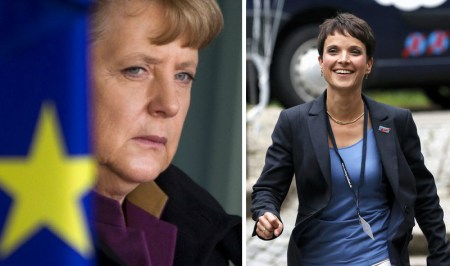
Sweden: Sexual Assaults at Swimming Pools

March 7, 2016

Sweden: Sexual Assaults at Swimming Pool, Gatestone InstituteIngrid Carlqvist, March 7, 2016

♦ Young male asylum seekers have turned Sweden’s public swimming pools into ordeals of rape and sexual assault.

♦ Swedish politicians seem convinced that some education on “equality” will change the ways of men, who, since childhood, have been taught that it is the responsibility of women not to arouse them — and therefore the woman’s fault if the man feels like raping her.

♦ More and more Swedes are now avoiding public pools altogether.

♦ Staff at Malmö’s Hylliebadet family adventure pool were given strict instructions not to report certain things, and above all, never to mention the ethnicity or religion of those who cause problems at the pool.

♦ “What the Afghans are doing is not wrong in Afghanistan, so your rules are completely alien to them. … If you want to stop Afghans from molesting Swedish girls, you need to be tough on them. Making them take classes on equality and how to treat women is pointless. The first time they behave badly, they should be given a warning, and the second time you should deport them from Sweden.” — Mr. Azizi, manager of a hotel in Kabul, Afghanistan.

Men and women, in a Swedish tradition, have swum together in public pools for over 100 years. Many people are now wondering if we will be forced to give up this practice — because young male asylum seekers have turned public swimming pools into ordeals of rape and sexual assault.

Mixed bathing in Sweden started in the small southern fishing village of Mölle. Around 1890, the “Sin of Mölle” gained notoriety. Men and women were swimming together! Out in the open and shamelessly flaunting their striped bathing attire. It was a sensation that echoed all over Europe, and people came from everywhere to partake in the exciting new activity. Danes poured in, and even the German Emperor Wilhelm II made his way to Mölle in July 1907.

It should come as surprise to no one that men from the Middle East and North Africa have quite a different view of women than Swedish men do. The only mystery is why Swedish politicians have got it in their heads that everyone who sets foot on Swedish soil will immediately embrace our values, our view of women and our traditions.

Now that it is finally beginning to dawn on them that many Afghan, Somali, Iraqi and Syrian men (the largest immigrant groups coming to Sweden now) think that women who run around scantily clad are fair game, the politicians are dumbfounded. Of course, they cannot admit that this — to Swedes — completely alien view of women has anything to do with Islam, because then they would become victims of their own claim that everyone who criticizes Islam is an “Islamophobe.”

For many years, it was possible to cover up the abuse, not least because the mainstream media chose to call the perpetrators “youth gangs,” and never mention that they were almost always immigrants from Muslim countries. In Malmö, one of the most immigrant-heavy cities in Sweden, and where Swedes have actually been a minority since 2013, the problems at public pools started at least 15 years ago.

In 2003, “youth gangs” were so disruptive to other guests at the indoor water park Aq-va-kul that on several occasions, the establishment was forced to close. Despite investing 750,000 kronor ($88,000) in taller entrance gates, a glass-enclosed reception desk, surveillance cameras, and an Arabic-speaking “pool host” to tackle the security problems, things just kept getting worse. In 2005, senior staff member Bertil Lindberg told the local daily newspaper, Sydsvenskan: “Things have escalated this year. Large gangs of 10-20 young people threaten and provoke other guests as well as the staff. They did not come here to swim; they are just looking for trouble.”

One of the problems is that young Muslim men refuse to take a shower before bathing, and keep their underwear on under their swim trunks. For obvious reasons, this is not allowed, and when the staff call out the violators on this, trouble and threats ensue. On several occasions, gangs have ambushed staff members on their way home from work, and the company was forced to hire guards to make sure employees get home in one piece. Events reached a climax in 2013, when youth gangs smashed the interior, threw objects in the water and threatened other patrons. Aq-va-kul was closed, and the pool was drained and cleaned of shattered glass. A few days later the pool was reopened, but it closed permanently to the public in 2015. Now the facility has been renovated, but is only open to competitive swimmers and swim clubs.

In Stockholm, the Husbybadet pool in the heavily-immigrant suburb of Husby was the first public pool hit by trouble. In 2007, it was reported that the municipality was forced to build a separate sewage treatment facility, costing millions of kronor. The reason was unusually high levels of nitrogen in the water, because many young people insisted on bathing with their dirty underwear on. The municipality property director told daily newspaper, Dagens Nyheter:

“Nitrogen is food for bacteria and a high nitrogen level produces malodorous air and filthy water. The nitrogen comes from urine and sweat. Quite simply, we have a problem with people keeping their dirty underwear on under their swim trunks. And then they get in the 38-degree [100-degree Fahrenheit] water in the hot tub. It is like sitting in your washing machine’s delicates cycle, and we use that water all the time. People should have swimwear on, not bathe in their regular clothes.”

The attitude towards nudity in Scandinavia is very different from that in the Middle East. Sweden has many nude beaches, where men and women swim together without a stitch of clothing, without the slightest hint of sexual harassment. In the gender-separated changing rooms at public pools, there is no sign of shyness. Swedish men and women see it as a matter of course to shower and wash properly before getting in the pool, and a couple of decades ago stern overseers even patrolled the changing rooms to check the patrons’ shower habits.

In Muslim countries, nudity is an extremely private thing, and one does not willingly take showers with others, not even with members of the same sex. All the public pool personnel with whom Gatestone has spoken confirm that Muslim men and women shower with their underwear on, and then keep them on under their swimwear. Many Muslim women bathe in a so-called burkini, a garment that covers the entire body, so when Muslim men see Swedish women in a bikini, many of them conclude that they must be “easy” women whom one is “allowed” to grope.

In 2015, when roughly 163,000 asylum seekers came to Sweden, the problems at public pools increased exponentially. More than 35,000 young people, so-called “unaccompanied refugee children,” arrived — 93% of whom are male and claim to be 16-17 years old. To prevent complete idleness, many municipalities give them free entrance to the public pools.

During the past few months, the number of reports of sexual assaults and harassment against women at public pools has been overwhelming. Most of the “children” are from Afghanistan, widely considered among the most dangerous places in the world for women. When the daily Aftonbladet visited the country in 2013, 61-year-old Fatima told the paper what it is like to be a woman in Afghanistan: “What happens if we do not obey? Well, our husbands or sons beat us of course. We are their slaves.”

To expect men from a culture that views women as men’s slaves to behave like Swedish men is not just stupid — it is dangerous. Mr. Azizi, the manager of a large hotel in Kabul, told Gatestone how an average Afghan man sees sexual attacks on women:

“What the Afghans are doing is not wrong in Afghanistan, so your rules are completely alien to them. Women stay at home in Afghanistan, and if they need to go out they are always accompanied by a man. If you want to stop Afghans from molesting Swedish girls, you need to be tough on them. Making them take classes on equality and how to treat women is pointless. The first time they behave badly, they should be given a warning, and the second time you should deport them from Sweden.”

One of the first reported incidents occurred in 2005, when a 17-year-old girl was raped at Husbybadet, in Stockholm. The 16-year-old perpetrator started groping her in the hot tub, and when the girl moved to a cave with streaming water, he and his friend followed her. They forced the girl into a corner, and while the friend held her down, the 16-year-old pulled off the girl’s bikini and raped her. During the trial, it emerged that some 30 people had witnessed the attack, but the teenagers continued the rape anyway.

The 16-year-old rapist was sentenced to three months in juvenile detention and his friend was acquitted. The victim was badly traumatized and had to be treated in a psychiatric care facility, after several failed suicide attempts.

Since then, virtually all public pools in Sweden have become dangerous places, especially to women. During the first two months of this year, reports of rape, sexual assault and sexual harassment came in rapid succession. A few examples:

In Stockholm, during the first week of January, Sweden’s national swimming arena, Eriksdalsbadet, decided to separate men and women in the hot tubs. A controversial decision in Sweden, it came after several incidents in the pools had been reported to the police, mainly in November and December 2015. Conservative Anna König Jerlmyr (moderaterna), Stockholm city Commissioner in Opposition, did not believe that separating men and women was the right way to address the problems: “It is totally unacceptable for a public swimming pool to act this way. This is tantamount to giving in to the sexual harassment and sending signals in favor of a view of women that is utterly reprehensible. More staff, and banning offenders from the premises, would have been preferable,” she told the daily, Dagens Nyheter.

Olof Öhman, head of the Sports Administration in Stockholm, told the paper: “There are similar problems at all the public pools in Stockholm, even if most complaints regard Eriksdalsbadet.”

On January 14, officials at the Rosenlundsbadet water park in Jönköping reported that they would increase security. According to Operations Manager Gunnel Eriksson, the decision was mainly due to the behavior of a new group of bathers — unaccompanied refugee boys: “You can tell from their behavior that they come from a different culture; there is a cultural clash. We can see that they react to the undressed bit.” The heightened security is also necessary because many of the young migrant men cannot swim, overestimate their abilities, and end up in dangerous situations.

On January 15, a local paper, Kungälvsposten, wrote that two girls had been sexually assaulted in an elevator at the Oasen public pool Oasen, in Kungälv. The two suspected perpetrators are “unaccompanied refugee children.” Jonas Arngården, Municipal Director of Social Affairs, told the paper: “This shows that we need to step up the work concerning issues of equality and interaction among our new arrivals, in schools as well as at the asylum houses.”

The attack caused members of the Nordic Resistance Movement (Nordiska motståndsrörelsen), a supposed neo-Nazi organization, to show up at Oasen on February 13. They put on green shirts with the word “Security Host” (Trygghetsvärd) printed on the back, and “patrolled” the facility.

The municipality had not reacted strongly to the sexual assault, but the visit by vigilantes scared the municipal management, and it immediately called the Oasen management to a meeting. Mayor Miguel Odhner told the daily, Expressen/GT: “It is completely unacceptable to have some kind of disguised vigilantes at municipal pools. It is very, very serious that we have violent extremism vying for greater foothold in our municipality.”

1499 (1)The Eriksdalsbadet national swimming arena in Stockholm (left) has become infamous for the many incidents of migrants sexually assaulting women and children at the facility. At the Oasen pool in Kungälv (right), two girls were recently sexually assaulted by “unaccompanied refugee children.” In response, members of the “Nordic Resistance Movement” showed up, wearing shirts bearing the label “Security Host” (Trygghetsvärd), and “patrolled” the facility.

On January 18, the management of the Fyrishov public pool, in Uppsala, revealed that in 2015, it there were seven reported cases of child molestation at the facility. According to Fyrishov, the suspected offenders are all newly-arrived migrants — teenage boys who do not speak Swedish. The facility increased security in August, hiring guards and giving the staff stricter monitoring instructions.

On January 21, there were reports that the number of sexual assaults had increased dramatically at the Aquanova adventure pool in Borlänge. In 2014, one case was reported; in 2015, about 20 cases were reported. The incidents involved women having their bikinis ripped off, being groped in the water slide and sexually assaulted in the restrooms. Ulla-Karin Solum, the CEO of Aquanova, told the public broadcaster Sveriges Television that many incidents “are due to cultural clashes.”

Aquanova Staff member Anette Nohrén confirmed that all the suspects are born abroad, and complained that “it is a huge problem. It steals the focus from our primary task, which is safety concerns, when we are constantly forced to intervene to try and prevent assaults, and afterwards, to try and figure out what happened.”

Aquanova now implemented new rules; among them, that young men from asylum houses need to have a responsible adult accompanying them — one adult for every three underage asylum seekers. The adult needs to stay with them in the changing room as well as in the pool area.

On January 25, the daily newspaper Expressen revealed that a girl was raped at the now infamous Eriksdalsbadet swimming arena at the beginning of the month. The police will now increase their presence at the facility, and will patrol inside regularly.

On January 26, there were reports that a woman and two girls had recently been sexually assaulted by a group of young men who spoke neither Swedish nor English, at the Storsjöbadet pool in Östersund. Despite the incident, the young men were not removed from the premises — a lapse the staff later admitted was a mistake.

On January 27, Växjö municipality announced that it plans to hire a security guard to patrol the local public pool. After two 11-year-old girls were sexually assaulted by a group of boys. The boys attacked the girls in an area hidden from the view of lifeguards. Mikael Linnander, father of one of the girls, told the daily, Kvällsposten: “Seven or eight guys attacked the girls. Two of them touched them between their legs and groped their breasts.” The abuse did not stop until a woman swimming with her children reprimanded the boys. After the incident, the two boys were barred from the adventure pool area, but were allowed to stay at the facility.

On February 1, local media reported that at least five girls and women had been sexually assaulted at a public pool in Vänersborg during the previous few weeks. The victims were girls under 15, as well as women in their thirties. The police said they had no suspects, but stated that the case had high priority.

On February 25, another sexual assault was reported at the Eriksdalsbadet swimming arena in Stockholm. Police spokesman Johan Renberg told Expressen that a group of girls had found themselves surrounded by some 10 young men who tried to grope them. A staff member saw what was happening and called the police. The girls were able to identify the young men, whose ethnicity the paper did not report. The men were not arrested, but will be questioned at a later time.

Given the recent wave of sexual assaults at public pools, it is something of a mystery why the recently-opened Hylliebadet family adventure pool in multicultural Malmö has not reported any sexual assaults at all. Hylliebadet, which cost 349 million kronor (about $41 million) to build, had a chaotic opening week in August 2015. After only a few days, 27 “incidents” had been reported, but none involved sexual assaults.

“No, I have never heard of anything like that happening here,” a Hylliebadet employee told Gatestone. However, when we spoke to other staff members off the record, they told us they had been given strict instructions not to report certain things, and above all, never to mention the ethnicity or religion of those who cause problems at the pool. Another employee told Gatestone:

“Of course we have had incidents here, particularly involving Afghan men groping girls. Not long ago, a man of Arab descent was caught masturbating in the hot tub. But we are not allowed to report things like that. These men understand that it is forbidden when we tell them, but they keep doing it anyway. They just smile and keep on doing it.”

It seems unlikely that Swedish politicians will start deporting sex offenders. The politicians seem convinced that some education on “equality” will change the ways of men, who, since childhood, have been taught that it is the responsibility of women not to arouse them — and therefore the woman’s fault if the man feels like raping her. Such a shift in attitude seems as likely as if a Swede visiting Saudi Arabia would suddenly renounce alcohol just because it is forbidden there. The Swede would follow the rules as long as somebody was watching, and then take every opportunity to drink his schnapps, because it is a thousand-year-old Swedish tradition, and something most Swedes feel is agreeable as well as just.

Another public pool employee told Gatestone that the refugee boys frighten away ordinary patrons and that more and more Swedes are now avoiding public pools altogether.

“Even Swedes who have bought expensive season tickets stay away now, because they think the mood is unsettling. Considering that they young asylum seekers get their entrance fee paid by the municipalities, one could rightfully say that tax money is being used to drive away those who would pay.”

Finland’s Immigration Crisis

March 6, 2016

Finland’s Immigration Crisis, Gatestone InstituteDawid Bunikowski, March 6, 2016

♦ The Tapanila gang-rape shocked the quiet Helsinki suburb, and all of Finland. Many wondered why these second-generation Somalis, citizens of Finland, would carry out such a savage attack.

♦ The rapists were eventually brought to trial. One was sentenced to a year and four months imprisonment, two were given one-year prison sentences and two others were acquitted. Penalties were softened due to the age of the rapists.

♦ “1,010 rapes were reported to the police in 2014, according to the Official Statistics of Finland. The number of suspected immigrants in these cases is about three times higher than of the suspected natives in relation to the population.” – Finland Today.

♦ The criminal law prohibiting blasphemy seem archaic in the eyes of many Finns, especially after the attack on the French satirical magazine, Charlie Hebdo. Unsuccessful attempts to decriminalize blasphemy took place between the 1910s until the 1990s. For many critics the concept of prohibited hate speech is problematic: there is no clear definition, a lapse that leads to confusion and acrimony.

Finland — an open country that prides itself on respecting different ways of life, cultures and religions — is being greatly tested by the wave of Middle Eastern asylum seekers.

Finland is a homogenous country that has roughly 5.5 million inhabitants, about 4% of which are foreign[1]. Twenty years ago, thousands of Somalis immigrated to Finland. In the last decade or so, more international students came to study, and more foreigners came to live and work.

Finnish universities and the academia are of a high level, and most Finns speak some English. But it is not easy for foreigners to find jobs. The barrier is the language: Finnish, like Hungarian, is a part of the Finno-Ugric languages, and difficult to learn.

How many asylum seekers from Syria, Iraq, and Afghanistan arrived in Finland in 2015? The figures keep changing. Authorities estimate between 30,000 and 50,000 — significant numbers in terms of the ratio of migrants to the native population.

Multiculturalism, Migration Policy, and the Law

“Hate speech” (vihapuhe) is defined in Finland as “speech that attacks a person or group on the basis of attributes such as gender, ethnic origin, religion, race, disability, or sexual orientation.” Hate speech is prohibited if such an act is a kind of ethnic agitation. For many critics — including Jussi Kristian Halla-aho, a member of the European Parliament for the True Finns Party — the concept of prohibited hate speech is problematic: there is no clear definition, a lapse that leads to confusion and acrimony.

The criminal law prohibiting blasphemy seem archaic in the eyes of many Finns, especially after the attack on the French satirical magazine, Charlie Hebdo. Many Finns believe that freedom of speech should be absolute. Unsuccessful attempts to decriminalize blasphemy took place between the 1910s until the 1990s. In one extreme case, Halla-aho was fined in 2008 for making links between Islam and paedophilia on his personal blog.

The current immigration situation in Finland is exceptional in nature. Muslims fleeing from the Middle East have opened up a humanitarian crisis the likes of which have not been seen in Europe in a long time. International public opinion and EU policy in the field are being tested. The current flow of Muslims through Sweden to northern Finland is chaotic.

The Ministry of the Interior website states that “Finland is an open and safe country” and explains the country’s policy toward migration:

“The Strategy views migration as an opportunity: mobility creates international networks and brings with it new ways of doing things. Migration will help to answer Finland’s dependency ratio problem, but at the same time, competition for workers between countries will increase. To succeed in this competition, Finland must be able to effectively attract skilled workers who will stay in the country for the longer term. As a responsible member of the international community, Finland is committed to providing international protection to those who need it.”

The ministry also adds that “everyone can find a role to play,” and “diversity is part of everyday life.”

Government officials have taken this strategy personally. Prime Minister Juha Sipilä attracted the attention of the international media last autumn when he offered his second home in Kempele to refugees. He stressed the values of mercy and compassion in the context of immigration.

While the Finnish government can produce liberal policies calling for more openness towards immigration, real politics eventually come into play. When it came time to vote in Brussels on the EU’s quota system for refugees and their relocation in EU countries, Finland abstained.

The ruling center-right political party, the Center Party (Keskusta), is both pragmatic and skeptical towards the European Union. The second most powerful political party, the True Finns (Perussuoamalaiset), is known for its anti-EU, anti-immigration and anti-Muslim rhetoric; its leader, Niko Soini, is the Minister of Foreign Affairs. The political cooperation between the Center Party and the True Finns exemplifies a powerful point on Finnish democracy: consensus is important.

Prior to last year’s election, the True Finns website stated: “Finland is not to make everybody happy in the world. Finland should take care of the Finns first.” The slogan explains much about the seemingly contradictory domestic and international immigration policies of the Finnish government.

The people of Finland have also commented on their government’s stance on immigration by ousting of former Prime Minister Alexander Stubb in the 2015 election.[2] The President of the Republic, Sauli Väinämö Niinistö, said in February 2016 that international commitments are treated too seriously, and that Finland does not the control migration flows. Niinistö’s comments were deemed politically incorrect and censored from public television for two days.

The Rape Problem

With all of Finland’s talk of multiculturalism and immigration, new narratives about the corrosive effects of both multiculturalism and the wave of asylum seekers have surfaced in the media, shocking both the government and the public. News stories discuss the increase in unemployment, the mounting cost of social benefits during the decline of welfare state, problems in educating foreigners, and issues of assimilation with the majority culture, which respects Finnish values and a secular, liberal and open society — all different from traditional Muslim values.

In Finland, more and more cases of Finnish girls and women being raped by asylum seekers are being widely publicized. Much of Finnish society seems shocked, embarrassed and angry because of the increase in rapes perpetrated by asylum seekers. These crimes have provoked many nationalists, and led to the establishment of a paramilitary movement known as the Soldiers of Odin. Members of the movement view themselves as Finnish patriots, roaming the streets of Finland, protecting against Muslim immigrant offenders.

The Soldiers of Odin are accused of being far-right and may de facto be related to previous skinhead movements from the 1990s. Their uniform is all black attire and their symbol makes reference to the ancient Viking god, Odin.

1497 (1)Members of the paramilitary movement known as the Soldiers of Odin view themselves as Finnish patriots, roaming the streets of Finland, protecting against Muslim immigrant offenders. Critics accuse them of being far-right, and they may de facto be related to previous skinhead movements from the 1990s.

The Tapanila Rape

On March 9, 2015, five males gang-raped a young Finnish woman near the Tapanila railway station. The rapists were of Somali heritage and between the ages of 15-18. According to reports, the Somalis boarded the same train as the woman and began harassing her. They followed her off the train and, under cover of darkness, brutally raped her in a nearby park. They were immediately caught.

The Tapanila rape shocked the quiet suburb, which lies on the outskirts of Helsinki, and all of Finland too. Many were left wondering why these second-generation Somali citizens of Finland would carry out such a savage attack.

When news of the attack first came to light, it was published by a far-right website, and many in Finland claimed it was a false report. However, authorities soon confirmed that the rape occurred, and uproar ensued.

According to an article published by Finland Today, the Somali community feared that its members would be unfairly labelled as criminals, and racist attacks would increase. However, the article also noted that

“1,010 rapes were reported to the police in 2014, according to the Official Statistics of Finland. The number of suspected immigrants in these cases is about three times higher than of the suspected natives in relation to the population. There is no unambiguous answer to why this is the case and is yet to be researched.”

The rapists were eventually brought to trial. One was sentenced to a year and four months imprisonment, two were given one-year prison sentences and two others were acquitted. Penalties were softened due to the age of the rapists. Prosecutor Eija Velitski called the sentencing “embarrassing.” The social impact of the attack spread far and wide.

The Kempele Rape

A second attack, the so-called Kempele rape, was met with a reaction by the prime minister himself. Kempele is a small town of roughly 15,000 inhabitants, located near Oulu. It is more famously known for its innovative entrepreneurs and high levels of overall satisfaction and happiness of its residents.

On the evening of November 23, 2015, a 14-year-old girl was walking home in Kempele, when a 17-year-old immigrant from Afghanistan attacked and raped her. She was later found by locals walking through the area.

A police dog led authorities to a nearby refugee center for underage asylum seekers. “The police dog patrol followed the tracks of the suspects, which led to an apartment. From the apartment, the police caught two men who are now suspected of aggravated statutory rape and aggravated child sexual abuse,” the police said in a statement. Police could not immediately interrogate the suspects because a qualified interpreter was unavailable. The 17-year-old denied any involvement in the attack, and the second suspect was eventually freed.

The Kempele rape caused outrage in Finland. Seppo Kolehmainen, the National Police Commissioner, admitted after the attack that Finnish authorities had previously received reports of disturbances, physical altercations, thefts and inappropriate treatment of women from in and around the reception center.

The Soldiers of Odin

The Tapanila and Kempele rape cases became fertile ground for Finnish nationalists. According to their Finnish Facebook page (their website has been taken down), the Soldiers of Odin blame “Islamist intruders” for the “uncertainty, lack of safety and crime in Finland.” The nationalist movement claims that the police have lost control and keeping order on the streets is now up to them. They say that preventing Muslim immigrants from committing crimes, especially rape, is one of their main priorities.

The Soldiers of Odin recently expanded their patrols to the city of Joensuu, in Eastern Finland. Paradoxically, the National Police Commissioner expressed his support for this type of self-organized behavior by the Finnish people. Some liberal Finns have accused the commissioner of racism and have demanded his dismissal.

Next for Finland?

Finland is a peaceful society, and many Finns are afraid of the consequences of the latest wave of immigration. However, due to political correctness and their own national character, most Finns abstain from openly expressing their concerns. But now the curtain of silence and political correctness has been fractured.

Finnish culture, law and policy encourage all people to live together despite cultural or ethnic difficulties. However, this can only go so far. Finns are now demanding action. The government must “do something” to show that Finland is still safe and to limit immigration.

________________________

[1] There is also a minority of the Swedish-speaking Finns (about 5% of the population), as well as a Russian minority (about 1.5%). For five centuries, Finland had been occupied by Sweden (by 1809). Later, it was a part of the Russian Empire (until 1917).

[2] The victory of two EU-skeptic parties over the EU-enthusiastic and pro-immigrant Kokoomus Party says much about the feelings of injustice felt by the Finnish public. But while Stubb’s Kokoomus joined the governmental coalition with Soini and Sipilä, its position is weak. Today, the Finnish government is at a crossroads. Tensions are running high and beginning slowly to fracture the nationalists, led by Soini’s party.

France: Criticize Islam and Live under Police Protection

February 28, 2016

France: Criticize Islam and Live under Police Protection, Gatestone InstituteGiulio Meotti, February 28, 2016

“After a few moments of fear, I thought that if there are these threats it is because my fight foiled the plans of the Muslim Brothers by bringing them to light. I decided not to give up.” — Laurence Marchand-Taillade, National Secretary of the Parti Radical de Gauche (Radical Party of the Left).

The author Éric Zemmour lives under police protection. Two policemen follow him wherever he goes — including to court, where Muslim organizations tried to defame him and his work by accusing him of “Islamophobia,” to silence him.

In France, hunting season is still open for critics of Islam.

“You are sentenced to death. It’s just a matter of time.” This message, in Arabic, was sent by Islamists to Laurence Marchand-Taillade, National Secretary of the Parti Radical de Gauche (Radical Party of the Left). She now lives under the protection of the French police.

Marchand-Taillade forced the Muslim Brotherhood to withdraw, under pressure from France’s Interior Ministry, its invitation of three Islamic fundamentalists to a conference in Lille. The Islamists in question were the Syrian Mohamed Rateb al Nabulsi, the Moroccan Abouzaid al Mokrie and the Saudi Abdullah Salah Sana’an, who deem that the penalty for homosexuality is death, that the international coalition against the Islamic State is “infidel,” that Jews “destroy the nations” and that only religious music is permitted.

Laurence Marchand-Taillade published an article in Le Figaro in which she called for the ban of these Islamists with their “anti-Semitic and pro-jihadist message.”

In the magazine Marianne, Marchand-Taillade then penned, along with the French-Algerian journalist Mohamed Sifaoui, an article calling for the resignation of the leaders of the Observatory of Secularism.

“I am the president of an association that supports secularism in the Val-d’Oise” said Marchand-Taillade to me in an interview,

“and for years, I observed unreasonable sacrifices and compromises from the National Observatory of Secularism, which has encouraged radical communitarianism by participating to forums such as ‘We Are United,’ with the rapper Médine, who has called for the ‘crucifixion of the secularists,’ the ‘Collective against Islamophobia’ and Nabil Ennasri, a Muslim Brother from Qatar. The president of the Observatory of Secularism, Jean Louis Bianco, gave credit to these Salafist organizations at war with our values.

“Since the first months of 2014, I started also to report to the authorities of the arrival of imams such as Nader Abou Anas, who justifies marital rape, and Hatim Abu Abdillah, who promises a ‘cruel punishment’ for women. Then I went to Lille, on February 6 and 7, where Tariq Ramadan and others were indoctrinating our youths” Since then, her life has not been the same.

How did she react to the death sentence?

“After a few moments of fear, I thought that if there are these threats it is because my fight foiled the plans of the Muslim Brothers by bringing them to light. I decided not to give up. Islamists began a long process of infiltrating all sectors of civil society. The concept is based on the written doctrines of Hassan al-Banna, the grandfather of [Tariq] Ramadan. Their flag has two swords and the Koran; indoctrination and violence are the methods to gain power. France is a country chosen for several reasons: it has a large population from North Africa; it is a secular country in which you can use the freedoms of democracy as weapons against it, and it had weak policies. The only way to stop the threat is to reaffirm secularism and absolute freedom of conscience. We cannot allow entire portions of the French population to fall in the trap of hating the country where they are born and, above all, which considers them part of the nation. It is choice of civilization, while there is an attempt to destroy two centuries of progress for humanity.”

What happened to Marchand-Taillade — the 24-hour a day police protection she needs because she exercised her constitutional right to freedom of expression — tells us a lot about France, where dozens of academics, intellectuals, novelists and journalists now have to live under police protection just because of their criticism of Islam.

It is not only politicians such as Marine Le Pen and Samia Ghali, the mayor of Marseille, and not only judges such as Albert Lévy, who has conducted investigations on Islamic fundamentalists.

The most famous is Michel Houellebecq, author of the novel Submission, who lives under the protection of the gendarmerie since he published his last novel. There is also haute protection(“high protection”) for Éric Zemmour, the author of Le Suicide Français. Two policemen follow him wherever he goes — including to court, where Muslim organizations tried to defame him and his work by accusing him of “Islamophobia,” to silence him.

1486French politician Laurence Marchand-Taillade (left) lives under police protection after receiving a death threat from Islamists. French author Éric Zemmour also lives under police protection. Two policemen follow him wherever he goes — including to court, where Muslim organizations tried to defame him and his work by accusing him of “Islamophobia,” to silence him.

Charlie Hebdo‘s director, “Riss,” and the remaining cartoonists live under police protection, and their new offices are in an undisclosed location. My friend Robert Redeker, a professor of philosophy condemned to death in 2006 by Islamists for an article he wrote in Le Figaro, still lives like a fugitive, as if he is a political prisoner in his own country. His conferences and courses have been canceled, his house sold, his father’s funeral celebrated in secrecy, and his daughter’s wedding organized by the police.

Mohammed Sifaoui, who lived undercover in a French cell of al Qaeda and has written a shocking book, Combattre le terrorisme islamiste (“Combat Islamist Terrorism”) also lives under police protection. His photo and name appear on jihadi websites next to the word murtad(“apostate”).

The French philosopher and essayist, Michel Onfray, just withdrew the planned publication of an essay critical of Islam, He claims that “no debate is possible” in the country after the November 13 attacks in Paris (his book has just been published in my country, Italy).

Frédéric Haziza, a radio journalist and author for the magazine Le Canard Enchaîné, has been the target of threats from Islamists, and is under protection, as is Philippe Val, the former director of Charlie Hebdo and France Inter, who decided to publish the Mohammed cartoons in 2006. The Franco-Algerian journalist Zineb Rhazaoui is always surrounded by six policemen, as is the brave imam Hassen Chalgoumi, who is protected as if he were a head of state.

In Britain, the 1989 fatwa against Salman Rushdie eliminated any doubt among scholars and journalists whether it was appropriate or not to criticize Islam. In the Netherlands, it was enough to shoot dead Theo Van Gogh for having made a film, Submission, about a woman abused in a forced marriage. Dutch MP Geert Wilders had to debate wearing bulletproof vests and Ayaan Hirsi Ali, who wrote Submission’s script, fled the country and found a refuge in the U.S. In Sweden, that artist Lars Vilks now lives like a shadow. In Denmark, the headquarters of theJyllands Posten newspaper, which published the original Mohammed cartoons, has a barbed wire fence two meters high and one kilometer long. It has become like a U.S. embassy in the Middle East.

In France, hunting season is still open for critics of Islam, even after the decimation of Charlie Hebdo‘s brave artists. But for how long?