Archive for the ‘Europe’ category

Public Support for the European Union Plunges

June 9, 2016

Public Support for the European Union Plunges, Gatestone InstituteSoeren Kern, June 9, 2016

♦ Public anger is also being fueled by the growing number of diktats issued by the unelected officials running the Brussels-based European Commission, the powerful administrative arm of the bloc, which has been relentless in its usurpation of sovereignty from the 28 nation states that comprise the European Union.

♦ Although the survey does not explicitly say so, the findings almost certainly reflect growing anger at the anti-democratic nature of the EU and its never-ending power grabs.

♦ On May 31, the EU, in partnership with Facebook, Twitter, YouTube and Microsoft, unveiled a “code of conduct” to combat the spread of “illegal hate speech” online. Critics say the EU’s definition of “hate speech” is so vague that it could include virtually anything deemed politically incorrect by European authorities, including criticism of mass migration, Islam or  even the EU itself.

♦ On April 20, the European Political Strategy Centre, an in-house EU think tank that reports directly to Juncker, proposed that the European Union establish its own central intelligence agency, which would answer only to unelected bureaucrats.

Public opposition to the European Union is growing in all key member states, according to a new survey of voters in ten EU countries.

Public disaffection with the EU is being fueled by the bloc’s mishandling of the refugee and debt crises, according to the survey, which interviewed voters in Britain, France, Germany, Greece, Hungary, Italy, the Netherlands, Poland, Spain and Sweden.

Public anger is also being fueled by the growing number of diktats issued by the unelected officials running the Brussels-based European Commission, the powerful administrative arm of the bloc, which has been relentless in its usurpation of sovereignty from the 28 nation states that comprise the European Union.

The 17-page report, “Euroskepticism Beyond Brexit,” was published by the Pew Research Center on June 7, just two weeks before the June 23 referendum on whether Britain will become the first country to leave the European Union (Brexit blends the words Britain and exit).

The following are excerpts:

  • Much of the disaffection with the EU among Europeans can be attributed to Brussels’ handling of the refugee issue. In every country surveyed, overwhelming majorities disapprove of how Brussels has dealt with the crisis. This includes 94% of Greeks, 88% of Swedes and 77% of Italians. In Hungary and Poland, disapproval of how the refugee crisis has been managed stands at 72% and 71%, respectively. In France, 70% disapprove; in Germany the figure is 67%. The strongest approval of EU management of the refugee crisis is in the Netherlands, but that backing is a tepid 31%.
  • The EU’s handling of economic issues is another huge source of disaffection with Brussels. About nine-in-ten Greeks (92%) disapprove of how the EU has dealt with the ongoing economic crisis. Roughly two-thirds of the Italians (68%), French (66%) and Spanish (65%) similarly disapprove. (France and Spain are the two nations where the favorability of the EU has recently experienced the largest decline.) Majorities in Sweden (59%) and the UK (55%) also disapprove of the EU’s job in dealing with economic challenges. The strongest approval of Brussels’ economic efforts is in Poland and Germany (both 47%).
  • Nearly two-thirds (65%) of Britons say they want the EU to return certain powers to national governments. This Euroskepticism is not limited to Britain. In Greece, 68% of those surveyed want some EU powers devolved to the national government, followed by Sweden (47%); the Netherlands (44%) and Germany (43%).
  • A median of 42% of Europeans across the ten countries surveyed say they want to reclaim some powers from Brussels, while just 19% favor greater centralization (27% prefer the status quo).
  • Conversely, there is little enthusiasm for transferring more power to Brussels. Only 6% of Britons, 8% of Greeks and 13% of Swedes favor more power for the EU. The strongest backing for an ever closer Europe is only 34%, in France. In most countries, a quarter or more of the public prefers to keep the current division of power.
  • Three-quarters of Britons who disapprove of the EU’s handling of economic problems and 71% of those who have an unfavorable view of the bloc’s handling of the refugee crisis believe that Brussels should return powers to national governments.
  • The strongest backers of the EU are the Poles (72%) and the Hungarians (61%). In many other nations, support is tepid. Just 27% of the Greeks, 38% of the French (down from 69% in 2004) and 47% of the Spanish (down from 80% in 2007) have a favorable opinion of the EU. Notably, 44% of the British view the EU favorably, including 53% of the Scottish.
  • EU favorability is down in five of the six nations surveyed in both 2015 and 2016. There has been a double-digit drop in France (down 17 percentage points) and Spain (16 points), and single-digit declines in Germany (8 points), the United Kingdom (7 points) and Italy (6 points).
  • Young people — those ages 18 to 34 — are more favorable toward the European Union than people 50 and older in six of the 10 nations surveyed. The generation gap is most pronounced in France — 25 percentage points — with 56% of young people but only 31% of older people having a positive opinion of the EU. There are similar generation gaps of 19 points in the UK, 16 points in the Netherlands, 14 points in Poland and Germany, and 13 points in Greece. It remains unclear why young Europeans are so favorable to the EU, where youth unemployment is near 50% in some EU countries.
  • There is overwhelming sentiment across Europe that Brexit would be a bad thing for the European Union: 89% in Sweden, 75% in the Netherlands and 74% in Germany say the British leaving would not be good for the EU. France is the only country where more than a quarter (32%) of the public says it would be positive for the EU if the UK departed.

Although the survey does not explicitly say so, the findings almost certainly reflect growing anger at the anti-democratic nature of the EU and its never-ending power grabs.

On May 31, the European Union, in partnership with Facebook, Twitter, YouTube and Microsoft,unveiled a “code of conduct” to combat the spread of “illegal hate speech” online in Europe. Critics say the initiative amounts to an assault on free speech in Europe because the EU’s definition of “hate speech” and “incitement to violence” is so vague that it could include virtually anything deemed politically incorrect by European authorities, including criticism of mass migration, Islam or even the European Union itself.

On May 24, the unelected president of the European Commission, Jean-Claude Juncker, vowed to use sanctions to isolate far-right or populist governments that are swept into office on the wave of popular anger against migration. Under powers granted to the European Commission in 2014, Juncker can trigger a “rule of law alert” for countries that depart from “the common constitutional traditions of all member states.” Rather than accepting the will of the people at the voting booth, Juncker can impose sanctions to address “systemic deficiencies” in EU member states.

On May 4, Juncker warned that EU countries that failed to “show solidarity” by refusing take in migrants would face a fine of €250,000 ($285,000) per migrant.

On April 20, the European Political Strategy Centre, an in-house EU think tank that reports directly to Juncker, proposed that the European Union establish its own central intelligence agency, which would answer only to unelected bureaucrats. According to the plan, the 28 EU member states would have a “legally binding duty to share information.”

The British Minister of State for the Armed Forces, Penny Mordaunt, responded:

“These matters are supposed to be, and must be the competence of member states. Intelligence sharing can only be done on a bilateral basis. This latest EU integration project not only shows how little the EU cares for the sovereignty of nation states, but also how little it understands the business of counter-terrorism.”

On December 15, 2015, the European Commission unveiled plans for a new European Border and Coast Guard force that can intervene anywhere in the EU, even without the host country’s consent.

On March 8, 2015, Juncker said that the EU needed its own military in order to restore the bloc’s standing around the world: “Europe’s image has suffered dramatically and also in terms of foreign policy, we don’t seem to be taken entirely seriously.”

1642Jean-Claude Juncker, the unelected president of the European Commission, recently vowed to use sanctions to isolate far-right or populist governments that are swept into office on the wave of popular anger against migration. In December 2015, the Commission unveiled plans for a new European Border and Coast Guard force that can intervene anywhere in the EU, even without the host country’s consent. (Image source: © European Union 2015 – European Parliament)

In a recent interview with Le Monde, Juncker said that if Britons voted to leave the EU, they would be treated as “deserters”:

“I am sure the deserters will not be welcomed with open arms. If the British should say ‘No’ — which I hope they do not — then life in the EU will not go on as before. The United Kingdom will be regarded as a third country and will have its fur stroked the wrong way (caresser dans le sens du poil). If the British leave Europe, people will have to face the consequences. It is not a threat but our relations will no longer be what they are today.”

In an interview with the Telegraph, Giles Merritt, director of the Friends of Europe think tank in Brussels, summed it up this way:

“The EU policy elites are in panic. If the British vote to leave the shock will be so ghastly that they will finally wake up and realize that they can no longer ignore demands for democratic reform. They may have to dissolve the EU as it is and try to reinvent it, both in order to bring the Brits back and because they fear that the whole political order will be swept away unless they do.”

ISIS Made $2.4 Billion Last Year Say Analysts

June 5, 2016

ISIS Made $2.4 Billion Last Year Say Analysts, Clarion Project, June 5, 2016

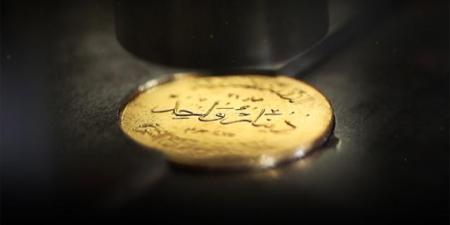
Gold-Dinar-Islamic-State-640-320_1An Islamic State gold dinar. (Photo: ISIS Propaganda)

The Islamic State made $2.4 billion in 2015, making it the richest terrorist group in the world by a substantial margin, according to the Center for the Analysis of Terrorism as reported by The Economic Times reported.

Despite losing territory and suffering airstrikes against its oil refineries, the group maintained income by increasing taxes on the estimated eight million people under its control from $360 million to $800 million in 2015. The Islamic State’s income for 2015 was $500 million less than its income the previous year.

The report’s authors concluded that “ISIS’s military defeat is not imminent … as things stand, ISIS economic collapse remains some way off in the mid-term.”

The Islamic State continues to brutally assert dominance over its dominion. On Thursday, 19 Yazidi girls were publicly burned alive in iron cages in Mosul, according to ARA News. “They were punished for refusing to have sex with ISIS militants,” local media activist Abdullah al-Malla told ARA News.

Nor are the Islamic State’s activities limited to the territories it controls in Syria and Iraq.

An alleged sleeper cell consisting of four Syrian men planning terrorist attacks in Dusseldorf was arrested on Thursday. One of the men had turned himself into authorities in Paris on February 1 and provided evidence against his fellow conspirators. It took German police four months to gather enough evidence to arrest the other three.

One of the suspects had filed for asylum. But the head of the German Police Trade Union has said that to run background checks on all refugees entering Germany would be unaffordable and that such a policy is too late.

“It would have been useful in the second half of last year to create conditions for background checks on all people who came to us, in fact, before they traveled [to Germany]. But that is past history now, as we cannot afford it,” he said, according to Russia Today.

At the moment the German Justice Ministry is investigating 180 terror suspects who have either returned from or have links to Syria.

For more information about the Islamic State, see Clarion Project’s Special Report: The Islamic State (ISIS, ISIL) 


Polygamy: Europe’s Hidden Statistic

June 5, 2016

Polygamy: Europe’s Hidden Statistic, Gatestone InstituteJudith Bergman, June 5, 2016

♦ The sheer volume of polygamous marriages shows that such marriages are also entered into in Europe, in secret, through Islamic marriage ceremonies conducted by imams. In most European countries, imams are not required to report these marriages to the authorities.

♦ Daham Al Hasan fled from Syria to Denmark, leaving behind his three wives and 20 children. Under the Danish rules of family unification, one of his wives and eight of his children have joined him in Denmark. But Al Hasan wants all his children with him, as well as all his wives. Lawyers estimate that the remaining wives will be able to join their children in Denmark. The case has caused a shock not only because of what it will cost the Danish state just in child allowance, but because Al Hassan claims that he is too ill to work or even learn Danish. “I don’t only have mental problems, but also physical problems…” He has admitted that his “mental illness” consists of missing the children he voluntarily left behind.

♦ Even if theoretically women can go to the police or press charges, they run the risk of being beaten or possibly divorced. Women’s shelters are “full of Muslim women.”

♦ The spokeswoman of Germany’s Federal Employment Agency said that the establishment of a central registry of Islamic marriages would be helpful for investigating claims of fraud.

A few years ago, Sweden’s Center Party, one of the four parties in the center-right governing coalition at the time, proposed legalizing polygamy. The idea caused outrage; the proposal was dropped. The party’s youth division, however, refused to let go: “We think it is important for the individual to decide how many people he or she wants to marry,” said Hanna Wagenius, head of Center Youth, predicting that polygamy would be legal in ten years, when her generation would enter parliament and make sure of it.

Sweden is not the only place in Scandinavia where “idealistic” youths have advocated polygamy. In 2012, the youth division of Denmark’s Radikale Venstre Party (“Radical Left”), then part of the governing coalition in Denmark, also proposed that polygamy should be legalized in Denmark. The move came four years after an Iraqi asylum seeker, who had worked for the Danish military in Iraq as a translator and then fled to Denmark, arrived with two wives. As Denmark does not recognize bigamy and as he refused to divorce his second wife, he returned to Iraq. “It is unacceptable that we are so narrow-minded in Denmark, and will not help a man who has helped us. We want to do something about that,” Ditte Søndergaard, head of Radikale Venstre Youth, said at the time. The proposal, however, did not find favor with any of the other political parties.

As far-fetched as these proposals may sound, they signify the shifts taking place in the West regarding fundamental ethical issues of gender equality and the willingness to accommodate Islamic sharia law. They are also proof of an enduring willful blindness to the detrimental effects of the practice of polygamy, not only in terms of financial costs to the state, but also to the Muslim women and children, whose rights these young politicians purport to support.

Muslim polygamy is only rarely debated in the media. The practice, therefore, despite its spread across the European continent — spanning, among other countries, Sweden, Denmark, the UK, Germany, France and the Netherlands — continues largely to hide under the public radar. As the practice is illegal across the continent and therefore not supposed to exist, there are no official statistics of polygamous marriages anywhere in Europe.

Several countries, such as the UK, the Netherlands, Sweden and France, nevertheless recognize Muslim polygamous marriages if they were contracted abroad under certain circumstances, such as if polygamy is legal in the country where the marriage took place. It is estimated that as many as 20,000 polygamous Muslim marriages exist in Britain. In France, as polygamy was legal until 1993, the minimum estimate as early as 2006 was around 20,000 polygamous marriages. In Germany, it was estimated in 2012 that, in Berlin alone, 30% of all Arab men were married to more than one wife.

In April, Swedish professor Göran Lind argued that it was time to “put one’s foot down” regarding polygamy in Sweden, after it was disclosed that Sweden had recognized “hundreds” of polygamous marriages contracted abroad. Professor Lind pointed out that polygamy is not compatible with Swedish law, especially the principles of equal treatment of spouses, the equality of all human beings, and the prohibition against discrimination on the basis of gender, as codified in the European Convention on Human Rights. One might add to those the principles enshrined in the UN’s Convention on the Elimination of All Discrimination Against Women, article 16, according to which,

“States Parties shall take all appropriate measures to eliminate discrimination against women in all matters relating to marriage and family relations and in particular shall ensure, on a basis of equality of men and women:

“(a) The same right to enter into marriage;

“(b) The same right freely to choose a spouse and to enter into marriage only with their free and full consent.”

Considering how much time leading European politicians spend on assuring their electorates of their dedication to human rights, their tacit acceptance of these glaring violations of women’s rights, as enshrined in the above conventions, which polygamy constitutes, is rather peculiar.

The sheer volume of polygamous marriages, however, attests to the fact that such marriages are also entered into in Europe, in secret, through Islamic marriage ceremonies conducted by imams. In most European countries, imams are not required to report these marriages to the authorities. Therefore, despite the probable knowledge of the authorities, this illegal practice is basically allowed to flourish unhindered. As Islamic marriage does not legally exist in Europe, the woman entering into the union is left legally stranded and vulnerable with no means — other than the local imam or sharia council — of getting out of the marriage. Even if women can theoretically go to the police or press charges, they run the risk of being beaten or possibly divorced. Women’s shelters are “full of Muslim women,” as Ayaan Hirsi Ali, who worked in them, attests.

Polygamous Muslim marriages are bound to become an even bigger problem in the wake of the migrant crisis.

In Denmark these days, Daham Al Hasan is making headlines. He has twenty children with three wives, but two years ago fled alone from Syria to Denmark, and left his wives and children behind. Recently, under the Danish rules of family unification, one of his wives and eight of his children have joined him in Denmark. But Al Hasan wants all his children with him, as well as all his wives. He has been granted permission for nine additional children to join him, but as Denmark does not allow polygamy, the two remaining wives, under the same rules of family unification, are not permitted to join him. Lawyers, however, estimate that the remaining wives will also be able independently to join their children in Denmark, once they are there.

The case has caused rather a shock in Denmark, not only because of the extraordinary size of the family, and what it will cost the Danish state just in child allowance, but because Al Hassan claims that he is too ill to work or even to learn Danish. “I don’t only have mental problems, but also physical problems”, he says by way of explanation, “My back and my legs hurt.” He has admitted that his “mental illness” consists of missing the children he voluntarily left behind. This means that he and his family live exclusively off the Danish taxpayers’ money.

What is noteworthy about the current debate, however, is what is not being debated: namely that Al Hassan is a polygamist. While it is only natural that politicians and citizens feel violated and aggrieved about the financial costs to the Danish state, they should be equally concerned about the practice of polygamy. Yet not a single Danish feminist has spoken out about it.

In the television documentary, “Sharia in Denmark”, several imams recorded on a secret camera answered in the affirmative and without the least hesitation the question of whether a woman’s husband was allowed to take another wife against his first wife’s wish. For them, in fact, despite the fact that they live in a country where bigamy and polygamy are prohibited, for a man to take a second, third or fourth wife regardless of what any of them thought, seemed perfectly natural.

A qualitative study about Muslim women in Denmark from 2009, performed by Tina Magaard for the Danish Ministry of Welfare, documented the practice of polygamy among Danish Muslims. One Turkish woman told the interviewers:

“A growing group of women marries a man who is already married. They get married by an imam because then they become more accepted. Apparently, they have no alternative. They become ostracized if they were divorced and are on their own. Many would rather live a life where they get an identity — then they belong somewhere and then they are accepted. And it is sad that it exists in Denmark. I think if they could count the numbers, which is very difficult, they are probably much higher than we think.”

Another woman, a Muslim convert, said:

“This [polygamy] is something that I have really seen a lot of, there was a period when it became fashionable. I think it was five or six years ago, it was crazy, I think almost every second couple I knew, the man got himself an extra wife. But then, after a year or so, he regretted it or he divorced the first wife. I actually think there were twelve from my circle of friends where the husband got himself another wife.”

In a German documentary from 2013, the journalists found that Muslim men used polygamy as a means to commit fraud and obtain more welfare benefits. The tactic was to have their wives claim at the Employment Center that they were single women who did not know the father of their children. The story works because Germany, like other European countries, has no way of ascertaining the existence of an Islamic marriage, especially as German law does not obligate women to inform the authorities of their marital status.

In the film, the journalists asked the spokeswoman of the Federal Employment Agency — the supervisor of the local Employment Agencies responsible for paying out welfare benefits — whether the Federal Employment Agency was aware of the many instances of fraud. The woman said that they were indeed aware of the polygamy and the ensuing fraud and even enumerated the places where it was rife: large cities in Western Germany, such as Berlin, Cologne and Frankfurt. The journalist then asked the woman why nothing was being done about it. “I believe these cultural differences are very sensitive, we are a very tolerant country,” the woman said. Asked whether the Federal Employment Agency was perhaps too tolerant, the woman said that indeed she herself was wondering how it will all end.

The woman then said that the establishment of a central registry of Islamic marriages would be most helpful and desirable, as it would make possible investigating claims of fraud; but that this was a matter for the politicians.

“How will it all end?” Not well.

1639

Europe Braces for More Jihadist Attacks

June 2, 2016

Europe Braces for More Jihadist Attacks, Gatestone InstituteSoeren Kern, June 2, 2016

♦ Sports stadiums and big music events are especially vulnerable: “This is where you put a small town into a small area for a couple of hours.” — Neil Basu, deputy assistant commissioner of the Metropolitan Police, London.

♦  “We know that the Islamic State has the European Championship in its sights.” — Hans-Georg Maaßen, head of Germany’s domestic intelligence agency.

♦  According to Patrick Calvar, head of the France’s domestic intelligence agency, at least 645 French nationals or residents, including 245 women, are currently with the Islamic State in Syria and Iraq. Another 200 individuals are “in transit,” either on their way to Syria or returning to France. Around 244 jihadists have already returned to France.

♦British police chiefs are struggling to recruit enough officers who are willing to carry a firearm, because many fear they will be treated as criminal suspects if they use their weapon in the line of duty.

European security officials are bracing for potential jihadist attacks at public venues across Europe this summer.

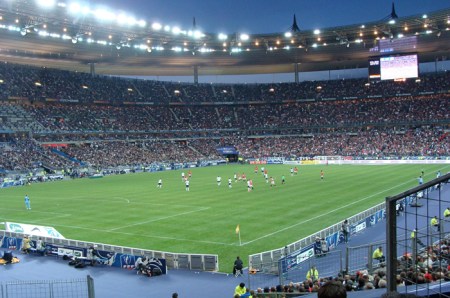
In France, officials are preparing for possible attacks against the European Football Championships. The games, which start on June 10, comprise 51 matches involving 24 teams playing in 10 host cities across the country.

Interior Minister Bernard Cazeneuve said that more than 90,000 security personnel will be on hand to protect the 2.5 million spectators expected to attend the games, as well as the hundreds of thousands more who will watch the matches on big screens in so-called “fan zones” in major cities.

Patrick Calvar, the head of the France’s domestic intelligence agency (Direction générale de la sécurité intérieure, DGSI), warned: “We know that the Islamic State is planning new attacks in France.” He added:

“We risk being confronted with a new form of attack: a terrorist campaign characterized by placing explosive devices in places where large crowds are gathered, and repeating this type of action to create a climate of panic.”

According to Calvar, at least 645 French nationals or residents, including 245 women, are currently with the Islamic State (ISIS) in Syria and Iraq. Another 200 individuals are “in transit,” either on their way to the Middle East or returning to France. Around 244 jihadists have already returned to France, and another 818 people have “demonstrated their intention to go to Syria.”

1636The Stade de France, located in a Paris suburb, was attacked by three Islamic State suicide bombers in November 2015. The stadium will be hosting games during the UEFA Euro 2016 football championships (June 10 – July 10, 2016), and French officials are preparing for possible jihadist attacks. (Image source: Wikimedia Commons/Liondartois)

Calvar’s concerns have been echoed by Hans-Georg Maaßen, the head of Germany’s domestic intelligence agency (Bundesamt für Verfassungsschutz, BfV). In an interview with Rheinische Post, Maaßen said: “We know that the Islamic State has the European Championship in its sights.”

On May 29, British media quoted Belgian security sources as saying they had discovered an Islamic State plot to attack British football fans in the southern French city of Marseille when England plays Russia on June 11. The plans were reportedly discovered on a laptop used by Salah Abdeslam, a Belgian-born French national of Moroccan descent who is thought to be the mastermind of the November 2015 terrorist attacks on Paris which left 130 dead.

The laptop is said to have contained information about a plot to kill large numbers of British fans using assault rifles, suicide bombers and possibly even drones armed with chemical weapons. The laptop contained photos and references to Marseille’s historic Old Port, where tens of thousands of football fans are expected to gather at the many bars and restaurants in the area.

Meanwhile, French Interior Minister Bernard Cazeneuve also announced that more than 23,000 police will be deployed to protect the Tour de France, the world’s premier bicycle race, which takes place from July 2 to 24.

Teams of special operations forces (Groupe d’intervention de la Gendarmerie Nationale, GIGN) will guard riders and an estimated 12 million spectators along a route that covers 3,500 kilometers (2,180 miles). “Everyone understands that this year the Tour de France is taking place in a particular context,” Cazeneuve said. He added: “The terrorist threat remains very high.”

In Poland, officials are preparing for possible jihadist attacks against the Catholic Church’s World Youth Day, which is expected to draw 2.5 million to Krakow from July 26 to 31. Poland will impose border controls at all of its national borders from July 4 to August 2.

In Britain, music festivals, big sports venues and nightclubs have been placed on “high alert” for potential jihadist attacks, according to a senior anti-terrorism officer interviewed by the Sunday Times.

Neil Basu, the deputy assistant commissioner of the Metropolitan Police, said that crowded places — including Glastonbury, billed as the world’s largest music festival, which will draw 135,000 people to Somerset from June 22 to 26 — are a major concern for police this summer. Basu warned:

“These people are perfectly happy to target civilians with the maximum terror impact. Crowded places were always a concern for us, but now they are right at the top of the agenda.”

Basu said that sports stadiums and big music events are especially vulnerable: “This is where you put a small town into a small area for a couple of hours.”

Police in rural communities in Britain that host large summer festivals are warning that they could be “sitting ducks” in the face of a jihadist attack as they wait for armed backup to arrive from many miles away.

In an interview with the BBC, John Apter, the head of the Hampshire and Isle of Wight Police Federation, said:

“Being realistic, if a firearms unit was coming from the middle of the county you are still talking about 30 miles away — you are not talking about a few minutes. There would be an understandable delay. If a firearms unit is the other side of the county they could be 70 miles away so you are talking a significant distance. So the only officers that you have available are unarmed and vulnerable officers and they are the officers that are saying to me that in a terrorist situation they would be sitting ducks.”

Most police in Britain are unarmed. According to Deputy Chief Constable Simon Chesterman, the UK’s top firearms officer, British police chiefs are struggling to recruit enough officers who are willing to carry a firearm, because many fear they will be treated as criminal suspects if they use their weapon in the line of duty.

Senior British security officials estimate that the UK needs an extra 1,500 armed officers to tackle jihadist attacks such as those carried out in Paris. Because half of the recruits will not make it through the rigorous training, however, 3,000 volunteers are needed to come forward.

Che Donald of the Police Federation — which represents the 5,647 officers throughout Britain who currently carry firearms — told the Guardian that while major cities such as London are sufficiently protected, other large towns and cities are not: “Currently there are not enough firearms officers who could deal with an incident in quite a lot of areas of Britain.”

In Brussels, Manuel Navarrete Paniagua, the head of the European Counter Terrorism Centre at the European police agency Europol, warned Members of the European Parliament that terrorist cells in Europe are stockpiling weapons and explosives for future attacks:

“We have some information reported by the member states that terrorists groups are trying to establish large clandestine stockpiles of explosives in the European Union to be used eventually in large scale home attacks.”

Paniagua added that police had foiled more than 200 terrorist attacks in the EU in 2015. A total of 151 people were killed and more than 360 injured during terrorist attacks in the EU in 2015. More than 1,000 people were arrested for terrorist-related crimes.

In an interview with Time magazine, Europol director Rob Wainwright revealed that “several hundred” battle-trained European jihadists are probably plotting new attacks. He said that his agency is working on 50 ongoing terrorist investigations:

“This is the highest terrorist threat we have faced in Europe since the days of 9/11. We have 5,000 Europeans who have been radicalized by the Islamic State and have traveled to Syria and Iraq and engaged in conflict experience. We suspect that about one-third of them have come back: That is our best guess. We don’t know for sure…

“Our real concern is that there are other networks, either in Europe already, or who are being trained in Syria for further action. We know that the Islamic State last year took a strategic decision to establish an external operations command, a division to plan exactly the kind of attacks we have now seen. We think that they are still active and planning to do that. The threat is alive and current. Another attempted attack is almost certain. Whether it gets through depends of course. I am concerned about the Islamic State’s clearly expressed desire for the spectacular.”

On May 31, the U.S. State Department issued a travel alert for Europe this summer:

“We are alerting U.S. citizens to the risk of potential terrorist attacks throughout Europe, targeting major events, tourist sites, restaurants, commercial centers and transportation. The large number of tourists visiting Europe in the summer months will present greater targets for terrorists planning attacks in public locations, especially at large events.”

The travel alert urges vigilance when in public places or using mass transportation, and avoiding crowded places.

An In-Depth Interview with Ayaan Hirsi Ali on Islam and the Defense of Western Civilization

June 1, 2016

An In-Depth Interview with Ayaan Hirsi Ali on Islam and the Defense of Western CivilizationThe New Criterion via YouTube, June 1, 2016

The blurb beneath the video states,

For The New Criterion, Ben Weingarten, commentator and Founder & CEO of ChangeUp Media sits down with Ayaan Hirsi Ali, ardent defender of Western civilization and individual liberty against Islamic supremacism, New York Times bestselling author of ‘The Caged Virgin,’ ‘Infidel’ and ‘Nomad’ and ‘Heretic,’ former Dutch MP, fellow with the Future of Diplomacy Project at the Belfer Center for Science and International Affairs at the Harvard Kennedy School, visiting scholar at the American Enterprise Institute, founder of the AHA Foundation Ayaan Hirsi Ali and recipient of The New Criterion’s fourth annual Edmund Burke Award for Service to Culture & Society for an in-depth interview. During their discussion, Weingarten and Ali discuss America’s inability under both Presidents Obama and Bush to recognize and defend against Islamic supremacism as the totalitarian existential threat of our time, the clash of civilizations between Islam and the West and the ideology of the global jihadist movement, the Islamization of Europe, how the West can defend its freedoms from a subversive global jihadist movement seeking to use those freedoms against us, the war on free speech in the West being waged by Islamic supremacists with the help wittingly or unwittingly of many on the Left and more. For more from The New Criterion’s April 2016 ‘Edmund Burke Award’ gala and other compelling content, check out The New Criterion’s YouTube channel at http://www.youtube.com/user/TheNewCri….

Ayaan Hirsi on the Islamization of Europe, Immigration Jihad and the Impotence of the West

June 1, 2016

Ayaan Hirsi on the Islamization of Europe, Immigration Jihad and the Impotence of the West, The New Criterion via YouTube, January 1, 2016

The blurb beneath the video states,

Ayaan Hirsi Ali, ardent defender of Western civilization against Islamic supremacism, New York Times bestselling author, former Dutch MP and recipient of The New Criterion’s fourth annual Edmund Burke Award for Service to Culture & Society argues that Islamic supremacists are using immigration or the Islamic concept of the ‘hijra’ as a means of Islamizing Europe while Europeans refuse to assimilate Muslims or defend their culture against those purposefully seeking to destroy it, during an in-depth interview for The New Criterion by Ben Weingarten, commentator and Founder & CEO of ChangeUp Media. For more from The New Criterion’s April 2016 ‘Edmund Burke Award’ gala and other compelling content, check out The New Criterion’s YouTube channel at http://www.youtube.com/user/TheNewCri….

Antwerp Terror Arrests Underscore Growing Threat to Europe and America

June 1, 2016

Antwerp Terror Arrests Underscore Growing Threat to Europe and America, Investigative Project on Terrorism, Abigail R. Esman, June 1, 2016

768

Last Wednesday, just two years and a day after the deadly terrorist attack on the Jewish Museum in Brussels, and barely more than two months after the twin attacks on the Brussels airport and metro, Belgian police arrested a group of Muslim youth planning yet another attack, this time in Antwerp. Aiming “to kill as many kufar,” or non-Muslims, as possible, the group is believed to have been planning to bomb Antwerp’s Central Station. The group also is believed to have made previous plans to assassinate right-wing politician Filip Dewinter, the leader of the Vlaams Belang party. Those plans were put on hold, however, in favor of a larger-scale attack.

The suspects were members of a group of radicalized Muslim teens believed to have kept contact with Antwerp native Hicham Chaib, who is now a high-ranking leader of the Islamic State. It was Chaib who informed the public that the March 22 attacks on Belgium’s Zaventem airport and Maelbeek metro station “were just a taste of what’s to come.” And it is Chaib, the former second-in-command of Shariah4Belgium who left Antwerp for Syria in 2012, who now actively recruits other Antwerp-based youth to join ISIS or to execute terrorist attacks in their homeland.

The four arrests followed a series of raids by Antwerp police into the homes of several suspects in the Borgerhout district. Two suspects have been released, but other members of the group, some arrested previously, remain in custody. All suspects are said to be between the ages of 16 and 19, confirming earlier Dutch reports that European Muslims under the age of 20 are increasingly becoming involved in Islamic State activities and jihadist plots.

According to some accounts, the Antwerp group is comprised of nine youths, at least five of whom are minors. At least two members tried to join the Islamic State in Raqqa in March, but were stopped by officials en route and sent back to Belgium.

With security and counter-terror investigations heightened in Brussels after the March 22 attacks there, it is unsurprising that jihadists might be moving their activities and focus to nearby Antwerp. The city has a long history of Muslim unrest, with riots as early as 2002 and the founding, by Hizballah-linked Lebanese immigrant Dyab Abou Jahjah, of the Arab European League (AEL) in 2000. An organization with pan-Arab aspirations, the AEL aimed to create what Jahjah called a “sharocracy” – a kind of combination of democracy and sharia – that would eventually become European law.

More recently, Antwerp native Fouad Belkacem founded the notorious Sharia4Belgium, alleged to have organized most of the recruiting for ISIS in Belgium, with some outreach to neighboring countries such as France and The Netherlands. And, of the estimated 500 Belgian Muslims who have joined terrorist groups in Syria, more than 100 come from Antwerp.

But the indication of heightened new activity in Antwerp also suggests possible changes in strategy for Europe-based jihadists and recruiters. While French-speaking Brussels maintains close ties to France (several of the terrorists involved in the two attacks in Paris last year were based or were born in Brussels), Flemish-speaking Antwerp holds a stronger relationship to The Netherlands. Antwerp is also a mere 30 minutes from Rotterdam by high-speed train, offering easy access to Europe’s largest and busiest port. The Rotterdam Port is also the launching point for the vast majority of European exports to America, Europe’s largest external trading partner.

This matters. According to the National Institute of Justice, “Few would dispute that, if terrorists used a cargo container to conceal a weapon of mass destruction and detonated it on arrival at a U.S. port, the impact on global trade and the world economy could be immediate and devastating.” And the New York Times further observed, “The cargo containers arriving on ships from foreign ports offer terrorists a Trojan horse for a devastating attack on the United States. As the Harvard political scientist Graham T. Allison has put it, a nuclear attack is ‘far more likely to arrive in a cargo container than on the tip of a missile.'”

The good news, however, is that The Netherlands’ intelligence and counter-terrorism agencies are well-recognized for their research, acuity, and effectiveness. And Rotterdam takes an especially hard line on Islamic extremism: its Essalam Mosque, Holland’s largest, served as the site for anti-extremist protests. Last year, the mosque dismissed all foreign Arabs from its board of directors. And following the January 2015 attacks in Paris, Ahmed Aboutaleb, Rotterdam’s Muslim mayor, famously invited any Dutch Muslim wishing to join the jihad in Syria to make the trip and never try to return. More, his fierce response to youth who dislike Dutch values was even more direct: he told them to “f*** off.”

Perhaps, then, even as these latest arrests demonstrate just how much Europe’s radical Muslim problem threatens to become America’s radical Muslim problem, we should consider making some of Europe’s more radical solutions America’s solutions, too.

Cartoon of the Day

May 30, 2016

H/t Joopklepzeiker

Europe

Anti-Brexit Shocker: Economists and Faith Leaders Plot Britain’s Downfall

May 30, 2016

Anti-Brexit Shocker: Economists and Faith Leaders Plot Britain’s Downfall, The Daily Bell, Staff, May 30, 2016

broken-uk-flag

Economists overwhelmingly reject Brexit in boost for Cameron  … Poll shows 88% of 600 experts fear long-term fall in GDP if UK leaves single market, and 82% are alarmed over impact on household income. -Guardian

Once again, economists remind us that that their profession is at least a questionable one.

Presumably healthy economies are based in private competition not public regulation. Economic progress is made via individual human action.

One person has a product or service and competes against another. And one company against another.

There is room for more than one product or service as consumers have different priorities.

And thus an “economy” is built.

But for some reason, British economists seem to believe that the authoritarian mess that is the European Union is necessary for prosperity.

More:

Relatively few economists have publicly come out saying that leaving the EU would be good for British growth, and only a handful have signed up in support of the pro-Brexit group Economists for Britain.

Most studies of the impact on Britain’s economy of a decision to quit the EU show the uncertainty will hit growth in the short term and the loss of access to the EU’s single market will damage growth for decades to come.

The poll was administered by Ipsos MORI, and received responses from more than 600 economists.

These economists believed in great numbers that leaving the EU would damage the British economy for years to come. Some 61% believe unemployment would expand.

Economists from top institutions such as the Royal Economic Society and the Society of Business Economists replied voluntarily.

The article also tells that 37 “faith leaders” have just written a letter to the Observer newspaper claiming Brexit damages both peace and prosperity.

It’s not clear from the article why leaving the EU would damage peace and prosperity.

The article makes a clearer case for what economists are worried about: “Loss of access to the single market” (67%) and “increased uncertainty leading to reduced investment” (66%).

Presumably economists (and faith leaders?) see their professions somehow enhanced by the EU and diminished by Brexit.

But these views still don’t make much sense.

There are currently reports that the EU is pushing hard for the federalization of Europe via a new tax ID number and also via plans for a pan-European army.

A national insurance number will allow Brussels to identify European (and British) taxpayers and would be a further step toward the institution of an aggressive European tax.

Additionally, new legislation will ban sovereign states from reducing corporate taxation to below 15 percent.

Neither plans for a European army nor the new tax ID number are apparently getting much coverage in Britain.

It really doesn’t matter though. Brussels have proven several times over that the EU’s goal is a United States of Europe.

Surely the economists involved in the survey understand the level of corruption currently infecting the EU.

Those affiliated with the EU receive enormous compensation for useless activities. Regulatory advantages are routinely sold to the highest bidder.

And surely they understand that the decision-making bodies have been purposefully divorced from Parliament. The entire setup of the EU is aimed at producing a mega-state responsible only to a handful of bureaucrats.

How on earth British economists, let alone “faith leaders” can endorse the EU is difficult to imagine.

If Britain stays in the EU, within a decade the country – as it has existed for perhaps a thousand years – will be disassembled.

These economists and faith leaders are content to support the end of Britain.

Faith will not be diminished and industry will not leave if Brexit occurs. But the country will not survive as a historical entity if it remains within Europe.

Conclusion: These two groups are willfully presiding over the end of Britain.

Has the Pope Abandoned Europe to Islam?

May 26, 2016

Has the Pope Abandoned Europe to Islam? Gatestone InstituteGiulio Meotti, May 26, 2016

♦ In 2006, Pope Benedict XVI said what no Pope had ever dared to say — that there is a link between violence and Islam. Ten years later, Pope Francis never calls those responsible for anti-Christian violence by name and never mentions the word “Islam.”

♦ Pope Francis does not even try to re-evangelize or reconquer Europe. He seems deeply to believe that the future of Christianity is in the Philippines, in Brazil and in Africa. Probably for the same reason, the Pope is spending less time and effort in denouncing the terrible fate of Christians in the Middle East.

♦ “Multiculturalism” in Europe is the mosque standing on the ruins of the church. It is not the synthesis requested by Pope Francis. It is the road to becoming extinct.

♦ Asking Europe to be “multicultural” while it experiences a dramatic de-Christianization is extremely risky. In Germany, a new report found that “Germany has become demographically a multi-religious country.” In the UK, a major inquiry recently declared that “Britain is no longer a Christian country.” In France, Islam is also overtaking Christianity as the dominant religion.

To scroll the list of Pope Francis’s apostolic trips — Brazil, South Korea, Albania, Turkey, Sri Lanka, Ecuador, Cuba, United States, Mexico, Kenya, Uganda, Philippines — one could say that Europe is not exactly at the top of his agenda.

The two previous pontiffs both fought for the cradle of Christendom. Pope John Paul II took on Communism by toppling the Berlin Wall and the Iron Curtain. Benedict XVI took on “the dictatorship of relativism” (the belief that truth is in the eye of the beholder) and bet everything on re-evangelizing the continent by traveling through it (he visited Spain three times) and in speeches such as the magnificent ones at Regensburg, where he spoke bluntly about the threat of Islam, and the German Bundestag, where he warned the gathered politicians against declining religiosity and “sacrificing their own ideals for the sake of power.”

Pope Francis, on the contrary, simply ignores Europe, as if he already considers it lost. This former Argentinian Cardinal, a representative of the “global South” Christianity, made spectacular trips to the migrants’ islands of Lampedusa (Italy) and Lesbos (Greece), but never to the heart of the old continent. Pope Francis has also made it difficult for Anglicans to enter into the Catholic Church, by downplaying the dialogue with them.

Most importantly, however, in his important May 6 speech for the Charlemagne Prize, the Pope, in front of European leaders, castigated Europe on migrants and asked its leaders to be more generous with them. He next introduced something revolutionary into the debate: “The identity of Europe is, and always has been, a multicultural identity,” he said. This idea is questionable.

Multiculturalism is a specific policy formulated in the 1970s. and it was absent from the political vocabulary of Schuman and Adenauer, two of Europe’s founding fathers. Now it has been invoked by the Pope, who spoke of the need for a new synthesis. What is this all about?

Today, Christianity appears marginal and irrelevant in Europe. The religion faces an Islamic demographic and ideological challenge, while the post-Auschwitz remnants of Jewish communities are fleeing from the new anti-Semitism. Under these conditions, a synthesis between the old continent and Islam would be a surrender of Europe’s claim to the future.

“Multiculturalism” is the mosque standing on the ruins of the church. It is not the synthesis requested by the Pope. It is the road to becoming extinct.

Asking Europe to be “multicultural” while it is experiencing a dramatic de-Christianization is also extremely risky. In Germany, a new report just found that “Germany has become demographically a multi-religious country.” In the UK, a major inquiry recently declared that “Britain is no longer a Christian country.” In France, Islam is also overtaking Christianity as the dominant religion. You find the same trend everywhere, from Protestant Scandinavia to Catholic Belgium. That is why Pope Benedict was convinced that Europe needed to “re-evangelized.” Pope Francis does not even try to re-evangelize or reconquer Europe. Instead, he seems deeply to believe that the future of Christianity is in the Philippines, Brazil and Africa.

Probably for the same reason, the Pope is spending less time denouncing the terrible fate of Christians in the Middle East. Sandro Magister, Italy’s most important Vatican observer, sheds light on the Pope’s silences:

“He remained silent on the hundreds of Nigerian schoolgirls abducted by Boko Haram. He remained silent on the young Sudanese mother Meriam, sentenced to death solely for being Christian and finally liberated by the intervention of others. He remains silent on the Pakistani mother Asia Bibi, who has been on death row for five years, because she too is an ‘infidel’, and [He] does not even reply to the two heartrending letters she has written to him this year, before and after the reconfirmation of the sentence.”

In 2006, Pope Benedict XVI, in his Regensburg lecture, said what no Pope had ever dared to say — that there is a link between violence and Islam. Ten years later, Pope Francis never calls those responsible for anti-Christian violence by name, and never mentions the word “Islam.” Pope Francis also recently recognized the “State of Palestine,” before it even exists — a symbolic and unprecedented first. The Pope also might abandon the Church’s long tradition of a “just war,” one regarded as morally or theologically justifiable. Pope Francis always speaks of the “Europe of peoples,” but never of the “Europe of Nations.” He advocates welcoming migrants and washes their feet, while he ignores that these uncontrolled demographic waves are transforming Europe, bit by bit, into an Islamic state.

1624In 2006, Pope Benedict XVI (left) said what no Pope had ever dared to say — that there is a link between violence and Islam. Ten years later, Pope Francis (right) never calls those responsible for anti-Christian violence by name and never mentions the word “Islam.” (Image source: Benedict: Flickr/Catholic Church of England | Francis: Wikimedia Commons/korea.net)

That is the meaning of Pope Francis’ trips to the islands of Lampedusa, Italy, and Lesbos, Greece — both symbols of a dramatic geographical and civilizational boundary. That is also the meaning of the Pope’s speech for the Charlemagne Prize.

Has the head of Christianity given up on Europe as a Christian place?