Archive for April 2017

Islam in the Heart of England and France

April 23, 2017

Islam in the Heart of England and France, Gatestone InstituteDenis MacEoin, April 23, 2017

For many years, the British government has fawned on its Muslim population; evidently the government thought that Muslims would in due course integrate, assimilate, and become fully British, as earlier immigrants had done. More than one survey, however, has shown that the younger generations are even more fundamentalist than their parents and grandparents, who came directly from Muslim countries.

********************************

“There are plenty of private Muslim schools and madrasas in this city. They pretend that they all preach tolerance, love and peace, but that isn’t true. Behind their walls, they force-feed us with repetitive verses of the Qur’an, about hate and intolerance.” — Ali, an 18-year-old of French origin, whose father was radicalized.

“In England, they are free to speak. They speak only of prohibitions, they impose on one their rigid vision of Islam but, on the other hand, they listen to no-one, most of all those who disagree with them.” — Yasmina, speaking of extremist Muslims in the UK.

“Birmingham is worse than Molenbeek” — the Brussels borough that The Guardian described as “becoming known as Europe’s jihadi central.” — French commentator, republishing an article by Rachida Samouri.

The city of Birmingham in the West Midlands, the heart of England, the place where the Industrial Revolution began, the second city of the UK and the eighth-largest in Europe, today is Britain’s most dangerous city. With a large and growing Muslim population, five of its electoral wards have the highest levels of radicalization and terrorism in the country.

In February, French journalist Rachida Samouri published an article in the Parisian daily Le Figaro, in which she recounted her experiences during a visit there. In “Birmingham à l’heure islamiste” (“Birmingham in the Time of Islam”) she describes her unease with the growing dislocation between normative British values and those of the several Islamic enclaves. She mentions the Small Heath quarter, where nearly 95% of the population is Muslim, where little girls wear veils; most of the men wear beards, and women wear jilbabs and niqabs to cover their bodies and faces. Market stalls close for the hours of prayer; the shops display Islamic clothes and the bookshops are all religious. Women she interviewed condemned France as a dictatorship based on secularism (laïcité), which they said they regarded as “a pretext for attacking Muslims”. They also said that they approved of the UK because it allowed them to wear a full veil.

Another young woman, Yasmina, explained that, although she may go out to a club at night, during the day she is forced to wear a veil and an abaya [full body covering]. She then goes on to speak of the extremists:

“In England, they are free to speak. They speak only of prohibitions, they impose on one their rigid vision of Islam but, on the other hand, they listen to no-one, most of all those who disagree with them.”

Speaking of the state schools, Samouri describes “an Islamization of education unthinkable in our [French] secular republic”. Later, she interviews Ali, an 18-year-old of French origin, whose father has become radicalized. Ali talks about his experience of Islamic education:

“There are plenty of private Muslim schools and madrasas in this city. They pretend that they all preach tolerance, love and peace, but that isn’t true. Behind their walls, they force-feed us with repetitive verses of the Qur’an, about hate and intolerance.”

Samouri cites Ali on the iron discipline imposed on him, the brutality used, the punishment for refusing to learn the Qur’an by heart without understanding a word of it, or for admitting he has a girlfriend.

Elsewhere, Samouri notes young Muslim preachers for whom “Shari’a law remains the only safety for the soul and the only code of law to which we must refer”. She interviews members of a Shari’a “court” before speaking with Gina Khan, an ex-Muslim who belongs to the anti-Shari’a organization One Law for All. According to Samouri, Khan — a secular feminist — considers the tribunals “a pretext for keeping women under pressure and a means for the religious fundamentalists to extend their influence within the community”.

Another teenager of French origin explains how his father prefers Birmingham to France because “one can wear the veil without any problem and one can find schools where boys and girls do not mix”. “Birmingham,” says Mobin, “is a little like a Muslim country. We are among ourselves, we do not mix. It’s hard”.

Samouri herself finds this contrast between secular France and Muslim England disturbing. She sums it up thus:

“A state within a state, or rather a rampant Islamization of one part of society — [is] something which France has succeeded in holding off for now, even if its secularist model is starting to be put to the test”.

Another French commentator, republishing Samouri’s article, writes, “Birmingham is worse than Molenbeek” — the Brussels borough that The Guardian described as “becoming known as Europe’s jihadi central.”

The comparison with Molenbeek may be somewhat exaggerated. What is perplexing is that French writers should focus on a British city when, in truth, the situation in France — despite its secularism — is in some ways far worse than in the UK. Recent authors have commented on France’s growing love for Islam and its increasing weakness in the face of Islamist criminality. This weakness has been framed by a politically-correct desire to stress a multiculturalist policy at the expense of taking Muslim extremists and fundamentalist organizations at face value and with zero tolerance for their anti-Western rhetoric and actions. The result? Jihadist attacks in France have been among the worst in history. It is calculated that the country has some some 751 no-go zones (“zones urbaines sensibles”), places where extreme violence breaks out from time to time and where the police, firefighters, and other public agents dare not enter for fear of provoking further violence.

Many national authorities and much of the media deny that such enclaves exist, but as the Norwegian expert Fjordman has recently explained:

If you say that there are some areas where even the police are afraid to go, where the country’s normal, secular laws barely apply, then it is indisputable that such areas now exist in several Western European countries. France is one of the hardest hit: it has a large population of Arab and African immigrants, including millions of Muslims.

There are no such zones in the UK, certainly not at that level. There are Muslim enclaves in several cities where a non-Muslim may not be welcome; places that resemble Pakistan or Bangladesh more than England. But none of these is a no-go zone in the French, German or Swedish sense — places where the police, ambulances, and fire brigades are attacked if they enter, and where the only way in (to fight a fire, for example) is under armed escort.

Samouri opens her article with a bold-type paragraph stating:

“In the working-class quarters of the second city of England, the sectarian lifestyle of the Islamists increasingly imposes itself and threatens to blow up a society which has fallen victim to its multicultural utopia”.

Has she seen something British commentators have missed?

The Molenbeek comparison may not be entirely exaggerated. In a 1000-page report, “Islamist Terrorism: Analysis of Offences and Attacks in the UK (1998-2015),” written by the respected analyst Hannah Stuart for Britain’s Henry Jackson Society, Birmingham is named more than once as Britain’s leading source of terrorism. [1]

One conclusion that stands out is that terror convictions have apparently doubled in the past five years. Worse, the number of offenders not previously known to the authorities has increased sharply. Women’s involvement in terrorism, although still less than men’s, “has trebled over the same period”. Alarmingly, “Proportionally, offences involving beheadings or stabbings (planned or otherwise) increased eleven-fold across the time periods, from 4% to 44%.” (p. xi)

Only 10% of the attacks are committed by “lone wolves”; almost 80% were affiliated with, inspired by or linked to extremist networks — with 25% linked to al-Muhajiroun alone. As the report points out, that organization (which went under various names) was once defended by some Whitehall officials — a clear indication of governmental naivety.

Omar Bakri Muhammed, who co-founded the British Islamist organization al-Muhajiroun, admitted in a 2013 television interview that he and co-founder Anjem Choudary sent western jihadists to fight in many different countries. (Image source: MEMRI video screenshot)

A more important conclusion, however, is that a clear link is shown between highly-segregated Muslim areas and terrorism. As the Times report on the Henry Jackson Society review points out, this link “was previously denied by many”. On the one hand:

Nearly half of all British Muslims live in neighbourhoods where Muslims form less than a fifth of the population. However, a disproportionately low number of Islamist terrorists — 38% — come from such neighbourhoods. The city of Leicester, which has a sizeable but well-integrated Muslim population, has bred only two terrorists in the past 19 years.

But on the other hand:

Only 14% of British Muslims live in neighbourhoods that are more than 60% Muslim. However, the report finds, 24% of all Islamist terrorists come from these neighbourhoods. Birmingham, which has both a large and a highly segregated Muslim population, is perhaps the key example of the phenomenon.

The report continues:

Just five of Britain’s 9,500 council wards — all in Birmingham — account for 26 convicted terrorists, a tenth of the national total. The wards — Springfield, Sparkbrook, Hodge Hill, Washwood Heath and Bordesley Green — contain sizeable areas where the vast majority of the population is Muslim.

Birmingham as a whole, with 234,000 Muslims across its 40 council wards, had 39 convicted terrorists. That is many more than its Muslim population would suggest, and more than West Yorkshire, Greater Manchester and Lancashire put together, even though their combined Muslim population is about 650,000, nearly three times that of Birmingham. There are pockets of high segregation in the north of England but they are much smaller than in Birmingham.

The greatest single number of convicted terrorists, 117, comes from London, but are much more widely spread across that city than in Birmingham and their numbers are roughly proportionate to the capital’s million-strong Muslim community.

Hannah Stuart, the study’s author, has observed that her work has raised “difficult questions about how extremism takes root in deprived communities, many of which have high levels of segregation. Much more needs to be done to challenge extremism and promote pluralism and inclusivity on the ground.”

Many observers say Birmingham has failed that test:

“It is a really strange situation,” said Matt Bennett, the opposition spokesman for education on the council. “You have this closed community which is cut off from the rest of the city in lots of ways. The leadership of the council doesn’t particularly wish to engage directly with Asian people — what they like to do is have a conversation with one person who they think can ‘deliver’ their support.”

Clearly, lack of integration is, not surprisingly, the root of a growing problem. This is the central theme of Dame Louise Casey’s important report of last December to the British government. Carried out under instructions of David Cameron, prime minister at the time, “The Casey Review: A review into opportunity and integration” identifies some Muslim communities (essentially those formed by Pakistani and Bangladeshi immigrants and their offspring) as the most resistant to integration within British society. Such communities do little or nothing to encourage their children to join in non-Muslim education, events, or activities; many of their women speak no English and play no role within wider society, and large numbers say they prefer Islamic shari’a law to British law.

Casey makes particular reference to the infamous Trojan Horse plot, uncovered in 2014, in which Muslim radicals conspired to introduce fundamentalist Salafi doctrines and practices into a range of Birmingham schools — not just private Muslim faith schools but regular state schools (pp. 114 ff.): “a number of schools in Birmingham had been taken over to ensure they were run on strict Islamic principles…”

It is important to note that these were not ‘Muslim’ or ‘faith’ schools. [Former British counterterrorism chief] Peter Clarke, in his July 2014 report said:

“I took particular note of the fact that the schools where it is alleged that this has happened are state non-faith schools…”

He highlighted a range of inappropriate behaviour across the schools, such as irregularities in employment practices, bullying, intimidation, changes to the curriculum, inappropriate proselytizing in non-faith schools, unequal treatment and segregation. Specific examples included:

  • a teachers’ social media discussion called the “Park View Brotherhood”, in which homophobic, extremist and sectarian views were aired at Park View Academy and others;
  • teachers using anti-Western messages in assemblies, saying that White people would never have Muslim children’s interests at heart;
  • the introduction of Friday Prayers in non-faith state schools, and pressure on staff and students to attend. In one school, a public address system was installed to call pupils to prayer, with a member of the staff shouting at students who were in the playground, not attending prayer, and embarrassing some girls when attention was drawn to them because girls who are menstruating are not allowed to attend prayer; and
  • senior staff calling students and staff who do not attend prayers ‘k****r’. (Kuffar, the plural of kafir, an insulting term for “unbelievers”. This affront reproduces the Salafi technique of condemning moderate or reformist Muslims as non-Muslims who may then be killed for being apostates.)

Casey then quotes Clarke’s conclusion:

“There has been co-ordinated, deliberate and sustained action, carried out by a number of associated individuals, to introduce an intolerant and aggressive Islamic ethos into a few schools in Birmingham. This has been achieved in a number of schools by gaining influence on the governing bodies, installing sympathetic headteachers or senior members of staff, appointing like-minded people to key positions, and seeking to remove head teachers they do not feel sufficiently compliant.”

The situation, Casey states, although improved from 2014, remains unstable. She quotes Sir Michael Wilshaw, Her Majesty’s Chief Inspector, in a letter to the Secretary of State for Education, which declared as late as July 8, 2016, that the situation “remains fragile”, with:

  • a minority of people in the community who are still intent on destabilising these schools;
  • a lack of co-ordinated support for the schools in developing good practice;
  • a culture of fear in which teachers operate having gone underground but still there;
  • overt intimidation from some elements within the local community;
  • organised resistance to the personal, social and health education (PSHE) curriculum and the promotion of equality.

Elsewhere, Casey notes two further issues in Birmingham alone, which shed light on the city’s Muslim population. Birmingham has the largest number of women who are non-proficient in English (p. 96) and the largest number of mosques (161) in the UK (p. 125).

For many years, the British government has fawned on its Muslim population; evidently the government thought that Muslims would in due course integrate, assimilate, and become fully British, as earlier immigrants had done. More than one survey, however, has shown that the younger generations are even more fundamentalist than their parents and grandparents, who came directly from Muslim countries. The younger generations were born in Britain but at a time when extremist Islam has been growing internationally, notably in countries with which British Muslim families have close connections. Not only that, but a plethora of fundamentalist preachers keep on passing through British Muslim enclaves. These preachers freely lecture in mosques and Islamic centres to youth organizations, and on college and university campuses.

Finally, it might be worth noting that Khalid Masood, a convert to Islam who killed four and injured many more during his attack outside the Houses of Parliament in March, had been living in Birmingham before he set out to wage jihad in Britain’s capital.

It is time for some hard thinking about the ways in which modern British tolerance of the intolerant and its embrace of a wished-for, peace-loving multiculturalism have furthered this regression. Birmingham is probably the place to start.

________________

[1] Hard copies of the report may be purchased via PayPal here. Essays, summaries etc. may be linked to from here. An excellent summary by Soeren Kern is available online here.

Ex-Iranian Lobbyist at State Dept Moved After Conservative Pressure

April 23, 2017

Ex-Iranian Lobbyist at State Dept Moved After Conservative Pressure, Front Page Magazine (The Point), Daniel Greenfield, April 23, 2017

No one should assume that the election automatically changed everything. Much of the government is still under the control of the same folks who controlled it last year. And it will take pressure and scrutiny to change that. But pressure can and does work. Conservative activists can change things by focusing on people in government who should not be there.

This is progress.

A top State Department official who helped shape the Iran nuclear deal has reportedly been reassigned following criticism from conservative media outlets that questioned her loyalty to President Trump’s administration.

Sahar Nowrouzzadeh’s yearlong assignment to the secretary of State’s policy planning team was cut short earlier this month following critical stories from the Conservative Review and Breitbart News, Politico reported Friday.

A State Department official told Politico that Nowrouzzadeh did not want to be reassigned, and multiple officials in the State Department believe the media attacks were to blame.

“It puts people on edge,” an unnamed State Department official told Politico.

Good. The people being put on edge ought to be on edge. Especially since some of them are bringing us to the edge of nuclear war.

The State Department said in a statement that Nowrouzzadeh has returned to the Office of Iranian Affairs, but did not specify her new role or tell the publication why she was moved.

We’ll know soon enough.

The Hill story, predictably, makes no mention of why there were objections to her. That’s how you can tell it’s propaganda. It neglects to mention the Iranian lobbyist issue.

This Iran lobby, publicly represented by the National Iranian American Council (NIAC), has become a staunch institutional ally of the White House selling the Joint Comprehensive Plan of Action, as the nuclear deal is known. .. Perhaps NIAC’s most accomplished alum is Sahar Nowrouzzadeh, who is now National Security Council director for Iran in the Obama administration and therefore the top U.S. official for Iran policy, bringing together the various departments of government working on U.S. strategy toward the country. She is also, after the White House principals, one of the leading advisers to President Obama on Iran.

No doubt owing to the sensitivity (and influence) of her government role, Nowrouzzadeh has maintained a low profile, but her work at NIAC is publicly available. She drafted one of the organization’s annual reports for 2002-2003 and was referred to by Dokhi Fassihian, then executive director, as a “staff member” (DOC). The Obama administration insists that Nowrouzzadeh was only ever an intern with NIAC, and Nowrouzzadeh does not seem eager to play up her affiliation with the group. According to her LinkedIn profile, she has worked at the State Department and the Department of Defense. The profile doesn’t mention NIAC at all.

Neither does the Hill story.

Nowrouzzadeh should not be in any agency of the government. Let alone sitting pretty in the Office of Iranian Affairs. But there has been some progress. And this is part of draining the swamp.

Diplomat Rejects MKO’s Nuclear Allegations against Iran as “Absurd”

April 23, 2017

Diplomat Rejects MKO’s Nuclear Allegations against Iran as “Absurd”, Tasnim News Agency, April 23, 2017

(Please see also, Iran violating U.S. deal with secret nukes research, opposition group says. — DM)

TEHRAN (Tasnim) – Iranian Deputy Foreign Minister for Legal and International Affairs Abbas Araqchi dismissed recent allegations leveled by the terrorist Mojahedin-e Khalq Organization (MKO) against Tehran’s nuclear program, as “absurd”.

In remarks released on Sunday night, Araqchi denounced recent MKO allegations that Iran is violating its nuclear deal with six world powers as “absurd and a repetition of a failed scenario whose invalidity has previously been proved by the International Atomic Energy Agency (IAEA).”

He further warned the new US administration not to be misled by the efforts made by the anti-Iran terror group and their regional supporters to spread Iranophobia, saying that previous US administrations have repeatedly taken the path and suffered every time they trusted the notorious group.

He made the remarks in response to recent MKO allegations that Iran is violating the nuclear agreement, known as the Joint Comprehensive Plan of Action (JCPOA) by “secretly conducting research into nuclear weapons components” at the Parchin military site in Iran.

Earlier on April 15, US Senator John McCain met with the MKO members in Albania, talking about his opposition to the Islamic Republic and pledging continued support for the group.

The MKO – listed as a terrorist organization by much of the international community – fled Iran in 1986 for Iraq and was given a camp by former Iraqi dictator Saddam Hussein.

They fought on the side of Saddam during the Iraqi imposed war on Iran (1980-88). They were also involved in the bloody repression of Shiite Muslims in southern Iraq in 1991 and the massacre of Iraqi Kurds.

The notorious group is also responsible for killing thousands of Iranian civilians and officials after the victory of the Islamic revolution in 1979.

More than 17,000 Iranians, many of them civilians, have been killed at the hands of the MKO in different acts of terrorism including bombings in public places, and targeted killings.

Krauthammer’s Take: Obama ‘Caved’ on Inspections, Now Iran Is Developing a Nuclear Weapon

April 22, 2017

Krauthammer’s Take: Obama ‘Caved’ on Inspections, Now Iran Is Developing a Nuclear Weapon, National Review via YouTube, April 21, 2017

(Please see also, Iran violating U.S. deal with secret nukes research, opposition group says.

Iran is cheating on its historical deal with the U.S. by secretly conducting research into nuclear weapons components such as bomb triggers and enriched uranium, the main Iranian opposition group said Friday.

The regime is doing engineering and weaponization testing at a walled military complex south of Tehran, a location which Iran has declared off-limits to inspectors, said the National Council of Resistance of Iran (NCRI) and its main operational arm, the People’s Mujaheddin of Iran (MEK).

— DM)


France: A Guide to the Presidential Elections

April 22, 2017

France: A Guide to the Presidential Elections, Gatestone InstituteSoeren Kern, April 22, 2017

“What poses a problem is not Islam, but certain behaviors that are said to be religious and then imposed on persons who practice that religion.” — Emmanuel Macron

“Those who come to France are to accept France, not to transform it to the image of their country of origin. If they want to live at home, they should have stayed at home.” — Marine Le Pen

“It [France] is one nation that has a right to choose who can join it and a right that foreigners accept its rules and customs. — François Fillon

Jean-Luc Mélenchon has called for a massive increase in public spending, a 90% tax on anyone earning more than €400,000 ($425,000) a year, and an across-the-board increase in the minimum wage by 16% to €1,326 ($1,400) net a month, based on a 35-hour work week.

Benoît Hamon has promised to establish a universal basic income: he wants to pay every French citizen over 18, regardless of whether or not they are employed, a government-guaranteed monthly income of €750 ($800). The annual cost to taxpayers would be €400 billion ($430 billion). By comparison, France’s 2017 defense budget is €32.7 billion ($40 billion).

Voters in France will go to the polls on April 23 to choose the country’s next president in a two-step process. The top two winners in the first round will compete in a run-off on May 7.

The election is being closely followed in France and elsewhere as an indicator of popular discontent with mainstream parties and the European Union, as well as with multiculturalism and continued mass migration from the Muslim world.

If the election were held today, independent centrist candidate Emmanuel Macron, who has never held elected office, would become the next president of France, according to most opinion polls.

An Ifop-Fiducial poll released on April 21 showed that Macron would win the first round with 24.5% of the votes, followed by Marine Le Pen, the leader of the anti-establishment National Front party, with 22.5%. Conservative François Fillon is third (19.5%), followed by Leftist firebrand Jean-Luc Mélenchon (18.5%) and radical Socialist Benoît Hamon (7%).

If the poll numbers are accurate, the two established parties, the Socialist Party and the center-right Republicans, would, for the first time, be eliminated in the first round.

In the second round, Macron, a pro-EU, pro-Islam globalist, would defeat Le Pen, an anti-EU, anti-Islam French nationalist, by a wide margin (61% to 39%), according to the poll.

Nevertheless, most polls show that the race is tightening, and that two candidates who up until recently were considered also-rans — Fillon, who has been mired in a corruption scandal, and Mélenchon, who has performed well in recent presidential debates — are narrowing the lead that Macron and Le Pen have over them.

An Elabe poll for BMFTV and L’Express released on April 21 showed Macron at 24%, Le Pen at 21.5%, Fillon at 20% and Mélenchon at 19.5%.

The numbers indicate that neither Macron nor Le Pen can be absolutely certain they will proceed to the May 7 runoff. It remains to be seen if the April 20 jihadist attack on three policemen in Paris will bolster support for either Fillon or Le Pen, both of whom have pledged to crack down on radical Islam, and both of whom are competing for many of the same voters. Adding to the uncertainty: Some 40% of French voters remain undecided.

Following are the main policy positions of the top five candidates:

Emmanuel Macron

Macron, 39, a former investment banker, was an adviser to incumbent Socialist President François Hollande. If elected, he would be France’s youngest president. A long-time member of the Socialist Party, Macron served in Hollande’s cabinet for two years as economy minister until August 2016, when he resigned to launch his own political movement, En Marche! (On the move!).

Macron, whose core base of support consists of young, urban progressives, has been called the “French Obama.” He insists that he is neither left nor right and has tried to position himself in the political center, between the Socialists and the conservatives — and as an alternative to Le Pen’s populism.

Macron is business friendly and has called for cutting corporate taxes and for investing in infrastructure. He sparked outrage in February when he described France’s colonial legacy in Algeria as a “crime against humanity.”

His meteoric rise has been propelled by a scandal which has damaged the standing of Republican candidate François Fillon, and because the Socialists fielded Benoît Hamon, an unpopular candidate.

Macron’s policy positions (platform here) include:

  • European Federalism: Macron has repeatedly called for a stronger European Union. At a January 14 political rally in Lille, he said: “We are Europe, we are Brussels, we wanted it and we need it. We need Europe because Europe makes us bigger, because Europe makes us stronger.”
  • Immigration: Macron has repeatedly praised German Chancellor Angela Merkel’s open-door migration policy, which has allowed more than two million mostly Muslim migrants into Germany since January 2015.

In a January 1, 2017 interview with Süddeutsche Zeitung, Macron accused critics of Merkel’s open-door migration policy of “disgraceful oversimplification.” He said: “Merkel and German society as a whole exemplified our common European values. They saved our collective dignity by accepting, accommodating and educating distressed refugees.”

In a February 4 rally in Lyon, Macron mocked U.S. President Donald Trump’s pledge to build a wall with Mexico: “I do not want to build a wall. I can assure you there is no wall in my program. Can you remember the Maginot Line?” he said, referring to a failed row of fortifications that France built in the 1930s to deter an invasion by Germany.

  • Islamic Terrorism: Macron has said he believes the solution to jihadist terrorism is more European federalism: “Terrorism wants to destroy Europe. We must quickly create a sovereign Europe that is capable of protecting us against external dangers in order to better ensure internal security. We also need to overcome national unwillingness and create a common European intelligence system that will allow the effective hunting of criminals and terrorists.”
  • Islam: Macron has said he believes that French security policy has unfairly targeted Muslims and that “secularism should not be brandished to as a weapon to fight Islam.” At an October 2016 rally in Montpellier, he rejected President Hollande’s assertion that “France has a problem with Islam.” Instead, Macron said: “No religion is a problem in France today. If the state should be neutral, which is at the heart of secularism, we have a duty to let everybody practice their religion with dignity.” He also insisted that the Islamic State is not Islamic: “What poses a problem is not Islam, but certain behaviors that are said to be religious and then imposed on persons who practice that religion.”

Marine Le Pen

Le Pen, 48, a former lawyer and the youngest daughter of Jean-Marie Le Pen, the founder of the National Front party, has campaigned on a nationalist platform. She has called for a referendum on pulling France out of the European Union, abandoning the euro single currency, halting immigration and restore controls at French borders.

Le Pen, who has been called the “French Trump,” has vowed to fight radical Islam, close extremist mosques and forcibly deport illegal immigrants.

On March 2, the European Parliament voted to lift Le Pen’s immunity from prosecution for tweeting images of Islamic State violence. Under French law, publishing violent images can be punished by up to three years in prison and a fine of €75,000 euros ($79,000). Le Pen posted the images in response to a journalist who compared her party’s anti-immigration stance to the Islamic State. She denounced the legal proceedings against her as political interference in the campaign and called for a moratorium on judicial investigations until the election period has passed.

Le Pen is also under investigation for allegedly misusing EU funds to pay for party staff, including a personal bodyguard. She has denied any wrongdoing and said the investigation was aimed at undermining her campaign. “The French can tell the difference between genuine scandals and political dirty tricks,” she said.

Le Pen’s policy positions (platform here) include:

  • European Federalism: “Everyone agrees that the European Union is a failure. It did not deliver on any of its promises, particularly on prosperity and security…. That is why, if elected, I will announce a referendum within six months on remaining or exiting the European Union…”
  • Immigration: Le Pen has said that she wants to cut immigration to no more than 10,000 people a year. She has also called on migrants to adapt to French culture: “Those who come to France are to accept France, not to transform it to the image of their country of origin. If they want to live at home, they should have stayed at home.”
  • Islamic Terrorism: Le Pen has repeatedly vowed to crack down on Islamic terrorism. On February 5, she said: “In terms of terrorism, we do not intend to ask the French to get used to living with this horror. We will eradicate it here and abroad.” After the April 20 jihadist attack in Paris, she reiterated: “We must tackle the root of the evil. It is Islamist fundamentalism, the ideology that their terrorists are harnessing.”
  • Islam: Le Pen has vowed to restrict the practice of Islam in the public square. She wants to ban all visible religious symbols worn in public, including Muslim headscarves and Jewish skullcaps. She has compared Muslims praying in the streets to Nazi occupation: “For those who want to talk a lot about World War II, if it is about occupation, then we could also talk about it [Muslim prayers in the streets], because that is occupation of territory. It is an occupation of sections of the territory, of districts in which religious laws apply. It is an occupation. There are of course no tanks, there are no soldiers but it is nevertheless an occupation and it weighs heavily on local residents.”

François Fillon

Fillon, 63, a former Prime Minister under President Nicolas Sarkozy and now the Republican candidate for France’s 2017 presidential election, has pledged to defend traditional French values and identity. “This country is the daughter of Christianity, as well as the Enlightenment,” Fillon has said. “I will put the family back at the heart of all public policy.”

Fillon, who has been called the “French Thatcher” for his conservative policies, wants to end France’s 35-hour work week, cut public spending by €100 billion ($107 billion), shrink the size of government by cutting 500,000 civil service positions, abolish a wealth tax and reduce immigration. He also wants to invest heavily in national security.

Fillon had been favored to win this race until he became the subject of a criminal investigation over allegations that he used government money to pay his wife and children more than €1 million ($1.1 million) for jobs they never did. He faces charges of embezzlement.

Fillon’s policy positions (platform here) include:

  • European Federalism: Fillon has said that he is not in favor of more European integration. In an essay for Le Monde, he wrote: “Let’s put aside the dream of a federal Europe. It is urgent to re-establish a more political functioning, so Europe can focus its action on well-defined strategic priorities.”
  • Immigration: Fillon has called for quotas limiting immigration based on the capacity to integrate. At a rally in Nice on January 11, he said: “France is generous, but it is not a mosaic and a territory without limits. It is one nation that has a right to choose who can join it and a right that foreigners accept its rules and customs. We have six million unemployed and nearly nine million poor people. Immigration must be firmly controlled and reduced to a strict minimum.”
  • Islam: Fillon has vowed to exert “strict administrative control” over Islam in France. He has also described radical Islam as a “totalitarianism like the Nazis.” After the April 20 jihadist attacks, Fillon repeated his pledge to crack down on radical Islam. “Any movement claiming Salafism and the Muslim Brotherhood will be dissolved,” he said.

Jean-Luc Mélenchon

Mélenchon, 65, is head of the newly-established La France Insoumise (“Unsubmissive France”), a political movement supported by the Left Party and the French Communist Party. Mélenchon, who has been called the “French Bernie Sanders,” has campaigned on an anti-capitalist, anti-globalization platform and vowed to put an end to “economic liberalism.” He has called for a massive increase in public spending, a 90% tax on anyone earning more than €400,000 ($425,000) a year, and an across-the-board increase in the minimum wage by 16% to €1,326 ($1,400) net a month, based on a 35-hour work week.

Mélenchon’s policy positions (platform here) include:

  • European Federalism: Mélenchon has pledged to redefine France’s future relationship with the European Union. He has promised to negotiate a “democratic reconstruction” of European treaties, and to withdraw from the EU if it fails to meet his demands. “Europe, we’ll change it or leave it,” he said during an interview with France 2 television on April 7. He has also questioned France’s continued use of the euro single currency.
  • Immigration: Mélenchon is opposed to immigration quotas. He called for undocumented workers to be legalized. He has called for re-establishing a ten-year residence permit for foreigners, and for all children born in France to obtain automatic citizenship.

Benoît Hamon

Hamon, 49, the Socialist Party nominee, was a former education minister under President Hollande but quit the government in protest of its pro-market policies. Although he defeated former Prime Minister Manuel Valls, a party heavyweight, in the primary run-off on January 29 by a margin of 58% to 42%, he is now polling last among the top five candidates.

Hamon has promised to establish a universal basic income: he wants to pay every French citizen over 18, regardless of whether or not they are employed, a government-guaranteed monthly income of €750 ($800). The annual cost to taxpayers would be €400 billion ($430 billion). By comparison, France’s 2017 defense budget is €32.7 billion ($40 billion).

Hamon, who has been called the “French Jeremy Corbyn,” in reference to the leader of the British Labour Party, also wants reduce the French work week from 35 to 32 hours and make it more difficult for companies to fire people. He wants to legalize cannabis and impose a tax on robots and computers; the tax would apply to any technology that takes away jobs from humans.

Hamon’s policy positions (platform here) include:

  • European Federalism: Hamon favors further European integration, especially on social issues. He has also called for “a process of social convergence with a national minimum wage set at 60% of each country’s average wage.” He has also called for the reformation of eurozone governance. “Only a complete revision of the European treaties could give the eurozone an institutional framework capable of correcting the founding mistakes of the Economic and Monetary Union,” he wrote in a policy paper.
  • Immigration: Hamon has said that France does not have an immigration problem. In an interview with Le Parisien, he said: “Immigrants now occupy low-skilled jobs for which there is little competition with French workers. I think our country does not have an immigration problem.” Hamon favors “a more equitable” distribution of asylum seekers in Europe and believes that France can accommodate more. He wants to allow migrants to obtain work permits after three months of being present in France. He has called for doubling the number of asylum seeker reception centers.
  • Islam: Hamon has come under fire for appearing to turn a blind eye to Islamic customs. In December 2016, after France 2 broadcast undercover television footage of daily life in Sevran, a heavily Islamized suburb of Paris, Hamon defended the Muslim practice of prohibiting women from entering bars and cafés. “Historically, there were never women in the coffee shops,” he said. He added that “the French Republic is to blame for the fact that there are social ghettos where today public spaces can be off limits to women.”

Cartoons and Video of the Day

April 22, 2017

Capitol Steps via YouTube — I’ve posted this before, but it gets more relevant each time.


H/t Power Line


From Russia With Crud (2)

April 22, 2017

From Russia With Crud (2), Power Line, Scott Johnson, April 22, 2017

When the Trump campaign (allegedly) conspired with Putin to engineer the unlikely defeat of Hillary Clinton, did Putin get anything in return? Apparently not. The story line doesn’t hang together. In the world according to the Democrats, however, if the facts don’t fit you must not acquit. You must recommit.

Two months ago the sober Hudson Institute Distinguished Fellow and foreign policy historian Walter Russell Mead impolitely noted that “Trump isn’t sounding like a Russian mole.” Trump had remarked “effusively” to Reuters on the importance of expanding the American nuclear arsenal. Mead commented: “What the press has largely ignored about Trump’s latest pronouncement is an obvious truth that undermines its own narrative: someone who was safely in Vladimir Putin’s pocket wouldn’t run around saying things like this.”

Mead must have wanted to provoke the Democrats’ idiotic media adjunct. He enlarged to telling effect on this point. Like the little boy who declined to praise the magnificence of the emperor’s invisible finery, Mead blurted out:

If Trump were the Manchurian candidate that people keep wanting to believe that he is, here are some of the things he’d be doing:

• Limiting fracking as much as he possibly could
• Blocking oil and gas pipelines
• Opening negotiations for major nuclear arms reductions
• Cutting U.S. military spending
• Trying to tamp down tensions with Russia’s ally Iran

That Trump is planning to do precisely the opposite of these things may or may not be good policy for the United States, but anybody who thinks this is a Russia appeasement policy has been drinking way too much joy juice.

Mead wasn’t done yet. He contrasted Trump’s announced policies with Obama’s actual policies:

Obama actually did all of these things, and none of the liberal media now up in arms about Trump ever called Obama a Russian puppet; instead, they preferred to see a brave, farsighted and courageous statesman. Trump does none of these things and has embarked on a course that will inexorably weaken Russia’s position in the world, and the media, suddenly flushing eight years of Russia dovishness down the memory hole, now sounds the warning that Trump’s Russia policy is treasonously soft.

This foolishness is best understood as an unreasoning panic attack. The liberal media hate Trump more than they have hated any American politician in a generation, and they do not understand his supporters or the sources of his appeal. They are frantically picking up every available stick to beat him, in the hopes that something, somehow, will Miloize him.

Only last week we had Secretary Tillerson’s press conference with Russian Foreign Minister Lavrov (text here). Fulfilling Obama’s mocking gibe to Mitt Romney, the 1980’s seemed to have gotten their foreign policy back.

Yesterday Politico reported the Trump administration has announced that it would not grant a waiver from Russian sanctions to Exxon Mobil or any other energy companies. Ben Lefebvre explains: “The Treasury Department announcement follows reports that Exxon had been seeking such a waiver to drill in the Black Sea.”

The concise statement by Treasury Secretary Mnuchin is calculated to rub it in: “In consultation with President Donald J. Trump, the Treasury Department will not be issuing waivers to U.S. companies, including Exxon, authorizing drilling prohibited by current Russian sanctions.”

Has anyone among the Democrats’ idiotic media adjunct paused to note that the Russians aren’t getting their (alleged) money’s worth?

NOTE: I was reminded of Mead’s point summary of Obama’s policies by John O’Sullivan’s recent article in National Review as well as O’Sullivan’s NRO post on Trump’s State of the Union speech.


Welcoming the Caliphate to Brazil

April 22, 2017

Welcoming the Caliphate to Brazil, Gates of Vienna, , April 21, 2017

(A clone of the European Union — open borders, unlimited immigration and the more Islamists the better — seems to be coming to Latin America. — DM) 

Most of the Left in Brazil is anti-Semitic, anti-Israel and Pro-Palestinian. Add to the equation the inherent animosity against the USA (accused of helping the military in 1964) and the overthrow of Saddam Hussein and al-Khadafi, as well as their sympathy for Iran, and you have open doors for any Islamic leader to the high echelons of power.

Since the late 1990s there has been a growing presence of Saudi and UAE support for an exponential effort in building mosques and madrassas, even though the number of Muslims remains small (official records mention fewer than 100,000 whereas Islamic leaders mention two million).

There has been also an increase in the number of visits by Islamic leaders of any kind to government officials at state, municipal and federal levels. There has also been increasing activity dealing with public safety, including the arrest of several Muslims accused of terror plots, as well as increasing activity of Hezbollah in connection with organized crime.

The main intention of the Brazilian Left is the “continental integration”, i.e., that South America becomes a single Socialist entity (they have Venezuela as a model, seriously).

The mayor of São Paulo, João Dória, a Social Democrat, is selling municipal assets under the excuse that he wants to improve services. Where did he go to advertise them? To the Gulf countries. He is a strong presidential candidate for the elections next year. The prospects are not good.

*****************************

The following article about Brazil’s new open-borders law was published last night at Vlad Tepes.

New immigration law opens Brazil’s borders to drug trafficking and the Islamic Caliphate

by José Atento

This article deals with the situation of the Islamization of Brazil in light of the new Law of Immigration, approved by the country’s Senate and sent for presidential signing. It highlights steps that have been taken to increase the nonexistent Islamic presence in Brazil into become an influential power. To understand the situation one needs to understand the deterioration of the political landscape of the country, which is briefly discussed in the course of the article (keeping in mind that politics in Brazil has a huge complicating factor: endemic corruption).

During an Islamic conference in Chicago in 2008 I heard the audio of a speech from an Imam in which he described how Brazil would become an Islamic nation within 50 years. I was aware of what was happening in the West but I thought that Brazil would not be in the axis of Islamic interest. I was wrong. After all, Brazil is the powerhouse of South America not just due to the size of the country (remember, Brazil is larger than the US without Alaska) but also due to the size of its economy and influence. It is said that where Brazil goes so goes South America. Indeed.

In 1964 a democratic but USSR-leaning government was overthrown by the Brazilian military under the pretext of keeping Brazil from becoming a “New Cuba.” The military regime remained in power, relinquishing it slowly under pressure from a democratic front that encompassed politicians, civil society and the Brazilian Roman Catholic bishops, most of them adherents of the Liberation Theology. During this time communist-style guerrilla warfare took place and several of the guerrilla leaders ended up deported, mostly to Chile (under Allende), Cuba or France. In 1988, a new Constitution was promulgated and in 1989 presidential elections were held. The guerrilla leaders returned to the country under an amnesty law and joined a number of pro-Socialist parties. The most notable of them was the Labor Party (PT), led by the union leader Lula da Silva, who was compared by many to Lech Walesa and Václav Havel. The difference is that unlike Walesa and Havel, Lula wanted Socialism and Globalism.

The new civilian regime reached its apex during the presidency of Fernando Cardoso (1995-2003), of the also Left-leaning Social Democrats (PSDB). He controlled inflation and led the country to phenomenal growth, even though under accusations of rampant corruption. Lula da Silva was elected in 2003, remaining in power until 2011. He used the economic legacy of his predecessor, creating his own corruption base in an attempt to solidify power. His goal was to keep the Labor Party in permanent control of the Federal Government. He was followed by Dilma Roussef in 2012, but the economy did not survive 8 years of Lula da Silva and corruption that reached unprecedented levels. The corruption was made public by a few young and courageous judges in what has been know as Operation Car Wash. Dilma Roussef was impeached, being replaced by her vice-president, Michel Temer.

It should be mentioned that since Fernando Cardoso’s presidency, Brazil has turned towards the Left and several former guerrilla members have become Ministers of State. It continues up to today under the current president.

Then enters the unholy alliance between the Left and Islam, Brazilian style.

Most of the Left in Brazil is anti-Semitic, anti-Israel and Pro-Palestinian. Add to the equation the inherent animosity against the USA (accused of helping the military in 1964) and the overthrow of Saddam Hussein and al-Khadafi, as well as their sympathy for Iran, and you have open doors for any Islamic leader to the high echelons of power.

Since the late 1990s there has been a growing presence of Saudi and UAE support for an exponential effort in building mosques and madrassas, even though the number of Muslims remains small (official records mention fewer than 100,000 whereas Islamic leaders mention two million).

There has been also an increase in the number of visits by Islamic leaders of any kind to government officials at state, municipal and federal levels. There has also been increasing activity dealing with public safety, including the arrest of several Muslims accused of terror plots, as well as increasing activity of Hezbollah in connection with organized crime.

But Islam has not made an impact on the local population as its leaders would like. The only way for a faster growth is by fostering Muslim immigration to Brazil. There has been a concerted effort linking government officials, NGOs (e.g., funded by the likes of George Soros’ Open Society Foundation and the Ford Foundation), Christian groups and Islamic leaders to open the doors for more immigrants and refugees. The halal industry is a door, but not to import enough Muslims. Meet the new Law of Immigration.

Senator Aloysio Nunes, himself a former guerrilla fighter, now Minister of Foreign Affairs, is the author of this legislation that, among other things, destroys the borders of the country. The main intention of the Brazilian Left is the “continental integration”, i.e., that South America becomes a single Socialist entity (they have Venezuela as a model, seriously). So, the new legislation targets primarily the free transit of foreigners from bordering countries, giving them full citizenship rights. But anyone who comes to Brazil, even as tourist, can claim the same. The doors are open to anyone, from anywhere.

This law, in practical terms, leaves Brazilian migration policy in the hands of international organizations (for example, the UN and The Union of South American Nations [UNASUR]), without limiting the number of immigrants coming to Brazil. As the Minister of Justice said: there may be one thousand, ten thousand, one hundred thousand per year, everyone is welcome. It turns out that Brazil cannot provide for its people, with tens of millions living in poverty; how will it provide for “one hundred thousand refugees per year”?

This law guarantees that foreigners — anyone who wants to stay in Brazil — will have access to all services — public health services, welfare — as if they were Brazilians. But Brazil is not Sweden nor Germany. Who will pay this bill?

Visitors (tourists) are considered immigrants, with all rights, they just need to say so.

Foreigners are allowed to form political parties and trade unions. Who will they represent? Are they committed to the public common good or to external forces and entities?

The law allows the creation of “common spaces”. In this way several enclaves of foreigners will be created in the Brazilian territory. No-go zones, anyone?

By creating a borderless country, this law makes it more difficult to fight drug and arms trafficking, which is already a big problem. The control of criminals is compromised, because the law allows for the “non-criminalization of immigration”, ignoring the fact that illegal or dangerous immigrants and tourists exist!

Brazil is facing confrontations of the worst kind. A crisis of confidence, a moral crisis, an economic crisis, lack of employment with tens of millions of unemployed people, an overloading of social security, a serious crisis in its public health system, and an excessive tax burden that hampers economic prosperity. There are 60,000 murders per year, 38,000 rapes, and 7.6 million illegal weapons crossing our borders, and an undisputed level of power for organized crime and drug traffickers.

Laws that allow a world without borders have failed in Europe. We need to be honest and realistic. Humanitarian discourse will not survive the lack of employment, the prejudice that will arise in the melee of disputes for bread, medicine, crumbs thrown to the wind, and this law comes with wrong values, without looking at what is inside the door. To open our doors to the unknown world is to close the door to a life worthy of Brazilians.

Before proposing a law to accept hundreds of thousands of refugees and immigrants without controls and boundaries, our representatives should understand that any absorption of migration can only be made by those who have the conditions and under the criteria on which these conditions are sustained. But it seems that our representatives are no better than the European ones.

Considering that the European Union has already expressed its interest in relocating refugees outside of Europe, Brazil is in danger of becoming the sewer of the European Union.

Just one last thing. The mayor of São Paulo, João Dória, a Social Democrat, is selling municipal assets under the excuse that he wants to improve services. Where did he go to advertise them? To the Gulf countries. He is a strong presidential candidate for the elections next year. The prospects are not good.

Mayor of São Paulo offers city to Islamic capital

Assad’s Air Force Chemical Attack & Possible Link to Iran’s IRGC Ground Forces Operations

April 22, 2017

Assad’s Air Force Chemical Attack & Possible Link to Iran’s IRGC Ground Forces Operations, Iran News Update, April 21, 2017

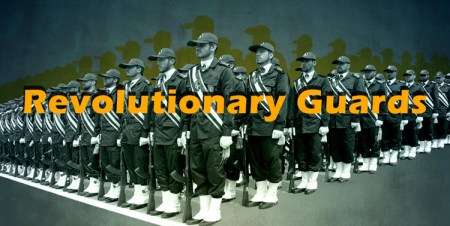
“The goal of chemical attack on Khan Sheikhoun was changing the balance of power in favor of the Iranian Revolutionary Guards,” writes the NCRI, adding, “The IRGC conflict zone was on average 20 km away from Khan Sheikhoun.”

The National Council of Resistance of Iran writes,”The role of the clerical regime and the IRGC in recent chemical attack proves once again that the only way to end war and bloodshed in Syria is to evict the mullahs’ regime and to expel the IRGC and its mercenaries from the country.”

********************************

When looking at the events before and after Bashar al-Assad’s chemical attack on the town of Khan Sheikhoun, and the operations of Iranian Revolutionary Guards (IRGC) in the northern province of Hama, questions arise as to the goal of the attack.

Beginning March 21, 2017, the Free Syrian Army and the Syrian opposition began to advance in the north of Hama, and reached within three kilometers of the city of Hama. According to an article published by the National Council of Resistance of Iran (NCRI), the IRGC dispatched its forces in Damascus and its suburbs, using its highest ranking commanders. These forces were present in the North and West of the city of Hama and around the town of Soran. They include battalions of the 19th Fajr Shiraz Division, battalions of the division known as Nabi Akram of Kermanshah, Saberine special battalions of Tehran province, and Ninawa brigade forces in Golestan province.

Dozens of IRGC forces and their mercenaries, including some IRGC commanders, were killed in the region less than two weeks before the chemical attack on Khan Sheikhoun. The NCRI reports that some of them include:

• Revolutionary Guards Corps Brigadier General Abdullah Khoshnoud from 19th Fajr Division on March 29 in the outskirts of Hama;

• Colonel Morad Abbasifar, from the division known as Nabi Akram who had close relationship with Qasem Soleimani, in late March in the town of Moardas in northeast of city of Hama;

• Mohammad Jannati known as Haj Haidar, a commander of the Revolutionary Guards in Syria, in late March in Tarabee near the city of Halfaya;

• Saeed Khaja Salehani, an IRGC officer, on March 25 in north of Hama;

• Hossein Moez Gholami of the Iranian Revolutionary Guards in Tehran, Abuzar Farahbakhsh and Ghodratollah Aboudi from 19th Fajr Division in Hama province.

A large number of Iraqi, Afghan and Pakistani mercenaries sent by the IRGC to Hama province were also killed. So high were the losses, that on March 31, four days before the chemical attack, Qassem Soleimani visited the IRGC forces to boost their morale.

“The goal of chemical attack on Khan Sheikhoun was changing the balance of power in favor of the Iranian Revolutionary Guards,” writes the NCRI, adding, “The IRGC conflict zone was on average 20 km away from Khan Sheikhoun.”

The IRGC forces continued their assault after the chemical attack, and last week, the bodies of a number of Afghan and Pakistani mercenaries were returned to Iran.

Bashar al-Assad’s ground force is weakened, and so offensive ground operations in Syria are now carried out by the IRGC, with support from Assad’s air force.

In his memoirs, Revolutionary Guards Corps (IRGC) Brigadier General Hossein Hamadani, who commanded the IRGC forces and was killed in October 2015 near the city of Aleppo, wrote, “In March 2013 (opposition) was quite close to a victory … they tightened the noose and got closer to the Syrian Presidential Palace such that they were set to occupy the palace… Bashar al-Assad also thought it was over and was pursuing to go to another country.” Hamadani goes on to tell how the IRGC saved Bashar al-Assad from being overthrown.

The National Council of Resistance of Iran writes,”The role of the clerical regime and the IRGC in recent chemical attack proves once again that the only way to end war and bloodshed in Syria is to evict the mullahs’ regime and to expel the IRGC and its mercenaries from the country.”

Venezuela: Maduro arms militia, bans civilian gun ownership

April 22, 2017

Venezuela: Maduro arms militia, bans civilian gun ownership, Rebel Media, April 21, 2017

(The demonstrations remind me of those in Egypt preceeding the ouster of Morsi. — DM)