Archive for March 29, 2016

President Of Kremlin-Funded Think Tank Calls For A ‘Reset’ Of Russia–U.S. Relations

March 29, 2016

President Of Kremlin-Funded Think Tank Calls For A ‘Reset’ Of Russia–U.S. Relations, MEMRI, March 29, 2016

The Kremlin-funded think tank Russian International Affairs Council (RIAC) recently published on its website an article by Igor Ivanov, the think tank’s president of and former minister of foreign affairs of the Russian Federation (1998–2004). In the article, titled “Russia-U.S. relations: The Limits of the Possible” on the RIAC’s website. In the article Ivanov explains that the main goal of Russia-U.S. relations today is to create conditions to end the crisis between the two countries.

Ivanov presents an analysis of the recent crisis in Russia-U.S. relations and points out that the relations are now very different from what they were during the Cold War. He also admits that today’s Russia cannot compete with the U.S. in the same way the USSR could.[1] However, Ivanov warns that the risk of “the political confrontation turning into a military one continues to grow.”

It should be noted that U.S. Defense Secretary Ashton Carter, speaking at a U.S. Senate hearing devoted to the U.S. military budget on March 17, 2016, listed Russia, China, North Korea, Iran, and terrorism as the five evolving strategic challenges that are driving the U.S. Department of Defense’s planning and budgeting.[2] In 2015, Gen. Joseph Dunford, chairman of the U.S. Joint Chiefs of Staff, stated that Russia represents the “greatest threat to the [U.S.] national security.” He then added: “If you want to talk about a nation that could pose an existential threat to the United States, I’d have to point to Russia.”[3]

On March 23-24, 2016, U.S. Secretary of State John Kerry visited Moscow and met with Russian President Vladimir Putin and Foreign Minister Sergei Lavrov. According to reports, the meeting, which focused on Syria and the Ukrainian crisis, was “relaxed”, “friendly” and characterized by a “touch of humor, “and “John Kerry and Sergei Lavrov moved from reciprocal accusations to dialogue.”[4] However, Kerry told his hosts that President Barack Obama would lift sanctions off Russia only if the Minsk agreements concerning Ukraine were implemented.[5]

According to Ivanov, in order to avoid worst-case scenarios between Russia and the U.S., specific steps must be taken immediately, without waiting for new American and Russian administrations to take office in 2017 and 2018, respectively. He stresses that it is necessary to address those areas of international relations where, in the absence of cooperation, the two sides will face growing problems, especially because neither side is interested in the collapse of the current international system. Hence, the damage control channels of U.S.-Russia dialogue should be restored, the hostile rhetoric should be muted and positive aspects of bilateral relations should be protected and strengthened. Tension may also be reduced if both countries participate in multilateral mechanisms and forums, in which they can demonstrate flexibility without appearing to make unilateral concessions. Ivanov also recommends developing connections between Russian and American civil society, and strengthening Russian studies departments in the U.S. and American studies departments in Russia as a means to promote constructive dialogue.

It is worth noting that the Russian pro-Kremlin media are masters of doublespeak when it comes to the U.S. On the one hand, the threat of an imminent U.S.-Russia confrontation is a constant leitmotif;[6] on the other hand, editorialists and the Kremlin itself declare Russia’s interest in cooperating closely with the West.[7]

The Following are excerpts from the English version of Ivanov’s article, published on the RIAC website on March 16: [8]

27419Igor Ivanov (Source: Russiancouncil.ru)

The Risk Of The Russia-U.S. Political Confrontation Becoming A Military Confrontation Continues To Grow

“…It has become fashionable lately to speak of a new chapter in the Cold War in global politics, and draw parallels between the current standoff between Moscow and Washington and the Soviet–U.S. confrontation that dominated the second half of the 20th century. But it seems like a bit of a stretch: relations between Moscow and the White House were the main axis of world politics during the Cold War, whereas now they are still important, but they do not determine the global system. We no longer live in a bipolar world, and returning to the rigid bipolarity of the Cold War is impossible.

“Moreover, ideology is not at the core of the current standoff between Russia and the United States, as it was during the Cold War (Soviet communism versus Western democracy). The antagonistic conflict of civilizations dominant today is not between the United States and Russia, of course, but between Western liberalism and Islamic fundamentalism.

“Finally, while Russia may remain a great power in terms of its potential, it is unable to compete with the United States in a number of fields in the same way that the Soviet Union did, particularly in terms of economy and high technology…

“Does all this mean that the current crisis in Russia–U.S. relations is any less dangerous than the situation during the Cold War? Quite the opposite. At that time [during the Cold War], Moscow and Washington were able to set certain rules that served to reduce the risks of an uncontrolled confrontation breaking out. By combining efforts, we created a dense infrastructure of communication channels, consultation mechanisms, and bilateral and multilateral agreements designed to increase the predictability and manageability of international situations. The unique architecture of bilateral relations between Moscow and Washington that existed during the Cold War was mostly stable, and this enabled it to remain almost completely unchanged for quite a long time.

“The current state of Russia–U.S. relations can hardly be called stable. Practically all channels of communication between the two countries have been disrupted, the legal and contractual basis of relations is being eroded in front of our very eyes, and the concept of ‘rules of the game’ with regard to global politics is not even on the agenda. The risk of conflicts breaking out by accident, because of technical glitches or misinterpreted actions, is objectively on the rise…

“Recent events have sparked hopes that Moscow and Washington are beginning to realize the scale of the growing risks and threats to international security: consultations on the Ukrainian issue are underway; efforts to find a political solution to the Syrian crisis are ongoing; cooperation on the Iranian nuclear dossier continues; and the parties hold similar positions with regard to the nuclear situation on the Korean Peninsula. All this is true, but it is too early to talk about any stabilization of U.S.–Russia relations.

“The risk of a political confrontation turning into a military one continues to grow, and there have been no breakthroughs in terms of agreeing to new rules of the game in bilateral relations. The negative dynamics in relations between Moscow and Washington are becoming a serious problem not only for the two countries in question, but for the entire international system…”

27418

Is A New “Reset” Possible?

“Everything indicates that both parties will find it extremely difficult to achieve the most important goal – to restore trust in bilateral relations. No high-level meetings or summits are taking place. Track II diplomacy [i.e. informal contacts] is non-existent. Agreements on local, however important, issues do nothing to help solve the problem of deep mutual suspicion that exists on both sides, and these agreements do not mean that the numerous mutual disagreements and grievances have been removed. Trust has been completely eroded between Moscow and Washington, and it will take a long time, great effort and considerable political will on both sides to restore it.

“Russia and the United States do not have a unified vision of the main trends of global development, the driving forces behind such development, the future world order, the fate of leading international organizations, the reform of international law, etc. And it is unlikely that they will see eye to eye on these matters anytime soon. The White House and the Kremlin have wildly differing views on what they consider to be ‘legal,’ ‘correct,’ ‘ethical,’ and ‘responsible’ in global politics. In this sense, we observe a ‘values gap’ between the Russian and American political elites, which, however, does not necessarily mean an equally wide gap in the fundamental values of the Russian and American people.

“This lack of trust and a unified vision for the development of international relations in the near future means that a new ‘reset’ of U.S.–Russia relations is practically impossible, no matter who comes to the White House in January 2017 and who is elected President of the Russian Federation in 2018.The ‘reset’ that did happen was made possible by a unique confluence of historical circumstances. And even then it ran its course fairly quickly. It did not lead to any kind of breakthrough in relations between the countries, did not give them a new quality…

“So what can we consider as ‘possible’ in U.S.–Russia relations? To answer this question, it is necessary to address those areas of international relations where the roles of Russia and the United States in the near future will continue to have significance and where, without their active cooperation, the two sides will face growing problems.

“First of all, despite their differing views about the future world order, Russia and the United States have no interest in seeing the complete collapse of the current system. Both countries are predominantly conservative players, and on the whole are oriented towards maintaining the global status quo… Despite the nuclear arsenals of a number of countries, there are still only two nuclear superpowers in the world, just as there were during the Cold War. And it will remain this way for a long time.

“It is also clear that Russia and the United States are united, and will continue to be united, by the common desire to avoid a nuclear conflict. Russian and American interests also coincide in terms of combating the proliferation of weapons of mass destruction and fighting international terrorism. We should not forget that efforts to resolve the nuclear issue in Iran and eliminate chemical weapons in Syria continued even during the most critical moments of the Ukrainian crisis…

“Many people believe that no progress is possible in U.S.–Russia relations until the new administration comes into power in the United States in January 2017. In fact, considering the time it will take to form a new presidential team, we should not expect any important initiatives from the American side before summer, or even autumn, of next year.”

The U.S. Administration May Differ From Its Predecessors In Terms Of Style, But Not In Terms Of Understanding Its Basic National Interests

“How justified is this ‘wait-and-see’ approach? First of all, we should not exaggerate the significance of partisan differences in U.S. foreign policy. The new U.S. administration may differ from its predecessors in terms of style and the tactical decisions it might make, but not in terms of understanding and interpreting the country’s basic national interests. In any case, there is no chance of turning a page and starting a new chapter in relations between Moscow and Washington. On the contrary, the more significant the backlog inherited by Barack Obama’s successor, the easier it will be for him or her to move forward.

“What is more, the rapidly changing international situation means that any pause in the U.S.–Russia dialogue is a luxury we cannot afford. Experience shows that such pauses only exacerbate crises in various regions of the world, increasing the risk of a direct military confrontation between Russia and the United States, and bolstering the positions of hawkish actors on both sides.

“In order to avoid worst-case scenarios for U.S.–Russia relations, we should not wait for the right moment, which may never present itself. Rather, we should start working on specific issues immediately.

“First, the damaged channels of U.S.–Russia dialogue need to be restored – at various levels and with various participants, from military leaders to members of parliament, from government officials to representatives of security services. Dialogue has never been seen as merely one side making concessions to the other… But the lack of dialogue inevitably breeds mistrust and fear, creating additional risks.

“Second, it is vitally important to mute hostile rhetoric, primarily at the official level. This kind of rhetoric filters down to the general public, appeals to long-standing stereotypes and the darker instincts of national consciousness, and builds a momentum of its own, until it is incredibly difficult to stop.

“Third, we must make every effort to protect the positive aspects of U.S.–Russia relations from the negative impact of the current crisis… It is almost impossible, of course, to completely isolate these aspects from the overall negative political atmosphere, but we need to work towards this.

“Fourth, the intensity of the U.S.–Russia confrontation can be reduced by the participation of both countries in the work of multilateral mechanisms… It is no coincidence that it was through multilateral efforts that progress was made on the Iranian nuclear issue, and it is in the multilateral format that issues like the Syrian settlement and the North Korean nuclear program are being discussed. This format allows the parties to demonstrate great flexibility, and at the same time to avoid appearing to be making unilateral concessions.

“Fifth, an extremely important, although difficult, task is to revive and develop the dialogue between Russian and American civil societies.

“Sixth, it is becoming increasingly important to strengthen and develop Russian studies [departments] in the United States and American studies [departments] in Russia. Professionals in both countries have long been suffering financial woes, and the worsening political situation does not help. The lines between expert, propagandist, academic and pseudo-scientific journalism are being blurred almost beyond recognition. The waning quality of independent expert analysis, or the lack of demand for such analysis, objectively reduces the chances of turning U.S.–Russia dialogue into something constructive.

“It will take some time before the United States and Russia find a way out of the current crisis in their relations. The immediate goal should be to change the dynamics of the crisis from negative to positive. This would create the necessary prerequisites for setting more ambitious targets.”

Endnotes:


[1] For a broader presentation of U.S.-Russia relations in historic perspective see MEMRI report Understanding Russian Political Ideology And Vision: A Call For Eurasia, From Lisbon To Vladivostok, March 23, 2016.

[2] Defense.gov, March 17, 2016.

[3] YouTube video of Gen. Joseph Dunford’s speech:  https://www.youtube.com/watch?v=LFo976aIw-4

[4]  See MEMRI Special Dispatch No. 6363, Kerry’s Visit to Moscow: Much ‘Humor’ About Nothing, March 28, 2016.

[5] Izvestia.ru, March 25, 2016.

[6] See MEMRI Special Dispatch No. 6345, Russian State-Owned Media Outlet: ‘Why American GDP Won’t Matter In A War With Russia,’ March 11, 2016.

[7] See MEMRI Inquiry and Analysis No. 1239, Understanding Russian Political Ideology And Vision: A Call For Eurasia, From Lisbon To Vladivostok, March 23, 2016.

[8] Russiancouncil.ru, March 14, 2016. The Russian version of the article was published in the website on March 14.

© 1998-2016, The Middle East Media Research Institute All Rights Reserved. M

After Brussels, it’s Time to Revisit Enhanced Interrogation

March 29, 2016

After Brussels, it’s Time to Revisit Enhanced Interrogation, Power LinePaul Mirengoff, March 29, 2016

(Why hasn’t Trump suggested something like that? Oh. Wait. He did and was widely criticised for it. — DM)

According to reports, the terrorists who carried out last week’s attacks in Brussels acted sooner than originally planned because they feared that captured terrorist Salah Abdeslam would inform authorities of the attacks. Apparently, they need not have worried.

Belgian officials questioned Abdeslam only lightly, and not at all about possible new attacks. Instead, using the discredited law enforcement model, they focused on the Paris attacks of last November, presumably hoping to obtain a confession.

Back in the days of the controversy over waterboarding, there was talk about a “ticking time bomb” scenario. The question was: When we know there’s time bomb ready to go off, but don’t know the location, is it okay to waterboard a captured terrorist who likely has knowledge of the impending attack?

Opponents of waterboarding, having no satisfactory answer, tended to pooh-pooh the question. It was based on an unrealistic scenario, they insisted.

Tell that to the victims of the Brussels attacks.

In reality, most captured terrorists present a variation of the ticking time bomb scenario. These days, organizations like ISIS are constantly planning new attacks. A captured terrorist who has been active recently might very well know something about upcoming attacks in his locale.

It’s unlikely that even in the Age of Obama, the U.S. would have handled Abdeslam as ineffectively as the Belgians did. One can imagine our people declining to question the terrorist for 24 hours because he was hospitalized and then questioning him only for a fairly short time because “he seemed very tired” after surgery. But I doubt that we would have failed to ask about future attacks.

But how far we would have gone to obtain answers? Marc Thiessen suggests we might not have had to go far. He says that “in the CIA’s experience, two-thirds of detainees cooperated without any enhanced interrogation techniques at all.” That’s because “just the experience of disappearing into secret detention — with no idea where they were and no lawyer present — was enough to get them talking.”

But would the Obama administration have “disappeared” Abdeslam following his highly visible capture? And if it had, would he have started talking in time to enable authorities to act on his information?

Finally, and this is key, what if Abdeslam proved to be among the one-third of detainees who don’t cooperate without enhanced interrogation?

In that scenario, no one with a decent regard for innocent human life could object to the use of enhanced interrogation techniques on a terrorist like this. Abdeslam was the mastermind behind the Paris attacks. According to Thiessen investigators had found detonators and weapons in a safe house with his fingerprints. This was a ticking time bomb scenario.

It’s time to revisit the question of enhanced interrogation, a question that the U.S. answered incorrectly during a lull in the terrorist threat.

The Sinai Insurgency is Spiking

March 29, 2016

The Sinai Insurgency is Spiking, Israel DefenseDr. Shaul Shay, March 29, 2016

(Please see also, Sisi asks Obama for military intervention to save Egypt from ISIS. — DM)

SianiPhoto: AP

On March 19, 2016, a terrorist attack on a checkpoint in the Safa neighborhood in southern Arish city resulted in the death of 15 police personnel. The victims were two police captains, a first lieutenant, and 12 conscripts. A police officer and two conscripts are still missing after the attack and the whereabouts of the three “missing” police officers are still unknown. Egyptian security forces killed five of the terrorists after violent clashes that lasted for two hours.

This attack is the last among a series of terrorist attacks that have targeted army and police centers in the Sinai Peninsula. The attack was the biggest in Sinai this year and the deadliest since July 2015. It could mark the return of Wilayat Sinai (Ansar Beit Al-Maqdis) to large-scale coordinated attacks after a period of limited operations against checkpoints and security personnel.

Wilayat Sinai has claimed numerous deadly attacks in the region recently, targeting mainly security forces. Earlier this week, an Egyptian soldier and police officer were killed during two separate attacks in the northern Sinai Peninsula. Gunmen affiliated with Wilayat Sinai shot and killed the officer outside his home in el-Arish. A soldier was also killed by a sniper in Sheikh Zuweid, which is not far from el-Arish.

The attack

The terror attack was carefully organized, suggesting it had long been planned. Wilayat Sinai surveillance personnel had probably observed the checkpoint for some time and that automatic weapons and an RPG were stashed nearby.

The checkpoint was close to a valley and olive farm, providing ground cover that the terrorists probably used to crawl undetected on the ground as they hid their weapons. When the suicide bomber struck, his cohorts were then able to fire on any survivors using their cache of weapons.

According to the prosecutor-general, the incident took place at 6.30pm on Saturday (March 19). Prosecutors say checkpoint personnel were subjected to mortar and RPG fire. Ambulances attempting to reach the scene of the attack also came under heavy gunfire.

Wilayat Sinai claimed responsibility

The Wilayat Sinai, which is affiliated with the Islamic State group, claimed responsibility for the attack. In a statement on Twitter, the group said the attack was “part of a series of operations in response to the humiliation and searching of Muslim women at checkpoints.”

The statement said a suicide bomber – Abul-Qaaqaa Al-Masri – drove an explosive-laden car into the security force and detonated it. The statement threatened more attacks in the future.

The response of the Egyptian security forces

President Abdel-Fattah Al-Sisi held a security meeting attended by the ministers of interior and defense, the army chief of staff and senior army and police commanders. Presidential spokesperson Alaa Youssef said Al-Sisi ordered the army and police to coordinate fully in the field.

Security forces were placed on high alert, and the decision was taken to continue targeting terrorist and criminal dens while simultaneously prioritizing the safety and security of civilians.

Egypt’s North Sinai prosecution began investigations into the attack. The prosecution has inspected the site of the attack and will later listen to the testimonies of eyewitnesses and officials in the checkpoint, judicial sources said.

A few days later, Egypt’s army executed an operation to get revenge for the army and police martyrs. The forces destroyed a number of militant hideouts in Rafah and Sheikh Zuweid cities in raids. An Egyptian Army spokesperson has said that 60 Islamic State group militants were killed after fighter jets targeted the group’s positions in North Sinai.

In a Facebook post detailing the outcome of the operation, Brig. Gen. Mohammed Samir said, “counterterrorism units backed by the air force” had “killed 60 terrorists, wounded another 40 and destroyed 27 four-wheel (drive) pick-up trucks south of Rafah and Sheikh Zayed.”

Egypt’s war against terror

A new report of the Tahrir Institute for Middle East Policy (TIMEP) think tank, shows Egypt suffered more than 100 attacks on average per month from January to August 2015, compared to around 30 attacks per month in 2014.

The attacks are also spreading around the country. Until June 2013 violence was mostly contained to North Sinai, but after the ouster of President Mohammed Morsi by Egypt’s military, reports of militant strikes are coming in from all over the country. In particular, Greater Cairo (the provinces of Giza and Cairo), Fayoum and Sharqia have seen a spike in incidents.

The insurgency in North Sinai has transformed into near-daily attacks, often with use of advanced weaponry. Civilians account for the majority of casualties in these strikes.

Another report of the Regional Center for Strategic Studies – the Cairo index of stability, confirmed that terrorist organizations in Egypt in 2015 have become more aggressive than ever before. The number of terrorist attacks reached 617 in 2015, compared with 349 in 2014. According to the same index, Sinai’s statistics are among the worst in Egypt, as the number of terrorist attacks there reached 90 in 2015.

Yet details of the index confirmed there was a crackdown on terrorist organizations following the attacks on Sheikh Zuweid (July 2015): The total number of terrorist attacks in Egypt from August to December 2015 dropped significantly to 64, compared with 170 in the same 2014 period. The escalation in the attacks in recent weeks indicates that Egypt’s efforts to eliminate terrorism in Sinai has not been successful.

According to Maha Abdel Azim (Egyptian streets, March 13, 2016), an estimated 2100 people were killed in North Sinai in 2015, including roughly 1800 described by the military as terrorists, 150 civilians, 40 police officers and conscripts, and 140 military personnel. Many civilians are direct victims of militant attacks or are killed by often unidentified shelling. Others were killed in the crossfires during clashes between the military and militant groups. The estimate is a roundup based on statements by the military spokesperson as well as reporting from Aswat Masriya and Ahram Online.

In January 2016, Islamic State wrote in its weekly magazine Naba’, which runs news from the group’s various branches, that the Sinai branch had killed 1,400 people – members of the military and police as well as collaborators and tribal fighters – in the previous 15 months. The Egyptian military has disputed this figure and said only 69 military personnel were killed in that period.

Summary

Egyptian forces are grappling with an Islamist insurgency based in North Sinai governorate, which spiked following the 2013 ouster of President Mohamed Morsi. The insurgency has killed hundreds of Egyptian security forces, while the armed forces have said their operations have killed Thousands of militants in the area.

One of Wilayat Sinai’s largest attacks came on July 1 ,2015, when car bombs targeted security checkpoints in Sheikh Zuweid. According to a statement from Egyptian army officials issued shortly after the attacks, 17 soldiers and more than 100 militants died.

The challenge of the ongoing terror attacks in Sinai demand a comprehensive response of military and civilian counter measures. Egyptian President Abdel Fattah al-Sisi announced last year to spend 10 billion Egyptian pounds ($1.28 million) on developing the Sinai Peninsula. Additionally, the current government has said that it recognizes the need to work with the local population and provide a development program for the region.

Egypt urgently needs to come up with proper long-term social, political, and economic strategies. Only a well-coordinated plan of dialogue with the local population, social and economic development and military and security crackdown on terrorism will return security and stability to the Sinai region.

Op-Ed: Self-destruct: Us or them

March 29, 2016

Op-Ed: Self-destruct: Us or them, Israel National News, Leonie Ben-Simon, March 29, 2016

Strange.  After Belgium there is a kind of silence.  Those continuous Facebook posts blaming Israel and the Jews for everything have mostly gone underground, as journalists lie low, their opinions shattered into smithereens.

The War of Civilizations is well and truly here, right on our doorstep, for the entire world to see. These are not terror attacks.  This is World War III in its incarnation of the enemy within: an asymmetric war that if not halted has the potential to go nuclear as Iran tests its long-range missiles with their leaders proclaiming “Death to the Jews” and “Death to Israel.”

Time has a way of blunting the past. Hitler was not a madman when he marshalled his people to carry out his plans.  He had a carefully thought-out agenda which we later labelled the personification of evil.  But before the Second World War politicians, intellectuals and decision-makers world-wide did not believe that he could possibly carry out his plans.  No, appeasement was the solution until millions upon millions lay dead on the ground, burnt in ovens and even burnt and buried alive.

Then there were the genocides that the world ignored in Rwanda, Cambodia, Bosnia and Darfur. And the current war in Syria with millions dead, injured or displaced. Life is simply not valued.

Until now massive amounts of money have financed terror in all of its stages of growth.

Many madrassas are financed to promulgate a particular form of Wahhabism that teaches whole populations not to accommodate values that are not their own.

UNRWA finances millions who call themselves Palestinian refugees but are residents of Syria, Lebanon, Jordan and Gaza who were mostly born there. Most of this money is used for buying military materiel, training troops for warmongering and sending rockets into Israeli civilian areas, not for resettlement.

Part of the Arab minority in Israel are also financed by UNRWA with money used to brainwash whole generations in UN schools to hate Jews and Israel.

Then there is the Iranian nuclear industry now helped by a United States agreement with financing that is increasing the risk of nuclear war. There are millions being made in so many of these corrupt societies by those in control who stir up the pot, encouraging everyone except for their own children to die for their cause.

Now that the West is paying the price, the story is quite different.  The West has the tools to stop this war in its tracks and allow the enemy to self-destruct. These tools are simply the control of money, the control of gold and the control of resources. Can large-scale murderous activities continue without money?  Of course not. Even trading oil for black money can be stopped when the buyers are nations.

The average human being in most societies, we would like to  hope, just wants to live out their life peacefully, not to be forced into a war situation.  But either way, remove the money and most of the warmongering will self-destruct.

The world’s powers have obviously forgotten the mantra after World War Two and the Holocaust – “Never Again.”  Or was it after the First World War – the Great War – The War to End All Wars?

This is the choice: Call it the War that it is, take action to cut the head off the snake by throttling its money and the resource supplies that it lives on. The alternative is that the West will be responsible for its own self-destruction.

Changing the mindset of its young resident enemy through re-education and tracking killers and their associates after events, as the West honestly believes is should do, is not the solution.

It is the weakness of the West.

Op-Ed: EXPOSE: Belgium accepted Islamization for electoral reasons

March 29, 2016

Op-Ed: EXPOSE: Belgium accepted Islamization for electoral reasons, Israel National News, Giulio Meotti, March 29, 2016

The conversation opens with a proverb: “In the land of the blind the one-eyed is a king, but not in Belgium, where those who have tried to raise the alarm have been left alone.” These are the words of Alain Destexhe, a prominent figure among the liberals in Brussels, former secretary of Médecins Sans Frontières and president of the International Crisis Group.

He is also author of “Lettre aux progressistes qui flirtent avec l’islam réac” (a letter to the progressives who flirt with reactionary Islam – Editions du Cerisier),  a letter-pamphlet that Destexhe dedicated to Philippe Moureaux, the man considered responsible for the transformation of a large suburb of Brussels into the European hub of Islamic holy war.

Two days ago, the Belgian Prime Minister, Charles Michel, said that Moureaux bears a “huge responsibility.”

“For twenty years, he reigned in a sort of conspiracy of silence” continues Destexhe as he talks to us. “At the heart of this system was the powerful Philippe Moureaux, mayor of Molenbeek, media darling, who has had a real moral and political domination over Brussels’ policy. He has created a climate of intellectual terror against the few who dared to stand up. Philippe Moureaux had realized that the future of socialism would depend on the immigrants who would become, symbolically, the new proletariat”.

But who is Moureaux? Professor of Philosophy at the University of Liege, Senator, Director of the Institut Emile Vandervelde (the think tank of the Socialist Party), deputy prime minister in the Martens government, but since 1983 city councilor and then, more importantly, mayor of Molenbeek for twenty years (1992- 2012). Son of minister Charles Moureaux, Philippe has long been the darling of the anti-racist left. The “loi Moureaux”, the Moureaux law, is in fact the rule that in 1981 criminalized acts inspired by xenophobia.

Nicknamed “Moustache” for his mustache, married to a Muslim Tunisian woman, Philippe Moureaux, even before becoming mayor of Molenbeek, had always boasted of defending the rights of immigrants. He included, for the first time in the history of Belgium, Muslim representatives in municipal and regional lists. This scion of the Belgian policy has been the mayor of Molenbeek for so long that the strategic suburb has come to be embodied in Isis’ plans.

His pro-Arab sympathies date back to the war in Algeria, when Moureaux defended the representatives of the Algerian National Liberation Front, also secretly hiding them in the heights of Lustin, in the Namur region.

Merry Hermanus, activist of the Socialist Party in Brussels for decades, also has accused Moureaux: “Without the immigrant populations, the Socialist Party would have been reduced to eight percent of the electorate in Brussels. We have become prisoners.” A few days ago, Moureux published his book, “The Truth About Molenbeek”. He wrote it after the massacres of November 13, in Paris, when the political class began to question his leadership of the Brussels ghetto. In the volume, Moureaux refers to “my Muslim brothers,” writes that one of the engines of jihadism is our “Islamophobia” and punishes “a society that treats immigrants like the Jews before the war”.

“Multiculturalism has failed because we have allowed them to exclude themselves without integrating communities, causing a fragmentation of society,” tells me Alain Destexhe, former Secretary General of Doctors Without Borders. “We’re talking about Belgian citizens who reject the values of our country. Salah Abdeslam is a typical example of a guy who could lead a comfortable life. He had a decent salary and a guaranteed job for life “.

Why did you write the Lettre aux progressistes qui flirtent avec l’islam réac? To denounce the left that you could not criticize, while we were becoming the first country in Europe in number of jihadists and Brussels the weakest link in the fight against this reactionary Islam.

It was an electoral strategy: Moureaux used immigrants to stay in power. Today half of the officers in local councils and in Parliament of the Socialist Party are of foreign origin.

Why did they never demand conditions to give citizenship to immigrants? “It was a political electoral pact. Legal immigration (and illegal) was encouraged. Family reunification was facilitated. There was the granting of voting rights to foreigners, the fight against racism became the new paradigm of political discourse. And more: frequent visits to mosques, subsidies to Muslim associations, the provision of services to the Koranic schools, participation in the festival Eid El Kebir, anti-Israeli marches”.

When he was mayor, Moureaux also urged people to avoid driving during Ramadan, so as not to offend Muslims.

“Most politicians chose not to listen to sermons that became increasingly radical and in this climate radical organizations such as the Belgian Islamic Centre and others have prospered freely. Molenbeek has thus become the fastest growing area of the Brussels region of Belgium. The population of the district increased by 12 percent in 5 years and 30 percent in 15 years. The Islamization is taking place before our eyes. Already 30 percent of Brussels is Islamic”.

And there’s not only Molenbeek: “There are Anderlecht, Brussels City, Schaerbeek, Saint-Josse and Forest. When I was Secretary of Doctors Without Borders, in the ’90s, I often worked in Molenbeek. The population was already largely of immigrant origin, but nobody was trying to assert its own Islamic identity, like today. Women were not wearing the veil, no one asked halal food in schools, few went to the mosque. For this reason, if I look at Belgium today, I am very pessimistic. Perhaps it is too late”.

Patrol Muslim Neighborhoods or Jewish ones

March 29, 2016

Patrol Muslim Neighborhoods or Jewish ones, Front Page Magazine, Daniel Greenfield, March 29, 2016

leiby-home

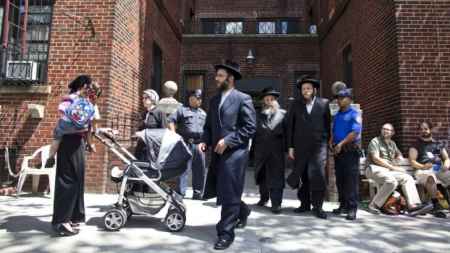
When I go to the synagogue on Passover, there will be a police officer at the door. There will be an NYPD officer in front of every synagogue. Police brass will make the rounds of each synagogue to check security and alertness. Local precincts will be on alert anticipating a Muslim terrorist attack.

As they are on every Jewish holiday.

In France, there are heavily armed soldiers outside synagogues. In Israel, the soldiers are more likely to be found inside the synagogues.  That is what Jewish life is like under the shadow of Muslim terrorism.

The ADL, which was not outraged when Bernie Sanders posed with members of anti-Semitic hate groups such as SJP and CAIR, put out a press release denouncing Ted Cruz for calling for heightened police scrutiny of Muslim neighborhoods. But the alternative to a police presence in Muslim areas is a police presence in Jewish areas. If you can’t stop Muslim terrorism at the source, then you have to try and secure all the potential targets. That means police officers in front of synagogues and TSA agents checking your shoes. It means police forces that look like armies and soldiers in the streets.

The ADL denounced Cruz for calling for a return to the NYPD’s old tactics for breaking up Muslim terror plots. One of those “controversial” methods led to the breakup of a Muslim terror plot to blow up a synagogue in Manhattan. Ahmed Ferhani had been interfaith enough to also consider blowing up a church, but he settled on plotting to plant a bomb and then open fire inside a synagogue.

The same left that is now outraged by Cruz’s statement fought for Ferhani. They fought for a Muslim terrorist who boasted at his sentencing, “I intended to create chaos and send a message of intimidation and coercion to the Jewish population of New York City.” In the zero sum game of civil rights, the left fights for the civil rights of Muslim terrorists and against the civil rights of their Jewish victims.

Muslim civil rights is not a matter between the government and Muslims. It is a zero sum game in which protecting the “rights” of Muslims to plan terror attacks takes away the right of their victims to live. It’s a choice between having police informants in a mosque or police officers in front of synagogues. Both send a chilling message. But the former sends a chilling message to terrorists. The latter to their targets.

Liberal groups protesting the idea of Muslim surveillance are offering a false and dishonest choice.

The choice is not whether there will be government surveillance and a police presence. The choice is where will it be? Will it be at a mosque run by the Muslim Brotherhood that terror preachers visit to spread their hate? Or will it be at every church and synagogue that Muslim terrorists might target.

None of the above is not an option. It stops being an option after the first, second and third terror attacks. France tried to ignore Muslim violence against Jews for as long as it could. But even a left-wing government was forced to station armed soldiers in front of Jewish schools and synagogues.

Jonathan Greenblatt, the ADL’s new boss, whines that “special patrols of Muslim neighborhoods” will make Muslims “more vulnerable, more frightened”. What exactly does he think that police patrols of Jewish neighborhoods do? What message does it send to Jewish children going to synagogue that there is a cop at the door because a Muslim terrorist might try to kill them?

Why isn’t Greenblatt more concerned about how those children feel than how their killers do?

Muslim terrorism is not a matter between Muslims and an abstract state. The victims of Muslim terror are not abstractions. They are real people who suffer and bleed. After every Muslim terror attack, the media rushes the victims off the stage to make way for Muslims whining about an imaginary backlash after someone gave them a dirty look on the bus, because it wants us to forget who the real victims are.

The real victims are not in the mosque. They are in the church, the synagogue and the Hindu temple. They are in a New York office building shuffling their papers at 8:45 AM on a Tuesday morning. They are at a Christmas party in California. They are near the finish line in Boston watching the runners pass.

Muslim civil rights violate their civil rights. Muslim civil rights violate their bodies. Muslim civil rights drive nails and ball bearings into their arms and legs. Muslim civil rights lead them to stagger through the smoke and then plummet one hundred stories headfirst into the New York cement. Muslim civil rights force non-Muslims to walk in fear to their own houses of worship waiting for the next attack.

Muslim terrorism forces us to choose between the civil rights of Muslims and those of everyone else.

How we handle Muslim terrorism will define who we are as a people. Will we side with the victims or the perpetrators? Anyone who speaks of the civil rights of the perpetrators instead of those of the victims has chosen the side of the perpetrators. The ADL, like Obama and the media, stands with the perpetrators. It would rather see police in front of synagogues than in front of mosques.

That is a choice. And it is a choice that says a great deal about what the ADL’s real values are.

Liberals used to pride themselves on standing with the oppressed, not with the oppressors. Today, they stand unambiguously with the oppressors. They stand with hate groups and synagogue bombers.

Dutch journalist Elma Drayer complained about Muslims throwing stones at Jews leaving the synagogue after September 11. The police told her not to talk about it because the Muslims were “already being stigmatized”. It wasn’t the stigmatism of the Jewish victims being stoned that the police were concerned with, but the stigmatism of the Muslims who were throwing the stones at them.

This is Muslim civil rights.

We can be concerned about the “stigmatism” of the Muslims whose mosques are being used to plot attacks. Or the stigmatism of their victims. We can worry about how “vulnerable” and “frightened” Muslims feel at the extra police scrutiny or how vulnerable and frightened non-Muslims are because instead of proactively fighting terrorism, they have to reactively hope to stop the next terrorist attack.

The NYPD brass that attacked Ted Cruz’s proposal is reactively deploying police officers to potential targets because it has been prevented from fighting Islamic terrorism proactively by investigating mosques and other Jihadist coordinating hubs. And so there are police officers in front of synagogues and heavily armed ESU tactical teams hanging around high traffic areas hoping that will be enough.

Under Bill de Blasio, New York made a choice between proactively targeting Muslim neighborhoods and reactively deploying everywhere that Muslim terrorists might strike. It was the wrong choice.

In Europe, those same choices were also made. Synagogues were turned into fortresses with bulletproof windows and armored doors. Jews were told not to wear religious clothing outside. Worshipers travel in fear to prayer, passing armed soldiers outside, entering one at a time to avoid becoming bigger targets.

While politicians wrung their hands over Muslim feelings, their victims were left frightened, vulnerable and stigmatized. And now the same pattern is repeating itself in the United States all over again.

The fundamental moral question of every crime, every atrocity and every act of violence against the innocent is do we concern ourselves with the pain of the victims or do we make excuses for the killers. The answer to that question defines who we are, individually and as a people. It also determines whether we will defend ourselves or go on making excuses for the killers even as they are killing us.

When we choose the killers over their victims, we not only betray them, but we betray ourselves.

Free Speech on Trial in the Netherlands – Again

March 29, 2016

Free Speech on Trial in the Netherlands – Again, Gatestone InstituteRobbie Travers, March 29, 2016

♦ Freedom of speech is the ultimate liberal value — and it is the first value that people who wish to control us would take away.

♦ If a court in a Western society decides to censor or punish Geert Wilders or others for non-violent speech, the court not only attacks the very humanistic values and liberal society we claim to hold dear; it brings us a step closer to totalitarianism. Even the idea of having an “acceptable” range of views is inherently totalitarian.

♦ But what does one do if immigrants prefer not to assimilate? Europeans may be faced with a painful choice: What do they want more, the humanistic values of individual freedom or an Islamized Europe?

♦ Censorship is not a path we should wish to take. While we may rightly fear those on the political right, we would do well to fear even more the autocratic thought-police and censorship on the political left.

You are not truly a proponent of free speech unless you defend speech you dislike as fervently as speech you like.

There are many issues concerning the views of the Dutch MP, Geert Wilders, head of rapidly growing political party, the Freedom Party (Partij voor de Vrijheid, or PVV). Dutch prosecutors have charged Wilders with insulting deliberately a group of people because of their race and inciting hatred. Wilders’s trial focuses on a speech he gave, in which he asked a crowd of supports whether they wanted more or fewer Moroccans in the Netherlands. In another instance, Wilders is reported to have stated that The Hague should be “a city with fewer burdens and if possible fewer Moroccans.” Wilders admits to having made the remarks.

761 (1)Geert Wilders during his March 2014 speech, where he asked “Do you want more or fewer Moroccans?” (Image source: nos.nl video screenshot)

The remarks Wilders made about Moroccans, as they target only one nationality rather than immigration in general, may sound ill-judged or distasteful to some. But do Wilders’s comments, that there should be fewer Moroccans, actually incite hatred or violence? His remarks do not suggest that people attack Moroccans or that people should hate Moroccans; they simply suggest that there should be lower levels of immigration from Morocco.

While Wilder’s comments could certainly be convincingly portrayed as preying on people’s anti-immigration sentiment, does that actually make them an insult to Moroccans, or is he simply supporting policies he thinks would benefit his country? As Wilders himself said in court last week, “What if someone had said, ‘Fewer Syrians?'”

As a society, individuals are responsible for their actions, so if someone acts upon a distortion of Wilders’s words, or is violent because of them, Wilders should not be held responsible for their actions, even if he might choose his words more carefully in the future. A line is dangerous to draw: if we start criminalizing people who have anti-immigration views, poorly expressed or not, then where do we stop?

Is it also possible that because Wilders is labelled as politically “far right,” people on the political “left,” instead of proposing counterarguments, would like to shut him up by branding him a “racist”?

Here are several more statements, none from Wilders; no one who said them has been prosecuted:

  • “We also have s*** Moroccans over here.” Rob Oudkerk, a Dutch Labour Party (PvDA) politician.
  • “We must humiliate Moroccans.” Hans Spekman, PvDA politician.
  • “Moroccans have the ethnic monopoly on trouble-making.” Diederik Samsom, PvDA politician.

One can see that these statements by politicians of the Labour Party, which is one of the current governing parties of the Netherlands, are more inciting, condemnable statements against Moroccans than anything Wilders has said. Yet no prosecution has been initiated against these individuals.

Would it not be better to discuss a nuanced immigration policy openly, like adults, and thereby eliminate prejudice through rational argument?

Prosecuting Wilders has only emboldened the anti-immigrationists, making them less responsive to reason and discussion. Ironically, this trial has moved many left-liberals, who might be criticizing his views, instead to defend his fundamental rights.

On limiting immigration in general, some critics consider that calling for a moratorium on immigration is illiberal — often other groups such as Christians and Yazidis might be fleeing from ISIS or other extremist Islamic organizations. Basing immigration on nationality might also bring back memories of Nazi Germany, when restrictions often were based on crude religious, ethnic and national caricatures. Other critics seem uncomfortable with calls for the dominance of “Christian, Jewish and humanist traditions” within Dutch culture. How, they ask, can one effectively police a “culture” without seemingly authoritarian restrictions on those who might not fit into it?

Still other critics argue that prohibiting the construction of new mosques restricts religious freedom, and could cause further tension with members of the Islamic community, instead of working with them to solve their conflicts with the West.

But what does one do if immigrants prefer not to assimilate?

That, for example, is not an anti-immigration argument; it is a legitimate question that needs to be answered. There are also many questions that pertain to what a society might look like if there is a tectonic demographic shift, along with a tectonic shift in culture that might accompany it.

As one commentator explained, if you have an apple pie with a few cranberries, it is still an apple pie; but if you keep adding more and more cranberries, at some point it is no longer an apple pie, it is a cranberry pie. That is what the Aztecs faced when the Spaniards arrived in South America. That is what Christianity faced in Turkey when the Muslim Turks arrived. Today, in much of the Middle East, Judaism and Christianity have virtually ceased to exist.

Hard as it might be to contemplate, Europeans might at some point be faced with a painful choice: Which do they want more, the humanistic values of individual freedom or an Islamized Europe?

Whether or not one agrees, especially with the tone, this is the dilemma Wilders has chosen to face — before a transformation becomes so fundamental that it cannot be reversed.

Although he has come down on the side of liberal values, this is seen by critics as violating other liberal values, such as not to judge one culture superior to another.

But what should one tolerate, if the other culture advocates stoning women to death for adultery? Or, without four male witnesses attesting to the contrary, regarding rape as adultery? Or executing people for having a different sexual preference, or religion, or for leaving the religion? Or beating one’s wife? Or condoning slavery? Or officially regarding women as worth half a man? Is it a humanistic, liberal value to stay silent — to condemn at least half the population to that?

What if before the Civil War in the United States people had said, “Slavery? But that is their culture!” The British in India outlawed suttee — a ritual in which widows are thrown live onto their husband’s funeral pyre. Is it humanistic say “but that is their culture”?

These are values over which wars have been fought.

So even if many of the policies of Wilders might drastically differ even from those of this author, in a truly liberal, humanistic society, it is one’s duty defend Wilders’s right to express his views without fear of retribution.

If we fail to do that, what we end up with is an authoritarian state in which government agencies decide which views are acceptable and which are not. We have lived through that before with the Soviet Union, and we are now living through it again with countries such as Saudi Arabia, Russia, China, Pakistan and Iran. A happy picture, they are not.

As history shows, as in the French or Russian or Cuban Revolutions, when one person’s views are suppressed, eventually everyone’s views are suppressed. Who decides on the deciders?

If a court in a Western society decides to censor or punish Geert Wilders or others for non-violent speech, the court not only attacks the very humanistic values and liberal society we claim to hold dear; it brings us a step closer to totalitarianism. Even the idea of having an “acceptable” range of views is inherently totalitarian.

“Acceptable” thoughts, by definition, do not need protecting. It is the “unacceptable” thoughts that do. The reason the right to freedom of speech exists is to protect the minority from the majority — so we can openly, freely exchange opinions and have discussions.

If we wish to have any kind of democracy in more than just name, people need to able openly to challenge ideas that are considered unquestionable, even sacred, as well as people who are considered sacred.

Only open discussion can have a beneficial influence by highlighting problems and shaping policy. In discussing even outlandish views, we are reaffirming our right to say them, justifying why liberal values of freedom are paramount. Freedom of speech is the ultimate liberal value — and it is the first freedom that people who wish to control us would take away. As the historian Clare Spark wrote, “Most of European history, with the exception of England, repressed speech that was anti-authoritarian. One might think of Plato, the Spanish Inquisition, and the career of Spinoza for just a few examples.”

Therefore, no proponent of democracy, humanism or liberal values should call for Wilders to be punished or censored for his remarks, even if they might be thought questionably expressed. When you defend the fundamental right of another to express his view, it does not mean that you agree with the view. It does not mean that you would refrain from attacking that view if it seemed based on flawed premises — or even if it did not. Freedom of speech means opposing someone with counterarguments, not trying to silence him.

If Wilders’ views are thought to be anti-humanistic, criminalizing his right to speak freely is even more so. Criminalizing speech only harks back to Giordano Bruno, who was burned at the stake for “blasphemy,” for saying there were a plurality of worlds; or to the trial of Galileo Galilei for claiming that the earth moves around the sun; or the Scopes trial, which attempted to criminalize Darwin’s theory of evolution.

It is restrictions on free speech that are producing many of the worst mockeries of justice today, in countries such as China, North Korea, Pakistan, Bangladesh, Russia, and Iran.

Repressing speech only dangerously hinders the liberal cause. Groups that, in an authoritarian manner, call for censorship and the suppression of debate are being allowed to thrive. We are seeing this now in America on campuses and in the authoritarian attempts to prevent voters from hearing presidential candidates by disrupting speeches. When one fails to answer difficult questions or tries to silence their proponents, instead of solving the problem of prejudice, you are in reality feeding their prejudices and allowing them to grow unchallenged.

We urgently need be concerned about laws that would make “being insulted,” a criminal offense. Where does an “insult” start or stop? In addition, people who claim to be offended might just be using the law to try to silence others with whom they disagree. The culpatory aspect of these laws should probably be reconsidered, and possibly revised by the Dutch government, the United Nations in its UNHRC Resolution 16/18, and others trying to restrict free speech.

Finally, criminalizing views such as those of Wilders does not extinguish them. Yes, people might feel intimidated from raising ideas for fear of reprisals, but the suppressed ideas will continue to fester, often with an even stronger force.

It is completely understandable why many are not quick to come to the aid of Wilders because they deem him an opponent. However, if there is one rallying call to those who are in doubt of whether to support Wilders, it is this: authoritarianism is our enemy, whether it comes from Islamism, or laws restricting speech. We may not like that we have to defend people we may even regard as racists or xenophobes, but if we do not defend the rights of all, then who will be next among us to have his rights eroded?

Censorship is not a path we should wish to take. While we may rightly fear those on the political right, we would do well to fear even more the autocratic thought-police and censorship on the political left.

Wilders should not be standing trial for what he has said. Could there be a question of the case against Wilders being political? It sure looks like that.

Cartoons of the Day

March 29, 2016

Via Washington Times

Tap dancing


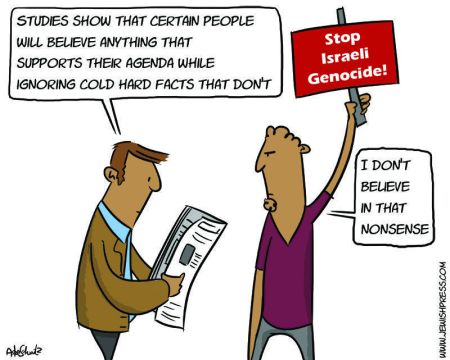
Via The Jewish Press

Selective-Denial

You can’t make it up. UN names democratic Israel as world’s top human rights violator

March 29, 2016

You can’t make it up. UN names democratic Israel as world’s top human rights violator, Fox News, March 29, 2016

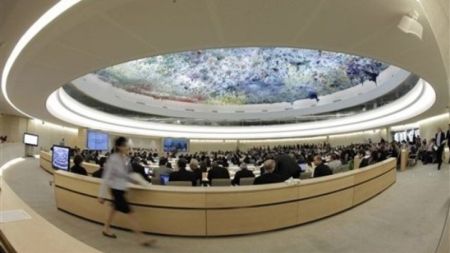
UNHRCFILE — A woman walks past the Human Rights Council at the European headquarters of the United Nations in Geneva, Switzerland.

According to the United Nations, the most evil country in the world today is Israel. 

On March 24, 2016, the U.N. Commission on the Status of Women (CSW) wrapped up its annual meeting in New York by condemning only one country for violating women’s rights anywhere on the planet – Israel, for violating the rights of Palestinian women.

On the same day, the U.N. Human Rights Council concluded its month-long session in Geneva by condemning Israel five times more than any other of the 192 UN member states.

There were five Council resolutions on Israel.  One each on the likes of hellish countries like Syria, North Korea and Iran.  Libya got an offer of “technical assistance.”  And countries like Russia, Saudi Arabia and China were among the 95 percent of states that were never mentioned.

No slander is deemed too vile for the U.N. human rights bodies that routinely listen to highly orchestrated Palestinian versions of the ancient blood libel against the Jews.

Asylum-Seekers from Israel by Country in 2015 | FindTheData

(Map at link — DM)

In Geneva, Palestinian representative Ibrahim Khraishi told the Council on March 24, 2016:  “Israeli soldiers and settlers kill Palestinian children. They shoot them dead. They will leave them to bleed to death.”  And in New York, Palestinian representative Haifa Al-Agha told CSW on March 16, 2016:  “Israel…is directing its military machinery against women and girls. They are killing them, injuring them, and leaving them bleeding to death.”

Operating hand-in-glove with governments and the U.N. secretariat are the unelected, sanctimonious NGOs, to which the UN offers free facilities and daily advertisement of “side-events.”  In theory “materials containing abusive or offensive language or images are not permitted on United Nations premises.”

In practice, in Geneva the UN permitted handouts that claimed Israel “saw ethnic cleansing as a necessary precondition for its existence.”  A film accused Israel of sexual violence against children and “trying to exterminate an entire Palestinian generation.”  Speeches focused on the 1948 “catastrophe” in which a “settler colonial state” was established on Palestinian land.

The New York CSW-NGO scene included a film set in in the context of Israeli “oppression” and the “tear gas of my childhood,” and statements analogizing the experiences of Palestinians to today’s Syrian refugees.

Picture these real-life scenes:

In Geneva’s grand U.N. “Human Rights” Council chamber, 750 people assembled, pounced on the Jewish state, broadcast the spectacle online, and produced hundreds of articles and interviews in dozens of languages championing the results.

On the ground, Israelis are being hacked to death on the streets, stabbed in buses, slaughtered in synagogues, mowed down with automobiles, and shot in front of their children.

At the New York’s UN headquarters, 8,100 NGO representatives gathered from all corners of the globe, in addition to government delegates, and watched the weight of the entire world of women’s rights descended on only one country.

On the ground, Palestinian women are murdered and subjugated for the sake of male honor, Saudi women can’t drive, Iranian women are stoned to death for so-called “adultery,” Egyptian women have their genitals mutilated and Sudanese women give birth in prison with their legs shackled for being Christian.

Isn’t it about time that people stopped calling the U.N. a harmless international salon or a bad joke?

The poison isn’t simply rhetorical.  One of the Council resolutions adopted last week launches a worldwide witch-hunt for companies that do business with Israel – as part of an effort to accomplish through economic strangulation what Israel’s enemies have not been able to accomplish on the battlefield.  The resolution casts a wide net encompassing all companies engaged in whatever the U.N. thinks are business “practices that disadvantage Palestinian enterprises.”

And the toxicity is self-perpetuating. Acting at the beck and call of Islamic states and their conduit – French Ambassador Elizabeth Laurin and Council President Choi Kyonglim selected Canadian law professor Michael Lynk as the newest U.N. “independent” human rights investigator on Israel.

Lynk’s qualifications?  He has likened Israelis to Nazis, and challenged the legitimacy of the state of Israel starting in 1948 as rooted in “ethnic cleansing.”

All of this played out in the same week that Europe was reeling from the Belgian terror attacks.  Petrified or already vanquished, no European state voted against this onslaught of U.N. resolutions against Israel.  Germany and the United Kingdom occasionally abstained, while France voted with Arab and Islamic states on all but one Council resolution.

Here we are just 70 years after World War II and Europeans believe that they can license this vitriol against the Jewish state – the only democracy on the front lines of an Islamist war against human decency – and the consequences can be contained to the Jews.

Even as the converse stares them in the face.  Two days after the Brussels attacks, Islamic states rammed through a Council resolution slyly labeled “Effects of terrorism on the enjoyment of all human rights” that was actually so anti-human rights even Belgium was forced to vote against it.

As for the United States, the Obama administration has been the Human Rights Council’s most important supporter.  Though the U.S. is currently in a mandatory one-year hiatus — after serving two consecutive terms — President Obama plans to bind his successor by running again in the fall for another three-year term that starts January 1, 2017.

Memo to Americans who are mad as hell: It’s time to elicit a promise from our would-be leaders to refuse to sit on the U.N. Human Rights Council or to legitimize the United Nations.


Secrets and Lies: Turkey’s Covert Relationship With ISIS

March 29, 2016

Secrets and Lies: Turkey’s Covert Relationship With ISIS, Clarion Project, Meira Svirsky, March 29, 2016

Islamic-State-5-IPWith the aid of Turkish officials, Islamic State fighters’ have been able to travel through Turkey to reach Syria (Photo: Video screenshot)

A hot warning received by intelligence officials revealed that the Islamic State (ISIS/ISIL) is planning an “imminent attack” on Jewish children in Turkey. Officials believe the most likely target is in the Beyoglu district of Istanbul, where a Jewish school is attached to a synagogue and community center.

The information was obtained after Turkey arrested six ISIS operatives in the southern city of Gaziantep last week.

“This is a more than credible threat. This is an active plot,” a Turkey source said.

Less than 10 days ago, a suicide bomber stalked Israeli tourists in Istanbul before blowing himself up near them, killing five people (four of them Israelis) and wounding many more.

“The so-called Islamic State is believed to be behind both sets of attacks and the organization continues in determined efforts to perpetrate further attacks in Turkey and elsewhere,” reported Sky News, quoting from an intelligence report seen by the news outlet.

In addition to the six arrested, another three ISIS operatives were arrested last week. Turkey, it seems is scrambling to protect itself from attacks the terror group has threatened to execute all across Europe.

After the Brussels attacks, Turkish President RecepTayyip Erdogan shocked the world by saying that Turkey had captured one of the perpetrators of the massacre last June and send him back to his country.  Erdogan specifically said that Ibrahim El Bakraoui, one of the suicide bombers in the Brussels airport, was detained in Turkey and sent back to Belgium with a warning (that was ignored) that he was a militant.

Yet, new documents obtained by Kurdish YPG fighters (People’s Protection Units) and the Syrian Democratic Forces (SDF) who are fighting together, refute the claim made by Erdogan that Turkey is preventing ISIS and Al-Nusra (Al Qaeda’s official affiliate in Syria) from travelling through Turkey to reach Syria.

The documents seized from Islamic State headquarters in seven locations, including Kobane, show that ISIS fighters from all over the world – and particularly from Kazakhstan, Indonesia, and Tajikistan  — were given passage through Turkey to Syria.

The Firat News Agency (ANF), a Kurdish outlet whose websites have been repeatedly blocked in Turkey by Turkish courts, reports that the hundreds of documents show that since 2013, ISIS fighters have used the Istanbul and Adana airports and have received permits from the Turkish government to reside in Turkey until they cross over to Syria.

The documents also include bus tickets, electronic Turkish visas, residency permits, and documents with stamps from Turkish immigration officials.

Chillingly, the documents show that chemical and explosive materials was transferred from Turkey to Syria. One such document was signed by the manager of Istanbul’s Police Foreigners’ Department Erkan Aydoga. Manuals in Turkish as to how to use these materials were also given to the jihadis.

A sample of the documents can be viewed here.

Turkey, as has been previously reported, is playing a dangerous and duplicitous game with the West. As Clarion Project has wrote, Turkey’s arms transfers to al-Qaeda-linked Islamist jihadis in Syria have been long-documented, yet largely ignored by the Western media. A major raid by the U.S. on an Islamic State safe house in Syria in the summer of 2015 gleaned large amounts of intelligence undeniably linking Turkey to the Islamic State.

Similarly, the fact the Turkey has been the top financial sponsor of Hamas since 2012, with Erdogan arranging for the transfer of $250-300 million to this U.S.-designated terrorist group annually, is another oft-ignored inconvenience. Similarly, the West has brilliantly avoided confronting Turkey on its abysmal human rights record.

Using air-tight documentation, Nafeez Ahmed, editor of InsurgeIntelligence, writes about the many reasons the West has chosen to look the other way while Turkey facilitates oil sales for the Islamic State, which guarantees its strength and viability.

“There are many explanations,” writes Ahmed, “but one perhaps stands out: the West’s abject dependence on terror-toting Muslim regimes, largely to maintain access to Middle East, Mediterranean and Central Asian oil and gas resources.”

Since 2013, the Turkish government has been building a $100 million mega-mosque in Lanham, Maryland, taking Turkey’s“outreach” in America out of the realm of the subtle. This week in America, U.S. President Barack Obama will join Erdogan at the opening of the mosque, the largest in the U.S.

The show, it seems, must go on.