Archive for March 3, 2016

Jordanian Writer: The Arabs Lag Behind In All Areas – As The World Moves Forward

March 3, 2016

Jordanian Writer: The Arabs Lag Behind In All Areas – As The World Moves Forward, MEMRI, March 3, 2016

On January 6, 2016, Jordanian journalist, writer, and political analyst Jihad Al-Mansi wrote in the Jordanian dailyAl-Ghad, under the title “Careful, The Car Is In Reverse!”, about what he termed Arab society’s position at the bottom of global rankings in science, culture, human and women’s rights, and the war on corruption. He added that it lags behind the rest of the quickly advancing world which “has overtaken us by centuries, perhaps millennia.”

Calling on the Arabs to wake up, take responsibility for their situation and stop blaming others for their problems, he said that instead they should invest their financial and human resources in advancing future generations, because it is no longer possible to rectify the situation of the current generation.

Following are excerpts from his article:[1]

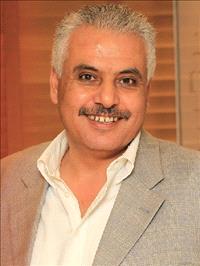
27032Jihad Al-Mansi (Source: Ammonnews.net)

“The world is developing, in the philosophical, scientific, social, creative, educational, and cultural sense; it is on the verge of breaking free of backward gender-driven thinking…

“This is taking place in countries far from our Arab region. There, they are developing scientifically and culturally, competing for the top position in all human indices. At the same time, we, in this region of the world, remain at the bottom of these indices – and some of our countries are absent from them altogether.

“The Nobel laureates in peace, medicine, chemistry, physics, economics, and literature include people from all [countries] – but we Arabs are rarely among them, and for the most part sit in the audience [during the awards ceremonies] or watch them on TV…

“Our only way of consoling ourselves is to reminisce and to recall [Muslim researchers and philosophers such as] Al-Razi,[2] Al-Farabi,[3] Ibn Sina,[4] Al-Kindi,[5] Ibn Rushd,[6] Ibn Khaldun,[7] and others. We do so in disregard of the fact that most of these people, in whom we take pride for human and cultural reasons, were not Arab, and most of them were stoned [to death] or imprisoned, and some had their books burned or were accused of heresy…

“Our problem does not end at [our failure to win] a Nobel Prize. It is manifested much more in the fact that we hold no respectable position on any index or metric concerning freedom of thought, human rights, media, gender, environment, water, or war on corruption; our countries often come last in every field.

“When we participate in the Olympic Games, our countries promote the motto ‘honor for [merely] participating.’ When we want to try for an Olympic medal, our solution is to grant citizenship to [foreign] athletes to do so. We are not among those on the winner’s podium – and if we are, our representation is miniscule. We celebrate every gold medal won by a Comoro Islander as if he had liberated Jerusalem. Kenya, Guinea, or Sierra Leone have medaled 10 times and aim for more – while we and our 22 countries rejoice at [winning] just one. This is despite the fact that the income of some of our countries, and maybe all of them, surpasses that of Kenya, Sierra Leone, and others. But [our] billions in income are squandered on purchasing [sporting] clubs, as we refrain from investing in [our own] human, ideological, and athletic resources.

“We are regressing, instead of progressing, in all fields: We fail in sports; we have no presence in the arts; politically, we execute the agendas of the superpowers and major enterprises, like pawns that move when expected and remain silent when demanded to do so. Economically, we are not welfare states; ideologically, we are influenced, not influencers; with regard to humanity, we reject the other rather than accept him. We accuse anyone who disagrees with us of being an infidel, and think that we’re always right and the world is conspiring against us, never asking ourselves the logical question: Why would the world do this, when we are of no consequence in global, cultural, and human enterprise? We avoid the real answer, and cannot acknowledge that it is we who conspire against ourselves, killing each other and shedding each other’s blood on pretexts based on a legacy that is 1,500 years old, more or less, [pretexts] that are intended to sow ethnic and religious conflicts among the streams and sects…

“Gentlemen, our car is in reverse, and is not moving forward – as the world has overtaken us by centuries, perhaps millennia. We have missed the boat for this generation, and it is beyond rectifying. Will we wake up and invest our financial and human resources to help the coming generations? Will we?”


Endnotes:

[1] Al-Ghad (Jordan), January 6, 2016.

[2] Abu Bakr Al-Razi (865-92) – Persian philosopher who wrote in Arabic and was one of the preeminent physicians of the Muslim world.

[3] Abu Nasr Al-Farabi (872-950) – Muslim mathematician, scientist, physician, and philosopher who also made contributions in psychology, sociology, cosmology, logic, and music. He was known as The Second Teacher, since he was seen as second in knowledge only to Aristotle.

[4] Abu ‘Ali Hussein Ibn Al-Sina aka Avicenna (980-1035) – Persian physician, philosopher, and scientist who was called “one of the greatest thinkers and medical scholars in history” by historian George Sarton.

[5] Abu Yousuf Al-Kindi (801-873) – Arab Muslim philosopher, mathematician, musician, and physician who was called “the Philosopher of the Arabs” and is considered the father of Arab and Islamic philosophy.

[6] Abu Al-Walid Ibn Rushd, aka Averroes (1126-1198) – Muslim physician and philosopher. Born and worked in Cordoba, Spain, and was highly influential on medieval European philosophy.

[7] ‘Abd Al-Rahman Ibn Khaldun (1332-1406) – prominent Arab historian and historiographer. Considered one of the fathers of historiography and sociological and economic research.

Hamas Supplying ISIS w/Bombs, Guns and Communications

March 3, 2016

Hamas Supplying ISIS w/Bombs, Guns and Communications, Front Page Magazine, Daniel Greenfield, March 3, 2016

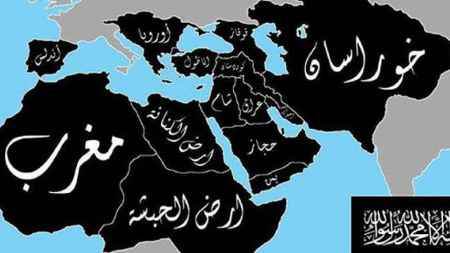
isis_revised_map_of-world_caliphate

There have been plenty of protests that Israel is “strangling” Gaza with its blockade. That Gaza is an “open air prison” or even a “concentration camp”. The truth is that Hamas is facing restrictions because it’s a terrorist organization that keeps trying to kill people.

The following letter published by Memri also reveals that it’s allied with ISIS in the Sinai is supplying guns and bombs to ISIS.

Anyone who calls for ending restrictions on Gaza is calling for more weapons to be transferred to ISIS. They are a traitor and a terrorist supporter in every possible sense of the word.

On February 24, 2016, a letter from an Islamic State (ISIS) fighter to ISIS leader Abu Bakr Al-Baghdadi was posted on social media. In it, the fighter strongly protests the close ties and cooperation between ISIS’s Sinai province and Hamas, particularly Hamas’s military wing.

The letter lays out a variety of Islamic objections to the problem that Hamas has not sworn allegiance to the Caliph of the Islamic State, making them apostates, but Hamas and ISIS in the Sinai nevertheless maintain a close working cooperation. It also lists some of the details of the cooperation between ISIS in the Sinai and Hamas.

“1. Sinai province is smuggling weapons for Hamas in Gaza, because of the province’s fighters’ expert knowledge of the [smuggling] routes from Libya, Sudan, and Egypt.

“2. Sinai province depends very much on Hamas and Al-Qassam for weapons and for explosives and ammunition. There are direct and continuous supply routes from Hamas to Sinai province. The Al-Qassam factories operate assembly lines for manufacturing explosive devices and bombs for the Sinai province, but do not stamp the Al-Qassam logo on them, as they usually do.

The Al-Qassam factories produce most particularly the rather famous Kassam rockets, but other weapons as well. So Hamas is supplying bombs for ISIS attacks on Egyptian forces (so you can see why Egypt has been cracking down so hard on Hamas), but it’s possible that some Hamas weapons filter beyond ISIS in Egypt to core ISIS as well. Certainly to ISIS in Libya.

This is a serious problem that merits investigation, much like the IEDs that Iran supplied to Jihadis in Iraq which killed so many American soldiers.

It also makes it clear that Gaza effectively functions as ISIS’ base in Israel.

“3. Sinai province leaders are regularly visiting the Gaza Strip, and holding cordial meetings with Hamas and Al-Qassam leaders, even [Hamas] government [representatives]. Animals are slaughtered for them, feasts are held, and they are embraced in Gaza.

“4. Hamas and Al-Qassam are accepting all wounded Sinai province [fighters], and they are treated in Gaza Strip hospitals under Al-Qassam’s direct protection.

“5. Hamas is providing wireless communication hubs for Sinai province, because of the difficulty of operating them in Sinai and because they are vulnerable to swift destruction by the Egyptian army.

So Hamas is providing medical care, weapons, communications, supplies and other military support functions to ISIS. It even supplies uniforms to ISIS

“Hamas manufactures the military uniforms for Sinai province – the uniforms we see, and over which we rejoice, in videos are from Hamas, oh our Sheikh Abu Bakr.”

This means that ISIS in Egypt becomes hard to beat without defeating Hamas.

And it means Obama engaged in back channel negotiations with an ISIS ally and that the man responsible for those negotiations, Robert Malley, is now Obama’s anti-ISIS czar.


Off Topic | Deserve Hillary? Then vote for her

March 3, 2016

Deserve Hillary? Then vote for her, Dan Miller’s Blog, March 3, 2016

(The views expressed in this post are mine and do not necessarily reflect those of Warsclerotic or its other editors. — DM)

Democrats have done a bang up job for their people for the last fifty years. Want more of the same? Vote for Hillary.


How about Mit Romney? Surely, he must be right. After all, the proud godfather of ObamaCare did so well in 2012. His part of the video starts at 23:00.


So, all of you RINOs who prefer Hillary to Trump, have at it. Heck, with the RINOs and the Dems in charge, the country will stay in the very best of hands.


Iran Slams PGCC’s Statement against Hezbollah

March 3, 2016

Iran Slams PGCC’s Statement against Hezbollah, Tasnim News Agency, March 3, 2016

Iran and Hezbollah

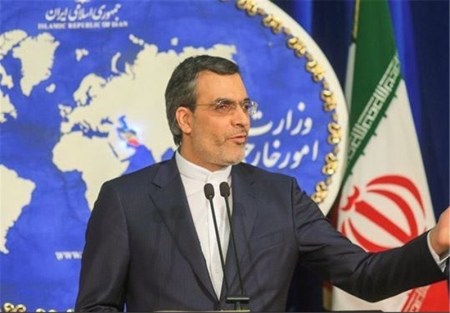
TEHRAN (Tasnim) – Iranian Foreign Ministry Spokesman Hossein Jaberi Ansari on Thursday strongly denounced a recent move by the Persian Gulf Cooperation Council to call the Lebanese Resistance Movement, Hezbollah, a terrorist group, saying such stances are against the interests of the Muslim world.

“The Lebanese Islamic Resistance Movement, Hezbollah, ended decades of lethargy in countering the occupiers of Palestine through perseverance and resistance to the Zionist regime and all-out solidarity with the innocent nation and resistance movement of Palestine,” Jaberi Ansari said Thursday.

It was Hezbollah that gained the first major victory of Arabs and Muslims in the history of anti-Zionist conflict and turned to the distinguished symbol of resistance to the occupation and racism of Zionism, he underlined.

The Iranian spokesman added that Hezbollah is “the living and diligent representative” of the Muslims’ lasting aspirations to achieve independence, freedom, justice, honor, dignity, and fight against tyranny, occupation, racism, and state-sponsored terrorism of the Zionist regime and the Takfiri blind terrorism and extremism.

The opposition of certain Arab governments with such a movement does not justify their conformity to the occupiers of Palestine in labeling the Resistance movement a terrorist group, he stated.

Jaberi Ansari went on to say that those making such stances are “intentionally or unintentionally” acting against the interests of Muslim countries.

Earlier today, Iranian Deputy Foreign Minister for Arab and African Affairs Hossein Amir Abdollahian also said those who recently declared Hezbollah a terrorist group are damaging the unity and security of Lebanon.

“Referring to Hezbollah, the most influential resistance movement, as a terrorist group, and ignoring the Zionist regime’s crimes is a new mistake that is not in the interest of regional stability and security,” Amir Abdollahian said.

The Arab monarchies of the Persian Gulf on Wednesday declared Hezbollah movement, which has been fighting terrorist groups in Syria and the Israeli occupation, a “terrorist group.”

The six-nation (Persian) Gulf Cooperation Council officially added Hezbollah and all groups affiliated to its so-called list of “terrorist” organizations.

The Women-Hunt in Germany

March 3, 2016

The Women-Hunt in Germany, Front Page MagazineStephen Brown, March 3, 2016

germany-cologne-train-station-1000-arab-mobs-molest-rape-sexual-assault-women-illustration1

“If a woman gets raped walking in public alone, then she, herself, is at fault. She is only seducing men by her presence. She should have stayed home like a Muslim woman.” – Dr. Abd Al-Aziz Fawzan Al-Fawzan, Professor of Islamic Law, Saudi Arabia.

Many Germans welcomed with open arms the million, mostly male and Muslim, migrants Federal Chancellor Angela Merkel invited into Germany last September. At train stations, they handed out water bottles to the newcomers, while holding signs stating: “Willkommen!” At first, everything was, as the Germans say, “Friede, Freude, Eierkuchen” (“peace, joy and happiness”).

But the good feeling these greeters created, especially among themselves, has somewhat dissipated, primarily due to the increasing number of reported sexual assaults by migrants against women and children. The best known incident was the sexual molestation of hundreds of women in Cologne on New Year’s Eve by about 1,000, mostly North African men that included migrants.

The latest such multicultural enriching incident to create similar outrage occurred last Thursday in Kiel, a northern German city in Schleswig-Holstein, a state bordering Denmark. Three teenage girls, aged 15, 16 and 17, were visiting a central shopping mall, the Sophienhof, in “broad daylight” when two young Afghan asylum seekers, aged 19 and 26, began to follow and film them with their cell phones.

“Evidently, the criminals then posted these films on their social networks with the result that more and more men came to a restaurant area of the Sophienhof in order to persecute, sneer at them and to frighten them,” reported the newspaper, Die Welt.

Like the women in Cologne and those participating in the anti-Morsi demonstrations on Tahrir Square in Egypt in 2013, the three Kiel teenagers were at first probably unaware they were being hunted, and that a pack of hyenas was slowly surrounding them.

In total, between 20 and 30 men of “migration background,” as German papers described them, were involved. Police report there were no acts of sexual violence, but papers state the teenagers were “very hard pressed.”

But if no sexual molestation did occur, it is probably only because it was in the middle of the day, in the middle of a shopping mall. Outside and at night, this story most likely would have had a much sadder and more tragic outcome. As it was, it was reported the girls received psychological counselling after their ordeal.

The teenagers’ torment finally ended when passersby noticed their plight and notified security, who in turn notified police. Police then took four men, including the two Afghans, into custody, but not without difficulties.

“As a consequence (of their arrest), the suspects fought fiercely, also at the police station,” Die Welt reported. “The talk is of massive insults, threats and bodily injuries. At the suspects’ medical examination, the police doctor was also threatened and insulted.”

However, thanks to Germany’s “cuddly” justice system, as law-and-order Germans derisively call it, all suspects were released by the following day. Police are currently evaluating mall security videos to lay charges.

Perhaps the most surprising aspect surrounding this awful incident is that Germans are so surprised.

But why, one wonders, are they so astonished when such occurrences as this one and the mass sexual assault of women in Cologne have been going on around them for years in Sweden, France and England?

In England, Muslim men associated with the rape of hundreds of girls in Rotherham, were recently given heavy prison sentences. And Muslim rape gangs in Sweden have contributed to giving that country the second highest rape rate per capita in the world. Only one African country, Lesotho, has a higher rate.

The whole world also witnessed this tactic of surrounding women by large numbers of men in order to sexually molest and/or rape them in 2011 on Tahrir Square in Egypt during Arab Spring demonstrations. CBS’s Lara Logan was its most famous victim. Part and parcel of the culture, it even has a name: “taharrush gamea.” So if some Muslim men behave like this in their own countries, why wouldn’t they do so in other countries, especially in ones full of infidel women?

The Cologne police chief called “taharrush gamea,” a completely “new phenomenon,” one never encountered before. Besides terrorizing women, since the Cologne event it is responsible for turning many against Merkel’s migrant policy.

Also unsurprisingly, after the Kiel incident became known in the city, the local newspaper, Kieler Nachrichten, reported more women came forward to state they had had “similar experiences” at the Sophienhof. A police spokesman said this is “quite typical for this kind of crime marked by shame.”

The Nachrichten states, however, that the hunting of girls is “just the tip of the iceberg.”

“Business people in Sophienhof report an increasing number of thefts,” the paper reports. “Again and again customers are bothered.”

A mall worker, who emigrated to Germany “decades ago” from the Arab world, said young migrants are at the mall practically every evening and that he can tell by their accent that “they are almost all Syrians.”

“What they do here is not right,” he complained to the Kieler Nachtrichten. “As soon as they see a young woman wearing a skirt or some way or other open clothing, they believe they have a free pass.”

At a neighbouring department store, the situation is perhaps even worse. A store clerk there states they have been “experiencing difficult situations here since the end of last year.”

“Sometimes, young foreigners jostle old people,” she said. “They bother young women…, grab them, smack their behinds. They have also shouted abuse at people and spit at them. When they appear in a group, they display a disrespectful approach to others.”

Due to their understandable fear, many women in Germany have changed their behaviour since last September. Some do not go out alone, or only in a group with female friends, in the evening any more. The risk of harassment, or worse, by migrant “street terrorists,” as they are called in Holland, is deemed too great.

However, when women disappear more and more from public, this will have the negative effect of gradually giving Germany the appearance of an Islamic society. In some Muslim countries, women can only venture outside properly covered and with a male relative. Which could be Germany’s future, if the current trend is not reversed.

And with women becoming more hesitant to venture evenings from their homes because of fear, more and more German public space, also like in Islamic countries, will be left to men. In this case, Muslim men. All of which represents a further Islamisation of German society and another step downwards toward dhimmitude status.

After the tormenting of the three teenaged girls, a female journalist reported that last summer in Kiel people “smiled mildly” at several young, male migrants who were standing at a tennis court near their refugee hostel, watching the girls training there. This was just something new to them, they thought.

“However, there were larger numbers every day,” she related. “They filmed them (the girls) with their cell phones.”

After last week’s incident at the Sophienhof, it is doubtful anyone is smiling any more.

Christians Who Demonize Israel – Part III

March 3, 2016

Christians Who Demonize Israel – Part III Sabeel: An Anti-Semitic Cult within the Church

by Denis MacEoin March 3, 2016 at 5:00 am

Source: Christians Who Demonize Israel – Part III

  • Sabeel’s theology distorts the Old Testament by denying Jews any ongoing connection with the land of their origin, and treating them as a people abandoned by God. There is also repeated disparagement of Judaism as “tribal,” “primitive,” and “exclusionary.”
  • Where most modern churches have left the anti-Semitism of the past behind and recognize that the Romans, not the Jews, crucified Jesus, this cult of what has been called “Christian Palestinianism” denies any historical or theological connection between the biblical Israel, the Jewish people, and the State of Israel.
  • Perhaps the gravest error made by Kairos, Sabeel, and other Christian groups who pursue a one-sided campaign is that they take away from the Palestinians any form of agency or self-reliance. If the Israelis are to blame for all that is wrong and the Palestinians are only victims, then Palestinians must be treated as children, without the will and power to act on their own behalf. Or who can act only through violence and hate.
  • Are these campaigns, replete with fraudulent charges, as in the Inquisition, really not about Palestinians at all, but just the latest incarnation of the old racist and religious hatred of Jews, and a clear expression of the “New Anti-Semitism”?

(See also Part I: Christians Who Demonize Israel: Kairos and Christians Who Demonize Israel – Part II)

The Sabeel Ecumenical Liberation Theology Center is an arguably anti-Semitic and supersessionist organization that has recently been criticized by several Anglican clergy. Sabeel was founded in 1989 by an Anglican priest, Naim Ateek, former Canon of St. George’s Cathedral in Jerusalem. Still based in Jerusalem, it has eleven chapters in Western countries. In Ateek’s theology, Jesus is no longer a Jew living under Roman rule, but “a Palestinian living under an occupation.” Ateek has spoken without irony while preaching that

“it seems to many of us that Jesus is on the cross again with thousands of crucified Palestinians around him. It only takes people of insight to see the hundreds of thousands of crosses throughout the land, Palestinian men, women, and children being crucified. Palestine has become one huge Golgotha. The Israeli government crucifixion system is operating daily. Palestine has become the place of the skull.”

Here, he is drawing on the familiar canard of Jews as Christ-killers, a trope rejected by most mainstream Christian churches. The concept has, as we know, been the basis for all earlier Christian persecution and murder of Jews.

Sabeel’s theology distorts the Old Testament by denying Jews any ongoing connection with the land of their origin, and treating them as a people abandoned by God. There is also repeated disparagement of Judaism as “tribal,” “primitive,” and “exclusionary.” Judaism has also been unjustly described as a “theology of contempt”.[1]

Where most modern churches have left the anti-Semitism of the past behind and recognize that the Romans, not the Jews, crucified Jesus, the exponents of this cult of what has been called “Christian Palestinianism” deny any historical or theological connection between the biblical Israel, the Jewish people, and the modern State of Israel. In doing this in a period that has seen a massive upsurge in anti-Semitism throughout Europe, North America, and the Islamic world, Sabeel openly states that history’s most persecuted community, the Jews, has no right whatsoever to a land in which it can defend itself from assaults and the current open threat, this time from Iran, of another genocide. Sabeel seems to have turned its back on all the work done by organizations such as the Council of Christians and Jews, the International Fellowship of Christians and Jews, or the World Congress of Faiths. (For a list of other statements by Ateek, see here.)

Sabeel has been widely criticized by both Christians and Jews. Anglican Friends of Israel has listed several Christian critics. Dexter Van Zile from the United Church of Christ is convinced that Ateek is dangerous:

“He’s able to wrap up Palestinian nationalism in the language of Christian Witness and essentially that agenda then gets legitimized by Churches in the U.S., Europe, Canada and Australia. He gives legitimacy to a dishonest historical narrative.”

Sister Ruth Laut, a lawyer and Dominican nun, of Churches United for Just Peace in the Middle East and Rev. William Harter of Presbyterians Concerned for Jewish Relations and the National Christian Leadership Conference for Israel, have spoken against the Sabeel’s agenda.

Charles McVety, the president of Canada Christian College and an evangelical Christian leader, has said that

“These groups do not speak on behalf of Christians in any way. They are a radical fringe indulging their anti-Semitic, anti-Israel bias under the guise of neutrality.”

Nor are these individuals alone. Anglican Friends of Israel reported in 2005:

“Deeply concerned about the programs and message that Sabeel is bringing to North America, a body called The Coalition for Responsible Peace in the Middle East has been formed. It includes the United Church of Christ. The Coalition has stated that “They (Sabeel) undermine hopes for the Israeli-Palestinian peace process, for greater understanding about the conflict and for the spread of religious tolerance.”

The journalist Jeff Jacoby has stated that “Sabeel and Ateek’s denunciations of Israel have included imagery explicitly linking the modern Jewish state to the terrible charge that for centuries fueled so much anti-Jewish hatred and bloodshed,” and that “In Ateek’s metaphorical telling, in other words, Israel is guilty of trying to murder Jesus as an infant, of killing Jesus on the cross, and of seeking to prevent his resurrection.”

Jacoby quotes Adam Gregerman, Assistant Director of the Institute for Jewish-Christian Relations at Saint Joseph’s University (a Jesuit institution in Philadelphia). Writing in the Journal of Ecumenical Studies in 2004, Gregerman observed that “liberation theologians” such as Ateek “perpetuate some of the most unsavory and vicious images of the Jews as malevolent, antisocial, hostile to non-Jews. … As such, liberation theology impedes rather than fosters any serious attempt at understanding or ending the conflict between the Israelis and Palestinians.”

In the UK, the leading representative of Sabeel is the notorious Rev. Dr. Stephen Sizer, the incumbent of the Anglican parish of Christchurch, Virginia Water, in Surrey. I say “notorious” because of the trouble he has brought on himself within the church. On January 20, 2015, Sizer posted a link on his Facebook page to a lengthy 9/11 conspiracy theory article entitled “9/11 Israel did it.” The article included claims which, among others, seek to connect wealthy American Jews to the attacks, through their ownership of buildings, political affiliations or links to Israel. Sizer asked: “Is this anti-Semitic? If so no doubt I’ll be asked to remove it. It raises so many questions.”

Later, he removed the post, not necessarily because he no longer thought it was true, but because Britain’s leading Jewish organization, the Board of Deputies of British Jews, had asked for it to be taken down. In correspondence with Jewish News Online, he asked that evidence be provided to refute the conspiracy theory.

Church of England Rev. Dr. Stephen Sizer meets Nabil Kaouk, a commander of the Hezbollah terrorist organization, in Lebanon. Rev. Sizer is a leading representative of Sabeel in the UK. (Image source: Daily Mail)

On January 29, 2015, the Church of England stated that the comments made by Sizer were unacceptable and that the Diocese of Guildford would launch an investigation. The following day, Sizer issued a statement of apology and announced that the diocese had suspended him from all social media and blogs. The Board of Deputies of British Jews also published a statement condemning Sizer’s behavior. On February 9, it emerged that he had been banned from social media by the new Bishop of Guildford, the Rt. Revd. Andrew Watson, for at least six months, for his allegation of Israeli responsibility for the 9/11 atrocities. Sizer has also been banned from commenting on issues relating to the Middle East and will not attend further conferences on this subject. In his letter to the bishop, Sizer accepted that if he were to break the undertaking he has made not to use social media for that period, he would have to resign his ministry.

The Bishop of Manchester, Nigel McCulloch, who chairs the Council of Christians and Jews, has said that

“The content and the delay in removing the link from Mr Sizer’s Facebook page was disgraceful and unbecoming for a clergyman of the Church of England to promote. Members of the CCJ have described the website as ‘obscenely antisemitic.'”

Simon McIlwaine, known as a man of integrity, is the founder of Anglican Friends of Israel. He has called for Sizer to be defrocked.

We have to ask why, in the light of what we know of Sabeel, Naim Ateek and Stephen Sizer, an Anglican church in Newcastle chose to display and distribute literature from this organization, containing quotations from Ateek. This is not a light matter. It raises profound questions. Perhaps the gravest error made by Kairos, Sabeel, and other Christian groups who pursue a one-sided campaign is that they take away from the Palestinians any form of agency or self-reliance. If the Israelis are to blame for all that is wrong and the Palestinians are only victims, then Palestinians must be treated as children, without the will and power to act on their own behalf. Or who can act only through violence and hate.

This infantilization of a people who have taken thousands of innocent lives, committed grave sins, and openly rejected offers of peace makes them, instead, passive recipients of suffering rather than the actors that, in fact, they are. By disengaging Palestinians from responsibility for their own hatred and actions, anti-Israel churchmen and lay members trap the very people for whom they evince the greatest love inside thoughts and policies, many of them inspired by Islamic teachings, that call for the oppression of Jews and Christians as dhimmi peoples (tolerated, second-class citizens) that render them more powerless. They permit the Palestinians to persist within an atmosphere of hatred, rather than calling them to love. There is no place, in our opinion, for the support of hatred within a Christian church, just as no hatred is ever expressed within a synagogue.

Or, as many people increasingly suspect, are these campaigns, replete with fraudulent charges, as in the Inquisition, really not about Palestinians at all, but just the latest incarnation of the old racist and religious hatred of Jews, and a clear expression of the “New Anti-Semitism”?

In conclusion, let us present the Shalom Declaration, a statement that has been presented to Christians of many denominations and signed by them as a token of their trust of Israel and the Jewish people. It speaks for itself.

The Shalom Declaration:

We deeply appreciate that Israel is the only country in the Middle East which extends freedom of worship to all its citizens and where the Christian community is growing. We grieve and stand with families in Israel and the wider Middle East, who have lost loved ones and with all who are persecuted by the rise of violent extremism and intolerance in the region. We pray that those inciting trouble and disharmony in the Middle East and who threaten the existence of Israel will be thwarted. We further pray that the peacemakers will see their patience and vision rewarded so that Isaiah’s prophecy of “swords beaten into pruning forks” and the declaration of Jesus that “Blessed are the peacemakers, for they will be called the sons of God,” will soon become a reality. We draw succour from the vibrancy of the State of Israel, from its democratic political system, its academic and cultural creativity and its remarkable contribution to humanity in terms of science and technology. And we call upon the spiritual leaders and elected representatives of our nation to work tirelessly to combat anti-Semitism and violent extremism across the world and to strengthen understanding and co-operation between the peoples of our nation and of Israel.

We call upon the Anglican Church to consider this report and to examine the Wall Will Fall event and the false claims of Kairos, Sabeel and like organizations in the light of Christ’s message of love and forgiveness. It must be the Church’s judgement whether there is need for a call to repentance. But if there is no coming alive to the injustice and deceit of Christian anti-Semitism and anti-Israelism, then this ungodly bigotry and confusion within the churches will continue to fester.

Appendix

Unfortunately, the structure of the workshops at the “Walls Will Fall” event, held in St Thomas The Martyr Church in Newcastle upon Tyne, meant that one could only attend two out of the four available workshops and not the film.

The first workshop was on “Palestinian-Israeli collaboration,” and focused on the Villages Group, an NGO involving some Israelis with rural Palestinians in two villages near Nablus. This project seems in many ways commendable, and I can understand why some Christians support it. But the group’s own website and Facebook page are avowedly anti-Israeli, taking on causes for the Palestinian side only. This became clear during the workshop, which condemned Israeli security checkpoints, the Israeli security barrier, and related topics. Although I had not intended to say anything during the day, these accusations grew so vicious that it felt necessary to address some of the points made.

An attempt was made to explain that the “Wall” is only a tiny fraction of the Israeli security barrier, well over 90% of which is a wire fence some 430 miles in length. There is no doubt that the barrier and checkpoints make life difficult for the Palestinians, but in the workshop I pointed out that it was built in response to the huge toll in lives taken by suicide bombers and other terrorists; since its construction many hundreds of lives have been saved, as illustrated in the chart below:

Two other matters seemed relevant. When there were checkpoints during the Troubles in Northern Ireland, most people (including the present writer and his family) were grateful for their presence to prevent terrorist attacks. Then, back in the Middle East, we meet a Gazan woman, Wafa Samir Ibrahim al-Biss, who was arrested at a checkpoint on June 20, 2005, while wearing a massive bomb strapped to her thigh. She planned to go as an outpatient to the Soroka Medical Center in Beersheva, Israel, where her life had been saved after she suffered burns in a domestic accident. Her orders, given by Fatah’s al-Aqsa Martyrs Brigade, were to explode the bomb among the doctors and nurses, killing as many children as possible. At that time, Palestinians trying to smuggle bombs and other weapons through checkpoints were arrested almost every day.

The only response to this information was a statement that “this is all nonsense” or words to that effect. Given the Christian context of the workshop, one could only be at a loss to understand such a very clear indifference to the concept of saving human life. No-one present (in a packed room) voiced any objection to that callous remark.

Literature

There is no space here for a full discussion of the many leaflets, pamphlets and booklets that were made available on the dozen or more bookstalls at the event. With a couple of exceptions (such as information on some girls’ schools in the West Bank), none of the material contained even a brief mention of the Jewish, moderate Christian, or Israeli side of events and policies. Much seemed heavily and sometimes viciously expressive of hatred for the State of Israel; placed one hundred percent of the blame for any conflict on Israel or Jewish settlers. Much also discounted, excused, covered up or ignored decades of Arab and Palestinian violence and PLO and Hamas calls for the eradication of Israel because it is a Jewish state and therefore unacceptable in Islamic law. Some of what was there was gross, much of it was subtle. For anyone with a limited knowledge of the history and ideological underpinnings of this dispute, the glosses and mis-statements were persuasive and, unsurprisingly, designed to draw readers into the Palestinian narrative.

Dr. Denis MacEoin has lectured and written about the Middle East since the 1980s.

Lavrov: Russia open to widest possible cooperation with West

March 3, 2016

Lavrov: Russia open to widest possible cooperation with West

Published time: 3 Mar, 2016 13:50

Source: Lavrov: Russia open to widest possible cooperation with West — RT Official word

Russian Foreign Minister Sergey Lavrov. © Grigoriy Sisoev
Russian Foreign Minister Sergey Lavrov has discussed the role of Russia in international relations, stressing the need for cooperation between Moscow and the West, in an article published in the Russia in Global Affairs magazine.

International relations have entered a very difficult period, and Russia once again finds itself at the crossroads of key trends that determine the vector of future global development.

Many different opinions have been expressed in this connection including the fear that we have a distorted view of the international situation and Russia’s international standing. I perceive this as an echo of the eternal dispute between pro-Western liberals and the advocates of Russia’s unique path. There are also those, both in Russia and outside of it, who believe that Russia is doomed to drag behind, trying to catch up with the West and forced to bend to other players’ rules, and hence will be unable to claim its rightful place in international affairs. I’d like to use this opportunity to express some of my views and to back them with examples from history and historical parallels.

It is an established fact that a substantiated policy is impossible without reliance on history. This reference to history is absolutely justified, especially considering recent celebrations. In 2015, we celebrated the 70th anniversary of Victory in WWII, and in 2014, we marked a century since the start of WWI. In 2012, we marked 200 years of the Battle of Borodino and 400 years of Moscow’s liberation from the Polish invaders. If we look at these events carefully, we’ll see that they clearly point to Russia’s special role in European and global history.

History doesn’t confirm the widespread belief that Russia has always camped in Europe’s backyard and has been Europe’s political outsider. I’d like to remind you that the adoption of Christianity in Russia in 988 – we marked 1025 years of that event quite recently – boosted the development of state institutions, social relations and culture and eventually made Kievan Rus a full member of the European community. At that time, dynastic marriages were the best gauge of a country’s role in the system of international relations. In the 11th century, three daughters of Grand Prince Yaroslav the Wise became the queens of Norway and Denmark, Hungary and France. Yaroslav’s sister married the Polish king and granddaughter the German emperor.

Numerous scientific investigations bear witness to the high cultural and spiritual level of Rus of those days, a level that was frequently higher than in western European states. Many prominent Western thinkers recognized that Rus was part of the European context. At the same time, Russian people possessed a cultural matrix of their own and an original type of spirituality and never merged with the West. It is instructive to recall in this connection what was for my people a tragic and in many respects critical epoch of the Mongolian invasion. The great Russian poet and writer Alexander Pushkin wrote: “The barbarians did not dare to leave an enslaved Rus in their rear and returned to their Eastern steppes. Christian enlightenment was saved by a ravaged and dying Russia.” We also know an alternative view offered by prominent historian and ethnologist Lev Gumilyov, who believed that the Mongolian invasion had prompted the emergence of a new Russian ethnos and that the Great Steppe had given us an additional impetus for development.

However that may be, it is clear that the said period was extremely important for the assertion of the Russian State’s independent role in Eurasia. Let us recall in this connection the policy pursued by Grand Prince Alexander Nevsky, who opted to temporarily submit to Golden Horde rulers, who were tolerant of Christianity, in order to uphold the Russians’ right to have a faith of their own and to decide their fate, despite the European West’s attempts to put Russian lands under full control and to deprive Russians of their identity. I am confident that this wise and forward-looking policy is in our genes.

Rus bent under but was not broken by the heavy Mongolian yoke, and managed to emerge from this dire trial as a single state, which was later regarded by both the West and the East as the successor to the Byzantine Empire that ceased to exist in 1453. An imposing country stretching along what was practically the entire eastern perimeter of Europe, Russia began a natural expansion towards the Urals and Siberia, absorbing their huge territories. Already then it was a powerful balancing factor in European political combinations, including the well-known Thirty Years’ War that gave birth to the Westphalian system of international relations, whose principles, primarily respect for state sovereignty, are of importance even today.

At this point we are approaching a dilemma that has been evident for several centuries. While the rapidly developing Moscow state naturally played an increasing role in European affairs, the European countries had apprehensions about the nascent giant in the East and tried to isolate it whenever possible and prevent it from taking part in Europe’s most important affairs.

The seeming contradiction between the traditional social order and a striving for modernisation based on the most advanced experience also dates back centuries. In reality, a rapidly developing state is bound to try and make a leap forward, relying on modern technology, which does not necessarily imply the renunciation of its “cultural code.” There are many examples of Eastern societies modernising without the radical breakdown of their traditions. This is all the more typical of Russia that is essentially a branch of European civilisation.

Incidentally, the need for modernisation based on European achievements was clearly manifest in Russian society under Tsar Alexis, while talented and ambitious Peter the Great gave it a strong boost. Relying on tough domestic measures and resolute, and successful, foreign policy, Peter the Great managed to put Russia into the category of Europe’s leading countries in a little over two decades. Since that time Russia’s position could no longer be ignored. Not a single European issue can be resolved without Russia’s opinion.

It wouldn’t be accurate to assume that everyone was happy about this state of affairs. Repeated attempts to return this country into the pre-Peter times were made over subsequent centuries but failed. In the middle 18th century Russia played a key role in a pan-European conflict – the Seven Years’ War. At that time, Russian troops made a triumphal entry into Berlin, the capital of Prussia under Frederick II who had a reputation for invincibility. Prussia was saved from an inevitable rout only because Empress Elizabeth died a sudden death and was succeeded by Peter III who sympathised with Frederick II. This turn in German history is still referred to as the Miracle of the House of Brandenburg. Russia’s size, power and influence grew substantially under Catherine the Great when, as then Chancellor Alexander Bezborodko put it, “Not a single cannon in Europe could be fired without our consent.”

I’d like to quote the opinion of a reputable researcher of Russian history, Hélène Carrère d’Encausse, the permanent secretary of the French Academy. She said the Russian Empire was the greatest empire of all times in the totality of all parameters – its size, an ability to administer its territories and the longevity of its existence. Following Russian philosopher Nikolai Berdyayev, she insists that history has imbued Russia with the mission of being a link between the East and the West.

During at least the past two centuries any attempts to unite Europe without Russia and against it have inevitably led to grim tragedies, the consequences of which were always overcome with the decisive participation of our country. I’m referring, in part, to the Napoleonic wars upon the completion of which Russia rescued the system of international relations that was based on the balance of forces and mutual consideration for national interests and ruled out the total dominance of one state in Europe. We remember that Emperor Alexander I took an active role in the drafting of decisions of the 1815 Vienna Congress that ensured the development of Europe without serious armed clashes during the subsequent 40 years.

Incidentally, to a certain extent the ideas of Alexander I could be described as a prototype of the concept on subordinating national interests to common goals, primarily, the maintenance of peace and order in Europe. As the Russian emperor said, “there can be no more English, French, Russian or Austrian policy. There can be only one policy – a common policy that must be accepted by both peoples and sovereigns for common happiness.”

By the same token, the Vienna system was destroyed in the wake of the desire to marginalise Russia in European affairs. Paris was obsessed with this idea during the reign of Emperor Napoleon III. In his attempt to forge an anti-Russian alliance, the French monarch was willing, as a hapless chess grandmaster, to sacrifice all the other figures. How did it play out? Indeed, Russia was defeated in the Crimean War of 1853-1856, the consequences of which it managed to overcome soon due to a consistent and far-sighted policy pursued by Chancellor Alexander Gorchakov. As for Napoleon III, he ended his rule in German captivity, and the nightmare of the Franco-German confrontation loomed over Western Europe for decades.

Here is another Crimean War-related episode. As we know, the Austrian Emperor refused to help Russia, which, a few years earlier, in 1849, had come to his help during the Hungarian revolt. Then Austrian Foreign Minister Felix Schwarzenberg famously said: “Europe would be astonished by the extent of Austria’s ingratitude.” In general, the imbalance of pan-European mechanisms triggered a chain of events that led to the First World War.

Notably, back then Russian diplomacy also advanced ideas that were ahead of their time. The Hague Peace conferences of 1899 and 1907, convened at the initiative of Emperor Nicholas II, were the first attempts to agree on curbing the arms race and stopping preparations for a devastating war. But not many people know about it.

The First World War claimed lives and caused the suffering of countless millions of people and led to the collapse of four empires. In this connection, it is appropriate to recall yet another anniversary, which will be marked next year – the 100th anniversary of the Russian Revolution. Today we are faced with the need to develop a balanced and objective assessment of those events, especially in an environment where, particularly in the West, many are willing to use this date to mount even more information attacks on Russia, and to portray the 1917 Revolution as a barbaric coup that dragged down all of European history. Even worse, they want to equate the Soviet regime to Nazism, and partially blame it for starting WWII.

Without a doubt, the Revolution of 1917 and the ensuing Civil War were a terrible tragedy for our nation. However, all other revolutions were tragic as well. This does not prevent our French colleagues from extolling their upheaval, which, in addition to the slogans of liberty, equality and fraternity, also involved the use of the guillotine, and rivers of blood.

Undoubtedly, the Russian Revolution was a major event which impacted world history in many controversial ways. It has become regarded as a kind of experiment in implementing socialist ideas, which were then widely spread across Europe. The people supported them, because wide masses gravitated towards social organisation with reliance on the collective and community principles.

Serious researchers clearly see the impact of reforms in the Soviet Union on the formation of the so-called welfare state in Western Europe in the post-WWII period. European governments decided to introduce unprecedented measures of social protection under the influence of the example of the Soviet Union in an effort to cut the ground from under the feet of the left-wing political forces.

One can say that the 40 years following World War II were a surprisingly good time for Western Europe, which was spared the need to make its own major decisions under the umbrella of the US-Soviet confrontation and enjoyed unique opportunities for steady development.

In these circumstances, Western European countries have implemented several ideas regarding ​​conversion of the capitalist and socialist models, which, as a preferred form of socioeconomic progress, were promoted by Pitirim Sorokin and other outstanding thinkers of the 20th century. Over the past 20 years, we have been witnessing the reverse process in Europe and the United States: the reduction of the middle class, increased social inequality, and the dismantling of controls over big business.

The role which the Soviet Union played in decolonisation, and promoting international relations principles, such as the independent development of nations and their right to self-determination, is undeniable.

I will not dwell on the points related to Europe slipping into WWII. Clearly, the anti-Russian aspirations of the European elites, and their desire to unleash Hitler’s war machine on the Soviet Union played their fatal part here. Redressing the situation after this terrible disaster involved the participation of our country as a key partner in determining the parameters of the European and the world order.

In this context, the notion of the “clash of two totalitarianisms,” which is now actively inculcated in European minds, including at schools, is groundless and immoral. The Soviet Union, for all its evils, never aimed to destroy entire nations. Winston Churchill, who all his life was a principled opponent of the Soviet Union and played a major role in going from the WWII alliance to a new confrontation with the Soviet Union, said that graciousness, i.e. life in accordance with conscience, is the Russian way of doing things.

If you take an unbiased look at the smaller European countries, which previously were part of the Warsaw Treaty, and are now members of the EU or NATO, it is clear that the issue was not about going from subjugation to freedom, which Western masterminds like to talk about, but rather a change of leadership.Russian President Vladimir Putin spoke about it not long ago. The representatives of these countries concede behind closed doors that they can’t take any significant decision without the green light from Washington or Brussels.

It seems that in the context of the 100th anniversary of the Russian Revolution, it is important for us to understand the continuity of Russian history, which should include all of its periods without exception, and the importance of the synthesis of all the positive traditions and historical experience as the basis for making dynamic advances and upholding the rightful role of our country as a leading centre of the modern world, and a provider of the values of sustainable development, security and stability.

The post-war world order relied on confrontation between two world systems and was far from ideal, yet it was sufficient to preserve international peace and to avoid the worst possible temptation – the use of weapons of mass destruction, primarily nuclear weapons. There is no substance behind the popular belief that the Soviet Union’s dissolution signified Western victory in the Cold War. It was the result of our people’s will for change plus an unlucky chain of events.

These developments resulted in a truly tectonic shift in the international landscape. In fact, they changed global politics altogether, considering that the end of the Cold War and related ideological confrontation offered a unique opportunity to change the European architecture on the principles of indivisible and equal security and broad cooperation without dividing lines.

We had a practical chance to mend Europe’s divide and implement the dream of a common European home, which many European thinkers and politicians, including President Charles de Gaulle of France, wholeheartedly embraced. Russia was fully open to this option and advanced many proposals and initiatives in this connection. Logically, we should have created a new foundation for European security by strengthening the military and political components of the Organisation for Security and Cooperation in Europe (OSCE). Vladimir Putin said in a recent interview with the German newspaper Bild that German politician Egon Bahr proposed similar approaches.

Unfortunately, our Western partners chose differently. They opted to expand NATO eastward and to advance the geopolitical space they controlled closer to the Russian border. This is the essence of the systemic problems that have soured Russia’s relations with the United States and the European Union. It is notable that George Kennan, the architect of the US policy of containment of the Soviet Union, said in his winter years that the ratification of NATO expansion was “a tragic mistake.”

The underlying problem of this Western policy is that it disregarded the global context. The current globalised world is based on an unprecedented interconnection between countries, and so it’s impossible to develop relations between Russia and the EU as if they remained at the core of global politics as during the Cold War. We must take note of the powerful processes that are underway in Asia Pacific, the Middle East, Africa and Latin America.

Rapid changes in all areas of international life is the primary sign of the current stage. Indicatively, they often take an unexpected turn. Thus, the concept of “the end of history” developed by well-known US sociologist and political researcher Francis Fukuyama, that was popular in the 1990s, has become clearly inconsistent today. According to this concept, rapid globalisation signals the ultimate victory of the liberal capitalist model, whereas all other models should adapt to it under the guidance of the wise Western teachers.

In reality, the second wave of globalisation (the first occurred before World War I) led to the dispersal of global economic might and, hence, of political influence, and to the emergence of new and large centres of power, primarily in the Asia-Pacific Region. China’s rapid upsurge is the clearest example. Owing to unprecedented economic growth rates, in just three decades it became the second and, calculated as per purchasing power parity, the first economy in the world. This example illustrates an axiomatic fact – there are many development models– which rules out the monotony of existence within the uniform, Western frame of reference.

Consequently, there has been a relative reduction in the influence of the so-called “historical West” that was used to seeing itself as the master of the human race’s destinies for almost five centuries. The competition on the shaping of the world order in the 21st century has toughened. The transition from the Cold War to a new international system proved to be much longer and more painful than it seemed 20-25 years ago.

Against this backdrop, one of the basic issues in international affairs is the form that is being acquired by this generally natural competition between the world’s leading powers. We see how the United States and the US-led Western alliance are trying to preserve their dominant positions by any available method or, to use the American lexicon, ensure their “global leadership”. Many diverse ways of exerting pressure, economic sanctions and even direct armed intervention are being used. Large-scale information wars are being waged. Technology of unconstitutional change of governments by launching “colour” revolutions has been tried and tested. Importantly, democratic revolutions appear to be destructive for the nations targeted by such actions. Our country that went through a historical period of encouraging artificial transformations abroad, firmly proceeds from the preference of evolutionary changes that should be carried out in the forms and at a speed that conform to the traditions of a society and its level of development.

Western propaganda habitually accuses Russia of “revisionism,” and the alleged desire to destroy the established international system, as if it was us who bombed Yugoslavia in 1999 in violation of the UN Charter and the Helsinki Final Act, as if it was Russia that ignored international law by invading Iraq in 2003 and distorted UN Security Council resolutions by overthrowing Muammar Gaddafi’s regime by force in Libya in 2011. There are many examples.

This discourse about “revisionism” does not hold water. It is based on the simple and even primitive logic that only Washington can set the tune in world affairs. In line with this logic, the principle once formulated by George Orwell and moved to the international level, sounds like the following: all states are equal but some states are more equal than others. However, today international relations are too sophisticated a mechanism to be controlled from one centre. This is obvious given the results of US interference: There is virtually no state in Libya; Iraq is balancing on the brink of disintegration, and so on and so forth.

A reliable solution to the problems of the modern world can only be achieved through serious and honest cooperation between the leading states and their associations in order to address common challenges. Such an interaction should include all the colours of the modern world, and be based on its cultural and civilisational diversity, as well as reflect the interests of the international community’s key components.

We know from experience that when these principles are applied in practice, it is possible to achieve specific and tangible results, such as the agreement on the Iranian nuclear programme, the elimination of Syrian chemical weapons, the agreement on stopping hostilities in Syria, and the development of the basic parameters of the global climate agreement. This shows the need to restore the culture of compromise, the reliance on the diplomatic work, which can be difficult, even exhausting, but which remains, in essence, the only way to ensure a mutually acceptable solution to problems by peaceful means.

Our approaches are shared by most countries of the world, including our Chinese partners, other BRICSand SCO nations, and our friends in the EAEU, the CSTO, and the CIS. In other words, we can say that Russia is fighting not against someone, but for the resolution of all the issues on an equal and mutually respectful basis, which alone can serve as a reliable foundation for a long-term improvement of international relations.

Our most important task is to join our efforts against not some far-fetched, but very real challenges, among which the terrorist aggression is the most pressing one. The extremists from ISIS, Jabhat an-Nusra and the like managed for the first time to establish control over large territories in Syria and Iraq. They are trying to extend their influence to other countries and regions, and are committing acts of terrorism around the world. Underestimating this risk is nothing short of criminal shortsightedness.

The Russian President called for forming a broad-based front in order to defeat the terrorists militarily. The Russian Aerospace Forces make an important contribution to this effort. At the same time, we are working hard to establish collective actions regarding the political settlement of the conflicts in this crisis-ridden region.

Importantly, the long-term success can only be achieved on the basis of movement to the partnership of civilisations based on respectful interaction of diverse cultures and religions. We believe that human solidarity must have a moral basis formed by traditional values ​​that are largely shared by the world’s leading religions. In this connection, I would like to draw your attention to the joint statement by Patriarch Kirill and Pope Francis, in which, among other things, they have expressed support for the family as a natural centre of life of individuals and society.

I repeat, we are not seeking confrontation with the United States, or the European Union, or NATO. On the contrary, Russia is open to the widest possible cooperation with its Western partners. We continue to believe that the best way to ensure the interests of the peoples living in Europe is to form a common economic and humanitarian space from the Atlantic to the Pacific, so that the newly formed Eurasian Economic Union could be an integrating link between Europe and Asia Pacific. We strive to do our best to overcome obstacles on that way, including the settlement of the Ukraine crisis caused by the coup in Kiev in February 2014, on the basis of the Minsk Agreements.

I’d like to quote wise and politically experienced Henry Kissinger, who, speaking recently in Moscow, said that “Russia should be perceived as an essential element of any new global equilibrium, not primarily as a threat to the United States… I am here to argue for the possibility of a dialogue that seeks to merge our futures rather than elaborate our conflicts. This requires respect by both sides of the vital values and interest of the other.”  We share such an approach. And we will continue to defend the principles of law and justice in international affairs.

Speaking about Russia’s role in the world as a great power, Russian philosopher Ivan Ilyin said that the greatness of a country is not determined by the size of its territory or the number of its inhabitants, but by the capacity of its people and its government to take on the burden of great world problems and to deal with these problems in a creative manner. A great power is the one which, asserting its existence and its interest … introduces a creative and meaningful legal idea to ​​the entire assembly of the nations, the entire “concert” of the peoples and states. It is difficult to disagree with these words.
Cartoon of the Day

March 3, 2016

Via The Jewish Press

Expulsion-Incentive

SPECIAL REPORT : Ezra Levant (The Rebel Media) in Europa

March 3, 2016

SPECIAL REPORT: Does Ezra’s fact-finding trip to Europe reveal Canada’s future?

Published on Feb 29, 2016

Ezra Levant spent the week on assignment in Europe for TheRebel.media. In his first show back in Canada, Ezra gives an overview of what he saw –Is it a glimpse at Canada’s Islamified future? MORE: http://www.therebel.media/ezra_s_euro…

Special report: Inside Muslim majority neighborhoods of Malmo, Sweden

Published on Mar 1, 2016

Ezra Levant of TheRebel.media continues his series on the effects of Muslim mass migration on Europe, this time with interviews with Muslim men in Malmo, Sweden. However, the conversation that troubled him most was one with a non-Muslim, native Swedish woman. MORE:

What happens when Muslims in Cologne are asked about New Year’s rape riot?

Published on Mar 2, 2016

Ezra Levant continues his fact-finding mission in Europe by visiting Cologne, Germany, including the city’s Muslim majority neighborhood. MORE: http://www.therebel.media/special_rep…

(H/T Vederso )

SHOCKING ! : SWASTIKAS in the European Parliament

March 3, 2016

SWASTIKAS in the European Parliament – ENG SUBS

Published on Feb 29, 2016

CopyRight by Anatoli Sharij – http://sharij.net
Original Video: https://youtu.be/rssNp1dmWYk
––––––––––––––––––––––––––––––––––––––––­––––––– READ MORE:
The Website of the Ukraine TV Station
http://tsn.ua/ukrayina/peremozhci-ist…

The Article about “The Project”
http://ru.tsn.ua/glamur/peremozhci-v-…

Website of the Swiss owned Publishing House
http://www.edipresse.com.ua/info/edip…

Website of the HQ of the Swiss Publishing House
http://www.edipresse.com/en/media/edi…

H/T   E.J.Bron

Het Vierde Rijk : Vladimir Vasyanovych brengt namens Oekraïne de swastika alvast naar het Europees Parlement