Archive for the ‘France’ category

French Declare Barghouti ‘Honorary Citizen’ 48 Hours After Catholic Priest ‘Sacrificed’ by ISIS

July 29, 2016

French Declare Barghouti ‘Honorary Citizen’ 48 Hours After Catholic Priest ‘Sacrificed’ by ISIS, Jewish PressHana Levi Julian, July 29, 2016

Terrorist leader Marwan Barghouti, remains wildly popular among Palestinian Authority citizens despite being imprisoned for life. Photo Credit: Flash 90

Terrorist leader Marwan Barghouti, remains wildly popular among Palestinian Authority citizens despite being imprisoned for life. Photo Credit: Flash 90

Just two days after two Da’esh (ISIS) terrorists ritually sacrificed an elderly Catholic priest by slitting his throat on the altar of his own church as he was serving Mass, the people of France has once again bestowed the title of “Honorary Citizen” upon another cold-blooded terrorist killer.

Palestinian Authority terrorist Marwan Barghouti is the darling of the movement to create a new Arab state nestled right up against the State of Israel. He is also popular on the Palestinian Authority street, where citizens still vote for him during elections though he is sitting in a jail cell. Hamas has attempted during every parlay with Israel to free him; but he is one of the terrorist prisoners least likely to ever be released.

The leader of the Tanzim paramilitary terrorist organization, Marwan Barghouti is serving five consecutive life sentences plus 40 years for the particularly brutal murders of five Israelis. Among the dead was a 3-year-old girl.

That doesn’t include the deaths of the “hundreds of civilians, both Israelis and citizens of other states,” that he is also responsible for, said Israeli Ambassador to France Aliza Ben-Nun (Bin Nun) in an open letter published in France.

This is the eighth time since 2009 that Paris has bestowed the honor upon Barghouti. No fewer than 20 cities in France have honored the child-killer with the title of “honorary citizen,” according to the French L’Humanite newspaper.

None have invited him to come live within their municipal boundaries, however.

Ben-Nun expressed “deep shock and worry” in her letter, saying that French officials who pay tribute to Barghouti are “not only guilty of supporting terrorism but also have denied values that are cherished in both France and Israel.”

There have been repeated struggles between Israel and France over the latter’s attempts to portray Barghouti as a folk hero, including one attempt this past spring by Paris to present the killer to the world as some sort of “Nelson Mandela.”

In fact, a Paris auction house was ordered to remove a painting in which the chief of the Tanzim terrorist organization was actually presented as a Palestinian Authority version of the South African president and leader. “Nelson Mandela was also called a terrorist in the 1950s,” wrote the artist in the inscription.

But the Paris government didn’t issue the order until the auction house received a letter from the Israeli embassy, expressing disapproval of the comparison made by the artist between Mandela and Barghouti. The letter pointed out that Mandela opposed violence; Barghouti, on the other hand, is a real terrorist and a convicted killer. He is serving five consecutive life sentences plus 40 years for the heinous murders he committed.

He’s the kind of terrorist who would fit right in with the bloodthirsty murderers who slaughtered the 84-year-old priest who was celebrating Mass at the altar of his church two days ago, and who forced his fellow priest to film the event as they did so.

Perhaps that’s why France again has awarded him the honor, so close to the barbaric murder of the gentle man of God in Normandy?

Equally strangely, both chambers of the Belgian Parliament voted in May 2016 to nominate Barghouti for the Nobel Peace Prize. A letter was sent to the Nobel Committee in which the killer was called a “peace activist and a key figure in Palestinian-Israeli settlement.”

In terrorist-besieged Belgium, this is akin to something like the Stockholm Syndrome.

One wonders whether any of the security officials in either of these countries have considered the message being sent to the world’s terrorist community — and it is a real community, make no mistake — and how that warm welcome gets played to the budding lone wolves being recruited online.

Could be the leadership may only be ‘talking the talk’ about declaring “war on terror” for the cameras.

If so, then it looks like Brexit came just in time.

France: After the Third Jihadist Attack

July 23, 2016

France: After the Third Jihadist Attack, Gatestone InstituteGuy Millière, July 23, 2016

(Please see also, Another Day, Another Jihad Massacre. — DM)

♦ Successive French governments have built a trap; the French people, who are in it, are thinking only of how to escape. The situation is more serious than many imagine. Whole areas of France are under the control of gangs and radical imams.

♦ Prime Minister Manuel Valls repeated what he already said 18 months ago: “France is at war.” He named an enemy, “radical Islamism,” but he was quick to add that “radical Islamism” has “nothing to do with Islam.” He then repeated that the French will have to get used to living with “violence and attacks.”

♦ The French are increasingly tired of attempts to exonerate Islam. They know perfectly well that all Muslims are not guilty. But they also know that all those who committed attacks in France in recent years were Muslims. The French have no desire to get used to “violence and attacks.” They do not want to be on the losing side and they feel that we are losing.

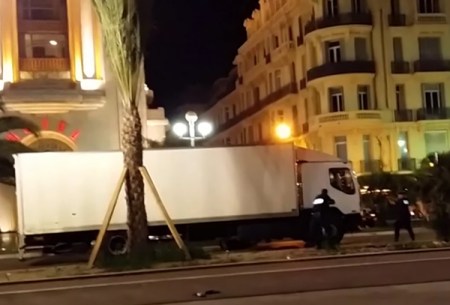
Nice, July 14, 2016: Bastille Day. The evening festivities were ending. As the crowd watching fireworks was beginning to disperse, the driver of a 19-ton truck, zig-zagging, mowed down everyone in his way. Ten minutes and 84 dead persons later, the driver was shot and killed. Dozens were wounded; many will be crippled for life. Dazed survivors wandered the streets of the city for hours.

French television news anchors quickly said that what happened was almost certainly an “accident,” or when the French authorities started to speak of terrorism, that the driver could just be a madman. When the police disclosed the killer’s name and identity, and that he had been depressed in the past, they suggested that he had acted in a moment of “high anxiety.” They found witnesses who testified that he was “not a devout Muslim” — maybe not a Muslim at all.

President François Hollande spoke a few hours later and affirmed his determination to “protect the populace.”

Prime Minister Manuel Valls repeated what he already said 18 months ago: “France is at war.” He named an enemy, “radical Islamism,” but he was quick to add that “radical Islamism” has “nothing to do with Islam.” He then repeated what he emphasized so many times: the French will have to get used to living with “violence and attacks.”

The public reaction showed that Valls convinced hardly anyone. The French are increasingly tired of attempts to exonerate Islam. They know perfectly well that all Muslims are not guilty. They also know that, nevertheless, all those who committed attacks in France in recent years were Muslims. They do not feel protected by François Hollande. They see that France is attacked with increasing intensity and that radical Islam has declared war, but they do not see France declaring war back. They have no desire to get used to “violence and attacks.” They do not want to be on the losing side and they feel that we are losing.

Because the National Front Party uses more robust language, much of the public votes for its candidates. The National Front’s leader, Marine Le Pen, will undoubtedly win the first round of voting in the presidential election next year. She will probably not be elected in the end, but if nothing changes quickly and clearly, she will have a very good chance next time.

Moderate politicians read the public opinion polls, harden their rhetoric, and recommend harsher policies. Some of them might demand harsher measures, such as the expulsion of detained terrorists who have dual citizenship and the detention of people that praise attacks. Some have even called for martial law.

Calm will gradually return, but it is clear that the situation in France is approaching the boiling point.

The recent attacks served as an accelerant. Four years ago, when Mohamed Merah murdered soldiers and Jews in Toulouse, the population did not react. Most French did not feel directly concerned; soldiers were just soldiers, and Jews were just Jews. When, in January 2015, Charlie Hebdo cartoonists were slaughtered, an emotional reaction engulfed the country, only to quickly vanish. A huge demonstration was organized in the name of “freedom of speech” and the “values of the republic.” Hundreds of thousands claimed, “Je Suis Charlie” (“I am Charlie”). When, two days later, Jews were murdered again in a kosher grocery store, hardly anyone said “I am a Jew.”

Those who tried to speak of jihad were promptly reduced to silence. Not even a year later, in November, the Bataclan Theater bloodbath did not lead to protests, but was a deeper shock. The mainstream media and the government could no longer hide that it was an act of jihad. The number killed was too overwhelming; one could not just turn the page. The mainstream media and the government did their best to downplay anger and frustration and to emphasize sadness.Solemn ceremonies with flowers and candles were everywhere. A “state of emergency” was declared and soldiers were sent into the streets.

But then the feeling of danger faded. The Euro 2016 soccer championship was organized in France, and the French team’s good performance created a false sense of unity.

The Nice attack was a wake-up call again. It brutally reminded everyone that the danger is still there, deadlier than ever, and that the measures taken by the authorities were useless gesticulations. Memories of the previous killings came back.

Attempts to hide that Mohamed Lahouaiej-Bouhlel, the terrorist in Nice, was a jihadist fooled no one. Instead, it just created more anger, more frustration, and more desire for effective action.

Days before the Nice attack, the media reported that the parliamentary inquiry commission report on the Bataclan Theater attack revealed that the victims had been ruthlessly tortured and mutilated, and that the government had tried to cover up these facts. Now the entire public discovered the extent of the horror, adding fuel to the fire.

France seems now on the verge of a revolutionary moment; it would not take much to cause an explosion. But the situation is more serious than many imagine.

Whole areas of France are under the control of gangs and radical imams. The government delicately calls them “sensitive urban zones.” Elsewhere they are bluntly called “no go zones.” There are more than 570 of them.

Hundreds of thousands of young Muslims live there. Many are thugs, drug traffickers, robbers. Many are imbued with a deeply rooted hatred for France and the West. Recruiters for jihadists organizations tell them — directly or through social networks — that if they kill in the name of Allah, they will attain the status of martyrs. Hundreds are ready. They are unpinned grenades that may explode anywhere, anytime.

Although possessing, carrying and selling weapons are strictly regulated in France, weapons of war circulate widely. And, of course, the Nice attack has shown once again that a firearm is not necessary to commit mass murder.

Twenty-thousand people are listed in the government’s “S-files,” an alert system meant to identify individuals linked to radical Islam. Most are unmonitored. Toulouse murderer Mohamed Merah, the murderers of the Charlie Hebdo cartoonists, and many of the terrorists who attacked the Bataclan Theater were in the S-files. Mohamed Lahouaiej-Bouhlel, the terrorist who acted in Nice, was not.

France’s intelligence chief said recently that more attacks are to come and that many potential killers wander freely, undetected.

Doing what the French government is doing today will not improve anything. On the contrary. France is at the mercy of another attack that will set the powder keg ablaze.

Doing more will lead to worse before matters get better. Regaining control of many areas would entail mobilizing the army, and leftists and anarchists would certainly add disorder to disorder.

Imprisoning whoever could be imprisoned in the name of public safety would imply more than martial law; it would mean the suspension of democratic freedoms, and even so, be an impossible task. The jails in France are already full. The police are outnumbered and showing signs of exhaustion. The French army is at the limit of its capacity for action: it already patrols the streets of France, and is deployed in Africa and the Middle East.

1578 (1)The French army is at the limit of its capacity for action: it already patrols the streets of France and is deployed in Africa and the Middle East. Pictured above: French soldiers guard a Jewish school in Strasbourg, February 2015. (Image source: Claude Truong-Ngoc/Wikimedia Commons)

Successive governments have built a trap; the French, who are in it, are thinking only of how to escape.

President François Hollande and Prime Minister Manuel Valls bear all the guilt. For years, many in France supported any movement that denounced “Islamophobic racism.” They passed laws defining criticism of Islam as a “hate crime.” They relied more and more on the Muslim vote to win elections. The most important left-wing think tank in France, Terra Nova, which is considered close to the Socialist Party, published several reports explaining that the only way for the left to win elections is to attract the votes of Muslim immigrants and to add more Muslims to the France’s population.

The moderate right is also guilty. President Charles de Gaulle established the “Arab policy of France,” a system of alliances with some of the worst dictatorships in the Arab-Muslim world, in the belief that France would regain its lost power thanks to this system. President Jacques Chirac followed in the footsteps of de Gaulle. President Nicolas Sarkozy helped overthrow the Gaddafi regime in Libya and bears a heavy responsibility for the mess that followed.

The trap revealed its lethal effects a decade ago. In 2005, riots across France showed that Muslim unrest could lead France to the brink of destruction. The blaze was extinguished thanks to the appeals for calm from Muslim organizations. Since then, France has been at the mercy of more riots.

The choice was made to practice appeasement. It did not stop the rot gaining ground.

François Hollande made hasty decisions that placed France at the center of the target. Seeing that strategic interests of France were threatened, he launched military operations against Islamist groups in sub-Saharan Africa. Realizing that French Muslims were going to train and wage jihad in Syria, he decided to engage the French army in actions against the Islamic State.

He did not anticipate that Islamist groups and the Islamic State would hit back and attack France. He did not perceive the extent to which France was vulnerable — hollowed out from within.

The results put in full light a frightening landscape. Islamists view the landscape and do not dislike what they see.

On their websites, they often quote a line from Osama bin Laden: “When people see a strong horse and a weak horse, they will naturally want to side with the strong horse.”

They appear to think that France is a weak horse and that radical Islam can bring France to its knees in a pile of dust and rubble. Time, they seem to think, is on their side as well — and demography. Muslims now make up about 10% of the French population; 25% of teenagers in France are Muslims.

The number of French Muslims who want Islamic sharia law applied in France increases year after year, as does the number of French Muslims who approve of violent jihad. More and more French people despise Islam, but are filled with fear. Even the politicians who seem ready to fight do not take on Islam.

Islamists seem to think that no French politician will to overcome what looks more and more like a perfect Arab storm. They seem to feel that the West is already defeated and does not have what it takes to carry the day. Are they wrong?

France: The Coming Civil War

July 16, 2016

France: The Coming Civil War, Gatestone InstituteYves Mamou, July 16, 2016

♦ For French President François Hollande, the enemy is an abstraction: “terrorism” or “fanatics”.

♦ Instead, the French president reaffirms his determination to military actionsabroad: “We are going to reinforce our actions in Syria and Iraq,” the president said after the Nice attack.So confronted with this failure of our elite who were elected to guide the country across nationals and internationals dangers, how astonishing is it if paramilitary groups are organizing themselves to retaliate?

♦ “Western elites, with a suicidal obstinacy, oppose naming the enemy. Confronted with attacks in Brussels or Paris, they prefer to imagine a philosophical fight between democracy and terrorism, between an open society and fanaticism, between civilization and barbarism”. — Mathieu Bock-Côté, sociologist, in Le Figaro

♦ In France, the global elites made a choice. They decided that the “bad” voters in France were unreasonable people too stupid to see the beauties of a society open to people who often who do not want to assimilate, who want you to assimilate to them, and who threaten to kill you if you do not.

♦ Similarly, the British took the first tool that was given to them to express their disappointment at living in a society they did not like anymore. They did not vote to say: “Kill all these Muslims who are transforming my country or stealing my job or soaking up my taxes”. They were just protesting a society that a global elite had begun to transform without their consent.

♦ The global elite made a choice: they took the side against their own old and poor because those people did not want to vote for them any longer. They also made a choice not to fight Islamism because Muslims vote collectively for this global elite.


1697French police shoot dead a Tunisian-born Islamist terrorist who murdered 84 people in Nice, France, July 14, 2016. (Image source: Sky News video screenshot)

“We are on the verge of a civil war.” That quote did not come from a fanatic or a lunatic. No, it came from head of France’s homeland security, the DGSI (Direction générale de la sécurité intérieure), Patrick Calvar. He has, in fact, spoken of the risk of a civil war many times. On July 12th, he warned a commission of members of parliament, in charge of a survey about the terrorist attacks of 2015, about it.

In May 2016, he delivered almost the same message to another commission of members of parliament, this tme in charge of national defense. “Europe,” he said, “is in danger. Extremism is on the rise everywhere, and we are now turning our attention to some far-right movements who are preparing a confrontation”.

What kind of confrontation? “Intercommunity confrontations,” he said — polite for “a war against Muslims.” “One or two more terrorist attacks,” he added, “and we may well see a civil war.”

In February 2016, in front of a senate commission in charge of intelligence information, he said again: ” We are looking now at far-right extremists who are just waiting for more terrorist attacks to engage in violent confrontation”.

No one knows if the truck terrorist, who plowed into the July 14th Bastille Day crowd in Nice and killed more than 80 people, will be the trigger for a French civil war, but it might help to look at what creates the risk of one in France and other countries, such as Germany or Sweden.

The main reason is the failure of the state.

1. France is at War but the Enemy is Never Named.

France is the main target of repeated Islamist attacks; the more important Islamist terrorist bloodbaths took place at the magazine Charlie Hebdo and the Hypercacher supermarket of Vincennes (2015); the Bataclan, its nearby restaurants and the Stade de France stadium, (2015); the failed attack on theThalys train; the beheading of Hervé Cornara (2015); the murders at a school in Toulouse (2012); the three week torture and murder of young Ilan Halimi (2006); the assassination of two policemen in Magnanville in June (2016), and now the truck-ramming in Nice, on the day commemorating the French Revolution of 1789.

Most of those attacks were committed by French Muslims: citizens on their way back from Syria (the Kouachi brothers at Charlie Hebdo), or by French Islamists (Larossi Abballa who killed a police family in Magnanville last June) who later claimed their allegiance to Islamic State (ISIS). The truck killer in Nice was also French, of Tunisian descent, living quietly in Nice until he decided to murder more than 80 people and wound dozens more.

At each of these tragic episodes, the head of state, President François Hollande, refused to name the enemy, refused to name Islamism — and especially refused to name French Islamists — as the enemy of French citizens.

For Hollande, the enemy is an abstraction: “terrorism” or “fanatics”. Even when the president does dare to name “Islamism” the enemy, he refuses to say he will close all Salafist mosques, prohibit the Muslim Brotherhood and Salafist organizations in France, or ban veils for women. No, instead, the French president reaffirms his determination for military actions … abroad: “We are going to reinforce our actions in Syria and Iraq,” the president said after the Nice attack.

For France’s head of state, the deployment of soldiers on the national ground is for defensive actions only: a dissuasive policy, not an offensive rearmament of the Republic against an internal enemy.

So confronted with this failure by our elite — who were elected to guide the country across national and international dangers — how astonishing is it if paramilitary groups are organizing themselves to retaliate?

As Mathieu Bock-Côté, a sociologist in France and Canada says in Le Figaro: “Western elites, with a suicidal obstinacy, oppose naming the enemy. Confronted by attacks in Brussels or Paris, they prefer to imagine a philosophical fight between democracy and terrorism, between an open society and fanaticism, between civilization and barbarism”.

2. The Civil War Has Already Begun and Nobody Wants to Name It.

The civil war began sixteen years ago, with the second Intifada. When Palestinians invented suicide attacks in Tel Aviv and Jerusalem, French Muslims began to terrorize Jews living peacefully in France. For sixteen years, Jews — in France —were slaughtered, attacked, tortured and stabbed by French Muslim citizens supposedly to avenge Palestinian people in the West Bank.

When a group of French citizens who are Muslims declares war on another group of French citizens who are Jews, what do you call it?

For the French establishment, it is not a civil war, just a regrettable misunderstanding between two “ethnic” communities.

Until now, no one has wanted to establish a connection between these attacks and the murderous attack in Nice against people who were not necessarily Jews — and name it as it should be named: a civil war.

For the very politically correct French establishment, the danger of a civil war will begin only if anyone retaliates against French Muslims; if everyone just submits to their demands, everything is all right. Until now, no one thinks that the terrorist attacks against Jews by French Muslims; against Charlie Hebdo’s journalists by French Muslims; against an entrepreneur who was beheaded a year ago by a French Muslim; against young Ilan Halimi by a group of Muslims; against schoolchildren in Toulouse by a French Muslim; against the passengers on the Thalys train by a French Muslim, against the innocent people in Nice by a French Muslim were the symptoms of a civil war. These bloodbaths remain, still today something like a climatic catastrophe, a kind of tragic mistake.

3- The French Establishment Considers the Enemy the Poor the Old and the Disappointed

In France, who most complains about Muslim immigration? Who most suffers from local Islamism? Who most likes to drink a glass of wine or eat a ham-and-butter sandwich? The poor and the old who live close to Muslim communities, because they do not have the money to move someplace else.

Today, as a result, millions of the poor and the old in France are ready to elect Marine Le Pen, president of the rightist Front National, as the next president of the Republic for the simple reason that the only party that wants to fight illegal immigration is the Front National.

Because, however, these French old and poor want to vote for the Front National, they have become the enemy of the French establishment, right and left. What is the Front National saying to these people? “We are going to restore France as a nation of French people”. And the poor and the old believe it – because they have no choice.

Similarly, the poor and the old in Britain had no choice but to vote for Brexit. They took the first tool given them to express their disappointment at living in a society they did not like anymore. They did not vote to say, “Kill these Muslims who are transforming my country, stealing my job and soaking up my taxes”. They were just protesting a society that a global elite had begun to transform without their consent.

In France, the global elites made a choice. They decided that the “bad” voters in France were unreasonable people too stupid to see the beauties of a society open to people who often who do not want to assimilate, who want you to assimilate to them, and who threaten to kill you if you do not.

The global elites made another choice: they took the side against their own old and poor because those people did not want to vote for them any longer. The global elites also chose not to fight Islamism, because Muslims vote globally for the global elite. Muslims in Europe also offer a big “carrot” to the global elite: they vote collectively.

In France, 93% of Muslims voted for the current president, François Hollande, in 2012. In Sweden, the Social Democrats reported that 75% of Swedish Muslims voted for them in the general election of 2006; and studies show that the “red-green” bloc gets 80-90% of the Muslim vote.

4. Is the Civil War Inevitable? Yes!

If the establishment does not want to see that civil war was already declared by extremist Muslims first — if they do not want to see that the enemy is not the Front National in France, the AfD in Germany, or the Sweden Democrats — but Islamism in France, in Belgium, in Great Britain, in Sweden — then a civil war will happen.

France, like Germany and Sweden, has a military and police strong enough to fight against an internal Islamist enemy. But first, they have to name it and take measures against it. If they do not — if they leave their native citizens in despair, with no other means than to arm themselves and retaliate – yes, civil war is inevitable.


Netanyahu in 2014: Terror will Come to France

July 15, 2016

Netanyahu in 2014: Terror will Come to France, Power LineScott Johnson, July 15, 2016

In a nearby post I explore President Obama’s attitude toward Islamic terrorism and its consequences. His attitude is superficially sophisticated and seriously misguided.

Obama of course detests Israeli Prime Minister Benjamin Netanyahu, who is in every way Obama’s better. Among other things, Netanyahu is rather more perceptive than Obama about the threats we face and how to deal with them. In the video clip below, he warns a French correspondent in August 2014 that “this terror plague will come to you.”

https://www.youtube.com/watch?v=wVI379kINlY

Paul links to the video via Yair Rosenberg’s Twitter feed in the update to his post on the Nice massacre, but I think it is worth consideration on its own this morning. Rosenberg calls it one of the eerier videos he’s seen. It’s really going to be Twilight Zone material when Iran announces it has nuclear weapons.

Dozens killed as truck crashes into Bastille Day crowd in Nice, France

July 15, 2016

Dozens killed as truck crashes into Bastille Day crowd in Nice, France, Washinton TimesVictor Morton, July 14, 2016

France’s national holiday turned bloody and violent Thursday night in the southern city of Nice, as a truck crashed into a crowd of Bastille Day revelers, killing dozens of people and prompting a gunfight with police.

“Dear people of Nice, the driver of a truck appears to have caused tens of deaths. Stay for the moment in your home. More info to come,” former Nice Mayor Christian Estrosi said, according to a Washington Times translation of his tweet.

French TV stations had reported 30 days by early Friday local time.

 The chief of the province’s police force described the events as “an attack” and French TV photos showed the truck riddled with bullets.

A witness told Fox News that a gunman had fired into the crowd before police killed him.

Multiple videos posted on BreakingNews.com showed people fleeing in panic, though the crash itself wasn’t shown.

There was no immediate claim of responsibility but according to the Twitter account of the terrorism-news portal TRACTerrorism.org, Islamic State affiliated Telegram accounts were posting images from Nice.

Islamist terror groups, sometimes using native-French Muslims, have targeted France repeatedly in recent years and the use of vehicles and car bombs are among their known tactics.

A terror attack in France on July 14 would be as symbolic as one in the U.S. on July 4. Bastille Day is France’s biggest public holiday, celebrating a Parisian mob’s storming of the eponymous royal prison on that date in 1789, kicking off the French Revolution — the founding event of modern France.

Jonathan Sisler, an Ohio University student attending the parade with three friends during a European vacation, tweeted from the scene “Vehicular attack on Bastille Day crowd in #Nice, France tonight. Mere feet away. Almost trampled by the fleeing crowd. Glad to be alive.”

Stabbing Policemen, “Slut-Shaming” and New Death Threats

July 12, 2016

Stabbing Policemen, “Slut-Shaming” and New Death Threats -One Month of Islam and Multiculturalism in France: June 2016, Gatestone InstituteYves Mamou, July 12, 2016

♦ Muslim perpetrators rationalize their violence by convincing themselves that they live in a racist society that rejects them and their religion. And the government legitimizes them when it asks Parliament to vote for a law that favors “diversity” on public television channels.

♦ Islamist terrorist Larossi Abballa, 26, stabbed to death police officer Jean-Baptiste Salvaing and his wife, police administrator Jessica Schneider, in front of their son, at their home in the Paris suburb of Magnanville. The murderer then live-streamed a video on Facebook, in which he pledged allegiance to the Islamic State (ISIS).

♦ After the Islamist, anti-gay attack in Orlando, left-wing politician Jean-Luc Mélenchon wrote in his blog that he fears a possible “wave of hatred against Muslims”. For many Islamists in France, the Muslim is always the victim, even when he is the killer.

Islamization is gaining ground in the Muslim community of France. For a long time, this trend remained restricted to the cultural sphere and created strong controversies between Islamists and secular intellectuals (such as the ban on face-covering veils in schools and public places). But the debate stopped being a debate. Sometimes Islamic intolerance takes on the appearance of a civil war. The violence, which was mostly concentrated in the suburbs prior to the January 2015 terrorist attack on the satirical magazine, Charlie Hebdo, is spreading now to the heart of French cities. Murders, assaults, death threats and “slut-shaming” happens almost every day here and there.

Muslim perpetrators rationalize their violence by convincing themselves that they live in a racist society that rejects them and their religion. And the government legitimizes them when it asks Parliament to vote for a law that favors “diversity” on public television channels. What is interesting is that judiciary system seems in disarray and does not know how to treat these types of conflicts: two jihadists back from Syria are condemned to a suspended sentence of six months in prison and a Muslim who slapped a female waiter because she served alcohol during the Ramadan was sentenced to eight months in prison.

The absence of political guidelines spreads fear and aids the rise of the right-wing political party, the Front National.

June 1. Karim Benzema, a French soccer star of Algerian descent, declared, in the Spanish sports newspaper Marca, that French national team’s coach, Didier Deschamps “bowed to the pressure of a racist part of France” by not including him in the team. Benzema was not included in the national soccer team for the UEFA Euro 2016 championship because he is apparently involved in a sex-tape extortion scandal targeting his colleague, Mathieu Valbuena.

June 2. Patrick Kanner, Minister of Urban Affairs, Youth and Sport, said in Le Parisien that Karim Benzema plays an “unfair and dangerous” game when he implies that “ethnic reasons” might have played a role in the decision not to include him in the French soccer team.

June 2. It was reported that the Saudi preacher, Mohammed Ramzan Al-Hajiri, was banned from entering France until 2050. The daily, La Voix du Nord, reported that on May 15, the salafist Abou Bakr Essedik mosque of Roubaix had arranged for him to preach by phone. In April 2014, the same Saudi preacher had declared in public: “Losing your faith makes you no better than an animal” and “to kill a Muslim is a less serious crime than to make him an infidel.”

June 5. A 25-year-old Frenchman was arrested at the border between Ukraine and Poland. According to the TV channel M6, his truck was loaded with three portable rocket launchers, more than 100 kilograms of TNT, 100 detonators and half a dozen Kalashnikov assault rifles. He was unknown to security services and was planning terrorist attacks against synagogues and mosques in France.

June 6. One thousand migrants from Afghanistan, Sudan and Somalia, who were living in tents in the 18th district of Paris (Les Jardins d’Eole), were evacuated peacefully by police. According to the media, it is the 23rd operation of this kind in Paris since 2015

June 6. Swastikas and the words “white power” were tagged on the walls of the synagogue of Verdun. A similar incident of vandalism took place two months prior, said Jean-Claude Lévy, leader of the Jewish community in Verdun.

June 6. Gérard Tardy, mayor of Lorette, a small city in the Loire region of France, posted two messages on the electronic information boards of the city:

  • “Ramadan must be lived in peace without noise”
  • “In the Republic, nobody covers his face.”

The far left and Muslims organizations said these messages were “outrageous” and “disrespectful” to Muslims.

June 7. A waitress at a bar in Nice was violently slapped by a Muslim because she was serving alcohol to customers on the first day of Ramadan. Both the owner of the bar and the victim filed a complaint at the police station. The attacker escaped.

June 8. In Grigny, an outer suburb of Paris, people filmed used their smartphones to film a riot between “youths” [the French media’s euphemism for young Muslims] and police, and aired it live on Periscope, an “app” for instant video. No one knows what caused the riot. A father living in Grigny said, “In my time, violence with cops had always a motive: arrest, a stolen car… But now, it is different. It looks like people fight with police for fun”.

June 8. At midnight, Aya Ramadan, a female activist of the Parti des Indigènes de la République, posted on Twitter her congratulations to the two Palestinian terrorists who shot people in a bar in Tel Aviv, killing three. She wrote; “Dignity and pride! Cheers to the two Palestinians who have led a resistance operation in Tel Aviv.”

Gilles Clavreul, the High Commissioner of the Fight against Racism and anti-Semitism, said he would sue Ramadan for acting as an “apologist for terrorism.” The maximum punishment for such an offense is two years in prison and €100,000 fine. The Parti des Indigènes de la République is a racialist organization developing a political ideology to take the power from the “whites” to give it to the “colored people” in France.

June 8. The Observatory of Secularism (Observatoire de la laïcité), an official body linked to the prime minister’s office, published its annual report. According to the report, anti-Semitic attacks remain at a high level (808 attacks) and anti-Muslim attacks have tripled (from 133 last year to 429 in 2015). The report failed to establish a proportion between the number of Jews in France (half a million) and the number of Muslims (between six to ten million). The report also does not relate that most anti-Jewish acts are committed by Muslims. The Observatory of Secularism found itself in the eye of a storm last year for its complacency towards Islamism.

June 9. Jacqueline Eustache-Brinio, Mayor of Saint-Gratien, declared war on shops with veiled saleswomen. She wrote on her Facebook page. “I have decided to boycott all shops who impose veiled cashiers and veiled saleswomen on me.” She says she is committed to support, by all means possible, women who refuse to wear veil.

June 9. Provocation? The Parti des Indigénes de la République issued a public invitation to all Muslims to begin the night of Ramadan in front of Saint Denis Basilica, a huge Catholic monument that played an important role in history of France. The Catholic kings of France were crowned and are buried in the Basilica.

June 9. Soldiers protecting a synagogue in Garges (a Paris suburb) were attacked with a barrage of stones launched by a group of twenty people. One soldier was wounded.

June 8. Twenty MPs co-signed and published an open letter in the news magazine Valeurs Actuelles, addressed to Minister of Education Najat Vallaud-Belkacem. They were protesting the decision of the Ministry of Education to promote teaching Arabic at schools to young children of five or six years old. “This decision is stupid. Priority must be given to teaching French, the language of the Republic”.

June 13. Jean-Luc Mélenchon, of left-wing New Anticapitalist Party (NPA), wrote in his blog after the Islamist, anti-gay attack in Orlando, that he fears a possible “wave of hatred against Muslims”. For many Islamists in France, the Muslim is always the victim, even when he is the killer.

June 13. Islamist terrorist Larossi Abballa, 26, stabbed to death police officer Jean-Baptiste Salvaing and his wife, police administrator Jessica Schneider, in front of their son, at their home in the Paris suburb of Magnanville. The murderer then live-streamed a video on Facebook, in which he pledged allegiance to the Islamic State (ISIS). When police stormed the house, they rescued the three-year-old boy. According to Le Figaro, the killer had been sentenced in 2013 to three years of prison for participating in recruiting jihadists and funneling them into Pakistan, but was released almost immediately.
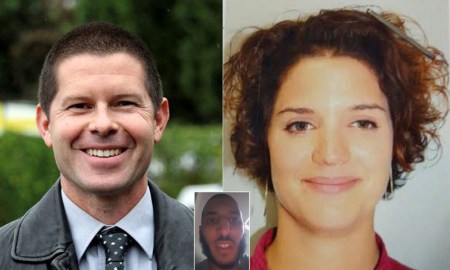
1691 (1)Paris police officer Jean-Baptiste Salvaing (left) and his wife, police administrator Jessica Schneider (right), were stabbed to death in front of their son by Islamist terrorist Larossi Abballa (inset) on June 13. The murderer then live-streamed a video on Facebook, in which he pledged allegiance to the Islamic State.


June 14. A 19-year-old female student was stabbed at a bus station in the city of Rennes. Passersby succeeded in capturing her attacker, a Muslim man who said he was obeying “voices” that ordered him to make a “sacrifice for Ramadan.” The young woman was taken to a hospital, and the attacker was taken to a psychiatric hospital.

June 14. In reaction to the June 13 murder of two police officers by an Islamist terrorist, the government authorized all policemen to keep their gun on them when they are not on duty.

June 15. According to the Belgian daily La Dernière Heure, the Belgian antiterrorism service informed police departments that ISIS fighters left Syria at the beginning of June to be sent to France and Belgium to commit terrorist attacks.

June 15. Maude Vallet, 18 years old, was harassed, insulted and threatened by five women in a bus because she was wearing shorts on her way back from the beach. She wrote her story on Facebook: “Hi, I am a bitch”. She denounced traditions and the clergy, but refused to mention that these “slut-shaming” attackers were Muslim women. She said the ethnicity to which they belonged was not relevant.

June 15. Ali S, 32, a Tunisian who slapped a female waiter in a bar in Nice because she was serving alcohol during Ramadan was sentenced to eight months in prison and ordered to pay 1000 euros to the waitress. Because he was residing illegally in France, he will be deported and prohibited from returning to France for three years.

June 16. A street encampment of around 400 Sudanese and Afghan migrants, mostly men, was evacuated by the police in the 18th district of Paris. It is the 24th evacuation since June 15, 2015.

June 16. In reaction to the June 13 murder of two police officers by an Islamist terrorist, the right-wing politicians began campaigning to send 13,000 people registered as an “S” (people who live in France and suspected of being affiliated with a terrorist organization) to special “camps”.

June 16. A 22-year-old convert to Islam was arrested in Carcassonne with a knife and a machete. He confessed to the police that he wanted to kill American and English tourists before stabbing a policeman or a soldier. He is being held in custody in Toulouse. The man is registered as an “S”.

June 18. Abou Kamel Chahid threatened on Facebook to commit terrorist attacks in France. “We are four brothers, each has a mission. I swear by Allah, France is going leave the coalition. They won’t have choice. These kouffars [infidels] will never feel well in this country. Be careful, brothers and sisters, things are going to accelerate”.

June 18. For a year, the public multimedia library of Lannion (Britany) has been suffered a rash of vandalizations of its books, comics and DVDs — all relating to the Jews, such as books about the Holocaust and comics by Johan Sfar, the author of “La chat du rabbin” (“The Rabbi’s Cat”), a bestselling comic book.

June 19: An inmate of the Beziers prison in the south of France was sentenced to an additional six months in prison because he said he wanted to commit a terrorist attack against the nudist beach of the Cap d’Agde. The man, Alain G, a convert to Islam, was reported by other inmates.

June 19: 4000 French Muslims responded to a call launched by a group of Mosques in the area of Magnanville, a Paris suburb, to participate in a silent march in tribute to two police officers stabbed to death at their home. It is the first time that French Muslims showed some collective solidarity with non-Muslims against Islamic terrorism. Pressure from the media had been huge to make the demonstration into a show. There was, however, some criticism: MP Guénhaël Huet tweeted “sincerity or duplicity?”. Many other critics observed the absence of women among the marchers, which was analyzed as a sign of the deepening of Islamist ideology among the French Muslims. When the marchers arrived in front of the police station to lay down flowers, no policemen came out to thank them or shake hands.

June 20. After three days of controversy on social media, it appeared that the policeman who refused to shake hands with President François Hollande at a memorial ceremony for the two police officers murdered by the Islamist, Larossi Abballa, was not a member of right-wing Front National party. According to Le Monde, the policeman just wanted to protest against the shrinking budget of the police.

June 21. The NGO “Action by Christians for the Abolition of Torture” (“Action des chrétiens pour l’abolition de la torture”) released a poll about the perception of torture by the French. The results were astounding:

  • 36% said it is acceptable to use torture “in exceptional circumstances.” The number was 25% in 2000 [Poll Amnesty/CSA. 2000].
  • 54% of those polled found it “justifiable” to use electric shocks to torture a terrorist suspected of planting a bomb.
  • 45% said they considered torture an efficient tool against terrorism.
  • 18% said they thought they could torture a terrorist themselves. 40% of Front National supporters said they thought they could torture a terrorist themselves.

June 21. More than 1000 women (mostly Muslims) signed a petition demanding separate hours for women at the public swimming pool of Mantes la Jolie, a Paris suburb. The petition included a request for only female employees to be present during women’s hours. Officials, in the name of secularism, refused the request.

June 21. The daily, Libération, published a report on the Turkish government’s strategy to gain control of Islamic institutions in France.

June 21. A Muslim security guard operating in the “fan zone” of the UEFA Euro soccer tournament in Nice was seen praying while on duty. Police were called to expel him; bystanders were afraid he was a terrorist.

June 22. The investment company Mayhoola, affiliated with the royal family of Qatar, the al-Thanis, spent half-a-billion euros for a controlling interest in the French fashion company Balmain. The same day, the news magazine Marianne published a full survey about the real estate properties of the royal Qatari family in France: 3 billion euros ($3.3 billion USD) in villas, buildings, malls, etc.

June 22. A Muslim from La Chapelle-Basse-Mer (western France) was given a four month suspended prison sentence, a €300 fine, and ordered to pay €1000 in damages each to the two people he threatened to kill, as well as €300 for court costs. In December 2015, he drove his car into a schoolyard and threatened to kill the cook and deputy cook of the school, because his eight-year-old son had eaten pork at the school cafeteria. The boy was hungry and apparently did not want to wait for a substitute meal for vegetarians and Muslims.

June 23: At 3am, in the heart of Barbes, the Muslim quarter of Paris, two men on a motor-scooter opened fire on a group of young men walking in the street. No one was wounded. The police found two 9mm bullet casings on the scene.

June 24: In Toulon, a hundred women demonstrated in the street, all of them wearing shorts. They said they wanted to support Maude Vallet who had been attacked in a bus by five women; the attackers had said that by wearing shorts, she did not respect herself. Like Maude Vallet, the demonstrators refused to mention that all the attackers had been Muslims. Instead, the demonstrators repeated the traditional litany that “it has nothing to do with Islam”.

June 24: In Portes-lès-Valence, an Islamist under surveillance by security services was convicted and imprisoned for the murder of his three-year-old stepdaughter. He had beaten the child to death. The mother was also charged for failing to report the abuse.

June 25: Can a female lawyer testify in court while wearing a veil? This controversy engulfed the bar association of Seine Saint Denis, a suburb of Paris. On June 24, at a students’ moot court competition, a young woman appeared with a tuque, a traditional hat which no lawyers in France wear anymore. But, in a visible way, under the tuque, she was wearing a Muslim veil. The controversial question of whether this is now a hot topic. Many observers think that the tuque will be reintroduced in France by Islamist lawyers in the next few months.

June 26: Bernard Cazeneuve posthumously admitted Hervé Cornara to the Order of Légion d’Honneur. A year ago, Cornara, a businessman, was murdered and beheaded by his Muslim employee, Yassine Salhi, who claimed to act on behalf of the Islamic State. Salhi placed Cornara’s severed head on display, alongside twin ISIS flags, at the gas factory near Lyon where they worked.

June 27: The press reported that two days earlier, 300 hundred migrants from Sudan, Eritrea and Afghanistan engaged in a mass brawl in the 18th district of Paris. The brawl apparently erupted because a woman was sexually harassed by a man from a different ethnic group. The police used tear gas grenades to stop the violence.

June 27: In Ales (southern France), Abdellah, a Moroccan, apparently had no money to pay for his meal at the Sushi bar where he had eaten, so he ran out of the restaurant with his girlfriend. When the police caught him, he began to shout:

“You pork-eaters! You sausage-eaters… We are going to kick France’s ass. Long live the Kouachis [brothers who murdered the Charlie Hebdo journalists in January 2015]! I swear to God, I have a Kalashnikov…”

Abdellah was sentenced to two years in prison for “defending terrorism,” and was ordered to pay the Sushi bar bill.

June 28: Azzeddine Taïbi, a communist, was elected mayor of Stains, a suburban city known for its Salafist population. On the same day, the Administrative Court of Montreuil rejected an appeal by the Seine-Saint-Denis Prefecture demanding the removal of a banner in support of Marwan Barghouti. Barghouti is currently serving five life sentences in an Israel prison for

“orchestrating three shooting attacks that killed 5 people: one attack in Jerusalem… in which Greek monk Tsibouktsakis Germanus was murdered… and one shooting and stabbing attack at the Sea Food Market restaurant in Tel Aviv (March 5, 2002). When arrested by Israel in 2002, Barghouti headed the Tanzim (Fatah terror faction).”

Barghouti’s supporters try to paint him as the “Palestinian Mandela.” So, today, the portrait of Barghouti is back covering “Liberty, Equality, Fraternity” on the pediment of the Seine-Saint-Denis Hall.

June 29: The prosecutor’s office in Paris opened in inquiry into death threats posted on social networks against the magazine, Charlie Hebdo. Some twenty “very threatening” messages, including the death threats, were posted on Charlie Hebdo’s Facebook page for three or four days in mid-June, Le Parisien reported. Police are investigating.

June 30: The French government introduced amendments to the “Equality and Citizenship” bill, to fight against “prejudice” and make “diversity” (ethnic minorities) more visible on public television.

According to the latest “barometer of diversity,” only 14% of people perceived as “non-white” (in the terminology) are present on the air. Erika Bareigts, secretary of state in charge of “real equality,” said that “diversity is the reality of French society, and we must show it. This soothes the debate, and everybody needs it.” She added: “The media do not show non-whites in positive or starring roles. That must change.”

June 30: Two jihadists, back from Syria, where they joined the Islamic State, were sentenced to six-month suspended prison terms. The jihadists are 16 and 17 years old. They stayed only six months in Syria and said they left ISIS because of the “rotten ambiance” in their battalion, which was composed of French volunteers.

French Prisons: Universities of Jihad

July 7, 2016

French Prisons: Universities of Jihad, Clarion Project, Leslie Shaw, July 7, 2016

PrisonMuslimHP_0_0Photo: Video screenshot)

Sociologist and author Farhad Khosrokhavar has estimated that Muslims make up between 50 and 80 percent of prison inmates in France. Given that Muslims account for between seven and eight percent of the French population, this means that they are either more prone to crime than the indigenous French population, or that they are victims of discrimination by French law enforcement.

Given that many offenders are not behind bars but out on parole, wearing electronic bracelets, under house arrest or were not jailed on conviction but benefited from the leniency of the criminal courts, the real figure for the share of Islam in French crime is probably much higher than Khosrokhhavar’s estimate.

One of the disadvantages of this high proportion of Muslim inmates is that French prisons have become universities of jihad and incubators of terrorism.

French prison authorities were aware of the problem of radicalization way before the Charlie Hebdo attacks of January 2015. Mohamed Merah, who killed seven people (including three schoolchildren) in Toulouse in 2012 and Mehdi Nemmouche, who killed four people at the Jewish museum in Brussels in 2014, had been radicalized in prison.

The Kouachi brothers who carried out the Charlie Hebdo attack had also rallied to the cause of radical Islam while doing jail time. But when prison governors notified the authorities of the rise in Islamic radicalism, they were not only ignored but accused of Islamophobia.

Official figures indicate that 18,000 Muslim inmates observe Ramadan. There are currently only 182 Muslim prison chaplains, a situation which contributes to the influence of self-styled imams from the Muslim prison constituency.

In that constituency, 1,400 have been identified as radical Islamists of which 300 are linked to terrorism. The extent to which Islamist extremists indulge in and spread their ideology is astonishing.

Calls to prayer are made from prison windows. Inmates who are considered “bad” Muslims — those who watch television, do not rise at dawn to pray or do not wear a jellaba after sunset — are expelled from their cells by their radical co-religionists.

Female Muslim visitors who wear Western-style clothing are insulted and some have resorted to changing into Islamic robes in the parking lot before visits. In 2014, 1,012 cellphones found in prisons were seized, of which 50 percent contained Facebook accounts, some with links to Syria and Yemen.

The most common argument used to entice new recruits is to tell them that they will be absolved of their sins and gain entry to paradise if they commit to waging violent jihad upon release.

In January 2015 Prime Minister Manuel Valls unveiled an $800 million project to combat the spread of radical Islam including the creation of dedicated prison units (U2P or Units for the Prevention of Proselytism) where Islamists would be separated from other prisoners. The project was rolled out in five5 prisons at a cost of $17 million.

One prison governor expressed scepticism at the scheme, saying it would not prevent the recruitment of prisoners to the cause of jihad.

“If we want to separate the radical inmates from the rest of the prison population, we would need to build a French Guantanamo. Is that what we want?” he asked.

A member of the national security intelligence service shares this view. “Our prisons are cauldrons of radicalization. Terrorist inmates are heroes and this facilitates proselytism and recruitment.”

The real question to consider is what restrictions on freedom are acceptable in the interest of national security.

A report published on July 6, 2016 by the inspector general of prisons evaluates the result of this project and the judgement is far from favorable.

Between February and May 2016, three inspectors visited four prisons and interviewed 64 U2P inmates and their handlers. The report concludes that the experimental model is unrealistic given the overpopulation in prisons and presents more disadvantages than advantages.

Moreover, the structures put in place are inappropriate given the scale of the problem and the spectacular increase in people (over 1,000) currently indicted for terrorism. The initial objective of combating proselytism has been supplanted by that of gathering radicalized inmates in single units.

The report echoes the concerns of counter-terrorism magistrates that putting radical Islamists together will facilitate bonding, networking and the intimidation of vulnerable inmates. While radicals in the U2Ps are held in private cells, they are still not completely sealed off from the rest of the inmates and continue to spread their ideology.

The isolation of jihadists in U2Ps is accompanied by deradicalization programs, which consist of lessons in citizenship, lectures and debates on political violence and structured seminars on disengagement from violence for groups of six to eight over a three-month period on a voluntary basis.

Commenting on the report, Guillaume Denoix de Saint-Marc, director of the French Association for Victims of Terrorism, stated that the only way to eliminate prison radicalization is to “make inmates reflect in order to prepare for their release.”

Given the high rate of repeat offending and the crossover from juvenile delinquency to violent crime and ultimately to jihad, such a statement belongs more in the realm of wishful thinking than reality.

Radicalization is also taking place at an alarming rate in prisons in the U.S. Watch a clip from the Clarion film, The Third Jihad: 

Leaked document: Germany and France to replace Brussels in charge of EU?

June 28, 2016

Leaked document: Germany and France to replace Brussels in charge of EU? RT via YouTube, June 26, 2016

According to the blurb beneath the video,

Document leaked by Polish media indicates Germanу and France could be taking matters in their own hands without bothering to consult Brussels or any other EU countries. Document claimed to be presented to Poland, Czech Republic, Hungary and Slovakia at the meeting in Prague. It reportedly discloses intention to create ‘superstate’ within EU with center of power split between Paris and Berlin.

Brexit: The Nation is Back!

June 25, 2016

Brexit: The Nation is Back! Gatestone InstituteYves Mamou, June 25, 2016

♦ In France, before the British vote, the weekly JDD conducted an online poll with one question: Do you want France out of the EU? 88% of people answered “YES!”

♦ In none of the countries surveyed was there much support for transferring power to Brussels.

♦ To calm a possible revolt of millions of poor and unemployed people, countries such as France have maintained a high level of social welfare spending, by borrowing money on international debt markets to pay unemployment insurance benefits, as well as pensions for retired people. Today, France’s national debt is 96.1% of GDP. In 2008, it was 68%.

♦ In the past few years, these poor and old people have seen a drastic change in their environment: the butcher has become halal, the café does not sell alcohol anymore, and most women in the streets are wearing veils. Even the McDonald’s in France have become halal.

♦ What is reassuring is that the “Leave” people waited for a legal way to express their protest. They did not take guns or knives to kill Jews or Muslims: they voted. They waited an opportunity to express their feelings.

“How quickly the unthinkable became the irreversible” writes The Economist. They are talking about Brexit, of course.

The question of today is: Who could have imagined that British people were so tired of being members of The Club? The question of tomorrow is: What country will be next?

In France, before the British vote, the weekly JDD conducted an online poll with one question: Do you want France out of the EU? 88% of people answered “YES!” This is not a scientific result, but it is nevertheless an indication. A recent — and more scientific — survey for Pew Research found that in France, a founding member of “Europe,” only 38% of people still hold a favorable view of the EU, six points lower than in Britain. In none of the countries surveyed was there much support for transferring power to Brussels.

With Brexit, everybody is discovering that the European project was implemented by no more than a minority of the population: young urban people, national politicians of each country and bureaucrats in Brussels.

All others remain with the same feeling: Europe failed to deliver.

On the economic level, the EU has been unable to keep jobs at home. They have fled to China and other countries with low wages. Globalization proved stronger than the EU. The unemployment rate has never before been so high as inside the EU, especially in France. In Europe, 10.2% of the workforce is officially unemployed The unemployment rate is 9.9% in France, 22% in Spain.

And take-home salaries have remained low, except for a few categories in finance and high-tech.

To calm a possible revolt of millions of poor and unemployed people, countries such as France have maintained a high level of social welfare spending. Unemployed people continue to be subsidized by the state. How? By borrowing money on international debt markets to pay unemployment insurance benefits, as well as pensions for retired people. So today France’s national debt is 96.1% of GDP. In 2008, it was 68%.

In the the euro zone (19 countries), the ratio of national debt to GDP in 2015 was 90.7%.

In addition to these issue all, European countries have been remained open to mass-immigration.

Immigration was not an official question of the British “remain” or “leave” campaign. But as noted by Mudassar Ahmed, patron of the Faiths Forum for London and a former adviser to the U.K. government, the question of immigration and diversity has been latent:

“In personal conversations, I have found those most eager to leave the European Union are also most uncomfortable with diversity — not just regarding immigration, but of the diversity that already exists in this country. On the other hand, those who are most eager, in my experience, to support remaining in the European Union are far more open to difference in religion, race, culture and ethnicity”.

In France, the question of immigration tied to an eventual “Frexit” is not at all latent. The Front National (FN) strongly supports leaving the EU, and that position is tied to immigration. In France, 200,000 foreigners have been coming annually for several years — from poor countries such as those in North Africa, as well as sub-Saharan countries. The growing presence of Muslims has brought a growing feeling of insecurity, and the cultural traditions of Arab and African countries has created in Europe a cultural “malaise.” Not to everyone, or course. In big cities, people accept diversity. But in the suburbs, it is different. Because those who were on welfare, who were poor, who were old — all these people are living precisely in the same neighborhoods and the same buildings as the new immigrants.

1663Marine Le Pen, leader of the Front National, celebrates the Brexit vote under a sign reading, “And Now: France!”, June 24, 2016.

In the past few years, these poor and old people have seen a drastic change in their environment: the butcher has become halal, the café does not sell alcohol anymore, the famous French “jambon beurre” (ham and butter) sandwich disappeared, and most women in the streets are wearing veils. Even the McDonald’s in France have become halal. In Roubaix, for example,all fast food has become halal.

An eventual “Frexit” vote by the poor, the old, and the people on welfare would mean only one thing: “Give me my country back!” Today, to be against the EU is to reclaim the possibility of remaining French in a traditional France.

With the Brexit, the question of the nation is back in Europe. Without immigration, it might have been possible gradually to create an eventual European identity. But with Islam plus terrorism at the door, with politicians saying after each terrorist attack, “These men shouting, ‘Allahu Akbar’ have nothing to do Islam,” the rejection is big.

This “give me my country back” seems frightening. And it is. It is tainted with chauvinism, and chauvinism is not a good thing for any minorities in any country. Jewish people paid a heavy price for chauvinism in WWII.

What is reassuring, nevertheless, is that the “Leave” people waited for a legal way to express their protest. They did not take guns or knives to kill Jews or Muslims: they voted. They waited an opportunity to express their feelings. The “Leave” may not look modern or trendy, but it is peaceful, legal and democratic.

Hope things stay like that.

Paris Becomes Massive Camp for Illegal Migrants

June 6, 2016

Paris Becomes Massive Camp for Illegal Migrants, Gatestone Institute,Soeren Kern, June 6, 2016

♦ The National Front party has accused Paris Mayor Anne Hidalgo of putting the concerns of migrants ahead of those of French citizens. In a statement, the party said that the number of homeless people in Paris had increased by 84% between 2002 and 2012, but that Hidalgo has shown little interest in alleviating the problem.

♦ Although the EU-Turkey migrant deal has temporarily stemmed the flow of illegal migration to Greece through Turkey, hundreds of thousands of migrants are still making their way into Europe.

♦ According to the International Organization for Migration, more than 204,000 migrants arrived in Europe (mostly Greece and Italy) during the first five months of 2016, more than twice as many as arrived during the same period in 2015.

Paris Mayor Anne Hidalgo has announced plans to build a “humanitarian camp” next to one of the busiest train stations in the city, so that thousands of illegal migrants bound for Britain can “live with dignity.”

Hidalgo, who has often sparred with French President François Hollande for his refusal to accept more migrants, says her plan to help illegal migrants from Africa, Asia and the Middle East is a “duty of humanism.”

Critics counter that Hidalgo’s plan is a cynical ploy aimed at positioning herself to the left of the current president, as part of a political strategy to wrest leadership of the Socialist Party from Hollande, whose approval ratings are at record lows.

At a press conference on May 31, Hidalgo said the camp would be built in northern Paris “near the arrival points for migrants.” She was referring to Gare du Nord — one of the busiest railway stations in Europe — from where high-speed Eurostar trains travel to and arrive from London.

Thousands of illegal migrants, many from Afghanistan, Eritrea and Sudan, have gathered at a nearby public park, the Jardins d’Eole, and turned the area into a massive squatter camp where conditions are squalid. The area, which is so dangerous that the government has classified it as a no-go zone (Zone de sécurité prioritaires, ZSP), has become a magnet for human traffickers who charge migrants thousands of euros for fake travel documents, for passage to London.

Hidalgo said her new camp, which will be built within six weeks, would be modelled on Grande-Synthe, a massive migrant camp near the French port city of Dunkirk.

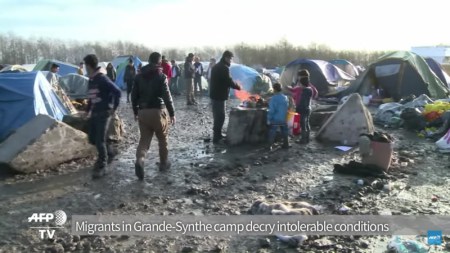
Grande-Synthe, which is home to more than 2,500 illegal migrants hoping to reach Britain, was opened in February 2016 after French authorities destroyed a makeshift camp in nearby Calais known as the “Jungle,” from where thousands of migrants tried to break into the Channel Tunnel in a bid to reach London.

The upkeep of Grande-Synthe will cost French taxpayers €4 million ($4.5 million) this year, in addition to a stipend of €10 euros a day for every migrant at the camp. French taxpayers presumably will also be paying for Hidalgo’s camp in Paris.

1641Paris Mayor Anne Hidalgo has announced plans to build a camp for thousands of illegal migrants in central Paris, which is to be modelled on Grande-Synthe (pictured above), a camp housing 2,500 illegal migrants near the French port city of Dunkirk. (Image source: AFP video screenshot)

Hidalgo, who has threatened to file a lawsuit against the American media outlet Fox News for reporting about Muslim no-go zones in Paris, seems to have no qualms about turning parts of northern Paris into ghettos for illegal migrants. “Paris will not avoid taking responsibility while the Mediterranean becomes a graveyard for refugees,” she said. “I do not want to look at myself in the mirror in 10 or 15 years and say: ‘You were mayor of Paris and you are guilty of not helping people in danger.'”

Hidalgo added that “Europe and France are not living up to their history when they fail to treat outsiders with dignity.”

Hidalgo’s project has been welcomed by some, including pro-migration charity groups, and has infuriated others, such as French Housing Minister Emmanuelle Cosse. She said there already are enough refugee shelters in Paris and that Hidalgo’s announcement would only serve to draw more illegal migrants to the city.

In an interview with Europe 1 radio, Cosse said that “migrant camps are not the solution” because they amount to the establishment of migrant ghettos where integration becomes impossible. Cosse said that more than 1,000 additional illegal migrants had arrived at the Jardins d’Eole in the week since Hidalgo’s press conference, bringing the total number of migrants there to 2,300.

A political analysis by the center-right Le Figaro postulates that Hidalgo’s plan for a migrant camp is just the latest in a series of provocations in which she is attempting to establish her left-wing credentials as part of a strategy to win leadership of the Socialist Party. The report says she believes President Hollande will lose his bid for reelection in 2017, and that his defeat will pave the way for a leadership battle between Hidalgo and French Prime Minister Manuel Valls. According to Le Figaro, Hidalgo is determined to become the Socialist Party candidate for President of France in 2022.

A report by the French public radio channel France Inter describes the rivalry between Hidalgo and Valls as “war unto death.”

Hidalgo’s quest to become the first female president of France may be derailed by the head of the anti-immigration National Front party, Marine Le Pen, who is now one of the most popular politicians in France.

According to an opinion poll published by Le Monde on June 1, 28% of those surveyed said they would vote for Le Pen in 2017, compared to 21% for former president Nicolas Sarkozy and 14% for Hollande. The poll also shows that on a scale of 1 to 10, Hollande’s approval rating is at 2.1.

The National Front party has accused Hidalgo of putting the concerns of migrants ahead of those of French citizens. In a statement, the party said that the number of homeless people in Paris had increased by 84% between 2002 and 2012, but that Hidalgo has shown little interest in alleviating the problem:

“It is absolutely scandalous that Paris Mayor Anne Hidalgo uses taxpayer money to house illegal migrants. Migrants should not be housed in hotels or in modular homes within migrant camps. They should be in detention camps waiting to be taken back to their country of origin.

“Anne Hidalgo’s project is characteristic of a political class that is more concerned with migrants than citizens, a political class that has forgotten that the main role of leaders is to care above all for their own people first.”

Meanwhile, efforts by French police to tear down makeshift migrant camps have become like a game of whack-a-mole. More than 20 camps have been dismantled in Paris over the past 12 months, but each time they are rebuilt within weeks.

On May 2, police cleared a makeshift migrant camp under the Stalingrad Metro station (near Gare du Nord) after thousands of migrants brandishing metal poles and wooden planks engaged in a mass brawl on April 14. (A four-minute YouTube video of the melee can be viewed here.) The camp had previously been cleared on March 30.

Although the EU-Turkey migrant deal has temporarily stemmed the flow of illegal migration to Greece through Turkey, hundreds of thousands of migrants are still making their way into Europe.

According to the International Organization for Migration, more than 204,000 migrants arrived in Europe (mostly Greece and Italy) during the first five months of 2016, more than twice as many as arrived during the same period in 2015.