Archive for February 2017

Trump Changes US Policy on Settlements, But Will Netanyahu Pick Up the Ball?

February 3, 2017

Trump Changes US Policy on Settlements, But Will Netanyahu Pick Up the Ball?, The Jewish PressStephen Leavitt, February 3, 2017

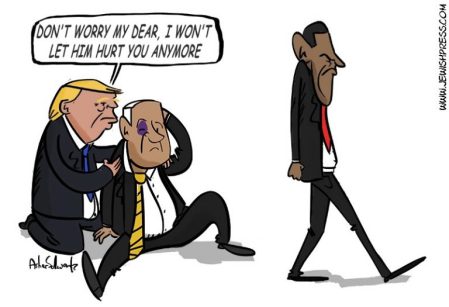
battered-bibi-syndrome-2-768x525Photo Credit: Asher Schwartz

The official White House statement thoroughly rejects the JPost’s quote, craftily eliminating both concerns: Trump is not committed to a two-state solution, and he does not consider the settlements an obstacle to peace.

**********************************

For the first time in many years, the White House on Thursday released a statement regarding Jewish settlements in Judea and Samaria without the adjectives “illegal” or “illegitimate” next to the word “settlements.”

While not 100 percent perfect — a policy of benign neglect would be best — it is clearly a complete turnaround from previous administration positions, particularly former-President Obama’s “not one brick anywhere” policy, including Jerusalem.

The White House
Office of the Press Secretary
For Immediate Release

Statement by the Press Secretary

“The American desire for peace between the Israelis and the Palestinians has remained unchanged for 50 years. While we don’t believe the existence of settlements is an impediment to peace, the construction of new settlements or the expansion of existing settlements beyond their current borders may not be helpful in achieving that goal. As the President has expressed many times, he hopes to achieve peace throughout the Middle East region. The Trump administration has not taken an official position on settlement activity and looks forward to continuing discussions, including with Prime Minister Netanyahu when he visits with President Trump later this month.”

In other words, what began a few months ago as a video of Prime Minister Benjamin Netanyahu asking why should having Jews living in Judea and Samaria be considered an impediment to peace – is now US foreign policy.


In addition to the biggest item of recognizing the legitimacy of the settlements, by omitting the words “illegal” and “illegitimate,” the statement actually declares, for all the world to see: “We don’t believe the existence of settlements is an impediment to peace.”

It should be noted that even that one seemingly negative-note in the Trump statement against new settlements or expansion isn’t exactly that:

“the expansion of existing settlements beyond their current borders may not be helpful in achieving that goal.”

First of all, the statement gives implicit approval to construction within existing settlements, and not just to communities within the settlement blocs (i.e. Gush Etzion, Ariel, etc), but rather to all settlements. This is a much wider definition, and includes many smaller Jewish communities that exist outside of the blocs, representing some 80,000 Jews.

Not to name names, but that’s more settlement legitimacy than what even some members of Netanyahu’s cabinet recognize.

Furthermore, it doesn’t actually forbid or rebuke Israel if it does build a new settlement or expand beyond the borders of an existing one. The White House statement merely questions if it is helpful to achieving peace, and leaves that question open for further discussion.

The other glaring omission in the Trump White House statement is the term “two-state solution,” so beloved by every Administration since the 1993 Oslo Accords. Why, only last Wednesday, the new, relatively pro-Israel UN Secretary-General, Antonio Guterres, had his spokesperson release a statement saying that,

“the recent announcement by the Israeli Government to advance 5,000 settlement units in the occupied West Bank could […] threaten to unravel plans for a two-State solution between Israelis and Palestinians. […] We once again warn against any unilateral actions that can be an obstacle to a negotiated two-state solution.”

Having praised the Trump statement so much, it’s also easy to realize that there must be some conflict within the Administration over the settlements issue, with one faction obviously pushing the traditional State Department line.

Rumor has it that the White House statement was released not so much as a response to Netanyahu’s recent settlement construction announcements, but in response to an unauthorized leak from within the Administration to the Jerusalem Post, which the latter reported Thursday:

“The White House warned Israel on Thursday to cease settlement announcements that are ‘unilateral’ and ‘undermining’ of President Donald Trump’s effort to forge Middle East peace, a senior administration official told The Jerusalem Post. For the first time, the administration confirmed that Trump is committed to a comprehensive two-state solution to the Israeli- Palestinian conflict negotiated between the parties.”

The official White House statement thoroughly rejects the JPost’s quote, craftily eliminating both concerns: Trump is not committed to a two-state solution, and he does not consider the settlements an obstacle to peace.

Indeed, the White House statement acknowledges the value and validity of the Israeli PM in forging US foreign policy:

“The Trump administration has not taken an official position on settlement activity and looks forward to continuing discussions, including with Prime Minister Netanyahu when he visits with President Trump later this month.”

This is tantamount to an Obama statement saying: “The Obama administration will decide on the Iran nuclear deal after continued discussions with Prime Minister Netanyahu when he visits to speak to Congress on March 3, 2015.” Yes, that’s how impossibly big this statement is.

It is now entirely up to Prime Minister Netanyahu.

Will Netanyahu have what it takes to change forever Israel’s future? Will he take full advantage of Trump’s invitation to help forge US foreign policy in a way that bolsters the Zionist vision? Will he step back from his Bar Ilan speech, and return to his former, maximalist positions?

From the White House statement it appears that the ball is completely in Netanyahu’s court.

Trump: ‘Nothing off the table’ in response to Iran missile test

February 3, 2017

Source: Trump: ‘Nothing off the table’ in response to Iran missile test | The Times of Israel

US president issues another warning to Tehran, as Republicans back tougher line

February 2, 2017, 9:59 pm
US President Donald Trump in the White House February 2, 2017 in Washington, DC. (AFP/ Brendan Smialowski)

US President Donald Trump in the White House February 2, 2017 in Washington, DC. (AFP/ Brendan Smialowski)

US President Donald Trump said that “nothing is off the table,” when it came to a response to Iran’s controversial test this week of a ballistic missile capable of carrying a nuclear warhead.

Speaking to reporters Thursday, Trump was responding to a question about whether a military response to Iran was under consideration.

“Nothing is off the table,” he replied, borrowing a phrase Prime Minister Benjamin Netanyahu has used for years vis-à-vis Tehran’s nuclear program.

Trump’s comment followed a string of remarks by Republican senators, including the House Speaker, backing additional sanctions on Iran in the wake of the missile test, which prompted an emergency UN Security Council session and a call by Netanyahu to reimpose punitive measures.

“I would be in favor of additional sanctions on Iran,” House Speaker Paul Ryan said at a weekly press conference on Thursday. “We need to have a tough-on-Iran policy… We should stop appeasing Iran.”

“I think the last administration appeased Iran far too much. I think they went too far with Iran and I think as a result Iran is far more activist than it otherwise would be,” he said.

In this Sept. 21, 2016 file photo, House Speaker Paul Ryan of Wisconsin speaks during a news conference on Capitol Hill in Washington. (AP Photo/Manuel Balce Ceneta, File)

In this Sept. 21, 2016 file photo, House Speaker Paul Ryan of Wisconsin speaks during a news conference on Capitol Hill in Washington. (AP Photo/Manuel Balce Ceneta, File)

“Iran, don’t forget … is the biggest state sponsor of terrorism in the world. Iran writes on their missiles in Farsi, Hebrew and English ‘Death to America’, ‘Death to Israel’ and then tests them. So this is not a friendly country that has global peace or national security interests in their minds,” Ryan added.

Trump had earlier on Thursday tweeted that “Iran has been formally PUT ON NOTICE for firing a ballistic missile. Should have been thankful for the terrible deal the US made with them!” echoing remarks made Wednesday by his national security adviser, Michael Flynn.

Also Thursday, Senator Bob Corker, the chairman of the Senate Foreign Relations Committee, told Reuters, “I think there’s a lot that we can do, now, that we were unable to do before to push back against Iran,” adding that the committee was “in the early stages” of working on legislation related to the nuclear deal.

“The administration, thankfully, is going to follow through on appropriately holding Iran accountable for the violations that are taking place,” he said.

Senator Lindsey Graham joined the chorus Thursday, telling CNN that “the world should not only condemn Iran but we should have multi-national sanctions against the regime for their continued violation of the UN Security Council resolutions regarding their missile program.”

On January 29, Iran is said to have tested a 4,000-kilometer (2,500-mile) ballistic missile capable of carrying a nuclear warhead. On Thursday, the German newspaper Die Welt reported that Iran also tested a home-made cruise missile with the same capabilities: The Soumar, with a range of up to 3,000 kilometers (1,864 miles), flew 600 kilometers (373 miles) on its maiden voyage, according to the German report.

It is reportedly a re-engineered Russian KH-55 cruise missile, which is capable of reaching Israel from Iran, and has the advantage that it can be launched from ships, aircraft and submarines.

The Soumar cruise missile at its unveiling in March 2015. (YouTube screenshot)

The Soumar cruise missile at its unveiling in March 2015. (YouTube screenshot)

The missiles are not covered by UN Resolution 2231, which was passed shortly after the nuclear deal with Iran was signed in July 2015 and calls on Tehran “not to undertake any activity related to ballistic missiles designed to be capable of delivering nuclear weapons, including launches using such ballistic missile technology.” Iran argues that its ballistic missile program is also not covered by the resolution because it does not have a nuclear weapons program.

During his campaign, Trump promised both to “dismantle the disastrous deal” and to “force the Iranians back to the bargaining table to make a much better deal, but in a call to the Saudi king on Sunday promised to “vigorously enforce” the controversial agreement.

Netanyahu on Thursday demanded the reimposition of sanctions against Iran, terming the test a “flagrant breach” of UN Security Council resolutions, and said he would discuss with Trump a reevaluation of the “entire failed nuclear accord” during their February 15 meeting in Washington.

US setting up a confrontational approach with Iran

February 3, 2017

Source: US setting up a confrontational approach with Iran | The Times of Israel

Trump administration is immediately taking a more aggressive posture, at least rhetorically, on Tehran’s missile tests and regional aggression

February 3, 2017, 5:20 am
In this Sept. 21, 2016 file photo, Iranian armed forces members march in a military parade marking the 36th anniversary of Iraq's 1980 invasion of Iran, in front of the shrine of late revolutionary founder Ayatollah Khomeini, just outside Tehran, Iran. (AP Photo/Ebrahim Noroozi, File)

In this Sept. 21, 2016 file photo, Iranian armed forces members march in a military parade marking the 36th anniversary of Iraq’s 1980 invasion of Iran, in front of the shrine of late revolutionary founder Ayatollah Khomeini, just outside Tehran, Iran. (AP Photo/Ebrahim Noroozi, File)

DUBAI, United Arab Emirates (AP) — By putting Iran “on notice,” the new US administration is laying the groundwork for a more confrontational approach toward the Islamic Republic.

What that means in practice is anyone’s guess, since the White House isn’t saying. That is in line with President Donald Trump’s desire to keep America’s adversaries guessing and boost US leverage.

The US has plenty in its toolbox should it choose to confront Iran more aggressively, from ratcheting up sanctions all the way to full-out war. Each carries real risks.

That’s because Iran, however unpopular in Washington, is not a failed-state pushover. It is sure to respond if it feels it is under threat.

Here are some of the main issues:

Why is Iran ‘on notice?’

In his surprise appearance in the White House briefing room, Trump’s national security adviser, Michael Flynn, blasted Iran for threatening American allies and “malign actions — including weapons transfers, support for terrorism, and other violations of international norms.”

He also linked Iran directly to missile attacks by Yemeni Shiite rebels known as Houthis on Saudi and Emirati ships. Saudi Arabia and the United Arab Emirates are leading a coalition supporting Yemen’s internationally recognized government against the Iranian-backed rebels. Iran denies arming the rebels.

US National Security Adviser Michael Flynn speaks during the daily news briefing at the White House, in Washington, Wednesday, Feb. 1, 2017. (AP Photo/Carolyn Kaster)

US National Security Adviser Michael Flynn speaks during the daily news briefing at the White House, in Washington, Wednesday, Feb. 1, 2017. (AP Photo/Carolyn Kaster)

What appeared to trigger the notice being served, however, was Iran’s Sunday launch of a medium-range ballistic missile. A UN Security Council resolution prohibits Iran from testing ballistic missiles specifically designed to carry a nuclear warhead.

The US and Iran disagree on whether this and previous launches — including one in March 2016 involving a missile emblazoned with the phrase “Israel must be wiped out” in Hebrew — violate the ban.

What happens next?

Senior Trump administration officials have said they are considering options including economic measures and more support for Iran’s regional rivals.

Among the biggest of those adversaries are Saudi Arabia, Israel and the UAE, whose foreign minister has voiced support for Trump’s decision to temporarily block entry to citizens of Iran and six other Muslim-majority countries.

The Saudis and Emiratis would welcome deeper American involvement for the war in Yemen, which they view in large part as a proxy fight against Iran. The US has provided logistical support to the Saudi-led coalition since it intervened in March 2015, but in December the Obama administration halted some arms sales to the Saudis over concerns about civilian deaths.

Washington could implement further unilateral sanctions against Iran. Nuclear-related sanctions were removed last year after Iran agreed to a deal with world powers limiting its nuclear activities, but Washington has maintained other sanctions related to support for terrorism and other actions as far back as the 1979 Islamic Revolution.

Torbjorn Soltvedt, a Middle East analyst at risk consulting firm Verisk Maplecroft, predicted that any new sanctions related to ballistic missile tests would target Iran’s engineering industry.

“There is no doubt now that further flare-ups could translate into additional sanctions,” he wrote.

The view from Iran

Iran is as distrustful of the United States as Washington is of Tehran, and the countries’ views of one another often seem like distorted mirror images.

From Iran’s perspective, the US is a meddlesome outside power that has kept it surrounded for years with warships and troops in neighboring Afghanistan and Iraq.

The USS Stennis, which is heading to the Persian gulf. (photo credit: Department of Defense/Randi R. Brown, U.S. Navy)

File: The USS Stennis on its way to the Persian Gulf in 2012. (Department of Defense/Randi R. Brown, US Navy)

Iran has not responded directly to Flynn’s comments, although the Revolutionary Guard’s acting commander was defiant that it would continue its missile development program.

“Iran’s great missile power is one of the world’s unmatched deterrent powers today,” Gen. Hossein Salami was quoted as saying by the semi-official Tasnim news agency Thursday.

Iran’s leaders are likely to see any new US measures as a provocation in the wake of the nuclear deal.

The agreement was cheered by many in Iran because it lifted crippling economic sanctions and is opening up new business opportunities with the West, including a historic, $16.6 billion deal with Boeing to buy 80 US-made jetliners.

Is a military clash possible?

US officials have not confirmed whether military action is on the table. It’s unlikely to be the first step.

Maha Yahya, director of the Carnegie Middle East Center in Beirut, said a push for tougher sanctions or some form of diplomatic censure is more likely for now.

“It’s far too early in the game for us to see any kind of military moves,” she said.

US President Donald Trump in the White House February 2, 2017 in Washington, DC. (AFP/ Brendan Smialowski)

US President Donald Trump in the White House February 2, 2017 in Washington, DC. (AFP/ Brendan Smialowski)

Still, US forces are already in place should Trump decide to launch at least a limited strike.

Guided-missile destroyers and other US warships attached to the Navy’s 5th Fleet routinely patrol the Persian Gulf and occasionally have unnervingly close encounters with Iranian Revolutionary Guard vessels. Just this week, 17 ships from the US, Australia, Britain and France took part in joint naval exercises in the Gulf.

At least one US aircraft carrier is usually in the region, although not right now. The nearest one was last reported to be in the Western Pacific.

The US does have warplanes capable of carrying out airstrikes stationed elsewhere in the region, including Qatar and the UAE. They have been actively targeting positions of the Islamic State group in Iraq and Syria.

How could Iran respond?

Iran is likely to calibrate its responses based on how the US acts.

Tougher US sanctions could convince Tehran to start reinterpreting the terms of the nuclear deal, said Mohammad Marandi, a political analyst in Tehran.

“The Iranians will reciprocate,” he said. “The more the Americans disregard the agreement … the more the Iranians will find new ways of interpreting the text that do not work to the benefit of the United States.”

Iranian President Hassan Rouhani gives a press conference in Tehran on Jaunary 17, 2017, to mark the first anniversary of the implementation of the  nuclear deal. (AFP/Atta Kenare)

Iranian President Hassan Rouhani gives a press conference in Tehran on Jaunary 17, 2017, to mark the first anniversary of the implementation of the nuclear deal. (AFP/Atta Kenare)

More direct action could include an uptick in harassment of US warships by Revolutionary Guard speedboats in the Gulf, or new cyberattacks like one that crippled the network of Saudi Arabia’s state oil company in 2012.

Iran also could boost support for regional allies such as Lebanon’s Hezbollah or the Houthis in Yemen.

A military strike could elicit a much more damaging response.

Iranian officials have repeatedly vowed to shut the Strait of Hormuz at the mouth of the Gulf if Iran comes under threat. Doing so would stop the flow of a nearly a third of all oil traded by sea and likely draw the US into a naval battle.

Iran could also target US military bases or allied countries in the region with existing missiles, which it says can travel up to 2,000 kilometers (1,200 miles). Much of the Middle East, including Israel, falls within that range.

Copyright 2017 The Associated Press.

Satire? | Iraq Planning on U.S. Invasion to Establish Democracy

February 3, 2017

Iraq Planning on U.S. Invasion to Establish Democracy, Huffington PostDavid Fagin, February 2, 2017

(It may be necessary to mobilize the Cub Scouts to deal with this potential disaster. — DM)

trumpimage

The tension between the two countries came to a head last week when the White House refused to allow U.N. inspectors access to President Trump’s tax returns. A violation of the Geneva convention. England, Australia, France, Germany, Kuwait, Jordan, and Saudi Arabia have all pledged to commit troops to the invasion.

The invasion, dubbed “Operation: American Freedom”, will commence precisely at midnight, March 2nd.

****************************

Reports out of Baghdad confirm that the Iraqi government has given President Trump thirty days to vacate power or be removed by military force.

According to Hamari Humsa, Iraqi Ambassador to the U.N., “The atrocities being committed during President Trump’s ten days in office leave us no choice but to act to protect the sovereignty of the American People and the world at large.”

At a recent press conference, Iraqi President, Fuad Masum, stated, “The world cannot sit idly by and do nothing while a fascist chooses blind aggression towards his own people, as well the peace-loving world. Threatening to invade both Mexico and Australia, which would mean thousands of innocent lives lost, was the last straw. We will act on behalf of the entire civilized world and bring democracy to our friends in America.”

The tension between the two countries came to a head last week when the White House refused to allow U.N. inspectors access to President Trump’s tax returns. A violation of the Geneva convention. England, Australia, France, Germany, Kuwait, Jordan, and Saudi Arabia have all pledged to commit troops to the invasion.

The stated policy of Iraq is regime change. … However, if President Trump were to meet all the conditions of the United Nations, the conditions that I have described very clearly in terms that everybody can understand, and admit once and for all that his inauguration crowd was smaller than Obama’s, that in itself will signal the regime has changed, and military action can be avoided,” said President Masum.

While many Iraqis believe there should be more talks with America before going to war, a good portion believe it’s the right thing to do, considering the nuclear capability Trump possesses. However, an overwhelming number of Americans support the invasion.

The guy’s a loose cannon. If he doesn’t like you, he will firebomb your house and throw your family in jail,” said one American who wished to remain anonymous. “No one should live with that kind of fear.

Some say Iraq’s motivation is solely to get their hands on America’s oil reserves, which they took from Iraq back in 2003.

The invasion, dubbed “Operation: American Freedom”, will commence precisely at midnight, March 2nd.

President Trump is Right to be Angry at Australian PM

February 2, 2017

President Trump is Right to be Angry at Australian PM, Front Page Magazine (The Point), Daniel Greenfield, February 2, 2017

(Please see also, WTF! Obama to import 1,800 Muslim illegals from Australia. President Trump is angry with Obama and Turnbull because both consider America a garbage dump. — DM)

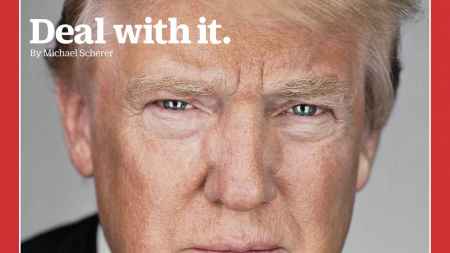
dealwithit

Obama arranged to take in large numbers of illegal, mostly Muslim migrants, that Australia did not want. The deal was made after an election in which voters had very explicitly rejected that position.

The move, like so many others, including those aimed at Jews and Cuban-Americans, was part of a malicious pattern of political vandalism by a defeated movement. Knowing the situation, Australian PM Malcolm Turnbull should never have agreed to it. Just as the United States would not angry [sic?] to say, accept the handover of Sydney to us by an angry outgoing Australian government determined to do as much damage as possible on the way.

It’s common sense and common decency.

Turnbull just saw a way to get rid of an irritating problem and didn’t care that the arrangement would poison relations with the next administration. And he should have.

It wasn’t Trump who torched relations with Australia. It was Turnbull who torched relations with America. He knew that the next United States government would hate the deal and that he was making an arrangement with a lame duck who didn’t really have the authority to make it anymore.

With the phone call, Turnbull had the opportunity to drop the deal once he saw President Trump was opposed to it. Considering the dubiousness of the whole thing, it would have been the sensible thing to do. Instead Turnbull prioritized dumping Muslim illegal migrants on America over his relationship with the United States.

Instead of viewing America as an ally, Turnbull saw it as a dumping ground for people even he didn’t want.

Is anyone really surprised that this infuriated Trump? Forget all the pious lectures about how close allies are treated. Turnbull was the one abusing the alliance. It wasn’t Trump making unreasonable demands of Australia. It was Turnbull insisting that Trump ignore the wishes of his own voters while creating a national security problem for America.

According to the Washington Post, during his call with Turnbull, Trump said the Obama administration’s agreement to take in 1,250 refugees from an Australian detention center was “the worst deal ever,” and accused the country of seeking to send the “next Boston bombers” to the United States. Trump abruptly ended the call with the leader of one of the United States’ closest allies before its scheduled conclusion, the Post reported.

After reports about the phone call started to circulate, Trump took to Twitter to call the Obama administration’s deal “dumb.”

Andrew Bolt at Australia’s Herald Sun has some common sense commentary.

Turnbull thought he could outsmart Donald Trump and trap him into taking 1250 of our boat people.

Huge mistake, and now he’s been humiliated.

There is no surprise that an angry Trump attacked Turnbull in their call at the weekend and hung up halfway through, after just 25 minutes.

What did Turnbull expect?

This political disaster was always on the cards from the moment Turnbull announced, on November 13 last year, that he’d signed a deal with then US president Barack Obama to take our boat people detained on Nauru and Manus Island.

That was very dumb because just five days earlier Trump had been unexpectedly elected the next president, having campaigned hard against exactly this kind of thing.

Trump is angry. And he’s right to be angry.

Ayaan Hirsi Ali Slams Women’s March Organizer Linda Sarsour: ‘Defender Of Sharia’

February 2, 2017

Ayaan Hirsi Ali Slams Women’s March Organizer Linda Sarsour: ‘Defender Of Sharia’, Fox News via YouTube, February 1, 2017


Palestinians Turn Jerusalem Into a Tool of Terror

February 2, 2017

Palestinians Turn Jerusalem Into a Tool of Terror, Investigative Project on Terrorism, Noah Beck, February 2, 2017

1960

Palestinian and other Arab leaders threatened violence in response to President Trump’s pledge to move the U.S. embassy from Tel-Aviv to Jerusalem. While Bill Clinton and George W. Bush also promised such a move as candidates, each backed off.

The terrorist who killed four Israelis in Jerusalem Jan. 8 by mowing them over with his truck expressed agitation after hearing a sermon at a local mosque criticizing Trump’s embassy relocation promise.

The Palestinian Authority (PA) leadership reportedly instructed the mosques it controls to focus their religious sermons on the embassy relocation. Worse still, the PA promised the terrorist’s widow a lifetime, $760-per-month stipend for her husband’s “martyrdom for Allah.”

Arab reactions to Trump’s embassy plans are more heated than they were to those of candidates Bush and Clinton perhaps because of Trump’s pledge to recognize Jerusalem as Israel’s capital and relocate the embassy there from Tel Aviv, not only as a candidate (including during his address at last year’s AIPAC Policy Conference) but also as president-elect, issuing public reassurances on the issue. Trump even planned to visit the Temple Mount as a candidate, although the visit never materialized and – as president – he said last Thursday that it was “too early” to discuss moving the U.S. Embassy.

Nevertheless, Palestinian and Arab leaders have warned that moving the embassy could lead to unrest and violence. Influential Iraqi Shiite cleric Muqtada al-Sadr called the idea “a declaration of war against Islam.” PA President Mahmoud Abbas said he could revoke the PLO’s recognition of Israel, while his Fatah party warned the move “would open the gates of hell.”

Such declarations by political and religious leaders give a green light to Palestinians to react violently, as the Jerusalem terrorist truck attack shows.

Palestinian leaders, including the “more moderate” Palestinian Authority, regularly deny that Jews have any historical or religious connection to the Temple Mount.

PA Jerusalem Affairs Minister Adnan al-Husseini demanded an apology Sunday after United Nations Secretary-General Antonio Guterres said it was “completely clear that the Temple that the Romans destroyed in Jerusalem was a Jewish temple.” The statement “violated all legal, diplomatic and humanitarian customs and overstepped his role as secretary general,” al-Husseini said.

This is not the first time that the Palestinians, including the “more moderate” Palestinian Authority, manipulated Jerusalem into an incendiary trigger for terror.

As Palestinian Media Watch reported, Abbas led calls in 2015 for Palestinians to act violently to “defend” Muslim holy sites. He blessed “every drop of blood that has been spilled for Jerusalem” and presented violence in “defense” of holy sites and against the Jews’ “filthy feet” as a religious imperative.

Indeed, the “stabbing intifidah” was launched in 2015 by false rumors that Israel was trying to change the status quo on the Temple Mount.

“Arabs are convinced that Israel is set on destroying, desecrating or ‘Judaizing’ Haram al-Sharif, the Jerusalem compound that includes al-Aqsa, Islam’s third-holiest site,” Benny Avni wrote in the New York Post. Such incitement persists, Avni noted, even though “Israel points out that the arrangements that have existed since 1967, when it seized control of the Temple Mount, Judaism’s holiest site, are intact, and will remain so: A Jordanian trust, the Waqf, maintains the Mount. Jews can visit, but not pray there.”

Even worse, President Obama’s State Department reinforced the dangerously false incitement about Jerusalem promoted by Palestinians.

Writing about the 2015 “Stabbing Intifida,” journalist Jeffrey Goldberg rightly pointed out that it was “prompted in good part by the same set of manipulated emotions that sparked the anti-Jewish riots of the 1920s: a deeply felt desire on the part of Palestinians to ‘protect’ the Temple Mount from Jews.”

In the 1929 Arab riots, Arabs killed more than 130 Jews, and nearly as many Arabs died when British police responded. Among the findings of a subsequent investigation by the Shaw Commission was that “the Mufti was influenced by the twofold desire to confront the Jews and to mobilise Moslem opinion on the issue of the Wailing Wall” (in Jerusalem) and that one of the chief causes of the riots was “Propaganda among the less-educated Arab people of a character calculated to incite them.”

Arab incitement against Jews happens regularly, often without the explosive element of Jerusalem. In a sermon broadcast on Hamas’s Al-Aqsa TV in early January, a Hamas leader name Marwan Abu Ras, accused Jews of sending “AIDS-infected girls to fornicate with Muslim youths.” He also claimed that Israel was allowing drugs to be smuggled through tunnels into Gaza, while blocking the entry of essential goods. “Their state is about to disappear,” Abu Ras said. “…My brothers, know that people, stones, and trees all hate [the Jews]. Everyone on Earth hates this filthy nation, a nation extrinsic to Mankind. This fact was elucidated by the Quran and the Sunna.”

But adding Jerusalem to Arab incitement against Israelis can make the resulting violence even more explosive.

Qanta Ahmed, a pro-Israel Muslim reformer who visited both the Jewish and Muslim holy sites at the Temple Mount, eloquently noted the Islamist thinking that enables the weaponization of Jerusalem: “Forbidding worshippers from entering holy sites in Islam, including non-conforming or pluralist Muslims who reject both the ideology and accouterments of Islamism is an impassioned pastime of fervent Islamists who foolishly believe only they are the keepers of our Maker…”

Unfortunately, Jerusalem has a long and bloody history of being manipulated by Muslim leaders into an explosive tool of incitement. But if Islam truly is a religion of peace, its leading practitioners should stop turning religious holy sites into weapons of war, and instead embrace Doctor Ahmed’s tolerance.

Cartoons and Video of the Day

February 2, 2017

Via Capitol Steps


H/t Freedom is Just Another Word

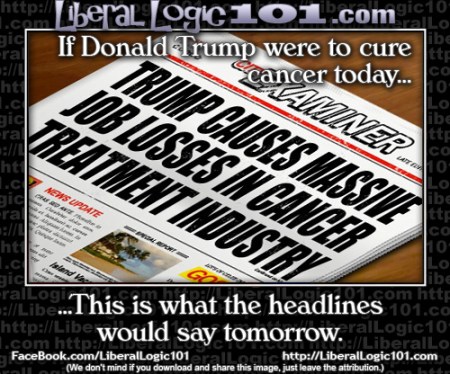
cancer


bias-1


christians-and-trump


nazis1


Dr. Jasser joins Your World discussing the Left’s use of Muslims as political props 02.01.2017

February 2, 2017

Dr. Jasser joins Your World discussing the Left’s use of Muslims as political props 02.01.2017, AFID-TV via YouTube, February 1, 2017


Trump to recast Obama’s “Countering Violent Extremism” program to focus on the jihad threat

February 2, 2017

Trump to recast Obama’s “Countering Violent Extremism” program to focus on the jihad threat, Jihad Watch

“The program, ‘Countering Violent Extremism,’ or CVE, would be changed to ‘Countering Islamic Extremism’ or ‘Countering Radical Islamic Extremism,’ the sources said, and would no longer target groups such as white supremacists who have also carried out bombings and shootings in the United States.”

Indeed, but the white supremacist threat has been wildly exaggerated by Soros-funded groups (which exaggerations have been pushed by Soros-funded media) that downplay and deny the jihad threat. Reuters’ equivalence here also ignores the fact that the jihad is an international movement set on destroying the U.S. and found on every continent; white supremacism is not.

What Trump is really doing here is reversing Obama’s bow to Muslim Brotherhood-linked groups in scrubbing counter-terror training materials of all mention of Islam and jihad. On October 19, 2011, Farhana Khera of Muslim Advocates delivered a letter to John Brennan, who was then the assistant to the president on National Security for Homeland Security and Counter Terrorism. The letter was signed by the leaders of virtually all significant Islamic groups in the United States: 57 Muslim, Arab, and South Asian organizations, many with ties to Hamas and the Muslim Brotherhood, including the Council on American-Islamic Relations (CAIR), the Islamic Society of North America (ISNA), the Muslim American Society (MAS), the Islamic Circle of North America (ICNA), Islamic Relief USA, and the Muslim Public Affairs Council (MPAC).

The letter denounced what it characterized as U.S. government agencies’ “use of biased, false and highly offensive training materials about Muslims and Islam.” Khera complained specifically about me, noting that my books could be found in “the FBI’s library at the FBI training academy in Quantico, Virginia”; that a reading list accompanying a slide presentation by the FBI’s Law Enforcement Communications Unit recommended my book The Truth About Muhammad; that in July 2010 I “presented a two-hour seminar on ‘the belief system of Islamic jihadists’ to the Joint Terrorism Task Force (JTTF) in Tidewater, Virginia”; and that I also “presented a similar lecture to the U.S. Attorney’s Anti-Terrorism Advisory Council, which is co-hosted by the FBI’s Norfolk Field Office.”

These were supposed to be terrible materials because I was supposedly bigoted and hateful. However, many of the examples Khera adduced of “bigoted and distorted materials” involved statements that were simply accurate. The only distortion was Khera’s representation of them.

For instance, Khera stated:

A 2006 FBI intelligence report stating that individuals who convert to Islam are on the path to becoming “Homegrown Islamic Extremists,” if they exhibit any of the following behavior:

“Wearing traditional Muslim attire”

“Growing facial hair”

“Frequent attendance at a mosque or a prayer group”

“Travel to a Muslim country”

“Increased activity in a pro-Muslim social group or political cause”

The FBI intelligence report Khera purported to be describing didn’t actually say that. Rather, it included these behaviors among a list of fourteen indicators that could “identify an individual going through the radicalization process.” Other indicators included:

“Travel without obvious source of funds”

“Suspicious purchases of bomb making paraphernalia or weapons”

“Large transfer of funds, from or to overseas”

“Formation of operational cells”

Khera had selectively quoted the list to give the impression that the FBI was teaching that devout observance of Islam led inevitably and in every case to “extremism.”

Despite the factual accuracy of the material about which they were complaining, the Muslim groups signing the letter demanded that the task force, among other actions:

“Purge all federal government training materials of biased materials.”

“Implement a mandatory re-training program for FBI agents, U.S. Army officers, and all federal, state and local law enforcement who have been subjected to biased training.”

They wished to ensure that all law enforcement officials ever learn about Islam and jihad would be what the signatories wanted them to learn — and Brennan was amenable to that. He took Khera’s complaints as his marching orders.

In a November 3, 2011, letter to Khera that — significantly — was written on White House stationery, Brennan accepted Khera’s criticisms without a murmur of protest and assured her of his readiness to comply. He detailed specific actions being undertaken, including “collecting all training materials that contain cultural or religious content, including information related to Islam or Muslims.” In reality, this material wouldn’t just be “collected”; it would be purged of anything that Farhana Khera and others like her found offensive. Honest, accurate discussion of how Islamic jihadists use Islamic teachings to justify violence would no longer be allowed.

The alacrity with which Brennan complied was unfortunate on many levels. Numerous books and presentations that gave a perfectly accurate view of Islam and jihad were purged. Brennan was complying with demands from quarters that could hardly be considered authentically moderate.

This Obama policy of the U.S. government ensured that numerous jihadists simply could not be identified as risks. The Obama administration was bound, as a matter of policy, to ignore what in saner times would be taken as warning signs. Now we can hope that Trump will reverse all that.

djtcve

“Exclusive: Trump to focus counter-extremism program solely on Islam – sources,” by Julia Edwards Ainsley, Dustin Volz and Kristina Cooke, Reuters, February 2, 2017:

The Trump administration wants to revamp and rename a U.S. government program designed to counter all violent ideologies so that it focuses solely on Islamist extremism, five people briefed on the matter told Reuters.

The program, “Countering Violent Extremism,” or CVE, would be changed to “Countering Islamic Extremism” or “Countering Radical Islamic Extremism,” the sources said, and would no longer target groups such as white supremacists who have also carried out bombings and shootings in the United States.

Such a change would reflect Trump’s election campaign rhetoric and criticism of former President Barack Obama for being weak in the fight against Islamic State and for refusing to use the phrase “radical Islam” in describing it. Islamic State has claimed responsibility for attacks on civilians in several countries.

The CVE program aims to deter groups or potential lone attackers through community partnerships and educational programs or counter-messaging campaigns in cooperation with companies such as Google (GOOGL.O) and Facebook (FB.O).

Some proponents of the program fear that rebranding it could make it more difficult for the government to work with Muslims already hesitant to trust the new administration, particularly after Trump issued an executive order last Friday temporarily blocking travel to the United States from seven predominantly Muslim countries.

Still, the CVE program, which focuses on U.S. residents and is separate from a military effort to fight extremism online, has been criticized even by some supporters as ineffective.

A source who has worked closely with the Department of Homeland Security (DHS) on the program said Trump transition team members first met with a CVE task force in December and floated the idea of changing the name and focus.

In a meeting last Thursday attended by senior staff for DHS Secretary John Kelly, government employees were asked to defend why they chose certain community organizations as recipients of CVE program grants, said the source, who requested anonymity because of the sensitive nature of the discussions.

Although CVE funding has been appropriated by Congress and the grant recipients were notified in the final days of the Obama administration, the money still may not go out the door, the source said, adding that Kelly is reviewing the matter….