Posted tagged ‘Islamic slaughter’

New Islamic State Branch Sets Up Camp In The Vicinity Of The Israeli Border On The Golan Heights

January 12, 2016

New Islamic State Branch Sets Up Camp In The Vicinity Of The Israeli Border On The Golan Heights

By Missing Peace

Source: New Islamic State Branch Sets Up Camp In The Vicinity Of The Israeli Border On The Golan Heights | Missing Peace | missingpeace.eu | EN

At the end of December, Western Journalism reported that ISIS leader Abu Bakr al-Baghdadi threatened to turn Israel into a graveyard for Jews and that the IDF is preparing for a possible attack by Islamic State affiliate Wilayat Sinai in the south of Israel.

The Jihadi group in Sinai changed its name from Ansar Bait al Maqdis into Wilayat Sinai (Sinai Province) in December 2014, when the organization swore allegiance to Islamic State in Syria and Iraq.

Since then, the group has become more powerful and now possesses advanced weaponry. The group has also claimed responsibility for the downing of a Russian civilian airplane over northern Sinai at the beginning of November 2015. Islamic State in the Sinai Peninsula has become ISIS’ most effective branch in the Middle East, and the IDF believes that when Islamic State attacks Israel, Wilayat Sinai will be at the forefront of the assault.

On New Year’s Eve, however, news broke that another ISIS affiliate is amassing troops on Israel’s border with Syria on the Golan Heights. The Liwa Shuhada al-Yarmuk, or Yarmuk Martyrs Brigades in English, has set up camp a few kilometers from the border with Israel and is now attacking Jabhat al-Nusra, the Al-Qaeda branch in Syria that controls most of the border with Israel on the Golan Heights. The group currently has six hundred fighters but possesses tanks and other heavy weaponry.

The Israeli security forces refer to Shuhada Yarmuk as Shuha-Daesh (Daesh is the Arab acronym for ISIS). The organization that was once part of the Western-backed Free Syrian Army rules over 40,000 people on the Syrian Golan Heights and is only 10 to 15 kilometers away from the Israeli border.

The IDF discovered the activities of the group in the border area a few weeks ago when two massive explosions rocked the town of El-Hmidaiah, some 400 meters from the Quneitra border crossing on the Golan Heights. The explosions turned out to be two car bombs that the ISIS branch used against Jabhat al-Nusra positions in the area. Since then, Shuhada Yarmuk has seized control over some abandoned UNDOF observation posts in the region and has turned them into bases.

While the Israeli army does not expect an immediate attack on Israeli positions or communities on the Golan Heights, the 366th division of the IDF is preparing for any eventuality.

The area next to the border with Israel is hotly contested by Islamist groups and the Iranian-backed coalition that includes Hezbollah and the Syrian army. On New Year’s Eve, these coalition forces finally launched the long-awaited offensive to re-capture the northern part of the border area with Israel and stormed the village of Samdaniya al-Gharbiya close to the border.

The coalition forces used the first winter storm in the area to launch the attack, and pushed towards the strategically important town of Hamdanieh that was lost two years ago. The coalition troops receive air support from Russian warplanes. The Syrian Observatory for Human Rights reported that 30 airstrikes were carried out by the Russian air force over the last 24 hours in the Quneitra Province.

For the moment, the offensive seems to be limited to the northern Golan Heights in Syria, where the Syrian regime always enjoyed the support of the Druze population in Khader and Majdel Shams (the large Druze village at the foot of Mount Hermon in Israel). This is the same area where Hezbollah tried to gain a foothold earlier in 2015.

A new map that was published by the Institute of War at the end of December shows the new ISIS foothold near Kuneitra on the Golan Heights, west of the Syrian town Deraa.

The map gives a good idea of Islamic State’s strategy in Syria, where it has focused on establishing footholds in the south and west over the last year for two reasons. One is to cut Bashar al-Assad’s government in Damascus off from the large cities in northwestern Syria and the coastal plain in the Latakia Province, and the second is to push slowly in the direction of Lebanon and Israel.

See the map here: ISIS Sanctuary MASTER 21 DEC 2015

Remember, this is what ISIS leader Al-Baghdadi said when he threatened Israel at the end of December:

“The Jews thought we forgot Palestine and that they had distracted us from it. Not at all Jews, we did not forget Palestine for a moment. With the help of Allah, we will not forget it … The pioneers of the jihadist fighters will surround you on a day that you think is distant, and we know is close. We are getting closer every day.”

The presence of Wilayat Sinai and Liwa Shuhada al-Yarmuk at Israel’s southern and northern border show that Al-Baghdadi’s words were more than rhetoric. Islamic State is not only preparing for a future attack on Israel but has already begun to destabilize the Jewish state.

The way Arab terrorists now operate within Israel bears all the hallmarks of Islamic State’s vision of the Jihad against the non-Muslims. The lone wolf attacks that Arabs carry out against Jewish targets in Israel were first propagated by an ISIS ideologue by the name of Musab al-Suri, who wrote a 1600-page manifesto that propagated ‘individual terrorism.’

The latest example of these lone-wolf assaults was the shooting attack in Tel Aviv on Friday evening that claimed the lives of three Israeli citizens and wounded ten others. The attack was carried out by an Israeli Arab from the Wadi Ara region and was similar to what ISIS terrorists recently did in Paris and San Bernardino in the U.S.

This article first appeared on Western Journalism Arizona U.S.A.

Protests Underway – 100 Women Assaulted, Robbed In Germany On NYE

January 9, 2016

Protests Underway – 100 Women Assaulted, Robbed In Germany On NYE, Fox News, January 9, 2016


Re-evaluating the law that benefits the terrorists

January 5, 2016

Re-evaluating the law that benefits the terrorists, Washington Times, Fred Gedrich, January 4, 2015

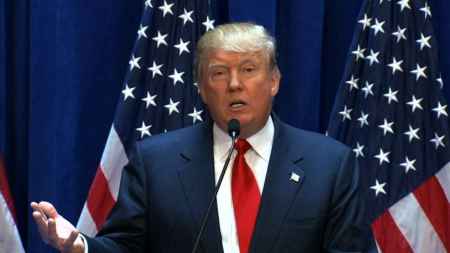
In the aftermath of Islamic terrorist attacks in Paris and San Bernardino, Calif., U.S. presidential candidate Donald Trump created a political and media firestorm by provocatively suggesting the United States is fighting a “politically correct” war, and since jihadists “don’t care about their lives you have to take out their families.”

Predictably, critics such as Jeb Bush, Rand Paul and others immediately pounced on his comment as a non-serious response or, if implemented, would be tantamount to engaging in international war crimes. Once again, Mr. Trump succeeded in putting a topic on the debate table that needs to be discussed, even though it might have been better if he advocated hitting jihadis when family members are present as opposed to specifically targeting family members.

To be fair, Mr. Trump’s critics should acknowledge that President Obama has already admitted that U.S. drones (the president’s covert program that targets terrorists from afar) have killed civilians, but the United States insists that terrorists themselves are to blame for using family or other civilians as human shields. Also, the United Nations and groups such as Amnesty International, Human Rights Watch and others disagree, stating that current U.S. policy may constitute international war crimes.

Why would Mr. Trump bring up this issue? A recent CNN/ORC Poll offers an answer: 75 percent of those polled say they are unhappy with Mr. Obama’s progress in the war on terror. And it’s clear to many of them that something else needs to be done to deter jihadists.

What should be done? A good start would be for U.S. leaders to acknowledge that jihadists use international law and political correctness as a tactical weapon against the West, and their success is being enhanced by the support of witless enablers in America and elsewhere.

Terror groups like the Islamic State (ISIS), al Qaeda and others know their adversaries fight based on the idea that the rule of law is what separates the civilized world from the barbarians. They have shrewdly and callously exploited civilized rules of warfare to their advantage.

Jihadists’ weapons of choice are improvised explosive devices, suicide bombing attacks, videotaped beheadings, and caged executions by fire and drowning. They seek to inflict as much mutilation, death, destruction and terror on civilian and military targets as possible.

In the regions of the world that bore them, many jihadists are treated as heroes and, shockingly, in many quarters of the civilized world, including the United Nations and some media, they are considered freedom fighters, insurgents or militants — even though, among other things, they disguise themselves as civilians; use willing family members and civilians as human shields; store weapons in hospitals, schools and mosques; and kill, maim and torture with impunity.

When attacked, jihadists respond by claiming the retaliatory violence is misdirected against civilian populations and religious, educational and humanitarian institutions.

If killed, fellow jihadists claim innocent civilians have been killed.

If captured, the terrorists claim they have been denied legal rights as prisoners of war under Geneva Conventions and Protocols.

If questioned by the International Red Cross and Red Crescent, they claim they have been tortured and abused.

The flagrant barbarism of the region would, a reasonable person might think, lead to a quick and general consensus on the need for military action and swift and appropriate justice for the terrorists — but they haven’t. Since his capture in 2003, Sept. 11 accused mass murderer Khalid Sheikh Mohammed still hasn’t stood trial owing to a string of legal wranglings.

The Geneva Conventions and Protocols of 1949 and 1977, behind which the terrorists attempt to hide, are the civilized world’s most recent attempt to control wartime behavior. These rules established, among other things, laws governing the conduct of soldiers and the treatment of prisoners and civilians during conflict.

At the heart of the conventions and protocols are clear distinctions between warring parties (combatants) and civilians (noncombatants). Their chief benefits are to make it easier for combatants to avoid targeting noncombatants and for lawful combatants (soldiers) from being prosecuted for acts of war.

To qualify as a lawful combatant under Article IV of the Geneva Convention, a soldier must:

1. Be commanded by a person responsible for subordinates;

2. Have a fixed distinctive sign recognizable at a distance (a uniform);

3. Carry arms openly;

4. Conduct operations in accordance with laws and customs of war.

Conversely, an unlawful combatant (jihadi) is a fighter who does not conduct operations according to these rules — and arguably is not entitled to Geneva Convention protections. This is the type of combatant the world and humanity currently faces.

It’s beyond time for White House decision-makers and policymakers, and congressional lawmakers and others — instead of reflexively criticizing someone like Mr. Trump — to recognize that this is a battle against stateless, lawless and uncivilized Islamic jihadists who have no regard for the civilized world’s laws of war but are effectively using those laws against it. Action should be taken to debate, re-examine and change those laws, international or otherwise, that impede successful prosecution of this war against Islamic jihadists that threaten Western civilization. The international order and humanity depend on it.

The United States and Islam: What Is Going On?

December 22, 2015

The United States and Islam: What Is Going On? Gatestone InstituteAmir Taheri, December 22, 2015

♦ The irony is that no major power in recent history has gone out of its way as has the United States to help, respect, please and, yes, appease Islam. And, yet, no other nation has been a victim of vilification, demonization, and violence on the part of the Islamists as has the U.S.

♦ The politically correct crowd has turned Islam into a new taboo. They brand any criticism of Islam as racist, ethnocentrist or simply vile, all crammed together in the new category of “Islamophobia.” Is it Islamophobia to question a religion whose Middle East leaders often preach “Death to America” and hatred for Western values?

♦ More prevalent than Islamophobia is Islamophilia, as leftists treat Muslims as children whose feathers should not be ruffled. The Islamophilia crowd invites Americans and Europeans to sacrifice part of their own freedom in atonement of largely imaginary sins against Muslims in the colonial and imperialist era.

♦ Many Muslims resent the kind of flattery that takes them for idiots at a time that Islam and Muslims badly need to be criticized. The world needs to wake up and ask: What is going on?

With Americans still trying to absorb the shock of San Bernardino massacre, the perennial debate about “why do they hate us” is on with more intensity than ever since 9/11. The irony is that no major power in recent history has gone out of its way as has the United States to help, respect, please and, yes, appease Islam. And, yet, no other nation has been a victim of vilification, demonization, and violence on the part of the Islamists as has the U.S.

Both Presidents John Adams and Thomas Jefferson tried to appease the Islamist pirates of North Africa in the hope of persuading them to cease their raids on U.S. commercial ships and stop capturing Americans and selling them as slaves in the Mediterranean. They sent peace missions laden with gifts and cash, and flattered the pirates, successors to Kheireddin, the Red Bearded One, in almost lyrical terms. In the end, however, they had to take military action to cut the head off the snake. However, the episode was soon forgotten, except in the U.S. Marine Corps, where it became part of its folklore, and the U.S., a nation built on the principle of religious freedom, resumed its benevolent attitude towards Islam.

I remember back in the 1980s, the diplomat then in charge of the United Sates counterterrorism program, Robert Oakley, insisted that the U.S. will never be targeted by homegrown Islamist terrorists because it was “their final destination, their last best hope.”

That was the time when groups controlled by Ayatollah Khomeini kidnapped or killed Americans in the Middle East.

So what happened to make that “final destination” a stopover to paradise for martyrs?

Why do so many Muslims hate Americans to the point of wanting to massacre them in their offices as in 9/11 or at a Christmas Party at San Bernardino — despite the fact that the United States is the only major power in modern times to offer Muslims a helping hand when they needed it?

Wasn’t it President Woodrow Wilson who insisted at the end of the First World War that the main European imperial powers of the day, Great Britain and France, publicly commit to respecting the right of self-determination for nations freed from the Ottoman yoke? The Americans invented the idea of “mandates” under the League of Nations to prevent the European imperialist world-grabbers from turning their Muslim conquests in the Middle East into a new colonial galaxy. Without that, there would probably have been no independent Arab states in the Levant, at least for decades.

And wasn’t it President Harry Truman who in 1946 used eyeball-to-eyeball diplomacy against Soviet despot Josef Stalin to force him to take Russian occupation troops out of Iran’s northwestern provinces and forget about his plan of creating a Soviet Iranistan? (At the time the Soviets hadn’t yet developed a nuclear arsenal and thought twice before provoking a clash with the U.S.)

It was President Truman again who prevented the British from sharing out mandatory Palestine among their Arab clients, having already taken a big chunk of it to create an emirate for their Hashemite protégés on the east bank of the Jordan.

And it was thanks to U.S. sending the Marines in the nick of time in 1958 that both Lebanon and Jordan managed to retain their independence and avoided becoming early versions of what is Syria today.

Then we had the 1956 crisis, when Britain and France invaded Egypt to prevent the nationalization of the Suez Canal. Wasn’t it President Dwight Eisenhower who went against American’s oldest allies to let the Egyptians assert their national sovereignty?

From 1961 onwards, President John F. Kennedy exerted immense pressure on France and used his charm on General De Gaulle to accelerate progress towards Algeria’s independence. In 1997 Redha Malik, a former Prime Minister of Algeria and key negotiator with France, told me that throughout the Evian peace talks, the Algerian team knew it had “a strong friend in Washington.”

In the 1967 Arab-Israeli war, triggered by Egyptian dictator Gamal Abdul-Nasser’s quixotic attempt at imposing a blockade in the Strait of Tiran, the U.S. used its clout to persuade the Israelis to stop the war after only six days. In his memoirs, the long-standing Soviet apparatchik and future Prime Minister, Yevgeni Primakov, claims that the Israelis wanted to complete their destruction of Arab air forces by wiping out Nasser’s heavy weapons on the ground as well. It was under American pressure that the Israelis agreed to temper their appetite for victory and accepted a ceasefire under the auspices of the United Nations.

The Nasserist regime could live to fight another day, which came in 1973. In the October 1973 war, too, U.S. intervention helped restrain the Israelis, who had built up an invasion force under General Ariel Sharon a stone’s-throw from Cairo.

In the Camp David talks that led to peace between Egypt and Israel, intense pressure by President Jimmy Carter forced the Israelis to abandon plans to maintain “security enclaves” inside the Sinai Peninsula, thereby helping President Anwar Sadat recover all of Egypt’s lost territory.

In 1982 a multinational force, led by the United States, intervened in Lebanon to stop the Israeli advance beyond the Litani River. That force also helped save the lives of Yasser Arafat and his close associates in the leadership of the Palestine Liberation Organization (PLO) when, trapped in Beirut, they risked being captured or killed by the Israelis. President Ronald Reagan even arranged for Arafat and his entourage a safe passage to Tunisia, free of charge.

During the lengthy crisis that led to the disintegration of Yugoslavia, the U.S., having at first hesitated to intervene under President George H.W. Bush, assumed a leadership position under President Bill Clinton and helped save the lives of many Muslims in Bosnia-Herzegovina, where a Serbian ethnic cleansing master plan was in full application. Later, it was also U.S. military power that helped Kosovo’s Albanian majority, overwhelmingly Muslim, achieve independence. Ethnic Albanian leader Ibrahim Rugova told me in an interview that he had counted on “Europe’s conscience to wake up” only to see that it was “the American cavalry” that in the end came to the rescue, while the Europeans “danced around the dying man.”

The U.S. was the only major power to have no state-owned oil company and thus never used its military clout to obtain a share of the Middle East’s energy resources.

Should Muslims hate Americans because they refused to disband their military bases on Islamic lands? Again, history shows that the U.S. was the only major power prepared to pack up and leave as soon as its hosts showed it the door.

In 1969, an astonished Col. Moammar Khadafy watched as the Americans closed one of their most important military bases in the Mediterranean, Wheelus, located on Libyan territory, as soon as his newly installed military government asked Washington to leave. A couple of years earlier, it had taken months of bloody battles and tens of thousands of lives before South Yemen was able to force Britain to close its base in Aden.

In 1979, the U.S. had 27,000 military personnel in Iran, operating “listening posts” set up as part of the strategic arms limitation accords to monitor Soviet missile tests. But when the new Islamic regime led by Khomeini asked the U.S. to close the listening posts, which had been approved by the Soviets as well, the Americans did no foot-dragging. The only Americans left behind were diplomats, soon to be seized as hostages by Khomeinist militants.

We witnessed a repeat of that in the 1990s on a grander scale, when the Americans simply packed up and left when the Saudis asked them to close their bases after driving Saddam Hussein out of Kuwait, tangentially also saving Saudi Arabia from Iraqi occupation.

That the U.S. was a friend of Muslims and of Islam was again illustrated when American power helped drive the Soviets out of Afghanistan and, later, liberate Afghans and Iraqis, a total of 50 million Muslims, from the vicious domination of Taliban and the Ba’ath Party.

In 2005, Iraqi Oil Minister Hussein Sharestani was publicly wondering why the Americans were not coming to “steal our oil,” which anti-U.S. propaganda claimed had been Washington’s key objective in toppling Saddam Hussein. We left there, too.

During the past six decades, the U.S. has been by far the largest donor of aid to more than 40 of the 57 Muslim-majority nations. In the 1940s and ’50s, tens of millions of Muslims were saved from starvation and famine thanks to U.S. food aid. And the Point IV program, launched by President Truman, helped eradicate a number of endemic diseases, including smallpox and malaria, which killed large numbers of Muslims each year.

Many Muslims nations have been annually receiving large checks from the U.S. for decades, among them Egypt, which gets $2 billion, and Pakistan, the homeland of San Bernardino killer Syed Farook, which gets $1 billion.
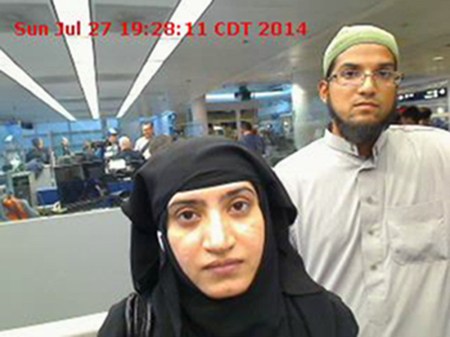
1395After the San Bernardino massacre carried out by jihadists Syed Farook (right) and Tashfeen Malik (left), the perennial debate about “why do they hate us” is on with more intensity than ever since 9/11.

When the last Islamic Caliph was driven out of Turkey in 1924, he went into exile first to France and then to the United States, where his descendants lived in New York. In fact, the last pretender to the Islamic Caliphate, Ertugul Osman V, died in Manhattan in 2009.

An open society, the U.S. has always welcomed Islamic exiles of all kinds, including some of its own bitter enemies. The only time that the pan-Islamist Hezbollah movement, founded and led by Iran, has ever held an international conference outside Iran or Lebanon was in Austin Texas in 1986, when a number of Latin American branches of the movement were created. Hundreds of former high-ranking Khomeinist civilian and military officials and clerics have ended up in the U.S. as exiles, while many others have their children attending U.S. schools and universities.

Today, half of Islamic Republic President Hassan Rouhani’s closest aides are holders of PhDs from U.S. universities, among them his Chief of Staff, Muhammad Nahavandian, a Green Card holder, and his Foreign Minister Muhammad Javad Zarif. (The other half consists of former holders of U.S. hostages in Tehran, among them Defense Minister Hussein Dehqan and Environmental director Masoumeh Ebtekar.)

Quite a few of Osama bin Laden’s 50 or so siblings are either holders of U.S. passports or green cards, along with thousands of other Saudis.

Unlike Russia, which has a 200-year history of war against Muslims, having annexed Islamic land at the rate of one square kilometer a day during the 19th century, the U.S. never annexed any Muslim-majority nation. And unlike China, which is still holding its Muslim minority, the Uighurs, in East Turkestan (Xinjiang) surrounded by a ring of steel, the U.S. is not trying to stop a Muslim nation’s aspiration after self-determination.

In the 1990s, when Saudi Arabia normalized ties with the People’s Republic of China, it shut down the offices of the Uighur exiles in Jeddah. Where did the exiles transfer to? The answer is: Washington DC, since neither Muslim nations nor Europeans would agree to host them.

Since the 1970s, the U.S. has been host to more than five million Muslims from all over the world, many of them fleeing brutal Islamist regimes in their homelands. In a conversation in 2002, Princeton Professor Bernard Lewis expressed the hope that Muslims in the United States and other Western democracies could become “beacons of enlightenment” projecting light back to their old counties. Many of us shared that hope.

Now, however, we see that the opposite is happening. Instead of exporting “light” back to the Muslim world, a growing number of Muslims in Western democracies have become importers of darkness in their new abodes.

Worse still, the politically correct crowd has turned Islam into a new taboo. They brand any criticism of Islam as racist, ethnocentrist or simply vile, all crammed together in the new category of “Islamophobia.”

Is it Islamophobia to question a religion whose Middle East leaders often preach “Death to America” and hatred for Western values?

More prevalent than Islamophobia is Islamophilia, as leftists treat Muslims as children whose feathers should not be ruffled.

The Islamophilia crowd does great disservice to both Western democracies and to Islam itself.

They invite Americans and Europeans to sacrifice part of their own freedom in atonement of largely imaginary sins against Muslims in the colonial and imperialist era. They also invite Muslims in the West to learn how to pose as victims and demand the rewards of victimhood as is the fashion in Europe and America. To the Muslim world at large, the message of Islamophilia is that Muslims need no criticism, although their faith is being transformed into a number of conflicting ideologies dedicated to violence and terror.

Never mind if Islamic theology is all but dead. To say so would be a sign of Islamophobia.

Never mind that God makes only a cameo appearance in mosque sermons almost entirely obsessed with political issues.

All that Western intellectuals or leaders need to do is stop flattering Islam, as President Obama has been doing for the past seven years, claiming that virtually anything worthwhile under the sun has its origin in Islam.

Many Muslims resent that kind of flattery, which takes them for idiots at a time that Islam and Muslims badly need to be criticized. The world needs to wake from its slumber and ask: What is going on?

Trump’s ‘Racist’ Entry Restriction Policy Not Novel, But Response Is

December 10, 2015

Trump’s ‘Racist’ Entry Restriction Policy Not Novel, But Response Is, The Jewish Press,Lori Lowenthal Marcus, December 10, 2015

(This is one of the best articles I have read on the subject. — DM)

Donald-Trump1Donald Trump, U.S. presidential candidate. Photo taken Dec. 3, 2015.

With the country, and now, slowly parts of the rest of the world, in a state of outrage over presidential candidate Donald Trump’s controversial statement to cut off immigration and visits by foreign Muslims to the U.S., it is worth noting that Trump is not the first major figure to suggest that a certain class of humans be barred from entry into a country.

Of the following examples, however, there are two significant differences between Trump’s call and that of all the others. See if you can come up with the two differences by the end of this article.

First, what did Trump actually call for? Did he, as some claim, call for all Muslim Americans to leave? No. What he did call for was a halt to Muslim immigration and tourists into the U.S.

TRUMP’S CALL FOR A BAN

“Donald J. Trump is calling for a total and complete shutdown of Muslims entering the United States until our country’s representatives can figure out what is going on,” a campaign press release said.

The ban Trump is seeking is based on what he called “the hatred [which] is beyond comprehension.” It is his view that his proposed ban should remain in place “until our country’s representatives can figure out what is going on.”

Trump called for the ban on Muslim entry into the U.S. in the wake of the terrorist attack in San Bernardino last week by two previously unknown radicalized Muslims who entered the U.S., Syed Farook and his wife, Nashfeen Malik. While few Americans ever met Malik, Farook was accepted as a “normal,” “average American,” and the two were understood to be “living the American dream,” until the moment they began blasting Farook’s co-workers and associates to death in a bloody rampage which claimed the lives of 14 and injured many more on Dec. 2, 2105.

Trump made what has become known as his “No Muslim” speech on Dec. 7, first in a written statement, which was followed up by a press conference, a video of which is at the end of this article.

REACTION TO TRUMP’S CALL FOR A BAN

Trump has been excoriated – or at least held at a distance with disgust – by leadership in the Democratic and Republican parties, by worldwide media, by colleagues and competitors. An aide to U.S. President Obama suggested Trump is “not qualified” to run for president. He has been attacked by Americans, by a Nobel Prize winner (Egypt’s El Baradei), by hundreds of thousands of Brits, and even by Israelis.

As reported earlier in the JewishPress.com, several Opposition Knesset Members and at least one coalition MK signed a letter demanding that Prime Minister Binyamin Netanyahu cancel a scheduled Dec. 28 meeting with Donald Trump during the Republican presidential candidate’s planned visit. Zionist Union MK Omer Bar Lev called Trump a racist, and Arab member of Knesset Ahmed Tibi called the presidential contender a Nazi.

Another Arab MK who is a member of the Meretz party, Esawi Frej, said “Trump is not just a racist; he is a man who poses a threat to the free world. A man who through racist incitement tries to gain the post of US president. A man whose presence in the public sphere is based on racism.”

EXAMPLES OF OTHER NATIONAL OR RELIGIOUS BANS

Daniel Greenfield immediately recalled and posted an article in FrontPage, reminding Americans that then-President Jimmy Carter, during the Iranian Hostage crisis banned the entry of Iranians into the United States. On April 7, 1980, Carter announced U.S. sanctions against Iran, which included the invalidation of

all visas issued to Iranian citizens for future entry into the United States, effective today. We will not reissue visas, nor will we issue new visas, except for compelling and proven humanitarian reasons or where the national interest of our own country requires. This directive will be interpreted very strictly.

Imagine that. Arguably one of the most liberal U.S. Presidents ever issued a blanket ban on an entire class of people, because some of them had brutalized Americans.

And guess what? There was no huge outcry over Carter’s ban. No demands that Carter be banned from entry into, say, Britain. Nor did any subsequent American administration ever issue a censure deeming Carter having been unworthy of holding the office of President of the United States, something that the Obama administration has said about Trump because of his proposed ban. QUOTE

So, there is a fairly recent precedent for banning an entire class of people in the United States.

Greenfield isn’t the only one on the ball, and America isn’t the only place where national/religious bans are accepted without much pushback, let alone hysteria.

Yair Rosenberg, an American journalist, pointed out on Twitter what should already be an obvious fact, and one for which there has been little public criticism, at least none that has risen to the level of eliciting the ire of major political parties, religious groups or public figures.

Rosenberg pointed out that there are currently 16 countries in the world which completely ban the entry of Israelis. No one is permitted to enter the following nations with an Israeli passport: Algeria, Bangladesh, Brunei, Iran, Iraq, Kuwait, Lebanon, Libya, Malaysia, Oman, Pakistan, Saudi Arabia, Sudan, Syria, the United Arab Emirates and Yemen.

Please, choke back any response that consists of something along the lines of: “well, those are Arab or Muslim countries, we expect more of a U.S. presidential candidate.” Anyone who considers acceptable because “to be expected” the blanket banning of Israelis by any nation, yet is outraged to action by The Donald must be prepared to be called a hypocrite.

And just to point out the extent of the mass hypocrisy regarding national or religious entry bans Rosenberg also pointed out that five of these 16 Arab/Muslim nations which bar Israelis from entering are currently “members of the United Nations Human Rights Council. No Punchline.” *Drop mic.*

UNBORN NATION FOR WHICH US, UK AND OTHERS SEEK TO BE MIDWIFE CATEGORICALLY REJECTS JEWS

But there is yet another, even more straightforward way to reveal the hypocrisy of those hysterically denouncing Trump’s suggestion of a temporary ban on Muslim entry into the United States.

This is the already declared position of Mahmoud Abbas, the acting president of the Palestinian Authority, who has unequivocally announced that there will be no Jews – not one, not ever – in the nation he hopes will arise: Palestine.

The precondition of a Judenrein nation has never been rejected as racist, xenophobic, undemocratic, discriminatory or anything else at all either by this American administration which has struggled for the past seven years to help birth Palestine, nor any previous ones. Nor has any other nation or national leader or self-declared human rights activist, civil rights activist or other do-gooders challenged that precondition to statehood.

This point was made first by Israeli Kay Wilson. Wilson tweetedearly Wednesday morning, in response to the Trump brouhaha, that she hoped the next will be “when the whole world” is “outraged by Abbas” who has said there will be “no Jews in Palestine.”

Wilson is particularly attuned to the hatefulness and incitement of the Palestinian Authority. In late 2010, she and a friend were stabbed repeatedly and left to die by two Palestinian Arabs who tried to murder them both, just because they were Jews. As it turned out, Wilson’s friend, Kristine Luken, who died from the assault, was a Christian. Wilson was stabbed with a machete 13 times. She was stabbed with such ferocity, that 30 of Wilson’s bones were shattered in the attack.

When asked by the JewishPress.com why she was claiming the Trump detractors were being hypocritical, Wilson, who, despite her trauma is a funny and loving person, laid out her response.

Wilson said that Jews being upset by Trump’s statement was not particularly surprising because “speaking up for our neighbour is both a calling and a conviction – born out of our task as Jews – to be ‘our brothers keeper.’”

What outraged Wilson, however, was what she described as planted “amongst this ruckus of goodwill” was “a concoction of hypocrisy and double standards of the international community towards the Jewish people.”

This is because although the PA’s Abbas has always made it clear, openly and repeatedly, that any future Palestinian state will be“Jew-free.”

From the time Abbas took over as leader of the Palestinian Authority, Wilson pointed out, “he made it clear that ANY future state under his jurisdiction will be “Jew-free.” But, she bemoans, “there has not been one politician, one spokesman, one foreign dignitary or one non-Jewish community that has EVER had the courage, the moral fortitude or just the plain common decency to speak out.

“There have been no op-eds, 24/7 news coverage, street protests or even tweets about this form of racism. And there have never been any public protests from the Muslim community to ‘be my brothers keeper,’” said Wilson.

So what are the two differences between Trump’s ban and all the others? The first is obvious, the lack of outrage. The utter lack of concern by the entire world that Israelis are barred from entry into other countries simply because they are from the only Jewish State in the world. The other? Trump is a businessman, he is not in any position of power, at least not yet. The other bans were all made by people who were or are in positions of leadership, equipped to, or already enforcing such a ban.


Litmus Test: Reaction to Obama’s Request to Root Out Extremism

December 10, 2015

Litmus Test: Reaction to Obama’s Request to Root Out Extremism, The Clarion Project, Meora Svorslu, December 10, 2015

(Please see also, The Muslim reform movement plays fantasy Islam. — DM)

San-Bernardino-Attackers-IPThe San Bernardino attackers Tashfeen Malik and Syed Rizwan Farook (Photo: U.S. Customs and Border Protection)

In his speech to the nation following the San Bernardino terror attack, U.S. President Barack Obama made a rightful plea to Muslims: “If we’re to succeed in defeating terrorism, we must enlist Muslim communities.” Making his case, Obama again rightly stated that “extremist ideology has spread within some Muslim communities” and “it’s a real problem that Muslims must confront without excuse.”

The president then insisted that Muslim leaders in American as well as around the world work with the U.S. to “root out” the problem, reject violence and ideological supremacism and promote “mutual respect and human dignity.”

It is telling in the fight against Islamist extremism who is rallying with the president on these points and who is fighting against him.

Linda Sarsour, executive director of the taxpayer-funded Arab American Association and co-founder of the Muslim Democratic Club of New York, had this to say about Obama’s request: “We would never ask any other faith community to stand up and condemn acts of violence committed by people within their groups.”

Really? If Christians worldwide were committing terrorist rampages across the globe citing sources that it is sanctioned or even required by their religion, we wouldn’t ask for American Christians to condemn them and make sure their children did not get swayed by them?

Sarsour and her fellow apologists understand this well. What Sarsour’s remarks are meant to accomplish is a complete sidestep of the entire issue, ironically facilitated by Obama himself. Obama’s refusal to tie “extremist ideology” to Islam makes it is possible for Sarsour and those who share her sentiments to claim “Islamophobia” and call it a day.

Further commenting on Obama’s request, Sarsour said, “The fact that this is only directed at the Muslim community is something that I personally can’t accept.”

(It could be that Sarsour doesn’t feel the same way about violence as does the president. One of her recent tweets featured a Palestinian child with a rock in each of his hands approaching Israeli soldiers. Sarsour wrote underneath: “The definition of courage.”)

Muslims who are truly interested in rooting out the extremism in their midst would not bristle at Obama’s request. Indeed, many are already active in the fight against those who they believe are perverting their religion. They acknowledge the problem and don’t think it’s “Islamophobic” to talk about it.

“What we need to do now — rather than giving a forum to self-appointed spokespeople like CAIR who have not led the fight against extremism — is listen to those who have actually been taking on this very struggle the president referenced,” says Karima Bennoune, a University of Davis law professor, author of Your Fatwa Does Not Apply Here: Untold Stories from the Fight Against Muslim Fundamentalism. “Our conversation should be why and what is it in our theology that has been so bastardized to give people permission to kill? Until we honestly root this out, we will by default be blamed,” she said.

Nidal Alsayyed, an imam who heads the Islamic Center of Triplex of Beaumont, Texas went one step further, saying that he agrees with presidential candidate Donald Trump’s proposal to halt Muslim immigration into the U.S. until the country’s “representatives can figure out what is going on.”

“I certainly see it to be wise (to) stop temporarily accepting any new Muslim immigrants (refugees and non-refugees) into the United States,” said Alsayyed. “We American Muslims need to be sincere in our religion and to the country we are living in. Peace comes before religion. We need to be truthful and transparent when we express a viewpoint or feedback. It does not matter whether Trump said it or anyone else,” he added.

Democratic president candidate Hillary Clinton has refused to use the words “radical Islam,” saying, “It doesn’t do justice to the vast number of Muslims in our country and around the world who are peaceful people.”

On the contrary. “Not saying it, when it represents a reality, is much worse,” says Bennoune. And certainly, not saying it will not make the problem go away.

Who’s the crazy one?

December 10, 2015

Who’s the crazy one? Front Page MagazineDavid Horowitz, December 10, 2015

dt

Donald Trump’s great contribution is saying the unsayable; putting things on the table that would otherwise be buried; calling a spade a spade in a time when political correctness has made us unable to discuss things that have to do with our basic national survival.  This is the crux of the issue.  Every time he creates a controversy like this he also tells this country that its emperors, Republican and Democrat, have no clothes. That they prefer propriety over defending the country.  That they are dedicated only to keeping the lid on a cauldron of threat and challenge they have allowed to boil over.

***********************

Presidential candidate Donald Trump has called for a moratorium on Muslim immigration until we can figure out why Islamic terrorists have been able to enter our country and devised ways to protect ourselves. This has caused the left and right establishments to dogpile on Trump. Echoing the sentiments of virtually all Democrats and many Republicans, aWashington Post editorial has declared that Trump’s proposal disqualifies him as a candidate because in the Post’s view what he recommends is unconstitutional and therefore un-American. But President Obama has issued executive orders – as it happens orders that sabotage our borders – that he himself has called unconstitutional (“I don’t have the authority to stop deportations”).  Has the Post editorialized that this is un-American and disqualifies him for the presidency? Has it called for Obama to be impeached? Have Democrats ridiculed Obama for his un-American prescriptions?

Consider the nature of the threat. A 2009 “World Opinion” survey by the University of Maryland showed that between 30 and 50% of Muslims in Jordan, Egypt and other Islamic countries approved of the terrorist attacks on America and that only a minority of Muslims “entirely disapproved” of them. ISIS has acknowledged its plans to use refugee programs to infiltrate its terrorists into the United States and other infidel countries. In Minneapolis we have a Somali refugee community many of whose members have returned to Syria to fight for ISIS. Other Muslim immigrants like Major Hassan and Tashfeen Malik have carried out barbaric acts of terror here at home. Today Muslim terrorists are using assault rifles and pipe bombs, but we know they have Sarin gas and other chemical weapons which they might use tomorrow. The terrorists inexorably arrive along with the other immigrants, no one in authority apparently knowing who’s who. Who, then, in his right mind does not think that Muslim immigration poses a serious security threat to us?

The outrage against Trump should properly have been directed at our president who refuses to identify the enemy as Islamic terrorism, who has opened the door to nuclear weapons and ballistic missiles to the Islamic America-haters in Iran, whose policies have created the vacuums that ISIS has filled, and who even after Paris and San Bernardino is determined to bring 100,000 immigrants from Syrian war zones to our unprotected shores. This outrage is missing and it is precisely because it is missing that Trump’s unconstitutional proposal resonates with so many rightly concerned Americans. When the man in charge of our security is by general consensus out to lunch in regard to fighting the war on Islamic terror, or protecting us at home, a proposal like Trump’s, which at least recognizes the threat, is going to resonate with the public.

In middle of a crisis of national security, the Democratic Party seems to think that climate change and especially gun ownership are greater threats to our survival than the one that comes from hundreds of millions of Muslims who think America should be attacked and who believe the whole world should be put under medieval Islamic law. In the face of this threat, the Democratic Party and its leaders seem to have no problem with the fact that we have more than 350 “Sanctuary Cities” that are dedicated to sabotaging our immigration laws; that we have no southern border and as a result have 179,000 illegal alien criminals and who knows how many terrorists in our country today.

Once again we have Trump to thank for changing the surreal conversation about whether having a border at all is compatible with American values, and forcing people to focus on the dangers we face. Republicans are generally defenders of this country, but not in this controversy over Donald Trump. Would that they would use the same ridicule and outrage over the Democrats’ many betrayals of our country and its citizens through proposals to expose us to our enemies as they do over a proposal to protect us from them. Trump’s idea may be unconstitutional and unworkable, but it springs from a desire that is honorable and patriotic. The appropriate response would be to propose alternatives that recognize the same dangers and serve the same ends but do so within constitutional limits.

Donald Trump’s great contribution is saying the unsayable; putting things on the table that would otherwise be buried; calling a spade a spade in a time when political correctness has made us unable to discuss things that have to do with our basic national survival.  This is the crux of the issue.  Every time he creates a controversy like this he also tells this country that its emperors, Republican and Democrat, have no clothes. That they prefer propriety over defending the country.  That they are dedicated only to keeping the lid on a cauldron of threat and challenge they have allowed to boil over.

The 2016 election will be a referendum on the defense of this country and its survival. Let’s see who answers the call.

Media: Saudi Arabia, UAE, Qatar and Jordan may send 90,000 military to fight IS

December 10, 2015

Media: Saudi Arabia, UAE, Qatar and Jordan may send 90,000 military to fight IS

World December 10, 11:16 UTC+3

Source: TASS: World – Media: Saudi Arabia, UAE, Qatar and Jordan may send 90,000 military to fight IS

Iraq Press Agency quoted politician Hanan Al Faltawi as saying she received that information from reliable sources after talks between US Senator John McCain and Iraqi Prime Minister Haider al-Abadi

© EPA/ALI HASSAN

BEIRUT, December 10. /TASS/. Around 100,000 foreign military, including 90,000 from Arab countries, may be deployed to Iraq to fight against the Islamic State (IS) terrorist organization, Iraq Press Agency quoted politician Hanan Al Faltawi as saying.

Al Fatlawi said that she received this information from reliable sources after talks between US Senator John McCain and Iraqi Prime Minister Haider al-Abadi. The meeting took place on November 27 in the joint American-Iraqi operational headquarters in Baghdad that coordinates military actions against IS, she added.

Foreign forces of 100,000 – 90,000 from Saudi Arabia, the United Arab Emirates, Qatar and Jordan and 10,000 from the United States – will be stationed in Iraq’s western parts,” Al Fatlawi noted. The politician added that “the Iraqi prime minister openly expressed bewilderment over McCain’s statement but was told that everything had already been decided.”

Islamic State extremist organization

The Islamic State is an extremist organization banned in Russia. In 2013-2014, it called itself the Islamic State of Iraq and the Levant (ISIL). In June 2014, IS announce the establishment of the “Islamic caliphate” on the territories seized in Iraq and Syria. According to US’ Central Intelligence Agency, the extremist group includes around 30,000 people, while Iraqi authorities claim there are around 200,000 in IS. Among members of the group are citizens of 80 countries, including France, Great Britain, Germany, Morocco, Saudi Arabia, US, Canada, as well as Russia and other CIS countries. According to reports, militants now control around 40% of the Iraqi territory and 50% of the Syrian territory.

Turkish jets strike Kurdish positions in Iraq amid rising tension between Ankara & Baghdad

December 10, 2015

Turkish jets strike Kurdish positions in Iraq amid rising tension between Ankara & Baghdad

Published time: 9 Dec, 2015 18:35 Edited time: 9 Dec, 2015 20:04

Source: Turkish jets strike Kurdish positions in Iraq amid rising tension between Ankara & Baghdad — RT News

© Umit Bektas
Ankara carried out airstrikes targeting Kurdistan Workers’ Party (PKK) forces in northern Iraq, the Turkish army said on Wednesday. The action comes in the wake of rising tensions between Ankara and Baghdad over the deployment of Turkish troops in Iraq.

Ten F-16 fighter jets launched an attack between 10pm and 10:50pm on Tuesday, targeting PKK positions in the Kandil, Hakurk, Zap and Avasin-Baysan regions in northern Iraq, the Turkish General Staff said in a statement. It added that the targets were “destroyed in an aerial campaign.”

Tensions have been rising between Ankara and Baghdad after Turkey deployed hundreds of troops equipped with tanks and artillery to Iraq’s northern Nineveh Governorate last Thursday, saying they will train forces battling Islamic State (IS, formerly ISIS/ISIL).

Baghdad said it had not asked for the help of Turkish forces, and demanded their withdrawal after it said Turkey had “illegally” sent the troops into Iraq. Describing the move as violation of sovereignty, the Iraqi government also asked NATO to intervene.

Read more

© Cem Ozdel

Meanwhile, Shiite paramilitary groups have threatened to use force against Turkey unless it pulls its forces out of Iraq. Likening the Turkish incursion to the occupation of Iraq by IS militants, Badr Brigade spokesman Karim al-Nuri said “all options” were available.

We have the right to respond and we do not exclude any type of response until the Turks have learned their lesson,” Nuri said on Wednesday. “Do they have a dream of restoring Ottoman greatness? This is a great delusion and they will pay dearly because of Turkish arrogance.”

Also on Wednesday, the Iraqi parliament unanimously approved a motion condemning the Turkish intervention, supporting the government in taking whatever measures it viewed as appropriate.

Russia raised the issue at a meeting of the UN Security Council on Tuesday, expressing hope that Ankara will avoid escalating the situation in the region with any further reckless actions. Following the meeting, Russia’s UN envoy Vitaly Churkin said that Moscow expects Ankara to “settle the situation in Iraq in a way that would satisfy the Iraqi government.”

“Now the situation is within the focus of the attention of the Security Council, so we hope it will help resolve [it] to the satisfaction of the Iraqi government, whose sovereignty, territorial integrity and independence will be respected,” he said.

Russian Foreign Minister Sergey Lavrov slammed Ankara’s actions while speaking to Italian media on Wednesday.

Lavrov proposed a thorough examination of how Turkey performs goals set by the coalition in Syria. “We need to examine how a member of the US-led coalition – the Republic of Turkey – performs goals set by the coalition,” the minister said. “Why is it not bombing terrorists as such, but the Kurds instead?”

READ MORE:West’s reaction to Turkish invasion – an exercise in hypocrisy

On Wednesday, Ankara argued that Turkish soldiers were sent to northern Iraq after a threat from IS to Turkish military trainers in the area. Prime Minister Ahmet Davutoglu said that the deployment was an act of solidarity, not aggression.

The [military] trainers in the Bashiqa camp were threatened by Daesh (Islamic State) because it is 15-20 kilometers from Mosul and they have only light arms,” he told media in Istanbul. “So when these threats increased… we sent some troops to protect the camp, not as an act of aggression but as an act of solidarity.

‘Hopefully, no nukes will be needed’ against ISIS

December 9, 2015

‘Hopefully, no nukes will be needed’ against ISIS – Putin

Published time: 9 Dec, 2015 07:01 Edited time: 9 Dec, 2015 11:13

Source: ‘Hopefully, no nukes will be needed’ against ISIS – Putin — RT News

© Aleksey Nikolskyi
Vladimir Putin has praised the Russian cruise missiles fired against terrorists in Syria from the sea. He expressed hope that these weapons would not have to be armed with nuclear warheads.

Meeting in the Kremlin with Defense Minister Sergey Shoigu, who reported the latest results of the anti-Islamic State (IS, formerly ISIS/ISIL) ops in Syria, the Russian president made a notable remark.

We must analyze everything happening on the battlefield, how the weapons operate. The Kalibrs (sea based cruise missiles) and KH-101 (airborne cruise missile) have proved to be modern and highly effective, and now we know it for sure – precision weapons that can be equipped with both conventional and special warheads, which are nuclear,” Putin said.

“Naturally, this is not necessary when fighting terrorists and, I hope, will never be needed,” the president added.

On Tuesday, a Russian Kilo-class submarine, the Rostov-on-Don, fired Kalibr-PL cruise missiles against an IS installation near the terrorists’ stronghold in Raqqa. Water-to-surface cruise missiles were launched from a submerged sub in the Mediterranean Sea, according to the Russian defense minister.

“We’ve been registering the missiles launches, flights and, of course, their hitting the targets,” Shoigu said. “We warned our Israeli and American colleagues about these launches.”

Kalibr and KH-101 cruise missiles have been deployed for the first time this year in Russia’s counter-terrorist operation in Syria.