Posted tagged ‘Iran Scam’

Iran breaches the nuclear deal

December 14, 2015

Iran breaches the nuclear deal, Front Page MagazineDr. Majid Rafizadeh, December 14, 2015

mr


Not long after signing the nuclear deal, the ruling clerics of the Islamist state of Iran have clearly breached the agreement and several of the United Nations Security Council Resolutions. What is the Obama administration’s response? He is turning a blind eye to this vital issue. The administration is ignoring these blatant violations and continuing with its efforts to lift sanctions on the Ayatollah’s regime.

The Joint Plan of Action Agreement (JCPOA), which was reached between the six world powers and Iran, clearly mentions “addressing UN Security Council (UNSC) resolutions” regarding the Islamic Republic. Specifically, the JCPOA (UNSCR 2231 Annex II, paragraph three) states that Iran should not undertake any ballistic missiles activity “until the date eight years after the JCPOA Adoption Day or until the date on which the IAEA submits a report confirming the Broader Conclusion, whichever is earlier.”

Despite agreeing to the nuclear deal, Iran has repeatedly test-fired long-range ballistic missiles and laser-guided surface-to-surface missiles. In fact, last week, the Islamic Republic tested a new ballistic missile capable of carrying multiple warheads. This is in direct breach of two UN Security Council resolutions and the JCPOA.

Iranian leaders make no attempt to hide this. Instead they are projecting their military power, and flaunting their breach of the agreement and the UNSC resolutions. When his country was unveiling a new missile, Fateh 313, the Iranian President Hassan Rouhani previously pointed out that “we will have a new ballistic missile test in the near future that will be a thorn in the eyes of our enemies.” An Iranian state news agency, Fars, also posted a video of Iran’s underground missile testing facility.

Iran’s ballistic capabilities are one of the most critical pillars of Iran’s Islamist and militaristic ideology. Besides managing Iran’s nuclear program and supporting its Islamist proxies, the third important program of Iran’s revolutionary Guard Corps (IRGC) is its ballistic missile program.

Iran possesses the largest ballistic missile program in the Middle East, even surpassing Israel.  No country, except Iran, has acquired long range ballistic missiles before obtaining nuclear weapons. This makes IRGC one of the most formidable military institutions in the region. Ballistic missiles can be used for offensive or defensive purposes, but sophisticated missiles are mainly developed as delivery vehicles for nuclear weapons.

Tehran’s ballistic missiles can hit any country in the Middle East. But Iranian leaders are not satisfied with this capability and are looking to expand.

Iran’s ballistic technology has normally grown due to Iran’s North Korea ties. But gradually, the Islamist clergy has relied on its domestic infrastructure and adapted new technology to expand its ballistic arsenal.

Iranian leaders have boasted about having an intercontinental ballistic missile, which can hit any place on the earth, even the United States, as it is capable of traveling over 9,000 miles.

Iran’s determination to have the most robust and largest ballistic missile arsenal in the region highlights Tehran’s ambitions for regional supremacy through militarization.

By emphasizing the need to fight the “enemies,” IRGC leaders have succeeded in rallying the Parliament (Majlis) and obtaining billions of the government’s revenue to spend on Iran’s ballistic and nuclear program. On the other hand, improving military capabilities has bolstered Islamists’ support for the hold-on-power approach of the IRGC and the Supreme Leader, Ayatollah Ali Khamenei.

Iran’s expanding program and frequent test-fires are also aimed at imposing fear throughout the region. This inevitably leads to further destabilization and militarization of the region. For example, the United Arab Emirates previously signed a $3.3 billion dollar deal to buy missiles from the US firm Raytheon, to further invest in its weapon program.

Not only did the nuclear deal not temper Iran’s foreign policy and regional hegemonic ambitions, IRGC leaders appear to be more emboldened to manifest their military power.

Despite the efforts of the international community since the 1980s, the Islamic Republic has managed to expand its missile program to be the largest in the region. Despite the United Nations Security Council resolution 1929 that states “Iran shall not undertake any activity related to ballistic missiles capable of delivering nuclear weapons, including launches using ballistic missile technology, and that States shall take all necessary measures to prevent the transfer of technology or technical assistance to Iran related to such activities,” Iran’s missile range has grown from 500 miles to over 2,000 miles.

Iran’s flagrant breaches of the nuclear agreement make it clear that the agreement has been violated. Unfortunately, these actions and Iran’s rapidly improving missile capabilities will not elicit any reaction from the Obama administration. In fact, these breaches of the JCPOA and UNSC resolutions are not going to change President Obama’s efforts to urge P5+1 to lift the ban on Iran’s ballistic program and remove sanctions by early next year.

The Obama administration is contributing to creating one of the largest threats to US national security in the region by ratcheting up IRGC’s military prowess and rallying more hard-line support behind IRGC in Iran.

Power Struggle Between Iranian Supreme Leader Khamenei’s Ideological Camp And Rafsanjani’s Pragmatic Camp Intensifies – Part I: Khamenei Blocks Iran’s Implementation Of The JCPOA

December 11, 2015

Power Struggle Between Iranian Supreme Leader Khamenei’s Ideological Camp And Rafsanjani’s Pragmatic Camp Intensifies – Part I: Khamenei Blocks Iran’s Implementation Of The JCPOA, MEMRI, A. Savyon and Y. Carmon*, December 11, 2015

Introduction

In advance of the February 2016 elections in Iran for both the Majlis and the Assembly of Experts, and in light of Hashemi Rafsanjani’s November 25, 2015 announcement that he will run for the Assembly of Experts, the power struggle between the pragmatic camp, which Rafsanjani leads, and the ideological camp, led by Supreme Leader Ali Khamenei, has intensified. It now centers on two main focal points:

  1. Khamenei’s blocking of Iran’s implementation of the JCPOA. After Khamenei halted the implementation of the JCPOA in his October 21, 2015 letter to Iranian President Hassan Rohani,[1] all the representatives of the regime announced their support for Khamenei’s instructions; even President Rohani and Foreign Minister Javad Zarif were compelled to do so. The only one to speak out against this was Rafsanjani, who called on the regime to carry out its obligations under the JCPOA.[2]
  2. The Iranian regime’s circling the wagons against both the “American enemy” and against the “new fitna” within Iran – that is, the Rafsanjani camp which is calling for openness vis-à-vis the U.S. and for Iran to implement the JCPOA.[3] The regime activity against the U.S. and the “new fitna” gives the ideological camp leverage over the pragmatic camp. The ideological camp is playing this up in advance of the elections and hinting that the outcome of the last presidential election, in 2013, was a grave failure that must not be allowed to happen again. The Khamenei-affiliated daily Kayhan is even preparing for the possibility that Rafsanjani’s pragmatic camp will again triumph in the elections, and stated that such a development would be counter to the Islamic Revolution and its values, and must be prevented.

This first report in a two-part series on the aspects of this power struggle will focus on Supreme Leader Ali Khamenei’s blocking of Iran’s implementation of the JCPOA. The forthcoming report will focus on the Iranian regime’s promotion of its anti-U.S. stance and its stance against the “new fitna” within Iran.

MEMRI has published nearly two dozen reports on the power struggle between the Khamenei and Rafsanjani camps.   

Khamenei Blocks Iran’s Implementation Of The JCPOA

On October 21, 2015, Supreme Leader Ali Khamenei issued nine conditions countermanding the original language of the JCPOA as it was presented on July 14, 2015.[4] All regime officials, including pragmatic camp members such as President Rohani and Foreign Minister Zarif, immediately announced their acceptance of Khamenei’s new conditions – except for Hashemi Rafsanjani, who was the only one to speak out against Khamenei and called on Iran to implement its obligations under the JCPOA.[5]

Elements connected to the negotiating team and the Rafsanjani camp, among them Atomic Energy Organization of Iran (AEOI) director Ali Akbar Salehi and Expediency Council secretary Ali Shamkhani, attempted to create the impression of first steps to implement the JCPOA by transferring older-generation centrifuges that were already inactive from one site to another.

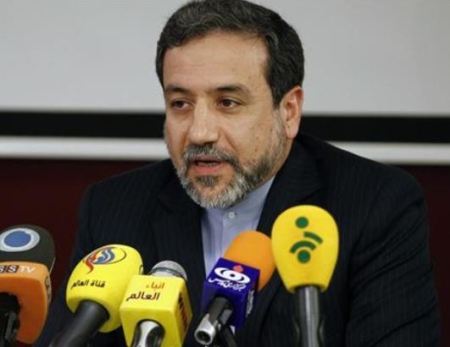
However, they were stopped immediately by Majlis members and others from the ideological camp.[6]Negotiating team members from Rafsanjani’s pragmatic camp were forced to state that thus far, no active centrifuges had been dismantled. On November 25, 2015, nuclear negotiating team member and Deputy Foreign Minister Abbas Araghchi told Iranian TV of the measures Iran had taken to meet its JCPOA commitments, saying that “none of Iran’s steps on this matter so far contradict the Leader’s letter… As far as I know, we are still in the phase of dismantling the inactive centrifuges.”[7]

On November 14, 2015, AEOI director Ali Akbar Salehi told Iranian Channel 3 TV: “The centrifuges that were dismantled were not active and did not enrich uranium… Now, we are dealing with the dismantling of centrifuges, and we began this two weeks ago, according to the orders from the Office of the President that we have undertaken and to the timetable. At Fordo, there are a few centrifuges, that is, 1,000-2,000; at the last minute, we will collect some 1,000 centrifuges from Fordo. So far, no centrifuges from Fordo have been dismantled; we have merely prepared the ground for dismantling [centrifuges]. What has been dismantled so far were inactive centrifuges at Natanz.”[8]

On November 3, 2015, AEOI spokesman Behrouz Kamalvandi said: “We will advance the work in a way that will be in accordance with the principles and guidelines of the Leader… Not a single centrifuge has been dismantled yet; at this point, we are at the preparatory stage.”[9] Several days later, he said that Iran would begin to dismantle active centrifuges immediately after the Iranian PMD (Possible Military Dimensions) dossier is closed by the IAEA Board of Governors,[10] explaining: “Now we are dismantling the inactive centrifuges; there are more of them than there are active centrifuges.” He noted that there are now only about 3,000 active  centrifuges and about 10,000 that have not been active for several years, and added: “The [active] centrifuges will be dismantled at the same time as [Iran carries out the steps to which it is obligated under the JCPOA at] the Arak reactor and as our enriched uranium is replaced with yellowcake.[11]

Iranian Foreign Minister Zarif: The Superpowers Must Meet All Their Obligations Before Iran Implements Its Own

At a November 29, 2015 joint press conference with his Greek counterpart, Foreign Minister Zarif stated that Iran’s implementation of the JCPOA could begin only after the IAEA Board of Governors closes Iran’s PMD dossier.[12] He then added a completely new demand: that the P5+1 carry out at least some of its obligations under the JCPOA even before Iran carries out its own. Zarif added that the Iranians were currently conducting talks with U.S. Secretary of State John Kerry and other American officials on this matter.

Iran’s presentation of this demand is an essential violation of the language of the agreed version of the JCPOA, which states that Iran must first implement its part in order to reach Implementation Day, and that only then, and concurrently with IAEA verification that Iran has indeed met its obligations, will the P5+1 begin carrying out its obligations with regard to the sanctions.

The following are the main points of Zarif’s statements:

Asked what progress has been made with regard to Khamenei’s demand, in his letter to President Rohani, for a direct letter from Europe and the U.S. to Iran on the issue of the removal of the sanctions, he replied: “Europe and the U.S. are obligated to remove the sanctions the day the JCPOA is implemented – that is, the U.S. must carry out steps on the day of the decision – i.e. [by Implementation Day] the U.S. and the E.U. must carry out these steps in certain ways.

“The process of implementation by the oversight team has already begun. This does not mean that the action taken by the U.S. and the E.U., and which should yield results by Implementation Day, are sufficient. We believe that the U.S. must continue to implement steps until Implementation Day. The U.S. president has ordered the energy secretary, secretary of state, and commerce secretary to carry out their obligations, and that they take all steps necessary to implement the U.S.’s obligations. The President of the United States ordered them to carry out their obligations and that prior to Implementation Day [of the JCPOA] these obligations must be implemented. On this matter, we are holding talks with the American secretary of state and other American elements [emphasis added].”[13]

*A. Savyon is Director of the MEMRI Iran Media Project; Y. Carmon is President of MEMRI.

Endnotes:

[1] See MEMRI Inquiry & Analysis No. 1196, Iranian Supreme Leader Khamenei’s Letter Of Guidelines To President Rohani On JCPOA Sets Nine Conditions Nullifying Original Agreement Announced July 14, 2015, October 22, 2015.

[2] See MEMRI Inquiry & Analysis No.1204, Breaking Report: Challenging Khamenei, Rafsanjani Demands That Iran Fulfill Its Obligations Under The JCPOA, And Reveals: We Had Nuclear Option In Iran-Iraq War, October 28, 2015.

[3] This fitna and its members were described clearly by Majlis National Security and Foreign Policy committee member Ahmad Bakhshayesh: “The Leader speaks of [American] infiltration and warns the officials. The Leader’s [warning] was addressed mainly to elements of the regime wishing to create ties with the U.S…. In our country there are two lines of thought: One is resistance to the arrogance [meaning the U.S.], championed by the Leader; and the second is ties with the U.S. like with any other country without fear of infiltration, which is championed by Hashemi Rafsanjani and President Rohani.” Fars (Iran), November 15, 2015.

[4] See MEMRI Inquiry & Analysis No. 1196, Iranian Supreme Leader Khamenei’s Letter Of Guidelines To President Rohani On JCPOA Sets Nine Conditions Nullifying Original Agreement Announced July 14, 2015, October 22, 2015.

[5] For Rafsanjani’s statements, see MEMRI Inquiry & Analysis Report No. 1204, Breaking Report: Challenging Khamenei, Rafsanjani Demands That Iran Fulfill Its Obligations Under The JCPOA, And Reveals: We Had Nuclear Option In Iran-Iraq War, October 28, 2015. For Iran’s commitments, as outlined by the Arms Control Association, see MEMRI Daily Brief No. 65, MEMRI: ‘The Emperor Has No Clothes’, October 30, 2015.

[6] See, for example, the statement by Alizera Zakani, head of the Majlis special committee to examine the JCPOA, who said that reducing the number of centrifuges at nuclear sites violated the first condition of Khamenei’s letter. According to him, this improper step triggered a warning, and subsequently the action was halted, at least at Fordo. Mehr (Iran), November 8, 2015.

[7] ISNA (Iran), November 25, 2015.

[8] IRNA (Iran), November 14, 2015.

[9] ISNA (Iran), November 3, 2015.

[10] See MEMRI Inquiry & Analysis No. 1207, The Prospects For JCPOA Implementation Following The Release Of IAEA Sec-Gen Amano’s Report On The PMD Of Iran’s Nuclear Program, December 8, 2015; and MEMRI Special Dispatch No. 6229, Statements By Iranian Deputy Foreign Minister Abbas Araghchi Indicate: IAEA’s PMD Report Is Being Written In Negotiation With Iran, Not Independently, November 27, 2015.

[11] Kayhan (Iran), November 11, 2015.

[12] See MEMRI Inquiry & Analysis No. 1207, The Prospects For JCPOA Implementation Following The Release Of IAEA Sec-Gen Amano’s Report On The PMD Of Iran’s Nuclear Program, December 8, 2015; and MEMRI Special Dispatch No. 6229, Statements By Iranian Deputy Foreign Minister Abbas Araghchi Indicate: IAEA’s PMD Report Is Being Written In Negotiation With Iran, Not Independently, November 27, 2015.

[13] ISNA (Iran), November 29, 2015.

The Prospects For JCPOA Implementation Following The Release Of IAEA Sec-Gen Amano’s Report On The PMD Of Iran’s Nuclear Program

December 8, 2015

The Prospects For JCPOA Implementation Following The Release Of IAEA Sec-Gen Amano’s Report On The PMD Of Iran’s Nuclear Program, MEMRI, A. Savyon, Y. Carmon, and U. Kafash, December 8, 2015

Introduction

On December 2, 2015, International Atomic Energy Agency (IAEA) secretary-general Yukiya Amano released his report on the Possible Military Dimensions (PMD) of Iran’s nuclear program.[1]

The report’s findings, whatever they turned out to be, were not supposed to impact the continued implementation of the Joint Comprehensive Plan of Action (JCPOA) in any way – even if they were completely negative regarding Iran. From the outset, it was agreed that all that Iran was obligated to do was to cooperate with the IAEA investigation of its PMD, and nothing more.

The next milestone date for the continued implementation of the JCPOA is December 15, 2015, when Amano’s PMD report will be presented to the IAEA Board of Governors and the latter will resolve whether to close Iran’s PMD dossier in the IAEA. This resolution is meant to be adopted by the UN Security Council.

The implementation process is meant to be continued by Iran – that is, Iran must meet its obligations under the JCPOA. These consist primarily of the removal of nine tons of low-grade enriched uranium from the country, the dismantling of centrifuges so that only 6,000 active ones remain, the pouring of concrete into the core of the Arak nuclear reactor such that it will not be able to be used to manufacture plutonium, the adoption of the Additional Protocol, and more.

After that, the IAEA will check to verify that Iran has carried these out; when it announces that it has, the next milestone date, Implementation Day, will come into force. At that time, Europe and the U.S. will carry out their promise, made October 19, 2015, to lift and suspend their sanctions on Iran.

It was Iran itself that made Amano’s PMD report a problematic issue, and, essentially, a condition for its continued implementation of the JCPOA. Iran demanded that the IAEA Board of Governors close its PMD dossier, and, according to some Iranian spokesmen, it should do so in a way that completely exonerates Iran of accusations against it regarding development of a military nuclear program. That is, Iran will not be satisfied with a closure of the dossier that is merely formal if Amano’s report does not completely exonerate it.

To this end, in the days leading up to the release of the report, Iran pressured the IAEA and the P5+1, with the aim of ensuring that the report would completely clear Iran of suspicions regarding PMD.[2]

In addition to its direct pressure on Amano, Iran also implemented political pressure on the P5+1, warning that if the dossier remained open, Iran would not implement its obligations under the JCPOA, and that the West had to choose between the PMD, that is, accusing Iran of developing a military nuclear program, and implementing the JCPOA.[3]

The Findings Of Amano’s PMD Report

Iran’s pressure netted only partial success. Prior to the report’s release, Amano stated: “What I can now say is that this is an issue that cannot be answered by ‘yes’ and ‘no.'”[4] The report included aspects that were both positive and negative for Iran.

On the one hand, it stated: “The Agency has not found indications of an undeclared nuclear fuel cycle in Iran, beyond those activities declared retrospectively by Iran. The Agency has found no indications of Iran having conducted activities which can be directly traced to the ‘uranium metal document’ or to design information for a nuclear explosive device from the clandestine nuclear supply network.”

However, it also said: “The Agency assesses that explosive bridgewire (EBW) detonators developed by Iran have characteristics relevant to a nuclear explosive device.”

With regard to the Parchin facility, Amano’s PMD report stated that “[t]he information available to the Agency… does not support Iran’s statements on the purpose of the building.” Furthermore, the report stated that “the Agency assesses that the extensive activities undertaken by Iran since February 2012 at the particular location of interest to the Agency seriously undermined the Agency’s ability to conduct effective verification.” It continued:

“The Agency assesses that Iran conducted computer modelling of a nuclear explosive device prior to 2004 and between 2005 and 2009. The Agency notes, however, the incomplete and fragmented nature of those calculations… The Agency assesses that, before the end of 2003, an organizational structure was in place in Iran suitable for the coordination of a range of activities relevant to the development of a nuclear explosive device. Although some activities took place after 2003, they were not part of a coordinated effort. The Agency’s overall assessment is that a range of activities relevant to the development of a nuclear explosive device were conducted in Iran prior to the end of 2003 as a coordinated effort, and some activities took place after 2003. The Agency also assesses that these activities did not advance beyond feasibility and scientific studies, and the acquisition of certain relevant technical competences and capabilities. The Agency has no credible indications of activities in Iran relevant to the development of a nuclear explosive device after 2009.”[5]

Iran’s Future Moves Vis-à-vis The PMD Dossier In The IAEA Board Of Governors

Assuming that the IAEA Board of Governors follows the Iran-U.S. dictates and closes Iran’s PMD dossier[6] in spite of the findings mentioned above, it is not clear that a formal closure of the dossier by the Board of Governors would satisfy Iranian Supreme Leader Ali Khamenei, or whether he would block Iran’s implementation of the JCPOA because the Amano report’s findings do not exonerate Iran.

The Iranian reactions to the report have been mixed, in accordance with the speakers’ affiliation with either the pragmatic camp of President Rohani and Foreign Minister Zarif, or the ideological camp. While the former is willing to settle for a formal closure of the PMD dossier without Iran’s complete exoneration,[7] the latter stresses that the reports’ findings determine that Iran conducted military nuclear development prior to 2009, and see this as a reason to stop the entire JCPOA process. 

The Appendix below presents statements by Deputy Foreign Minister and negotiator Abbas Aragchi, representing the pragmatic camp, and by Hossein Shariatmadari, editor of the Iranian daily Kayhan, which is affiliated with Supreme Leader Khamenei, representing the ideological camp.

It cannot be known whether Khamenei and ideological camp spokesmen will accept the Board of Governors’ resolution as sufficient. Furthermore, even if Khamenei decides to accept a closure of the PMD dossier by the Board of Governors as sufficient, his nine new conditions for Iran’s implementation of the JCPOA, as set out on October 21, 2015, remain an obstacle to Iran’s implementation of the JCPOA.[8]

Appendix

Statements By Deputy Foreign Minister Araghchi Immediately After The Release Of Amano’s PMD Report

On December 2, 2015, Iranian Deputy Foreign Minister Abbas Araghchi told Iranian Channel 1: “In the matter of the [Final Assessment] on Past and Present Outstanding Issues [Regarding Iran’s Nuclear Program], the Amano report states explicitly that all the claims about PMD [refer] strictly to scientific studies [and not to military development]. This is the most salient point in the Amano report. The general view of the IAEA vis-à-vis Past and Present Outstanding Issues in Iran’s nuclear program counters the claims made against Iran in the past decade.

“The IAEA assessment is that prior to 2003, research activity was carried out in Iran, not by it. Likewise, there is no sign that nuclear material was diverted to any initiatives that are not for peaceful purposes.

“The claims in the IAEA report about science and research activity are unacceptable to us, and we will inform the IAEA of our opinion on this matter within the allotted time, even though previously Amano said that his report was not black or white, but in my opinion it leans more towards the white side, particularly when the conclusion of the report explicitly rejects [the claim] that there is in Iran a military program, and it is preparing the ground for the Board of Governors to close the issue of the PMD dossier.

“The report states that there is no sign of nuclear material in matters that are not for peaceful purposes, and also that there is no sign of an undeclared nuclear fuel cycle in Iran. In the matter of equipment [for] dual use, the IAEA says that in the past Iran worked on detonators, but the report declares that these detonators had uses for both peaceful and non-peaceful purposes, and that the IAEA could not make a determination in this matter…

“Likewise, Iran’s procurements [activities] are not against [the law] and there is no organization in Iran that was established to produce an atomic bomb and nuclear weapons. The IAEA pointed out that in the past there was an organizational structure for this purpose [i.e. to create a nuclear weapon] and that in Iran’s view this, this organization could have been used for conventional weapons.

“Nowhere in the IAEA report does it say that Iran conducted dual use activity, except it is written that dual use activity was carried out in Iran; nowhere in the report does it accuse the Iranian government of operating in this direction.

“An additional positive point is that nowhere in the IAEA report is the term PMD used, since we have never officially recognized this matter and have not allowed the use of it in official documents or discussions. The JCPOA and the [IAEA] Road-map likewise do not use this term. In this report, there is use of [the term] ‘[Final Assessment] on Past and Present Outstanding Issues [Regarding Iran’s Nuclear Program] and there is no use at all of the term Possible Military Dimensions.

“The IAEA’s claim that in the past there was research concerning military nuclear activity could be a negative issue. I believe that if the IAEA had sought the truth, it would not have said such a thing. Additionally, the IAEA claimed that an explosives firing chamber was constructed at Parchin, that now does not exist. According to photos from 2000 that we have shown the IAEA, and on which the IAEA is basing its claims, there was never any such chamber at such a location. Further, the IAEA visited Parchin twice, in 2004 and 2005, and saw no such thing. We do not confirm this claim, and we did not want such a summary to appear in the IAEA report.

“All in all, when all the IAEA’s previous claims are placed next to the [Amano report’s] findings, it appears that the report’s fairness leans in Iran’s favor. The Board of Governors has no excuse to leave this dossier open…

“Although the IAEA took samples from the Parchin site, it is not declaring that it found nothing to justify its claims. We expected the IAEA to act fairly and realistically and not to present these things in the report…

“Amano is not in a position to close the PMD dossier. Amano is a [strictly] technical element that must report on his assessment according to reality, facts on the ground, and research that was carried out. The Board of Governors must resolve whether to close the PMD dossier. In my opinion, with regard to the report that Amano published, this procedure should be ended, because there is no proof that Iran’s nuclear program is military, or [was so] even in the past…

“According to the JCPOA, the P5+1 must submit to the Board of Governors a draft resolution with the aim of closing the PMD dossier. It does not appear that the board will decide otherwise in the matter, because the [political] will is to close [the dossier], and the Amano report provides a reason to do so.

“Another positive point in the Amano report is its pointing out that the Road-map was carried out perfectly by Iran. According to it, Iran met all its obligations.

“Still, the absolute Iranian position is that if this dossier is not closed, and if even the smallest window remains open [that will allow] a return to this issue, the JCPOA will not be implemented. We have conveyed this message, in a serious manner, to the other side, that if the PMD dossier is not closed [as noted above], we will not carry out our main steps in the JCPOA. The P5+1 and the Board of Governors must choose one or the other: the PMD or the JCPOA.

“The IAEA report mentions a prohibition on the use of dual equipment in illegal matters, particularly nuclear weapons, but there is no prohibition on the use of dual equipment in ways that are for peaceful purposes or for conventional weapons. The IAEA has said that EBW [Exploding-Bridgewire Detonator] and MPI [Multipoint Initiation] are equipment that has a use in nuclear weapons, Iran has manufactured them and used them. The IAEA says explicitly that it cannot determine [which] use Iran has made of them. We have presented the IAEA with documents that show the use of this equipment in the oil industry and Amano mentioned that Iran has used dual equipment in matters of peaceful purposes…”[9]

Hossein Shariatmadari In Kayhan Editorial, December 5, 2015

In Kayhan’s December 5, 2015 editorial, Shariatmadari wrote: “On Wednesday, December 2, the IAEA released its final report on the PMD. In this report, without presenting any evidence or proof, the IAEA rejects the opinion of Iran, which Iran has stated many times, and writes that up until 2009 Iran engaged in a series of activities connected to the production of nuclear weapons. This is despite the fact that in the past 12 years Iran has absolutely rejected any deviation [in a military direction] in its civilian nuclear activity.

“In spite of the extensive and comprehensive visits by IAEA inspectors, there is no finding to this claim. Several minutes after it was released, the report was welcomed by the media in the U.S. and in the Zionist regime. It was said that this report confirms their previous statements against Iran’s nuclear program, and Iran was accused of lying and cheating for several years.

“It may be that the IAEA report will have dangerous ramifications, that should be stated:

“1.   It was told [to us] that in the nuclear talks it was agreed that the IAEA report would be grey, but that the Board of Governors will close [the matter of the] claim [regarding] the PMD by means of its final resolution. About this, it must be said that:

“a.    If this is a matter of an official agreement, where is this mentioned in the JCPOA? The answer is: Nowhere.

“b.   And if this was an oral agreement, how can the oral agreements of the rival be trusted when it has violated and continues to violate its formal obligations?!

“c.    It was told [to us] that the IAEA report would be grey – that is, with black and white points, positive and negative. Contrary to the opinion of our dear brother Dr. Araghchi, not only does this report not lean more towards white, but most of its sections are black. Additionally, the white points that the members [of the negotiating team] mention have only a white exterior, and their essence is completely black; we will address this later on.

“2.   The report states that up to 2009, Iran engaged in research and development connected to [nuclear] weapons – that is, the part of the report that addresses Iran’s nuclear challenge, which has continued for 12 years, is decided in favor of the rival. This is because in the past 12 years, the U.S. and its allies, and after that the P5+1, accused Iran of deviating in its nuclear program in the direction of nuclear weapons… Ultimately, the IAEA carried out more extensive oversight activity than [that required] in the Additional Protocol, and found no document attesting that Iran’s nuclear activity was not civilian. [Our] technical and judicial expectation was that the report would reject the claims that Iran had deviated in its nuclear program or at the very least that it would be stated [in it] that it had found no sign of such a deviation. But the report confirms the groundless and evidence-free claim of the U.S. and its allies.

“3.   Our friends [on the negotiating team] say that the general view of the report shows that its conclusion contradicts all the claims and talk against Iran’s nuclear program in the past 12 years… For 12 years [the U.S. and its allies] have claimed that Iran’s nuclear program is not civilian and is advancing in the direction of nuclear weapons. The IAEA report justifies this claim. How, then, can it be said that ‘the report contradicts the claims [against Iran] in the past 12 years!?’

“4.   The U.S. and its allies accused Iran, without presenting any proof, that up until 2009 it made efforts to obtain nuclear weapons. Now, the report justifies the claims and accuses Iran of lying, cheating, concealing, breaking the law, and more. Those responsible for the nuclear negotiations must be asked: Was this the intention of the ‘acquisition of international confidence for Iran’ that you talked so much about? Take a quick look at the statements by American, European, and Zionist elements, and at the commentary and analysis by the foreign media, that were published immediately after the report was released: U.S. Secretary of State John Kerry says proudly that everything we [the U.S.] said about Iran’s nuclear program was true.[10] He stresses that we [the U.S.] had never had any doubts that Iran had striven to attain nuclear weapons.[11] Reuters rejected Iran’s statements that we had never wanted nuclear weapons, and wrote, with a large headline: ‘Iran had ‘coordinated effort’ relevant to atom bombs – IAEA.’ USA Today accuses Iran of lying about its non-civilian nuclear activity up to 2009. The Times of Israel spoke respectfully of the opinion of Israeli experts that from the outset, they had said that Iran was making efforts to create nuclear weapons, and more.

“5.   The first article of the [IAEA] report states that it is ‘based on information available to the IAEA… [The points in the original report] include information obtained by the IAEA from Iran in the Framework for Cooperation, including the Road-map and the JCPOA.’ This article says, or at least can be interpreted as saying, that even the elements in Iran (as the IAEA supposes) agreed that up to 2009 Iran engaged in non-civilian [nuclear] activity. Now, tell me: What is white in this report [as Araghchi said], and what in it arouses pride?!

“6.   The IAEA report on the PMD is a final report, and the IAEA saw no need to continue to investigate. Perhaps there will be those who will see this as a white point, and as a point in [Iran’s] favor. But in effect, the IAEA is stating absolutely that Iran made efforts to attain nuclear weapons, and that there is no need to reexamine this. That is, the ground has been prepared for future exploitation [of this claim against Iran].

“7.   The report justifies the suspicion of the U.S. and its allies regarding Iran’s nuclear activity and their perception of it non-civilian. Therefore, this justifies grave restrictions on Iran’s nuclear activity, as well as unprecedented oversight on it. If we accept this report, we will destroy [with our own hands] all our achievements gained through great effort and sacrifices in blood.

“8.    The IAEA report could be more dangerous than the JCPOA, because it is an international document that proves that the opinions and proof that Iran submitted concerning its non-civilian nuclear program are unrealistic and unreliable. Therefore, the U.S. can extend the implementation of the JCPOA from 15 years to 25 years, or even for eternity, on the pretext that the IAEA report shows that you [i.e. Iran] have lied  for 12 years about your nuclear program and there is guarantee that you will not want to produce nuclear weapons under your civilian program.  

“9.    If Iran accepts the IAEA report, as unfortunately is becoming clear from statements by certain elements, the document will gain international [validity], and even if the Board of Governors closes the PMD dossier, this document [i.e. the report] is sufficient in order to permanently restrict our nuclear program and to leave Iran’s nuclear activity in the laboratory and as pilot [project]. That is, on the level of ‘nothing.’ Not for nothing have the rival’s media published the report enthusiastically and applauded the IAEA and its secretary-general.

“10. With regard to the U.S.’s long list of broken promises and deception in the past 12 years of [Iran’s] nuclear challenge, it can be said fervently that even if we assume that the Board of Governors closes the PMD dossier, as the friends [in the negotiating team] say it has promised, the IAEA’s final report can serve as a good basis for future extortion and excessive demands on the part of the U.S…

“11. In conclusion, the defense of [Iran’s] national and scientific interests requires that the elements connected to the nuclear [issue] in Iran show strength and might and explicitly oppose the report and [demand that it be considered] an illegal report and not a technical report [that is, that it be considered a political report] lacking all findings and proof.”[12]


Endnotes:

[1] Final Assessment on Past and Present Outstanding Issues regarding Iran’s Nuclear Programme, Isis-online.org/uploads/isis-reports/documents/IAEA_PMD_Assessment_2Dec2015.pdf.

[2] Iranian Deputy Foreign Minister Abbas Araghchi said: “In the coming days, our experts will be in touch with IAEA experts, and if necessary, they will raise further points. It is even possible that I will meet with Amano again… According to what we were told, there are some weak points in the IAEA report, on which I have commented. I am optimistic that they will be amended. I have provided necessary comments to the Americans and Europeans.” ISNA (Iran), November 25, 2015. On November 29, 2015, he said: “We expect [IAEA secretary-general] Amano to present the Board of Governors with a realistic and moderate report. It is true that it is not possible to determine absolutely what happened 10-15 years ago, and there are various possibilities. We do not expect that Amano will present an absolute report… In any event,  the resolution [about closing the PMD dossier]  lies with the Board of Governors [and not with Amano]. Our criterion is the closure of the PMD dossier in the Board of Governors. We are waiting for its resolution.” Mehr. Iran, November 29, 2015. Also see MEMRI Special Dispatch No. 6229, Statements By Iranian Deputy Foreign Minister Abbas Araghchi Indicate: IAEA’s PMD Report Is Being Written In Negotiation With Iran, Not Independently, November 27, 2015.

[3] Aragchi said on November 29, 2015: “We are now in consultation on the content of the draft resolution that the P5+1 is meant to present to the Board of Governors. In the content [of the draft resolution], they must use terms that mean closure and conclusion of the PMD dossier in the Board of Governors. If this dossier is not closed, our position is absolutely clear – this dossier must be closed, so that we implement the JCPOA. If not, we will not implement our obligations, that according to the JCPOA Iran must implement after the closure of the PMD dossier. That is, the JCPOA will not be implemented fully. Mehr (Iran), November 29, 2015. Araghchi added, “If Yukiya Amano or the Board of Governors present their report in such a way that it does not meet the obligations that were given, Iran too will stop [implementing] the JCPOA.” Press TV, Iran, November 26, 2015. Also, at a November 26, 2015 press conference, Foreign Minister Zarif said: “The Amano report, in the coming days, will help close the dossier permanently. If the report is realistic enough, Iran will move in the direction envisioned for it in the past [that is, it will implement the JCPOA].”The PMD is encapsulated, though we believe undeservedly, as ‘concerns past and present’ in the text of the JCPOA; we hope Amano’s report within upcoming days will help close the case forever. If the report is realistic enough, Iran will move in the direction predicted for it before.” Mehr (Iran), November 26, 2015. Also see similar statements by Supreme National Security Council secretary Ali Shamkhani, ISNA, Iran, November 29, 2015. Additionally, on December 1, 2015, the daily Etemaad, which is affiliated with pragmatic camp leader Hashemi Rafsanjani, stated that the negotiating team had said clearly that the West must choose between the PMD and the JCPOA.

[4] Reuters, November 26, 2015.

[5] Final Assessment on Past and Present Outstanding Issues regarding Iran’s Nuclear Programme. Isis-online.org/uploads/isis-reports/documents/IAEA_PMD_Assessment_2Dec2015.pdf.

[6] A hint at this could be found in the December 5, 2015 editorial of the Iranian daily Kayhan, in which the paper’s editor, Hossein Shariatmadari, wrote: “It was told [to us] that in the nuclear talks it was agreed that the IAEA report would be grey, but that the Board of Governors will close [the matter of the] claim [regarding] the PMD by means of its final resolution” (see Appendix for the full editorial). Also, Araghchi’s November 26, 2015 statements to Iran’s Press TV hinted at commitments to Iran in this vein: “If Yukiya Amano or the Board of Governors present their report in such a way that it does not meet the obligations that were given, Iran too will stop [implementing] the JCPOA.”

[7] Although the members of the negotiating team also claimed that the Amano report contains statements that are unacceptable. Following the report’s release, Araghchi said in a December 2, 2015 television interview: “The claims in the IAEA report about science and research activity are unacceptable to us, and we will inform the IAEA of our opinion on this matter within the allotted time… The IAEA’s claim that in the past there was research concerning military nuclear activity could be a negative issue. I believe that if the IAEA had sought the truth, it would not have said such a thing. Additionally, the IAEA claimed that an explosives firing chamber was constructed at Parchin, that now does not exist. According to photos from 2000 that we have shown the IAEA, and on which the IAEA is basing its claims, there was never any such chamber at such a location. Further, the IAEA visited Parchin twice, in 2004 and 2005, and saw no such thing. We do not confirm this claim, and we did not want such a summary to appear in the IAEA report” (for the full statements, see Appendix). ISNA, Iran, December 2, 2015. See also statements by Atomic Energy Organization of Iran director Ali Akbar Salehi: “Based on the Amano report, there remains no way to leave the PMD dossier open… Based on this [report], and on my extensive experience in the IAEA, the PMD dossier will be closed for certain, because they have not succeeded in presenting any document. Therefore, this false dossier that has entangled us for many years will be closed permanently.” Nasimonline, Iran, December 3, 2015.

[8] See MEMRI Inquiry & Analysis Series Report No. 1196, Iranian Supreme Leader Khamenei’s Letter Of Guidelines To President Rohani On JCPOA Sets Nine Conditions Nullifying Original Agreement Announced July 14, 2015, October 22, 2015.

[9] ISNA (Iran), December 2, 2015.

[10] MEMRI did not find Kerry’s exact words in this regard.

[11] Kerry said at a December 4, 2015 press conference that “nobody has had any doubts whatsoever about Iran’s past military endeavors.” State.gov/secretary/remarks/2015/12/250362.htm.

[12] Kayhan (Iran), December 5, 2015.
The Islamic Revolutionary Guards’ troubling transformation

December 8, 2015

The Islamic Revolutionary Guards’ troubling transformation, Front Page MagazineDr. Majid Rafizadeh, December 8, 2015

ip

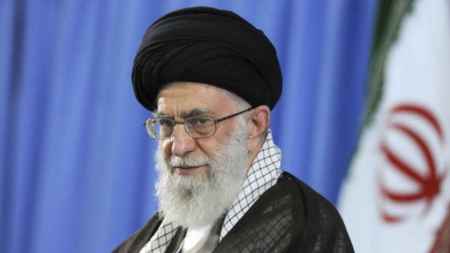
Despite the guidelines of the nuclear deal and contrary to President Obama’s claim that Iran will temper its foreign policy, Iran’s Supreme Leader, Ayatollah Ali Khamenei, is actively transforming the Islamic Republic’s Revolutionary Guard Corps’ operation. This will have significant impact on regional geopolitics and US national security.

The Islamic Republic used to deploy the Quds Force, which has been designated as a supporter of terrorism by the State Department and is a paramilitary arm of Iran’s Islamic Revolutionary Guards. Its purpose is to engage in irregular warfare operations, extraterritorial interventions, foreign policy missions, and interference in the affairs of other countries. The Quds Force has an estimated 10,000 to 15,000 personnel.

Recent developments clearly indicate that Iranian leaders are transforming the whole Revolutionary Guard Corps (IRGC) into an organization that operates like the Quds Force in order to achieve Iran’s Islamist, ideological, geopolitical and strategic goals, as well as its expansionist objectives.

Unlike the Quds Force, the IRGC has an estimated 100,000-200,000 military personnel. IRGC also funds, arms, trains, and controls other domestic and foreign militia groups such as Iran’s paramilitary Basij militia, which has approximately 90,000 personnel, Hezbollah, with an estimated 20,000-30,000 fighters, as well as several other Shiite militia groups in Iraq, Yemen, and throughout the region.

Iranian news media outlets used to downplay the  IRGC’s role in other nations. But recently, Iran’s official news agency, Fars news, reported that several members of the Revolutionary Guard — including Mostafa Sadrzadeh, Milad Mostafavi, and Brigadier General Reza Khavari, the senior commander of IRGC’s Fatemiyoun Division — were among other fighters who were killed in the northern Syrian city of Aleppo. So far more than 100 IRGC fighters have been killed in Syria.

Iranian media and officials once characterized IRGC involvement in Syria as limited to advisory roles, providing tactical assistance, engaging in strategic planning, and providing intelligence.

But in the last few weeks, reports of public funerals have risen, putting the Quds Force in the public eye.  Even the Supreme Leader has become more public. He tweeted about one of the Iranian fighters who died in Syria, posted a picture of him with the “martyred” family, and pointed out that “Gen. Hamedani devoted the final years of his fruitful life to fighting against anti-Islam Takfiris and fulfilled his martyrdom wish in the same front.”

Iran is increasing the amount of its IRGC fighters in Syria, with a concentration of forces in the critical cities of Allepo, Latakia, and Damascus, to prevent the fall of these strategic locations to the opposition.

While Iranian leaders project the image that they are fighting the Islamic State, Iranian forces are not positioned close to any IS stranglehold. Instead, they appear to be battling Syrian rebel groups, including the Free Syrian Army, in an attempt to force them to retreat, preventing them from capturing more territories in Allepo, Latakia and Damascus.

There are several reasons behind this tactical and IRGC organizational shift. First of all, the policy of the Obama administration is to appease Iran. This is made clear by its weak stance toward Iran. This allows Iran’s interventionist operations to be strengthened, and has empowered and transformed Tehran’s military organizations.

Secondly, The Islamic Republic pushed for Russia’s military assistance and involvement in Syria. The setbacks that Assad’s army and the Quds Force encountered in early 2015, mainly due to rise of the Islamic State and rebel groups advancements, propelled the Iranian Revolutionary Guard Commander Qassem Soleimani to visit Putin and ask for military help.

Nevertheless, Russia’s military superiority and interventions in Latakia did overshadow and bring into question Iran’s influence in Syria. By resorting to the IRGC and public acknowledgments of Iranian fighters operating on the ground in Syria, the Islamic Republic strives to reassert its presence in Syria.

In addition, the increasing Russian airstrikes are coordinated with the rising deployment of IRGC fighters on the ground. This inevitably will lead to a rise in Iranian casualties. Throughout these shifts, Assad has become increasingly dependent on Iran’s IRGC and Russia.

Furthermore, before the rise of the Islamic State, Iran played down its military role in the region because Tehran did not have a legitimate excuse to justify its presence in Syria. Iranian leaders were also worried about a direct confrontation with the West and other regional powers. They attempted to prevent the scuttling of nuclear negotiations. But after the nuclear deal was reached, and after the Islamic State grabbed global headlines, the Islamic Republic’s policy shifted in order to transform the IRGC’s function.

In the pursuit of hegemonic ambitions, Iran seizes any opportunity to reassert its regional supremacy, power and preeminence. By transforming the IRGC into a foreign offensive and interventionist force in other countries, by essentially making IRGC a regional military empire, and by announcing publicly that IRGC troops are present in Syria, Iran is demonstrating its hegemonic, Islamist, and powerful role in the region.

Although some policy analysts and scholars argue that the increasing death toll of Iranian fighters might change the IRGC’s decision to support the Syrian dictator, it is not likely that there will be any change in Iran’s policy of backing Assad. Tehran’s stakes in keeping Assad’s regime in power are high. Iran can afford several more years of assistance for the Syrian army and will continue to provide military, financial, advisory and intelligence support.

In closing, it is clear that the Islamic Republic is transforming the whole ideological and militaristic empire of the IRGC into an interventionist force which will operate in foreign countries for the purpose of fulfilling expansionist and Islamists objectives.

Nuclear Agency Says Iran Worked on Weapons Design Until 2009

December 2, 2015

Nuclear Agency Says Iran Worked on Weapons Design Until 2009, New York Times

(Please see also, Iran threatens to walk away from nuke deal. — DM)

[W]hile the International Atomic Energy Agency detailed a long list of experiments Iran had conducted that were “relevant to a nuclear explosive device,” it found no evidence that the effort succeeded in developing a complete blueprint for a bomb.

In part that was because Iran refused to answer several essential questions, and appeared to have destroyed potential evidence in others.

**********************

VIENNA — Iran was actively designing a nuclear weapon until 2009, longer than the United States and Western intelligence agencies have publicly acknowledged, according to a final report by the United Nations nuclear inspection agency.

The report, based on partial answers Iran provided after reaching its nuclear accord with the West in July, concluded that Tehran conducted “computer modeling of a nuclear explosive device” before 2004. It then resumed the efforts during President Bush’s second term and continued them into President Obama’s first year in office.

But while the International Atomic Energy Agency detailed a long list of experiments Iran had conducted that were “relevant to a nuclear explosive device,” it found no evidence that the effort succeeded in developing a complete blueprint for a bomb.

In part that was because Iran refused to answer several essential questions, and appeared to have destroyed potential evidence in others.

The report, issued here Wednesday evening to the 167 countries that make up the board of the agency, is intended to complete a decade-long attempt to determine what kind of progress Iran made toward the technological art of designing a warhead that could fit atop a nuclear missile.

The completion of the report is one of the steps that Iran had to take — along with dismantling centrifuges and shipping nuclear fuel out of the country — before sanctions will be lifted under the nuclear deal.

Mr. Obama and his secretary of state, John Kerry, concluded this year that it was more important to secure a deal that will, if carried out fully, prevent Iran from gaining the material to build a bomb for at least 15 years than making it admit to past activities. So, the report’s publication allows the deal to go through, no matter how definitive or inconclusive the final result.

But Iran’s refusal to cooperate on central points could set a dangerous precedent as the United Nations agency attempts to convince other countries with nuclear technology that they must fully answer queries to determine if they have a secret weapons program.

The agency’s bottom line assessment was that Iran had a “coordinated effort” to design and conduct tests on nuclear weapon components before 2003 — echoing a United States national intelligence estimate published in 2007 — and that it had conducted “some activities” thereafter.

“These activities did not advance beyond feasibility and scientific studies” and the acquisition of technical capabilities, the agency concluded. The efforts ended “after 2009,” or just as Mr. Obama was taking office and accelerating the sanctions and cyber sabotage program against Iran’s nuclear facilities that ultimately brought Iranian officials to the negotiating table.

Tehran gave no answer to one quarter of the dozen specific questions or documents it was asked about, leaving open the question of how much progress it had made.

The report, titled “Final Assessment of Past and Present Outstanding Issues Regarding Iran’s Nuclear Program,” will not satisfy either critics of the nuclear deal or those seeking exoneration for Iran. Instead, it draws a picture of a nation that was actively exploring the technologies, testing and components that would be needed to produce a weapon someday, without coming to a conclusion about how successful that effort was.

The agency’s director, Yukia Amano, said last week that the document would not be “black and white,” and that assessment proved correct.

Nothing in the report suggests that Iran will prevent the I.A.E.A. from monitoring its production of nuclear fuel for the next decade and a half, the crucial element of the July agreement. But Iran’s refusal to answer some of the questions also does not portend well for its transparency about its activities.

At Iran’s Parchin complex, where the agency thought there may have been nuclear experimental work in 2000, the agency said “extensive activities undertaken by Iran” to alter the site “seriously undermined the Agency’s ability” to come to conclusions about past activities.

Diplomats familiar with the compilation of the report said that they met “experts” in Iran, but would not say if they met the leader of the effort, Mohsen Fakhrizadeh. (Other diplomats said Mr. Fakhrizadeh was definitely not among those the inspectors met.) One diplomat said Iran had said it feared the scientists could be assassinated if they were identified. The agency appeared to have visited two laboratories.

Time and again, the agency seemed close to rejecting Iranian arguments that its experimentation was for civilian purposes. The inspectors found that Iran’s nuclear program was “suitable for the coordination of a range of activities relevant to the development of a nuclear explosive device” and that its experiments have “characteristics relevant to a nuclear explosive device.”

In one or two areas, notably a document provided by Western intelligence agencies indicating that Iran was looking at how to make uranium metal, a step needed for a weapon, it found “no indication of Iran having conducted activities” related to the document.

Recently, as the report’s publication approached, Iran’s position of complete denial that it had sought a bomb seemed to soften. In October, a former Iranian president, Ali Akbar Hashemi Rafsanjani, told journalists in Tehran that the nation had considered making nuclear arms during its war with Iraq in the 1980s but backed away.

“We sought to have that possibility for the day that the enemy might use a nuclear weapon,” he was quoted as saying. “That was the thinking. But it never became real.” He said nothing about what happened up to 2004 or the more sporadic efforts beyond.

The issues the I.A.E.A. addressed in Wednesday’s report date back a decade. Starting around mid-2004, thousands of pages of detailed evidence of Iran’s suspected research on how to design a weapon were collected by intelligence agencies in the United States, Israel and Europe, and eventually turned over to the agency’s inspectors here in Vienna.

Some of the evidence came from a laptop computer smuggled out of Iran by a person American and German officials identified as an Iranian technician, who had access to some of the most sensitive results from two secret Iranian nuclear projects. Both appeared related to different technologies needed to design a nuclear warhead, including the vital process of building a detonation system to fit inside the nose cone of Iran’s Shahab-3 missile, Persian for shooting star.

Iran claimed that the documents were fabrications, part of a Western conspiracy to set the groundwork for bombing the country’s nuclear facilities or overthrowing the government. The technician apparently never made it out of the country; he remained in Iran after sending the laptop out with his wife and family.

“We never figured out if he was imprisoned or executed,” a former intelligence officer involved in the operation said in an interview in 2008.

The year before that interview, however, the American intelligence community had warned the Bush administration of a surprising finding: While Iran once had a full-scale weapons development effort underway, it had suspended the project sometime in late 2003, shortly after the American invasion of Iraq.

“Prior to 2003 they had a full-scale Manhattan Project,” said Gary Samore, Mr. Obama’s top nuclear proliferation expert in the first term. After that, he said, the effort was sporadic, even as Iran pressed ahead to build the facilities to produce uranium fuel — the program that was rolled back and frozen by the agreement reached in July.

Even after the 2007 report, though, I.A.E.A. inspectors pressed Iran to address the questions raised in the documents. In 2008, the agency’s chief inspector gathered officials from around the world into a large auditorium here and displayed the evidence to them. This included, memos signed by Mr. Fakhrizadeh, the elusive academic who ran the program for the Islamic Revolutionary Guards Corps, and Iranian videos appearing to show how to detonate a weapon in an “air burst,” much as the bomb exploded high over Hiroshima, Japan, in 1945.

In 2011, frustrated that Iran had failed to honor several agreements to answer questions and turn over documents, the atomic agency published a list of a dozen issues — “possible military dimensions,” in bureaucratic jargon — that it had to clear up before it could close Iran’s file.

But as the deal got closer last spring, Mr. Obama and Mr. Kerry had to make a crucial decision: whether it was worth jeopardizing the deal by insisting that Iran must admit to its past activities. From all indications since then, the president seemed to have decided it was more important to get commitments about limiting future activities than forcing Iranian officials to admit to a past the country insists never happened.

Mr. Kerry, pressed on the question of Iranian disclosure of past activities by Judy Woodruff on the “PBS NewsHour,” said: “They have to do it. It will be done. If there’s going to be a deal, it will be done.” But weeks later, he said United States intelligence agencies already had “perfect knowledge” of Iran’s activities, suggesting that a public confession was not necessary.

The result was a carefully designed diplomatic compromise. Iran had to meet deadlines to turn over documents, but the agreement did not specify how complete the disclosures had to be, whether important scientists had to be interviewed or whether inspectors had to be allowed into the sensitive research sites, including some universities, where the work happened.

Obama’s $150 Billion ‘Signing Bonus’ To Iran Hits Legal Snag

December 2, 2015

Obama’s $150 Billion ‘Signing Bonus’ To Iran Hits Legal Snag, Jewish Business News, December 2, 2015

Iran's President Hassan Rouhani smiles while replying to a question during a news conference on the sidelines of the 69th United Nations General Assembly at United Nations Headquarters in New York September 26, 2014. REUTERS/Adrees Latif

Iran’s President Hassan Rouhani smiles while replying to a question during a news conference on the sidelines of the 69th United Nations General Assembly at United Nations Headquarters in New York September 26, 2014. REUTERS/Adrees Latif

As part of July’s nuclear deal, President Barack Obama agreed to release Iranian assets that have been frozen in US banks since the takeover of the US Embassy in Tehran in 1979. But Shurat HaDin – Israel Law Center, a non-profit legal assistance group based in Tel Aviv, has sent a letter to 11 American banks warning them that releasing the money now would be a violation of a current US court order intended to compensate victims of Iran-sponsored terrorism.

The banks addressed in the letter are believed to be holding frozen Iranian assets, and awaiting certification by the administration than Iran has met certain preliminary benchmarks for the release of that money.

US courts, however, have awarded judgments to a number of American families against the Iranian government as victims of terrorism perpetrated by Iran-sponsored terror groups such as Hamas and Hezbollah.

One such case dates back to Sept. 4, 1997, when Hamas executed triple suicide bombings on the Ben Yehuda Street pedestrian mall in Jerusalem. The attack killed five Israelis and severely injured a number of Americans.

Families of those Americans injured in the bombing filed suit against the Iranian regime for damages. Iran is a financial and military patron of Hamas. The case, Rubin v. The Islamic Republic of Iran, was decided in favor of the plaintiffs. Yet previous efforts to attach certain Iranian assets, notably museum artifacts being repatriated to Iran, have failed. A number of courts have ruled that historical artifacts are not exempt from sovereign immunity, and thus cannot be seized to make payment.

Cash, however, appears to be another matter.

On Oct. 26, the plaintiffs obtained a Citation to Discover Assets in the federal district court in the Northern District of Illinois. The granting of this proceeding takes the plaintiffs’ case one step further, in that it permits them to discover what assets the Iranian government has frozen in the U.S., for the purposes of collecting the judgment against them.

“Because Iran hired counsel in the antiquities proceeding in Chicago, we had the chance to serve their attorneys with the citation. As a result we can act to restrain the banks from releasing funds,” says Nitsana Darshan-Leitner, director of Shurat HaDin.

Those accounts are not a matter of public record. This has led to some confusion about the amount that could actually end up being repatriated to the Iranian government under the terms of the deal.

Shurat HaDin’s letter to the 11 US banks states, “You are hereby warned that all accounts maintained by your financial institution at any of its branches in the name of Iran, the Central Bank of Iran, the Naftiran Intertrade Company, the National Iranian Oil Company, the National Iranian Tanker Company or any other agency or instrumentality of Iran are restrained and subject to a lien in favor of my clients under United States law.”

Shurat HaDin notes that, to date, $43 billion has been awarded to US victims of Iranian-sponsored terror, and that if that money leaves the country, there is little to no chance that those claims will ever be paid.

For Darshan-Leitner, this isn’t just a legal matter — it’s a moral one.

“They want to ensure that what happened to these people doesn’t happen to other innocent families,” she says. “We all understand that allowing these frozen funds to be returned to Tehran ensures that terror groups like Hamas and Hezbollah will have the resources to continue their extremist violence against Jews and Westerners. After Paris, could you imagine providing a $100 billion to ISIS (Islamic State)? This is the exact same situation.”

IAEA’s PMD Report Is Being Written In Negotiation With Iran, Not Independently

November 29, 2015

Statements By Iranian Deputy Foreign Minister Abbas Araghchi Indicate: IAEA’s PMD Report Is Being Written In Negotiation With Iran, Not Independently, MEMRI, November 27, 2015

(Here’s a link to a July 16, 2015 interview in which Kerry stated,

“The possible military dimensions, frankly, gets distorted a little bit in some of the discussion, in that we’re not fixated on Iran specifically accounting for what they did at one point in time or another,” Kerry said. “We know what they did. We have no doubt. We have absolute knowledge with respect to the certain military activities they were engaged in. What we’re concerned about is going forward. It’s critical to us to know that going forward, those activities have been stopped, and that we can account for that in a legitimate way.”

— DM)

Araghchi’s interview indicates that Iran has been following the writing of the IAEA report and has been submitting comments to the IAEA and the P5+1, and has in fact been exerting constant pressure on Amano and on the P5+1 in order to ensure that the PMD dossier be closed and the report be worded unequivocally and to Iran’s complete satisfaction.

********************

In a November 25, 2015 interview on Iranian television, Iran’s deputy Foreign Minister Abbas Araghchi said that he recently held talks with IAEA director-general Yukiya Amano on “closing the Possible Military Dimension (PMD) dossier”, and the latter filled him in about “some of the points he is to present” in the upcoming IAEA report on this issue. Araghchi noted that he had also spoken with the Americans and Europeans in Vienna, and had understood from them that “they too were heading towards closing the PMD dossier.” [1]

25842Abbas Araghchi (Image: Press TV, Iran)

It should be recalled that Ali Akbar Salehi, the head of Iran’s Atomic Energy Organization and a member of the nuclear negotiation team, said in a June 21, 2015 interview on Iranian television that Iran had “reached understandings with the IAEA” on the PMD issue, and added: “Now there is political backing [of the P5+1], and the [PMD] issue should be resolved.” He stated further: “By December 15, [2015], at the end of the year, the issue [of the PMD] should be determined. The IAEA will submit its report to [its] board of governors. It will only submit it. The Joint Comprehensive Plan of Action will continue independently of the results of this report. We have reached understandings with the IAEA… The technical issues are now being resolved in a political framework. They have set a time frame and, God willing, the issue must be resolved by December 15.” In response to the interviewers’ remark that the IAEA has “a bad record” (in terms of cooperating with Iran), Salehi stated: “In short, they [the IAEA] will be the losers. As I have said, the issue has received political backing. The work of [the IAEA] must be reasonable. They cannot do anything unreasonable. When there is no political backing, they do whatever they want, but now there is political backing, and the issue should be resolved.”[2]

In a recent news conference, Amano said that that “the report will not be black and white,” and that the PMD issue “is an issue that cannot be answered by ‘yes’ or ‘no'”.[3]

In his November 25 interview, Araghchi said: “In the next few days our experts will be in contact with the IAEA experts, and if necessary they will bring up additional points. I may also meet with Amano again… They [our experts] told us there were some weak points in the IAEA report and I commented on them. I am optimistic that they will be corrected…”

He added: “I don’t think there is any plan behind the scenes to leave the PMD dossier open. We have not received any indications that there is a plan [of this kind] behind the scenes. In any case I provided the Americans and Europeans with the necessary comments.”

He stated further: “On December 1, 2015, we expect this report to be published and submitted to the [IAEA] Board of Governors. A special board meeting has been scheduled for December 15, 2015, in which a resolution on the IAEA report will be taken. During this time [until December 15], the P5+1 group will submit a [draft] resolution [to the IAEA Board of Governors] with the objective of  closing the PMD dossier, and [this draft resolution] will come up for a vote in its December 15, 2015 meeting. Also, on December 7, 2015, there will be a meeting of the JCPOA Joint Commission in Vienna, attended by [representatives of] Iran and the P5+1, in which we will discuss the P5+1 [draft] resolution on closing the PMD. We have taken all the necessary steps so that on December 15, 2015, [the IAEA Board of Governors] will resolve to close the PMD dossier and this issue will be put to rest.”

According to Araghchi, “if the [IAEA] Board of Governors does not close the PMD dossier, the process of implementing the JCPOA will stop. Hence, the P5+1 must decide between the PMD and the JCPOA… In the past, the P5+1 chose the JCPOA. The [Supreme] Leader [Khamenei]’s letter on Iran’s implementation of the nuclear steps [a document published by Khamenei in October 21 detailing 9 additional conditions for Iranian compliance with the JCPOA][4] likewise emphasizes that they must choose between the JCPOA and the PMD.”[5]

According to Iran’s Press TV news agency, Araghchi said in the same interview: “If Yukiya Amano or the [IAEA’s] board of governors will present their report in such a way that it does not meet the stipulated commitments, the Islamic Republic of Iran will also stop [the implementation of] the JCPOA.”[6] In this statement, Araghchi implies that Iran has received commitments that the PMD dossier will be closed.

Araghchi’s interview indicates that Iran has been following the writing of the IAEA report and has been submitting comments to the IAEA and the P5+1, and has in fact been exerting constant pressure on Amano and on the P5+1 in order to ensure that the PMD dossier be closed and the report be worded unequivocally and to Iran’s complete satisfaction.

It should also be recalled that the inspection of the Parchin military facility, carried out to determine whether Iran’s program had military dimensions, consisted of Iran submitting samples that were not collected in the presence of IAEA inspectors and were later submitted to the IAEA, so that their origin cannot be absolutely determined.

As for the steps currently being taken by Iran to comply with the JCPOA, Araghchi clarified that “none of the steps so far taken by Iran in this matter contravenes the [Supreme] Leader’s letter…  and, as far as I know, [we] are still in the stage of dismantling the inactive centrifuges.” (Both Iranian Atomic Agency Spokesman  Behrouz Kamalvandi and Iranian National Security Council secretary Ali Shamkhani have indeed said that Iran has transferred inactive centrifuges from one facility to another, but no active centrifuges have been dismantled).[7]


Endnotes:

[1] ISNA (Iran), November 25, 2015.

[2] See MEMRI TV Clip No. 5014,  We Have Reached Understandings with the IAEA about the PMD; Technical Issues Are Now Being Resolved on a Political Level, July 21, 2015.

[3] Reuters.com, November 26, 2015.

[4] See MEMRI Daily Brief No.65, MEMRI: ‘The Emperor Has No Clothes,’ October 30, 2015.

[5] ISNA (Iran), November 25, 2015.

[6] Press TV (Iran), November 26, 2015.

[7] Kamalvandi: ISNA (Iran), November 3, 2015; Shamkhani: Fars (Iran), November 10, 2015.

Iran threatens to walk away from nuke deal

November 26, 2015

Iran threatens to walk away from nuke deal, Washington ExaminerPete Kasperowicz, November 26, 2015

A top Iranian official warned Thursday that Iran would stop its efforts to comply with the Iran nuclear agreement unless international inspectors stop their investigation into Iran’s past work on its nuclear program.

Under the deal, inspectors were instructed to examine the “possible military dimensions” of Iran’s nuclear program, or PMDs.

International Atomic Energy Agency chief Yukiya Amano is expected to release a new report on Iran’s nuclear program on Dec. 1. Iran’s deputy foreign minister, Seyyed Abbas Araqchi, warned that if the Dec. 1 report doesn’t close the file on PMDs, Iran will walk away.

“In case Yukiya Amano or the Board of Governors presents their report in such a way that it does not meet the stipulated commitments, the Islamic Republic of Iran will also stop [the implementation of] the JCPOA,” he said, according to PressTV, Iran’s state-owned news service.

The JCPOA is the Joint Comprehensive Plan of Action, informally known as the Iran deal.

Iran’s new threat could be a significant problem for the implementation of the deal. On the same day Araqchi spoke, Amano delivered remarks in Vienna in which he said it’s still not clear how much undeclared nuclear material might exist in Iran.

“As my latest report on safeguards implementation in Iran shows, the agency continues to verify the non-diversion of nuclear material declared by Iran under its Safeguards Agreement,” IAEA Director General Yukiya Amano said in a prepared statement in Vienna, Austria.

“But we are not in a position to provide credible assurance about the absence of undeclared nuclear material and activities in Iran, and therefore to conclude that all nuclear material in Iran is in peaceful activities,” he added.

Amano has made similar remarks all year, and it’s a strong sign that Iran has yet to fully cooperate with inspectors under the Iran nuclear agreement.

Satire(?) | Obama declares Islamophobia a felony hate crime

November 23, 2015

Obama declares Islamophobia a felony hate crime, Dan Miller’s Blog, November 23, 2015

(The views expressed in this article are mine and do not necessarily reflect those of Warsclerotic or its other editors. — DM)

Phobia is an abnormal, irrational fear. As now defined, however, Islamophobia is merely “prejudice against, hatred towards, or fear of the religion of Islam or Muslims.” Rational “Prejudice,” “hatred” and “fear” of Islam are, therefore, now Islamophobic.

islamophobe1

Obama often proclaims that there is no reason to fear Islam —  the religion of truth and love — and that He welcomes it in His America. It is permissible, indeed even patriotic, to fear and oppose the Non-Islamic Islamic State, but to fear and to oppose Islam runs counter to American values and is, therefore, worse than merely vile.

By virtue of His constitutional obligation under Article II to do whatever He damn well pleases, He has determined that anyone who criticises Islam is guilty of felony hate speech, which has long been recognized not to be entitled to protections under the First Amendment. To think Islamophobic thoughts leads to hate speech and must also be criminalised as hate thought.

Once again, Obama shows that He is a great leader — not a mere follower — in America’s quest finally to become a great nation of which He can finally be proud. An article by Jonathan Turley is titled Forty Percent of Millennials Favor Censorship of Offensive Speech By Government. Turley, a liberal in the old-fashioned sense of the word and among the few “liberals” to remain strong defenders of free speech, notes that

I have long argued that the West appears to have fallen out of love with free speech, which is more often viewed as a rising scourge rather than a defining value in some countries. A recent poll of the Pew Research Center shows just how many people we have lost to those calling for greater censorship and criminalization of speech. It is not surprisingly more prevalent with younger age groups, though Democrats are almost twice as likely favor censorship than Republicans. The largest (and most alarming) group is the millennials — 40% of whom favor government censorship of speech offensive to minority groups. [Emphasis added.]

Clearly, Obama is — as always — on the right side of history, leading from the front.

obama_muslim3

Here is the text of Obama’s address to the nation, to be delivered on Thanksgiving Day.

My fellow, blessedly multicultural, Americans, Thanksgiving is the day we all now understand was forced upon us to commemorate the vile treatment of Native Americans by settlers — just as Israeli settlers now abuse native Palestinians. To treat Muslims as we treated Native Americans, as Israel treats peaceful Palestinians — and indeed as Christian Crusaders just a short time ago treated peaceful Muslims  — is the worst type of anti-American prejudice I can imagine. Therefore, under the powers vested in Me under the U.S. Constitution, I hereby decree that anyone — no matter who or where and even in the halls of Congress — criticises the Religion of Peace and Love shall be tried and summarily convicted of felony Hate speech.

Some may say — falsely — that this is a drastic and unwarranted measure. It is neither. Islamophobia is intensely harmful to Muslims fleeing persecution by Christians and Jews abroad. It may even deter Muslims from coming to My America to enjoy the benefits of liberty and freedom as ordaned under the Constitution. They all desire to be assimilated into America and to live here with peace and honour killings in accord with our traditions of freedom and justice; traditions which are envied by those fleeing persecution and which they yearn to enjoy in My America. To persecute innocent Muslims here, as they are persecuted abroad is a disgrace; as long as I am your President I shall not permit it.

The spectre of hate thought also now darkens America and leads to hate speech against Muslims everywhere — even those in The Islamic State Republic of Iran, with which I successfully negotiated an historic deal to eliminate the spectre of nuclear weapons in, and to bring peace to, most of the Middle East.

Just as I have decreed that hate speech against Muslims shall be punished, so must hate thought. Accordingly, all candidates for public office in My America will now be required to answer questions seeking to probe their deepest unspoken, but dreadful, anti-Islamic thoughts. The Council on Islamic-American Relations will prepare the questions and agents of the Federal Bureau of Investigation will ask them. Those found to harbour anti-Islamic  — and therefore un-American — thoughts will be declared unfit for, and disqualified from holding, public office. The First Amendment, of course, provides no protection for freedom of thought; even if it did, it would provide no protection for hate thought.  This is necessary if My America is, once again, to lead the free world.

(Wait for vigorous applause.)

Thank you. Now, for your Thanksgiving pleasure, here is a tribute to Me by my favorite vocal group, the Muslim Brotherhood Chorus.

Was Thucydides right about democracies in peril?

November 20, 2015

Was Thucydides right about democracies in peril? National Review, Victor Davis Hanson, December 7, 2015 print issue

President Obama is not so much complacent as an appeaser of radical Islam — an identification he refuses to employ. Yet the president condemns Christianity by reminding us at prayer breakfasts of its violent Crusader roots, or he lists false glories of the Muslim world, as in his Cairo speech. Obama’s rhetoric of the last seven years has been predicated on the false assumption that his own supposed multicultural fides and his father’s Islamic connections would make him the perfect Western emissary to defuse radical Islam. This has not come to pass, as we see from the recent Paris mass murders. Never has the Middle East been more unhinged and never has the U.S. been more disliked by it.

During the Obama administration, radical Islam finally has grasped that the way to destroy Western societies is to employ Western political correctness against them, leading eventually to their paralysis — as long as the war is waged carefully, insidiously, and over decades.

************************

The historian Thucydides felt that democracies were characteristically volatile and yet complacent when existential dangers loomed on the horizon. But once faced with impending doom — such as the near collapse of Athens after the disaster of the Sicilian Expedition — they usually proved the most capable of marshaling the entire population for war. Accordingly, the recent ISIS terrorist strike in Paris — a result of lax security and failure to monitor borders — even at the eleventh hour should wake up the French to the existential danger they face.

America’s wars of the 20th century seem to confirm that ancient wisdom. A complacent, naïve, and isolationist United States came late to both world wars. Nonetheless, once engaged, the United States almost immediately amassed huge armies ex nihilo and produced unprecedented quantities of arms to ensure Allied victories in both conflicts. No other power fought in so many theaters of battle to such effect and with such consideration for reducing its own casualties.

The pattern of the ensuing Cold War was hauntingly similar: initial Western-democratic naïveté about the vicious nature of the erstwhile wartime ally the Soviet Union, precipitate post-war disarmament — and finally, during the Korean War, an abrupt remaking of the American military, characterized by the development of a sophisticated deterrent strategy that kept the global, Communist Soviet Empire contained until its collapse in 1989.

Ostensibly, that same pattern of initial blinkered indifference and lack of attention ended by sudden reawakening and panicked mobilization marked the American response to radical Islam. The fall of the shah of Iran, the subsequent Khomeini revolution, and the appeasement embraced by the Carter administration between 1979 and 1980 — all in the depressed landscape of the post-Vietnam era — illustrated how the United States was initially baffled by and indifferent to the rise of radical Islam.

At first the U.S. assumed that radical Islam was primarily an aberrant Iranian and Shiite phenomenon uncharacteristic of our Sunni and Wahhabist friends in the Gulf. Some Cold War–era analysts of the time believed that the Iranians were analogous to Marxist-inspired Palestinian terrorists of the 1960s and 1970s, even though the latter were secular and were funded and often trained by Moscow and its appendages. Later, leftists sought to cite proof of American culpability — colonialism, neo-imperialism, racism, capitalist exploitations, etc. — that might in some fashion contextualize the seemingly illogical anger of the Muslim world toward the United States.

In the 20-year interval between the Tehran hostage-taking and the cataclysmic September 11 suicide attacks, radical Islamists, of both the Shiite and Sunni varieties, declared a veritable war against the West in general and in particular the United States — most notably with the Beirut Marine-barracks/U.S.-embassy bombing (1983), the first World Trade Center bombing (1993), the Khobar Towers bombing (1996), the East Africa embassy bombings (1998), and the attack on the USS Cole (2000). But in these two decades before 9/11, radical Islamists, especially those of al-Qaeda organized by Osama bin Laden, were never directly confronted by the United States in any lethal way. Islamists were explained away as either an irritant incapable of inflicting existential damage given their lack of a nation-state arsenal or a passing phenomenon in the manner of former Middle East terrorists of the sort led by Abu Nidal against Western and especially Israeli interests.

There were grounds to be baffled at first, perhaps in the fashion of bewilderment at Hitler’s fanaticism in 1936 or Stalin’s betrayal of his wartime Western allies in 1946. After all, in the 1930s and 1940s, the Islamic Middle East had been enamored of secular fascism inspired by Nazi Germany. Subsequent Pan-Arabism, Baathism, Soviet-inspired Communism, and Palestinian nationalism were likewise mostly secular in nature. And these ideologies similarly proved transient manifestations of the Middle East constant of tribalism, poverty, statism, authoritarianism, anti-Semitism, and religious and cultural intolerance.

Why, then, at the end of the 20th century, had terrorist movements reverted back to seventh-century fundamentalism? Why was it that the wealthier the petroleum-rich Middle East became, the more globalized — and Western-oriented — communications, entertainment, and popular culture grew, the more knowledge that the Islamic world gained of relative global wealth and poverty, and the more the post–Cold War United States proved postmodern in its attitude about the causes and origins of war, all the more did radical Islamists despise the West? Islamists apparently were confident either that Western economic and military power was a poor deterrent against their own supposedly ancient martial courage or that such material and technological power would never fully be unleashed by confused elites uncertain about their own degree of culpability for the mess they found themselves in.

In any case, deterrence was lost. A 20-year path of appeasement of radical Islam inexorably led to 9/11. Then, as with past aroused democracies, 2001 seemingly changed everything, as the West seemed to gear up to restore its security and strategy of deterrence. Almost every aspect of American life was soon altered by just a handful of Islamist planners in Afghanistan and their suicide henchmen in hijacked planes, even as economic recession followed the 9/11 attacks. Intrusive new security standards changed forever the way we boarded airline flights, took the train, and visited public buildings. The Patriot Act accorded intrusive powers of surveillance to government agencies to monitor communications that fit particular criteria learned from prior terrorist attacks.

These Patriot Act measures and their affiliated protocols played a key role in ensuring that in the subsequent 14 years  there was no attack on the United States analogous to 9/11, despite horrific but isolated killings such as the Fort Hood massacre and the Boston Marathon bombing. A cultural war erupted over the causes of Islamic violence, with both Republican and Democratic administrations seeking some magical formula that might reassure the world’s billion Muslims, in and outside the West, that the United States did not see any innate connection between Islam and Islamist terrorism. Such a profession was supposed to remind the Islamic world to police its own, on the assumption that there were no logical grounds for any Muslims to hate the U.S. The age-old antithesis — that the West did not much care what the non-West thought of it as long as it understood preemptory attacks against the West were synonymous with the aggressors’ own destruction — was apparently unpalatable to a sophisticated and leisured public that even after 9/11 did not see the Islamic threat as intruding into the life of their suburb or co-op.

How, then, is the supposed war on Islamic-inspired terror currently proceeding, especially in comparison with past U.S. efforts in World Wars I and II and the Cold War? At first glance, it appears the realists were correct that Islamism is hardly an enemy comparable to the Nazis or Soviets. First, other than the case of Iran after 1980, the terrorists still have not openly and proudly assumed the reins of a large nation-state with a formidable arsenal. Second, for all the talk of the spread of WMD, they have not staged a major nuclear, biological, or chemical attack. Third, fracking and horizontal drilling inside the United States, along with petroleum price wars among Middle Eastern exporters, crashed the price of oil, robbing terrorists of petrodollars and aiding Western economies.

That price drop — coupled with a supposed Western exhaustion with war after the experience of Afghanistan and Iraq — has fooled Westerners into thinking the Middle East is now less strategically important than it has been in the past, as if most of the world were becoming as self-sufficient in oil and gas as is the United States. Are the realists correct in reminding us that we still do not face from radical Islamic terrorists an existential threat analogous to those of the 20th century during World War II and the Cold War?

In the decade and a half after September 11, the Islamists have influenced Americans far more than we them — well aside from inflicting a level of destruction inside the United States, in New York and Washington, that neither Nazi Germany nor Soviet Russia was ever able to achieve. Everyday life has been radically altered, from using public transportation to entering a government building for minor business. Westerners are losing the propaganda war: While al-Qaeda and ISIS have matched their blood-curdling rhetoric with equally savage snuff videos, we have been emasculated by euphemisms. “Death to America” is matched by “workplace violence,” “man-caused disasters,” and “overseas-contingency operations.” Jihad is redefined by American-government officials as a personal spiritual odyssey and the Muslim Brotherhood as a largely secular organization. After the Danish-cartoon attacks and the Charlie Hebdo killings, fearful Westerners are voluntarily self-censoring in a manner that Islamists themselves do not have to enforce by direct coercion.

President Obama is not so much complacent as an appeaser of radical Islam — an identification he refuses to employ. Yet the president condemns Christianity by reminding us at prayer breakfasts of its violent Crusader roots, or he lists false glories of the Muslim world, as in his Cairo speech. Obama’s rhetoric of the last seven years has been predicated on the false assumption that his own supposed multicultural fides and his father’s Islamic connections would make him the perfect Western emissary to defuse radical Islam. This has not come to pass, as we see from the recent Paris mass murders. Never has the Middle East been more unhinged and never has the U.S. been more disliked by it. Westerners are as likely to join ISIS as reformed terrorists are to enlist in the fight against the jihadists in their midst.

In other words, the Islamist threat is so far unquenchable because it has the West’s number: Radical Islam understands that the more pre-modern it becomes, the more postmodern is the likely Western response — a situation analogous to a deadly parasite that does not quickly kill but slowly sickens a host that in turn scratches at, but does not kill, the stealthy tormenter. Obama has described ISIS as a “JV” organization and al-Qaeda as “on the run.” On the eve of the Paris attacks, he deprecated ISIS as “contained,” while Secretary of State John Kerry warned that its “days are numbered.” A supposedly right-wing video maker, not a pre-planned al-Qaeda assault, explained our dead in Benghazi. Such euphemism is not just symptomatic of political correctness and an arrogant assumption that postmodern Westerners have transcended the Neanderthalism of war, but also rooted in a 1930s-like fear of expending some blood and treasure now to avoid expending far more later.

The first decade and a half of the current phase of the Islamic war were characterized by insidious alterations in Western life to accommodate low-level but nonetheless habitual terrorist attacks. As long as the Islamists did not take down another Western skyscraper, blow up a corner of the Pentagon, or kill thousands in one operation, Westerners were willing to put up with inconvenience and spend trillions of dollars in blood and treasure on anti-terrorism measures at home and the killing abroad of thousands of Islamists from Kabul to Baghdad.

But conflicts that do not end always transmogrify, and the war on terror of 2015 is not that of 2001, much less that of 1979.

Time for now is on the Islamists’ side. Not if but when Iran will acquire nuclear weapons is the question. Not if but when ISIS strikes a major American city is what’s in doubt. As America abdicates from its role in the Middle East, Vladimir Putin creates an Iran–Syria–Hezbollah arc of influence, reassuring the terrified Sunni Gulf states that he is a far better friend — and could be a far worse enemy — than the United States.

More important, Russia, Iraq, and Iran — and the Gulf monarchies — could act in concert under the aegis of Putin and thereby control 75 percent of the world’s daily exports of oil. It is also conceivable that ISIS could fulfill something akin to its supposedly JV notion of creating a caliphate, given that it has already carved out a rump state from Syria and Iraq. A nuclear Iran could play the berserker role with Russia of a crazy nuclear North Korea cuddling up to China. Meanwhile, our new relationship with Iran makes it hard to partner with moderate Sunni states against ISIS, given that the Iranians enjoy the bloodsport that ISIS plays among both Westerners and Sunni regimes.

In short, on four broad fronts — the emergence of terrorist nation-states, the acquisition of nuclear weapons, the global reach of terrorists, and the ability to alter global economic contours — the Islamists are making more progress than at any time in the last 35 years.

Was Thucydides, whose notions of democracy were echoed from Aristotle to Winston Churchill, correct that democracies in the eleventh hour galvanize to meet existential threats?

So far, not this time. During the Obama administration, radical Islam finally has grasped that the way to destroy Western societies is to employ Western political correctness against them, leading eventually to their paralysis — as long as the war is waged carefully, insidiously, and over decades. In their various rantings, Osama bin Laden and his successor Ayman al-Zawahiri referenced the Western failure both to enact campaign-finance reform and to address global warming — topics not usually associated with the agendas of radical Islam. While ISIS mowed down Parisians, Al Gore was on the top of the Eiffel Tower doing a marathon webcast about the existential danger of climate change and prepping for a Parisian global conference that will now take place amid the detritus of a recent mass terrorist attack — all echoing President Obama’s assertion that the greatest danger to our security is carbon, not radical Islamic terrorism.

The war will be lost when listless and weak Westerners no longer realize that they are in a war but have largely become exactly what their enemies had envisioned them to be all along.