Posted tagged ‘Foreign Policy’

Op-Ed: Contemplating a US/Russia Alliance

February 16, 2016

Op-Ed: Contemplating a US/Russia Alliance, Israel National News, Ted Belman and Alexander Maistrovoy, February 16, 2016

Before Donald Trump’s blowout win in New Hampshire he shocked the world by saying he would allow the Russians to do the “dirty work” and would “let them beat the s*** out of ISIS also.”. Trump went further, “I have always felt that Russia and the United States should be able to work well with each other towards defeating terrorism and restoring world peace, not to mention trade and all of the other benefits derived from mutual respect,”

Putin, responded by saying: “He (Trump) says that he wants to move to another level of relations, to a deeper level of relations with Russia. How can we not welcome that? Of course we welcome it.”

The condemnation of Trump for his remarks was immediate but certainly not universal. Many American’s are beginning to see Russia in a new light.

Until the fall of the USSR, the 20th Century was dominated by an ideological struggle between American capitalism and Russian communism. But now that Russia has abandoned communism and the US is embracing socialism, as seen by the Sander’s victory in the New Hampshire primary, the two powers are more alike than ever before.

Now we have a different ideological struggle to contend with, namely a civilizational war between the Christian/Secular West and the Islamic Caliphate. They are inimical to each other. North America, Europe and Russia are natural allies in this struggle as they are different daughters of one civilization.

In the past, both Russia and the US have backed different Arab states or Muslim groups, including radical Islamists. The end result of this US/Russia enmity was to destabilize the ME and Europe and to allow an Islamic fifth column into America and Europe.

The reality is that Russia, Europe and the US desperately need each other. Together they can withstand the hydra of pan-Islamism with its countless heads (ISIS, al-Qaeda, Jabhat al-Nusra, Salafis, Muslim brothers, etc.), can stabilize the Middle East, the cradle of Islamic fanaticism and can stabilize Europe.

For Russia, the triumph of the Caliphate in any form will be a deadly threat to its “soft underbelly”: the Caucasus and Volga region with Tatarstan.

Penetration of Islamic militancy from Afghanistan into Central Asia means the appearance of the Islamists on the longest and vulnerable southeastern border of Russia.

From Europe’s point of view, a destabilized North Africa and Middle East is resulting in a mass migration of Muslims including radical Islamists which threaten to tear it apart and irreparably change it. This in turn will have dire consequences for both Russia and America.

Both US and Russia are not able to cope with the global “jihad” separately” especially when they are supporting different sides. Russia has no resources for a war against radical Islam made more difficult by western sanctions and pressure. The West, in spite of its material power, lacks the will needed to defeat such a savage and ruthless enemy.

Thus an alliance is imperative.

“New Middle East”

A new Middle East is in the making. It will not look like the “New Middle East” as envisioned by Shimon Peres.  Syria, Iraq and Libya are no more. Lebanon looks like it will also fracture due to the influx of 1.5 million Sunnis, either Palestinian or Syrian. Hezbollah Shia have been reduced from 40% to 25% of the population by this influx so expect a power struggle to ensue there.

Alawite Syria, a strong Kurdish state in the north of former Iraq and Syria, tribal unions in Libya, Druze enclaves in Syria, a Christian enclave in Lebanon and perhaps in Iraq, all will appear on the map of the new Middle East. They will all need the support, both militarily and diplomatically, of either the US or Russia. In this way, the west will be empowered to keep the radical Islamists out.

Russia already has supported the Kurdish PYD (Democratic Union Party) in northern Syria diplomatically (Kremlin insists on PYD’s participation in negotiations about the future of Syria) and by providing them with weapons. The US is also supportive of the Kurds but bas been restrained by Turkey’s insistence that the Kurds be denied independence.  If the US forms an alliance with Russia it no longer needs an alliance with Turkey.

The American embrace of the Muslim Brotherhood and Turkey must be seen as the aberration it is. Rather than support the Islamization of the Middle East and North Africa, America should fight it. Rather than embrace the Muslim Brotherhood and other Islamists, as Obama did, the US should embrace Russia.

Pressure could then be brought to bear on Turkey to change its Islamist allegiances and to allow greater autonomy to its 10 million Kurdish citizens who otherwise will want to join the newly formed Kurdistan.

The US, by destroying Qaddafi and Mubarak, greatly destabilized North Africa. By waging war against Assad, the US has destabilized the Middle East and Europe. What is needed now is that the US and Russia come together to strengthen President al Sisi of Egypt to enable him to defeat ISIS in Sinai and Libya. Russia should be invited back into Libya to assist in its stabilization.  Europe and Tunisia will also benefit from this stabilization as will African states to the south.

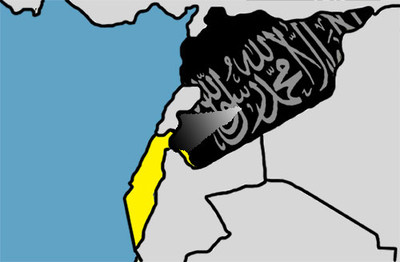
In addition, US and Russia should cut a deal for a political solution for Syria in which Syria is divided into three states based on ethnic lines; Alawite Syria in which Russia holds sway, Kurdish Syria which will join with Kurdistan in Iraq and a Sunni state amalgamating the Sunni areas of both Syria and Iraq.

Such a deal will involve cooperation between Russia, US, Turkey and Saudi Arabia. ISIS must be defeated and non-Islamist Sunnis must be put in charge. Saudi Arabia would have a major role in the creation and maintenance of such a state. It is not inconceivable that Jordan would in the end, amalgamate with this state given the number of Sunni refugees it is now host to. This state would serve as a bulwark to an expansionist Iran.

It is in the interest of Russia to placate Saudi Arabia so that Saudi Arabia will cut down on her oil production and allow the price of oil to rise. Saudi Arabia would be agreeable to doing so and to such a division of Syria if Russia would restrain Iran.

Iran

Today, Russia is the de facto ally of Iran and the US is a wannabe.  The Iranian star reached its zenith with the total capitulation of the US in the Iran Deal. Since then it’s been downhill all the way. Without the help of Russia they would have lost Syria as an ally and their connection to Hezbollah. But with that help, Russia is now calling the shots.

It wasn’t so long ago that Russia supported the sanctions on Iran and didn’t want to remove them because it meant the addition of Iranian oil to the world market and the weakening the already weak ruble. Kremlin couldn’t betray its ally but in fact (aside from rhetoric) will not object to a renewal of sanctions. This will save Russia from a powerful competitor in the energy market.

Moscow needs Iran primarily as a means to put pressure on the West but it can quite easily sacrifice it for the sake of strategic considerations. Iran is not a natural ally of Russian for it doesn’t have any historical or cultural connection similar to the connection both Serbia and Armenia have for example.

The View from the Kremlin

Since the 16th century, the main threat to Russia came from the West. Moscow was occupied by Poles in the 17th century and by Napoleon in the 19th century.  In 1941, the troops of the Wehrmacht came within a few kilometers of Moscow.  St. Petersburg was built by Peter Great to resist the invasion of the Swedes.

The collapse of the Soviet Union was a painful blow to Russia and the West took advantage of this collapse. The bombing of Serbia and recognition of Kosovo, the “color revolutions” in the former Soviet Union, NATO’s extension to the Baltic countries, and the constant hectoring of Russia on human rights served to undermine Russia and make her feel threatened. This formed the impetus for the revival of nationalism under the leadership of Vladimir Putin.

The US, Britain and France intervened in Libya in order to both destroy the Gadaffi regime and oust Russia.  Accordingly, they refused Russia’s mediation efforts.  Similarly they tried to oust Assad. But this time, Russia, who had lost its Mediterranean port in Libya was determined to keep its Mediterranean port in Syria.  After many years of death and destruction in Syria brought about by the desire of the US and Saudi Arabia to oust Assad, Assad was on his “death bed”. Russia and Iran doubled down on their efforts to support him. Russia supplied their air force and air defense radar systems and Iran provided more troops. As a result Assad has gained much ground and is in a much better negotiating position today.

During this period, Russia acquired Crimea from the Ukraine and supported an insurgency in eastern Ukraine. A majority of the population of both areas are Russian. The Russians didn’t understand why the West came to the defense of Ukraine. It’s impossible to believe that EU wanted to bring Ukraine into the EU given its large population and systemic corruption.  Moscow believes the West didn’t do so in order to protect the sovereignty of Ukraine but to weaken Russia.  Ukraine, after all, is the backyard of Russia, as Mexica is backyard of US and Corsica is backyard of France.

Last week Russia’s Prime Minister, Medvedev, urged a “more constructive and more cooperative relationship with Russia… I strongly believe that the answer lies with both more defense and more dialogue.”

Last week Henry Kissinger delivered a speech in Moscow in which he began:

“I am here to argue for the possibility of a dialogue that seeks to merge our futures rather than elaborate our conflicts. This requires respect by both sides of the vital values and interest of the other,”

And concluded,

“It will only come with a willingness in both Washington and Moscow, in the White House and the Kremlin, to move beyond the grievances and sense of victimization to confront the larger challenges that face both of our countries in the years ahead.”

Should the West want to pursue such an alliance, it must recognize Russia’s “Near Abroad” – its traditional zone of influence since the 18th century: Ukraine and Belarus, Crimea, whose history is inseparable from Russia, the Caucasus and Central Asia. Russia also seeks influence in Europe and in the Eastern Mediterranean. This is imperial policy but Russia is no longer obsessed with ideological madness.  Thus, it is possible to negotiate a rapprochement and to respect each other’s sphere of influence.

Israel is not an ally of Russia nor its enemy.  Israel and Russia agreed to respect each other’s spheres of interest in Syria. In addition, Moscow mediated in delicate situations between Israel and Hezbollah.  This model can be used on a global scale by the US.

It is of historical note that the Byzantium, otherwise known as the Eastern Roman Empire, fought a sustained battle against the Ottoman Turks, who had invaded, only to finally succumb in 1453.  The Turks changed the name of their capital city, Constantinople, to Istanbul.  The Ottoman Empire succeeded over the years in conquering more of Europe and finally laid an unsuccessful siege to Vienna in 1529. There followed 150 years of bitter military tension and attacks, culminating in the Battle of Vienna of 1683. This battle was won by the Holy Roman Empire of the German Nations in league with the Polish-Lithuanian Commonwealth thereby saving Europe from Islamic conquest.

What is needed today is a similar resolute stand by both east and west against the Islamic Jihad’s attempt to conquer Europe.

Will the old prejudices and enmity focused on Russia prevail over rational considerations and the instinct for self-preservation?

According to the Munich Accords just signed, perhaps not.

It now appears that Russia and the US have come to an agreement for the implementation of a ceasefire and a division of spheres of influence. The document was signed by 17 nations, including Saudi Foreign Minister Adel al-Jubayr for the Syrian opposition and Iran’s top diplomat Muhammed Javad Zarif in the name of the Assad regime.

DEBKA reports:

“The nub of the Munich accord was therefore the parties authorized to name the terrorists. This was spelled out as follows: “The determination of eligible targets and geographic areas is to be left up to a task force of nations headed by Russia and the United States.”

“This puts the entire agreement in the joint hands of the US and Russia. Lavrov emphasized, “The key thing is to build direct contacts, not only on procedures to avoid incidents, but also cooperation between our militaries.”

“The Munich accord therefore provided the framework for expanding the existing US-Russian coordination on air force flights over Syria to cover their direct collaboration in broader aspects of military operations in the war-torn country.

“Lavrov mentioned a “qualitative” change in US military policy to cooperate with Russia in continuing the fight against the Islamic State, but it clearly goes beyond that.”

“This pact as sets out a division of military responsibility between the two powers: The Americans took charge of areas east of the Euphrates, leaving the Russians responsible for the territory east of the river. “

Hopefully, this accord is just the beginning of a new alliance.

Russian-Turkish clash building up over Syria

February 14, 2016

Russian-Turkish clash building up over Syria, DEBKAfile, February 14, 2016

Turkish-self-propelled_howitzers_13.2.16

Turkish President Tayyip Erdogan clearly took a calculated risk when he ordered a two-our cross-border artillery bombardment Saturday, Feb. 13 of Syrian army forces positioned around the northern Syrian town of Azaz and the Kurdish YPG militia units which two days earlier took control of the former Syrian military air base of Minagh some six kilometers from the Turkish border.

Kurdish troops backed by the Russian air force seized that base last week from rebel militias as part of the operation for cutting the rebel groups under siege in Aleppo from their supply routes. The Turkish bombardment was therefore an indirect attack on the Russian forces backing pro-Assad forces against the rebels in the Syria war.

Erdogan knows that Moscow hasn’t finished settling accounts with Turkey for the shooting down of a Russian Su-24 on Nov. 24 and is spoiling for more punishment. After that incident, the Russians deployed top-of-line S-400 ground-to-air missile batteries and advanced Sukhoi Su-35 warplanes to their base in Latakia near the Turkish border. Ankara therefore limited its strike to a two-hour artillery bombardment from Turkish soil, reasoning that a Turkish warplane anywhere near the Syrian border would be shot down instantly.

Emboldened by the delay in the Russian response, the Turks took another step: Prime Minister Ahmet Davutoglu threatened the Kurdish YPG militia with more attacks if they failed to withdraw from the Menagh air base.

Although the Turkish prime minister had called on “allies and supporters” to back the operation against the Russian-backed  Syrian Kurds, Washington took the opposite line by urging Turkey, a fellow member of NATO, to desist from any further attacks.

Washington’s concern is obvious. An outright clash between Turkey and Russia would entitle Ankara to invoke the NATO charter and demand allied protection for a member state under attack.

The Obama administration would have had to spurn this appeal for three reasons:

1. To avoid getting mixed up in a military clash between two countries, just as the US kept its powder dry in the Russian-Ukraine confrontation after Moscow’s annexation of the Crimean Peninsula in February 2014.

2. To avoid upsetting the secret Obama-Putin deal on the allocation of spheres of influence in Syria: the Americans have taken the regions east of the Euphrates River, and the Russians, the west.

The Kurdish YPG militia forces near Aleppo and the city itself come under the Russian area of influence.

3. Regional tensions were tightened another notch Saturday by Russian comments: Russian Prime Minister Dmitry Medvedev said that his country and the West have “slid into a new Cold War period,” and Foreign Minister Sergei Lavrov said a third World War is actually underway -“I call this struggle a third World War by other means.,” he said.

Washington will avoid any action that risks further stoking this high state of international tension, but will act instead to de-escalate the cross-border Turkish-Russian confrontation over Syria.

All eyes are now on Moscow, Much depends on Russia’s response to the artillery bombardment of its Syrian and Kurdish allies. It is up to Putin to decide when and how to strike back – if at all.

Our Good Islam/Bad Islam Strategy

February 11, 2016

Our Good Islam/Bad Islam Strategy, Front Page Magazine, Daniel Greenfield, February 11, 2016

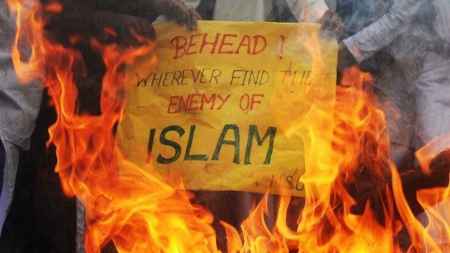
Behead them

There is no Good Islam. There is no Bad Islam. There is just Islam.

**********************

Our only hope of defeating Islamic terrorism is Islam. That’s our whole counterterrorism strategy.

But Islamic terrorism is not a separate component of Islam that can be cut off from it. Not only is it not un-Islamic, but it expresses Islamic religious imperatives. Muslim religious leaders have occasionally issued fatwas against terrorism, but terrorism for Muslim clerics, like sex for Bill Clinton, is a matter of definition. The tactics of terrorism, including suicide bombing and the murder of civilians, have been approved by fatwas from many of the same Islamic religious leaders that our establishment deems moderate. And the objective of terrorism, the subjugation of non-Muslims, has been the most fundamental Islamic imperative for the expansionistic religion since the days of Mohammed.

Our strategy, in Europe and America, under Bush and under Obama, has been to artificially subdivide a Good Islam from a Bad Islam and to declare that Bad Islam is not really Islam. Bad Islam, as Obama claims, “hijacked” a peaceful religion. Secretary of State Kerry calls Bad Islam’s followers, “apostates”. ISIS speaks for no religion. It has no religion. Which means the Islamic State must be a bunch of atheists.

Our diplomats and politicians don’t verbally acknowledge the existence of a Bad Islam. Even its name is one of those names that must not be named. There is only Good Islam. Bad Islam doesn’t even exist.

This isn’t just domestic spin, which it is, but it’s also an attempt at constructing an Islamic narrative. Our leaders don’t care what we think. They just want us to keep quiet and not offend Muslims. They do care a great deal about what Muslims think. And so, in their own clumsy way, they try to talk like Muslims.

They are attempting to participate in an Islamic debate without the requisite theological credentials. They want to tell Muslims that they should be Good Muslims not Bad Muslims, but they’re too afraid to use those words, so instead they substitute Good Muslims and Not Muslims. All Muslims are Good Muslims and Bad Muslims are Not Muslims is their Takfiri version of the No True Scotsman fallacy.

Our counterterrorism strategy has been constructed to convince Good Islam to have nothing to do with Bad Islam. And any of us who criticize Good Islam or argue that the artificial distinction between Good Islam and Bad Islam, between Saudi Arabia and ISIS, between Iran and Hezbollah, between Pakistan and the Taliban, is false are accused of provoking Good Islam to transform into Bad Islam.

Nothing so thoroughly proves that the difference between Bad Islam and Good Islam is a lie as the compulsive way that they warn that Good Muslims are capable of turning into Bad Muslims at any moment. Offend a Good Muslim, criticize his religion, fail to integrate him, accommodate his every whim and censor what he dislikes and he’ll join ISIS and then he’ll become a Bad Muslim.

After every terror attack, the media painstakingly constructs a narrative to determine why former moderates like Anwar Al-Awlaki, the Tsarnaevs or the San Bernardino killers turned bad without resorting to religious explanations. Their efforts at rationalization quickly become ridiculous; Nidal Hasan, the Fort Hood killer, contracted airborne PTSD, Anwar Al-Awlaki, the head of Al Qaeda in Yemen, became an “extremist” because he was afraid the FBI had found out about his prostitutes and the Times Square bomber turned into a terrorist because his “American Dream” was ruined.

Nobody, they conclude, becomes an Islamic terrorist because of Islam. Instead there are a thousand unrelated issues, having nothing to do with Islam, which creates the Muslim terrorist. Even the term “Radical Islamic Jihadist”, an absurd circumlocution (is there a moderate Islamic Jihadist), has become a badge of courage on one side and a dangerous, irresponsible term that provokes violence on the other.

But what is the distinction between Good Islam and Bad Islam? It isn’t fighting ISIS. Al Qaeda and the Taliban do that. It isn’t terrorism. Our Muslim allies, Saudi Arabia, Pakistan, Turkey and Qatar, are hip deep in the terror trade. It isn’t equality for non-Muslims. No Muslim country under Sharia law could have that. Equality for women? See above.

What are the metrics that distinguish Good Islam and Bad Islam? There aren’t any. We can’t discuss the existence of Bad Islam because it would reveal that Bad Islam and Good Islam are really the same thing.

Our Good Islam allies in Pakistan fight Bad Islam’s terror, when they aren’t hiding Osama bin Laden. Bad Islam in the Islamic State beheads people and takes slaves and Good Islam in Saudi Arabia does too. Qatar is our Good Islam ally helping us fight Bad Islam terrorists by arming and funding Good Islam terrorists who sometimes turn out to be Bad Islam terrorists so we can’t figure out if the Islamic terrorists the CIA is routing weapons to are Good Islam terrorists or Bad Islam terrorists.

The moderate Muslim Brotherhood wins democratic elections. The extremist Muslim Brotherhood then burns down churches. The moderate Palestinian Authority negotiates with Israel and then the extremist Palestinian Authority cheers the stabbing of a Jewish grandmother. The moderate Iranian government signs a nuclear deal and then the extremist Iranian government calls for “Death to America”.

Like the saintly Dr. Jekyll and the mean Mr. Hyde, Good Islam and Bad Islam are two halves of the same coin. When Dr. Jekyll wanted to act out his baser nature, he took a potion and turned into Mr. Hyde. But the nasty urges were always a part of him. When a moderate Muslim pulls a Keffiyah over his face and starts stabbing, bombing or beheading, he doesn’t become an extremist, he just expresses his dark side.

Good Islam borrowed all sorts of noble sentiments from Judaism and Christianity. But when non-Muslims didn’t accept Islam, then Mohammed stopped playing nice and preached murder. Bad Islam is not something ISIS invented on a website. It’s always been a part of Islam. We attempt to separate Good Islam and Bad Islam because we don’t like being beheaded. But Muslims don’t make that distinction.

Our counterterrorism strategy is based on empowering Good Islam, on building coalitions with Muslims to fight terrorism and enlisting their cooperation in the War on Terror. But we’re trying to convince Dr. Jekyll to help us fight Mr. Hyde. And Dr. Jekyll might even help us out, until he turns into Mr. Hyde.

Our moderate Afghan Muslim allies, when they’re aren’t raping young boys (one of their cultural peculiarities we are taught to ignore), sometimes unexpectedly open fire on our soldiers. The Muslim migrants who arrive here to “enrich” our societies sometimes start shooting and bombing. The head of Al Qaeda was hanging out near the West Point of Pakistan. The mastermind of 9/11 was saved by a member of the Qatari royal family. The call is coming from inside the house. Mr. Hyde is Dr. Jekyll.

When we “empower” and “build coalitions” with Good Islam, we’re also empowering and building coalitions with Bad Islam. Just ask all the Muslim terrorists running around with our weapons.

Our leaders want Good Islam to shield us from Bad Islam. If Good Islam is out front, then Muslims won’t see a clash of civilizations or a religious war, but a war between Good Islam and Bad Islam. But the Muslim understanding of Good Islam and Bad Islam is very different from our own.

Sunnis see their Jihadis as Good Islam and Shiites as Bad Islam. Shiites look at it the other way around. The Muslim Brotherhood, that our elites were so enamored with, saw secular governments as Bad Islam. To win them over, we helped them overthrow more secular governments because our leaders had adopted an understanding of Good Islam in which giving Christians civil rights was Bad Islam.

To win over Good Islam, we censor cartoons of Mohammed and criticism of the Koran, open our borders, Islamize our institutions and then wait to see if we’re on the good side of Good Islam. We adapt our societies and legal systems to Islamic norms and hope that it’s enough to let us join the Good Islam Coalition. If we go on at this rate, the experts will tell us that the only way to defeat Islamic terrorism is for us to become Muslims. Only then will we become members in good standing of Good Islam.

There is no Good Islam and no Bad Islam, as Muslim leaders occasionally trouble to tell us. The distinction that our leaders make between Good Islam and Bad Islam is not theological, but pragmatic. They dub whatever is shooting at us right now Bad Islam and assume that everything else must be Good Islam. That is the fallacy which they used to arrive at their Tiny Minority of Extremists formula.

There is no Tiny Minority of Extremists. Behind the various tiny minorities of extremists are countries and billionaires, global organizations and Islamic banks. Outsourcing our counterterrorism strategy to the countries and ideologies behind the terrorists we’re fighting isn’t a plan, it’s a death wish.

Islamic terrorism is just what we call Islam when it’s killing us.

The Jihad isn’t coming from some phantom website. It’s coming from our Muslim allies. It’s coming from Pakistan, Turkey, Qatar and Saudi Arabia. It’s coming from the Muslim Brotherhood and its front groups. It’s coming from the moderate Muslim leaders that our leaders pose with at anti-extremism conferences. And it’s coming from the mosques and homes of the Muslims living in America.

There is no Good Islam. There is no Bad Islam. There is just Islam.

Between Putin and Obama

February 7, 2016

Between Putin and Obama, Israel Hayom, Boaz Bismuth, February 7, 2016

The tide has turned in Syria: Aleppo, the rebel stronghold, is on the verge of falling to President Bashar Assad’s army. Hezbollah’s Shiite militias, the Iranian army and the massive Russian air strikes have been the difference.

In contrast to the rebels, Assad can count on his partners. On the Syrian dictator’s side, backed by Russia, action is being taken. On the rebel side, backed by the Americans, there has been a lot of talking. This perhaps explains why in January 2017 U.S. President Barack Obama will exit the White House, and Assad will still be in power. We can add this legacy to the American president’s splendid list of achievements.

And we haven’t even mentioned the millions of Syrian refuges, the terrible migrant crisis in Europe (leading to the rise of far-right parties across the continent), and the escalation of hostilities between Shiites and Sunnis. It’s not a short list.

Since last Monday, Aleppo has been under heavy attack from Assad’s forces. The gains on the ground have been considerable. Russia’s intervention has tipped the balance of power. No one can say this was unexpected. Washington, meanwhile, continues to grumble. U.S. Secretary of State John Kerry lambasted Moscow on Friday for the large number of dead Syrian women and children. Moscow isn’t exactly heeding his criticism. Washington still fails to understand that instead of talking, maybe it would be better to take action already. In August of 2013, however, after Assad had attacked his own people with chemical weapons for the 14th time, the Americans did nothing (red lines, remember?). Why should things be any different today?

Washington, you will say, has worked hard to find a diplomatic solution. This is a good time to remind everyone that the peace talks in Vienna have again hit a dead end. The talks aren’t likely to succeed for a number of reasons, namely that the two main players — Saudi Arabia and Iran — have reached a point of open hostilities, thanks to American foreign policy. Instead of cooperating to resolve the Syrian crisis, these two regional powers are closer than ever to a full-fledged military conflict. Riyadh is threatening to send ground forces into Syria to support the rebels. The commander of Iran’s Revolutionary Guard has already vowed that any such intervention would result in immense casualties for the Saudis. This is where things stand.

Over the weekend Turkey’s foreign minister discussed opening his country’s borders to the steady stream of refugees, but the crossings remain as shut as they were in September, 2014, when thousands of Kurds tried to flee the border town of Kobani. The European Union is trying to remind the Turks that they were given $3 billion for the expressed purpose of absorbing these 2 million refugees. But who expects agreements to be kept in today’s Middle East?

Who does have faith in agreements?

The refugee issue is becoming the hot button topic of the Syrian civil war. “The markets solved the economic crisis, the voters will solve the refugee crisis,” a French lawmaker said a few days ago. In the meantime, as Assad solidifies his power the far-right parties in Germany, Sweden, Denmark and Holland, and of course in France, are all growing in strength. It appears that everyone outside the Obama camp is thriving. And here is yet one more legacy to tell the grandchildren about.

Russian hands-off warning to US, Saudis, Turks amid crucial Aleppo battle

February 6, 2016

Russian hands-off warning to US, Saudis, Turks amid crucial Aleppo battle, DEBKAfile, February 6, 2016

S-400_range_map_25.11.15 (1)

The five-year Syrian civil war, faces its most critical moment. Saturday, Feb. 6, a combined force of Syrian army and Hizballah troops and an Iraqi Shiite militia under Iranian officers, were led by Russian air and Spetsnaz (special forces) officers into pressing forward to encircle 35,000 rebels trapped in Aleppo, the country’s largest city. As they tightened the siege, 400,000 Syrian civilians were also trapped and forced to bear heavy Russian air bombardment and savage artillery fire from the ground forces closing in on the city.

Rebel supply routes were cut off Thursday and Friday when Syrian and Hizballah forces captured the Azaz Corridor connecting Aleppo and all of the northern province of Idlib to the Turkish border.

Tens of thousands of refugees fleeing from the beleaguered town are massing at Bab al-Salama, the last Turkish border crossing to be closed against them. This is the largest Syrian refugee exodus since the start of the civil war.

The rebels under siege are painfully short of weaponry for fighting off the massive, combined offensive, DEBKAfile’s military sources report. Their only remaining recourse is to surrender or be ground into submission as the conquering force knocks over their positions and takes over street after street.

Once the combined forces fighting with Bashar Assad’s army take Aleppo and northern Syria, the opposition will have suffered its heaviest defeat since the war began. The rebels groups’ capacity to continue fighting the regime will be gravely diminished.

Their desperate plight – and the fresh surge of Syrian refugees in unmanageable numbers – cut short the conference in Geneva for a settlement of the Syrian conflict, before it got underway – and prompted reactions from sponsors of rebel groups.

In Riyadh, Brig, Gen. Ahmed Asiri, adviser to Saudi Defense Minister Muhammed Bin Salman, announced Friday that Saudi Arabia is ready “to participate in any ground operations that the international coalition launches against ISIS.” This offer was taken as a veiled response to the SOS from the rebel stronghold in Aleppo.

In Washington, State Department circles, in a briefing to US media, said the time had come to establish a no-fly security zone in northern Syria. They said: “Once a zone were established we do not believe Russia would challenge the stronger US and NATO forces, particularly if they were operating mainly from Turkey.”

The next day, Friday, Moscow came back with a sharp response: Russian Deputy Defense Minister Anatoly Antonov said: “Russian air defense systems enable early detection of threats to Russian aircraft flying combat missions over Syria and provide adequate measures to ensure flight safety.”

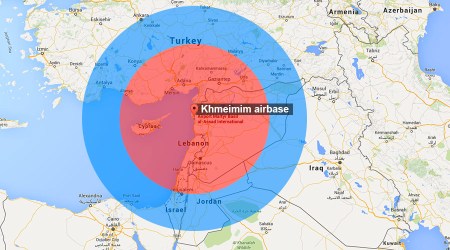
This was a reminder of the sophisticated air defense S-400 and S-300 missile systems Russia installed at its Syrian air base after the Turkish air force downed a Russian warplane in November.

Syrian Foreign Minister Walid al-Moallem put it more crudely: “Any foreign troops entering Syria would return home in wooden coffins.”

He advised armed opposition groups fighting the government offensive in the area to lay down their weapons because, he said, “government advances signal that the five-year-old Syria war is nearing its end.”

Saturday, US Secretary of State John Kerry urged Russia to implement a ceasefire in Syria, saying its bombing campaign was killing women and children in large numbers and “has to stop.” He told reporters on his return from a trip to Europe: “Russia has indicated to me very directly they are prepared to do a ceasefire,” adding “The Iranians confirmed in London just a day and a half ago they will support a ceasefire now.”

DEBKAfile’s military sources have seen no sign of any ceasefire or even a slowdown in the Russian-led Syrian-Iranian Aleppo offensive.

Atwan: ISIS Savagery – from Islamic History; West Likely to “Contain” ISIS Like It Contained Arafat

February 5, 2016

Atwan: ISIS Savagery – from Islamic History; West Likely to “Contain” ISIS Like It Contained Arafat, MEMRI-TV via You Tube, February 4, 2016


https://www.youtube.com/watch?v=QvaUQUMenKo


From the blurb beneath the video:

In a December 15 lecture about ISIS at the American University in Beirut, Abdel Bari Atwan, former editor-in-chief of “Al-Quds Al-Arabi” and the current editor-in-chief of “Al-Rai Al-Youm” rejected common claims that the savagery of ISIS is alien to Islam, presenting examples of similar conduct from Islamic history. Atwan said that the West faces two options: to contain ISIS or to destroy it. The former is more likely than the latter, he added. The West always starts by trying to destroy organizations that it considers to be terrorist and ends up negotiating with them, Atwan said, citing the Taliban, the PLO, and the IRA as prominent examples.

A (Much) Better Year

February 5, 2016

A (Much) Better Year, Front Page Magazine, Caroline Glick, February 5, 2016

ob

[A] of the Republicans candidates are significantly more supportive of Israel than the Democratic candidates. So it is simply an objective fact that Israel will be better off if a Republican is elected in November no matter who he is and no matter who the Democratic candidate is.

Part of the reason Obama is acting with such urgency and intensity is that he knows that regardless of who is elected to replace him, the next president will not be as viscerally hostile to Israel or as emotionally attached to Islam as he is.

**********************

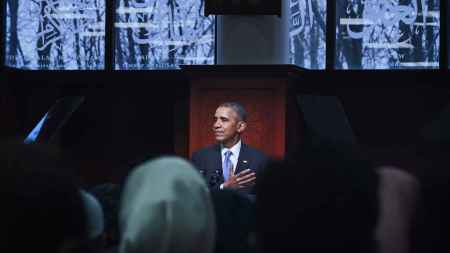
On Wednesday the U.S. media interrupted its saturation coverage of the presidential primaries to report on President Barack Obama’s visit to a mosque in Maryland. The visit was Obama’s first public one to a mosque in the US since entering the White House seven years ago. The mosque Obama chose to visit demonstrated once again that his views of radical Islam are deeply problematic.

Obama visited the Islamic Society of Baltimore, a mosque with longstanding ties to the Muslim Brotherhood and Hamas. During Operation Protective Edge, the leaders of the mosque accused Israel of genocide and demanded that the administration end US support for the Jewish state.

According to The Daily Caller, the mosque’s former imam Mohammad Adam el-Sheikh was active in the Islamic American Relief Agency, a charity deemed a terror group in 2004 after the US Treasury Department determined it had transferred funds to Osama bin Laden, Hamas, al-Qaida and other terrorist groups.

El-Sheikh left the Baltimore mosque to take over the Dar el-Hijra mosque in northern Virginia. He replaced Anwar al-Awlaki as imam after Awlaki moved to Yemen in 2003. In Yemen Awlaki rose to become a senior al-Qaida commander.

Awlaki radicalized many American jihadists both through direct contact and online. He radicalized US Army major Nidal Malik Hasan, and inspired him to carry out the 2009 massacre of 13 US soldiers and civilians at Fort Hood in Texas. Awlaki was killed by a US drone strike in 2011.

In 2010, a member of the Islamic Society of Baltimore was arrested for planning to attack an army recruiting office. According to the Mediaite news portal, the mosque reportedly refused to cooperate with the FBI in its investigation.

Obama’s visit to the radical mosque now is a clear signal of how he intends to spend his last year in office. It tells us that during this period, Obama will adopt ever more extreme positions regarding radical Islam.

Obama’s apologetics for radical Islamists is the flipside of his hostility for Israel. This too is escalating and will continue to rise through the end of his tenure in office.

The US Customs authority’s announcement last week that it will begin enforcing a 20-yearold decision to require goods imported from Judea and Samaria to be labeled “Made in the West Bank,” rather than “Made in Israel,” signals Obama’s intentions. So, too, it is abundantly clear that France’s plan to use the UN Security Council to dictate Israel’s borders was coordinated in advance with the Obama administration.

Part of the reason Obama is acting with such urgency and intensity is that he knows that regardless of who is elected to replace him, the next president will not be as viscerally hostile to Israel or as emotionally attached to Islam as he is.

On the Democratic side, neither candidate is a particularly energetic supporter of Israel or counter- jihad warrior. Former secretary of state Hillary Clinton’s recently released email discussions of Israel with her closest advisers indicate that all of Clinton’s closest counselors are hostile to Israel.

For his part, Vermont’s socialist Sen. Bernie Sanders harbors the far Left’s now standard anti-Israel attitudes. Not only did Sanders – like Clinton – support Obama’s nuclear deal with Iran. He boycotted Prime Minister Benjamin Netanyahu’s speech before the Joint Houses of Congress where Netanyahu laid out Israel’s reasons for opposing the deal. Sanders gave television interviews condemning Netanyahu for making the speech, accusing him of electioneering on the back of the US Congress. Sanders criticized Israel during Operation Protective Edge and supports decreasing US military aid to Israel.

For all their anti-Israel sensibilities, though, neither Clinton nor Sanders gives the impression that they are driven by them as Obama is.

Unlike Obama, neither appear to be animated by their hostility toward Israel. Neither seem to be passionate in their support for Muslim Brotherhood- affiliated groups or in their desire to realign the US away from Israel, from its traditional Arab allies and toward Iran. This lack of passion makes it safe to assume that if elected president, while they will adopt anti-Israel policies, they will not seek out ways to weaken Israel or strengthen its sworn enemies.

On the Republican side, the situation is entirely different. All of the Republican presidential candidates are pro-Israel. To be sure, some are more pro-Israel than others. Sen. Ted Cruz, for instance, is more supportive than his competitors. But all of the Republicans candidates are significantly more supportive of Israel than the Democratic candidates. So it is simply an objective fact that Israel will be better off if a Republican is elected in November no matter who he is and no matter who the Democratic candidate is.

It hasn’t always been this way. And it doesn’t have to remain this way.

Back in 1992 when Bill Clinton was running against George H.W. Bush, if Israel was your issue, you voted for Clinton because he was rightly viewed as more pro-Israel than Bush.

Twenty-four years ago, supporting Israel carried no cost for Clinton. According to Gallup, in 1992, 52 percent of Democrats were pro-Israel.

On the other hand, Bush was probably harmed somewhat for the widespread perception that he was anti-Israel. In 1992, 62% of Republicans were pro-Israel.

Over the past 15 years, the situation has altered considerably.

Today, Republicans are near unanimous in their support for Israel. According to a Gallup poll from February 2015, 83% of Republicans support Israel.

Only 48% of Democrats do. From 2014 to 2015, Democratic support for Israel plunged 10 points.

The cleavage on Israel is particularly acute among partisan elites.

Last summer, pollster Frank Luntz conducted a survey of US elite partisan opinion on Israel. His data were devastating. According to Luntz’s data, 76% of Democratic elite believe that Israel has too much influence over US foreign policy. Only 20% of Republicans do.

Nearly half (47%) of highly educated, wealthy and politically active Democrats think that Israel is a racist country. Thirteen percent of their Republican counterparts agree.

And whereas only 48% of Democrats believe that Israel wants peace, 88% of Republicans believe that Israel wants peace with its neighbors.

These trends affect voting habits. According to Luntz, while only 18% of Democrats say they would be more likely to vote for a politician who supports Israel, 31% said they are less likely to vote for a pro-Israel candidate. In contrast, 76% of Republicans say they want their representatives to support Israel.

Forty-five percent of Democrats said they would be more likely to vote for a politician who is critical of Israel and 75% of Republicans said they would be less likely to vote for an anti-Israel candidate.

These data tell us two important things. Today Democratic candidates will gain nothing and may lose significant support if they support Israel.

In contrast, a Republican who opposes Israel will have a hard time getting elected, much less winning a primary.

Partisan sensibilities aren’t the only reason that Israel is will be better off if a Republican wins in November. There is also the issue of policy continuity.

Even though neither Clinton nor Sanders share Obama’s anti-Israel passion, their default position will be to maintain his policies. Traditionally, when an outgoing president is replaced by a successor from his own party, many of his foreign policy advisers stay on to serve his successor.

Moreover, if American voters elect a Democrat to succeed Obama, their decision will rightly be viewed as a vote of confidence in his policies.

Obama has radicalized the Democratic Party in his seven years in office. When Obama was inaugurated, the Blue Dog caucus of conservative Democratic members of the House of Representatives had 54 members. Today only 14 remain.

Obama’s Democratic Party is not Bill Clinton’s party.

A party that isn’t forced to pay a price for its policies isn’t likely to change them. If the Democrats are not defeated in the run for the White House in November, their party will not reassess its shift to radicalism and reconsider its increasingly hostile stance on Israel.

That then brings us to the state of the presidential race following the Iowa caucuses and ahead of next Tuesday’s primary in New Hampshire. The Iowa caucuses showed a significant gap in enthusiasm among partisan voters. Participation rates in the Republican caucuses were unprecedented.

Cruz shattered the record for vote getting in the state that saw participation rates up 30% from 2012. On the Democratic side, participation rates were below the 2008 level.

On the Republican side, the three top candidates – Cruz, businessman Donald Trump and Sen. Marco Rubio – are all backed by committed, fervent supporters. On the Democratic side, Clinton’s supporters are reportedly diffident about her. And while Sanders enjoys enthusiastic support from voters under 45, he can’t seem to convince people who actually know what socialism is to support him.

If Sanders wins the Democratic nomination, on the face of it, it is difficult to see his path to victory in the general election. Whereas Obama was elected by hiding his radical positions, Sanders is running openly as a socialist and attacks Obama from the Left. Whether America is a center-right or center-left country, the undisputed truth is that it is a centrist country.

As for Clinton, the likelihood grows by the day that by the general election, her inability to inspire her base will be the least of her problems.

The FBI’s ongoing probe of her use of a private email server during her tenure as secretary of state is devastating her chances of getting elected.

The State Department’s revelation last week that 22 of Clinton’s emails were too classified to be released, even with parts blacked out, makes it impossible to dismiss the prospect that she will be indicted for serious felony offenses. Yet, as Jonah Goldberg argued Wednesday in National Review, with her narrow victory in Iowa, Clinton blocked the opening for a less damaged candidate – like Vice President Joe Biden or former New York mayor Michael Bloomberg – to step into the race.

In other words, the Republican nominee will have an energized base and will face either a legally challenged or openly socialist Democratic opponent.

According to terrorism expert Steven Emerson, before Obama visited the Islamic Society of Baltimore, he asked the FBI for its opinion of the mosque. FBI investigators informed Obama of the mosque’s ties to terrorism. They urged him not to confer it with the legitimacy that comes with a presidential visit.

Obama ignored the FBI’s advice.

The next 11 months will be miserable for Israel.

But we should take heart. By all accounts, next year will be better. And judging by the way the presidential race is shaping up, next year may be a much, much better year.

Humor | Hillary is Transparent and Open

January 31, 2016

Hillary is Transparent and Open, Dan Miller’s Blog, January 31, 2016

(The views expressed in this post are mine and do not necessarily reflect those of Warsclerotic or any of its other editors. — DM)

President Obama claimed to be the most open and transparent president ever but did not follow through. During her term as Secretary of State, Hillary Clinton showed her persistent openness and transparency to friend and foe alike.

Right.

Clinton emails

Hillary demonstrated her openness and transparency to the entire world  — friend and foe alike — through her use of an unsecured home-brew server for e-mails containing classified national security information. As of late December, more than 1,200 e-mails found on Hillary’s server had been deemed classified. More continued to be found.

According to a report by Intelligence Community Inspector General I. Charles McCullough III dated January 14th, “‘several dozen’ additional classified emails — including specific intelligence known as ‘special access programs’ (SAP)” had been discovered.

That indicates a level of classification beyond even “top secret,” the label previously given to two emails found on her server, and brings even more scrutiny to the presidential candidate’s handling of the government’s closely held secrets.

As of January 29th, at least twenty-two of the most recently discovered e-mails were top secret and contained such damaging information that not even redacted copies can be released to members of the Congress.

With such undiscriminating openness to our enemies, Hillary demonstrated unprecedented impartiality. By doing so, she helped to dispel vicious rumors that America helps only its few remaining friends. The State Department, now under the direction of John Kerry, was unwilling to extend the same courtesy to the Congress, doubtless a greater enemy than any foreign nation. This may have been hard for him to do. But then, sometimes it’s hard to be John Kerry.

https://www.youtube.com/watch?v=7M6YvDXQcgQ

Hillary’s principal opponent in the race for the Democrat presidential nomination, Bernie Sanders, merely says that to be true socialists we must share everything. Hillary does more than talk; she shares.

A vote for Hillary is a vote for openness. Due to her exceptional devotion to non-discriminatory transparency, our enemies will love us even more, perhaps even until death do us part.

A European-Iranian honeymoon

January 31, 2016

A European-Iranian honeymoon, Israel Hayom, Prof. Eyal Zisser, January 31, 2016

Last week, the European dam burst. While the continent was turning a cold shoulder to Israel and European entities continued with their threats of boycott, its gates were thrown open to Iran. European leaders put their obsession with Israel aside for an hour or two, and after paying the necessary lip service to International Holocaust Memorial Day, gave Iranian President Hassan Rouhani a royal welcome.

The Iranian president, the smiling face of the Islamic republic, arrived for visits to Italy and France. It was the first visit of its kind since the nuclear deal was signed, a visit that signaled the start of a European-Iranian honeymoon, a visit that will be followed by others like it all over the continent. Rouhani’s visit came days after the economic sanctions on Iran were lifted. It’s no wonder that during the visit, announcements were made about contact between the Iranians and a number of Italian and French companies on deals including a return to European cars being manufactured in Iranian plants and, of course, contracts to purchase Iranian oil. The Iranians are hungry for Europe’s products and technology, while European companies are hungry for Iranian money.

As Rouhani was being received in Europe as an honored guest, Iran’s spiritual leader Ayatollah Ali Khamenei was busy with his longtime hobby of denying the Holocaust. He posted a clip on his website in which he called to investigate whether or not the Holocaust had actually happened, as the Zionists claim it did. But no one in Europe bothered Rouhani with any minor matter like that. After all, it was U.S. Secretary of State John Kerry who urged people not to take Tehran’s calls to annihilate Israel and the U.S. seriously, saying it was only talk. The Europeans also didn’t bother to raise the question of Iranian involvement in regional destabilization, such as in Yemen and Syria, or about Tehran’s support of terrorism. Even questions about respecting human rights and freedom of expression and promoting democracy in Iran itself were removed out of respect for the agenda of the day. Europe, as we know, only asks those questions of Israel.

Indeed, despite Rouhani’s smiles, no change has taken place yet in Iran itself. The conservative camp continues to rule with a fist of iron and supreme leader Khamenei remains firmly at the wheel, or in the hands of the Revolutionary Guard and not Rouhani and his people. So while Rouhani was trying to spread the slogan of a “new Iran” throughout Europe and asking his hosts to turn over a new leaf in the relations between Iran and Europe, the conservatives at home were preparing an unpleasant surprise. Most of the reform camp’s candidates for the parliamentary election scheduled to take place on February 26 were rejected. Even the grandson of late Ayatollah Ruhollah Khomeini, Ahmed Khomeini, who wanted to be elected to the Council of Experts — the Iranian body that oversees the supreme spiritual leader and is responsible for choosing his successor — was rejected on the grounds of “not proving appropriate religious capabilities.”

Iran should be judged not by its words, but by its actions, but the Iranian record speaks for itself. A mere two months after it signed the nuclear agreement with the major world powers in July 2015, Tehran sent thousands of soldiers to Syria to fight on the side of Syrian President Bashar Assad. Painful pictures are coming out of Syria of children dying of hunger in cities under siege by Assad’s forces, Hezbollah fighters, and members of the Iranian Revolutionary Guard. But Iran has been rewarded for its doings in Syria and invited by the U.N. and western countries to take part in a discussion on Syria’s future. The Iranian record also includes ballistic missile tests, to show us what Iranian’s military ambitions are; the arrest of U.S. sailors in the Persian Gulf; and — just like in the good old days — an angry mob setting fire to the Saudi Arabian embassy in Tehran.

The Europeans are choosing to ignore all that as they announce a new chapter in Iranian-European relations. The bill for the honeymoon will be footed by others — in Syria, the Persian Gulf, and Israel.

IDF Preparing for Arrival of ISIS on Syrian Border

January 30, 2016

IDF Preparing for Arrival of ISIS on Syrian Border, Investigative Project on Terrorism, Yaakov Lappin, January 29, 2016

934

As conflict and mayhem continue to rage across Syria, the Israel Defense Forces (IDF) is preparing to encounter the threat of ISIS and al-Qaida forces right on its borders, and could encounter such threats in the coming months.

The preparations come as the Syrian civil war shows no sign of letting up. This is a conflict that has led to the violent deaths of 300,000 Syrians, and the displacement of more than 10 million others, 4.5 million of whom have fled the country.

Today, the IDF’s Military Intelligence Directorate views Syria as a former state that has broken apart into multiple ‘Syrias.’ The Assad regime controls barely 30 percent of Syria and is fully reliant on the foreign assistance of Russia, Hizballah, and Iran. Sunnis and Shi’ites wage daily war on one another.

It is worth examining the wider recent events in the multifaceted Syrian conflict, and place the IDF’s preparations in their broader regional perspective.

In Syria’s murderous kill-or-be-killed environment, Salafi-jihadist doctrines flourish, in the form of ISIS, which views Shi’ites (including the Assad regime and Hizballah) as infidels who must be destroyed.

ISIS cells have operated recently in Lebanon too, targeting Shi’ite Hizballah’s home turf of Dahiya in southern Beirut with two large bombings in November that claimed over 40 lives, while ISIS in Iraq continues to target Shi’ites.

Today, ISIS has between 30,000-50,000 members who are dedicated to expanding their caliphate and killing all those who disagree with their doctrine, including even fellow Sunni jihadi members of al-Qaida’s branch in Syria, the Al-Nusra Front, which has 8,000-12,000 members.

ISIS continues to use its territory in Syria and Iraq to plot major, mass-casualty terrorist attacks in Western cities. At the same time, its budgetary future looks uncertain, as oil funds have decreased significantly following allied air strikes on oil facilities. In the past year, 45 percent of ISIS’s $1.3 billion budget came from oil, far less than the oil revenue in 2014.

Unlike ISIS, al-Qaida believes in following a phased, slower plan in setting up a caliphate, and the two jihadist organizations have been at war with each other for more than two years in Syria.

Shi’ites led by Iran are fighting to stop the Salafi-jihadis’ spread. Under the command of Iranian Revolutionary Guard Corps (IRGC)-Quds Force unit commander, Qassem Suleimani, Iranian fighting forces and advisers moved into Syria. Iran has sustained more than 300 casualties there thus far.

Hizballah, too, is heavily involved in Syria’s battles, losing an estimated 1,300 fighters and sustaining 10,000 injuries – meaning more than half of its conscripted fighting force has been killed or wounded. Iran and its proxies are using the mayhem to try to spread their own influence in Syria.

Near Israel’s border with Syria, the Al-Yarmouk Martyrs Battalions, which is affiliated with ISIS, has set up many posts.

An estimated 600 members of the group control a population of around 40,000 Syrians. Al-Yarmouk is at war with al-Qaida’s Jabhat Al-Nusra, which maintains a few thousand members in the Syrian Golan near Israel.

Jabhat Al-Nusra’s membership is mostly derived of local Syrians, who tend to be more hesitant to start a war with Israel that would result in their areas, and relatives, being badly affected. Yet 10 to 15 percent of its membership comes from abroad, and have no commitment to the area. These foreign fighters have no qualms about precipitating attacks on Israel. At the moment, however, Jabhat Al-Nusra is bogged down by its fight with Al-Yarmouk.

ISIS has officially put Israel in its sights, and its leader, Abu Bakr Al-Baghdadi, declared his intention at the end of December to attack Israel.

The IDF is taking the threat seriously and is preparing for a range of possible attacks, including strategic terror attacks, cross-border raids, the sending of bomb-laden armored vehicles into Israel, and rocket, missile, small-arms, and mortar fire on the Israeli Golan Heights.

One possibility is that the heavily armed Al-Yarmouk group, which is facing the southern Golan Heights, might follow an Islamic State directive to attack Israel.

In 2014, Al-Yarmouk became an ISIS representative, swearing allegiance to it, though it is not fully subordinate to it.

Al-Yarmouk’s late leader, known as Al Khal (“the uncle”), was killed in November in an attack by Jabhat Al-Nusra. Before his violent end, Al Khal only partially committed himself to ISIS, and turned down ISIS requests to send fighters to Iraq.

Al-Yarmouk’s response to Jabhat Al-Nusra’s attacks came in December, when it assassinated a Jabhat Al-Nusra commander in his armored vehicle, just 400 meters from the Israeli border.

Al-Yarmouk subscribes to the Salafi jihadist ideology and has shoulder-held missiles, tanks, and other weapons looted during raids on the Assad regime military bases.

But Israel is also preparing for the possibility of encountering ISIS itself, not just an affiliate group.

ISIS proper is currently situated 40 kilometers from the Israeli border in southern Syria. One possibility is that Russian airstrikes will cause ISIS forces to ricochet southwards, towards Israel.

The IDF is gathering intelligence on all armed groups near its border, exhausting many resources to assess their capabilities, and intentions.

Israel watched as Shi’ite Hizballah came from Lebanon to block Sunni jihadist advances towards Lebanon in recent months, and as Russian airstrikes blocked the advance of the rebels northwards, to Damascus.

The IDF remains in a heightened state of alert along the Syrian border, though it is also working to avoid the creation of easy targets for the array of predatory forces on the other side.

As part of its preparations, the IDF’s Northern Command has given more autonomy to regional field commanders to enable faster responses to surprise attacks by reducing the initial chain of command during emergencies.

Inter-branch cooperation between intelligence, ground forces, and the air force has also been tightened.

Additionally, the IDF has fortified its border fence with Syria, adding electronic sensors to better be able to detect and respond to a potential attack in time.

The underlying assumption within military circles is that, sooner or later, ISIS will turn its guns on Israel, and the IDF does not intend to be caught off guard when that happens.