Archive for the ‘Islamisation’ category

European Union Declares War on Internet Free Speech

June 3, 2016

European Union Declares War on Internet Free Speech, Gatestone InstituteSoeren Kern, June 3, 2016

♦ Opponents counter that the initiative amounts to an assault on free speech in Europe. They say that the European Union’s definition of “hate speech” and “incitement to violence” is so vague that it could include virtually anything deemed politically incorrect by European authorities, including criticism of mass migration, Islam or even the EU itself.

♦ Some Members of the European Parliament have characterized the EU’s code of online conduct — which requires “offensive” material to be removed from the Internet within 24 hours — as “Orwellian.”

♦ “By deciding that ‘xenophobic’ comment in reaction to the crisis is also ‘racist,’ Facebook has made the view of the majority of the European people… into ‘racist’ views, and so is condemning the majority of Europeans as ‘racist.'” — Douglas Murray.

♦ In January 2013, Facebook suspended the account of Khaled Abu Toameh after he wrote about corruption in the Palestinian Authority. The account was reopened 24 hours later, but with the two posts deleted and no explanation.

The European Union (EU), in partnership with Facebook, Twitter, YouTube and Microsoft, has unveiled a “code of conduct” to combat the spread of “illegal hate speech” online in Europe.

Proponents of the initiative argue that in the aftermath of the recent terrorist attacks in Paris and Brussels, a crackdown on “hate speech” is necessary to counter jihadist propaganda online.

Opponents counter that the initiative amounts to an assault on free speech in Europe. They say that the EU’s definition of “hate speech” and “incitement to violence” is so vague that it could include virtually anything deemed politically incorrect by European authorities, including criticism of mass migration, Islam or even the European Union itself.

Some Members of the European Parliament have characterized the EU’s code of online conduct — which requires “offensive” material to be removed from the Internet within 24 hours, and replaced with “counter-narratives” — as “Orwellian.”

The “code of conduct” was announced on May 31 in a statement by the European Commission, the unelected administrative arm of the European Union. A summary of the initiative follows:

“By signing this code of conduct, the IT companies commit to continuing their efforts to tackle illegal hate speech online. This will include the continued development of internal procedures and staff training to guarantee that they review the majority of valid notifications for removal of illegal hate speech in less than 24 hours and remove or disable access to such content, if necessary.

“The IT companies will also endeavor to strengthen their ongoing partnerships with civil society organisations who will help flag content that promotes incitement to violence and hateful conduct. The IT companies and the European Commission also aim to continue their work in identifying and promoting independent counter-narratives [emphasis added], new ideas and initiatives, and supporting educational programs that encourage critical thinking.”

Excerpts of the “code of conduct” include:

“The IT Companies share the European Commission’s and EU Member States’ commitment to tackle illegal hate speech online. Illegal hate speech, as defined by the Framework Decision 2008/913/JHA of 28 November 2008 on combating certain forms and expressions of racism and xenophobia by means of criminal law and national laws transposing it, means all conduct publicly inciting to violence or hatred directed against a group of persons or a member of such a group defined by reference to race, color, religion, descent or national or ethnic origin….

“The IT Companies support the European Commission and EU Member States in the effort to respond to the challenge of ensuring that online platforms do not offer opportunities for illegal online hate speech to spread virally. The spread of illegal hate speech online not only negatively affects the groups or individuals that it targets, it also negatively impacts those who speak out for freedom, tolerance and non-discrimination in our open societies and has a chilling effect on the democratic discourse on online platforms.

“While the effective application of provisions criminalizing hate speech is dependent on a robust system of enforcement of criminal law sanctions against the individual perpetrators of hate speech, this work must be complemented with actions geared at ensuring that illegal hate speech online is expeditiously acted upon by online intermediaries and social media platforms, upon receipt of a valid notification, in an appropriate time-frame. To be considered valid in this respect, a notification should not be insufficiently precise or inadequately substantiated.

“The IT Companies, taking the lead on countering the spread of illegal hate speech online, have agreed with the European Commission on a code of conduct setting the following public commitments:

  • “The IT Companies to have in place clear and effective processes to review notifications regarding illegal hate speech on their services so they can remove or disable access to such content. The IT companies to have in place Rules or Community Guidelines clarifying that they prohibit the promotion of incitement to violence and hateful conduct.
  • “The IT Companies to review the majority of valid notifications for removal of illegal hate speech in less than 24 hours and remove or disable access to such content, if necessary.
  • “The IT Companies and the European Commission, recognising the value of independent counter speech against hateful rhetoric and prejudice, aim to continue their work in identifying and promoting independent counter-narratives, new ideas and initiatives and supporting educational programs that encourage critical thinking.”

The agreement also requires Internet companies to establish a network of “trusted reporters” in all 28 EU member states to flag online content that “promotes incitement to violence and hateful conduct.”

The EU Commissioner for Justice, Consumers and Gender Equality, Vĕra Jourová, has defended the initiative:

“The recent terror attacks have reminded us of the urgent need to address illegal online hate speech. Social media is unfortunately one of the tools that terrorist groups use to radicalize young people and racists use to spread violence and hatred. This agreement is an important step forward to ensure that the internet remains a place of free and democratic expression, where European values and laws are respected. I welcome the commitment of worldwide IT companies to review the majority of valid notifications for removal of illegal hate speech in less than 24 hours and remove or disable access to such content, if necessary.”

Others disagree. The National Secular Society (NSS) of the UK warned that the EU’s plans “rest on a vague definition of ‘hate speech’ and risk threatening online discussions which criticize religion.” It added:

“The agreement comes amid repeated accusations from ex-Muslims that social media organizations are censoring them online. The Council of Ex-Muslims of Britain has now begun collecting examples from its followers of Facebook censoring ‘atheist, secular and ex-Muslim content’ after false ‘mass reporting’ by ‘cyber Jihadists.’ They have asked their supporters to report details and evidence of any instances of pages and groups being ‘banned [or] suspended from Facebook for criticizing Islam and Islamism.'”

NSS communications officer Benjamin Jones said:

“Far from tackling online ‘cyber jihad,’ the agreement risks having the exact opposite effect and entrapping any critical discussion of religion under vague ‘hate speech’ rules. Poorly-trained Facebook or Twitter staff, perhaps with their own ideological bias, could easily see heated criticism of Islam and think it is ‘hate speech,’ particularly if pages or users are targeted and mass reported by Islamists.”

In an interview with Breitbart London, the CEO of Index on Censorship, Jodie Ginsburg, said:

“Hate speech laws are already too broad and ambiguous in much of Europe. This agreement fails to properly define what ‘illegal hate speech’ is and does not provide sufficient safeguards for freedom of expression.

“It devolves power once again to unelected corporations to determine what amounts to hate speech and police it — a move that is guaranteed to stifle free speech in the mistaken belief this will make us all safer. It won’t. It will simply drive unpalatable ideas and opinions underground where they are harder to police — or to challenge.

“There have been precedents of content removal for unpopular or offensive viewpoints and this agreement risks amplifying the phenomenon of deleting controversial — yet legal — content via misuse or abuse of the notification processes.”

A coalition of free speech organizations, European Digital Rights and Access Now, announced their decision not to take part in future discussions with the European Commission, saying that “we do not have confidence in the ill-considered ‘code of conduct’ that was agreed.” A statement warned:

“In short, the ‘code of conduct’ downgrades the law to a second-class status, behind the ‘leading role’ of private companies that are being asked to arbitrarily implement their terms of service. This process, established outside an accountable democratic framework, exploits unclear liability rules for online companies. It also creates serious risks for freedom of expression, as legal — but controversial — content may well be deleted as a result of this voluntary and unaccountable take-down mechanism.

“This means that this ‘agreement’ between only a handful of companies and the European Commission is likely in breach of the EU Charter of Fundamental Rights (under which restrictions on fundamental rights should be provided for by law), and will, in practical terms, overturn case law of the European Court of Human Rights on the defense of legal speech.”

Janice Atkinson, an independent MEP for the South East England region, summed it up this way: “It’s Orwellian. Anyone who has read 1984 sees its very re-enactment live.”

Even before signing on to the EU’s code of conduct, social media sites have been cracking down on free speech, often at the behest of foreign governments.

In September 2015, German Chancellor Angela Merkel was overheard on a live microphone confronting Facebook CEO Mark Zuckerberg on what he was doing to prevent criticism of her open-door immigration policies.

In January 2016, Facebook launched an “Online Civil Courage Initiative” aimed at Facebook users in Germany and geared toward “fighting hate speech and extremism on the Internet.”

Writing for Gatestone Institute, British commentator Douglas Murray noted that Facebook’s assault on “racist” speech “appears to include anything critical of the EU’s current catastrophic immigration policy.” He wrote:

“By deciding that ‘xenophobic’ comment in reaction to the crisis is also ‘racist,’ Facebook has made the view of the majority of the European people (who, it must be stressed, are opposed to Chancellor Merkel’s policies) into ‘racist’ views, and so is condemning the majority of Europeans as ‘racist.’ This is a policy that will do its part in pushing Europe into a disastrous future.

Facebook has also set its sights on Gatestone Institute affiliated writers. In January 2013, Facebook suspended the account of Khaled Abu Toameh after he wrote about corruption in the Palestinian Authority. The account was reopened 24 hours later, but with the two posts deleted and no explanation. Abu Toameh wrote:

“It’s still a matter of censorship. They decide what’s acceptable. Now we have to be careful about what we post and what we share. Does this mean we can’t criticize Arab governments anymore?”

In June 2016, Facebook suspended the account of Ingrid Carlqvist, Gatestone’s Swedish expert, after she posted a Gatestone video to her Facebook feed — called “Sweden’s Migrant Rape Epidemic.” In an editorial, Gatestone wrote:

“After enormous grassroots pressure from Gatestone’s readers, the Swedish media started reporting on Facebook’s heavy-handed censorship. It backfired, and Facebook went into damage-control mode. They put Ingrid’s account back up — without any explanation or apology. Ironically, their censorship only gave Ingrid’s video more attention.

“Facebook and the EU have backed down — for now. But they’re deadly serious about stopping ideas they don’t like. They’ll be back.”

1637This week, the EU, in partnership with Facebook, Twitter, YouTube and Microsoft, unveiled a “code of conduct” to combat the spread of “illegal hate speech” online in Europe. The next day, Facebook suspended the account of Ingrid Carlqvist, Gatestone’s Swedish expert, after she posted a Gatestone video to her Facebook feed — called “Sweden’s Migrant Rape Epidemic.”
 

Europe Braces for More Jihadist Attacks

June 2, 2016

Europe Braces for More Jihadist Attacks, Gatestone InstituteSoeren Kern, June 2, 2016

♦ Sports stadiums and big music events are especially vulnerable: “This is where you put a small town into a small area for a couple of hours.” — Neil Basu, deputy assistant commissioner of the Metropolitan Police, London.

♦  “We know that the Islamic State has the European Championship in its sights.” — Hans-Georg Maaßen, head of Germany’s domestic intelligence agency.

♦  According to Patrick Calvar, head of the France’s domestic intelligence agency, at least 645 French nationals or residents, including 245 women, are currently with the Islamic State in Syria and Iraq. Another 200 individuals are “in transit,” either on their way to Syria or returning to France. Around 244 jihadists have already returned to France.

♦British police chiefs are struggling to recruit enough officers who are willing to carry a firearm, because many fear they will be treated as criminal suspects if they use their weapon in the line of duty.

European security officials are bracing for potential jihadist attacks at public venues across Europe this summer.

In France, officials are preparing for possible attacks against the European Football Championships. The games, which start on June 10, comprise 51 matches involving 24 teams playing in 10 host cities across the country.

Interior Minister Bernard Cazeneuve said that more than 90,000 security personnel will be on hand to protect the 2.5 million spectators expected to attend the games, as well as the hundreds of thousands more who will watch the matches on big screens in so-called “fan zones” in major cities.

Patrick Calvar, the head of the France’s domestic intelligence agency (Direction générale de la sécurité intérieure, DGSI), warned: “We know that the Islamic State is planning new attacks in France.” He added:

“We risk being confronted with a new form of attack: a terrorist campaign characterized by placing explosive devices in places where large crowds are gathered, and repeating this type of action to create a climate of panic.”

According to Calvar, at least 645 French nationals or residents, including 245 women, are currently with the Islamic State (ISIS) in Syria and Iraq. Another 200 individuals are “in transit,” either on their way to the Middle East or returning to France. Around 244 jihadists have already returned to France, and another 818 people have “demonstrated their intention to go to Syria.”

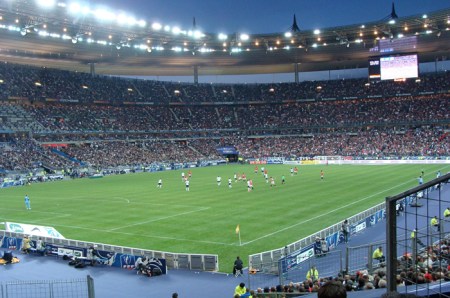
1636The Stade de France, located in a Paris suburb, was attacked by three Islamic State suicide bombers in November 2015. The stadium will be hosting games during the UEFA Euro 2016 football championships (June 10 – July 10, 2016), and French officials are preparing for possible jihadist attacks. (Image source: Wikimedia Commons/Liondartois)

Calvar’s concerns have been echoed by Hans-Georg Maaßen, the head of Germany’s domestic intelligence agency (Bundesamt für Verfassungsschutz, BfV). In an interview with Rheinische Post, Maaßen said: “We know that the Islamic State has the European Championship in its sights.”

On May 29, British media quoted Belgian security sources as saying they had discovered an Islamic State plot to attack British football fans in the southern French city of Marseille when England plays Russia on June 11. The plans were reportedly discovered on a laptop used by Salah Abdeslam, a Belgian-born French national of Moroccan descent who is thought to be the mastermind of the November 2015 terrorist attacks on Paris which left 130 dead.

The laptop is said to have contained information about a plot to kill large numbers of British fans using assault rifles, suicide bombers and possibly even drones armed with chemical weapons. The laptop contained photos and references to Marseille’s historic Old Port, where tens of thousands of football fans are expected to gather at the many bars and restaurants in the area.

Meanwhile, French Interior Minister Bernard Cazeneuve also announced that more than 23,000 police will be deployed to protect the Tour de France, the world’s premier bicycle race, which takes place from July 2 to 24.

Teams of special operations forces (Groupe d’intervention de la Gendarmerie Nationale, GIGN) will guard riders and an estimated 12 million spectators along a route that covers 3,500 kilometers (2,180 miles). “Everyone understands that this year the Tour de France is taking place in a particular context,” Cazeneuve said. He added: “The terrorist threat remains very high.”

In Poland, officials are preparing for possible jihadist attacks against the Catholic Church’s World Youth Day, which is expected to draw 2.5 million to Krakow from July 26 to 31. Poland will impose border controls at all of its national borders from July 4 to August 2.

In Britain, music festivals, big sports venues and nightclubs have been placed on “high alert” for potential jihadist attacks, according to a senior anti-terrorism officer interviewed by the Sunday Times.

Neil Basu, the deputy assistant commissioner of the Metropolitan Police, said that crowded places — including Glastonbury, billed as the world’s largest music festival, which will draw 135,000 people to Somerset from June 22 to 26 — are a major concern for police this summer. Basu warned:

“These people are perfectly happy to target civilians with the maximum terror impact. Crowded places were always a concern for us, but now they are right at the top of the agenda.”

Basu said that sports stadiums and big music events are especially vulnerable: “This is where you put a small town into a small area for a couple of hours.”

Police in rural communities in Britain that host large summer festivals are warning that they could be “sitting ducks” in the face of a jihadist attack as they wait for armed backup to arrive from many miles away.

In an interview with the BBC, John Apter, the head of the Hampshire and Isle of Wight Police Federation, said:

“Being realistic, if a firearms unit was coming from the middle of the county you are still talking about 30 miles away — you are not talking about a few minutes. There would be an understandable delay. If a firearms unit is the other side of the county they could be 70 miles away so you are talking a significant distance. So the only officers that you have available are unarmed and vulnerable officers and they are the officers that are saying to me that in a terrorist situation they would be sitting ducks.”

Most police in Britain are unarmed. According to Deputy Chief Constable Simon Chesterman, the UK’s top firearms officer, British police chiefs are struggling to recruit enough officers who are willing to carry a firearm, because many fear they will be treated as criminal suspects if they use their weapon in the line of duty.

Senior British security officials estimate that the UK needs an extra 1,500 armed officers to tackle jihadist attacks such as those carried out in Paris. Because half of the recruits will not make it through the rigorous training, however, 3,000 volunteers are needed to come forward.

Che Donald of the Police Federation — which represents the 5,647 officers throughout Britain who currently carry firearms — told the Guardian that while major cities such as London are sufficiently protected, other large towns and cities are not: “Currently there are not enough firearms officers who could deal with an incident in quite a lot of areas of Britain.”

In Brussels, Manuel Navarrete Paniagua, the head of the European Counter Terrorism Centre at the European police agency Europol, warned Members of the European Parliament that terrorist cells in Europe are stockpiling weapons and explosives for future attacks:

“We have some information reported by the member states that terrorists groups are trying to establish large clandestine stockpiles of explosives in the European Union to be used eventually in large scale home attacks.”

Paniagua added that police had foiled more than 200 terrorist attacks in the EU in 2015. A total of 151 people were killed and more than 360 injured during terrorist attacks in the EU in 2015. More than 1,000 people were arrested for terrorist-related crimes.

In an interview with Time magazine, Europol director Rob Wainwright revealed that “several hundred” battle-trained European jihadists are probably plotting new attacks. He said that his agency is working on 50 ongoing terrorist investigations:

“This is the highest terrorist threat we have faced in Europe since the days of 9/11. We have 5,000 Europeans who have been radicalized by the Islamic State and have traveled to Syria and Iraq and engaged in conflict experience. We suspect that about one-third of them have come back: That is our best guess. We don’t know for sure…

“Our real concern is that there are other networks, either in Europe already, or who are being trained in Syria for further action. We know that the Islamic State last year took a strategic decision to establish an external operations command, a division to plan exactly the kind of attacks we have now seen. We think that they are still active and planning to do that. The threat is alive and current. Another attempted attack is almost certain. Whether it gets through depends of course. I am concerned about the Islamic State’s clearly expressed desire for the spectacular.”

On May 31, the U.S. State Department issued a travel alert for Europe this summer:

“We are alerting U.S. citizens to the risk of potential terrorist attacks throughout Europe, targeting major events, tourist sites, restaurants, commercial centers and transportation. The large number of tourists visiting Europe in the summer months will present greater targets for terrorists planning attacks in public locations, especially at large events.”

The travel alert urges vigilance when in public places or using mass transportation, and avoiding crowded places.

An In-Depth Interview with Ayaan Hirsi Ali on Islam and the Defense of Western Civilization

June 1, 2016

An In-Depth Interview with Ayaan Hirsi Ali on Islam and the Defense of Western CivilizationThe New Criterion via YouTube, June 1, 2016

The blurb beneath the video states,

For The New Criterion, Ben Weingarten, commentator and Founder & CEO of ChangeUp Media sits down with Ayaan Hirsi Ali, ardent defender of Western civilization and individual liberty against Islamic supremacism, New York Times bestselling author of ‘The Caged Virgin,’ ‘Infidel’ and ‘Nomad’ and ‘Heretic,’ former Dutch MP, fellow with the Future of Diplomacy Project at the Belfer Center for Science and International Affairs at the Harvard Kennedy School, visiting scholar at the American Enterprise Institute, founder of the AHA Foundation Ayaan Hirsi Ali and recipient of The New Criterion’s fourth annual Edmund Burke Award for Service to Culture & Society for an in-depth interview. During their discussion, Weingarten and Ali discuss America’s inability under both Presidents Obama and Bush to recognize and defend against Islamic supremacism as the totalitarian existential threat of our time, the clash of civilizations between Islam and the West and the ideology of the global jihadist movement, the Islamization of Europe, how the West can defend its freedoms from a subversive global jihadist movement seeking to use those freedoms against us, the war on free speech in the West being waged by Islamic supremacists with the help wittingly or unwittingly of many on the Left and more. For more from The New Criterion’s April 2016 ‘Edmund Burke Award’ gala and other compelling content, check out The New Criterion’s YouTube channel at http://www.youtube.com/user/TheNewCri….

Ayaan Hirsi on the Islamization of Europe, Immigration Jihad and the Impotence of the West

June 1, 2016

Ayaan Hirsi on the Islamization of Europe, Immigration Jihad and the Impotence of the West, The New Criterion via YouTube, January 1, 2016

The blurb beneath the video states,

Ayaan Hirsi Ali, ardent defender of Western civilization against Islamic supremacism, New York Times bestselling author, former Dutch MP and recipient of The New Criterion’s fourth annual Edmund Burke Award for Service to Culture & Society argues that Islamic supremacists are using immigration or the Islamic concept of the ‘hijra’ as a means of Islamizing Europe while Europeans refuse to assimilate Muslims or defend their culture against those purposefully seeking to destroy it, during an in-depth interview for The New Criterion by Ben Weingarten, commentator and Founder & CEO of ChangeUp Media. For more from The New Criterion’s April 2016 ‘Edmund Burke Award’ gala and other compelling content, check out The New Criterion’s YouTube channel at http://www.youtube.com/user/TheNewCri….

Sweden’s Migrant Rape Epidemic

May 30, 2016

Sweden’s Migrant Rape Epidemic, Gatestone Institute via YouTube, May 30, 2016

UK Labour Party Inquiry: Deny, Divert, Cover Up

May 30, 2016

UK Labour Party Inquiry: Deny, Divert, Cover Up, Gatestone InstituteDouglas Murray, May 30, 2016

♦ Today, as the leader of Her Majesty’s Opposition, Jeremy Corbyn has the opportunity either to tackle anti-Semitism or mainstream it into the UK body politic. The evidence that he has any interest in doing the former are not good.

♦ Whenever the specific question of anti-Semitism was raised, Corbyn would say how opposed he was to all forms of racism, “including Islamophobia.” It has apparently proven impossible for Corbyn to realize the specific nature of anti-Semitism; whenever it has come up, he has used the opportunity to talk not about racial hatred against Jews but what he believes to be an epidemic of hatred towards Muslims.

♦ The British Labour party today evidently is riddled with anti-Semitism from top to bottom, and led by people who want to divert attention from the fact or cover it over entirely. Things can only get worse.

How would you push away a problem you did not want to deal with? The best way, as any addict could tell you, is to pretend that you have dealt with it. The drug-addict pretends to have given up drugs. The alcoholic pretends to have cut down on drink. And the British Labour party pretends to have dealt with its anti-Semitism problem.

Since the start of this year, stories of routine anti-Semitism have emerged from the most junior levels of the Labour party (the Oxford University Labour Club) to the highest levels (a member of Parliament and a member of the party’s National Executive Committee). No one who had followed the career and hobby-horses of the current Labour party leader, Jeremy Corbyn, could have been surprised by this. Anti-Semitism is a swamp he has spent his political life swimming in. But today, this has become not just a problem for him. In recent decades, Jeremy Corbyn’s activities had been of interest only to the small number of people who had hoped to keep the Labour stable clean of anti-Semitism. Today, as the leader of Her Majesty’s Opposition, he has the opportunity either to tackle anti-Semitism or mainstream it into the UK body politic.

The evidence that he has any interest in doing the former are not good. Last month, after online media released anti-Semitic tropes shared and composed by the Labour MP Naz Shah, she was suspended from the party, pending an investigation. The former Mayor of London and Labour grandee Ken Livingstone then spent a week trying to defend Shah by (among other things) explaining which of Hitler’s early policies were not that objectionable. Every day for more than a week, the national newspapers were running headlines about Labour’s anti-Semitism problem. Finally, even this Labour leader realized that something had to be done. And of course the best way to do “something” is to announce an inquiry that will do nothing. This Corbyn soon did, announcing an inquiry that would be led by Shami Chakrabarti, a left-wing human rights advocate, with no expertise in anti-Semitism and a tendency to think well of Islamist extremists. Oddly enough, Chakrabarti — who has made a virtue of her non-party affiliation throughout her career — joined the Labour party on the day that the inquiry was announced.

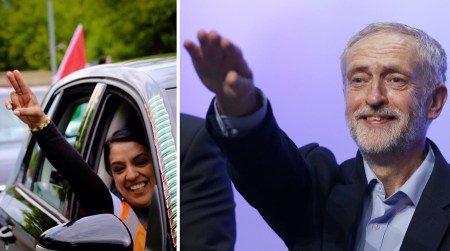
1579Labour Party MP Naz Shah (left), was recently suspended from the party for composing and sharing anti-Semitic tropes. Labour Party leader Jeremy Corbyn (right), has a tendency to hang around with Holocaust deniers, anti-Semitic hate-preachers and others of a similar ilk, and is a self-declared “friend” of the terror outfits Hamas and Hezbollah.

From the outset, she showed that she was willing to do the precise bidding of her party leader. Not least in ensuring that the point of any inquiry was entirely missed. For immediately upon being announced as the leader of the party’s inquiry into anti-Semitism, Chakrabarti announced that it would make no sense “only” to look into anti-Semitism, and that the inquiry must instead also look into “other forms of racism, including Islamophobia.” In a subsequent interview, she went on to question why the Conservative party had not set up an inquiry into what she alleged was its “Islamophobia.” Of course, this is a side-step that Jeremy Corbyn has very much made his own.

In the run-up to his election as Labour party leader, Corbyn was often asked about his tendency to hang around with Holocaust deniers, anti-Semitic hate-preachers and others of a similar ilk. Apart from not quite owning up to his connections to such people, the other technique he employed at this time was to put on a look of extreme affront and say that he had spent his entire life “fighting racism.” Whenever the specific question of anti-Semitism was raised, he would say how opposed he was to all forms of racism “including Islamophobia.” It has apparently proven impossible for Corbyn to realize the specific nature of anti-Semitism; whenever it has come up, he has used the opportunity to talk not about racial hatred against Jews but what he believes to be an epidemic of hatred towards Muslims.

Leaving aside the obvious fact that Muslims are not a race, there is in any case no evidence whatsoever to support the allegation of Corbyn and others that there is an epidemic of “Islamophobia” in the UK, and specifically no evidence of such an issue in the Conservative party. But this attempt to turn around the narrative was pushed by certain Labour apparatchiks to complain that any and all questioning of the newly elected London Mayor, Sadiq Khan, for his past affiliations with Islamist extremists was not a legitimate line of questioning of the judgement of anyone running for elected office, but instead an “Islamophobic” attack purely motivated by “racism.” Even now, Corbyn supporters are trying to distract attention from their own party’s very evident problem and turn racism allegations around on the Conservative party. None of which suggests any serious desire to get on top of their problem.

We can already predict what the conclusions of the Chakrabarti Inquiry will be, from the manner in which she has started it. Will she able to explain that the main originator of anti-Semitism in the Labour party today comes from its growing Muslim base? If she does identify that, will she then need to have an inquiry into herself for such flagrant “Islamophobia”? More likely she will find the party entirely blameless. Just a few dozen bad apples, and so on. And even then, we now have a nice demonstration of what will happen if any unpleasant findings do accidentally slip through.

The Labour party has another inquiry: into allegations, reported earlier this month, of anti-Semitism at its Oxford University club. Amazingly enough, while that inquiry (led by Baroness Royall) found “difficulties,” it claimed to find no “institutional anti-Semitism.” These careful headline facts having been released, the rest of the report was then swiftly supressed on the orders of the Labour party. Only a bland executive summary and some recommendations were made public, evidently leaving even the author of the inquiry “frustrated.” So there is the state of the British Labour party in 2016. A party evidently riddled with anti-Semitism from top to bottom, and led by people who want to divert attention from the fact or cover it over entirely. The Labour party has a serious problem, and it is in institutional denial. Things can only get worse.

Related Video: Douglas Murray on “Anti-Semitism in Britain’s Labour Party”

German diaspora to Hungary

May 30, 2016

German diaspora to Hungary, YouTube, May 29, 2016

As the short blurb beneath the video states,

This despicable leftist media hit piece still shows, despite itself, how bad it is in Germany if nice, had working Germans are ready to leave everything familiar and move to Hungary.

Obama Names Official Linked to MB as Gov’t Liaison to Muslims

May 30, 2016

Obama Names Official Linked to MB as Gov’t Liaison to Muslims, Clarion ProjectRyan Mauro, May 30, 2016

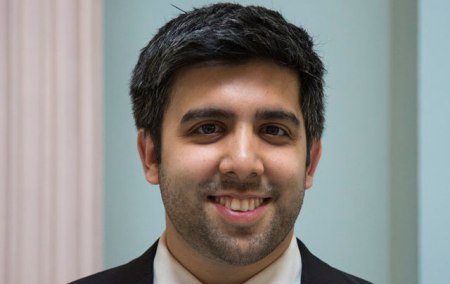
Zaki-Barzinji-IPZaki Barzinji (Photo: White House)

The Obama Administration has chosen the grandson of a Muslim Brotherhood terror suspect as its new liaison to the Muslim-American community. The new official also led the youth section of the Islamic Society of North America (ISNA), an identified Muslim Brotherhood entity that was labeled an unindicted co-conspirator in a Hamas-financing trial.

The official, Zaki Barzinji, previously served as the deputy director of intergovernmental affairs for Virginia Governor Terry McAuliffe (more on that further down in this article), who is now under investigation for possible political corruption. Before that, Barzinjiw as the president of the Muslim Youth of North America, whichdescribes itself as the youth wing of ISNA.

ISNA was labeled an unindicted co-conspirator in the largest terrorism-financing trial in U.S. history, with the Justice Department specifically listing it as an entity of the Muslim Brotherhood. The Brotherhood’s own documents list ISNA at the top of its list of “our organizations and the organizations of our friends.”

ISNA’s links to the Brotherhood and Hamas are laid out in bipartisan legislation titled the Muslim Brotherhood Terrorist Designation Act. The bill now has over 75 supporters in the House and Senate.

How did Zaki Barzinji rise through the ranks in ISNA and McAuliffe’s office to become the new associate director of public engagement for the White House?

He is the grandson of a prominent Islamist leader named Jamal Barzinji, who passed away last year.  Indeed, Jamal Barzinji was a founder and/or senior official in virtually every group identified as a Muslim Brotherhood front in America. He also frequently donated to political campaigns. He was nearly prosecuted, but the Obama Justice Department dropped the planned indictment.

Zaki accepted an award on his grandfather’s behalf in 2013 at the Hamas/Brotherhood-linked Dar al-Hijrah Islamic Center in Virginia, which the late Barzinji helped found. The mosque is most known for having Al-Qaeda operative Anwar al-Awlaki as its imam in 2001 before he officially joined the terrorist group.

Jamal Barzinji was most involved with the International Institute of Islamic Thought (IIIT). The group’s office, Jamal Barzinji’s home and the offices of other organizations that Jamal Barzinji was affiliated with were raided in 2002 as part of a terrorism investigation. The affidavit said has being investigated because of evidence leading the U.S. government to “believe that [Jamal] Barzinji is not only closely associated with Palestinian Islamic Jihad (as evidenced by ties to [Sami] Al-Arian…), but also with Hamas.”

Jamal Barzinji’s group was so close to Palestinian Islamic Jihad operative Sami Al-Arian that IIIT’s president considered his group and Al-Arian’s to be essentially one entity. The indictment of Al-Arian and his colleagues says that they “would and did seek to obtain support from influential individuals, in the United States under the guise of promoting and protecting Arab rights.”

Keep that quote and the investigation into McAuliffe’s political contributions in mind when you consider how Zaki Barzinji apparently rose to his new position with some help from his grandfather’s political connections.

In 2011, IIIT (again, the late Jamal Barzini’s organization) donated $10,000 to the New Dominion PAC, which has strong Democratic party ties in the state, particularly as a donor to current Senator (former Governor) Tim Kaine, who spoke at a New Dominion PAC event honoring Jamal Barzinji in 2011.

Barzinji’s grandson became the outreach coordinator for McAuliffe’s campaign for governor in April 2013, per his LinkedIn profile. The Barzini/IIIT-linked PAC raised $15,000 for McAuliffe’s campaign two years later on September 29, 2013.

Zaki Barzinji became McAuliffe’s special assistant for policy in January 2014 and was promoted to deputy director of intergovernmental affairs in July 2014. This month, he became the White House’s liaison to the Muslim-American community as its new associate director of public engagement. Quite a rapid rise for a 27-year old.

There are no Islamist-sounding quotes from Zaki Barzinji but important questions remain.

Is it really wise to have the grandson of a Muslim Brotherhood terror suspect, who served as the head of the youth wing of an identified Muslim Brotherhood identity with Hamas links, as the White House’s liaison to the Muslim-American community?

What role did the political ties and donations of his Islamist grandfather and IIIT play in his remarkably fast rise through state politics and to the White House?

And what about his own work as president of the youth wing of ISNA, an entity of the U.S. Muslim Brotherhood?

Germany’s New “Integration Law”

May 29, 2016

Germany’s New “Integration Law” Gatestone InstituteSoeren Kern, May 29, 2016

♦ The new law applies only to legitimate asylum seekers, not to the hundreds of thousands of economic migrants from Africa, Asia and the Middle East who have entered Germany illegally by posing as asylum seekers.

♦ Of the more than 1.1 million migrants who arrived in Germany in 2015, only 476,649 have applied for asylum. Many of the rest have gone underground and are sustaining themselves through petty crime and drug dealing.

♦ Nearly half (49%) of the migrants in Germany whose asylum applications were rejected during the past two years have not left the country, according to leaked government data.

♦ “Regaining control of our borders is an existential issue for our culture and the survival of our society.” — Thilo Sarrazin, renowned German central banker and a former member of the Social Democrats.

After months of haggling, Germany’s coalition government has agreed on a new “Integration Law” aimed at regulating the rights and responsibilities of asylum seekers in Germany.

The main focus of the law is to encourage refugees to learn enough German to be able to find a job and help pay for their living expenses.

Chancellor Angela Merkel has hailed the new law as a “milestone,” and Vice Chancellor Sigmar Gabriel says it represents a “true paradigm shift in Germany.”

Critics counter that the new law is a largely symbolic measure directed at reassuring German voters and blunting the rise of the anti-immigration Alternative for Germany party.

Details of the Integration Law were announced on May 25 after a two-day government summit in Schloss Meseberg, a castle north of Berlin. Based on the motto “Support and Demand” (Fördern und Fordern), the new law makes the government an active participant in the integration process. Key components of the law include:

  • Integration Courses. Courses on German culture, society and values will be expanded from 60 hours to 100 hours. The number of available slots will be increased from 20,000 to 200,000 nationwide. The courses will be obligatory for all asylum seekers; those who refuse to attend will have their social welfare benefits cut.
  • Language Courses. Asylum seekers will now be allowed to apply for language courses six weeks after arriving in Germany (compared to three months before) and regardless of whether their asylum applications have been processed. All refugees seeking permanent residency must be proficient in German.
  • Work Programs. The government will create 100,000 low-wage jobs paying around one euro an hour. Refugees who refuse to work will have their benefits cut.
  • Labor Laws. Existing labor laws will be relaxed to encourage German companies to hire refugees, even if better qualified German or EU citizens are available for an advertised position.
  • Preventing Ghettoes. The new law will authorize regional governments to determine where refugees will live, either by allocating or banning them from certain areas, for the next three years. The objective is to prevent refugees from settling in migrant ghettoes.
  • Permanent Residency. Refugees who are proficient in German and can provide for their own upkeep in Germany can apply for permanent residency after five years; those with exceptional German skills can do so after three years.

The law has been accompanied by the so-called Meseberger Declaration on Integration, a statement of principles summarizing the government’s new integration policy.

Addressing the proliferation of migrant sex crimes in Germany, the document states: “We will not accept assaults on women, children and others in need of protection, whether such attacks are directed against German citizens or against refugees.”

Critics say the new law, which must be approved by the German Parliament, which will debate the measure in July, is inadequate to deal with Germany’s integration problems.

For a start, the law applies only to legitimate asylum seekers, not to the hundreds of thousands of economic migrants from Africa, Asia and the Middle East who have entered Germany illegally by posing as asylum seekers.

Of the more than 1.1 million migrants who arrived in Germany in 2015, only 476,649 have applied for asylum, according to official statistics. Many of the rest have gone underground and are sustaining themselves through petty crime and drug dealing. The government has not said how it plans to “integrate” such migrants.

In addition, the government is already facing an acute shortage of instructors to teach the integration courses. It remains unclear where the government will find thousands of new instructors envisioned in the new law. Interior Minister Thomas de Maizière has admitted: “The bottleneck is not money but the lack of teachers.”

Also unclear is who will pay for implementing the new law. According to a recent estimate, the total cost of “integrating” refugees will reach 25 billion euros ($28 billion) in 2016 alone. Leaders of some of Germany’s 16 federal states are demanding that the central government assume responsibility for at least half this amount.

Moreover, some critics say the law lacks meaningful punitive measures. Although it does call for cutting welfare benefits to refugees who refuse to learn German, it does not threaten them with deportation. Of course, refugees fleeing warzones cannot be returned to their countries of origin, even if they refuse to learn German.

In any event, Germany is lenient when it comes to deportation. For example, nearly half (49%) of the migrants in Germany whose asylum applications were rejected during the past two years have not left the country, according to government data leaked to Die Welt.

Perhaps most importantly, the new law appears to be based on the assumption that the EU-Turkey migrant deal will hold. If Turkey reopens the floodgates to mass migration, and hundreds of thousands of additional migrants flow into Germany, integration efforts are likely to collapse.

Hans-Peter Uhl of the Christian Social Union (CSU), the Bavarian sister party to Merkel’s Christian Democrats (CDU), said the new law does not go far enough: “Integration is good and important, but placing limits on the number of refugees would be much better.”

Stephan Mayer, also of the CSU, added: “Whoever refuses deportation should be sent to a detention center and deported within four days.”

Vice Chancellor Sigmar Gabriel of the Social Democrats (SPD) says the Integration Law is actually the precursor to a full-fledged Immigration Law, a claim disputed by Angela Merkel. Gabriel — who has called for airlifting migrants directly from the Middle East to Germany — says he plans to introduce a draft immigration law this fall; critics of the measure say it would encourage yet more migration to Germany.

Thilo Sarrazin, a renowned German central banker and a former member of the Social Democrats (SPD), has been warning Germans for years about the consequences of mass migration. In 2010, he wrote the best-selling book, “Germany Does Away with Itself” (Deutschland schafft sich ab), which shattered Germany’s long-standing taboo on discussing the social changes transforming the country due to the presence millions of non-integrated Muslims.

In his latest book, “Wishful Thinking,” (Wunschdenken), Sarrazin accuses Merkel of “no longer being concerned about the interests of Germans and the future of their nation, the protection of their living environment (Lebensumfelds) and their cultural identity.” He concludes: “Regaining control of our borders is an existential issue for our culture and the survival of our society.”

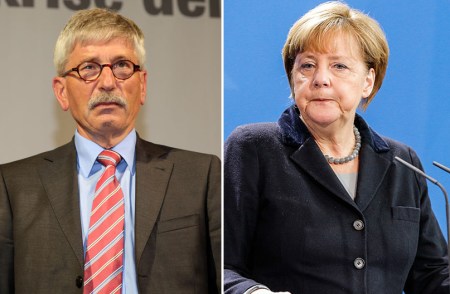
1628Thilo Sarrazin (left), a renowned German central banker and a former member of the Social Democrats (SPD), accuses Chancellor Angela Merkel (right) of “no longer being concerned about the interests of Germans and the future of their nation, the protection of their living environment and their cultural identity.” Sarrazin concludes: “Regaining control of our borders is an existential issue for our culture and the survival of our society.”<?address>


Sweden: Is Islam Compatible with Democracy?

May 28, 2016

Sweden: Is Islam Compatible with Democracy? Gatestone InstituteIngrid Carlqvist, May 28, 2016

♦ It is not a secret that democracy can be used to abolish democracy.

♦ It may have finally begun to dawn on the people that Swedish Sweden will soon be lost forever, and in many areas replaced by a Middle Eastern state of affairs, where different immigrant groups (mainly Muslims) make war on each other as well as on the Swedes.

♦ According to Dr. Peter Hammond, in his book Slavery, Terrorism and Islam: The Historical Roots and Contemporary Threat, the goal of Islam is not to convert the whole world, but rather, to establish sharia law all over the world.

♦ There is no country where Islam is dominant that can be considered a democracy with freedom of speech and equal justice under law.

In Sweden’s last census in which citizens were asked about their religious beliefs, in 1930, fifteen people said that they were Muslims. Since 1975, when Sweden started its transformation from a homogenous, Swedish country into a multicultural and multi-religious one, the number of Muslims has exploded. Now, approximately one million Muslims live here — Sunni, Shia and Ahmadiyya from all the corners of the world — and Mosques are built and planned all over the country.

No one, however, seems to have asked the crucial question upon which Sweden’s future depends: Is Islam compatible with democracy?

The Swedish establishment has not grasped that Islam is more than a private religion, and therefore it dismisses all questions about Islam with the argument that Sweden has freedom of religion.

Two facts point to Islam not being compatible with democracy. First, there is no country where Islam is dominant that can be considered a democracy with freedom of speech and equal justice under law. Some point to Malaysia and Indonesia — two countries where flogging and other corporal punishments are meted out, for example, to women showing too much hair or skin, as well as to anyone who makes fun of, questions or criticizes Islam. Others point to Turkey as an example of an “Islamic democracy” — a country which routinely imprisons journalists, political dissidents and random people thought to have “offended” President Erdogan, “Islam” or “the nation.”

Second, Muslims in Europe vote collectively. In France, 93% of Muslims voted for the current president, François Hollande, in 2012. In Sweden, the Social Democrats reported that 75% of Swedish Muslims voted for them in the general election of 2006; and studies show that the “red-green” bloc gets 80-90% of the Muslim vote.

It is no secret that democracy can be used to abolish democracy — yet, this crucial issue is completely taboo in Sweden. Politicians, authorities and journalists all see Islam as just another religion. They seem to have no clue that Islam is also a political ideology, a justice system (sharia) and a specific culture that has rules for virtually everything in a person’s life: how to dress; who your friends should be; which foot should go first when you enter the bathroom. Granted, not all Muslims follow all these rules, but that does not change the fact that Islam aspires to control every aspect of human life — the very definition of a totalitarian ideology.

While the establishment closes its eyes to the problems that come with a rapidly growing Muslim population in Sweden, ordinary Swedes seem to be growing increasingly upset. Prime Minister Stefan Löfven, however, appears to be at a complete loss as to why this is. He recently told the British newspaper, Financial Times:

“But the more surreal thing is that all the numbers are going in the right direction, but the picture the public have is that the country is now going in the wrong direction. It’s not only a question about if they are afraid of the refugee crisis; it’s as if everything is going in the wrong direction.”

This comment says a lot about how disconnected Prime Minister Löfven is from the reality that ordinary Swedes are facing. The mainstream media withhold information about most of the violence that goes on in, and around, the asylum houses in the country, and it is not very likely that Stefan Löfven reads the alternative media sites; he and others in power have, in unison, dubbed them “hate sites.” He obviously has no idea about the anger and despair many Swedes are now feeling. It may have finally begun to dawn on them that Swedish Sweden will soon be lost forever, and in many areas replaced by a Middle Eastern state of affairs where different immigrant groups (mainly Muslims) make war on each other as well as on the Swedes.

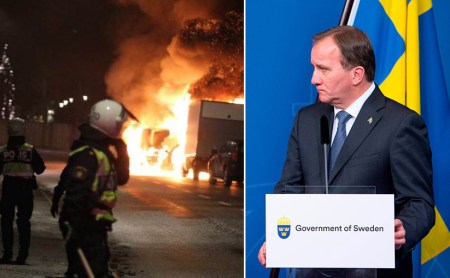
1625While the establishment closes its eyes to the problems that come with a rapidly growing Muslim population in Sweden, ordinary Swedes seem to be growing increasingly upset. Prime Minister Stefan Löfven (right), however, appears to be at a complete loss as to why this is. Pictured at left: The results of rioting in a Stockholm suburb, December 2014.

The people suffering most cruelly in the “New Sweden” are the elderly. The costs of immigration borne by the welfare state have led to a quarter of a million retirees living below the EU poverty line. Meanwhile, the government recently added another 30 billion kronor (about $3.6 billion) to the migration budget. The 70 billion kronor ($8.4 billion) Sweden will spend on asylum seekers in 2016 is more than what the entire police force and justice system cost, more than national defense costs, and twice the amount of child benefits.

Sweden’s 9.5 million residents are thus forced to spend 70 billion kronor on letting citizens of other countries come in. In comparison, the United States, with its 320 million residents, spent $1.56 billion on refugees in 2015. The editorial columnist PM Nilsson commented in the business paper, Dagens Industri:

“To understand the scope of the increase in spending, a historic look back can be worthwhile. When the right bloc came to power in 2006, the cost was 8 billion [kronor] a year. In 2014, it had gone up to 24 billion. That summer, then Minister of Finance Anders Borg talked about the increase being the most dramatic shift in the state budget he had ever seen. The year after, 2015, the cost rose to 35 billion, and in 2016, it is projected to rise to 70 billion.”

For many years, the politicians managed to fool the Swedish people into thinking that even if immigration presented an initial cost, the immigrants would soon enable the country to turn a profit. Now, more and more research indicates that the asylum seeker immigrants rarely or never find work. The daily newspaper Sydsvenskan reported in February, for example, that 64% of Malmö’s immigrants are still unemployed after living in Sweden for ten years. The government openly calculates in its budget that in four years, 980,000 people will be living on either sickness benefits, disability pensions, unemployment benefits, “introduction benefits” or social welfare.

Swedes, who for many years have paid the highest taxes in the world without whining, are now taking to social media to express their anger that their money is going to citizens of other countries. More and more Swedes are choosing to emigrate from Sweden, mainly to the other Nordic countries, but also to Spain, Portugal and Great Britain, where taxes on pensions are considerably less.

But there are worse problems than the economic aspect. A sense of insecurity and fear has gripped the many Swedes who live close to asylum houses. On some level, the government seems to have grasped that danger: in a recent decision to continue maintaining border controls, Interior Minister Anders Ygeman wrote:

“The Swedish Civil Contingencies Agency (Myndigheten för samhällsskydd och beredskap), MSB, makes the assessment that the flow of migrants still brings challenges to upholding security in society, when it comes to the ability to maintain certain important public functions, among other things. Several of these challenges are expected to persist over time. The Police Authority’s assessment is still that a serious threat to public order and internal security exists. The Immigration Service still advocates border controls.”

Despite these ominous words, politicians still do not seem to understand that many Swedes are already experiencing “a serious threat to public order and internal security.” New asylum houses are opening at an alarming pace, against the will of the people living near them. In the Stockholm suburb of Spånga-Tensta, on April 15, local authorities held a public meeting, the purpose of which was to allow local residents to ask the politicians and officials questions about planned housing for 600 migrants — next to a school. The meeting, which was filmed, showed a riotous mood among those gathered there, many shouting that they were going to fight “until their last breath” to keep the plans from materializing.

Some of the comments and questions were:

  • “We have seen how many problems there have been at other asylum houses – stabbings, rapes and harassment. How can you guarantee the safety for us citizens? This is going to create a sense of us against them, it’s going to create hate! Why these large houses, why not small ones with ten people in each? Why haven’t you asked us, the people who live here, if we want this? How will you make this safe for us?”
  • “We already have problems at the existing asylum houses. It’s irresponsible of you to create a situation where we put our own and our children’s health in jeopardy, with people who are not feeling well and are in the wrong environment. Why is this house right next to a school? What is your analysis?”
  • “Will Swedes be allowed to live in these houses? Our young people have nowhere to live. You politicians should solve the housing issue for the people already living here, not for all the people in the world.”

When the chairman of the meeting, Green Party representative Awad Hersi, of Somali descent, thanked the audience for the questions without giving any answers, the mood approached that of a lynch mob. People shouted: “Answer! Answer our questions! We demand answers!”

Everything points to the so far docile Swedes now having had enough of the irresponsible immigration policy that has been going on for many years, under socialist and conservative governments alike.

People are furious at the wave of rapes that have given Sweden the second-highest rate of rape in the world, after only Lesotho, and that recently forced the Östersund police to issue a warning to women and girls not to go outside alone after dark. People are scared: the number of murders and manslaughters has soared. During the first three months of this year alone, there have been 40 murders and 57 attempted murders, according to statistics compiled by the journalist Elisabeth Höglund.

The authorities have long claimed that lethal violence in Sweden is on the decline, but that is compared to a record-breaking year, 1989, when mass immigration to Sweden was already in full swing. If one instead were to compare the present to the 1950s and 1960s, when Sweden was still a homogenous country, the number of murders and manslaughters has doubled. Recently, the Swedish National Council for Crime Prevention (Brottsförebyggande rådet), BRÅ, had toadmit that lethal violence did, in fact, increase in 2015, when 112 people were killed — 25 more than the year before. It was also revealed that the kind of lethal violence that has gone down was run-of-the-mill drunken homicides committed by Swedes, while the number of gangster-style hits carried out by immigrants has gone up dramatically. Improved trauma care for wounded victims also helps keep the number of murders and manslaughters down.

A recent poll showed that 53% of Swedes now think immigration is the most important issue facing the country. The change from 2015 is dramatic — last year, only 27% said that immigration was most important. Another poll showed that 70% of Swedes feel that the amount of immigration to Sweden is too high. This is the fourth year in a row that skepticism about the magnitude of immigration has increased.

More and more people also seem to worry about the future of Sweden as a democracy with an increasing number of Muslims — through continued immigration as well as Muslim women having significantly more children than Swedish women do.

As statistics on religious beliefs are no longer kept, no one knows exactly how many Muslims are in Sweden. Last year, a poll showed that Swedes believe 17% of the population is Muslim, while the actual number, according to the polling institute Ipsos Mori, may be more like 5%. The company does not account for how it arrived at this number, and it is in all likelihood much too low. Ipsos Mori probably counted how many members Muslim congregations and organizations have, but as Islam is also a culture, and the country is equally affected by the Muslims who do not actively practice their faith, yet live according to Islamic culture.

In 2012, the Swedish alternative newspaper, Dispatch International, calculated how many Muslims were registered residents of Sweden at that time, based on the Swedish name registry. The number the paper arrived at was 574,000, plus or minus 20,000. For obvious reasons, illegals and asylum seekers were not included. The actual number may therefore have been much higher.

Since then, close to 300,000 people have sought asylum in Sweden. Not all of them have had their applications approved, but despite that, very few actually leave Sweden. The Immigration Service told Gatestone Institute that only 9,700 people were deported last year. Most asylum seekers are Muslim, which means that the number of Muslims in Sweden is fast approaching one million, or 10% of the population.

In his book Slavery, Terrorism and Islam: The Historical Roots and Contemporary Threat, published in 2005, Dr. Peter Hammond describes what has always happened throughout history when the number of Muslims in a country increases. Admittedly generalities, Hammond outlines the following:

  • As long as the Muslims make up about 1%, they are generally considered a peace-loving minority who do not bother anyone.
  • At 2-3%, some start proselytizing to other minorities and disgruntled groups, especially in prison and among street gangs.
  • At 5%, Muslims have an unreasonably large influence relative to their share of the population. Many demand halal slaughtered meat, and have been pushing the food industry to produce and sell it. They have also started to work toward the government giving them autonomy under sharia law. Hammond writes that the goal of Islam is not to convert the whole world, but rather, to establish sharia law all over the world.
  • When Muslims reach 10%, historically, lawlessness increases. Some start to complain about their situation, start riots and car fires, and threaten people they feel insult Islam.
  • At 20%, violent riots erupt, jihadi militia groups are formed, people are murdered, and churches and synagogues are set ablaze.
  • When the Muslims reach 40% of the population, there are widespread massacres, constant terror attacks and militia warfare.
  • At 60%, there is the possibility of uninhibited persecution of non-Muslims, sporadic ethnic cleansing, possible genocide, implementation of sharia law and jizya (the tax for “protection” that unbelievers must pay).
  • When there are 80% Muslims in the country, they have taken control of the government apparatus and are, as in, for instance, Syria, Afghanistan, Pakistan and Iraq, committing violence in the name of Islam or political power.
  • When 100% are Muslims, the peace in the house of Islam is supposed to come — hence the claim that Islam is the “religion of peace.”

Hammond also writes that in many countries, such as France, Belgium, Great Britain and Sweden, most of the Muslim population lives in Islamic enclaves — and apparently prefer not to be assimilated into a Western society. This detachment strengthens the group internally, allowing them to exercise greater power than their share of the population might indicate.

Hammond’s description of the 10%-limit accurately describes Sweden. In the so-called exclusion areas, there are car torchings every day, and riots occur in the cities. (To name but a few examples, there were serious riots in Malmö 2008, Gothenburg 2009, Stockholm 2013, and Norrköping and Växjö 2015.) Sometimes, the unrest starts after a local Muslim has been arrested or shot by the police. Muslim leaders then immediately say they sympathize with their people’s reaction. During the Husby riots in 2013, Rami Al-Khamisi of the youth organization “Megafonen”wrote: “We can see why people are reacting this way.”

The artist Lars Vilks, who drew the Muslim prophet Muhammed as a roundabout dog, has been the target of several assassination attempts, and now lives under round-the-clock police protection.

Yet, almost no one in Sweden is willing to speak of these problems and how it all fits together. For months, Gatestone Institute has called politicians, civil servants, organizations and various minority groups, to ask how they feel about Islam in Sweden. Do they think Islam is compatible with democracy, freedom of speech and legal equality — and if so, in what way or what way not?

The questions seemed to provoke anger as well as fear. Some of the people we called said they were angry at the mere questions, but assured the callers that Islam poses no problem whatsoever for Sweden. Others appeared frightened and refused to answer altogether. In the hopes of getting at least some honest answers, we presented ourselves as ordinary, concerned Swedes. Countless people hung up the phone, and in general, many answers pointed to an abysmal ignorance about what Islam is, what consequences the Islamization of a country might have, or how much trouble Sweden really is in. The country appears totally unprepared for what lies ahead.