See No Sharia: ‘Countering Violent Extremism’ and the Disarming of America’s First Line of Defense, Secure Freedom via You Tube, April 14, 2016
Islamophobia in one State (5), Power Line,
(Please see also, From Poet to Jihai: The Story of a Somali American in Minnesota. — DM)
On what seems like a daily basis, Minnesotans are lectured against the evils of “Islamophobia.” In October, Gov. Mark Dayton weirdly instructed “white, B-plus, Minnesota-born citizens” to suppress their qualms about immigrant resettlement in Minnesota, according to the St. Cloud Times. If they can’t, they should “find another state,” he added.
Andrew Luger, the United States Attorney for Minnesota is a paragon of political correctness who has inveighed against “the current wave of Islamophobia” and has stayed on the attack. Yesterday Luger and others gathered at the prestigious Minneapolis law firm Dorsey & Whitney to decry Islamophobia. Walter Mondale is of counsel at the firm and was a featured speaker at the event. The Star Tribune reports on the proceedings in “Minneapolis legal community, Somali-Americans latest to unite to confront Islamophobia.”
The Twin Cities have received more than 100,000 Somali Muslims in the past 20 years or so. Their presence is notable, yet signs of bigotry against them are virtually nil.
The star victim on display at the Dorsey & Whitney conference yesterday was Asma Jama (middle name Mohamed, by the way). Jama was assaulted by a patron at a local Applebee’s who “flew into a rage because she spoke a foreign language.” Jama speaks Swahili.
The perpetrator of the assault on Jama was one Jodie Burchard-Risch. Burchard-Risch is a nut who has probably had to push 1 for English one too many times. The Star Tribune provides no evidence for deeming her an anti-Muslim bigot. (MPR has a good account of the assault here, with photos.) So far as I can tell, “Islamphobia” had nothing to do with the assault. Indeed, I’m going to go out on a limb and guess wildly that alcohol was a substantial contributing factor to the incident. And when it comes to “Islamophobia,” this was the best they could do, so to speak.
“Islamophobia” is a concept fervently promoted since 2000 by the Organization of the Islamic Conference. It seeks to stigmatize expressions of disapproval of Islam as irrational manifestations of fear and prejudice. Implicitly, it raises the question of whether any fear of Islam is necessarily crazy. It also raises the question of whether some fear of Islam might be rational, but it instructs us to keep any unapproved answer to ourselves. It seeks to make us afraid to talk about perfectly reasonable fears. Andrew McCarthy has more on the provenance and uses of “Islamophobia” here.
Since the early 1990s, Minnesota has been flooded by waves of Somali Muslim refugees and immigrants. The number remains in doubt; official sources place it at something like 35,000. Unofficial estimates put it at well over 100,000. Whatever the number, it is large and growing.
Politicians like Dayton have proved highly effective in inhibiting public discussion of legitimate concerns about Minnesota’s Somali community. When I sat down to interview Hennepin County Sheriff Rich Stanek in his office this past November, he bristled in response to my question about security issues related to the Somali community. Why was I focusing on that community? I referred to the congressional task force report recognizing Minnesota’s responsibility for 26 percent of the American fighters joining or seeking to join the ISIS. “I just came from an FBI briefing this morning,” Stanek told me at the time. “They told me we’re 20 percent.”
OK, but that still leaves Minnesota at No. 1 in a ranking where we would like to be No. 50.
Ten Minnesota Somalis have now been charged by Luger’s office with seeking to join or support ISIS. Four have pleaded guilty. The charges represent the culmination of a 10-month FBI investigation.
Reading the criminal complaints and underlying FBI affidavits supporting the charges in these cases is an alarming experience. The young men who have responded to the call of ISIL are full of hate for Americans and for the U.S. If they choose to act it out somewhere closer to home than Syria, we will have a major problem on our hands. After the massacre in San Bernardino, Calif., you’d think it might be time to talk about it.
The 10 men present something of a case study that belies the clichés around the subject of “radicalization.” These men were “connected” to schools and jobs. Their cases demonstrate plenty of opportunity for advancement and financial support. One of the men even maxed out his federal student loan account with a $5,000 withdrawal before seeking to depart Minneapolis for Syria.
Unnamed local mosques figure prominently in the cases. Islam is, of course, a common denominator. The 10 men are all Muslims seeking to join the jihad waged by ISIL.
Hillary Clinton actually had a useful observation buried in her Minneapolis speech this past fall on the subject of terrorism. She quoted Deqa Hussen, the mother of one of the 10 Somali men charged with supporting ISIS. Addressing other parents, Hussen said: “We have to stop the denial. … We have to talk to our kids and work with the FBI.” Clinton herself added: “That’s a message we need to hear from leaders within Muslim-American communities across our country.”
Which raises a question or two: Why don’t we hear that message more often from leaders within the Somali community? For that matter, why don’t we hear more expressions of gratitude from within the Somali community for their rescue from Third World disorder by the U.S. or for opportunities afforded to them in Minnesota?
Kyle Loven is the Minneapolis FBI’s chief division counsel and media coordinator. Speaking about Somali-related law enforcement issues to the National Security Society in Richfield in October, he conceded that the community gave rise to special challenges for law enforcement. “We walk a tightrope” with this community, Loven observed. “Every time we have to indict somebody, you should see the remarks we get. … Every time we have to make an arrest, it is a setback [in our relations with the Somali community].”
Luger is nominally responsible for a pilot program to prevent “radicalization” of Somali-Minnesotans. The program goes under the name “Building Community Resilience,” a classic euphemism of the Obama era. The program is to funnel as much as $1 million to support Minnesota’s Somali community. The memorandum of understanding between Luger and Minnesota Somali leaders reflects the wariness of Somali-Minnesotans. It stipulates that the program will not be used for surveillance purposes by any law enforcement agency or by any person working for or on behalf of any law enforcement agency.
You can see why the authorities might want to shut down discussion of reasonable concerns raised by Minnesota’s Somali community. They really would prefer not to talk about them. They would prefer to sweep them under a well-worn rug.
NOTE: This post is adapted from my December Star Tribune column “Islam and Minnesota: Can we hear some straight talk for a change?” I hope that was a rhetorical question. The answer is obviously no.
ISIS Camp a Few Miles from Texas, Mexican Authorities Confirm, Judicial Watch, April 14, 2016
“[C]oyotes” engaged in human smuggling – and working for Juárez Cartel – help move ISIS terrorists through the desert and across the border between Santa Teresa and Sunland Park, New Mexico. To the east of El Paso and Ciudad Juárez, cartel-backed “coyotes” are also smuggling ISIS terrorists through the porous border between Acala and Fort Hancock, Texas.
Mexican intelligence sources report that ISIS intends to exploit the railways and airport facilities in the vicinity of Santa Teresa, NM (a US port-of-entry).
*********************************
ISIS is operating a camp just a few miles from El Paso, Texas, according to Judicial Watch sources that include a Mexican Army field grade officer and a Mexican Federal Police Inspector.
The exact location where the terrorist group has established its base is around eight miles from the U.S. border in an area known as “Anapra” situated just west of Ciudad Juárez in the Mexican state of Chihuahua. Another ISIS cell to the west of Ciudad Juárez, in Puerto Palomas, targets the New Mexico towns of Columbus and Deming for easy access to the United States, the same knowledgeable sources confirm.
During the course of a joint operation last week, Mexican Army and federal law enforcement officials discovered documents in Arabic and Urdu, as well as “plans” of Fort Bliss – the sprawling military installation that houses the US Army’s 1st Armored Division. Muslim prayer rugs were recovered with the documents during the operation.
Law enforcement and intelligence sources report the area around Anapra is dominated by the Vicente Carrillo Fuentes Cartel (“Juárez Cartel”), La Línea (the enforcement arm of the cartel) and the Barrio Azteca (a gang originally formed in the jails of El Paso). Cartel control of the Anapra area make it an extremely dangerous and hostile operating environment for Mexican Army and Federal Police operations.
According to these same sources, “coyotes” engaged in human smuggling – and working for Juárez Cartel – help move ISIS terrorists through the desert and across the border between Santa Teresa and Sunland Park, New Mexico. To the east of El Paso and Ciudad Juárez, cartel-backed “coyotes” are also smuggling ISIS terrorists through the porous border between Acala and Fort Hancock, Texas. These specific areas were targeted for exploitation by ISIS because of their understaffed municipal and county police forces, and the relative safe-havens the areas provide for the unchecked large-scale drug smuggling that was already ongoing.
Mexican intelligence sources report that ISIS intends to exploit the railways and airport facilities in the vicinity of Santa Teresa, NM (a US port-of-entry). The sources also say that ISIS has “spotters” located in the East Potrillo Mountains of New Mexico (largely managed by the Bureau of Land Management) to assist with terrorist border crossing operations. ISIS is conducting reconnaissance of regional universities; the White Sands Missile Range; government facilities in Alamogordo, NM; Ft. Bliss; and the electrical power facilities near Anapra and Chaparral, NM.
Christian Self-Defense Forces Emerge in Iraq & Syria, Clarion Project, Ryan Mauro, April 12, 2016
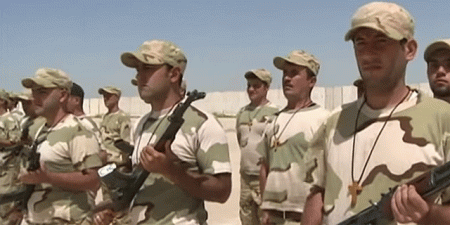 Members of the Christian Babylon Brigade in Iraq (Video: screenshot)
The Christians of Iraq and Syria have had a breathtaking commitment to passivity since being victimized by what we all now finally agree qualifies as a genocide.
Now, the Christians are increasingly organizing to defend themselves—and the West should stand by them instead of outsourcing our moral responsibility to the Iraqis and their Iranian partners and various groups with questionable track records.
A poll in December 2014 found that only one-third of Iraqis say they are concerned about the persecution of Christians in their country. About 67 percent said they are not concerned at all or only “somewhat” concerned.
It’s easy to say that the U.S. should pressure the Iraqi government to protect the Christians, but its track record and these poll results do not inspire hope that it’ll work. The pace of the genocide is such that the Christians and those who care for them simply cannot afford to spend time hoping for the best.
A Christian force known as the Babylon Brigade has been incorporated into the Popular Mobilization Units, an assortment of militias led by the Iraqi government and their partners from the Iranian regime and Hezbollah. The Babylon Brigades and their supporters boast of their nationalism, having battled the Islamic State in non-Christian areas like Ramadi and Tikrit.
However, it numbers only 500 to 1,000 The Iraqi government should be applauded for supporting a Christian unit, but don’t mistake this for an Iraqi commitment to a Christian self-defense force that enables the community to have a say over whether it goes extinct or not.
Current U.S. policy still gambles their survival on the chance that the Iraqi government tied to Iran will protect them, particularly when the U.N. says Christian persecution in Iran has reached unprecedented levels.
The Kurds are allies of the U.S. but, when it comes to protecting Christians, they have been far from ideal. The Iraqi and Syrian Christians have plenty of stories of mistreatment at the hands of the Kurds.
The growth of a number of Christian self-defense forces in Iraq and Syria show potential for what could happen if they receive outside support.
There’s the Nineveh Plain Protection Units in northern Iraq under the helm of the Assyrian Democratic Movement of Iraq, which has a branch in northeastern Syria named the Gozarto Protection Forces. They are backed by the Middle East Christian Committee. The secretary-general of the Assyrian Democratic Movement claims that proper support would quickly grow the NPU’s numbers to 5,000.
Another small force is called Dwekh Nawsha, which is linked to the Assyrian Patriotic Party and has gotten attention because of Westerners joining their ranks. One of their advisers warned in November, “All we’re saying is we’re done. We don’t have equipment. We don’t have the weapons. We don’t have the training,” as he pleaded for U.S. backing.
In Syria, there is the Syriac Military Council, estimated to be about 2,000-strong including a Christian female unit. It belongs to a Kurdish-majority coalition known as the Syrian Democratic Forces. There is also a local Christian defense force near the Khabur River called the Khabur Guards.
Of course, any Christian force will have to be properly vetted. Hezbollah has set up a non-denominational force named Saraya al-Muqawama that includes Christians, Sunnis and non-religious Shiites.
A Christian police force that is favorable towards the Assad regime clashed with Kurdish forces in Qamishli, Syria. Sources close to the situation there emphasize that the Christians who embrace Assad are motivated by a fear of Islamist rebels, not because of any affinity for dictatorship or the regime’s brutality.
It would be a mistake to dismiss the viability of Christian self-defense forces because of their current sizes and capabilities. Unlike the Iraqi and Syrian militias and rebels, the Christians have had to rely only upon themselves for survival. They don’t have a state sponsor like Saudi Arabia, Qatar or Iran to build them up.
The U.S. has provided material support to Sunnis, Shiites and Kurds, despite records of human rights abuses, Islamism and ties to terrorists and enemy regimes. The Christians are reliable foes of Islamic extremism who, despite all they have suffered, have never formed a sectarian militia to exact bloody revenge.
It’s time for the U.S. to ask itself: Why are Sunnis, Shiites and Kurds worthy of our direct material aid but the Christians are not? Why do they deserve a chance to stop the murder, raping and torturing of their people, but the Christians do not and are left facing extinction if trends continue?
Majority Of Muslim Students Think Brussels Terrorists Are ‘Heroes’ Say Teachers, Breitbart, Virginia Hale, April 11, 2016
 Getty
Getty
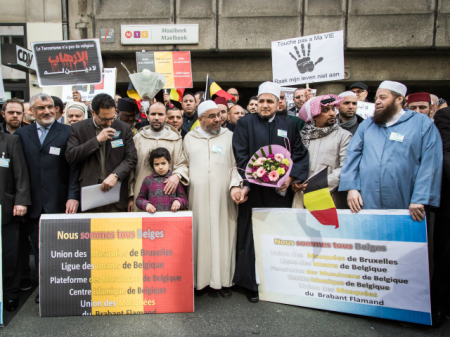
Teachers working in the predominantly Muslim districts of Molenbeek and Schaerbeek in Brussels have reported that “90 percent of their students, 17, 18 years old” called the Islamist terrorists who attacked Paris and Brussels “heroes”.
The revelation came in an article in the New York Times, wherein Steven Erlanger spoke to a Belgian policymaker who relayed the information from Belgium.
The piece, entitled “Blaming Policy, Not Islam, for Belgium’s Radicalised Youth”, interviewed Yves Goldstein, chief of staff for the minister-president of the Brussels Capital Region and a Schaerbeek councilman. Schaerbeek and Molenbeek are now infamous as the areas in which for months Islamists lived, hid, manufactured weapons and made preparations for the Paris and Belgium attacks.
Reflecting that “our cities are facing a huge problem, maybe the largest since World War II,” Goldstein poses the question, “How is it that people who were born here in Brussels, in Paris, can call heroes the people who commit violence and terror?”
Dismissing the idea of Islam having played any role in the Paris attack and the bombing of Brussels airport and a subway station claiming that “religion for them is a pretext” and that they “believe in nothing,” the politician the boldly claims that the problem is a lack of exposure to diversity and modern art:
“We have neighborhoods where people only see the same people, go to school with the same people. What connection do they have with the whole society, what connection do they have with real diversity? It’s the establishment of the ghetto,” he says, “and it’s the thing in our urban development that we have to tackle.”
“These young people will never go to museums until 18 or 20 — they never saw Chagall, they never saw Dalí, they never saw Warhol, they don’t know what it is to dream.”
Erlinger reports that “Jews have left Schaerbeek, and the last two synagogues are being sold. Instead, there is a kind of suffocating, insular, ethnic uniformity” and describes Belgium’s system of integration as “somewhere between the French model, which put new immigrants in suburban ghettos, and the British and American one, which created communities like Chinatown or Little Italy.”
The article neglects to ask basic questions like why – if Islamic extremism is the fault of Belgian urban planning – is it happening globally? Why Jewish communities might have left Schaerbeek? Or why Chinese diaspora, living in Chinatown-like communities and taking no interest in modern art, seem to be at no risk of committing terrorist attacks?
Hillary’s Libya: Number of ISIS Fighters in Beleaguered Country Doubles, Truth Revolt, Tiffany Gabbay, April 11, 2016
(Please see also, Obama: My Worst Mistake Was Not Planning For Day After Libya Intervention. — DM)
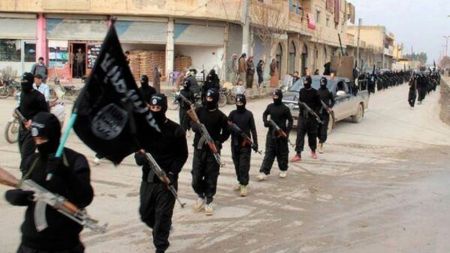
It’s now the largest ISIS branch outside Iraq and Syria.
Fans of Hillary Clinton consistently cite the Democrat frontrunner’s tremendous “experience” and success as Secretary of State. They conveniently leave out the fact that Hillary’s Libya has doubled its number of ISIS militants and now boasts the largest ISIS branch outside Iraq and Syria.
The Associated Press reports that a US commander for Africa said the number of ISIS militants in Libya has doubled in the last year to roughly 6,000:
Army Gen. David Rodriguez heads US Africa Command. Rodriquez said local militias in Libya have had some success in trying to stop the Islamic State from growing in Benghazi and are battling the group in Sabratha. But he said decisions to provide more military assistance will wait for a national government.
The latest numbers for IS in Libya make it the largest Islamic State branch of eight that the militant group operates outside Iraq and Syria, according to US defense officials. The officials were not authorized to provide details of the group and spoke only on condition of anonymity.
The US has conducted two airstrikes in Libya in recent months targeting Islamic State fighters and leaders, but Rodriguez said that those are limited to militants that pose an “imminent” threat to US interests. He said it’s possible the US could do more as the government there takes shape.
The US and its allies are hoping that a UN-brokered unity government will be able to bring the warring factions together and end the chaos there, which has helped fuel the growth of the Islamic State. The US and European allies would like the new government to eventually work with them against IS.
While Rodriguez claims there is an insurgent effort among Libyans to fight off ISIS militants, their efforts have not worked very well.
“It’s uneven and it’s not consistent across the board,” Rodriguez told reporters at a Pentagon briefing. “We’ll have to see how the situation develops, but they [Libyan rebels] are contesting the growth of ISIS in several areas across Libya, not all of it.”
With then-Secretary of State Hillary Clinton at the helm, the Obama administration dismantled the Middle East and Maghreb rendering it more volatile and ripe for extremism than ever before.
Islamic University of Minnesota a Hotbed of Extremism, Investigative Project on Terrorism, John Rossomando, April 8, 2016
(But, but only an Islamophobe would object to this. –DM)
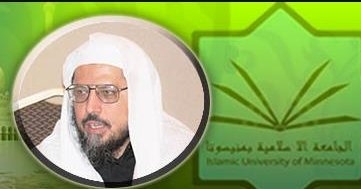
The Minneapolis-based Islamic University of Minnesota (IUM) has an extremism problem.
It is run by a man who used a recent sermon to invoke a Hadith commonly espoused by Muslim terrorists to kill Jews for causing “corruption in the land.” Waleed Idris al-Meneesey also has written that Muslims should place sharia law above “man-made” law.
During a November sermon, al-Meneesy referred to the Hadith, a saying from Islam’s prophet Muhammad, describing how Jews had been punished by God repeatedly for “corruption.”
“When the Children of Israel returned to cause corruption in the time of our Prophet Muhammad,” al-Meneesy said in a translation by the Investigative Project on Terrorism, “and they disbelieved him, God destroyed him at his hand. In any case, God Almighty has promised them destruction whenever they cause corruption.”
History will repeat itself, he said.
“The Prophet related that in the Last Days his Umma [people] would fight the Jews, the Muslims East of the Jordan River, and they [the Jews] west of [the Jordan River] … Even trees and stones will say: O Muslim, this is a Jew behind me, kill him, except for Gharqad trees, the trees of the Jews. Because of this they plant many of them…”
Jerusalem “remained in the hands of the Muslims until it fell into the hands of the Jews in 1387 AH [1967 AD], and has been a prisoner in their hands for 34 years [sic], but the victory of God is coming inevitably.”
Al-Meneesy, the IUM’s president and chancellor, also serves as an imam at a Bloomington, Minn. mosque where at least five young men left the United States to fight with terrorist groups al-Shabaab and ISIS.
IUM opened in 2007, claiming 160 students registered for classes, which cost $150 each. Current enrollment figures could not be found. IUM’s website describes programs ranging from two year associates degrees to full doctorates. A bachelor’s program helps students “acquire all essential Islamic knowledge.” The Ph.D. program costs $3,000, including thesis review, and is structured “along the lines of Universities in the Middle East and Africa.”
The university’s website cites recognition by Holy Quran University in the Sudan,founded in 1990 by the regime of Sudanese war criminal and President Omar al-Bashir. Holy Quran University’s leaders signed a 2002 declaration saying it was forbidden for Muslims to buy American and Israeli goods.
IUM also professes to serve as the official representative of Sunni Islam’s most important institution – Al-Azhar University, which has grown increasingly radical – in the U.S. and Canada. Al-Azhar officials have refused to condemn the Islamic State (ISIS) as apostates and heretics. According to Egypt’s Youm 7, IUM’s curriculum, offered to American students, endorses many practices used by ISIS. These include: “[K]illing a Muslim who does not pray, one who leaves Islam, prisoners and infidels within Islam [those who do not have a clearly specified creed or sect]. [It also allows] gouging their eyes and chopping off their hands and feet, as well as banning the construction of churches and discriminating between Muslims and Ahl al-Kitab [Christians and Jews], and insulting them at times.”
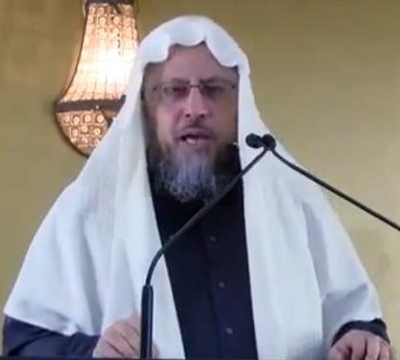
Al-Meneesy’s extremism goes further back than his anti-Semitic sermon. In 2007, he authored a paper for the Assembly of Muslim Jurists Association of America (AMJA), where he sits on the fatwa committee. Muslims should refrain from participating in non-Islamic courts that do not follow Islamic shariah law, particularly those in the West guided by “man-made” law, al-Meneesey wrote.
“The authority to legislate rests with Allah alone,” al-Meneesey wrote.
Anyone who uses law other than shariah, such as civil law, is a “corrupt tyrant,” the paper said. Judging by something other than shariah equals disbelief in Allah, injustice and sinfulness, he wrote.
Muslims should be forbidden from serving as judges in non-Muslim countries, except if they are able to rule “according to the judgments of Allah,” al-Meneesey wrote. Muslims who adhere to secular law and refuse to follow the shariah are infidels. Classical interpretations of the shariah say that apostates should be killed.
In 2008, the AMJA issued a declaration telling Muslims not to cooperate with law enforcement “in countries which do not rule by Allah’s dictates.” That includes the FBI. The declaration invoked many of the same arguments as al-Meneesey’s 2007 paper.
Meanwhile, al-Meneesey’s own Dar al-Farooq Islamic Center and Al-Farooq Youth & Family Center have produced at least five young members who left to fight for ISIS or al-Shabaab in Somalia. They include:
- Abdirizak Mohamed Warsame, 20, of Eagan, Minn. (He was the reputed leader of many ISIS recruits from Minnesota.);
- Abdi Nur of Minneapolis;
- Mohamed Abdihamid Farah of Minneapolis;
- Abdullahi Yusuf of Burnsville, Minn.;
- Yusra Ismail of Minneapolis;
It does not appear that al-Meneesy has addressed these cases publicly.
His radical views are not aberrations at IUM.
Instructor Sheikh Jamel Ben Ameur refused to denounce ISIS in the fall of 2014 amid stories about its brutality because news reports were “confusing” and “complicated,” the website MinnPost reported.
“We don’t need to accuse people of something we don’t know about. We don’t have to jump into judgment,” Ben Ameur told about 100 congregants at his Masjid al-Tawba in Eden Prairie, Minn.
Ben Ameur disputed the authenticity of the ISIS propaganda videos showing the beheadings of American journalists Steven Sotloff and James Foley, suggesting he didn’t know whether ISIS was responsible or not.
Another IUM instructor, Hasan Ali Mohamud, offered condolences after Israel killed Hamas founder Sheikh Ahmed Yassin in 2004.
Writing under the name Sheikh Xasan Jaamici on the Minneapolis Somali community news website SomaliTalk, Mohamud said that Yassin had achieved martyrdom and that the “Hamas mujahideen” were fighting for the liberation of the Al-Aqsa mosque from Israeli control. His Facebook page suggests that Jaamici is his middle name.
Jews will face Muhammad’s wrath. Muslims who adhere to civil law over Islamic sharia are infidels. These are ideas supported by Waleed Idris al-Meneesey, who is responsible for a “university” teaching Muslims about their faith. Where will Islamic University of Minnesota students get a more modern and accepting education?
Mosul Campaign Hampered by Fear of Iraq’s Shia Army, Washington Free Beacon, Douglas Burton, April 7, 2016
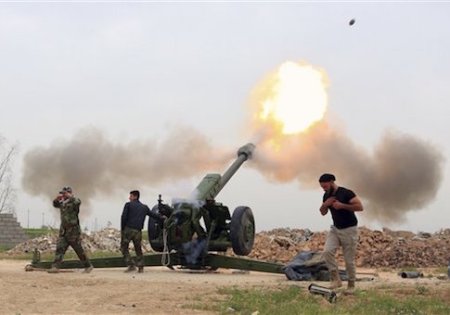
FILE – In this Saturday, March 26, 2016 photo, Iraqi security forces fire at Islamic State militants positions from villages south of the Islamic State group-held city of Mosul, Iraq. The Iraqi military backed by U.S.-led coalition aircraft on Thursday launched a long-awaited operation to recapture the northern city of Mosul from Islamic State militants, a military spokesman said. (AP Photo, File)
The grinding village-to-village war against ISIS in Northern Iraq has been weighed down by public complaints from Kurdish officials and military commanders who fear that the Shia-dominated Iraqi army will provoke stiffer resistance from ISIS defenders in Mosul.
Sunni, Shia, and Kurd units all want the political capital that goes with liberating a city of a million people and the capital of Sunni Iraq from ISIS, according to military observers.
A see-saw battle between elements of the predominantly Shia 15th Iraqi Army Division and ISIS fighters over control of abandoned villages on the Makhmour Front 40 miles southwest of Mosul took a turn for the worse on Monday, April 4, according to sources near the front. Last week the Iraqi Army, supported by Kurdish Peshmerga forces, captured four villages, including Al Nasr, but an ISIS counterattack recovered the village and left 20 soldiers dead, Rudaw reported.
Of these casualties, six were Peshmerga soldiers killed by a suicide vehicle that passed through the front line, said Ali Awni, a Kurdish Democratic Party leader in the Shekhan District north of Mosul.
The Shia soldiers reportedly abandoned their posts in the recent combat, according to Awni. “They left behind many guns, ammunition, and equipment for ISIS,” Awni said.
The campaign to retake the Iraq’s northern province of Nineweh started on March 24, according to the Iraqi Defense Ministry. That day, Iraqi Security forces backed by the Peshmerga and anti-ISIS Sunni tribal fighters recaptured four villages west of Makhmour.
Iraqi military spokesmen hailed the operations as “heroic,” but military observers say there is no sign of the final offensive to retake the city. The Iraqi defense minister has promised that the campaign to capture Mosul will start no later than May.
The array of armed forces ready and eager to retake the city of Mosul includes the Shia brigades of the Iraqi Security Forces, the Peshmerga army of the Kurdish Regional Government, the Iranian-backed Popular Mobilization Units, and Sunni-tribal fighters from Nineweh itself.
Until now, however, the Iranian-backed forces have not been allowed to join the campaign to recapture Mosul due to the high aversion to them by Sunni citizens in the north of Iraq.
The Iraqi Army has approximately 4,500 soldiers in the current campaign, not nearly an adequate force to secure the city, according to Michael Pregent, a career Army intelligence officer and former adviser to the Peshmerga in Mosul during 2005-06, who now serves as an adjunct scholar at the Hudson Institute in Washington.
“The force to retake Mosul has not been built yet. It must be a majority-Sunni unit to be accepted by the population,” Pregent said, adding that the defending force of ISIS fighters has been weakened and could be defeated by a patient, intelligence-heavy counter-insurgency campaign.
“There are more than 4,000 reluctant ISIS fighters in Mosul who don’t want to be there, who as soon as an operation begins may dwindle down to 1,500 or 2,000 as they melt into the population to wait the offensive out,” Pregent told a closed briefing at the Westminster Institute in Mclean, VA recently.
Awni, the Kurdish official, says the residents of Mosul despise the Popular Mobilization Units and will fight hard to resist them. “The people of Mosul believe the PMU will destroy the city with artillery and air strikes the way they did Ramadi a few months ago and Tikrit last year. When they entered Tikrit the looted houses and killed many people,” Awni says, adding: “the Mosul residents say if Shia militia are joining the fight, they will fight with ISIS, but if not, they will support the Coalition forces.”
Col. Tariq Ahmed Jaff, deputy commander of the 9th Combat Brigade of Peshmerga based in Kirkuk said in an email, “After ISIS we may have to fight the PMU. These guys pretend to be heroes but they intimidate elderly men, women, and children.” Sectarian war is a pervasive threat throughout Iraq’s territory south of Kurdistan’s borders. Hundreds of thousands of Iraqis have died in sectarian fighting that worsened after the U.S. invasion of 2003.
“Wherever there is PMU, there is Baghdad, and where there is Baghdad there is Tehran,” observed Ernie Audino, a retired U.S. Army brigadier general and a Senior Military Fellow at the London Center for Policy Research.
“All three are Shia, all three are allies to some degree, and all three vigorously support the concept of a unified Iraq, by force if necessary,” said Audino, who spent a year as an embed with the Pershmerga. “Consequently, Shia militias cadred by Iranian Quds Forces, and Shia-dominated Iraqi Army units have pressed into Kurdish areas in and around Jalawla and Tuz Khurmatu to directly challenge Peshmerga control. Their continuing presence is seen by Kurds as a hammer waiting to fall.”
US mulling withdrawal of Sinai multinational force, reports say, DEBKAfile, April 6, 2016
The Obama administration is considering the redeployment of the multinational peacekeeping force in the Sinai Peninsula, made up primarily of US troops, from bases in the north to more well-protected ones in the south, and replacing the troops with unmanned technology, reports said Wednesday. The move comes amid continuing terrorist attacks by ISIS in the area. Defense Department spokesman Christopher Sherwood said in a statement issued Tuesday that “The (Pentagon) supports the role being played by the Multinational Force and Observers in supporting the Treaty of Peace between Israel and Egypt,” adding that “We are in continuous contact with the MFO and adjust force protection capabilities as conditions warrant.” The MFO consists of soldiers from numerous nations including 700 US troops. Some of its observer stations were shut down in September 2015 after four of peacekeepers were injured in an ISIS roadside bomb attack.
‘Black Lives Matter’ protesters disrupt ISIS beheading, Duffel Blog, April 6, 2016
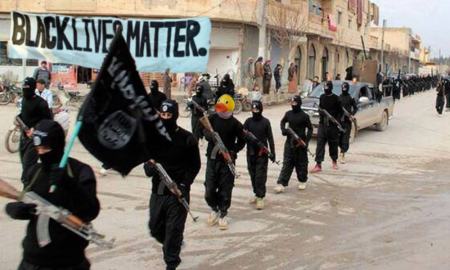
AL-RAQQAH, Syria – Protesters from the group Black Lives Matter caused what observers called a “major headache,” so to speak, in Syria last Friday when they interrupted a public beheading being carried out by the group the Islamic State.
Abu Mohammad al-Adnani, a spokesman for the Islamic State, or ISIS, said the protesters had “stormed” the front steps of the town hall in Al-Raqqah, where ISIS fighters were about to behead four civilians for what al-Adnani called “the heinous crime of pigeon breeding.”
The protest group was led by Imani Mills, a 26-year-old community activist and aspiring motocross racer from Minneapolis, who claims she was attempting to highlight the glaring racial inequalities found throughout the Islamic State.
“Most people don’t realize that the Islamic State is the most dangerous place on earth to be a person of color,” said Mills. “Fully 100% of all violence in this country is carried out against people of color, making it worse than Nigeria, the Central African Republic, or even Baltimore.”
Mills added, “Every day people of color in the Islamic State are shot to death by the police or locked up in cages. ISIS needs to recognize its role in perpetuating this hetero-patriarchal state violence.”
While Black Lives Matters now contains 28 separate chapters, including one in Canada, its Syrian chapter is by far the least successful. According to Mills, the group originally just tried walking around downtown Raqqah yelling “Hands Up Don’t Shoot,” but were mistaken for a group of surrendering Syrian Army soldiers and gunned down.
Mills says they later tried unsuccessfully to disrupt a speech by ISIS leader Abu Bakr al-Baghdadi by waving signs which read “Ban the Box,” a movement to remove criminal records from job applications. However the phrase only led to confusion when ISIS members thought they were referring to the boxes the group puts collaborators in and sets on fire.
Last month they tried blocking the roads into Raqqah, chanting, “Shut this whole town down! The power, the roads, the water!” but gave up after they realized the Syrian Air Force had destroyed them all in a bombing raid several months earlier.
However, both al-Adnani and Mills said this latest protest had led to “productive dialogue” once ISIS’ leaders realized her storming the stage was not an attempted suicide bombing by their rival group Al-Nusrah Front.
Al-Adnani also said that ISIS would attempt to include a wider variety of races and ethnic groups in future executions and vowed to set up a multicultural “All Deaths Matter” Martyrs Brigade.
ISIS also declared a “period of reflection,” to avoid appearing racially insensitive and called off the remaining events of the day, including crushing several children with a bulldozer and immolating a suspected CIA spy.




 anneinpt
 artaxes
 danmillerinpanama
 davidking1530
 Peter Hofman
 Joseph Wouk
 Peter
Peter Louisiana Steve
 WarSclerotic
Recent Comments