Archive for the ‘Islamic refugees’ category

A bloodied ISIS staggers on

March 26, 2017

A bloodied ISIS staggers on, Israel Hayom, Prof. Eyal Zisser, March 26, 2017

(According to the first sentence in the article, “Europe is learning the hard way what Israel learned decades ago.” If so, Europe must be an extremely slow learner. More likely, it resembles a terminally ill lung cancer victim who continues to smoke cigarettes and to inhale the smoke in hopes that it will cure him. Please see also, Islam, Not Christianity, is Saturating Europe. — DM)

Europe is learning the hard way what Israel learned decades ago. The war on terror is an ongoing struggle with ups and downs, and always painful failures. This fight requires patience and determination. There is no magic knockout punch, not by a spectacular military operation in the Syrian hinterlands or the assassination of some terrorist cell or another in a Paris or London suburb. A fight such as this can go on for years, as the reality prevalent in Europe is not about to change.

An equally important lesson, which Europe is also about to learn, is that terror constantly changes shape. In the past, al-Qaida spearheaded the waves of terrorist attacks in Europe. Now Islamic State has taken the reigns, and we can assume that if it fades and disappears, another Islamist group will take its place. The name and the headlines will change, to be sure, but the ideology will remain the same; the targets will continue to be innocent civilians across Europe, and the attackers will continue to be the same Muslim youths so enraptured by religious madness. It will be no different than our experience in Israel.

The terrorist attack perpetrated by Islamic State in London came on the heels of stinging defeats in its strongholds in Syria and Iraq. The organization’s dream of establishing an Islamic caliphate is on the verge of falling apart with the approaching fall of its government centers in Mosul, Iraq and Raqqa, Syria, which serves as its capital. The organization has already lost nearly half the territory it once held, and the signals being sent by the new administration in Washington point to U.S. President Donald Trump’s willingness and even determination to send American troops into the fray to fight the organization in a decisive manner.

Islamic State’s defeat will apparently induce a monumental battle between the winners — Iran and its allies — on one side, and Turkey and the moderate Arab states on the other. Iran, to be certain, will try filling the void left by Islamic State by establishing a land corridor from Tehran to Beirut. Its adversaries, meanwhile, will try preventing the Islamic republic from achieving its goals. All this, while Russia and the U.S. will watch from the sidelines and perhaps even fan the flames in order to advance their own interests in the region.

What is important to understand, however, is that the defeat of Islamic State and the fall of the country it created in the Middle East will not be the end of the story, not for the organization itself and certainly not for the ideology it espouses. We must keep in mind that Islamic State is first and foremost an extremist ideology, which enjoys support from local populations in the Middle East and from Muslim communities across the globe.

It is also an organization that rallies support from disenfranchised populations in the region — which feel persecuted by their centralized governments — whether these are Sunnis in Iraq or eastern Syria, or Bedouin tribes in the Sinai Peninsula. Thus, even if the state it created in eastern Syria and northern Iraq crumbles, we can assume Islamic State will withdraw deep into the desert from which it came and shift to operating as a ruthless underground organization that still enjoys support from local populations. Case in point, in Sinai the group continues to operate successfully despite being pummeled by Egypt.

Islamic State also has other areas within which it can operate, such as Libya or Yemen, where it has established footholds under the cover of the civil wars persisting there unabated. There has been a great deal of speculation recently over the possibility that the group could transfer its government centers to these places. Finally, sentiment for the organization and its ideas will continue to inspire and compel Muslim youths from across the globe to carry out terrorist attacks. Other radical Islamist organizations, which are more than willing to pick up where Islamic State ends, are also vying for the hearts and minds of these youths.

The waves of terror, therefore, will continue crashing into Europe, despite all the efforts to stop them and despite the military successes against Islamic State’s leaders and commanders in Syria and Iraq. Yet the fight must remain unrelenting, as this is the nature of the war against terror. It is the only way to ensure normal life in Europe. As the Israeli experience teaches, this should be the goal, even with the knowledge that terror has not been completely defeated.

Urgent Messages to the Muslim World

March 22, 2017

Urgent Messages to the Muslim World, Gatestone InstituteNonie Darwish, March 22, 2017

A dangerous message is being sent to the Muslim world by the West: There is nothing that moderate Muslims or anyone else should fear from radical Islamic terrorism! Look at us Western governments! We are bringing in refugees who cannot be vetted even if they are ISIS infiltrators. In fact, we in the West are so goodhearted that we are encouraging many organizations to operate legally in the West under the banner of the Muslim Brotherhood — even organizations that are sympathetic to the terrorist group Hamas and that are pledging to overthrow us!

The West, by taking all the Syrian refugees, is emptying Syria of any kind of resistance to the Caliphate (ISIS). The West’s compassion, by taking in the refugees escaping ISIS, will end up leaving only the radicals to rule unopposed in Syria and Iraq. This, in US foreign policy, is not compassion; it is gross negligence and reckless endangerment.

“Tough love” is badly needed when dealing with the Muslim world. We must say: No, we cannot accept your jihadist aspirations. We cannot accept you forcing your way of life on the world; your way of life is unacceptable to us. Before you send your refugees, you must end your “us against them” jihadist culture. The civilized world no longer finds your aspirations for an Islamic Caliphate tolerable.

The first reaction of the U.S. after 9/11 should have been to stop visas from all majority-Muslim countries, except for those of utmost importance. But our politicians’ hands were tied — not by fear of a backlash from Islamic countries, which probably expected a U.S. boycott, but by fear of a backlash from the Western media and Western progressives.

The decision to keep Muslims, refugees and others pouring into the US after 9/11 was wrong and has not done Islam and Muslim reformers a favor. Here is why:

The chaos and bloodshed in the Muslim world, even in the most moderate of Muslim nations, such as Turkey, is between Muslims who want to enforce Islamic sharia law, totally and upon everyone by a theocratic government, and those who want less sharia by installing military rule. The West does not understand that the only form of government that can stand up to a totalitarian Islamic theocracy is a military one and no other. Who could imagine that a military junta could be considered the only savior from Islamic tyrannies that require everyone to live totally, 100%, under the laws of sharia?

When former U.S. President Barack Obama honored the Muslim Brotherhood with his first major speech as president, who were his guests of honor in the first rows? Leaders of the Muslim Brotherhood. The less-radical Islamist military form of governments in the Middle East were left out and thus weakened. Then Egyptian President Hosni Mubarak, who had a murky relationship with the Muslim Brotherhood, got the message. He did not attend. With Obama’s move, the balance of power between the two combative forces over control of government immediately favored the Muslim Brotherhood. It officially, for the first time since its founding in 1928, took control of the Egyptian government after the 2011 chaos of the “Arab Spring.” A year later, 22 million Egyptians had to undergo a bloody counter-revolution to bring back the type of government Egyptians have always favored over an Islamic theocracy.

When former U.S. President Barack Obama gave his first major Presidential speech in Cairo, in 2009, his guests of honor in the first rows were leaders of the Muslim Brotherhood. The less-radical Islamist military form of governments in the Middle East were left out and thus weakened. (Image source: White House)

Now, another, dangerous, message is being sent to the ordinary citizens of the Muslim world by the liberal West: There is nothing that moderate Muslims or anyone else should fear from the possible infiltration of radical Islam! Look at us, Western governments! We are bringing in refugees who cannot be vetted even if they are ISIS infiltrators. Although the Muslim Brotherhood is illegal and considered a terrorist organization in several Muslim countries, we in the West do not mind them at all. In fact, we in the West are so kind-hearted and welcoming that we are encouraging many organizations to operate legally in the West under the banner of the Muslim Brotherhood — even organizations that are sympathetic to the terrorist group Hamas and that are pledging to overthrow us! See how we are courageous, self-confident and free of “Islamophobia”!

By embracing the Muslim Brotherhood as not dangerous to free societies and by bringing in refugees from terror-infested areas of the Middle East, we are sending a message to moderate Muslims in the Middle East: Citizens in the West are not even bothering to protect their free system from being conquered by sharia-lovers, so perhaps the dreams of the Caliphate are not that bad after all.

The West, by taking all the Syrian refugees, is not just sending the above “unintended” message; it is also emptying Syria of any kind of resistance to the Caliphate (ISIS). The West’s compassion, by taking in the refugees escaping ISIS, will end up leaving only the radicals to rule unopposed in Syria and Iraq.

A US foreign policy that recommends absorbing unvetted Muslim refugees has been advocated as compassion, but in fact it is gross negligence and reckless endangerment to U.S. citizens, Western freedoms and democracy.

There are unintended consequences to rescuing all Muslim refugees:

  • We are telling Muslim reformists, wrongly, especially in the Middle East, that there is nothing to fear from ISIS infiltration.
  • By not declaring the Muslim Brotherhood a terror organization we are yet again legitimizing and empowering it.
  • By not showing the proper angry response to Islamic terrorism, the West is not perceived as gracious, but as weak.

By taking in Islam and its refugees without proper vetting, the West is not doing either Islam or Muslims any favor: for the reformists, it is shutting out any hope of reform.

Tough love is badly needed when dealing with the Muslim world. We must say: No, we cannot accept your jihadist aspirations. We cannot accept you forcing your way of life on the world; your way of life is unacceptable to us. Before you send your refugees, you must end your “us against them” jihadist culture. The civilized world no longer finds your aspirations for an Islamic Caliphate tolerable.

If the West has the courage to do that, perhaps one day history will attribute the reformation of Muslim world partly to strength and conviction of Western resolve against tyranny and human suffering.

Dr. Jasser joins Bob Harden discussing the need for reform within Islam 02.20.2017

February 21, 2017

Dr. Jasser joins Bob Harden discussing the need for reform within Islam 02.20.2017, AIFD via YouTube

Humor | More Loony leftist nonsense and a response

February 10, 2017

More Loony leftist nonsense and a response, Vermont Loon Watch, February 10, 2017

(Fake news which I wish were true. — DM)

Sometimes it is wise to take these crazies seriously and threaten to give them what they want, IN SPADES.

The Canadians know how to handle complaints. Here is an example:

A Canadian female liberal wrote a lot of letters to the Canadian Government, complaining about the treatment of captive insurgents (terrorists) being held in Afghanistan National Correctional System facilities. She demanded a response to her letter.

She received back the following reply:

National Defence Headquarters
M Gen George R. Pearkes Bldg., 15 NT
101 Colonel By Drive
Ottawa , ON K1A 0K2
Canada

Dear Concerned Citizen,

Thank you for your recent letter expressing your profound concern of treatment of the Taliban and Al Qaeda terrorists captured by Canadian Forces, who were subsequently transferred to the Afghanistan Government and Thank you for your recent letter expressing your profound concern of treatment of the Taliban and Al Qaeda terrorists captured by Canadian Forces, who were subsequently transferred to the Afghanistan Government and are currently being held by Afghan officials in Afghanistan National Correctional System facilities.

Our administration takes these matters seriously and your opinions were heard loud and clear here in Ottawa .. You will be pleased to learn, thanks to the concerns of citizens like yourself, we are creating a new department here at the Department of National Defence, to be called ‘Liberals Accept Responsibility for Killers’ program, or L.A.R.K. for short.

In accordance with the guidelines of this new program, we have decided, on a trial basis, to divert several terrorists and place them in homes of concerned citizens such as yourself, around the country, under those citizens personal care. Your personal detainee has been selected and is scheduled for transportation under heavily armed guard to your residence in Toronto next Monday.

Ali Mohammed Ahmed bin Mahmud is your detainee, and is to be cared for pursuant to the standards you personally demanded in your letter of complaint. You will be pleased to know that we will conduct weekly inspections to ensure that your standards of care for Ahmed are commensurate with your recommendations.

Although Ahmed is a sociopath and extremely violent, we hope that your sensitivity to what you described as his ‘attitudinal problem’ will help him overcome those character flaws. Perhaps you are correct in describing these problems as mere cultural differences. We understand that you plan to offer counseling and home schooling, however, we strongly recommend that you hire some assistant caretakers.

Please advise any Jewish friends, neighbours or relatives about your house guest, as he might get agitated or even violent, but we are sure you can reason with him. He is also expert at making a wide variety of explosive devices from common household products, so you may wish to keep those items locked up, unless in your opinion, this might offend him. Your adopted terrorist is extremely proficient in hand-to-hand combat and can extinguish human life with such simple items as a pencil or nail clippers. We advise that you do not ask him to demonstrate these skills either in your home or wherever you choose to take him while helping him adjust to life in our country.

Ahmed will not wish to interact with you or your daughters except sexually, since he views females as a form of property, thereby having no rights, including refusal of his sexual demands. This is a particularly sensitive subject for him.

You also should know that he has shown violent tendencies around women who fail to comply with the dress code that he will recommend as more appropriate attire. I’m sure you will come to enjoy the anonymity offered by the burka over time. Just remember that it is all part of respecting his culture and religious beliefs’ as described in your letter.

You take good care of Ahmed and remember that we will try to have a counselor available to help you over any difficulties you encounter while Ahmed is adjusting to Canadian culture.

Thanks again for your concern. We truly appreciate it when folks like you keep us informed of the proper way to do our job and care for our fellow man. Good luck and God bless you.

Cordially,
Gordon O’Connor
Minister of National Defence

Raymond Ibrahim: How Trump Can Help Persecuted Christians and Protect Americans with One Move

February 6, 2017

Raymond Ibrahim: How Trump Can Help Persecuted Christians and Protect Americans with One Move, Jihad Watch

copts-in-ruined-church

During a recent interview on CBN, President Trump was asked if he thinks America should prioritize persecuted Christians as refugees. He responded:

Yes.  Yes, they’ve been horribly treated.  If you were a Christian in Syria it was impossible, or at least very, very tough, to get into the United States.  If you were a Muslim you could come in, but if you were a Christian, it was almost impossible and the reason that was so unfair — everybody was persecuted, in all fairness — but they were chopping off the heads of everybody but more so the Christians. And I thought it was very, very unfair. So we are going to help them.

 Trump’s response is far different from that given by Barrack Hussein Obama back in November 2015. Then, as president, he described the idea of giving preference to Christian refugees as “shameful”: “That’s not American. That’s not who we are. We don’t have religious tests to our compassion,” he had added.

While Obama was making such lofty admonishments, his administration was quietly discriminating against Mideast Christians in a myriad of ways — including, as Trump pointed out above, by very obviously favoring Muslim refugees over Christian ones. Indeed, despite the U.S. government’s own acknowledgement that ISIS was committing genocide against Syrian Christians — and not against fellow Sunni Muslims — the Obama administration took in 5,435 Muslims, almost all of whom were Sunni, but only 28 Christians. Considering that Christians are 10 percent of Syria’s population, to be merely on an equal ratio with Muslims entering America, at least 500 Christians should’ve been granted asylum, not 28.

But questions of equal numbers aside, the idea of prioritizing Christian refugees over Muslims (which I argued for back in 2015) is not only more humane; it brings benefits to America as well.

Consider:

Unlike Muslims, Christian minorities are being singled out and persecuted simply because of their despised religious identity. From a humanitarian point of view — and humanitarianism is the reason being cited for accepting millions of refugees — Christians should receive top priority simply because they are the most persecuted group in the Middle East. Even before the Islamic State was formed, Christians were, and continue to be, targeted by Muslims in general — Muslim individuals, Muslim mobs, and Muslim regimes, from Muslim countries of all races (Arab, African, Asian) — and for the same reason: Christians are infidel number one. (See Crucified Again: Exposing Islam’s New War on Christians for hundreds of anecdotes before the rise of ISIS as well as the Muslim doctrines that create such hate for Christians.)

Conversely, Muslim refugees — as opposed to the many ISIS and other jihadi sympathizers posing as “refugees” — are not fleeing religious persecution (as mentioned, 99% of Muslim refugees accepted into the U.S. are, like ISIS, Sunnis), but chaos created by the violent and supremacist teachings of their own religion. Hence why when large numbers of Muslims enter Western nations — in Germany, Sweden, France, the UK — tension, crimes, rapes, and terrorism soar.

Indeed, what more proof is needed than the fact that so-called Muslim “refugees” are throwing Christians overboard during their boat voyages across the Mediterranean to Europe? Or that Muslim majority refugee centers in Europe are essentially microcosms of Muslim majority nations: there, Christian minorities continue to be persecuted. One report found that 88% of the 231 Christian refugees interviewed in Germany have suffered religiously motivated persecution in the form of insults, death threats, and sexual assaults. Some were pressured to convert to Islam. “I really didn’t know that after coming to Germany I would be harassed because of my faith in the very same way as back in Iran,” one Christian refugee said.

Is persecuting religious minorities the behavior of people who are in need of refugee status in America? Or is this behavior yet another reminder that it is non-Muslims from the Middle East who are truly in need of sanctuary?

The U.S. should further prioritize Christian refugees because U.S. foreign policies are directly responsible for exacerbating their persecution. Christians did not flee from Bashar Assad’s Syria, or Saddam Hussein’s Iraq, or Muammar Gaddafi’s Libya. Their systematic persecution—to the point of genocide — began only after the U.S. interfered in those nations under the pretext of “democracy.” All that these policies did is unleash the jihadi forces that the dictators had long kept suppressed. Now the Islamic State is deeply embedded in precisely all three nations, enslaving, raping, and slaughtering Christians and other minorities.

Surely if U.S. policies were responsible for unleashing the full-blown jihad on Christians, the least humanitarian America can do is prioritize Christians as refugees? In fact, and as Trump pointed out during his CBN interview, it’s the opposite: according to one report, from May 1 to May 23 alone, 499 Syrian refugees were received into the U.S, 99% of them Sunnis. Zero Christians were admitted.

Questions of fairness and humanitarianism aside, there are also benefits in absorbing Mideast Christians refugees instead of Muslims. Christians are easily assimilated in Western societies, due to the shared Christian heritage and outlook, and regularly become productive members of society. Muslims follow a completely different blueprint, Islamic law, or Sharia — which calls for constant hostility (jihad) against all non-Muslims, and advocates any number of distinctly anti-Western practices (misogyny, sex slavery, death for “blasphemers” and “apostates,” etc.). Hence it’s no surprise that many Muslim asylum seekers are anti-Western at heart — or, as a German police union chief once said, Muslim migrants “despise our country and laugh at our justice.”

Mideast Christians also bring trustworthy language and cultural skills. They understand the Middle Eastern — including Islamic — mindset and can help the U.S. understand it. And unlike Muslims, Christians have no “conflicting loyalty” issues: Islamic law forbids Muslims from befriending or aiding “infidels” against fellow Muslims (click here to see some of the treachery this leads to in the U.S. and here to see the treachery Christians have suffered from their longtime Muslim neighbors and “friends”). No such threat exists among Mideast Christians. They, too, render unto God what is God’s and unto Caesar what is Caesar’s — not to mention they have no loyalty to the Islamic ideologies that made their lives a living hell in the Middle East, the Islamic ideologies that are also responsible for jihadi terror in America. Thus a win-win: the U.S. and Mideast Christians complement each other, if only in that they share the same foe.

All the above reasons — from those that offer humanitarian relief to the true victims of persecution and genocide, to those that offer stability and benefits to the United States — are unassailable in their logic.

President Trump understands this — even if most liberals and lying media don’t.

Smoking Out Islamists via Extreme Vetting

January 31, 2017

Smoking Out Islamists via Extreme Vetting, Middle East Forum, Daniel Pipes, January 28, 2017(?)

(Please see also, A Muslim Reformer Speaks Out About His Battle Against Islamism And PC. — DM)

On January 27, President Donald Trump signed an executive order to implement his proposed “extreme vetting” of those applying for entry visas into the United States. This article by Middle East Forum President Daniel Pipes, who has written extensively on the practicality and enforceability of screening for Islamists, is an advance release from the forthcoming Spring 2017 issue of Middle East Quarterly.

3570Smoking Them Out (1906), Charles M. Russell.

Donald Trump issued an executive order on Jan. 27 establishing radically new procedures to deal with foreigners who apply to enter the United States.

Building on his earlier notion of “extreme vetting,” the order explains that

to protect Americans, the United States must ensure that those admitted to this country do not bear hostile attitudes toward it and its founding principles. The United States cannot, and should not, admit those who do not support the Constitution, or those who would place violent ideologies over American law. In addition, the United States should not admit those who engage in acts of bigotry or hatred (including “honor” killings, other forms of violence against women, or the persecution of those who practice religions different from their own) or those who would oppress Americans of any race, gender, or sexual orientation.

This passage raises several questions of translating extreme vetting in practice: How does one distinguish foreigners who “do not bear hostile attitudes toward it and its founding principles” from those who do? How do government officials figure out “those who would place violent ideologies over American law”? More specifically, given that the new procedures almost exclusively concern the fear of allowing more Islamists into the country, how does one identify them?

I shall argue these are doable tasks and the executive order provides the basis to achieve them. At the same time, they are expensive and time-consuming, demanding great skill. Keeping out Islamists can be done, but not easily.

The Challenge

By Islamists (as opposed to moderate Muslims), I mean those approximately 10-15 percent of Muslims who seek to apply Islamic law (the Shari’a) in its entirety. They want to implement a medieval code that calls (among much else) for restricting women, subjugating non-Muslims, violent jihad, and establishing a caliphate to rule the world.

For many non-Muslims, the rise of Islamism over the past forty years has made Islam synonymous with extremism, turmoil, aggression, and violence. But Islamists, not all Muslims, are the problem; they, not all Muslims, must urgently be excluded from the United States and other Western countries. Not just that, but anti-Islamist Muslims are the key to ending the Islamist surge, as they alone can offer a humane and modern alternative to Islamist obscurantism.

Identifying Islamists is no easy matter, however, as no simple litmus test exists. Clothing can be misleading, as some women wearing hijabs are anti-Islamists, while practicing Muslims can be Zionists; nor does one’s occupation indicate much, as some high-tech engineers are violent Islamists. Likewise, beards, teetotalism, five-times-a-day prayers, and polygyny do not tell about a Muslim’s political outlook. To make matters more confusing, Islamists often dissimulate and pretend to be moderates, while some believers change their views over time.
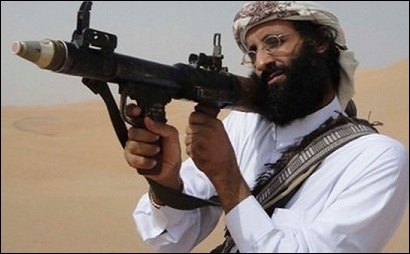
3567In 2001, the Pentagon invited Anwar al-Awlaki to lunch. In 2011, it killed him by a drone strike.

Finally, shades of gray further confuse the issue. As noted by Robert Satloff of The Washington Institute, a 2007 book from the Gallup press, Who Speaks for Islam? What a Billion Muslims Really Think, based on a poll of over 50,000 Muslims in 10 countries, found that 7 percent of Muslims deem the 9/11 attacks “completely justified,” 13.5 percent consider the attacks completely or “largely justified,” and 36.6 percent consider the attacks completely, largely, or “somewhat justified.” Which of these groups does one define as Islamist and which not?

Faced with these intellectual challenges, American bureaucrats are unsurprisingly incompetent, as I demonstrate in a long blog titled “The U.S. Government’s Poor Record on Islamists.” Islamists have fooled the White House, the departments of Defense, Justice, State, and Treasury, the Congress, many law enforcement agencies and a plethora of municipalities. A few examples:

  • The Pentagon in 2001 invited Anwar al-Awlaki, the American Islamist it later executed with a drone-launched missile, to lunch.
  • In 2002, FBI spokesman Bill Carter described the American Muslim Council (AMC) as “the most mainstream Muslim group in the United States” – just two years before the bureau arrested the AMC’s founder and head, Abdurahman Alamoudi, on terrorism-related charges. Alamoudi has now served about half his 23-year prison sentence.
  • George W. Bush appointed stealth Islamist Khaled Abou El Fadl in 2003 to, of all things, the United States Commission on International Religious Freedom.
  • The White House included staff in 2015 from the Council on American-Islamic Relations (CAIR) in its consultations, despite CAIR’s initial funding by a designated terrorist group, the frequent arrest or deportation of its employees on terrorism charges, a history of deception, and the goal of one of its leaders to make Islam the only accepted religion in America.

Fake-moderates have fooled even me, despite all the attention I devote to this topic. In 2000, I praised a book by Tariq Ramadan; four years later, I argued for his exclusion from the United States. In 2003, I condemned a Republican operative named Kamal Nawash; two years later, I endorsed him. Did they evolve or did my understanding of them change? More than a decade later, I am still unsure.

Uniform Screening Standards

Returning to immigration, this state of confusion points to the need for learning much more about would-be visitors and immigrants. Fortunately, Trump’s executive order, “Protecting the Nation from Foreign Terrorist Entry into the United States,” signed on Jan. 27, 2017, requires just this. It calls for “Uniform Screening Standards” with the goal of preventing individuals from entering the United States “on a fraudulent basis with the intent to cause harm, or who are at risk of causing harm subsequent to their admission.” The order requires that the uniform screening standard and procedure include such elements as (bolding is mine):

  1. In-person interviews;
  2. A database of identity documents proffered by applicants to ensure that duplicate documents are not used by multiple applicants;
  3. Amended application forms that include questions aimed at identifying fraudulent answers and malicious intent;
  4. A mechanism to ensure that the applicant is who the applicant claims to be;
  5. A process to evaluate the applicant’s likelihood of becoming a positively contributing member of society and the applicant’s ability to make contributions to the national interest; and
  6. A mechanism to assess whether or not the applicant has the intent to commit criminal or terrorist acts after entering the United States.

Elements 1, 3, 5, and 6 permit and demand the procedure outlined in the following analysis. It contains two main components, in-depth research and intensive interviews.

Research

When a person applies for a security clearance, the background checks should involve finding out about his family, friends, associations, employment, memberships, and activities. Agents must probe these for questionable statements, relationships, and actions, as well as anomalies and gaps. When they find something dubious, they must look further into it, always with an eye for trouble. Is access to government secrets more important than access to the country? The immigration process should start with an inquiry into the prospective immigrant and, just as with security clearances, the border services should look for problems.

3572Most everyone with strong views at some point vents them on social media.

Also, as with security clearance, this process should have a political dimension: Does the person in question have an outlook consistent with that of the Constitution? Not long ago, only public figures such as intellectuals, activists, and religious figures put their views on the record; but now, thanks to the Internet and its open invitation to everyone to comment in writing or on video in a permanent, public manner, and especially to social media (Facebook, Twitter, etc.), most everyone with strong views at some point vents them. Such data provides valuably unfiltered views on many critical topics, such as Islam, non-Muslims, women, and violence as a tactic. (Exploiting this resource may seem self-evident but U.S. immigration authorities do not do so, thereby imposing a self-restraint roughly equivalent to the Belgian police choosing not to conduct raids between 9 p.m. and 5 a.m.)

In the case of virulent, overt, outspoken jihadis, this research usually suffices to provide evidence to exclude them. Even some non-violent Islamists proudly announce their immoderation. But many Islamists adopt a milder and subtler tone, their goal being to appear moderate so they can enter the country and then impose Shari’a through lawful means. As suggested by some of the examples above, such as Abou El Fadl or CAIR, research often proves inadequate in these instances because cautious Islamists hide their goals and glibly dissimulate. Which brings us to entrance interviews.

Entrance Interviews

Assuming that lawful Islamists routinely hide their true views, an interview is needed before letting them enter the country. Of course, it is voluntary, for no one is forced to apply for immigration, but it also must be very thorough. It should be:

Recorded: With the explicit permission of the person being questioned (“You understand and accept that this interview is being recorded, right?”), the exchange should be visibly videotaped so the proceedings are unambiguously on the record. This makes available the interviewee’s words, tone, speech patterns, facial expressions, and body language for further study. Form as well as substance matters: does the interviewee smile, fidget, blink, make eye contact, repeat, sweat, tremble, tire, need frequent toilet breaks, or otherwise express himself in non-verbal ways?

Polygraph: Even if a lie detector machine does not, in fact, provide useful information, attaching the interviewee to it might induce greater truth-telling.

Under oath: Knowing that falsehoods will be punished, possibly with jail time, is a strong inducement to come clean.

Public: If the candidate knows that his answers to abstract questions (as opposed to personal ones about his life) will be made public, this reduces the chances of deception. For example, asked about belief for the full application of Islamic laws, an Islamist will be less likely to answer falsely in the negative if he knows that his reply will be available for others to watch.

3568Look for inconsistency by asking the same thing in different ways. An example: “May a woman show her face in public?” and “Is a male guardian responsible for making sure his women-folk don’t leave the house with faces uncovered?

Multiple: No single question can evince a reply that establishes an Islamist disposition; effective interviewing requires a battery of queries on many topics, from homosexuality to the caliphate. The answers need to be assessed in their totality.

Specific: Vague inquiries along the lines of “Is Islam a religion of peace?”, “Do you condemn terrorism?” “How do you respond to the murder of innocents,” depend too much on one’s definition of words such as peace, terrorism, and innocents to help determine a person’s outlook, and so should be avoided. Instead, questions must be focused and exact: “May Muslims convert out of Islam, whether to join another faith or to become atheists?” “Does a Muslim have the right to renounce Islam?”

Variety in phrasing: For the questions to ferret out the truth means looking for divergence and inconsistency by asking the same question with different words and variant emphases. A sampling: “May a woman show her face in public?” “What punishment do you favor for females who reveal their faces to men not related to them by family?” “Is it the responsibility of the male guardian to make sure his women-folk do not leave the house with faces uncovered?” “Should the government insist on women covering their faces?” “Is society better ordered when women cover their faces?” Any one of the questions can be asked in different ways and expanded with follows-up about the respondent’s line of reasoning or depth of feeling.

Repeated: Questions should be asked again and again over a period of weeks, months, and even longer. This is crucial: lies being much more difficult to remember than truths, the chances of a respondent changing his answers increases with both the volume of questions asked and the time lapse between questionings. Once inconsistencies occur, the questioner can zero in and explore their nature, extent, and import.

The Questions

Guidelines in place, what specific questions might extract useful information?

3574Zuhdi Jasser (L) with the author as teammates at a 2012 Intelligence Squared debate in New York City.

The following questions, offered as suggestions to build on, are those of this author but also derive from a number of analysts devoting years of thinking to the topic. Naser Khader, the-then Danish parliamentarian of Syrian Muslim origins, offered an early set of questions in 2002. A year later, this author published a list covering seven subject areas.

Others followed, including the liberal Egyptian Muslim Tarek Heggy, the liberal American Muslims Tashbih Sayyed and Zuhdi Jasser, the ex-Muslim who goes by “Sam Solomon,” a RAND Corporation group, and the analyst Robert Spencer. Of special interest are the queries posed by the German state of Baden-Württemberg dated September 2005 because it is an official document (intended for citizenship, not immigration, but with similar purposes).

Islamic doctrine:

1. May Muslims reinterpret the Koran in light of changes in modern times?

2. May Muslims convert out of Islam, either to join another faith or to be without religion?

3. May banks charge reasonable interest (say 3 percent over inflation) on money?

4. Is taqiya (dissimulation in the name of Islam) legitimate?

Islamic pluralism:

5. May Muslims pick and choose which Islamic regulations to abide by (e.g., drink alcohol but avoid pork)?

6. Is takfir (declaring a Muslim to be an infidel) acceptable?

7. [Asked of Sunnis only:] Are Sufis, Ibadis, and Shi’ites Muslims?

8. Are Muslims who disagree with your practice of Islam infidels (kuffar)?

The state and Islam:

9. What do you think of disestablishing religion, that is, separating mosque and state?

10. When Islamic customs conflict with secular laws (e.g., covering the face for female drivers’ license pictures), which gets priority?

11. Should the state compel prayer?

12. Should the state ban food consumption during Ramadan and penalize transgressors?

13. Should the state punish Muslims who eat pork, drink alcohol, and gamble?

14. Should the state punish adultery?

15. How about homosexuality?

16. Do you favor a mutawwa’ (religious police) as exist in Saudi Arabia?

17. Should the state enforce the criminal punishments of the Shari’a?

18. Should the state be lenient when someone is killed for the sake of family honor?

19. Should governments forbid Muslims from leaving Islam?

Marriage and divorce:

20. Does a husband have the right to hit his wife if she is disobedient?

21. Is it a good idea for men to shut their wives and daughters at home?

22. Do parents have the right to determine whom their children marry?

23. How would you react if a daughter married a non-Muslim man?

24. Is polygyny acceptable?

25. Should a husband have to get a first wife’s approval to marry a second wife? A third? A fourth?

26. Should a wife have equal rights with her husband to initiate a divorce?

27. In the case of divorce, does a wife have rights to child custody?

Female rights:

28. Should Muslim women have equal rights with men (for example, in inheritance shares or court testimony)?

29. Does a woman have the right to dress as she pleases, including showing her hair, arms and legs, so long as her genitalia and breasts are covered?

30. May Muslim women come and go or travel as they please?

31. Do Muslim women have a right to work outside the home or must the wali approve of this??

32. May Muslim women marry non-Muslim men?

33. Should males and females be separated in schools, at work, and socially?

34. Should certain professions be reserved for men or women only? If so, which ones?

35. Do you accept women occupying high governmental offices?

36. In an emergency, would you let yourself be treated by or operated on by a doctor of the opposite gender?

Sexual activity:

37. Does a husband have the right to force his wife to have sex?

38. Is female circumcision part of the Islamic religion?

39. Is stoning a justified punishment for adultery?

40. Do members of a family have the right to kill a woman if they believe she has dishonored them?

41. How would you respond to a child of yours who declares him- or herself a homosexual?

Schools:

42. Should your child learn the history of non-Muslims?

43. Should students be taught that Shari’a is a personal code or that governmental law must be based on it?

44. May your daughter take part in the sports activities, especially swimming lessons, offered by her school?

45. Would you permit your child to take part in school trips, including overnight ones?

46. What would you do if a daughter insisted on going to university?

Criticism of Muslims:

3575Denying the Islamic nature of ISIS reveals much about a Muslim.

47. Did Islam spread only through peaceful means?

48. Do you accept the legitimacy of scholarly inquiry into the origins of Islam, even if it casts doubt on the received history?

49. Do you accept that Muslims were responsible for the 9/11 attacks?

50. Is the Islamic State/ISIS/ISIL/Daesh Islamic in nature?

Fighting Islamism:

51. Do you accept enhanced security measures to fight Islamism, even if this might mean extra scrutiny of yourself (for example, at airline security)?

52. When institutions credibly accused of funding jihad are shut down, is this a symptom of anti-Muslim bias?

53. Should Muslims living in the West cooperate with law enforcement?

54. Should they join the military?

55. Is the “war on terror” a war on Islam?

Non-Muslims (in general):
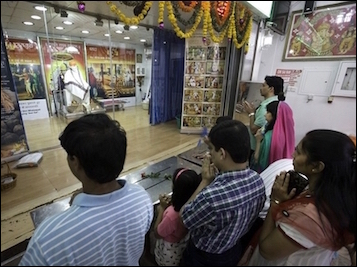
3573Praying at the Hindu Temple in Dubai, founded 1958.

56. Do all humans, regardless of gender, ethnicity, sexual orientation or religious beliefs, deserve equal rights?

57. Should non-Muslims enjoy completely equal civil rights with Muslims?

58. Do you accept the validity of other monotheistic religions?

59. Of polytheistic religions (such as Hinduism)?

60. Are Muslims superior to non-Muslims?

61. Should non-Muslims be subject to Islamic law?

62. Do Muslims have anything to learn from non-Muslims?

63. Can non-Muslims go to paradise?

64. Do you welcome non-Muslims to your house and go to their residences?

Non-Muslims (in Dar al-Islam):

65. May Muslims compel “Peoples of the Book” (i.e., Jews and Christians) to pay extra taxes?

66. May other monotheists build and operate institutions of their faith in Muslim-majority countries?

67. How about polytheists?

68. Should the Saudi government maintain the historic ban on non-Muslims in Mecca and Medina?

69. Should it allow churches to be built for Christian expatriates?

70. Should it stop requiring that all its subjects be Muslim?

Non-Muslims (in Dar al-Harb):

71. Should Muslims fight Jews and Christians until these “feel themselves subdued” (Koran 9:29).

72. Is the enslavement of non-Muslims acceptable?

73. Is it acceptable to arrest individuals who curse the prophet of Islam or burn the Koran?

74. If the state does not act against such deeds, may individual Muslims act?

75. Can one live a fully Muslim life in a country with a mostly non-Muslim government?

76. Should a Muslim accept a legitimate majority non-Muslim government and its laws or work to make Islam supreme?

77. Can a majority non-Muslim government unreservedly win your allegiance?

78. Should Muslims who burn churches or vandalize synagogues be punished?

79. Do you support jihad to spread Islam?

Violence:

80. Do you endorse corporal punishments (mutilation, dismemberment, crucifixion) of criminals?

81. Is beheading an acceptable form of punishment?

82. Is jihad, meaning warfare to expand Muslim rule, acceptable in today’s world?

83. What does it mean when Muslims yell “Allahu Akbar” as they attack?

84. Do you condemn violent organizations such as Boko Haram, Hamas, Hezbollah, Islamic Jihad, the Islamic State, Al-Qaeda, Shabaab, and the Taliban?

Western countries:

85. Are non-Islamic institutions immoral and decadent or can they be moral and virtuous?

86. Do you agree with studies that show non-Muslim countries such as New Zealand to be better living up to the ideals of Islam than Muslim-majority countries?

87. Is Western-style freedom an accomplishment or a form of moral corruption? Why?

88. Do you accept that Western countries are majority-Christian or do you seek to transform them into majority-Muslim countries?

89. Do you accept living in Western countries that are secular or do you seek to have Islamic law rule them?

90. What do you think of Shari’a-police patrolling Muslim-majority neighborhoods in Western countries to enforce Islamic morals?

91. Would you like to see the U.S. Constitution (or its equivalents in other countries) replaced by the Koran?

This interview:

92. In an immigration interview like this, if deceiving the questioner helps Islam, would lying be justified?

93. Why should I trust that you have answered these questions truthfully?

Observations about the Interviews

Beyond helping to decide whom to allow into the country, these questions can also help in other contexts as well, for example in police interrogations or interviews for sensitive employment positions. (The list of Islamists who have penetrated Western security services is a long and painful one.)
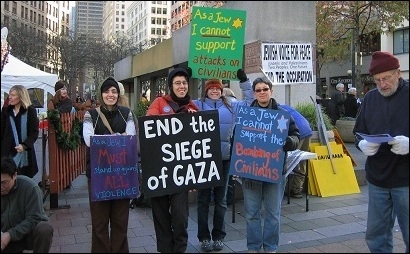
3569Islamists are hardly the only ones who condemn Israel. Here Jewish Voice for Peace activists protest.

Note the absence of questions about highly charged current issues. That is because Islamist views overlap with non-Islamist outlooks; plenty of non-Islamists agree with Islamists on these topics. Although Leil Leibowitz in contrast sees Israel as “moderate Islam’s real litmus test,” Islamists are hardly the only ones who demand Israel’s elimination and accept Hamas and Hezbollah as legitimate political actors – or believe the Bush administration carried out the 9/11 attacks or hate the United States. Why introduce these ambiguous issues when so many Islam-specific questions (e.g., “Is the enslavement of non-Muslim acceptable?”) have the virtue of far greater clarity?

The interviewing protocol outlined above is extensive, asking many specific questions over a substantial period using different formulations, probing for truth and inconsistencies. It is not quick, easy, or cheap, but requires case officers knowledgeable about the persons being interviewed, the societies they come from, and the Islamic religion; they are somewhat like a police questioner who knows both the accused person and the crime. This is not a casual process. There are no shortcuts.

Criticisms

This procedure raises two criticisms: it is less reliable than Trump’s no-Muslim policy and it is too burdensome for governments to undertake. Both are readily disposed of.

Less reliable: The no-Muslim policy sounds simple to implement but figuring out who is Muslim is a problem in itself (are Ahmadis Muslims?). Further, with such a policy in place, what will stop Muslims from pretending to renounce their religion or to convert to another religion, notably Christianity? These actions would require the same in-depth research and intensive interviews as described above. If anything, because a convert can hide behind his ignorance of his alleged new religion, distinguishing a real convert to Christianity from a fake one is even more difficult than differentiating an Islamist from a moderate Muslim.

Too burdensome: True, the procedure is expensive, slow, and requires skilled practitioners. But this also has the benefit of slowing a process that many, myself included, consider out of control, with too many immigrants entering the country too quickly. Immigrants numbered 5 percent of the population in 1965, 14 percent in 2015, and are projected to make up 18 percent in 2065. This is far too large a number to assimilate into the values of the United States, especially when so many come from outside the West; the above mechanism offers a way to slow it down.

As for those who argue that this sort of inquiry and screening for visa purposes is unlawful; prior legislation for naturalization, for example, required that an applicant be “attached to the principles of the Constitution” and it was repeatedly found to be legal.

Finally, today’s moderate Muslim could become tomorrow’s raging Islamist; or his infant daughter might two decades later become a jihadi. While any immigrant can turn hostile, such changes happen far more often among born Muslims. There is no way to guarantee this from happening but extensive research and interrogations reduce the odds.

Conclusion

Truly to protect the country from Islamists requires a major commitment of talent, resources, and time. But, properly handled, these questions offer a mechanism to separate enemy from friend among Muslims. They also have the benefit of slowing down immigration. Even before Trump became president, if one is to believe CAIR, the U.S. Customs and Border Protection Agency (CBP) asked questions along the lines of those advocated here (What do you think of the USA? What are your views about jihad? See the appendix for a full listing). With Trump’s endorsement, let us hope this effective “no-Islamists” policy is on its way to becoming systematic.


Appendix

On January 18, 2017, just hours before Donald Trump became president of the United States, the Florida office of the Council on American-Islamic Relations (CAIR) filed ten complaints with the Customs and Border Protection Agency (CBP) for questioning Muslim citizens about their religious and political views. Among the questions allegedly asked were:

1. Are you a devout Muslim?

2. Are you Sunni or Shia?

3. What school of thought do you follow?

4. Which Muslim scholars do you follow?

5. What current Muslim scholars do you listen to?

6. Do you pray five times a day?

7. Why do you have a prayer mat in your luggage?

8. Why do you have a Qur’an in your luggage?

9. Have you visited Saudi Arabia?

10. Will you every visit Saudi or Israel?

11. What do you know about the Tableeghi-Jamat?

12. What do you think of the USA?

13. What are your views about Jihad?

14. What mosque do you attend?

15. Do any individuals in your mosque have any extreme/radical views?

16. Does your Imam express extremist views?

17. What are the views of other imams or other community members that give the Friday sermon at your mosque?

18. Do they have extremist views?

19. Have you ever delivered the Friday Prayer? What did you discuss with your community?

20. What are your views regarding [various terrorist organizations]?

21. What social media accounts do you use?

22. What is your Facebook account username?

23. What is your Twitter account username?

24. What is your Instagram account username?

25. What are the names and telephone numbers of parents, relatives, friends?

CAIR also claims a Canadian Muslim was asked by CBP the following questions and then denied entry:

1. Are you Sunni or Shia?

2. Do you think we should allow someone like you to enter our country?

3. How often do you pray?

4. Why did you shave your beard?

5. Which school of thought do you follow?

6. What do you think of America’s foreign policy towards the Muslim world?

7. What do you think of killing non-Muslims?

8. What do you think of [various terrorist groups]?

Finally, CAIR indicates that those questioned “were held between 2 to 8 hours by CBP.”

Nonsense: Refugees from terror lands are not like Holocaust refugees

January 29, 2017

Nonsense: Refugees from terror lands are not like Holocaust refugees, Israel National News, Jeff Dunetz, January 29, 2017

President Trump on Friday signed sweeping new orders tightening refugee and visa policies including suspending almost all refugee admissions for four months and indefinitely barring entry for some Syrians. Trump said the new measure was intended “to keep radical Islamic terrorists out of the United States of America.” The executive order also suspends visa entry into the U.S. from seven terror-prone countries: Syria, Iran, Iraq, Somalia, Libya, Sudan and Yemen.

Liberals of course  are going crazy. They say that Trump created this order because he is Islamophobic. They’ve even come up with a ridiculous comparison, “Anne Frank was a refugee also.” Indeed she was, but the reason for Trump’s action was totally different from the reason Anne Frank and many like her were prevented from coming to the US.

Trump’s executive action was made to prevent terrorists from coming into the United States. FDR prevented refugees from coming into this country because they were Jewish and he thought America didn’t need any more Jews.

In June 2016 then CIA Director Brennan said during congressional hearings that one of the ways terrorists infiltrate western nations is by embedding themselves within groups of refugees.

Brennan explained that ISIL has been recruiting and training westerners to infiltrate their countries of birth and commit terrorist acts. Interestingly, he identifies refugee flows as one of the ways terrorists can infiltrate. That seems to suggest that the United States needs to be very careful who it lets into the country, “which hasn’t been a priority for this administration, but there seems to be one presidential candidate who wants to put a temporary stop to immigration from certain countries that house radical Islamic I mean international terrorists.”

“And the group is probably exploring a variety of means for infiltrating operatives into the West, including refugee flows, smuggling routes, and legitimate methods of travel. Further, as we have seen in Orlando, San Bernardino, and elsewhere, ISIL is attempting to inspire attacks by sympathizers who have no direct links to the group. Last month, for example, a senior ISIL figure publicly urged the group’s followers to conduct attacks in their home countries if they were unable to travel to Syria and Iraq.”

President Trump’s action delays acceptance of refugees until the DHS can figure out how to ensure they’ve kept the embedded terrorists from hiding within the crowds of legitimate refugees. His motivation is to prevent terrorist attacks in the United States.

In the case of the Holocaust, the Nazi’s weren’t embedding themselves with the Jewish refugees. It wasn’t even suspected. The Jewish refugees were kept out because FDR was a bigot, his hatred of Jews caused thousands to be added to the ranks of Hitler’s victims.

Some point to the fact FDR didn’t bomb and destroy the train tracks that were shipping Jews to the concentration camps. Others say that bombing wouldn’t have prevented anything. The real question needing to be explored is why didn’t FDR allow more Jews into the country? And why didn’t he pressure Britain to allow Jews to move from Nazi controlled areas into what was then called Palestine?

In the book “FDR and the Holocaust: A Breach of Faith,” historian Rafael Medoff suggests that Roosevelt failed to take relatively simple measures that would have saved significant numbers of Jews during the Holocaust, because his vision for America was one that had a small number of Jews. In other words, FDR doomed many Jews to suffer not because he wanted them to die, but because he didn’t want more Jews living in his neighborhood.

In a piece for the Brandeis Center, Medoff shared some of the hateful/public anti-Semitic statements Roosevelt made when he let his guard down: 

In 1936, he characterized a tax maneuver by the publisher of the New York Times as “a dirty Jewish trick.” In 1938, FDR privately suggested to Rabbi Stephen S. Wise, one of the era’s most prominent American Jewish leaders, that Jews in Poland were dominating the economy and were to blame for provoking Antisemitism there.  In 1939, Roosevelt expressed (to a U.S. senator) his pride that “there is no Jewish blood in our veins.”  In 1940, he dismissed pleas for Jewish refugees as “Jewish wailing” and “sob stuff.” In 1941, President Roosevelt remarked at a cabinet meeting that there were too many Jews among federal employees in Oregon.

The most detailed of FDR’s statements about Jews was made during his meeting on January 17, 1943, in Casablanca, with leaders of the new local regime in Allied-liberated North Africa. U.S. ambassador Robert Murphy remarked that the 330,000 Jews in North Africa were “very much disappointed that ‘the war for liberation’ had not immediately resulted in their being given their complete freedom.”

(Before the war, when the Jews lived under the colonial French regime, they enjoyed rights similar to French citizens. But when the pro-Nazi Vichy French took over the French colonies in 1940, they stripped Jews of those rights. In 1943, upon the defeat of the Vichyites, the Jews had expected their rights would be restored.)

According to the official record of the conversation (later published by the U.S. government in its ‘Foreign Relations of the United States’ series), the president replied that “the number of Jews engaged in the practice of the professions (law, medicine, etc) should be definitely limited to the percentage that the Jewish population in North Africa bears to the whole of the North African population,” which “would not permit them to overcrowd the professions.”

FDR explained that his plan “would further eliminate the specific and understandable complaints which the Germans bore towards the Jews in Germany, namely, that while they represented a small part of the population, over fifty percent of the lawyers, doctors, school teachers, college professors, etc, in Germany, were Jews.” (It is not clear where FDR obtained those wildly inflated statistics.)

Perhaps his distaste for Jews was the reason that, while there were many actions FDR could have taken to stop or slow down the Holocaust, he didn’t.

“He could have quietly permitted the immigration quotas to be filled to their legal limit — that alone would have saved 190,000 lives,” Medoff said.

“He could have pressed the British to open Palestine’s doors to Jewish refugees. He could have authorized the use of empty troop-supply ships to bring refugees to stay in the U.S. temporarily, until the end of the war. He could have permitted refugees to stay as tourists in a U.S. territory, such as the Virgin Islands, until it was safe for them to return to Europe. He could have authorized the bombing of Auschwitz or the railway lines leading to it, which would have interrupted the mass-murder process.”

Asked to respond to the argument that it was better for Roosevelt to focus on winning the war than divert resources to bomb Auschwitz, Medoff said “[b]ombing Auschwitz would not have required any diversion of resources, because U.S. planes were already bombing targets that were less than five miles from the gas chambers, during the summer and autumn of 1944.”

It really goes beyond that. FDR was reluctant to speak out against the impending genocide

On August 25, First Lady Eleanor Roosevelt brought her friend Alice Hamilton, who had recently spent three months in Germany, to Hyde Park to give FDR a detailed eyewitness account of German brutality against the Jews. He still refused to publicly criticize Hitler.

On Roosevelt’s most blatant acts of bigotry involved the St. Louis whose story was  told by Pamela Adams at Constitution.com

“On May 13, 1939, the St. Louis set sail from Hamburg, Germany, to Cuba with 937 Jewish refugees on board. Captain Gustav Schroder, a non-Jewish German, was determined to rescue these men, women and children from Nazi Germany. To his dismay, he was forced to return 907 passengers to Europe, landing in Antwerp, Belgium, on June 17, 1939.

“Four months before Hitler invaded Poland, officially starting World War II, Jews were fleeing Germany by the thousands. Captain Schroder agreed to take a shipload on his luxury cruise liner to Cuba. Shortly before leaving, he was informed Cuba rejected most of the visas issued to his passengers. He left with them anyway, praying for a miracle.

“(…) Upon arrival at Cuba, the St. Louis was not allowed to dock. Captain Schroder worked for a week in vain to allow his passengers to disembark. He was denied. Only 22 Jewish refugees were allowed entry as they did have acceptable passage, along with four Spanish citizens and two Cuban nationals. One gentleman, so distraught over returning to Nazi Germany, attempted suicide. He was taken to a hospital in Havana for treatment for his wounds.

“Captain Schroder turned to America, pleading to President Franklin D. Roosevelt for help. Claims of improper paperwork, German Jewish immigration quotas and national security were given as excuses for rejecting the passengers. Afraid Schroder would run his ship ashore in Florida, forcing America to accept the refugees, the Coast Guard was sent to watch the St. Louis as it sailed close to our shores.

“Finding no help anywhere in North America, Schroder was forced to return to Europe. Determined to be the liberator of his remaining 907 passengers (as one person died during the voyage), Schroder refused to return his ship to Germany until all the refugees were given protection in other countries. The United States finally stepped in and helped secure those arrangements in European countries.

“Once those agreements for asylum were made, Captain Schroder docked his boat in Antwerp, Belgium, on June 17th. The United Kingdom accepted 288 passengers while France welcomed 224, Belgium accepted 214, and the Netherlands received 181. In less than a year, Hitler invaded Belgium and France in May of 1940, again threatening those refugees who for a moment had a taste of true freedom. It is estimated that 254 of the 907 returned to Europe were victims of the Holocaust, losing their lives in concentration or internment camps.”

Today the liberals are screaming that any delay or extreme vetting of refugees from those terror-prone countries is an act of Islamophobia, even though CIA Director Brennan said during congressional testimony that refugee flows is one the ways terrorists infiltrate western nations. They are even trying to make the ignorant comparisons between the situation delaying the acceptance of refugees from the terror-prone countries and the barring of refugees from Hitler.

The reason for the delay, announced Friday, was to protect American lives. The Holocaust refugees were kept out because of the bigotry of liberal hero FDR that caused approximately 200K extra Jews die in the Holocaust, because he didn’t want more Jews living in America.

Bottom line: it is pure nonsense, an intellectually dishonest — or at least ignorant — argument to compare the two groups of refugees or the belief systems of the two presidents.

Posted with permission from The Lid.


My Islam Problem and Yours

January 29, 2017

My Islam Problem and Yours, PJ MediaRoger L Simon, January 28, 2017

liberty

[A]t least one interested party — the current president of Egypt, Abdel Fattah el-Sisi — has declared bluntly that his religion is in dire need of a reformation. Chances are he knows more about Islam than you. He certainly does than me.  Also, he lives in a hellacious region of the world dominated by that religion and its violent ideology.

How dangerous is that ideology?  Ask yourself this:  Why is it that since 9/11/2001 there he have been 30,209 terror attacks in the name of Allah?  There have been 38 in the last six days alone, resulting in 425 killed and 419 injured. There were also nine suicide bombings during that time frame.

******************************

You can be a virtue-signaling moral narcissist and get all exercised about Donald Trump’s executive order suspending visas from seven primarily Muslim countries for the next ninety days, but I have a question for you: what do we do about Islam?

You will note I say Islam and not some other euphemistic expression like radical Islam or Islamism or Islamofascism. Islam.

I know that disturbs you because chances are you live in a world where cultural relativism prevails and all religions — fusty old things that they are — are equal.

Well, it is so if you think so, but I will note again that at least one interested party — the current president of Egypt, Abdel Fattah el-Sisi — has declared bluntly that his religion is in dire need of a reformation. Chances are he knows more about Islam than you. He certainly does than me.  Also, he lives in a hellacious region of the world dominated by that religion and its violent ideology.

How dangerous is that ideology?  Ask yourself this:  Why is it that since 9/11/2001 there he have been 30,209 terror attacks in the name of Allah?  There have been 38 in the last six days alone, resulting in 425 killed and 419 injured. There were also nine suicide bombings during that time frame.

So I repeat, why is that?  DNA? That would be racist. Poverty? But most of the terror masters are rich. How about an ideology that urges you to do these things, just as it always has since the seventh century? Could that be the reason — just possibly?

If so, do you have some idea of what to do about that ideology or do you prefer to blame Donald Trump because he is trying to do something about it, at least trying to makes sure his own citizens are protected?

I know.  Sorry I asked.  Blame Donald Trump.  He was the one who blew all those people in San Bernardino to smithereens and then walked into that Orlando gay bar and wiped out everyone there as if they were digital images in some real-life video game.

Better to protest at JFK or wherever they are perpetuating this horrifyingly racist and unAmerican order the orangeman has perpetrated on the innocent of the Third World.  Give me your tired, your poor, Nancy Pelosi intones from the exclusive terroir of her Napa Valley vineyard. It’s a desecration of the Holocaust, says Jerrold Nadler, unknowingly desecrating the Holocaust himself by making such an absurd comparison.

No, ladies and gentleman, pretend though it’s otherwise, we do have an Islam problem, all of us.  Europe as we knew it growing up is practically gone and our society has been badly infected. When a massive march of American women is led by a Muslim woman who insists she wants to “take the vagina away” of one of the great freedom fighters of our time, Ayaan Hirsi Ali, a woman who herself has suffered from genital mutilation, we know things have come to a drastic pass.

But go on, blame Donald Trump.  It’s all his fault.  Islam doesn’t need a reformation.  It’s just the same as all other religions… as long as you don’t study it.  Or get in its path.

Feds Blame “Lapse in Vetting” for Admitting Syrian Refugees with Terrorist Ties into U.S.

January 26, 2017

Feds Blame “Lapse in Vetting” for Admitting Syrian Refugees with Terrorist Ties into U.S., Judicial Watch, January 26, 2017

Circling back to Syrian refugees, as Obama let thousands settle in the U.S. his own intelligence and immigration officials admitted that individuals with ties to terrorist groups used the program to try to infiltrate the country and that there is no way to properly screen them.

****************************

Dozens of Syrian refugees already living in the Unites States may have ties to terrorism and the Department of Homeland Security (DHS) is downplaying it, claiming federal agents missed “possible derogatory information” about the immigrants due to “a lapse in vetting.” Among those who slipped through the cracks is a man who failed a polygraph test after applying to work at a U.S. military installation and another who communicated with an Islamic State leader.

Information about this scandalous security lapse comes from federal agents with firsthand knowledge of the situation. They spoke to a mainstream newspaper on condition of anonymity, as many Judicial Watch sources who expose delicate information do, out of fear. This is the type of case the government works hard to keep quiet and consequences could be serious for those who blow the whistle. The news article reveals that federal agents are now “reinvestigating the backgrounds” of the dozens of Syrian refugees because somehow DHS discovered that the lapse in vetting allowed refugees with “potentially negative information in their files to enter the country.” The newspaper attributes the information to “U.S law enforcement officials” who were not authorized to discuss the matter.

Coincidentally, on the day this story broke a national newswire service reported that President Donald Trump drafted an executive order to stop accepting Syrian refugees. The president also plans to suspend issuing visas for citizens of seven predominantly Muslim countries—Iran, Iraq, Libya, Somalia, Sudan, Syria and Yemen. Under President Barrack Obama’s lax immigration policies, large numbers of terrorists from some of these nations entered the U.S., including members of ISIS and other radical Islamic groups. They include individuals who have engaged in or attempted to engage in acts of terrorism, conspired or attempted to conspire to provide material support to a terrorist organization or engaged in criminal conduct inspired by terrorist ideology. Some have been convicted and sentenced in American courts.

Additionally, the Obama administration was very generous in granting citizens of Muslim nations special amnesty protections and residency benefits in the U.S. During a five-year period, Obama’s DHS issued around 680,000 green cards to foreigners from Muslim countries, according to the agency’s figures. Somalia, Yemen, Syria and Libya were among the nations. In 2015 Judicial Watch reported on a special “humanitarian” amnesty program offered to illegal aliens from Yemen, an Islamic Middle Eastern country well known as an Al Qaeda breeding ground. Yemen is the headquarters of Al Qaeda in the Arabian Peninsula (AQAP) and the State Department has revealed that AQAP militants carried out hundreds of attacks including suicide bombers, vehicle-borne improvised explosive devices (VBIEDs), ambushes, kidnappings and targeted assassinations.

Circling back to Syrian refugees, as Obama let thousands settle in the U.S. his own intelligence and immigration officials admitted that individuals with ties to terrorist groups used the program to try to infiltrate the country and that there is no way to properly screen them. In 2015 the Office of the Director of National Intelligence (ODNI) confirmed that individuals with ties to terrorist groups in Syria tried to gain entry to the U.S. through the refugee program and that the program is “vulnerable to exploitation from extremist groups seeking to send operatives to the West.” Before that the director of U.S. Citizenship and Immigration Services (USCIS), Matthew Emrich, admitted during a congressional hearing that there’s no way to adequately screen Syrian refugees because the Syrian government doesn’t have an intelligence database to run checks against. Additionally, FBI Assistant Director Michael Steinbach conceded that the U.S. government has no system to properly screen Syrian refugees.

CAIR: Refusing Refugee Admissions Is Equivalent To Slavery

January 26, 2017

CAIR: Refusing Refugee Admissions Is Equivalent To Slavery, Daily Caller, Alex Pfeiffer, January 25, 2017

(President Trump is unlikely to defer to CAIR on this or anything else. — DM)

WASHINGTON — The executive director of the Council on American-Islamic Relations (CAIR) said Wednesday that refusing to accept Muslim refugees is the moral equivalent of slavery.

CAIR held a press conference in anticipation of executive orders from President Donald Trump to limit refugee entry from several Muslim-majority countries, block federal funds from sanctuary cities and start construction of a wall on America’s southern border.

Nihad Awad, CAIR’s national executive director, called the proposed border wall a “multi-billion dollar monument to racism.” Awad went on to say that President Trump’s proposal has nothing to do with national security and is strictly an “Islamophobic” proposal.

A rabbi at the press conference, Joseph Berman, was on the verge of tears and said that the proposal to bar the entry of refugees from several terrorist hotbeds such as Syria and Somalia is an “affront to God.”

The Daily Caller asked Awad if refugees have a right to come to the United States, and CAIR’s communications director Ibrahim Hooper claimed that under international law refugees have “rights beyond what normal immigrants have.” Awad added that the issue isn’t one “of legality,” but of “morality.”

The CAIR executive director then equated refusing refugee entry to former American policies of slavery and women not being able to vote. He said those actions were legal but “wrong.”