Archive for the ‘Afghanistan’ category

No moral outrage in the military

October 6, 2015

No moral outrage in the military, Washington Times, James A. Lyons, October 5, 2015
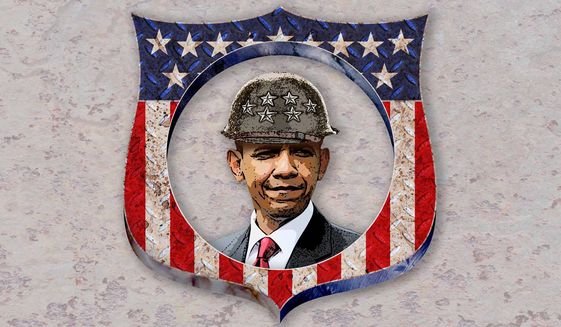
105_2015_b3-lyon-obama-shiel8201_c0-0-2933-1710_s561x327Obama Decimates the U.S. Military Illustration by Greg Groesch/The Washington Times

[T]he degradation of our military’s core principles must be viewed in a much broader perspective. Actually, it is a key element in President Obama’s declaration to fundamentally transform America. When you want to take down a country, the first thing you do is weaken its military.

***************************

Recent articles highlighting horrifying child abuse atrocities inflicted on defenseless children by our Afghan military and police partners are but the latest examples of how President Obama is destroying U.S. military forces.

Our military leadership’s response to these blatant acts of pedophilia by our so-called Afghan partners has been shocking. In short, the guidance provided to our Army and Marine Corps personnel was to just ignore these Muslim and Afghan seventh-century customs and traditions. They have been instructed to not interfere, even when such horrific acts are being committed on our own bases.

Those U.S. military personnel. whose moral outrage will not let them ignore these atrocities and instead act to stop these unconscionable acts against children, are either disciplined or forced to leave the service. In other words, even if you find a young boy chained to a bed so that a local police commander can sodomize him every night and you hear the screams, you are told to look the other way. This is not only un-American but an act against humanity.

Even the Taliban outlawed such practices and freed a number of children, thereby earning the gratitude of village elders. Does the Taliban with its seventh-century mentality have a higher moral code than the U.S. military leadership? It should be clear to any thinking person that when our honorable military personnel are forced to ignore these crimes against humanity, they are viewed as being complicit.

To those who have followed our involvement in Afghanistan, the current policy to ignore acts of pedophilia should come as no surprise. When “green on blue” attacks gained national attention, our military leadership tried to explain it away by claiming the friction that developed between the two forces was because our military personnel were not sensitive enough to Afghan culture and traditions. In other words, if our Afghan partners conduct violence or kill U.S. military personnel, it is our fault. What nonsense.

Other Afghan cultural idiosyncrasies our military personnel are forced to accept without reservation include wife-beating, rape, drug use, thievery, dog torture, desertion and collusion with the enemy, the Taliban. Furthermore, under no circumstances can our military discuss Islam in any form. The genesis for this goes back to the purging of all our training manuals and instructors who presented Islam in an unfavorable light or linked it to terrorism. It is totally against our core principles and everything we stand for as Americans. It clearly has an adverse impact on individual and unit morale, which affects the ultimate goal of the “will to win.” The bottom line is that we are forcing our great military to submit to Islam and its governing Shariah law, or possibly die.

This is exactly the choice offered to infidels who have been vanquished by Islamic jihad. Our military’s silence and acquiescence, particularly by the leadership, is the humiliating price for our coexistence with our Afghan partners. This is unacceptable.

However, the degradation of our military’s core principles must be viewed in a much broader perspective. Actually, it is a key element in President Obama’s declaration to fundamentally transform America. When you want to take down a country, the first thing you do is weaken its military. We cannot ignore the fact that with or without sequestration, the Obama administration has unilaterally disarmed our military forces and, consequently, our capabilities. Further, the social engineering imposed on our military forces — to include the acceptance of gay, lesbian and soon transgender personnel — further undermines the moral fiber of our military and constitutes a further degradation of our military effectiveness. Forcing women into combat roles only further degrades the situation. The restricted rules of engagement imposed on our forces has reduced our military’s effectiveness and caused unnecessary loss of life and debilitating injuries.

Likewise, the pin-prick attacks on the Islamic State cast a shadow over what a dedicated air campaign could accomplish. It projects an image of weakness and ineffectiveness of our true capabilities. It has taken the “awe” of our invincibility and overwhelming force capabilities out of the equation. The net result is that our enemies no longer fear us, and our allies can no longer trust us.

The imposed limit on the application and capability our military force is not limited to the Middle East. For example, in the Western Pacific, to challenge China’s illegal actions in the South China Sea, the Obama administration has restricted the U.S. Navy from enforcing its freedom of seas concept that has been a fundamental principle of the U.S. Navy for more than 238 years. Our Asian allies in the Western Pacific watch carefully how we respond to China’s aggressive actions. Our directed restraint clearly will not raise their confidence level.

Our national security is being deliberately jeopardized. President Obama’s bloviating to Vladimir Putin at the recent U.N. session that he leads the most powerful military in the world was only true on the day he took office. Since then, Obama has systematically degraded our capabilities. The chairmen of the House and Senate Armed Services Committee must take forceful action now to prevent further emasculation of our military capabilities.
After Blasting Israel, State Department Doesn’t Immediately Condemn Afghan Hospital Bombing

October 6, 2015

After Blasting Israel, State Department Doesn’t Immediately Condemn Afghan Hospital Bombing, Washington Free Beacon via You Tube, October 5, 2015


Unnecessary loss of life – The deadly price of politically correct rules of engagement.

September 30, 2015

Unnecessary loss of life – The deadly price of politically correct rules of engagement.

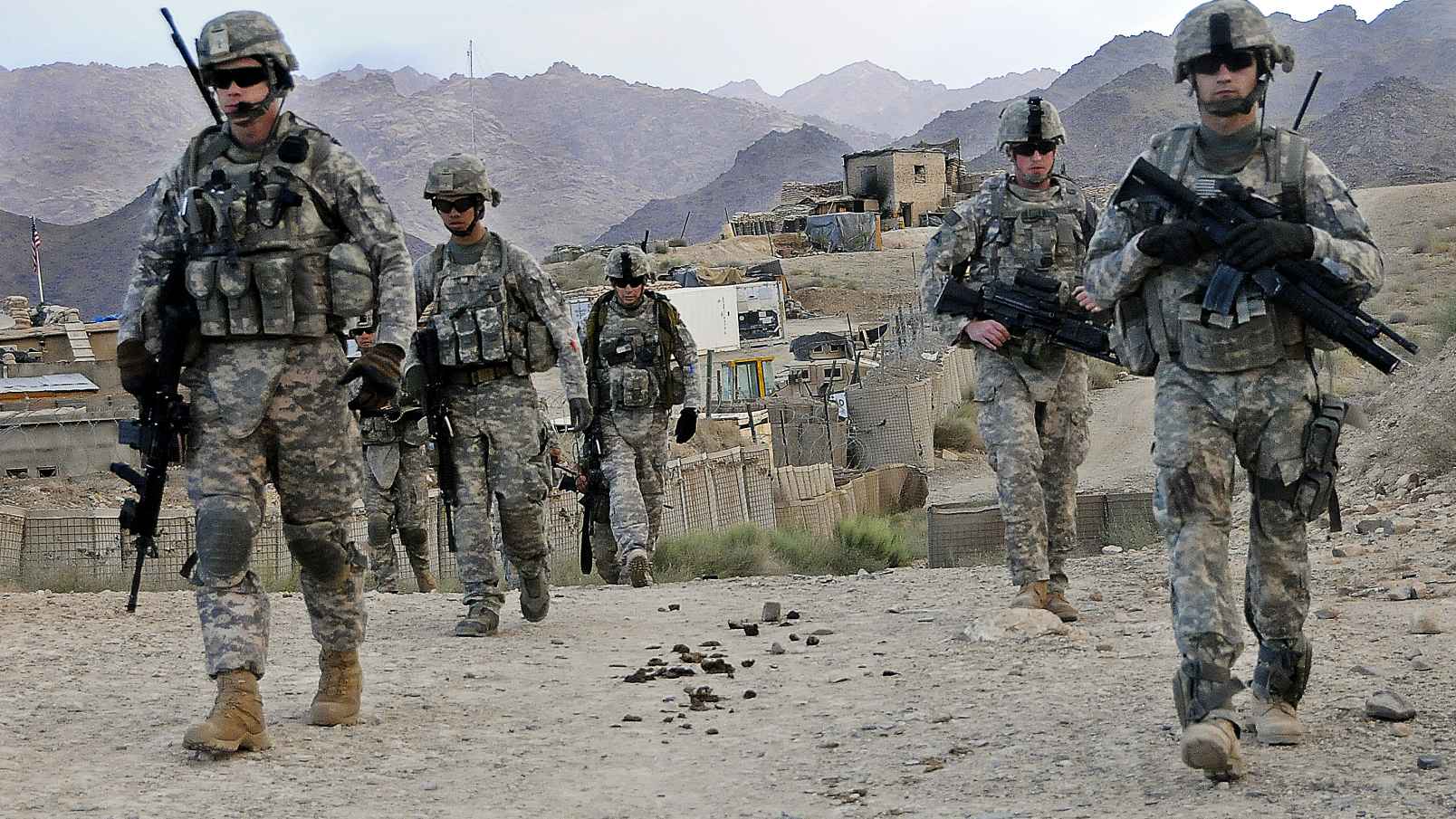
afghanistan_-_american_soldiers_fob_baylough

War is nasty, brutal and costly. In our latest wars, many of the casualties suffered by American troops are a direct result of their having to obey rules of engagement created by politicians who have never set foot on — or even seen — a battlefield. Today’s battlefield commanders must be alert to the media and do-gooders who are all too ready to demonize troops involved in a battle that produces noncombatant deaths, so-called collateral damage.

According to a Western Journalism article by Leigh H Bravo, “Insanity: The Rules of Engagement” (http://tinyurl.com/p59nlqs), our troops fighting in Afghanistan cannot do night or surprise searches. Also, villagers must be warned prior to searches. Troops may not fire at the enemy unless fired upon. U.S. forces cannot engage the enemy if civilians are present. And only women can search women. Retired Air Force Lt. Gen. Thomas McInerney said: “We handcuffed our troops in combat needlessly. This was very harmful to our men and has never been done in U.S combat operations that I know of.” Collateral damage and the unintentional killing of civilians are a consequence of war. But the question we should ask is: Are our troops’ lives less important than the inevitable collateral damage?

The unnecessary loss of life and casualties that result from politically correct rules of engagement are about to be magnified in future conflicts by mindless efforts to put women in combat units. In 2013, then-Defense Secretary Leon Panetta officially lifted the ban on women serving in ground combat roles. On Jan. 1, 2016, all branches of the military must either open all positions to women or request exceptions. That boils down to having women serve in combat roles, because any commander requesting exceptions would risk having his career terminated in the wake of the screeching and accusations of sexism that would surely ensue.

The U.S. Army has announced that for the first time, two female officers graduated from the exceptionally tough three-phase Ranger course.

Their “success” will serve as grist for the mills of those who argue for women in combat. Unlike most of their fellow soldiers, these two women had to recycle because they had failed certain phases of the course.

A recent Marine Corps force integration study concluded that combat teams were less effective when they included women. Overall, the report says, all-male teams and crews outperformed mixed-gender ones on 93 out of 134 tasks evaluated. All-male teams were universally faster “in each tactical movement.” The report also says that female Marines had higher rates of injury throughout the experiment.

Should anyone be surprised by the findings of male combat superiority? Young men are overloaded with testosterone, which produces hostility, aggression and competitiveness. Such a physical characteristic produces sometimes-poor behavior in civilian society, occasionally leading to imprisonment, but the same characteristics are ideal for ground combat situations.

You may bet the rent money that the current effort to integrate combat jobs will not end with simply a few extraordinary women. Secretary of the Navy Ray Mabus told the Navy Times that once women start attending SEAL training, it would make sense to examine the standards. He said, “First we’re going to make sure there are standards” and “they’re gender-neutral.” Only after that will the Navy make sure the standards “have something to do with the job.” We’ve heard that before in matters of race. It’s called disparate impact. That is, if the Navy SEALs cannot prove that staying up for 18 hours with no rest or sleep, sitting and shivering in the cold Pacific Ocean, running with a huge log on your shoulder, and being spoken to like a dog are necessary, then those parts of SEAL training will be eliminated so that women can pass.

The most disgusting, perhaps traitorous, aspect of all this is the overall timidity of military commanders, most of whom, despite knowing better, will only publicly criticize the idea of putting women in combat after they retire from service.

Satire | Pentagon Downplays Significance Of Taliban Taking Over All Of Afghanistan Last Night

September 30, 2015

Pentagon Downplays Significance Of Taliban Taking Over All Of Afghanistan Last Night, Duffel Blog, September 30, 2015

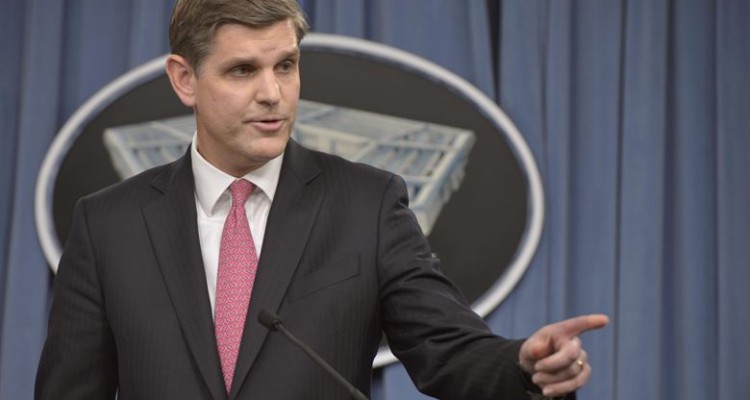
150929-D-NI589-068-750x400Photo Credit: Glenn Fawcett with the U.S. Department of Defense

WASHINGTON, D.C. — Following the Taliban’s complete takeover of Afghanistan late last night, Pentagon Press Secretary Peter Cook noted in an early morning press briefing that the Pentagon remains “generally positive” about the war effort and that “there is minimal cause for concern.”

“That’s how things go in a protracted counterinsurgency,” Cook told reporters. “You face some minor setbacks regardless of how many troops lose their lives or how many billions of taxpayer dollars are spent equipping local defense forces incapable of defending their own country.”

After the Taliban overran Afghan forces in Helmand earlier this year and took over the city of Kunduz this week, sources say the Obama Administration and many senior defense officials seemed surprised that major media outlets expressed even the slightest bit of interest in a war over a decade old.

At Central Command in Tampa, Fla., Gen. Lloyd Austin — who oversees forces in the region — assured reporters there was little cause for concern.

“We’ve seen this time and time again,” Austin said. “This modest spike in Taliban attacks shows that our strategy is working. These massive coordinated attacks are merely the death throes of an insurgent movement.”

Austin cited a range of historical and contemporary intelligence analyses to support his claim, adding: “Don’t believe me? Just look at the history of insurgencies. The Tet Offensive, Saigon in ’75, Iraq in 2006, every summer in Afghanistan since 2001.”

Sources at the White House say the president has not been too concerned with the situation for at least a few months, especially after he declared a successful end to the war in 2014 and placed forces there at Defense Condition (DEFCON) “Chill.”

Duffel Blog attempted to reach the commander of U.S. Forces in Afghanistan at his Kabul office but were ultimately unsuccessful. His new spokesman, Mullah Akhtar Mansour, stated that Gen. John Campbell and the U.S. Ambassador were unavailable for comment as they had departed Kabul via C-5 transport just a few hours earlier.


At the U.N., Obama refuses to see the chaotic world he has made,

September 29, 2015

At the U.N., Obama refuses to see the chaotic world he has made, BreitbartJohn Hayward, September 28, 2015

ISIS-beheading-Christians-Libya-ap-640x480

President Obama’s address to the U.N. General Assembly on Monday morning was a rambling journey through a fantasy world where his foreign policy hasn’t been an unmitigated disaster.

Perhaps the most bizarre moment came when he tried to tout his Libyan adventure as a success.

There was plenty of tough-guy posturing that intimidated absolutely no one.  The Russian and Iranian delegations were especially good at looking bored and unimpressed when he called upon them to do this-or-that because The World supposedly demanded it. Obama hasn’t figured out he’s the only leader at the U.N. eager to sacrifice his nation’s interests to please The World.

Obama made the weird decision to vaguely threaten Russia over its invasion of Ukraine by claiming that The World would not stand idly by and allow it… when that’s exactly what The World, and especially First Citizen of the World Barack Obama, has been doing.  He essentially pleaded with Iran to stop supporting terrorist proxies and pursuing its aggressive regional ambitions, and focus on their economy instead.  (Of course, in Obama’s vigorous imagination, the U.S. has been enjoying an economic boom under his stewardship, instead of an endless grinding non-recovery and limp, sporadic growth, after Obama’s spending doubled the national debt in a single presidency.)

It was bad enough that the President talked about American troops coming home from Iraq and Afghanistan as the triumphant conclusion of an effective policy, rather than the hideous blunder that allowed ISIS to create a terror state, al-Qaeda to rise from the ashes, and the Taliban to begin planning its return to power.  At the same moment Obama was speaking, the Taliban was conducting a major offensive in Afghanistan, on par with the importance of ISIS taking Mosul in Iraq.  Obama’s pitifully small “New Syrian Force” of U.S.-backed rebels just handed a good deal of its American equipment over to al-Qaeda, and no one really knows what became of the unit itself.  Their predecessors were destroyed by al-Qaeda’s Nusra Front in Syria, with less than half a dozen survivors still on the field.

When Obama boasted of the Libyan operation as the successful removal of a tyrant, jaws must have hit the floor around the room.  Libya is an unholy disaster, a wasteland of warlords fighting to keep ISIS off their turf.  It’s a key gateway for the incredible migratory tide blasting out of Africa and the Middle East and now surging across Europe.  And yet, Obama portrays it as [a] laudable example of tyrant removal… while modestly admitting that “our coalition could have, and should have, done more to fill a vacuum left behind.”

Of course he blamed everyone else in the “coalition” for the disaster in Libya. He’s Barack Obama.  The day may come when he takes responsibility for something, but today is not that day, and tomorrow isn’t looking good either.

The scary thing about Obama is that he believes so completely in the power of his own rhetoric.

He thinks he can reshape reality with his words.  When he scolds the Iranians for their “Death to America!” rhetoric by saying bloodthirsty chants don’t create jobs, he’s asking Iran to live up to the silly talking points he foisted off on the American people to cover the Iranian nuclear deal.  He’s commanding Iran to act like the enlightened, responsible nation-state he gambled the future of Israel, America, and much of the Western world on.

The Iranians, on the other hand, see no reason to knock off the “Death to America!” chants, disband their theocracy, and begin spending their days arguing about stimulus bills.  Belligerence has gotten them everything so far.  They’ve been rewarded for it… by Barack Obama.  They’ve got $150 billion in sanctions relief coming their way.  They can afford to send a few guys to sit in the U.N. General Assembly with pissy expressions on their faces while Obama rambles on about how geo-political crime does not pay.  They know for a fact it pays, quite handsomely.  The Iranians are already using their Obama loot to reinforce terror proxies like Hamas and Hezbollah, and secure Bashar Assad in power.

Ah, yes, Bashar Assad… the dictator Obama still blathers on about removing from power, even as his own diplomatic apparatus gets used to the idea Assad is not going anywhere.  The only really good part of Obama’s speech was when he spent five seconds glaring at the Syrian ambassador before launching into his denunciation of barrel bombs and chemical weapons.  But you know what?  That Syrian ambassador gets paid enough to take a few seconds of hairy eyeball from the ineffectual American president.  The Russians are smoothly replacing American influence across the Middle East, in partnership with Iran.  The new order is taking shape.  Obama isn’t going to reverse that process by telling aggressive, bare-knuckle conquerors they should be ashamed of themselves.

The other dangerous thing about this delusional President is his belief in the “judgment of history.”

He’s constantly hitting on the idea that all of the world’s villains are on the wrong side of history, and will find themselves buried in the sands of time any day now.  It’s a dodge, a way of Obama evading responsibility.  Bashar Assad is going to remerge from the Wrong Side of History in pretty good shape.  ISIS is very comfortable there, as is Iran.  Qaddafi didn’t assume room temperature because History caught up with him. Vladimir Putin has a lovely view of Crimea from the wrong side of history.  The history of Europe is being reshaped by the tramping of a million “refugee” feet.

In every example, Obama clings to the idea that he can change the world by talking and scoring debate points, while his adversaries seize territory and control the course of events.  It’s not as though Obama has some deep-seated reluctance to use deadly force – there have been a lot of deaths by drone strike since he won that Nobel Peace Prize.  What Obama lacks is commitment.  His foreign policy is all about gestures and distractions.  He cooks up half-baked plans that will blow up a terrorist here and there, so he can’t be accused of doing “nothing,” but he won’t do anything that could cost him political capital at home.  Even Libya was half-hearted and calculated for minimum risk, which is why the place went to an even deeper Hell after Qaddafi was overthrown.

Obama talks as if he’s taken action against numerous crises, but all he ever did was talk about them.  The men of action are stacking up bodies, and raising flags over conquered cities, while this President is writing speeches and trying to win applause from editorial boards.  The men of action know that Obama’s promises all have expiration dates, his vows of action always have escape clauses, and no matter how he loves to boast that he heads up the most powerful military the world has ever seen, he’s done everything he can to make it weaker.

President Obama is still clinging to a romantic vision of the “Arab Spring” as a flourishing of democracy, despite all evidence to the contrary.  He’s giving the same foreign policy speeches he gave in 2009 because he can’t bear to live in the world he made.  He talks about filling vacuums and voids… but those voids are already filled, by hard characters with plans to make the most of the extraordinary opportunity Barack Obama afforded them.

(Video of Obama’s UN address — DM):


Taliban storm Kunduz city

September 28, 2015

Taliban storm Kunduz city, Long War Journal, September 28, 2015

[R]eports from the Afghan media, as well as Taliban fighters and residents from inside the city, indicate that parts if not all of the city are now under Taliban control.

*******************

The Taliban assaulted the northern provincial capital of Kunduz from three directions and seized control of areas in the city. Unconfirmed reports from residents and Taliban fighters inside Kunduz indicate that Afghan forces have been driven out of the city and the Taliban are in full control.

According to the BBC, hundreds of Taliban fighters launched their offensive today from three districts: Imam Sahib to the north, Khanabad from the southeast, and Chardara from the southwest. All three districts are thought to be under Taliban control.

The Taliban confirmed they launched a three-pronged assault on Kunduz city. “The operations have commenced on the city center from 3 directions with Mujahideen quickly taking enemy positions and the enemy is retreating from their positions,” according to an initial statement that was posted on Voice of Jihad.

The Taliban later stated that their fighters have “reached the main city intersection, are targeting the governors [sic] compound and clearing the small remaining pockets from enemy presence.”

Afghan security officials have denied that the Taliban are in control of the city and have stated that the fighting was largely confined to the outskirts of the provincial capital.

But reports from the Afghan media, as well as Taliban fighters and residents from inside the city, indicate that parts if not all of the city are now under Taliban control.

According to TOLONews, “Taliban insurgents have taken control of Kunduz city’s provincial council building and the local High Peace Council offices.”

Ehsanullah Ehsan, a stabilization manager at the international development agency DAI who is based in Kunduz, has said that the Taliban have seized the city and Afghan National Security Forces [ANSF] have retreated.

“Kunduz city is completely with taliban ANSF are out,” Ehsan tweeted. “[T]he city is completely with taliban now, taliban walking inside streets, i am trapped at home.”

Ehsan posted photographs purportedly showing Taliban fighters walking the streets of Kunduz and prisoners who have been freed from the city’s main jail.

Kunduz province has been hotly contested since the Taliban and its allies launched an offensive to seize control of the province at the end of April. The districts of Imam Sahib, Aliabad, and Qala-i-Zal were overrun in the initial assault, while Chardara and Dasht-i-Archi fellin mid-June. It is unclear when Khanabad fell under Taliban control. The status of the six districts is unclear, but the Taliban is still thought to be in control of Imam Sahib, Aliabad, Chardara, Khanabad, and Dasht-i-Archi.

The Taliban and allied jihadist groups based in Kunduz have been flexing their muscles in the province in recent weeks. In August, hundreds of fighters from the Taliban and the allied Islamic Jihad Union massed in the open, in daylight, to swear allegiance to Mullah Akhtar Mohammad Mansour, the new emir of the Taliban. Last week, the Islamic Jihad Union claimed it controlled large areas of the border with Tajikistan and a border crossing from Kunduz into the northern Afghan neighbor.

The loss of Kunduz city, if confirmed, would be a major blow to the Afghan government and military, which have struggled to maintain security after US and NATO forces have drawn down to a token presence. Kunduz city would be the first provincial capital to fall to the Taliban.

Additionally, the fall of Kunduz would invalidate the entire US “surge” strategy from 2009 to 2012. The US military focused its efforts on the southern Afghan provinces of Helmand and Kandahar, claiming that these provinces were the key to breaking the Taliban. Little attention was given to other areas of Afghanistan, including the northern provinces, where the Taliban have expended considerable effort in fighting the military and government. Today, the Taliban are gaining ground in northern, central, eastern and southern Afghanistan, with dozens of districts falling under Taliban control over the past year.

U.S. soldiers ordered to ignore Afghan allies’ abuse of boys

September 21, 2015

U.S. soldiers ordered to ignore Afghan allies’ abuse of boys, Jihad Watch, Robert Spencer, September 20, 2015

(“It’s their culture, so it’s cool. Don’t get involved.” The (non-Islamic) Islamic State is also a manifestation of Islamic culture. Should our we be required to ignore it as well? — DM)


What are we in Afghanistan for, if not to stand for our own values and the principles of human rights? Instead, U.S. officials are aiding and abetting the destruction of these boys’ lives — and in the case of Lance Corporal Buckley, sacrificing our own troops. This is beyond shameful.

“Those are the ones brought near in the Gardens of Pleasure, a company of the former peoples and a few of the later peoples, on thrones woven, reclining on them, facing each other. There will circulate among them young boys made eternal with vessels, pitchers and a cup from a flowing spring.” — Qur’an 56:11-18

“And they will be given to drink a cup whose mixture is of ginger, a fountain within Paradise named Salsabeel. There will circulate among them young boys made eternal. When you see them, you would think them scattered pearls. And when you look there, you will see pleasure and great dominion.” — Qur’an 76:17-20

Gregory-Buckley

“U.S. Soldiers Told to Ignore Afghan Allies’ Abuse of Boys,” by Joseph Goldstein, New York Times, September 20, 2015:

KABUL, Afghanistan — In his last phone call home, Lance Cpl. Gregory Buckley Jr. told his father what was troubling him: From his bunk in southern Afghanistan, he could hear Afghan police officers sexually abusing boys they had brought to the base.

“At night we can hear them screaming, but we’re not allowed to do anything about it,” the Marine’s father, Gregory Buckley Sr., recalled his son telling him before he was shot to death at the base in 2012. He urged his son to tell his superiors. “My son said that his officers told him to look the other way because it’s their culture.”

Rampant sexual abuse of children has long been a problem in Afghanistan, particularly among armed commanders who dominate much of the rural landscape and can bully the population. The practice is called bacha bazi, literally “boy play,” and American soldiers and Marines have been instructed not to intervene — in some cases, not even when their Afghan allies have abused boys on military bases, according to interviews and court records.

The policy has endured as American forces have recruited and organized Afghan militia to help hold territory against the Taliban. But soldiers and Marines have been increasingly troubled that instead of weeding out pedophiles, the American military was arming them in some cases and placing them as the commanders of villages — and doing little when they began abusing children.
Gregory Buckley Sr. believes the policy of looking away from sexual abuse was a factor in his son’s death.

“The reason we were here is because we heard the terrible things the Taliban were doing to people, how they were taking away human rights,” said Dan Quinn, a former Special Forces captain who beat up an American-backed militia commander for keeping a boy chained to his bed as a sex slave. “But we were putting people into power who would do things that were worse than the Taliban did — that was something village elders voiced to me.”

The policy of instructing soldiers to ignore pedophilia by their Afghan allies is coming under new scrutiny, particularly as it emerges that service members like Captain Quinn have faced discipline, even career ruin, for disobeying it.

After the beating, the Army relieved Captain Quinn of his command and pulled him from Afghanistan. He has since left the military.

Four years later, the Army is also trying to forcibly retire Sgt. First Class Charles Martland, a Special Forces member who joined Captain Quinn in beating up the commander….

The American policy of nonintervention was intended to maintain good relations with the Afghan police and militia units the United States has trained to fight the Taliban. It also reflected a reluctance to impose cultural values in a country where pederasty is rife, particularly among powerful men, for whom being surrounded by young teenagers can be a mark of social status.

Some soldiers believed that the policy made sense, even if they were personally distressed at the sexual predation they witnessed or heard about.

“The bigger picture was fighting the Taliban,” a former Marine lance corporal reflected. “It wasn’t to stop molestation.”

Still, the former lance corporal, who spoke on condition of anonymity to avoid offending fellow Marines, recalled feeling sickened the day he entered a room on a base and saw three or four men lying on the floor with children between them. “I’m not a hundred percent sure what was happening under the sheet, but I have a pretty good idea of what was going on,” he said.

But the American policy of treating pedophilia as a cultural issue has often alienated the villages whose children were being preyed upon. The pitfalls of the policy emerged clearly as American Special Forces soldiers began to form Afghan Local Police militias to hold villages that American forces had retaken from the Taliban in 2010 and 2011.

By the summer of 2011, Captain Quinn and Sergeant Martland, both Green Berets on their second tour in northern Kunduz Province, began to receive dire complaints about the Afghan Local Police units they were training and supporting.

First, one of the militia commanders raped a 14- or 15-year-old girl whom he had spotted working in the fields. Captain Quinn informed the provincial police chief, who soon levied punishment. “He got one day in jail, and then she was forced to marry him,” Mr. Quinn said.

When he asked a superior officer what more he could do, he was told that he had done well to bring it up with local officials but that there was nothing else to be done. “We’re being praised for doing the right thing, and a guy just got away with raping a 14-year-old girl,” Mr. Quinn said.

Village elders grew more upset at the predatory behavior of American-backed commanders. After each incident, Captain Quinn would gather the Afghan commanders and lecture them on human rights.

Soon another commander absconded with his men’s wages. Mr. Quinn said he later heard the commander had spent the money on dancing boys. Another commander murdered his 12-year-old daughter in a so-called “honor killing” for having kissed a boy.“There were no repercussions,” Mr. Quinn recalled.

In September 2011, an Afghan woman, visibly bruised, showed up at an American base with her son, who was limping. One of the Afghan police commanders in the area, Abdul Rahman, had abducted the boy and forced him to become a sex slave, chained to his bed, the woman explained. When she sought her son’s return, she herself was beaten. Her son had eventually been released, but she was afraid it would happen again she told the Americans on the base.

She explained that because “her son was such a good-looking kid, he was a status symbol” local commanders coveted, recalled Mr. Quinn, who did not speak to the woman directly but was told about her visit when he returned to the base from a mission later that day.

So Captain Quinn summoned Abdul Rahman and confronted him about what he had done. The police commander acknowledged that it was true, but brushed it off. When the American officer began to lecture about “how you are held to a higher standard if you are working with U.S. forces, and people expect more of you,” the commander began to laugh.

“I picked him up and threw him onto the ground,” Mr. Quinn said. Sergeant Martland joined in, he said. “I did this to make sure the message was understood that if he went back to the boy, that it was not going to be tolerated,” Mr. Quinn recalled….

Sergeant Martland, who received a Bronze Star for valor for his actions during a Taliban ambush, wrote in a letter to the Army this year that he and Mr. Quinn “felt that morally we could no longer stand by and allow our A.L.P. to commit atrocities,” referring to the Afghan Local Police.

The father of Lance Corporal Buckley believes the policy of looking away from sexual abuse was a factor in his son’s death, and he has filed a lawsuit to press the Marine Corps for more information about it.

Lance Corporal Buckley and two other Marines were killed in 2012 by one of a large entourage of boys living at their base with an Afghan police commander named Sarwar Jan.

Mr. Jan had long had a bad reputation; in 2010, two Marine officers managed to persuade the Afghan authorities to arrest him following a litany of abuses, including corruption, support for the Taliban and child abduction. But just two years later, the police commander was back with a different unit, working at Lance Corporal Buckley’s post, Forward Operating Base Delhi, in Helmand Province.

Lance Corporal Buckley had noticed that a large entourage of “tea boys” — domestic servants who are sometimes pressed into sexual slavery — had arrived with Mr. Jan and moved into the same barracks, one floor below the Marines. He told his father about it during his final call home.

Word of Mr. Jan’s new position also reached the Marine officers who had gotten him arrested in 2010. One of them, Maj. Jason Brezler, dashed out an email to Marine officers at F.O.B. Delhi, warning them about Mr. Jan and attaching a dossier about him.

The warning was never heeded. About two weeks later, one of the older boys with Mr. Jan — around 17 years old — grabbed a rifle and killed Lance Corporal Buckley and the other Marines.

Lance Corporal Buckley’s father still agonizes about whether the killing occurred because of the sexual abuse by an American ally. “As far as the young boys are concerned, the Marines are allowing it to happen and so they’re guilty by association,” Mr. Buckley said. “They don’t know our Marines are sick to their stomachs.”

The one American service member who was punished in the investigation that followed was Major Brezler, who had sent the email warning about Mr. Jan, his lawyers said. In one of Major Brezler’s hearings, Marine Corps lawyers warned that information about the police commander’s penchant for abusing boys might be classified. The Marine Corps has initiated proceedings to discharge Major Brezler.

Video: Greek island turns into war zone as Syrian and Afghan migrants clash

September 8, 2015

Video: Greek island turns into war zone as Syrian and Afghan migrants clash, BreitbartDonna Rachel Edmunds, September 8, 2015

The Greek island of Lesbos has been turned into a war zone by rioting migrants, leaving the island’s 85,000 residents in despair. Around 25,000 migrants are currently camped out on the island with hundreds more arriving daily, leading to frequent violent clashes and rioting despite their claim to be fleeing violence.

Located just 6 miles from the Turkish shore, the migrants come over in inflatable boats which they cut up on arrival to prevent being turned back, expecting to be able to quickly travel on by ferry to mainland Europe, German station RTL has reported.

Instead, they are being held on the Island while the police issue emigration documents, a delay which can take days. The wait is causing tension between groups as Afghans accuse Syrians of getting preferential treatment by the authorities, leading to vicious violent clashes.

As rocks, bottles and municipal bins fly, one tearful local woman told RTL “We are in danger, every day, every minute. We need someone to protect us. They come into our houses. I want to go to work, but I can’t. Our children want to go to school, but they can’t. They have stolen our lives!”

Another yells at the migrants flinging rocks as they pass his house: “Go away from here! This is private land! Respect Greece!”

WATCH:


The full video is here.


The main town of Lesbos, Mytilene, now resembles a war zone as the migrants rip apart the infrastructure and use the town as a urinal. Mayor Galinos helpless in the face of such an onslaught is out of ideas, and is calling on the European Union to do something.

“This is a ticking time bomb that will go off soon,” he said. “We have managed to avert some catastrophes, but we need help, more ferries. This island is so small, we can’t solve a worldwide humanitarian crisis by ourselves. The European Union needs to act.”

Monday night saw fresh clashes as 2,500 surged towards a government chartered ferry bound for Athens. Just a dozen police and coastguards, armed with batons, struggled to control the crowd by shouting “keep back”.

Junior interior minister Yiannis Mouzalas told local radio “the situation is on the verge of explosion.” It is a scene being replicated on islands all along Greece’s coastline.

Evangelos Meimarakis, leader of Greece’s right wing New Democracy party which could retake power this month, said the country should strengthen its borders to as to dispel “the message that ‘it’s good over here, come over’”.

Taliban takes another district in southern Afghanistan

August 26, 2015

Taliban takes another district in southern Afghanistan, The Long War Journal, August 26, 2015

The Taliban now control most of northern Helmand province, and will likely push its offensive towards Lashkar Gah in central Helmand, as Afghan security forces are stretched thin with an ongoing Taliban offensive in the Afghan north. This spring and summer, the Taliban have taken control of at least four of the seven districts in Kunduz province and have also seized districts in Sar-i-Pul and Badakhshan provinces.

*****************

The Taliban overran the Musa Qala district center when Afghan forces fled after several days of fighting. The fall of Musa Qala puts the Taliban in effective control of northern Helmand, and will allow it to threaten the provincial capital of Lashkar Gah.

A member of the Helmand provincial council confirmed that the Taliban seized the district center this morning. “Three Afghan security members were killed and ten others including the district governor were wounded,”ATN News reported.

Afghan defense officials have boasted that more than 60 Taliban fighters were killed, most in Coalition airstrikes, during the peak of fighting which began three days ago. “Pakistani, Arab and Chechen Taliban insurgents” are present in Musa Qala, TOLO News reported.

Afghan forces took heavy casualties during the fighting. A member of the Helmand provincial council said that45 Afghan soldiers were killed and 20 more surrendered during an assault on an outpost on Aug. 23. At least nine policemen were killed in an attack on a police station on Aug. 13.

The Taliban confirmed its forces took control of Musa Qala. In a statement released on Voice of Jihad, the Taliban’s official website, the group said “Mujahideen of Islamic Emirate have managed to overrun Musa Kala district center, HQ building, Police HQ, PRT building and all surrounding check posts in an overnight assault.” According to the Taliban, “a sizable number of arms, ammunition, APCs, vehicles and other equipment has also been seized in the operation.”

Afghan forces are “currently retreating towards Gereshk” in the neighboring district of Nahri Sarraj district, the Taliban claimed. “Mujahideen are now pursuing the convoy.”

The Taliban now control most of northern Helmand province, and will likely push its offensive towards Lashkar Gah in central Helmand, as Afghan security forces are stretched thin with an ongoing Taliban offensive in the Afghan north. This spring and summer, the Taliban have taken control of at least four of the seven districts in Kunduz province and have also seized districts in Sar-i-Pul and Badakhshan provinces.

The northern-most district of Baghran was never liberated from the Taliban during the US ‘surge’ from 2009 to 2012. Sangin district is at best contested; after two months of fighting in Sangin in the summer 2014, local Afghan officials opened peace talks with the Taliban. Kajaki district is largely under Taliban control, Afghan officials have said. In July, the Taliban released a video showing its fighters parading in Kajaki. Now Zad district fell to the Taliban at the end of July.

This year Taliban has made a push on multiple fronts to regain territory it lost during the US surge. More than 30,000 US troops were deployed to Afghanistan, primarily in the south, to retake Taliban-held areas in Helmand and Kandahar during the surge. While the Taliban suffered heavy losses and lost control of key districts, the group was not defeated militarily or politically. The Taliban regrouped in Pakistan and other provinces in Afghanistan, and began attacking Afghan security forces as US forces began their withdrawal.

The Taliban has pressed its spring offensive, called “Azm,” despite controversy over the death of its founder and emir, Mullah Omar. Afghan and Taliban officials have said that Omar died in Pakistan in 2013. The Taliban’s leadership council hid his death from the rank and file and appointed Mullah Akhtar Mohammad Mansour, who is closely tied to al Qaeda, as the new emir. After Mansour was officially named the Taliban’s new emir, one of his first acts was to publicly accept al Qaeda’s oath of allegiance. The controversy over Omar’s death does not appear to have impacted the Taliban on the battlefield.

Iran Backs Taliban With Cash and Arms

June 12, 2015

Iran Backs Taliban With Cash and Arms, Wall Street Journal, Margherita Stancati, June 11, 2015

The White House-supported international nuclear talks with Iran that are scheduled to finish this month face world-wide criticism for potentially setting up a new regional dynamic in which Tehran, unfettered by punitive economic sanctions and flush with new resources, would be able to pursue an activist agenda through its proxies in and around the Middle East. Tehran’s growing ties to the Taliban is another sign of that, these critics say.

U.S. officials declined to comment specifically about closer Iran-Taliban ties, but have said that its diplomacy with Iran doesn’t alter its concerns about Iran’s destabilizing influence in the region. Director of National Intelligence James Clapper said in a recent letter to lawmakers that Iran was the “foremost state sponsor of terrorism.”

**************************

“Iran supplies us with whatever we need,” he said.

Afghan and Western officials say Tehran has quietly increased its supply of weapons, ammunition and funding to the Taliban, and is now recruiting and training their fighters, posing a new threat to Afghanistan’s fragile security.

Iran’s strategy in backing the Taliban is twofold, these officials say: countering U.S. influence in the region and providing a counterweight to Islamic State’s move into the Taliban’s territory in Afghanistan.

The Taliban’s aggressive military push and the new momentum toward peace negotiations between them and Kabul also raises the possibility that some of their members could eventually return to power.

“Iran is betting on the re-emergence of the Taliban,” said a Western diplomat. “They are uncertain about where Afghanistan is heading right now, so they are hedging their bets.”

Iranian officials didn’t respond to requests for comment, but Tehran has repeatedly denied providing financial or military aid to the Taliban in conversations with Afghan and Western officials. “Whenever we discussed it, they would deny it,” a former senior Afghan official said.

The developing Iran-Taliban alliance represents a new complication in Mr. Obama’s plans for both the Middle East and the future of Afghanistan, where the U.S. has been working to curb the Taliban’s role ahead of a planned withdrawal of all but 1,000 U.S. troops at the end of his presidency in 2016. At its peak in 2011 there were 100,000 U.S. troops.

The White House-supported international nuclear talks with Iran that are scheduled to finish this month face world-wide criticism for potentially setting up a new regional dynamic in which Tehran, unfettered by punitive economic sanctions and flush with new resources, would be able to pursue an activist agenda through its proxies in and around the Middle East. Tehran’s growing ties to the Taliban is another sign of that, these critics say.

Rep. Ed Royce (R., Calif.), chairman of the House Foreign Affairs Committee, said Iran’s support to the Taliban could increase if a nuclear deal is signed and Iran wins sanction relief.

“Across the region, Iran is stepping up its support for militants and rebel groups,” Mr. Royce said. “With billions in sanctions relief coming, that support goes into overdrive.”

Sen. John McCain (R., Ariz), chairman of the Armed Services Committee, said Iran’s increased support to the Taliban is a continuation of its aggressive behavior in Yemen, Syria, Iraq and Lebanon. “This is further evidence of the administration’s continued willful disregard for the facts on the ground in light of Iranian aggression in the region,” he said.

U.S. officials declined to comment specifically about closer Iran-Taliban ties, but have said that its diplomacy with Iran doesn’t alter its concerns about Iran’s destabilizing influence in the region. Director of National Intelligence James Clapper said in a recent letter to lawmakers that Iran was the “foremost state sponsor of terrorism.”

The Taliban have long used Pakistani territory as their main recruiting base and headquarters. But Afghan and Western officials say Iran, through its elite Revolutionary Guard Corps, has emerged as an important ally for the Taliban.

What’s more, they say, Tehran is turning to Afghan immigrants within its borders—a tactic it has also used to find new recruits to fight in support of President Bashar al-Assad’s regime in Syria.

Mr. Abdullah is one of those Iranian-backed Taliban fighters. After being detained for working as an illegal laborer in the Iranian port city of Bandar Abbas, Mr. Abdullah said he was approached by an Iranian intelligence officer.

“He asked me how much money I made, and that he would double my salary if I went to work for them in Afghanistan,” he said.

Mr. Abdullah said smugglers hired by Iran ferry supplies across the lawless borderlands where Iran, Afghanistan and Pakistan meet and deliver them to Taliban units in Afghan territory. He said his fighters receive weapons that include 82mm mortars, light machine guns, AK-47 rifles, rocket-propelled grenades and materials for making roadside bombs.

Military and intelligence officials see Iran’s support to the Taliban as an alliance of convenience. Historically, relations between Iran, a Shiite theocracy, and the hard-line Sunni Taliban have been fraught. Iran nearly went to war against the Taliban regime in 1998 after 10 of its diplomats were killed when their consulate in the northern Afghan city of Mazar-e Sharif was overrun.

Iran didn’t oppose the overthrow of the Taliban in 2001, and it has since maintained friendly relations with the Western-backed government in Kabul.

But Iran has long been uneasy with the U.S. military presence on its doorstep, and the Revolutionary Guard Corps have been delivering weapons to the Taliban since at least 2007, according to an October 2014 report by the U.S. Department of Defense.

Iran’s alliance with the Taliban took a new turn in June 2013 when Tehran formally invited a Taliban delegation to participate in a conference on Islam and to meet senior Iranian officials.

By the fall of that year, Afghan security officials said they had clear evidence that Iran was training Taliban fighters within its borders. Tehran now operates at least four Taliban training camps, according to Afghan officials and Mr. Abdullah, the Taliban commander. They are in the Iranian cities of Tehran, Mashhad and Zahedan and in the province of Kerman.

“At the beginning Iran was supporting Taliban financially,” said a senior Afghan official. “But now they are training and equipping them, too.”

The drawdown of U.S. and allied troops has made it easier for Taliban fighters and smugglers to cross the porous border undetected. “In the past, the U.S. had significant surveillance capabilities,” said Sayed Wahid Qattali, an influential politician from the western city Herat, where Iran has long had influence. “But now that the Americans have left, Iran is a lot freer.”

Iran formalized its alliance with the Taliban by allowing the group to open an office in Mashhad, maintaining a presence there since at least the beginning of 2014, a foreign official said. The office has gained so much clout that some foreign officials are now referring to it as the “Mashhad Shura,” a term used to describe the Taliban’s leadership councils.

One of the main points of contact between Tehran and the insurgency is head of the Taliban’s Qatar-based political office, Tayeb Agha, Afghan and foreign officials said. His most recent trip to Iran was in mid-May, the insurgent group said. The Taliban deny they receive support from Iran or any other foreign country, but say they want good relations with Afghanistan’s neighbors.

Iran’s backing of the Taliban has a strategic rationale. Tehran is already battling Islamic State, also known as Daesh, in Syria and Iraq, and it is wary of a new front line emerging close to its eastern border, Afghan officials say.

“Iran seeks to counter Daesh with the Taliban,” said an Afghan security official.

For the Taliban, Islamic State militants represent a threat of a different kind: they are competitors. Since an offshoot of Islamic State announced plans to expand in Afghanistan and Pakistan earlier this year, the new group has been actively recruiting fighters, many of whom are disaffected Taliban, say residents and Afghan officials.

This has pitted the two rival jihadist groups against each other, with clashes erupting between them in provinces including Helmand in the south, Nangarhar in the east and specifically involving Iran-backed Taliban in Farah, near Iran’s border, Afghan officials say.

Iranian funding gives more options to the militant group, support that is beginning to have an impact on the battlefield.

“If it wasn’t for Iran, I don’t think they would’ve been able to push an offensive like they are doing now,” said Antonio Giustozzi, a Taliban expert who has tracked Iran’s involvement in Afghanistan.

In recent months, security in Afghanistan’s west and north deteriorated sharply compared to last year, as Taliban fighters amassed in large numbers, testing the ability of Afghan troops to hold their ground.

It’s unclear, however, how far Iran will go to promote the Taliban.

“They wouldn’t want the Taliban to become too strong,” said a second foreign official. “They just want to make sure that they have some levers in their hands, because if the Taliban would win, God forbid, then they would lose all their leverage.”