Archive for November 28, 2017

North Korea fires ballistic missile, Pentagon claims it’s an ICBM

November 28, 2017
https://www.rt.com/news/411228-north-korea-ballistic-missile/
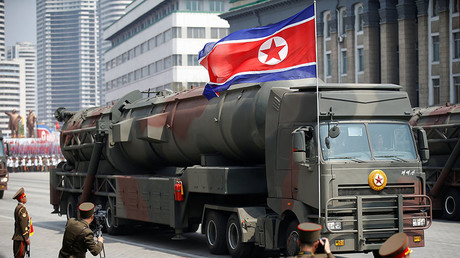
FILE PHOTO © KCNA
North Korea has fired a ballistic missile, which splashed down in the Sea of Japan, according to the South Korean, Japanese and US militaries. The Pentagon says an initial assessment indicates it was an intercontinental ballistic missile (ICBM).

South Korea’s Joint Chiefs of Staff were the first to report on the launch. “North Korea launched an unidentified ballistic missile eastward from the vicinity of Pyongsong, South Pyongan Province, at dawn today,” it said, as cited by Yonhap news agency. Seoul and Washington were analyzing the missile’s trajectory, it added.

The Pentagon later said it had detected and tracked a North Korean missile launch.

Read more

© Damir Sagolj

Pentagon spokesman Colonel Robert Manning described the projectile as an intercontinental ballistic missile, adding that it traveled some 1,000 km before splashing down into the Sea of Japan.

The White House said that US President Donald Trump had already been briefed on Pyongyang’s new launch when the missile was still in the air.

Trump eventually called the North Korean missile launch “a situation that we will handle.” The launch would not change the US approach to the North Korea issue, he added.

The Japanese prime minister’s office said that the North Korean missile apparently landed in waters off Japan within the country’s exclusive economic zone.

The Japanese PM ordered an emergency meeting of cabinet ministers, according to Japan’s Chief Cabinet Secretary Yoshihide Suga. Tokyo has also expressed a “strong protest” over the launch. Japanese PM Shinzo Abe has also requested an emergency meeting of the UN Security Council.

Following the North Korean launch, the South Korean military staged a “precision strike” missile exercise, Yonhap reported.

The South Korean military said that the missile flew some 960 kilometers, reaching a peak altitude of 4,500 kilometers. The figures have yet to be verified by other sources, since such an altitude would mean the projectile travelled well into space, with the Low Earth Orbit being marked at 2,000 kilometers.

US Defense Secretary James Mattis said that the missile went higher than any other projectile the North Koreans had launched previously. The North Korean launch, if confirmed, would be the first test conducted by Pyongyang since September, when the Pyongyang fired a ballistic missile over Japan.

The EU condemned the new launch as “unacceptable violation of the DPRK’s international obligations.

The European Union’s message is unequivocal: the DPRK must abandon its nuclear, weapons of mass destruction and ballistic missile programs in a complete, verifiable and irreversible manner, immediately cease all related activities and return to the Nuclear Non-Proliferation Treaty and the IAEA Safeguards,” an EU spokesperson said in a statement.

NATO chief Jens Stoltenberg has also condemned the latest missile launch. “I strongly condemn North Korea’s new ballistic missile test. This is a further breach of multiple UN Security Council Resolutions, undermining regional and international security,” he said in a statement.

The latest launch came a week after the US relisted North Korea as a “state sponsor of terrorism.” US President Trump asserted that Pyongyang “has supported international acts of terrorism, including assassinations on foreign soil.” The move was strongly condemned by Pyongyang, which said Washington used the designation as instrument “of destroying independent countries.”

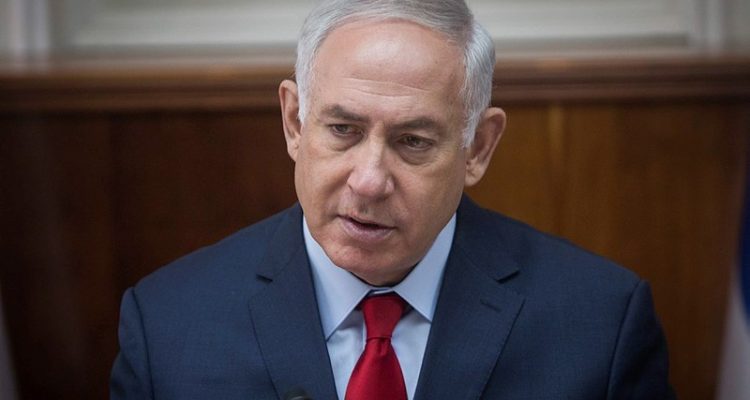
PM Netanyahu’s greeting on the 70th anniversary of the UN Partition Resolution of November 29, 1947

November 28, 2017


Sweden: Nobody helped woman raped by 20 Muslim migrants — neighbors have “learned not to see or hear too much”

November 28, 2017

Sweden: Nobody helped woman raped by 20 Muslim migrants — neighbors have “learned not to see or hear too much” Jihad Watch

A rape case so brutal that even Swedish main stream media is reporting about it shows signs of total collapse of moral and culture in Swedish society.

10News Update

“Eeew, you have sperm on your face and on your clothes, don’t involve us,” they said to the woman. She had just endured a gang rape and abuse by up to twenty perpetrators in a stairwell in Fittja, but nobody in the southern Stockholm suburb wanted to help the victim, Metro reports.

More details are now being published about the high profile case in Fittja, which took place in a stairwell in August 2016. The woman was gang-raped and also beaten up by up to twenty perpetrators. The woman was kicked, beaten, threatened with a knife and her head was knocked against the floor until she went unconscious.

Also read: Sweden’s Islamic Rape Epidemic: Almost Half of Victims are CHILDREN

A neighbor who witnessed the brutal attack chose to ignore the it. He later stated to the police that he has “learned not to see or hear too much.” The man has lived for 15 years in Fittja, a Muslim-dominated area.

Seeking help after the rape, the woman rang the doorbell of one apartment to ask for assistance to call the police. But the man who opened the door ignored her appeal and turned the bloody victim soaked in the rapists’ bodily fluids away.

The woman then managed to get to the Fittja city center to seek help but there she was told she was “disgusting.” Nobody wanted to help her. “A guy told her she was disgusting and she had sperm in her hair,” reads the police report. She also tried to get help from a guard at the train station, but also he didn’t care about the woman’s situation.

Instead, the woman was forced to take the subway to central Stockholm in order to seek help. Several men are now charged with the crime. According to the prosecution, they also filmed the rape and laughed during their sexual abuse.

All of the rapists are reported to have “migrant background,” the Swedish media’s expression for Muslim migrants.

Also read: Sweden Changing: 150,000 Women Undergo FGM, Authorities Admit Large Areas UNDER ISLAMIST RULE

Via 10News.one

Video: CBN reports on women’s declining safety in “feminist” Sweden that took in hundreds of thousands of Muslim migrants the past few years:

France Submits to Terrorism, Muslim Anti-Semitism

November 28, 2017

France Submits to Terrorism, Muslim Anti-Semitism, Gatestone InstituteGuy Millière, November 28, 2017

In France, since 2012, more than 250 people were killed by Islamic terrorism — more than in all other European countries combined.

No other country in Europe has experienced so many attacks against Jews. France is a country where Jews are murdered because they are Jews.

“Muslim believers know very well what is happening. Only a minority is violent. But as a whole, they do not ignore that their birthrate is such that one day, everything here will be theirs”. — Luc Ravel, Archbishop of Strasbourg.

In Bagneux, France, on November 1, 2017, a plaque placed in memory of Ilan Halimi, a young Jew murdered in 2006 by a “gang of barbarians”, was destroyed  and covered with graffiti. When a few days later, another plaque replaced it, the French government issued a statement that “hate will not win”.

There are many signs, however, that hate has already won and that France is sick. If these signs were already obvious a decade ago, they are even more obvious today. Voluntary blindness prevented them from being addressed.

Ilan Halimi was taken hostage in January 2006, then viciously tortured for three weeks. He was eventually abandoned, dying, on the edge of a road and died a few hours later.

Most of kidnappers, who were arrested a few days after the murder, were Muslims. They immediately confessed. They said they had chosen Halimi because he was a Jew and they thought that “all Jews have money”. Some added that Jews “deserve to suffer”.

They were tried behind closed doors. The leader, Youssouf Fofana, spat his bile against Jews and vehemently shouted the name of Allah during the whole trial, so the court could not hide that he was an Islamic anti-Semite. He was sentenced to “life” in prison — which in France means 18 to 20 years. If he had not assaulted his guards in the prison, he would already have been released. The other members of the gang, described by the prosecutor in a watered down way as “thugs looking for easy money”, were quieter and were handed down relatively light sentences. Today, almost all “the barbarians” are free.

Even books, accentuating the whitewash, describe the crime as just an ugly “sign of greed” among “poorly educated young people”.

In 2014, director Alexandre Arcady made a movie — 24 Days: The True Story of the Ilan Halimi Affair — to draw attention to what he perceived as a growing danger for Jews and for the French in general. The movie was a flop; almost no one paid attention to it, despite some murders just as sickening.

On March 19, 2012, in Toulouse, a 23-year-old Muslim, Mohammed Merah, entered the yard of a Jewish school and murdered three children and the father of two of them. He had already shot French soldiers, but shattering the heads of children at point blank range was an act of total horror. Three days later, besieged in his apartment, after having explained for hours to a negotiator why he had chosen Jewish children, he launched a last attack but was riddled with bullets by the police. He instantly became a hero in all the Muslim French suburbs; the anti-Semitic dimension of his act just contributed to his fame.

For many months, his name, Mohammed Merah, was a rallying cry for Muslim youths. The press, meanwhile, described him as a “lone wolf” and “lost child”.

When evidence accumulated showing that his brother, Abdelkader, an Islamist, had trained Mohammed and helped him prepare his butchery, he was arrested.

Abdelkader Merah’s trial last month was as ugly as that of the “gang of barbarians”, maybe even uglier. Abdelkader did not lose his temper. He expressed no regret. He calmly explained that jihad is a sacred duty for every Muslim; that he thought that his brother was “in paradise” and what the status of Jews is in the Koran. Mohammed and Abdelkader’s mother, Zoulikha Aziri, testified that they were “good sons”. Later, out of court, she said that “Allah orders Muslims to kill Jews”. (Abdelkader’s lawyer said that Abdelkader was not guilty of anything; that he was just a devout Muslim “practicing his religion”, and that he himself considered it an “honor” to defend Abdelkader.

Abdelkader was sentenced to twenty years in prison. If there is no appeal, and if he is no longer violent, he will be released in eight years. Abdelkader, while in jail, may still do what he was doing before: proselytize and repeat what he said in court about jihad. When he is released, he may well not stop. He will most likely not be arrested again.

His mother may well repeat that Allah orders Muslims to kill Jews: the command is, she thinks, an integral part of her faith. She will not be accused of incitement to murder. Hundreds of thousands of men and women openly say what she says.

There are thousands of Abdelkader Merahs. Some are in prison, some are not. Not only are 70% of prisoners in France Muslims, but prisons are now the main recruiting centers for jihadists in France.

Calls to jihad can be heard from countless mosques throughout the country each week. A recent book, Partition, lists the addresses of 150 of them.

Incitement to kill Jews is frequent in the almost 600 no-go zones that exist in France. Leaflets stipulating “if you meet a Jew, kill him”, were recently distributed in the Paris suburbs, near places where street prayers occur. “Death to Jews” and “Slit Jews’ Throats” can increasingly be heard in organized street protests. Synagogues have been attacked in Paris, Sarcelles and Marseilles.

In the five years since Mohammed Merah’s murders, French Muslims have attacked more Jews.

On May 24, 2014, Medhi Nemmouche, a gunman who had recently returned from Syria, opened fire in the Jewish Museum in Brussels and shot four people. On January 9, 2015, Amedy Coulibaly, a man who had pledged allegiance to the Islamic State, entered a kosher grocery store, took 19 people hostage, and shot four of them.

Recently, on April 4, 2017, a retired Jewish physician, Sarah Halimi, was viciously brutalized for an hour, then thrown off the balcony of her apartment. Her murderer, Kada Traore, who shouted “Allahu Akbar”, was deemed “mentally ill” and sent to an asylum.

Two attacks had a large number of casualties: one on November 13, 2015 in Paris and Saint-Denis (130 killed), and the other on July 14, 2016 on the Promenade des Anglais in Nice (86 killed). A priest, Fr. Jacques Hamel, was knifed to death while saying Mass. A businessman was beheaded by one of his employees. A police officer was shot on the Champs-Élysées. It does not stop.

On October 1, 2017, two women were slain in front of the Marseille central railway station. The murder of most of the journalists and editors at the satirical magazine Charlie Hebdo on January 7, 2015 (12 killed) led, three days later, to a huge demonstration in Paris, but indifference quickly returned.

In France, since 2012, more than 250 people were killed by Islamic terrorism, more than in all other European countries combined. In addition, no other country in Europe has experienced so many attacks against Jews. France is a country where Jews are murdered because they are Jews.

Every year, Jews flee France by the thousands. Those who do not emigrate move to cities and neighborhoods where they hope they will be able survive without risking aggression.

Many non-Jews live in fear and remain silent.

The government does almost nothing. A few times a year, its members ritually denounce “anti-Semitism”, but never forget to mention that it comes from the “far right”. They only denounce “radical Islam” when the facts are so blinding obvious that it is impossible to do otherwise. If they can, they prefer to talk about people who were “radicalized“, without giving any details or explanation.

In August 2017, the Ministry of the Interior issued a statement that almost 300 jihadists were back from Syria and represent a risk. All of them could come back to France with French passports. None of them has been arrested.

In March 2015, the French intelligence services created a Report Card for the Prevention of Terrorist Radicalization (FSPRT); there are 15,000 names on it. Monitoring everyone would require nearly 160,000 police officers. Therefore, only a few dozen suspects, are under surveillance.

After France’s November 2015 attacks, a state of emergency was declared. It consisted mainly of sending soldiers and police officers to railway stations and airports, and placing guards and sandbags in front of synagogues and Jewish schools.

The state of emergency expired on November 1, 2017. It was replaced by a weak “anti-terrorism” law. Fewer soldiers and police officers will be deployed. “Security zones” will be created around events that appear “exposed to a terrorist risk”, and police controls will stand near such events. These controls, however, already exist. “Places of worship” will be “visited” if it “seems” they disseminate “ideas that could lead to terrorism”; then they could be closed for six months. Many “places of worship” already disseminate “ideas that lead to terrorism”; they are still open. Legal texts omit words such as “radical Islam”, “jihad” or “anti-Semitism”. They also do not include words such as “mosque” or “search”; instead, they speak of “places of worship” and “visit”. They also never define which “ideas” could “lead to terrorism”.

Yaffa Monsonego, the mother of one of Mohammed Merah’s victims, did not go to Abdelkader Merah’s trial. Her daughter, Myriam, was eight-years-old when she was shot. Monsonego said in a mainstream television interview that attending the trial would have been of no use; that French justice will never live up to what she and other families of victims feel every day, and that she is certain more murders will happen.

A journalist said on radio that, by not naming and not fighting evil, France betrays all those who want to live safely, and abandons the country to those who are crushing it. He reminded his listeners that the presence of Islamic anti-Semitism in France is older than they could imagine, and mentioned a young disc jockey, Sebastien Sellam, murdered in Paris by his Muslim neighbor in 2003, just because he was a Jew. The journalist said the destruction of the plaque placed in memory of Ilan Halimi was a way of killing him a second time.

A few weeks ago, Luc Ravel, Archbishop of Strasbourg, said that those who run the country bury their heads in the sand; and that while Islamists are tried, the trial of radical Islam in France is not even considered. He added that all French political leaders know a population replacement is in progress that will quickly have much more serious consequences than those already evident today: “Muslim believers know very well what is happening. Only a minority is violent. But as a whole, they do not ignore that their birthrate is such that one day, everything here will be theirs”.

Luc Ravel, Archbishop of Strasbourg, recently said that French political leaders know a population replacement is in progress that will quickly have much more serious consequences than those already evident today. (Image source: Peter Potrowl/Wikimedia Commons)

Meanwhile, French President Emmanuel Macron, while in Abu Dhabi on November 8 to inaugurate a museum, said: “Those who want to make you believe that anywhere in the world, Islam is destroying other monotheisms and other cultures are liars who are betraying you”.

On November 13, back in Paris to pay homage to the victims of the attacks two years earlier, Macron participated in a release of multicolored balloons, watched them float to the sky, then laid flowers where the victims were killed. The plaques state that they were “murdered”, but not that they were victims of terrorism. Soon, the word “terrorism” could also disappear from France’s vocabulary.

In Submission, a novel published on January 7, 2015, ironically the same day as the Charlie Hebdo murders, its author, Michel Houellebecq, foresaw that words would disappear, that Islamic terrorism would lead France toward submission, and that the Jews would leave the country. He was right.

Dr. Guy Millière, a professor at the University of Paris, is the author of 27 books on France and Europe.

Laundering Iran’s Nukes – Again

November 28, 2017

Israel: Desert Raiders Send A Message

November 28, 2017

https://www.strategypage.com/qnd/israel/articles/20171128.aspx

November 28, 2017: In Egypt ISIL (Islamic State in Iraq and the Levant) is making spectacular attacks to remind the world that ISIL still exists and can still punish those it considers heretics and enemies of Islam. The heretics includes anyone who does not practice the extremely conservative form of Sunni Islam ISIL has adopted.

The main heretic targets tend to be Shia (which Iran represents and defends) and Sufi (a notably non-militant form of Islam that will only get violent if attacked.) For that reason ISIL has learned that it is not beneficial to kill civilians that cannot be identified as heretics or enemies of Islam. In Egypt that means Sufis are available as targets as are Coptic Christians. Although Israel is next door to Egypt the Israelis have been very successful to keeping ISIL out. That is one reason many Arabs (and Moslems in general) accept the convenient myth that ISIL was somehow invented by Israel. In Libya ISIL has learned that it is best not to carry out attacks that kill any Moslem civilians. In fact ISIL appears to have decided that using as little violence inside Libya is the best way to survive and thrive there. ISIL needs a base are and at the moment Libya is one of the most likely areas to operate in. This is essential because a Libya base provides access to the rest of Africa as well as the Middle East via Egypt. There are still restrictions. Getting across the Egyptian border is difficult as long as Libyan general Hiftar and his LNA (Libyan National Army) operate throughout eastern Libya. The LNA has more problems with the Egyptian border since the collapse of ISIL in Iraq and Syria. Many of the surviving ISIL men are seeking to reach Libya via Egypt. Some of these ISIL personnel decide to join ISIL factions already established in Sinai (near the Israeli border) or western Egypt (near the Libyan border). This is the main reason why Hiftar still has a lot of support from Egypt and other Arab nations. Hiftar is genuinely hostile to Islamic terrorism but to the West he is seen as a potential new Libyan dictator. That is important to Libyans, but not as important as personal safety and enough national unity to get the economy going again.

The Israeli-Arab Alliance

The recent ISIL attacks in Egypt against Sufi Moslems will generate more enthusiasm in the Egyptian security forces for greater cooperation with Israel in the war against ISIL and Islamic terrorism in general. Israel was more successful governing Sinai (from 1967-82) than Egypt but that has been something Egypt was rarely willing to talk about. The Israelis always treated the Bedouin and Islamic outcasts like the Druze with more fairness than anyone else in the region. Although most Arabs in Arabia are Bedouin (or identify as such) outside of Arabia (especially in Egypt, Iraq and Syria) being seen as Bedouin was rarely a good thing. The Israeli Bedouin, like the Druze, are subject to conscription in Israel and many make a career of it. Some of the Israeli Bedouin from the Negev (the desert area of southern Israel adjacent to Sinai) keep in touch with kin in Sinai just as Israeli Druze kept in touch with kin in Syria. These family links across borders is an ancient tradition in this part of the world because it can be a lifesaver in wartime. ISIL tried to force Sinai Bedouin

Saudi Arabia and Kuwait have gone public in support of an Arab-Israeli alliance to oppose Iran. Many (Arabs, Israelis and Iranians) believe that such an alliance won’t last long but that is not crucial. The alliance only has to last long enough to halt the spread of Iranian power and influence. Israel has been through this before. The peace deals with Jordan and Israel have largely held even though there are ups and downs. The Israelis know that the anti-Semitic attitudes in the Arab world go back to before the emergence of Islam in the 7th century and have waxed and waned ever since.

Currently the Arabs of Arabia, or at least key leaders, have decided that decades of denouncing the one nation in the region with a functioning democracy, the most advanced and successful economy and the most powerful armed forces, ought to be seen as a potential ally, not a battlefield opponent. As a result Arab journalists and leaders are speaking openly, and more frequently, about such an alliance. Some countries, like the UAE, can now speak openly of the discreet (and often not so secret) commercial, military and diplomatic links they developed with Israel over the years. To a lesser extent Kuwaiti and Saudi Arabian connections are now admitted. The motivation here is survival against an increasingly aggressive Iran. Hang together or hang separately. Israel already has powerful allies for dealing with Iran and welcomes an Arab alliance, even if it won’t last, or at least will be under constant attack going forward, as was the case with the Jordanian and Egyptian peace deals.

The young Saudi crown prince (and soon to be the king as his elderly father announced his abdication) pointed out that Iran is officially obsessed with destroying Israel while a growing number of Arabs see Israel as a potential ally. Everyone knows that before the current religious dictatorship took control of Iran in the 1980s Israel and Iran had many diplomatic and economic links, far more that Israel had with the Arab world. But Iranian religious leaders decided that Israel was at the top of the list of things that had to change. Next on the list was who should control the Islamic shrines in Saudi Arabia and so on. Iran has always been scary to its neighbors but was usually ruled by some aristocrat. Now that the Iranian Shia clergy (who were long known to be aggressive) are in charge it is time for neighbors to reconsider traditional alliances.

Meanwhile Israeli and Arab military officials are working out a joint strategy and procedures for how it will work. This includes many Arab nations quietly urging Hamas and Fatah to make a serious and public effort to negotiate a peace deal with Israel. The implication is that if the Palestinians refuse (which seems likely) or simply fail again more Arab leaders will go public with their opinions on the hopelessness of the Palestinian leadership. That will lead to Palestinians becoming more isolated and dependent on charity from the West, Iran and Israel and that source of support is running out of patience as well. .

Here is an example of how that will turn out. Hamas made a lot of bad decisions since 2007 and the Iran link is seen as one of the worst. In response to the Iran link Arab states who cut aid were quietly informed by Palestinian leaders that if they did not increase aid there would be violent Palestinian protests (in Gaza, West Bank and Jerusalem) against the reluctant Arab donors as well as Israel. That threat made the situation worse. These Arab donors (mainly Saudi Arabia, UAE and Kuwait) lost patience with the Palestinians and not only cut donor aid (which was being stolen or misused by corrupt Palestinian leaders) but also openly allied themselves with Israel against Iran. The Arab world still technically backs the Palestinians and the effort to destroy Israel but have lost confidence in the Palestinians to do anything in their own best interest. Iran is making the most of this situation and few Palestinians will do much to stop it.

PA Sort Of Returns To Gaza

In October Hamas and Fatah officials agreed to merge, ending a ten year old split that crippled the PA (Palestinian Authority) that was supposed to represent all Palestinians. The October 12th agreement signed in Egypt specified that the PA would take control of all the Gaza crossings on October 31st and that Egypt would allow free movement to and from Egypt. But that only happens if there is agreement on military matters. That is still not settled and even if it is such agreements have a tendency to aspirations not promises to be kept. Egypt, Israel and most of the Middle East is waiting to see how this actually works out. No one is particularly optimistic. This is especially the case when Hamas and Fatah officials give different answers to the same question. For example, Fatah is more popular because it does not impose strict lifestyle rules. Thus in the West Bank you can buy alcoholic beverages and visit night clubs that often feature traditional dancing (belly dancing and such). Both of these are forbidden in Gaza and Hamas officials admit that they have no intention of changing that.

Since 2007 there have been two Palestinian governments; Hamas in Gaza and Fatah in the West Bank. The unification effort is, for Egypt (and Fatah) more about disarming Hamas and making Gaza less hospitable to Islamic terrorists who threaten Egypt. Hamas sees it differently and wants more freedom to operate in the West Bank and eventually replace Fatah there. Egypt insists on unification of the two Palestinian government and disarmament of Hamas before it will end its blockade of Gaza. It will take a few weeks for Egypt to determine if there is indeed a real merger.

Hamas is in a difficult position here and is trying to talk its way out of the mess it created. Hamas has selected a new leader and made changes that Egypt has long demanded but not the most important ones. Hamas declared its civil government in Gaza dissolved on September 17th, but that was mainly for show. Hamas has about 25,000 armed (and many are trained) men on the payroll and wants to keep them on the job. Egypt wants a through crackdown on Islamic terror groups in Gaza and Hamas seems unable to deliver on that one either although Hamas is making a real effort this time. Meanwhile Iran has once more established a presence in Gaza which Egypt, Israel and Fatah all agree is a bad thing.

Hamas and Fatah have until the end of November to work out all these differences between themselves and bring a final and agreed-upon agreement to Egypt for signing and endorsement by Egypt and most other Arab states. Yet many of those Arab states, especially the ones that used to be major supporters (financial and otherwise) of the Palestinians have declared the Palestinian cause hopeless and see nothing but more broken promises coming out of the Hamas-Fatah unification talks.

Who Controls Syria

For Israel anyone but Iran is tolerable. When it comes to opposing Iran Israel has some very public backing from Russia despite the fact that this puts Russia at odds with their two other allies (Turkey and Iran) in Syria. The Russians see the Israelis as a more powerful and reliable ally that the Turks or Iranians. Russia is also backing the Kurds in Syria and that is causing problems with Turkey. Russia has long tried to play peacemaker even though to make any progress it must offend its new allies Turkey and Iran. Russia is recognizing the key role the Syrian Kurds played in defeating ISIL in Syria and driving ISIL out of Raqqa. In contrast Turkey and Iran want to attack the Syrian Kurds and force them to submit to Assad rule.

The Israelis keep pointing out that Iran and their dependency Syria have, since the 1980s, openly called for the destruction of Israel. Many Westerners saw this as absurd while Russia sees it as an opportunity and the Israelis point out that they have nukes, the most effective military (and economy) in the region and no tolerance for more Iranian forces moving into Syria or agreeing that the Assads are a legitimate government. For Russia this is a challenge since as outsiders they realize that Israel is right and long-term a more dependable and desirable ally. But the current Russian government is getting by on uncertainty, deception and hope that this approach will work. There are reasons why Russian roulette is accepted as a typically Russian form of whatever.

November 26, 2017: Egypt carried out several airstrikes in Sinai against ISIL camps. Locals angry at the Rawda mosque attack provided the information, which the Egyptians could double check via pro-government tribal leaders and the high-tech targeting pods carried by their F-16s which enable pilots to get close up video of the target (and record it) before releasing the smart bombs.

November 25, 2017: One side effect of the Rawda mosque attack was more Sinai tribes (most of them Bedouin) declaring support for the government and willingness to do what it takes to avenge the dead from yesterday’s mosque attack. This sort of support makes it more difficult for young men in some tribes to join ISIL or keep ISIL support or membership secret from family or tribe.

November 24, 2017: In Egypt (northern Sinai) about 40 armed men carrying ISIL flags used bombs and firearms to attack a Sufi mosque in al Rawda. The attack left over 300 Sufi worshippers at the mosque dead. Many of the attackers were dressed in police or army uniforms and arrived in SUVs and other civilian vehicles. The Egyptian government said it would avenge this attack but there are also questions about how and why Egyptian security forces missed the clear signs that such an attack was coming and did nothing to deal with the situation (like more checkpoints and patrols, which has worked in the past). The government ordered three days of national mourning and cancelled a scheduled (November 25-27) three day opening of the Gaza Rafah crossing.

Sufis are a Moslem sect (or simply a method to study Islam) that is more mystical, and much less violent, than most. More violent and conservative forms of Islam, like those al Qaeda and ISIL believe in, consider Sufis heretics and often attack them and their mosques. Sufis can and will fight back, as they have done in Somalia and Yemen but they generally do so as a last resort.

The government is waiting to see if this attack will have an impact on the resurgence of foreign tourism, which is up over 50 percent (from 2016) so far in 2017. Islamic terrorists attacking tourism is nothing new because tourism accounts for 11 percent of the Egyptian GDP and provides jobs (directly or indirectly) for 12 percent of the work force. The resurgence of Islamic terrorism in Egypt since 2013 led to a 15 percent decline in tourist income for 2015. And as with the pre-2011 Mubarak dictatorship the current government has largely eliminated large-scale anti-government demonstrations and is concentrating on Islamic terrorist groups, which the Mubarak government fought and defeated in the 1990s.

November 23, 2017: Israel revealed that it had indeed (as some media earlier reported) obtained a lot of useful information from a Hamas member who was captured as he tried to enter (or defect to) Israel in September. Israel named the Hamas man, and that he was being tried for crimes, so there is probably something else going on here.

Egyptian revealed that it had recently raided hideouts of Islamic terror groups (mainly Lewaa Al Thawra) associated with the Moslem Brotherhood and arrested nine suspects while killing three others who opened fire during one of the raids (all of them outside of Sinai and mostly along the Nile).

November 22, 2017: In the south Israeli troops caught two unarmed men from Gaza crossing the border fence. One man surrendered when confronted while the other did not and was captured after he was shot and wounded.

In western Egypt and warplanes attacked ten 4×4 vehicles from Libya that were trying to move weapons and ammunition into Egypt. The F-16s can operate at night and that has made it possible for more of these attacks to take place.

November 21, 2017: Israel seized several tons of chemicals used in the production of explosives. These were being smuggled into Gaza via the Israeli crossing for commercial goods and foreign aid. The explosives were disguised as motor oil and their true nature could not be proven without a lab analysis of the material. Details were not released but since it is known that the Israelis carefully examine all the components of rockets or bombs used to attack them a lab test revealed Hamas using a new type of explosive and the rest is following up that lead. The Israelis are also expecting some more effective smuggling efforts now that Hamas and Iran are working together once again.

Further south in Sinai Egyptian police raided an Islamic terrorist hideout and killed four armed men who fired at them. Police found over 25,000 rounds of ammunition and bomb making materials.

In Egypt (Cairo) another round of unifications negotiations between Hamas and Fatah took place. Not much was accomplished other than a vague promise to hold elections by the end of 2018.

November 19, 2017: In the north (Golan Heights) Israeli tanks fired on Syrian troops attempting to build a fortified outpost in the UN mandated demilitarized zone. This was the second day in a row Israeli forces fired on this illegal outpost.

November 18, 2017: Bowing to political pressure India cancelled a half billion dollar deal worked out in 2016 for an Israel firm to set up a factory and team with an Indian firm to produce Spike ATGMs (anti-tank guided missiles). The Indian army has been warning for over a decade that without a new ATGM India would be at a serious disadvantage. But the procurement bureaucracy and DRDO (the Indian Defense Research and Development Organization) said it could develop and build a comparable ATGM in four years. That would be a miracle. No one in the military believed the DRDO but this was not about what DRDO could do but about the incompetence and corruption that has characterized DRDO for decades. DRDO may not be of much use for the military but for Indian politicians it is a vital part of getting elected and staying in power. DRDO provides jobs and cash for that. Meanwhile Israel remains a major military supplier for India. A July visit by the Indian president marked the official end of 70 years of India deferring to its Moslem population (which is larger than that of Pakistan) and decades of close ties with Moslem states at the expense of good relations with Israel. Since 2000 Israel has provided India help dealing with Islamic terrorists that Pakistan began using aggressively against India in the 1990s. India noted that Israel was a major supplier of military equipment worldwide and was especially good when it came to border security and dealing with Islamic terrorism. The alliance between Israel and India has grown stronger since 2001 and now India is quite open about it. There are more and more signs of shifts in long-established alliances involving Israel.

November 17, 2017: Islamic Jihad, the Gaza based Islamic terror group most outspoken about its hostility for Israel, declared it would avenge the Israeli use of explosives (on October 30) to destroy a tunnel that had entered Israeli territory. Islamic Jihad declared this an Israeli act of aggression even though the explosives were set off in the portion of the tunnel that had entered Israel and nearly all the dead were the result of a rescue effort for some of the tunnel builders working on the tunnel when the explosives went off. Right after the explosion Gaza media identified six of the dead as belonging to Islamic Jihad and two as members of Hamas. Two of the Islamic Jihad dead were leaders and either inspecting the tunnel or supervising the work. It was later revealed that the death toll was higher (at least a dozen Islamic Jihad members and three or more from Hamas). Since this was more a case of Islamic Jihad and Hamas incompetence than anything else the standard response is to blame Israel and call for retaliation. This usually works because anyone in Gaza who points out what really happened (and is known by most in Gaza) they can more easily be accused of acting as an Israeli agent, or maybe even an Israeli spy.

November 15, 2017: Leaders from Egypt, Tunisia and Algeria met in Egypt to update their common Libya policy. All three nations continue to vigorously (loudly and repeatedly) support the July peace agreement for Libya. A major reason for the July agreement was the need to avoid mass starvation in Libya. Since 2011 Libyan oil exports had shrunk and the Libyan Central Bank cash reserves are nearly gone. If peace and unity are not achieved soon no government would be able to buy and import food and other essentials. Even by Middle Eastern standards Libya was setting new records in self-destructive behavior. By 2017 more Libyans were agreeing that the situation was indeed becoming desperate and a lot more compromise was the only solution. Even with the current national compromise the tribal (Arab, Berber and black African) and religious differences (Islamic radicals versus everyone else) plus epic levels of corruption and entitlement keep peace and prosperity out of reach. At this point most Libyans will settle for survival. The neighbors (particularly Egypt, Mali, Niger, Tunisia and Algeria) back the new peace deal as do European nations. How long it will last is another matter. So far, the deal is still on track. If achieved by the end of the year or early in 2108 it would mean the first national government in Libya since 2011 and fewer worries about smuggling and Islamic terrorism coming out of Libya. The only major disagreement the Arab countries have with the West is Arab preference for LNA commander Khalifa Hiftar, which a growing number of Western leaders want to prosecute as a war criminal. That has not stopped Hiftar from travelling. Hiftar visited Egypt on November 3rd to report on conditions in areas he controls and discuss what can be done to improve security along the Libyan-Egyptian border. On the 13th Hiftar visited the UAE and while there attended the Dubai Air Show to meet with other Arab military and political leaders. Egypt and UAE have always been the primary supporters of the LNA and Hiftar.

November 14, 2017: Israel deployed an Iron Dome battery to central Israel. Normally Iron Dome is sent to the northern or southern borders, where the most rockets are deployed against Israel in Lebanon, Syria and Gaza. Deploying Iron Dome in central Israel indicates a potential rocket or mortar threat from the West Bank.

November 13, 2017: Without admitting it, Iran has been spotted building a military base in Syria, about 15 kilometers south of Damascus and too close (50 kilometers) to the Israeli border as far as the Israelis are concerned. The base is not large and appears to have facilities for about 500 troops. Israel believes this will be a headquarters for Iranian operations against Israel. Normally Israel waits for construction to finish before launching an attack (usually an air strike).

Further south the head of the Russian intelligence agency (the FIS) visited Israel to discuss how to handle the dispute between Israel and Iran over the continued presence of Iran controlled (and often led) irregular forces. There are still as many as 3,000 armed ISIL fighters in Syria and they are scattered in over a dozen locations, none of them close to Israel. Turkey wants Russia to pressure the United States to stop providing weapons and other assistance to Syrian Kurds, something the U.S. has been doing more of since mid-2016 when it became obvious that the Kurdish led SDF rebel coalition had the best chance of driving ISIL out of Raqqa, which the SDF proceeded to do by late 2017. The SDF is still the most effective armed group fighting ISIL in Syria and the U.S. will continue supporting the SDF until ISIL no longer has a presence in Syria. That is fine with Israel but not with Turkey or Iran. Russia is trying to negotiate a peace deal between all the major antagonists and is having some success. But ultimately Israel sees this as a fool’s errand.

November 11, 2017: In southern Syria Israeli air defenses shot down a Russian UAV carrying out a surveillance mission of the Israeli Golan Heights. Apparently Hezbollah was controlling the UAV and the Israelis continue to investigate who was doing what for whom on the Syrian side of the border to make this happen.

November 9, 2017: In Egypt (Sinai) ISIL is believed responsible for ambushing a convoy carrying construction materials and guarded by soldiers. The seven trucks were destroyed, eight civilians and two soldiers were killed. Weapons and other equipment were taken by the attackers before they fled.

November 5, 2017: In the south (on the Gaza border) Israeli troops have built a monitoring station in the tunnel from Gaza it partially destroyed on October 30th. Israel wants to ensure that Hamas does not resume work on this tunnel. Israel now believes 14 Palestinians were killed in the tunnel, most of them after the explosion because of an inept rescue effort. Most of the collapsed portion of the tunnel was on the Gaza side of the border but while examining the aftereffects of the explosion Israeli engineers found the bodies of five Palestinians belonging to Islamic Jihad. Israel will preserve the bodies and return them as part of a deal (as yet not agreed to by Hamas) to get back the bodies of two Israeli soldiers killed in 2014 and several Israelis who illegally entered Gaza and were arrested.

November 3, 2017: In the north (Golan Heights) a large bomb could be heard exploding across the border in Syria Soon a large smoke cloud rose over the explosion and was visible as far as the Israeli border. It was soon revealed that al Nusra Islamic terrorists (affiliated with al Qaeda) had attacked Hader, an Assad controlled Druze village near the Israeli border. The attack began with a suicide car bomb exploding. The attack killed at least nine and wounded over 20. There was a lot of gunfire after that but the remaining rebels in the attack force appeared to retreat. Later that day, under pressure from the Druze community on the Israeli side of the border, Israel agreed to do what it could to keep the Islamic terrorists away from the Hader but would not send Israeli troops into Syria. By the end of the day a member of the Israeli parliament, who was Druze, revealed that four of those killed in the Hader attack were kin of his. Hundreds of Israeli Druze men attempted to force their way past the Israeli border fence and border guards to get into Syria to aid their fellow Druze but were prevented from doing so. Ten of the Israeli Druze did make it into Syria, briefly, before being forcibly returned to Israel by Israeli troops. There were no injuries but it was yet another indication that Israeli Druze are desperate to aid their fellow Druze (and often kin) just across the border (and sometimes visible from Israel).

November 1, 2017: In central Syria (Homs province) an Israeli airstrike (four sorties) did major damage to an industrial facility outside the city. Locals indicated that that plant and storage area had long been used by the Syrian military and may have contained a chemical weapons facility. All Syrian chemical weapons are supposed to be gone since a 2013 Russian brokered deal. But in the last few years there have been a number of confirmed instances where Syrian forces used chemical weapons.

October 31, 2017: In the West Bank Israeli troops fired on a car that accelerated towards them and refused to stop. The Palestinian driver of the car was shot dead and that stopped the vehicle. A Palestinian passenger was wounded.

Op-ed: The Jewish right in America and in Israel is no longer afraid of the ‘old anti-Semitism

November 28, 2017
The Israeli embrace of ‘Zionist anti-Semites’
Op-ed: The Jewish right in America and in Israel is no longer afraid of the ‘old anti-Semitism,’ yet progressive Jews are being defined as accomplices of Israel’s haters. As a result, Israel’s relationship with America’s Jews is becoming increasingly explosive.
https://www.ynetnews.com/articles/0,7340,L-5047110,00.html
Last week, the Zionist Organization of America (ZOA) hosted Stephen Bannon, US President Donald Trump’s senior advisor until recently, for a festive dinner.


The invitation was met with harsh criticism. Many US Jews see Bannon as a radical right-wing ideologist and as an anti-Semite. But ZOA President Morton Klein claimed Bannon was “a great friend of Israel and the Jews.” That’s what he was told by Israeli Ambassador to the US Ron Dermer, he said.

For a long time now, official Israel and the American liberal Jewry have been on a course of collision on issues of state and religion, on matters related to “the quality of Israeli democracy” and on the “occupation” issue.

Stephen Bannon, President Trump’s former chief strategist. A ‘great friend of Israel and the Jews’? (Photo: AP)

Former US President Barack Obama, who was perceived as representing the liberal Jewish stance, said that in the battle against anti-Semitism “we are all Jews.” But the Jewish American right and the Israeli government want to erase the Obama legacy. For them, saying “we are all Jews” is essentially different from saying “we are all Israelis.” This statement focuses on anti-Semitism and on the memory of the Holocaust as universal lessons, and indirectly indicates that right-wing Israel is on the problematic site in the battle on universal values.

Jerusalem is no longer preoccupied with the “Jewish weaknesses” of the Diaspora and with the past. State officials are talking about reinforcing a strong State of Israel, and any attempt to restrain the Judea and Samaria settlements is perceived as betrayal.

When the alliance between the Jewish American right and the pro-Israel Evangelical Christians was born in the 1980s, liberal Jews raised an eyebrow: They had always thought the Evangelicals were dangerous, as they seek to convert the Jews after the “resurrection of Jesus.” But the Jewish right in America and in Israel is no longer afraid of the “old anti-Semitism.” Abraham (Abe) Foxman, the former leader of the Anti-Defamation League, said to me during the second intifada: “We have an alliance with the Evangelical Christians, and when Jesus the messiah arrives we’ll discuss religious conversion.”

ZOA’s praise for Bannon expands the pro-Israel circle in the American right, while driving the American center away from Israel. Many Jews, including conservatives, harshly condemn what they see as the Israeli alliance with “Zionist anti-Semites.” Pulitzer Prize-winning columnist Bret Stephens wrote in the New York Times that the alliance between the Jewish right and Bannon was a disgrace on a historical level.

The relationship between the American right and the Israeli right is throwing the liberal Jewry into a state of anxiety, and the American Jews affiliated with the center feel they are being pushed by Israel beyond the boundaries of the Zionist consensus, while at the same time being exposed to the threats of the US nationalistic right. As a result of the fact that there are people in Israel who define progressive Jews as accomplices of Israel’s haters, the relations with America’s Jews have become quite explosive.

The Israeli government is indeed focusing exclusively on “the new anti-Semitism,” the one affiliated with those who support the BDS movement and refer to Israel as “an apartheid state.” All the “old anti-Semitism” issues are being pushed aside. Prime Minister Benjamin Netanyahu has no sympathy for liberal Jews, who have become in his mind a foreign element among the Jewish people.

It’s interesting that the greatest fear of right-wing Israelis is President Trump and his plan to lead a two-states-for-two-people solution. In their battle against Trump, elements in the Israeli right are enlisting the “moderate” Bannon, who is fighting for the Greater Land of Israel, which he binds with the vision of bringing the Judeo-Christian forces together with the national (white) elements in the United States. Bannon fits like a glove to Jerusalem’s right-wing hand, and the authorization it gives the right-wing ideologist as “a lover of Jews and Israel” strengthens him in the US.

Is it possible that liberal Jews will eventually see President Trump as the person who will execute a peace plan in the Middle East that could bring them back to the Jewish-Israeli consensus? Is it possible that Trump, who is perceived by progressive Jews as an anti-Semite himself, will become their last barrier against “the Zionist anti-Semites”? Who knows, the Messiah may arrive after all.

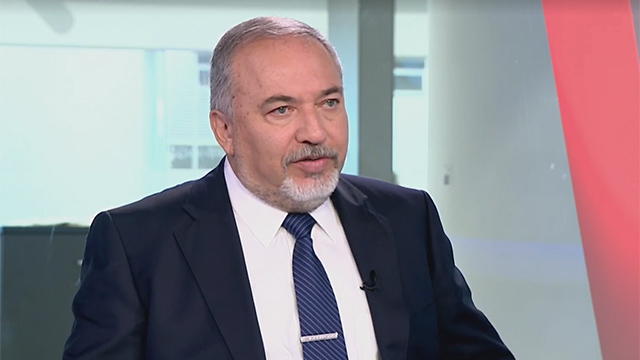
Lieberman: Iran has no military presence in Syria, they have proxies

November 28, 2017
‘There are some Iranian advisers and experts, but there are no military Iranian forces on Syrian soil,’ the defense minister tells Ynet, adding Israel ‘won’t allow Iran to establish a presence in Syria.’
https://www.ynetnews.com/articles/0,7340,L-5048990,00.html

Defense Minister Avigdor Lieberman asserted Tuesday that “there is no physical military Iranian presence in Syria right now.”

Lieberman’s comment contradicts declarations made by Prime Minister Benjamin Netanyahu, who has repeatedly warned of Iranian entrenchment

in Syria. The prime minister also said Iran was building missile factories in the war-torn country, noting that “where ISIS leaves, Iran enters.”In a briefing three months ago, Mossad Director Yossi Cohen updated government ministers about Iran’s entrenchment in the region using both Iranian forces and local proxies in Syria, Lebanon, Iraq and Yemen.

Defense Minister Lieberman

Defense Minister Lieberman
Furthermore, Qasem Soleimani, the commander of the elite Iranian Quds Force, was documented in Syria visiting forces in the field quite a few times.

“It’s true that there are some Iranian advisers and experts, but there are no military Iranian forces on Syrian soil,” Lieberman told Ynet in an interview on Tuesday.

“Iran has a strategy to create a proxy everywhere,” the defense minister explained. “After all, they don’t have a physical presence in Lebanon. For this, they have Hezbollah. They’re not physically present in Yemen, they have the Houthi rebels. They have the same plans in Syria—to create all kinds of militias of Shiite mercenaries, which they will bring from Iraq, Afghanistan and Pakistan.”

“All of the players in the region know we are the strongest power in the Middle East. Israel is a regional power,” he asserted. “We won’t allow Iran to establish a presence in Syria.”

‘We’re dealing with trifles’

The “recommendations bill,” which would bar police from making recommendations on indictment, passed a first reading in the Knesset on Monday. The legislation passed thanks to a last-minute change of heart by Finance Minister Moshe Kahlon, who, despite previous objections, agreed to the condition set by the Likud Party that would apply the law retroactively to the investigations against Netanyahu.

“I’m part of the coalition,” Lieberman said, explaining why he allowed the bill to pass. “There are bills you like more, and bills you like less. It doesn’t matter. At the end of the day, this is the nature of a coalition government. You have to take on tasks even when you don’t like them.”

He rejected claims the recommendations bill was a “personal bill” meant to help Netanyahu. “The one who initiated it, David Amsalem, is not exactly among Netanyahu’s people in the Likud… I remember a year and a half ago he was against Netanyahu and then changed directions again… I don’t believe he coordinated this with Netanyahu,” Lieberman claimed.

He dubbed the recommendations bill, as well as bill proposals concerning work on Shabbat, as “trifles.”

“There is an explosive security situation (in the region), fragile and tense. Look what’s happening around us, we’re dealing with trifles,” the defense minister argued.

IDF Chief Tells Cabinet It’s Time to Learn to Live with Iran at Israel’s Border

November 28, 2017

IDF Chief Tells Cabinet It’s Time to Learn to Live with Iran at Israel’s Border

Photo Credit: Courtesy US Embassy Tel Aviv

IDF Chief of Staff Lt. Gen. Gadi Eizenkot with US European Command Commander General Curtis M. Scaparrotti, March 2017.


IDF Chief of Staff Gadi Eizenkot on Monday briefed the members of the Political-Security Cabinet on the situation in Syria: the danger posed by the Iranian presence in post-civil war Syria and the meaning of the agreement signed earlier this month between the United States, Russia and Jordan, Israel’s Channel 1 TV reported.

The defense establishment claims the distance of pro-Iranians forces from Israel’s border (as short as 3 miles) set in the agreement does not matter as much as the agreement’s regional implications, most crucially the level of American involvement in the Middle East. Should the Trump administration follow Obama’s path and leave Syria’s future in Russia’s hands, trouble would surly ensue.

 This is why Israel will continue its hectic efforts in the near future, to present to the White House its concern over Tehran’s plans under Russia’s protection. To that end, the head of IDF intelligence, Major General Herzi Halevi, left for Washington this weekend, to be followed by the head of the National Security Council, Meir Ben-Shabbat who will meet with his counterpart, General Herbert McMaster.

Still, Jerusalem believes that the superpowers will not be the ones to remove the Iranians from Syria, and Israel may be required to act to protect itself from Hitler’s successors.

In that context, it should be noted that, despite Eizenkot’s global statement to the contrary, distance does matter. In a reality where Iran will essentially be given a free hand in Syria by an ambitious President Putin and a disinterested President Trump, keeping the Shiite militias as far away from the border as possible is emerging as Israel’s key pragmatic policy.

Israel threatens to attack Syria over Iranian bases near its border

November 28, 2017

By: Aryeh Savir, World Israel News

Latest News from Israel

Prime Minister Benjamin Netanyahu (Alex Kolomoisky/POOL)

Israel warned Assad that it will not tolerate an Iranian presence in Syria and will act against it if needed. 

Israel has reportedly relayed a rare and sharp message to Assad’s regime in Syria, stating that it will not accept Iranian bases or forces on its border and will act against them – and against Assad himself – if need be.

According to a report by Israel’s Channel 2 news on Sunday, the message was transmitted from Prime Minister Benjamin Netanyahu through a third party, saying that while Israel has mostly refrained from intervening in the six-year-long civil war in Syria, it will change its policy and act against Assad’s regime if it feels threatened.

 Iran is actively working to establish a military presence in Syria, augmented by Shiite militias, and chiefly the Hezbollah terror group. Furthermore, Iran is reportedly working to build precision missile factories in the country as well as air and sea ports.

Iran and its proxies have been supporting the Assad regime in the Syrian civil war and have deployed a force estimated at 500 Iranian army soldiers, 5,000 Hezbollah terrorists and several thousand guerrillas from Afghanistan, Pakistan and Iraq.

The Iranian army has incurred over 1,000 casualties in Syria, and the question now is whether they are preparing to remain in the long term, after President Bashar al-Assad reasserts control.

Such a military presence would open another front against Israel on its northern border and bring the Iranian threat to its doorstep.

 Israel has long warned about the involvement of it archenemy Iran, and its terror proxy Hezbollah, in Syria. It has expressed concerns of a “Shiite corridor” with land links from Iran to Lebanon, providing free movement for terrorists and weapons across the region.

Netanyahu on Tuesday spoke with Russian President Vladimir Putin to discuss the latest developments in Syria. According to the Kremlin, Putin and Netanyahu discussed specifics related to a de-escalation zone in Syria’s south, near the border with Jordan, which Israel says endangers its security.

Israel is apprehensive of the deal because Iran is allowed to establish itself 7 km (4.5 miles) from it northern border, a distance Jerusalem insists is not satisfactory for its security needs.

In an interview with the BBC earlier this month, Netanyahu said Iran wanted to bring its air force and submarines as well as its military divisions very close to Israel.

Asked whether Israel would use military force to stop such developments, Netanyahu told the BBC: “You know, the more we’re prepared to stop it, the less likely we’ll have to resort to much greater things. There is a principle I very much adhere to, which is to nip bad things in the bud.”