Archive for March 2016

Finland’s Immigration Crisis

March 6, 2016

Finland’s Immigration Crisis, Gatestone InstituteDawid Bunikowski, March 6, 2016

♦ The Tapanila gang-rape shocked the quiet Helsinki suburb, and all of Finland. Many wondered why these second-generation Somalis, citizens of Finland, would carry out such a savage attack.

♦ The rapists were eventually brought to trial. One was sentenced to a year and four months imprisonment, two were given one-year prison sentences and two others were acquitted. Penalties were softened due to the age of the rapists.

♦ “1,010 rapes were reported to the police in 2014, according to the Official Statistics of Finland. The number of suspected immigrants in these cases is about three times higher than of the suspected natives in relation to the population.” – Finland Today.

♦ The criminal law prohibiting blasphemy seem archaic in the eyes of many Finns, especially after the attack on the French satirical magazine, Charlie Hebdo. Unsuccessful attempts to decriminalize blasphemy took place between the 1910s until the 1990s. For many critics the concept of prohibited hate speech is problematic: there is no clear definition, a lapse that leads to confusion and acrimony.

Finland — an open country that prides itself on respecting different ways of life, cultures and religions — is being greatly tested by the wave of Middle Eastern asylum seekers.

Finland is a homogenous country that has roughly 5.5 million inhabitants, about 4% of which are foreign[1]. Twenty years ago, thousands of Somalis immigrated to Finland. In the last decade or so, more international students came to study, and more foreigners came to live and work.

Finnish universities and the academia are of a high level, and most Finns speak some English. But it is not easy for foreigners to find jobs. The barrier is the language: Finnish, like Hungarian, is a part of the Finno-Ugric languages, and difficult to learn.

How many asylum seekers from Syria, Iraq, and Afghanistan arrived in Finland in 2015? The figures keep changing. Authorities estimate between 30,000 and 50,000 — significant numbers in terms of the ratio of migrants to the native population.

Multiculturalism, Migration Policy, and the Law

“Hate speech” (vihapuhe) is defined in Finland as “speech that attacks a person or group on the basis of attributes such as gender, ethnic origin, religion, race, disability, or sexual orientation.” Hate speech is prohibited if such an act is a kind of ethnic agitation. For many critics — including Jussi Kristian Halla-aho, a member of the European Parliament for the True Finns Party — the concept of prohibited hate speech is problematic: there is no clear definition, a lapse that leads to confusion and acrimony.

The criminal law prohibiting blasphemy seem archaic in the eyes of many Finns, especially after the attack on the French satirical magazine, Charlie Hebdo. Many Finns believe that freedom of speech should be absolute. Unsuccessful attempts to decriminalize blasphemy took place between the 1910s until the 1990s. In one extreme case, Halla-aho was fined in 2008 for making links between Islam and paedophilia on his personal blog.

The current immigration situation in Finland is exceptional in nature. Muslims fleeing from the Middle East have opened up a humanitarian crisis the likes of which have not been seen in Europe in a long time. International public opinion and EU policy in the field are being tested. The current flow of Muslims through Sweden to northern Finland is chaotic.

The Ministry of the Interior website states that “Finland is an open and safe country” and explains the country’s policy toward migration:

“The Strategy views migration as an opportunity: mobility creates international networks and brings with it new ways of doing things. Migration will help to answer Finland’s dependency ratio problem, but at the same time, competition for workers between countries will increase. To succeed in this competition, Finland must be able to effectively attract skilled workers who will stay in the country for the longer term. As a responsible member of the international community, Finland is committed to providing international protection to those who need it.”

The ministry also adds that “everyone can find a role to play,” and “diversity is part of everyday life.”

Government officials have taken this strategy personally. Prime Minister Juha Sipilä attracted the attention of the international media last autumn when he offered his second home in Kempele to refugees. He stressed the values of mercy and compassion in the context of immigration.

While the Finnish government can produce liberal policies calling for more openness towards immigration, real politics eventually come into play. When it came time to vote in Brussels on the EU’s quota system for refugees and their relocation in EU countries, Finland abstained.

The ruling center-right political party, the Center Party (Keskusta), is both pragmatic and skeptical towards the European Union. The second most powerful political party, the True Finns (Perussuoamalaiset), is known for its anti-EU, anti-immigration and anti-Muslim rhetoric; its leader, Niko Soini, is the Minister of Foreign Affairs. The political cooperation between the Center Party and the True Finns exemplifies a powerful point on Finnish democracy: consensus is important.

Prior to last year’s election, the True Finns website stated: “Finland is not to make everybody happy in the world. Finland should take care of the Finns first.” The slogan explains much about the seemingly contradictory domestic and international immigration policies of the Finnish government.

The people of Finland have also commented on their government’s stance on immigration by ousting of former Prime Minister Alexander Stubb in the 2015 election.[2] The President of the Republic, Sauli Väinämö Niinistö, said in February 2016 that international commitments are treated too seriously, and that Finland does not the control migration flows. Niinistö’s comments were deemed politically incorrect and censored from public television for two days.

The Rape Problem

With all of Finland’s talk of multiculturalism and immigration, new narratives about the corrosive effects of both multiculturalism and the wave of asylum seekers have surfaced in the media, shocking both the government and the public. News stories discuss the increase in unemployment, the mounting cost of social benefits during the decline of welfare state, problems in educating foreigners, and issues of assimilation with the majority culture, which respects Finnish values and a secular, liberal and open society — all different from traditional Muslim values.

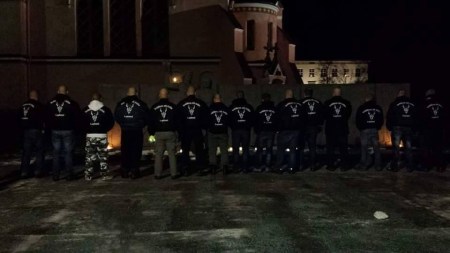
In Finland, more and more cases of Finnish girls and women being raped by asylum seekers are being widely publicized. Much of Finnish society seems shocked, embarrassed and angry because of the increase in rapes perpetrated by asylum seekers. These crimes have provoked many nationalists, and led to the establishment of a paramilitary movement known as the Soldiers of Odin. Members of the movement view themselves as Finnish patriots, roaming the streets of Finland, protecting against Muslim immigrant offenders.

The Soldiers of Odin are accused of being far-right and may de facto be related to previous skinhead movements from the 1990s. Their uniform is all black attire and their symbol makes reference to the ancient Viking god, Odin.

1497 (1)Members of the paramilitary movement known as the Soldiers of Odin view themselves as Finnish patriots, roaming the streets of Finland, protecting against Muslim immigrant offenders. Critics accuse them of being far-right, and they may de facto be related to previous skinhead movements from the 1990s.

The Tapanila Rape

On March 9, 2015, five males gang-raped a young Finnish woman near the Tapanila railway station. The rapists were of Somali heritage and between the ages of 15-18. According to reports, the Somalis boarded the same train as the woman and began harassing her. They followed her off the train and, under cover of darkness, brutally raped her in a nearby park. They were immediately caught.

The Tapanila rape shocked the quiet suburb, which lies on the outskirts of Helsinki, and all of Finland too. Many were left wondering why these second-generation Somali citizens of Finland would carry out such a savage attack.

When news of the attack first came to light, it was published by a far-right website, and many in Finland claimed it was a false report. However, authorities soon confirmed that the rape occurred, and uproar ensued.

According to an article published by Finland Today, the Somali community feared that its members would be unfairly labelled as criminals, and racist attacks would increase. However, the article also noted that

“1,010 rapes were reported to the police in 2014, according to the Official Statistics of Finland. The number of suspected immigrants in these cases is about three times higher than of the suspected natives in relation to the population. There is no unambiguous answer to why this is the case and is yet to be researched.”

The rapists were eventually brought to trial. One was sentenced to a year and four months imprisonment, two were given one-year prison sentences and two others were acquitted. Penalties were softened due to the age of the rapists. Prosecutor Eija Velitski called the sentencing “embarrassing.” The social impact of the attack spread far and wide.

The Kempele Rape

A second attack, the so-called Kempele rape, was met with a reaction by the prime minister himself. Kempele is a small town of roughly 15,000 inhabitants, located near Oulu. It is more famously known for its innovative entrepreneurs and high levels of overall satisfaction and happiness of its residents.

On the evening of November 23, 2015, a 14-year-old girl was walking home in Kempele, when a 17-year-old immigrant from Afghanistan attacked and raped her. She was later found by locals walking through the area.

A police dog led authorities to a nearby refugee center for underage asylum seekers. “The police dog patrol followed the tracks of the suspects, which led to an apartment. From the apartment, the police caught two men who are now suspected of aggravated statutory rape and aggravated child sexual abuse,” the police said in a statement. Police could not immediately interrogate the suspects because a qualified interpreter was unavailable. The 17-year-old denied any involvement in the attack, and the second suspect was eventually freed.

The Kempele rape caused outrage in Finland. Seppo Kolehmainen, the National Police Commissioner, admitted after the attack that Finnish authorities had previously received reports of disturbances, physical altercations, thefts and inappropriate treatment of women from in and around the reception center.

The Soldiers of Odin

The Tapanila and Kempele rape cases became fertile ground for Finnish nationalists. According to their Finnish Facebook page (their website has been taken down), the Soldiers of Odin blame “Islamist intruders” for the “uncertainty, lack of safety and crime in Finland.” The nationalist movement claims that the police have lost control and keeping order on the streets is now up to them. They say that preventing Muslim immigrants from committing crimes, especially rape, is one of their main priorities.

The Soldiers of Odin recently expanded their patrols to the city of Joensuu, in Eastern Finland. Paradoxically, the National Police Commissioner expressed his support for this type of self-organized behavior by the Finnish people. Some liberal Finns have accused the commissioner of racism and have demanded his dismissal.

Next for Finland?

Finland is a peaceful society, and many Finns are afraid of the consequences of the latest wave of immigration. However, due to political correctness and their own national character, most Finns abstain from openly expressing their concerns. But now the curtain of silence and political correctness has been fractured.

Finnish culture, law and policy encourage all people to live together despite cultural or ethnic difficulties. However, this can only go so far. Finns are now demanding action. The government must “do something” to show that Finland is still safe and to limit immigration.

________________________

[1] There is also a minority of the Swedish-speaking Finns (about 5% of the population), as well as a Russian minority (about 1.5%). For five centuries, Finland had been occupied by Sweden (by 1809). Later, it was a part of the Russian Empire (until 1917).

[2] The victory of two EU-skeptic parties over the EU-enthusiastic and pro-immigrant Kokoomus Party says much about the feelings of injustice felt by the Finnish public. But while Stubb’s Kokoomus joined the governmental coalition with Soini and Sipilä, its position is weak. Today, the Finnish government is at a crossroads. Tensions are running high and beginning slowly to fracture the nationalists, led by Soini’s party.

Can the establishment trump Trump?

March 6, 2016

Can the establishment trump Trump? Israel Hayom, Boaz Bismuth, March 6, 2016

Some in the Republican establishment are playing with fire. It is plain obvious that they would like to deny Donald Trump the party’s nomination, and they have every right to try to do so.

But this onslaught on Trump — led by GOP big guns, along with its two most recent presidential nominees, Mitt Romney and John McCain — could backfire and turn the real estate mogul into a political martyr. They face an excruciating dilemma: how to drive home the notion that Trump is unfit to be president even as the public rallies behind him?

Some in the GOP establishment failed to pick up the political undercurrents among rank-and-filed Republicans during the first few months of the campaign. This helped Trump’s ascent. But the establishment may still be oblivious to what GOP voters want. As a result of this disconnect, they may actually help him seal the deal. Saturday’s votes in Kansas, Kentucky, Louisiana and Maine could provide insight on the way forward. Remember, so far every attack on Trump has helped him.

Unlike the Democratic front-runner, Hillary Clinton, Trump has yet to run away with the delegates, despite having momentum on his side and winning 10 of the 15 states that held primaries (not including Saturday’s votes).

Before there was Trump, it was Texas Sen. Ted Cruz who was hated by the party’s big wigs. In fact, Cruz has yet to be endorsed by any of his colleagues in the Senate because of the bad rapport he has with the people in Washington. Nevertheless, in states where primaries have been closed (meaning, only registered Republicans can vote, like those on Saturday), Cruz has fared well.

At first, the establishment couldn’t decide between Florida Sen. Marco Rubio and former Florida Governor Jeb Bush; then it came out against Cruz; and all the while, it ignored Trump. Now the establishment has a conundrum on its hands: How do you attack two unwanted front-runners (the first of the two is the most pressing problem)? Former Arkansas Governor Mike Huckabee, an also-ran in this cycle and in 2008, has warned the establishment not to meddle with the process. “Let’s remember, we have an election process and not a selection process,” he said recently.

Republican voters have viewed the GOP establishment’s efforts with scorn and may very well set the house ablaze. In fact, 78% of Trump supporters say they would continue to back him no matter what he does. On Super Tuesday, Trump garnered almost 70% of the vote among those who said they wanted an outsider as their next president.

Rubio is not an outsider; neither is Cruz. The outsider is Trump. Trump has bested his opponents in virtually every possible measure. This only adds to his success and exacerbates the party’s headache.

The establishment’s efforts may very well be a case too much, too late. Perhaps the Republican voters truly are fed up with Washington; perhaps they truly are disappointed by the economy and view the billionaire as their savior (or at the very least, someone who can punish Washington). The establishment enlisted the help of Romney, who has become the face of the anti-Trump campaign. But Romney, lest you forget, lost to President Barack Obama in 2012 and to McCain in 2008.

These elections are about being a winner. They are about making America win again. Romney is not quite the right person. Perhaps the establishment has no choice but to attack. It is now or never. We are likely to see more surprises in this race, but for the time being, the campaign to stop Trump is the biggest story.

Let’s hope the Republican leaders don’t forget who their real adversary is. Judging from how they have conducted themselves, they could very well start viewing Hillary Clinton as their big savior. By doing so, they will have severed their ties with the GOP rank and file for good.

Former UK Ambassador To Syria: US/UK Foreign Policy Is Doomed, Even Corrupt

March 6, 2016

Former UK Ambassador To Syria: US/UK Foreign Policy Is Doomed, Even Corrupt Tyler Durden’s picture

by Tyler Durden on 03/04/2016 22:25 -0500

Source: Former UK Ambassador To Syria: US/UK Foreign Policy Is Doomed, Even Corrupt | Zero Hedge

Authored by Eric Zuesse,

Peter Ford, who was the UK’s Ambassador in Syria during 2003-2006, was asked by the BBC in their “The Big Questions” interview on February 14th, whether the current Syrian President Bashar al-Assad would have to be a part of the solution in that country after the war is over, and Ambassador Ford said:

“I think sadly, but inevitably, he is. Realistically, Assad is not going to be overthrown. This becomes more clear with every day that passes. Western analysts have been indulging in wishful thinking for 5 years; it’s time to get real, we owe it to the Syrian people to be much more realistic and hard headed about this. The West has to stop propping up the so-called ‘moderate opposition’, which is not moderate at all.”

This was quoted by Almasdar News on February 18th, which went on to note that,

“The frustrated interviewer asked Mr. Ford about ‘what we should have done,’ and he responded that ‘we should have backed off, we should have not tried to overthrow the regime.’ Mr. Ford eloquently added that this policy has been ‘like a dog returning to vomit.’”

The video of the interview below showed him making that statement in this context:

The interviewer was clearly anti-Assad, and Ford responded with evident anger by noting (starting at 2:55 on the video) the shocking fact that:

“In Aghanistan, Iraq, Libya, like a dog returning to vomit, we go back to [and the audience already was started to clap here], we never saw a secular Arab regime that we didn’t want to overthrow.”

He was saying there that we support only non-secular regimes, sectarian regimes, in Arabia, this meaning fundamentalist Sunni governments — especially Saudi Arabia, Qatar, Kuwait, UAE, the very same regimes that even the U.S. Secretary of State acknowledged in a 2009 cable that was wikileaked, are the chief regimes that are funding Al Qaeda, ISIS and other jihadist groups. Ford was noting that the United States and UK strive to keep in power those governments, the ones that are led by royal families that supply the bulk of funding for jihadist groups — jihadists who perpetrate terrorism in the United States and Europe. “We never saw a secular  Arab regime that we didn’t want to overthrow”: Ambassdor Ford was so bold as to imply that our governments are supporting, under the table, the very same ruling families that they know to be funding (as that cable only vaguely referred to them) “Sunni terrorist groups worldwide” (which includes in Western countries, too).

The BBC’s interviewer ignored that statement; he wasn’t struck by it, such as to ask: “Why are we supporting the chief funders of Islamic jihad? Why are we overthrowing (or in Syria are trying to overthrow) a secular regime, against which we join foreign jihadist groups in order to overthrow that non-sectarian regime; why are these dogs, as you call the U.S. and UK, returning time and again to that vomit?”

This was a live interview program, and so the BBC censors weren’t able to eliminate Ambassador Ford’s responses from the interview; but, instead, the interviewer did his best to interrupt and to talk over Ford’s shocking — and shockingly truthful — assertions about the government (ours) that supposedly represent our  interests (and not the interests of Western oil companies etc.). Ford will probably not be invited again to be on live television in the West to air his views about Syria.

Ford’s evident anger at what’s going on, and at the media’s resistance to letting the public know about the reality, appeared to reach near to the edge of his blurting out that ulterior motives have to be behind this addiction to “vomit” — but he was a professional diplomat, and so he was able to restrain himself there.

The U.S. Secretary of State who had specifically requested the fundamentalist-Islamic Arab ‘allies’ to stop funding terrorism was Hillary Clinton, the leading candidate now contending for the Democratic Party’s Presidential nomination. Here she was, expressing her current view regarding Syria, in a recent debate against her Democratic Party opponent, Senator Bernie Sanders:

QUESTIONER: In respect to when you take out Syrian President Bashar al-Assad. Right now or do you wait? Do you tackle ISIS first? You have said, Secretary Clinton, that you come to the conclusion that we have to proceed on both fronts at once. We heard from the senator just this week that we must put aside the issue of how quickly we get rid of Assad and come together with countries, including Russia and Iran, to destroy ISIS first. Is he wrong?


CLINTON: I think we’re missing the point here. We are doing both at the same time.


QUESTIONER: But that’s what he’s saying, we should put that aside for now and go after ISIS.


CLINTON: Well, I don’t agree with that.

She’s still (now after five years, and even though she knows  that we’re supporting jihadist-backing Arabic royal families and their Shariah-law regimes) comes back to that “vomit”: that “we never saw a secular Arab regime that we didn’t want to overthrow.” She’s an example of this addiction, to that “vomit.”

She does this even though, in October 2014, the man who had collected the mega-donations to Al Qaeda (all of which had been in cash) had detailed, under oath, in a U.S. court proceeding, that the Saud family were the main people who paid the “salaries” of the 9/11 terrorists. The Saud family are now the chief backers of the overthrow-Assad campaign. Do politicians such as Clinton actually represent the Sauds? It’s not only the Bush family who do.

What’s exhibited here is a double-scandal: first, that a person such as that would even be a Democratic Party candidate for the U.S. Presidency (and Jeb Bush shares Hillary Clinton’s foreign policy prescriptions, though he’s virtually certain not  to win the Republican Presidential nomination); and, second, that the Western press try to avoid, as much as possible, to expose the fact that this is, indeed, “vomit,” and avoid to explain to their audience the very corrupt governmental and news-media system that enables people such as Ms. Clinton to become and remain a leading Presidential candidate in the United States. Clearly, a person like that isn’t qualified to be in government at all; she’s corrupt, or else incredibly stupid. And no one thinks she’s that stupid. But lots of people accuse her of being corrupt.

Turkey and Saudi Arabia hit back for the Obama-Putin Syrian pact

March 5, 2016

Turkey and Saudi Arabia hit back for the Obama-Putin Syrian pact, DEBKAfile, March 5, 2016

Zaman_4.3.16Headline of last issue of Turkey’s Zaman before government takeover

Turkey and Saudi Arabia have taken separate steps to break free from Washington’s dictates on the Syrian issue and show their resistance to Russia’s highhanded intervention in Syria. They are moving on separate tracks to signal their defiance and frustration with the exclusive pact between Presidents Barack Obama and Vladimir Putin which ostracizes Riyadh and Ankara on the Syrian question.

Turkey in particular, saddled with three million Syrian refugees (Jordan hosts another 1.4 million), resents Washington’s deaf ear to its demand for no-fly zones in northern and southern Syria as shelters against Russian and Syrian air raids.

Last year, President Reccep Erdogan tried in desperation to partially open the door for a mass exit of Syrian refugees to Europe. He was aghast when he found that most of the million asylum-seekers reaching Europe were not Syrians, but Muslims from Africa, Afghanistan and Pakistan, in search of a better life in the West. Most of the Syrians stayed put in the camps housing them in southern Turkey.

Even the Turkish intelligence agency MIT was hard put to explain this setback.  According to one partial explanation, organized crime gangs of Middle East dope and arms smugglers, in which ISIS is heavily represented, seized control of the refugee traffic heading to Europe from Libya, Iraq and Syria.
This human traffic netted the gangs an estimated $1 billion.

Turkey was left high and dry with millions of Syrian refugees on its hands and insufficient international aid to supply their needs. No less painful, Bashar Assad was still sitting pretty in Damascus.

Finding Assad firmly entrenched in Damascus is no less an affront for Saudi Arabia. Added to this, the Syrian rebel groups supported by Riyadh are melting away under continuing Russian-backed government assaults enabled by the Obama-Putin “ceasefire” deal’

The oil kingdom’s rulers find it particularly hard to stomach the sight of Iran and Hizballah going from strength to strength both in Syria and Lebanon.

The Turks threatened to strike back, but confined themselves to artillery shelling of Syrian areas close to the border. While appearing to be targeting the Kurdish YPD-YPG militia moving into these areas, the Turkish guns were in fact pounding open spaces with no Kurdish presence. Their purpose was to draw a line around the territory which they have marked out for a northern no-fly or security zone.

Saturday, March 5, President Erdogan proposed building a “new city” of 4,500 square kilometers on northern Syrian soil, to shelter the millions of war refugees. He again tried putting the idea to President Obama.

The Saudi Defense Minister, Deputy Crown Prince Mohammed bin Salman put together a more high-risk and comprehensive scheme. Its dual purpose is to hit pro-Iranian Hizballah from the rear and forcied [Sic] the two big powers to treat Riyadh seriously as a player for resolving the Syrian imbroglio.

The scheme hinged in the cancellation of a $4 billion Saudi pledge of military aid to the Lebanese army, thereby denying Hizballah, which is a state within the state and also dominates the government, access to Saudi funding. But it also pulled the rug from under Lebanon’s hopes for combating ISIS and Al Qaeda’s Nusra Front, which have grabbed a strip of Lebanese territory in the northern Beqaa Valley.

The Saudi action, by weakening the Lebanese military and its ability to shore up central government in Beirut, risks tipping Lebanon over into another civil war.

The London Economist commented that this Saudi step against Lebanon seems “amateurish.” Under the young prince (30), “Saudi Arabia sometimes acts with bombast and violence that makes it look like the Donald Trump of the Arab World,” in the view of the magazine.

But the Saudi step had a third less obvious motive, a poke in the eye for President Obama for espousing Iran’s claim to Middle East hegemony. Resentment on this score is common to the Saudi royal house and the Erdogan government.

As a crude provocation for Washington, the Turkish president ordered police Friday, March 4, to raid Turkey’s largest newspaper Zaman, after an Istanbul court ruling placed it under government control.

The newspaper released its final edition ahead of the raid declaring the takeover a “shameful day for free press” in the country. A group of protesters outside the building was dispersed with tear gas, rubber bullets and water cannons.

Zaman is owned by the exiled Muslim cleric Felhullah Gulen, who heads the powerful Hizmet movement, which strongly contests Erdogan government policies. A former ally of the president, the two fell out years ago. In 1999, after he was accused of conspiring to overthrow the government in Ankara, Gulen fled to the United States.

Today, the exiled cleric runs the Hizmet campaign against the Turkish president from his home in Pennsylvania, for which he has been declared a terrorist and many of his supporters arrested.

The takeover of Zaman was intended both as a blow by Ankara against Muslim circles opposed to the Erdogan regime and as an act of retaliation against the United States, for harboring its opponents and sidelining Turkey from Obama administration plans for Syria.

Oddly enough, the Turkish president finds himself in a position analogous to Egyptian President Abdel-Fatteh El-Sisi, who is at war with the Muslim Brotherhood, a movement which enjoys Obama’s support.

Israeli Prime Minister Binyamin Netanyahu has his own dilemmas. Struggling to keep his balance while walking a tight rope on the Syrian situation between Israel’s longstanding ties with Washington and handling the Russian tiger lurking next door, he is in no hurry to welcome Erdogan’s determined overtures for the resumption of normal relations.

Turkey is in trouble with both major world powers and, after living for five years under hostile abuse from Ankara, Israel does not owe Erdogan a helping had for pulling  him out of the mess.

New York museum gives children the chance to discover Muslim culture

March 5, 2016

New York museum gives children the chance to discover Muslim culture, Al-Arabiya, March 5, 2015

(Frau Merkel, et al, have provided an entire country in which to observe, and even participate in, Muslim culture. Please see also, Germany: Migrant Rape Crisis Worsens. — DM)


Muslim children's museumThe Children’s Museum of Manhattan on the Upper West Side has been turned into an indoor playground. (AFP)

“I think it’s a nice antidote to some of the other ways that people are talking about Muslim cultures, a diverse non-threatening culture rather than what is in the media all the time,” said British tourist Grania Brigden.

***********************

The United States may have seen an unprecedented anti-Muslim backlash in recent months, but one New York museum has challenged perceptions by teaching children about the wealth and diversity of Islamic culture from Michigan to China.

The Children’s Museum of Manhattan on the Upper West Side has been turned into an indoor playground where children can touch and experiment with artifacts of Muslim culture in a vibrant, colorful exhibition.

One little girl wraps a piece of Senegalese fabric around her middle like a sarong and wriggles around. “It’s lots of fun for dancing!” she says.

(The video won’t embed. Please click on the link below. — DM)

Other children in her class are sorting through Turkish ceramics or inhaling the rich aroma of spices from Zanzibar.

Called “America to Zanzibar,” the exhibition focuses on culture in Muslim communities, not religion itself, so the tenets and practices of Islamic doctrine have been left well alone.

“We don’t interpret the religion,” said Andrew Ackerman, executive director of the museum. “It’s about the people. It’s about how people that share a common belief express it so differently,” he added.

The 2016 race for the White House has been dominated by the rise of Republican frontrunner Donald Trump, a New York real estate mogul who has repeatedly bashed Muslims and advocated a ban on them entering the country.

Recent attacks in Paris and San Bernardino, California have heightened what Muslim Americans call an unprecedented backlash in a country increasingly fearful about the risk posed by the so-called Islamic State extremist group.

Ackerman says current events had nothing to do with the decision to mount the exhibition, which has been six years in the making.

His desire is to lift the lid on culture in Muslim countries that is either poorly understood in the United States or not represented at all.

“The challenge of this project is how do you represent so many different cultures,” said Ackerman. “How do you pick and choose what to show to give the biggest overview possible in a small space. That conversation was completely independent of any current events.”

One strong point of the exhibition is that it also focuses on Muslim heritage in the United States and not just on far-off countries.

‘Not just Syria’

Children can learn about the mosque in Dearborn, Michigan, a Tajik-inspired tea house in Colorado and Senegalese fabric sold in Harlem, New York.

A room is also dedicated to Muslim Americans gathering together memories, books, CDs and photographs.

“We really wanted to think about the American story, which is so much more diverse than the rest of the world,” said Ackerman, adding that New York is home to people from every Muslim country in the world.

“It’s very good. They are learning about another culture,” said second grade teacher Judith Espaillat of her class of children visiting the exhibition.

The word Muslim doesn’t mean much to Alex, one of her pupils, but he hasn’t been bored at all.

During the first week of the exhibition, which opened February 13, the museum welcomed more than 13,000 visitors despite exceptionally cold temperatures.

“They want to show that this culture is normal, not crazy,” said visitor Francesca Azzariti, an Italian living in New York.

Other than fabric and ceramics, the museum devotes one room to mosques and the wealth of their architectural tradition.

The exhibition also shows contributions by Muslim thinkers to science.

“I think it’s a nice antidote to some of the other ways that people are talking about Muslim cultures, a diverse non-threatening culture rather than what is in the media all the time,” said British tourist Grania Brigden.

“It’s nice to see the other elements, the food, the colors,” she said. “Islam in Africa, Asia, it’s not just Syria.”

The exhibition will run at least a year before possibly travelling to other cities within the United States. Intended for children, it can also offer an entry point for parents too.

“There are a lot of people who don’t see themselves as museum goers but they’ll come here, because it’s for the children,” said Ackerman. “If we can inspire curiosity as a museum, that’s what we go for.”

Germany: Migrant Rape Crisis Worsens

March 5, 2016

Germany: Migrant Rape Crisis Worsens, Gatestone Institute, Soeren Kernn, March 5, 2016

♦ Sexual violence in Germany has skyrocketed since Angela Merkel allowed more than one million mostly male migrants from Africa, Asia and the Middle East into the country. The crimes are being downplayed by the authorities, apparently to avoid fueling anti-immigration sentiments.<

♦ “The moment they [male migrants] see a young woman wearing a skirt or any type of loose clothing, they believe they have a free pass.” — Restaurant owner at a mall in Kiel.

♦ “Every police officer knows he has to meet a particular political expectation. It is better to keep quiet [about migrant crime] because you cannot go wrong.” — Rainer Wendt, the head of the German police union.

♦ Police are warning about a potential breakdown of public order this summer, when women who are lightly dressed are confronted by young male migrants.

♦ Jakob Augstein, an influential columnist for the magazine Der Spiegel, says that Germans worried about migrant crimes are motivated by racism. His views shed light on the worldview of German multiculturalism: Migrants who assault German women and children are simply rebelling against German power structures. Germans who criticize such assaults are racists.

♦ Police in Cologne received more than 1,000 complaints from women, including 454 reports of sexual assaults, related to New Year’s Eve. Police in Hamburg received complaints from 351 women, including 218 reports of sexual assault that took place on the same evening.

A mob of asylum seekers from Afghanistan assaulted three teenage girls at a shopping center in the northern German city of Kiel. The attack — which occurred over two-hours on the evening of February 25, and mirrored the mass assaults of German women in Cologne on New Year’s Eve — shows, once again, that public spaces in Germany are becoming increasingly perilous for women and children.

Police reports show that sexual violence in Germany has skyrocketed since Chancellor Angela Merkel allowed more than one million mostly male migrants from Africa, Asia and the Middle East into the country. But the crimes are being played down by German authorities, apparently to avoid fueling anti-immigration sentiments.

Police in Kiel say the assault began at around 5:30 pm, when two Afghan males (aged 19 and 26) began stalking and photographing three girls (aged 15, 16 and 17) at a food court in the Sophienhof, a large shopping center near the city’s central train station.

After posting photographs of the girls on social media, the two men were quickly joined by at least 30 other migrants who began collectively to harass the girls in a Muslim “rape game” known in Arabic as “taharrush” (al-taharrush al-jinsi, Arabic for “sexual harassment”).

When police arrived, the migrants, rather than running way, began verbally and physically abusing the officers, some of whom were injured. It took police two hours to restore order. The initial two perpetrators, asylum seekers from Afghanistan, were arrested; the other migrants involved in the incident remain at large.

At a news conference on February 27, police spokesman Oliver Pohl revealed that more women are now coming forward to report similar experiences at the Sophienhof.

The owner of a restaurant at the mall said:

“Groups of young men gather at the Sophienhof every evening. What they do here is unacceptable. The moment they see a young woman wearing a skirt or any type of loose clothing, they believe they have a free pass. It is about time migrants are made to understand: things in Germany function differently than in their home countries.”

In an interview with Kieler Nachrichten, the local leader of the Free Democrats (FDP), Wolfgang Kubicki, expressed dismay at the deteriorating security situation in Kiel:

“It cannot be that girls and women, as well as their parents or spouses, should be afraid in public spaces. People are asking: If you are no longer safe in Sophienhof, where then?

“The perpetrators must be brought to justice. We must not create the impression that perpetrators will go unpunished for such assaults. … Turning a blind eye to such incidents is the opposite of integration and ultimately leads to the creation of parallel societies.

“It starts with small things. Time and again I keep hearing from the police how disrespectful young migrants are towards the officers. We have to support our security forces and reverse the loss of confidence in the police and judiciary. Otherwise we risk citizens taking the law into their own hands. I do not want to see vigilantes patrolling our streets.”

Kubicki was referring to revelations that politicians in Kiel ordered the city police to overlook many of the crimes perpetrated by migrants. A document leaked to the newspaper Bild in late January showed that the orders were given in October 2015, when more than 10,000 migrants were entering Germany each day. According to Bild, police in North Rhine-Westphalia and Lower Saxony have also been instructed to be lenient to criminal migrants.

Meanwhile, the raping and assaulting of German women and children by migrants and refugees — German police often refer to them by using politically correct euphemisms such as “southerners” (Südländer), men with “dark skin” (dunkelhäutig, dunklere Gesichtsfarbe, dunklem Hauttyp) or a combination of the two: “southern skin color” (südländische Hautfarbe) — continues apace (See Appendix below).

1496Left: At least 30 male migrants assaulted three girls (aged 15, 16 and 17) at the Sophienhof mall in Kiel, Germany, on February 25. Only two of the men were arrested by police. Right: In the first two months of this year alone, there have been dozens of reported cases of migrants sexually assaulting women and children at public swimming pools across Germany. In some areas, authorities have distributed cartoon guides, to “educate” migrants that sexual assault is not acceptable.

Reliable statistics on sexual crimes committed by migrants are notoriously elusive. German authorities have repeatedly been accused of underreporting the true scale of the crime problem in the country. For example, up to 90% of the sex crimes committed in Germany in 2014 do not appear in the official statistics, according to André Schulz, the head of the Association of Criminal Police (Bund Deutscher Kriminalbeamter, BDK).

On February 25, the newspaper, Die Welt, reported that authorities in the German state of Hesse were suppressing information about migrant-related crimes, ostensibly due to a “lack of public interest.”

On January 24, Die Welt reported that the suppression of data about migrant criminality is a “Germany-wide phenomenon.” According to Rainer Wendt, the head of the German police union (Deutschen Polizeigewerkschaft, DPolG), “Every police officer knows he has to meet a particular political expectation. It is better to keep quiet [about migrant crime] because you cannot go wrong.”

On January 22, the newsmagazine Focus reported that the Federal Anti-Discrimination Agency (Antidiskriminierungsstelle des Bundes, ADS) put pressure on police in North Rhine-Westphalia (NRW) to remove a reference to “North African criminal groups” in a press release. According to Focus, the ADS wrote: “There is a danger that people from these countries are placed under a general suspicion. We encourage you to delete the reference to the North African origin from the press release.” NRW Police later removed the offending words because “it could not be excluded that our formulation in the press release could be misunderstood as a discriminatory statement.” Interestingly, the original article by Focus has since been removed from the magazine’s webpage.

Some German commentators are downplaying or rationalizing the growing sexual violence against women and children. According to Jakob Augstein, an influential columnist for the newsmagazine Der Spiegel, Germans worried about migrant crimes are presumably motivated by deep-seated racism.

Shortly after the attacks in Cologne on New Year’s Eve, Augstein ridiculed the idea that Muslim migrants were targeting German women. On his Facebook page, he wrote:

“We are so racist. Everyone immediately wanted to believe that 1,000 North Africans were committing mischief. One thousand: this is a fairy tale figure. Just like the three golden hairs of the devil. Or the seven dwarfs. Or the thirteenth fairy.

“One thousand Tunisians who attacked ‘our’ women. That is just what we needed. The foreigner and his menacing sexuality — this is the oldest prejudice of racism.”

Now Augstein says the sexual assaults committed by migrants are a form of social rebellion.

Writing on his Facebook page on February 23, Augstein argued that the true victims in all of this are the migrants, because of their low rank in Germany’s social hierarchy. He wrote:

“The victims of Cologne were inferior to their perpetrators only in the immediate moment of the attacks. Those women were powerless and helpless at the moment they were assaulted and robbed. But before the attacks and after, they were and are superior to their attackers.

“For the victims of Clausnitz [on February 18, an anti-migrant mob tried to block the arrival of 20 asylum seekers into the town] it is different: they were inferior to their attackers before, during and after the incidents. They are always inferior.

“The lawbreaking in Cologne brought a brief rupture in the established hierarchy, a reversal of the true balance of power. The reason is that in this moment, the relationship between victim and perpetrator was reduced to physical strength. In all other respects, the victims of Cologne are superior to their perpetrators: language, nationality, education, social status, wealth, legal certainty, self-confidence. …

“In Clausnitz, the strong subdued the weak. This makes the attack in Clausnitz so repugnant. And — if you really want to draw such comparisons — this gives the attack on Clausnitz a different moral quality than the attack on Cologne.”

Augstein, whose opinions have not been seriously challenged by the mainstream media, sheds light on the upside-down worldview of German multiculturalism: Migrants who assault German women and children are simply rebelling against German power structures. Germans who dare to criticize such assaults are racists.

Meanwhile, on February 24, a court in Cologne handed down the first sentence related to the mayhem in the city on New Year’s Eve, when more than a thousand migrants sexually assaulted hundreds of German women on a public square in front of the Cologne Cathedral. A 23-year-old Moroccan migrant was given a six-month suspended sentence and fined 100 euros ($108) — for stealing a woman’s cellphone. So far no one has been charged for sexual assault.

In an interview with the television program, Kölnische Rundschau, Cologne’s chief of police, Jürgen Mathies, admitted that most of those who committed the assaults will never be brought to justice. He said the surveillance videos are too fuzzy definitively to identify anyone.

Police in Cologne say they have received more than 1,000 complaints from women, including 454 reports of sexual assaults, related to New Year’s Eve. Police in Hamburg say they have received complaints from 351 women, including 218 reports of sexual assault that took place on the same evening.

Police are now warning about a potential breakdown of public order this summer, when women who are lightly dressed are confronted by young male migrants.

Appendix

Sexual Assaults and Rapes by Migrants in Germany, January-February 2016.

Gatestone Institute first reported about Germany’s migrant rape epidemic in September 2015. The problem has now spread to cities and towns in all 16 of Germany’s federal states. Following are a few cases from just the first two months of 2016:

January 1. More than a thousand migrants sexually assaulted hundreds of German women in the cities of Cologne, Hamburg and Stuttgart.

January 4. A group of migrant youths sexually assaulted a handicapped girl in Bielefeld.

January 5. An Afghan migrant attempted to rape a 15-year-old girl in Burghausen.

January 7. A 36-year-old asylum seeker was arrested for raping a 16-year-old boy inside the city hall of Wolfsburg. A “southerner” (südländisch, arabisch) sexually assaulted a 13-year-old girl near a train station in Ellwangen.

January 8. A 17-year-old Syrian migrant exposed himself to women at a swimming pool in St. Ingbert.

January 9. A 48-year-old woman was raped by three migrants in Dresden. The perpetrators have not been arrested. Also on January 9, a 45-year-old woman was sexually assaulted by an “Arab-speaking” man in Gleidingen, a town near Hanover. A group of five North Africans (Algerians, Moroccans) sexually assaulted five women in Oldenburg. Two North African migrants (Libya, Tunisia) sexually assaulted a 31-year-old woman at the main train station in Leipzig. A migrant attempted to rape a 46-year-old woman in Saarbrücken-Altenkessel.

January 10. A group of “southerners” (südländisches Aussehen) sexually assaulted three girls at a public swimming pool in Ansbach. A 21-year-old West African was arrested for raping a 15-year-old girl at a train station in Wuppertal. A 36-year-old Syrian migrant sexually assaulted a 20-year-old woman in Bornhöved. The woman was showing the man an apartment that had been advertised for rent.

January 11. A 35-year-old migrant from Pakistan sexually assaulted a three-year-old girl at a refugee shelter in Kamen. Eight migrants attempted to rape a woman at a grocery store in Ampfing. She defended herself by using pepper spray. A 20-year-old Moroccan assaulted a 24-year-old woman in Frankenberg.

January 12. A “southerner” (südländisch aussehenden) raped a 16-year-old girl in Wuppertal. Two “Arabic speaking” men assaulted a 37-year-old woman in Fröndenberg.

January 13. Four migrants (südländisch aussehen) attempted to rape a 13-year-old girl inGelsenkirchen. Three migrants sexually assaulted a 31-year-old woman in Oldenburg. A migrant attempted to rape a woman at a train station in Altötting. She defended herself by using pepper spray. Three “southerners” (südländischer oder arabischer Herkunft) assaulted a woman in Bad Münstereifel.

January 14. Three migrants (südländische Hautfarbe) sexually assaulted a 47-year-old woman in the Bavarian town of Dingolfing. Three “southerners” (Südländer) assaulted a 22-year-old women on a train in Bremerhaven.

January 15. A 36-year-old migrant sexually assaulted an eight-year-old girl at a public park in Hilden near Solingen. A 31-year-old migrant from Tunisia was arrested for attempting to rape a 30-year-old woman in Chemnitz. A 31-year-old migrant from Morocco appeared in court for raping a 31-year-old woman in Dresden. A migrant sexually assaulted a 42-year-old woman inMainz. A migrant (dunkleren Teint) sexually assaulted a 32-year-old woman in Münchfeld. An African migrant sexually assaulted a 55-year-old woman in Mannheim.

Also on January 15, all male migrants over the age of 18 were banned from a public swimming pool in Bornheim, near Bonn, after assaults against female patrons at the facility. The measure was branded as racist by German media outlets.

January 16. A migrant from Syria sexually assaulted a 12-year-old girl in Mudersbach. A 36-year-old migrant sexually assaulted an eight-year-old girl in Mettmann. A 36-year-old migrant assaulted an 8-year-old girl in Hilden. A 19-year-old migrant from Afghanistan sexually assaulted four girls between the ages of 11 and 13 at an indoor swimming pool in Dresden. The migrant was arrested but then released. A 25-year-old Moroccan migrant assaulted two woman at a grocery store in Zeithain.

January 17. Three “southerners” (Südländer) attempted to rape a young woman in Kiel. Two migrants (19 and 38 years old) sexually assaulted a 21-year-old woman at a restaurant in the main train station in Nuremberg. A 19-year-old Afghan migrant assaulted four girls (aged 11 to 13) at a public swimming pool in Dresden. Migrants invaded female changing rooms at a swimming pool in Burghausen. Two “southerners” (dunklen/südländischen Typ) attempted to rape a 42-year-old woman at a pharmacy in Altötting.

January 18. A 43-year-old Syrian migrant assaulted a 63-year-old woman in Wetzlar. Police say the man also assaulted two other women (aged 62 and 74) in Wetzlar.

January 19. A 17-year-old Eritrean migrant attempted to rape an 18-year-old woman in a parking garage in Bad Oldesloe. After police intervened, the man head-butted an officer, who was hospitalized.

January 20. Migrants invaded female showers and changing rooms at two public swimming pools in Leipzig.

January 21. A “black skinned” (schwarz glänzende Hautfarbe) man attempted to rape a 13-year-old girl in Langenfeld. Two migrants assaulted an 18-year-old woman in Dingolfing.

January 22. A migrant (südländisches Äußeres) attempted to rape a 16-year-old girl in Feuerbach district of Stuttgart, and in downtown Stuttgart, four “Arabic looking” (arabisches Aussehen) men sexually assaulted a 23-year-old woman. Migrants harassed women at public swimming pools in Zwickau.

January 23. Migrants sexually assaulted two 11-year-old girls at a public swimming pool inWilhelmshaven. Two asylum seekers from Afghanistan assaulted two 17-year-old women at a public swimming pool in Straubing. Three 16-year-old migrants from Afghanistan and Syria assaulted two 13-year-old girls at a public swimming pool in Hachenburg.

Also on January 23, a 35-year-old migrant sexually assaulted a woman in a restroom on a train inDüsseldorf. A 22-year-old Syrian migrant exposed himself on a train in Hanover. An 18-year-old Syrian asylum seeker raped a 17-year-old woman in Straubing. Two unidentified men sexually assaulted an 18-year-old woman in Wiesbaden.

January 24. Two men speaking “broken German” attempted to rape a 25-year-old woman in Lehrte as she was walking home from the train station. The men pulled a knife on the woman and ordered her to “spread your legs.”

January 25. A 30-year-old migrant from “North Africa” (nordafrikanischem Erscheinungsbildexposed himself to a 19-year-old woman on a public bus in Marburg, and then to passersby at the main train station.

January 26. A 35-year-old migrant attempted to rape a young girl in Bochum. Two female passersby intervened and called police.

January 27. Two “southerners” (dunklem Teint) sexually assaulted a 15-year-old girl at a bus stop in Überlingen. A 21-year-old asylum seeker assaulted an 18-year-old woman in a female changing room at a fitness studio in Lahr.

January 28. A migrant from Sudan sexually assaulted a female police officer in Hanover as she was attempting to arrest him for theft. Two “underage refugees” (minderjährige Flüchtlingesexually assaulted a 12-year-old girl at a shelter for children in Düsseldorf. It later emerged that one of the perpetrators was a 22-year-old migrant from Iran who claimed he was 16 years old to gain access to the shelter. A 17-year-old Afghan migrant assaulted a 14-year-old girl in Frankenberg. A “southerner” (Südländer) sexually assaulted an 18-year-old woman in Backnang.

January 31. A 30-year-old German, originally from Turkmenistan, raped a seven-year-old girl inKiel. The man kidnapped the girl from a school playground at 11 AM, took her to his apartment and, after abusing her, set her free. It later emerged that the man had been accused of sexually assaulting a five-year-old girl at another kindergarten in Kiel on January 18, but due to insufficient evidence, the public prosecutors failed to pursue the case.

Also on January 31, four unidentified migrants (ausländischem Aussehen) sexually assaulted a 17-year-old woman in Vilshofen. An unidentified “dark skinned” (dunkelhäutig) man assaulted a woman in Villingen. Two North African migrants sexually assaulted two 15-year-old girls inSalzgitter.

February 1. A 40-year-old asylum seeker from Syria kissed a 7-year-old boy at a bus stop inGaildorf.

February 2. Two “dark skinned” (dunklere Gesichtsfarbe) men assaulted a 31-year-old woman, who was nine months pregnant, in the parking lot of a supermarket in Schweinfurt. A 26-year-old migrant using several different identities assaulted three women on a train in Berlin. Two “dark skinned” (dunklem Hauttyp) men assaulted a 14-year-old girl on a school bus in Eslohe.

February 3. Three Afghan migrants sexually assaulted two 14-year-old girls from France at a public swimming pool in Munich. A 16-year-old migrant assaulted a 16-year-old girl at a swimming pool in Heidenheim. An 18-year-old Libyan migrant attempted to rape a 25-year-old woman in Leipzig. A “southern looking man” (südländisch aussehend) exposed himself to passengers on a regional train in Harburg.

February 4. A 29-year-old migrant from Nigeria raped a 21-year-old woman at a carnival celebration in Schloß Holte-Stukenbrock. A 25-year-old asylum seeker from Syria assaulted  two women at the same carnival. More than 20 women were sexually assaulted during carnival celebrations in Cologne. A Syrian migrant sexually assaulted a 49-year-old woman after a carnival in Bad Reichenhall. A 29-year-old migrant assaulted a woman after a carnival in Dinslaken.

Also on February 4, an African migrant (Schwarzafrikaner) assaulted a woman at a supermarket in Lörrach. When police arrived, the man assaulted the officers, who needed backup to subdue him. Police have been unable to determine the man’s identity; he was carrying a fake ID. An Eritrean migrant who assaulted two women in Zeithain was freed after a judge determined the man was drunk when he committed the crimes. A “southerner” (Südländer) assaulted a young woman in Elsfleth.

February 5. Groups of North African migrants assaulted women at carnival celebrations in downtown Cologne. Two migrants sexually assaulted a 16-year-old girl in Straubing. A migrant assaulted a 19-year-old woman in Villingen-Schwenningen. Two “Arabic looking” (arabisch aussehend) men assaulted a 13-year-old girl in Klietz.

February 6. A group of 30 migrants attempted to rape an 18-year-old woman in Mühldorf am Inn, a town in Bavaria. Three Afghan migrants were arrested for sexually assaulting several women at a carnival celebrations on in Laufenburg. A 28-year-old Iraqi migrant assaulted a woman after a carnival in Bocholt. A 24-year-old migrant assaulted two 15-year-old girls at a carnival celebration in Badorf. A 48-year-old Jordanian migrant assaulted a 16-year-old girl at a carnival parade in Frankfurt. “Five or six” migrants assaulted a 25-year-old woman after carnival celebrations in Cologne. Several “foreigners” (Ausländer) assaulted “numerous” women at a carnival in Konstanz.

Also on February 6, a “southerner” (südländisches Aussehen) sexually assaulted a 19-year-old man in Ravensburg. Four “southerners” (südländisches Aussehen) assaulted and robbed two girls (13 and 14 years old) near the main train station in Bochum. A migrant (dunklen Teint) assaulted a woman in Friedrichstadt. Five migrants sexually assaulted an 11-year-old girl at a public swimming pool in Celle.

February 7. A 24-year-old Algerian migrant assaulted two teenage girls at a carnival in Rietberg. Three “Arab looking” (arabisches Aussehen) men sexually assaulted several women at a carnival in Mainz. Two “dark skinned men” (dunkelhäutige Männer) sexually assaulted a 31-year-old woman at a carnival in Gütersloh. Four Afghan migrants were arrested for assaulting two 14-year-old girls at carnival celebrations in Erfurt. Four Afghan migrants sexually assaulted a 17-year-old woman in Heppenheim. Several women were assaulted at a carnival in Hardheim. A 21-year-old Moroccan migrant sexually assaulted a woman at a carnival in Kranenburg. Two “dark skinned” (dunkelhäutig) men assaulted two women at a carnival in Flieden.

Also on February 7, a 17-year-old Afghan migrant sexually assaulted a 12-year-old girl at a public swimming pool in Landshut. A 16-year-old migrant from Afghanistan sexually assaulted several women at Schillerplatz, a large public square in downtown Mainz. A “dark skinned” (dunklem Hauttyp) man sexually assaulted a 17-year-old woman in Backnang. Three “southern looking” (südländischem Aussehen) assaulted a woman in Offenburg. A group of “dark skinned” (dunklen Teint) migrants sexually assaulted a 16-year-old girl in Ochtrup.

Also on February 7, a “dark skinned” (dunkelhäutig) man sexually assaulted a 24-year-old woman in Mühldorf. Five migrants assaulted a 15-year-old girl in Bernburg. A “southerner” (südländisches Aussehen) assaulted a 37-year-old woman on a bus in Bochum. Two “southerners” (zwei Südländer) sexually assaulted an 18-year-old woman on an express train in Stuttgart. A “southerner” (südländisch Aussehen) assaulted a 39-year-old woman near the train station in Dresden. A migrant assaulted a 46-year-old woman in Eppelheim.

February 8. A 35-year-old migrant sexually assaulted a 15-year-old girl at a carnival in Siegburg. Two Moroccans assaulted a 36-year-old woman at a carnival in Brilon. Three migrants assaulted a 49-year-old woman in Andechs.

February 9. North African migrants assaulted a 19-year-old woman during carnival revelry in Opladen, a district of Leverkusen. Several “southerners” (Südländer) assaulted a 23-year-old woman in a supermarket parking lot in Göttingen. Four migrants sexually assaulted three 13-year-old girls at a public swimming pool in Borghorst.

February 11. A 36-year-old asylum seeker raped a 14-year-old girl in Braunschweig.

February 12. A “dark skinned” (dunkle Teint) sexually assaulted a boy at a swimming pool inNordenham. A migrant assaulted a boy at a swimming pool in Nordenham. Three “dark skinned” (dunkle Hautfarbe) men assaulted a 16-year-old girl in Füssen.

February 13. Several migrants assaulted three girls (aged between 10 and 11) at a swimming pool in Norden. A migrant assaulted a 49-year-old woman in a bakery in Gütersloh.

February 14. Two migrants from Iran and Syria assaulted two girls (aged 10 and 11) at a public swimming pool in Dresden. Four migrants assaulted a 19-year-old woman in Duisburg. Migrants assaulted several women at a discotheque in Mengeringhausen.

February 15. A 17-year-old North African assaulted several women at the main train station inBremen. A 23-year-old Algerian migrant assaulted a 14-year-old girl on metro train in Frankfurt. Four “dark skinned” (Dunkelhäutige) men assaulted a 35-year-old woman in Künzelsau.

February 16. An “Arabic looking” man assaulted a 14-year-old girl on a bus in Dörzbach.

February 17. A man with a “dark complexion” (dunklem Hautteint) exposed himself to passersby in the Biebrich district of Wiesbaden. A “14 or 15-year-old” boy with “dark skin” (dunkler Teintexposed himself to several women at a traffic light in Hörstel. Two “southerners” (südländischem Aussehen) assaulted a 25-year-old woman in Dresden.

February 18. Three “southern looking” (südländische Erscheinung) men attempted to rape a woman in Uelzen. At least one of the men was attacked by the woman’s Rottweiler.

February 20. A 34-year-old Iraqi asylum seeker assaulted two girls, aged 13 and 14, at a supermarket in Rotenburg. Two “dark skinned” (dunklen Teint) men speaking broken German raped a 49-year-old woman near a cemetery in Biberach. A 51-year-old Bosnian migrant was arrested for repeatedly raping a 17-year-old woman in the Feuerbach district of Stuttgart. Two “dark brown skinned” males sexually assaulted a 19-year-old woman in Trier. A 28-year-old Afghan migrant attempted to rape a woman in Blankenburg. A “dark skinned” (dunklen Teint) man sexually assaulted a 23-year-old man in Greven.

February 21. Seven migrants from Afghanistan and Iran invaded female changing rooms at a public swimming pool in Aurich. A 35-year-old Syrian migrant assaulted a 14-year-old girl at a pool in Eckernförde. An unidentified migrant raped a 21-year-old woman at the train station inBad Schwartau. A 44-year-old migrant sexually assaulted a 29-year-old female volunteer at a refugee shelter in Großenlüder. A “southerner” (südländisches Aussehen) assaulted a 14-year-girl on a train in Neubrandenburg. Several days later, the same girl was attacked by the same suspect at a playground in the city.

February 22. A man “speaking German with a foreign accent” sexually assaulted a 20-year-old woman in Asperg. A “southerner” (südländischer Typ) assaulted a 16-year-old girl inFeldkirchen. Two “Turkish or Arab” man attempted to rape a 15-year-old girl in Brandenburg.

February 23. A 16-year-old migrant who raped two boys (9 and 11 years of age) in the town ofGlöwen was released from jail. A judge ruled that because the suspect lives with his parents and has no money, he does not pose a flight risk. A 34-year-old Algerian migrant assaulted two women (17 and 22 years of age) at a subway station in Berlin. A migrant touched himself in front of a 19-year-old woman on a public bus in Chemnitz. A migrant touched himself in front of a 21-year-old woman on a subway train in Chemnitz.

February 24. A 31-year-old Nigerian asylum seeker sexually assaulted a 21-year-old woman in a church in Weilheim. Police say the man previously assaulted another woman in the same church. He also assaulted two women in the town hall and another woman at a nursing home. A “southerner” (südländischem Äußeren) assaulted an 18-year-old woman in Kassel.

February 25. A dark skinned (südländische Hautfarbe) man assaulted two girls (13 and 15 years of age) on a city bus in the Mockau-Nord district of Leipzig. An “African” (afrikanischen Typ) man assaulted a 48-year-old woman on a tram in Leipzig.

February 26. Two Afghan migrants were accused of raping a 24-year-old woman in Magdeburg. A 29-year-old man was arrested for assaulting several women at the train station in Mülheim an der Ruhr. A 20-year-old asylum seeker assaulted a 20-year-old woman in Landau.

February 28. Two Afghan migrants (aged 14 and 34) raped two girls (aged 14 and 18) at a public swimming pool in Norderstedt. Two Afghan migrants sexually assaulted a 19-year-old woman in Mannheim. A “southerner” (südländischer Typ) assaulted a 46-year-old woman in front of the city hall in Schwarzenbach. A 19-year-old Algerian migrant assaulted a 21-year-old woman in Hamm.
Cartoons of the Day

March 5, 2016

Via Dry Bones

Dump Trump

H/t

Power Line

Great-Wall-of-Trump
Trump-Cannon


Turkey keeps shelling Kurds, backing terrorist groups in Syria

March 5, 2016

Turkey keeps shelling Kurds, backing terrorist groups in Syria – Russian MoD

Published time: 5 Mar, 2016 03:51 Edited time: 5 Mar, 2016 04:08

Source: Turkey keeps shelling Kurds, backing terrorist groups in Syria – Russian MoD — RT News

Turkish artillery in a border garrison near the Yanankey settlement targeting Kurdish positions in Syria. / RT

Turkey continues to shell Kurdish forces in Syria, hampering their operations against Al-Nusra terrorists, and at the same time funneling supplies to the militant-controlled areas at the border, Russia’s Defense Ministry reported.

Ankara bears responsibility for the ongoing ceasefire violations in the Syrian provinces of Idlib and Aleppo, the head of the Russian ceasefire monitoring center Lt. Gen. Sergey Kuralenko told journalists at a briefing on March 4.

Militants continue to freely cross the Turkish-Syrian border, Kuralenko noted, presenting the latest reconnaissance video featuring a “large terrorist unit in a forested border area.”

Another video depicted Turkish artillery in a border garrison near the Yanankey settlement targeting Kurdish positions in Syria.

“Artillery shelling of Kurdish militia units, fighting against Nusra Front, continues from the territory of a Turkish border post near Yanankey,” Kuralenko said.

Lt. Gen. also noted that in footage captured by an RT crew who traveled with the Kurdish YPG force in the area, Turkish trucks crossed the Turkish-Syrian border, according to Kuralenko. He said they are carrying supplies and arms exclusively to the territories controlled by Al-Nusra Front and Ahrar ash-Sham terrorist groups.

Read more

Turkish activities in the region are undermining the ceasefire and crippling the efforts aimed at launching the inter-Syrian dialogue and bringing peace to Syria, the defense ministry spokesman reiterated.

The ceasefire regime in Syria is being monitored and promoted via special centers set up in Moscow, Washington, Amman and Latakia and Geneva to collect and review information. The Russian center has registered 27 breaches of the ceasefire regime over the last 24 hours, with most of them – eight breaches – occurring in Aleppo, the Defense Ministry reported on Friday. The province of Idlib has seen a total of 7 violations, Damascus and Homs – 4 in each, Daraa – 3, Latakia – 1.

Besides Damascus, almost 100 various armed groups operating in Syria, alongside different regional and international interested parties, have agreed to take part in ceasefire, according to UN Syria special envoy Staffan de Mistura. The groups that don’t obey the ceasefire, including but not limited to ISIS and Al-Nusra, are considered terrorists.

Five more commanders of so-called Syria’s moderate opposition groups agreed to take part in the ceasefire along with the elders of two settlements in the province of Homs just recently, according to the ministry’s statement. Leaders of four other groups may soon join the agreement.

READ MORE: Syria ceasefire non-binding if threat to Turkey’s security – PM Davutoglu

The nationwide ceasefire was implemented on February, 27 at midnight Damascus time. Outlined by the co-chairs of the ISSG (the International Syrian Support Group) US and Russia, it was supported by the United Nations Security Council and is abiding to all parties involved in the conflict. The exceptions are Islamic State group (IS, formely ISIS/ISIL), Al-Nusra, and “other terrorist organizations” as designated by the UN Security Council.

Report: Hezbollah prepares for ‘biggest war ever’ with Israel

March 5, 2016

Report: Hezbollah prepares for ‘biggest war ever’ with Israel Sources tell Foreign Policy that the group has developed a new level of military organization, the ability to capture and hold Israeli towns, accurate guided missiles, and equipment that could target Israel’s air force and navy.

Ynet Published: 03.04.16, 16:43 / Israel News

Source: Report: Hezbollah prepares for ‘biggest war ever’ with Israel – Israel News, Ynetnews

“It will not look like the 2006 war at all,” a source told Lebanese journalist Nour Samaha. Another said that “Israel’s biggest concern is over Hezbollah’s experience in Syria, as it now has the experience to be offensive rather than just defensive.”

Hezbollah rally marking 15 years since Israel's withdrawal from south Lebanon (Photo: Reuters)
Hezbollah rally marking 15 years since Israel’s withdrawal from south Lebanon (Photo: Reuters)

While more than 1,000 Hezbollah fighters have died in the Syrian quagmire, Samaha notes that the group’s military campaign means “it has also gained a level of tactical experience and weaponry that has made it a far more threatening force”.

An unnamed source told Samaha that the Syrian fighting led Hezbollah “to develop a sophisticated command-and-control structure, including advanced telecommunications networks, the use of drones for reconnaissance, and the ability to maintain long supply line” – all of which the group hopes it can use effectively against Israel.

Funeral of Hezbollah fighter killed in Syria (Photo: EPA)

Hezbollah’s weapons arsenal has been allegedly upgraded as well, writes Samaha. The article reports claims that the group now has “tactical ballistic missiles, Scud missiles, Fateh-110 Iranian missiles, and M-600 missiles, a Syrian modified version of the Fateh-110.”

Jeffrey White, a defense analyst at the Washington Institute for Near East Policy, is quoted as saying that Hezbollah can now use guided munitions to hit targets throughout Israel with accuracy, “including command posts, airfields, and major economic targets”.

This alleged capability was recently touted by the group’s secretary general, Hassan Nasrallah, as a way to strike Haifa’s chemical plant and kill thousands. What’s more, White said the group apparently possesses sophisticated air-defense systems and naval cruise missiles that could target the IAF and Israeli oil platforms.

Hassan Nasrallah in a televised address (Photo: AFP)

Samaha reiterates reports that Hezbollah is not imminently seeking war – partly because of political considerations in Lebanon. Nevertheless, she recognizes the inherent instability in the border region where so many conflicting interests compete, pointing to two Hezbollah attacks in the Shebaa area – planting an IED near a military base in January and firing missiles at an IDF patrol in 2015 – as evidence that Shebaa is “the soft underbelly of Israel’s security” and a likely future flashpoint.

“What will happen, however, is getting more difficult to predict by the day,” she writes.

The Campaign to Toxify Donald Trump Among Jews

March 5, 2016

Blue State Blues: The Campaign to Toxify Donald Trump Among Jews

by Joel B. Pollak

4 Mar 2016

Source: The Campaign to Toxify Donald Trump Among Jews


Say what you will about Donald Trump, but he is not an antisemite. Yet there is a malicious campaign afoot to paint him as one.

Tablet Magazine, for example, has launched a “Trump Watch” series, complete with German Gothic script that is apparently meant to remind readers of antisemitic tabloids in Nazi Germany. Its mission: to show the “daily low-lights of Donald Trump’s attempt to use the dark forces of bigotry to become President.”

The inaugural post cites Louis Farrakhan’s praise for Trump for refusing money from Jews (as he has from virtually everyone, thus far).

The post goes further, and quotes Lloyd Grove’s absurd article at the Daily Beast, in which Breitbart is accused of inciting Twitter trolls to scare Federalist writer Bethany Shondark Mandel, who has never once been attacked by this website. Breitbart News has called on the Daily Beast to retract the article. (No one from Tablet contacted Breitbart News before regurgitating the article’s false innuendo, and wrongly associating Breitbart with bigotry.)

The next edition of Trump Watch links Trump with the anti-Israel Boycott, Divestment, and Sanctions (BDS) movement — though it admits he has nothing to do with it. Actual quote: “Factually, of course, they’ve little in common. But facts don’t matter here because facts don’t always make sense.”

The following Trump Watch hits him for comments about the KKK, whom he had already disavowed. And the next takes up a letter signed by foreign policy experts opposed to Trump’s candidacy, and suggests “maybe something darker is taking place … Republicans with fundamentally authoritarian instincts are beginning to shoot glances at one another and to see their opportunity.”

None of the above is convincing, or even attempts to be. It is aimed at toxifying Trump among potential supporters in the Jewish community and beyond.

Never mind his daughter Ivanka’s Orthodox Jewish conversion, or Trump’s endorsement for Israeli Prime Minister Benjamin Netanyahu. The man, and his supporters, must be demonized.

Take, for instance, Bill Kristol’s Emergency Committee for Israel (ECI), which did outstanding work in trying to stop the Iran deal. You might think Kristol and ECI would acknowledge Trump’s efforts to fight the deal, including his address to a large rally on Capitol Hill last fall.

Instead, ECI has waded into primary politics with a new ad this week claiming that Trump is dangerous for Israel because of his “disturbing affection for anti-American dictators.”

And earlier this week, Nefesh b’Nefesh, a non-profit organization that helps Jews who want to make aliyah (move to Israel), tweeted to Jewish Republicans who oppose Trump that “we’re here if you need us.” The tweet (for which the organization later apologized) was responding to an op-ed in the left-leaning Forward that claimed Jewish Republicans are worried about Trump because of his “nativist working class political movement,” adding that “the Jewish experience with overweening, oversensitive wannabe dictator-chieftains is not a good one.”

The article purported to speak for Jewish Republicans. But there are certainly some who support Trump as well.
There is much to criticize in Trump’s foreign policy, including on Israel. Trump arrived at a Republican Jewish Coalition candidate forum in December poorly prepared to answer policy questions on Israel, and was criticized for making Jewish jokes in a clumsy attempt to bond with the audience.

, his two main rivals, have slammed him repeatedly for saying he would be “neutral” in negotiations between Israelis and Palestinians. Yes, they have misconstrued his remarks, suggesting that he would be neutral towards Israel in general, when he specifically blamed Palestinians for the impasse. But that’s just politics.There’s also an argument to be made, as Ben Shapiro does, that Trump could speak out more forcefully against antisemitism.

All of that is legitimate criticism. The attempt to turn Donald Trump into Hitler is not. It is a game of guilt-by-association, the same nonsense that was unleashed against Gov. Sarah Palin in 2008, when Democrats immediately tried to link her to Nazis.

Then-Rep. Robert Weller (D-FL) said:

Sen. John McCain (R-AZ)

36%

’s decision to select a vice presidential running mate that endorsed Pat Buchanan for president in 2000 is a direct affront to all Jewish Americans. Pat Buchanan is a Nazi sympathizer with a uniquely atrocious record on Israel, even going as far as to denounce bringing former Nazi soldiers to justice and praising Adolf Hitler for his “great courage.”

The smear campaign against Trump comes out of the same playbook. It is not simple fear of populist nationalism. It is being carried out by those who know, or are capable of deducing, that Trump is neither an antisemite nor trying to appeal to antisemites. It is a vendetta by political opponents who are determined to stop Trump and have chosen to use this noxious slander as their weapon.

As with false accusations of racism, it tends to desensitize people to the real thing.