Archive for January 30, 2016

European Governments Ignoring Security Warnings?

January 30, 2016

European Governments Ignoring Security Warnings? Gatestone InstituteJudith Bergman, January 30, 2016

♦ “We are importing Islamic extremism, Arab anti-Semitism, national and ethnic conflicts of other peoples, as well as a different understanding of society and law.” — From a leaked German intelligence document.

♦ The mayor of Molenbeek, Belgium ignored a list she received, one month prior to the Paris attacks, “with the names and addresses of more than 80 people suspected as Islamic militants living in her area,” according to the New York Times. “What was I supposed to do about them? It is not my job to track possible terrorists,” Mayor Schepmans said.

♦ In October 2015, Andrew Parker, director general of Britain’s Security Service, said that the “scale and tempo” of the danger to the UK is now at a level he has not seen in his 32-year career. British police are monitoring over 3,000 homegrown Islamist extremists willing to carry out attacks on the UK.

The head of the Norwegian Police Security Service (PST), Benedicte Bjørnland, was recently a participating guest at a security conference in Sweden, where she warned against further Muslim immigration.

One cannot,” she said, “assume that new arrivals will automatically adapt to the norms and rules of Norwegian society. Furthermore, new arrivals are not homogenous and can bring ethnic and religious strife with them… If parallel societies, radicalization and extremist environments emerge in the long run,” she added, “We will have challenges as a security service.”

The changes Bjørnland speaks of — parallel societies, radicalization and extremist environments — are nothing new; they have been proliferating throughout Western Europe for years. The Brussels suburb of Molenbeek, which was home to two of the perpetrators of November’s terror attacks in Paris, is known as a “terrorist den.” Yet the mayor of Molenbeek ignored a list she received, one month prior to the Paris attacks, “with the names and addresses of more than 80 people suspected as Islamic militants living in her area,” according to the New York Times. “What was I supposed to do about them? It is not my job to track possible terrorists,” Mayor Schepmans said. “That is the responsibility of the federal police.”

This statement is, in many ways, symptomatic of the European failure to deal with the security problems that Europe faces. The problem is always supposed to be somebody else’s.

Anders Thornberg, the head of the Swedish Security Service (SÄPO), literally begged Swedish society for help: “The Islamist environments have grown considerably in the past five years,” he said “and tensions are growing between various population groups. We need all of society to help fight the radicalization, there are limits to how much faster a security service can run.”

These are sentiments that are rarely, if ever, voiced by official Norway or Sweden. Apparently, the fear of offending Muslim sensitivities has thus far overridden security concerns. But even Sweden, which sees itself as a “humanitarian superpower,” and up until recently had sworn to keep its doors open to all migrants and refugees, has had to reassess its policy. At the end of November 2015, Sweden’s Deputy-Prime Minister Asa Romson, reluctantly and in tears, said that the government had been “forced to take reality into account,” given the huge number of migrants that entering the country. Sweden (and Denmark) tightened their border controls a few weeks ago.

It is questionable, however, whether the warning cries of the Scandinavian security services will have any noticeable impact on the fundamental political course of their political leaders, especially if the latest statements by Swedish Prime Minister Stefan Löfven are anything to take into account.

In an interview at the World Economic Forum in Davos on January 21, Löfven declared that it was “wrong” to mix up either sexual assaults on European women or the threat of ISIS with the mass migration into Europe: “Sexual harassment is not automatically binding to migration and immigration. We have had sexual harassment in Sweden for many, many years, unfortunately,” Löfven told CNBC, thus pretending that the imported Middle Eastern pastime of Taharrush Gamea [collective harassment] of women in Cologne on New Year’s Eve, had nothing to do with migrants.

“What it now takes is to be very clear that this is not appropriate, it is absolutely out of line and we need to take a very clear message now to show to these young girls and women they are of course entitled to walk in the city… without sexual harassment,” Löfven added. No, the girls and the women are not the ones in need of a “clear message.” The men harassing and raping them are — especially in a country now known as the rape capital of the West.

The Swedish prime minister’s refusal to “deal with reality” — including that ISIS terrorists enter Europe together with the migrants — is disturbing and should be of immense concern to Swedish citizens. It also displays the huge gap in perception of the current situation between the Swedish Security Services and the Swedish government.

The head of the Swedish Security and Intelligence Services has every reason, it turns out, to beg Swedish society to help fight the security challenges Sweden is facing. Considering current Swedish government, he is going to need all the help he can get.

The additional gap between the genuine concerns of national intelligence and security services on one hand, and governments’ fear of offending Muslim sensibilities and venturing beyond the politically correct “narratives” on the other hand, is not confined to Sweden, but evident across Western Europe.

European intelligence and security services have warned for a long time that — given the increase of mainly Muslim migration and the ensuing growth of parallel societies and extremist environments — they cannot keep up with the ever-increasing threats of jihadist terrorism, which in the past decade have grown exponentially.

In the Netherlands, the Dutch jihadist movement began a far-reaching process of becoming more professional in late 2010, and adopted propaganda methods developed by British jihadists. “The increasing momentum of Dutch jihadism poses an unprecedented threat to the democratic legal order of the Netherlands,” stated the Dutch intelligence service, AIVD, in the autumn of 2014.

In Germany, the intelligence agencies warned in the early fall of 2015 that, “We are importing Islamic extremism, Arab anti-Semitism, national and ethnic conflicts of other peoples, as well as a different understanding of society and law.” Four major German security agencies made it clear that “German security agencies… will not be in the position to solve these imported security problems and thereby the arising reactions from Germany’s population.” Still, this dire warning, which was leaked to the German press, did not cause Germany’s Chancellor, Angela Merkel, to change her open-door policy. While Germany has introduced border controls, 2000 asylum claims are still processed there every day.

In Britain, the MI5 has openly declared that it cannot stop all terrorist attacks on English soil. In October 2015, Andrew Parker, director general of the Security Service, said that the “scale and tempo” of the danger to the UK is now at a level he has not seen in his 32-year career. He warned that while the threat to the UK from ISIS is on the rise MI5 can “never” be confident in stopping all terror plots.

Little wonder. British police are monitoring over 3,000 homegrown Islamist extremists who are willing to carry out attacks on the UK, British security sources have warned. That is a 50% increase in less than a decade. Already in November 2014, Sir Bernard Hogan-Howe, the Metropolitan Police Commissioner, told an international terrorism conference that 25% of the population growth in the UK had arrived in London in the last 10 years, and posing big challenges for the police force, who could not keep up with the pace of immigration.

The difficulties in properly monitoring so many extremists and effectively preventing them from committing acts of terror has also become a tremendous challenge, compounded by the sheer volume of extremists. Dame Stella Rimington, former head of the MI5, estimated in June 2013 that it would take around 50,000 full-time MI5 spies to monitor 2,000 extremists or potential terrorists 24 hours a day, seven days a week. That would be more than 10 times the number of people employed by MI5.

The situation is not much different in many other European countries. In Germany Hans-Georg Maasen, head of Germany’s BfV domestic security agency, claimed that his office was aware of almost 8,000 Islamic radicals in Germany. He said that all of these extremists advocate violence to advance their goals, with some trying to win over migrants, and that his office receives one or two ‘fairly concrete tips’ of planned terrorist activity each week.

Most European countries – such as Germany, Britain, and France – are operating at their highest terror alert ever. The intelligence services are trying to cope with a situation beyond anything one could have imagined a decade ago.

The fight against the terrorist threat is never going to be won, however, only by pouring more financial resources and manpower into the counter-terrorism effort, although that is of course a necessary first step. As long as the political leaders — the governments — of the national security and intelligence services refuse to openly address the threat, without shrouding the issue in politically correct language – as demonstrated by Löfven — they will never be able to reduce it, let alone eliminate it.

Muslim Refugee Rapes 72-Year-Old Woman, Gets to Stay in Europe

January 30, 2016

Muslim Refugee Rapes 72-Year-Old Woman, Gets to Stay in Europe, Front Page Magazine, Daniel Greenfield, January 30, 2016

Run girl run

Who’s afraid of a few “orphans”? The 72 year-old women who don’t want to be raped by them.

The 72-year-old woman, identified only as Christina F., said: “It was a really hot day and I decided to take my dog for a walk along the Schwechat River, and saw two young men swimming there.”

She said that one of the young men had reached out his hand to her, asking her to help him onto the bank, which she did. She said: “Suddenly, I felt a blow from behind.”

She was grabbed and then pushed to the ground, and the attacker put his hand over her mouth and used his other hand to tear off her clothing.

A friend of the old woman, Hans Vesely, 72, said: “The dog that she had with her was 13 years old and was sadly not up to protecting his mistress from the attack.”

“She is not the same woman anymore. She doesn’t trust being left on her own and does not leave home, and she’s become very weak since the incident,” Vesely said.

The attacker was only caught because he committed another crime after the rape, and was forced to give a DNA sample. The DNA sample provided matched the one found on his elderly victim, and he was arrested.

The teenager, identified only as Wahab M., initially denied the rape, claiming that he was drunk and could not remember what happened. In addition, his friend who was also arrested told police he had not seen anything.

Because at the time he was only 17 years old, Wahab M. was punished by the youth court where the maximum sentence is five years, but because he had no previous convictions and eventually admitted the rape in the face of the DNA evidence, it was reduced to 20 months. The shorter length of sentence means he will not face deportation.

Now if Wahab had done something truly terrible, like be a European who criticizes Muslim migrants, he would be spending years in prison.

The Canadian Temper: A Warning to America

January 30, 2016

The Canadian Temper: A Warning to America, American ThinkerDavid Solway, January 30, 2016

(Should America’s domestic policies be more, or less, like those of Canada? Domestic policies tend to be reflected in foreign policies. We are heading, I think, in the wrong direction. — DM)

The U.S. is clearly heading in the same direction with its national debt swelling exponentially and the inpouring of unvetted “Syrian” migrants exacerbating an already problematic Islamic infiltration. In effect, it’s the same set of cultural attributes, a big spending mentality and an open door policy, of which Canada has long been a shining exemplar. This is why the coming election is perhaps the most critical in U.S. history.

*********************

Canadians have long thought of themselves as morally superior to the supposedly vulgar and abrasive Americans. According to the self-justifying Canadian mythos, we embody a more enlightened and humane outlook on the world. In addition to oil, maple syrup, and lumber, our most valuable export — our gift, we imagine, to our southern neighbors — is our vision of a sustainable and irenic future. Let us examine the most current incarnation of that vision.

Canada is essentially a socialist country, closer to the increasingly decrepit European welfare and statist paradigm than to the (now faltering) classic American model of individual self-reliance. Canada instituted social programs like state-funded medicine relying on major tax hikes long before it became an issue in the U.S., and gambled on multiculturalism as a viable national project, in effect, as a kind of political eschatology. There is no question that the Canadian temper has always been more politically Arcadian than the American.

The current refugee question in particular has become a pivotal and collective expression of this temper, with citizens opening their wallets, hearts, and homes to a migratory influx from the Islamic world. Our self-congratulatory generosity is amply demonstrated in the writings of celebrated Constitutional lawyer Julius Grey. Pontificating in the Montreal Gazette, Grey urges the welcoming of thousands of Syrian migrants as we proceed “to create a society which has, on the one hand, citizens of myriad origins and, on the other, no barriers between them.”

The problem that Grey refuses to confront or even identify is that immigrants and refugees from historically backward, theocratic, anti-Semitic, Sharia-dominated, and terror-sponsoring nations are precisely the ones who are creating “barriers,” such as purpose-built ghettos, no-go zones, closed neighborhoods, special privileges and spaces, an atmosphere of threat, and who have no interest in Western-style “individual autonomy and freedom” — Grey’s chosen vocabulary. Grey is the lawyer for the Muslim-friendly socialist New Democratic Party, but there is not much sunlight between the NDP and the governing Muslim-friendly Liberal Party.

Indeed, in the October 2015 Federal election the Liberals, the NDP and the splinter, reactionary-left Greens ran between them a total of 23 Muslim candidates (the leftist/sovereignist Bloc Québécois fielded two Muslim candidates, raising the combined total to 25 Muslim hopefuls), representing approximately 7 per cent of available parliamentary seats, over twice the Islamic percentage of the population. (The ousted Conservatives fielded only four Muslims.) In the end, the combined electoral seats won by the four left-leaning parties, the Liberals, NDP, Bloc and Greens, clocked in at 71 per cent; the center-right Conservatives polled just 29 per cent. This is the face of Canada today.

During the election campaign, Islam became a prominent issue, with Liberal PM Justin Trudeau claiming that there was no place in his Canada for the previous Conservative government’s “divisive” Islamophobia and exaggerated concern for national security. In his victory speech, Trudeau uttered the inevitable pieties à la Obama: “We beat fear with hope, we beat cynicism with hard work. We beat negative, divisive politics with a positive vision that brings Canadians together.” To a Muslim woman wearing a hijab, he promised “a government that believes deeply in the diversity of this country.”

A perverse illustration of this stupefying attitude comes from the Bank of Nova Scotia (commonly known as Scotiabank), which has welcomed the migrant onslaught with its Welcome Syrians program. (The original webpage featuring large print and colorful graphics now seems to have been scrubbed.) Canada’s third largest bank is offering every Syrian a hundred dollar gift deposit, a $2000 limit unsecured credit card, a free safety deposit box for one year and a $50 unsecured overdraft. Customers who bank at the Scotia and pay monthly fees to maintain their accounts have good reason to feel resentful — unless, of course, they happen to be migrant sympathizers and soft on Islam.

These “Syrians,” not all of whom are Syrians and some of whom are almost surely ISIS jihadists, receive housing, benefits, and gifts without having contributed an iota to the nation’s economy; indeed, they will be a limitless drain on our resources.

The $1.2 billion cost of bringing in these refugees is only the beginning of our fiscal woes. Quoted by the CBC, coordinator Carl Nicholson said “many factors have made the task of housing government-assisted refugees more difficult, including the larger-than expected size of some families that have arrived.” The accompanying photo shows a couple with six toddlers. No wonder the Liberals’ shopworn immigration minister John McCallum has solicited the business community for donations in the amount of $50 million. “I would encourage all Canadians, companies, individuals, communities, to continue to support the effort because we are entering a critical phase,” he said. Darn right on the latter score.

My parents and grandparents, fleeing starving, war-torn Ukraine, worked to the bone to earn a living while contributing through taxes to the national welfare. Many Canadians share the same history, yet they are expected to receive and bankroll a large number of migrants who will take advantage of the innumerable perks that our forebears, who fled famine and civil war and who helped build this country, had never enjoyed or even considered their due.

Richard Butrick cogently argues in an important article for American Thinker that immigrants who came to America in the 19th and early 20th centuries “knew they had to work hard to survive,” at the same time contributing to the nation’s commercial, industrial, and scientific advances. “Immigrants today,” he continues, “know the U.S. is a fail-safe environment,” where they are subsidized and coddled. The so-called “re-energizing” immigration narrative has been superseded by, let’s say, a parasitical model based on muddled sentimentality and false calculations, which Canada has bought into without sober forethought. A country built on welfare migrants is not a country built on hardworking immigrants.

There are some signs that the “Syrian Covenant” is becoming more complicated than originally envisaged, as the initial euphoria for the migrants seems to be waning under an unforgiving reality. I have heard that families that have gloatingly affirmed their “Canadian values” and freely taken Syrians into their homes are petitioning their government for financial help. The City of Ottawa, Canada’s capital, has called for a pause to its hospitality for lack of housing, facilities and funds. Toronto, Vancouver, and Halifax have also asked for a hiatus. The bloom is starting to come off the rose — and the hue off the rose-colored glasses — for many of these fallow enthusiasts. But with further government subventions and the media propaganda blitz saturating what remains of the Canadian mind, the early stages of skepticism and reluctance will probably lead to nothing much.

This is how we do things in Canada. We throw out a Conservative government — itself an anomaly in our political landscape — that steered us safely through the devastating market crash of 2007/8, and objected to Islamic face coverings in citizenship swearing-in ceremonies and to the acceptance of “barbaric” practices in the cultural habits of these new citizens — and bring in a Liberal administration dedicated to increasing the national debt and gradually submerging the country in an effluvium of Muslim migrants and refugees.

The U.S. is clearly heading in the same direction with its national debt swelling exponentially and the inpouring of unvetted “Syrian” migrants exacerbating an already problematic Islamic infiltration. In effect, it’s the same set of cultural attributes, a big spending mentality and an open door policy, of which Canada has long been a shining exemplar. This is why the coming election is perhaps the most critical in U.S. history. A Democrat administration under Billary or Bernie would close the gap between our two countries dramatically. And this is why the candidacies of Donald Trump, for all his flaws, and of the Cruzio amalgam despite the media-generated flap over their eligibility, may determine whether America can return to some degree of sanity and a semblance of its former vitality — or, heaven forfend, become Canada South.


IDF Preparing for Arrival of ISIS on Syrian Border

January 30, 2016

IDF Preparing for Arrival of ISIS on Syrian Border, Investigative Project on Terrorism, Yaakov Lappin, January 29, 2016

934

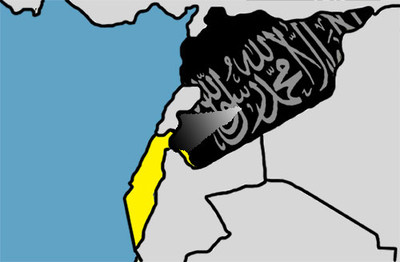
As conflict and mayhem continue to rage across Syria, the Israel Defense Forces (IDF) is preparing to encounter the threat of ISIS and al-Qaida forces right on its borders, and could encounter such threats in the coming months.

The preparations come as the Syrian civil war shows no sign of letting up. This is a conflict that has led to the violent deaths of 300,000 Syrians, and the displacement of more than 10 million others, 4.5 million of whom have fled the country.

Today, the IDF’s Military Intelligence Directorate views Syria as a former state that has broken apart into multiple ‘Syrias.’ The Assad regime controls barely 30 percent of Syria and is fully reliant on the foreign assistance of Russia, Hizballah, and Iran. Sunnis and Shi’ites wage daily war on one another.

It is worth examining the wider recent events in the multifaceted Syrian conflict, and place the IDF’s preparations in their broader regional perspective.

In Syria’s murderous kill-or-be-killed environment, Salafi-jihadist doctrines flourish, in the form of ISIS, which views Shi’ites (including the Assad regime and Hizballah) as infidels who must be destroyed.

ISIS cells have operated recently in Lebanon too, targeting Shi’ite Hizballah’s home turf of Dahiya in southern Beirut with two large bombings in November that claimed over 40 lives, while ISIS in Iraq continues to target Shi’ites.

Today, ISIS has between 30,000-50,000 members who are dedicated to expanding their caliphate and killing all those who disagree with their doctrine, including even fellow Sunni jihadi members of al-Qaida’s branch in Syria, the Al-Nusra Front, which has 8,000-12,000 members.

ISIS continues to use its territory in Syria and Iraq to plot major, mass-casualty terrorist attacks in Western cities. At the same time, its budgetary future looks uncertain, as oil funds have decreased significantly following allied air strikes on oil facilities. In the past year, 45 percent of ISIS’s $1.3 billion budget came from oil, far less than the oil revenue in 2014.

Unlike ISIS, al-Qaida believes in following a phased, slower plan in setting up a caliphate, and the two jihadist organizations have been at war with each other for more than two years in Syria.

Shi’ites led by Iran are fighting to stop the Salafi-jihadis’ spread. Under the command of Iranian Revolutionary Guard Corps (IRGC)-Quds Force unit commander, Qassem Suleimani, Iranian fighting forces and advisers moved into Syria. Iran has sustained more than 300 casualties there thus far.

Hizballah, too, is heavily involved in Syria’s battles, losing an estimated 1,300 fighters and sustaining 10,000 injuries – meaning more than half of its conscripted fighting force has been killed or wounded. Iran and its proxies are using the mayhem to try to spread their own influence in Syria.

Near Israel’s border with Syria, the Al-Yarmouk Martyrs Battalions, which is affiliated with ISIS, has set up many posts.

An estimated 600 members of the group control a population of around 40,000 Syrians. Al-Yarmouk is at war with al-Qaida’s Jabhat Al-Nusra, which maintains a few thousand members in the Syrian Golan near Israel.

Jabhat Al-Nusra’s membership is mostly derived of local Syrians, who tend to be more hesitant to start a war with Israel that would result in their areas, and relatives, being badly affected. Yet 10 to 15 percent of its membership comes from abroad, and have no commitment to the area. These foreign fighters have no qualms about precipitating attacks on Israel. At the moment, however, Jabhat Al-Nusra is bogged down by its fight with Al-Yarmouk.

ISIS has officially put Israel in its sights, and its leader, Abu Bakr Al-Baghdadi, declared his intention at the end of December to attack Israel.

The IDF is taking the threat seriously and is preparing for a range of possible attacks, including strategic terror attacks, cross-border raids, the sending of bomb-laden armored vehicles into Israel, and rocket, missile, small-arms, and mortar fire on the Israeli Golan Heights.

One possibility is that the heavily armed Al-Yarmouk group, which is facing the southern Golan Heights, might follow an Islamic State directive to attack Israel.

In 2014, Al-Yarmouk became an ISIS representative, swearing allegiance to it, though it is not fully subordinate to it.

Al-Yarmouk’s late leader, known as Al Khal (“the uncle”), was killed in November in an attack by Jabhat Al-Nusra. Before his violent end, Al Khal only partially committed himself to ISIS, and turned down ISIS requests to send fighters to Iraq.

Al-Yarmouk’s response to Jabhat Al-Nusra’s attacks came in December, when it assassinated a Jabhat Al-Nusra commander in his armored vehicle, just 400 meters from the Israeli border.

Al-Yarmouk subscribes to the Salafi jihadist ideology and has shoulder-held missiles, tanks, and other weapons looted during raids on the Assad regime military bases.

But Israel is also preparing for the possibility of encountering ISIS itself, not just an affiliate group.

ISIS proper is currently situated 40 kilometers from the Israeli border in southern Syria. One possibility is that Russian airstrikes will cause ISIS forces to ricochet southwards, towards Israel.

The IDF is gathering intelligence on all armed groups near its border, exhausting many resources to assess their capabilities, and intentions.

Israel watched as Shi’ite Hizballah came from Lebanon to block Sunni jihadist advances towards Lebanon in recent months, and as Russian airstrikes blocked the advance of the rebels northwards, to Damascus.

The IDF remains in a heightened state of alert along the Syrian border, though it is also working to avoid the creation of easy targets for the array of predatory forces on the other side.

As part of its preparations, the IDF’s Northern Command has given more autonomy to regional field commanders to enable faster responses to surprise attacks by reducing the initial chain of command during emergencies.

Inter-branch cooperation between intelligence, ground forces, and the air force has also been tightened.

Additionally, the IDF has fortified its border fence with Syria, adding electronic sensors to better be able to detect and respond to a potential attack in time.

The underlying assumption within military circles is that, sooner or later, ISIS will turn its guns on Israel, and the IDF does not intend to be caught off guard when that happens.


