Posted tagged ‘Obama’s legacy’

REAL men like Obama aren’t afraid of widows and three year old orphans!

November 18, 2015

REAL men like Obama aren’t afraid of widows and three year old orphans! Dan Miller’s Blog, November 18, 2015

(The views expressed in this article are mine and do not necessarily reflect those of Warsclerotic or its other editors. — DM)

As Obama has told us, Islam is the religion of peace, tolerance and love. Islamists coming to America to flee the violent depredations of Crusader-inspired Quaker, Amish and Jewish terrorists produced by climate change must be welcomed. To reject them would be cowardly and un-Amerian un-Islamic.

widows with children

https://www.youtube.com/watch?v=mrc7-oG8HmE

Thus spake Obama, who has managed to become even more of a caricature of a president than previously. He needed to try manfully, but finally surpassed even Himself. Having set the bar so high, will He ever be able to surpass Himself again?

To ask “what Obama was thinking” when he made the remarks memorialized in the above video is to suggest that He was actually thinking. Perhaps He was thinking that His followers, who have been hiding in their “safe spaces” at Yale and other bastions of higher learning, are unaware of what happened in Paris. Maybe they are also unaware that it could happen in America if we permit the unfiltered immigration of Islamic terrorists like France, German, Sweden and much of the rest of Europe have done. Maybe they can be kept oblivious to such problems by happy talk about widows and young orphans. Or perhaps it was Obama’s way of showing courage and moral superiority: unlike His cowardly opponents, He isn’t scared of widows and three year old children! Other threats? He’s dealing really well with those, so let’s change the subject; He is too busy to talk about doing anything different.

Leading-from-Behind-copy

Leading from behind is lots of work, but He does it with the same bravery, steadfastness and self-sacrifice He demonstrates daily in all other contexts.

Hashtags, the Obama Administration’s most effective Weapons of Mass Deception (WMDs), have again been deployed:

refugeeswelcome-640x480
Shouldn’t the new hashtag read “#Widows and three year old orphans Welcome?” Shouldn’t also it disparage “racist” Halloween costumes and speech offensive to Muslims? In the holy name of Islam, we must submit to Obama’s wisdom; the Department of Domestic Tranquility (DDT) must get on the case immediately to make sure that we do.f

Iran breaks the world executions record

November 17, 2015

Iran breaks the world executions record, Front Page MagazineDr. Majid Rafizadeh, November 17, 2015

Iranian executions

Is the Obama administration aware that it is trusting and dealing with a country that has just broken the world record in executions? Of course the President is aware of that, and it seems that he has decided to turn a blind eye to Iran’s increasing aggression and oppression inside and outside of its own country.

According to the recent and fifth report by the special United Nations investigator of human rights, human rights violations in Iran are rising even since the nuclear agreement was reached. Accordingly, execution rates have been increasing at “an exponential rate” in Iran. In 2014, 753 were executed and at least 694 people (including women and juveniles) were executed from January 2015 till mid-September. This is reported to be the highest rate of execution the Islamic Republic has had in 25 years.

If we take the ratio of the population into consideration, the Islamic Republic breaks the world record in number of executions per capita. As Ahmed Shaheed, the U.N. special rapporteur for human rights in Iran, pointed out, “The Islamic Republic of Iran continues to execute more individuals per capita than any other country in the world. Executions have been rising at an exponential rate since 2005 and peaked in 2014, at a shocking 753 executions[.]” According to the UN analyst, Iran is on track to execute more than 1000 people by the end of this year. Of course, these are only the official numbers being reported by the Iranian regime, the unreported number of executions by the government is likely much higher.

An execution may be ordered over many things, such as insulting the Supreme Leader, enmity toward Allah, and other non-violent offenses. According to the U.S. State Department’s  Human Rights report on Iran, “the law criminalizes dissent and applies the death penalty to offenses such as ….‘attempts against the security of the state,’ ‘outrage against high-ranking officials,’ ….(moharebeh), and ‘insults against the memory of Imam Khomeini and against the supreme leader of the Islamic Republic.’”

In addition, when it comes to journalists, social media activists, and women, political rights, discriminatory laws, as well as arbitrary detentions have been on the rise as well. According to the global gender gap index of the World Economic Forum, the Islamic Republic is ranked 137 out of 142, followed by Mali, Syria, Chad, Pakistan and Yemen.

In contrast to the report, a more liberal, softer and open image of the Islamic Republic has been repeatedly projected to the international community by Iranian President Hassan Rouhani, Mohammad Javad Zarif, the Western-educated foreign minister, and his technocratic team.

There was an assumption by liberals that several developments, including the improving ties between the West and Iran, the nuclear agreement, and the presidency of a moderate political figure would translate into improving civil liberties, social justice and removing restrictions on political critics in Iran. However, the real picture inside the country suggests a much different landscape. As Azita, an Iranian human rights activist and teacher from the ethnically Azeri-populated city of Tabriz said, “This is similar to, or even worse than, the period of Khatami where Basij, moral police, and IRGC increased suppression in order to tell the young people particularly that the laws will not changed.”

The State Department report clearly highlights the notion that the superficial illusion of a softer image projected by Iran belies the social, political, and economic reality inside the country.

This explains three phenomena. First, although President Rouhani promised that he will improve several critical issues such as civil liberties, social justice, freedom of expression, assembly, and press, and women’s rights, he decided to instead solely focus on the nuclear deal in order to get Iran out of the financial sanctions that restrained its growth.

Secondly, one can make the argument that President Rouhani has also decided not to cross the boundaries of Iran’s Revolutionary Guard Corps (IRGC) by cooperating with them and allowing them to have full control over domestic social and political policies, as well as foreign policy (Syria, Hezbollah, etc.).

Third, the hardliners are increasing their repressive tools and cracking-down on civil liberties in order to send a message to the Iranian young people and the West that the nuclear agreement does not mean Tehran is going to open up its political system and loosen Sharia law.

Iran’s Supreme Leader, Ayatollah Ali Khamanei, and his social base (the hardliners) are very concerned that Iranian youth might become a source of revolution. As a result they attempt to keep the country closed and they fear Western political and cultural influence on young people.

As Mr. Khamanei warned the senior cadre of the IRGC, “The main purpose of the enemies is for Iranians to give up on their revolutionary mentality…Enemy means global arrogance, the ultimate symbol of which is the United States….Economic and security breaches are definitely dangerous, and have dire consequences…But political and cultural intrusion by the enemy is a more serious danger that everyone should be vigilant about.”

Finally, the nuclear agreement seems to have overshadowed the human rights conditions inside Iran and the repressive Shiite Islamist laws. European countries and the Obama administration appear to have been turning a blind eye and have been becoming less critical of the Islamic Republic’s human rights record since the nuclear negotiation began and after the nuclear deal was signed.

It is time for the Obama administration to draw attention to the real face of the so-called moderate president of Iran who contradicts the truth by depicting himself and his country in a softer image to the world while simultaneously allowing executions and egregious, appalling and atrocious human rights abuses on his watch.

Obama Has a Strategy in the Middle East, and It’s Working

November 12, 2015

Obama Has a Strategy in the Middle East, and It’s Working, Washington Free Beacon, November 12, 2015

Obama CairoPresident Obama in Cairo, 2009 / AP

Consider that if the primary goal of the president is not a certain outcome on the ground, but rather the reset of the American posture in the region from that of a dominant power to that of one nation among many partners collaborating where possible, and, when conflict can’t be avoided, erring on the side of minimalist interventions—well, from the perspective of the Oval Office, it would be possible to conclude that no change of course is required.

As with Obamacare, the “achievement” in all this is to be found less in any one specific policy outcome than in a broad leftward shifting of the conversation, and in the creation of a new normal for January 20, 2017, in which the re-establishment of more sensible policy in the Middle East will be extremely difficult.

************************

The Obama administration is “operating on a crisis basis” in the Middle East, says Leon Panetta, and doesn’t “have any kind of larger strategy” for the region. The president’s recent actions there, including the deployment of 50 special operations troops to Syria, are too incremental and “will not work,” says Fareed Zakaria. Indeed, the situation in that country has “spiraled out of control,” according to Vox’s Max Fisher in a post headlined “Unfixable: How Obama Lost Syria.”

And that’s what liberal critics are saying! The tone on the right is even more harsh—and why shouldn’t it be? Headlines this week from the region inform us that new footage shows about 200 children being shot to death by members of the Islamic State while lying in a row, faces in the dirt; that a Russian airliner that crashed in Egypt was quite likely downed with the use of military grade explosives; and that Russian airstrikes in Syria in support of the Assad regime have increased in intensity. It is Wednesday.

Zooming out, we see Assad in power, the Islamic State not going anywhere, Yemen still the focus of a regional proxy war, and a nuclear deal with Iran that has only empowered hardliners there.

The natural question thus seems to be: Why doesn’t Obama change course? Other presidents have shifted their approaches when confronted with failure—Carter’s late foreign policy and Bush’s Iraq surge both spring to mind. Why not Obama?

One answer to this question we ought to take seriously is that the president thinks things are, on the whole, going just fine.

Consider that if the primary goal of the president is not a certain outcome on the ground, but rather the reset of the American posture in the region from that of a dominant power to that of one nation among many partners collaborating where possible, and, when conflict can’t be avoided, erring on the side of minimalist interventions—well, from the perspective of the Oval Office, it would be possible to conclude that no change of course is required.

This possibility is why I’m not persuaded of Panetta’s charge that the administration lacks a “larger strategy.” It seems entirely possible to explain what might seem to be incompetence as simply the consequence of having as the primary focus of our regional strategy the reduction of the American role.

Evidence for this possibility can be detected through a Kremlinological look at the administration’s own public statements, including the repeated insistence that “local partners” will do the fighting on the ground against the Islamic State, which, in turn, will only “ultimately” be destroyed, as well as the unconventional assertion by Ben Rhodes earlier this year that the avoidance of military casualties is itself a goal of American national strategy. Much of the evidence rounded up by Michael Doran in his excellent essay on the strategy behind the Iran deal points in the general direction I propose. And others have made plausible arguments that the administration has engineered a transition from a Middle Eastern “Pax Americana” system to one where “offshore balancing” prevails—even though such an assessment understates the extent to which responsible outcomes on the ground don’t matter nearly as much to the White House as the nature of the American posture itself.

The most persuasive proof is a form of reductio ad absurdum—denying this assessment seems to require the conclusion that the president and his advisors are profoundly foolish. It seems more likely that they are simply ruthless ideologues.

From their point of view, it is surely lamentable that the region hasn’t responded better to the withdrawal of American power. But there was always going to be a period of transition, and that the shift is somewhat traumatic is not necessarily a surprise. Calls for America to reinsert its military are shortsighted: after all, the presence of the American military in support of corrupt Sunni regimes like Saudi Arabia’s contributed mightily to the targeting of the United States by extremists, and the removal of Saddam led ultimately to the existence of the Islamic State. Our enmity with Iran’s revolutionary government goes back to our backing of the Shah and the ouster of Mossadegh, and anyway, the fact that we are allied with toxic Sunni regimes (not to mention apartheid Israel) but hostile to a religious Shia regime is irrational, at best. Violence may currently be surging, but the death tolls conveyed in lurid headlines must be seen in the context of truly grave global threats, like climate change. Those threats require our best attention, as does the rebuilding of the American economy, and we are better served by working to construct a more equitable and just society at home before taking unilateral, aggressive, and risky actions abroad.

This analysis may be wrong in part or in whole, but it is internally coherent, and if accepted it points to the strategy more or less exactly like the one being pursued. If America is usually part of the regional problem, and if its efforts are better employed elsewhere, then the strategic goal should be to reduce the amount of America in the region. In the administration’s first term, centrist voices in the cabinet would have resisted such an approach—but they are gone now.

The shift in our regional posture has, of course, provoked opposition from hardliners (American hardliners, that is) including conservative politicians and elements of the Pentagon’s leadership, whose actions over the years have empowered Middle Eastern hardliners like the Iranian mullahs. Thus this domestic opposition is also, in a sense, the enemy, and resisting this wing of American politics at home will give moderates in countries like Iran the space to gain influence over time.

This worldview is why Obama isn’t going to change course any time soon, absent a major loss of American life in a terrorist attack and the domestic political pressures that will create. Even then, the response is likely to be conducted with an eye to keeping military engagements highly limited, as with token actions taken in recent weeks in the campaign against the Islamic State. Indeed, seen in this light, incremental deployments of a few dozen troops to Syria need no longer be seen as foolish gestures that are destined to fail, but rather as more or less successful delaying actions meant to placate domestic political opposition.

As with Obamacare, the “achievement” in all this is to be found less in any one specific policy outcome than in a broad leftward shifting of the conversation, and in the creation of a new normal for January 20, 2017, in which the re-establishment of more sensible policy in the Middle East will be extremely difficult.

Putin has no long term strategy, says administration w/no long term strategy

October 31, 2015

Putin has no long term strategy, says administration w/no long term strategy, Front Page Magazine, Daniel Greenfield, October 31, 2015

hqdefault

This is an administration that believes you win wars with word games

Obama claimed that Putin is acting in Syria out of weakness and is being all reactive. Then he reacted by shipping weapons to Sunni rebels, a move he had originally rejected, and sending American soldiers into combat as boots on the ground.

Now DNI James Clapper is claiming that Putin is being impulsive and has no long term strategy. This comes from an administration that changed its mind several times about intervening in the Syrian Civil War and keeps saying it still doesn’t have a plan for defeating ISIS.

Clapper said Putin was “very impulsive and opportunistic” as he increased Russian support for close ally President Bashar al-Assad in Syria’s roiling civil war.

“I personally question whether he has some long-term strategy or whether he is being very opportunistic on a day-to-day basis,” Clapper told CNN’s Jim Sciutto. “And I think his intervention into Syria is another manifestation of that.”

Being “opportunistic” is actually how real life battles are fought. You have a strategy, but you seize advantages based on the evolving situation on the ground.

So far Putin’s long term strategy has been to expand Russian influence in the region. It’s working really well. Russia is back to being the regional alternative to the US. It’s securing strategic territories and its allies are expanding their sphere of influence.

On top of that, Putin managed to avert US air strikes on Assad with his fake WMD deal. Then he helped Iran secure its nuclear weapons program with the Iran deal. (I’ll grant that he had a lot of help from Obama and Kerry there.) Now he’s angling to get Obama on board a peace deal that keeps Assad in power and ends US support for the rebellion. Considering this administration’s foreign policy track record, he’ll probably get his way. While the administration clown car taunts him as weak and opportunistic and reactive and impulsive.

In the Cold War, the Soviets trash talked while the US got things done. Under Obama, the US talks trash and Russia gets things done. But this is an administration that believes you win wars with word games.

How is that working out for them?

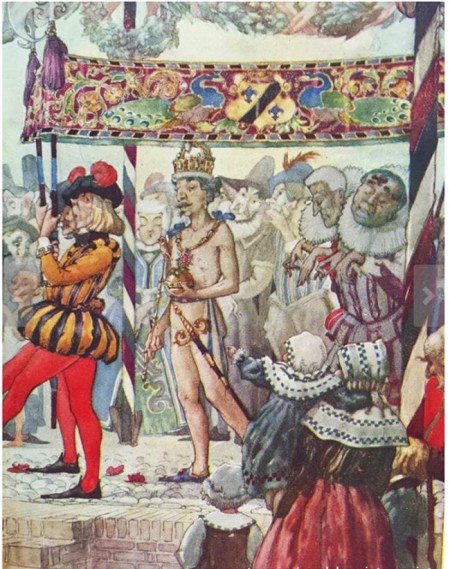
MEMRI: ‘The Emperor Has No Clothes’

October 30, 2015

MEMRI: ‘The Emperor Has No Clothes,’ Yigal Carmon, October 30, 2015

(Where are the media? In Obama’s pocket as usual. — DM)
25564

This MDB is dedicated to the memory of USAF pilot Captain (ret.) David Ganz, a man of honor and gallantry and a decorated officer, who passed away last week.

What Is The “Iran Nuclear Deal?”

What is mistakenly perceived as an agreement under the title of “Joint Comprehensive Plan of Action” (JCPOA), that was concluded on July 14 in Vienna, and celebrated by the White House as anhistoric agreement,” is neither a contract nor even a real agreement between Iran and the P5+1. It is a set of understandings and disputes compiled into a single document.

For example, the JCPOA states that in the event of Iranian violations, sanctions will be re-imposed (snapback). However, the Iranian position, which rejects all sanctions, is incorporated in the same document. In outlining the snapback of the sanctions, Article 37 also stipulates: “Iran has stated that if sanctions are reinstated in whole or in part, Iran will treat that as grounds to cease performing its commitments under this JCPOA in whole or in part.”[1] This is not merely an Iranian reservation expressed outside of the negotiating room. It is incorporated into the text of this selfsame document – and one that completely contradicts preceding provisions that stipulate otherwise. Since the parties were unable to arrive at an understanding on this issue in two entire years of negotiations, they decided to resolve this major issue by incorporating this disagreement into the document itself.

The JCPOA is best characterized by bangs and whimpers – by bold prohibitions on Iran that peter out in qualifying terms such as “unless,” “except if,” and the like.

Why isn’t the JCPOA a contract? Because Iran would never have signed any contract with the U.S. – “the Great Satan” – whose demise it seeks. Likewise, it would not have signed any contract with any other party to the negotiations, since it views the sanctions imposed on it by United Nations Security Council (UNSC) resolutions and by EU and IAEA reports as grievous injustice. By signing such an agreement, it would retroactively legitimize these wrongs done to it.

As Iranian Supreme Leader Ali Khamenei frequently reiterates, Iran agreed to negotiations mainly to get the sanctions lifted. Therefore, as far as Iran is concerned, the only acceptable name for this enterprise is “Joint Comprehensive Plan of Action” – under which each party commits to particular action. It is a joint plan, not a contract.[2]

Has Iran Fulfilled Its Initial Obligation To Approve The July 14 Vienna JCPOA?

The JCPOA includes a timetable and obligations applying to both sides. Within this time frame, both parties had 90 days from July 14 to secure approval for the agreement from their respective national institutions. By “Adoption Day,” set for October 19, which has come and gone, the agreement was meant to have been approved by both sides. The EU was to have announced the lifting of its sanctions, while President Obama, on behalf of the U.S., was to have announced the lifting of the U.S. executive branch’s sanctions, along with waivers on sanctions imposed by the U.S. legislative branch – that is, suspension, because the president is not authorized to lift them.

Adoption Day was preceded by a farcical UNSC endorsement of the agreement/disagreement, as demanded by Iran. The U.S. volunteered to play errand boy for this undertaking. For its part, the UNSC eschewed discussion on the matter, and passed this historic resolution, No. 2231,[3] on such a weighty historic document in record time – under 30 minutes.

The Western side showed its consent long before October 19; the self-effacing EU member countries did not even bother to discuss the agreement in their national parliaments – and thus confirmed their true status as nonentities. And while the U.S Congress did discuss it seriously, the agreement was allowed to proceed, via a convoluted process that was nonetheless legal and binding.

In Iran, however, following discussion in both its Majlis and its Guardian Council, the JCPOA as concluded and announced on July 14 was not approved. The Majlis ratified something else – a set of recommendations to the government of Iran regarding how it should execute the JCPOA. This hardly constitutes approval of the original document. The Guardian Council, for its part, approved what the Majlis had done; Guardian Council secretary-general Ayatollah Jannati said, on Iranian TV, that his council had approved not the JCPOA but a plan for the government to secure Iran’s interests in executing it.[4] Majlis speaker Ali Larijani said the same thing.[5]

Was this a fulfillment of what Iran was obligated to do under the JCPOA? No! Did the U.S. administration insist that Iran approve the JCPOA, as concluded and announced in Vienna on July 14? No! Does the U.S. realize that Iran’s ultimate authority to approve laws rests with Supreme Leader Khamenei, and that he has not yet approved the JCPOA? NO! Nevertheless, the U.S. and Europe have chosen to regard what Iran has done as approval – so that the peace process will not be halted.

The U.S. and Europe then proceeded to the first post-Adoption Day phase in the JCPOA timetable: The EU announced that its sanctions would be terminated. President Obama announced that the U.S.’s executive sanctions would be lifted and its legislative sanctions waived; this announcement was not for immediate execution, but in fact advance notice that these measures would come into effect by December 15 – provided that the IAEA would report that Iran has fulfilled its obligations under the JCPOA.

What are these obligations that Iran has to fulfill between Adoption Day and December 15 in order to merit this sanctions relief? The Arms Control Association, which supports Iran and the JCPOA, listed them on its website:[6]

*reducing the centrifuges at Natanz from over 16,000 to 5,060 IR-1 machines, which will enrich uranium to 3.67 percent, and removing the associated infrastructure;

*reducing the number of IR-1 machines centrifuges at Fordow to 1,000 (328 will operate) and converting the facility for radioisotope production;

*wrapping up testing on advanced centrifuges machines and removing all advanced centrifuges except one IR-4, IR-5, IR-6, and IR-8 machine for testing with uranium;

*storing all dismantled centrifuges under IAEA seal;

*reducing the stockpile of enriched uranium to less than 300 kilograms;

*removing the core of the Arak reactor and disabling it; and

*instituting the necessary transparency and monitoring mechanisms to implement Iran’s additional protocol and the continuous surveillance of key facilities.

Did Iran hasten to meet these obligations? No! The explanation follows below.

Why Has No One Said A Word About Iran’s Noncompliance?

Since Adoption Day, no one in the West – not the media, not Capitol Hill, not Israel – has spoken up about the fraud of Iran’s alleged “approval” of the JCPOA. Western intelligence agencies and think tanks have also held their tongues. Everyone swallowed the lie, in a spirit of goodwill, in order to allow the JCPOA to proceed, for “peace in our time.”

The Republicans should have remembered their revered leader, Abraham Lincoln, invoked by Barack Obama in 2007 when he announced his presidential candidacy at the spot where Lincoln had done so over 150 years previously. After all, it was Lincoln who said, “You cannot fool all the people all the time.”

The pro-JCPOA political media have, of course, misled the public by reporting that Iran approved the JCPOA. But even the anti-JCPOA media have failed to rebut this lie. Why? Ignorance, unprofessionalism, and hatred for President Obama blinded them. Here is what they likely are thinking: Obama gave in to Iran on everything. Obviously, Iran is going to approve this piece of “absolute Western capitulation.”

However, Iran did not get absolutely everything it demanded, and Obama did not give it absolutely everything it demanded – he held out for a tiny scrap of the U.S.’s initial position, as will be detailed below. That is why Iran would not approve the JCPOA – to Iran, anything less than 100% of what it wants is an injustice.

Why Isn’t Iran Rushing To Fulfill Its Obligations And Get Sanctions Relief By December 15?

At this stage, events have taken an absurd turn. Iran has started dragging its feet. Instead of rushing to carry out all the steps to meet its obligations under the JCPOA, it is idling in neutral. It has little time and much to do by December 15. It must dismantle thousands of centrifuges and transfer them to storage monitored by IAEA cameras. It must ship out 9,000 kg of its enriched uranium to a third country, retaining only 300 kg. It must dismantle and pour cement into the core of the Arak plutonium reactor, and transform the facility into a heavy water reactor. It must notify the IAEA of its voluntary acceptance of the NPT Additional Protocol. And more.

But senior Iranian officials are shifting responsibility for initiating fulfillment of these obligations to one another, sometimes with comical effect. For example, President Hassan Rohani sent a letter to Iranian Atomic Energy Organization head Ali Akbar Salehi instructing him to begin to take the appropriate steps. Salehi confirmed that he had received Rohani’s message, but said that it had not stated when he should start doing so. No one wanted to budge without explicit permission from Supreme Leader Khamenei.[7]

Khamenei Issues Nine New Conditions, Blocks Execution Of JCPOA

Now the big secret is out. Khamenei has not approved the JCPOA. And those who pretend that it has been approved – President Rohani, Foreign Minister and negotiator Javad Zarif, and their associates – have been on borrowed time. While they could lie to the West, to President Obama, to Secretary of State Kerry, and to the EU foreign ministers that they can move ahead, they always knew that Khamenei opposed the JCPOA. Now, at the moment of truth, they feared to proceed.

Indeed, it was logical for Khamenei to allow the Iranian negotiators to play along with the P5+1, to see what they could get at no cost to Iran – since it was well known that President Obama was dying for an agreement. But once Khamenei knew that President Obama is standing firm on the last fragment of the original U.S. position, either unwilling or unable to capitulate any further, Khamenei broke his silence. Stepping in in the final act, Khamenei, deus-ex-machina style, dictated, in a letter to President Rohani, nine new conditions for the JCPOA,and declared that if these were not met Iran would stop the agreement.[8]

Actually, Khamenei had issued an early warning in a September 3 speech,[9] in which he said that all the sanctions must be lifted, not suspended, and that if not, there would either be no agreement or Iran would also only “suspend” its obligations. But President Obama did not yield. He cannot override congressional sanctions; he can only issue a suspension via waiver. Politically too, it might be too far for him to go to break his promise of the JCPOA’s built-in security mechanism – snapback of the sanctions. Obviously, snapback is possible only if the sanctions remain in place under suspension. Therefore, Khamenei, realizing that the sanctions would remain, also kept his promise and blocked the agreement with new conditions, one of which – i.e. the lifting of sanctions rather than suspension – he knows for sure cannot be met.

How Did The American Media Describe Khamenei’s Nine New Conditions?

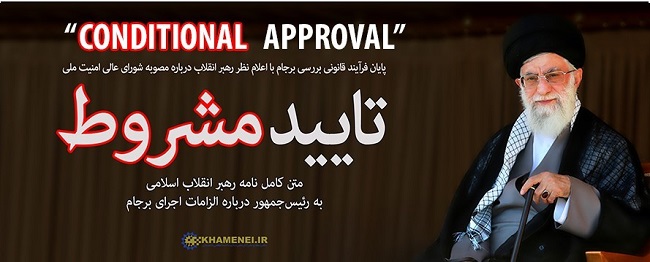
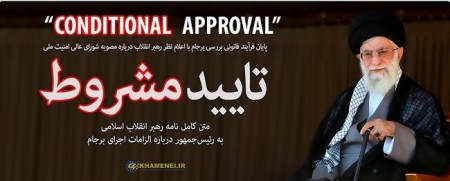
Khamenei’s letter to Rohani with his conditions for the execution of the JCPOA – the publication of which coincided with the days of the Ashura that are of vital religious and national significance in Iran and symbolize steadfastness against the forces of evil – was explicitly termed “conditional approval.” It was labeled thus in red letters, as posted on Khamenei’s website in Persian, tweeted from his Twitter account and posted on his Facebook page in English, and also published in English by the official Islamic Republic of Iran Broadcasting authority IRIB.
25565

But instead of reporting that at this stage, and at present, Khamenei’s approval is not given unless Khamenei’s conditions are met, the American media said that Khamenei had approved the JCPOA. Would these members of the media also consider a purchase concluded if they had not paid for it? The entire American media, without exception, left, right, and center – as well as, apparently, all the U.S. intelligence agencies and think tanks – claimed that Khamenei had approved the agreement. Only two newspapers in the West wondered about the emperor’s new clothes – but even they did not shout “But he hasn’t any clothes on at all!” They said only that he was missing a couple of accessories.

Khamenei had spoken, banning outright any implementation of the JCPOA by Iran until his new conditions are met. The entire Iranian political system is hewing to this line – including President Rohani, Foreign Minister Zarif, Majlis Speaker Larijani, a majority of Majlis members (166), and more (for a full list to date, see Appendix I).

Everyone, that is, except for Ali Akbar Hashemi Rafsanjani, Khamenei’s political rival and head of Iran’s pragmatic camp, who in an interview published this week by MEMRI openly challenged Khamenei and said that Iran should abide by what it undertook in the JCPOA.[10]

But this cannot happen. Khamenei holds the reins.

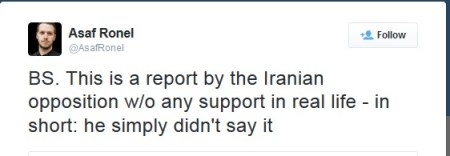
Did the media report on Rafsanjani’s interview? No! But the media in Iran did (see Appendix II). This, however, did not stop the editor of the Israeli daily Haaretz from writing that the interview was faked.
25566

This is a well-known human reaction: When people stand before the complete collapse of what they believe in, they enter a state of denial.

So What Now?

And what is President Obama to do, as everything he has stood for in the Iran deal collapses so ignominiously? On the right, they say he will continue to capitulate. In their ignorance, and in their hatred of him, they fail to realize that he can simply surrender no farther. OK, they say, so the IAEA will provide Obama with the necessary confirmation by December 15 that the Iranians have done their part. But that is impossible as well. What is demanded of Iran is gargantuan in scale, and it would be far more difficult for the IAEA to fake confirmation when the Iranians themselves are declaring loudly that they are not going to do it.

With every passing day, Iran is more and more in violation of the JCPOA. But neither the Republicans nor the Democrats, nor the media, nor anyone else will acknowledge this, for the implications are too devastating. The agreement is no longer in effect. Its clock has stopped.

But the weeks will pass, and the media and politicians will be forced to admit that this is the case. And the last thing they will be willing to do is to force Iran to meet its obligations. Thus, it appears that President Obama’s only option, shameful as it is, is to restart the negotiations with the Iranians and talk with them about their leaders’ new conditions. As is well-known, this administration advocates diplomacy – guaranteeing that there will be no breakthrough any time soon.

This is precisely what will serve President Obama best. All he needs to do is play for time and reach the end of his term with an agreement in hand – albeit virtual – and negotiations in progress – albeit unending. He will pass this situation on to the next administration. The success will be all his, and the failure will be all theirs. The media will zealously guard Obama’s legacy, and his successor, Republican or Democrat, will be too uninformed to protect him or herself from this historic maneuver. And it will serve them right.

Appendix I: Senior Iranian Officials Declare Their Acceptance Of Khamenei’s Instructions On Implementing The JCPOA

On October 10, 2015, Majlis Speaker Ali Larijani  said at a conference on war and peace in Syria: “…The commands of the leader [Khamenei], the decision of the Majlis and the Supreme National Security Council will illuminate the government representatives’ path on implementing the JCPOA… I thank the leader with all my heart.”[11]

President Rohani, responding to the directives letter by the Supreme Leader on carrying out the JCPOA (October 22, 2015): “Your historic letter of October 21, 2015 regarding the approval of decision number 634 of the Supreme National Security Council caused joy within the great Iranian people and warmed the hearts of the public servants in government… The government will obey your criticisms and obligations [that you imposed] and with good intentions will take measures relating to the full implementation of the Supreme National Security Council and the Majlis. We will be fully alert to the performance of the other side’s obligations and in the Supreme National Security Council we will take the necessary decisions to provide a fitting response.”[12]

On October 26, 2015, Foreign Minister Zarif referred in the Majlis to the supreme leader’s letter on carrying out the JCPOA and noted: “I am grateful to the leader for his path-illuminating letter on setting policy in the JCPOA’s implementation. His opinion always lighted the path to the nuclear negotiations team at the foreign ministry. Henceforward, we must make an effort to implement the JCPOA documents in the right way and following the leader’s guidelines.”[13]

On October 27, 2015, Zarif said that the modifications to the nuclear reactor in Arak must be performed after the PMD file has been closed at the IAEA and explained: “we calculated the details of re-planning the reactor following the leader’s guidelines, the decision of the Supreme National Security Council and the Majlis… We will coordinate everything necessary for swapping the uranium stockpiles and this matter will be performed precisely in the way that the leader elaborated and was previously agreed at the Supreme National Security Council and the Majlis nuclear committee.”[14]

In the Majlis, 166 members, constituting a majority, expressed on October 26, 2015 their admiration for the leader for his historic letter in implementing the JCPOA. The letter’s contents read “… For a certainty, the Majlis representatives will act as your stout arms and collaborate with all the supervisory organizations and with the Supreme National Security Council and invest efforts to ensure that after the JCPOA, the enemy will not be able to penetrate our Islamic country even minutely and we will supervise that all violation of promises by the 5+1 group will not remain unanswered.”[15]

Iran’s Judiciary Chief Sadeq Amoli Larijani at an October 26, 2015 conference of senior judicial branch officials said that the letter of conditions that Khamenei published on JCPOA implementation should put an end to debates on the issue. He added: “All groups [within Iran] should treat the leader’s letter as ‘self-explanatory’ and as the axis of unity and from now no they will make progress and think moderately about the future and the next stages of the JCPOA.”[16]

The leader’s representative in the Islamic Revolutionary Guard Corps (IRGC) Ali Saidi said on Wednesday, October 21, 2015: “… The leader is effectively managing the country according to the Koran and custom, the leader sets policy and the others execute it.”[17]

At an October 27, 2015 press conference, the leader’s advisor and the head of the Center for Strategic ResearchAli Akbar Velayati, said: “In the last letter we saw that he criticized the defects and shortcomings in carrying out the JCPOA. I hope that the agreement will be carried out flawlessly in the future. The continued support of the leader for the JCPOA is contingent on the response to the letter that Khamenei wrote the president [Rohani].”[18]

The head of the Majlis nuclear committee, Ebrahim Karkhanehei, referring to the leader’s letter on the JCPOA, said: “This letter produced social calm because in addition to leader the people as well demanded the things that were included in the letter. The most important issue in the letter is the issue of lifting sanctions and the government must seriously handle the matter of lifting the sanctions. In addition to the letter, the leader emphasized many times that if the sanctions are not lifted then there will be no agreement and therefore the US and the EU must fully lift the sanctions.

“The letter from the EU and the American president are not considered a [sufficiently] strong guarantee on the lifting of the sanctions. The Majlis will not be negligent about any clause in the leader’s letter and the government must seriously oversee and handle the sanctions-lifting issue.

“The leader demanded that a professional and  wise team should supervise the sound implementation of the JCPOA and therefore this team must be comprised of at least five people specializing in the legal, nuclear technical political, economic and the sanctions structure issues as well as an expert on security and defense matters.”[19]

An October 25, 2015 Kayhan editorial titled “Giving Interpretations Is Impermissible” wrote: “The leader’s order and the setting of numerous terms for the JCPOA’s implementation is self-explanatory and elaborated a clear path for all arguments and worries, according to religious jurisprudence, the law and the professional perspective. It is obligatory and essential to obey it.. as opposed to some of the impressions, the leader approved the JCPOA’s implementation only following obedience to the terms that may not be damaged and on principle, the leader did not express general approval on the matter.”[20]

Appendix II: Iranian Websites Covering Rafsanjani’s Interview In Inhnews.ir

*IRNA

*ILNA

*Hashemirafsanjani.ir.fa

*Etemaad

*ISNA

*Fars

*Tnews.ir

*Shomaokhabar

*Farsi-news

*Shafaf.ir

*Y. Carmon is president and founder of MEMRI.

Endnotes:

[1] For the complete text of the JCPOA see Eeas.europa.eu/statements-eeas/docs/iran_agreement/iran_joint-comprehensive-plan-of-action_en.pdf

[2] See MEMRI Special Dispatch No. 6151, Khamenei Declares That He Will Not Honor The Agreement If Sanctions Are Merely Suspended And Not Lifted, September 4, 2015; and MEMRI TV Clip #5067 – Iranian Supreme Leader Ali Khamenei: The Americans Must Lift the Sanctions, Not Suspend Them, September 3, 2015.

[3] Unscr.com/en/resolutions/doc/2231.

[4] See MEMRI TV Clip #5114 – Iranian Guardian Council Secretary-General Ahmad Jannati: Khamenei Has Not Approved or Signed the JCPOA, October 16, 2015; and MEMRI TV Clip #5117 – Iranian Guardian Council Spokesman Nejatollah Ebrahimian: The JCPOA Was Not Approved by the Majlis or the Guardian Council, October 18, 2015.

[5] Tasnim (Iran), October 18, 2015.

[6] http://www.armscontrol.org/blog/ArmsControlNow/2015-10-15/The-P5-1-and-Iran-Nuclear-Deal-Alert-October-15

[7] ISNA (Iran), October 18, 2015.

[8] On Khamenei’s nine demands, see MEMRI Inquiry & Analysis No. 1196, Iranian Supreme Leader Khamenei’s Letter Of Guidelines To President Rohani On JCPOA Sets Nine Conditions Nullifying Original Agreement Announced July 14, 2015, October 22, 2015.

[9] See MEMRI Special Dispatch No.  6151, Khamenei Declares That He Will Not Honor The Agreement If Sanctions Are Merely Suspended And Not Lifted , September 4, 2015.

[10] MEMRI Special Report No.43, Breaking Report: Challenging Khamenei, Rafsanjani Demands That Iran Fulfill Its Obligations Under The JCPOA, And Reveals: We Had Nuclear Option In Iran-Iraq War, October 28, 2015.

[11] Mehrnews.com, October 23, 2015.

[12] President.ir/fa/90172

[13] Isna (Iran), October 26, 2015.

[14] Isna (Iran), October 27, 2015.

[15] Mehrnews.com, October 26, 2015.

[16] Nasimonline.(Iran), October 26, 2015.

[17] Snn.(Iran), October 22, 2015.

[18] Isna (Iran), October 27, 2015.

[19] Mehrnews.com, October 26, 2015.

[20] Kayhan (Iran), October 25, 2015.

Escalation of child execution in Iran

October 26, 2015

Escalation of child execution in Iran, Front Page MagazineDr. Majid Rafizadeh, October 26, 2015

(Please see also, Iranian Supreme Leader Khamenei’s Letter Of Guidelines To President Rohani On JCPOA Sets Nine Conditions Nullifying Original Agreement Announced July 14, 2015. According to Supreme Leader Khamenei,

Any sanctions against Iran “at every level and on every pretext,” including terrorism and human rights violations, by any one of the countries participating in the negotiations will “constitute a violation of the JCPOA,” and a reason for Iran to stop executing the agreement. 

He probably need not be concerned.– DM)

photo-by-seysd-shahaboddin-vajedi-wikimedia-commons-iranian-supreme-leader-ayatollah-ali-khamenei-releases-video-propaganda

While Iranian ruling clerics enjoy reaping the economic benefits from the nuclear deal, they also feel triumphant when it comes to the Obama administration’s total disregard of the increasing human rights violations in Iran.

To sustain his nuclear deal, President Obama appears to have made a Faustian bargain with the Iranian leaders: He turns a blind eye to Iran’s sponsorship of terrorism, repressive methods to crack down on social and political freedoms, egregious human rights abuses, while Iran verbally and on the surface, binds itself to the nuclear deal.

This week, Iran’s parliament passed a bill supporting the nuclear deal which was primarily reached between President Obama and the Islamic Republic. Some policy makers were surprised that Iran passed the bill. But why would Iranian leaders not sign a deal that would bring them financial rewards and allow them to be as repressive as they please both domestically and regionally? As I mentioned several weeks ago, it was easy to predict that the Iranian parliament (Majlis) would pass the deal to receive further rewards.

Simultaneously, Iran’s judiciary system has become more emboldened and empowered. This can be seen when they are issuing death sentences at unprecedented levels, particularly for children.  Last week, Iran’s Islamic court executed a juvenile offender on October 13, 2015 in Adelabad Prison, Shiraz. Fatemeh Salbehi, was arrested at the age of 16 because her husband was found dead at home.

She was 16 years old when she was forced into marriage to a man who was thirty. She had never met the man before their marriage.  According to a recent release by the UN Special Rapporteur on the situation of human rights in Iran, Ahmed Shaheed, “These executions are disturbing examples of surging execution rates and questionable fair trial standards in the Islamic Republic of Iran….The Iranian authorities must comply with its international law obligations and put an end to the execution of juvenile offenders once and for all.”

What is intriguing is that Iranian leaders used to take notice when there was an international outcry regarding a human rights or political prisoner case. They used to postpone the case, the execution, or do something to let the global pressure fade away.   But not anymore. In this case, Amnesty International, Amnesty USA, International human rights organizations, and the United Nations’ Office of the High Commissioner for Human Rights pressured the Islamic Republic to refrain from executing Ms. Salbehi and another young man.  But Iran’s answer was implicitly clear: We will execute anyone we like and no one can stop us now.

One must wonder how much the nuclear deal, President Obama’s unwillingness to criticize the Islamic Republic, and President Obama’s actions in legitimizing the Islamic Republic on the global stage have played a role in emboldening and empowering the ruling mullahs and the hardliners rather than influencing them to be more rational and civilized figures.

A week before the execution of Ms. Salbehi, another juvenile was executed. No notice was given to his family or even his attorney. The UN Special Rapporteur on summary executions, Christof Heyns, pointed out, “Let us be clear – these are unlawful killings committed by the State, the equivalent of murders performed by individuals…. These are profound tragedies that demean the value of human life and sully the reputation of the country,” He added “Iran must immediately stop killing children,”

More than 1,000 people will be executed in the year 2015. There has been a surprising rise in the number of executions since Iran scored a victory by signing the nuclear deal. Ms. Salbehi was one of the hundreds of women being executed on a regular basis based on Iran’s Shiite Islamist laws and on gender discrimination. These women are not allowed due process or adequate access to a lawyer. As the Office of the High Commissioner for Human Rights (OHCHR) warned when Ms. Salbehi was hanged on Tuesday, the execution was “in breach of international law banning juvenile executions, and despite reported flaws in her trial and appeal process.”

Finally, It is crucial to point put that we are only hearing about a few cases of human rights violations; only a few of these shocking human rights abuses make their way to the international spotlight. As an Iranian human rights activist and lawyer, Shadi, told me on a phone call from Tehran, “Just step in the Islamic courts and you will see that there are tens of thousands of these cases, particularly regarding innocent women, which the media never hear about.”

Achieving his dream of signing a nuclear deal with Iran should not make President Obama silent about human rights violations, the ever increasing rate of child executions, and ongoing crimes against humanity.

Leader Outlines Major Observations in JCPOA Implementation

October 21, 2015

Leader Outlines Major Observations in JCPOA Implementation, Tasnim News Agency (Iran), October 21, 2015

139406041520538615968453

[T]hroughout the 8-year period of implementing the JCPOA, imposing any sanctions, at any level and under any pretext –such as the “recurring and fabricated allegations of terrorism and human rights violation – by any of the parties to the talks”, will be tantamount to breach of the JCPOA and the administration will be obligated to take the necessary measures under the Clause 3 of the Iranian Parliament’s plan and cease the JCPOA activities.

*********************

TEHRAN (Tasnim) – Supreme Leader of the Islamic Revolution Ayatollah Seyed Ali Khamenei in a letter to President Hassan Rouhani highlighted nine main points that the administration will need to take note of regarding the course of implementing a final nuclear deal with six world powers.

In the letter, Ayatollah Khamenei appreciated the efforts made by the country’s different bodies involved in the course of nuclear negotiations with the Group 5+1 (Russia, China, the US, Britain, France and Germany) and the consequent efforts to evaluate the deal.

The Leader, however, noted that the nuclear agreement, dubbed the Joint Comprehensive Plan of Action (JCPOA), contains “ambiguities, structural weak points and multiple points that could inflict heavy losses on the country” at present and in the future in case of lack of strict and constant vigilance.

Ayatollah Khamenei then explicated the observations that the administration should make about the JCPOA and its implementation.

The first point in the Leader’s letter was the necessity for the full termination of the anti-Iran sanctions under the JCPOA.

Since the purpose of Iran’s approval to the nuclear negotiations was the removal of “cruel economic and financial sanctions”, and given the fact that the termination of the sanctions has been subjected to completion of Iran’s undertakings, there needs to be “firm and sufficient guarantees” to avert the other side’s breach, Ayatollah Khamenei underlined.

The US president and the European Union must declare that the anti-Iran sanctions have been “fully lifted”, the Leader noted.

The second observation in the letter was the categorical rejection of imposition of any new sanctions against Iran, which the Leader described as a breach of the JCPOA in which case the Iranian administration would be obligated to stop implementing the deal.

Third, the Leader further said, throughout the 8-year period of implementing the JCPOA, imposing any sanctions, at any level and under any pretext –such as the “recurring and fabricated allegations of terrorism and human rights violation – by any of the parties to the talks”, will be tantamount to breach of the JCPOA and the administration will be obligated to take the necessary measures under the Clause 3 of the Iranian Parliament’s plan and cease the JCPOA activities.

The rest of the observations are as follows:

4. Measures to renovate the Arak plant, which should keep its heavy (water) nature, will begin only after signing a definite and safe contract on an alternative plan and sufficient guarantee for its implementation.

5. The trade of the available enriched uranium with the yellowcake (a type of uranium concentrate powder) with a foreign government will take place when a secure contract with sufficient guarantees is signed. The mentioned trade and exchange (of materials) should occur gradually and in multiple times.

6. In accordance with the bill passed by the Majlis (parliament), a necessary plan should be devised and meticulously discussed by the Supreme National Security Council (SNSC) for mid-term development of (the country’s) nuclear energy industry, including ways to make progress in the next 15 years, leading to the production of 190,000 SWUs (Separative Work Units).

7. The Atomic Energy Agency of Iran (AEOI) should organize research and development in different aspects in such a way that at the end of the 8-year period, there will be no technological shortages for achieving the level of enrichment as accepted in the JCPOA.

8. As for ambiguities in the JCPOA, it should be stressed that the other side’s interpretation is not accepted, and that the reference (for interpretation) is the text of the negotiations.

9. The existence of complexities and ambiguities in the JCPOA and the possibility of breach of commitments and deception on the part of the other side, especially the US, necessitate that a strong, observant and smart committee be formed to monitor the progress of works, fulfilment of the other side’s commitments and  realization of the observations mentioned above. The committee’s arrangement and responsibilities should be formulated and approved by the SNSC.

Propaganda!

October 17, 2015

Propaganda! Gates of ViennaMC, October 16, 2015

stabbingisrael

So we are told endlessly that Islam is a ‘religion of peace’, and that the flood of Islamic warriors knocking at the gates of Europe consists of ‘refugees’ fleeing war. And you know what? It works. Germans (and Swedes) are already swamped, overwhelmed even, but thanks to effective propaganda they do not see the truth before their eyes. However, the indigenous poor are less distracted. They have to live with the filth and violence, but they have no voice; they are shouted down as ‘racist’ and offered no platform.

It is propaganda at play which keeps the Merkels and Obamas of this world in power. Truth is hidden behind a smokescreen of mendacious words: words such as ‘hope’, ‘change’, ‘progress’, ‘liberal’, ‘Democrat’ and ‘Republican’. These words have become Orwellian doublespeak, a stinking hole of corruption, a rotten miasma emanating from a mass grave — ours!

*************************************

I get very bored when people tell me (which is often) that “Israel murders Palestinians”. Whilst it is true that Palestinians get murdered in Israel, what this statement fails to comprehend is that Israelis get gaoled for murdering anybody, including Palestinians, as in any civilized Western country, but unlike most Middle Eastern countries including the Palestinian Authority (PA).

The difference here is the relentless propaganda to demonise Israel.

Jews have been demonised down through the centuries; it is a historical fact. Every evil regime persecutes Jews, and in every aspiring evil regime, there is an increase in the persecution of Jews.

That said, most people are not born with Jew-hatred embedded in their psyche. It is placed there by nurture, which is essentially propaganda.

Jews particularly open themselves to negative propaganda. A minority of Jews are arrogant and self-righteous in a singularly narrow and offensive way, as can be seen from recent comments on this website. They, too, are mostly reacting to propaganda. They expect tolerance, but are not prepared to be tolerant in return.

It is this dichotomy which is at the heart of the East-West problem. In the West we are all taught to tolerate other people’s peccadilloes (within reason), but this does not tend to occur elsewhere, and certainly not in the Middle East.

Intolerance is a human emotion based on fear, it is thus a prime target of propaganda. Has a ‘white African” president of the USA increased or decreased racial tensions in the USA?

When a President says one thing (“I am a Christian”) but acts like he is a Muslim, it causes confusion and fear. We then need oceans of propaganda and not a little dissimulation to patch the gaping hole in his credibility. As an outsider, one gets the impression that the real, actual ruler of the USA is the (possibly criminal) Islamic organisation CAIR, and that the citizens of the USA are fed layer upon layer of lies and trickery to ensure the current political status quo. A status quo of a non-violent coup d’état.

Propaganda as such started in the UK. In 1906 the British Government did a secret deal with France calling for the UK to side with France in the case of another war with Germany. It should be remembered that relations between UK and France had been hostile for centuries, and after the Fashoda incident; not particularly warm, so this deal was kept under wraps.

When the time came for fulfilment of this obligation in 1914, the UK government had to ‘cover up’ its motives, so they created the ‘poor little Belgium’ story of rape and pillage by German soldiers.

Thus Britain went to war on the back of lies and deceit, and many young men paid for it with their lives.

In 1919 Edward Bernays basically merged propaganda and commercial advertising, using various manipulative techniques to ‘bend’ public perception on issues such as women smoking in public. The idea was to get you, the victim, to spend your money on something you would not normally spend it on.

With the advent of radio, advertising (and thus propaganda) became big business.

Political propaganda grew alongside of commercial propaganda. The human brain is wired such that we are creatures of habit, and this can be used for propagandistic purposes. If, by constant repetition, a meme, true or false, is embedded in the brain, it becomes a truism. Thus most people can be cynically manipulated, for example, to equate Jews (Israelis) with rats, and subsequently be convinced of the need for pest control. The rest is history.

So we are told endlessly that Islam is a ‘religion of peace’, and that the flood of Islamic warriors knocking at the gates of Europe consists of ‘refugees’ fleeing war. And you know what? It works. Germans (and Swedes) are already swamped, overwhelmed even, but thanks to effective propaganda they do not see the truth before their eyes. However, the indigenous poor are less distracted. They have to live with the filth and violence, but they have no voice; they are shouted down as ‘racist’ and offered no platform.

So how did ‘racism’ become the number one social crime? The answer lies in the spin given to Nazi doctrine in the immediate postwar period. The German people were taught by the Nazi propaganda ministry to ‘blame’ their hardships on Jewish bankers and capitalists, especially the defeat in 1918. Yes, the racism behind this was very old and already embedded in society; all that was needed was for the blame to be projected onto all Jews, not on those who were actually guilty (as, of course, a few were, along with their many non-Jewish colleagues). It was also necessary to demonize Slavs, as it was their lands that were required as lebensraum, the expansion of Aryan Germany into their god-given rightful living space.

At the same time as the Nazis were manipulating Germans, the Russian KGB was penetrating the media and education systems of the free Western world. In the immediate postwar period, the benign racism of the interwar period was amplified, by continuous distortion of the Nazi example, into the number one ‘hate crime’ of postmodernism. Nazi racism was focused on political and social need; modern ‘racism’ is a whites-only crime focused on the political needs of the KGB and its cultural Marxist successors.

The demise of Western cultures is predicated by the fear of the accusation of ‘racism’, with its negative associations with Nazism. This is the overarching victory of modern propaganda. It is this set of distortions that projects guilt onto an otherwise rational target group. I am not guilty of ‘white supremacy’, because the whole premise of the accusation of white supremacy is built upon the idea that we are all born equal, and that all cultures are equal. This concept is unproven, and moreover cannot be proven — except, that is, by propaganda. It is the product of a very clever and cynical set of lies and distortions aimed at bringing down Judeo-Christianity, the very root of Western success.

Part and parcel of modern propaganda technique is the necessity of omission. Whilst facts can be reported as such, the omission of pertinent data can render the report truthful but dishonest. So we see with the reporting in Germany of conditions in areas invaded by the latest wave of migrants. How is the Goebbels-era reporting of Jewish issues any different to the Merkel era reporting of immigration issues? One was negative and invented lies, the other was positive — because it left out anything derogatory — thus creating an untruth. The Goebbels lies preceded a war. What will be the result of the Merkel distortions?

The German people have just been shafted to the tune of hundreds of billions of Euros: the cost of open borders. And over the next ten years Merkel’s migrant lies are going to cost many more trillions of euros. One guess as to who will have to pay.

Hitler’s socialism was very expensive, for which reason he had to acquire the gold reserves of Austria, Czechoslovakia and Poland. How will Merkel cope?

It is propaganda at play which keeps the Merkels and Obamas of this world in power. Truth is hidden behind a smokescreen of mendacious words: words such as ‘hope’, ‘change’, ‘progress’, ‘liberal’, ‘Democrat’ and ‘Republican’. These words have become Orwellian doublespeak, a stinking hole of corruption, a rotten miasma emanating from a mass grave — ours!

Obama Will Be the Only Person Sticking to Iran Deal

October 12, 2015

Obama Will Be the Only Person Sticking to Iran Deal, Gatestone InstituteAmir Taheri, October 12, 2015

(Happy implementation day. — DM)

Sometime this week, President Obama is scheduled to sign an executive order to meet the Oct. 15 “adoption day” he has set for the nuclear deal he says he has made with Iran. According to the president’s timetable the next step would be “the start day of implementation,” fixed for Dec. 15.

But as things now stand, Obama may end up being the only person in the world to sign his much-wanted deal, in effect making a treaty with himself.

The Iranians have signed nothing and have no plans for doing so. The so-called Joint Comprehensive Plan of Action (JCPOA) has not even been discussed at the Islamic Republic’s Council of Ministers. Nor has the Tehran government bothered to even provide an official Persian translation of the 159-page text.

The Islamic Majlis, the ersatz parliament, is examining an unofficial text and is due to express its views at an unspecified date in a document “running into more than 1,000 pages,” according to Mohsen Zakani, who heads the “examining committee.”

“The changes we seek would require substantial rewriting of the text,” he adds enigmatically.

Nor have Britain, China, Germany, France and Russia, who were involved in the so-called P5+1 talks that produced the JCPOA, deemed it necessary to provide the Obama “deal” with any legal basis of their own. Obama’s partners have simply decided that the deal he is promoting is really about lifting sanctions against Iran and nothing else.

So they have started doing just that without bothering about JCPOA’s other provisions. Britain has lifted the ban on 22 Iranian banks and companies blacklisted because of alleged involvement in deals linked to the nuclear issue.

German trade with Iran has risen by 33 percent, making it the Islamic Republic’s third-largest partner after China.

China has signed preliminary accords to help Iran build five more nuclear reactors. Russia has started delivering S300 anti-aircraft missile systems and is engaged in talks to sell Sukhoi planes to the Islamic Republic.

France has sent its foreign minister and a 100-man delegation to negotiate big business deals, including projects to double Iran’s crude oil exports.

Other nations have also interpreted JCPOA as a green light for dropping sanctions. Indian trade with Iran has risen by 17 percent, and New Delhi is negotiating massive investment in a rail-and-sea hub in the Iranian port of Chah-Bahar on the Gulf of Oman. With help from Austrian, Turkish and United Arab Emirates banks, the many banking restrictions imposed on Iran because of its nuclear program have been pushed aside.

“The structures of sanctions built over decades is crumbling,” boasts Iranian President Hassan Rouhani.

Meanwhile, the nuclear project is and shall remain “fully intact,” says the head of Iran’s Atomic Energy Agency, Ali Akbar Salehi.

“We have started working on a process of nuclear fusion that will be cutting-edge technology for the next 50 years,” he adds.

Even before Obama’s “implementation day,” the mullahs are receiving an average of $400 million a month, no big sum, but enough to ease the regime’s cash-flow problems and increase pay for its repressive forces by around 21 percent.

Last month, Iran and the P5+1 created a joint commission to establish the modalities of implementation of an accord, a process they wish to complete by December 2017 when the first two-year review of JCPOA is scheduled to take place and when Obama will no longer be in the White House. (If things go awry Obama could always blame his successor or even George W Bush.)

Both Obama and his Secretary of State John Kerry have often claimed that, its obvious shortcomings notwithstanding, their nuke deal with the “moderate faction” in Tehran might encourage positive changes in Iran’s behavior.

That hasn’t happened.

The mullahs see the “deal” as a means with which Obama would oppose any suggestion of trying to curb Iran.

1173 (1)

“Obama won’t do anything that might jeopardize the deal,” says Ziba Kalam, a Rouhani adviser. “This is his biggest, if not the only, foreign policy success.”

If there have been changes in Tehran’s behavior they have been for the worst. Iran has teamed up with Russia to keep Bashar al-Assad in power in Syria, mocking Obama’s “Assad must go” rhetoric. More importantly, Iran has built its direct military presence in Syria to 7,000 men. (One of Iran’s most senior generals was killed in Aleppo on Wednesday.)

Tehran has also pressured Iraqi Premier Haidar al-Abadi’s weak government to distance itself from Washington and join a dubious coalition with Iran, Russia and Syria.

Certain that Obama is paralyzed by his fear of undermining the non-existent “deal” the mullahs have intensified their backing for Houthi rebels in Yemen. Last week a delegation was in Tehran with a long shopping list for arms.

In Lebanon, the mullahs have toughened their stance on choosing the country’s next president. And in Bahrain, Tehran is working on a plan to “ensure an early victory” of the Shiite revolution in the archipelago.

Confident that Obama is determined to abandon traditional allies of the United States, Tehran has also heightened propaganda war against Saudi Arabia, now openly calling for the overthrow of the monarchy there.

The mullahs are also heightening contacts with Palestinian groups in the hope of unleashing a new “Intifada.”

“Palestine is thirsty for a third Intifada,” Supreme Guide Khamenei’s mouthpiece Kayhan said in an editorial last Thursday. “It is the duty of every Muslim to help start it as soon as possible.”

Obama’s hopes of engaging Iran on other issues were dashed last week when Khamenei declared “any dialogue with the American Great Satan” to be” forbidden.”

“We have no need of America” his adviser Ali-Akbar Velayati added later. “Iran is the region’s big power in its own right.”

Obama had hoped that by sucking up to the mullahs he would at least persuade them to moderate their “hate-America campaign.” Not a bit of that.

“Death to America” slogans, adoring official buildings in Tehran have been painted afresh along with US flags, painted at the entrance of offices so that they could be trampled underfoot. None of the US citizens still held hostages in Iran has been released, and one, Washington Post stringer Jason Rezai, is branded as “head of a spy ring “in Tehran. Paralyzed by his fear of undermining the non-existent deal, Obama doesn’t even call for their release.

Government-sponsored anti-American nationwide events are announced for November, anniversary of the seizure of the US Embassy in Tehran. The annual “End of America” week-long conference is planned for February and is to focus on “African-American victims of US police” and the possibility of “self-determination for blacks.”

According to official sources “families of Black American victims” and a number of “black American revolutionaries” have been invited.

Inside Iran, Obama’s “moderate partners” have doubled the number of executions and political prisoners. Last week they crushed marches by teachers calling for release of their leaders. Hundreds of trade unionists have been arrested and a new “anti-insurrection” brigade paraded in Tehran to terrorize possible protestors.

The Obama deal may end up as the biggest diplomatic scam in recent history.

Does the PA have a strategy?‎

October 11, 2015

Does the PA have a strategy?‎ Israel Hayom, Richard Baehr, October 11, 2015

Abbas may sense that a reconciliation between Israel and the ‎Obama administration is not at hand this time around. The obvious and petty ‎boycott of Netanyahu’s speech at the U.N. certainly supports that thesis. This president ‎carries grudges. In Israel’s case, he seems to have come into office carrying one. ‎With the president in full-time legacy-building mode in his last 16 months in office ‎‎(the climate treaty and executive action on gun control are next up), it is hard to ‎believe that he will simply accept defeat and an inability to influence the Israeli-‎Palestinian conflict in the time he has left. ‎

************************

A third intifada has not yet been officially designated by Haaretz or The New York ‎Times or National Public Radio, though it may feel as if one is underway, when ‎over 60% of Israelis in the latest public opinion survey say they now fear for their ‎personal safety. So too, there is no evidence yet that the wave of Palestinian ‎attacks or — new to this current campaign — the attempted mass crossings from Gaza, ‎have peaked. ‎

Certainly, the reporting on the current events in Israel reflects old habits about ‎how most journalists cover stories of Palestinian violence and Israeli responses. ‎Two standbys always work. One if that there is “a cycle of violence” ( a pox on both ‎your houses), always leaving unclear who the original perpetrators were in an ‎individual attack or group of attacks. A second is to keep a daily scorecard of the ‎comparative body counts, especially when there are more Palestinian casualties ‎and fatalities than Israeli, courtesy of Israeli police or soldiers responding to ‎stabbing attacks, not all of which prove lethal before the attacker is neutralized. ‎This narrative leads to the inevitable charge of disproportionality, one that has ‎become the principal media assault on Israeli responses to terror emanating from ‎Gaza in recent years. As in every other instance in recent years, Haaretz is playing ‎its appointed role of feeding the many international journalists in the country with ‎the “truth in English” as it sees it, and as the international media want to receive ‎and see it, confirming all their established biases about Israel behavior.

For Israeli ‎responses to the current violence to be “fair” and proportional, the comparative ‎Jewish and Arab body counts would need to be more in balance than in prior ‎years. When the current campaign of attacks on Israelis began, The New York Times ‎relegated the story to it its interior pages. Once a few Palestinians were killed by ‎Israeli police, the story became front page news.‎

Any attack on Arabs by an Israeli is always highlighted since it removes any ‎attempt by Israel to argue it is the victim of attacks. It also buttresses the PA’s ‎charges that Israelis, whether in security roles or settlers, are willing executioners, ‎committing crimes against Palestinians. Regardless of how infrequent these individual attacks by Israelis ‎are, they serve to solidify the cycle of violence theme. The Israeli government can ‎condemn these attacks and capture the perpetrators, but it makes no difference. ‎The PA, meanwhile, will applaud the heroism of their new martyrs protecting the ‎holy places on the Temple Mount from an invasion of stinking Jewish filth.‎

The current wave of Arab attacks followed a Palestinian Authority incitement ‎campaign with language such as that above, in which President Mahmoud Abbas, ‎seemingly the president for life, though only elected to a four year term, ‎condemned Israel’s campaign to change the status of the Temple Mount, for which ‎there is no evidence whatsoever. U.S. Secretary of State John Kerry, probably in ‎seclusion and being treated with antidepressants since being denied the Nobel ‎Peace Prize for his abject surrender to the Iranians in Geneva, has acknowledged ‎to Israeli Prime Minister Benjamin Netanyahu that the Americans understand there is no ‎Israeli effort underway to reshape any policy regarding behavior on the Temple ‎Mount. Kerry can probably blame Yasser Arafat’s Nobel Peace Prize for the peace ‎prize medal he did not receive (and likely would not have tossed away). The ‎selection committee was probably not anxious to have the Iranians make them look ‎like fools in years to come once they violated the nuclear deal as Arafat tossed Oslo ‎aside when it was inconvenient. ‎

The naked demagoguery of Abbas’ continually repeated lies about Israeli plans for ‎the Temple Mount will always have the desired affect on the many young men on ‎whom the PA can depend to take to the streets and do their part to protect the ‎‎”holy places” for a fee. While there is no consensus on the degree of PA control ‎over the attacks, the Palestinians certainly know where their rhetoric leads.‎

The question, though, is why the Palestinians have chosen this point in time to ‎overheat the situation, resulting in the loss of both Israeli and Palestinian lives.‎

The answer offered by most analysts so far is that the PA wanted to draw ‎international attention back to its grievances with Israel, which most basically ‎begins with the continued existence of the State of Israel. For many months, ‎relations between Israel and the United States, never very good at any time during ‎the Obama years, have become much more fractious as a result of the ‎disagreement between the two countries over the wisdom of America’s ‎spearheading the effort to make all the concessions required as achieve the ‎nuclear deal with Iran by the ‎P5+1 group of nations. ‎

In prior administrations, when relations between the two countries hit a rough ‎patch over some policy disagreement, typically there was an effort made by both ‎parties to try to restore the historic relationship. In the Obama years, the White ‎House has had problems with Israel on pretty much everything — whether to ‎impose new sanctions on Iran, inhibiting Israeli steps targeting Iran’s nuclear ‎program, the nuclear deal itself, and of course the peace process with the ‎Palestinians, the breakdown of which was blamed on Israel by the administration. ‎In no prior administration has the public rhetoric and off-the-record commentary ‎about Israel and its elected leader been so consistently hostile. A boycott of Netanyahu’s speech to a joint meeting of Congress was supported by the ‎administration, which pulled Vice President Joe Biden from attendance. Near a quarter ‎of all Democrats in Congress chose to observe the boycott. The administration ‎doubled down on its boycott campaign when Kerry and ‎Ambassador Samantha Power were instructed not to attend ‎Netanyahu’s recent speech to the U.N. General Assembly. It makes sense that the president has never condemned the Boycott, Divestment and Sanctions campaigns targeting Israel on American ‎college campuses. He would probably be leading them if he were now a student. ‎

In any case, Abbas may sense that a reconciliation between Israel and the ‎Obama administration is not at hand this time around. The obvious and petty ‎boycott of Netanyahu’s speech at the U.N. certainly supports that thesis. This president ‎carries grudges. In Israel’s case, he seems to have come into office carrying one. ‎With the president in full-time legacy-building mode in his last 16 months in office ‎‎(the climate treaty and executive action on gun control are next up), it is hard to ‎believe that he will simply accept defeat and an inability to influence the Israeli-‎Palestinian conflict in the time he has left. ‎

Abbas has resorted to the strategy that always works to get his cause back in the ‎news — get some of his people killed by Israel, and blame it on Israeli over-reaction ‎and trigger-happy behavior. Maybe Obama will then show his disgust with Israel ‎and commit to not vetoing new measures targeting Israel at the U.N. Security ‎Council, including establishing a plan for Israeli withdrawal from the West Bank ‎and Jerusalem. ‎

It is also possible that Obama planned to lower the temperature of the American-‎Israeli relationship now that the Iran deal had not been blocked by Congress. The prime minister had been invited to the White House next month, and reportedly ‎the president planned to show up. If Abbas thought this was the new glide path, ‎then throwing a monkey wrench into the mix with new violence would certainly ‎complicate things. Obama’s press secretary, Josh Earnest, gave a particularly awful ‎response when questioned about the new wave of Palestinian violence this week, ‎suggesting he had not been advised to turn any page:‎

“The United States condemns in the strongest possible terms ‎violence against Israeli and Palestinian civilians. We call upon ‎all parties to take affirmative steps to restore calm and refrain ‎from actions and rhetoric that would further enflame tensions ‎in that region of the world. We continue to urge all sides to find ‎a way back to the full restoration of the status quo at the ‎Temple Mount in Haram al-Sharif, the location that has ‎precipitated so much of the violence that we’ve seen there.”

In other words, both sides are guilty for attacking the other’s ‎civilians, and somehow a change in the status of the Temple ‎Mount (Israel’s doing) was the root cause of the new problems. ‎

When the administration’s top spokesperson makes this kind ‎of comment, do you think Abbas will decide to ease ‎up on the violence accelerator?