Posted tagged ‘Obama’s foreign failures’

About Obama’s Receding Tide of War…

April 20, 2016

About Obama’s Receding Tide of War…, PJ Media, Claudia Rosett, April 19, 2016

Years ago, looking out at the Pacific surf from  a beach in Chile, a friend — alert to the ways of tsunamis — gave me some advice about what to do if suddenly the water all went away. “Run. Run for your life. Because it’s all coming back.”

That advice has come to mind all too often since President Obama made his 2012 reelection campaign proclamations about the receding tide of war. Not that the tide of war has receded anywhere except perhaps in the fantasies of Obama and his followers. But after more than seven years of U.S. policy predicated on such propaganda, it’s getting ever harder to read the daily headlines without the sense that there’s a deluge coming our way.

Just a modest sampling of some of the latest warning signs:

— Russian warplanes have been demonstrating that they can with impunity buzz our military aircraft and ships. Which is by now no surprise, because Russian President Vladimir Putin has already learned — in the flexible era of the Obama “reset” — that the U.S. is no serious obstacle to such stunts as Russia swiping the entire territory of Crimea from Ukraine, moving back into the Middle East, propping up Syrian dictator Bashar Assad, and offering fugitive Edward Snowden a home after the grand hack of the National Security Agency.

— China, while brushing off U.S. protests, keeps pushing its power plays and territorial grabs in East Asia — and has just landed a military jet on an island it has built, complete with runway, in the South China Sea.

— Iran, having pocketed the Obama-legacy rotten nuclear deal, has continued testing ballistic missiles, with Iran’s Fars News Agency advertising that two of the missiles launched just last month were emblazoned in Hebrew with the phrase “Israel must be wiped out.” Presumably these missiles are being developed just in case Iran feels a need to propel toward a target some highly unpeaceful products of its “exclusively peaceful” nuclear program? Meantime, Iran is wielding the nuclear agreement itself as a threat. Just this past week, we had the head of Iran’s Central Bank in Washington threatening that Iran will walk away from Obama’s cherished nuclear deal unless the Obama administration provides yet more concessions — in this instance, a U.S. welcome mat for Iran’s banking transactions, so Iran, the world’s leading state sponsor of terrorism, can avail itself of easy access to dollars.

— Saudi authorities have been threatening that if Congress passes a bill allowing the Saudi government to be held responsible for any part in the terrorist attacks of Sept. 11, 2001, they will dump hundreds of billions worth of U.S. assets. (What’s most arresting here is less the prospect of a self-defeating Saudi fire sale on U.S. assets than the reality that the Saudis — beset by everything from relatively low oil prices to regional tumult, including an aggressively expansionist Iran — feel free to try to bully the U.S.).

— And oh, by the way, North Korea, has been visibly preparing for a fifth nuclear test. If they carry it out during the grand window of opportunity provided by Obama’s final nine months in office, this would be the fourth North Korean nuclear test on Obama’s watch. That’s not a good trend, especially given North Korea’s history of marketing its weapons and nuclear know-how to places such as the Middle East.

That’s before we even get to the carnage and refugee flows spilling out of such places as Syria and Libya; such terrorist outfits and networks as ISIS, the Taliban, Hezbollah, al Qaeda…and the mix-and-match extent to which various states not entirely friendly to the U.S. tend to officially deplore terrorism while also sponsoring or abetting it, as convenient.

Obama likes to lecture us that all these things are transient problems, speed bumps on the road to wherever that utopian arc of history finally bends toward some great big pot of justice at the end of the rainbow. In his view, as he told NBC’s Matt Lauer this past January, “there are no existential threats” confronting the U.S. today. Thus, as Fox News reported earlier this month in a superb documentary on “Rising Threats, Shrinking Military,” Obama is both gutting the U.S. military and reshaping it, the priorities here being not to win wars, but to be, above all, eco-aware and gender malleable.

In a televised inteview April 10, with Fox News host Chris Wallace, Obama opined that if you just step back and look at the big picture, there’s not much to worry about: “America’s got the best cards. We are the envy of the world. We have the most powerful military on earth, by a mile.”

That’s true, but it’s not a product of Obama’s brand of leadership, and it’s not enough to have the best cards if your leaders are busy throwing them away. America’s greatness is the incredible legacy of many generations of work and sacrifice under a system of capitalism and freedom, and of leaders willing at crucial moments to stand up for this country. It takes a lot of effort to run that down, but this is what Obama has been doing, with the apology tours, the terrible deals, the fading red lines, the hollow speeches, the inert declarations about standing “shoulder-to-shoulder” with the “international community,” the insults to America’s allies and the come-hither courting of America’s enemies.

None of the nations now defying, threatening or bullying America is likely, individually, to win a war with the United States. But collectively, they keep pushing the envelope, and finding no serious resistance. There is every sign that they are learning from each other, emboldening each other, and in some disturbing matters willing to work together. This is how wars start.

On April 17, novelist and political writer Mark Helprin published an important op-ed in The Wall Street Journal, under the headline “The Candidates Ignore Rising Military Dangers,” with the subhed: “Obama is weakening U.S. defenses and credibility, but there’s little debate about the growing risk of war.” The entire article is worth reading. But if you want a quick summary of what’s out there, it’s in the caption to a photo than ran with the piece: “War games last year in southern Russia involved troops from countries including Russia, China, Pakistan and Venezuela.” You can bet, whatever they are preparing for, it is not a receding tide of war.
Obama: My Worst Mistake Was Not Planning For Day After Libya Intervention

April 10, 2016

Obama: My Worst Mistake Was Not Planning For Day After Libya Intervention, Washington Free Beacon, April 10, 2016

(Let me count the . . . . DM)

Obama recently blamed French and British leaders in Jeffrey Goldberg’s Atlantic article for causing the chaos in Libya today by ignoring the country after the initial intervention.

******************

President Barack Obama said Sunday that his biggest failure as president was not planning for the aftermath of the 2011 intervention into Libya, after which the country became a failed state in which jihadists groups have gained strong footholds.

“[My worst mistake was] probably failing to plan for the day after for what I think was the right thing to do in intervening in Libya,” Obama said on Fox News Sunday.

In 2011, the U.S. joined a multi-state coalition of European and Arab countries to intervene militarily in Libya. The intervention was meant to prevent Libyan strongman Muammar Gaddafi from carrying out attacks against civilians.

Hillary Clinton was the primary advocate for intervening and persuaded a reluctant presidential cabinet to support the effort.

Obama let the Europeans take the lead with military operations in what he termed as an American strategy of “leading from behind.” Ultimately Gaddafi was killed in October of 2011 and his regime overthrown.

None of the intervening countries followed up with a plan to build a post-Gaddafi Libya, however, and the country steadily descended into chaos.

Several jihadist groups were able to entrench themselves in Libya in the following years, including the Islamic State, which has reportedly doubled its presence in Libya over the past year, causing some American policymakers to call for renewed military action in the North African country.

Obama recently blamed French and British leaders in Jeffrey Goldberg’s Atlantic article for causing the chaos in Libya today by ignoring the country after the initial intervention.

Iran Mocks Capture Of U.S. Sailors In Tehran Revolution Day Parade – Outnumbered

February 12, 2016

Iran Mocks Capture Of U.S. Sailors In Tehran Revolution Day Parade – Outnumbered, Fox News via You Tube, February 11, 2016

https://www.youtube.com/watch?v=DHTV01837CI

Humor+ | Laugh. It’s the Best Medicine. Then get serious again.

February 11, 2016

Laugh. It’s the Best Medicine. Then get serious again. Dan Miller’s Blog, February 11, 2016

(The views expressed in this post are mine and do not necessarily reflect those of Warsclerotic or its other editors. — DM)

Obama and Hillary are evil and some Republican candidates are bad. Stay mad, but laugh occasionally because it’s refreshing. Then, let’s take America back.

Sometimes life is hard.

Yeah, but wouldn’t it be terrible if everything always happened just as we want it to?

This is pretty much how government really works. They just aren’t this good as telling us.

Jimmy Buffett manages to offend just about everyone while being funny as he does it. That’s good!

It’s about time for a drink.


OK, it’s time to get serious again.

Obama said, “You didn’t build that.” Yes we did; He didn’t, and He keeps trying to tear her down and to rebuild her in His own image.

https://www.youtube.com/watch?v=ArgMK2kAjzw

Now she’s ours. We intend to keep her and to make her as productive, strong and hopeful as she once was. Xenophobic? Damn right.

We can take her back. Will we? You betcha!

Between Putin and Obama

February 7, 2016

Between Putin and Obama, Israel Hayom, Boaz Bismuth, February 7, 2016

The tide has turned in Syria: Aleppo, the rebel stronghold, is on the verge of falling to President Bashar Assad’s army. Hezbollah’s Shiite militias, the Iranian army and the massive Russian air strikes have been the difference.

In contrast to the rebels, Assad can count on his partners. On the Syrian dictator’s side, backed by Russia, action is being taken. On the rebel side, backed by the Americans, there has been a lot of talking. This perhaps explains why in January 2017 U.S. President Barack Obama will exit the White House, and Assad will still be in power. We can add this legacy to the American president’s splendid list of achievements.

And we haven’t even mentioned the millions of Syrian refuges, the terrible migrant crisis in Europe (leading to the rise of far-right parties across the continent), and the escalation of hostilities between Shiites and Sunnis. It’s not a short list.

Since last Monday, Aleppo has been under heavy attack from Assad’s forces. The gains on the ground have been considerable. Russia’s intervention has tipped the balance of power. No one can say this was unexpected. Washington, meanwhile, continues to grumble. U.S. Secretary of State John Kerry lambasted Moscow on Friday for the large number of dead Syrian women and children. Moscow isn’t exactly heeding his criticism. Washington still fails to understand that instead of talking, maybe it would be better to take action already. In August of 2013, however, after Assad had attacked his own people with chemical weapons for the 14th time, the Americans did nothing (red lines, remember?). Why should things be any different today?

Washington, you will say, has worked hard to find a diplomatic solution. This is a good time to remind everyone that the peace talks in Vienna have again hit a dead end. The talks aren’t likely to succeed for a number of reasons, namely that the two main players — Saudi Arabia and Iran — have reached a point of open hostilities, thanks to American foreign policy. Instead of cooperating to resolve the Syrian crisis, these two regional powers are closer than ever to a full-fledged military conflict. Riyadh is threatening to send ground forces into Syria to support the rebels. The commander of Iran’s Revolutionary Guard has already vowed that any such intervention would result in immense casualties for the Saudis. This is where things stand.

Over the weekend Turkey’s foreign minister discussed opening his country’s borders to the steady stream of refugees, but the crossings remain as shut as they were in September, 2014, when thousands of Kurds tried to flee the border town of Kobani. The European Union is trying to remind the Turks that they were given $3 billion for the expressed purpose of absorbing these 2 million refugees. But who expects agreements to be kept in today’s Middle East?

Who does have faith in agreements?

The refugee issue is becoming the hot button topic of the Syrian civil war. “The markets solved the economic crisis, the voters will solve the refugee crisis,” a French lawmaker said a few days ago. In the meantime, as Assad solidifies his power the far-right parties in Germany, Sweden, Denmark and Holland, and of course in France, are all growing in strength. It appears that everyone outside the Obama camp is thriving. And here is yet one more legacy to tell the grandchildren about.

Our World: In Pakistan, they trust

January 12, 2016

Our World: In Pakistan, they trust, Jerusalem Post, Caroline Glick, January 11, 2016

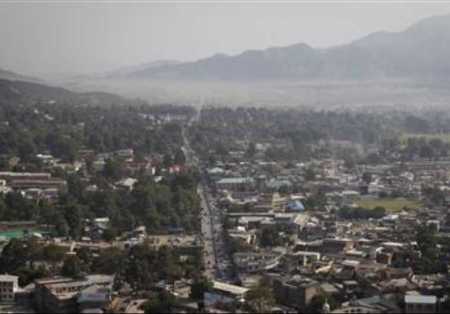
Pakistan viewA general view of houses from a hilltop in Abbottabad, Pakistan. (photo credit:REUTERS)

It is a testament to the precarious state of the world today that in a week that saw North Korea carry out a possible test of a hydrogen bomb, the most frightening statement uttered did not come from Pyongyang.

It came from Pakistan.

Speaking in the military garrison town of Rawalpindi, Pakistani Army chief Gen. Raheel Sharif said that any Iranian threat to Saudi Arabia’s territorial integrity will “wipe Iran off the map.”

Sharif made the statement following his meeting with Saudi Arabia’s defense minister and Deputy Crown Prince Mohammed bin Salman. According to media reports, Salman was the second senior Saudi official to visit Pakistan in the past week amid growing tensions between Iran and the kingdom.

Salman’s trip and Sharif’s nuclear threat make clear that following the US’s all-but-official abandonment of its role as protector of the world’s largest oil producer, the Saudis have cast their lots with nuclear-armed Pakistan.

When last October, the USS Harry Truman exited the Persian Gulf, the move marked the first time since 2007 that the US lacked an aircraft carrier in the region. Nine years ago, the US naval move was not viewed as a major statement of strategic withdrawal, given that back then the US had some one hundred thousand troops in Iraq.

While the USS Truman returned to the Gulf late last month, its return gave little solace to America’s frightened and spurned Arab allies. The Obama administration’s weak-kneed response to Iran’s live-fire exercises on December 26, during which an Iranian Revolutionary Guards vessel fired rockets a mere 1,370 meters from the aircraft carrier as it transited the Straits of Hormuz, signaled that the US is not even willing to make a show of force to deter Iranian aggression.

And so the Saudis have turned to Pakistan.

It would be foolish to view Sharif’s nuclear threat as mere bluster.

By every meaningful measure, Pakistan is little more than a failed state with nuclear weapons. Pakistan appears in every global index of failed or failing states.

To take just a few leading indicators, as spelled out by Basit Mahmood in a report last summer for The Political Domain, barely 1% of Pakistanis pay taxes of any kind. More than half the population lives in abject poverty. The government has no control over most Pakistani territory.

Between 2003 and 2015, more than 58,000 people were killed by terrorism countrywide.

Public health is a disaster. Polio, eradicated throughout much of the world, is now galloping through the country.

Last summer more than 1,300 people died in a heat wave in the supposedly advanced city of Karachi.

These data do not take into account the wholesale slaughter and persecution of minority groups – first and foremost Christians – and the systematic denial of basic human rights and widespread, violent persecution of women and girls.

As for its nuclear arsenal, a 2010 report by the Bulletin of Atomic Scientists estimated that Pakistan possesses between 70 and 90 nuclear warheads. Other credible reports estimate the size of the arsenal at 120.

Pakistan refuses to adopt a no-firststrike policy. In the US and worldwide, it is considered to be the greatest threat to global nuclear security.

Following a Pakistani jihadist assault on the Indian parliament in late 2001, India and Pakistan both deployed forces along their contested border. In the months that followed, due to Pakistani nuclear threats, the prospect of nuclear war was higher than it had ever been.

Cold War nuclear brinksmanship – which reached its high point during the 1962 Cuban missile crisis – paled in comparison.

In 2008, following the Pakistani jihadist assault on Mumbai, India threatened to retaliate against Pakistan.

India’s threats rose as evidence mounted that, as was the case in 2001, the jihadists were tied to Pakistan’s ISI spy service. Once again, rather than clean its own house, Pakistan responded by threatening to launch a nuclear attack against India.

And now, following the unraveling of US-strategic credibility, Pakistan’s aggressive nuclear umbrella is officially coming to the Persian Gulf.

Saudi Arabia’s decision to turn to Pakistan for protection indicates that the second wave of the destruction of the Arab state model is upon us. The notion of Arab states was invented nearly 100 years ago by the British and French at the tail end of World War I. The Sykes-Picot agreement, which partitioned the Arab world into states, rewarded national dominion to the most powerful tribal actors in the various land masses that became the states of the Arab world.

With the possible exception of Egypt, which predated Sykes-Picot, the Arab states formed at the end of World War I were not nation states. Their populations didn’t view themselves as distinct nations. Rather the populations of the Arab states were little more than a hodgepodge of tribes, clans and sectarian and ethnic groupings. In each case, the British and French made their determinations of leadership based on the relative power of the various groups. Those chosen to control these new states were viewed either as the strongest factions within the new borders or as the most loyal allies to the European powers.

The first wave of Arab state collapse began six years ago. It submerged the non-royal regimes, which fell one after the other, like houses of cards.

Syria, Libya, Iraq and Yemen ceased to exist.

Egypt, which in the space of two years experienced both an Islamist revolution and a military counter-revolution, still teeters on the brink of collapse.

Lebanon will likely break apart at the slightest provocation.

Today we are seeing the opening stages of the collapse of the Arab monarchies, and most importantly, of Saudi Arabia.

Most of the international attention to Saudi Arabia’s current threat environment has focused on Iran. The Iranian threat to the Saudis has grown in direct proportion to the Obama administration’s determination to realign the US away from its traditional Sunni allies and towards Iran. The conclusion of the US-led nuclear pact with Tehran has exacerbated Iran’s regional aggression as it no longer fears US retaliation for its threats to the Sunni monarchies.

But Iran is just the most visible of three existential threats now besetting the House of Saud.

The most profound threat to the world’s largest oil power is economic.

The drop in world oil prices has endangered the kingdom.

As David Goldman reported last week in the Asia Times, according to an International Monetary Fund analysis, the collapse in Saudi oil revenues “threatens to exhaust the kingdom’s $700 billion in financial reserves within five years.”

The house of Saud’s hold on power owes to its oil-subsidized economy. As Goldman noted, last month dwindling revenues forced the Saudis to cut subsidies for water, electricity and gasoline.

According to Goldman, Riyadh’s mass execution of 43 long-jailed prisoners at the start of the month was an attempt by the aging royal house to demonstrate its firm control of events. But the very fact the Saudi regime believed it was necessary to stage such a demonstration shows that it is in distress.

The third existential threat the regime now faces is Islamic State. Since 1979, the Saudis have sought to deflect domestic opposition by promoting Wahabist Islam at home and Wahabist jihad beyond its borders.

Now, with Islamic State in control over large swathes of neighboring Iraq, as well as Syria and Libya and threatening the Saudi-supported Sisi regime in Egypt, the Saudi royal family faces the rising threat of blowback. Some analysts argue that given the popular support for jihad in Saudi Arabia, were Islamic State to cross the Saudi border, its forces would be greeted with flowers, not bullets.

If the House of Saud falls, then the Gulf emirates will also be imperiled.

The Egyptian regime, which is bankrolled by the Saudis and its Gulf allies will also be endangered. The Hashemite monarchy in Jordan, which is protected by the US and by Israel, will face unprecedented threats.

The implications of expanding chaos – or worse – in Arabia are not limited to the Middle East. The global economy as well as the security of Europe and the US will be imperiled.

Obviously, the order of the day is for the US security guarantee to Saudi Arabia to be reinforced, mainly through straightforward US action against Iranian naval aggression and ballistic missile development.

Unfortunately, the Obama administration can be depended on to take just the opposite approach. And as a consequence, at least for the next year, the main thing propping up the Gulf monarchies, and with them, the global economy and what passes for global security, is a failed state with an itchy finger on the nuclear trigger.

The Islamic Revolutionary Guards’ troubling transformation

December 8, 2015

The Islamic Revolutionary Guards’ troubling transformation, Front Page MagazineDr. Majid Rafizadeh, December 8, 2015

ip

Despite the guidelines of the nuclear deal and contrary to President Obama’s claim that Iran will temper its foreign policy, Iran’s Supreme Leader, Ayatollah Ali Khamenei, is actively transforming the Islamic Republic’s Revolutionary Guard Corps’ operation. This will have significant impact on regional geopolitics and US national security.

The Islamic Republic used to deploy the Quds Force, which has been designated as a supporter of terrorism by the State Department and is a paramilitary arm of Iran’s Islamic Revolutionary Guards. Its purpose is to engage in irregular warfare operations, extraterritorial interventions, foreign policy missions, and interference in the affairs of other countries. The Quds Force has an estimated 10,000 to 15,000 personnel.

Recent developments clearly indicate that Iranian leaders are transforming the whole Revolutionary Guard Corps (IRGC) into an organization that operates like the Quds Force in order to achieve Iran’s Islamist, ideological, geopolitical and strategic goals, as well as its expansionist objectives.

Unlike the Quds Force, the IRGC has an estimated 100,000-200,000 military personnel. IRGC also funds, arms, trains, and controls other domestic and foreign militia groups such as Iran’s paramilitary Basij militia, which has approximately 90,000 personnel, Hezbollah, with an estimated 20,000-30,000 fighters, as well as several other Shiite militia groups in Iraq, Yemen, and throughout the region.

Iranian news media outlets used to downplay the  IRGC’s role in other nations. But recently, Iran’s official news agency, Fars news, reported that several members of the Revolutionary Guard — including Mostafa Sadrzadeh, Milad Mostafavi, and Brigadier General Reza Khavari, the senior commander of IRGC’s Fatemiyoun Division — were among other fighters who were killed in the northern Syrian city of Aleppo. So far more than 100 IRGC fighters have been killed in Syria.

Iranian media and officials once characterized IRGC involvement in Syria as limited to advisory roles, providing tactical assistance, engaging in strategic planning, and providing intelligence.

But in the last few weeks, reports of public funerals have risen, putting the Quds Force in the public eye.  Even the Supreme Leader has become more public. He tweeted about one of the Iranian fighters who died in Syria, posted a picture of him with the “martyred” family, and pointed out that “Gen. Hamedani devoted the final years of his fruitful life to fighting against anti-Islam Takfiris and fulfilled his martyrdom wish in the same front.”

Iran is increasing the amount of its IRGC fighters in Syria, with a concentration of forces in the critical cities of Allepo, Latakia, and Damascus, to prevent the fall of these strategic locations to the opposition.

While Iranian leaders project the image that they are fighting the Islamic State, Iranian forces are not positioned close to any IS stranglehold. Instead, they appear to be battling Syrian rebel groups, including the Free Syrian Army, in an attempt to force them to retreat, preventing them from capturing more territories in Allepo, Latakia and Damascus.

There are several reasons behind this tactical and IRGC organizational shift. First of all, the policy of the Obama administration is to appease Iran. This is made clear by its weak stance toward Iran. This allows Iran’s interventionist operations to be strengthened, and has empowered and transformed Tehran’s military organizations.

Secondly, The Islamic Republic pushed for Russia’s military assistance and involvement in Syria. The setbacks that Assad’s army and the Quds Force encountered in early 2015, mainly due to rise of the Islamic State and rebel groups advancements, propelled the Iranian Revolutionary Guard Commander Qassem Soleimani to visit Putin and ask for military help.

Nevertheless, Russia’s military superiority and interventions in Latakia did overshadow and bring into question Iran’s influence in Syria. By resorting to the IRGC and public acknowledgments of Iranian fighters operating on the ground in Syria, the Islamic Republic strives to reassert its presence in Syria.

In addition, the increasing Russian airstrikes are coordinated with the rising deployment of IRGC fighters on the ground. This inevitably will lead to a rise in Iranian casualties. Throughout these shifts, Assad has become increasingly dependent on Iran’s IRGC and Russia.

Furthermore, before the rise of the Islamic State, Iran played down its military role in the region because Tehran did not have a legitimate excuse to justify its presence in Syria. Iranian leaders were also worried about a direct confrontation with the West and other regional powers. They attempted to prevent the scuttling of nuclear negotiations. But after the nuclear deal was reached, and after the Islamic State grabbed global headlines, the Islamic Republic’s policy shifted in order to transform the IRGC’s function.

In the pursuit of hegemonic ambitions, Iran seizes any opportunity to reassert its regional supremacy, power and preeminence. By transforming the IRGC into a foreign offensive and interventionist force in other countries, by essentially making IRGC a regional military empire, and by announcing publicly that IRGC troops are present in Syria, Iran is demonstrating its hegemonic, Islamist, and powerful role in the region.

Although some policy analysts and scholars argue that the increasing death toll of Iranian fighters might change the IRGC’s decision to support the Syrian dictator, it is not likely that there will be any change in Iran’s policy of backing Assad. Tehran’s stakes in keeping Assad’s regime in power are high. Iran can afford several more years of assistance for the Syrian army and will continue to provide military, financial, advisory and intelligence support.

In closing, it is clear that the Islamic Republic is transforming the whole ideological and militaristic empire of the IRGC into an interventionist force which will operate in foreign countries for the purpose of fulfilling expansionist and Islamists objectives.

The high price the world could pay for Obama’s Syria, Iraq policy

November 9, 2015

The high price the world could pay for Obama’s Syria, Iraq policy, Center for Security Policy, Fred Fleitz, November 9, 2015

1896925188

As I’ve discussed on Fox News.com before, President Obama’s Syria/Iraq policy is not a policy.  It is a non-policy to do as little as possible about the chaos in these countries so he can hand this mess to the next president.

The Obama administration has announced two major policy shifts in two years to deal with the Iraq/Syria crisis and the threat from ISIS.  Neither exhibited the decisive leadership that the world expects from the United States.  Both were reactive and piecemeal moves to counter multiple humiliations of America.

This has created a growing global perception of American weakness and indecisiveness that will embolden America’s enemies for the remainder of the Obama presidency and possibly beyond.

The first policy shift, announced in a speech by President Obama on September 10, 2014 in response to a series of ISIS beheadings, was supposed to “degrade and ultimately defeat” ISIS.  The president said this effort would include “a systematic campaign of airstrikes” in Iraq and Syria, training and equipping of moderate Syrian rebels, increased support to the Iraqi army and stepped up humanitarian assistance.

The failure of the September 2014 policy shift was obvious soon after it began.  Pinprick airstrikes in Syria did not stop ISIS from making gains on the ground.  In Iraq, ISIS took the city of Ramadi last May despite being outnumbered 10-1 by the Iraqi army.  The Iraqi army and the Iraqi Kurds clamored for more arms while the Obama administration sat on its hands.

Obama’s 2014 policy shift suffered a spectacular collapse this fall when a failed $500 million program to train and equip moderate Syrian rebels was cancelled and Russia intervened in Syria and began conducting airstrikes against anti-Assad rebels, many backed by the United States.  Iran also stepped up its presence in Syria by sending troops who are fighting to prop up the Assad government.

This rapid collapse of President Obama’s Syria/Iraq policy over the last few weeks has caused serious damage to American credibility.  Russian President Putin mocked and ignored President Obama as he sent Russian forces into Syria.  An intelligence sharing agreement was signed between Russia, Syria, Iraq and Iran.  Iraqi lawmakers even called on Russia to conduct airstrikes against ISIS positions in their country.

The Obama administration responded to these setbacks with a new policy shift that looks even worse than the last one.

The president is sending “fewer than 50” special operations troops to help advise an alliance of Syrian Arab rebels.  Given the lack of a clear policy and confusing rules of engagement, such a small deployment will be scoffed at by America’s adversaries and may be at risk of being captured.  On Monday, President Obama made the preposterous claim that this deployment is consistent with his pledge of “no boots on the ground” in Syria and Iraq because these troops will not be on the front lines fighting ISIS.

The New York Times reported on November 2 the Syrian Arab rebel alliance that U.S. special operations troops are supposed to be advising doesn’t yet exist and is dominated by Syrian Kurds who mostly want to carve out their own state and have little interest in fighting to take back Arab territory from ISIS.  Moreover, American military support of the Syrian Kurds worries Turkey because of their close ties with the PKK, a Kurdish terrorist group in Turkey.

The U.S. dropped 50 tons of weapons for the Arab alliance in late September.  Although U.S. officials initially said Syrian Arabs and not Syrian Kurds were the recipients of the airdrop, according to the New York Times, Syrian Kurdish fighters had to retrieve these weapons because the Arab units for which they were intended did not have the logistical capability to move them.

The Obama administration’s latest Iraq/Syria policy shift includes a renewed call for Assad to leave office and a new round of Syrian peace talks.

New U.S. demands that Assad step down make little sense due to increased Russian and Iranian support.

The first round of U.S.-brokered Syrian peace talks were held last week in Vienna.  17 nations participated, including, for the first time, Iran.  The talks produced a vague communique endorsing a future cease-fire, a transitional government, a new constitution and elections in which Syrians would select a new government.  However, it seems unlikely the Assad regime – which was excluded from the talks – or its Russian and Iranian backers will ever support free and fair elections.

Russia and Iran rejected a timeline proposed by U.S. Secretary of State John Kerry at the peace talks under which Assad would step down in four to six months and national elections would be held in 18 months.  This puts a cease-fire out of reach since most Syrian rebels will not agree to a peace process that leaves Assad in power.

The Syria talks were overshadowed by the unwise decision by the Obama administration to include Iran because its presence legitimized its interference in Syria and Iraq.  This also made the talks tumultuous due to open feuding between Iranian and Saudi officials.  More talks are scheduled but Iranian officials have said they may not participate due to their differences with the Saudis.

So far, Mr. Obama has not agreed to Pentagon recommendations to back Iraqi forces with Apache helicopters or to allow U.S. military advisers to serve on the front lines with Iraqi forces.  These proposals are still reportedly under consideration.  Meanwhile, Republican congressmen continue to demand the Obama administration directly arm the Iraqi Kurds who are struggling to battle ISIS with inadequate and obsolete weapons.

America’s friends and allies know President Obama is pursuing a Syria/Iraq non-policy to run out the clock.  They know Mr. Obama’s initiatives are not serious policies but minor gestures that allow the president to be seen as doing something now while also enabling him to claim after he leaves office that he did not put U.S. boots on the ground in Iraq and Syria nor did he get America into another war.

Alliances in the Middle East are already shifting because of President Obama’s Syria/Iraq non-policy.  Russia is filling a power vacuum in the region and is building a new alliance with Iraq, Iran and Syria.  Russia has improved its relations with Egypt and Israel. Although the Saudis are working with the Obama administration to arm moderate Syrian rebel fighters, Riyadh is frustrated that the U.S. is considering compromise solutions which could leave Assad in power.  Saudi Arabia also reportedly is considering providing surface-to-air missiles to the Syrian rebels, a move the U.S. opposes since these missiles could fall into the hands of ISIS.

America’s enemies are certain to try to exploit the run-out-the-clock foreign policy that President Obama apparently plans to pursue for the remainder of his term in office.  This could mean a surge in global provocations, terrorism and violence from North Korea to the South China Sea to Afghanistan and to the Middle East due to the disappearance of American leadership over the next 15 months.

Remember that the weakness and incompetence of President Clinton’s foreign policy emboldened Al Qaeda to step up terrorist attacks against U.S troops and led Osama bin Laden to believe that the September 11, 2001 terrorist attacks would drive the United States from the Middle East.  With Barack Obama dithering away America’s global credibility, a catastrophic terrorist attack like 9/11 could happen again.

ISIS Threatens Obama With ‘New Lesson’ in Beheading Video

October 31, 2015

ISIS Threatens Obama With ‘New Lesson’ in Beheading Video, Newsmax, Sandy Fitzgerald, October 31, 2015

(Video at the link. Has Obama recently decided that the Islamic State is a greater threat than climate change?– DM)

A horrifying new 15-minute video appears to show Islamic State (ISIS) terrorists beheading four captured Kurdish Peshmerga fighters — and delivering a bold warning to President Barack Obama.

The video claims to be the ISIS response to a Delta Force-Kurdish raid in northern Iraq last week that cost American Master Sgt. Joshua Wheeler his life.

“Obama, you have learned a new lesson,” a masked terrorist warns Obama in what sounds like an American accent. “Six of the soldiers of the caliphate faced 400 of your children; they killed and injured them by Allah’s grace.”

The warning was delivered before the man executes one of the prisoners, reports CNN, and the other three prisoners are also beheaded by the video’s end. Arabic text also appears onscreen, translating as “Peshmerga soldiers that Americans came to rescue.”

The video was released online Friday, and earlier in the clip, ISIS claims to show the aftermath of the raid, in which Kurdish, U.S., and Iraqi forces rescue 70 hostages from an ISIS prison in Hawija, located in Kirkuk, a province located in northern Iraq.

CNN reports that those who were set free included 20 of the Iraqi Security Forces, local residents and several ISIS fighters accused of spying. None of the hostages were Kurds.

As of Saturday morning, there had not been an official response issued from the White House on the video or the threat. But in Kurdistan, regional government spokesman Dindar Zebari told CNN that “ISIS respects no form of human rights. Our message to them is that we will finish them.”

But Kurdistan will not kill ISIS prisoners in response, Zebari said.

“We hold 215 ISIS prisoners and we treat them according to international human rights laws,” he said. “We have also freed 85 prisoners who had been suspected of association with ISIS. We do not kill our prisoners.”

The Kurdistan regional government said that more than 20 ISIS fighters were killed in last week’s raid, and six more were captured.

The Kurdish Peshmerga, which protects an autonomous region in northern Iraq, has been fighting against ISIS and its push to take Iraq and Syria and create a caliphate.

ISIS earlier this week said the Delta Force-Kurdish raid, called for by the Kurds to rescue Peshmerga fighters, was a failure.

The man who issued the threat does not appear to be the infamous “Jihadi John,” the English-speaking jihadist who has appeared in several other ISIS beheading videos.

The terrorist, whose real name is believed to be Mohammed Emwazi, is considered to be a priority target after killing American, Western, and Japanese hostages.

Meanwhile, two Syrian activists have also been killed in recent days in the Turkish town of Urfa, and their deaths are being blamed on ISIS.

According to the groups Raqqa is Being Slaughtered Silently and Eye on Homeland, activists Ibrahim Abdul Qadir and Faris Humadi the men who were shot and beheaded. ISIS has not yet claimed responsibility for their deaths.

Qadir and Humadi worked for Eye on Homeland, a Syrian media group that reports on the civil war, and Qadar also was a founding member of the Raqqa group, which posts photos, video, and other information online from the Raqqa province in Syria.

Iran-US Talks Limited to Nuclear Issue: MPs

October 31, 2015

Iran-US Talks Limited to Nuclear Issue: MPs, Tasnim News Agency (Iranian), October 31, 2015

(Please see also, Russia Invites Iran to Join Talks on Syria, with US Approval. — DM)

Iranian guy(1)

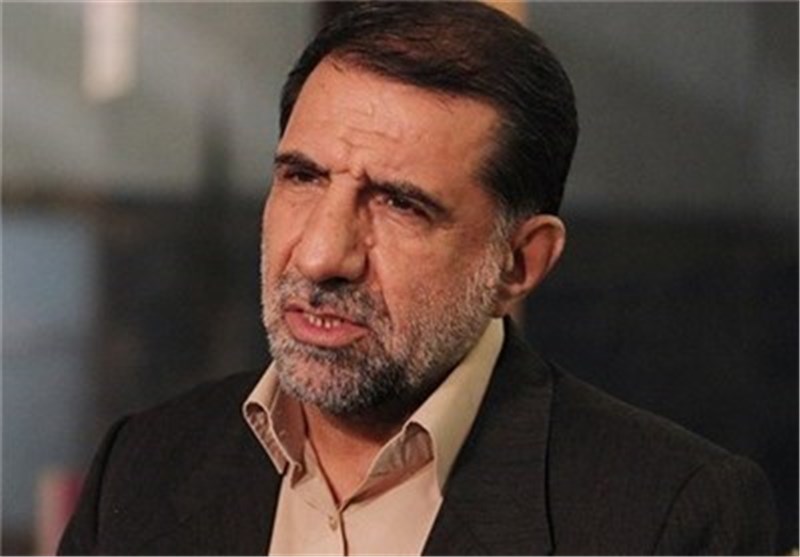
TEHRAN (Tasnim) – A senior Iranian lawmaker dismissed claims about Iran’s bilateral talks with the US over the ongoing crisis in Syria, saying Tehran does not at all negotiate with Washington on any non-nuclear issue.

Esmaeil Kosari, the chairman of the Iranian parliament’s defense commission, rejected media speculations about Iran’s direct talks with the US over the Syrian crisis, saying the country would never negotiate with the US over any topic other than the nuclear issue.

The Iranian negotiating team does not at all hold any direct negotiations with the US outside the nuclear issue, he told the Tasnim News Agency.

Another Iranian lawmaker, Baqer Hosseini, who is a member of the parliament’s National Security and Foreign Policy Commission, also told Tasnim that the foreign ministry officials have no permission to have non-nuclear talks with the US, and that it should not happen.

Given the guidelines of the Supreme Leader of the Islamic Revolution Ayatollah Seyed Ali Khamenei, and considering the previous experiences with Americans, Iran is not supposed to hold talks with the US on any topic other than the nuclear issue, he added.

The remarks came after certain media alleged that Tehran and Washington have conferred on the issue of Syria in their Thursday bilateral talks, previously announced to be focused on the implementation of a recent nuclear deal between Iran and world powers known as Joint Comprehensive Plan of Action (JCPOA).

In a similar reaction to the claim, US State Department Spokesman John Kirby stressed that “the discussions with Iran over Syria and what’s going on in Syria took place inside the multilateral setting.

“The meetings bilaterally were primarily about JCPOA implementation,” he added.

Earlier on October 7, Ayatollah Khamenei categorically rejected the idea of talks between Tehran and Washington in areas other than the nuclear issue.

Negotiating with the US is forbidden because it would bear no fruits, but would do countless harms, Imam Khamenei stressed at the time.