H/t Freedom is just another word
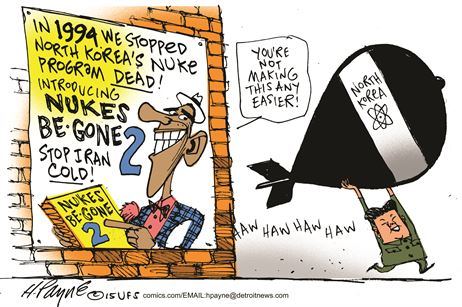

The clock is ticking on ‘Islamophobia,’ Front Page Magazine, Robert Spencer, September 18, 2015
(Here is a photo of the “clock.”
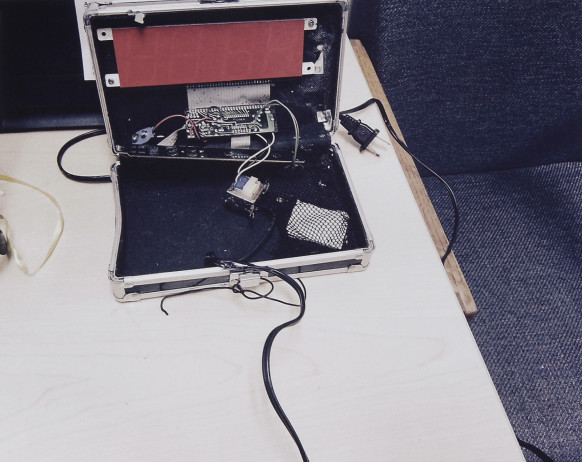 This photo provided by the Irving Police Department shows the homemade clock that Ahmed Mohamed brought to school, Wednesday, Sept.16, 2015, in Irving. (Irving Police via AP)
— DM)

Because of this young man and his clock, Muslim students will henceforth be exempted from scrutiny for bringing suspicious objects to school: to subject them to such scrutiny would be “Islamophobic,” clearly an act of racism against “brown people.”
**************************
Of all the people arrested over the past week, only Ahmed Mohamed of Irving, Texas was invited to the White House as a result. This is because Mohamed is fourteen years old, and a Muslim, and was arrested because of rampant “Islamophobia” in the U.S. – or at least so goes the media narrative that Barack Obama has eagerly abetted by issuing his invitation.
The facts of the case are not in dispute; only the intention behind them is. Mohamed built a working clock over the last weekend, and decided to take it school to show it to an engineering teacher. The problem was that it didn’t look like a conventional clock. Instead, it was a mess of wires and other gadgets mounted in a briefcase, and looking suspiciously like the briefcase bombs that have figured in countless movies and TV shows.
Questioned by teachers and then by police, according to WFAA: “officers said Ahmed was being ‘passive aggressive’ in his answers to their questions, and didn’t have a ‘reasonable answer’ as to what he was doing with the case. Investigators said the student told them that it was just a clock that he was messing around with.” Irving police officer James McLellan explained: “We attempted to question the juvenile about what it was and he would simply only say it was a clock. He didn’t offer any explanation as to what it was for, why he created this device, why he brought it to school.”
Why didn’t young Ahmed simply give McLellan the explanation he offered later, that he was planning to show the clock to an engineering teacher? This remains unexplained, but in part because of his non-cooperation, Ahmed Mohamed was arrested, and soon released without charge. An international firestorm ensued, with Obama inviting Ahmed to the White House, and a great deal of media handwringing over “Islamophobia.” Haroon Moghul wrote in CNN that “Ahmed just looked to some like someone who might want to make bombs. He’s that very menacing brownish color that racists and bigots associate with either everything south of Texas or some country they probably think is called Terroristan. As it happens, he’s of African, specifically Sudanese, descent. He’s got a doubly Muslim name.”
And it’s true: officials at Irving’s MacArthur High School, where Ahmed Mohamed is a student, ridiculously overreacted. They did so, however, not because of “Islamophobia,” but because of the general hysteria over school shootings that has led principals and teachers nationwide to react stupidly to innocuous actions. All over the country, school officials are on constant high alert for weapons — a high alert that has more than once spilled over into outright hysteria, with students being suspended for drawing guns, pointing fingers at people and saying ‘Bang,’ etc. Then there was Josh Welch, the kid who got in trouble for chewing his pop-tart into the shape of a gun. Josh Welch never got invited to the White House.
Josh Welch and the other children who have fallen victim to this hysteria didn’t run afoul of school administrators because they were Muslims — none of them were. They found themselves in hot water because administrators are so very afraid that their school will be the site of the next shooting that they leap on and magnify the smallest matters. Would Ahmed Mohamed’s clock have been suspicious if he were a white Methodist, and would he have been arrested anyway? Without any doubt. But his arrest has become an opportunity for the purveyors of the Muslims-as-victims myth, among whom Haroon Moghul is a leading propagandist, to push hard on their spurious and insidious claim that Muslims are suffering from unwarranted scrutiny, including counter-terror programs, which should accordingly be relaxed or scrapped altogether.
That will be the result of the apotheosis of Ahmed Mohamed to Exalted Victim Status. Ahmed Mohamed will most likely be the Rosa Parks of the counter-counter-terror movement. Because of this young man and his clock, Muslim students will henceforth be exempted from scrutiny for bringing suspicious objects to school: to subject them to such scrutiny would be “Islamophobic,” clearly an act of racism against “brown people.”
Because of this incident, the clock is now ticking on “Islamophobia” – that is, on reasonable scrutiny of Muslims behaving suspiciously. Such scrutiny is on its way out. And so it could happen some day: a young Muslim just as intelligent and enterprising as Ahmed Mohamed will spend a weekend building a bomb instead of a clock, and carry it with him to school on Monday morning. School officials, if they see it, will not dare utter a word of protest: they will have learned the lesson of Ahmed Mohamed, that young “brown” Muslim boys with suspicious objects are not to be questioned unless the questioner wants to be excoriated in the media and lose his job.
When that bomb goes off, will anyone recall the silly incident in the late summer of 2015 that paved the way for it, and how the President of the United States himself made it all possible? Or will they be too preoccupied with the bloody carnage to remember?
These Democrats all voted for the Iran deal, and even they know it’s terrible.
The nuclear option to stop the nuclear Iran? Power Line,
No, I’m not talking about using nuclear weapons to stop Iran from getting nuclear weapons, though I have several times over the last few years heard from very knowledgeable and well-placed people in the defense and foreign policy community that if it comes down to Israel having to defend itself alone against the imminent deployment of Iranian nukes they might have to resort to using their nuclear capacities to stop it, because they lack our conventional capacity to penetrate Iran’s hardened nuclear facilities. It would be an awful moment for the world as well as Israel itself, but it serves as a prompt to ponder the consequences of Obama’s obvious decision to take U.S. military action off the table.
Rather, I’m speaking of using the so-called “nuclear option” in the Senate to abolish the filibuster for a vote on the disapproval of this terrible agreement, which right now Senate Democrats will block with a filibuster so they don’t have to go on record with a vote, and so Obama won’t have to cast an unpopular veto. With polls showing that public support for the Iran agreement is as low as 21 percent, Senate Republicans can quote Harry Reid’s arguments for invoking the “nuclear option” for confirming judges last session: surely having the Senate cast a vote on this treaty is way more important than confirming judges? Make Obama veto the bill disapproving the deal, and make Senate Democrats vote against overriding the veto.
If the Senate GOP took this step, it would go a long way toward showing the conservative grassroots that they can indeed stand up to Obama and the Democrats on the Hill. Plus they’d be reasserting their constitutional duty to render “advice and consent” on treaties, even if Obama has evaded this constitutional requirement by calling it an “executive agreement.”
To bring America back we need to break some stuff, Dan Miller’s Blog, September 14, 2015
(The article is not immediately pertinent to Israel because the current President will continue to be Obama and his tame Congress will continue to go along to get along. However, the 2016 U.S. presidential elections are very pertinent to Israel’s future, so I am taking the liberty of posting it here. For those not familiar with the acronym “RINO,” it is a term of disparagement referring to Republicans who would probably be happier if they were Democrats. Needless to say, the views expressed in the article are mine and do not necessarily reflect those of Warsclerotic or its other editors. — DM)
In December of 2011, I wrote an article titled The U.S. Constitution and Civil War. A remark by Cokie Roberts — that we need to ignore parts of the Constitution to save the rest — inspired my article. To bring America back, we don’t need to, nor should we, ignore or otherwise break the Constitution; it is America’s foundation. We do need to destroy and rebuild much of the mess that has been wrongly erected atop that foundation.

Who should be our next President?
Daniel Greenfield, in an article titled This is the America We Live in Now, wrote,
We are not this culture. We are not our media. We are not our politicians. We are better than that.
We must win, but we must also remember what it is we hope to win. If we forget that, we lose. If we forget that, we will embrace dead end policies that cannot restore hope or bring victory.
What we have now is not a movement because we have not defined what it is we hope to win. We have built reactive movements to stave off despair. We must do better than that. We must not settle for striving to restore some idealized lost world. Instead we must dream big. We must think of the nation we want and of the civilization we want to live in and what it will take to build it. [Emphasis added.]
Our enemies have set out big goals. We must set out bigger ones. We must become more than conservatives. If we remain conservatives, then all we will have is the America we live in now. And even if our children and grandchildren become conservatives, that is the culture and nation they will fight to conserve. We must become revolutionaries. [Emphasis added.]
If we don’t, perhaps we should surrender and petition to join the European Union. Our unelected and unaccountable bureaucracy could merge with that of the EU and our Congress could merge with the impotent EU Parliament.
Joining the EU would not fit well with the U.S. Constitution, but so what? Obama and “pragmatic” judges have twisted and distorted it. They pay but scant attention to its clear language or that of the statutes they misconstrue. Most in the current crop of Republicans in the Congress have been willing to surrender whenever Obama blows His dog whistle and run to Him with hopes that He may offer them small bones.
Our once great nation is itself broken, but not necessarily beyond repair. It needs to be fixed before it gets to the point where it can’t be, and we are rapidly approaching that point. Our Constitution must be revived, and as revived survive, if America herself is to survive. America can’t be fixed with fresh paint and new floral arrangements featuring a “new” Bush.
When Ronald Reagan was first mentioned as a possible Republican presidential candidate, my first thought was that we don’t need a washed-up grade B movie actor/former Democrat leftist as President. I was wrong. He became the best President America has seen in my thus far seventy-four years on Earth. We need another Reagan, but who should it be? There are only a few good candidates and the Republican establishment opposes, with such insipid vigor as it can muster, all of them. It wants Jeb Bush, or in any event a Bush clone, to march stolidly toward a new Amerika.
Donald Trump
The mainstream media cannot understand why Trump continues to lead in the polls. Neither can the RINOs. Trump can’t possibly continue to lead; why, he is not even a politician! On September 12th, Sharyl Attkisson posted an article titled Donald’s Duck: 7 Reasons Why Nothing Sticks to Teflon Trump. In it, she explored seven of the reasons why it is claimed that Trump “can’t win.”
1. Trump doesn’t know the names of terror leaders.
2. Trump doesn’t have a plan.
3. Trump isn’t conservative enough.
4. Trump has flip-flopped.
5. Trump personally insults people.
6. Trump is against immigrants.
7. Trump won’t apologize.
Please read her analysis pointing out the fallacies behind these talking points as seen by Trump supporters; I think they are correct.
On September 13th Sundance, writing at The Last Refuge, posted an article titled The GOPe Roadmap, Status Update and The Event Horizon… There, he pointed out the RINOs’ multifaceted plan to defeat Trump and to install Jeb Bush as “our” next President. Jeb wants to lead us to more of the same namby-pamby nonsense that gave us Obama, the “great healer.” I don’t want to go there and want to stay as far away from there as possible. Please read Sundance’s article in its entirety. It’s excellent and so is this sequel about the upcoming CNN debate and the night of the long knives.
What will Trump do if elected?
I don’t know what Trump will do if elected President. He probably can’t make things worse, will try very hard to make them better and may well succeed. Please watch “lunatic” Trump respond to questions during this interview.
The only thing I am confident that the RINO candidates would do is to continue America’s collective swirl down the toilet. I very much like Ted Cruz (he would also be an excellent Secretary of State) and Ben Carson (Secretary of Health and Human Services?). Carina Fiorina? I like her thus far but need to learn more.
Trump has captured the public attention and, in many cases, its admiration and trust. Apparently many of his supporters feel as I do and are “mad as hell and don’t want to take it anymore.”
Please compare and contrast these Obama and Hillary campaign videos:
Obama won His last two elections by campaigning for change “we” can believe in. Trump has thus far campaigned for change those who think America was great before Obama got to mucking around with her do believe in and want to have implemented.
Much is yet unknown about where and how Trump will lead the nation as her President. One thing seems clear, at least to me: he will discard that which is broken and replace it with what we need. So long as he does not muck around with the Constitution (as Obama has done with abandon), I think we should give him an opportunity to try.


The Shady Family Behind America’s Iran Lobby, Daily Beast, Alex Shirazi, September 15, 2015
(The National Iranian American Council is the voice of the Iranian regime. It found great favor with the Obama administration while becoming a significant part of it. — DM)
How one enterprising Iranian expat family and its allies successfully pushed for U.S.-Iran rapprochement—and now stands to make a fortune from sanctions relief.
When the world’s major powers struck a deal over Iran’s nuclear program in Vienna in July, it represented a victory not just for the Islamic Republic, which has now been granted international legitimacy as a nuclear threshold state, but also for a small but increasingly influential lobby in America, one which has long sought rapprochement between Washington and Tehran and now seeks to leverage a successfully concluded nuclear deal as a means to that end.
This Iran lobby, publicly represented by the National Iranian American Council (NIAC), has become a staunch institutional ally of the White House selling the Joint Comprehensive Plan of Action, as the nuclear deal is known. But while NIAC has done the heavy-lifting—the ad-buying, the leafleting, and Congressional meet-and-greets, all designed to sell lawmakers on the Iran deal—its political efforts also underwrite the economic interests of one very well connected but low-profile Iranian family, the Namazis, who played a key role as intellectual architects of NIAC.
Little known to the American press, the Namazis have rarely acted as spokespersons for their own cause. In fact, attempts to reach various members of the family for comment on this story were met with increasing levels of hostility and threats of legal action. Yet in many ways, the Namazi clan is the perfect embodiment of Iranian power politics, at least as it has played out among the Iranian diaspora. Those close to the Namazis say that they are savvy financial operators rather than ideologues, eager to do business with the West and enjoy all of its political freedoms and perquisites, and yet ever mindful that they’re straddling the delicate fault-line between cashing in with a theocratic dictatorship and being frozen out entirely. They have stayed on the right side of international law if not always on the right side of prevailing political interests in the Islamic Republic.
Nor did they begin their rise to prominence as supporters of the Islamic Revolution. Mohammad Bagher Namazi, also known as Baquer Namazi, is the patriarch of the family and formerly the governor under the Shah of the oil-rich Iranian province of Khuzestan. Despite his relationship with the ancien régime, Baquer Namazi was not persecuted by the Khomeinists after they seized power in 1979, and he and his family were allowed to emigrate in 1983 to the United States. There he raised two well-educated and Americanized sons, Babak and Siamak, while his niece, Pari Namazi, married Bijan Khajehpour, another Iranian expatriate.
The 1980s were the years of the fiery-eyed Ayatollah Khomeini and Iran’s ferocious war with Saddam Hussein’s Iraq. Iranian-backed terrorism in Lebanon included the bombing of the U.S. embassy and the Marine barracks there, while Iranian “hit teams” hunted down and murdered opponents of the regime in exile. Iran’s Hezbollah clients kidnapped Europeans and Americans, and in the Irangate scandal the Reagan administration was exposed trading weapons systems for hostages. Afterward it effectively went to war against Iran on the waters of the Gulf, and in the process blew an Iranian civilian airliner out of the sky. There seemed no possibility of improved relations between Washington and the theocracy in Tehran. But after the Iran-Iraq war ended in 1988 and Khomeini died in 1989, new possibilities for rapprochement—and huge deals for international companies—started to emerge.
***
Doing serious business in Iran has always required some measure of political protection. The Islamic Republic is a web of rival economic interests. Broadly speaking, the three largest are those tied through various semi-clandestine fronts to Khomeini’s successor as “supreme leader,” Ayatollah Ali Khamenei; those linked to the regime’s praetorian Islamic Revolutionary Guards Corps (IRGC); and those associated with Iran’s president, who may hold the most conspicuous position in the country’s political life, but whose official powers are limited. Typically, to get things moving in the mire of Iran’s notorious bureaucracy, businesses have to have connections in one or more of these groups.
From 1989 to 1997, the president of Iran was Akbar Hashemi Rafsanjani, known as “the Shark,” an Iranian reference to a beardless man. He was also famous for getting rid of his rivals and political competitors one by one, like a great white shark. In addition, Rafsanjani had a reputation for corruption and taking advantage of power.
In this environment of increased willingness to do business with the West, the stage was set for a return of the Namazis. In 1993, Pari Namazi and her husband Bijan Khajehpour founded a company in Tehran called Atieh Bahar Consulting (AB). It offered a range of legal and industrial services to foreign enterprises, most importantly the access it provided to the regime, and the advice it dispensed on how best to navigate the vagaries of the regime’s entrenched factions and competitive interests.
At the time, it looked like Iran might even be opening up to big American-based oil companies, then unencumbered by any sanctions regime on the Islamic Republic. But after an announcement in 1995 that Iran had given Conoco a contract to develop an offshore gas field, and an uproar in the U.S. Congress, the Clinton administration imposed unilateral sanctions and barred U.S. companies from doing business there.
Eventually Siamak Namazi, who had worked from 1994 to 1996 at Iran’s Ministry of Housing and Urban Planning, also joined AB. So did his brother Babak, a lawyer. And the AB client list just kept growing. Plenty of companies based outside the U.S. were more than happy to do business in Iran once they had the right connections. As Siamak eventually told Lebanon’s Daily Star newspaper, “If oil companies want to operate in the Iranian market they need to link up with a local partner, and this is where we step in and help them to find the right partner.”
With the surprise election of the “reformist” presidential candidate Mohammad Khatami in 1997, political and economic enthusiasm for better Iranian relations with the West grew dramatically. Meanwhile the “pragmatist” Rafsanjani took other powerful positions in the regime. In those optimistic times, AB’s non-American clients—free from any sanctions regime—included the German engineering giant Siemens; major oil companies BP, Statoil, and Shell; car companies Toyota, BMW, Daimler, Chrysler, and Honda; telecom giants MTN, Nokia, Alcatel; and international banks such as HSBC.
But the political winds were shifting. A nuclear cloud darkened the horizon, and the United States, slowly but surely, found ways to broaden the sanctions against Iran, forcing many international companies to dial back on their investments there or pull out altogether.
The Namazis, of course, had every reason to want to bring them back.
***
Atieh Bahar Consultancy had aligned itself with Rafsanjani’s faction early on by forging an especially close relationship with Rafsanjani’s influential son, Mehdi.
From 1993 to 2005, Mehdi Hashemi was employed at the National Iranian Oil Company (NIOC), the state-owned entity that controls almost all oil and gas production in a country that has the world’s largest gas reserves and third-largest oil reserves.
But Mehdi Hashemi brought some serious problems to the relationship. In 2004, Norway’s Statoil was caught paying bribes to a prominent Iranian official using the company Horton Investment, an entity run by a close Mehdi Hashemi confidant as intermediary. Hashemi would later be imprisoned for his complicity in the bribery, along with two other charges, and ordered to pay a total of $10.4 million; $5.2 million of the bribe money, plus an additional $5.2 million in fines. Abbas Yazdanpanah Yazdi, meanwhile, was allegedly kidnapped in the UAE in 2013 and has since “disappeared.”
The scandal came just as the elder Rafsanjani was plotting a presidential comeback in the 2005 elections, and it gave substance to the rumors of corruption that always swirled around him and his son. (Mehdi Hashemi denied the Statoil bribery allegation and said it was designed to hurt his father’s reputation.) He managed to make it into the second and final round, but finally lost to Mahmoud Ahmadinejad, who staked out a position as a “clean” populist who would give money to the poor and who didn’t give a damn about foreign business interests.
After Ahmadinejad came into office, the nuclear cloud grew much darker.
In 2003, the United States had led the invasion and occupation of neighboring Iraq, eliminating Iran’s old enemy Saddam Hussein in order to be sure that he had no weapons of mass destruction. And, as it turned out, by then he did not. A few months earlier in 2002, however, Israeli intelligence turned up evidence that Iran, a signatory of the Nuclear Non-Proliferation Treaty, had developed a secret uranium enrichment operation at a site called Natanz. (The first public airing of this intelligence came from a militant Iranian dissident group that had been nurtured by Saddam Hussein.)
This did not distract from the march to war with Iraq, but a few months later Iran was declared in material breach of the Treaty on the Non-Proliferation of Nuclear Weapons (NPT), and, under threat of heightened sanctions, a process of negotiations began between Iran and the European Union to limit the nascent enrichment program. At the time Iran had only 160 of the centrifuges needed to enrich uranium, and thousands would be required to get it to the point where it could produce fissile material for a bomb. U.S. intelligence estimates eventually concluded “with high confidence” that the Iranians also had a secret nuclear weapons program, in addition to enrichment, but shut it down in the fall of 2003.
When Ahmadinejad took over in 2005, he ditched all pretense of willingness to compromise over Iran’s “peaceful” nuclear program, an intransigence that led Western countries to tighten sanctions, making foreign investment ever more difficult. And what was worse for AB and the Namazis, Ahmadinejad went after his political rivals, particularly the Rafsanjani faction, with a vengeance. Mehdi Hashemi, naturally, was a prominent target. Ahmadinejad barred him from conducting any business in relation to Iran’s oil and gas sector. Ten years later, the courts actually sentenced him to a collective 25 years—and 50 lashes—in Tehran’s notorious Evin prison for all three charges against him including the Statoil corruption case. In reality, he will only serve 10 years.
AB needed to shore up some new alliances, and bide its time. Co-founder Bijan Khajehpour, worked for a leading Iranian politician named Hassan Rouhani who had served under the Khatami government as Iran’s nuclear negotiator. Rouhani also was the president of a think tank called the Center for Strategic Research (CSR). But relations with Iran in the middle of the last decade were almost as bleak as they had been after the 1979 hostage crisis and the grim terror and counter-terror campaigns of the 1980s.
By 2006, Iran, was in effect at war with the U.S. in Iraq. The Revolutionary Guards’ expeditionary Quds Force led by Qasem Soleimani had been training, financing, and arming Shia militias killing U.S. soldiers.
Moreover, the West was growing more alarmed about Iran’s nuclear program, which it seemed powerless to stop. Ahmadinejad had declared the resumption of uranium enrichment “irreversible” just as the country’s nuclear scientists had mastered the fuel cycle. He’d appointed conservative Ali Larijani as chief negotiator with the European Union (before Iran withdrew from talks altogether), and he said he’d “wipe [his] nose” on international sanctions.
A war with Iran, most likely started by Israel with the United States drawn in, began to seem possible, then probable, and almost inevitable. The International Atomic Energy Agency referred Iran to the UN Security Council for action forcing it to curtail its nuclear activities.
Out of this dark morass, the Namazis struggled to keep alive hopes of rapprochement and trade, while avoiding a war at all costs. And by then they had in place the architecture for convincing a war-weary U.S. policy establishment that not only was avoiding a military confrontation with Iran possible, but the Islamic Republic was really just a friend America had yet to make.
***
In November 1999, when Khatami was still president and, Siamak Namazi got together with a Swedish-Iranian expat named Trita Parsi at a conference in Cyprus. The conference, titled, “Dialogue and Action Between the People of Iran and America,” was convened jointly by the Centre for World Dialogue, a Cypriot non-governmental organization, and by Hamyaran, an Iranian non-governmental resource center for other NGOs, which was chaired by Mohammad Bagher Namazi, the family patriarch. Namazi fils and Parsi there presented an influential white paper (PDF), “Iran-Americans: The bridge between two nations,” which called for three steps to ameliorate U.S.-Iranian relations in advance of reconciliation:
1. Hold “seminars in lobbying for Iranian-American youth and intern opportunities in Washington DC.”
2. Increase “awareness amongst Iranian-Americans and Americans about the effects of sanctions, both at home and in Iran.”
3. End “the taboo of working for a new approach on Iran”—i.e., end the then two-decade-old U.S. policy of containment.
Namazi and Parsi wrote that “the fear of coming across as a lackey of the Iranian regime is still prohibiting many Iranian Americans from fully engaging in the debate on the future of Iran-U.S. relations.” The way around this, they submitted, was to mobilize the Iranian-American community and enlist “Americans of non-Iranian background” to lessen the adversarial posture of both nations.
The white paper led to the creation two years later, in 2001, of NIAC, a Washington, D.C.-based organization which Parsi founded and currently heads. During the formative period preceding NIAC’s launch, Parsi had sought advice and guidance from numerous sources, including and especially Mohammad Bagher, as was disclosed in documents (PDF) obtained during a defamation law suit brought by NIAC and Parsi against one of their most outspoken critics.
Parsi was extremely well-placed to front the Iran lobby. He had obtained a doctorate at Johns Hopkins on a subject intimately tied to the lobby’s central thesis—the relationship between Israel and Iran and how the former hindered the latter’s acceptance in the U.S. He even studied under Francis Fukuyama, a onetime neoconservative policy intellectual who abandoned his ideological comrades when the Iraq war went south. Finally, Parsi had gained valuable political experience on the Hill by working for Republican Congressman Bob Ney, a connection he has not included in his curriculum vitae and official website. (Ney went to jail in 2007 for accepting bribes from mega-lobbyist Jack Abramoff’s Native American casino clients.)
While serving as president of NIAC, Parsi also wrote intelligence briefings as an “affiliate analyst in Washington, D.C.” for AB, focusing on such topics as whether or not the American Israel Public Affairs Committee (AIPAC) would revive its anti-Iran campaigning on the eve of the Iraq war, or on efforts by the Mujahideen-e Khalq (MeK), the militant Iranian opposition group that exposed Natanz in 2002 would get itself de-listed as a terrorist entity by the U.S. State Department. Parsi was paid for his work for the consultancy, as disclosed by an email sent from Bijan Khajehpour to him, dated Sept. 22, 2002, an employment that Parsi did not mention when fulsomely praising Khajehpour in the Huffington Post as an ideal Iranian businessman.
Although it has only 5,000 dues-paying members, a mere one percent of the estimated 470,000 Iranian-Americans, NIAC’s network of activists and event attendees is said to extend into the tens of thousands. In June of this year, as the Iran deal looked likely, NIAC inaugurated an official “lobbying” arm called NIAC Action registered with the Internal Revenue Service as a 501(c)(4) organization, but for years, internally, the group has described its activities (PDF) as lobbying. NIAC Action is explicitly meant to counter the influence of AIPAC, which has spent millions to block the Iran deal’s passage in Congress by securing a veto-proof bipartisan majority of senators opposed to it—an effort that now appears close to failure.
Since its founding, NIAC has also proved a useful finishing school for rapprochement-minded Iranian-Americans, many of whom have either come from positions in U.S. government or graduated into them. Its current research director, for instance, is Reza Marashi, an Iranian-American dual national, who worked for Atieh Bahar until 2006 when he landed a job at the U.S. government’s Institute for National Strategic Studies at the National Defense University, which acts as a research center for the Pentagon. Marashi then went to work for the Office of Iranian Affairs at the U.S. State Department as a desk officer overseeing Iran democracy and human rights programs.
Marashi is very outspoken on social media against any critics of NIAC’s agenda. Along with the rest of his organization’s staff, he has accused Jewish opponents of the Iran deal of being dual loyalists. “Shame on Chuck Schumer for putting #Israel’s interests ahead of America’s interests,” he tweeted after the New York senator’s decision to come out as the senior-most Democrat against the deal.
Given the obvious connection between NIAC and the Namazi family, Marashi makes no mention of his job at AB in his biography on NIAC’s official website. Nor did he respond to The Daily Beast’s repeated requests for comment on this story.
Perhaps NIAC’s most accomplished alum is Sahar Nowrouzzadeh, who is now National Security Council Director for Iran in the Obama administration and therefore the top U.S. official for Iran policy, bringing together the various departments of government working on U.S. strategy toward the country. She is also, after the White House principals, one of the leading advisors to President Obama on Iran. No doubt owing to the sensitivity (and influence) of her government role, Nowrouzzadeh has maintained a low profile, but her work at NIAC is publicly available. She drafted one of the organization’s annual reports for 2002-2003 (PDF) and was referred to by Dokhi Fassihian, then executive director, as a “staff member” (DOC). The Obama administration insists that Nowrouzzadeh was only ever an intern with NIAC, and Nowrouzzadeh does not seem eager to play-up her affiliation with the group. According to her LinkedIn profile, she has worked at the State Department and the Department of Defense. The profile doesn’t mention NIAC at all.
Such inconspicuousness stands in notable contrast to how other Obama administration officials who emerged NIAC’s nemesis—the pro-Israel lobbying establishment—tend to invoke their past credentials as a means of establishing their diplomatic bona fides.
But then, Israel is a longtime and “sacrosanct” American ally, as Obama has stated. Iran, on the other hand, has been a pariah state where crowds are encouraged to chant “Death to America.”
On NIAC’s website, in its mailings and in media interviews, NIAC rarely criticizes the IRGC or the Quds Force, a U.S.-designated terrorist entity. Parsi characterizes the Iranian regime, of which the Quds Force is the main military enforcer, as a U.S. ally in the war against the so-called Islamic State, or ISIS. But neither he nor NIAC has discussed the Quds Force’s military role in Syria where it plays a key role in targeting U.S.-backed rebels deemed the best bulwark against both Assad and the so-called Islamic State widely known as ISIS and, more broadly, organizing the savage defense of the Assad dynasty, for which several of the Quds Force’s personnel have been sanctioned by the U.S. government.
NIAC publicly opposes designating the IRGC as a whole as a terrorist entity because doing so would only conform to part of a pattern of failed sanctions, “further entrenching U.S.-Iran relations in a paradigm of enmity.”
Instead, campaigning against any U.S. sanctions on Iran has been the mainstay of NIAC’s endeavors, and this held even when the Obama administration thought sanctions the most effective way to bring the Iranians back to the negotiating table. NIAC has maintained (PDF) that sanctions have cost the U.S. economy billions of dollars and hundreds of thousands of job opportunities.
Parsi’s activism won him praise from the Iranian regime during the very dark days a decade ago. Former ambassador to the United Nations Javad Zarif, who is now the heavily spotlighted foreign minister, wrote to Parsi in 2006, “Your help is always welcome,” and, after catching part of a Parsi interview on the BBC the same year, Zarif called his performance “Great.”
In March 2006 (at the height of the covert Iranian war with the U.S. in Iraq), Parsi told a colleague not to worry about a trip to Tehran, “NIAC has a good name in Iran and your association with it will not harm you.” When the colleague was briefly questioned by the regime, then released, he reported back (PDF) to Parsi that he’d been told the reason he was let go was “that they knew NIAC had never done anything seriously bad against the Islamic Republic.”
***
In 2009, Sen. Mark Kirk called NIAC Iranian “Regime Sympathizers” (PDF), stating “they came to Capitol Hill urging members of Congress to cut off U.S. funding for democracy programs in Iran.” NIAC had sought to eliminate the Bush administration’s “Democracy Fund” for programs in Iran, which it saw as nothing more than a vehicle for attempted regime change. NIAC responded to Kirk by calling the $75 million fund a “brainchild” of the Bush administration’s “disastrous Middle East policy,” which aimed to finance Iranian NGOs seeking overthrow the government of Iran.
And NIAC does some name-calling of its own, calling organizations it doesn’t like (i.e., those too critical of the Islamic Republic) “neocon puppets,” and warmongers. Indeed, it has also tried to define the parameters of acceptable Iranian civil society groups (i.e., ones that never really undermined the regime) by partnership with Hamyaran, described by NIAC as an “NGO umbrella organization” (PDF). In reality, however, it was conceived as more of a governmental non-governmental organization and launched by those close to Iranian President Mohammad Khatami—its board member was Hossein Malek Afzali, a deputy minister in Khatami’s government). By NIAC’s own admission, the organizatiom (PDF) “operates independently, but with the implicit permission of the Iranian government.” (Emphasis added.) Hamyaran’s board of directors was also once chaired by Namazi paterfamilias Mohammed Bagher.
Hamyaran obtained support from the congressionally funded National Endowment for Democracy—as did NIAC, which received Endowment funding in 2002, 2005, and 2006 in the collective amount of close to $200,000. NIACdescribed Hamyaran to the Endowment in 2004 as its “main partner in Iran.” Perhaps unsurprisingly, among those civil society groups selected for NIAC and Hamyaran’s “Digital Film Production Workshop Report,” a training program for Iranian activists to learn how to use digital media, were those described as having been “contracted by the Iranian government” or “worked closely with the Iranian government.”
As for NIAC, Carl Gershman, the president of the National Endowment for Democracy, told The Daily Beast, “We’re not supporting NIAC now and we have nothing to do with them.”
“Back then there were people arguing, ‘Try to get into Iran’ and we thought this was a way forward,” Gershman said. “We weren’t aware when these grants were made that NIAC were presenting themselves as a lobby. We didn’t know that. Our effort was to work with emerging space in Iran. We were trying something that might be a way to help people on the inside. But that quickly became unworkable; the grant didn’t work. Then NIAC showed itself as a lobby organization, so we have nothing to do with them anymore. Not every grant works out the way you want it to.” Asked if that meant that NED regretted working with NIAC , Gershman answered: “Yes, I think that’s true.”
At the same time it was taking U.S. taxpayer money, NIAC wanted to end U.S. government support for NGOs which categorically opposed the Islamic Republic. In April 2007, NIAC held a strategy meeting with international human rights groups including Amnesty International and Human Rights Watch (HRW). The HRW representative was himself a former NIAC board member, Hadi Ghaemi, who had (PDF) worked for NIAC in Iran, and then served HRW from 2004 to 2008. During the meeting, according to an email sent by Parsi afterward, Ghaemi “noted that certain groups being funded by the state dept [sic] are covers for regime change and that we need to be careful. Many groups misrepresent themselves as wanting to improve human rights and democracy in Iran.” Ghaemi did not specify which groups. When The Daily Beast contacted Ghaemi via email, he replied that he could not confirm the meeting in question. He was unavailable for further comment after The Daily Beast showed him Parsi’s email asking if that refreshed his memory.
***
In 2008, NIAC made a strategic mistake, waging a not-so-quiet campaign against the Voice of America’s Persian service, a U.S. government-funded broadcast medium. Both NIAC and the Namazis were aggravated by the frequent appearances of Hassan Dai, an Arizona-based Iranian exile, who lambasted NIAC as a regime mouthpiece.
Siamak Namazi (PDF) called for Dai to be banned from VOA in February 2007. NIAC chief lobbyist Emily Blout petitioned (PDF) Congress in September 2007 for an “independent review” of VOA Persian. After Dai appeared again on VOA in 2009, Parsi (PDF) remarked that its hosting of a NIAC critic “won’t change until the VOA leadership changes.” He was right. Today the editor-in-chief of VOA Persian is Mohammad Manzarpour, a former employee of Atieh Bahar Consultancy.
But serious damage to NIAC’s reputation was done, and much of it was self-inflicted. In 2008, Parsi and NIAC had brought a defamation suit against Hassan Dai, alleging that he had made “numerous false and defamatory statements that characterize plaintiffs as agents of the Iranian government.” Parsi and NIAC lost the case in 2012, with the judge rejecting their self-portrayal as critics of Tehran. “That Parsi occasionally made statements reflecting a balanced, shared blame approach is not inconsistent with the idea that he was first and foremost an advocate for the regime,” U.S. District Court Judge John D. Bates (PDF) wrote in his judgment. “After all, any moderately intelligent agent for the Iranian regime would not want to be seen as unremittingly pro-regime, given the regime’s reputation in the United States.”
Nor did NIAC do itself any favors in during the trial and on appeal. Three circuit judges of the U.S. Court of Appeals found its behavior (PDF) “dilatory, dishonest, and intransigent” and accused it of engaging in a “disturbing pattern of delay and intransigence. Seemingly at every turn, NIAC and Parsi deferred producing relevant documents, withheld them, or denied their existence altogether. Even worse, the Appellants also misrepresented to the District Court that they did not possess key documents [Dai] sought. Most troublingly, they flouted multiple court orders… A court without the authority to sanction conduct that so plainly abuses the judicial process cannot function.”
Unsurprisingly, then, NIAC and Parsi lost their appeal and were ordered to pay $183,480.09 in monetary sanctions in February 2015.
“NIAC and Parsi filed the lawsuit to break me under the financial burdens and silence other critics but they totally failed,” Dai told The Daily Beast. “The lawsuit, which lasted nearly seven years, showed the deceptive character of an organization that lobbies in favor of the mullahs’ theocratic regime but represents itself as a defender of peace.”
***
The fortunes of the entire Namazi clan waned after 2009, when a popular uprising against Ahmadinejad’s fraudulent re-election was met with murder, mass arrests, and torture.
Bijan Khajehpour was imprisoned because of the struggle raging in the regime between the Supreme Leader and the IRGC on one side, and the Rafsanjani camp on the other. And while praising the Obama administration for not speaking up on behalf of those who resisted the stealing of the 2009 election, the so-called Green Movement, on the grounds that doing so would have only given the regime an excuse to murder and torture more people, Parsi rushed to the defense of his friend and former employer Khajehpour, “who neither participated in the protests nor had any involvement with the opposition” but was instead a “self-made man” and “top-notch consultant drawing the attention of multinational and local firms to investment opportunities in the country.”
In The Huffington Post Parsi wrote as an acquaintance or friend of Khajehpour, nowhere disclosing his past business relationship writing reports for Atieh Bahar Consulting.
Khajehpour subsequently was released from prison and he and his wife, Pari Namazi, moved to Vienna.
Siamak Namazi also faced harassment after the 2009 election and the subsequent unrest. He left Iran for the United Arab Emirates and is currently the head of Strategic Planning at the UAE-based Crescent Petroleum, an oil and gas company based in Abu Dhabi.
Business in Iran was drying up. Ahmadinejad may have held onto power after he broke the Green Movement, but his drive toward nuclear “self-sufficiency” raised so many alarms that the Obama administration was able to persuade the four other members of the UN Security Council to impose draconian sanctions on the regime. Hundreds of billions of dollars worth of assets were frozen, and international commerce ground toward a halt.
Then, in 2013, Khajehpour’s former employer Hassan Rouhani, the former nuclear negotiator, the Rafsanjani-style “pragmatist,” was elected Iran’s new president. The ever affable-seeming former UN ambassador, Javad Zarif, was appointed foreign minister. Suddenly the door looked like it was open wide to a new relationship with the West of just the sort the Iran Lobby had worked for so hard and for so long. Rouhani was avuncular, good-humored, and had made it his goal to open Iran for business, if only the nuclear issue could be dealt with.
By the time serious talks with Washington were opened, Ahmadinejad’s nuclear program had built almost 14,000 centrifuges, and Iran was within a year, by some estimates within months, of producing enough fissile material to build a bomb, at least in theory.
Although there was talk in Washington about compelling Iran to dismantle the whole program, there was never really any question of that, and the deal as finally signed merely buys time—pushing Iran’s possibility of producing a potential nuclear weapon back from months to as many as 15 years.
As these pieces fell into place in the age of Obama, Parsi and NIAC found themselves in the unlikely position of power brokers. One prominent faction of the Iranian regime—Rafsanjani’s—sees them as convenient conduits for disseminating a pro-Iranian line in U.S. politics, while the “hardline” Iranian security services have classified their activities as benign to the interests of the Islamic Republic.
The U.S. government, meanwhile, has adopted many of NIAC’s talking points. Both Parsi and Atieh International, one of the companies in the Atieh Group, were fixtures on the sidelines of the Geneva and Vienna negotiations between the P5+1 and Iran. In fact, Atieh International held a joint briefing with NIAC at the Marriott in Vienna on June 29 to discuss a most pressing topic—renewed economic possibilities for the West once a deal was inked. The speakers were Bijan Khajehpour and Trita Parsi.
The Namazis’ alignment with Rafsanjani and Rouhani can now pay off. Because they were attacked so often and sometimes so viciously by “hard liners”—the very Iranian officials the Obama White House claims constitutes the only Iranian opposition to the nuclear deal—the Namazis and NIAC, the think tank and lobby they helped create, have gained great renewed credibility in the West, even promoting the idea that they can liberalize what remains by and large a fanatical theocracy and a fiercely competitive kleptocracy. At the same time, they can present themselves in today’s Iran as the best go-betweens with, well, with the not-so-Great Satan, who loves to listen to their advice.
— Alex Shirazi is a pseudonym for a well-known Iranian dissident who requested that The Daily Beast keep his identity concealed for fear of what might happen to his family in Iran in retaliation for this article.
Obama’s victory was won by a politician, not a statesman, Israel Hayom, Boaz Bismuth, September 13, 2015
 U.S. President Barack Obama | Photo credit: AP
For once, however, Obama is right: Global warming is a burning issue that must be addressed, preferably starting in the Middle East, where the flames are unusually high.
*****************************
The U.S. House of Representatives voted Friday against the nuclear agreement with Iran, with a majority of 269 against, including 25 Democrats, and 162 in favor. This vote followed the expressed objections of 58 Senators, including four Democrats, who could not vote against the deal over a procedural win in the Senate on Thursday. It also followed a recent Pew Research Center survey showing that 49% of Americans oppose the deal, and only 21% support it.
Friday’s vote, albeit symbolic, proves that it is not the American people or their elected officials who want this deal — it is U.S. President Barack Obama who wants it, and what Obama wants, Obama gets.
The truth is, the U.S. does not believe Iran will adhere to the deal, but Obama, who since taking office has undermined the very foundations of the Middle East (and beyond), remains a savvy politician who knows exactly what needs to be done to push the nuclear deal through, despite the opposition it garners — opposition Obama is well aware of — so as to secure his legacy. Nevertheless, the nuclear deal is a victory won by a politician, not a statesman.
While Obama may have won the battle over the Iran nuclear deal, it was a procedural victory. History has taught us that the Senate rarely rejects a presidential foreign policy initiative.
The Iran nuclear deal would have been voted down if not for Obama’s considerable efforts. He understood the crucial need to present the Iran deal as an agreement, not as a treaty, which would have required he secure a two-thirds majority in the Senate, which he would not have been able to do. He also applied pressure on Democrats up for re-election, the majority of whom admitted the deal was far less than perfect.
According to American media, now that Obama has secured support for the Iran deal, he is turning his attention to global warming. For once, he is right — temperatures in the Middle East are scorching hot, and Obama had a hand in turning them up.
The recent sandstorm to cloud Israel was something of an ominous sign. The world has suddenly woken up to overt Russian presence in the Middle East. The Americans seem to have fallen asleep at the wheel, allowing Russian President Vladimir Putin to dictate a new reality on the ground, as he did in Ukraine. Could it be that Washington needed Moscow’s support for the Iran deal so badly it willingly dropped the ball?
The buildup of Russian forces in Syria has vast regional and international ramifications, which cannot be ignored. The West and Israel can no longer operate in Syria under the auspices of alleged “open skies,” and just in case that point was lost on anyone, Russia warned the U.S. against any “unintended incidents” on Syrian soil.
Russia has introduced its presence in the Middle East in a time when it could be seen as favorable. The international community wants to see the Islamic State group defeated, as do the Russians. Unlike in Ukraine, this time the Russians are on the same side as the good guys.
The Russians, however, are not alone: They have returned with the Iranians on their side, which is actually a gift from the U.S. — something that has irked the Saudis to no end, as they now have to find alternative avenues of dealing with both Moscow and Tehran.
For once, however, Obama is right: Global warming is a burning issue that must be addressed, preferably starting in the Middle East, where the flames are unusually high.
Compare Obama’s Rosh HaShanah and Eid-ul-Fitr Messages [Video], The Jewish Press, Tzvi Ben-Gedalyahu, September 13, 2015
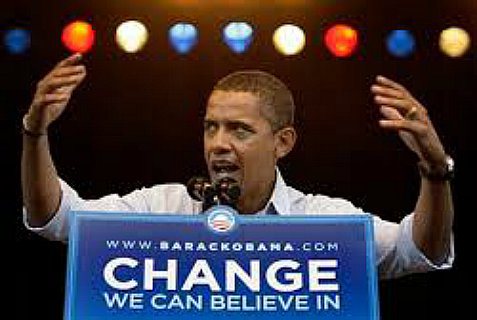 Americans voted for a change in 2008. And they got it.
President Barack Obama laced his annual Rosh HaShanah greetings with political overtones, in stark contrast to his message to Muslims last July on their Eid-ul-Fitr holiday marking the end of Ramadan.
President Obama reminded Jews that the “Book of Life is open.” Assuming a posture as a Jew, he added:
As millions of Jews ask God to inscribe their names in that Book we recognize how much lies beyond our control.
It was a pointed reminder to Prime Minister Binyamin Netanyahu that besides God, there also is President Obama who pulls the strings when it comes to world affairs, such as the nuclear agreement with Iran.
The President then preached peace, which he said is “hard, but right now the book is open. Not just for God but for us.”
That is a theme that was totally absent from his speech to Muslims in July, when he noted:
The end of Ramadan is a time to reflect spiritually, build communally, and aid those in need. While Eid marks the end of Ramadan, it marks a new beginning for each individual – a reason to celebrate and express gratitude on this holiday.
President Obama then devoted nearly half of his greeting to talk about how millions of Muslims go to mosques for prayers and then have “festive gatherings, gift exchanges, and feasts among friends, neighbors and families.”
He emphasized how “the diversity of traditions paint the vibrant images we see from around the world capturing the spirit and excitement of Eid – colorful dresses or white garments decorating the masses of people standing in lines for prayer, lanterns and ornaments lighting up bazaars and neighborhoods, intricate henna designs painted on hands of young girls and women, and an abundance of delectable foods and aromatic cuisines.”
Then he boasted that Eid-ul-Fitr now is a an official holiday in New York City public schools, and he praised Muslims for helping to raise money “for the churches burned in the wake of the shooting at Emanuel AME Church in Charleston, South Carolina” by a white racist.
The greeting to Muslims was absent of any reference to radical Muslim violence, peace in the Middle East, or the nuclear threat from Iran. It was a typical patronizing greeting made by every leader to partisan groups.
Now let’s go back to 2009 for President Obama’s first Rosh HaShanah greetings:
I want to extend my warmest wishes for this New Year. L’Shanah Tovah Tikatevu – may you have a good year, and may you be inscribed for blessing in the Book of Life….At the dawn of this New Year, let us rededicate ourselves to that work. Let us reject the impulse to harden ourselves to others’ suffering, and instead make a habit of empathy – of recognizing ourselves in each other and extending our compassion to those in need.
Let us resist prejudice, intolerance, and indifference in whatever forms they may take — let us stand up strongly to the scourge of anti-Semitism, which is still prevalent in far too many corners of our world….
And let us work to achieve lasting peace and security for the state of Israel, so that the Jewish state is fully accepted by its neighbors, and its children can live their dreams free from fear.
All of that was absent from this year’s greeting, which also did not mention anti-Semitism and certainly not anti-Zionism, lest he prompt reminders that Iran’s idea of peace is a world without Israel.
President Obama was elected on a motto of “change.”
He has fulfilled his promise.
He indeed has changed.




 anneinpt
 artaxes
 danmillerinpanama
 davidking1530
 Peter Hofman
 Joseph Wouk
 Peter
Peter Louisiana Steve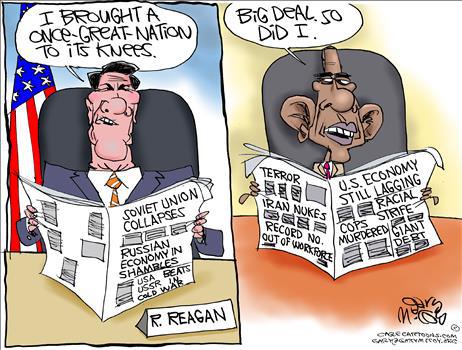
 WarSclerotic
Recent Comments