H/t Freedom is just another word
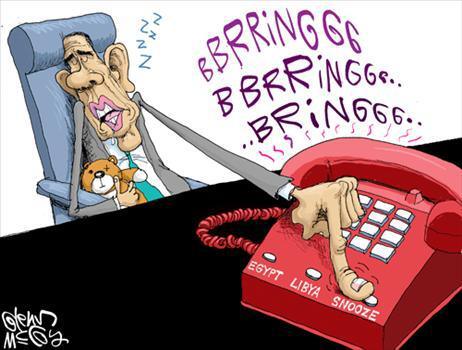
North Korea’s Serious New Nuclear Missile Threat, The Gatestone Institute, Peter Huessy, June 11, 2015
China . . . seems to want to curry favor with Iran because of its vast oil and gas supplies, as well as to use North Korea to sell and transfer nuclear technology to both North Korea and Iran, as well as other states such as Pakistan. As Reed again explains, “China has catered to the nuclear ambitions of the Iranian ayatollahs in a blatant attempt to secure an ongoing supply of oil”.
***********************
North Korea appears to have made significant progress in extending its capability as a nuclear-armed rogue nation, to where its missiles may become capable of hitting American cities with little or no warning.
What new evidence makes such a threat compelling?
North Korea claims to have nuclear warheads small enough to fit on their ballistic missiles andmissiles capable of being launched from a submerged platform such as a submarine.
Shortly after North Korea’s April 22, 2015 missile test, which heightened international concern about the military capabilities of North Korea, U.S. Secretary of State John Kerry urged China and our regional allies to restart the 2003 “six-party talks” aimed at eliminating nuclear weapons from the Korean peninsula and reining in North Korea’s expanding nuclear missile program.
There are some “experts,” however, who believe that North Korea’s threat is highly exaggerated and poses no immediate danger to the United States. Consequently, many believe that, given China’s oft-repeated support for a “nuclear weapons free” Korean peninsula, time is on America’s side to get an agreement that will guarantee just such a full de-nuclearization.
But, if North Korea’s technical advances are substantive, its missiles, armed with small nuclear weapons, might soon be able to reach the continental United States — not just Hawaii and Alaska. Further, if such missile threats were to come from submarines near the U.S., North Korea would be able to launch a surprise nuclear-armed missile attack on an American city. In this view, time is not on the side of the U.S. Submarine-launched missiles come without a “return address” to indicate what country or terrorist organization fired the missile.
The implications for American security do not stop there. As North Korea is Iran’s primary missile-development partner, whatever North Korea can do with its missiles and nuclear warheads, Iran will presumably be able to do as well. One can assume the arrangement is reciprocal.
Given recent warnings that North Korea may have upwards of 20 nuclear warheads, the United States seems to be facing a critical new danger. Would renewed negotiations with China, Japan, South Korea and North Korea really be able to address this threat?
Two years ago, Andrew Tarantola and Brian Barrett said there was “no reason to panic;” that North Korea was “a long way off” — in fact “years” — before its missiles and nuclear weapons could be “put together in any meaningful way.”
At the same time, in April 2013, an official U.S. assessment by the Defense Intelligence Agency stated the U.S. had “moderate” confidence that “North Korea had indeed developed a nuclear device small enough to mount on a ballistic missile.”
That was followed up two years later, on April 7, 2015, when the commander of Northcom, Admiral Bill Gortney, one of the nation’s leading homeland security defenders, said the threat was considerably more serious. He noted that, “North Korea has deployed its new road-mobile KN-08 intercontinental ballistic missile and was capable of mounting a miniaturized nuclear warhead on it.”[1]
At a Pentagon press briefing in April, Admiral Cecil Haney, Commander of the US Strategic Command and America’s senior military expert on nuclear deterrence and missile defense, said it was important to take seriously reports that North Korea can now make small nuclear warheads and put them on their ballistic missiles.[2]
And sure enough, in April, North Korea launched a ballistic missile from a submerged platform. Media reaction to the North Korean test has been confused. Reuters, citing the analysis of two German “experts,” claimed the North Korean test was fake — a not-too-clever manipulation of video images.
The Wall Street Journal, on May 21, 2015, echoed this view, noting: “[F]or evidence of North Korea’s bending of reality to drum up fears about its military prowess,” one need look no further than a consensus that North Korea “doctored” pictures of an alleged missile test from a submarine. This, they claimed, was proof that the “technology developments” by North Korea were nothing more than elaborately faked fairy tales.
However, Israeli missile defense expert Uzi Rubin — widely known as the “father” of Israel’s successful Arrow missile defense program — explained to this author that previous North Korean missile developments, which have often been dismissed as nothing more than mocked-up missiles made of plywood, actually turned out to be the real thing — findings confirmed by subsequent intelligence assessments.
Rubin, as well as the South Korean Defense Ministry, insist that on April 22, the North Korean military did, in fact, launch a missile from a submerged platform.[3]
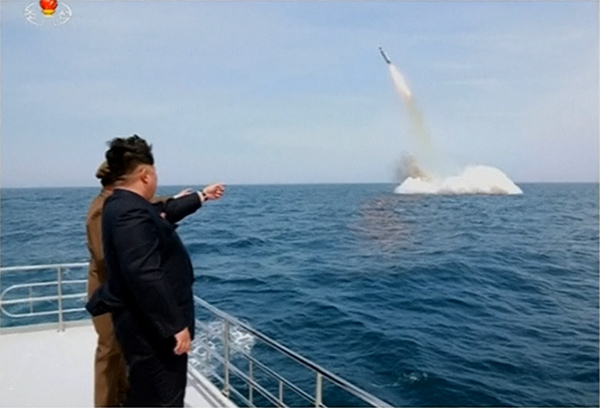 Kim Jong Un, the “Supreme Leader” of North Korea, supervises the April 22 test-launch of a missile from a submerged platform. (Image source: KCNA)
What gave the “faked” test story some prominence were the misunderstood remarks of the Vice Chairman of the Joint Chiefs of Staff, Admiral James Winnefeld. He had said, on May 19, that the North Korean missile launch was “not all” that North Korea said it was. He also mentioned that North Korea used clever video editors to “crop” the missile test-launch images. Apparently, that was exactly what the editors did. The Admiral, however, never claimed in his speech at the Center for Strategic and International Studies there had been no successful missile test.[4]
The same day, a high-ranking State Department official, Frank Rose — Assistant Secretary of State for Arms Control, Verification, and Compliance — told a Korean security seminar on Capitol Hill that North Korea had successfully conducted a “missile ejection” test, but from an underwater barge rather than a submarine.[5]
To confuse matters further, additional pictures were released by the South Korean media to illustrate stories about the North Korean test. Those pictures, however, were of American missiles, which use both solid and liquid propellant; as a result, one photo showed a U.S. missile with a solid propellant smoke trail and one, from a liquid propellant, without a smoke trail. These photographs apparently befuddled Reuters’ “experts,” who may have jumped to the conclusion that the photos of the North Korean test were “faked,” when they were simply of entirely different missile tests, and had been used only to “illustrate” ocean-going missile launches and not the actual North Korean test.[6]
According to Uzi Rubin, to achieve the capability to eject a missile from an underwater platform is a significant technological advancement. The accomplishment again illustrates “that rogue states such as North Korea can achieve military capabilities which pose a notable threat to the United States and its allies.”
Rubin also stated that the North Korean underwater launch test was closely related to the development of a missile-firing submarine, “a first step in achieving a very serious and dangerous new military capability.”[7]
Admiral Winnefeld and Secretary Rose, in their remarks, confirmed that the North Korean test was not the “dog and pony show” some have claimed. In other words, the U.S. government has officially confirmed that the North Koreans have made a serious step toward producing a sea-launched ballistic missile capability.
While such an operational capability may be “years away,” Rubin warns that “even many years eventually pass, and it will also take many years to build up the missile defenses, so we had better use the time wisely.”[8]
Will diplomacy succeed in stopping the North Korean threats? U.S. Secretary of State John Kerry seemed to think it worth a try; so he began the push to restart the old 2003 “six-party” talks between the United States, North Korea, Russia, China, South Korea and Japan, to bring North Korea’s nuclear weapons under some kind of international control and eventual elimination.
After all, supporters of such talks claim, similar talks with Iran appear to be leading to some kind of “deal” with Tehran, to corral its nuclear weapons program, so why not duplicate that effort and bring North Korea back into the non-nuclear fold?
What such a “deal,” if any, with Iran, will contain, is at this point unknown. Celebrations definitely seem premature. If the “deal” with North Korea is as “successful” as the P5+1’s efforts to rein in Iran’s illegal nuclear weapons program, the prognosis for the success of diplomacy could scarcely be more troubling.
Bloomberg’s defense writer, Tony Carpaccio, reflecting Washington’s conventional wisdom, recently wrote that of course China will rein in North Korea’s nuclear program: “What might be a bigger preventative will be the protestations of China, North Korea’s primary trade partner and only prominent international ally. Making China angry would put an already deeply impoverished, isolated North Korea in even more dire straits.”
Unfortunately, no matter how attractive a strategy of diplomatically ending North Korea’s nuclear program might look on the surface, it is painfully at odds with China’s established and documented track record in supporting and carrying out nuclear proliferation with such collapsed or rogue states as Iran, Syria, Pakistan, North Korea and Libya, as detailed by the 2009 book The Nuclear Express, by Tom C. Reed (former Secretary of the Air Force under President Gerald Ford and Special Assistant to the President of National Security Affairs during the Ronald Reagan administration) and Daniel Stillman (former Director of the Lawrence Livermore National Laboratory).
Far from being a potential partner in seeking a non-nuclear Korean peninsula, China, say the authors, has been and is actually actively pushing the spread of nuclear weapons to rogue states, as a means of asserting Chinese hegemony, complicating American security policy and undermining American influence.
The problem is not that China has little influence with North Korea, as China’s leadership repeatedly claims. The problem is that China has no interest in pushing North Korea away from its nuclear weapons path because the North Korean nuclear program serves China’s geostrategic purposes.
As Reed and Stillman write, “China has been using North Korea as the re-transfer point for the sale of nuclear and missile technology to Iran, Syria, Pakistan, Libya and Yemen”. They explain, “Chinese and North Korean military officers were in close communication prior to North Korea’s missile tests of 1998 and 2006”.
Thus, if China takes action to curtail North Korea’s nuclear program, China will likely be under pressure from the United States and its allies to take similar action against Iran and vice versa. China, however, seems to want to curry favor with Iran because of its vast oil and gas supplies, as well as to use North Korea to sell and transfer nuclear technology to both North Korea and Iran, as well as other states such as Pakistan. As Reed again explains, “China has catered to the nuclear ambitions of the Iranian ayatollahs in a blatant attempt to secure an ongoing supply of oil”.
North Korea is a partner with Iran in the missile and nuclear weapons development business, as Uzi Rubin has long documented. Thus, it is reasonable to believe that China may see any curtailment of North Korea’s nuclear program as also curtailing Iran’s access to the same nuclear technology being supplied by North Korea. Any curtailment would also harm the Chinese nuclear sales business to Iran and North Korea, especially if China continues to use the “North Korea to Iran route” as an indirect means of selling its own nuclear expertise and technology to Iran.
It is not as if Chinese nuclear proliferation is a recent development or a “one of a kind” activity. As far back as 1982, China gave nuclear warhead blueprints to Pakistan, according to Reed. These findings indicate that China’s nuclear weapons proliferation activities are over three decades old.[9]
Reed and Stillman also note that nearly a decade later, China tested a nuclear bomb “for Pakistan” on May 26, 1990, and that documents discovered in Libya when the George W. Bush administration shut down Libyan leader Muammar Kaddafi’s nuclear program revealed that China gave Pakistan the CHIC-4 nuclear weapon design.
Unfortunately, China’s nuclear assistance to Pakistan did not stay just in Pakistan. The nuclear technology made its way from Pakistan to North Korea. For example, high explosive craters, construction of a 50 megawatt nuclear reactor (finished in 1986) and a secret reprocessing facility begun in 1987 all were done in North Korea with major Pakistani help from the A.Q. Khan “Nukes R Us” smuggling group, as Reed and Stillman document in their book.
Reed and Stillman write that when, amid disclosures in 2003 of a major Libyan nuclear weapons program, the U.S. government sought help in shutting down the Khan nuclear smuggling ring, “Chinese authorities were totally unhelpful, to the point of stonewalling any investigation into Libya’s nuclear supply network.”
More recently, Chinese companies have now twice — in 2009 and 2011 — been indicted by the Attorney for the City of New York for trying to provide Iran with nuclear weapons technology.
The indictments document that Chinese companies were selling Iran steel for nuclear centrifuges and other banned technology. A leaked State Department cable, discussing the indictments at the time, revealed “details on China’s role as a supplier of materials for Iran’s nuclear program,” and that “China helped North Korea ship goods to Iran through Chinese airports.”
And more recently, in April 2015, the Czech government interdicted additional nuclear technology destined for Iran — the origin of which remains unknown — in violation of current sanctions against Iran.
From 1982 through at least the first part of 2015, the accumulation of documentary evidence on nuclear proliferation reveals two key facts:
First, despite literally hundreds of denials by Iran that it is seeking nuclear weapons, and amid current negotiations to end Iran’s pursuit of nuclear weapons, there is solid evidence that Iran still seeks nuclear weapons technology; and that North Korea has nuclear weapons and is advancing their capability.
Second, China continues to transfer, through its own territory, nuclear weapons technology involving both North Korea and Iran.
Although the Chinese profess to be against nuclear proliferation, their track record from the documented evidence illustrates just the opposite.
In summary, it is obvious North Korea’s nuclear weapons and ballistic missiles are a serious threat to America and its allies. And China, from its proliferation record for the past three decades, is making such a threat more widespread.
In this light, is dismissing North Korea’s advances in military technology and ignoring China’s record of advancing its neighbors’ nuclear weapons technology really best for U.S. interests?
_______________________
[1] The Washington Post, May 20, 2015, Anna Fifield, “North Korea says it has technology to make mini-nuclear weapons“; and Admiral Bill Gortney, US NORAD Commander, quoted in “NORAD commander: North Korean KN-08 Missile Operational“, by Jon Harper, in “Stars and Stripes”, of April 7, 2015; the Admiral said: “Our assessment is that they have the ability to put a nuclear weapon on a KN-08 and shoot it at the homeland.” He said “Yes sir” when asked if the U.S. thinks North Korea has succeeded in the complicated task of miniaturizing a warhead for use on such a missile. North Korea has conducted three nuclear tests since 2006.
[2] Department of Defense Press Briefing by Admiral Cecil Haney, Commander, U.S. Strategic Command, March 24, 2015.
[3] Personal communication with Uzi Rubin, President of Rubincon, May 21, 2015.
[4] Admiral James Winnefeld, Remarks at the Center for Strategic and International Studies (CSIS) Briefing on Missile Defense, May 20, 2015.
[5] U.S. Department of State, Daily Digest Bulletin, Frank Rose, Remarks on “Missile Defense and the U.S. Response to the North Korean Ballistic Missile and WMD Threat”, May 20, 2015.
[6] Explanation provided by Israel missile expert Uzi Rubin, personal communication, May 20, 2015.
[7] Ibid.
[8] Ibid.
[9] According to Reed and Stillman, in “The Nuclear Express,” none of China’s nuclear help to Pakistan and Iran could have been possible without China’s transfer of the nuclear technology through Chinese airspace.
Directive 11: Obama’s Secret Islamist Plan, Front Page Magazine, Daniel Greenfield, June 8, 2015
What little we know about the resulting classified 18-page report is that it used euphemisms to call for aiding Islamist takeovers in parts of the Middle East. Four countries were targeted. Of those four, we only know for certain that Egypt and Yemen were on the list. But we do know for certain the outcome.
Obama’s insistence that human rights be made a core national security interest paved the way for political and military interventions on behalf of Islamists. Obama had never been interested in human rights; his record of pandering to the world’s worst genocide plotters and perpetrators from Iran to Turkey to Sudan made that clear. When he said “human rights”, Obama really meant “Islamist power.”
********************
Behind the rise of ISIS, the Libyan Civil War, the unrest in Egypt, Yemen and across the region may be a single classified document.
That document is Presidential Study Directive 11.
You can download Presidential Study Directive 10 on “Preventing Mass Atrocities” from the White House website, but as of yet no one has been able to properly pry number 11 out of Obama Inc.
Presidential Study Directive 10, in which Obama asked for non-military options for stopping genocide, proved to be a miserable failure. The Atrocities Prevention Board’s only use was as a fig leaf for a policy that had caused the atrocities. And the cause of those atrocities is buried inside Directive 11.
With Obama’s typical use of technicalities to avoid transparency, Directive 11 was used to guide policy in the Middle East without being officially submitted. It is possible that it will never be submitted. And yet the Directive 11 group was described as “just finishing its work” when the Arab Spring began.
That is certainly one way of looking at it.
Directive 11 brought together activists and operatives at multiple agencies to come up with a “tailored” approach for regime change in each country. The goal was to “manage” the political transitions. It tossed aside American national security interests by insisting that Islamist regimes would be equally committed to fighting terrorism and cooperating with Israel. Its greatest gymnastic feat may have been arguing that the best way to achieve political stability in the region was through regime change.
What little we know about the resulting classified 18-page report is that it used euphemisms to call for aiding Islamist takeovers in parts of the Middle East. Four countries were targeted. Of those four, we only know for certain that Egypt and Yemen were on the list. But we do know for certain the outcome.
Egypt fell to the Muslim Brotherhood, which collaborated with Al Qaeda, Hamas and Iran, before being undone by a counterrevolution. Yemen is currently controlled by Iran’s Houthi terrorists and Al Qaeda.
According to a New York Times story, Obama’s Directive 11 agenda appeared to resemble Che or Castro as he “pressed his advisers to study popular uprisings in Latin America, Eastern Europe and Southeast Asia to determine which ones worked and which did not.”
The story also noted that he “is drawn to Indonesia, where he spent several years as a child, which ousted its longtime leader, Suharto, in 1998.”
The coup against Mubarak with its coordination of liberals, Islamists and the military did strongly resemble what happened in Indonesia. The most ominous similarity may be that the Muslim mobs in Indonesia targeted the Chinese, many of whom are Christians, while the Muslim mobs in Egypt targeted Coptic Christians.
Both were talented groups that were disproportionately successful because they lacked the traditional Islamic hostility to education, integrity and achievement. Islamist demagogues had succeeded in associating them with the regime and promoted attacks on them as part of the anti-regime protests.
Chinese stores were looted and thousands of Chinese women were raped by rampaging Muslims. Just as in Egypt, the protesters and their media allies spread the claim that these atrocities committed by Muslim protesters were the work of the regime’s secret police. That remains the official story today.
Suharto’s fall paved the way for the rise of the Prosperous Justice Party, which was founded a few months after his resignation and has become one of the largest parties in the Indonesian parliament. PJP was set up by the Muslim Brotherhood’s local arm in Indonesia.
His successor, Bacharuddin Jusuf Habibie, was more explicitly Islamist than Suharto and his Association of Muslim Intellectuals (ICMI) conducted a campaign against Christians, Hindus and Buddhists. It helped purge non-Muslims from government while Islamizing the government and Indonesia’s key institutions.
Habibie had been the Chairman of ICMI and ICMI’s Islamists played a key role in moving Suharto out and moving him in. It was obvious why Obama would have considered the Islamization of Indonesia and the purge of Christians under the guise of democratic political change to be a fine example for Egypt.
While we don’t know the full contents of Directive 11 and unless a new administration decides to open the vaults of the old regime, we may never know. But we do know a good deal about the results.
In its own way, PSD-10 tells us something about PSD-11.
Obama’s insistence that human rights be made a core national security interest paved the way for political and military interventions on behalf of Islamists. Obama had never been interested in human rights; his record of pandering to the world’s worst genocide plotters and perpetrators from Iran to Turkey to Sudan made that clear. When he said “human rights”, Obama really meant “Islamist power”.
That was why Obama refused to intervene when the Muslim Brotherhood conducted real genocide in Sudan, but did interfere in Libya on behalf of the Brotherhood using a phony claim of genocide.
Positioning Samantha Power in the Office of Multilateral Affairs and Human Rights at the National Security Council was part of the process that made over the NSC from national security to servicing a progressive wish list of Islamist terrorist groups that were to be transformed into national governments.
Power, along with Gayle Smith and Dennis Ross, led the Directive 11 project.
Secret proceedings were used to spawn regime change infrastructure. Some of these tools had official names, such as “The Office of The Special Coordinator For Middle East Transitions” which currently reports directly to former ambassador Anne Patterson who told Coptic Christians not to protest against Morsi. After being driven out of the country by angry mobs over her support for the Muslim Brotherhood tyranny, she was promoted to Assistant Secretary of State for Near Eastern Affairs.
“The Office” is still focused on “outreach to emergent political, economic and social forces in Egypt, Tunisia, and Libya” even though counterrevolutions have pushed out Islamists in Egypt and Tunisia, while Libya is in the middle of a bloody civil war in which an alliance of the Muslim Brotherhood and Al Qaeda controls the nation’s capital.
But even as Morsi’s abuses of power were driving outraged Egyptians into the streets, Gayle Smith, one of the three leaders of Directive 11, reached out to the “International Union of Muslim Scholars”, a Muslim Brotherhood group that supported terrorism against American soldiers in Iraq and which was now looking for American support for its Islamist terrorist brigades in the Syrian Civil War.
The men and women responsible for Directive 11 were making it clear that they had learned nothing.
Directive 11 ended up giving us the Islamic State through its Arab Spring. PSD-11’s twisted claim that regional stability could only be achieved through Islamist regime change tore apart the region and turned it into a playground for terrorists. ISIS is simply the biggest and toughest of the terror groups that were able to thrive in the environment of violent civil wars created by Obama’s Directive 11.
During the Arab Spring protests, Egyptian Foreign Minister Ahmed Aboul Gheit had told Hillary Clinton that his government could not hand over power to the Muslim Brotherhood. “My daughter gets to go out at night. And, God damn it, I’m not going to turn this country over to people who will turn back the clock on her rights.”
But that was exactly what Hillary Clinton and Obama were after. And they got it. Countless women were raped in Egypt. Beyond Egypt, Hillary and Obama’s policy saw Yazidi women actually sold into slavery.
Directive 11 codified the left’s dirty alliance with the Muslim Brotherhood into our foreign policy. Its support for Islamist takeovers paved the way for riots and civil wars culminating in the violence that birthed ISIS and covered the region in blood.
And it remains secret to this day.
Western Officials Alarmed as Islamic State Expands Territory in Libya, New York Times,
The continued expansion inside Libya of the group, also known as ISIS or ISIL, has alarmed Western officials because of its proximity to Europe across the Mediterranean.
*********************
TRIPOLI, Libya — The branch of the Islamic State that controls the city of Surt has expanded its territory and pushed back the militia from the neighboring city of Misurata, militia leaders acknowledged Sunday.
In the group’s latest attack, a suicide bomber killed at least four fighters on Sunday at a checkpoint west of Misurata on the coastal road to Tripoli, according to local officials and Libyan news reports.
The continued expansion inside Libya of the group, also known asISIS or ISIL, has alarmed Western officials because of its proximity to Europe across the Mediterranean.
Four years after the removal of Col. Muammar el-Qaddafi, the near collapse of the Libyan government has left no central Libyan authority to check the group’s advance or even partner with Western military efforts against it. Two armed factions, each with its own paper government, are fighting for control, and each has focused more on internal quarrels than on defeating the Islamic State.
The group’s expanding turf in Libya also gives it an alternative base of operations even as it appears to be gaining ground — in Palmyra in Syria and in Ramadi in Iraq. The gains come despite an American-led bombing campaign aimed at rolling back the group’s original territory across the border between those countries.
Suliman Ali Mousa, an officer with the brigade from Misurata, confirmed in a telephone interview on Sunday that over the past two days its forces had retreated in the face of Islamic State advances to the east, south and west of Surt. Islamic State fighters have captured the Gardabya air base, about 20 kilometers south of Surt; it had been all but destroyed by NATO airstrikes during the 2011 campaign against Colonel Qaddafi, but Libyans describe it as a strategic foothold.
Toward the east, Mr. Mousa’s brigade retreated from its base in a water treatment facility, leaving the Islamic State in control as far as the town of Nofilya, another extremist stronghold. And toward the West the Misuratan forces had also pulled back about 20 kilometers toward their home city.
“We left our position and relocated,” Mr. Mousa said. “It was a necessary retreat. Our fighting position did not allow us to stay where we were.” He added that another group of Misurata fighters had abandoned a power station west of Surt and so his group had taken their place.
He said he was unsure why those fighters had pulled out, but “there was a lot of talk about money and unpaid salaries.”
Documents: Feds Knew Benghazi Attack Planned in Advance, Washington Free Beacon,
(Please see also, Arab military chiefs approve Egyptian-led intervention in Libya — DM)
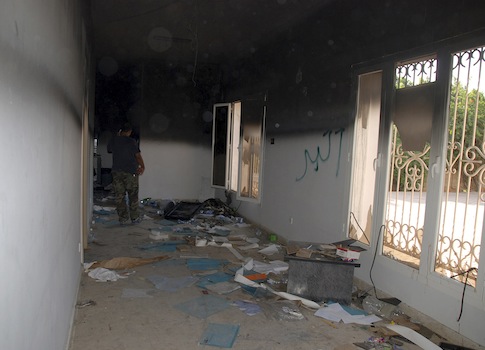
Documents obtained by Judicial Watch from their May 2014 Freedom of Information Act (FOIA) lawsuits filed against the State Department and the Department of Defense revealed that the Obama administration knew about the attacks on the U.S. Consulate in Benghazi at least 10 days before the attack.
The documents also revealed that the DOD immediately reported the attacks on the consulate.
The documents included an August 2012 analysis predicting the failure of President Obama’s policy of a regime change in Syria as well as a warning about the rise of the Islamic State. The documents also included a confirmation that United States was aware of an arms shipment from Benghazi to Syria.
One of the documents from the DOD’s Defense Intelligence Agency dated September 12, 2012, the day after the attacks in Benghazi, lays out the details of the attack on the consulate and assesses that it was carefully planned by the terrorist group “Brigades of the Captive Omar Abdul Rahman.”
The group is known to have connections to the Muslim Brotherhood as well as to al Qaeda. Rahman is serving a life sentence in prison for his role in the 1993 bombing of the World Trade Center.
The group’s goal was to “kill as many Americans as possible,” according to the documents, which were sent to Secretary of State Hillary Clinton, Defense Secretary Leon Panetta, the Joint Chiefs of Staff, and the National Security Council.
An October 2012 DOD document contained the first official document that the Obama administration knew of the shipment of weapons from the Benghazi to rebel forces in Syria.
Weapons from the former Libya military stockpiles were shipped from the port of Benghazi, Libya to the Port of Banias and the Port of Borj Islam, Syria. The weapons shipped during late-August 2012 were Sniper rifles, RPG’s, and 125 mm and 155 mm howitzers missiles.
During the immediate aftermath of, and following the uncertainty caused by, the downfall of the (Qaddafi) regime in October 2011 and up until early September of 2012, weapons from the former Libya military stockpiles located in Benghazi, Libya were shipped from the port of Benghazi, Libya to the ports of Banias and the Port of Borj Islam, Syria. The Syrian ports were chosen due to the small amount of cargo traffic transiting these two ports. The ships used to transport the weapons were medium-sized and able to hold 10 or less shipping containers of cargo.
The heavily redacted document did not reveal which weapons were sent to Syria
The DIA consistently warned of the deterioration of the situation in Iraq and warned that it creates an ideal situation for Al Qaeda to return to Mosul and Ramadi, according to an August 2012 report. During this time the U.S. was monitoring weapons flows from Libya to Syria. The agency warned of dire consequences but blocked out what most of what those consequences were.
The State Department produced a single document from a separate lawsuit that Judicial Watch had filed against the department. The document was created by Hillary Clinton’s office the morning after the attacks on the consulate in Benghazi and was sent throughout the State Department.
Neither the State Department nor Hillary Clinton have turned over any documents in regards to Benghazi or her personal email account that was used during her as well as other top aides during her time as Secretary of State.
Judicial Watch has filed multiple FOIA requests and has waited over two years for the documents that they have received.
“These documents show that the Benghazi cover-up has continued for years and is only unraveling through our independent lawsuits,” said Tom Fitton, president of Judicial Watch. “The Benghazi scandal just got a whole lot worse for Barack Obama and Hillary Clinton.”
Arab military chiefs approve Egyptian-led intervention in Libya, DEBKAfile, May 19, 2015
(Obama will be displeased. — DM)
Arab military chiefs held an unpublicized meeting in Cairo Monday to confirm coordinated plans for Egyptian-led regional intervention into the eastern Libya region of Cyrenaica to drive out the armed extremists, who have kept the country locked in chaos since Muammar Qaddafi’s ouster, and install a stable government in the region;s capital of Benghazi. The meeting was attended by the chiefs of staff of Egypt, Jordan, Saudi Arabia, UAE, Kuwait, Bahrain, Sudan and the Libyan Tobruk government. Talks are ongoing with France and Libya to take part in the operation. Both have a direct interest in putting a stop to the ungoverned flow of African refugee migrants to Europe through Libya, which is being used by Islamic State terrorists to infiltrate Europe. France will be asked for logistic support and special forces for the Libyan operation and Italy to provide naval support. Egyptian President Abdel-Fatteh El-Sisi is seeking early military action cut down the fast-expanding ISIS threat to his country, the region and southern Europe.
President Strangelove or, how I learned to stop worrying and love the bomb, Jerusalem Post, David Turner, May 14,2015
Concerned about Soviet intentions in the region the Truman administration entered into the U. S.-Saudi Mutual Defense Assistance Agreement (MDA) in 1951. The Agreement provided the foundation for what would emerge as an American commitment to provide a defense umbrella for the region to protect American interests in the Middle East. American assurances to states in the region seemed intact until the GW Bush Administration invasion of Iraq. Trapped in a war it completely misjudged and soon realized it could not win the administration sought an accommodation with Iran to control Shi’ite militias battling the Americans.
The Bush policy of “accommodation” with Iran became the Obama policy of “appeasement” towards the Islamic Republic. Thus began a six-year-long quest to intended to encourage that country’s recalcitrant and hegemony ambitious leaders to abandon its nuclear weapons program. With the imminent 30 June deadline for signing an Agreement quickly approaching the president invited the Gulf Cooperation Council (GCC) states headed by Saudi Arabia to Camp David promising a mutual defense agreement assuring the Arab states of American protection in the event Iran proved a threat to the region. In addition to “assurances, the Saudis insisted on a signed and “formal alliance structure with the United States guaranteeingU.S. support against potential Iranian aggression.”
In advance of the conference the White House announced that President Obama would meet with the Saudi king the day beforeCamp David. But at the last minute, “[d]ispleased with Washington’s dealings with Iran, with an emerging deal over its nuclear program and with US security proposals to Gulf Arab nations,” King Salman announced he would not meet with President Obama and would not attend the Camp Davidconference. In the end only two of six Gulf nations decided to attend with heads of state.
The king’s last-minute cancellation, his turn-down of a meeting with the leader of the Free World was described as “a calculated snub for the president’s policies on Iran and the Middle East.” It was revealed that Kerry, in his meeting with the Saudis the week earlier, told the king that Obama was not prepared to finalize according to the king’s timetable any agreement that might result at Camp David.
And then there was the fact that a mutual defense agreement with the Saudis, the 1951 MDA, already existed already assuring the Saudis protection under America’s nuclear umbrella. Mistrust of American intentions and assurances by America’s “allies” built up over the previous twelve years was palpable.
Bush and the Region
“Even before the inauguration [and, of course, the pretext of 9/11], Cheney asked outgoing Secretary of Defense William Cohen to provide Bush with a briefing focused on Iraq… [Bush appointee] Defense Secretary Rumsfeld saw, “September 11, 2001, as a potential “opportunity.””
Symptomatic of hubris resulting from power minus coherent policy President Bush ignored both Arab and Israeli warnings of Foreseen Consequences certain to follow should the administration follow through with its threat to invade Iraq.
“With his latest remarks, [Saudi, later king] Prince Abdullah joined the chorus of Arab complaints about the Bush administration’s talk of taking military action to oust Saddam Hussein and put an end to his programs to develop weapons of mass destruction. At virtually every stop in the Arab world, Mr. Cheney has been told that an American military strike would destabilize the region.”
And, according to Lawrence Wilkerson, a member of the State Department’s Policy Planning Staff, “[t]he Israelis were telling usIraq is not the enemy – Iran is the enemy.” Wilkerson said that the Israeli reaction to invading Iraq in early 2002 was, “If you are going to destabilize the balance of power, do it against the main enemy.”
Bush and the Bomb
“Cut off the head of the snake,” the Saudi ambassador toWashington, Adel al-Jubeir, quotes the king as saying during a meeting with General David Petraeus in April 2008.
In a speech to the Knesset in 2008 to observe Israel’s 60thanniversary Bush told the Knesset, “America stands with you in firmly opposing Iran’s nuclear weapons ambitions. Permitting the world’s leading sponsor of terror to possess the world’s deadliest weapon would be an unforgivable betrayal of future generations.” Nowhere in his speech did Bush hint at his long held view that America was not prepared to enter another Middle East war, that there never was a military option with which to threaten Iran’s nuclear weapons program. No accident then that Bush chose war-averse Robert Gates as his defense secretary; and that Gates in turn chose war-averse Admiral “Mike” Mullen as head the Joint Chiefs of Staff. The dovish defense pair would for years be the president’s PR mouthpiece warning against even the threat of force to halt Iran’s nuclear program. The Gates/Mullen oft-repeated warning of “unforeseen consequences” became, over the years a common, almost mantra-like warning against any action against Iran.
No surprise then that the openly dovish, newly-elected President Obama invited Gates to remain on as his defense department head, “a show of bipartisan continuity in a time of war that will be the first time a Pentagon chief has been carried over from a president of a different party.”
Obama and the Region
By way of destabilizing the region Obama has not yet equaled the fallout of Bush’s invasion of Iraq. If Bush gifted Iraq to Iran, set the stage for the “Arab Spring,” Obama did not come in second for lack of trying. The new president followed Bush by targeting his own tyrant, Muamar Qadafi and transformingLibya, as did Bush in Iraq, a political wreck bordering on a failed state. Libya today is ruled al-Queda, Islamic State and other terror organizations with two governments powerless to assert control. Bordering Egypt Libya today supplies both the Sinai Salafist insurgency and the terror enclave of Gaza with weapons. And as Bush ignored Israeli and Arab warnings regarding the impact of invading Iraq, Obama chose to those same Arab-Israeli warnings regarding his intention to depose America’s principal Arab ally, Hosni Mubarak of Egypt. In a single mindless move the U.S. followed up its Iraq disaster with Egypt. And followed the collapse of Egypt’s secular regime, insult to injury Obama endorsed as “democratic government” the same Muslim Brotherhood with a decades-long terror campaign against the government; the group behind the assassination of Anwar Sadat for having sought peace with Israel: the Muslim Brotherhood whose child, al-Quaeda, had flown airliners into New York’s World Trade Center! The list of Bush and Obama Administration policy failures seems to know no limits: Iraq redo, Bahrain,Yemen and the bloodbath of Syria. Lacking capacity to learn from ideology-based failures, it continually repeats its “unintended consequences.”
Obama and the Bomb
If Bush set the pattern for accommodation then the tactic at least had some “justification” as Iran’s IRGC was funding, arming and even leading the Shi’ite insurgency against Iraq’s American invaders. Not provoking Iran might have the result of limiting American casualties. But for Obama, recipient in advance of the Nobel Peace Prize for promising regarding “world peace”; for Obama to provide Iran, a state sponsor of Islamist terrorism a world forum to show up American weakness and enhance Iranian prestige; for Obama whose commitment on entering office was to promote nuclear non-proliferation: for Obama to provide Iran all the time necessary to achieve threshold nuclear armament status and, failing to contain Iran the consequence would be a nuclear arms race in the lands of the Arab Spring… Saudi Arabia,Turkey and Egypt are already moving to parity with Iran whileJordan and several Gulf states are at varying stages of planning.
Obama, who promised nuclear non-proliferation, has turned out to be godfather to a nuclear arms race in the least stable, most militant region of the world!
Large-scale Egyptian army massed for operation to capture eastern Libya from ISIS, DEBKAfile, April 26, 2015
 ISIS in occupation of Libyan town of Derna
Brennan leaned hard on the Egyptian president to follow Washington’s line, but El-Sisi refused.
*************
The Middle East is on the brink of its fourth war (after Syria, Iraq and Yemen). DEBKAfile’s military and intelligence sources report that Egypt is massing large-scale ground and air forces in the Western Desert along the Libyan border, in preparation for a military campaign to capture eastern Libya – Cyrenaica – from the Islamist State of Syria and Iraq – ISIS – occupation.
The substantial naval and marine forces assembling at Egypt’s Mediterranean ports indicate the possible launching of the offensive by dropping Egyptian marines on the Libyan coast around Derna (pop: 100,000), which ISIS has made its provincial capital. They may be accompanied by simultaneous landings of paratroops from the air.
For President Abdel-Fatteh El-Sisi, ISIS’s presence in eastern Libya (as well as Sinai) poses an unacceptable peril to his country. He has been warned in a number of intelligence reports that the Islamic State’s terrorists have already penetrated some Egyptian towns and even infiltrated certain army units.
To counter the Egyptian plan of campaign, ISIS is rushing reinforcements to eastern Libya from Syria and Iraq. From Syria, they are traveling by air or sea through the Mediterranean; from Iraq, through the Sinai Peninsula, whence oil and drug rings smuggle them across the Suez Canal and Egypt.
DEBKAfile’s sources reveal that Egypt’s projected invasion of Libya was high on the agenda of American CIA Director John Brennan’s unannounced visit to Cairo on April 19 for a meeting with the president.
In reply to his visitor’s demand for precise information on Egypt’s Libyan campaign. President El-Sisi offered an assurance that he had no intention of keeping the Egyptian army in Libya. He would pull the troops out after defeating and disarming the jihadis and hand power to the Libyan government, which has established its seat in the eastern town of Tobruk near the Egyptian border and home to Libyan military bases and oil terminals.
The Tobruk government was set up by Libyan members of parliament who fled the capital Tripoli when it was overrun by a group of extremist Islamist militias, known as the Libyan Dawn, which included elements associated with Al Qaeda in the Islamic Maghreb – AQIM.
The head of the this government is Abdullah al-Thinni, who is recognized by the United States and most Western governments as the legitimate prime minister of Libya.
President El-Sisi was not surprised to hear from the CIA director that the Obama administration objects to a direct Egyptian invasion of Libya, but would not oppose Cairo acting through local Libyan militias. Brennan put forward the name of Gen. Khalifa Hifter, a Libyan-American, who set up a militia in the eastern Libyan town of Benghazi to fight the Islamists, aided by Libyan army units based in the region.
On March 2, Prime Minister al-Thinni and the Tobruk parliament appointed Gen. Hifter commander-in-chief of the Libyan army, promoting him to the rank of lieutenant general. He was entrusted with two missions: To liberate Libya from the clutches of the Islamic militias and to rebuild the national army.
DEBKAfile’s military sources disclose that, for the past six months, the Egyptian president has given Hifter his support and even supplied him with weapons. But he does not see him as a sufficiently powerful and emblematic figure to unify the Libyan nation.
Brennan leaned hard on the Egyptian president to follow Washington’s line, but El-Sisi refused.
Their differences on the Libyan campaign were reflected by omission in the joint communiqué they issued after their conversation: After discussing “regional issues, terrorism and ways of enhancing bilateral relations, the two sides agreed to continue consultation and coordination on issues of mutual interest.”
Interestingly, Egypt is ready to throw ground, sea and air forces into its offensive in Libya, while at the same time abstaining from deploying air or ground power in the Yemeni conflict, although it is a member of the Saudi-led coalition fighting Iran-backed rebels.
Egypt is already fighting the Islamic State’s branch in Sinai. It is now gearing up to tackle the Islamist peril on its western border.
Report: Israeli Jet Struck Weapons Depots in Libya, Israel National News, Gil Ronen, April 4, 2015
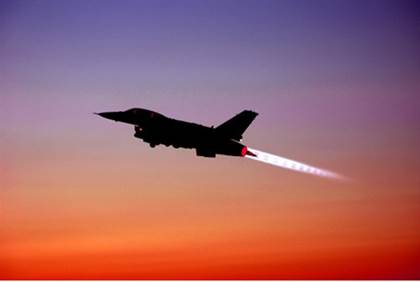 IAF F-16 IAF Website
Al Watan added that Egypt allowed the Israeli jet to pass through its airspace en route to southern Libya.
********************
Arab news sources reported at week’s end that an unidentified jet believed to be Israeli destroyed warehouses in southern Libya that held weapons bought by Iran for Hamas.
According to the reports in Al Watan and other news outlets, the warehouses were completely destroyed. The weapons that were inside them had allegedly been purchased by Iran, by means of weapons dealers in Sudan and Chad, and were supposed to be smuggled to Hamas through Egypt, by means of the smuggling tunnels between Sinai ands Gaza.
The destruction of the weapons stores in southern Libya was carried out in coordination with the Egyptian security and intelligence apparatuses, the reports claimed.
Al Watan added that Egypt allowed the Israeli jet to pass through its airspace en route to southern Libya.




 anneinpt
 artaxes
 danmillerinpanama
 davidking1530
 Peter Hofman
 Joseph Wouk
 Peter
Peter Louisiana Steve
 WarSclerotic
Recent Comments