Posted tagged ‘Israel’

Christians wither under Muslim rule

April 17, 2016

Christians wither under Muslim rule,  Israel Hayom, Yoram Ettinger, April 17, 2016

Bethlehem’s Christian Arab leaders lobbied Israel against transferring the city to the Palestinian Authority. Thus, in 1993, on the eve of signing the Oslo Accords, the Christian mayor of Bethlehem, Elias Freij, urged then-Israeli Prime Minister Yitzhak Rabin to annex Bethlehem to Greater Jerusalem, as it was under Ottoman, British and Jordanian rule of the area, predicting that “transferring Bethlehem to the Palestinian Authority would relegate it to a town of many churches, but devoid of Christians.”

Before Oslo, the Christian mayor of Beit Jala — Bethlehem’s twin town — Farah al-Araj, told the late New York Times syndicated columnist William Safire: “The PLO will force a wave of Christian emigration, making Belize in Central America a home for more Beit Jala Christians then left in Beit Jala.” In 1967, shortly following the Six-Day War, then Mayor of Bethlehem Elias Bandak, a Christian, warned then Israeli Defense Minister Moshe Dayan: “An Israeli failure to annex Bethlehem to Greater Jerusalem would doom the city’s Christian character.”

Since the 1993 establishment of the Palestinian Authority, the Christian majorities of Ramallah — Mahmoud Abbas’ headquarters — Bethlehem and Beit Jala have been transformed into insignificant minorities, due to physical, social, economic, legal and political intimidation. More Christian emigrants from these towns reside in Latin America than Christians remaining there.

The violent discrimination of Christians has been a systematic feature of Muslim Arab societies. For instance, in Saudi Arabia, Christians were murdered, expelled or converted until the 10th century. Currently, non-Muslims cannot become Saudi citizens and Christians working in — or visiting — Saudi Arabia are not allowed to worship, or display Christian items (Bibles, crucifixes, statues, carvings, etc.), openly. While Egyptian President, General Abdel-Fattah el-Sissi, has attempted to minimize the traditional intimidation of Egypt’s Coptic Christian (10%) minority — which possesses ancient Pharaonic roots — the abduction of Coptic women and girls has been routine and Copts face deep-seated discrimination in all walks of life. Moreover, conversion to Christianity is prohibited under Islam. While physical assaults on Coptic communities were a daily occurrence during the brief rule of the Muslim Brotherhood, it has become a monthly event under el-Sissi.

The persecution of Christians in Arab lands is based on the teachings of Muhammad, which dominates the social, political, cultural, judicial, military and educational aspects of the Muslim Middle East. Therefore, the political establishments in Muslim Arab countries are not secular in the Western sense. According to the Quran, Jews and Christians — “the people of the book” who rejected Islam — transgressed egregiously, were the enemies of God, were rejected by God, causing Judaism and Christianity to be replaced by — and subordinated to — Islam, the only legitimate and inherently supreme religion. Islam commands Muslims to pursue the domination of the “House of Islam” over the “House of the infidel,” which includes Christians. Hence, the centrality of jihad, the holy war.

A typical Quranic reference to Christians and other “infidels” appears in Surah 5:60 and 86: “God cursed and blustered those whom he transformed to apes [Jews] and pigs [Christians]. … The infidels shall inherit hell.”

The submission of Christians and other “infidels” to Islam was further institutionalized under the seventh-century Pact of Umar, which severely restrained and humiliated Christians — and later extended to other “infidels” — consistent with the Quran.

In fact, the legalized persecution and scapegoating of Christians are in accordance with the Muslim concept of “dhimmis,” who are the non-Muslim citizens in Muslim lands. As stipulated by the Islamic code of law (the Shariah), they are subordinated to and protected by Islam as long as they accept Islamic supremacy. The attitude towards the dhimmis is specified in the Quran 9:29: “Fight the people who received the book [Jews and Christians] — who do not adhere to the truthful religion [Islam] — until they pay the jizya [infidel tax], while they are humiliated.” Non-Muslim citizens are faced with three choices: conversion to Islam, accepting dhimmitude or death.

Since the 1683 defeat of the Ottoman Empire at the gates of Vienna, Islam has declined dramatically, witnessing the rise to global domination by the “infidel, inferior and arrogant” Christian world, and alarmed by the penetration of “infidel” ideologies and values into the “abode of Islam.” This perceived humiliation has led to tectonic eruptions of Islamic rage and terrorism, aimed at regaining the, supposedly, inherently supreme, megalomaniacal status of Islam.

Also, the Islamic religious and political establishments consider the “infidel” Christian/Western modernity and civil liberties clear, present and lethal threats, which fuel endemic domestic instability. Furthermore, the recent erosion of the Western posture of deterrence, as well as Western appeasement and retreats, have provided a tailwind to the Islamic surge, fueling the anti-Christian/Western Islamic rage in spite of the generally pro-Arab Christian/Western policy (including the U.S. arms embargo during Israel’s War of Independence, while the British supplied arms to the Arabs; punishing Israel for destroying Iraq’s nuclear reactor; pressuring Israel to redivide Jerusalem; and President Barack Obama’s courting of Muslim regimes and condemnation of Prime Minister Benjamin Netanyahu’s policies).

While most of the Christian/Western world pressures Israel to accept Palestinian demands, a common battle cry in Palestinian Authority-inspired rallies is: “After Saturday comes Sunday,” which communicates a Muslim warning to Christian minorities throughout the Arab world: Muslims will do away with Christians after they have dealt with the Jews!

As befits the fate of dhimmis, churches, convents, monasteries, Christian cemeteries, schools, homes, land and Christian women in the Palestinian Authority are subject to desecration, destruction, burning, confiscation, intimidation, rape and harassment. For example, in April-May 2002, Bethlehem’s Church of the Nativity — with its priests and nuns — was hijacked, looted and booby-trapped for 39 days by Palestinian terrorists.

The 1970-1982 Palestinian terror surge in Lebanon accelerated the flight of Lebanese Christians, reducing them from the ruling sector to a dwindling minority. Since 1993, the Palestinian Authority intimidation of Christians has intensified the flight of Christians. However, the Vatican and most Christian and Western governments have — knowingly — sacrificed the religious and civil liberties of Christian minorities — and their very existence — on the altar of wishful thinking, political correctness and appeasement.

Israel, Turkey, Russia and Egypt

April 17, 2016

Israel, Turkey, Russia and Egypt, Gatestone InstituteShoshana Bryen, April 17, 2016

(A blast from the past:

— DM)

♦ In 2011, the UN Palmer Commission Report found the blockade of Gaza — jointly administered with Egypt — to be legal, and said Israel owed Turkey neither an apology nor compensation.

♦ Lifting the Israel/Egypt embargo on Gaza would empower Hamas, and thereby the Muslim Brotherhood, Iran and ISIS — which would seem an enormous risk for no gain.

Turkish sources assert that Turkish-Israeli governmental relations are about to come out of the deep freeze. But this is a reflection of Turkey’s regional unpopularity and glides over Turkish demands for Israel to end the blockade of Gaza. To meet Turkey’s condition, Israel would have to abandon the security arrangement it shares with Egypt — which has increased Israel’s security and has begun to pay regional dividends. To restore full relations between Israel and Turkey would irritate Russia, with which Israel has good trade and political relations, and a respectful series of understandings regarding Syria. Israel’s relations with the Kurds are also at issue here.

After the 2010 Mavi Marmara flotilla — in which Turkey supported the Hamas-related Turkish organization, the IHH, in its effort to break the blockade of Gaza — Turkey made three demands of Israel: an Israeli apology for the deaths of Turkish activists; a financial settlement; and lifting the Gaza blockade, which Turkey claimed was illegal. The last would provide IHH with the victory it was unable to achieve with the flotilla.

1080 (1)The Turkish-owned ship Mavi Marmara took part in a 2010 “Gaza flotilla” attempting to break Israel’s naval blockade of Gaza, which is in place to prevent the terrorist group Hamas from bringing arms into Gaza. (Image source: “Free Gaza movement”/Flickr)

In 2011, however, the UN Palmer Commission Report found the blockade of Gaza — jointly administered with Egypt — to be legal, and said Israel owed Turkey neither an apology nor compensation. In 2013, at the urging of President Obama and to move the conversation off the impasse, Prime Minister Netanyahu did apologize for the loss of life and agree to discuss compensation. While President Obama was pleased, Prime Minister Erdogan repaid the gesture by denigrating Israel on Turkish television and announcing he would force the end of the blockade. Israel’s condition — that the office of Hamas in Ankara be closed — was ignored.

Nevertheless, in February 2014, Turkish Foreign Minister Ahmet Davutoglu told Turkish television that Israel and Turkey were “closer than ever” to normalizing relations.” In December 2015, it was more of the same. And in February 2016, there was yet another announcement of imminent restoration of government-to-government ties. In March, Kurdish sources said Turkey was demanding weapons from Israel, but that Israel wanted to ensure that Turkey would not use them against Kurdish forces.

Israel finds itself in an odd position — choosing among those who want its cooperation.

Israel and Egypt have come to a deep understanding of the sources of instability and insecurity in Sinai, and the relationship between Hamas in Gaza and its primary sponsor, Iran, as well as ISIS. Former IDF Chief of Staff Benny Gantz told inFOCUS magazine recently:

Coordination between us is very high and very important because we have identical interests. Period. The way to achieve them might look different, but Egypt is a very important country. It is crucial to the world to ensure its stability – progress in the fight against ISIS that is present in Sinai, and protecting the Suez Canal, and other things… They are all good reasons for Egypt to take these responsibilities seriously and do something about the threats. I’m very happy to see what they’re doing. It is a good track.

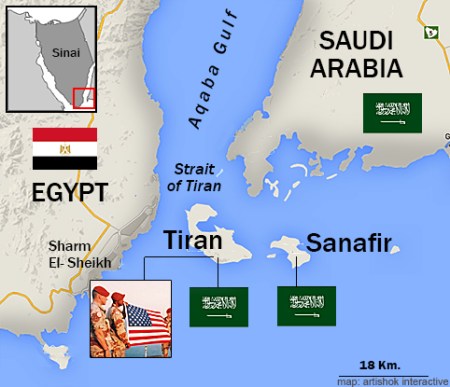
This month, Egypt and Saudi Arabia upgraded relations with Egypt, ceding back to the Saudis two islands that Saudi Arabia had given Egypt in 1950 to help Egypt fight Israel in the Red Sea. According to a report in the Egyptian daily al-Ahram, as reported by the Jerusalem Post, the Egyptian government informed Israel of the parameters of the deal, noting that Riyadh would be obligated to honor all of Egypt’s commitments in the peace treaty with Israel, including the presence of international peacekeepers on the islands and freedom of maritime movement in the Gulf of Aqaba. Israel approved the deal “on condition that the Saudis fill in the Egyptians’ shoes in the military appendix of the peace agreement,” according to Defense Minister Moshe Yaalon.

This makes Saudi Arabia an active partner in the Camp David Accords. And it follows on the heels of the Gulf Cooperation Council (GCC) labeling Hezbollah “a terror organization” without the weasel words the Europeans used to condemn only the “military wing” of the organization.

In the face of these developments, it is hard to imagine a benefit that would accrue to Israel by negating the Israel-Egypt blockade of Gaza on behalf of Turkey.

Russia presents a similar series of circumstances. Relations between Russia and Turkey have taken a nosedive over the Syrian civil war, particularly after Turkey shot down a Russian plane. But even before that, Turkey’s support of Sunni jihadist organizations was a thorn in the side of Russia, which still fears Sunni jihad inside southern Russia.

Russia has goals in Syria and Israel also has requirements. In his inFOCUS interview, former Chief of Staff Gantz noted:

The [Israeli] Prime Minister and Chief of Staff [Gantz’s successor] flew to Russia and had some important of discussions of intentions, deconfliction, and we expressed our interests… stability, preventing terrorist activity… preventing armament that will go from Iran through Syria to Hezbollah, or from Russia to Syria and then to Hezbollah…. People can see what it is that Israel does once in a while when it has to protect itself.

Add to this Israel’s generally good economic and political relations with Russia and, again, it is hard to see the benefit that would accrue to Israel by forging closer relations with Turkey while Russia and Turkey are doing a slow burn.

Turkey is doing a faster burn on the Kurds. Having waged a fierce war against Kurdish separatists in southern Turkey, the Turkish government has taken military action against the Kurds of Iraq and Syria to prevent Kurdish forces from connecting two enclaves — one in Iraq and one in Syria — that could form the geographic beginning of an independent Kurdistan.

Even at the peak of Israeli-Turkish relations, Israel’s support of the Kurds has been a relatively open political secret. Although the Israeli government consistently denies providing weapons, reputable sources suggest, at a minimum, training for Kurdish forces. Most recently, Israel acknowledged buying oil from Kurdish sources in Northern Iraq, and IsraAid, an Israeli humanitarian organization, provided assistance to Kurdish refugees fleeing ISIS. Prime Minister Netanyahu has publicly supported the establishment of a Kurdish state.

For Israel to trade its increasingly important relations with Russia, with Egypt — and thereby with Saudi Arabia — and with the Kurds for Turkish political approval and a promise to buy Israeli natural gas would seem to be a bad deal. For Israel to accompany that with the lifting of the Israel/Egypt embargo on Gaza that would empower Hamas — and thereby the Muslim Brotherhood, Iran and ISIS — would seem an enormous risk for no gain.

Europe: Suicide by Jihad

April 16, 2016

Europe: Suicide by Jihad, Gatestone InstituteGuy Millière, April 16, 2016

♦ In the last two decades, Belgium has become the hub of jihad in Europe. The district of Molenbeek in Brussels is now a foreign Islamist territory in the heart of Belgium. It is not, however, a lawless zone: sharia law has effectively replaced Belgian law.

♦ One of the organizers of the Paris bombings, Salah Abdeslam, was able to live peacefully in Molenbeek for four months until police decided to arrest him. Belgian police knew exactly where he was, but did nothing until French authorities asked them to. After his arrest, he was treated as a petty criminal. Police did not ask him anything about the jihadist networks with which he worked. Officers who interrogated him were ordered to be gentle. The people who hid him were not indicted.

♦ Europe’s leaders disseminated the idea that the West was guilty of oppressing Muslims. They therefore sowed the seeds of anti-Western resentment among Muslims in Europe.

♦ Hoping to please followers of radical Islam and show them Europe could understand their “grievances,” they placed pressure on Israel. When Europeans were attacked, they did not understand why. They had done their best to please the Muslims. They had not even harassed the jihadists.

The March 22 jihadist attacks in Brussels were predictable. What is surprising is that they did not take place sooner. What is also surprising is that more people were not killed. It seems that the authors of the attacks had larger projects in mind; they wanted to attack a nuclear power plant. Others may succeed in doing just that.

In the last two decades, Belgium has become the hub of jihad in Europe. The district of Molenbeek in Brussels is now a foreign Islamist territory in the heart of Belgium. It is not, however, a lawless zone: sharia law has effectively replaced Belgian law. Almost all the women wear veils or burqas; those who do not take risks. Drug trafficking and radical mosques are everyplace. The police stay outside and intervene only in cases of extreme emergency, using military-like commando operations. Other areas of Belgium, such as Shaerbeek and Anderlecht have the same status as Molenbeek.

The Belgian authorities have allowed the situation to deteriorate. The situation in the country now is virtually equivalent to a surrender.

They seemed to hope that willful blindness and accepting the unacceptable would permit the country to be spared. It did not.

The attack on Belgium’s Jewish Museum on May 24, 2014 should have served as a warning. It did not. That “only” Jews were the target led the Belgian government to underestimate the threat. The jihadi who wanted to kill passengers on train from Amsterdam to Paris, on August 21, 2015, prepared his attack in Brussels. That three American heroes neutralized him before he could start shooting again led the Belgian government to think the danger was not large.

The jihadis who struck Paris on November 13, 2015 had also organized their attacks from Molenbeek, but the blood was not spilled in Belgium. Belgian authorities perhaps assumed that Belgium would be spared. They spoke of “imminent danger” for a day or so, but never increased security.

One of the organizers of the Paris bombings, Salah Abdeslam, Europe’s most wanted terrorist criminal, was able to live peacefully in Molenbeek for four months until police decided to arrest him. Belgian police knew exactly where he was, but did nothing until French authorities asked them to. After his arrest, he was treated as a petty criminal, not a jihadi terrorist. Police did not ask him anything concerning the jihadist networks with which he worked. Because he was hurt during police operations, officers who interrogated him were ordered to be gentle. The people who agreed to hide him for so long were not considered suspects and were not indicted.

The Brussels jihadist attacks took place two days later.

Despite the worst attacks on Belgium soil since World War II, Belgian authorities do not seem ready to change their behavior.

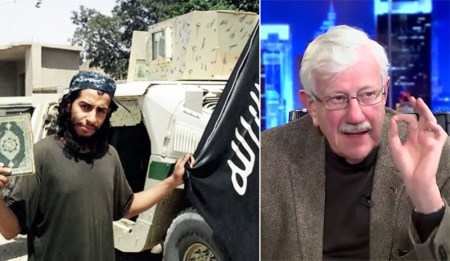
1365 (1)Abdelhamid Abaaoud (left), one of the planners of the November 2015 terrorist attacks in Paris, was — like many terrorists in Europe — from Molenbeek, Belgium. Philippe Moureaux (right) was mayor of Molenbeek for 20 years, thanks to his alliance with radical Islamists.

After the attacks, Belgian Prime Minister Charles Michel denounced “violent and cowardly acts” and stressed his “determination,” without saying what he intended to do. He did not speak of the necessity of changing the Belgian laws to make them more effective. He did not mention any enemy. He never used words such as “jihad” or “radical Islam.”

He behaved and talked as most of his European counterparts did. French Prime Minister Manuel Valls used more courageous words and said many times he is fighting “radical jihad” and “Islamism.” The French parliament passed laws allowing what is still impossible in Belgium: police searches at night. But France stands alone, and effectively the situation in France is no better than in Belgium. Islamist enclaves exists in many suburbs. Whole cities are controlled by thugs and radical imams: cities such as Roubaix, Trappes, Aubervilliers and Sevran in the northeast of Paris.

Islamist enclaves also exist in other European countries: Spain, the Netherlands, Germany, the United Kingdom and Sweden.

European leaders have been making choices. After World War II, they decided Europe would be a region of the world where war would be banished and all problems solved through diplomacy and appeasement. They gradually abandoned financing defense and security activities. Instead, they built welfare states. They thought that taking care of people from cradle to grave would suppress anger and conflicts. They denied the existence of totalitarian dangers and the necessity of showing strength. To this day, their statements indicate that European leaders think both the Berlin Wall and the Soviet empire fell thanks to the benevolence of Mikhail Gorbachev, not thanks to the determination of Ronald Reagan. To this day, they seem to think that Islam is essentially a religion of peace and that the jihadis belong to a tiny, marginal sect.

Decades ago, Europe’s leaders adopted a general policy of “openness” to the Islamic world in general, and the Arab world in particular. They decided to welcome migrants from the Muslim world by hundreds of thousands but without asking them to integrate. They made cultural relativism and multiculturalism their guiding principles. They acted as if Islam could mingle in the Western world harmoniously and without difficulty. Europe’s leaders disseminated the idea that the West was guilty of oppressing Muslims and had to pay for its sins. They therefore sowed the seeds of anti-Western resentment among Muslims in Europe.

When in the Muslim world jihadis started to kill, Europe’s leaders wanted to believe that the attacks would take place in the Muslim world only. They thought that by not interfering with what European jihadis were planning, they would not risk jihadi attacks on European soil.

When Jews were attacked, Europe’s leaders decided that the problem was not jihad, but Israel. They stressed the need not to “export Middle East conflict in Europe.” Hoping to please followers of radical Islam and show them Europe could understand their “grievances,” they placed increasing pressure on Israel. They also increased their financial and political support for the “Palestinian cause.”

When Europeans were attacked, they did not understand why. They had done their best to please the Muslims. They had not even harassed the jihadists. They still do not know how to react.

Many of them now say privately what they will never say in public: it is probably too late.

There are six to eight million Muslims in France, and more than thirty million in Western Europe. Hundreds of jihadis are trained and ready to act — anytime, anyplace. European intelligence services know that they want to make “dirty bombs.” Surveys show that tens of thousands of Muslims living in Europe approve of jihadi attacks in Europe. Millions of Muslims living in Europe keep silent, behave as if they see nothing and hear nothing, and protest only when they think they have to defend Islam.

European political leaders know that every decision they make may provoke reactions among the Muslims living in Europe. Muslim votes matter. Riots occur easily. In France, Belgium, other European countries, Islamists are present in the army and police forces. In the meantime, Islamist organizations recruit and Islamic lobbies gain ground.

European governments are now hostages. The European media are also hostages.

In most European countries, “Islamophobia” is considered a crime — and any criticism of Islam may be considered “Islamophobic.” People trying to warn Europe, such as the Dutch MP Geert Wilders, despite an apparently biased judge and forged documents against him, are now on trial.

Books on radical Islam are still published but surrounded by silence. Books praising the glory of Islam are in every bookstore. When Bat Ye’or’s Eurabia was published in Europe, she was denounced and received hundreds of death threats. Bruce Bawer’s While Europe Slept, published in the U.S., was not even available in Europe. Ten years later, the situation is worse.

Political movements expressing anger and concerns are rising. All are demonized by political power holders and the media. They have almost no chance of gaining more influence.

Populations are gnawed by fear, frustration and impotence. They are looking for answers, but cannot find them. A few hours after the attacks on Brussels, a man on Belgian television said that Europe is on the verge of suicide.

Europe looks like a dying civilization. European governments created a situation that can only lead to more attacks, more massacres, and maybe unspeakable disasters. Europe’s leaders continue to react with speeches and a few police operations.

If some European governments decided to restore their abolished borders, it could take years, and most European leaders would probably disagree with such a policy. Meanwhile, millions more “migrants” will enter Europe, and among them many more jihadis. In spite of the mayhem created in Germany by “migrants” who arrived in 2015, Angela Merkel said she would not change her decisions. No Western European government dared to disagree with her, except Viktor Orbán in Hungary, a lone voice of dissent.

In Brussels, as in Paris earlier, people gathered where the attacks took place. They brought candles and flowers to mourn the victims. They sang sentimental songs. They cried. There were no shouts of revolt against jihad. Members of the Belgian government called on the Belgian people to avoid reactions of violence, and declared that Muslims are the main victims of terrorism.

In Europe’s near future, more people will bring candles, flowers and songs to mourn victims. Another two or three jihadists will be arrested. But nothing will be done.

Israeli hysteria magnifies Hamas rocket threat

April 15, 2016

Israeli hysteria magnifies Hamas rocket threat, DEBKAfile, April 15, 2016

epa01962019 A Palestinian Hamas masked militant stands near a Hamas flag as he takes part in protest and a military parade in central Gaza Strip, 11 December 2009. Israeli settlers vandalized a mosque in a northern West Bank village early 11 December, spray-painting hate slogans in Hebrew and setting ablaze bookshelves and a carpet, Palestinian police and the Israeli military said. Palestinian police spokesman Munir Jagoub told the German Press Agency dpa that the fire in the grand mosque in the village of Yasouf, south-west of the city of Nablus, in the northern West Bank, caused heavy damage to the library, where copies of the Holy Quran are kept, as well as to prayer rugs and the wall. EPA/MOHAMMED SABER I

A Palestinian Hamas masked militant stands near a Hamas flag as he takes part in protest and a military parade in central Gaza Strip, 11 December 2009.

Hamas Political Bureau Chairman Musa Abu Marzuk led an SOS delegation to Tehran last month in a desperate effort to persuade Iran to end its boycott and renew the flow of funds and weapons to the Gaza Strip. But on April 4, the delegation returned home empty-handed.

This was a last-ditch effort since the Palestinian fundamentalist Hamas which rules the Gaza Strip is flat broke.

Since March 1, it has been forced to slash by two-thirds the wages paid to members of its military wing, the Ezz-a-din Qassem Brigades: each fighter now takes home $200 instead of $600 per month, and officers used to earning $1,000 must be satisfied with $350.

Since March 1, it has been forced to slash by two-thirds the wages paid to members of its military wing, the Ezz-a-din Qassem Brigades: each fighter now takes home $200 instead of $600 per month, and officers used to earning $1,000 must be satisfied with $350.

DEBKA’s military and intelligence sources add: The terrorist group has moreover halted recruitment for lack of funds to pay, accommodate or train new fighters.

The cash crunch has also hit the Hamas government. Most of Gaza’s municipal services are suspended because city officials have not been paid.

Iran’s boycott on military and financial assistance to the Gaza Strip was clamped down in mid-2015 over Hamas’ refusal to line up behind Iran’s unqualified endorsement of its allies, Syrian President Bashar Assad and Yemen’s Houthi rebels.

Since then, Hamas has spared no effort to end the shutdown. Its leaders even tried asking their friend and ally, Hizballah’s Hassan Nasrallah, to intercede on their behalf with his masters in Tehran. Nasrallah pulled some strings, suggesting that his group would be allowed to renew military and intelligence operations in Gaza to make it worthwhile for Iran to restore its support.

But that proposition like all previous applications was thrown out.

This time, the Hamas visitors were initially received by high Iranian officials, including Ali Shamkhani, secretary of the Iranian Supreme National Security Council, and Ali Larijiani, chairman of the Shura Council. Abu Marzuk asked them to put the case for ending the boycott before Iran’s supreme leader Ayatollah Ali Khamenei.

After the Palestinian officials cooled their heels for two weeks, Gen. Qassem Soleimani, commander of the Revolutionary Guards’ Al Qods Brigades, finally gave them a hearing.

But, according to DEBKA’s Iranian sources report, he told them bluntly that no more largesse would be forthcoming from the Islamic Republic until Hamas publicly declared its support for Syrian President Assad and ordered its fighting assets in Lebanon to join Hizballah’s military campaign in support of the Syrian ruler.

This confrontation has broad ramifications over and above Iran’s relations with the Palestinian terrorists.

Hamas_480_Kotert

1. Tehran demonstrated that its support for Assad is absolute and brooks no opposition. This should dash any hopes underlying the US-Russian understanding for a political resolution of the Syrian conflict that Assad would at some point agree to hand over power to a broad coalition.

Iran is ruthless in bending all its allies and dependents into toeing its line in defense of the Syrian ruler

2. Gen. Soleimani has resurfaced after a five-month disappearance from public view. Rumors abounded that he had been seriously wounded in a Syrian battle, or else fallen into disfavor with Khamenei and cast aside. His reappearance in Tehran with the Hamas delegation means he has been reinstated to the command of Iran’s forces in Syria and the role of operations coordinator with the Russian military.

3. After Iran’s door was slammed in their faces, Hamas leaders reluctantly tried patching up their tattered ties with Egyptian President Abdel-Fatteh El-Sisi.

But a delegation to Cairo found Egyptian military and intelligence officials as tough-minded as the Iranians. Hamas terrorists were put on notice that, to mend relations, they would have to prove their good faith by cooperating with Cairo in the war against the Islamic State in Sinai. Specifically, the Palestinian terrorists must hand over to the Egyptian army all the intelligence data they had accumulated on the ISIS networks in Sinai with whom they were playing ball.

Though insolvent, Hamas decided it could not afford to comply with Egypt’s terms for assistance. As DEBKA’s sources explain, breaking up with the Islamic State affiliates in Sinai, would also snap Hamas’ last remaining conduit for the receipt of smuggled funds and weapons from Islamist sources in Libya.

Having burned their boats to Tehran and Cairo, the Palestinian terrorists have run themselves into a dead end.

Hysteria regarding the threat posed by Hamas resurfaced in Israel this week, even though the terrorist organization’s military strength is gradually disintegrating mainly amid a cash crunch that nobody in the Hamas  political or military leadership has been able to resolve.

It all started from a briefing given by the head of the IDF Southern Command, Maj. Gen. Eyal Zamir, to military correspondents following a defensive exercise in the Gaza border area.

Afterwards, the heads of the Israeli defense establishment commented on the threat posed by Hamas using clichés that have been familiar to the Israeli public for years. Perhaps the most common one is “Hamas is not interested in an escalation now… but.” Another one is “Israel and the IDF are not interested in an escalation now…but.”

One of the heads of the Israeli local councils in the Gaza border area added that he was not surprised by recent comments by senior IDF officers on the strengthening of the Hamas. “The statements that Hamas operatives are continuing terror operations can only surprise those who are detached from reality,” he said.

Amid the terrorist organization’s weakness, Israeli hysteria is helping Hamas conceal its true situation from the Palestinian public.

Let’s Create a Real Palestinian State

April 14, 2016

Let’s Create a Real Palestinian State, Front Page Magazine, Daniel Greenfield, April 14, 2016

lets_create_a_real_palestine_state

A Palestinian state has never existed during any period in human history. Let’s change that.

The United States has spent billions of dollars trying to create a Palestinian state. It’s time that we finally got our money’s worth. We’ve been putting money in the broken Palestinian slot machine in the metaphorical Palestinian casino (the real one was shot up when terrorists turned it into a base) for decades. It’s time to finally get our Palestinian jackpot. But to make it happen, we need to be realistic.

Forget the peace process. Forget negotiations. They’ve never worked before. They’re not going to now.

And there’s nothing to negotiate anyway.

There are almost a million Jews living on territory claimed by the PLO. Removing them would be the single greatest act of ethnic cleansing against an indigenous population today. It would also be impossible. But the same people who insist that the United States, a country of 318 million, can’t deport 11 million illegal aliens, think that Israel will somehow deport 1/8th of its own population if they just chant loudly enough about “occupation” outside Jewish businesses in London or San Francisco.

Ethnically cleansing 8,000 Jews from Gaza/Gush Katif led to nationwide civil disobedience, riots and, eventually, the fall of a political party and three straight terms for Prime Minister Netanyahu. Now imagine trying to deport 800,000 people from their homes simply because they’re Jewish.

And it wouldn’t just be the Jews alone being rounded up into trucks, buses and maybe boxcars.

52 percent of Arabs in East Jerusalem would rather be Israeli citizens than live under the PLO. Are we supposed to deport 100,000 Arabs from Jerusalem to make way for this imaginary “Palestinian” state?

How much ethnic cleansing do we have to do to make the Islamic colonial fantasy of Palestine real?

It’s not going to happen.

Let’s create a real Palestinian state instead. And I don’t mean the PLO’s President for Life Mahmoud Abbas going down to the UN to give another speech. Abbas is on his 11th year of a 4-year term.  The US spent $4.5 billion promoting “Palestinian democracy” and the last PLO election was ten years ago.

Hamas won. It would win today all over again.

Current polling shows that 2/3 of “Palestinians” want Abbas to resign. Abbas has no political authority to form a Palestinian state, a Palestinian shawarma stand or a Palestinian anything.

If there’s going to be a Palestinian state, it has to be based on the will of the people. That means it will be a Hamas state. A Palestinian state that is not based on the will of its people has no legitimacy. The only legitimate Palestinian state is therefore a Hamas terror state.

And that’s the only kind of state you can have when 2/3 of “Palestinians” support stabbing Israeli civilians, 89% want to live under an Islamic State run by Sharia law, 84% want to stone adulterers to death and 66% support killing any Muslim who leaves Islam.

Only an Islamic terror state can truly represent the homicidal aspirations of the Palestinian people.

Is this some sort of sick joke? Yes it is. But it’s not my sick joke. It’s the sick joke that is Palestine. Now let’s begin the process of turning this sick twisted joke into its own state.

The first thing to do is dismantle the UNRWA, a UN agency specifically dedicated to catering to “Palestinians”. The UNRWA is one of the key elements of the Palestinian welfare state. And the US kicks in around $300 million to the organization which fulfills many of the functions of a state. But a state doesn’t need its own refugee agency. And a Hamas terror state doesn’t need a further $350 million dollars in US foreign aid to promote “democracy” and improve its infrastructure and institutions.

This is going to be a problem because the imaginary Palestinian state also has a fantasy economy. The largest employer in the Palestinian Authority is the Palestinian Authority. Most of its money comes from America, Europe, Israel and, for some inconceivable reason, Japan.

The terror state gets its electricity from Israel. It gets its water and internet through Israel.

So let’s get a clear look at what a real Palestinian state would look like. It would be Gaza writ large. But without the UNRWA and the rest of the NGOs lining up to provide jobs and social services. It would be an “open air prison”, as anti-Israel activists screech of Gaza, but a prison created and maintained by the inmates. It would be constantly at war with Israel and the rest of the world. The way it is now.

The economy will be a thinly disguised feudal system of Islamists with engineering degrees in mansions paying starvation wages to laborers to harvest olives to be shipped to China. There will be shopping malls for some and little shacks on the edges full of smugglers, drug labs and brothels for everyone else.

That’s the Islamist dream.

Palestine’s political system will consist of Hamas and more Hamas. Or maybe once the Hamas alliance with ISIS in the Sinai lapses, there will finally be a democratic election between Hamas and ISIS to decide just how horrible of a place the misshapen slices of Gaza and the West Bank under terrorist occupation will become. Nothing will function except the religious police and the gallows in the dusty squares.

There will be wars every two years. That will be just long enough to rebuild the hospitals, mosques and schools that were being used as launch sites in the last wars. In between the big wars, the terrorist groups, Hamas factions, ISIS, Islamic Jihad and anybody else, will fight each other in the streets.

It will be glorious.

Imagine the last few decades of terror, bombings, missile strikes, firefights, corruption, thievery and utter dysfunction made into a permanent state of affairs. That’s Palestine. That’s the two-state solution. Just don’t ask what it solves except the Middle East’s severe shortage of terrorist states and terrorists.

If you will it, it is no dream. This nightmare already exists and it can be a real country. It already has an anthem, a flag, no elections and no reason to exist except killing everyone else. It’s a foreign aid funded ISIS with more olive harvests and a more robust campus presence.

Everyone talks about creating a Palestinian state, but no one actually wants to do it.

It’s time for Palestine to stop being a pipe dream full of pipe bombs that we spend billions of dollars on. Just pull out a seat at the UN, hold democratic elections and then step away from the explosions.

A real two-state solution is just that simple. And it can happen tomorrow.

Let’s stop fantasizing about peace. Peace and Palestine go together like oil and water. This is what a real Palestinian state would look like. And the moment it comes into being, any possibility of peace dies.

Col. Richard Kemp: Israel an ‘Outpost of Strength,’ Europe on ‘Spiral Downward to Obliteration’

April 14, 2016

Col. Richard Kemp: Israel an ‘Outpost of Strength,’ Europe on ‘Spiral Downward to Obliteration’ Algemeiner, Ruthie Blum, April 13, 2016

Gatestone-3-300x200

Discussing the challenges democracies face in confronting unconventional warfare, a retired British Army officer on Tuesday touted the Jewish state as exemplary.

Asked about the case of the IDF soldier currently under investigation for killing a subdued Palestinian terrorist who had just committed a stabbing attack against a comrade-in-arms, Colonel Richard Kemp – once the commander of UK forces in Afghanistan — said, “All people make mistakes, and soldiers are no exception, particularly since they are under immense pressure, may suffer from a lack of sleep, physical discomfort and often great fear.” The only relevant question, he added, is how an army and a country respond to violations, when they are determined as such.

Addressing the Gatestone Institute — a New York-based think tank specializing in strategy and defense issues — Kemp told The Algemeiner that the immediate public condemnation of the soldier in question by Israeli Defense Minister Moshe Ya’alon and IDF Chief of General Staff Gadi Eizenkot before all the facts of the case had even been established, was a function of their awareness of the “continual and unjust international pressure on Israel, no matter what it does.”

If the Israeli establishment had not reacted that way, said Kemp, author of the best-selling book Attack State Red, “It would have come under political assault.”

This attitude towards Israel, said Kemp, “is damaging to the West as a whole, because it constrains every army of every democracy; others do whatever they want. The perfect example of this is the war on ISIS. Though killing innocent civilians is obviously something we must avoid doing as much as we possibly can, our enemies hide among the civilian population, and sometimes we must risk the lives of civilians in order to destroy the enemy. Fear of doing this means that we will always lose.”

Kemp recounted his experience of the previous day, when he spoke at a pro-Israel event at New York University, held to counter “Israeli Apartheid Week” taking place there at the same time.

“I asked the students how many believed it was illegal to kill innocent civilians in times of war,” he said. “And I was surprised to discover their level of ignorance on that score, because all of them answered in the affirmative. In fact, it is not illegal to kill innocent civilians in times of war. It may not be nice; it may not be desirable; but it is not illegal.”

Kemp reiterated his long-standing position, based on in-depth research and numerous visits to Israel, that the IDF possesses a “unique morality” unparalleled in other militaries, where preventing civilian casualties is concerned. In addition, he said, unlike the case of other armies, “When Israel fights, it stands in isolation.”

A member of the High Level Military Group (HLMG) – comprised of top-level defense experts from Germany, Colombia, India, Spain, Australia, the US, France, the UK and Italy, which was established in early 2015 with a mandate by the Friends of Israel Initiative to examine the Gaza war – Kemp said the report it published in October will serve as a document to defend Israel in the “lawfare battle” being waged against it in the international arena. He said HLMG’s next project is to focus on “what Israel has to do to combat crazed Islamist extremists stabbing people in the streets and ramming into them with their cars.”

However, he stressed, “I don’t believe there can be a resolution to the Israeli-Palestinian conflict. Israel wants to live in peace, but what the Arabs want is its annihilation.” Kemp, a Catholic, nevertheless expressed optimism about the Jewish state’s remaining “an outpost of strength,” adding that Israel “should initiate an offensive strike on Iran, whose nuclear program it has the capability of delaying.”

This was in sharp contrast to his assessment of Europe, which is said is “on a spiral downward to being obliterated.”

Russian aircraft shot down despite ‘President-S’ system

April 13, 2016

Russian aircraft shot down despite ‘President-S’ system, DEBKAfile, April 13, 2016

Mi-28N_Homs_12.4.16( Russia’s Mi-28H attack helicopter )

There is no doubt that those weapons pose a major and immediate threat to commercial aviation in Israel and throughout the Middle East.

*********************

The Russian Defense Ministry announced on April 12 “the crash of a Russian Mi-28H attack helicopter near the city of Homs“ the previous night. The two pilots were killed in the crash, and their bodies were recovered by Russian special forces who transferred them to Hmeimim airbase in northern Syria. The ministry asserted that “the helicopter was not shot down” but DEBKAfile’s intelligence and aviation sources doubt that claim.
The helicopter that crashed in Homs was the fourth Russian-made military aircraft to be shot down during the last 30 days by advanced shoulder-fired antiaircraft missiles possessed by the Nusra Front, ISIS and other groups of fighters.

The helicopter that crashed in Homs was the fourth Russian-made military aircraft to be shot down during the last 30 days by advanced shoulder-fired antiaircraft missiles possessed by the Nusra Front, ISIS and other groups of fighters.

The speculation that terrorist organizations in Syria, and apparently in Iraq, possess such missiles capable of overcoming the defenses of Russian aircraft became reality when the Mi-28H helicopter was shot down on April 11. The aircraft is equipped with the most advanced defensive system of its kind, the President-S, which is resistant to active and passive jamming.

The system also known as the L370-5 includes a warning system installed on four external points of every aircraft, radar and command and control system that can identify incoming shoulder-fired missiles and cause them to deviate from their paths.

The defense system protects the helicopter from previous generations of such missiles, such as the Strela-2 and Strela-3. But it remains vulnerable to more advanced missiles and that is the reason why the rebels and terror groups have been able to shoot down four Russian-made aircraft in Syria.

On March 12, a MIG-21 of the Syrian air force was shot down with two shoulder-fired antiaircraft missiles that locked onto the heat signature of the plane. Fighters from the Jaysh al-Nasr rebel group operating in the village of Kafr Nabudah, in the area of the city of Hama, downed the plane and then killed the pilots after they ejected and reached the ground.

Another Syrian air force plane, a Sukhoi 22, was shot down on April 5 near Aleppo using a single MANPADS (Man-portable air-defense systems) missile, apparently an advanced one, fired by fighters from Al Qaeda affiliate the Nusra Front. One of the pilots was killed on the ground, while the other, Khaled Saeed, was taken prisoner.

In yet another recent downing of a Russian-made military aircraft, ISIS announced on April 11 that it had shot down a Sukhoi 22 that had taken off from al-Dumayr Airport in the eastern suburbs of Damascus. The fighters used an SA-7 Strela missile with an infrared heat-seeking warhead, considered relatively out of date.

Western intelligence services have no idea how many shoulder-fired antiaircraft missiles are in the arsenals of Syrian rebel groups and terrorist organizations. There is no doubt that those weapons pose a major and immediate threat to commercial aviation in Israel and throughout the Middle East.

Fatah Spokesman Osama Qawasmeh: The West Sponsors Islamic Extremism; 9/11 Was No Coincidence

April 12, 2016

Fatah Spokesman Osama Qawasmeh: The West Sponsors Islamic Extremism; 9/11 Was No Coincidence, MEMRI-TV via You Tube, April 11, 2016

The blurb following the video states,

In an interview, broadcast by the Palestinian Authority’s official TV channel, Fatah spokesman Osama Qawasmeh talked about the situation in Syria, and said that “it was the [Americans] who worked to create Islamic extremism,” adding that “they are indoctrinated with certain notions, and leaders created in the West and in Israel are planted in their midst.” Qawasmeh further said that the timing of 9/11 was “no coincidence”: it pushed the Palestinian cause to the sidelines in the international media. The interview aired on April 5, 2016.


Erdogan raises price tag for normal ties with Israel: Cairo amity first

April 11, 2016

Erdogan raises price tag for normal ties with Israel: Cairo amity first, DEBKAfile, April 11, 2016

Sinai_TiranSnapir

Turkish president Tayyip Recep Erdogan has raised another large obstacle on the road to Turkish-Israeli reconciliation and normal ties. Saudi King Salman, who is visiting Cairo, confided to his host Egyptian president Abdel-Fatteh El-Sisi that Erdogan had made it clear that he would not finally repair Ankara’s ties with Israel until Sisi came forward to shake his hand, stopped being hostile and turned a new page in their relations.

This is revealed exclusively by DEBKAfile’s Middle East and Cairo sources.

The king sad that by burying the hatchet with Erdogan, Sisi would pave the way to an accord between Ankara and Jerusalem, on which progress has been made in bilateral negotiations. Members of the royal Saudi entourage in Cairo confirmed the threat from Ankara, that if the Egyptian president continues to disapprove of the Turkish ruler and give him a hard time, Ankara would retaliate by raising more impediments to a rapprochement with Israel.

In this regard, Prime Minister Binyamin Netanyahu told the Sunday cabinet meeting on April 10, “Peace with Egypt is stronger than ever before, standing firm against very tough challenges to both nations.” He went on to say, “The ties between Egypt and Israel provide an important buttress for the national security of both nations.”

Netanyahu did not itemize those “challenges,” but DEBKAfile’s sources were informed that he was beaming a message to the Saudi king and Turkish president, that Israel had every confidence in its strategic pact with President El-Sisi holding up against attempts by Erdogan to drive a wedge between Cairo and Jerusalem.

His comments were also meant to encourage the Egyptian leader to withstand undue pressure coming from King Salman and extortions by the Turkish president.

On one of the issues clouding relations between Cairo and Riyadh, the king denied wholehearted Saudi support for the El-Sisi’s archenemy, the Muslim Brotherhood, ousted from power three years ago in a military coup.

The Israeli question came up in relation to the Egyptian presidential decree ceding ownership to Saudi Arabia of the disputed Red Sea islands of Tiran and Sanafir. These islands are  of high strategic value because they control shipping traffic through the Gulf of Aqaba to and from the Israeli port of Eilat and the Jordanian port of Aqaba.

Saudi Foreign Minister Adel al-Jubeir told reporters Sunday night, April 10, that his government would not hold negotiations with Israel on those islands.  The Kingdom’s commitment included accepting the presence of international forces on the islands under the peace treaty of Egypt and Israel, he said.

He was referring to the Multinational Force Observers – mostly Americans – which have maintained a presence on Tiran to monitor Egypt’s commitment to the freedom of Israeli shipping through the Strait of Tiran under their 1979 peace accords.

By this commitment to the international force’s presence “under the peace treaty of Israel and Egypt,” Saudi Arabia publicly extended implicit endorsement for Israel’s first peace treaty with an Arab state 37 years ago.

What about the Kurds?

April 10, 2016

What about the Kurds? Israel Hayom, Boaz Bismuth, April 10, 2016

(What’s in it for Israel and what aspects of an agreement would Turkey honor long term? — DM)

Turkey always espoused a policy of zero conflicts. For years Ankara believed this was the best way to enhance its international standing — even at the expense of the United States. Up until recently, Turkish President Recep Tayyip Erdogan had some very lofty aspirations, but something went wrong with his plan. The Turks now find themselves in the middle of a global war of terror, and instead of zero conflicts they have zero friendly neighbors. If that weren’t enough, inside Turkey are millions of refugees and far too many bombings. At this rate, Turkey will also find itself with zero accomplishments.

The emerging Turkish-Israeli reconciliation needs to be put in precisely this context. It’s not easy for Ankara to suddenly be alone in the neighborhood, friendless: The Iranians were never true partners; the bitter enemy Bashar Assad, who had one foot in the grave, received a stay of execution and a new hold on his country from Putin, who became Ankara’s biggest new enemy ever since a Russian spy plane was shot out of the sky.

The Europeans as well, despite agreements in place, are not really partners. This has been especially true since it became apparent that Islamic State terrorist, utilizing the Turkish double game, crossed the Syrian border and eventually into Europe to carry out terrorist attacks.

Of course, reports of oil deals between Turkey and ISIS, exposed by the Russians, have not helped Ankara’s image in the world. If we closely examine Turkey’s extremely opportunistic policies from the past decade, we will see that Ankara has rightfully earned its current predicament.

Of all countries, however, Israel, which for decades has been the victim of Palestinian terrorist organizations, has reason to stand by Turkey in these difficult days.

Although the sides have yet to settle the two issues at the heart of their discord, namely Hamas operating out of Istanbul and the blockade of Gaza, which Ankara wants lifted, it appears Turkey is inclined to close the gaps. That is, of course, unless someone in Ankara believes this is still the time for playing games.

The Counterterrorism Bureau on Friday issued a rare warning, calling on Israelis visiting Turkey to leave the country immediately, and on those planning trips there to postpone them. The Americans, almost simultaneously, issued a similar warning. We can assume that both warnings are based on the same information.

Turkey today is on the defensive against ISIS and the Kurdish PKK. In the past, Turkey acted according to its own set of priorities. While the world saw ISIS as a threat, Turkey saw it as an opportunity to yet again prevent the establishment of an independent Kurdish state.

And this perhaps is the point that Israel needs to ponder, in a Middle East that is not only changing but being reconstructed. From a historical perspective, the Kurds have always stood by our side. We too, in various times throughout history, have stood by them. The Kurds, along with Israel, are the most formidable pro-Western force in the Middle East today. The manner in which they have confronted ISIS in Syria and Iraq (representing the only significant force on the ground) obligates the international community to compensate them.

The question of an independent Kurdistan is undoubtedly a legitimate one, which for some reason or another is being pushed aside. Various parliaments across the globe, among them the French, were quick to recognize Palestine while inexplicably forgetting about Kurdistan.

One of Israel’s main problems in the way of recognizing Kurdish self-determination was its fruitful cooperation with Turkey. The Israeli-Turkish rift could have pushed Israel to consummate something that began in the 1950s in Iraq, and put into practice the axiom stipulating that “the enemy of my enemy is my friend.” And perhaps this is the exact reason that Erdogan, who understands we are living in a changing world, would rather be friends again.