Posted tagged ‘Israel borders’

What is happening in Jordan?

June 2, 2016

What is happening in Jordan? Israel Hayom, Mudar Zahran, June 2, 2016

Days ago, King Abdullah II‎ of Jordan dissolved the parliament and appointed a new prime minister.

This came ‎weeks after the king amended the constitution to expand his already swollen authority as the sole ‎ruler, and has launched a wave of speculation in the Western and Israeli media. The media are puzzled and rather clueless about what exactly is happening in my country, Jordan. Some, including respected publications, jumped to the convenient conclusion ‎that the king has “appointed a pro-Israel prime minister” and even that “Israel has a new friend ‎in the Middle East, Jordan’s prime minister.” These statements by ‎themselves are irrelevant to the status quo and the situation in Jordan is much more critical and ‎dire than anyone in the Israeli media realizes.‎

In November 2015, U.S. presidential candidate Hillary Clinton said ‎Jordan’s future was “not clear” and that Palestinians and Israelis needed to know what will ‎happen in Jordan and “whether Jordan will remain stable” before they resume the peace process. Clinton’s tenure as U.S. secretary of state saw anti-regime protests in Jordan, particularly the November 2012 revolution, ‎when a million Jordanians took to the streets demanding that the Hashemite royals leave the ‎country. She knows more about the reality in Jordan from firsthand experience than any other U.S. presidential candidate.

While Clinton’s statements cannot be taken as prophecies from the Torah or the Quran, the facts on the ‎ground do support her concerns for Jordan. As these lines are being written, unrest continues in the ‎Wadi Mousa-Petra area, including gun battles between the king’s police and the locals, arrests, the ‎destruction of vehicles and other property, stone throwing, and rumors of casualties on both sides. In ‎short, there is an intifada at one of Jordan’s most significant tourist sites.

Days ago, King Abdullah II‎ of Jordan dissolved the parliament and appointed a new prime minister.

This came ‎weeks after the king amended the constitution to expand his already swollen authority as the sole ‎ruler, and has launched a wave of speculation in the Western and Israeli media. The media are puzzled and rather clueless about what exactly is happening in my country, Jordan. Some, including respected publications, jumped to the convenient conclusion ‎that the king has “appointed a pro-Israel prime minister” and even that “Israel has a new friend ‎in the Middle East, Jordan’s prime minister.” These statements by ‎themselves are irrelevant to the status quo and the situation in Jordan is much more critical and ‎dire than anyone in the Israeli media realizes.‎

In November 2015, U.S. presidential candidate Hillary Clinton said ‎Jordan’s future was “not clear” and that Palestinians and Israelis needed to know what will ‎happen in Jordan and “whether Jordan will remain stable” before they resume the peace process. Clinton’s tenure as U.S. secretary of state saw anti-regime protests in Jordan, particularly the November 2012 revolution, ‎when a million Jordanians took to the streets demanding that the Hashemite royals leave the ‎country. She knows more about the reality in Jordan from firsthand experience than any other U.S. presidential candidate.

While Clinton’s statements cannot be taken as prophecies from the Torah or the Quran, the facts on the ‎ground do support her concerns for Jordan. As these lines are being written, unrest continues in the ‎Wadi Mousa-Petra area, including gun battles between the king’s police and the locals, arrests, the ‎destruction of vehicles and other property, stone throwing, and rumors of casualties on both sides. In ‎short, there is an intifada at one of Jordan’s most significant tourist sites.

In addition, anti-regime ‎protests take place every Friday, yards away from the king’s palace. Those protests are not ‎continuous, but they are a regular occurrence and likely to grow. Protests against Egyptian President Hosni Mubarak began in the same ‎way in 2004, and 10,000 protests later, a one-strike revolution toppled him in ‎‎2011, the same year that the current protests in Jordan began.‎

Jordan’s debt-to-GDP ratio is above 90%. Greece’s economy collapsed when it hit ‎the same rate, and the Jordanian regime is not getting the help from Arab states that Greece got from the European Union. Nevertheless, the Jordanian royal family spends beyond belief and is not shy about showing off its opulent lifestyle to its starving subjects.‎

Less than a month ago, Jordan’s king visited our Saudi brothers and came back speaking ‎about billions of Saudi riyals “on the way.” None of this has yet materialized. While these ‎things do take time, Saudi King Salman‎ announced a $25 billion aid package to the el-Sissi regime half an hour ‎after the king’s arrival in Egypt in April. ‎

There are also no signs or news of aid money coming from the ‎Gulf states. Our Arab brothers are wise; they won’t give their money to an ailing regime.‎

On the other hand, the king has been fragile for years now, and many — myself included — have ‎predicted his fall, yet he remains on the throne in Amman. So why should anyone worry that ‎the king might fall now?

In fact, the situation has completely changed.‎

Today, Jordan’s army is independent of the king, and so is Jordan’s intelligence service. Both are tightly coordinated with the U.S. Central Command. When the Islamic State group became a real threat to Jordan, ‎the U.S. must have realized it could no longer tolerate the king’s recklessness, inexperienced ‎handling of security, and mismanagement of Jordan’s military operations and funds. Thus, the ‎U.S. supported separating the army and intelligence apparatus from the king’s influence. This happened trough tight and direct cooperation between the Jordanian and U.S. militaries, and between Jordanian and U.S. intelligence agencies, particularly the U.S. Defense Intelligence Agency.‎

This new arrangement might explain the record-smooth cooperation between Jordan and Israel on ‎security, which is described in the Israeli media as “unprecedented.” Yes, it is unprecedented, ‎because the king no longer has any influence over the army or intelligence service.‎

Further, the U.S. has announced it is about to finish building a massive security wall separating ‎Jordan from Syria and extending along the Iraqi borders. This little-publicized wall will be fully ‎operational in August, according to its contractor, Raytheon, at a cost of over $500 million. At the same time, Israel is quickly and publicly building a $1 billion wall ‎along its border with Jordan.‎

These measures, taken by the U.S. and Jordanian armies, suggest that both are expecting major change in ‎Jordan. The outcome should be safe; Islamic State cannot take over Jordan with thousands of American soldiers stationed ‎in several major U.S. bases across Jordan. ‎

Meanwhile, Jordan’s king sees firsthand signs that his angry, hungry, and hopeless ‎people could actually topple him, and with him having no control over the army now, the king ‎could face a situation like that of Egypt’s 2011 revolution, which was supported by the ‎Egyptian army.‎

Afraid and helpless, Jordan’s regime has turned to the oldest trick in the book: beating the Israeli ‎drum. The regime knows that if a new intifada breaks out in Israel, this ‎could buy it more time in power; the world would be too busy to let it go and Jordan’s ‎public would be distracted by anti-Israel hatred once again. This might explain why an official Israeli ‎statement on Sept. 21, 2015, confirmed that “Jordan was a major contributor to Temple ‎Mount tension” and accused Jordan’s government of exacerbating tensions in Jerusalem with ‎inciting statements and actions.‎

In November 2014, I published an article in which I warned that Jordan’s regime was ‎planning to set the West Bank and Jerusalem on fire in order to stay in power. Also, a month ‎before the “knife intifada” broke ut, I noted several times on social media that Jordan’s ‎regime was going to launch unrest in Jerusalem itself.‎

Change is coming to Jordan. It could be tomorrow morning or in five years, but the ‎Hashemites already have a one-way ticket out, and it seems they are now purposely ‎causing damage to Jordanian, alestinian, American and Israeli interests. ‎

It is about time the few pro-Hashemite hopeless romantics wake up and smell the strong ‎Jordanian coffee already brewing in Amman.‎

As far as the Israeli government is concerned, it has been clear from the beginning: The Israelis ‎will not be involved in the Arab Spring or its aftermath, and will keep good ties with Jordan’s ‎regime, military and intelligence agencies, without any involvement in Jordan’s internal politics. As ‎Jordan’s opposition, we highly appreciate Israel’s stance and fully understand it.‎

As we expect change in Jordan, we must work hard to make sure Jordan remains committed ‎to peace while it becomes economically prosperous and gives hope to all its citizens.‎

Mudar Zahran is secretary-general of the Jordanian Opposition Coalition. Twitter ‎@mudar_zahran.

That Kissinger Promise and Obama’s Fulfillment

May 30, 2016

That Kissinger Promise and Obama’s Fulfillment, The Jewish PressVic Rosenthal, May 30, 2016

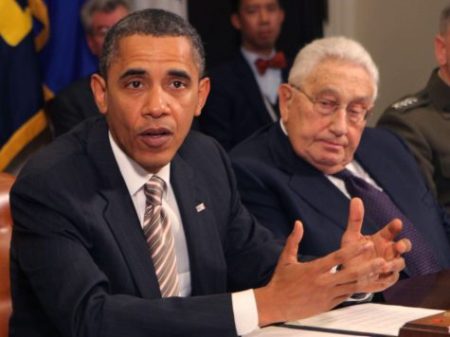
Obama-Kissinger-e1464550543436Pres. Obama seated with Henry Kissinger

{Originally posted to the author’s website, Abu Yehuda}

Old realpolitiker Henry Kissinger was in the news recently when he sat down with Donald Trump, to give him the benefit of his experience. It brought to mind Kissinger’s numerous attempts to get Israel out of the territories it conquered in 1967, before, during and – especially – after the Yom Kippur War.

Kissinger went to Iraq in December of 1975 to try to wean the regime away from the Soviet Union and improve relations with the US. In a discussion with Sa’dun Hammadi, the Iraqi Foreign Minister, Kissinger suggested that American support for Israel was a result of Jewish political and financial power, promised that the US would work to force Israel back to pre-1967 boundaries, and indicated that while the US would not support the elimination of Israel, he believed that its existence was only temporary. Here is an excerpt (the whole thing is worth reading):

I think, when we look at history, that when Israel was created in 1948, I don’t think anyone understood it. It originated in American domestic politics. It was far away and little understood. So it was not an American design to get a bastion of imperialism in the area. It was much less complicated. And I would say that until 1973, the Jewish community had enormous influence. It is only in the last two years, as a result of the policy we are pursuing, that it has changed.

We don’t need Israel for influence in the Arab world. On the contrary, Israel does us more harm than good in the Arab world. You yourself said your objection to us is Israel. Except maybe that we are capitalists. We can’t negotiate about the existence of Israel, but we can reduce its size to historical proportions. I don’t agree that Israel is a permanent threat. How can a nation of three million be a permanent threat? They have a technical advantage now. But it is inconceivable that peoples with wealth and skill and the tradition of the Arabs won’t develop the capacity that is needed. So I think in ten to fifteen years, Israel will be like Lebanon—struggling for existence, with no influence in the Arab world.  [my emphasis] …

Kissinger also promised that aid to Israel, which he presented as a result of Jewish political influence, would be significantly reduced. He indicated that legal changes in the US – he must have been referring to the creation of the Federal Electoral Commission in 1974 to regulate campaign contributions – would attenuate Jewish power and therefore American support for Israel. Naturally, he didn’t foresee the Israel-Egypt peace agreement, which permanently established a high level of military aid to both countries.

He further promised that the US would support a PLO-run Palestinian state if the PLO would accept UNSC resolution 242 and recognize Israel. This of course is what (supposedly) happened in the Oslo accords.

Kissinger insisted that “No one is in favor of Israel’s destruction—I won’t mislead you—nor am I.” But his hint that a smaller Israel might not survive is clear. Surely he understood that a pre-1967-sized Israel (within what Eban called “Auschwitz lines”) would have no chance of surviving, simply because of the strategic geography of the area.

Kissinger was wrong about the Arabs developing the capability to challenge Israel, but their place has been taken by soon-to-be-nuclear Iran and its proxies, who are significantly more dangerous than the Arab states ever were.

US policy, however, has kept more or less the same shape, except that the hypocrisy of insisting that the US supports the existence of Israel but in a pre-1967 size is even more glaring. The substitution of the PLO for the Arab states as the desired recipient of the land to be taken from Israel has barely made a ripple either in America or among the Arabs, suggesting that the policy is more about Israel giving up land than about the Arabs getting it.

The original motivation for Kissinger’s promises was supposedly the desire of the US to replace the Soviet Union as the patron of the Arab states. After the collapse of the USSR and the end of the Cold War in 1991, however, there was no change in policy. Although the Oslo Accords were initiated by left-wing Israelis, the US eagerly embraced them, and the so-called ‘peace process’ became a permanent stick to beat Israel with.

President Obama is especially adept at emphasizing support for Israel’s existence while at the same time demanding that Israel make concessions that would make her continued existence impossible. Apparently agreeing with Kissinger about Jewish power, Obama has worked to reduce the pro-Israel influence of American Jews in numerous ways, such as by providing access to the White House for groups like J Street and the Israel Policy Forum, while marginalizing traditional Zionist organizations like ZOA.

Kissinger’s almost anti-Semitic claim that US support for Israel is bought with Jewish money was probably untrue in 1975 and is even less so today, when a large proportion of American Jews, including wealthy ones, have chosen their liberal or progressive politics over Zionism. The coming struggle over the introduction of a pro-Palestinian plank into the Democratic platform is an indication that the party and with it, many of its Jewish supporters, is moving toward Obama’s position.

The Obama Administration’s program to extricate itself from the Middle East by empowering Iran as the new regional power has given a new impetus to the policy of shrinking Israel. Iran sees Israel as a major obstacle to its hegemony, for both geopolitical and religious/ideological reasons, and is committed to eliminating the Jewish state. Obama found it necessary to restrain Israel from bombing Iran’s nuclear facilities at least once (in 2012), and seems to be prepared to sacrifice Israel in order to achieve his goal of establishing Iranian regional dominance.

Some would go even further and say that Obama’s primary ideological goal is to eliminate Israel and the Iranian gambit is a means to this end, but that is highly speculative! Or maybe it’s a matter of two birds with one stone.

Henry Kissinger didn’t do us any favors, but I think the anti-Israel thread in American policy would have been strong enough without him, running from Truman’s Secretary of State George C. Marshall all the way to Obama’s stable of anti-Zionists like Rob Malley and Ben Rhodes.

Today Israel is long gone from the Sinai, more recently from Gaza, and probably only thanks to the disintegration of Syria, still holding the Golan Heights. I would like to believe that PM Netanyahu was correct when he said that Israel will never leave the Golan. Regarding Judea, Samaria and Jerusalem, I expect that we are about to begin a very difficult time, as the Obama Administration is likely to mount a campaign in its last days to fulfill Kissinger’s promise to the Arabs at long last.

The day after Abbas

May 27, 2016

The day after Abbas, Israel Hayom, David M. Weinberg, May 27, 2016

The day Mahmoud Abbas departs his post as president of the Palestinian Authority, or is deposed from his dictatorial perch, could be a watershed moment. It could and should force a reassessment of conventional thinking about the feasible contours of accommodating Palestinian independence.

That moment may be coming soon. Abbas is old, sick and tired. He has little to show for his persistent efforts to isolate Israel diplomatically and force Israel into hasty withdrawals. His regime is viewed as utterly corrupt by 95.5% of Palestinians (according to a recent Palestinian poll). The tens of billions of dollars in international aid he has swallowed have failed to build any real institutional basis for a good or democratic Palestinian government.

Abbas’ thuggish underlings are jockeying aggressively around him for pole position in the battle to succeed him as West Bank despot. Hamas, too, smells blood.

On the diplomatic front, Abbas’ departure will leave nothing behind but scorched earth. He has fled from real negotiation and compromise with Israel, espoused maximalist positions, stoked hatred toward Israelis and Jews, venerated terrorists and pushed the criminalization of Israel internationally. He basically convinced most Israelis that there is no reasonable peace deal to be had with the Palestinians.

And yet, the Obama administration and much of the global community nonsensically still considers Abbas and his gang to be viable partners for a two-state peace arrangement. What will it take for them to move beyond this rotten reliance on Fatah leadership and the creaky two-state construct?

Nevertheless, most Israelis, including Prime Minister Benjamin Netanyahu, still seek to move toward some clarity of borders, stability, and improved quality of life for Israelis and Palestinians alike.

They seek to do so without embarking on insane Israeli withdrawals that would likely lead to the establishment of a second “Hamastan” in the West Bank, or worse, an Islamic State-type regime.

So it’s time for Israel to re-articulate its thinking about the possibilities of an Israeli-Palestinian modus vivendi. Netanyahu should capitalize on his newly broadened government, and the coming transitions in Palestinian and American politics, to reset the diplomatic table. He can outline the acceptable contours of a conflict amelioration process in which Israel can pragmatically participate.

Doing so is especially urgent since the Obama administration is, in extremis, not-so-subtly readying to move the global goal posts farther away from Israel. This, of course, will only make the likelihood of Palestinian compromise with Israel even more remote.

Here are some guidelines and red lines that the Israeli government may want to adopt:

• Regional solutions: Unconventional alternatives to the struggling two-state paradigm must be on the table, including: a Palestinian-Jordanian federation; shared sovereignty with Israel in the West Bank; a three- or four-way land swap involving Egypt and Jordan; and, possibly, a combination of all these approaches.

The major Western powers must be willing to drive serious exploration of such alternatives. Arab states too can take responsibility for solving the Israeli-Palestinian conflict and consider investment of tangible resources in “regional” solutions.

• Baseline: Israel’s position at the outset of talks should be that 100% of the West Bank belongs to Israel, by historical right, and that this right is richly buttressed by political experience, legitimate settlement and security necessity. Only then can Israel hope to obtain a sensible compromise.

Talks should not begin from a 68-year-old armistice line forced upon Israel by Arab aggression; nor “from the point that talks last left off” eight years ago under a previous, defeatist Israeli government; nor from the defensive security fence line forced upon Israel by Palestinian terrorism; nor from any borders high-handedly dictated in advance by U.S. President Barack Obama or the international community.

• Security: The radical Islamic winter buffeting this region, and its inroads into the Palestinian national movement, means that the security envelope encompassing Israeli and Palestinian areas must be militarily controlled by the IDF, fully and indefinitely. This includes the Jordan Valley and the mountain ridges on both sides of Judea and Samaria.

• The Temple Mount: One way in which to wring Palestinian recognition of the Jewish people’s ancient ties to this holy land is to insist on Jewish prayer on the Temple Mount. This can be modestly facilitated either through a time-sharing arrangement (similar to that in place at the Tomb of the Patriarchs in Hebron), or through a small synagogue tucked away on the fringes of the vast Temple Mount plaza (which won’t overshadow the two large Muslim structures on the Mount).

Palestinian denial of Jewish religious, historical and national rights in Israel is the essence of the conflict. It is time to tackle this head-on, cautiously but candidly, at the core — in Jerusalem.

In conclusion, Netanyahu should leverage this turning point to reframe the parameters of how Israel can live astride the very problematic Palestinian national movement.

Muslim Countries Slam Israel—For Protecting them

April 28, 2016

Muslim Countries Slam Israel—For Protecting them, Front Page MagazineP. David Hornik, April 28, 2016

OIC

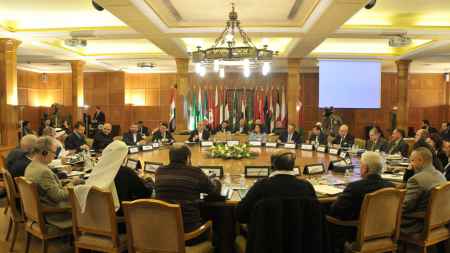
On Tuesday the Organization of Islamic Cooperation held an “emergency,” “extraordinary” meeting in Jeddah, Saudi Arabia.

The OIC includes violence-wracked countries and failed states like Syria, Iraq, Yemen, Libya, Afghanistan, Nigeria, and others, as well as severely poor and dysfunctional countries like Burkina Faso, Somalia, Bangladesh, and others. Not a single one of the organization’s 57 countries is a frontrunner in terms of freedom and prosperity, and most are far below that level.

But the topic of Tuesday’s “emergency meeting” was that on April 17 Israeli prime minister Benjamin Netanyahu said that: “Israel will never withdraw from the Golan Heights.”

The meeting’s final communiquéCondemns strongly Israel, the occupying power, and its macabre acts to change the legal status, demographic composition, and institutional structure of the occupied Syrian Golan.” It also “expresses unconditional support for the legitimate right of the Syrian people to restore their full sovereignty on the occupied Syrian Golan.”

The Arab League—whose 22 member states make up a sizable chunk of the OIC—had already weighed in on Netanyahu’s words on April 21, calling for a special criminal court to be set up and put Israel on trial for the transgression.

The Golan was controlled by Syria from 1948 to 1967, during which time Syrian gunners often fired at the Israeli communities below and forced their residents to sleep in bomb shelters. Israel captured the Golan from Syria in the 1967 Six Day War—and fortunately, since then, has kept it and developed it.

Today, with Syria devolved into Hobbesian war and fragmentation, the Heights are all the more strategically vital to Israel, and the idea of trading them for “peace” has—at least in the Israeli discourse—died a well-deserved death. The Golan, by the way, constitutes less than 1 percent of Syrian territory, and Syria’s loss of it almost 50 years ago is the least of its problems.

But there is further irony in the Arab League’s and the OIC’s reactions to Netanyahu’s words.

At present, Israel is engaged in tight strategic cooperation with two of its neighbors—Egypt and Jordan—against ISIS, one of the two most dangerous of the entities now fighting it out in Syria. More broadly, according to numerous reports, as well as hints dropped by Israeli and some Arab leaders, Israel and Sunni Arab states—led by Saudi Arabia—are also working together against the Iranian axis, the second of the two most threatening forces now operating in Syria.

Not only, then, do the Arab and Muslim countries as corporate bodies denounce Israel as a “macabre” criminal even as it acts as a crucial ally of not a few of these countries. They also react with outrage to the very Israeli policy—retaining the Golan—that keeps Israel strong in the face of the threats emanating from Syrian territory.

The signers of Tuesday’s communiqué in Jeddah know that there no longer exists a “Syrian people” to which sovereignty on the Golan could be restored. Some of the signers also know that a strong Israel is now one of the guarantors of their survival; and more specifically, that Israel’s presence on the Golan helps shield Jordan from imminent peril.

That Netanyahu’s words about keeping the Golan continue to spark fierce denunciations, then, reflects something deeper: an ongoing, profound antipathy to Israeli—that is, Jewish—control of any land in what is seen as, by rights, a Muslim domain. From that standpoint, even for Israel to hold onto a sliver of what used to be Syria, won in a defensive war almost half a century ago, is intolerable.

That same antipathy was on display earlier this month when seven Arab countries—including Egypt—got UNESCO to pass a particularly vicious resolution negating any Jewish connection to Judaism’s most sacred sites in Jerusalem, declaring them exclusively Muslim sites, and going so far as to accuse Israel of “planting Jewish fake graves in…Muslim cemeteries.” (Among the “yea” votes: France, Spain, and Sweden.)

These rhetorical eruptions suggest that, despite the growing behind-the-scenes collaborations, Israel remains very far from being accepted and legitimized in the region. Its best bet is to keep building its power, which gets some of its neighbors to deal with it pragmatically and rationally.

As for the Arab and Muslim countries, their continuing hang-up with the geographically tiny Jewish state, and repeated displays of ganging up on it in righteous fury, are unedifying and linked to their inability to tackle their real problems.

Report: Israel hunting chemical-armed ISIS terrorists in Golan

April 28, 2016

Report: Israel hunting chemical-armed ISIS terrorists in Golan, Israel National News, Ari Soffer, April 28, 2016

Isl St in SyriaISIS terrorist in Syria (file)Reuters

Israeli intelligence officials are concerned that an ISIS terrorist cell operating in the southern Golan Heights – along the border with Israel – has obtained chemical weapons.

According to a Channel 10 report, Israel is hunting the cell, located on the Syrian side of the border, amid fears the jihadists have imminent plans to use the chemical weapons in their possession.

The report added that the jihadists are not believed to be planning on using the chemical agents against Israel, but against their enemies inside Syria, of which there are no shortages. ISIS in Syria is currently fighting a multi-pronged war against the Assad regime, rival jihadists from Al Qaeda, other Syrian rebels, and, in northern Syria, against Kurdish forces.

Nevertheless, the prospect of an apocalyptic Islamist terrorist group possessing chemical weapons along Israel’s borders has naturally raised serious concerns in Jerusalem.

The Assad regime was supposed to destroy its massive chemical weapons arsenal under a Russian-brokered deal, but UN inspectors believe Damascus maintained reserves of nerve agents and other deadly chemical weapons. Fears have also been repeatedly raised of jihadists seizing chemical and even biological weapons depots from former regime positions.

Why Israel Should Keep the Golan Heights

April 27, 2016

Why Israel Should Keep the Golan Heights, American ThinkerSteve Postal, April 27, 2016

On Sunday, April 17, Israeli Prime Minister Benjamin Netanyahu (“Bibi”) convened a cabinet meeting on the Golan Heights stating that the “time has come for the international community to finally recognize that the Golan Heights will remain under Israel’s sovereignty permanently.” He spoke these words from Ma’aleh Gamla, next to the ruins of the historic Gamla, a Judean city to which the Romans laid siege in 67 CE during the Great Revolt (also known as the First Jewish/Roman War) (66-73 CE). In this battle, Roman soldiers slaughtered 4,000 Jews, while another 5,000 perished having “thrown themselves down” a ravine to their deaths in either an attempt to flee or in a mass suicide (Josephus, The Wars of the Jews, 4:1:9:80).

Bibi’s statements at Gamla followed reports that the United States and Russia were working on a draft peace resolution to the Syrian Civil War that would label the entire Golan Heights as Syrian territory. On April 19, U.S. State Department John Kirby stated “The US position on the issue is unchanged…Those territories are not part of Israel and the status of those territories should be determined through negotiations.” The Organization of Islamic Cooperation (OIC), the Arab League, Syria, and Germany rejected Netanyahu’s comments.

Despite most of the world seemingly poised to throw Israel under the bus over this issue, Israel should continue to assert its sovereignty over the Golan. Israel has a stronger claim to the Golan than Syria does, the Golan is of essential strategic value to Israel and the free world, and given increased threats and development of the land, that value has only appreciated.

Israel has a Stronger Claim to the Golan than Syria

Israel gained control of two-thirds of the Golan Heights following Syria’s defeat in the 1967 Six-Day War. (Israel later applied Israeli law to these territories in a de-facto annexation in 1981.) Syria gained independence in 1945. Before that, the Golan was part of the French Empire (1923-1945), jointly administered between the British and French Empires (1917-1923) and part of the (Turkish) Ottoman Empire for approximately 400 years preceding 1917. So, Syria had control of the Israeli-administered part of the Golan for 22 years (1945-1967), while Israel has had it for 49 years (1967 to the present). Israel has a stronger claim to the Israeli-controlled part of the Golan, given that it has been Israeli longer than it has been Syrian.

The Great Strategic Value of the Golan…

Enemies of Israel, both past and present, have used the high elevation of the Golan Heights against her. The ancient, pre-Arab Assyrian Empire literally looked down on ancient northern kingdom of Israel from the Heights. Assyria’s conquest of Israel in 722 BCE was launched from the Golan.

Fast-forward almost 2,700 years, and the Golan served similar aims for Israel’s enemies. Prior to the 1967 Six-Day War, modern Syria, like ancient Assyria, held the high ground over Israel from the Heights. (See cross-section and topographical maps on page 6 and 18, here). This topography enabled Syria to shell Israeli towns with ease, and sponsor Fatah fedayeen attacks from the Golan. Since gaining parity in elevation with the Syrians following the Six-Day War, the Syria/Israel border has been largely quiet. Given the many other conflicts in the Middle East, some of which I list here, that is a good thing for the world as well as Israel.

…Has Only Appreciated Given Current Threats

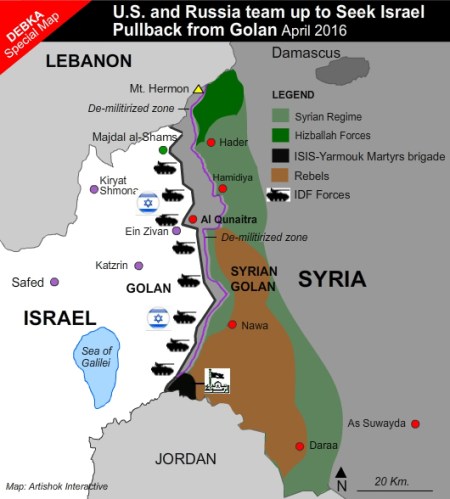
Israel’s (and the free world’s) enemies have grown stronger, and closer in proximity to Israel since the outbreak of the Syrian Civil War. Therefore, giving up the Golan would be foolish, and would most likely result in it being controlled by forces hostile to Israel and the West. The Islamic State and other jihadist groups, in addition to forces aligned with Syrian government (including Hizb’allah and the Iranian Revolutionary Guards (IRG)) are all vying for territory adjacent to the Israeli-controlled Golan Heights (see map). On April 22, the Islamic State captured the Salam al Jawlan Dam, approximately 17 miles away from Gamla. This victory puts the Islamic State closer to Israel than Tijuana, Mexico is to San Diego, California.

Hizb’allah has increased its presence in Syria in the past few years. During the Syrian Civil War, Israel killed Hizb’allah commanders/arch-terrorists Imad Mughniyeh in Quneitra (a town in the Syrian-controlled part of the Golan) and Samir Kuntar right outside of Damascus, in addition to six Hizb’allah fighters in Quneitra. A January 2016 article estimated that Hizb’allah has 8,000 troops in Syria. Hizb’allah is reportedly building a fortified base in Syria housing long-range missiles to use to attack Israel in a future war. Syria has also supplied Hizb’allah with tanks to create an armored division. Despite anti-smuggling efforts by Israel, Hizb’allah currently has between 100,000 to 130,000 rockets total (dispersed in Lebanon and Syria) that are more guided and precise, in addition to up to 12 Yakhont anti-ship cruise missiles with which to strike Israel. Hizb’allah is also preparing to invade Israel in a future war. If Israel relinquishes the Golan, there is a greater risk that Israel would be fighting Hizb’allah in both Lebanon and the Heights. On the other hand, Israel’s retention of its share of the Heights would serve as a strategic advantage in a future war.

Iran has also expanded its presence in Syria, not only through its proxy Hizb’allah. In January 2015, Israel reportedly killed an Iranian Revolutionary Guards (IRG) general on the Syrian side of the Golan, while in October 2015 the Islamic State killed a senior IRG commander in Aleppo. In October 2015, the Wall Street Journal estimated that approximately 20,000 foreign Shiite fighters were fighting in Syria, backed by Iran and Hizb’allah. These include Afghanis. Since the onset of the Syrian Civil War, Iran is increasingly encouraging its citizens, including those of Afghani origin, to buy property in Syria in strategic places, including Homs and Damascus. Just as Iran transferred populations to settle Lebanon in the 1980s during the creation of Hizb’allah, it is now aiding its people in settling Syria. Rather than seeing Iran as a stabilizing force in the region in the fight against the Islamic State, most Israelis, including Israeli Defense Minister Moshe Ya’alon, and Americans alike see Iran as an increasingly destabilizing force. Israel and the world need the Golan to balance against growing Iranian hegemony.

Water Remains a Vital Concern

Giving the Golan to Syria would once again place Israel’s enemies in a position to threaten its water supply via border skirmishes and diversion of water, as Syria did in the 1950s and during the War over Water (1964-1967). Israel relies on Lake Kinneret/the Sea of Galilee as the source of a significant amount of its water, and of its National Water Carrier.

The Golan is now an Integral Part of the Israeli Economy

Israel has developed the Golan to be a vital part of its economy that produces goods and services for both Israel and the world, including several wineries, a brewery, a mineral water distribution company, and a ski resort on Mt. Hermon. It also contains vast lands for agriculture, meat, and dairy production. Israelis and world travelers travel to the Golan for tourism, and about 20,000 Israelis live there. The Golan is also thought to contain a great amount of oil and natural gas deposits. Once tapped into, these resources could make Israel more energy self-sufficient, as well as provide the West with reliable sources of energy. It doesn’t make sense that Israel would uproot all of this only to hand the land over to its sworn enemies.

Israel is the Protector of the Golan’s Rich Archaeological Sites

The Golan also contains several archeological sites greatly cherished by the free world. Many of these sites date back to Antiquity and are painstakingly excavated and safeguarded by Israel, including: Gamla, Hippos/Sussita, Katzrin Ancient Village, the ruins of the Byzantine Christian monastery at Kursi, Nimrod Fortress, Um el-Kanatir, and the ancient Stonehenge-like monument Gilgal Refaim. If these sites were no longer protected by Israel, they could find themselves in the hands of a jihadist group like the Islamic State, which destroyed world-renowned archeological sites like the Temple of Ba’al, Jonah’s Tomb, and the ancient ruins of Nimrud and Nineveh.

To Whom Would Israel Give the Golan Back?

On a practical level, it is difficult for Israel to return the Golan to Syria because Syria effectively no longer exists. It is unlikely that the world powers will succeed in reconstructing Syria as it was before the civil war. The Islamic State controls about half of the country in the east, and pockets in the west. The Kurds control most of the north. The Syrian government doesn’t even control all that remains, with opposition forces (including jihadist groups) and Druze maintaining autonomous regions in the west.

Since the Syrian government does not control all of Syria, it cannot guarantee that other groups won’t use the Golan against Israel. But asking the Syrian government to guarantee such a thing, even if Syria were intact, is ridiculous. Syria is Israel’s historic archenemy, and has supported and harbored jihadist groups such as Fatah, Hamas, Hizb’allah, and the Iranian Revolutionary Guards (IRG).

Conclusion

Several Israeli politicians have opposed the prospect of increased Iranian and Hizb’allah presence in Syria following a future peace deal, and believe that these two pose a greater threat given their capabilities than the Islamic State. But purging Iran and Hizb’allah from Syria in a peace deal is a pipe dream given Syria’s alliances with Iran and Hizb’allah, Russia’s alliance with Iran, and the United States’ détente with Iran. Unless the goal of a Syrian peace deal is to open up yet another jihadist front against Israel, any final deal should preserve the right of Israel to retain its two-thirds of the Golan Heights. Enshrining this right in international law would strengthen the security of Israel and the free world. Continued Israeli sovereignty in the Golan is of great strategic value to Israel and the West, especially in these troubled times.


Top Senate Democrat chides Netanyahu over ‘untimely’ Golan remarks

April 22, 2016

Top Senate Democrat chides Netanyahu over ‘untimely’ Golan remarks, Jerusalem Post, April 22, 2016

(So Netanyahu should remain silent when Obama and Putin propose to give Golan to Israel’s long time enemy, Syria? — DM)

Sen. Ben Cardin, the top Democrat on the Senate Foreign Affairs Committee, counseled Israel to focus more on peace with the Palestinians.

Sen. Ben Cardin, the top Democrat on the Senate Foreign Affairs Committee, said declaring Israeli ownership of the Golan Heights was not “timely” while Syria was mired in civil war.

He counseled Israel to focus more on peace with the Palestinians.

“Syria is in a state of war, the whole area is in flux,” Cardin, D-Md., said Thursday when he was asked about Prime Minister Benjamin Netanyahu’s declaration this week that “the Golan Heights will forever remain in Israel’s hands.”

“I don’t think it’s timely to figure out what’s happening in the north when there is an active war in Syria,” Cardin said of Netanyahu.

“Ultimately you’re going to need to have some type of recognition factor and you don’t have a government you can negotiate with and talk with in Syria,” said Cardin, who was meeting foreign policy reporters during a break from Senate votes.

The Obama administration this week reiterated longstanding US policy that the strategic plateau captured by Israel in the 1967 Six-Day War was not part of Israel, and that its fate should be determined through negotiations.

“I would love to see a peace process and deal with the West Bank and Gaza,” he said. “And that to me is the most important chapter for Israel right now, is to advance the peace process toward a two-state solution for the Palestinians and Israelis. That to me is the most urgent need.”

Cardin is close to pro-Israel groups and has made clear in the past that he believes it is wrong to place the burden on Israel to renew talks, saying that the Palestinians must end incitement and return to talks with Israel suspended in 2014.

He was one of just four Senate Democrats who voted last year against the Iran nuclear deal, which Netanyahu vehemently opposed, and the senator was in the region just weeks ago, and met with Netanyahu.

Cardin also said he favors renewing the Iran Sanctions Act, due to expire this year, although Obama administration officials fear its renewal would rankle Iran and undercut the sanctions relief for nuclear rollback deal.

Cardin said there was broad agreement in Congress that the act needs renewing in order to keep in place sanctions that would be revived if Iran violates the deal. Obama administration officials say the president has the discretion to kick in sanctions should he need to.

The senator said he also hopes to pass new sanctions against Iran for testing ballistic missiles, a violation of UN Security Council resolutions. Current Republican proposals to renew the Iran Sanctions Act or to sanction Iran for its missile testing seem aimed at undercutting the Iran deal, Cardin said, a path he opposes even though he voted against the deal.

Islam is Winning and Western Civilization is losing – Parts I and II, America and Israel

April 19, 2016

Islam is Winning and Western Civilization is losing – Parts I and II, America and Israel, Dan Miller’s Blog, April 19, 2016

(The views expressed in this article are mine and do not necessarily reflect those of Warsclerotic or its other editors. — DM)

CAIR, the Muslim Brotherhood and other Islamist organizations are winning. Islamic terror in America, Europe and Israel has killed a thousand or so people. That’s a lot, but Islamization kills entire civilizations; with the death of our civilization, more deaths than Islamic terrorism has brought can be expected.

Should we give up and voluntarily commit civilizational suicide? Much of Europe has already done so and that’s what Obama and His minions are seeking for America. The forces pushing for it are strong and we can react with greater strength only if we have the will. Do we?

Part I – America

a. Muslims already in Obam’s America

Obama Muslim Brotherhood

The video embedded above promotes a new book titled See No Sharia, which deals with the Muslim Brotherhood and related Islamist organizations. The Muslim Brotherhood’s vision for America is laid out in a document put in evidence at the Holy Land Foundation criminal trial of several Islamist Muslim Brotherhood conspirators for funding Hamas, a terrorist organization, in violation of U.S. law.

[w]ritten in 1991 by a top Muslim Brotherhood operative, Mohamed Akram, and entitled “The Explanatory Memorandum on the General Strategic Goal of the Group in North America,” this internal correspondence was meant for the eyes only of the organization’s leadership in Egypt. So, the document is direct and to the point: It explicitly states that the mission of the Muslim Brotherhood in North America is “destroying Western civilization from within … by [the infidels’] hands and the hands of the believers so that Allah’s religion is made victorious over all other religions.” [Emphasis added.]

Following guilty verdicts against indicted conspirators, the Obama administration could (and should) have sought indictments against their multiple unindicted co-conspirators. It chose not to do so, most likely because pursuing the matter further would have been inconsistent with Obama’s world view — which seems to be consistent with that of the Muslim Brotherhood, et al.

See No Sharia, and to some extent the related video, illuminate ways in which Obama’s America has been seduced by the Council on American-Islamic Relations (CAIR) and other Muslim Brotherhood-related Islamist groups into requiring our law enforcement agencies to reject the notion of Islamist Terrorism and to accept instead that of non-denominational “Violent Extremism.” We are repeatedly told that Violent Extremism has nothing to do with Islam.

Although the connection between the Muslim Brotherhood and Nazism should not be overlooked, it generally is.

It was the Muslim Brotherhood, founded in Cairo in 1928, that established Islamic Jihad as a mass movement. The significance of the Muslim Brotherhood to Islamic Fascism is comparable to the significance of the Bolshevik Party to Communism: it was, and it remains to this day, the ideological reference point and the organizational core for all later Islamist groups, including Al Queda and Hamas. [Emphasis added.]

While British colonial policy contributed to the rise of Islamic radicalism, the Brotherhood’s jihad was not directed against the British, but focused almost exclusively on Zionism and the Jews.

Membership in the Brotherhood rose from 800 members in 1936 to over 200,000 in 1938. In those two years the Brotherhood conducted a major campaign in Egypt, and it was against the Jews, not against the British occupiers. This campaign against the Jews, in the late 1930s, which established the Brotherhood as a mass movement of Islamic Jihadists, was set off by a rebellion in Palestine directed against Jewish immigration from Europe and Russia. That campaign was initiated by the Grand Mufti of Jerusalem, Haj Muhammed Amin al-Husseini. [Emphasis added.]

Al-Husseini was extremely impressed with Adolf Hitler and his anti-Jewish rhetoric. In 1941 he visited Hitler in Berlin. He was so enthralled with Hitler and the Nazis, and their plans to exterminate the Jews that he decided to remain in Berlin. He lived there from 1941 to 1945, recruiting Muslims in Europe for the Waffen-SS. He was very close to Hitler. Husseini’s best friends were Heinrich Himmler and Adolf Eichmann.

He convinced Hitler that he would be able to persuade his Muslim brothers in the Arab world to carry out the extermination of Jews in the Middle East, just as the Nazis were doing in Europe.

Grand Mufti and Hitler

Back then, Hitler was largely focused on the elimination of Jews. That remains the focus of Hamas, of which the Muslim Brotherhood remains a principal supporter. Might it be due to long-standing Muslim Brotherhood ideas that many blame all of the conflicts in the Middle East on the Jewish “occupation” of Israel? That view is held by Obama and members of His administration. Hence, their persistent efforts to turn parts of Israel over to the “Palestinians,” culminating in a two state solution giving Hamas and the Palestinian Authority enhanced leverage in driving Jews from Israel.

Under pressure from the Obama administration, our law enforcement agencies cooperate with Islamist organizations to implement Sharia principles to fight “Islamophobia” rather than to locate, arrest and prosecute Islamist terrorists and wannabe Islamist terrorists. One possible rationale is that if we are nice, they may reduce their efforts to “radicalize” Muslims and, perhaps, stop some Islamic attacks. Another more likely rationale is that our dear leaders actually believe that Islamophobia (along with the Jewish “occupation” of Israel) is the principal cause of Islamic terrorism and that Sharia compliance (along with the “two state solution” and death of Israel) will solve the problems.

America has no blasphemy laws and should want none. They would violate our First Amendment right to freedom of speech. The Organization for Islamic Cooperation, consisting of fifty-seven Islamic nations, has been pushing the United Nations to impose Sharia law-style laws prohibiting blasphemy. They do not seek such laws for their own nations because they already have them to protect Islam. They seek them for America and the rest of what’s left of Western civilization, but seem to have little or no interest in prohibiting “blasphemy” against Judaism or Christianity.

muhammad-bomb-turban

The cartoon is blasphemous under Sharia law because it depicts Muhammed; some Muslims seek to kill those who produce such material. An “art exhibit” featuring an image of the Virgin Mary in a glass of urine is considered sacrilegious; some Christians seek to have government funding removed.  I am reminded of this rather old Andrew Klavan video:

b. Muslims coming to Obama’s America

As correctly observed in an article titled How Obama’s Refugee Policies Undermine National Security,

The issue of the admission of Syrian refugees into the United States has understandably ignited a firestorm of protest by Americans concerned about their safety and the safety of their families. These Americans are not exhibiting “xenophobia,” the usual claim made by the open borders immigration anarchists. They have simply been paying attention to what James Comey, the Director of the FBI, and Michael Steinbach, the FBI’s Assistant Director of the Counterterrorism Division, have stated when they testified before congressional hearings about the Syrian refugee crisis. They made it clear that these refugees cannot be vetted. There are no reliable databases to check and no capacity to conduct field investigations inside Syria to verify the backgrounds of these aliens. [Emphasis added.]

. . . .

I focused on these issues in my October 7, 2015 article for FrontPage Magazine, “Syrian ‘Refugees’ and Immigration Roulette: How the government is recklessly playing with American lives.”

Further reports have provided disturbing information that ISIS operatives have seized blank Syrian passports and other identity documents, along with the printing devices used to prepare passports and other ID, and have sold these documents to reporters in false names. These identity documents are indistinguishable from bona fide documents because they are bona fide documents — except that the photos and biometrics do not relate to the original person but create credible false aliases for anyone willing to pay for them.

Even if we had the documentation referred to above, it would be of little help because due to pressure from Muslim Brotherhood-related groups, we are not allowed to “profile” Muslims. As noted here,

obeisance to politically correct proscriptions against “profiling” is just one of the myriad ways in which we tell the jihadist enemy we really aren’t serious about the latest battle in the 14-century-long war of Islam against the infidel West.

. . . .

This lack of seriousness is endemic in this administration. Refusing to call ISIS “Islamic,” even going so far as to censor comments by French president François Hollande that used the word, bespeaks a dangerous frivolity. . . .

Our problem, however, goes beyond the politicians. Too many of us have failed to understand that this war did not begin on 9/11. It did not begin when al Qaeda declared war on us in the 90s and attacked our embassies and naval vessels. It did not begin in 1979, when our alleged neo-colonialist depredations supposedly sparked the Iranian revolution and created today’s Islamic (N.B., Mr. President) Republic of Iran, the world’s premier state sponsor of terrorism. It did not begin in 1948, when five Arab nations, all but one members of the U.N., violated Resolution 191 and attacked Israel. It did not begin when after World War I the victorious Entente powers exercised mandatory powers, granted by the League of Nations and codified in international treaties, over the territory of the Ottoman Empire that had sided with the Central Powers.

All these acts of aggression were merely the latest in a war begun in the 7th century when Islam attacked the eastern Roman Empire and began its serial dismemberment of the heart of Christendom, the old word for the West. For a thousand years the armies of Allah successfully invaded, conquered, occupied, enslaved, and raided the West, in accordance with its doctrine of jihad in the service of Muslim domination, and in homage to Mohammed’s injunction, “I was told to fight all men until they say there is no god but Allah.” This record of success began to end in the 17th century with the rise of the modern West and its technological, economic, and political advantages. [Emphasis added.]

But the war didn’t end with that Muslim retreat, even after what bin Laden called the “catastrophe” –– the demise of the Ottoman Caliphate, and the division of its territory into Western-style nation-states. The West won that battle, but it did not win the war. One reason is the Muslim nations of the Middle East never suffered the wages of their aggression. They sided with the Central Powers in World War I. They sat out World War II––apart from the many thousands who fought on the side of the Nazis––and received fugitive Nazis as guests after the war. Their serial aggression and terror against Israel has never been repaid with bombed-out capitals or punitive postwar reprisals. Their governments have never been punished for funding and proliferating mosques and madrassas teaching hatred of the infidel and terrorist violence in the service of jihad. [Emphasis added.]

Instead of paying the price of aggression, partly because of the Cold War, more recently because of Western failure of nerve and civilizational exhaustion, Muslims have been the beneficiaries of billions in Western aid, Western arms, Western defense against enemies, Western lax immigration policies, Western appeasement, and Western suicidal ideas like cultural and moral relativism. In short, Muslims have never accepted their defeats, and have never experienced the humiliating cost of their aggression, because the modern West has never forced them to pay for it. [Emphasis added.]

Thus they look at our unserious, godless culture of consumption and frivolity, of self-loathing and guilt, and these serious believers are confident that 350 years of defeat in battle have not led to defeat in the long war. And so the war goes on. The frivolous Western dogs bark, but Allah’s caravan moves on. [Emphasis added.]

Part II — Israel

Israel is constantly attacked by various UN organizations, most recently UNESCO, which has named the Western Wall after Muhammed’s flying horse, Barack Buraq.

There is a concerted effort among “Palestinians” and their supporters to erase all evidence of the historical connection of Jews to Israel. The UN, controlled by the Organization of Islamic Cooperation, is a willing partner in these efforts. Besides being motivated by Islamic Jew-hatred, this endeavor is in line with the Islamic supremacist tendency to appropriate the holy places and sacred figures of other religions.

Buraq is claimed to have transported Muhammed from Mecca to Jerusalem, hence giving Palestinians valid claim to all of Israel. Here’s one depiction of Buraq. Obviously, there are no photographs of Muhammed actually riding him, because images of Muhammed are prohibited. Look closely at the picture. Where did the horse’s head come from?

Buraq

Here’s an explanation of the Muslim nexus with the Western Wall:

Various scholars and writers, such as Ibn al-Faqih, Ibn Abd Rabbih, and Abd al-Ghani al-Nabulsi, have suggested places where Buraq was tethered, mostly locations near the southwest corner of the Haram.[7] However, for several centuries the preferred location has been the al-Buraq mosque, just inside the wall at the south end of the Western Wall plaza.[7] The mosque sits above an ancient passageway that once came out through the long-sealed Barclay’s Gate whose huge lintel remains visible below the Maghrebi gate.[7] Because of the proximity to the Western Wall, the area next to the wall has been associated with Buraq at least since the 19th century.[8]

A New York Times editorial published in October of last year purported to compare the Jewish and Muslim claims to the Temple Mount. An article by Daniel Greenfield at Front Page Magazine posed a few questions for the NUT NYT editorialists.

The Temple Mount is holy to Jews because of the Temples. So the New York Times chose to discuss whether the Temples really existed. It’s holy to Muslims because Mohammed supposedly flew there on a flying horse (with a woman’s head).

. . . .

Let’s interview some of the same scholars and archeologists as to whether the entire Muslim basis for laying claim to the area has any basis in reality. The New York Times discusses the need for “independent scientific verification” of the Temples. How about “independent scientific verification” of this?

Here are some things for the New York Times to verify…

1. Buraq was a flying horse with a woman’s head. Can we get any verification that such a creature ever existed.

2. Buraq flew from Mecca to Jerusalem and back in one night. “The distance between Mecca and Jerusalem is 755.1 miles. To complete this feat in one night would have meant that Buraq must have been jet propelled in the 7th Century.” Please provide independent scientific verification of the existence of a flying horse with a woman’s head that can travel faster than the speed of sound.

Oddly the New York Times doesn’t appear to be interested in independent scientific verification of Islamic Supremacist myths.

Evidently, UNESCO puts more stock in flying horses than in Jewish claims to the Temple Mount.

In view of the gravity of the Islam vs. Everybody Else situation, I decided to try to inject a bit of humor into only one of the many problems Israel faces with the UN, the OIC, Obama’s America, Europe, the Muslim Brotherhood, Hamas, the Palestinian Authority and others. I had originally intended to write a more comprehensive piece on Islam vs. Israel, and will probably do so after I post Part III of this series dealing with the Islamisation of Europe.

A better and more detailed account of the UNESCO – Temple Mount absurdity is provided here.

Conclusions

Obama’s America has the will to “win,” but confuses winning with eradicating Islamophobia and slicing Israel into pieces to give to the “Palestinians” and perhaps Syria, hence bringing “peace” to the Middle East. Under that definition of “winning,” Israel, the only democratic nation and the only solid ally of the United States in the region, will cease to exist; the Islamists will have won.

We need a very different version of “winning,” one under which our constitutional freedoms and our democratic nature will be cherished and protected. Both are inconsistent with Sharia law and are not part of any definition with which Obama would agree.

We can win against Islamist encroachments on our government and in our society only if enough of us recognize the dangers they entail. Then, we will have not only the means to win but the will to do so. A first step will be to bid Obama good riddance and to welcome a successor who recognizes the dangers of Islamism and is prepared — and wants — to move quickly and effectively against it.

https://www.youtube.com/watch?v=yeJ-iv3MOTo

Is Obama plotting yet again to harm embattled Israel?

April 19, 2016

Is Obama plotting yet again to harm embattled Israel? American ThinkerVictor Sharpe, April 19, 2016

According to a report dated April 16, 2016 in the sometimes reliable Debka Special Report,Israel’s top political leaders and military commanders were stunned and shocked last weekend when they found out that US President Barack Obama and Russian President Vladimir Putin have agreed to support the return of the Golan to Syria.”

If this is true, Barack Hussein Obama is plotting yet again a way to torment the Jewish state with yet another vile edict, one which clearly has nothing to do with enlightened statecraft but much more to do with evil witchcraft.

The occupant in the Oval Office cannot salivate enough at the prospect of harming Israel’s security and survivability. No doubt he is fulfilling a malevolent pact he has made with a cabal of Islamists and extreme leftists; both of which ideologies have satanic hatred for Israel.

With this threat hanging over the strategic territory known as the Golan Heights, it is time once again to learn its history and Biblical significance.  Even as modern day Syria is convulsed in a murderous and bloody civil war with untold thousands dead and maimed; even as its tyrant, Bashir al-Assad, fights for his political and physical life; even with all this, he nevertheless spews forth his hatred of Israel and his call to take away the Golan Heights from the Jewish state.

But so do those “rebels” who are fighting him and thus remind us of the famous aphorism: “better the devil you know,” or better still, “a plague on all your houses.”

Those of us who have stood on the Golan’s 1,700 foot steep escarpment, are struck by its immense strategic value overlooking Israel’s fertile Hula Valley and the beautiful harp-shaped lake below, called in Hebrew, Kinneret (better known as the Sea of Galilee.)

But during Syria’s occupation of the territory, no agriculture of any significance took place and no restoration of its terrain was ever undertaken. Instead, the Golan was a giant Syrian army artillery encampment whose sole purpose was to deliberately rain down upon Israeli farmers, fishermen and villagers an endless barrage of shells.

So what is the history of the Golan Heights and what is its overwhelming biblical significance to the reconstituted Jewish state? Perhaps we should return primarily to the biblical books of Joshua and Numbers.

Before the Tribes of Israel would cross the River Jordan and enter the Promised Land, the first among them had already taken possession of territory east of the River Jordan. These were the half tribes of Manasseh, Gad, and Reuben who liberated the Bashan and Gilead from the Amorites.

Biblical Bashan incorporates today’s Golan Heights. Gilead is the fertile land, which lies in what is the north eastern area of today’s Kingdom of Jordan:

“ … a little balm, and a little honey, spices and myrrh, nuts and almonds” (Gen 43:11.)

 It was Canaan, west of the Jordan, (including today’s so-called West Bank) which would pose the formidable challenge to Joshua bin Nun, the general leading the Israelite tribes.

So it was that Moses, the Lawgiver, spoke to the children of Gad and Reuben thus:
“Shall your brethren go to war, and shall you sit here?” (Numbers 32:6) The leaders of the two tribes replied that they would indeed send their warriors west into Canaan and fight alongside their brethren while their families would remain behind.

“We will build sheepfolds here for our cattle and cities for our little ones. But we ourselves will go ready armed before the children of Israel until we have brought them unto their place: and our little ones shall dwell in fenced cities because of the inhabitants of the land. We will not return unto our houses until the children of Israel have inherited every man his inheritance.” (Numbers 32: 16-18)

The story of reconstituted Israel and its people is mirrored in the biblical story of those ancient ancestors. The young men and women of modern Israel have gone again and again from their homes; be they villages, towns or cities, to the borders and established communities there in times of danger and peril, just like those young men did from the biblical tribes of Gad and Reuben.

The Jewish pioneers of today in Judea and Samaria — the biblical and ancestral heartland known today as the “West Bank” — are no different.

But the world has chosen to demonize them as ‘‘obstacles to peace” and an impediment to the creation of a fraudulent Arab state to be called Palestine; a state that has never existed in all of recorded history; and certainly not as a sovereign independent Arab state.

The pioneers are now called “settlers” and their homes and farms derisively called “settlements.” It matters not to the infernal chorus that sings the international siren song of hate and ignorance that these pioneers are returned to their ancestral homesteads and seek to take up their ploughshares to sow, to plant and re-possess their homeland.

But the purpose of this article is also to learn about the biblical and post biblical history of the Jewish descendants of Gad, Reuben and Manasseh. Such facts, of course, will not persuade the likes of Barack Hussein Obama as he plots and schemes.
 The Bashan region, now known as the Golan Heights, is a part of the biblical territory promised to the Patriarch Abraham and the people of Israel for an everlasting covenant — the Covenant of the Parts — recounted in Genesis 15. The city of Bashan was a refuge city (Deut, 4:43).

During the biblical period of the Jewish Kings, a battle high on the Golan took place between King Ahab and the army of Aram. A Jewish victory occurred at the present site of Kibbutz Afik, which lies a few miles east of Lake Kinneret, the Sea of Galilee.

After the end of the Babylonian Exile, and during the Second Temple Period, Jews returned to their homes on the Golan. Subsequently the returnees were attacked by gentiles and Judah Maccabee brought his forces up to the Heights to defend them.

At the conclusion of the Hasmonean Period, King Alexander Yannai finally re-conquered the Golan and Jews returned yet again. They rebuilt communities in central Golan, including the major cities of Banias and Susita, which formed part of the defense of the Golan.

Their residents fought heroically against the Roman legions during the Great Revolt of 135 AD, known also as the Second Uprising. It was led by the charismatic Shimon Bar Kokhba, known as the “Son of a Star” and a Jewish folk hero. Some 10,000 residents of Gamla alone perished fighting against Rome.

Second century Jewish coins were found on the Golan after its liberation during the last days of the June, 1967 Six Day War. These ancient coins were inscribed with the words, “For the Redemption of Holy Jerusalem.”

In the succeeding period of the Talmudic Period, Jewish communities flourished and expanded. Archaeologists have found the remains of 34 synagogues on the Golan. Jewish life on the Golan largely ended after the defeat of the Byzantine army by Arabs from Arabia carrying the new banner of Islam and the region descended into a long period of neglect.

But Jewish life returned yet again in the latter years of the 19th century when members of the Bnei Yehuda society from Safed purchased land on the Golan. In 1891, Baron Rothschild purchased around 18,000 acres in what is present day Ramat Magshimim.

The Jewish pioneers of the First Aliyah (immigration) began to farm land they had purchased in the Horan region until the Turkish Ottoman occupiers evicted them in 1898. Their land was then seized, and in 1923 the entire Golan was given away by Britain to the French Mandate over Syria and Lebanon.

Zionist leaders had earlier demanded the Golan be included within the new Jewish National Home because of its immense historical roots in biblical and post-biblical Jewish history. But Jewish liberation of the ancestral land was not possible until Israel was forced to fight for its very survival during the Six Day War.

The Golan is only 60 miles from Haifa; and the slopes of Mount Hermon, the highest point in the region, are the present eyes and ears of Israel. The Golan Heights were officially annexed to Israel in 1980. But it was the left wing Israeli Prime Minister, Yitzhak Rabin, who first offered to give the Heights away in 1994.

Since then, Israelis have winced at the wrenching offers made by subsequent left leaning Israeli governments and politicians who declared publicly their desire to give the entire Heights to the Syrians in return for a delusional peace. The overwhelming majority of Israelis are adamantly opposed to any such suggestion.

The Baker-Hamilton Iraq Study Group suggested that a way out for the United States from its Iraqi imbroglio would be for Israel to give the Golan Heights away to Syria. This, it was believed by the ISG, would bring Syria into responsible nationhood and wean her away from support of the “insurgents” attacking Iraqi and U.S assets. Of course this was before the successes of the “Surge” instituted by General Petraus made such a suggestion moot.

President Obama mistakenly renewed diplomatic relations with Syria as a way, he believed, of distancing the Arab dictatorship from its alliance with Iran. This was yet another delusional act by the current U.S. President whose foreign policy is in tatters.

But Obama’s carrot to the Syrian dictator, should it ever be resurrected, inevitably will be the Golan Heights. Again and again, he chooses to appease Arab and Muslim tyrants and it is becoming more and more apparent that indeed he is preparing to apply brutal pressure against Israel to force it to give away yet more of its biblical patrimony.

 But what would such pressure on Israel to withdraw from the Golan Heights mean? Bringing down the Israeli radar stations on the Hermon Massif to the valley floor below would seriously degrade any warning of future hostile Syrian attacks.

It would further hamper Israel’s ability to prevent attacks upon it by Syrian forces and by Hezb’allah, now armed to the teeth by the Iranian mullahs and with an estimated 150,000 missiles aimed at Israel and hidden among Lebanese civilians.

To put any trust in an Arab nation, especially the Iranian-backed Syrian regime, is truly mind boggling. Besides which, the so-called rebels fighting the Syrian regime have already stated that their ambition is also to take the Golan from Israel at the same time that they plan on making Syria yet another Islamic Republic and a future part of an Islamic Caliphate.

And consider this. The British colonial power gave away the Golan to France’s Syrian colony in 1923. Syria attacked Israel in 1967 and lost the Golan. Syria had occupied it for 44 years. Israel’s liberation of the Golan has lasted nearly 50 years. Ask yourself then, who has possessed the Golan the longest?

Any thought of being brutally forced by Obama and Putin to abandon biblical Bashan (the Golan) with its immense strategic value to such Islamist foes as exist in Syria would be a betrayal of a loyal ally of the United States and of those first Jewish ancestors on the Golan who long ago “built sheepfolds for their cattle and cities for their little ones.”


IDF’s drill secures Netanyahu-Putin summit

April 18, 2016

IDF’s drill secures Netanyahu-Putin summit, DEBKAfile, April 18, 2016

1 (3)

The IDF launched an unannounced military-air exercise in northen Israel Monday April 18. It will also be held in the Jordan valley, strategically located south of the Golan Heights and the Sea of Galilee. Despite the official explanation that the drills are part of the IDF’s training schedule for 2016, it is difficult not to see it as a follow-up to the Cabinet meeting on the Golan the previous day, including Prime Minister Benyamin Netanyahu’s declaration that “Israel will never withdraw from the Golan.”

Just as the Cabinet meeting was an “emergency” one, the exercise is not part of standard training, as an IDF statement claimed, but rather part of the overall picture of the war in Syria on the other side of the northeastern border.

The drill is mainly intended to prevent a possible attack by ISIS, Syrian, Iranian or Hizballah forces aimed at torpedoing Netanyahu’s discussions in Moscow with Russian President Vladimir Putin on Thursday, April 21.

DEBKAfile’s military sources report that the IDF exercise shows only half of the military picture in the area.
On the other side of the border, in the triangular pocket where the Israeli, Syrian and Jordanian borders meet, heavy fighting has been underway for several days between Syrian rebels and forces of the Yarmouk Martyrs Brigades and the al-Muthanna organization, which have both sworn allegiance to ISIS. The battles are taking place across from Israel’s Hamat Gader, south of the Sea of Galilee, which is the reason why the exercise is also being held in the Jordan Valley.

On the other side of the border, in the triangular pocket where the Israeli, Syrian and Jordanian borders meet, heavy fighting has been underway for several days between Syrian rebels and forces of the Yarmouk Martyrs Brigades and the al-Muthanna organization, which have both sworn allegiance to ISIS. The battles are taking place across from Israel’s Hamat Gader, south of the Sea of Galilee, which is the reason why the exercise is also being held in the Jordan Valley.

On the other side of the border, in the triangular pocket where the Israeli, Syrian and Jordanian borders meet, heavy fighting has been underway for several days between Syrian rebels and forces of the Yarmouk Martyrs Brigades and the al-Muthanna organization, which have both sworn allegiance to ISIS. The battles are taking place across from Israel’s Hamat Gader, south of the Sea of Galilee, which is the reason why the exercise is also being held in the Jordan Valley.

On Sunday, the leader and commander of Al-Muthanna was killed during the fighting. The goal of the rebel attack is to capture the Syrian villages in the territory held by ISIS, which threatens the Galilee and the Golan communities of Tel Katzir, Shaar Hagolan and Masada. Sources in Kuwait reported last week that Jordanian special forces and Israeli drones marked in the colors of the Jordanian air force are participating in the battles. The developments on the ground indicate that the goal of the attacking forces is to uproot ISIS from the Israeli and Jordanian border areas.

DEBKAfile’s sources provided the following exclusive details on April 17:   

The Israeli cabinet holds its weekly session Sunday April 17, on the Golan. Prime Minister Benyamin Netanyahu will visit Moscow on Thursday, April 21 to meet with Russian President Vladimir Putin and to launch the most important battle of his political career, and one of Israel’s most decisive contests of the last 10 years: the battle over the future of the Golan Heights.

DEBKAfile’s intelligence sources and its sources in Moscow report exclusively that Israel’s top political leaders and military commanders were stunned and shocked last weekend when they found out that US President Barack Obama and Russian President Vladimir Putin have agreed to support the return of the Golan to Syria. The two presidents gave their top diplomats, Secretary of State John Kerry and Foreign Minister Sergei Lavrov, the green light to include such a clause in a proposal being drafted at the Geneva conference on ending the Syrian civil war.

Israeli prime minister Benjamin Netanyahu seen during a security and defense tour in the Golan Heights, near the Northern Israeli border with Syria. April 11, 2016. Photo by Kobi Gideon/GPO *** Local Caption *** ??? ?????? ?????? ?????? ????? ?????? ?????. ????? ?????? ?????? ????? ?? ????? ??????? ???? ????? ?????? ?????? ?????

Israeli prime minister Benjamin Netanyahu seen during a security and defense tour in the Golan Heights, near the Northern Israeli border with Syria. April 11, 2016. Photo by Kobi Gideon/GPO

Israel captured the Golan from the Syrian army 49 years ago, during the Six-Day War in 1967 after the Syrian army invaded Israel.

In 1981, during the tenure of then Prime Minister Menachem Begin, Israel passed a law defining the Golan as a territory under Israeli sovereignty. However, it did not state that the area belongs to Israel.

While Israel was preparing for a diplomatic battle over the future of Jerusalem, Judea and Samaria, Obama and Putin decided to deal a diplomatic blow to Israel and Netanyahu’s government on an unexpected issue, the Golan.

It is part of an endeavor by the two powers to use their diplomatic and military cooperation regarding Syria to impose agreements on neighboring countries, such as Israel, Turkey, Saudi Arabia and Jordan.

For example, Washington and Moscow are trying to impose an agreement regarding the granting of independence to Syrian Kurds, despite Ankara’s adamant opposition. The two presidents are also pressuring Riyadh and Amman to accept the continuation of Syrian President Bashar Assad’s rule, at least for the immediate future.

DEBKAfile’s sources report that just like the other diplomatic or military steps initiated by Obama and Putin in Syria, such as those for Assad’s eventual removal from power, the two powers see a resolution of the Golan issue as a gradual process that may take a long time, perhaps even years. But as far as they are concerned, Israel will have to withdraw from the Golan at the end of that process.

It should be noted that Prime Minister Netanyahu is not traveling to Washington to discuss the Golan issue with Obama. The frequent trips by the prime minister, senior officials and top IDF brass to Moscow in recent months show where the winds are blowing in the Middle East.

However, Moscow is not Washington, and Israel has no lobby in the Russian capital defending its interests.

It should be made very clear that the frequent trips by senior Israeli officials to Moscow have not created an Israeli policy that can influence Putin or other senior members of the Russian leadership. Putin has made occasional concessions to Israel on matters of minimal strategic importance, but on diplomatic and military steps regarding Syria and Iran he has shown little consideration of Jerusalem’s stance.

It should also be noted that there has been no basis for the enthusiasm over the Russian intervention in Syria shown by Netanyahu, Israeli ministers and senior IDF officers.

All of the calls by a number of Russia experts, mainly those of ll of the calls by a number of Russia experts, mainly those of DEBKAfile, for extreme caution in ties with Putin have fallen on deaf ears among the political leadership in Jerusalem and the IDF command in Tel Aviv.

Amid these developments, three regional actors are very pleased by Washington and Moscow’s agreement to demand Israeli withdrawal from the Golan: Syrian President Assad, the Iranian leadership in Tehran and Hizballah leader Hassan Nasrallah.

Now, they do not need to risk a military confrontation with Israel over the Golan because Obama and Putin have essentially agreed to do the dirty work for them.