Posted tagged ‘Iranian threats’

Eyes wide shut

July 24, 2015

Eyes wide shut, Israel Hayom, Ruthie Blum, July 24, 2015

On Thursday, U.S. Secretary of State John Kerry spent more than four hours trying to defend the nuclear deal before the Senate Foreign Relations Committee. Grilled by Republicans furious at the Obama administration’s total surrender to Iran, Kerry remained true to character: He doubled down on meaningless platitudes with self-righteous indignation.

In fairness to America’s top diplomat, whose stupidity is only matched by President Barack Obama’s evil, how else could he respond to rational concerns but to get on his high horse? Indeed, all he had at his disposal in the face of the emerging details of the agreement, each more shocking than the next, was a feeble attempt to invert reality and ridicule his critics in the process.

Referring to a “Citizens for a Nuclear Free Iran” commercial aimed at persuading Congress to vote against the agreement and currently airing across the U.S., Kerry argued, “The alternative to the deal we’ve reached isn’t what we’re seeing ads for on TV. It isn’t a better deal, some sort of unicorn arrangement involving Iran’s complete capitulation. That’s a fantasy, plain and simple.

This was Kerry’s way of insisting that he had not been “bamboozled” by his Iranian counterparts, as Sen. Jim Risch (R-Idaho) asserted, nor “fleeced,” as committee chairman Sen. Bob Corker (R-Tenn.) accused.

In other words, no wool was pulled over his eyes. Not by the Iranians, at any rate. They were clear all along. And loud, as Kerry can attest, since he was the target of Iranian Foreign Minister Mohammad Javad Zarif’s repeated abusive outbursts during the negotiations.

No, if Kerry was “bamboozled” or “fleeced” by anyone it was Obama, who told him to secure a deal at any and all cost, because doing so would be better in the short run. As for the long-term repercussions, well, that would be a future administration’s headache.

The way Obama and Kerry both justify the travesty is even less comforting. They claim that since Iran was going to pursue nuclear weapons anyway — and support terrorism anyway, and violate terms anyway, and threaten to wipe Israel off the map anyway, and burn American flags anyway — it would be wiser to join them than beat them.

The logic is mind-boggling. But it does shed light on the administration’s attitude towards Israel.

Obama has been bent on earning the Nobel Peace Prize he was awarded — simply for entering the Oval Office — by completing a contract with Iran. Kerry has been obsessed with procuring a document declaring “peace” between Israel and the Palestinian Authority in order to become a Nobel laureate himself.

His dreams were dashed, however, when Prime Minister Benjamin Netanyahu was unwilling to cross certain red lines. Though Netanyahu did agree to negotiations, the release of well over 1,000 Palestinian terrorists, a halt in settlement construction, groveling before Turkish President Recep Tayyip Erdoğan and a slew of slights from the White House, he refused to commit Israel to suicide.

It is thus that Palestinian Authority President Mahmoud Abbas would not come to the negotiating table. Had the P5+1 countries not given Iran reason to believe that their red lines were merely rhetorical, Ayatollah Ali Khamenei — Iran’s “supreme leader” in every respect — would not have allowed his puppets to parlay with American and European representatives in the first place.

No wonder Obama and Kerry can’t stand Netanyahu. If the president of the United States can roll over and abdicate to a sworn enemy, who does the prime minister of Israel think he is to remain steadfast?

Understanding this is crucial. What it means is that Obama’s camp is right — and Netanyahu’s is wrong — about not having been able to hold out for a “better deal.” Iran, like the Palestinians it supports, has one goal in mind: demolishing the enemy.

It remains to be seen whether Obama will garner enough support in Congress to enable him to veto opposition to the agreement, which gives Iran carte blanche for its genocidal-weapons development and billions of dollars to bolster global terrorism.

At the moment, it’s not looking good. What’s worse is an annex in the agreement that provides for cooperation between the P5+1 and Iran “to strengthen Iran’s ability to protect against, and respond to nuclear security threats, including sabotage, as well as to enable effective and sustainable nuclear security and physical protection systems.”

This clause is causing a stir in Israel. It was also the focus of a question raised by presidential hopeful Marco Rubio (R-Fla.) during the Senate hearing. He wanted to know if it means the U.S. would be required to protect Iran’s nuclear facilities from a potential Israeli military strike.

“No,” retorted Energy Secretary Ernest Moniz, on hand with Treasury Secretary Jack Lew to help Kerry through the ordeal. Rubio was not convinced.

He did issue a warning, however: “The Iranian regime and the world should know that this deal is your deal with Iran … and the next president is under no legal or moral obligation to live up to it.”

What the rest of us need to know is which will come first, an Israeli attack or a Republican in the White House?

Springtime for America’s Enemies

July 22, 2015

Springtime for America’s Enemies, The Daily BeastGarry Kasparov, July 22, 2015

(This is from The Daily Pest Beast. — DM)

Dangerous and short-sighted U.S. diplomacy has empowered no one except state sponsors of terrorism and fascistic regimes.

There has never been a better time in history to be an enemy of the United States of America. While America’s traditional allies in Europe and the Middle East express confusion and frustration, Obama’s White House delivers compliments and concessions to some of the most brutal dictatorships in the world. In the span of a single week, the U.S. has restored diplomatic relations with Cuba, pressured Ukraine to accept Vladimir Putin’s butchering of its eastern region, and brokered a deal to liberate Iran from sanctions.

These actions would represent a tremendous series of diplomatic triumphs if they improved human rights in these repressed nations, saved lives in conflict regions, or improved global security. That is, in fact, what the White House says these deals will do, despite copious evidence to the contrary. These negotiations represent willful ignorance of the fundamental nature of the regimes in question, especially those of Iran and Russia. Cuba is a political hotspot in the U.S. and remains a potent symbol of totalitarianism, but despite its regional meddling, especially in Venezuela, it isn’t on the scale of the global threats represented by Iran’s terrorism and nuclear ambitions and Putin’s nuclear-backed expansionism. Regardless of the wishes of the Iranian and Russian people, their leaders have no interest in peace, although they are very interested in never-ending peace negotiations that provide them with cover as they continue to spread violence and hatred.

The vocabulary of negotiation is a pleasant and comforting one, especially to a war-weary America. It’s difficult to argue against civilized concepts like diplomacy and engagement, and the Obama administration and the pundits who support it have made good use of this rhetorical advantage. In contrast, deterrence and isolation are harsh, negative themes that evoke the dark time of the Cold War and its constant shadow of nuclear confrontation. No one would like less a return to those days than me or anyone else born and raised behind the Iron Curtain. The question is how best to avoid such a return.

The favorite straw man of the “peacemongers” is that the only alternative to appeasement is war, which makes no sense when there is already an escalating war in progress. The alternative to diplomacy isn’t war when it prolongs or worsens existing conflicts and gives the real warmongers a free hand. Deterrence is the alternative to appeasement. Isolation is the alternative to years of engagement that has only fueled more aggression.

Perhaps it’s because I grew up in a Communist country that I cannot so casually ignore the suffering of the people being left behind as these treaties are signed. Ronald Reagan was called a warmonger by the same crowd that is praising Obama to the skies today and yet Reagan is the one who freed hundreds of millions of people from the Communist yoke, not the “peacemakers” Richard Nixon and Jimmy Carter.

Diplomacy takes two while capitulation is unilateral. Diplomacy can fail and there is real damage, and real casualties, when it does. Putin’s dictatorship was immeasurably strengthened by the catastrophe known as “the reset,” an Obama/Hillary Clinton policy that gave Putin a fresh start as an equal on the world stage just months after he invaded Georgia. Years that could have been spent deterring Putin’s crackdowns and centralization of power while he still needed foreign engagement were instead spent cultivating a partnership that never really existed. Time that could have been used to establish alternate sources of gas and oil were squandered, leaving Europe vulnerable to energy blackmail.

By 2014, Putin had consolidated power at home completely and, with no significant domestic enemies left and sure he would face little international opposition, he was confident enough to invade Ukraine and annex Crimea. The thousands of dead and hundreds of thousands of displaced people in Ukraine are Putin’s victims, of course, but they must also weigh on the conscience of the bureaucrats, diplomats, and leaders whose cowardice—well-intentioned or not—emboldened Putin to that point.

As recent days and past decades past have shown us, it is easy to paint the critics of nearly any diplomatic process as warmongers. Again, the language of peace and diplomacy is soothing and positive. If we just talk a little longer, if we just delay a little more, if we just concede a little more… To make the peacemonger position even more unassailable, every outbreak of violence large or small can be blamed on the failure of the diplomats to talk, delay, and concede more. And sometimes, to be fair, acceptable compromises are reached and, if not win-win, mutually satisfactory lose-lose agreements can defuse conflicts and avoid bloodshed. Diplomacy is supposed to be the modern way, the civilized way, and it should always be considered first—and second.

But diplomacy also requires a measure of good faith by all parties. It assumes that one side (or both) isn’t lying and cheating. It assumes that there is sufficient coercion and/or self-interest for the deal to hold. A peace treaty assumes that both sides actually want peace; a ceasefire assumes that both sides will cease firing. When these things cannot be assumed, any deal is a likely to be a bad deal. At best it will be meaningless and the regimes operating in bad faith will be quick to exploit the delays and concessions. By signing agreements with regimes that have proven time and again that they cannot be trusted and have no interest in peace or ceasefires, the Obama administration has turned the great game of diplomacy into Russian roulette.

Keeping a firm grip on power is the only thing that matters in a dictatorship. The consequences of losing power in an authoritarian regime rarely involve peaceful retirement and a long life. (Gorbachev is a notable exception, mostly due to his cleverly taking credit for the Soviet collapse he fought so hard to avoid, as well as to the shameful lack of appetite in Russia and the international community for holding Communist leaders accountable.) Both Khamenei and Putin have brutally cracked down on their own people to remove any challenges to their authority. Both rely on vicious propaganda to drum up nationalism and hatred for foreign enemies and “traitors” at home, i.e. anyone who opposes or criticizes the regime. Both wage war and terror on their borders and beyond. Both hold sham elections to provide a distraction for their citizens and fodder for the global press to blather on about the potential for liberalization. And this week, both Putin and Khamenei have been rewarded by President Obama with negotiations that will aid them in causing further suffering to their people and in making the world far less safe. Obama gets his “peace for our time” fanfare and the dictatorships continue with business as usual.

A remark made by Israeli Minister of Foreign Affairs Moshe Dayan is much repeated by the peacemongers in times like these. In a 1977 interview the renowned military man said that “if you want to make peace, you don’t talk to your friends.” This is both clever and true, but what has been forgotten is that Dayan continued, “But the question is whom do we want to make peace with—not just who are our enemies.” It’s delusional to think you can make peace with an unrepentant state sponsor of terror like Iran or a Russian regime that is sending tanks across a European border and adopting fascist propaganda.

It is clear that the Obama administration thinks it should and can make peace with anyone, whether they like it or not, and whether or not they actually change their odious behavior. These terrible deals with Cuba, Russia, and Iran—it’s like the old joke about the businessman who sells each unit at a loss but says he’ll make it up in volume. Cuba continues to jail journalists and dissidents. Putin’s forces are still illegally occupying Crimea and waging war in Eastern Ukraine while Assistant Secretary of State Victoria Nuland bullies the Ukrainian government into the concessions that Putin demanded in the latest Minsk ceasefire accord (which his troops ignore, of course).

Iran will dramatically upgrade its ability to support the military wings of Hezbollah, Hamas, and the Houthis in Yemen it has been supplying with weapons for years. There is little doubt Iran will also continue its attempts to develop a nuclear weapon, and even if it fails it is sure to spark a nuclear arms race in the region. Iran’s hardliners have been cemented in power by escaping sanctions while giving up nothing. Calling all of this a triumph for diplomacy is perverse. By the time Obama is polishing his Nobel Peace Prize in his presidential library, the next president will be left facing two aggressive despotic regimes that are stronger and more confident of their invincibility than ever.

Expansionist dictatorships never transform quietly. They most often end in collapse or violent revolution. Comparisons of the Iran agreement to the opening of China in the 1970s are absurd. China would have starved had they not abandoned Mao’s catastrophic plans and built an export economy, something that required formal relations with the free world. In contrast, petro-dictatorships like Iran don’t need their people or to be on good terms with the West—especially not now that the economic sanctions will be lifted.

The casualties that have resulted from weakness masked as diplomacy far outnumber those stemming from being too hasty to confront and deter aggression. The peacemongers should keep that in mind as Iran uses some of its $100 billion in newly unfrozen assets to arm its terror proxies. Before applauding the next ceasefire in Ukraine as progress they should recall what Putin did during the last two. More than anything, before Obama again praises the tyrannical leaders of Cuba, Iran, and Russia for their cooperation, he should remember that some enemies are worth having.

Op-Ed: Obama’s Deception Set Off a New Era

July 22, 2015

Op-Ed: Obama’s Deception Set Off a New Era, Israel National News, Dr. Joe Tuzara, July 22, 2015

Not surprising, the Obama administration considers both the US and Israel to be key threats to peace in the world.

**********************

President Barack Obama’s strange self-delusion for Iran to become a more “formidable regional power” has already triggered an undeclared new era for nuclear proliferation in the Middle East.

Despite this established ignominy of an emboldened Iran strengthened by Obama’s naive policies at the expense of Israel and Sunni Arab allies, the White House suggestion that they “sought to pursue diplomacy to prevent Iran from obtaining a nuclear weapon that could set off a nuclear arms race” is based on fantasy.

Whichever way they try to spin it, Obama’s rhetoric that the deal “cut off every pathway to nuclear weapons, prevented a nuclear arms race in the Middle East” doesn’t match reality.

The deal explicitly acknowledges that Iran is gaining benefits no other state would gain under the Non-Proliferation Treaty (NPT). In terms of its nuclear development, instead of dismantling Iran’s nuclear program, that program is now protected.

Such a deal, one that allows a leading state sponsor of terror to retain the ability to develop nuclear weapons, threaten Israel, continue their hegemonic ambitions and support for terrorism is a historic nadir of the Obama presidency.

As Obama’s secret letter to Ayatollah Khamenei makes clear, securing the deal simply legitimizes Tehran, a de facto regional US ally standing on the threshold of a nuclear weapon.

It is a shame that the Obama administration’s total capitulations were made in areas that were supposed to prevent Iran from acquiring nuclear weapons. The fake Iran deal does confirm Israeli and Sunni Arab Muslims fears that they can no longer depend on the Obama administration to protect their vital national security interests.

Even worse, Obama had given up on its stated goals of preventing Iran from obtaining a nuclear weapon and his dumb promise to fight a bad deal while underwriting the expansion of Iranian hegemony unquestionably was not just only reckless but cynical.

As it turned out, “détente” with Iran is the main goal of the Obama’s pretend diplomacy. In essence, Obama’s “appeasement” is not diplomacy and his secret back-channel negotiations with the fanatical, corrupt and Machiavellian terrorist regime is treason.

The moment Obama become an advocate for the “Islamic State of Iran” that enjoys the benefits of no real verification regime and no real consequences for serial violations of UN nuclear weapons resolutions, he has lost all credibility to govern our great nation. Similarly, when Obama negotiated away Israel’s existence, he became the real enemy of Israel.

Not surprising, the Obama administration considers both the US and Israel to be key threats to peace in the world. Given that Obama has done all it can to [prevent an Israeli preemptive strike, from leaking Israeli attack scenarios to denying Israel air space over Iraq, the fact that he] coordinated with the Iranian regime –and attempted to cut off weapons shipments to Israel in the midst of its war with Iranian proxy terror group Hamas, his statements about the strength of this deal carry no weight at all.

On the other hand, Obama’s flawed perspective and deception on a grand scale significantly risks the collapse of 50 year US alliance structure in the Middle East, contravenes 70 years of US nonproliferation policy and endangers 45 years of a landmark international treaty (NPT) whose objective is to prevent the spread of nuclear weapons and weapons technology.

Quite unfortunately, the Iran deal set a dangerous precedent that allows rogue states and radical fundamentalist elements in particularly issuing veiled threats to quickly go nuclear. With Iran getting active on the borders of Egypt and Saudi Arabia, those regimes would be foolhardy not to attempt to develop a nuclear capacity –especially given that Obama has shown there are no detriments to doing so.

Equally disturbing, Obama has given all the Sunni Arab Gulf countries the pathways to build civilian nuclear energy programs with possible military dimensions.

Ironically, Obama has created a major void allowing an opening for many potential benefits, that it holds for Russia. In the last six months, Russia has struck three significant nuclear deals with long-time US Middle East allies: Egypt, Jordan and Saudi Arabia.

An unnamed sources told the Al Arabiya TV network that Saudi Arabia and Russia agreed to build 16 nuclear reactors that Russia would play a significant role in operating. France became the first country to sign feasibility studies to build two nuclear reactors in Saudi Arabia potentially worth more than $10 billion.

Now we all know that Sunni Arabs will not sit idly as the world’s largest state-sponsor of terror becomes a nuclear-threshold state. The regional powers know this. Saudi Arabia has already said it will “match the nuclear capabilities Iran is allowed to maintain,” and it is an open secret that the Saudis have a nuke on the shelf in Pakistan.

The Center for Strategic and International Studies (CSIS) also noted that “the Arab Gulf states have acquired and are acquiring some of the most advanced and effective weapons in the world.”

One of many unintended outcomes of the nuclear talks is the emergence of covert Saudi and Gulf State alliance with their former archenemy, Israel. The Saudis and the Israelis have had five “secret” meetings to discuss common defense and intelligence issues related to Obama’s policy of strengthening Iran economically while permitting the terror state to become a potential nuclear power with a breakout capacity that is unknowable.

Tehran’s shocking nuclear bravado aside, the Middle East is going to experience another historic moment with the visit of Saudi Prince Talal bin Waleed  to Israel in what could be the most significant move toward peace between the Arabs and Israelis since Egypt’s Anwar Sadat’s iconic trip to Israel.

Saudi Prince Talal denounced the growing waves of anti-Semitism in the region and praised Israel as the region’s sole democratic entity. Calling for Muslims in the Middle East “to desist from their absurd hostility toward the Jewish people,” the prince went on to announce that Saudi King Salman bin Abdulaziz Al Saud has instructed him to open a direct dialogue with Israel’s intellectuals in pursuit of amicable ties with all of Israel’s Arab neighbors.

Amid the despair in the region generated by Obama’s Iran policy, this could be the most promising breakthrough  toward peace between Arabs and Israelis.

In arrogantly thinking he alone could decide the future of the Middle East, Obama has unleashed the unintended consequences that frequently shape great events: in this instance for the betterment of all the peoples of the Middle East but ultimately to the detriment of America’s interests.

Now, the moment of decision had finally come, Israelis must accept the risks and unintended consequences of preventive war rather than wait until Iran’s nuclear bombs are built.

Either way, for as long as the highly imperfect Iranian accords have not been ratified or rejected by Congress, a preemptive strike of Iran’s nuclear facilities is not an option.

Unless, Iran’s magical collaboration with the Obama administration ends up restocking its Iranian proxies with sophisticated radars and weapons from Russia, China and the United States, or facing the imminent threat of a nuclear attack- Israel will not hesitate  to deploy the “Samson option”.

And as long as the imminent proxy wars in the Golan Heights, Sinai Peninsula, Gaza or Lebanon remain conventional, Israel’s response would remain reciprocally non-nuclear.


Iran Deal: Europe’s Chief Negotiator Sympathized with Iran

July 21, 2015

Iran Deal: Europe’s Chief Negotiator Sympathized with Iran, Gatestone InstituteGeorge Igler, July 21, 2015

  • “Islam belongs in Europe… I am not afraid to say that political Islam should be part of the picture.” — Federica Mogherini.
  • Under the treaties establishing the EU, there are no democratic checks on figures such as Mogherini or on the enormous power they wield.
  • “It was Hamas’s strategy, not illegal Israeli action — as this report shamefully alleges without a shred of evidence — that was the reason why over 1,000 civilians died in Gaza.” — Col. Richard Kemp.
  • As a result of the border policies imposed by Mogherini, ISIS’s scheme to augment such a migrant flow with jihadists is now being accomplished.
  • Mogherini, the official responsible for the EU’s borders represents a sheltered elite, convinced that the solution to problems in the Middle East and North Africa is importing their populations into Europe.

Given the capitulation to Iran’s geopolitical ambitions represented by the agreement reached in Vienna on July 14, a spotlight is likely to fall on the pivotal role played by Europe’s chief diplomat.

Few guessed that while stating the “security of the world” was at stake during negotiations with the Islamic Republic of Iran, Federica Mogherini also felt “political Islam” should be a part of Europe’s future.

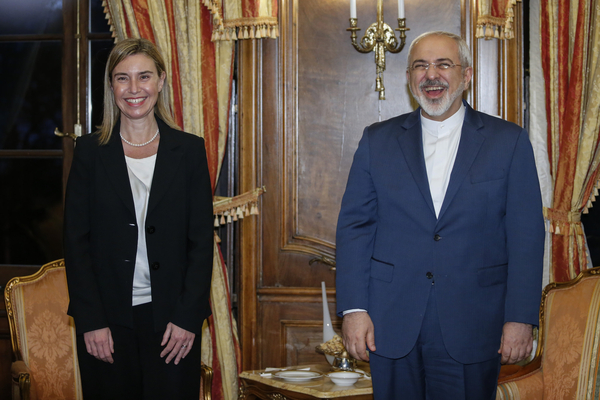
1163Not funny. Federica Mogherini (left) represented the European Union in nuclear negotiations with the Islamic Republic of Iran, a millenarian Shi’ite theocracy that calls for the annihilation of America and Israel. At right, Iran’s foreign minister, Javad Zarif. (Image source: European Union)

The European Union’s unelected High Representative for Foreign Affairs and Security Policy made her pro-Islamist remarks in a speech delivered last month in Brussels.

While heading up Europe’s combined delegation in the Austrian capital, and purportedly tasked with staving off Iran’s nuclear capabilities, Mogherini, a former member of the Italian Communist Youth Federation, also took to tweeting in Arabic.

The assertions made by Mogherini to the Islam in Europe conference, before she left for Vienna, reveal the thinking of a key figure behind the dangerous concessions given to Iran as a result of its continued intransigence and the West’s continued surrender to it.

It should therefore surprise no one that Syria’s President Assad has congratulated Ayatollah Ali Khamenei on his “great victory” in negotiations from which the Jewish state — which had the most to lose based on Iran’s constant threats to obliterate it — was excluded.

As talks progressed, the Supreme Leader of Iran was pictured trampling on an Israeli flag, with the accompanying caption on Khamenei’s official website reading: “The Zionist regime is condemned to vanish.”

Mogherini first gained notoriety after her statement to the United Nations Security Council on May 11, during which she dismissed pushbacks against the flood of migrants illegally crossing the Mediterranean.

As a consequence of the border policies of the European Commission, of which Mogherini is also Vice-President, the number of immigrants pouring into Europe by land has now exceeded those crossing by sea.

Local authorities in Hungary are struggling to cope with refugee camps filled with rioting migrants shouting “Allahu Akbar!” (Arabic for “Allah is Greater!”).

There seems no recognition of the generosity of a nation that is exhausting its resources to give Muslims asylum from conflict.

The speech given by Mogherini in Brussels on June 24 demonstrates why she believes that the growing migration crisis her actions have orchestrated should be welcomed:

“Islam holds a place in our Western societies. Islam belongs in Europe. It holds a place in Europe’s history, in our culture, in our food and — what matters most — in Europe’s present and future. Like it or not, this is the reality.”

She continued:

“We need to show some humble respect for diversity. Diversity is the core feature of our European history, and it is our strength. … We need to understand diversity, understand complexity. … For this reason I am not afraid to say that political Islam should be part of the picture.”

Under the treaties establishing the EU, there are no democratic checks on figures such as Mogherini or on the enormous power they wield. Only representatives elected to the European Parliament can quiz members of the European Commission.

There is also no democratic way for MEPs to repeal any of the laws applied across the EU, authored by the commission’s bureaucrats, or to fire any of its officials.

Regrettably, Mogherini’s speech chose not to delve into which aspects of the “diversity” represented by “political Islam” Europe should embrace: The subhuman status afforded to non-Muslims such as Christians and Jews, perhaps; or the death sentence faced by Muslims who seek to leave Islam or reform it? Or maybe the codified inferiority of females, or the view that democracy, made by man and not Allah is illegitimate, or that it is permissible to counter free speech with violence?

Mogherini’s speech in Brussels — added to the July 3 vote at the UN Human Rights Council (UNHRC) of several European nations in favor of a resolution condemning Israel for war crimes — also highlight a grim reality when viewed in the context of the West’s concessions to Iran.

While political leaders in Europe seek to placate their Muslim populations, Israel is faced with even fewer reliable allies on the world stage as the prospect of a nuclear Iran looms larger.

The UNHRC’s resolution targeting Israel had been prompted by a UNHRC report into last year’s Gaza conflict, during which the Israeli Defense Force had sought to protect the country’s population against constant and indiscriminate rocket attacks.

In an address on June 29, Britain’s Col. Richard Kemp urged the UNHRC to deal with the reality of events in Gaza last summer:

“Hamas sought to cause large numbers of casualties among their own people, in order to bring international condemnation against Israel, especially from the United Nations. … It was Hamas’s strategy, not illegal Israeli action as this report shamefully alleges without a shred of evidence, that was the reason why over 1,000 civilians died in Gaza.”

With only the US voting against the resulting “anti-Israeli manifesto” it was nevertheless endorsed by European nations including France, Germany, the UK, Ireland, and the Netherlands.

As a consequence of several international treaties, these countries and 23 others have unified executive authority on issues of foreign policy into the institutions of the European Union.

To those arguing with the EU’s head of security policy that, “more Muslims in Europe will be the end of Europe,” Mogherini has a curt answer:

“These people are not just mistaken about Muslims: these people are mistaken about Europe – that is my core message – they have no clue what Europe and the European identity are.”

Claiming that “Islam is a victim,” Mogherini went on to stress that the “caliphate” declared last year by ISIS under the name of the Islamic State, represents “an unprecedented attempt to pervert Islam.”

Led by “caliph” Abu Bakr al-Baghdadi, in February ISIS announced its intention to export 500,000 migrants to Europe to create chaos. As his nom de guerre suggests, the PhD in Islamic Studies possessed by Dr. Ibrahim al-Badri comes from the city where the Koran was compiled.

Federica Mogherini’s claim to have a better grasp of political Islam stems from an undergraduate paper she once authored on the subject.

As a result of the border policies imposed by Mogherini, the president of the EU’s judicial cooperation agency, Michèle Coninsx, confirmed on July 6 that ISIS’s scheme to augment such a migrant flow with jihadists is now being accomplished.

It is hard not to conclude that the official responsible for the EU’s borders represents a sheltered elite, convinced that the solution to problems in the Middle East and North Africa is importing their populations into Europe.

Using an Arabic euphemism to describe the Islamic State, Mogherini’s speech concluded:

“Western media like to refer to Da’esh with the word ‘medieval’. This does not help much to understand the real nature of the threat we are facing. Da’esh is something completely new.”

The EU’s chief representative to the talks in Vienna could have done with visiting the museum located on the city’s Karlsplatz. There can be found the following demand for surrender, issued against the Viennese, which post-dates the medieval period by two centuries:

“We order you to wait for us at your residences in the city so we can decapitate you. It will be a pleasure for me to publicly establish my religion and to pursue your crucified god. I will put your sacred priests to the plough and rape your nuns. Forsake your religion or else I will give the order to consume you with fire.”

It was authored by the Muslim caliph reigning in 1683.

When it comes to political Islam, Federica Mogherini is evidently incapable of differentiating between behaviors that are “completely new,” and those that form an established pattern.

That failure makes the diplomatic surrender to the Islamic Republic of Iran, being portrayed by President Obama as a path to a “more hopeful world,” easier to comprehend.

The West’s negotiations were conducted with a millenarian Shi’ite theocracy that calls for the annihilation of America and Israel.

Islam, Imam Obama, Sir John of Kerry and a great deal for Iran | Part II

July 20, 2015

(The views expressed in this post are mine, and do not necessarily reflect those of Warsclerotic or its other editors. — DM)
Oh what a tangled web we weave, when first we practice to deceive.

Dealing from the Bottom

The current “deal” is based on a long-standing scam

Part I of this series, published on July 14, 2015, pointed out what should be a glaring consistency in the “Joint Comprehensive Plan of Action,” first made available on that date, and the November 24, 2013 Joint Plan of Actionneither provides for any “anytime -anywhere” inspections of Iran’s nuclear weaponization or missile sites. That consistency has been little remarked upon elsewhere.

Secretary Kerry now acknowledges that he never sought such inspections.

Leaving aside the twenty-four day lag between an IAEA request to inspect suspect facilities — which Kerry says is just fine — he claims that we now have a “unique ability” to get the U.N. Security Council to force inspections and reinstate sanctions. However, any effort to do so would almost certainly be vetoed by one or more Security Council members. The permanent members are China, France, Russia, the United Kingdom, and the United States — five of the members of P5+1 which approved the “deal.”

On July 16th, US Under Secretary of State Wendy Sherman said,

“I think this is one of those circumstances where we have all been rhetorical from time to time,” Sherman said in a conference call with Israeli diplomatic reporters. “That phrase, anytime, anywhere, is something that became popular rhetoric, but I think people understood that if the IAEA felt it had to have access, and had a justification for that access, that it would be guaranteed, and that is what happened.” [Emphasis added.]

Kerry also claimed that the massive financial boost for Iran resulting from the lifting of sanctions will not enhance Iran’s support for terrorism.

Speaking to the BBC after the nuclear agreement between Iran and six world powers was reached, Kerry said that the more than $100 billion that Iran is set to receive “is going to make all the difference in the world is just – it’s not true.”

Acknowledging Iran is an international player in wreaking terror across the globe, Kerry said, “What Iran has done for years with Hezbollah does not depend on money.” He similarly stated Iran’s support of the Houthi rebels against the government in Yemen has not “depended on money.” [Emphasis added.]

. . . .

In its most recent report, the State Department wrote, “Iran has provided hundreds of millions of dollars in support of Lebanese Hezbollah in Lebanon and has trained thousands of its fighters at camps in Iran.”

In 2010 alone, State reported “Iran provides roughly $100-$200 million per year in funding to support Hezbollah.”

Secretary Kerry is almost certainly wrong, on that as on other aspects of the “deal.”.

Here’s Megan Kelly’s wrap up.


Iran may reject the “deal.”

There are at least glimmers of hope that Iran may reject the “deal,” unanimously endorsed by the UN Security council today.

A UN Security Council resolution endorsing Iran’s nuclear deal that passed on Monday is unacceptable, the country’s Islamic Revolutionary Guards Corps commander Mohammed Ali Jafari was quoted as saying by the semi-official Tasnim News Agency.

“Some parts of the draft have clearly crossed the Islamic republic’s red lines, especially in Iran’s military capabilities. We will never accept it,” he was quoted as saying shortly before the resolution was passed in New York. [Emphasis added.]

The Iranian Parliament also has problems with the “deal.”

On Saturday, the Fars News Agency reported that the Majlis threatened to reject the agreement’s provision on ballistic missiles, which call for an international embargo on missile technology to be extended for eight years–a significant, last-minute concession by the U.S.

Iran wants unrestricted ballsitic missile development and access to conventional arms dealers abroad.

“The parliament will reject any limitations on the country’s access to conventional weapons, specially ballistic missiles,” said Tehran MP Seyed Mehdi Hashemi.

. . . .

In addition, the nuclear deal says that the Majlis will ratify the Additional Protocol (AP) to the Non-Proliferation Treaty–but it does not say when.

The AP is the key to long-term monitoring of Iranian nuclear research and development by the International Atomic Energy Agency (IAEA). Without approval of the AP, Iran may hide key information about its nuclear activity, and may accelerate advanced centrifuge research immediately when the nuclear deal expires, among other hazards. (Even then, its commitments under the AP will be somewhat voluntary.) [Emphasis added.]

. . . .

[W]hile the interim agreement of Nov. 2013 provided that Iran would ratify the AP within one year, there is no such deadline in the final Iran deal. The AP is merely to be applied “provisionally,” while the Majlis decides whether to accept it or not.

Meanwhile, if the Obama administration has its way, the U.S. Congress will have no opportunity to amend the deal–and will have to accept the lifting of international sanctions regardless of whether legislators accept or reject the agreement. [Emphasis added.]

Iranian leadership’s opposition to the “deal” appears to have come from Iran’s Supreme leader and the Iranian Parliament has the authority to reject the “deal.”

As expected, Ayatollah Ali Khamenei’s reaction to the nuclear deal was utterly different from that of President Hassan Rouhani. Right after the agreement was announced on July 14, Rouhani appeared on state television and praised the outcome. Yet when he and other officials visited Khamenei’s home a few hours later, the Supreme Leader did not say anything about the deal apart from a few lines thanking the negotiators. This reticence signaled to hardliners that they should increase their attacks on the agreement. [Emphasis added.]

America’s Supreme Leader, on the other hand, has been pushing vigorously to force the U.S. Congress to approve it, with no way to change it.


The “deal,” and Obama’s foreign policy in general, are rooted in His affinity for Islam

Obama may or may not be a Muslim. However, He thinks very highly of Islam and deems it the “religion of peace.” It would be ironic were Obama’s Iran “deal” to be rejected by Iran.

As observed in a Jerusalem Post article, with the thrust of which I agree, His affinity for Islam is at the root of His “deal.”

Obama is the first US president who genuinely conceives of Islam as not inherently opposed to American values or interests.

. . . .

It is through this Islamo-philic prism that the Obama administration’s attitude to, and execution of, its foreign policy must be evaluated – including its otherwise incomprehensible capitulation this week on Iran’s nuclear program. [Emphasis added.]

. . . .

The inspection mechanism provided for in the nascent deal make a mockery of Obama’s contention (July 14): “… this deal is not built on trust; it is built on verification,” and, “Because of this deal, inspectors will also be able to access any suspicious location… [They] will have access where necessary, when necessary.”

One can hardly imagine a more grossly misleading representation of the deal – so much so that it is difficult not to find it strongly reminiscent of the Muslim tactic of taqiya (the religiously sanctioned deception of non-Muslims). [Emphasis added.]

Indeed, immediately following the announcement of the agreement, Ben Rhodes, Obama’s deputy national security adviser, made a stunning admission to CNN’s Erin Burnett. Starkly contradicting the president’s contention of “access where necessary, when necessary,” Rhodes conceded, “We never sought in this negotiation the capacity for so-called anytime, anywhere,” which is diametrically opposed to the impression he conveyed in April this year when queried on this issue. [Emphasis added.]

In His capacity as America’s Imam in Chief, Obama has consistently claimed that the “religion of peace” has nothing to do with the Islamic State or with Islamic terrorism (of which he claims there is none) — such as the recent murder of four members of the U.S. Marines and one member of the U.S. Navy — committed in the name of Allah. The Daily Beast has posted some of the terrorist’s writings. They include these statements:

“I would imagine that any sane person would devote their time to mastering the information on the study guide and stay patient with their studies, only giving time for the other things around to keep themselves focused on passing the exam,” Abdulazeez wrote. “They would do this because they know and have been told that they will be rewarded with pleasures that they have never seen.”

This life is that test, he wrote, “designed to separate the inhabitants of Paradise from the inhabitants of Hellfire.”

. . . .

“We ask Allah to make us follow their path,” Abdulazeez wrote. “To give us a complete understanding of the message of Islam, and the strength the live by this knowledge, and to know what role we need to play to establish Islam in the world.” [Emphasis added.]

Obama apparently considers the Islamic Republic of Iran to be Islamic — and therefore peaceful — despite its widespread support for its terrorist proxies. That may explain the credence He gives to Supreme Leader Khamenei’s alleged fatwa preventing Iran from obtaining nukes. Obama and Khamenei have frequently referred to it in support of that proposition, although no text been produced. According to a Washington Post article dated November 27, 2013,

Oddly, the Iranian Web site does not provide the text of the original fatwa — and then mostly cites Western news reports as evidence that Khamenei has reiterated it on several occasions. The fatwa does not appear to be written, but in the Shiite tradition equal weight is given to oral and written opinions.

. . . .

Just about every Alfred Hitchcock thriller had what he called a “MacGuffin” — a plot device that gets the action going but is unimportant to the overall story. The Iranian fatwa thus appears to be a diplomatic MacGuffin — something that gives the Americans a reason to begin to trust the Iranians and the Iranians a reason to make a deal. No one knows how this story will end, but just as in the movies, the fatwa likely will not be critical to the outcome. [Emphasis added.]

Even if one believes the fatwa exists — and will not later be reversed — it clearly appears to have evolved over time. U.S. officials should be careful about saying the fatwa prohibits the development of nuclear weapons, as that is not especially clear anymore. The administration’s statements at this point do not quite rise to the level of  earning Pinocchios, but we will keep an eye on this issue. [Emphasis added.]

An April 6, 2015 article at the Middle East Media Research Institute provides additional information.

In March of this year Obama presented a Nowruz message to the people of Iran citing Khamenei’s alleged fatwa. Here’s a video from the White House.

Here are a few interesting excerpts:

“Our negotiations have made progress, but gaps remain,” he said. “And there are people, in both our countries and beyond, who oppose a diplomatic resolution. My message to you—the people of Iran—is that, together, we have to speak up for the future we seek. [Emphasis added.]

“As I have said many times before, I believe that our countries should be able to resolve this issue peacefully, with diplomacy,” Obama said. “Iran’s Supreme Leader Ayatollah Khamenei has issued a fatwa against the development of nuclear weapons, and President Rouhani has said that Iran would never develop a nuclear weapon. [Emphasis added.]

Isn’t that special! Why, in light of the alleged fatwa, does Iranian television broadcast simulations of nuclear attacks on Israel?

A short animated film being aired across Iran, shows the nuclear destruction of Israel and opens with the word ‘Holocaust’ appearing on the screen, underneath which a Star of David is shown, Israel’s Channel 2 reported on Tuesday.

Khamenei’s Death to America rants are considered an excellent reason to have a “deal.”

Similarly, the Reverend Jeremiah Wright was fond of saying “God Damn America.”

Obama apparently understood Khamenei’s words, but perhaps He didn’t understand Jeremiah’s words.


Conclusions

Elected on a platform of Hope and Change, Obama has brought us many changes; very few, if any, of those changes provide a basis for hope, at least until He has left office. Some will be difficult, if not impossible, even then to ameliorate. During His remaining time in office, He will continue to do His worst to eliminate any vestigial hope we may have. The “deal” with Iran is only one of the many changes for the worse that He has wrought.

Into the fray: Iran- Reaping the storm that Barack sowed…

July 18, 2015

Into the fray: Iran- Reaping the storm that Barack sowed…, Jerusalem PostMARTIN SHERMAN,July 16, 2015

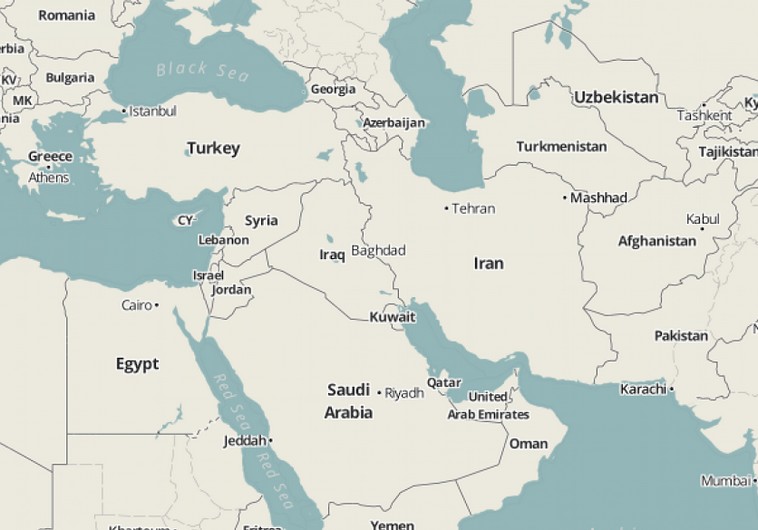
ShowImage (3)Map of Middle East. (photo credit:Courtesy)

It is through this Islamo-philic prism that the Obama administration’s attitude to, and execution of, its foreign policy must be evaluated – including its otherwise incomprehensible capitulation this week on Iran’s nuclear program.

********************

Obama is the first US president who genuinely conceives of Islam as not inherently opposed to American values or interests.

You’re absolutely right that John McCain has not talked about my Muslim faith – Barack Hussein Obama to ABC’s George Stephanopoulos, September 7, 2008

I also know that Islam has always been a part of America’s story Barack Hussein Obama, Cairo, June 4, 2009

Islam has always been part of AmericaBarack Hussein Obama, the White House, August 11, 2010

Islam has been woven into the fabric of our country since its founding Barack Hussein Obama, the White House, February 18, 2015

Barack Hussein Obama is the first US president who is explicitly and overtly unmoored, both cognitively and emotionally, from the moorings of America’s founding Judeo-Christian cultural heritage, and who genuinely conceives of Islam as not inherently opposed to American values or American interests.

A question of cultural affinity?

It is through this Islamo-philic prism that the Obama administration’s attitude to, and execution of, its foreign policy must be evaluated – including its otherwise incomprehensible capitulation this week on Iran’s nuclear program.

Almost two years ago, I wrote a column titled, “Will the West withstand the Obama presidency?” (11/28/2013). In it I warned: “For anyone who understands that the US Constitution is not a Shari’a-compliant document…

it should be alarmingly apparent that the Obama incumbency is a dramatic and disturbing point of inflection in the history of America and its Western allies… whose political practices and societal norms are rooted in Judeo-Christian foundations in a cultural rather than in any religious sense.”

There is little alternative explanation to account for the metamorphosis that has taken place in how the US has approached resolving the impasse with Tehran, as starkly laid out by two former secretaries of state, Henry Kissinger and George Shultz.

In a Wall Street Journal opinion piece, “The Iran Deal and Its Consequences” (April 7), they note that the negotiation has been turned “on its head.” As they point out: “For 20 years, three presidents of both major parties proclaimed that an Iranian nuclear weapon was contrary to American and global interests – and that they were prepared to use force to prevent it. Yet negotiations that began 12 years ago as an international effort to prevent an Iranian capability to develop a nuclear arsenal are ending with an agreement that concedes this very capability.”

Risible inspection mechanism

Even before the specifics of the risible inspection mechanism, which one Israeli minister aptly described as “worse than worthless,” Kissinger and Shultz laid out the difficulties that would render any extended inspection endeavor ineffective: “In a large country with multiple facilities and ample experience in nuclear concealment, violations will be inherently difficult to detect.”

With considerable prescience, they warn: “Devising theoretical models of inspection is one thing. Enforcing compliance, week after week, despite competing international crises and domestic distractions, is another. Any report of a violation is likely to prompt debate over its significance – or even calls for new talks with Tehran to explore the issue.

Envisaging the problems likely to arise in enforcing any agreement, they caution: “Compounding the difficulty is the unlikelihood that breakout will be a clear-cut event.

More likely it will occur… via the gradual accumulation of ambiguous evasions. When inevitable disagreements arise over the scope and intrusiveness of inspections, on what criteria are we prepared to insist and up to what point? If evidence is imperfect, who bears the burden of proof? What process will be followed to resolve the matter swiftly?”

Reminiscent of taqiya?

But even without the daunting generic difficulties described by Kissinger and Shultz, the inspection mechanism provided for in the nascent deal make a mockery of Obama’s contention (July 14): “… this deal is not built on trust; it is built on verification,” and, “Because of this deal, inspectors will also be able to access any suspicious location… [They] will have access where necessary, when necessary.”

One can hardly imagine a more grossly misleading representation of the deal – so much so that it is difficult not to find it strongly reminiscent of the Muslim tactic of taqiya (the religiously sanctioned deception of non-Muslims).

Indeed, immediately following the announcement of the agreement, Ben Rhodes, Obama’s deputy national security adviser, made a stunning admission to CNN’s Erin Burnett. Starkly contradicting the president’s contention of “access where necessary, when necessary,” Rhodes conceded, “We never sought in this negotiation the capacity for so-called anytime, anywhere,” which is diametrically opposed to the impression he conveyed in April this year when queried on this issue.

You couldn’t make this stuff up

For as it turns out, it provides the Iranians with ample warning of impending inspections on any suspected violation, and ample ability to forestall the definition of any given suspicious event as a possible violation.

Thus in the case of a suspected infringement in any undisclosed (to the international community) site, the Iranians will have at least 24 days’ notice. Moreover, inspectors will not be able to conduct surprise visits but will be required to “provide Iran the basis for such concerns and request clarification.” No kidding!!! But wait, there’s more.

If Iran’s explanations do not adequately assuage international concerns, inspectors “may request access to such locations” to make sure no illicit activity has occurred. But first they need to “provide Iran the reasons for access in writing and will make available relevant information.” You can’t make this stuff up.

But here’s the kicker: Should the Iranians and the inspectors prove unable to “reach satisfactory arrangements,” Tehran will resolve any concerns “through necessary means agreed between Iran and the IAEA.” If there is still no agreement two weeks after the initial inquiry is filed, the crisis will be resolved by vote in the so-called Joint Commission – consisting of the six world powers, a representative of EU and – wait for it – Iran.

Like warning drug dealers of a bust

Astonishingly, nearly all the decisions of the Joint Commission, tasked with overseeing/ administering the implementation of the deal, are to be made by consensus – which in effect gives Iran veto power over them. In the case of inspection access, it is sufficient for two of its eight members (say China and Russia) to abstain for Iran to block any decision it dislikes.

It is thus difficult to dispute Benjamin Netanyahu’s characterization of the deal during his address in the Knesset when he likened it to giving drug dealers notice of an impending raid: “It’s like giving a criminal organization that deals drugs a 24-day warning before inspecting its drug lab.”

But worse – the deal requires the international inspectors to expose the sources of intelligence that lead to the detection of the possible infringement – thereby virtually ensuring the termination of their effectiveness.

As Netanyahu remarked: “The agreement also requires the world powers to… show Iran the very intelligence for which they want to conduct the inspections in the first place.”

It is possible that all this could be nothing more than mind-boggling incompetence and blatant lack of foresight? Or are these glaring loopholes the reflection of intent.

Devil not in details

After all, the more you think about the unenforceable, unverifiable agreement just concocted in Vienna, the more implausible it seems. As Alan Dershowitz points out in a Jerusalem Post opinion piece this week, “The devil is not so much in the details as in the broad outlines of this deal.”

Rather than the detailed minutiae of the deal, it is its deeply flawed overall structure that makes it so difficult to comprehend – unless the motives for its conclusion are reexamined.

For unless one is imbued with the child-like naiveté to believe that the tyrannical clergy who head the totalitarian theocracy in Tehran, on seeing their defiant intransigence vindicated and having vast additional resources placed at their disposal, will suddenly change their worldview, the picture of emerging realities is decidedly bleak and bewildering.

The spectacle unfolding before us is almost incomprehensible by any rational criterion.

Virtually the entire developed world, led by the only superpower on the planet, has for all intents and purposes conceded a legitimized path to weaponized nuclear status for a fanatical fundamentalist regime, ideologically bent on the destruction of America and its allies, and a major proliferator of terrorism, committed to attaining regional hegemony at the expense of relatively pro-Western governments.

Despite dwarfing Iran in terms of military might, economic wealth, physical size and population, Tehran’s interlocutors have provided it with vast resources to enormously enhance its nefarious pursuits across the region and beyond.

The New Middle East: Conflicts on steroids

The ominous consequences are not difficult to foresee.

As Ariel Ben Solomon, the Post’s Middle East correspondent, wrote in a recent report, “Iran deal to see Middle East conflicts go on steroids,” “A stronger Iran will translate into a more robust Hezbollah in Lebanon, Houthi movement in Yemen, and Shi’ite forces in Iraq and Syria, and increasing sectarian strife fueled by Shi’ite minorities or Iranian agents throughout the Arab world.” (July 16) There is precious little reason for believing any other outcome is plausible.

In a July 15 interview, New Jersey Democrat Sen. Bob Menendez lamented another aspect of the deal, relating to easing restrictions on conventional weapons to Iran: “When you lift the arms embargo to a country that is the major sponsor of… terrorism in the world and is already destabilizing the region in Yemen, Lebanon, Syria [and] Iraq, to give them – after they are going to get $100 billion-150b. in economic relief – the opportunity to buy conventional weapons and improve their missile technology doesn’t seem to me to be in the national interest of the United States.”

The intriguing question is, of course, does this seem to President Obama to be in the national interest of the United States? And if so, why so? If so, how so?

‘No alternative’: A mindless mendacious mantra

The almost Pavlovian response of the apologists for the Iran deal is that its critics have not offered a feasible alternative. This is a claim – for want of a better word – so feeble that it barely merits a response.

As Sen. Menendez points out: “We never tested the proposition that dismantling elements of Iran’s illicit nuclear infrastructure was possible. It is pretty hard for me to believe that the world powers, sitting on one side of the table, the five permanent members of the Security Council plus Germany and the European Union looking at the Iranians… suffering under staggering sanctions… and falling oil prices couldn’t get a deal that eliminated some of that infrastructure.”

Rebutting John Kerry’s claim that such a goal was achievable only in “a world of fantasy,” Menendez retorted, “I don’t know that that is a ‘world of fantasy.’ Isn’t it possible with all the world on one side of the table, and Iran reeling with economic challenges, that you couldn’t have done better as relates to eliminating that nuclear infrastructure.”

Of course if the underlying assumption is that alternatives are only feasible if Iran deigns to accept them, then the apologists may be right. However, if the rationale were not to accommodate the ayatollahs, but to coerce them, the alternative is clear: Enhanced sanctions backed by the credible threat of military action aimed at destroying Iran’s nuclear facilities and their attendant infrastructure.

Arab arms race or Arab client states

But despite the overwhelming preponderance of power in their favor, the US and its Western allies seem to have forsworn the use of force, or even the credible specter thereof. As Kissinger and Shultz remark: “The threat of war now constrains the West more than Iran.”

This will clearly have a devastating impact on both friend and foe in the region.

It will destroy the confidence of US allies who will therefore be compelled to either acquire their own appropriate arsenals, as they can no longer rely on America for their security, or to become compliant client states of a hegemonic Iran.

For Iran it sends an equivocal message that it can violate the terms of the deal with impunity – for if what it encountered at Vienna is all the West can throw at it, what does it have to fear? There can be little doubt that what happened in Vienna this week has shredded America’s standing in the Middle East.

Some might even suspect that that was the purpose of the exercise.
Iran Deal: The Great Bamboozle Festival

July 18, 2015

Iran Deal: The Great Bamboozle Festival, Gatestone InstituteDouglas Murray, July 18, 2015

(Would Chamberlain, in the context of British military weakness but in otherwise comparable circumstances, have made a similar “deal” with Hitler and declared “peace in our time?”  — DM)

  • A generous person might say that this is unimportant — that in Iran, chanting “Death to America” is like throat-clearing.
  • Surely only an uncharitable person would wonder why Iran’s rulers are buying the technology they would need to repel any attack on their nuclear project at the same time as they are promising the Americans that they are not developing nuclear weaponry.

What exactly is it that the Obama administration thinks has changed about the leadership of Iran? Of all the questions which remain unanswered in the wake of the P5+1 deal with Iran, this one is perhaps the most unanswered of all.

There must, after all, be something that a Western leader sees when an attempt is made to “normalize” relations with a rogue regime — what Richard Nixon saw in the Chinese Communist Party that persuaded him that an unfreezing of relations was possible, or what Margaret Thatcher saw in the eyes of Mikhail Gorbachev, which persuaded her that here was a counterpart who could finally be trusted.

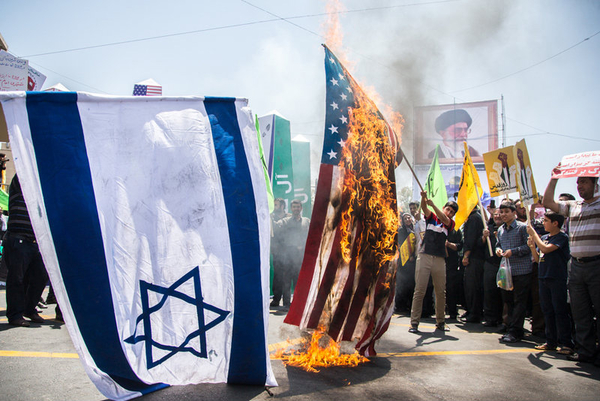
After all, the outward signs with Iran would seem to remain unpromising. Last Friday in Tehran, just as the P5+1 were wrapping up their deal with the Iranians, the streets of Iran were playing host to “Al-Quds Day.” This, in the Iranian calendar, is the day, inaugurated by the late Ayatollah Khomeini, when anti-Israel and anti-American activity come to the fore even more than usual. Encouraged by the regime, tens of thousands of Iranians march in the streets calling for the end of Israel and “Death to America”. Not only Israeli and American flags were burned — British flags were also torched, in a touching reminder that Iran is the only country that still believes Britain runs the world.

The latest in a long line of “moderate” Iranian leaders, President Hassan Rouhani, turned up at one of these parades himself to see the Israeli and American flags being burned. Did he intervene? Did he explain to the crowd that they had got the wrong memo — that America is now our friend and that they ought at least to concentrate their energies on the mass-burning of Stars of David? No, he took part as usual, and the crowds reacted as usual.

1153Participants in Tehran’s Quds Day rally burn U.S. and Israeli flags, on July 10, 2015. (Image source: ISNA)

It was the same just a few weeks ago, when the Iranian Parliament met to discuss the Vienna deal. On that occasion, after some authorized disputation, the Iranian Parliament broke up, with the representatives chanting “Death to America.”

A generous person might say that this is unimportant — that in Iran, chanting “Death to America” is like throat-clearing. This is just what we are being told — that these messages are “just for domestic consumption,” and don’t mean anything.

Putting aside what they say for a moment, what is it about Iran’s actions that have changed enough to persuade the U.S. government that the Iranian regime might be a regime in transition?

Internally there has been no let-up in the regime’s campaign of oppression against their own Iranian people: hanging people for a range of “crimes,” from being gay to being a poet found guilty of “blasphemy,” continue.

Iran has hanged more than a thousand of these internal “enemies” in the last eighteen months alone, as negotiators sat in Vienna thrashing out a deal. In the wider region, Iran remains the most voraciously ambitious, and perhaps the only successfully outgoing, regional power. In the years since the “Arab Spring” began, only Iran has been able significantly to extend its reach and grip in the region. It now has a vastly increased presence and influence in Yemen, Iraq, Syria and Lebanon. It continues to arm its terrorist proxies, including Hezbollah, which in turn continues to increase its build-up of rockets and other munitions on the northern border of Israel.

Iran has not released the four American hostages it continues to hold — Pastor Saeed Abedini, for the crime of converting to Christianity; Washington Post journalist Jason Rezian, on the patently nonsensical charges of espionage; former U.S. Marine Amir Mirza Hekmati, who went to Iran to visit his grandmother; and retired DEA and FBI agent Robert Levinson, who was abducted eight years ago and has not been heard from since early 2013. This, in spite of last-minute requests from Iran to lift a ban on conventional weapons, acceded to by the members of the P5+1, wasting yet another abandoned opportunity actually to get something in return for their total surrender.

From the outside, it would seem that very little has changed in the rhetoric of Iran and very little has changed in the regime’s behavior. That is why the mystery of what change the U.S. administration and its partners see in the eyes of the Ayatollahs is so doubly curious.

Because the nature of the deal makes it exceptionally important that there is some change. In the next decade, in exchange for the supposed “managed inspections” of limited Iranian sites, the Ayatollas are going to enjoy a trade explosion with a cash bonanza of $140 billion unfrozen assets, just to start them off. Throughout that same decade, there will be a lifting of restrictions on — among other things — the sale and purchase by Iran of conventional arms and munitions. Iran will finally be able to purchase the long-awaited anti-aircraft system that the Russians (also of course present at the table in Vienna) want to sell them. This system — among the most advanced surface-to-air missile systems — will be able to shoot down any American, Israeli or other jets that might ever come to destroy Iran’s nuclear project. And surely only an uncharitable person would wonder why Iran’s rulers are buying the technology they would need to repel any attack on their nuclear project at the same time as they are promising the Americans that they are not developing nuclear weaponry.

And it is even more important that the signs of hope located by the U.S. administration are correct, because after all, barring an internal uprising — which the Vienna deal makes more unlikely than ever (having strengthened the diplomatic and financial hand of the regime) — it is safe to say that over the next decade and beyond the Mullahs will remain in charge in Iran.

In the U.S., Germany, France and Britain, by contrast, who knows who will be in charge? In Britain, the Labour party may have romped to victory with, at its head, Jeremy Corbyn MP (currently Labour leadership contender) — a man who has openly and repeatedly praised Hamas and Hezbollah as his “friends.” That would certainly change the dynamics.

But put aside such a potentially unlikely situation and assume that Britain and America simply do politics as usual. In ten years, there will have been four U.S. governments overseeing the implementation of this deal and scrutinizing the inspections-compliance of the Iranian regime.

In the UK, there will have been at least two new governments. Who is to say that all these different governments — of whatever party or political stripe — will pay the same attention, know what to look out for, and feel as robust about totally unenforceable “snapback sanctions” and other details of the implementation of this deal as the signatories to the deal appear to expect? Is it possible that the Iranians actually know this?

Perhaps, after all, there is something in the eyes of the Ayatollahs. Maybe US Secretary of State John Kerry and President Barack Obama really have looked into the Iranian leaders’ eyes and seen a smile. But whether it is for the reason they appear to believe is, of course, quite another matter.

Exclusive Interview – Former Israeli Ambassador Michael Oren

July 17, 2015

Exclusive Interview – Former Israeli Ambassador Michael Oren, Blackfive, July 16, 2015

Why do some in the press want to discredit Oren’s roots?  Possibly because the Ambassador is publicly warning that the Obama Administration is setting a dangerous precedent concerning the Iranian nuclear deal.  As Daniel Silva profoundly wrote in his latest book, The English Spy, “Now the president’s confronted with a world gone mad, and he doesn’t have a clue as to what to do about it.”

***************************

The following interview and book review is a special for BlackFive readers provided by Elise Cooper.  You can read all of our book reviews and author interviews by clicking on the Books category on the right side bar.

Former Israeli Ambassador Michael Oren’s latest book Ally is a riveting description of the relationship between Israel and the United States.  Readers get a behind the scenes look at how the Obama Administration has a one sided point of view. Through his numerous notes and direct insight he tells of the struggles Israel has had with the Obama Administration, especially regarding the Iranian nuclear deal.  He warns that Israel is in existential danger, that his only agenda is a reality check regarding this administration’s policies toward Israel. Blackfive.net interviewed him about his book and the Iranian nuclear deal.

He gave an exclusive to Blackfive.net, stating that he only tells those people “who come to work with me about this clip.  I ask them to watch it so that they will understand me.”  The clip (https://www.youtube.com/watch?v=ImtrifoxW4c) is about the Battle of the Bulge with interviews from participants including Oren’s father, Lester Bornstein, a US Army Corps Engineer whose duty was to clear roads and build bridges during World War II.  Yet, in the Ardennes Forest in France on December 16, 1944, Lester along with his friend Jimmy Hill became infantrymen to help fend off the German advance, which had taken the American military off guard.  He and his friend bravely disabled the first German tank in line, forcing a halt in the advance.

Oren, born in America, feels a kinship with America’s culture, principles, and spirit.  He remembers his father telling the family war stories and during his first combat mission in the war, Operation Peace for the Galilee, thought of his father’s experience, wondering “how I would conduct myself under fire.”

Throughout the book Oren emphasizes the closeness he feels with both America and Israel.  Yet, some in the media like Newsweek’s Jonathan Broder attempt to discredit him by writing, “The American-born Oren, who renounced his U.S. citizenship and now serves as a lawmaker in Netanyahu’s right-wing coalition, transforms from a measured historian into a breathless polemicist.” This is anything but the truth. Oren noted, “By Federal law any American who officially served a foreign county had to renounce their US Citizenship. My loyalties to the United States and the Jewish State are mutually validating.”

He wrote in the book how his love for America is filled with gratitude. “From the time that all four of my grandparents arrived on Ellis Island, through the Great Depression, in which they raised my parents, and the farm-bound community in which I grew up, America held out the chance to excel. True, prejudice was prevalent, but so, too, was our ability to fight it. Unreservedly, I referred to Americans as ‘we.’ The United States and Israel, are both democracies, both freedom-loving, and similarly determined to defend their independence. One could be — in fact, should be — a Zionist as well as a patriotic American, because the two countries stood for identical ideals.” Except now Israel is being thrown under the bus with the Iranian nuclear deal.

Why do some in the press want to discredit Oren’s roots?  Possibly because the Ambassador is publicly warning that the Obama Administration is setting a dangerous precedent concerning the Iranian nuclear deal.  As Daniel Silva profoundly wrote in his latest book, The English Spy, “Now the president’s confronted with a world gone mad, and he doesn’t have a clue as to what to do about it.”

Oren noted to blackfive.net about another irrational period in history and compared it to the current situation; “Lets remember one infamous example, when the Nazis pursued their insane ends.  Even during the last days of World War II, as the Allied armies liberated Europe, they diverted precious military resources to exterminating Jews.  The Israeli position is that this Iranian regime is irrational. Unlike Israel, which is in Iran’s backyard, the US is not threatened by the proximity of national annihilation. This is about our survival as a people. It’s about our children and grandchildren. What may look like an academic debate here in America is for us in Israel a matter of life and death.”

Asked if he agrees with the quote from former CIA Director Michael Hayden, who said of Iran, “the enemy of our enemy is still our enemy,” Oren told blackfive.net, that Americans should not forget that Iran “wants to wipe Israel off the face of the earth, something they have been calling for the last thirty years.  Let’s not forget they also attempted to blow up the Israeli Embassy in Washington DC and assassinate the Saudi Ambassador. Iran and its terrorist groups have killed more Americans than any other terrorist group outside of Al Qaeda.  This does not even include those in the American military who were killed by Iran during the Iraq War.  They are not friends.”

But a true friend, an ally, is defined by Oren as assisting “in saving American lives on and off the battlefield. On an ideological level, an ally is a country that shares America’s values, reflects its founding spirit, and resonates with its people’s beliefs. And an ally stimulates the U.S. economy through trade, technological innovation, and job creation. The two countries I love need to unite on issues vital to both and yet they remain separated ideologically and even strategically. However, on issues of security, anybody in the Israeli military, in the intelligence community, will tell you that security relations between Israel and the United States are better now than probably any other time in the past.”

In the Middle East Israel is America’s staunchest ally. Even though the Obama Administration appears not to recognize this, Americans do. A recent Gallup Poll shows that two out of three Americans sympathize with Israel, with support for Israel in the United States rising, not declining.

Ambassador Oren wrote this book, Ally, to send a clear message, “A friend who stands by his friends on some issues but not others is, in Middle Eastern eyes, not really a friend. In a region famous for its unforgiving sun, any daylight is searing.” Ally is a must read, because it alerts people that Israel faces the greatest challenge they have faced since World War II.

We Should Go to War With Iran, Not Give Them a Peace Deal | PJTV

July 15, 2015

We Should Go to War With Iran, Not Give Them a Peace Deal | PJTV, July 14, 2015


Iranian official: ‘We will take 1,000 Americans hostage’ if US comsiders military action

July 13, 2015

Iranian official: ‘We will take 1,000 Americans hostage’ if US comsiders military action, BreitbartAdelle Nazarian, July 13, 2015

(“Iran won’t back down from acquiring nuclear missiles.” But Khamenei claims that Iran has no desire for nuclear weapons. Who is kidding whom? — DM)

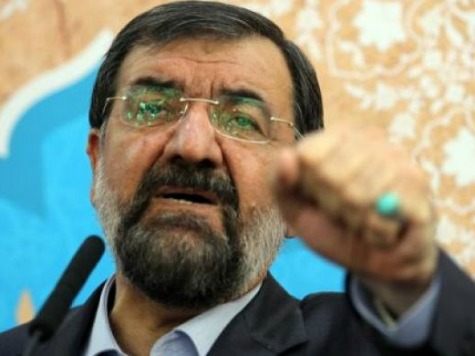
Mohesen-Rezaei-gettyATTA KENARE/AFP/Getty Images

Rezaei then went on to suggest that Iran will not back down from acquiring nuclear missiles.

*************

Iran’s secretary of the Expediency Discernment Council and recently-returned head of the Iranian Revolutionary Guards Corps (IRGC) Mohesen Rezaei says Iran is prepared to take 1,000 Americans hostages and demand millions of dollars in ransom for each of them if the United States even considers waging war against Iran.

In an interview with Iran’s State TV IRIB on Saturday, Rezaei made this solemn vow:

I am promising you, I promise the people of Iran, that as a soldier of Iran and a revolutionary militant, if America even thinks about taking military action against Iran, they can rest assured that in the first week we will take 1,000 Americans hostage and demand millions of dollars in ransom for each of their releases. That will likely help solve our economic issues as well. We are warning them in advance so that they can get this thought out of their minds.

Rezaei then went on to suggest that Iran will not back down from acquiring nuclear missiles. “If tomorrow Israel decides to attack Iran, shouldn’t Iran be able to respond to them [with nukes]?”

Pulling no punches in the interview, Rezaei referred to President Barack Obama as “weak” and said Iran blames him for causing the mess it is in, noting that it is time for President Obama to fix it. He also referred to John Kerry as an “orphaned child” (yateem in Farsi) who returns to the negotiating table with “sorry expressions” each time he receives a call from Washington, pleading for changes to what was previously discussed.

He said, “Of course it was Obama who caused the situation in Iran because even George W. Bush, as strong as his stances were, did not dare to impose last year’s sanction on Iran” during the course of his presidency. Rezaei was referring to the oil sanctions imposed by Congress in 2012, which was actually introduced and pushed by Republicans and passed as a bipartisan bill with the help of a handful of Democrats. In reality, Obama was against imposing oil sanctions on Iran, but a veto-proof majority tied his hands. Nonetheless, he appears to be receiving both the credit and criticism for the move.