Posted tagged ‘Foreign Policy’

Israel’s Risk Aversion Problem

October 2, 2015

Israel’s Risk Aversion Problem, Town Hall, Caroline Glick, October 2, 2015
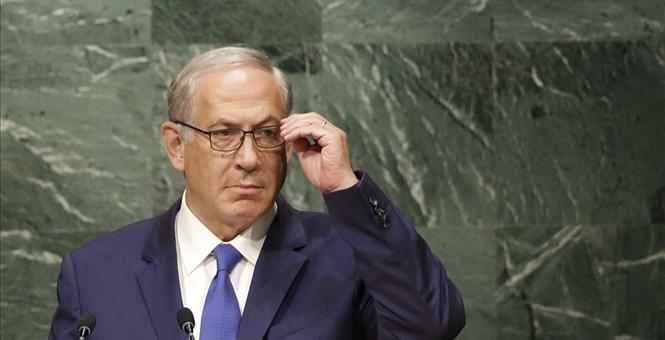
Netanyahu and glasses

Because his strategy is based on ideological beliefs rather than power calculations rooted in reality, Obama’s position cannot be swayed by evidence, even when evidence shows that his administration’s policies endanger US national security.

The more Israel allows other actors to determine the nature of the emerging regional order, the less secure Israel will be. The more willing we are to take calculated risks today the greater our ability will be to influence the future architecture of regional power relations and so minimize threats to our survival in the decades to come.
***********************

On Wednesday the Obama administration was caught off guard by Russia’s rapid rise in Syria. As the Russians began bombing a US-supported militia along the Damascus-Homs highway, Secretary of State John Kerry was meeting with his Russian counterpart, Sergei Lavrov, at the UN. Just hours before their meeting Kerry was insisting that Russia’s presence in Syria would likely be a positive development.

Reacting to the administration’s humiliation, Republican Sen. John McCain said, “This administration has confused our friends, encouraged our enemies, mistaken an excess of caution for prudence and replaced the risks of action with the perils of inaction.”

McCain added that Russian President Vladimir Putin had stepped “into the wreckage of this administration’s Middle East policy.”

While directed at the administration, McCain’s general point is universally applicable. Today is no time for an overabundance of caution.

The system of centralized regimes that held sway in the Arab world since the breakup of the Ottoman Empire nearly a century ago has unraveled. The shape of the new order has yet to be determined.

The war in Syria and the chaos and instability engulfing the region are part and parcel of the birth pangs of a new regional governing architecture now taking form. Actions taken by regional and global actors today will likely will influence power relations for generations.

Putin understands the opportunity of the moment.

He views the decomposition of Syria as an opportunity to rebuild Russia’s power and influence in the Middle East – at America’s expense.

Russia isn’t the only strategic player seeking to exploit the war in Syria and the regional chaos. Turkey and Iran are also working assiduously to take advantage of the current absence of order to advance their long term interests.

Turkish President Recep Tayyip Erdogan is exploiting the rise of Islamic State in Syria and Iraq to fight the Kurds in both countries. Erdogan’s goal is twofold: to prevent the establishment of an independent Kurdistan and to disenfranchise the Kurds in Turkey.

As for Iran, Syria is Iran’s bulwark against Sunni power in the Arab world and the logistical base for Tehran’s Shi’ite foreign legion Hezbollah. Iranian dictator Ali Khamenei is willing to fight to the bitter end to hold as much of Syrian territory as possible.

Broadly speaking, Iran views the breakup of the Arab state system as both a threat and an opportunity.

The chaos threatens Iran, because it has radicalized the Sunni world. If Sunni forces unite, their numeric advantage against Shi’ite Iran will imperil it.

The power of Sunni numbers is the reason Bashar Assad now controls a mere sixth of Syrian territory. To prevent his fate from befalling them, the Iranians seek to destabilize neighboring regimes and where possible install proxy governments in their stead.

Iran’s cultivation of alliances and proxy relationships with Hamas, the Muslim Brotherhood and al-Qaida, and its phony war against Islamic State all point to an overarching goal of keeping Sunni forces separated and dependent on Tehran.

The Iranian regime also fears the prospect of being overthrown by its domestic opponents. To counter this threat the regime engages in large-scale and ever escalating repression of its perceived foes.

Iran’s nuclear program also plays a key role in the regime’s survival strategy. As Khamenei and his underlings see things, nuclear weapons protect the regime in three ways. They deter Iran’s external foes. They increase domestic support for the regime by enriching Iran which, no longer under international sanctions, sees its diplomatic and economic prestige massively enhanced due to its nuclear program.

Finally, there is Iran’s war with Israel and the US. A nuclear-armed Iran is a direct threat to both countries.

And this, too, is a boon for the mullacracy. From the regime’s perspective, fighting Israel and the US serves to neutralize the Sunni threat to the regime. The more Iran is seen as fighting Israel and the US the more legitimate it appears to Sunni jihadists.

This then brings us to the Americans. Like the Russians, the Turks and the Iranians, President Barack Obama and his associates are strategic players. Unlike those powers however, the administration is moved not by raw power calculations but by ideological dictates.

Obama and his advisers are convinced that the instability and radicalization of states and actors throughout the region is the consequence of the actions of past US administrations and those of America’s regional allies – first and foremost, Israel and Egypt. The basis for this conviction is the administration’s post-colonial ideological underpinnings.

Because his strategy is based on ideological beliefs rather than power calculations rooted in reality, Obama’s position cannot be swayed by evidence, even when evidence shows that his administration’s policies endanger US national security.

This brings us to Israel.

Israel has limited power to influence regional events.

It cannot change its neighbors’ values or cultures. Israel can however limit its neighbors’ ability to harm it and expand its ability to deter would be aggressors by among other things, using its power judiciously to influence now forming power balances between various regional and world actors.

Israel has followed this model in Syria with notable success.

At an early stage of the war our leaders recognized that aside from the Kurds, who have no shared border with us, there are no viable actors in Syria that are not dangerous to Israel. As a result, Israel has no interest in the victory of one group against others.

The only actor in Syria that Israel has felt it necessary to actively rein in is Hezbollah. So it has acted repeatedly to prevent Hezbollah from using its operational presence in Syria as a means for augmenting its offensive capabilities in Lebanon.

The problem with this strategy is that it has ignored the fact that from Hezbollah’s perspective, there is no operational difference between Lebanon and Syria.

The war in Syria spread to Lebanon years ago.

Now, with Iranian and Russian assistance, Hezbollah is beginning to develop the industrial capacity to bypass Israel and independently produce advanced weapons inside Lebanon. This rapid industrialization of Hezbollah’s military capabilities requires Israel to end its respect for the all-but-destroyed international border and take direct action against Hezbollah’s capabilities in Lebanon.

This brings us to Hezbollah’s boss, Iran. For the past several years, the same caution that has led Israel to grant de facto immunity to Hezbollah forces in Lebanon has led to Israel’s passivity and deference to the Obama administration in relation to Iran’s nuclear program.

With regard to Iran’s nuclear installations, the strategy of passivity has largely been forced onto an unwilling political leadership by Israel’s military leaders.

For the past several years, the IDF’s General Staff has refused to support the government’s position on Iran’s nuclear program.

Our military leaders have justified their insubordination by arguing that if Israel takes independent action against Iran’s nuclear program it will undermine its bilateral relations with the US, which they consider more important than preventing Iran from acquiring nuclear weapons.

Although under the best of circumstances, the IDF’s position would be unacceptable from the perspective of democratic norms of governance, since the ideologically driven Obama administration took power seven years ago, the military’s position has imperiled the country.

So long as Obama – or the ideology that informs his actions – remains in power in Washington, US security guarantees towards Israel will have no credibility.

The IDF’s assessment that ties to the US are more important than preventing Iran from becoming a nuclear power will remain incorrect, and dangerously so.

Today is Israel’s opportunity to shape the future of the Middle East by not only preventing Iran from becoming a nuclear power, but by preventing a regional nuclear arms race.

The closer Iran comes to emerging as a nuclear power, the more Sunni regimes, including Islamic State, will seek their own nuclear capabilities. It goes without saying that the more regional actors have nuclear weapons, the more dangerous the region becomes for Israel, and indeed for the world as a whole.

For many Israelis, the story of the week wasn’t Russia’s air strikes against US-allied forces in Syria. It was PLO chief and Palestinian Authority President Mahmoud Abbas’s speech at the UN General Assembly.

Leftists expressed horror in the face of Abbas’s threat to end the PLO’s adherence to the agreements it signed with Israel in the 1990s (and has stood in material breach of ever since). The government insisted, for its part that the reason the peace process has not brought peace is because Abbas and his PLO refuse to negotiate with Israel.

Unfortunately, both sides’ responses to Abbas’s speech indicate that Israel has lost all semblance of strategic purpose in regard to the Palestinians.

Fifteen years ago this week, on September 28, 2000, the Palestinians opened their terrorist war against Israel. Ever since it has been clear that no Palestinian faction is interested in living at peace with Israel.

Despite this, for the past 15 years, Israel has refused to reconsider its strategic allegiance to the false notion that it has the ability to influence the hearts and minds of the Palestinians and bend them in the direction of peace.

This delusional thinking is what caused the IDF’s General Staff to convene immediately after Operation Protective Edge ended and try to figure out how to rebuild Gaza.

Ever since the cease-fire came into force, Hamas has diverted all the assistance it has received from Israel and the international community not to rebuild Gaza, but to rebuild its military capacity to harm Israel. And yet, from the IDF’s perspective, ever since the war ended our most urgent task has been to save Hamas and the Palestinians alike from reckoning with the price of their aggression.

Likewise, Israel continues to insist that we have a strategic interest in peace with the PLO. Even if this is true in theory, chances are greater that unicorns will fall from the sky and prance through Jerusalem’s Old City than that the PLO will agree to make peace with Israel.

Our continued defense of the PLO as a legitimate actor harms our ability to secure other strategic interests that are achievable and can improve Israel’s regional position. These interests include securing transportation arteries in Judea and Samaria and strengthening Israel’s military and political control over the areas. These interests have only grown more acute in recent years with the rise of jihadist forces throughout the region and among the Palestinians themselves.

This brings us back to McCain and his strategic wisdom.

Israel must not allow the risks of action to lure us into strategic paralysis that imperils our future.

The more Israel allows other actors to determine the nature of the emerging regional order, the less secure Israel will be. The more willing we are to take calculated risks today the greater our ability will be to influence the future architecture of regional power relations and so minimize threats to our survival in the decades to come.

Palestinian Authority celebrated UN bid w/murder of Rabbi in front of his children

October 2, 2015

Palestinian Authority celebrated UN bid w/murder of Rabbi in front of his children, Front Page Magazine, Daniel Greenfield, October 2, 2015

(Please see also, Satire | Three cheers for Terroristine and Mahmoud Abbas: Jews “Have No Right to Defile the Al-Aqsa Mosque with Their Filthy Feet.” These two Jews won’t.  — DM)

img621527

After the UN flew the flag of Terroristine over New York, the killers of the Palestinian Authority celebrated the only way they knew how.

This is what Palestine means. This is what it has always meant. Palestine is Terroristine. It stands for the murder of Jews. That is its only real objective and goal. After Abbas disavowed negotiations with Israel and the Oslo Accords at the UN, after the UN flew the flag of Terroristine over New York, the killers of the Palestinian Authority celebrated the only way they knew how.

By murdering more Jews.

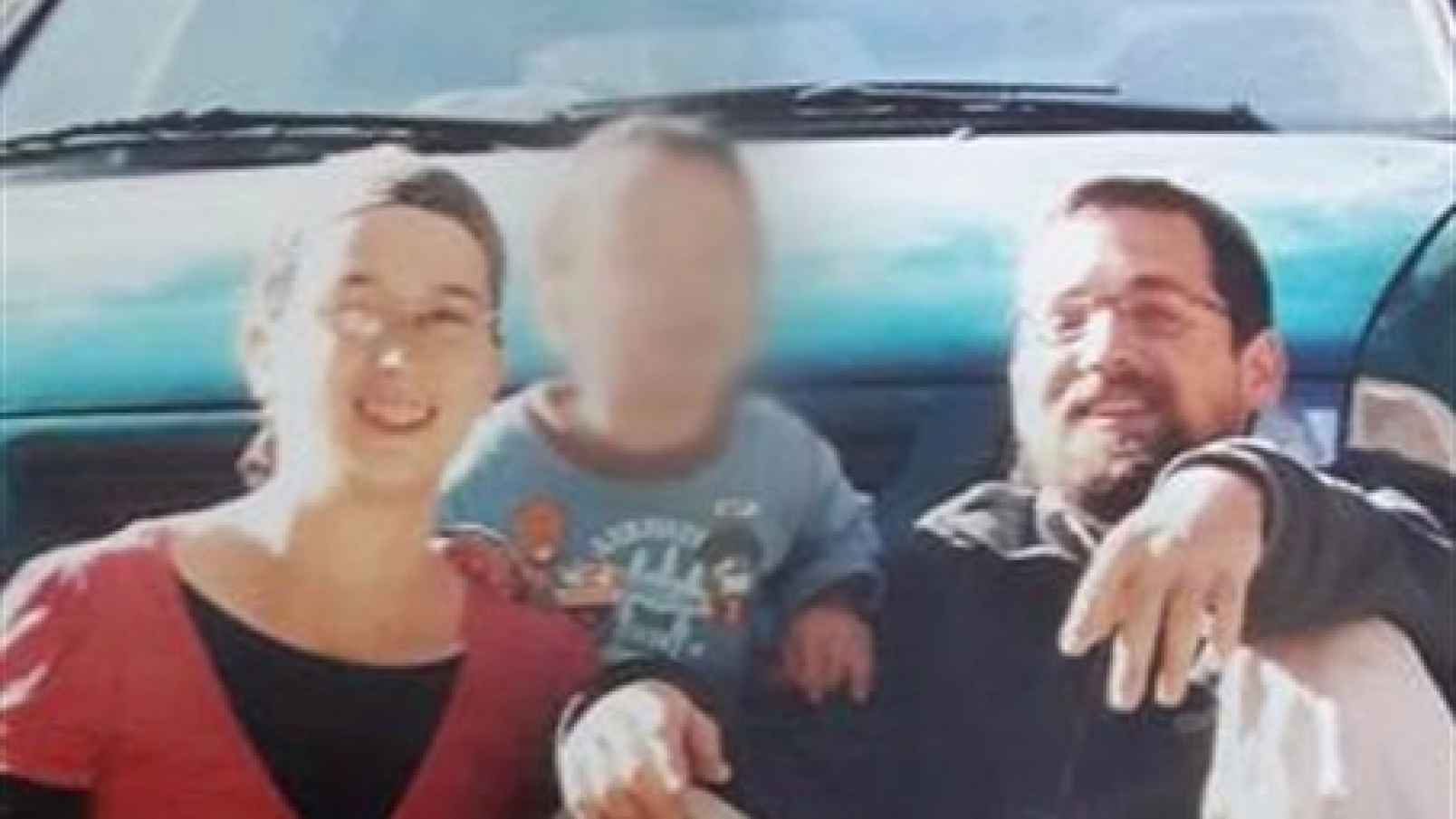
A horrific terror attack has claimed the lives of an Israeli mother and father Thursday evening after their car came under fire by Palestinian terrorists.

Rabbi Eitam Henkin and Naama Henkin leave behind six orphaned children, four of whom – aged 4 months, 4 ,7 and 9 years – were in the vehicle at the time of the attack.

According to investigators, Naama was killed immediately. Eitam managed to step out of the vehicle, open the back door of the car, and ordered his children to flee the scene of the attack. He then collapsed on the road and died.

Off-duty medic Tzvi Goren had been driving along the road from Itamar to Elon Moreh in Samaria on Thursday night when he saw a car flashing its headlights and honking.

Goren immediately knew something was going on.

“I pull over and see a man armed with an M-16 and recognize him as a friend of mine,” he said. “I asked him what was going on, he said there was a terror attack, there are kids in the back.”

Goren had arrived at the scene mere minutes after Fatah (PLO/Palestinian Authority) terrorists murdered Rabbi Eitam and Naama Henkin.

“I looked and saw that the wounded appeared to be in critical condition, so we decided to put the kids in my car for the time being; my friend meanwhile stood guard.”

When he arrived, all four children seemed to have understood that something had happened, he said, and the eldest cried bitter tears while saying that someone murdered his parents.

“I had imagined you would eulogize me,” Rabbanit Chana Henkin said on Friday morning as she stood by the body of her son Eitam and his wife Na’ama, who were killed the night before as they drove home with their four children after a visit with friends.

She stood on a small makeshift stage that had been set up under the hot noon sun, as she described how the extended family had gathered just 24 hours earlier at Eitam and Na’ama’s home in the West Bank settlement of Neria.

They went on a hike and hung out in the house while the children played nicely on the rug.

“We said goodbye yesterday leisurely, with happiness and smiles,” said Chana. “And then you were killed. This parting, is very hard.”

The couple fell in love very young. Chana recalled that Na’ama was just 18 when they met her – bright, beautiful, capable and modest. A talented graphic artist, Na’ama ran her own graphics business that had just started to receive international attention.

She was a loving mother to her four small sons Matan Hillel, Nizan Yitzhak, Notah Eliezer and Itamar, said Chana.

Just last Shabbat she had told Na’ama how amazing it was to see the special connection she had with her youngest son, Itamar, who was only eight months old.

“You listened intensely to a son, who thought you were the most important person in the world,” Chana said. She added, Itamar who is still nursing, “won’t remember his mother’s love.”

“Eitam and Na’ama, you found each other very early. You built a house. You brought four children in to the world. You did everything right and then you were killed, because of your love of the land of Israel,” Chana said.

The Palestinian Authority’s Fatah claimed credit for the brutal murder.

The “armed wing” of Palestinian Authority (PA) Chairman Mahmoud Abbas’s Fatah faction claimed responsibility for the horrific murder of a young couple outside Itamar in Samaria on Thursday night, but an Israeli response to Abbas has yet to be formulated by the government.

The Martyr Abdul-Qader al-Husseini Brigades, associated with the Al-Aqsa Martyrs’ Brigades and likewise affiliated with Fatah, openly posted on its Arabic-language internet site that it claims full responsibility for the “heroic operation.”

There’s nothing more heroic than murdering two parents in front of their children. This is what Muslim heroism looks like.

Senior Fatah official Mahmoud Al-Aloul, who is a member of the Fatah Central Committee, was revealed by Palestinian Media Watch (PMW) as having announcing responsibility the night before on Facebook for the murder of Rabbi Eitam and Naama Henkin outside Itamar in Samaria.

“The Al-Aqsa Martyrs’ Brigades, the military wing of the Palestinian National Liberation Movement Fatah, accepted responsibility for the Itamar operation (i.e. the murder – ed.) carried out against settlers, leading to their deaths,” wrote Al-Aloul in an open admission.

The Martyr Abdul-Qader al-Husseini Brigades is the particular faction of Fatah which claimed responsibility for the murder of the Henkin couple.

Abdul-Qader al-Husseini was an Islamist who was closely related to Hitler’s Mufti. His son, Faisal Husseini, was a PLO terrorist who headed Fatah.

And the PLO’s backers in Brussels and Washington D.C. are on it.

European Union (EU) High Representative for Foreign Affairs Federica Mogherini on Friday released a condolence statement over the horrific murders of Rabbi Eitam and Naama Henkin late Thursday night, but not without calling on both Israelis and Palestinian Arabs to impose “calm” despite the crime.

“Today we mourn once again the loss of human lives,” Mogherini said. “The killing of an Israeli couple has left four young children orphaned and, once again, civilians have been targeted so as to cause terrible suffering and to try to undermine any possibility of a political solution to the Israeli-Palestinian conflict.”

“The EU expresses its condolences to the Henkin family,” she continued. “The perpetrators of this act must be brought to justice.”

The perpetrators of the attack are funded by the EU. Their boss just appeared at the UN.

“We extend our condolences to the victims’ family. We urge all sides to maintain calm, avoid escalating tensions in the wake of this tragedy, and work together to bring the perpetrators to justice,” the US State Department said.

The perpetrators are being aided by the State Department.

Steven Flatow, a victim of terror, has some harsh words for this hypocrisy.

The depressingly familiar post-terrorist attack ritual is already unfolding before our eyes. The Obama administration has issued a formalistic condemnation, adding its standard, amoral appeal: “We urge all sides to maintain calm…” (As if “all sides” are to blame for disrupting the “calm” in the first place.) The news media will portray the murders as a response to something that some Israeli did or is suspected of doing or might have done, somewhere, at some point.

What usually happens next, however, is that the news of the murders retreats from the headlines, the memories of the victims fade from public consciousness, and we all collectively turn the page and shift our attentions elsewhere.

But it shouldn’t be that way. We must not become the turn-the-page business-as-usual generation. There are concrete actions that American Jews can take in response to the Henkin murders.

Urge President Barack Obama to put Fatah on the official terror list

The Al-Aqsa Martyrs Brigade, which is the military division of Fatah, has publicly boasted that it committed the murders. Fatah is the largest faction of the Palestine Liberation Organization, which is the parent body of the Palestinian Authority. (Mahmoud Abbas is chairman of all three: Fatah, the PLO, and the PA.) When the State Department first created its official list of “Designated Foreign Terrorist Organizations” in 1997, it left Fatah off—otherwise, it would have been illegal for the U.S. to keep sending $500 million to the PA every year.

But the Al Aqsa Martyrs Brigade committed so many suicide bombings and other major terrorist attacks in the years to follow, that eventually the U.S. could no longer turn a blind eye. So it opted to play a little game—to pretend that the Brigade was not connected to Fatah. The Brigade was added to the Terrorist Organizations list in 2002. Fatah was not.

In 2003, a BBC investigation of PA documents captured by Israel proved that the Al-Aqsa Martyrs Brigade is directly financed by Fatah. In June 2004, the PA’s prime minister, Ahmed Qurei, declared, “We have clearly declared that the Aksa Martyrs’ Brigades are part of Fatah. We are committed to them and Fatah bears full responsibility for the group.” The U.S. ignored that and hoped nobody would notice. To this day, Fatah is still left off the list. It’s time to urge President Obama to put Fatah on the list.

Advocate for action against killers of Americans

Rabbi Eitam Henkin was the son of the renowned educators Rabbi Yehuda and Rabbanit Chana Henkin, both of whom grew up in the U.S. More than 100 Americans have been murdered by Palestinian terrorists since the 1960s, most of them in recent years. The U.S. government has a special legal and moral responsibility when American citizens are victimized by terrorists. Yet in all these years and after all these Palestinian attacks, not a single Palestinian murderer of Americans has been indicted by the American government or extradited to the U.S. America has not even taken symbolic steps, such as insisting that the PA stop naming schools, parks, and sports tournaments in honor of killers of Americans. We must demand that the Obama administration take action.

Obviously Obama will not take action, but the issue must be put out there so that Republican candidates pick up on it and even some Democrats are shamed into action.

The Elephant In The Room

October 2, 2015

The Elephant In The Room, Middle East Media Research Institute (MEMRI), Yigal Carmon*, October 2, 2015

(Please see also, Iran wants to renegotiate parts of the nuke “deal.” That may be good. Have opponents of the “deal” given up? If so, why? — DM)

It may be that these opponents believe that the agreement is a done deal that cannot be stopped and that the current U.S. administration will follow through with it no matter what. This approach reflects not realism but ignorance. Obviously the administration wants to follow through with the deal. But the deal is no longer in it hands. It is Khamenei who is throwing a spanner in the works, declaring that he will not implement the agreement that the West believed it concluded on July 14.

In order to get Iran to implement the agreement, the language of the JCPOA will have to be changed and a new Security Council resolution will have to be passed. While in theory this would not be impossible, it would require a new process, entailing, at the very least, a public political debate in the West – one that would reveal Iran’s unreliability as a partner and would cost valuable time. And time is not on the side of the U.S. administration.

*****************

On September 3, 2015, not two months after the July 14 announcement of the Joint Comprehensive Plan of Action at Vienna and its celebration at the White House and in Europe, Iranian Supreme Leader Ali Khamenei dropped a bombshell.

In a speech to the Iranian Assembly of Experts, he backtracked from the agreement, demanding a new concession: that the sanctions be “lifted,” not merely “suspended.”[1] If that term is not changed, said Khamenei, there is no agreement. If the West only “suspends” the sanctions, he added, Iran will merely “suspend” its obligations. Giving further credence to his threat, he announced that it is the Iranian Majlis that must discuss and approve the agreement (or not), because it represents the people – when it is well known that the majority of its members oppose it, and Iranian President Hassan Rohani made every effort to prevent such a discussion in the Majlis from taking place.

Adding insult to injury, Ali Akbar Velayati, senior advisor to Khamenei and head of Iran’s Center for Strategic Research, said on September 19 that the negotiations, concluded and celebrated less than two months previously on July 14, are actually “not over yet.”[2]

Khamenei’s demand to replace “suspension” with “lifting” is not just semantic. It is a fundamental change, because the snapback of sanctions – the major security mechanism for the entire agreement – cannot take place with “lifting,” but only with “suspension.”

Ever since Khamenei dropped this bombshell, the Western media has maintained total silence, as if this were a trivial matter not worthy of mention, let alone analysis.

One might understand this reaction on the part of those who support the deal. Perhaps they are shocked, at a loss, and therefore hope that if they pretend they don’t see it, it doesn’t exist. Indeed, this is the futile policy regularly adopted by ostriches.

However, one cannot but be astounded by the silence on the part of the opponents of the deal, including – oddly enough – Israel and the U.S. Republicans. One would expect these opponents to pounce on Khamenei’s statement and raise hell over Iran’s infanticide of the two-month-old agreement. One would expect them to bring it to the forefront of a new debate over the deal in any possible forum – in the U.S., the U.N., and the E.U.

But – nothing.

It may be that these opponents believe that the agreement is a done deal that cannot be stopped and that the current U.S. administration will follow through with it no matter what. This approach reflects not realism but ignorance. Obviously the administration wants to follow through with the deal. But the deal is no longer in it hands. It is Khamenei who is throwing a spanner in the works, declaring that he will not implement the agreement that the West believed it concluded on July 14.

In order to get Iran to implement the agreement, the language of the JCPOA will have to be changed and a new Security Council resolution will have to be passed. While in theory this would not be impossible, it would require a new process, entailing, at the very least, a public political debate in the West – one that would reveal Iran’s unreliability as a partner and would cost valuable time. And time is not on the side of the U.S. administration.

Right now, Iran is exposed almost daily as the ally of Russia against the U.S. Three months after the “historic” agreement declared by the White House, Iran continues to seek “Death to America,” and the Iranian foreign minister, the “hero” of the agreement, needs to apologize in Iran for “accidentally” shaking hands with the U.S. president. The truth of the agreement is emerging, and it is not certain that what Iran is now demanding will pass.

Interestingly enough, the White House’s first reaction was to brush off Khamenei’s demand. Iran, said Josh Earnest, should just do what it what it had undertaken to do in the agreement, and stop roiling the waters.[3]

A more sober response followed. There was hope that the meeting set for September 28 between the P5+1 and Iranian foreign ministers, on the margins of the 70th session of the U.N. General Assembly, would produce a solution, but this hope was in vain. Iranian President Rohani fled back to Iran, on the pretext of the hajj tragedy in Mecca, and no one in the West knows how to proceed.

The Western media, for its part, is perpetuating its total blackout on the issue, hoping perhaps for a miracle in the secret U.S.-Iran talks, which this administration has been conducting for years. But even a secret U.S. concession will be no solution. Even if it were to offer a secret commitment to remove the sanctions altogether, Khamenei will not be satisfied. He openly challenged the U.S., and he needs its public capitulation. He will celebrate publicly any secret concession. Moreover, any new U.S. concession will prompt Khamenei to make ever more demands.

The most recent developments, and the emergence of Russia as a new-old contender for power vis-à-vis the U.S. in the world, particularly in the Middle East, will only encourage Khamenei to cling to his tried and true ally, Russia. Indeed, this administration has no objection to Russia’s resurgence in the Middle East, but Russia’s blatant anti-U.S. stance in every venue except in the private, honeyed Putin-Obama talks will ultimately lead even the blindest of Democrats to realize that Iran is indeed an enemy of the U.S. – as Iran plainly declares – and that any further concessions to it make no sense.

It seems that the worst nightmare of the supporters of the deal – that Iran will do away with the July 14 agreement – is about to come to pass.

*Y. Carmon is president and founder of MEMRI.

Endnotes:

[3] Earnest said: “What we have indicated all along is that once an agreement was reached, as it was back in mid-July, that we would be focused on Iran’s actions and not their words, and that we will be able to tell if Iran follows through on the commitments that they made in the context of these negotiations. And that is what will determine our path forward here. We’ve been crystal clear about the fact that Iran will have to take a variety of serious steps to significantly roll back their nuclear program before any sanctions relief is offered – and this is everything from reducing their nuclear uranium stockpile by 98 percent, disconnecting thousands of centrifuges, essentially gutting the core of their heavy-water reactor at Arak, giving the IAEA the information and access they need in order to complete their report about the potential military dimensions of Iran’s nuclear program. And then we need to see Iran begin to comply with the inspections regime that the IAEA will put in place to verify their compliance with the agreement. And only after those steps and several others have been effectively completed, will Iran begin to receive sanctions relief.  The good news is all of this is codified in the agreement that was reached between Iran and the rest of the international community. And that’s what we will be focused on, is their compliance with the agreement.” Whitehouse.gov, September 4, 2015.

Argentine President: Obama Administration tried to convince us to give Iran nuclear fuel

October 2, 2015

Argentine President: Obama Administration tried to convince us to give Iran nuclear fuel, Jihad Watch

“Kirchner went on to say at the U.N. that when Samore was asked to provide the request in writing, all communications immediately ceased and Samore disappeared.” The Obama people knew that what they were doing was wrong, and would be hated by the American people.

cristina-fernandez-de-kirchner

“Argentine President: Obama Administration Tried To Convince Us To Give Iran Nuclear Fuel,” by Taylor Tyler, HNGN, September 30, 2015 (thanks to Banafsheh):

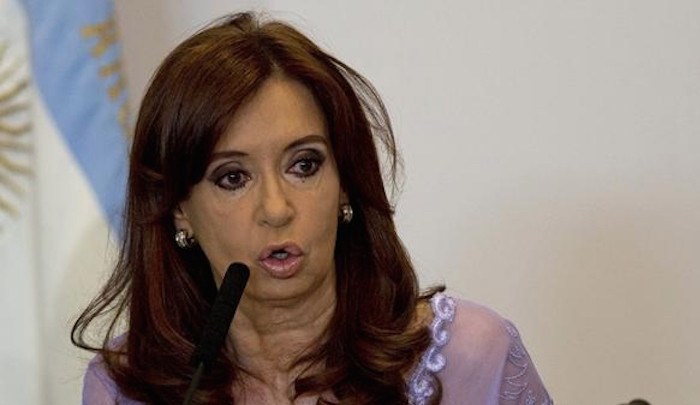
Argentine President Cristina Fernandez de Kirchner claimed Monday afternoon at the United Nations General Assembly in New York City that in 2010, the Obama administration tried to convince the Argentinians “to provide the Islamic Republic of Iran with nuclear fuel,” reported Mediaite.

Kirchner said that two years into Obama’s first term, his administration sent Gary Samore, former White House Coordinator for Arms Control and Weapons of Mass Destruction, to Argentina to persuade the nation to provide Iran with nuclear fuel, which is a key component of nuclear weapons.

Kirchner’s full remarks are as follows, per the Argentine president’s official website:

“In 2010 we were visited in Argentina by Gary Samore, at that time the White House’s top advisor in nuclear issues. He came to see us in Argentina with a mission, with an objective: under the control of IAEA, the international organization in the field of weapons control and nuclear regulation, Argentina had supplied in the year 1987, during the first democratic government, the nuclear fuel for the reactor known as “Teheran”. Gary Samore had explained to our Minister of Foreign Affairs, Héctor Timerman, that negotiations were underway for the Islamic Republic of Iran to cease with its uranium enrichment activities or to do it to a lesser extent but Iran claimed that it needed to enrich this Teheran nuclear reactor and this was hindering negotiations. They came to ask us, Argentines, to provide the Islamic Republic of Iran with nuclear fuel. Rohani was not in office yet. It was Ahmadinejad’s administration and negotiations had already started.”…

Kirchner went on to say at the U.N. that when Samore was asked to provide the request in writing, all communications immediately ceased and Samore disappeared….

Cartoons of the day

October 2, 2015

H/t Vermont Loon Watch


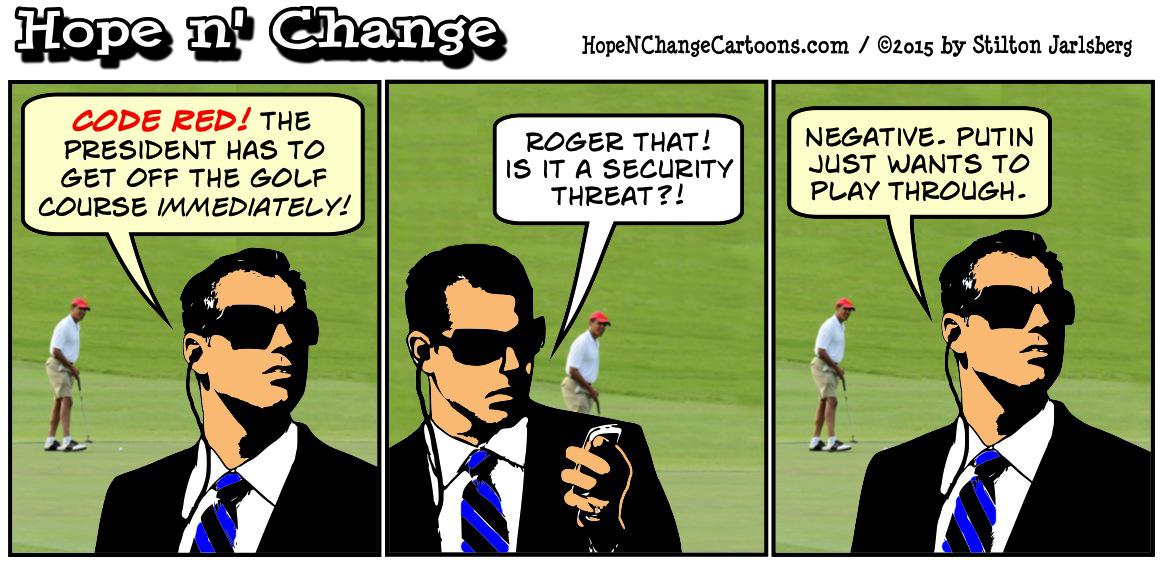
the-red-line


H/t Hope n’ Change Cartoons

Russian His Swing

Chinese warplanes to join Russian air strikes in Syria. Russia gains Iraqi air base

October 2, 2015

Chinese warplanes to join Russian air strikes in Syria. Russia gains Iraqi air base, DEBKAfile, October 2, 2015

Russia_China_480

Russia’s military intervention in Syria has expanded radically in two directions.DEBKAfile’s military and intelligence sources report that China sent word to Moscow Friday, Oct. 2, that J-15 fighter bombers would shortly join the Russian air campaign that was launched Wednesday, Sept. 30. Baghdad has moreover offered Moscow an air base for targeting the Islamic State now occupying large swathes of Iraqi territory

Russia’s military intervention in Syria has five additional participants: China, Iran, Iraq, Syria and Hizballah.

The J-15 warplanes will take off from the Chinese Liaoning-CV-16 aircraft carrier, which reached Syrian shores on Sept. 26 (as DEBKAfile exclusively reported at the time). This will be a landmark event for Beijing: its first military operation in the Middle East as well the carrier’s first taste of action in conditions of real combat.

Thursday night, China’s foreign minister Wang Yi, made this comment on the Syrian crisis at a UN Security Council session in New York: “The world cannot afford to stand by and look on with folded arms, but must also not arbitrarily interfere (in the crisis).”

A no less significant development occurred at about the same time when Iraqi Prime Minister Haider al-Abadi, speaking to the US PBS NewsHour, said he would welcome a deployment of Russian troops to Iraq to fight ISIS forces in his country too. As an added incentive, he noted that this would also give Moscow the chance to deal with the 2,500 Chechen Muslims whom, he said, are fighting with ISIS in Iraq.

DEBKAfile’s military sources add that Al-Abadi’s words came against the backdrop of two events closely related to Russia’s expanding role in the war arena:

1.  A joint Russian-Iranian-Syrian-Iraqi war room has been working since last week out of the Iraqi Defense Ministry and military staff headquarters in Baghdad to coordinate the passage of Russian and Iranian airlifts to Syria and also Russian air raids. This command center is also organizing the transfer of Iranian and pro-Iranian Shiite forces into Syria.

2.  Baghdad and Moscow have just concluded a deal for the Russian air force to start using the Al Taqaddum Air Base at Habbaniyah, 74 km west of Baghdad, both as a way station for the Russian air corridor to Syria and as a launching-pad for bombing missions against ISIS forces and infrastructure in northern Iraq and northern Syria.

Russia has thus gained a military enclave in Iraq, just as it has in Syria, where it has taken over a base outside Latakia on the western coast of Syria. At the same time, the Habbaniyah air base also serves US forces operating in Iraq, which number an estimated 5,000.

‘Yesterday Russia Turned A New Page In The History Of The World’

October 1, 2015

Chairman Of The Hizbullah-Affiliated ‘Al-Akhbar’ Daily On Russian Air Campaign In Syria: ‘Yesterday Russia Turned A New Page In The History Of The World,’ Middle East Media Research Institute, October 1, 2015

In an article published in the Hizbullah-affiliated Lebanese daily Al-Akhbar on October 1, 2015, the chairman of the newspaper’s board of directors, Ibrahim Al-Amin, predicted that Russia’s air campaign in Syria will be merely a prelude to a larger military offensive involving ground operations by the Syrian Army, Iran, Hizbullah, and even the Iraqi Popular Mobilization Forces. Al-Amin is known to have close ties to Hizbullah, and in the past he has proven a reliable source on matters relating to the Iran-Syria-Hizbullah axis.

24967Ibrahim Al-Amin (source: Siyese.net)

The following is the translation of the article:

“…This is the first test for the granddaughter of the Eastern dynasty [i.e. Russia] since World War II, and it is the first field test of whether America’s unipolar position in the world over the past quarter century has truly been broken. Above all, this is a repositioning of Russian military force in the direct labor market of the regions of ‘cold’ confrontation with the U.S.-led West… Today we find ourselves before the best opportunity of putting Syria on a path to a true solution, even if it be prefaced by fire.

“As for the facts, the Russian air force carried out the first missions of a working program laid out in detailed form in an existing plan of cooperation between Moscow and its allies in the war in Syria and Iraq. This is a plan that is coordinated down to the finest details with the two allies Syria and Iran, and consequently with Hizbullah [as well]… What happened yesterday, and which will soon reach its culmination, is a necessary preface to a larger military action that will include a land component undertaken by other forces in the alliance. To put it more directly, [Russia’s] aerial bombardment of [the rebels’] command and control centers, major weapons arsenals, and artillery positions will be a preface to a military operation carried out by the Syrian army on the ground, with direct support from Iran and Hizbullah, and even from the Iraqi Popular Mobilization Forces… It may be emphasized that Russia’s activity yesterday means clearly that all the discussions in New York didn’t change an iota in the military plan of action…

“The signs of surprise and astonishment on [the faces of] the Americans, the Westerners, the Israelis, the Turks, and the Saudis are an additional proof of the weakness of the prior coordination regarding the fate of the initiatives surrounding the Syria crisis. In fact, the step taken by Russia is a kind of dare to all those who employed every violent means they could against the Syrian regime. If they decide to broaden the confrontation, they will be forced to deal with the new realities, which today are openly represented by the Russian military presence, and tomorrow will be represented by an open Iranian military presence as well…

“This must not hide from our eyes the picture of the complicated reality, which tells us that the joy felt by the regime elements in Syria must not turn into any slackening, not on the part of the regime itself, and not on the part of all those who fight alongside it. It would be naive to consider the Russian strikes sufficient to counter the enemies. It would rather be realistic to profit from the support of Russia – which is a supporting actor, and is not [itself] a member of the axis of resistance – in order to prepare to wage harsh and decisive battles in a number of places in Syria. This is a matter that requires raising the level of readiness and mobilization, and the creation of operative means of benefitting from the Russian military arsenal that is present in or coming to Syria.

“Yesterday Russia turned a new page in the history of the world. However far its military action in the field reaches, it is the political and strategic results that will remain more important. These results will invite those who delude themselves in thinking that America is still the leader of the world and controller of its fate to revise their stance. Those who do not want to change their minds, let them stay as they wish, but they should take into account that they must rely on themselves more than at any time in the past. This goes for Syria, Iraq, Palestine, and even the Arabian Peninsula and North Africa!”

Nobel Prize Rumors Put Focus On Kerry-Iran Coziness

October 1, 2015

Nobel Prize Rumors Put Focus On Kerry-Iran Coziness, Washington Free Beacon, October 1, 2015

Kerry-and-ZarifJohn Kerry and Mohammad Javad Zarif / AP

Growing speculation that John Kerry will receive a Nobel Peace Prize for finalizing the Iranian nuclear deal is generating renewed criticism of his close relationship with the Iranian foreign minister, Javad Zarif, a key public face for the theocratic regime who is rumored to be a probable co-recipient with Kerry.

Rumors have been circulating for months that Kerry and Zarif will be co-selected for the prize. The Stockholm International Peace Research Institute, a leading Swedish think-tank, recommended in July that the two be selected for the Nobel in 2016.

Lawmakers and Washington insiders who have worked for years on the Iran portfolio have reacted with shock to the rumors, telling the Washington Free Beacon in multiple interviews that both Kerry and Zarif are unfit to receive the prize.

“We have seen Nobel Prizes that appeared to be awarded to people who have acted staunchly to the detriment of Israel’s existence, and if that is their inclination this time, I think Secretary Kerry should be first runner up for the Nobel Prize, right behind the Ayatollah,” said Rep. Louie Gohmert (R., Texas).

The Nobel Prize speculation comes after months of reports describing warmth and comfort between the American and Iranian teams that sealed the final Joint Comprehensive Plan of Action.

The United States considers Iran to be the world’s leading state sponsor of terrorism and military officials have linked Tehran to the deaths of hundreds of American soldiers in Iraq.

The growing rumors have reignited criticism among insiders of Kerry’s coziness with top Iranian officials and of the deal more specifically.

“No one should be surprised if the Nobel Peace Prize committee ends up awarding the chief negotiators of a catastrophic agreement that preserves and legitimizes Iran’s ability to build nuclear arms, and unleashes over $100 billion for Iran to further fund Hezbollah, Hamas, Palestinian Islamic Jihad, and other terrorists who attack Israel,” said one senior GOP aide who has long worked on the issue.

Those who spoke to the Free Beacon both on and off the record said that Kerry and Zarif would make a mockery of the award. The recognition of Zarif in particular, a longtime Iranian regime insider known for his vociferous dislike of Israel, was particularly offensive to some observers.

“I assume they’ll win it. It will be announced in early-mid October, and then Kerry can resign in glory and join the Democratic presidential race,” said Bill Kristol, the prominent conservative commentator and editor of the Weekly Standard.

Like Kristol, other observers feel certain that the Nobel commission will grant the award to Kerry and Zarif either this year or next.

“American historians will judge Kerry as one of the worst secretaries of state in the country’s history, a man who ceded enormous parts of the globe to hostile American rivals and legitimized the Iranian nuclear program,” said one senior pro-Israel official who has been involved in the Iran fight but was not authorized to speak on record.

“It’s not a surprise that European elites, who find America’s rivals preferable to America and want to do business with Iran, are going to reward him for it,” the source said.

When asked this week to address the speculation, a spokesman for the Nobel Foundation declined to confirm who may or may not be in the running.

“The Nobel Foundation cannot comment, confirm, or deny rumors of the kind described in your email below,” the official said.

“According to the statutes of the Nobel Foundation and the prize awarding institutions of the Nobel Prize all nominations are classified information,” the official added, explaining that in some case nominators choose to reveal who they have nominated.

Nominations for the 2015 Nobel Prize had to be made before Jan. 31 of this year, before the nuclear deal was finalized. If chosen after this date, the nominees would be considered in the 2016 cycle.

“I think the work of the Nobel Committee of the Norwegian Parliament this year just got much easier,” Carl Bildt, the former Swedish prime minister, tweeted immediately after the nuclear agreement was announced in Vienna.

“A Nobel Peace Prize for John Kerry?” the Week asked the following day. “It could happen.”

Conservative commentators, such as National Review’s Jay Nordlinger, also picked up on the speculation.

“If the Norwegian Nobel Committee gives John Kerry the peace prize for the Iran deal, and Iran goes nuclear, will he throw away his Nobel medal?” Nordlinger asked in August, as criticism of the deal mounted.

Obama’s show of weakness

October 1, 2015

Obama’s show of weakness, Israel Hayom, Prof. Abraham Ben-Zvi, October 1, 2015

The U.S. has been relegated to dragging its feet in a trail blazed by the Russian leader, as Washington is left to practically beg Moscow for a seat at the table where Assad’s fate will be determined.

******************

U.S. President Barack Obama’s address to the U.N. General Assembly on Monday was his worst and most embarrassing yet. Despite the fact that it has been seven years since he was elected president, it seems Obama has yet to learn anything from his growing list of failures, especially when it comes to foreign policy.

Obama continues to naively preach about the importance of traditional diplomacy and broad international cooperation as a prerequisite to conflict resolution; and he does so despite the fact that his decision to prematurely withdraw American troops from Iraq, compounded by his aversion to putting boots on the ground in Syria, have done nothing but breed violence, fanaticism and radical Islamism in the Middle East.

Against the backdrop of the bloody conflicts in Syria, Iraq and Yemen, Obama delivered a disconnected and utterly surreal speech before the U.N., lauding democracy and international agreements, even deficient, hollow ones, like the nuclear deal with Iran.

Beyond the sanctimonious sermon to nations and movements without any loyalty to the principles of Western democracy, Obama’s speech lacked any new message. On the contrary — he essentially legitimized Russia’s military presence in Syria, and the pivotal role Moscow has appropriated in the region due to American inaction against Syrian President Bashar Assad.

This inexcusable failure, which followed Washington’s acquiescence in allowing Russian President Vladimir Putin become the new mediator in the chemical warfare crisis in Syria in 2013, has afforded Moscow a coveted opportunity to become a major player in the Middle East, one shaping a new political and security reality.

The U.S. has been relegated to dragging its feet in a trail blazed by the Russian leader, as Washington is left to practically beg Moscow for a seat at the table where Assad’s fate will be determined.

Indeed, if you strip the envelope of democracy vs. dictatorship from Obama’s speech, it becomes more than evident that he is not only willing to foster partnerships with tyrants and oppressive regimes, but also that the dispute between the White House and the Kremlin over Syria is marginal, as it focuses on Assad’s status in the new political order that will be forged in Syria once the fighting subsides.

The American Gulliver, it seems, is coming to terms with the end of the single-world power hegemony. While the Russian military airlift to Syria continues in full swing, Obama is content with philosophical reflections on the desired nature of the new world order, yielding to the new balance of power emerging in the war-torn country.

One can only lament the fact that the U.S. president’s incomprehensible weakness only undermines the very democratic dream he himself has outlined.

This was evident in the meeting between Obama and Putin following their respective U.N. addresses. Despite Obama’s desire to give his Russian counterpart the cold shoulder, the fact the he declared before dozens of world leaders that the U.S. has “no desire to return to a cold war” took the sting out of his message.

This was nothing but an attempt at damage control over the harm caused to the U.S.’s prestige and status in the global theater by drawing new red lines to limit Russia’s operation in the Middle East. The problem is that we already know how blurry those red lines are when it comes to Syria.

Satire | Three cheers for Terroristine

October 1, 2015

Three cheers for Terroristine, Sultan Knish Blog, Daniel Greenfield, October 1, 2015

(He refers, of course, to “Palestine.” — DM)

We need a terrorist state. Where the politicians are terrorists, the police are terrorists and even the men sitting at the desk when you come in to drop off a form are terrorists.

3egypt081613

There are states that support terrorists, and give safe harbor to them, but that’s not good enough. We don’t want another Pakistan or Iran. We’re not half-assing it this time. What we want is the genuine article. Terrorists from the top down. Terrorists everywhere. A state where every branch of government and the entire country is nothing but terrorists.

Terroristine has been an ancient dream since 1973 or was it 1967. A generation of keffiyah draped thugs, KGB operatives and human rights activists have looked out into the darkness and called it into being. It is a vision of a country where everyone is a murderer and children are taught from a very young age that their purpose in life is to die killing people who don’t share their religion.

And now after decades of negotiations, treaties, suicide bombings, mutilations, billions of dollars in vanishing into Swiss bank accounts and the death of its Egyptian born leader of AIDS– Terroristine is closer than ever to coming into being.

Abbas, its unelected dictator, who has struggled long and hard so that one of his sons might have his own cigarette monopoly in Gaza, has come to the UN to promise that Terroristine will have “will actively contribute to the achievement of economic, cultural, and humanitarian progress of civilization.”

And who can doubt him? Certainly not Terroristinians who don’t have elections or a free press.

Terroristine, whose noble flag (that looks like nearly every other Arab flag) flies over the UN, has done wonders for civilization. Consider the airplane hijacking. The suicide bomber. Has there ever been a civilization that did as much for civilized living as the Terroristinians?

Every time you get groped at an airport, thank Terroristine. Without the Terroristinian contribution to civilization, you might actually be able to get on a plane in peace. Or visit the Twin Towers.

The Terroristinian contribution to human progress is unquestionable. But only one thing stands in the way of it unleashing its full Terroristinian potential for all mankind.

Them. Those pesky people who live in that country that is always in the way. You know the ones, with too many Nobel prizes, newly invented tomatoes and microchips. They stand in the way of the great cultural contributions of Terroristine. They must die so that Terroristine must live.

They must be thrown out of their homes, village by village and city by city, so that the noble Terroristinians can plant their rockets on the rubble of their houses, the charred remains of their fields, and point them at their cities.

Trying to end terrorism by creating a terrorist state makes is like trying to put out a fire with more fire. It can’t work, but we must try. So that we can say that we tried. Over and over again. We’ll keep trying until we run out of land to try with. And people to try with.

Until there’s nothing left but Terroristines everywhere. Until all the world is Terroristine. The question is can we make it happen? Yes, we can. Oh sweet Allah, yes we can.

Israel must return to the 1967 borders, which are really the 1948 borders. Why are the borders of the 1948 war, so much better than the borders of the Six Day War? Because the Terroristinians came closer to winning that war. Came closer to driving the Yahood into the sea and ululating over miles  of their corpses.

boy_bomb.preview

But the dream failed. Farmers armed with outdated rifles. Volunteer pilots from America and Canada. Refitted cargo ships filled with half-dead men, women and children straight from the camps. Used Czech artillery. They held off the armies of seven Terroristinian nations. Farm by farm, they stood off tanks and infantry. In Jerusalem, they fought for every house. And so the Zionist entity survived.

Allah curse them. They survived.

But now it’s back to 1948 again. Every war undone. Every defeat turned to victory. Cut Jerusalem in two. Drive out the farmers. Burn their land. Dig up their graves. March the borders back to 1948. And fly the Terroristinian flag over dust and rubble. Had they won in 1948 or 1967 or 1973, there would be no Israel and no Terroristine. The land would have become part of Syria, Egypt and Jordan. And only when the mobs of the faithful would drive out the tyrants to replace them with Islamic states, would there finally be a Terroristine.

But despite what Abbas says, there is still hope for a two state solution. And we must do everything in our power to salvage the two state solution so that there will be a state of civilization on one side and a state of terrorists on the other. Hospitals here, launching pads there. Schools here, bomb factories there. Life here, death here. We all know the story. Olive trees and bomb belts. Rocks and dead families in burning cars by the side of the road. Children with their throats cut.

A dream. A nightmare. Who even knows anymore.

Why do we need Terroristine? Peace. There can be no peace without a terrorist state. Not a chance of it. The only way we’ll ever have peace is to give the terrorists a country of their own. A country dedicated to terrorism. Only then will the Terroristinians finally give up on all the killing, and dedicate themselves to medical research, quantum mechanics and the arts. It hasn’t happened yet to. But it’s bound to.

After decades as an autonomous territory, spreading death and destruction, it’s time for Terroristine to finally be recognized as an independent state. With contiguous borders cutting Israel in half. It is the only hope for peace in the region. Would Sunnis and Shiites be killing each other from Yemen to Iraq? Assuredly not. The moment the flag of Terroristine rises above the wounded hills, and its peaceful anthem, “Palestine is My Revenge” is heard in the land, then a great echoing sigh will rise up from the mouths of one billion Muslims. And the violence will cease.

The international community is impatient. They want Terroristine and they want it now. Whatever Israel has offered in the past, it isn’t enough. It must offer more and more. Whatever it takes. We know the Terroristinians want their own state. Every time they walk out of negotiations or end them with a round of terrorist attacks, it shows their deep and abiding passion for a state. They want it so badly they aren’t willing to make a single concession for it. Or even negotiate for it.

That’s how committed they are to realizing their great dream to Terroristine. And who can blame them? Have any people suffered the way the Terroristinians have? (Besides all the people the Terroristinians have killed over the last 1,400 years.) Have any other people been wholly subsidized by a UN agency dedicated only to them? Have any other people inspired such a stylish fashion statement? No more excuses. The world demands Terroristine. Middle East peace demands Terroristine.

How much longer can Israel expect to draw out the necessary concessions with weak justifications about terrorism. We know they’re terrorists. That’s why we’re giving them a state. If they weren’t terrorists, they could go to the back of the line with the Jews, Kurds and Armenians.

From one corner of the Muslim world to the other, a cry goes out. “We Are All Terroristinians.” They cry it it Cairo and Damascus, in Tehran and Islamabad, in Dubai and Paris. They mosques go up, the asses go up and the bombs go off. And off to the peace negotiations we go.

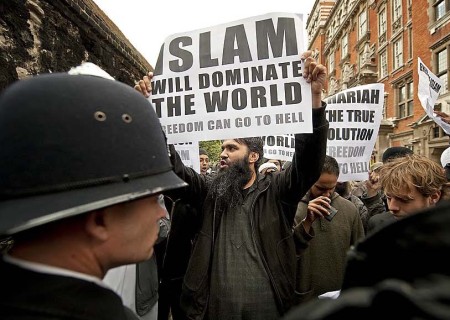
Islam will dominate the world

Everyone is impatient. Everyone is on fire. Especially the Terroristinians. Jewish store windows are smashed in London, Terroristinians butcher Rabbis in Jerusalem synagogues, fuming Terroristinians shoot up American recruiting centers. And the crowds cheer. “We Are All Terroristinians Now.”

It is a great day, I tell you. A great day for negotiating. ISIS impatiently beheads infidels to create its own Islamic Terroristine. In Afghanistan the word goes out, “We are the Taliban, we are the Afghan people, we are Terroristinians.” In Egypt and Turkey, they cry, “Khaybar Ya Yahood”. Churches burn. Soldiers die. The smoke rises to heaven. A man waits in line at the airport. His passport is Dutch, Welsh, German, American, it doesn’t matter. He is a Terroristinian. Yallah.

One day the borders of Terroristine will stretch from Spain to Pakistan. Or beyond Why settle for Jerusalem, when we can have London, Paris and Hamburg too. Why settle for anything at all? Allah is generous to the believers. Our people are in Africa. Even China. The Great Satan himself bows toward Mecca. The old governments are falling. The pawns of the Kufir are fleeing before our eyes.

We are all Terroristinians now. There is no other book on our shelves than the Koran. No law but Sharia in our hearts. And no nation but Terroristine. The ghost of Chamberlain stands outside No. 10 Downing Street promising peace. A Terroristinian refugee beheads him and holds up his spectral head to the cheers of the crowd. Rockets sail through the sky. The crowd cheers. Hip Hip Hooray. Hierosylma Est Perdita. Three cheers for Terroristine.