Posted tagged ‘Europe’

How Much of our Culture Are We Surrendering to Islam?

June 21, 2016

How Much of our Culture Are We Surrendering to Islam? Gatestone InstituteGiulio Meotti, June 21, 2016

♦ The same hatred as from Nazis is coming from Islamists and their politically correct allies. We do not even have a vague idea of how much Western culture we have surrendered to Islam.

♦ Democracies are, or at least should be, custodians of a perishable treasury: freedom of expression. This is the biggest difference between Paris and Havana, London and Riyadh, Berlin and Tehran, Rome and Beirut. Freedom of expression is what gives us the best of the Western culture.

♦ It is self-defeating to quibble about the beauty of cartoons, poems or paintings. In the West, we have paid a high price for the freedom to do so. We should all therefore protest when a German judge bans “offensive” verses of a poem, when a French publisher fires an “Islamophobic” editor or when a music festival bans a politically incorrect band.

It all occurred in the same week. A German judge banned a comedian, Jan Böhmermann, from repeating “obscene” verses of his famous poem about Turkish President Recep Tayyip Erdogan. A Danish theater apparently cancelled “The Satanic Verses” from its season, due to fear of “reprisals.” Two French music festivals dropped Eagles of Death Metal — the U.S. band that was performing at the Bataclan theater in Paris when the attack by ISIS terrorists (89 people murdered), took place there — because of “Islamophobic” comments by Jesse Hughes, its lead singer. Hughes suggested that Muslims be subjected to greater scrutiny, saying “It’s okay to be discerning when it comes to Muslims in this day and age,” later adding:

“They know there’s a whole group of white kids out there who are stupid and blind. You have these affluent white kids who have grown up in a liberal curriculum from the time they were in kindergarten, inundated with these lofty notions that are just hot air.”

As Brendan O’Neill wrote, “Western liberals are doing their dirty work for them; they’re silencing the people Isis judged to be blasphemous; they’re completing Isis’s act of terror.”

A few weeks earlier, France’s most important publishing house, Gallimard, fired its most famous editor, Richard Millet, who had penned an essay in which he wrote:

“the decline of literature and the deep changes wrought in France and Europe by continuous and extensive immigration from outside Europe, with its intimidating elements of militant Salafism and of the political correctness at the heart of global capitalism; that is to say, the risk of the destruction of the Europe and its cultural humanism, or Christian humanism, in the name of ‘humanism’ in its ‘multicultural’ version.”

Kenneth Baker just published a new book, On the Burning of Books: How Flames Fail to Destroy the Written Word. It is a compendium of so called “bibliocaust,” the burning of books from Caliph Omar to Hitler, and includes the fatwa on Salman Rushdie. When Nazis incinerated books in Berlin they declared that from the ashes of these novels would “arise the phoenix of a new spirit.” The same hatred is coming from Islamists and their politically correct allies. We do not even have a vague idea of how much Western culture we have surrendered to Islam.

Theo Van Gogh’s movie, “Submission,” for which he was murdered, disappeared from many film festivals. Charlie Hebdo‘s drawings of the Islamic prophet Mohammed are concealed from the public sphere: after the massacre, very few media reprinted these cartoons. Raif Badawi’s blog posts, which cost him 1,000 lashes and ten years in prison in Saudi Arabia, have been deleted by the Saudi authorities and now circulate like forbidden Samizdat literature was in the Soviet Union.

871 (1)After the massacre of Charlie Hebdo’s staff, very few media reprinted their Mohammed cartoons. Pictured above, Stéphane Charbonnier, the editor and publisher of Charlie Hebdo, who was murdered on January 7, 2015 along with many of his colleagues, is shown in front of the magazine’s former offices, just after they were firebombed in November 2011.

Molly Norris, the American cartoonist who in 2010 drew Mohammed and proclaimed “Everyone Draw Muhammad Day,” is still in hiding and had to change her name and life. The Metropolitan Museum of Art in New York pulled images of Mohammed from an exhibition, while Yale Press banned images of Mohammed from a book about the cartoons. The Jewel of Medina, a novel about Mohammed’s wife, was also pulled.

In the Netherlands, an opera about Aisha, one of Mohammed’s wives, was cancelled in Rotterdam after the work was boycotted by the theater company’s Muslim actors, after it became evident that they would be a target for Islamists. The newspaper NRC Handelsblad headlined its coverage “Tehran on the Meuse,” the river that passes through the Dutch city.

In England, the Victoria and Albert Museum took down Mohammed’s image. “British museums and libraries hold dozens of these images, mostly miniatures in manuscripts several centuries old, but they have been kept largely out of public view,” The Guardian explained. In Germany, the Deutsche Opera cancelled Mozart’s opera Idomeneo in Berlin, because it depicted the severed head of Mohammed.

Christopher Marlowe’s “Tamburlaine the Great,” which includes a reference to Mohammed being “not worthy to be worshipped,” was rewritten at London’s Barbican theater, while Cologne’s Carnival cancelled Charlie Hebdo‘s float.

In the Dutch town of Huizen, two nude paintings were removed from an exhibition after Muslims criticized them. The work of a Dutch Iranian artist, Sooreh Hera, was yanked from several Dutch museums because some of the photographs included the depictions of Mohammed and his son-in-law, Ali. According to this disposition, one day London’s National Gallery, Florence’s Uffizi, Paris’ Louvre or Madrid’s Prado might decide to censor Michelangelo, Raffaello, Bosch and Balthus because they offend the “sensibility” of Muslims.

The English playwright Richard Bean has been forced to censor an adaptation of Aristophanes’s comedy, “Lysistrata“, in which the Greek women hold a “sex strike” to stop their men from going to war (in Bean’s script, Muslim virgins go on strike to stop suicide bombers). Several Spanish villages stopped burning effigies of Mohammed in the commemoration ceremony celebrating the reconquest of the country in the Middle Ages.

There is a video filmed in 2006, when the death threats against Charlie Hebdo became worrisome. Journalists and cartoonists are gathered around a table to decide on the next cover for magazine. They speak about Islam. Jean Cabu, one of the cartoonists later murdered by Islamists, puts the issue this way: “No one in the Soviet Union had the right to do satire about Brezhnev.”

Then another future victim, Georges Wolinski, says, “Cuba is full of cartoonists, but they don’t make caricatures about Castro. So we are lucky. Yes, we are lucky, France is a paradise.”

Cabu and Wolinski were right. Democracies are, or at least should be, custodians of a perishable treasury: freedom of expression. This is the biggest difference between Paris and Havana, London and Riyadh, Berlin and Tehran, Rome and Beirut. Freedom of expression is what gives us the best of the Western culture.

Thanks to the Islamists’ campaign, and the fact that now only some “crazies” still venture in the exercise of freedom, are we now going to be just fearful? “Islamophobic” cartoonists, journalists and writers are the first Europeans since 1945 who have withdrawn from public life to protect their own lives. For the first time in Europe since Hitler ordered the burning of books in Berlin’s Bebelplatz, movies, paintings, poems, novels, cartoons, articles and plays are literally and figuratively being burned at stake.

The young French mathematician Jean Cavailles, to explain his fateful involvement in anti-Nazi Resistance, used to say: “We fight to read ‘Paris Soir’ rather than ‘Völkischer Beobachter’.” For this reason alone, it is self-defeating to quibble about the beauty of cartoons, poems or paintings. In the West, we have paid a high price for the freedom to do so. We should all therefore protest when a German judge bans “offensive” verses, when a French publisher fires an “Islamophobic” editor or when a music festival bans a politically incorrect band.

Or is it already too late?
VIDEO: Is Europe Doomed by Migrants?

June 19, 2016

VIDEO: Is Europe Doomed by Migrants? Gatestone Institute, June 18, 2016

Most of the millions of overwhelmingly male migrants who have come to Europe in the past two years are not refugees fleeing war zones. Douglas Murray, in our latest video, discusses the total failure of Germany and other countries to integrate the migrants, and what the consequences will be. “If you have jobs in Germany that need filling, why on earth wouldn’t you fill them with the young people from Italy, Greece, Portugal and other European countries, who are unemployed at the moment?”

The Impact of Islamic Fundamentalism on Free Speech

June 19, 2016

The Impact of Islamic Fundamentalism on Free Speech, Gatestone InstituteDenis MacEoin, June 19, 2016

♦ The 57-member-state Organization of Islamic Cooperation (OIC) have been working hard for years to render Islam the only religion, political system and ideology in the world that may not be questioned with impunity. They have tried — and are in many respects succeeding — to ring-fence Islam as a creed beyond criticism, while reserving for themselves the right to condemn Christians, Jews, Hindus, democrats, liberals, women and gays in often vile, even violent language. Should anyone say anything that seems to them disrespectful of their faith, he or she will at once be declared an “Islamophobe.”

♦ Like almost every world leader, Obama declares, with gross inaccuracy, that “Islam is a religion of peace”. It is politically expedient to deny the very real connection to jihad violence in the Qur’an, the Traditions (ahadith), shari’a law, and the entire course of Islamic history. They do this partly for political reasons, but probably more out of fear of offending Muslims. We know only too well how angry many Muslims can become at even the lightest offence.

♦ “If PEN as a free speech organization can’t defend and celebrate people who have been murdered for drawing pictures, then frankly the organization is not worth the name. … I hope nobody ever comes after them.” – Salman Rushdie, on the PEN members who objected to giving its award to Charlie Hebdo, after 12 of its staff were murdered by jihadists.

♦ The OIC succeeded in winning a UN Human Rights Council resolution that makes “defamation of religion” a crime. But the OIC knows full well that only Muslims are likely to use Western laws to deny free speech about their own faith. Last year, the US Congress introduced House Resolution 569, also purportedly intended to combat hate speech. It contains an oddity: it singles out Muslims for protection three times. It does not mention any other faith community.

One of the greatest achievements of the Enlightenment in Europe and the United States is the principle of free speech and reasoned criticism. Democracy is underpinned by it. Our courts and parliaments are built on it. Without it, scholars, journalists, and advocates would be trapped, as their ancestors had been, in a verbal prison. It is enshrined in the First Amendment to the US Constitution, in the words

“Congress shall make no law respecting an establishment of religion, or prohibiting the free exercise thereof; or abridging the freedom of speech, or of the press; or the right of the people peaceably to assemble, and to petition the government for a redress of grievances.”

Without full freedom to express ourselves in speech or in print, none of us could criticize a religion, an ideology, a political party, a law, an academic theorem, or anything else we might feel to be misguided, flawed, or even dangerous. Through it, we are free to worship as we choose, to preach as we see fit, to stand up in a parliament to oppose the government, to satirize the pompous, to take elites down a peg or two, to raise the oppressed to dignity, or to say that anything is nonsense.

Sir Karl Popper, the philosopher, wrote The Open Society and Its Enemies in defence of democracy, freedom and free speech. In Popper’s open society, all people have to be able to think and express themselves freely, without fear of punishment or censorship.

Closed societies are totalitarian and depend on claims to absolute truth. The citizen is not free to challenge the ideas of the state. Theocracies, including past and present Islamic states, rest for their authority on the rigid application of infallible scripture and divinely revealed laws.

The chief threat to free speech today comes from a combination of radical Islamic censorship and Western political correctness. Over the past century and more, Western societies have built up a consensus on the centrality of freedom of expression. We are allowed to criticize any political system or ideology we care to: capitalism, socialism, liberalism, communism, libertarianism, anarchism, even democracy itself. Not only that, but — provided we do not use personalized hate speech or exhortations to violence — we are free to call to account any religion from Christianity to Scientology, Judaism to any cult we choose. Some writers, such as the late Christopher Hitchens, have been uncensored in their condemnations of religion as such.

It can be hard for religious people to bear the harsher criticisms, and many individuals would like to close them down, but lack that power. Organizations such as Britain’s National Secular Society (established in 1866) flourish and even advise governments.

It used to be possible to do this with Islam as well. In some measure it still is. But many Muslim bodies — notably the 57-member-state Organization of Islamic Cooperation (OIC) — have been working hard for years to render Islam the only religion, political system and ideology in the world that may not be questioned with impunity. They have tried — and are in many respects succeeding — to ring-fence Islam as a creed beyond criticism, while reserving for themselves the right to condemn Christians, Jews, Hindus, democrats, liberals, women, gays, or anyone else in often vile, even violent language. Should anyone say anything that seems to them disrespectful of their faith, he or she will at once be declared an “Islamophobe.”

I am not talking here about hate literature comparable to the ubiquitous anti-Semitic writing so freely available on the internet. Much milder things have fallen and continue to fall afoul of Islamic defensiveness. We know some of the more obvious: a novel, a bunch of cartoons, some films, some political speeches, and a few blogs which have resulted in savage floggings, imprisonment, torture, death threats and murders. There is plenty of vulgar anti-Muslim comment online, just as there is plenty of everything in the public arena. But Muslim sensibilities have become so tender now that even fair, balanced, and informed questions about Muhammad, his early followers, the Qur’an, various doctrines, aspects of Islamic history, the behaviour of some Muslims, even the outrages committed by them, are rejected as Islamophobic.

Politicians and the media rush to disavow any connection between jihadi violence and Islam, and hurry to protect Muslims from the anticipated anger that massacres might provoke. Officials are not wrong to urge against reprisals or hatred targeting ordinary, uninvolved Muslims. But many often seem too quick to avoid pinning blame on actual Islamic laws and doctrines that inspire the jihad attacks.

Just after the horrendous slaughter in a gay nightclub in Orlando on June 12, U.S. President Barack Obama made a speech in which he described the attack as an “act of hate” and an “act of terror”. Not “Islamic terrorism” or even the misleading phrase “Islamist terrorism”. Like almost every world leader, he declares, with gross inaccuracy, that “Islam is a religion of peace”. It is politically expedient to deny the very real connection to jihad violence in the Qur’an, the Traditions (ahadith), shari’a law, and the entire course of Islamic history. Obama and many others simply deny themselves the right to state what is true, partly for political reasons, but probably more out of fear of offending Muslims in general, and Muslim clerics and leaders in particular. We know only too well how angry many Muslims can become at even the lightest perceived offence.

The list of threats, attacks, and murders carried out to avenge perceived irreverence towards Islam, Muhammad, the Qur’an or other symbols of Islam is now long. Even the mildest complaints from Muslim organizations can result in the banning or non-publication of books, distancing from authors, condemnations of alleged “Islamophobes” by declared supporters of free speech, the cancellation of lectures, arrests, and prosecutions of men and women for “crimes” that were not crimes at all. There are trials, fines and sentencings for advocates of an accurate and honest portrayal of Islam, its sources, and its history.

Danish author Lars Hedegaard suffered an attack on his life and lives in a secret location. Kurt Westergaard, a Danish cartoonist, suffered an axe attack that failed, and is under permanent protection by the security services. In 2009, in Austria, the politician Susanne Winter was found guilty of “anti-Muslim incitement,” for saying, “In today’s system, the Prophet Mohammad would be considered a child-molester,” and that Islam “should be thrown back where it came from, behind the Mediterranean.” She was fined 24,000 euros ($31,000) and given a three-month suspended sentence. The phrase “child molester” was based on the fact, recorded by Muslim biographers, that Muhammad had sexual relations with his new wife A’isha when she was nine years old.

In 2011, Elisabeth Sabaditsch-Wolff, a former Austrian diplomat and teacher, was put on trial for “denigration of religious beliefs of a legally recognized religion,” found guilty twice, and ordered to pay a fine or face 60 days in prison. Some of her comments may have seemed extreme and fit for criticism, but the court’s failure to engage with her historically accurate charge that Muhammad had sex with a nine-year-old girl and continued to have sex with her until she turned eighteen, regarding her criticism of it as somehow defamatory, and the judge’s decision to punish her for saying something that can be found in Islamic sources, illustrates the betrayal of Western values of free speech in defence of something we would normally penalize.

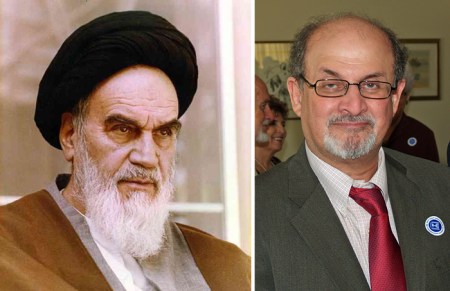
The stories of the bounty placed on Salman Rushdie’s head by the Ayatollah Khomeini, the threats and attacks against the artists who drew the Danish cartoons of Muhammad, or the murderous assault on the editorial team at Charlie Hebdo on January 7, 2015 are well known. Accustomed to free speech, open blasphemy, and satire, at home with irreverence for individuals and institutions, and assured of the legality of those freedoms — threats and attacks like those terrify us. Or should.

1505 (1)Iran’s then Supreme Leader Ayatollah Khomeini put a cash bounty on the head of British novelist Salman Rushdie 27 years ago, because he deemed Rushdie’s novel, The Satanic Verses, offensive. In February 2016, a group of Iranian media outlets added $600,000 to the cash reward.

But even more terrifying is the way in which so many politically correct Western writers and politicians have turned their backs on our most basic values. There are many instances, but the most disturbing has to be the reaction of Pen International, the internationally acclaimed defender of free speech everywhere, to Charlie Hebdo. PEN International is known worldwide as an association of writers. Together they work tirelessly for the freedom of authors from imprisonment, torture, or other restrictions on their freedom to write honestly and controversially. In 2015, PEN’s American Center planned to present its annual Freedom of Expression Award during its May 5 gala to Charlie Hebdo. The award was to be handed to Gerard Biart, the publication’s editor-in-chief, and to Jean-Baptiste Thorat, a staff member who arrived late on the day when Muslim radicals slaughtered twelve of his colleagues. This is the sort of thing PEN does well: upholding everyone’s right to speak out even when offence is taken.

When, however, this was announced, six PEN members, almost predictably, condemned the decision to give the award to Charlie Hebdo, and refused to attend the gala. Peter Carey, Michael Ondaatje, Francine Prose, Teju Cole, Rachel Kushner and Taiye Selasi exercised their right to double standards by blaming Charlie Hebdo for its offensiveness. Kushner expressed her discomfort with the magazine’s “cultural intolerance.” Does that mean that PEN should never have supported Salman Rushdie for having offended millions of Muslims just to express his feelings about Islam?

Peter Carey expressed his support, not for the satirists, but for the Muslim minority in France, speaking of “PEN’s seeming blindness to the cultural arrogance of the French nation, which does not recognize its moral obligation to a large and disempowered segment of their population.” We never heard Carey speaking out when a young Jewish man, Ilan Halimi, was tortured to death for weeks in France, or when Jews in Toulouse were shot and killed. He seems to be saying that the French government should shut up any writer or artist who offends the extreme sensitivities of a small percent of its population.

Teju Cole remarked, in the wake of the killings, that Charlie Hebdo claimed to offend all parties but had recently “gone specifically for racist and Islamophobic provocations.” But Islam is not a race, and the magazine has never been racist, so why charge that in response to the sort of free speech PEN has always worked hard to advance?

A sensible and nuanced rebuttal of these charges came from Salman Rushdie himself, a former president of PEN:

“If PEN as a free speech organization can’t defend and celebrate people who have been murdered for drawing pictures, then frankly the organization is not worth the name. What I would say to both Peter and Michael and the others is, I hope nobody ever comes after them.”

Those six later morphed into something like one hundred and forty-five. By April 30, Carey and the others were joined by another one hundred and thirty-nine members who signed a protest petition. Writers, some distinguished, some obscure, had taken up their pens to defy the principle of free speech in an organization dedicated to free speech — many of whom live in a land that protects free speech in its First Amendment precisely for their benefit.

The Organization of Islamic Cooperation had succeeded in winning a UN Human Rights Council resolution (16/18, 2010) that makes “defamation of religion” (read: blasphemy in the eyes of its followers) a crime. But the OIC knows full well that only Muslims are likely to use Western laws to deny free speech about their own faith. Five years later, in December 2015, the US Congress introduced House Resolution 569, intended to combat hate speech and other crimes. Insofar as it addresses matters of genuine concern to us all, it seems beyond reproach. But it contains an oddity. It singles out Muslims for protection three times. It does not mention any other faith community.

The greatest defence of our democracy, our freedom, our openness to political and religious debate, and our longing to live in Popper’s open society without hindrance — namely freedom of expression — is now under serious threat. The West survived the totalitarianism of the Third Reich and the Soviet Union without any loss of our freedoms. But today, a new enemy has arisen, global in its reach, more and more often militant in its expression, rooted in 1.6 billion people, seated at the UN and other international bodies, and already partially cowing us into submission to its repressive prejudices. Since the edict against Salman Rushdie, there is no way of calculating how many books have been shelved, how many television documentaries have never been aired, how many film scripts have been tossed in the waste bin, how many conferences have been cancelled or torn down, or how many killers are waiting in the wings for the next book, or poem, or song or sport that will transgress the strictures of Islamic law and doctrine.

Why This American Supports ‘Brexit

June 18, 2016

Why This American Supports ‘Brexit, PJ MediaRoger L Simon, June 17, 2016

roger_brexit_article_banner_6-17-16-1.sized-770x415xc

But what this is really about, what Britain and we really need from this vote, is a firewall against Islamization. Economic niceties aside, that is finally how “Brexit” will be judged—here and in Europe. The Brits have to suck it up, brave the inevitable accusations of Islamophobia and put poor old Hannan out of a job.

****************************

For those of us of a “certain age,” Europe was the height of old world cool and sophistication—Anouk Aimée and Jean-Louis Trintignant, the glorious Julie Christie. We wanted to be like them. That was a long time ago. No more Nouvelle Vague. No more Beatles. Now it’s a continent on the verge of imploding with moribund or worse economies, intermittent (and, in the case of France, persistent) violence, and a growing Islamization that is turning countries once among the most free on Earth into Sharia-laced nightmares.

The European Union—consciously or unconsciously—has been complicit in all that, an ever-growing bureaucratic miasma that seems more distant from the needs of its constituents than even our own government.

Americans—concerned ones anyway—watch from afar as right-wing separatist parties have sprung up across the continent, gaining popularity from Austria to the UK. Are they avatars of the World War II-era fascist parties the liberal-left (our guardians at The Guardian) would have us believe or are they natural responses to this monolithic EU and its fruits and therefore the true protectors of the Enlightenment?

It’s hard to say at this point. A welter of conflicting forces are at play. The only thing that is clear is that things are bad.

Those of us who travel often to Europe have seen it, ever-expanding Islamic enclaves in and around many of the major cities that are now larger, quite literally, than any since the days of Muslim-ruled Spain. The “Reconquista” is in progress via what Robert Spencer calls “the stealth jihad.” (Sometimes, as we know, it’s not so stealthy.) Putting up barely a fight, Europe appears to be relinquishing the values they have fought for since the Magna Carta. Who cares about misogyny, homophobia or that outdated separation of church and state when you don’t have any religion of your own to separate? We’re multicultural!  We’re diverse! We’re…. dead?  Well, not quite but wait.

Meanwhile, here in the US of A, the same process has been revving up. Under the Obama administration we’re on track to admit a million new Muslim immigrants—and that doesn’t include those overstaying their visas, etc. Our politically correct, morally narcissistic president has decreed that these people are culturally our equal and deserving of citizenship even though roughly half (probably more if we really knew) of those already here, and therefore supposedly assimilated,  believe in that oppressive religious legal system straight out of the Dark Ages—Sharia law.

Is that what we want? Call me a bigot, but I don’t think so. There are lots of places believers in Sharia can live, thank you, and I have long passed my tolerance for wife beatings, adultery stonings, and repellent women-hating rape laws—even, maybe especially,  if they’re only practiced in secret—not to mention mass shootings in Florida gay bars and at California Christmas parties in the name of somebody’s twisted vision of God, events that are from from secret.

Which leads me to “Brexit” (Britain-exit) and the coming June 23 vote on whether the United Kingdom will remain in the European Union.  Enough ink has been spilled to fill every issue of theTimes Literary Supplement back to its 1902 founding with a few Virginia Woolf novels thrown in about the economic ins and outs of the UK leaving the EU. I am not knowledgeable enough to have an opinion about that, but suspect the witty Daniel Hannan, a 17-year Member of the European Parliament who asked to be “sacked” by his readers in his recent book on Brexit, is a more than reliable source. Hannan makes the case that Brussels has become ground zero for crony capitalism—hardly a surprise, alas.

But what this is really about, what Britain and we really need from this vote, is a firewall against Islamization. Economic niceties aside, that is finally how “Brexit” will be judged—here and in Europe. The Brits have to suck it up, brave the inevitable accusations of Islamophobia and put poor old Hannan out of a job.

There may not “always be an England,” but let’s give her a chance, even if her neighbors have given up (some of them, anyway). The arrogant moral narcissism of Angela Merkel and her ilk has caused enough problems. It was truly tragic and horrible that that Labor MP was murdered by a psychotic the other day —this time a right-wing one—but I sincerely hope it won’t overly affect the vote.  I can’t cast one myself, but were I a Brit, I’d be voting “LEAVE” wholeheartedly.

Why are 2nd generation Muslim immigrants becoming jihadis?

June 15, 2016

Why are 2nd generation Muslim immigrants becoming jihadis? Brigitte Gabriel via YouTube, June 15, 2016

The Death of Free Speech in Europe

June 10, 2016

The Death of Free Speech in Europe, Gatestone Institute via YouTube, June 9, 2016

Public Support for the European Union Plunges

June 9, 2016

Public Support for the European Union Plunges, Gatestone InstituteSoeren Kern, June 9, 2016

♦ Public anger is also being fueled by the growing number of diktats issued by the unelected officials running the Brussels-based European Commission, the powerful administrative arm of the bloc, which has been relentless in its usurpation of sovereignty from the 28 nation states that comprise the European Union.

♦ Although the survey does not explicitly say so, the findings almost certainly reflect growing anger at the anti-democratic nature of the EU and its never-ending power grabs.

♦ On May 31, the EU, in partnership with Facebook, Twitter, YouTube and Microsoft, unveiled a “code of conduct” to combat the spread of “illegal hate speech” online. Critics say the EU’s definition of “hate speech” is so vague that it could include virtually anything deemed politically incorrect by European authorities, including criticism of mass migration, Islam or  even the EU itself.

♦ On April 20, the European Political Strategy Centre, an in-house EU think tank that reports directly to Juncker, proposed that the European Union establish its own central intelligence agency, which would answer only to unelected bureaucrats.

Public opposition to the European Union is growing in all key member states, according to a new survey of voters in ten EU countries.

Public disaffection with the EU is being fueled by the bloc’s mishandling of the refugee and debt crises, according to the survey, which interviewed voters in Britain, France, Germany, Greece, Hungary, Italy, the Netherlands, Poland, Spain and Sweden.

Public anger is also being fueled by the growing number of diktats issued by the unelected officials running the Brussels-based European Commission, the powerful administrative arm of the bloc, which has been relentless in its usurpation of sovereignty from the 28 nation states that comprise the European Union.

The 17-page report, “Euroskepticism Beyond Brexit,” was published by the Pew Research Center on June 7, just two weeks before the June 23 referendum on whether Britain will become the first country to leave the European Union (Brexit blends the words Britain and exit).

The following are excerpts:

  • Much of the disaffection with the EU among Europeans can be attributed to Brussels’ handling of the refugee issue. In every country surveyed, overwhelming majorities disapprove of how Brussels has dealt with the crisis. This includes 94% of Greeks, 88% of Swedes and 77% of Italians. In Hungary and Poland, disapproval of how the refugee crisis has been managed stands at 72% and 71%, respectively. In France, 70% disapprove; in Germany the figure is 67%. The strongest approval of EU management of the refugee crisis is in the Netherlands, but that backing is a tepid 31%.
  • The EU’s handling of economic issues is another huge source of disaffection with Brussels. About nine-in-ten Greeks (92%) disapprove of how the EU has dealt with the ongoing economic crisis. Roughly two-thirds of the Italians (68%), French (66%) and Spanish (65%) similarly disapprove. (France and Spain are the two nations where the favorability of the EU has recently experienced the largest decline.) Majorities in Sweden (59%) and the UK (55%) also disapprove of the EU’s job in dealing with economic challenges. The strongest approval of Brussels’ economic efforts is in Poland and Germany (both 47%).
  • Nearly two-thirds (65%) of Britons say they want the EU to return certain powers to national governments. This Euroskepticism is not limited to Britain. In Greece, 68% of those surveyed want some EU powers devolved to the national government, followed by Sweden (47%); the Netherlands (44%) and Germany (43%).
  • A median of 42% of Europeans across the ten countries surveyed say they want to reclaim some powers from Brussels, while just 19% favor greater centralization (27% prefer the status quo).
  • Conversely, there is little enthusiasm for transferring more power to Brussels. Only 6% of Britons, 8% of Greeks and 13% of Swedes favor more power for the EU. The strongest backing for an ever closer Europe is only 34%, in France. In most countries, a quarter or more of the public prefers to keep the current division of power.
  • Three-quarters of Britons who disapprove of the EU’s handling of economic problems and 71% of those who have an unfavorable view of the bloc’s handling of the refugee crisis believe that Brussels should return powers to national governments.
  • The strongest backers of the EU are the Poles (72%) and the Hungarians (61%). In many other nations, support is tepid. Just 27% of the Greeks, 38% of the French (down from 69% in 2004) and 47% of the Spanish (down from 80% in 2007) have a favorable opinion of the EU. Notably, 44% of the British view the EU favorably, including 53% of the Scottish.
  • EU favorability is down in five of the six nations surveyed in both 2015 and 2016. There has been a double-digit drop in France (down 17 percentage points) and Spain (16 points), and single-digit declines in Germany (8 points), the United Kingdom (7 points) and Italy (6 points).
  • Young people — those ages 18 to 34 — are more favorable toward the European Union than people 50 and older in six of the 10 nations surveyed. The generation gap is most pronounced in France — 25 percentage points — with 56% of young people but only 31% of older people having a positive opinion of the EU. There are similar generation gaps of 19 points in the UK, 16 points in the Netherlands, 14 points in Poland and Germany, and 13 points in Greece. It remains unclear why young Europeans are so favorable to the EU, where youth unemployment is near 50% in some EU countries.
  • There is overwhelming sentiment across Europe that Brexit would be a bad thing for the European Union: 89% in Sweden, 75% in the Netherlands and 74% in Germany say the British leaving would not be good for the EU. France is the only country where more than a quarter (32%) of the public says it would be positive for the EU if the UK departed.

Although the survey does not explicitly say so, the findings almost certainly reflect growing anger at the anti-democratic nature of the EU and its never-ending power grabs.

On May 31, the European Union, in partnership with Facebook, Twitter, YouTube and Microsoft,unveiled a “code of conduct” to combat the spread of “illegal hate speech” online in Europe. Critics say the initiative amounts to an assault on free speech in Europe because the EU’s definition of “hate speech” and “incitement to violence” is so vague that it could include virtually anything deemed politically incorrect by European authorities, including criticism of mass migration, Islam or even the European Union itself.

On May 24, the unelected president of the European Commission, Jean-Claude Juncker, vowed to use sanctions to isolate far-right or populist governments that are swept into office on the wave of popular anger against migration. Under powers granted to the European Commission in 2014, Juncker can trigger a “rule of law alert” for countries that depart from “the common constitutional traditions of all member states.” Rather than accepting the will of the people at the voting booth, Juncker can impose sanctions to address “systemic deficiencies” in EU member states.

On May 4, Juncker warned that EU countries that failed to “show solidarity” by refusing take in migrants would face a fine of €250,000 ($285,000) per migrant.

On April 20, the European Political Strategy Centre, an in-house EU think tank that reports directly to Juncker, proposed that the European Union establish its own central intelligence agency, which would answer only to unelected bureaucrats. According to the plan, the 28 EU member states would have a “legally binding duty to share information.”

The British Minister of State for the Armed Forces, Penny Mordaunt, responded:

“These matters are supposed to be, and must be the competence of member states. Intelligence sharing can only be done on a bilateral basis. This latest EU integration project not only shows how little the EU cares for the sovereignty of nation states, but also how little it understands the business of counter-terrorism.”

On December 15, 2015, the European Commission unveiled plans for a new European Border and Coast Guard force that can intervene anywhere in the EU, even without the host country’s consent.

On March 8, 2015, Juncker said that the EU needed its own military in order to restore the bloc’s standing around the world: “Europe’s image has suffered dramatically and also in terms of foreign policy, we don’t seem to be taken entirely seriously.”

1642Jean-Claude Juncker, the unelected president of the European Commission, recently vowed to use sanctions to isolate far-right or populist governments that are swept into office on the wave of popular anger against migration. In December 2015, the Commission unveiled plans for a new European Border and Coast Guard force that can intervene anywhere in the EU, even without the host country’s consent. (Image source: © European Union 2015 – European Parliament)

In a recent interview with Le Monde, Juncker said that if Britons voted to leave the EU, they would be treated as “deserters”:

“I am sure the deserters will not be welcomed with open arms. If the British should say ‘No’ — which I hope they do not — then life in the EU will not go on as before. The United Kingdom will be regarded as a third country and will have its fur stroked the wrong way (caresser dans le sens du poil). If the British leave Europe, people will have to face the consequences. It is not a threat but our relations will no longer be what they are today.”

In an interview with the Telegraph, Giles Merritt, director of the Friends of Europe think tank in Brussels, summed it up this way:

“The EU policy elites are in panic. If the British vote to leave the shock will be so ghastly that they will finally wake up and realize that they can no longer ignore demands for democratic reform. They may have to dissolve the EU as it is and try to reinvent it, both in order to bring the Brits back and because they fear that the whole political order will be swept away unless they do.”

ISIS Made $2.4 Billion Last Year Say Analysts

June 5, 2016

ISIS Made $2.4 Billion Last Year Say Analysts, Clarion Project, June 5, 2016

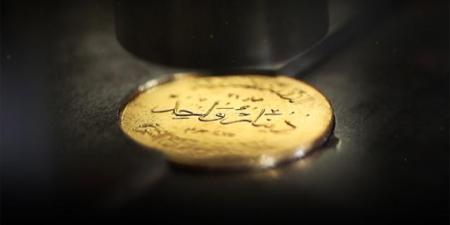
Gold-Dinar-Islamic-State-640-320_1An Islamic State gold dinar. (Photo: ISIS Propaganda)

The Islamic State made $2.4 billion in 2015, making it the richest terrorist group in the world by a substantial margin, according to the Center for the Analysis of Terrorism as reported by The Economic Times reported.

Despite losing territory and suffering airstrikes against its oil refineries, the group maintained income by increasing taxes on the estimated eight million people under its control from $360 million to $800 million in 2015. The Islamic State’s income for 2015 was $500 million less than its income the previous year.

The report’s authors concluded that “ISIS’s military defeat is not imminent … as things stand, ISIS economic collapse remains some way off in the mid-term.”

The Islamic State continues to brutally assert dominance over its dominion. On Thursday, 19 Yazidi girls were publicly burned alive in iron cages in Mosul, according to ARA News. “They were punished for refusing to have sex with ISIS militants,” local media activist Abdullah al-Malla told ARA News.

Nor are the Islamic State’s activities limited to the territories it controls in Syria and Iraq.

An alleged sleeper cell consisting of four Syrian men planning terrorist attacks in Dusseldorf was arrested on Thursday. One of the men had turned himself into authorities in Paris on February 1 and provided evidence against his fellow conspirators. It took German police four months to gather enough evidence to arrest the other three.

One of the suspects had filed for asylum. But the head of the German Police Trade Union has said that to run background checks on all refugees entering Germany would be unaffordable and that such a policy is too late.

“It would have been useful in the second half of last year to create conditions for background checks on all people who came to us, in fact, before they traveled [to Germany]. But that is past history now, as we cannot afford it,” he said, according to Russia Today.

At the moment the German Justice Ministry is investigating 180 terror suspects who have either returned from or have links to Syria.

For more information about the Islamic State, see Clarion Project’s Special Report: The Islamic State (ISIS, ISIL) 


Polygamy: Europe’s Hidden Statistic

June 5, 2016

Polygamy: Europe’s Hidden Statistic, Gatestone InstituteJudith Bergman, June 5, 2016

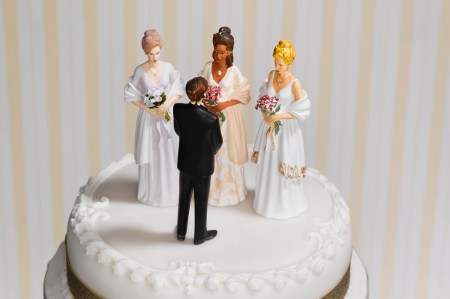
♦ The sheer volume of polygamous marriages shows that such marriages are also entered into in Europe, in secret, through Islamic marriage ceremonies conducted by imams. In most European countries, imams are not required to report these marriages to the authorities.

♦ Daham Al Hasan fled from Syria to Denmark, leaving behind his three wives and 20 children. Under the Danish rules of family unification, one of his wives and eight of his children have joined him in Denmark. But Al Hasan wants all his children with him, as well as all his wives. Lawyers estimate that the remaining wives will be able to join their children in Denmark. The case has caused a shock not only because of what it will cost the Danish state just in child allowance, but because Al Hassan claims that he is too ill to work or even learn Danish. “I don’t only have mental problems, but also physical problems…” He has admitted that his “mental illness” consists of missing the children he voluntarily left behind.

♦ Even if theoretically women can go to the police or press charges, they run the risk of being beaten or possibly divorced. Women’s shelters are “full of Muslim women.”

♦ The spokeswoman of Germany’s Federal Employment Agency said that the establishment of a central registry of Islamic marriages would be helpful for investigating claims of fraud.

A few years ago, Sweden’s Center Party, one of the four parties in the center-right governing coalition at the time, proposed legalizing polygamy. The idea caused outrage; the proposal was dropped. The party’s youth division, however, refused to let go: “We think it is important for the individual to decide how many people he or she wants to marry,” said Hanna Wagenius, head of Center Youth, predicting that polygamy would be legal in ten years, when her generation would enter parliament and make sure of it.

Sweden is not the only place in Scandinavia where “idealistic” youths have advocated polygamy. In 2012, the youth division of Denmark’s Radikale Venstre Party (“Radical Left”), then part of the governing coalition in Denmark, also proposed that polygamy should be legalized in Denmark. The move came four years after an Iraqi asylum seeker, who had worked for the Danish military in Iraq as a translator and then fled to Denmark, arrived with two wives. As Denmark does not recognize bigamy and as he refused to divorce his second wife, he returned to Iraq. “It is unacceptable that we are so narrow-minded in Denmark, and will not help a man who has helped us. We want to do something about that,” Ditte Søndergaard, head of Radikale Venstre Youth, said at the time. The proposal, however, did not find favor with any of the other political parties.

As far-fetched as these proposals may sound, they signify the shifts taking place in the West regarding fundamental ethical issues of gender equality and the willingness to accommodate Islamic sharia law. They are also proof of an enduring willful blindness to the detrimental effects of the practice of polygamy, not only in terms of financial costs to the state, but also to the Muslim women and children, whose rights these young politicians purport to support.

Muslim polygamy is only rarely debated in the media. The practice, therefore, despite its spread across the European continent — spanning, among other countries, Sweden, Denmark, the UK, Germany, France and the Netherlands — continues largely to hide under the public radar. As the practice is illegal across the continent and therefore not supposed to exist, there are no official statistics of polygamous marriages anywhere in Europe.

Several countries, such as the UK, the Netherlands, Sweden and France, nevertheless recognize Muslim polygamous marriages if they were contracted abroad under certain circumstances, such as if polygamy is legal in the country where the marriage took place. It is estimated that as many as 20,000 polygamous Muslim marriages exist in Britain. In France, as polygamy was legal until 1993, the minimum estimate as early as 2006 was around 20,000 polygamous marriages. In Germany, it was estimated in 2012 that, in Berlin alone, 30% of all Arab men were married to more than one wife.

In April, Swedish professor Göran Lind argued that it was time to “put one’s foot down” regarding polygamy in Sweden, after it was disclosed that Sweden had recognized “hundreds” of polygamous marriages contracted abroad. Professor Lind pointed out that polygamy is not compatible with Swedish law, especially the principles of equal treatment of spouses, the equality of all human beings, and the prohibition against discrimination on the basis of gender, as codified in the European Convention on Human Rights. One might add to those the principles enshrined in the UN’s Convention on the Elimination of All Discrimination Against Women, article 16, according to which,

“States Parties shall take all appropriate measures to eliminate discrimination against women in all matters relating to marriage and family relations and in particular shall ensure, on a basis of equality of men and women:

“(a) The same right to enter into marriage;

“(b) The same right freely to choose a spouse and to enter into marriage only with their free and full consent.”

Considering how much time leading European politicians spend on assuring their electorates of their dedication to human rights, their tacit acceptance of these glaring violations of women’s rights, as enshrined in the above conventions, which polygamy constitutes, is rather peculiar.

The sheer volume of polygamous marriages, however, attests to the fact that such marriages are also entered into in Europe, in secret, through Islamic marriage ceremonies conducted by imams. In most European countries, imams are not required to report these marriages to the authorities. Therefore, despite the probable knowledge of the authorities, this illegal practice is basically allowed to flourish unhindered. As Islamic marriage does not legally exist in Europe, the woman entering into the union is left legally stranded and vulnerable with no means — other than the local imam or sharia council — of getting out of the marriage. Even if women can theoretically go to the police or press charges, they run the risk of being beaten or possibly divorced. Women’s shelters are “full of Muslim women,” as Ayaan Hirsi Ali, who worked in them, attests.

Polygamous Muslim marriages are bound to become an even bigger problem in the wake of the migrant crisis.

In Denmark these days, Daham Al Hasan is making headlines. He has twenty children with three wives, but two years ago fled alone from Syria to Denmark, and left his wives and children behind. Recently, under the Danish rules of family unification, one of his wives and eight of his children have joined him in Denmark. But Al Hasan wants all his children with him, as well as all his wives. He has been granted permission for nine additional children to join him, but as Denmark does not allow polygamy, the two remaining wives, under the same rules of family unification, are not permitted to join him. Lawyers, however, estimate that the remaining wives will also be able independently to join their children in Denmark, once they are there.

The case has caused rather a shock in Denmark, not only because of the extraordinary size of the family, and what it will cost the Danish state just in child allowance, but because Al Hassan claims that he is too ill to work or even to learn Danish. “I don’t only have mental problems, but also physical problems”, he says by way of explanation, “My back and my legs hurt.” He has admitted that his “mental illness” consists of missing the children he voluntarily left behind. This means that he and his family live exclusively off the Danish taxpayers’ money.

What is noteworthy about the current debate, however, is what is not being debated: namely that Al Hassan is a polygamist. While it is only natural that politicians and citizens feel violated and aggrieved about the financial costs to the Danish state, they should be equally concerned about the practice of polygamy. Yet not a single Danish feminist has spoken out about it.

In the television documentary, “Sharia in Denmark”, several imams recorded on a secret camera answered in the affirmative and without the least hesitation the question of whether a woman’s husband was allowed to take another wife against his first wife’s wish. For them, in fact, despite the fact that they live in a country where bigamy and polygamy are prohibited, for a man to take a second, third or fourth wife regardless of what any of them thought, seemed perfectly natural.

A qualitative study about Muslim women in Denmark from 2009, performed by Tina Magaard for the Danish Ministry of Welfare, documented the practice of polygamy among Danish Muslims. One Turkish woman told the interviewers:

“A growing group of women marries a man who is already married. They get married by an imam because then they become more accepted. Apparently, they have no alternative. They become ostracized if they were divorced and are on their own. Many would rather live a life where they get an identity — then they belong somewhere and then they are accepted. And it is sad that it exists in Denmark. I think if they could count the numbers, which is very difficult, they are probably much higher than we think.”

Another woman, a Muslim convert, said:

“This [polygamy] is something that I have really seen a lot of, there was a period when it became fashionable. I think it was five or six years ago, it was crazy, I think almost every second couple I knew, the man got himself an extra wife. But then, after a year or so, he regretted it or he divorced the first wife. I actually think there were twelve from my circle of friends where the husband got himself another wife.”

In a German documentary from 2013, the journalists found that Muslim men used polygamy as a means to commit fraud and obtain more welfare benefits. The tactic was to have their wives claim at the Employment Center that they were single women who did not know the father of their children. The story works because Germany, like other European countries, has no way of ascertaining the existence of an Islamic marriage, especially as German law does not obligate women to inform the authorities of their marital status.

In the film, the journalists asked the spokeswoman of the Federal Employment Agency — the supervisor of the local Employment Agencies responsible for paying out welfare benefits — whether the Federal Employment Agency was aware of the many instances of fraud. The woman said that they were indeed aware of the polygamy and the ensuing fraud and even enumerated the places where it was rife: large cities in Western Germany, such as Berlin, Cologne and Frankfurt. The journalist then asked the woman why nothing was being done about it. “I believe these cultural differences are very sensitive, we are a very tolerant country,” the woman said. Asked whether the Federal Employment Agency was perhaps too tolerant, the woman said that indeed she herself was wondering how it will all end.

The woman then said that the establishment of a central registry of Islamic marriages would be most helpful and desirable, as it would make possible investigating claims of fraud; but that this was a matter for the politicians.

“How will it all end?” Not well.

1639

Europe Braces for More Jihadist Attacks

June 2, 2016

Europe Braces for More Jihadist Attacks, Gatestone InstituteSoeren Kern, June 2, 2016

♦ Sports stadiums and big music events are especially vulnerable: “This is where you put a small town into a small area for a couple of hours.” — Neil Basu, deputy assistant commissioner of the Metropolitan Police, London.

♦  “We know that the Islamic State has the European Championship in its sights.” — Hans-Georg Maaßen, head of Germany’s domestic intelligence agency.

♦  According to Patrick Calvar, head of the France’s domestic intelligence agency, at least 645 French nationals or residents, including 245 women, are currently with the Islamic State in Syria and Iraq. Another 200 individuals are “in transit,” either on their way to Syria or returning to France. Around 244 jihadists have already returned to France.

♦British police chiefs are struggling to recruit enough officers who are willing to carry a firearm, because many fear they will be treated as criminal suspects if they use their weapon in the line of duty.

European security officials are bracing for potential jihadist attacks at public venues across Europe this summer.

In France, officials are preparing for possible attacks against the European Football Championships. The games, which start on June 10, comprise 51 matches involving 24 teams playing in 10 host cities across the country.

Interior Minister Bernard Cazeneuve said that more than 90,000 security personnel will be on hand to protect the 2.5 million spectators expected to attend the games, as well as the hundreds of thousands more who will watch the matches on big screens in so-called “fan zones” in major cities.

Patrick Calvar, the head of the France’s domestic intelligence agency (Direction générale de la sécurité intérieure, DGSI), warned: “We know that the Islamic State is planning new attacks in France.” He added:

“We risk being confronted with a new form of attack: a terrorist campaign characterized by placing explosive devices in places where large crowds are gathered, and repeating this type of action to create a climate of panic.”

According to Calvar, at least 645 French nationals or residents, including 245 women, are currently with the Islamic State (ISIS) in Syria and Iraq. Another 200 individuals are “in transit,” either on their way to the Middle East or returning to France. Around 244 jihadists have already returned to France, and another 818 people have “demonstrated their intention to go to Syria.”

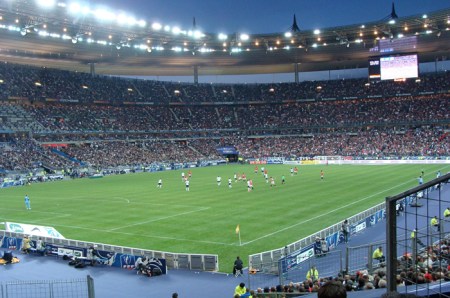
1636The Stade de France, located in a Paris suburb, was attacked by three Islamic State suicide bombers in November 2015. The stadium will be hosting games during the UEFA Euro 2016 football championships (June 10 – July 10, 2016), and French officials are preparing for possible jihadist attacks. (Image source: Wikimedia Commons/Liondartois)

Calvar’s concerns have been echoed by Hans-Georg Maaßen, the head of Germany’s domestic intelligence agency (Bundesamt für Verfassungsschutz, BfV). In an interview with Rheinische Post, Maaßen said: “We know that the Islamic State has the European Championship in its sights.”

On May 29, British media quoted Belgian security sources as saying they had discovered an Islamic State plot to attack British football fans in the southern French city of Marseille when England plays Russia on June 11. The plans were reportedly discovered on a laptop used by Salah Abdeslam, a Belgian-born French national of Moroccan descent who is thought to be the mastermind of the November 2015 terrorist attacks on Paris which left 130 dead.

The laptop is said to have contained information about a plot to kill large numbers of British fans using assault rifles, suicide bombers and possibly even drones armed with chemical weapons. The laptop contained photos and references to Marseille’s historic Old Port, where tens of thousands of football fans are expected to gather at the many bars and restaurants in the area.

Meanwhile, French Interior Minister Bernard Cazeneuve also announced that more than 23,000 police will be deployed to protect the Tour de France, the world’s premier bicycle race, which takes place from July 2 to 24.

Teams of special operations forces (Groupe d’intervention de la Gendarmerie Nationale, GIGN) will guard riders and an estimated 12 million spectators along a route that covers 3,500 kilometers (2,180 miles). “Everyone understands that this year the Tour de France is taking place in a particular context,” Cazeneuve said. He added: “The terrorist threat remains very high.”

In Poland, officials are preparing for possible jihadist attacks against the Catholic Church’s World Youth Day, which is expected to draw 2.5 million to Krakow from July 26 to 31. Poland will impose border controls at all of its national borders from July 4 to August 2.

In Britain, music festivals, big sports venues and nightclubs have been placed on “high alert” for potential jihadist attacks, according to a senior anti-terrorism officer interviewed by the Sunday Times.

Neil Basu, the deputy assistant commissioner of the Metropolitan Police, said that crowded places — including Glastonbury, billed as the world’s largest music festival, which will draw 135,000 people to Somerset from June 22 to 26 — are a major concern for police this summer. Basu warned:

“These people are perfectly happy to target civilians with the maximum terror impact. Crowded places were always a concern for us, but now they are right at the top of the agenda.”

Basu said that sports stadiums and big music events are especially vulnerable: “This is where you put a small town into a small area for a couple of hours.”

Police in rural communities in Britain that host large summer festivals are warning that they could be “sitting ducks” in the face of a jihadist attack as they wait for armed backup to arrive from many miles away.

In an interview with the BBC, John Apter, the head of the Hampshire and Isle of Wight Police Federation, said:

“Being realistic, if a firearms unit was coming from the middle of the county you are still talking about 30 miles away — you are not talking about a few minutes. There would be an understandable delay. If a firearms unit is the other side of the county they could be 70 miles away so you are talking a significant distance. So the only officers that you have available are unarmed and vulnerable officers and they are the officers that are saying to me that in a terrorist situation they would be sitting ducks.”

Most police in Britain are unarmed. According to Deputy Chief Constable Simon Chesterman, the UK’s top firearms officer, British police chiefs are struggling to recruit enough officers who are willing to carry a firearm, because many fear they will be treated as criminal suspects if they use their weapon in the line of duty.

Senior British security officials estimate that the UK needs an extra 1,500 armed officers to tackle jihadist attacks such as those carried out in Paris. Because half of the recruits will not make it through the rigorous training, however, 3,000 volunteers are needed to come forward.

Che Donald of the Police Federation — which represents the 5,647 officers throughout Britain who currently carry firearms — told the Guardian that while major cities such as London are sufficiently protected, other large towns and cities are not: “Currently there are not enough firearms officers who could deal with an incident in quite a lot of areas of Britain.”

In Brussels, Manuel Navarrete Paniagua, the head of the European Counter Terrorism Centre at the European police agency Europol, warned Members of the European Parliament that terrorist cells in Europe are stockpiling weapons and explosives for future attacks:

“We have some information reported by the member states that terrorists groups are trying to establish large clandestine stockpiles of explosives in the European Union to be used eventually in large scale home attacks.”

Paniagua added that police had foiled more than 200 terrorist attacks in the EU in 2015. A total of 151 people were killed and more than 360 injured during terrorist attacks in the EU in 2015. More than 1,000 people were arrested for terrorist-related crimes.

In an interview with Time magazine, Europol director Rob Wainwright revealed that “several hundred” battle-trained European jihadists are probably plotting new attacks. He said that his agency is working on 50 ongoing terrorist investigations:

“This is the highest terrorist threat we have faced in Europe since the days of 9/11. We have 5,000 Europeans who have been radicalized by the Islamic State and have traveled to Syria and Iraq and engaged in conflict experience. We suspect that about one-third of them have come back: That is our best guess. We don’t know for sure…

“Our real concern is that there are other networks, either in Europe already, or who are being trained in Syria for further action. We know that the Islamic State last year took a strategic decision to establish an external operations command, a division to plan exactly the kind of attacks we have now seen. We think that they are still active and planning to do that. The threat is alive and current. Another attempted attack is almost certain. Whether it gets through depends of course. I am concerned about the Islamic State’s clearly expressed desire for the spectacular.”

On May 31, the U.S. State Department issued a travel alert for Europe this summer:

“We are alerting U.S. citizens to the risk of potential terrorist attacks throughout Europe, targeting major events, tourist sites, restaurants, commercial centers and transportation. The large number of tourists visiting Europe in the summer months will present greater targets for terrorists planning attacks in public locations, especially at large events.”

The travel alert urges vigilance when in public places or using mass transportation, and avoiding crowded places.