Trump’s ‘Wag the Dog’ Moment

Posted April 9, 2017 by Peter Hofman
Categories: Uncategorized

Exclusive: President Trump earned neocon applause for his hasty decision to attack Syria and kill about a dozen Syrians, but his rash act has all the earmarks of a “wag the dog” moment, reports Robert Parry.

By Robert ParryJust two days after news broke of an alleged poison-gas attack in

Source: Trump’s ‘Wag the Dog’ Moment – Consortiumnews

Exclusive: President Trump earned neocon applause for his hasty decision to attack Syria and kill about a dozen Syrians, but his rash act has all the earmarks of a “wag the dog” moment, reports Robert Parry.

By Robert Parry

Just two days after news broke of an alleged poison-gas attack in northern Syria, President Trump brushed aside advice from some U.S. intelligence analysts doubting the Syrian regime’s guilt and launched a lethal retaliatory missile strike against a Syrian airfield.
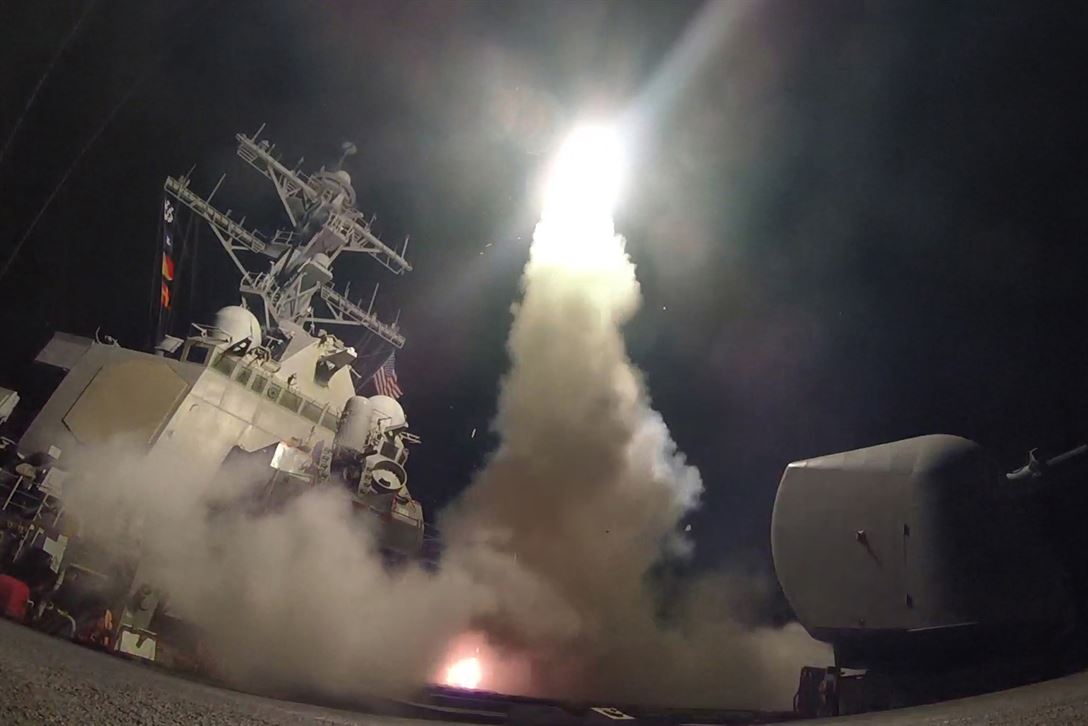
The guided-missile destroyer USS Porter conducts strike operations while in the Mediterranean Sea, April 7, 2017. (Navy photo by Petty Officer 3rd Class Ford Williams)

Trump immediately won plaudits from Official Washington, especially from neoconservatives who have been trying to wrestle control of his foreign policy away from his nationalist and personal advisers since the days after his surprise victory on Nov. 8.

There is also an internal dispute over the intelligence. On Thursday night, Secretary of State Rex Tillerson said the U.S. intelligence community assessed with a “high degree of confidence” that the Syrian government had dropped a poison gas bomb on civilians in Idlib province.

But a number of intelligence sources have made contradictory assessments, saying the preponderance of evidence suggests that Al Qaeda-affiliated rebels were at fault, either by orchestrating an intentional release of a chemical agent as a provocation or by possessing containers of poison gas that ruptured during a conventional bombing raid.

One intelligence source told me that the most likely scenario was a staged event by the rebels intended to force Trump to reverse a policy, announced only days earlier, that the U.S. government would no longer seek “regime change” in Syria and would focus on attacking the common enemy, Islamic terror groups that represent the core of the rebel forces.

The source said the Trump national security team split between the President’s close personal advisers, such as nationalist firebrand Steve Bannon and son-in-law Jared Kushner, on one side and old-line neocons who have regrouped under National Security Adviser H.R. McMaster, an Army general who was a protégé of neocon favorite Gen. David Petraeus.

White House Infighting

In this telling, the earlier ouster of retired Gen. Michael Flynn as national security adviser and this week’s removal of Bannon from the National Security Council were key steps in the reassertion of neocon influence inside the Trump presidency. The strange personalities and ideological extremism of Flynn and Bannon made their ousters easier, but they were obstacles that the neocons wanted removed.

Though Bannon and Kushner are often presented as rivals, the source said, they shared the belief that Trump should tell the truth about Syria, revealing the Obama administration’s CIA analysis that a fatal sarin gas attack in 2013 was a “false-flag” operation intended to sucker President Obama into fully joining the Syrian war on the side of the rebels — and the intelligence analysts’ similar beliefs about Tuesday’s incident.

Instead, Trump went along with the idea of embracing the initial rush to judgment blaming Assad for the Idlib poison-gas event. The source added that Trump saw Thursday night’s missile assault as a way to change the conversation in Washington, where his administration has been under fierce attack from Democrats claiming that his election resulted from a Russian covert operation.

If changing the narrative was Trump’s goal, it achieved some initial success with several of Trump’s fiercest neocon critics, such as neocon Senators John McCain and Lindsey Graham, praising the missile strike, as did Israeli Prime Minister Benjamin Netanyahu. The neocons and Israel have long sought “regime change” in Damascus even if the ouster of Assad might lead to a victory by Islamic extremists associated with Al Qaeda and/or the Islamic State.

Wagging the Dog

Trump employing a “wag the dog” strategy, in which he highlights his leadership on an international crisis to divert attention from domestic political problems, is reminiscent of President Bill Clinton’s decision to attack Serbia in 1999 as impeachment clouds were building around his sexual relationship with intern Monica Lewinsky.
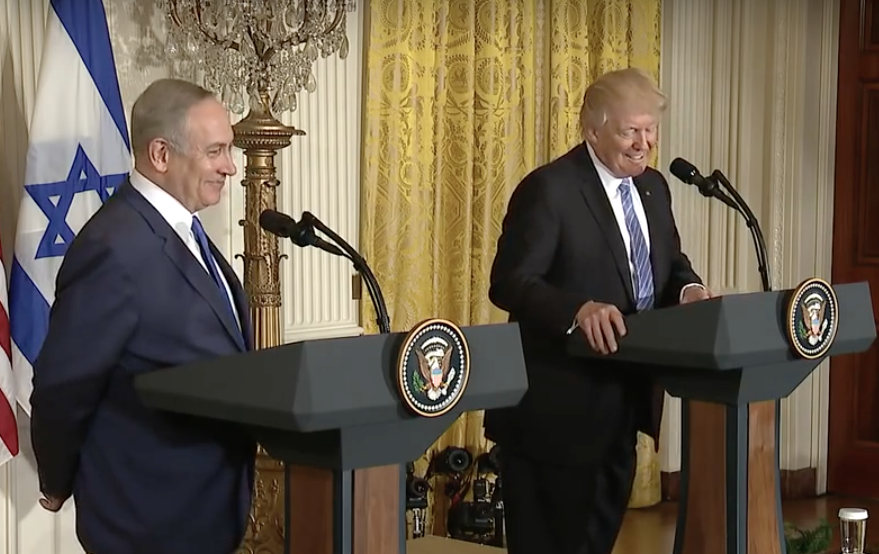
President Donald Trump and Israeli Prime Minister Benjamin Netanyahu at joint press conference on Feb. 15. 2017. (Screen shot from Whitehouse.gov)

Trump’s advisers, in briefing the press on Thursday night, went to great lengths to highlight Trump’s compassion toward the victims of the poison gas and his decisiveness in bombing Assad’s military in contrast to Obama’s willingness to allow the intelligence community to conduct a serious review of the evidence surrounding the 2013 sarin-gas case.

Ultimately, Obama listened to his intelligence advisers who told him there was no “slam-dunk” evidence implicating Assad’s regime and he pulled back from a military strike at the last minute – while publicly maintaining the fiction that the U.S. government was certain of Assad’s guilt.

In both cases – 2013 and 2017 – there were strong reasons to doubt Assad’s responsibility. In 2013, he had just invited United Nations inspectors into Syria to investigate cases of alleged rebel use of chemical weapons and thus it made no sense that he would launch a sarin attack in the Damascus suburbs, guaranteeing that the U.N. inspectors would be diverted to that case.

Similarly, now, Assad’s military has gained a decisive advantage over the rebels and he had just scored a major diplomatic victory with the Trump administration’s announcement that the U.S. was no longer seeking “regime change” in Syria. The savvy Assad would know that a chemical weapon attack now would likely result in U.S. retaliation and jeopardize the gains that his military has achieved with Russian and Iranian help.

The counter-argument to this logic – made by The New York Times and other neocon-oriented news outlets – essentially maintains that Assad is a crazed barbarian who was testing out his newfound position of strength by baiting President Trump. Of course, if that were the case, it would have made sense that Assad would have boasted of his act, rather than deny it.

But logic and respect for facts no longer prevail inside Official Washington, nor inside the mainstream U.S. news media.

Intelligence Uprising

Alarm within the U.S. intelligence community about Trump’s hasty decision to attack Syria reverberated from the Middle East back to Washington, where former CIA officer Philip Giraldi reported hearing from his intelligence contacts in the field that they were shocked at how the new poison-gas story was being distorted by Trump and the mainstream U.S. news media.
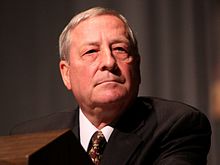
Former CIA officer Philip Giradi. (Photo credit: Gage Skidmore)

Giraldi told Scott Horton’s Webcast: “I’m hearing from sources on the ground in the Middle East, people who are intimately familiar with the intelligence that is available who are saying that the essential narrative that we’re all hearing about the Syrian government or the Russians using chemical weapons on innocent civilians is a sham.”

Giraldi said his sources were more in line with an analysis postulating an accidental release of the poison gas after an Al Qaeda arms depot was hit by a Russian airstrike.

“The intelligence confirms pretty much the account that the Russians have been giving … which is that they hit a warehouse where the rebels – now these are rebels that are, of course, connected with Al Qaeda – where the rebels were storing chemicals of their own and it basically caused an explosion that resulted in the casualties. Apparently the intelligence on this is very clear.”

Giraldi said the anger within the intelligence community over the distortion of intelligence to justify Trump’s military retaliation was so great that some covert officers were considering going public.

“People in both the agency [the CIA] and in the military who are aware of the intelligence are freaking out about this because essentially Trump completely misrepresented what he already should have known – but maybe he didn’t – and they’re afraid that this is moving toward a situation that could easily turn into an armed conflict,” Giraldi said before Thursday night’s missile strike. “They are astonished by how this is being played by the administration and by the U.S. media.”

One-Sided Coverage

The mainstream U.S. media has presented the current crisis with the same profound neocon bias that has infected the coverage of Syria and the larger Middle East for decades. For instance, The New York Times on Friday published a lead story by Michael R. Gordon and Michael D. Shear that treated the Syrian government’s responsibility for the poison-gas incident as flat-fact. The lengthy story did not even deign to include the denials from Syria and Russia that they were responsible for any intentional deployment of poison gas.
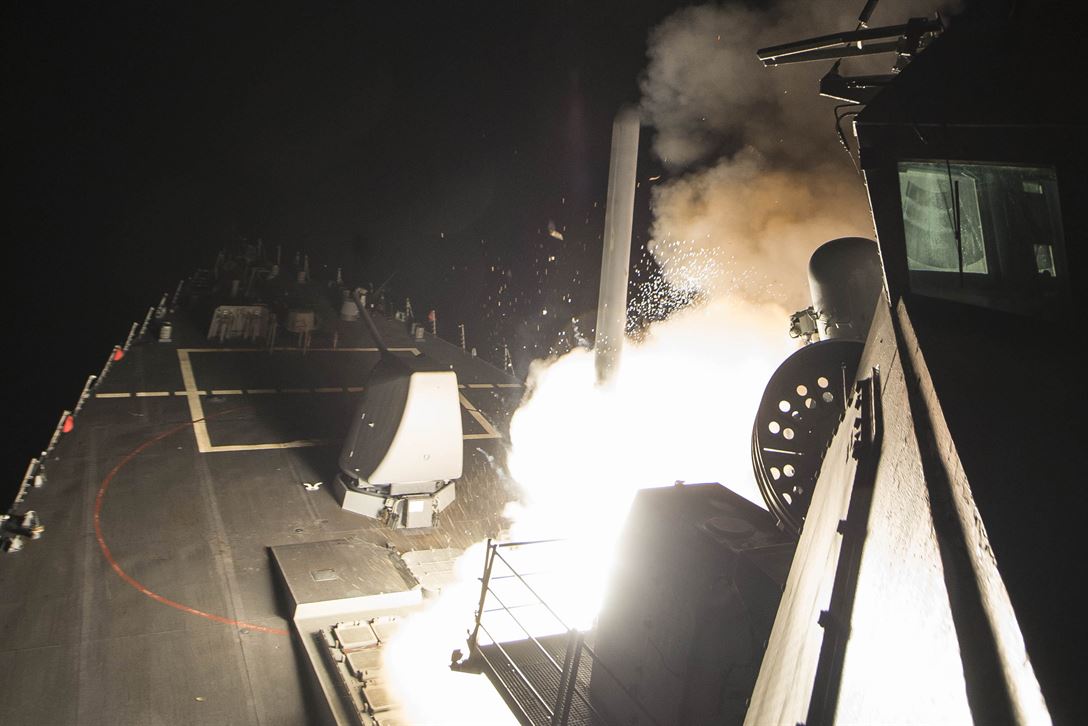
The Arleigh Burke-class guided-missile destroyer USS Ross fires a tomahawk land attack missile from the Mediterranean Sea, April 7, 2017. (Navy photo by Petty Officer 3rd Class Robert S. Price)

The article also fit with Trump’s desire that he be portrayed as a decisive and forceful leader. He is depicted as presiding over intense deliberations of war or peace and displaying a deep humanitarianism regarding the poison-gas victims, one of the rare moments when the Times, which has become a reliable neocon propaganda sheet, has written anything favorable about Trump at all.

According to Syrian reports on Friday, the U.S. attack killed 13 people, including five soldiers at the airbase.

Gordon, whose service to the neocon cause is notorious, was the lead author with Judith Miller of the Times’ bogus “aluminum tube” story in 2002 which falsely claimed that Iraqi leader Saddam Hussein was reconstituting a nuclear-weapons program, an article that was then cited by President George W. Bush’s aides as a key argument for invading Iraq in 2003.

Regarding this week’s events, Trump’s desperation to reverse his negative media coverage and the dubious evidence blaming Assad for the Idlib incident could fit with the “Wag the Dog” movie from 1997 in which an embattled president creates a phony foreign crisis in Albania.

A fake war scene in the dark 1997 comedy “Wag the Dog,” which showed a girl and her cat fleeing a bombardment in Albania.

In the movie, the White House operation is a cynical psychological operation to convince the American people that innocent Albanian children, including an attractive girl carrying a cat, are in danger when, In reality, the girl was an actor posing before a green screen that allowed scenes of fiery ruins to be inserted as background.

Today, because Trump and his administration are now committed to convincing Americans that Assad really was responsible for Tuesday’s poison-gas tragedy, the prospects for a full and open investigation are effectively ended. We may never know if there is truth to those allegations or whether we are being manipulated by another “wag the dog” psyop.

Investigative reporter Robert Parry broke many of the Iran-Contra stories for The Associated Press and Newsweek in the 1980s. You can buy his latest book, America’s Stolen Narrative, either in print here or as an e-book (from Amazon and barnesandnoble.com).

Double Bombing Hits Egypt on Palm Sunday

Posted April 9, 2017 by danmillerinpanama
Categories: Al Azhar University, Coptic Christians, Egypt, Islamic State, Islamist terror attacks, Muslim Brotherhood

Tags: , , , , ,

Double Bombing Hits Egypt on Palm Sunday, Clarion Project, Elliot Friedland, April 9, 2017

At least 37 people were killed and more than 100 injured in two separate bombing attacks that struck churches in Egypt. The blasts ripped through services for Palm Sunday on April 9.

The Islamic State terrorist group claimed responsibility for the attacks.

A bomb placed under a seat in the main prayer hall of St. George’s Coptic Church in Tanta, northern Egypt, ripped the hall apart, killing at least 26 and wounded 60 others.

“Everything is destroyed inside the church,” eyewitness Peter Kamel told media outlets after the attack.

A suicide bombing hit Saint Mark’s Coptic Orthodox Cathedral in Alexandria a few hours later. According to state TV reports, police officers prevented the suicide bomber from entering the Church, and he detonated his device outside.

At least 11 people were killed and 35 others wounded in that attack. Pope Tawadros II, the head of the Coptic Church in Egypt, had just lead mass for Palm Sunday but is unharmed as he reportedly had just left the building.

Grand Sheikh Ahmed el-Tayeb, The head of Egypt’s Al-Azhar University, the most prestigious institution of learning in Sunni Islam, condemned the attack, calling it a “despicable terrorist bombing that targeted the lives of innocents.”

The Coptic community in Egypt has long faced discrimination, but that has worsened since the 2011 revolution that overthrew longtime dictator Hosni Mubarak and replaced him first with the Islamist Muslim Brotherhood’s president Mohammed Morsi and then with former general, President Abdefattah el-Sisi.

Breakaway Muslim Brotherhood factions and ISIS affiliates have been targeting Coptic Christians in an effort to destabilize the state and cleanse Egypt of non-Muslims.

In February, ISIS released a propaganda video featuring a terrorist who carried out a previous attack on St Mark’s Cathedral in Alexandria, threatening to eliminate Egypt’s Christians and “liberate Cairo.”

Why Does the West Keep Colluding with Terrorists?

Posted April 9, 2017 by danmillerinpanama
Categories: Ayaan Hirsi Ali, Censorship, Europe and Islamist terror, Islamist objectives, Islamist terror - justifications, Islamists and freedom of speech, Islamists in Europe

Tags: , , , , , ,

Why Does the West Keep Colluding with Terrorists? Gatestone Institute, Douglas Murray, April 9, 2017

What, after all, is the acceptable discourse — or “narrative” — on which we can agree to speak about the attacks in Stockholm, Berlin, Nice and elsewhere? Can the discussion be allowed to include the Islamic portion? Can anyone be allowed to say that the attackers act in the name of Islam, or must we continue to present all jihadist terrorists as people suffering from any affliction apart from that one?

***************************

Like other criticisms of Hirsi Ali, the effort was to portray her as the problem itself rather than as the response to a problem.

That this type of campaign can succeed — that speakers can be stopped from speaking in Western democracies because of the implicit or explicit threat of violence — is a problem our societies need to face.

There is a whole pile of reasons why Islamists want to stop her explanations from being aired. But why — when the attacks keep on happening — do our own societies collude with such sinister people to keep ourselves the dark?

Only a fortnight after a vehicular terrorist attack in Westminster, London, another similar attack took place in Stockholm, Sweden. On one of the city’s main shopping streets, a vehicle was once again used as a battering-ram against the bodies of members of the public. As in Nice, France. As in Berlin. As so many times in Israel.

Amid this regular news there is an air of defeatism — a terrible lack of policy and lack of solutions. How can governments stop people driving trucks into pedestrians? Is it something we must simply get used to, as France’s former Prime Minister Manuel Valls and London’s Mayor Sadiq Khan have both suggested? Must we come to recognise acts of terror as something like the weather? Or is there anything we can do to limit, if not stop, them? If so, where would we start? One place would be to have a frank public discussion about these matters. Yet, even that is easier said than done.

There is a terrible symmetry to this past week in the West. The week began with the news that the Somali-born author and human-rights activist Ayaan Hirsi Ali had been forced to cancel a speaking tour in Australia. “Security concerns” were among the given reasons. A notable aspect of this issue, which has been made public, is that one of the venues at which Hirsi Ali was due to speak was contacted last month by something calling itself “‘The Council for the Prevention of Islamophobia Incorporated”. Nobody appears to know where this “incorporated” organisation comes from, but its purported founder — Syed Murtaza Hussain — claimed that the group would bring 5000 protestors to the hall at which Hirsi Ali was scheduled to talk. This threat is reminiscent of the occasion in 2009 when the British peer, Lord Ahmed, threatened to mobilise 10,000 British Muslims to protest at the Houses of Parliament in Westminster if the Dutch politician Geert Wilders were allowed to speak. On that occasion — as on this one — the event was cancelled. Promises to mobilise thousands of angry Muslims can have such an effect. But the long-term implications often get lost in the short-term outrage.

Other attacks on Hirsi Ali began, in fact, weeks before her now-cancelled tour had been due to start. On the web, for instance, a widely-watched video was disseminated showing a group of headscarf-covered Australian Muslim women. All were attacking Hirsi Ali and protesting her appearance in the country. Addressing her directly, they complained that, “Your narrative doesn’t support our struggles. It erases them.”

Like other criticisms of Hirsi Ali, the effort was to portray her as the problem itself rather than the response to a problem. Once again, mixing up (deliberately or otherwise) the arsonist and the firefighter, such groups present a homogenous, agreed-upon opinion — or “narrative” — as the only necessary answer to any problems that may or may not exist. Hirsi Ali, according to them, thinks the “wrong” things and says the wrong things. Therefore she must be stopped.

Ayaan Hirsi Ali, author and human-rights activist. (Image source: The Aspen Institute)

That this type of campaign can succeed — that speakers can be stopped from speaking in Western democracies because of the implicit or explicit threat of violence — is a problem our societies need to face. But in the meantime, we also have to face the reality that a shut-down of opinion has on our public policy as well as our public discourse.

What, after all, is the acceptable discourse — or “narrative” — on which we can agree to speak about the attacks in Stockholm, Berlin, Nice and elsewhere? Can the discussion be allowed to include the Islamic portion? Can anyone be allowed to say that the attackers act in the name of Islam, or must we continue to present all jihadist terrorists as people suffering from any affliction apart from that one?

In the middle of the week, at a memorial service in Westminster Abbey, the Very Reverend John Hall, Dean of Westminster, said that the UK was “bewildered” after the terrorist attacks of a fortnight earlier. He went on in his sermon to ask:

“What could possibly motivate a man to hire a car and take it from Birmingham to Brighton to London, and then drive it fast at people he had never met, couldn’t possibly know, against whom he had no personal grudge, no reason to hate them and then run at the gates of the Palace of Westminster to cause another death? It seems likely that we shall never know.”

If it is true that our societies are “bewildered”, as the Dean says, might it be because we have not heard a wide-enough range of possible explanations for such outrages — because we have deliberately cut ourselves off, by choice,- from the warnings of ex-Muslims such as Hirsi Ali? Amid the “narratives” that are acceptable and to be tolerated, perhaps we have failed to listen to the explanations that outline the sheer scale of the religious and societal problem now in front of us?

Of course, for many Muslims, such as those critics of Hirsi Ali in Australia, there is a clear reason why they want to stop her speaking. Were people to hear her, they would realise the vast enormity of the challenge ahead of us and the depth and breadth of its nature. Her audiences would discover the defensive play around the world in which many Muslim organisations are engaged — a campaign to limit speech precisely in order to protect their own interpretation of their religion and keep out any other.

It is, however, the dissenting, silenced voices such as Hirsi Ali’s that are precisely the voices the world needs to hear at present. How tragic that a week that began with a silencing, should end with yet another all-too-predictable terrorist attack — one which Sweden will do as much to fail at comprehending as Britain did two weeks before her.

Hearing from voices such as that of Hirsi Ali could lift the fog of our “bewilderment” and explain, for instance, what does motivate some people to drive a car or truck into crowds of people going about their lives. There is a whole pile of reasons why Islamists want to stop her explanations from being aired. But why — when the attacks keep on happening — do our own societies collude with such sinister people to keep ourselves in the dark?

Iran’s Mullahs: Dead Syrian Children are Fakes!

Posted April 9, 2017 by danmillerinpanama
Categories: Iran and President Trump, Iran and Syria, Mad Mullahs, Missile strike in Syria, Syria - chemical weapons

Tags: , , , ,

Iran’s Mullahs: Dead Syrian Children are Fakes! Power Line, John Hinderaker, April 8, 2017

(Are they auditioning for positions as CNN and MSNBC writers? Why did they neglect to mention that the “White Helmets” are “vile Zionists?”– DM)

Do you think President Trump has gotten the mullahs’ attention? Do you think they realize they aren’t dealing with a willing dupe like Barack Obama? That is how it looks to me.

***************************

How nervous are Iran’s rulers, sponsors of the Assad regime, about President Trump’s missile strike on Syria? This nervous: Iran’s semi-official FARS news service headlines, “Swedish Medical Associations [sic] Says White Helmets Murdered Kids for Fake Gas Attack Videos.”

President Trump is now threatening to take America into a war against Syria, Iran and even Russia, a war he says is justified by “evidence” he has received from the Syrian White Helmets.

Ridiculous. President Trump has made no such threat.

We will prove beyond any doubt that this is a “Deep State” organization, a melding of CIA, al Qaeda and Britain’s intelligence services. We now have “slam dunk” proof that Trump and the “fake news” MSM are and always have been in lockstep, playing us all.

Heh. Who knew the “deep state” includes al Qaeda? The Iranians are hysterical.

Google itself is involved, at war with this group and others, censoring them from their search engines. The information here will be new to Americans.

Huh? This is never explained.

The White Helmets, supposedly an independent NGO, receives up to $100m from the CIA and UK Foreign Office, “dark project” funding. Murdering children is their stock and trade as we will prove. Sharing headquarters with Turkish Intelligence in Gaziantep, Turkey, this organization is far more “death squad” than civil defense. …

The Iranians’ theory is that those dead children in widely-seen photos and videos had been alive, and weren’t gassed by Assad’s forces, but were murdered for political reasons:

Swedish Doctors For Human Rights (swedhr.org) analysed videos, the rescue after an alleged attack by Syrian government forces. The doctors found that the videos were counterfeit, where even Arabic stage directions were overheard, and that the alleged “Rescue” in actuality is a murder. On first analysis, it looked as though the doctors working on the child assumed he was already dead.

More:

However, after broader investigation, our team ascertained that the boy was unconscious from an overdose of opiates. The video shows the child receiving injections in his chest, perhaps in the area of the heart and was eventually killed while a clearly fake adrenaline injection was administered.

This was a murder.

There is much more, but you get the drift. After eight years of treating Barack Obama like…I can’t say it, this is a family site…the mullahs are hysterical over President Trump’s assertion of American interests and values. FARS News, the regime’s more or less official news outlet, talks of little else. Here are FARS’s current headlines:

* ‘Emergency’ Protests across US Demand ‘Hands off Syria’

* Swedish Medical Associations Says White Helmets Murdered Kids for Fake Gas Attack Videos

* Syrian Army Chief Visits Airbase Hit by US Missiles before Resumption of Operation

* Anti-War Group Protests against US Strike in Syria

* Russia: US Fails to Prove Existence of Chemical Weapons at Syrian Airfield

* Top Iranian, Russian Security Officials Discuss US Missile Strike on Syria

* Hezbollah Condemns US Blatant, Foolish Attack on Syria

* Russian Ground Force to Take Part in Anti-Terrorism Operation in Syria’s Hama

* Blustering Toward Armageddon: How Trump Is Upsetting China While Antagonizing Russia

* Top Iranian, Russian Security Officials Discuss US Missile Strike on Syria

* Arab Analyst: US Attack against Syria Not to Topple Assad

* Syrian Fighter Jets Restart Combat Flights over Terrorists’ Centers from Shayrat Airbase in Homs

Do you think President Trump has gotten the mullahs’ attention? Do you think they realize they aren’t dealing with a willing dupe like Barack Obama? That is how it looks to me.

US Air Force to quit Incirlik, move to Syria base

Posted April 8, 2017 by danmillerinpanama
Categories: Iran and Syria, Iraq war, Russia - Syrian war, Syria war, Trump and Assad, Trump and Syria, Turkey - Syria war, U.S. Military

Tags: , , , , , , ,

US Air Force to quit Incirlik, move to Syria base, DEBKAfile, April 8, 2017

When the work is finished, the rising complex of air bases will enable America to deploy twice as many warplanes and helicopters in Syria as the Russians currently maintain.

The five US bases in Syria are part of Trump’s three-pronged strategy which aims at a) fighting Islamist terror; b) blocking Iran’s land and air access to Syria; and c) providing the enclaves of the Syrian Kurdish-PYD-YPG with a military shield against the Turkish army.

********************

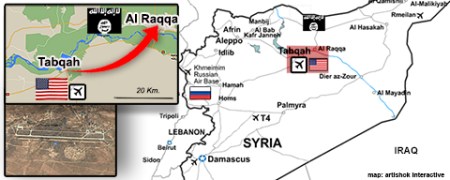
Several US engineering teams are working round the clock to build a big new air base in northern Syria after completing the expansion of another four. They are all situated in the Syrian borderland with Iraq, DEBKAfile’s military forces report.

This was going on over the weekend as senators, news correspondents and commentators were outguessing each other over whether the US missile attack on the Syrian Shayrat air base Friday, in retaliation for the Assad regime’s chemical attack on Khan Sheikhoun, was a one-off or the start of a new series.

As the White House parried those questions, the Trump administration was going full steam ahead on the massive project of preparing to pull US air force units out of the Incirlik air base in southern Turkey, in active American use since 2002. Those units were in the middle of a big moving job to the five new and expanded air bases in Syria. Their hub is to be Tabqa, which is just 110km west of the Islamic State’s Syrian capital, Raqqa. The other five are Hajar airport in the Rmelan region, two small air fields serving farm transport in Qamishli, which have been converted to military us; and a fifth in the Kurdish Kobani enclave north of Aleppo near the Syrian-Turkish border.

Tabqa is also becoming the main assembly-point for the joint US, Kurdish, tribal Arab force that is coming together in readiness for a major charge on Raqqa.

When the work is finished, the rising complex of air bases will enable America to deploy twice as many warplanes and helicopters in Syria as the Russians currently maintain.

The site of the Tabqa air field was captured as recently as late March by the Syrian Democratic Force (Kurdish-Arab fighters) which were flown in and dropped there by the US Air Force’s Air Mobility Command. It was quickly dubbed “Incirlik 2” or “Qayyarah-2” after the US command center running the Iraqi military offensive against ISIS in Mosul.

Tabqa is designed to accommodate the 2,500 US military personnel housed at Incirlik. Like the Americans, the German Bundeswehr is also on the point of quitting Incirlik and eying a number of new locations in Cyprus and Jordan. The Germans are pulling out over the crisis in their relations with Ankara. The Americans are quitting because President Donald Trump wants to chill US ties with Turkish President Reccep Tayyip Erdogan and cooperation with the Turkish army.

The five US bases in Syria are part of Trump’s three-pronged strategy which aims at a) fighting Islamist terror; b) blocking Iran’s land and air access to Syria; and c) providing the enclaves of the Syrian Kurdish-PYD-YPG with a military shield against the Turkish army.

The Latest From Stockholm [Updated]

Posted April 8, 2017 by danmillerinpanama
Categories: Islamist terror attacks, Stockholm, Sweden

Tags: , ,

The Latest From Stockholm [Updated], Power Line, John Hinderaker, April 8, 2017

As usual, the earliest news reports on yesterday’s terrorist attack in Stockholm were partly right and partly wrong. This is what we think we know as of this morning:

* Four people were killed and 15 were injured, ten of whom are hospitalized.

* At least two people have been arrested so far. The first, believed to be the driver of the stolen truck that careened down a pedestrian street and crashed into a mall, is described as a 39-year-old from Uzbekistan. He was known to Swedish authorities as a possible terrorist, and had jihadi propaganda on his Facebook page. But Swedish authorities say that the information they had on him was “marginal,” and that they investigated and “found no connections to extremism.” The authorities won’t say whether the Uzbek was a legal resident or how long he had been in Sweden.

* Information on whether others were involved in the attack is contradictory. An early report that three men jumped out of the truck and started shooting into the crowd was apparently false. A man was arrested and led away from the scene shortly after the attack, but it is unclear what his connection to the incident was, if any. Reuters says that a second man (seemingly not the one who was apprehended at the scene, or the Uzbek) has been arrested in a northern Stockholm suburb. This second man “resembled the picture and description of a man that police went public with after the truck attack.”

I think they mean this picture, but it isn’t clear (to me, anyway) whether this is a photo of the Uzbek or the second person arrested in a northern suburb:

* Swedish police say that “a device which did not belong there,” presumably a home-made bomb or incendiary device of some sort, was found in the truck.

* Several videos of the attack have emerged. This one shows people fleeing on the pedestrian street, and the truck barreling past a store:

This one shows the aftermath of the attack, possibly including a fleeing terrorist as well as police:

This one mostly shows firefighters extinguishing a fire that broke out in the truck, either as a result of the crash or possibly due to an incendiary device:

Most likely there are other videos, too.

UPDATE: Reports from Sweden indicate that the Uzbek terrorist was denied asylum in January but lingered in Sweden anyway. He also is said to have a “double identity.” This is from Sweden, using an internet translation program:

According to a credible source the 39-year-old Uzbek citizen had a double identity, something that is typical of terrorists.

According to the source, the man having been rejected for asylum in January this year, but have thus been able to linger in the country as “paperless”.

He should be on Facebook have expressed sympathy for the Muslim terror group Islamic State.

Further, according to the source, paraphernalia found in the truck that is suspected to be a type of IED (from the English improvised explosive device). It is believed that it was the same man who also carried out the attack.


Should the Muslim Brotherhood Debate Include Another Rogue Islamist Party?

Posted April 8, 2017 by danmillerinpanama
Categories: Islamist objectives, Islamist organizations, Islamists in America, Jamaat-e-Islami, Muslim Brotherhood, Muslim Brotherhood Terrorist Designation Act

Tags: , , , , ,

Should the Muslim Brotherhood Debate Include Another Rogue Islamist Party? Investigative Project on Terrorism, Abha Shankar, April 7, 2017

A leading Islamist party recently demanded punishment for bloggers who “insult” Islam and condemned the execution of the murderer of a prominent politician who spoke up against his country’s rigid blasphemy laws. The Islamist party also blamed the U.S.-led war on terror for the rise in global jihadism and the destruction of Islamic civilization.

For those of you wondering, the Islamist party in question is not the Ikhwan al-Muslimeen, or Muslim Brotherhood (MB), whose designation as a terrorist organization is currently a hot topic of debate in Washington. Rather, it is the Jamaat-e-Islami (JI), a South Asian Sunni revivalist movement that has an active network in North America and the West.

The Islamist movement often defends terrorists and rationalizes attacks against Western targets, in addition to working to advance a rigid interpretation of Islam in the U.S. and other secularly-governed nations. The debate over political action against Islamist parties, therefore, does not stop with the Muslim Brotherhood.

JI’s recent blasphemy push provides an example of that thinking in action.

In a press release, Sirajul Haq, the leader of JI’s Pakistan affiliate, condemned the execution of Mumtaz Qadri, who had killed former Punjab governor Salman Taseer, a fierce opponent of Pakistan’s blasphemy laws. Haq also called on Pakistan’s political leadership “not to link terrorism with Islam…to please colonial powers,” and alleged “that the enemy was trying to destroy the Islamic civilization and values and to promote its obscener [sic] and nude culture.”

Haq had earlier described Qadri’s hanging as the “darkest moment in the country’s history” and said that by executing him, the Pakistani government “had proved itself a slave of US President Obama and not a slave of the Holy Prophet.” He added that “the government had executed one Mumtaz Qadri but now every youth and [sic] grown up in the country would turn into Mumtaz Qadri.”

JI’s Ideological Similarities with the MB

The JI was founded in 1941 in Lahore, Pakistan (then part of British India) by Islamist scholar Maulana Syed Abdul Ala Maududi. Maududi is a leading pioneer of Islamic revivalism in South Asia who was inspired by the Brotherhood ideology. Maududi also had a profound influence on Sayyid Qutb, a leading Muslim Brotherhood ideologue who has been described as the “father of modern Islamist fundamentalism.” Qutb is believed to have also inspired al-Qaida leader Osama bin Laden.

Soon after the Arab Spring protests led to the ouster of the Hosni Mubarak regime in Egypt, top Brotherhood and JI leaders met in Cairo to “strengthen the relations between the Islamic movements in different countries ” and “promote Islam.”

JI’s primary objective in Pakistan “is to implement Sharia” and “make Pakistan an Islamic welfare state” based on the “model of the state of Madina,” the multi-religious Islamic state established by the Islamic prophet Muhammad in the 7th century.

Although the MB has a deeper foundation and wider network in North America, the front groups of the JI—Islamic Circle of North America (ICNA) and its charitable arm ICNA Relief—also have an active and long-term presence.

ICNA and ICNA Relief collaborate extensively with MB front groups in the U.S. and Canada. For example, ICNA annually partners with the Muslim American Society (MAS) to host its national conventions that feature radical speakers who advocate jihad and call for the elimination of Israel. MAS was created in 1993 as the Brotherhood’s arm in the U.S.

Both ICNA and ICNA Relief are listed as members of the U.S. Council of Muslim Organizations (USCMO), an umbrella group featuring several groups tied to the American Muslim Brotherhood. It was launched in March 2014 to lobby Congress to enforce an Islamist agenda on U.S. counterterrorism efforts, as well as on issues concerning American Muslims and the larger Muslim ummah (community).

ICNA’s educational programs feature staunch Islamist ideologues, and Maududi’s books have been promoted on the website of ICNA’s youth division, “Young Muslims.”

After trying him in absentia, a Bangladeshi war crimes tribunal sentenced to death ICNA’s former vice president and leader of its New York chapter Ashrafuzzman Khan on charges connected to the kidnapping and murder of several intellectuals during the country’s 1971 war of independence from Pakistan. The tribunal claimed Khan was the “chief executor” of the killing squad, Al-Badr, a militant offshoot of the Jamaat-e-Islami. Following accusations of alleged war crimes against Khan, ICNA scrubbed the names of executive board members, including Khan, from its web page.

Khan still is believed to be in New York. But others convicted by the tribunal have been executed, drawing criticism from ICNA as a “shameful act of judicial killing which is part of the ongoing brutal persecution of political opponents” in Bangladesh.

The Muslim Brotherhood also condemned the executions and called on the global community to “reject and condemn these unjust and unfair trials that violate all international norms and conventions….”

The Brotherhood’s website described JI leader Mir Quasem, who was executed in September after being convicted of running the lethal Al-Badr militia, as an “icon of freedom and resistance against tyranny.”

Quasem’s “martyrdom” was compared to that of MB ideologue Sayyid Qutb in 1966: “When the Egyptian regime executed Sayyid Qutb in 1966, they thought they killed his ideas and ideology; but—as tyrants do in every era and place—they unintentionally immortalized him, inadvertently spread his ideas, and unwittingly introduced the people to his call—his ideology.”

JI Leaders Featured As Speakers at ICNA Events

Yusuf Islahi, a leader of JI’s Indian affiliate (JI Hind), is scheduled to speak at the upcoming MAS-ICNA convention in Baltimore. Islahi, a chief patron of ICNA’s dawah or proselytizing project, WhyIslam, has spoken at past MAS-ICNA conferences. In a 2009 interview, Islahi criticized the Western interest-based economic system: “A society where interest is accepted and becomes widespread is disliked to such an extent that both Allah and His Prophet, peace and blessings be upon him, are at war with them.”

At a 2001 JI Hind event hosted in the Indian city of Aligarh, Islahi reportedly blamed Jews for the 9/11 attacks, which he described as a fitting response to American arrogance: “[T]he September 11 event is a well-planned conspiracy to defame Islam. Muslims are being blamed for it without any evidence. Everyone knows who is the real culprit, Jews …. The United States has unjustly and arrogantly ruled the world for too long. Allah has destroyed that arrogance on September 11. God willing, this will also inaugurate the age of Islam the world over.”

ICNA’s invitations to JI leaders to speak at its events goes back a long way. Former JI leader Qazi Hussein Ahmed, for example, was a featured speaker at ICNA’s 1999 convention in Baltimore. In an interview the same year with ICNA’s newsmagazine Message International, Ahmad spoke about the role Islamist movements such as the JI and MB play in creating an Islamic state: “The Islamic movements through out [sic] the world under the guidance of Maulana Syed Abdul A’la Maudoodi (r) and Shaheed Hasan al-Banna (r) and many other prominent Muslim leaders and scholars and Mujahideen have adopted the same attitude and the same process which was evolved by the Prophet of Allah. Call the people towards Allah and to train and purify them, organize them into Jama’ah and work for the service of mankind. In this process we will create an Islamic society, an Islamic government and an Islamic state.”

The late Ghulam Azam, a former leader of JI’s Bangladesh chapter, also spoke at the 1999 convention. Azam was sentenced to 90 years in prison for committing war crimes during Bangladesh’s 1971 war of independence. Hamas leader Sheikh Muhammad Siyam also was part of the 1999 convention.

JI’s Support for Terror

JI affiliates in Bangladesh and Pakistan criticize the United States, openly voice support for terrorist groups and praise their leaders. For example, people like Osama bin Laden never die, former JI Pakistan leader Syed Munawar Hasan said in a 2014 video. They continue to live in the people’s hearts people and give voice to their people, he said. Hasan described Taliban leader Hakimullah Mehsud’s killing of in a U.S. drone strike as “martyrdom.” He called the U.S. an enemy of Pakistan: “America was our enemy yesterday, it is so today, and tomorrow too it will not refrain from enmity against us.”

The JI has provided an ideological platform and recruiting base for terrorist groups in South Asia. One example is the Hizb-ul Mujahideen (HuM), a Kashmiri jihadist group that emerged in 1989 as JI’s militant wing.

The U.S. designated HuM as a foreign terrorist organization in 2004. In a recent video, HuM commander Zakir Rashid Bhat noted that the Kashmiri people’s struggle for independence was “nationalistic” and was “haraam” (“not permissible”) in Islam. “Nationalism and democracy are not permissible in Islam,” he said. HuM has been behind several terrorist attacks in Kashmir. In 2013, HuM claimed responsibility for an attack on an Indian police camp in Kashmir that killed five security personnel.

JI’s former student wing in India, the Student Islamic Movement of India or SIMI has been implicated in some of the deadliest terror attacks in the country. The group has been banned in India and is alleged to have links to terrorist groups such as the Indian Mujahideen (IM) and the Pakistan-based Lashkar-e-Taiba (LeT) and Jaish-e-Mohammed (JeM).

Nurul Islam Marzan, one of the masterminds behind the July terror attack on a Dhaka café that killed 17 foreigners, helped lead a group with alleged ties to the banned Jama’atul Mujahideen Bangladesh (JMB) and was active in JI’s student wing Islami Chhatra Shibir (ICS) at Chittagong University. Suspects in the 2013 murder of blogger and activist Ahmed Rajib Haider reportedly acted on orders from an ICS leader.

The Jamaat-e-Islami global network’s support for a totalitarian Islamist ideology provides an environment conducive to the radicalization of future terrorists. The Islamist movement’s active presence in the U.S. and the West, its defense of terrorists, condemnation of U.S. foreign policy, justification of terror attacks against the U.S. and its allies, and rejection of Western democratic values and ideals make it relevant in the debate about designating the Muslim Brotherhood as a terrorist group. The Islamist threat is not isolated to one source.

Cartoons and video of the day

Posted April 8, 2017 by danmillerinpanama
Categories: Humor

Tags:

From the Sound of Music – not all of the videos I post here need to be funny. For those who may have forgotten, here’s the context:

When they learn that Austria has been annexed into the Third Reich in the Anschluss, the couple return to their home, where a telegram awaits informing the Captain that he must report to the German Naval Headquarters in Bremerhaven to accept a commission in the German Navy. Strongly opposed to the Nazis and the Anschluss, the Captain tells his family they must leave Austria immediately. That night, as the von Trapp family attempt to leave, they are stopped by a group of Brownshirts waiting outside the villa. When questioned by Gauleiter Hans Zeller, the Captain maintains they are headed to the Salzburg Festival to perform. Zeller insists on escorting them to the festival, after which his men will accompany the Captain to Bremerhaven.

Later that night at the festival, during their final number, the von Trapp family slip away and seek shelter at the nearby abbey, where Mother Abbess hides them in the cemetery crypt. Brownshirts soon arrive and search the abbey, but the family is able to escape using the caretaker’s car. When the soldiers attempt to pursue, they discover their cars will not start as two nuns have removed parts of their engines. The next morning, after driving to the border, the von Trapp family make their way on foot across the mountains into Switzerland to freedom.


H/t Power Line


via e-mail


H/t Freedom is Just Another Word


H/t Vermont Loon Watch


Did the Syria strike push China toward action on North Korea?

Posted April 8, 2017 by danmillerinpanama
Categories: China and North Korea, North Korean missiles, North Korean nukes, Trump and China, Trump and North Korea, Xi Jinping

Tags: , , , , ,

Did the Syria strike push China toward action on North Korea? Hot Air, Jazz Shaw, April 8, 2017

(Kim Jong-un has been deemed “crazy” because he is unpredictable. Trump is far from crazy, but can be unpredictable when he wants to be. China does not know what Trump might do about North Korean nukes and missiles, and that is a good thing. — DM)

So the fireworks in Syria have produced all sorts of interesting results on the international diplomacy front. World leaders in western nations who have seemed at least somewhat skeptical of President Trump (to put it mildly in some cases) were suddenly praising him. The Russians, who Democrats regularly assure us are pulling Trump’s strings, are getting nervous. But perhaps the biggest potential sea change came in an unexpected area. China’s position on North Korea and their diminutive dictator may be shifting quickly. This is probably a result of leaked information about the options Trump is being presented with and considering in terms of the Korean Peninsula. NBC News is reporting that the possible moves include not only assassinating Kim Jong-un, but moving nukes back into South Korea for the first time since the end of the cold war.

The National Security Council has presented President Trump with options to respond to North Korea’s nuclear program — including putting American nukes in South Korea or killing dictator Kim Jong-un, multiple top-ranking intelligence and military officials told NBC News.

Both scenarios are part of an accelerated review of North Korea policy prepared in advance of President Donald Trump’s meeting with Chinese President Xi Jinping this week.

The White House hopes the Chinese will do more to influence Pyongyang through diplomacy and enhanced sanctions. But if that fails, and North Korea continues its development of nuclear weapons, there are other options on the table that would significantly alter U.S. policy.

Excuse me… did you say nukes? And assassinations? That got China’s attention, at least according to the Secretary of State. (Washington Examiner)

Chinese President Xi Jinping has agreed to boost cooperation with the U.S. on trying to persuade North Korea to abandon its pursuit of long-range nuclear weapons, Secretary of State Rex Tillerson said Friday.

In an off-camera briefing with reporters on the second and final day of President Trump’s summit with his Chinese counterpart, Tillerson said the two leaders recognized the imminent threat North Korea poses and agreed to respond accordingly.

Clearly, the Chinese aren’t any more worried about Kim Jong-un today than they were a few weeks ago. The guy is just as crazy as ever and his missile program remains in the same state of clunky, but still worrisome progress that it has been. But the fact that all of this Syria business was rolling out just as Trump was having dinner with Xi Jinping probably has China’s leader more worried about… Trump. After eight years of Obama foreign policy which basically boiled down to speak softly and never even pick up the stick, the rest of the world is now keenly aware that the new administration isn’t all peace, love and unicorns.

In terms of China’s attitude, fold the two stories above together. That leak reported by NBC never should have happened, obviously, but now that it has the Chinese have clearly noticed. The options under discussion, even if they are nothing more than worst case scenarios, are the stuff of nightmares for Xi Jinping. Having the United States move some nukes into South Korea would be far more than a threat to Kim in the North. It would be incredibly provocative towards both China and Russia. Keep in mind that you could basically ride a bicycle from Seoul to the Chinese border in a single day (assuming you could find a road) and Vladivostok isn’t much further up the coast. An attempt to move nukes into the area could actually provoke a showdown similar to the Cuban missile crisis and nobody really wants that.

And assassinating Kim Jong-un? While appealing in a hypothetical sense it would no doubt provoke a response which may well include a very different sort of “nuclear option.” The Chinese have got to be wondering just what sort of tiger they have by the tail in the White House right now. Obama was reliable in terms of not doing anything seriously provocative, but now Xi Jinping has had a chance to see Trump fire off nearly five dozen cruise missiles right while they were bringing out the Crème brûlée in Mar-a-Lago. He’s got to be wondering if Trump isn’t the sort of guy who’s going to wake up in a bad mood one day next week and decide to go punch Kim Jong-un in the face just to see what happens.

So now the Chinese are looking like they’re going to take Kim out behind the woodshed for a chat. Was this part of Trump’s strategy all along or just a happy bit of collateral diplomatic debris? His most ardent supporters can use this as evidence to argue that he’s playing three dimensional chess on the international front after eight years of Obama playing checkers. His detractors will call it dumb luck. Personally, I’m guessing that he was already briefed on and anticipating some benefits from the missile strike in areas which are almost totally unrelated to Syria, but it’s not the sort of thing he wanted to predict publicly because China can be fairly tough to anticipate at times.

Middle East: A Shift from Revolution to Evolution

Posted April 8, 2017 by danmillerinpanama
Categories: Arab nations, Democracy, Egypt, Iranian Islam, Muslim Brotherhood, Obama and Islamists, Political Islam vs secularism, Qatar, Sisi, Theocracy, Trump and Iran, Trump and Islamists, United Arab Emirates

Tags: , , , , , , , , , , , ,

Middle East: A Shift from Revolution to Evolution, Gatestone Institute, Najat AlSaied, April 8, 2017

The lesson the Trump administration might learn from the disastrous mistakes of its predecessor is that the main sources of terrorism in the region are political Islam and all its related religious groups. All these radical groups, including ISIS, Al-Qaeda, Jabhat Al-Nusra and Hamas have been spawned by a political Islam driven by the ideology of the Muslim Brotherhood.

The fight, therefore, should not be against Islam, but against political Islam. Islam needs to be practiced the way other religions are, as a private personal faith that should be kept separate from public life and politics, and whose expression should be confined to worship only.

Mosques, whether in the Arab and Muslim world or in the West, should be places of worship only and must not transformed to centers for polarizing society or for recruitment by political religious groups.

After each Islamist terrorist attack in the West, the public is divided into two camps: one angry and one indifferent. The problem with defeating Islamist terrorism seems to be that either it is attacked by conservatives who call Islam an evil cult or it is forgiven entirely by liberal apologists. What, then, is the answer?

One of the main failures in Western analyses of the origins of terrorism in the Middle East and North Africa is that the West attributes them to a lack of democracy and a lack of respect for human rights. This is, indeed, part of the cause, but the root of the problem is a lack of development and modernity. U.S. President Donald Trump did not exaggerate when he said that the Obama administration’s foreign policy was disastrous. It was catastrophic mainly for two reasons. One was the knee-jerk support for the “Arab Spring” and for extremist Islamic political groups such as the Muslim Brotherhood. The second was the alliances the Obama administration built with unreliable countries such as Qatar, which supports radical political groups such as the Muslim Brotherhood. In addition, Obama made the mistake of continuing to try to appease Iran’s theocratic regime.

The Arab Spring’s uncalculated, hasty attempt to establish so-called democracy only generated more turmoil and chaos in the region. Certain radical political groups simply exploited the elections to serve their own political and sectarian agendas; that swoop for power only resulted in more authoritarian and dictatorial regimes, as have played out, for instance, in Egypt, where we have witnessed the murder of civilians and police officers by the Muslim Brotherhood. In other countries, the situation is even worse; attempts to install democracy have totally destroyed the state and facilitated the spread of terrorist militias, as in Libya.

It is ironic that Western countries and their advocates stress the need to apply democratic practices in Arab countries, but evidently do not recall that development and secularism preceded democracy in Western Europe. The United Kingdom, which has the oldest democratic system, did not become fully democratic until 1930. France became fully democratic only in 1945, 150 years after the French Revolution.

The Emir of Qatar, Sheikh Tamim bin Hamad Al-Thani, at the Arab Summit in Jordan on March 28, 2017 delivered a speech in which he indicated his continuous support for the Muslim Brotherhood:

“If we are serious about focusing our efforts on armed terrorist organizations, is it fair to consider any political party we disagree with as terrorist? Is our goal to increase the number of terrorists?”

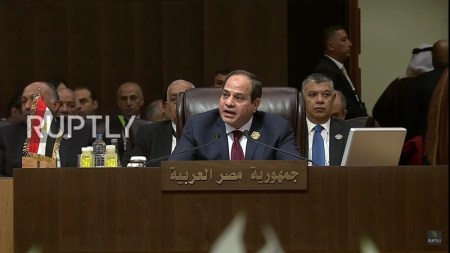
Many Arab leaders were infuriated by his speech; at the forefront was President Abdel Fattah el-Sisi of Egypt, who left the Arab Summit Hall during the speech to meet King Salman of Saudi Arabia.

Most Arab leaders and analysts, in fact, are enraged by Qatar’s continuous support for Islamist political groups such as the Muslim Brotherhood, because these groups are a threat to their national security.

President Abdel Fattah el-Sisi of Egypt speaks at the Arab Summit, on March 29. The previous day, Sisi walked out of a speech by the Emir of Qatar, Sheikh Tamim bin Hamad Al-Thani. Sisi was infuriated by Al-Thani’s declaration of support for the Muslim Brotherhood. (Image source: Ruptly video screenshot)

Another consequence of Obama’s foreign policy — in particular attempts to get close to Iran’s hostile regime — has been a fraying of relationships with old Arab allies of the United States. Some of Obama’s advisors thought that replacing Saudi Arabia with Iran was somehow “better” for the United States, if Iran “is beginning to evolve into a very civilized and historically important country” — an analysis that can be described as completely short-sighted.

The Saudi regime, with all its flaws, is a monarchy run by princes; the Iranian regime is a theocracy run by clerics. The Saudi regime is not a theocratic regime but a hybrid structure, which is neither wholly secular nor wholly religious. As such, the religious class functions under the authority of the ruling class. Princes are driven by self-interest; clerics are driven by ideology. In terms of extremism, the Iranian regime is pushing for hegemony, whilst Saudi Arabia has been taking only a defensive, rather than an expansionist, position.

The motivation of Saudi Arabia in exporting mosques world-wide and installing radical Saudi imams is defensive, not expansionist as in Iran. Saudi Arabia’s impetus is to confront Iran’s hegemony and the spread of its hostile ideology. It is this strategy, which Saudi Arabia has practiced since 1979 to balance Iran’s power and to combat its rebellious ideology, that must change.

That Iran’s Khomeini regime sought to embarrass Saudi Arabia — a country that is home to Islam’s two holiest mosques, in Mecca and Medina — by portraying it as not sufficiently Islamic, meant that the foundational Islamic Wahhabism of the Saudi Kingdom was aggressively reinforced. This emphasis resulted in even more constraints being put in place in Iran: especially on entertainment. Since the Khomeini revolution in 1979, all plays, fashion shows, international events, and cinemas have been banned. As for women, the Commission for the Promotion of Virtue and Prevention of Vice has increasingly harassed them. As for minorities, especially Shia challenging the Iranian Shia regime and its support for Shia militias — particularly the dominant Revolutionary Guards — books were published attacking the Shia:

More books appeared, attacking the Shias and especially Khomeini’s views. These books – like the arguments of Khomeini’s followers – rejected modern thinking as an “intellectual invasion.” Saudi Arabia, considered the guardian of Sunni Islam, spent billions of dollars on challenging the Khomeini-backed Shiites.

This religious one-upmanship — a competition over which body can be the “most religious” — must stop. Saudi Arabia would do well to understand that in order to confront the hegemony of the Iranian theocratic regime, the answer is not to radicalize Saudi society but to return to the way it was before 1979.

The best way to defeat the rebel hostile regime in Iran might be through creating an inclusive and tolerant society in Saudi Arabia. Saudi Arabia needs to change its approach towards Iran because the current strategy has not worked. The current strategy has done nothing except to strengthen the Iranian regime’s dominance; distort, globally, the image of Saudi Arabia and accelerate terrorism.

The lesson the Trump administration might learn from the disastrous mistakes of its predecessor is that the main source of terrorism in the region are political Islam and all its related religious groups. All these radical groups including ISIS, Al-Qaeda, Jabhat Al-Nusra and Hamas have been spawned by a political Islam driven by the ideology of the Muslim Brotherhood. Extremist jihadists such as Osama bin Laden, Abdullah Azzam and Ayman al-Zawahiri were all taught by the Muslim Brotherhood.

Political Islam practiced by the Iranian theocratic regime has been comfortably generating Shia radical militias, including the terrorist group, Hezbollah. The fight, therefore, should not be against Islam, but against political Islam. Islam needs to be practiced the way other religions are, as a private personal faith that should be kept separate from public life and politics, and whose expression should be confined to worship only. Mosques, whether in the Arab and Muslim world or in the West, should be places of worship only and must not transformed to centers for polarizing society or for recruitment by political religious groups. Unfortunately, Western countries have turned a blind eye to the political activities inside these mosques.

The danger of these religious political groups is that they do not believe in democracy or human rights; they just use elections to grasp power in order to impose a system of “Islamic Caliphate” as their only form of government. Most of these groups use religion as an ideology to oppose governments other than their own, and when they are criticized or attacked, they play the role of the oppressed.

The Trump administration needs to take advantage of the fact that the majority of people in the Middle East and North Africa have lost faith in religious political groups, especially since the failure of the Muslim Brotherhood in Egypt and Tunisia.

Before the Arab Spring, support for these groups was huge; now it stands at less than 10% of the population. This study was conducted in the Arab world, not including Turkey. The Muslims who support Turkish President Recep Tayyip Erdogan are the Muslim Brotherhood.

Most recent polls indicate that the majority of people in Arab and Muslim countries prefer religion to be kept separate from politics.

The country that is working the most systematically to fight these religious political groups in the region is the United Arab Emirates (UAE). There are several institutes and think tanks researching how to combat these groups. Dr. Jamal Sanad Al-Suwaidi, Director General of the Emirates Center for Strategic Studies and Research (ECSSR), has given a robust analysis of these groups and how to combat them in his book, The Mirage. In it, he cites a study on public opinion on political religious groups: A survey of the UAE population, on how these groups are able to influence the public by taking advantage of certain flaws in the system: 53.9% because of corruption; 47.9% because of poverty and 29.1% because of an absence of civil society groups that confront these opportunists.

The Middle East-North Africa region will undoubtedly have to go through several stages before it can successfully establish democracy. An evolutionary developmental approach will definitely be better than the failed revolutionary democratic one pursued by the Obama administration.

Secularization is also crucial in the fight against terrorism. Trying to build a democracy before going through the stages of secularism and political reformation — which includes rectifying existing flaws, such as corruption; modernization which means the liberation of the region from extremist totalitarian religious dogma and all other forms of backwardness in order to kick-start a renaissance; and scientific development — will not only be inadequate but will actually generate more terrorism by helping radicals to keep gaining power. It would be like a farmer who wants to plant roses in arid desert soil full of thorns.