Archive for the ‘U.S. Military’ category

No moral outrage in the military

October 6, 2015

No moral outrage in the military, Washington Times, James A. Lyons, October 5, 2015

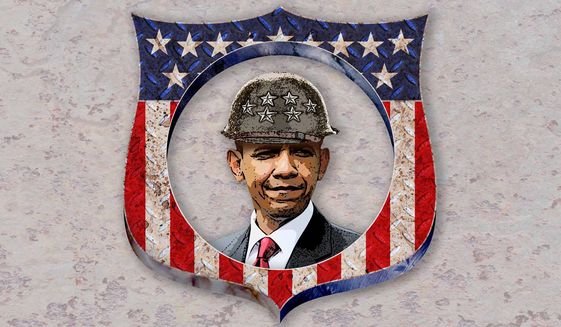
105_2015_b3-lyon-obama-shiel8201_c0-0-2933-1710_s561x327Obama Decimates the U.S. Military Illustration by Greg Groesch/The Washington Times

[T]he degradation of our military’s core principles must be viewed in a much broader perspective. Actually, it is a key element in President Obama’s declaration to fundamentally transform America. When you want to take down a country, the first thing you do is weaken its military.

***************************

Recent articles highlighting horrifying child abuse atrocities inflicted on defenseless children by our Afghan military and police partners are but the latest examples of how President Obama is destroying U.S. military forces.

Our military leadership’s response to these blatant acts of pedophilia by our so-called Afghan partners has been shocking. In short, the guidance provided to our Army and Marine Corps personnel was to just ignore these Muslim and Afghan seventh-century customs and traditions. They have been instructed to not interfere, even when such horrific acts are being committed on our own bases.

Those U.S. military personnel. whose moral outrage will not let them ignore these atrocities and instead act to stop these unconscionable acts against children, are either disciplined or forced to leave the service. In other words, even if you find a young boy chained to a bed so that a local police commander can sodomize him every night and you hear the screams, you are told to look the other way. This is not only un-American but an act against humanity.

Even the Taliban outlawed such practices and freed a number of children, thereby earning the gratitude of village elders. Does the Taliban with its seventh-century mentality have a higher moral code than the U.S. military leadership? It should be clear to any thinking person that when our honorable military personnel are forced to ignore these crimes against humanity, they are viewed as being complicit.

To those who have followed our involvement in Afghanistan, the current policy to ignore acts of pedophilia should come as no surprise. When “green on blue” attacks gained national attention, our military leadership tried to explain it away by claiming the friction that developed between the two forces was because our military personnel were not sensitive enough to Afghan culture and traditions. In other words, if our Afghan partners conduct violence or kill U.S. military personnel, it is our fault. What nonsense.

Other Afghan cultural idiosyncrasies our military personnel are forced to accept without reservation include wife-beating, rape, drug use, thievery, dog torture, desertion and collusion with the enemy, the Taliban. Furthermore, under no circumstances can our military discuss Islam in any form. The genesis for this goes back to the purging of all our training manuals and instructors who presented Islam in an unfavorable light or linked it to terrorism. It is totally against our core principles and everything we stand for as Americans. It clearly has an adverse impact on individual and unit morale, which affects the ultimate goal of the “will to win.” The bottom line is that we are forcing our great military to submit to Islam and its governing Shariah law, or possibly die.

This is exactly the choice offered to infidels who have been vanquished by Islamic jihad. Our military’s silence and acquiescence, particularly by the leadership, is the humiliating price for our coexistence with our Afghan partners. This is unacceptable.

However, the degradation of our military’s core principles must be viewed in a much broader perspective. Actually, it is a key element in President Obama’s declaration to fundamentally transform America. When you want to take down a country, the first thing you do is weaken its military. We cannot ignore the fact that with or without sequestration, the Obama administration has unilaterally disarmed our military forces and, consequently, our capabilities. Further, the social engineering imposed on our military forces — to include the acceptance of gay, lesbian and soon transgender personnel — further undermines the moral fiber of our military and constitutes a further degradation of our military effectiveness. Forcing women into combat roles only further degrades the situation. The restricted rules of engagement imposed on our forces has reduced our military’s effectiveness and caused unnecessary loss of life and debilitating injuries.

Likewise, the pin-prick attacks on the Islamic State cast a shadow over what a dedicated air campaign could accomplish. It projects an image of weakness and ineffectiveness of our true capabilities. It has taken the “awe” of our invincibility and overwhelming force capabilities out of the equation. The net result is that our enemies no longer fear us, and our allies can no longer trust us.

The imposed limit on the application and capability our military force is not limited to the Middle East. For example, in the Western Pacific, to challenge China’s illegal actions in the South China Sea, the Obama administration has restricted the U.S. Navy from enforcing its freedom of seas concept that has been a fundamental principle of the U.S. Navy for more than 238 years. Our Asian allies in the Western Pacific watch carefully how we respond to China’s aggressive actions. Our directed restraint clearly will not raise their confidence level.

Our national security is being deliberately jeopardized. President Obama’s bloviating to Vladimir Putin at the recent U.N. session that he leads the most powerful military in the world was only true on the day he took office. Since then, Obama has systematically degraded our capabilities. The chairmen of the House and Senate Armed Services Committee must take forceful action now to prevent further emasculation of our military capabilities.

Persia, Putin and the Pansy

October 3, 2015

Persia, Putin and the Pansy, Times of Israel, Irwin G. Blank, October 3, 2015

(Guess the name of the Pansy. But please see, The Moscow-Washington-Tehran Axis of Evil. — DM)

Putin, a product of the Soviet Communist system is well acquainted with the dictum of the father of the Bolshevik revolution that gave birth to the regime that he so faithfully served. V. I. Lenin’s famous quote-” Probe with a bayonet. If you meet steel, stop. If you meet mush, then push.”

***************************

In ancient times there was no greater empire than that of Persia. This imperial power stretched from the mountains of Afghanistan all the way to the islands of Greece and the deserts of North Africa and the Middle East. Against the Greeks of Alexander the Great, it could field armies of millions of troops arrayed with the most modern weapons of war at the time. Until the rise of the Roman Empire, no power on Earth, made nations tremble as did the rulers of Persia.

Today the fanatic Ayatollahs in Teheran, with a megalomaniacal apocalyptic dream of Islamist imperialism and world conquest under their banner of jihad are hell bent on the recreation of their ancient empire and the destruction of all they see as infidels and unbelievers. Their conception of faith is a political and social fanaticism that goes even further than the hysterical rantings and horrendous nightmare that Nazi Germany once attempted to foist on mankind. Indeed, the very Nazi terminology for its origin, the word “Aryan” is associated with the nation whose name is a derivative of that racist term-Iran.

However, other than employing proxy allies in Lebanon, Syria and Yemen, the mad mullahs knew that their military, for all its goose stepping soldiers and bombast that they would require the tools necessary to fulfill their wicked aims. Firstly, it was able to build up a nuclear industry with the aim of developing the most lethal weapons of mass destruction. Through deception, deliberate obfuscation and diligent denial, it succeeded in the implantation of this atomic framework under the blindness of the international agency whose responsibility is to curtail the spread of nuclear weapons.

Furthermore, when its nefarious production methods and its open evidence of ballistic missile technology became apparent, Iran successfully parried the efforts to curtail its march toward nuclear weaponry by undertaking a Potemkin village of diplomacy whereby even the most seemingly astute diplomatically experienced national leaders, succumbed to the meanderings and sweetheart deal that Iranian negotiators engineered. The secrets of the Ayatollahs were swept under a Persian rug.

However, in the meantime, the Persian imperialist war mongers still were in great need of the assistance of a powerful ally in order to accomplish their more conventional aims in their desire to continue their conquest throughout the Middle East. What better place to seek this help than to another former empire builder than a nation which was chomping on the bit to return to an area of the globe from which it had been so unceremoniously evicted.

The former Soviet Union, now the Russian Federation, has had dreams of installing its imperial presence in the Mediterranean Sea since the days of the Czars. Until 1972 when the late Egyptian president, Anwar Sadat, evicted ( for the most part as a political move, not a military one) most of the Soviet personnel from his country, the USSR had been ensconced throughout Egypt and the Arab world. Indeed, it was the humiliating defeat of the Egyptian and Syrian forces by the Israel Defense Forces during the Yom Kippur War that demonstrated at that time, the weakness of the Soviet response to American supported Israel which was demonstrating the vapidness of the Soviet promise to come to the aid of its Arab allies. The US response to Soviet threats to directly intervene on behalf of its Egyptian and Syrian clients, by moving the US Navy’s Sixth Fleet towards the Syrian coast and the declaration of a higher war footing by all US forces, made the Soviets back down.

The political and military supported victory of American arms and diplomacy demonstrated the resolve of that world power to face down the threat of Soviet dominance in such a strategic region of Western interests. Not only did the diplomacy of Henry Kissinger and the Nixon White House make a shambles of the massive Soviet involvement in the Arab world, but it brought about the first true demarche of Soviet (Russian) imperial chicanery since the Berlin blockade of 1948 and the Cuban Missile Crisis of 1962.

But the Russian Federation today is led by a president whose demonstration of the old Russian imperial nightmare is alive and well. Vladimir Putin, a former high official of the dreaded KGB,( Soviet Secret Service) has no qualms about restoring the dreams of the Czars and the re-entrenchment of his nation’s appearance in the Middle East. As a significant power player on the world scene and a massive supplier of sophisticated arms to anyone who opposes Western influence anywhere on the planet, the situation in the Levant and the hysterical anti-American paranoia in Teheran led the Ayatollahs to the road towards Moscow.

Sending one of their highest ranking military official to Moscow was a masterstroke of diplomatic skullduggery in presenting Putin with a challenge and an opportunity he could not ignore, For here, he was presented with a silver platter with which to serve up a poisonous dish to his arch-rivals, America and NATO. After witnessing their weakness to confront his military in the Ukraine and the Crimea, as well as his bloody campaign in Chechnya, all Putin had to do was experience orgasmic delight in sending his sea and air forces into a disintegrating Syria and pour weapons by the shipload onto the docks of Bandar Abbas in Iran. In full sight of Western intelligence and American spy satellites, crate after crate of Soviet munitions were soon trundling off the piers of the Syrian port of Latakia.

Iran was facing a significant threat to its allies in that disintegrating country and witnessing the probable demise of its Syrian puppet, Bashar al-Assad. The forces of ISIS (an Iranian rival for control of the Islamic world)  were on the march and its debilitating of the Syrian military as well as its capture of large swaths of Alawite controlled territory would put an end to the mullah’s plans for conquest. The entire northern tier of the Middle East would collapse and the Persian dream of conquering all the Sunni dominated lands of the region would go up in smoke. Iran had invested heavily in its subterfuge of the regimes of Iraq, Yemen and its military adventures in those countries. It required a strong ally and it looked to its northern neighbor with which its shares a common enmity for the West, and Putin, licked his chops and dove onto the plate presented to him.

Not only have Russian military forces seized control of the vital Syrian port of Latakia on the Mediterranean, but it has constructed revetments for air forces and ground personnel unseen in this region since the 1970s. His air forces have conducted bombing raids, not on ISIS, which was a planned political prevarication, but on US backed components of the anti-Assad coalition. Of course, Putin has no conflict with conducting airstrikes on civilians. After all, the West has been all but silent on the massive slaughter of approximately 300,000 civilians by the butcher of Damascus. Even when presented with irrefutable evidence of the use of internationally banned chemical weapons on his own countrymen, the US and NATO have been reticent (cowardly) in confronting this evil practice. Why not? The current leader of Syria’s father dropped poison gas on his own people in Homs when they revolted against his tyrannical rule and the world stood silent.

When the president of the United States declared that the Assad administration’s use of chemical weapons would cross a “red line” and force his hand – well, the red line turned into a yellow streak. The insipid and relatively weak assistance that this erstwhile leader of the world’s greatest superpower has shown to be the denigration and degradation of a once trusted and worthy ally. America’s allies no longer trust her and her enemies no longer fear her. It is not the American people who have lost their courage, it is their incompetently dangerous president and his minions that are responsible.

Not only for the rise of Russian/Iranian imperialism, but for its effect as daily demonstrated by the thousands, if not future hundreds of thousands, of men, women and children, fleeing from the murderous genocide of the Assad aided and abetted by this new Axis of evil-Islamic radicalism and Russian imperialism.

Iran seeks to conquer the Middle East and destroy the Sunni dominated Arab states of the region. With Russian assistance it will expand its imperial power behind Russian bayonets and the threat of its own nuclear umbrella to come. It is biding its time while innocents are being slaughtered and the threats against Israel, Jordan and Lebanon are unrelenting through public declarations and political oratory.

Putin, a product of the Soviet Communist system is well acquainted with the dictum of the father of the Bolshevik revolution that gave birth to the regime that he so faithfully served. V. I. Lenin’s famous quote-” Probe with a bayonet. If you meet steel, stop. If you meet mush, then push.”

The American president, who through Constitutional authority commands the most expansive and well trained military in the history of the world, who purports to be the defender of international human rights, has proven himself to be, in the face of wanton aggression and slaughter, in the abrogation of his country’s duty to defend its most vital and established interests, in his tepid response to evil and his recalcitrance to even identify the greatest threat to Western civilization since the rise of Nazi Germany, has without a doubt, at least in this writer’s estimate, become akin to an ostrich-a bird that buries its head in the sand and presents its foes with an irresistible target.

The Dictionary of American Slang has a word for such a person-a weakling and a wimp-the word is “pansy.” The pansy of the United States will bring the most terrible war upon us all-including by beloved tiny Jewish country.

The Iran Nuclear Deal: What the Next President Should Do

October 2, 2015

The Iran Nuclear Deal: What the Next President Should Do, Heritage Foundation, October 2, 2015

(But please see, The Elephant In The Room. — DM)

The failure of Congress to halt the implementation of the Obama Administration’s nuclear agreement with Tehran means that the U.S. is stuck with a bad deal on Iran’s nuclear program at least for now. Iran’s radical Islamist regime will now benefit from the suspension of international sanctions without dismantling its nuclear infrastructure, which will remain basically intact. Iran’s path to a nuclear weapon is unlikely to be blocked by the Administration’s flawed deal, any more than North Korea was blocked by the Clinton Administration’s 1994 Agreed Framework.

The next President should not passively accept Obama’s risky deal with Tehran as a fait accompli. Instead, he or she should immediately cite any violations of the agreement by Iran, its continued support for terrorism, or other hostile policies as reason to abrogate the agreement. The Bush Administration, faced with bad deals negotiated by the Clinton Administration, eventually withdrew from both the Agreed Framework and the Kyoto Protocol.

Rather than endorsing a dangerous agreement that bolsters Iran’s economy, facilitates its military buildup, and paves the way for an eventual Iranian nuclear breakout, the next Administration must accelerate efforts to deter, contain, and roll back the influence of Iran’s theocratic dictatorship, which continues to call for “death to America.”

How the Next President Should Deal with Iran

Upon entering office, the next Administration should immediately review Iran’s compliance with the existing deal, as well as its behavior in sponsoring terrorism, subverting nearby governments, and attacking U.S. allies. Any evidence that Iran is cheating on the agreement (which is likely given Iran’s past behavior) or continuing hostile acts against the U.S. and its allies should be used to justify nullification of the agreement.

Regrettably, Tehran already will have pocketed up to $100 billion in sanctions relief by the time the next Administration comes to office because of the frontloading of sanctions relief in the early months of the misconceived deal. Continuing to fork over billions of dollars that Tehran can use to finance further terrorism, subversion, and military and nuclear expansion will only worsen the situation.

In place of the flawed nuclear agreement, which would boost Iran’s long-term military and nuclear threat potential, strengthen Iran’s regional influence, strain ties with U.S. allies, and diminish U.S. influence in the region, the new Administration should:

1. Expand sanctions on Iran. The new Administration should immediately reinstate all U.S. sanctions on Iran suspended under the Vienna Agreement and work with Congress to expand sanctions, focusing on Iran’s nuclear program; support of terrorism; ballistic missile program; interventions in Syria, Iraq, and Yemen; human rights violations; and holding of four American hostages (Washington Post reporter Jason Rezaian, Christian pastor Saeed Abedini, former U.S. Marine Amir Hekmati, and former FBI agent Robert Levinson, who has been covertly held hostage by Iran since 2007).

The new Administration should designate Iran’s Islamic Revolutionary Guard Corps (IRGC) as a foreign terrorist organization and apply sanctions to any non-Iranian companies that do business with the IRGC’s extensive economic empire. This measure would help reduce the IRGC’s ability to exploit sanctions relief for its own hostile purposes.

Washington should also cite Iranian violations of the accord as reason for reimposing U.N. sanctions on Iran, thus enhancing international pressure on Tehran and discouraging foreign investment and trade that could boost Iran’s military and nuclear programs. It is critical that U.S. allies and Iran’s trading partners understand that investing or trading with Iran will subject them to U.S. sanctions even if some countries refuse to enforce U.N. sanctions.

2. Strengthen U.S. military forces to provide greater deterrence against an Iranian nuclear breakout.Ultimately, no piece of paper will block an Iranian nuclear breakout. The chief deterrent to Iran’s attaining a nuclear capability is the prospect of a U.S. preventive military attack. It is no coincidence that Iran halted many aspects of its nuclear weapons program in 2003 after the U.S. invasion of and overthrow of hostile regimes in Afghanistan and Iraq. Libyan dictator Muammar Qadhafi, motivated by a similar apprehension about the Bush Administration, also chose to give up his chemical and nuclear weapons programs.

To strengthen this deterrence, it is necessary to rebuild U.S. military strength, which has been sapped in recent years by devastating budget cuts. The Obama Administration’s failure to provide for the national defense will shortly result in the absence of U.S. aircraft carriers from the Persian Gulf region for the first time since 2007. Such signs of declining U.S. military capabilities will exacerbate the risks posed by the nuclear deal.

3. Strengthen U.S. alliances, especially with Israel. The nuclear agreement has had a corrosive effect on bilateral relationships with important U.S. allies in the Middle East, particularly those countries that are most threatened by Iran, such as Israel and Saudi Arabia. Rather than sacrificing the interests of allies in a rush to embrace Iran as the Obama Administration has done, the next Administration should give priority to safeguarding the vital security interests of the U.S. and its allies by maintaining a favorable balance of power in the region to deter and contain Iran. Washington should help rebuild security ties by boosting arms sales to Israel, Saudi Arabia, and other members of the Gulf Cooperation Council (GCC) that are threatened by Tehran, taking care that arms sales to Arab states do not threaten Israel’s qualitative military edge in the event of a flare-up in Arab–Israeli fighting.

To enhance deterrence against an Iranian nuclear breakout, Washington also should transfer to Israel capabilities that could be used to destroy hardened targets such as the Fordow uranium enrichment facility, which is built hundreds of feet beneath a mountain. The only non-nuclear weapon capable of destroying such a target is the Massive Ordnance Penetrator (MOP), a precision-guided, 30,000-pound “bunker buster” bomb. Giving Israel these weapons and the aircraft to deliver them would make Tehran think twice about risking a nuclear breakout.

The U.S. and its European allies also should strengthen military, intelligence, and security cooperation with Israel and the members of the GCC, an alliance of Bahrain, Kuwait, Oman, Qatar, Saudi Arabia, and the United Arab Emirates, founded in 1981 to provide collective security for Arab states threatened by Iran. Such a coalition could help both to contain the expansion of Iranian power and to facilitate military action (if necessary) against Iran.

4. Put a high priority on missile defense. Iran’s ballistic missile force, the largest in the Middle East, poses a growing threat to its neighbors. Washington should help Israel to strengthen its missile defenses and help the GCC countries to build an integrated and layered missile defense architecture to blunt the Iranian missile threat. The U.S. Navy should be prepared to deploy warships equipped with Aegis ballistic missile defense systems to appropriate locations to help defend Israel and the GCC allies against potential Iranian missile attacks as circumstances demand. This will require coordinating missile defense activities among the various U.S. and allied missile defense systems through a joint communications system. The U.S. should also field missile defense interceptors in space for intercepting Iranian missiles in the boost phase, which would add a valuable additional layer to missile defenses.

5. Deter nuclear proliferation. For more than five decades, Washington has opposed the spread of sensitive nuclear technologies such as uranium enrichment, even for its allies. By unwisely making an exception for Iran, the Obama Administration in effect conceded the acceptability of an illicit uranium enrichment program in a rogue state. In fact, the Administration granted Iran’s Islamist dictatorship better terms on uranium enrichment than the Ford and Carter Administrations offered to the Shah of Iran, a U.S. ally back in the 1970s.

The Obama Administration’s shortsighted deal with Iran is likely to spur a cascade of nuclear proliferation among threatened states such as Saudi Arabia, Turkey, Egypt, and the United Arab Emirates. Such a multipolar nuclear Middle East, on hair-trigger alert because of the lack of a survivable second-strike capability, would introduce a new level of instability into an already volatile region. To prevent such an outcome, the next Administration must reassure these countries that it will take military action to prevent Iran from gaining a nuclear capability as well as to deter Iranian military threats to their interests.

6. Expand domestic oil and gas production and lift the ban on U.S. oil exports to put downward pressure on world prices. In addition to sanctions, Iran’s economy has been hurt by falling world oil prices. Its oil export earnings, which constitute more than 80 percent of the regime’s revenue, have been significantly reduced. By removing unnecessary restrictions on oil exploration and drilling in potentially rich offshore and Alaskan oil regions, Washington could help to maximize downward pressure on long-term global oil prices. Lifting the ban on U.S. oil exports, an obsolete legacy of the 1973–1974 energy crisis spawned by the Arab oil embargo, would amplify the benefits of increased oil and gas production. Permitting U.S. oil exports not only would benefit the U.S. economy and balance of trade, but also would marginally lower world oil prices and Iranian oil export revenues, thereby reducing the regime’s ability to finance terrorism, subversion, and military expansion.

7. Negotiate a better deal with Iran. The Obama Administration played a strong hand weakly in its negotiations with Iran. It made it clear that it wanted a nuclear agreement more than Tehran appeared to want one. That gave the Iranians bargaining leverage that they used shrewdly. The Administration made a bad situation worse by downplaying the military option and front-loading sanctions relief early in the interim agreement, which reduced Iran’s incentives to make concessions.

The next Administration should seek an agreement that would permanently bar Iran from acquiring nuclear weapons. At a minimum, this would require:

  • Banning Iran from uranium enrichment activities;
  • Dismantling substantial portions of Iran’s nuclear infrastructure, particularly the Fordow and Natanz uranium enrichment facilities and Arak heavy water reactor;
  • Performing robust inspections on an “anytime anywhere” basis and real-time monitoring of Iranian nuclear facilities;
  • Linking sanctions relief to Iranian compliance;
  • Ensuring that Iran comes clean on its past weaponization efforts; and
  • Determining a clear and rapid process for reimposing all sanctions if Iran is caught cheating.

The Bottom Line

The nuclear deal already has weakened relationships between the U.S. and important allies, undermined the perceived reliability of the U.S. as an ally, and helped Iran to reinvigorate its economy and expand its regional influence. After oil sanctions are lifted, Iran will gain enhanced resources to finance escalating threats to the U.S. and its allies. The next Administration must help put Iran’s nuclear genie back in the bottle by taking a much tougher and more realistic approach to deterring and preventing an Iranian nuclear breakout.
Unnecessary loss of life – The deadly price of politically correct rules of engagement.

September 30, 2015

Unnecessary loss of life – The deadly price of politically correct rules of engagement.

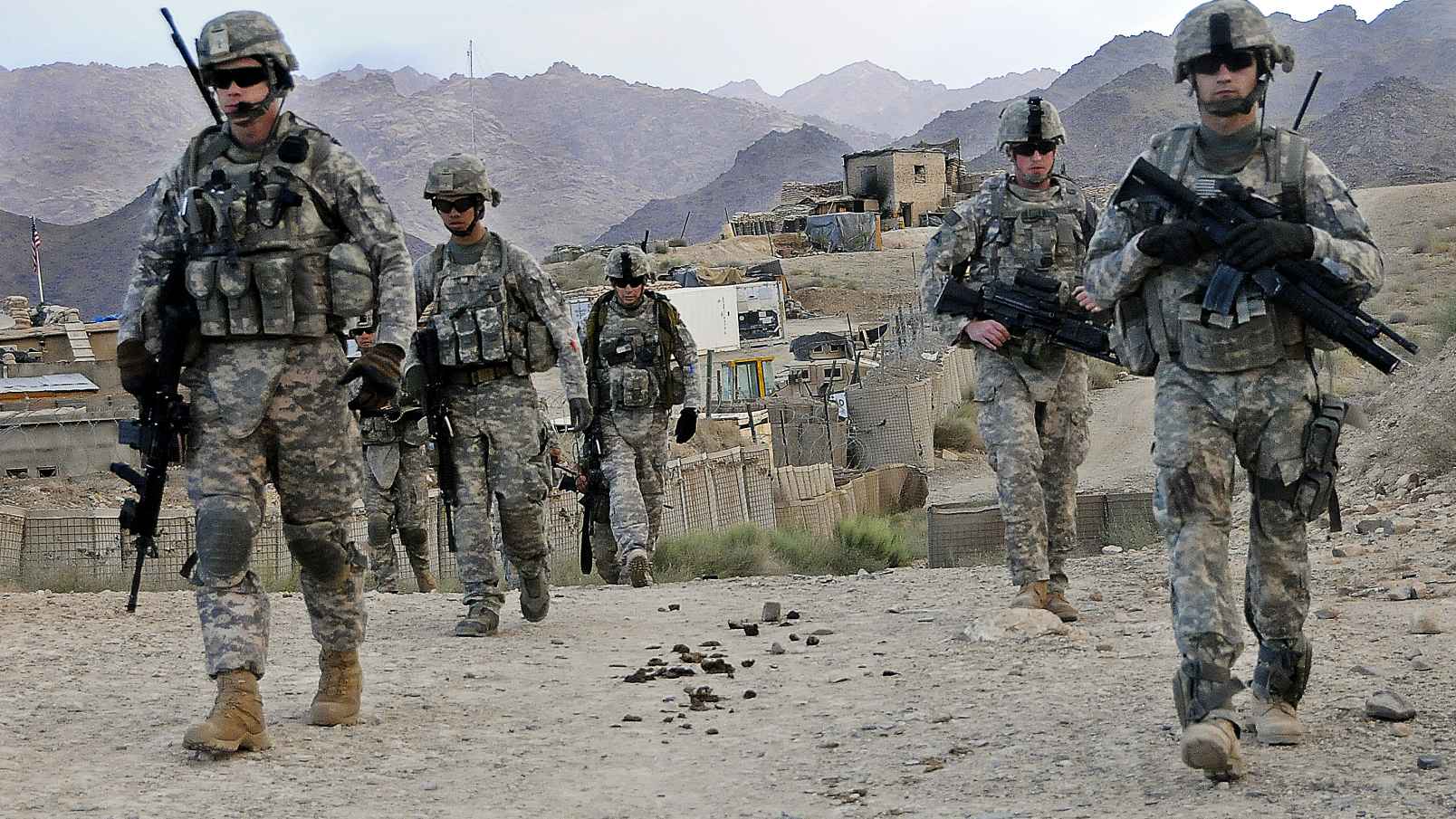
afghanistan_-_american_soldiers_fob_baylough

War is nasty, brutal and costly. In our latest wars, many of the casualties suffered by American troops are a direct result of their having to obey rules of engagement created by politicians who have never set foot on — or even seen — a battlefield. Today’s battlefield commanders must be alert to the media and do-gooders who are all too ready to demonize troops involved in a battle that produces noncombatant deaths, so-called collateral damage.

According to a Western Journalism article by Leigh H Bravo, “Insanity: The Rules of Engagement” (http://tinyurl.com/p59nlqs), our troops fighting in Afghanistan cannot do night or surprise searches. Also, villagers must be warned prior to searches. Troops may not fire at the enemy unless fired upon. U.S. forces cannot engage the enemy if civilians are present. And only women can search women. Retired Air Force Lt. Gen. Thomas McInerney said: “We handcuffed our troops in combat needlessly. This was very harmful to our men and has never been done in U.S combat operations that I know of.” Collateral damage and the unintentional killing of civilians are a consequence of war. But the question we should ask is: Are our troops’ lives less important than the inevitable collateral damage?

The unnecessary loss of life and casualties that result from politically correct rules of engagement are about to be magnified in future conflicts by mindless efforts to put women in combat units. In 2013, then-Defense Secretary Leon Panetta officially lifted the ban on women serving in ground combat roles. On Jan. 1, 2016, all branches of the military must either open all positions to women or request exceptions. That boils down to having women serve in combat roles, because any commander requesting exceptions would risk having his career terminated in the wake of the screeching and accusations of sexism that would surely ensue.

The U.S. Army has announced that for the first time, two female officers graduated from the exceptionally tough three-phase Ranger course.

Their “success” will serve as grist for the mills of those who argue for women in combat. Unlike most of their fellow soldiers, these two women had to recycle because they had failed certain phases of the course.

A recent Marine Corps force integration study concluded that combat teams were less effective when they included women. Overall, the report says, all-male teams and crews outperformed mixed-gender ones on 93 out of 134 tasks evaluated. All-male teams were universally faster “in each tactical movement.” The report also says that female Marines had higher rates of injury throughout the experiment.

Should anyone be surprised by the findings of male combat superiority? Young men are overloaded with testosterone, which produces hostility, aggression and competitiveness. Such a physical characteristic produces sometimes-poor behavior in civilian society, occasionally leading to imprisonment, but the same characteristics are ideal for ground combat situations.

You may bet the rent money that the current effort to integrate combat jobs will not end with simply a few extraordinary women. Secretary of the Navy Ray Mabus told the Navy Times that once women start attending SEAL training, it would make sense to examine the standards. He said, “First we’re going to make sure there are standards” and “they’re gender-neutral.” Only after that will the Navy make sure the standards “have something to do with the job.” We’ve heard that before in matters of race. It’s called disparate impact. That is, if the Navy SEALs cannot prove that staying up for 18 hours with no rest or sleep, sitting and shivering in the cold Pacific Ocean, running with a huge log on your shoulder, and being spoken to like a dog are necessary, then those parts of SEAL training will be eliminated so that women can pass.

The most disgusting, perhaps traitorous, aspect of all this is the overall timidity of military commanders, most of whom, despite knowing better, will only publicly criticize the idea of putting women in combat after they retire from service.

Satire | Pentagon Downplays Significance Of Taliban Taking Over All Of Afghanistan Last Night

September 30, 2015

Pentagon Downplays Significance Of Taliban Taking Over All Of Afghanistan Last Night, Duffel Blog, September 30, 2015

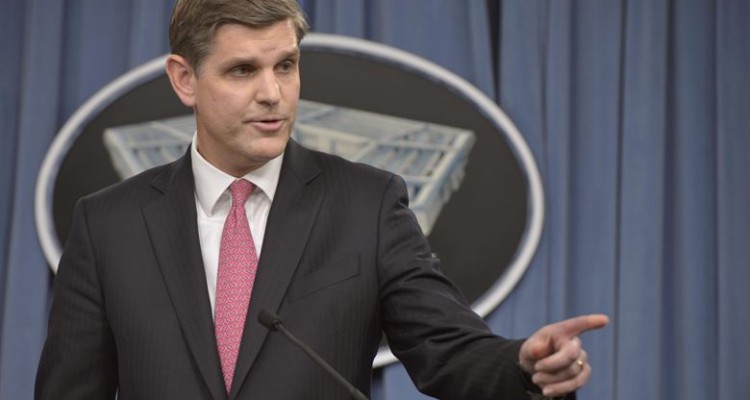
150929-D-NI589-068-750x400Photo Credit: Glenn Fawcett with the U.S. Department of Defense

WASHINGTON, D.C. — Following the Taliban’s complete takeover of Afghanistan late last night, Pentagon Press Secretary Peter Cook noted in an early morning press briefing that the Pentagon remains “generally positive” about the war effort and that “there is minimal cause for concern.”

“That’s how things go in a protracted counterinsurgency,” Cook told reporters. “You face some minor setbacks regardless of how many troops lose their lives or how many billions of taxpayer dollars are spent equipping local defense forces incapable of defending their own country.”

After the Taliban overran Afghan forces in Helmand earlier this year and took over the city of Kunduz this week, sources say the Obama Administration and many senior defense officials seemed surprised that major media outlets expressed even the slightest bit of interest in a war over a decade old.

At Central Command in Tampa, Fla., Gen. Lloyd Austin — who oversees forces in the region — assured reporters there was little cause for concern.

“We’ve seen this time and time again,” Austin said. “This modest spike in Taliban attacks shows that our strategy is working. These massive coordinated attacks are merely the death throes of an insurgent movement.”

Austin cited a range of historical and contemporary intelligence analyses to support his claim, adding: “Don’t believe me? Just look at the history of insurgencies. The Tet Offensive, Saigon in ’75, Iraq in 2006, every summer in Afghanistan since 2001.”

Sources at the White House say the president has not been too concerned with the situation for at least a few months, especially after he declared a successful end to the war in 2014 and placed forces there at Defense Condition (DEFCON) “Chill.”

Duffel Blog attempted to reach the commander of U.S. Forces in Afghanistan at his Kabul office but were ultimately unsuccessful. His new spokesman, Mullah Akhtar Mansour, stated that Gen. John Campbell and the U.S. Ambassador were unavailable for comment as they had departed Kabul via C-5 transport just a few hours earlier.


US-backed rebels handed over equipment to al Qaeda in Syria

September 26, 2015

US-backed rebels handed over equipment to al Qaeda in Syria, Long War Journal, September 26, 2015

Al-Nusrah-in-Aleppo-300x169

[T]he Jaysh al Fateh alliance, which is led by Al Nusrah and its closest jihadist allies, has captured more territory from Assad’s regime this year than the Islamic State has.

Not only has al Qaeda thwarted America’s first efforts under the overt $500 million train and equip program, which is managed by the US military, it has also taken out rebels who received unofficial support from the US intelligence community.

*****************************

US-backed rebels in the so-called “New Syrian Forces” (NSF) have turned over at least some of their equipment and ammunition to a “suspected” intermediary for Al Nusrah Front, US Central Command (CENTCOM) conceded in a statement released late yesterday. The coalition-provided supplies were given by the rebels to Al Nusrah, an official branch of al Qaeda, in exchange for “safe passage within their operating area.

The “NSF unit contacted Coalition representatives and informed us that on Sept. 21-22 they gave six pick-up trucks and a portion of their ammunition to a suspected Al Nusrah Front intermediary, which equates to roughly 25 percent of their issued equipment,” CENTCOM spokesperson Col. Patrick Ryder said. “If accurate, the report of NSF members providing equipment to Al Nusrah Front is very concerning and a violation of Syria train and equip program guidelines.”

While Ryder left open the possibility that the report is not accurate, he did not offer any explanation for why the NSF unit would lie about giving the equipment to Al Nusrah. The admission further jeopardizes the unit’s ability to receive American arms in the future.

Rebels belonging to Division 30, a group supported by the US, suffered losses immediately upon entering the Syrian fray earlier this year.

More than 50 members of Division 30 were sent into Syria in July. But Al Nusrah quickly thwarted their plans, even though the US-backed rebels intended to fight the Islamic State, Al Nusrah’s bitter rival. A number of Division 30 fighters were captured or killed within days of embarking on their mission.

Al Nusrah released a statement at the time saying that Division 30 is part of an American scheme that is opposed to the interests of the Syrian people. Al Qaeda’s branch accused the group of trying to form “the nucleus” of a “national army” and blasted the attempt to bolster the “moderate opposition.”

Al Nusrah also attacked Division 30’s headquarters in Azaz, a city north of Aleppo. The US responded with airstrikes, killing a number of jihadists, but the damage to the limited US effort was done. US officials said earlier this month that only four or five rebels were left in the fight. Dozens of additional US-supported rebels have entered the war in recent weeks, according to US military officials.

Not only has al Qaeda thwarted America’s first efforts under the overt $500 million train and equip program, which is managed by the US military, it has also taken out rebels who received unofficial support from the US intelligence community.

Al Nusrah Front has consistently resisted the West’s meager attempts to build a reliable opposition force. Late last year, al Qaeda’s branch pushed the Syrian Revolutionaries Front (SRF), which had reportedly received some support from the West, out of its strongholds in the Idlib province. The SRF’s demise helped pave the way for Al Nusrah and its allies in the Jaysh al Fateh (“Army of Conquest”) coalition to capture much of Idlib beginning in late March.

After being vanquished, SRF head Jamaal Maarouf accused Al Nusrah’s emir, Abu Muhammad al Julani, of being a “Kharijite” (or extremist). This was an about-face in the relationship, as the SRF and Al Nusrah had previously fought side-by-side. Maarouf also publicly lamented the limited support he had received from the West.

Earlier this year, Al Nusrah also took the fight to Harakat Hazm (the Hazm Movement) outside of Aleppo. Despite receiving Western support, including US weaponry, Hazm had fought alongside the jihadists in the past and its leaders had praised Al Nusrah. Regardless, it was eventually forced to disband under Al Nusrah’s relentless pressure. Hazm’s remaining members were folded into other rebel groups.

It is suspected that American-made anti-tank TOW missiles fell into al Qaeda’s hands as a result of the battle against Hazm. The weapons were used during the jihadists’ successful assault on Idlib in March, as well as during other key confrontations with the Assad regime.

Recent events demonstrate that the US is consistently underestimating al Qaeda’s presence and capabilities in Syria, and does not have a true strategy for the multi-sided conflict. The rebels who have gone through the train and equip program are supposed to fight the Islamic State and not, according to public accounts, Al Nusrah. But it is Al Nusrah, which has been seeded with al Qaeda veterans in its upper ranks and is openly loyal to al Qaeda emir Ayman al Zawahiri, that has interfered with the US effort.

The US apparently did not anticipate Al Nusrah blocking Division 30’s first foray into northern Syria in July. The al Qaeda branch did so not to support Abu Bakr al Baghdadi’s men, but because it is opposed to any US presence in the country. The US has targeted individual al Qaeda commanders in Syria, especially those believed to pose an immediate threat to the West, but has not sought to degrade the Al Nusrah-led wing of the anti-Assad insurgency. However, the Jaysh al Fateh alliance, which is led by Al Nusrah and its closest jihadist allies, has captured more territory from Assad’s regime this year than the Islamic State has.

Like it or not, Putin’s is the ‘only game in town’

September 26, 2015

Like it or not, Putin’s is the ‘only game in town’ Gulf News, Mustapha Karkouti, September 26, 2015

(Nature abhors a vacuum and Obama created one in the Middle East. Please see also, A Chinese aircraft carrier docks at Tartus to support Russian-Iranian military buildup. — DM)

With a nearly total absence of any significant US-led coalition presence in Syria, apart from slow-effective air strikes, Moscow seems to be the only dominant player in that region. As the Kremlin clearly stated, Putin’s intention is to prevent a repetition of Libya’s 2011 scenario and avoid the total collapse of Bashar Al Assad’s authority, similar to what happened following Muammar Gaddafi’s overthrow after the badly-planned intervention by Nato. Putin is simply, but clearly, saying to the West: Where you failed in Libya, I’ll do better in Syria.

[W]hatever Putin’s plans are in the long run, his mission in the country is largely seen by the majority of Syrians as a sinister effort to save Al Assad and help him consolidate his authority in Syria.

**********************

It is very rare that a Russian head of state holds top strategic talks with an Israeli prime minister in the Russian capital. This happened just recently when Vladimir Putin met Benjamin Netanyahu to discuss Syria’s latest developments. The two chiefs are not known to have had close and friendly personal relations, but they displayed those sitting side by side in the Kremlin last week. The arrival in Moscow last Monday of Netanyahu accompanied by his chief of staff and head of military intelligence, is by all means unprecedented.

The visit is significant as it is a part of tripartite diplomatic activities that involve discussions with the US as well. The American Defence Secretary Ashton Carter has recently had a long and “useful” discussion with his Russian counterpart over Syria. With the current congestion of military activities in the sky above the region by the Israelis and Americans and the rapidly increasing presence of Russian forces and hardware, there is obviously a need to liaise to avoid any unpredicted conflict, i.e. shooting down one another’s planes by mistake. But both the US and Israel’s main concern goes far beyond the technicalities. They aim mostly at finding out what exactly the Kremlin’s long term purpose in Syria is and how far Moscow is capable of effectively controlling the direction of the tragic game currently being played in this sad country.

Sitting next to Netanyahu, Putin reassuringly explained what he was trying to achieve by stating that Moscow’s main goal was “to protect the Syrian state”, or more accurately, what’s left of it. The Russian president seemed fully aware of Netanyahu’s main concern of the Iran-supported potential attacks by Hezbollah and the Syrian army across the occupied Golan Heights, when he told his visitor that neither Damascus nor the Iranian-financed Lebanese militia was “in any state to open a second front”. In others words, Putin reassured Netanyahu that Moscow was fully engaged with Tehran and Damascus on that front.

Saving Al Assad

With a nearly total absence of any significant US-led coalition presence in Syria, apart from slow-effective air strikes, Moscow seems to be the only dominant player in that region. As the Kremlin clearly stated, Putin’s intention is to prevent a repetition of Libya’s 2011 scenario and avoid the total collapse of Bashar Al Assad’s authority, similar to what happened following Muammar Gaddafi’s overthrow after the badly-planned intervention by Nato. Putin is simply, but clearly, saying to the West: Where you failed in Libya, I’ll do better in Syria.

The timing of Moscow’s build-up along the Syrian coastal area couldn’t be more perfect, particularly with western policy on the country in a state of limbo. Surely, moving dozens of combat aircraft and hundreds of troops to the aid of the encircled Syrian president must have been given the green light a while ago. This is precisely how Putin sees the situation. Under the nose of the Americans and the world community, Russian personnel and Special Forces have re-emerged in large numbers at an old air base of theirs near Al Assad’s stronghold of Latakia. Russia has always had, through the former Soviet Union, significant military presence in Syria during the long years of the Cold War and beyond.

However, whatever Putin’s plans are in the long run, his mission in the country is largely seen by the majority of Syrians as a sinister effort to save Al Assad and help him consolidate his authority in Syria.

After all, Al Assad is the man largely accused of killing thousands of Syrians during the almost five-year war in the country. It has become absolutely clear that all players in the region, including US, Israel, Turkey and Iran are adjusting to the new reality as a result of the speed and scale of Russian’s deployment. It is commonly known now that Israel was made aware of Moscow’s deployment before it began, while Iran had been informed of the move as early as the first week of August. In fact, shipments from Black Sea ports to the Syrian port of Tartous began to pass through the Bosphorus as from August 20.

The Russians had moved by last Tuesday into the coastal stretch between Latakia and Tartous 28 combat jets (12 Su24 bombers, 12 Su25 ground attack aircraft and 4 Su-30 multi-role fighters), two types of drones and 20 multi-purpose helicopters. Almost the equivalent of Al Assad’s entire air power. Pentagon officials have confirmed these deployments and said Russian drones are now fully operating where offensive air attacks could be expected very soon.

Turkey on its part, is willing to dip its hands in ‘Syria’s Cake’ as a highly Turkish informed source told me few days ago, and send troops into the country, provided it gets the green light to set up its ‘no-fly zone’ along Syria’s northern borders. In fact, discussion between Ankara and several European capitals, including Berlin, over the issue has been going on for sometimes as many European leaders consider the no-fly zone option is urgently needed method to help controlling the flow of refugees into European Union countries.

However, with Iran well entrenched behind Al Assad at an annual cost of $6-$10 billion (Dh22-36.7 billion), it is also a decisive regional power of huge influence in shaping events in shrinking Syria and beyond. Additionally, there is newcomer into the killing fields of Syria as China has just officially revealed that it is sending personnel and advisers to assess the situation. And with almost total US absence in the Levant, Russia would militarily and politically remain the most significant power to shore up Al Assad’s regime as long as it is possible.


Satire|Special Forces To Change ‘Free The Oppressed’ Motto After Complaints From Afghans Holding Sex Slaves

September 26, 2015

Special Forces To Change ‘Free The Oppressed’ Motto After Complaints From Afghans Holding Sex Slaves, Duffel Blog, Bombsquad, Jack S. McQuack, and Jay-B contributed, September 26, 2015

(This fits right in with Saudi Arabia’s new job in the UN Human Rights Council, except that’s not satire. — DM)

Special operations Soldiers listen to the complaints and stories of Afghan detainees at Farrah, Afghanistan May 27.

Special operations Soldiers listen to the complaints and stories of Afghan detainees at Farrah, Afghanistan May 27.

In addition to the change in motto, the Army band has also been directed to record a new version of the “Ballad of the Green Berets,” which was recorded during the Vietnam War. An initial draft of the lyrics include: “Silver wings upon their chest / These are men, America’s best / One hundred slaves get raped today / But all ignored by the Green Beret.”

**********************

FORT BRAGG, N.C. — Top Army leaders have ordered its elite Special Forces unit to change its motto from the Latin “De Opresso Liber” (To liberate the oppressed) to something that would be more culturally sensitive, after a large number of Afghans holding child sex slaves have complained.

“We want to make sure we are not offending our coalition partners and not judging them based on our own biases,” said Col. Dwight S. Barry, a Pentagon spokesperson. “At the end of the day, we just have to respect that raping young boys and mutilating female genitals is just a part of their culture.”

Started in 1952, Army Special Forces chose its Latin motto of “De Opresso Liber” at a time when the U.S. was heavily focused on freeing people around the world from the chains of Soviet Communism. Now decades later, Army leaders want operators to be more aware of cultural differences they may not understand in Iraq, Afghanistan, and Berkeley, California.

The move comes in the wake of numerous complaints from Afghan men, who have chided U.S. military officials over previous run-ins with Special Forces soldiers unaware of the ancient Afghan custom of “bacha bazi.” The practice, which literally translates to “boy play,” consists of chaining children to beds, taking off their clothes, and then sexually assaulting them until they scream “bingo.”

Anger over U.S. military insensitivity toward “bacha bazi” is not the only issue in which Afghans have raised concern. The use of Special Forces “night raids” on high value targets has aroused suspicion among many locals in the past, and U.S. troops expressing discomfort around opium-addicted Afghan policemen as they throw acid in the faces of young girls has strained coalition partnerships.

In one high-profile incident, two Special Forces soldiers beat up an American-backed militia commander after they had learned he had raped a young boy and beat up his mother, a practice which goes back centuries and is perfectly normal in Afghan society. Fortunately, one of the American soldiers decided to leave the Army after the incident, while the other is being kicked out.

“I thought we were all about liberating the oppressed?” said Bob Samuelson, a former weapons sergeant with Army Special Forces. “How is it right for the Army to kick someone out who was literally trying to do that, and free a young boy from assault?”

The Pentagon just recently learned the motto included a typo for decades, and the actual English translation is “to free the oppressors,” according to a senior defense official.

Officials are currently weighing a number of potential mottos as replacements, which include “Tolerate Iniustitia (Tolerate Injustice)” and “Ad Dissimulare (To Turn a Blind Eye).”

In addition to the change in motto, the Army band has also been directed to record a new version of the “Ballad of the Green Berets,” which was recorded during the Vietnam War. An initial draft of the lyrics include: “Silver wings upon their chest / These are men, America’s best / One hundred slaves get raped today / But all ignored by the Green Beret.”


Russian marines join Hizballah in first Syrian battle – a danger signal for US, Israel

September 24, 2015

Russian marines join Hizballah in first Syrian battle – a danger signal for US, Israel, DEBKAfile, September 24, 2015

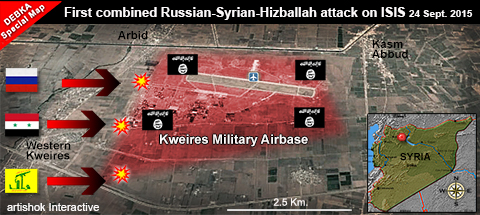
KweirisAir480

[T]he most ominous aspect for the US and Israel of the Russian attack on the Syrian airbase is that Russian marines were combined with Syrian and Hizballah special forces.

*********************

Before dawn on Thursday, Sept. 24, Russian marines went into battle for the first time since their deployment to Syria, DEBKAfile’s military and intelligence sources reveal. Russian Marine Brigade 810 fought with Syrian army and Hizballah special forces in an attack on ISIS forces at the Kweiris airbase, east of Aleppo.

This operation runs contrary to the assurances of President Vladimir Putin to Prime Minister Binyamin Netanyahu on Sept. 21 – just three days ago – that Russian forces in Syria were only there to defend Russian interests and would not engaged in combat with the Syrian army, Hizballah or Iranian troops.

The ISIS force defending the air base is dominated by Chechen fighters under the command of Abu Omar al-Shishani, who is considered one of the terrorist organization’s leading commanders in the last two years. The 27-year-old al-Shishani hails from the Chechen enclave of Pankisi in Georgia, like many others who joined ISIS from 2012.

However, targeting Chechen fighters was not the only reason for the order given by Russian command in Syria to attack the air base.  In DEBKA Weekly 678 of September 11, we predicted that the first Russian mission in Syria would be to break the Syrian rebel siege on Aleppo, Syria’s second-largest city.

As their first step, the Russians would have to prevent the cutoff of highway 5, running from Aleppo to Damascus, and keep it open for Syrian army reinforcements and military equipment to the city.

The offensive to regain Kweiris airbase that fell to ISIS in mid-June is the first step in the implementation of Russia’s operational plan for the Aleppo area.

Meanwhile, little substance was to be found in the reports appearing, mainly in the United States, suggesting that Putin, disappointed by the Obama administration’s unwillingness to send the US Air Force to collaborate with Russia in the fight against ISIS, would try to talk Obama round if and when they meet on the sidelines of the UN General Assembly on September 28.

According to DEBKAfile’s sources, these reports were spread to cover up the serious crisis in the US war against ISIS.

While Russia poured troops and advanced hardware into Syria, establishing bases and launching offensive action, the US anti-Islamic State effort suffered a heavy blow with the decision of Obama’s ISIS war czar, Gen. John Allen, to step down in early November.

Sources close to the general were quoted as referring to his frustration “with the White House micromanagement of the war and its failure to provide adequate resources.”’

The fact that the Russian forces launched their attack on ISIS shortly after the announcement of Allen’s upcoming resignation shows that Putin is not waiting for US cooperation in the war on the Islamist terrorists.    That said, DEBKAfile’s military sources point out that the most ominous aspect for the US and Israel of the Russian attack on the Syrian airbase is that Russian marines were combined with Syrian and Hizballah special forces.

For the first time in 41 years, since the 1974 war of attrition against the IDF on the Golan, Russian troops are fighting alongside Syrian forces. It is also the first time that a world power like Russia is willing to go into battle with an acknowledged terrorist group, such as Hizballah.

Our sources point out that the joint attack was completely counter to the tone and the content of the comments exchanged by Putin and Netanyahu at their summit.

A full report on Russian military activity and strategic objectives in Syria, and a rundown of the content of the Putin-Netanyahu talks in Moscow appear in the coming issue of DEBKA Weekly out Friday, September 25.

U.S. soldiers ordered to ignore Afghan allies’ abuse of boys

September 21, 2015

U.S. soldiers ordered to ignore Afghan allies’ abuse of boys, Jihad Watch, Robert Spencer, September 20, 2015

(“It’s their culture, so it’s cool. Don’t get involved.” The (non-Islamic) Islamic State is also a manifestation of Islamic culture. Should our we be required to ignore it as well? — DM)


What are we in Afghanistan for, if not to stand for our own values and the principles of human rights? Instead, U.S. officials are aiding and abetting the destruction of these boys’ lives — and in the case of Lance Corporal Buckley, sacrificing our own troops. This is beyond shameful.

“Those are the ones brought near in the Gardens of Pleasure, a company of the former peoples and a few of the later peoples, on thrones woven, reclining on them, facing each other. There will circulate among them young boys made eternal with vessels, pitchers and a cup from a flowing spring.” — Qur’an 56:11-18

“And they will be given to drink a cup whose mixture is of ginger, a fountain within Paradise named Salsabeel. There will circulate among them young boys made eternal. When you see them, you would think them scattered pearls. And when you look there, you will see pleasure and great dominion.” — Qur’an 76:17-20

Gregory-Buckley

“U.S. Soldiers Told to Ignore Afghan Allies’ Abuse of Boys,” by Joseph Goldstein, New York Times, September 20, 2015:

KABUL, Afghanistan — In his last phone call home, Lance Cpl. Gregory Buckley Jr. told his father what was troubling him: From his bunk in southern Afghanistan, he could hear Afghan police officers sexually abusing boys they had brought to the base.

“At night we can hear them screaming, but we’re not allowed to do anything about it,” the Marine’s father, Gregory Buckley Sr., recalled his son telling him before he was shot to death at the base in 2012. He urged his son to tell his superiors. “My son said that his officers told him to look the other way because it’s their culture.”

Rampant sexual abuse of children has long been a problem in Afghanistan, particularly among armed commanders who dominate much of the rural landscape and can bully the population. The practice is called bacha bazi, literally “boy play,” and American soldiers and Marines have been instructed not to intervene — in some cases, not even when their Afghan allies have abused boys on military bases, according to interviews and court records.

The policy has endured as American forces have recruited and organized Afghan militia to help hold territory against the Taliban. But soldiers and Marines have been increasingly troubled that instead of weeding out pedophiles, the American military was arming them in some cases and placing them as the commanders of villages — and doing little when they began abusing children.
Gregory Buckley Sr. believes the policy of looking away from sexual abuse was a factor in his son’s death.

“The reason we were here is because we heard the terrible things the Taliban were doing to people, how they were taking away human rights,” said Dan Quinn, a former Special Forces captain who beat up an American-backed militia commander for keeping a boy chained to his bed as a sex slave. “But we were putting people into power who would do things that were worse than the Taliban did — that was something village elders voiced to me.”

The policy of instructing soldiers to ignore pedophilia by their Afghan allies is coming under new scrutiny, particularly as it emerges that service members like Captain Quinn have faced discipline, even career ruin, for disobeying it.

After the beating, the Army relieved Captain Quinn of his command and pulled him from Afghanistan. He has since left the military.

Four years later, the Army is also trying to forcibly retire Sgt. First Class Charles Martland, a Special Forces member who joined Captain Quinn in beating up the commander….

The American policy of nonintervention was intended to maintain good relations with the Afghan police and militia units the United States has trained to fight the Taliban. It also reflected a reluctance to impose cultural values in a country where pederasty is rife, particularly among powerful men, for whom being surrounded by young teenagers can be a mark of social status.

Some soldiers believed that the policy made sense, even if they were personally distressed at the sexual predation they witnessed or heard about.

“The bigger picture was fighting the Taliban,” a former Marine lance corporal reflected. “It wasn’t to stop molestation.”

Still, the former lance corporal, who spoke on condition of anonymity to avoid offending fellow Marines, recalled feeling sickened the day he entered a room on a base and saw three or four men lying on the floor with children between them. “I’m not a hundred percent sure what was happening under the sheet, but I have a pretty good idea of what was going on,” he said.

But the American policy of treating pedophilia as a cultural issue has often alienated the villages whose children were being preyed upon. The pitfalls of the policy emerged clearly as American Special Forces soldiers began to form Afghan Local Police militias to hold villages that American forces had retaken from the Taliban in 2010 and 2011.

By the summer of 2011, Captain Quinn and Sergeant Martland, both Green Berets on their second tour in northern Kunduz Province, began to receive dire complaints about the Afghan Local Police units they were training and supporting.

First, one of the militia commanders raped a 14- or 15-year-old girl whom he had spotted working in the fields. Captain Quinn informed the provincial police chief, who soon levied punishment. “He got one day in jail, and then she was forced to marry him,” Mr. Quinn said.

When he asked a superior officer what more he could do, he was told that he had done well to bring it up with local officials but that there was nothing else to be done. “We’re being praised for doing the right thing, and a guy just got away with raping a 14-year-old girl,” Mr. Quinn said.

Village elders grew more upset at the predatory behavior of American-backed commanders. After each incident, Captain Quinn would gather the Afghan commanders and lecture them on human rights.

Soon another commander absconded with his men’s wages. Mr. Quinn said he later heard the commander had spent the money on dancing boys. Another commander murdered his 12-year-old daughter in a so-called “honor killing” for having kissed a boy.“There were no repercussions,” Mr. Quinn recalled.

In September 2011, an Afghan woman, visibly bruised, showed up at an American base with her son, who was limping. One of the Afghan police commanders in the area, Abdul Rahman, had abducted the boy and forced him to become a sex slave, chained to his bed, the woman explained. When she sought her son’s return, she herself was beaten. Her son had eventually been released, but she was afraid it would happen again she told the Americans on the base.

She explained that because “her son was such a good-looking kid, he was a status symbol” local commanders coveted, recalled Mr. Quinn, who did not speak to the woman directly but was told about her visit when he returned to the base from a mission later that day.

So Captain Quinn summoned Abdul Rahman and confronted him about what he had done. The police commander acknowledged that it was true, but brushed it off. When the American officer began to lecture about “how you are held to a higher standard if you are working with U.S. forces, and people expect more of you,” the commander began to laugh.

“I picked him up and threw him onto the ground,” Mr. Quinn said. Sergeant Martland joined in, he said. “I did this to make sure the message was understood that if he went back to the boy, that it was not going to be tolerated,” Mr. Quinn recalled….

Sergeant Martland, who received a Bronze Star for valor for his actions during a Taliban ambush, wrote in a letter to the Army this year that he and Mr. Quinn “felt that morally we could no longer stand by and allow our A.L.P. to commit atrocities,” referring to the Afghan Local Police.

The father of Lance Corporal Buckley believes the policy of looking away from sexual abuse was a factor in his son’s death, and he has filed a lawsuit to press the Marine Corps for more information about it.

Lance Corporal Buckley and two other Marines were killed in 2012 by one of a large entourage of boys living at their base with an Afghan police commander named Sarwar Jan.

Mr. Jan had long had a bad reputation; in 2010, two Marine officers managed to persuade the Afghan authorities to arrest him following a litany of abuses, including corruption, support for the Taliban and child abduction. But just two years later, the police commander was back with a different unit, working at Lance Corporal Buckley’s post, Forward Operating Base Delhi, in Helmand Province.

Lance Corporal Buckley had noticed that a large entourage of “tea boys” — domestic servants who are sometimes pressed into sexual slavery — had arrived with Mr. Jan and moved into the same barracks, one floor below the Marines. He told his father about it during his final call home.

Word of Mr. Jan’s new position also reached the Marine officers who had gotten him arrested in 2010. One of them, Maj. Jason Brezler, dashed out an email to Marine officers at F.O.B. Delhi, warning them about Mr. Jan and attaching a dossier about him.

The warning was never heeded. About two weeks later, one of the older boys with Mr. Jan — around 17 years old — grabbed a rifle and killed Lance Corporal Buckley and the other Marines.

Lance Corporal Buckley’s father still agonizes about whether the killing occurred because of the sexual abuse by an American ally. “As far as the young boys are concerned, the Marines are allowing it to happen and so they’re guilty by association,” Mr. Buckley said. “They don’t know our Marines are sick to their stomachs.”

The one American service member who was punished in the investigation that followed was Major Brezler, who had sent the email warning about Mr. Jan, his lawyers said. In one of Major Brezler’s hearings, Marine Corps lawyers warned that information about the police commander’s penchant for abusing boys might be classified. The Marine Corps has initiated proceedings to discharge Major Brezler.