Archive for the ‘P5+1’ category
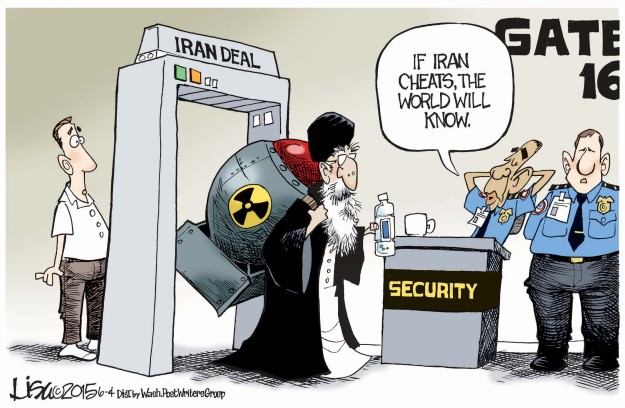
Cartoon of the day
June 6, 2015Iran Will Walk
June 5, 2015Iran Will Walk, The Gatestone Institute, Lawrence A. Franklin, June 5, 2015
(What if the article is otherwise correct but Obama agrees to a “deal” anyway? — DM)
- The Islamic Revolutionary Guard Corps (IRGC), the Praetorian Guard of Iran’s regime, controls most of the economy, as well as the black-market, alternative economy. The IRGC therefore actually benefits from sanctions; it is private firms, such as those involved in international commerce, that suffer. Why would IRGC operatives want to see the playing field made more level by private investment, transparency and a competitive economy?
- Sanctions never hurt the regime’s ruling class; lifting them only helped the regime solidify its power over its people.
- The objective of these two demands [an immediate lifting of all sanctions and no, or severely limited, inspections] is either to have them accepted, or to render it untenable for the Obama administration to offer Congress any deal that could be accepted – thereby shifting blame for the collapse of the talks to the U.S.
- The U.S should also be on guard against the mullahs’ belief that the Obama administration is weak both politically and its aversion to using force. The mullahs might find great pleasure in humiliating Obama, as they did President Jimmy Carter, by dragging out hostage crisis negotiations by running out the clock until his term was over. They clearly believe that the Obama administration, simply to say it got “a deal,” is ready to sign anything.
From Washington to Riyadh, not to mention Jerusalem, statesmen are gritting their teeth at the possibility of a U.S.-Iran nuclear deal that seems overly generous to the theocratic-terror state of the Islamic Republic.
 Representatives of the P5+1 countries pose with Iranian Foreign Minister Javad Zarif after nuclear negotiations in Lausanne, Switzerland on April 2, 2015. (Image source: U.S. State Department)
Most intelligence analysts and journalists assume that because Iran’s leadership endorsed the negotiations and has been the beneficiary of several key concessions by the P5+1 (the five permanent members of the UN Security Council, plus Germany), that an agreement is imminent. Forecasters have been predicting what the likely consequences of such a deal would be: negative.
But what if the Iranians walk?
Sanctions never hurt the regime’s ruling class; lifting them only helped the regime to solidify its power over its people.
A nuclear deal combined with an improvement in the commercial and business relations with the West would be inimical to IRGC interests.
The Islamic Revolutionary Guard Corps (IRGC), the Praetorian Guard of the regime, controls most of the economy as well as the black-market, alternative economy. IRGC-controlled conglomerates operate outside the law and reap huge profits through their control of the black market. The IRGC therefore actually benefits by sanctions; it is the private firms, such as those involved in international commerce, that suffer.
Furthermore, IRCG naval vessels, and private ships under their control, have been engaging in sanctions-breaking deliveries of imports across Persian Gulf waters to Dubai. The IRGC then sells the products at a profit by filtering them through the many foundations they control in Iran.
The most recent example of IRGC’s skirting of sanctions involved the illegal acquisition of aircraft through front-organizations with offices in both Europe and the Arabian Peninsula. Mahan Air, an IRGC front, was able to purchase 15 used commercial aircraft for $300 million. Another front, al-Naser Air, was about to purchase two more aircraft, this time from a U.S. owner. Israeli intelligence, however, passed details of the planned sale to the U.S. government, and on May 21, the deal was scuttled by the Office of Export Enforcement of the Department of Commerce.
Why would IRGC operatives want to see the playing field made more level by private investment, transparency and a competitive economy?
Moreover, if a nuclear deal indicated improved relations with the United States, Iranian hardliners, whether clerical revolutionaries or intelligence operatives, might fear seeing their ideological legitimacy erode. The Iranian regime’s only remaining fig leaf of legitimacy is its anti-American animus, with its accompanying pledge to “protect” Iran’s interests against the U.S.-Israel-Sunni “alliance.”
Improved relations with Washington might raise false hopes among Iran’s citizens that the regime may ultimately improve its woeful record on human rights. There remains only a thin patina of clerical control over Iranian society; if the hoped-for social and political reforms were not implemented, the result could produce a destabilizing political environment, harmful to the interests of the regime.
Another fallacy embraced by many “inside-the-beltway” analysts is that, as the Supreme Leader Ayatollah Khamenei endorsed the negotiations, a legitimate deal is now probable.
The once all-powerful Office of the Supreme Leader no longer calls all the shots. The current Iranian regime resembles a military junta or a security state as much as a theocracy. While the reach of Ayatollah Khamenei, through his network of representatives, still penetrates all dimensions of Iranian society, he does not have the final decision on key security matters. The regime’s strategic assets, for instance, such as its ballistic missile programs, are firmly under the control of the IRGC. Decisions related to Iran’s expansionist presence in the region are made by IRGC Quds Force Commander Qasem Soleimani. The role of Khamenei’s representative to the IRGC resembles more that of a handler than of an action officer.
The principal task for the regime is to find a way to back out of the negotiations while avoiding the blame. Iran’s efforts at disengagement may already have been underway for the past few weeks; the pace of decoupling from the talks seems to be accelerating. Iran has been increasing its demands apparently in the hope that they will either be accepted, or else rejected like the “poison pills” they are — such as inspectors no longer being allowed on its military sites.[1]
Another way to make the talks no longer palatable for the Obama administration was to create a hostile incident with the United States in the Persian Gulf, as it has tried to do by aggressively tailing American warships. Iranian ships affiliated with the IRGC Navy also seized a commercial ship, the Maersk Tigris, in the Strait of Hormuz, and temporarily detained both vessel and crew. Then, on May 14, IRGC boats fired several shots across the bow of a Singapore flagged vessel, but it escaped unharmed.
By this type of reckless comportment, the IRGC Navy appears intent on producing a clash with American naval vessels in the Gulf waters. Western negotiators have only to recall the presidency of Mohammad Khatami, when the IRGC and Iran’s Ministry of Intelligence and Security operated independently after they felt that the reformers had gone too far, thus threatening hard-liner control of the regime. The IRGC may have decided that Rouhani along with his American-educated Foreign Minister Zarif have reached a similar tipping point. This independent IRGC initiative is being executed even though a deal would release Iranian monetary assets that would in turn boost the sagging economy.[2]
Iran’s combative posture in Gulf waters against international shipping is also a direct challenge to international maritime law, which guarantees freedom of navigation through the world’s shipping lanes such as the Strait of Hormuz. A key principle of U.S. foreign policy is to enforce this freedom of navigation, if it is challenged by any foreign power, as one also hopes the U.S. will do in the South China Sea.
Iranian military and political spokesmen have also raised the temperature of their anti-American and anti-Israeli rhetoric of late. Leading members of the regime, including its Supreme Leader, Ali Khamenei, keep repeating, “Death to America” as well as its theological “obligation” to destroy Israel. While the Obama administration has alleged that these threats are just for “internal consumption,” an old Persian saying goes: “They spit in his eye and he calls it rain.”
Mojtaba Zolnour, Ayatollah Khamenei’s Deputy Representative to the IRGC, stated that the Islamic Republic of Iran, “has the divine permission to destroy Israel.” This media assault on Israel was designed to widen the divergence between the Obama administration and the Israeli government regarding the efficacy of the framework of a nuclear agreement negotiated so far.
Additionally, various Iranian principals have drawn “lines in the sand” designed to cause the Americans to disengage from the talks, such as the assertion that Iran will never accept inspection of its declared military sites. Another is Tehran’s repeated statement that it will not accept a gradual lifting of sanctions. Iranian leaders have insisted on immediate and irreversible lifting of all sanctions immediately after a nuclear deal is signed. The objective of these two demands is either to have them accepted, or to render it untenable for the Obama administration to offer Congress any deal that could be accepted — thereby shifting the blame for the collapse of the talks to the U.S.
Regime hard-line representatives to the majlis [Iranian Parliament] have already been mobilizing members to denounce the talks as detrimental to Iran’s national sovereignty. Eighty majlismembers signed a petition on May 12, calling upon the regime to suspend the nuclear talks until Washington halts its rhetorical threats against Iran. Hardliners in the majlis and elsewhere within the regime’s bureaucracy will likely continue to lobby against any deal.
Western analysts should be looking for the Iranian regime’s hard-line media outlets to increase domestic commentary condemning alleged U.S. deception in the negotiations as a reason to abandon the talks.
The death knell for the nuclear negotiations could come from newspapers such as Kayhan, a pro-regime newspaper run by Hossein Shariatmadari, and often characterized as a Khamenei mouthpiece.
The regime’s Friday-prayer Imams in key Iranian cities might also start opposing the talks. The themes of their noonday khutbahs [sermons] are likely to appeal to Iranian people’s patriotism, and suggest that it is more important for Iran to endure continued sanctions rather than submit to intrusive monitoring that offends Iran’s sovereignty.
Finally, hardliners who oppose any possibility of Iran’s improved relations with the U.S. may launch personal attacks on Iran’s negotiators to the nuclear talks, and, in an effort to discredit them, challenge their loyalty to the Iranian revolution. Their point of attack on Foreign Minister Mohammad Javad Zarif’s loyalty might be his alleged obsequious behavior to Secretary of State John Kerry. Zarif, on account of his many years of residency and education in the United States, can be depicted as an Americanized Iranian.
The United States should also be on guard against the mullahs’ belief that the Obama administration is weak — both politically and in its reluctance to use force. The mullahs might find great pleasure in humiliating Obama as they did President Jimmy Carter, when they dragged out hostage crisis negotiations by running out the clock until his term was over. They clearly believe that the Obama administration, simply to say it got “a deal,” is ready to sign anything.
[1] “Iran’s powerful Guard rejects inspection of military sites” by Ali Akhbar Dareini, Associated Press, 19 April 2015. Deputy Chief of the IRGC General Hossein Salami is quoted and several more statements by IRGC officials since have repeated the same prohibitive statements regarding Iran’s military sites.
[2] “U.S. to Award Iran $11.9 Billion Through End of Nuke Talks,” Washington Free Beacon, 21 January 2015. In the first of many subsequent denunciations, Senator Mark Clark of Illinois attacked the Obama administration’s plan to free Iran’s frozen assets if nuclear deal is reached.
Iran’s cooperation with North Korea includes nuclear warhead technology
June 3, 2015Iran’s cooperation with North Korea includes nuclear warhead technology, The Hill, Alireza Jafarzadeh, June 5, 2015
(The author of the article,
Jafarzadeh, the deputy director of the Washington office of the National Council of Resistance of Iran, is credited with exposing Iranian nuclear sites in Natanz and Arak in 2002, triggering International Atomic Energy Agency inspections. He is the author of “The Iran Threat” (Palgrave MacMillan: 2008).
— DM)
For years, the conventional wisdom has been that Iran and North Korea have long cooperated in missile technology, giving the perception of not so dangerous of an alliance. That was until last week. In yet another groundbreaking revelation, Iran’s main opposition movement, the Mujahedin-e Khalq (MEK) provided information that Iran and North Korea have been engaged in extensive exchange of information and visits by experts on nuclear weapons and nuclear warhead design, as recently as April 2015.
The MEK, based on information obtained by its network inside Iran, provided a detailed account of a visit to North Korea in 2013 by Tehran’s top nuclear weapons experts headed by elusive Mohsen Fakhrizadeh, who was present during the last nuclear test conducted by North Korea.
A seven-member North Korean delegation, comprised of experts in nuclear warhead design and various parts of ballistic missiles including guidance systems, spent the last week of April in Iran. This was the third such nuclear and missile team to visit Iran in 2015. The next delegation is scheduled to secretly arrive in Iran in June and will be comprised of nine experts, according to the same MEK sources.
That Tehran continues to closely engage with North Korea, a country that cheated its way into making a nuclear weapon, all the while pledging that it would not do so, should be an additional cause for alarm. It should be a red flag for the P5+1 countries as they continue their negotiations with Iran in Vienna and Geneva with only days left before the June 30 deadline to sign an agreement.
The Iran-North Korea nuclear cooperation is in sharp contrast to what the Iranian regime leaders are telling the world. It also explains why the Supreme Leader Ali Khamenei rejects IAEA inspections of military sites, snap inspection of all sites, and interviews with nuclear scientists.
Tehran has so far managed to largely push its missile program out of the nuclear agreement requirements, and with it its extensive nuclear cooperation with North Korea—something that was kept under the radar for years.
The North Korean nuclear experts who traveled to Iran in April stayed in a secret guesthouse, a cordoned-off eight-story building, near a Hemmat Industrial Group site in the Khojir area, northeast of Tehran. Named “Imam Khomeini Complex,” and also known as 2000 units, the site is controlled by the Ministry of Defense (MoD).
The Korean delegation’s needs were met by Center for Research and Design of New Aerospace Technology, one of seven sections of the Organization of Defensive Innovation and Research (SPND). Dr. Aref Bali Lashak, who personally dealt with the Korean delegation, heads this section.
The North Korean delegation dealt with this section of SPND whose responsibility is electronics area of research and manufacturing interior parts of nuclear warhead. The visit’s arrangements were made by the Directorate of Coordination of the Iranian Ministry of Defense (MoD), headed by Brigadier General Nassorllah Ezati and the Directorate of Inspections of the MoD headed by IRGC Brigadier General Alireza Tamizi.
While there were earlier reports about Fakhrizadeh’s presence during the North Korean’s 2013 nuclear test, a two-year investigation by the Iranian opposition shows that Fakhrizadeh had gone to North Korea for the nuclear test through China under the alias “Dr. Hassan Mohseni.”
Fakhrizadeh, the head of SPND and the key figure in activities concerning the military dimensions of the regime’s nuclear program, is a Brigadier General of the IRGC, with whom the IAEA has repeatedly requested interviews, but to no avail.
The MEK first exposed the formation of SPND in July 2011 and the State Department placed it on its sanctions list in August 2014.
According to the Iranian opposition reports, during the North Korean visit, Fakhrizadeh, accompanied by two other SPND nuclear experts, stayed in Hotel Koryo in Pyongyang and spent only two hours at the Iranian regime’s embassy. To keep his visit a secret, Mansour Chavoshi, Tehran’s Ambassador to Pyongyang, personally welcomed Fakhrizadeh and facilitated his communications and exchanges with North Korean officials.
The stunning detailed information provided by the MEK is further indication that the drive to acquire nuclear weapons remains at the core of the Iranian regime’s program as nuclear negotiations continue.
North Korea’s nefarious connection once again proves that after three decades of concealment and deception, adding six or nine months to the nuclear breakout time as a result of the P5+1 negotiations will not lead to a lasting solution. Washington needs to rethink its strategy in dealing with the Iranian regime; a strategy that would eliminate, not delay, the regime’s ability to build the bomb, because Tehran consistently shows that it must not be trusted. Any nuclear agreement with Tehran, which would leave open a pathway to the nuclear bomb, must be rejected. To that end, Congress might have its biggest role to play.
Iran Implicated in Foiled Hezbollah Attacks on Europe
June 2, 2015Iran Implicated in Foiled Hezbollah Attacks on Europe, The Clarion Project, RYAN MAURO, June 2, 2015
 Iranian Basij volunteer militia members (Photo: © Reuters)
If this is the behavior of the Iranian regime when it has every incentive to temporarily play nice, then what will it do when it breaks free of sanctions and uses trade deals to disarm the U.S. of its economic leverage?
********************
The arrest of a Hezbollah terrorist in Cyprus is believed to have foiled attacks in Europe, probably against Israeli or Jewish targets. The plots show that Iran is as committed to international terrorism as ever and is not the least bit dissuaded by the prospect of a lucrative nuclear deal.
The terrorist came to Cyprus last month and had nearly two tons of ammonium nitrate—a substance commonly used for making bombs—in his basement. That’s about the amount that was used to carry out the Oklahoma City bombing in 1995 that took down a federal building and killed 168 people.
It is suspected that he was planning on attacking Israelis, and there is evidence linking the operative to Hezbollah leader Hassan Nasrallah. It is also believed that the operative belonged to a network planning on using Cyprus as a “port of export” for additional terrorist plots in Europe.
The National Council of Resistance in Iran, an opposition group, says that a Cyprus newspaper reported that he was trained in Iran by the Revolutionary Guards Corps.
In 2012, a Hezbollah terrorist was arrested and later found guilty of planning attacks on Israeli tourists in Cyprus. His possession of a Swedish passport enabled him to conduct surveillance on targets in Europe. It was discovered that he was tracking flights from Israel to Cyprus, researching bus routes used by Israeli tourists and assessing a hospital parking lot. He also traveled to France and the Netherlands for Hezbollah.
The foiled plot helps make an important point about the nature of the Iranian regime. If there was any time for the regime to resist its impulses to engage in international terrorism, it is now.
An Iranian-sponsored plot could unravel the nuclear deal that could strengthen its “Islamic Revolution,” bolster the regime and allow it to dramatically increase its sponsorship of terrorism. And yet, even under these conditions, the Iranian regime can’t help but orchestrate terror plots in Europe with the objective of killing hundreds of innocents.
If this is the behavior of the Iranian regime when it has every incentive to temporarily play nice, then what will it do when it breaks free of sanctions and uses trade deals to disarm the U.S. of its economic leverage?
Iran Short Film Series – 3. Believe Them!
June 2, 2015Iran Short Film Series – 3. Believe Them! Clarion Project, via You Tube, June 1, 2015
(But to believe what Iranian leaders say, repeatedly, would be Islamophobic. Or something. — DM)
Obama Assures Iran It Has Nothing to Fear
June 2, 2015Obama Assures Iran It Has Nothing to Fear, Commentary Magazine, Jonathan S. Tobin, June 1, 2015
(Obama seems to have been talking about Iranian efforts to militarize nukes, not peaceful uses such as medical or generation of electricity. If, as claimed, Iran has no intention of getting, keeping or using nukes why try to halt it? Why bother even to negotiate?– DM)
“A military solution will not fix it. Even if the United States participates, it would temporarily slow down an Iranian nuclear program but it will not eliminate it.”
****************
At this point, there is virtually no one in Israel or the United States who thinks it is remotely possible that the Obama administration would ever, under virtually any circumstances, use force against Iran. Though President Obama and his foreign policy team have always claimed that “all options,” including force, are always on the table in the event that Iran refuses to back down and seeks to produce a nuclear weapon, that is a threat that few took seriously. But President Obama has never been quite as explicit about this before as he was in an interview with Israel’s Channel 2 in which he reportedly said there is no military option to stop Iran. If Obama wanted to telegraph Iran that it could be as tough as it likes in the talks over the final text of the nuclear deal being negotiated this month this statement certainly did the job. Though they had little worry about Obama’s toughness or resolve, the ayatollahs will be pleased to note that the president no longer even bothers to pretend he is prepared to do whatever is necessary to stop Iran’s nuclear ambition.
According to the Times of Israel, Obama said:
“A military solution will not fix it. Even if the United States participates, it would temporarily slow down an Iranian nuclear program but it will not eliminate it.”
Though he continued to use rhetoric that left force as an option, the implicit threat of American action if a nuclear weapon were a possibility has lacked credibility since the president began his second term. Once he embarked upon secret back-channel talks in which, one by one, he abandoned his previous pledges about forcing Iran to shut down its program in concessions and virtually every other U.S. position on the issue, force was never a real possibility. The signing of a weak interim deal in November, 2013, and then the framework agreed upon this spring signaled the end of any idea that the U.S. was prepared to act. That is especially so because the current deal leaves Tehran in possession of its nuclear infrastructure and with no guarantees about inspections or the re-imposition of sanctions in the event the agreement collapsed. The current deal, even with so many crucial details left unspecified makes Iran a U.S. partner and, in effect, the centerpiece of a new U.S. Middle East policy that essentially sidelines traditional allies like Saudi Arabia and Israel that are directly threatened by Iran.
Moreover, it must be conceded that the use of force against Iran would be problematic even for the United States and its vast military resources. As for Israel, despite a lot of bold talk by some in the Jewish state, there has always been skepticism that its outstanding air force had the ability to sustain an air campaign for the length of time that would be required to make a difference. Nevertheless, the notion that force would not be effective in forestalling an Iranian bomb is mistaken. Serious damage could put off the threat for a long time and, if sanctions were kept in place or made stricter as they should have been to strengthen the West’s bargaining position, the possibility of an Iranian nuke could have been put off for the foreseeable future.
Yet, while talk about using force has been largely obsolete once the interim deal was signed in 2013, for the president to send such a clear signal that he will not under any circumstances walk away from the current talks, no matter what Iran does, is significant.
After all, some of the most important elements of the deal have yet to be nailed down. Iran’s Supreme Leader, Grand Ayatollah Ali Khamenei has publicly stated that he will never allow the sort of inspections that would make a deal verifiable. He has also demanded that sanctions be lifted permanently on the day the agreement is signed, and that there should be no provision for them to be snapped back. Nor are the Iranians conceding that their stockpile of nuclear fuel be taken out of their hands.
So if Obama is to get the “verifiable tough agreement” he told Channel 2 he seeks, the U.S. must somehow convince the Iranians to back down on all these points. That’s going to be difficult since the past two years of negotiations with Obama have taught them to wait for him to give up since he always does so sooner or later. The president’s statement makes it clear that, no matter how obdurate the Iranians remain, he will never walk away from the talks. And since this deal is the lynchpin of his foreign policy legacy, they know very well that all they have to do is to be patient.
Iran already knows that the deal in its current form allows them two clear paths to a bomb. One is by cheating on its easily evaded terms. The other is by waiting patiently for it to expire, the sunset provision being another astonishing concession by Obama.
If a tough deal were even a possibility, this would have been the moment for the president to sound tough. But throughout this process, the only toughness the president has shown has been toward Israel as he sought to disparage and dismiss its justifiable worries about his course of action. Merely saying now, as he does in the Channel 2 interview, that he understands Israel’s fears is mere lip service, especially since it comes along with a virtual guarantee to Iran that it needn’t worry about a U.S. strike under any circumstance.
With only weeks to go until the June 30 deadline for an Iran deal, there is no question that Obama’s statement makes an unsatisfactory final text even more certain than it was before. That’s good news for Tehran and very bad news for an Israeli people who have no reason to trust the president’s promises or believe in his good intentions.
Satire | Op-Ed: Jews Take Up Too Much Space
June 1, 2015Satire | Op-Ed: Jews Take Up Too Much Space, Israel National News, Yehezkel Laing, June 1, 2015
(Please see also,
.– DM)
In July 2022 the UN passed a resolution declaring that for “for the Jews’ own safety” it has been decided to evacuate them to the moon where they would be granted rights to colonize, with the understanding that the world’s lien to the moon would “not be harmed or diminished”. The same resolution removed all Jewish citizenship rights on Earth.
All this I recount in order to properly put into context the latest “development”. As most of you have no doubt heard by now, yesterday the UN assembly unanimously passed a resolution accusing the Jews of having “stolen the moon”. The resolution states that if we do not relinquish full rights the world community will be left with no choice but to attack.
While there are several influential Jewish politicians and scientists who claim we can colonize Jupiter – I do not believe this is feasible at this time. Even if we were successful, where would it end? Would we be forced to colonize another solar system, another galaxy, another universe? If we do not make a stand here, where will we ever make a stand?
**********************
I am not the type of person who seeks publicity for myself and I wouldn’t even be writing this if it could be avoided. But since circumstances leave me no choice, I have decided to break my silence and reveal my true role in the events of the past two decades. While many of these facts are known to the general public, their order and cause are often obscure or confused. So please bear with me as I recount the events in their proper order, as I remember them.
I will start all the way back in 1948 – three years after the destruction of European Jewry, the State of Israel was formed – within two years Sephardic Jewry having been expelled from all the Arab lands fled to the newborn state and joined their Ashkenazi brethren.
Jump ahead 72 years…
In January 2020 the Iranians announced they had decided for “defensive purposes” to build a nuclear arsenal. The US responded it was “shocked” by this development and quickly instituted “robust” new sanctions, but said it would not instigate any hostilities. Following this announcement, the final Israeli government instituted “The Month of Defense” – wherein all citizens were told to prepare for war with Iran. Riots broke out against Jews in Europe and even in North America. Two weeks after the Israeli declaration – the US announced it would not support any Israeli “aggression” against Iran saying it feared this would lead to nuclear war in the region.
It was at this point I went to the Prime Minister. For many years I had been toying with the idea of a lunar colony. My background in environmental physics gave me the perfect training for this experiment. Its true that my Noble Prize in physics was won for discoveries in Isotopic Negativity, what many consider an unrelated field. But any post-doctoral physics student can tell you that the underlying principles of the two disciplines are quite the same. In other words, the original idea was mine and not the Prime Minister’s, but for political reasons it was believed it had a better chance of success if he would propose it and not I.
In February 2021, I was appointed Director of the Jewish Lunar Colony Project. By the way, the space elevator was not my idea but rather that of Yakob Farche, a Czech engineer of Jewish extraction, who approached me shortly after the Prime Minister publicly designated me with the task of designing the plan for the colony.
In July 2022 the UN passed a resolution declaring that for “for the Jews’ own safety” it has been decided to evacuate them to the moon where they would be granted rights to colonize, with the understanding that the world’s lien to the moon would “not be harmed or diminished”. The same resolution removed all Jewish citizenship rights on Earth. Of course, the far Right “Earth Homeland Party” lead by Hezy Ben Arroche fought the plan arguing that Jews had a right to live on Earth just like all other human beings. But the Prime Minister eloquently explained that the Jewish people “had to be practical and not just ideological”. While no referendum was formally held on the matter – rigorous polling showed a consistent majority of Jews in favor of the project.
The UN said it would only back the plan if World Jewry itself would fundthe move. Since Jews could no longer legally live on earth this was accomplished much more easily than was originally imagined. One trilliondollars were raised and the plan was set in motion.
After all the Jews completed evacuation of the Land of Israel in 2015 – the UN passed a resolution formally recognizing the Arab State of Palestine. Unfortunately for the UN, the Palestinians themselves rejected the move. They insisted that the Jews had “ravaged the land of all its natural resources” and that without massive funding, the new state would collapse. A $500 billion world investment plan was quickly instituted to prop up the foundling state – but the subsequent civil was over control of the funds destroyed most of the population and with no prospects for self-support the remaining survivors immigrated.
With the collapse of the State of Palestine, Iran declared it rights to the region claiming that Palestine had always been “a natural extension of Persian autonomy”. The Europeans said this was preposterous and noted that the former State of Israel had once held observer status in the EU and that the land was actually closer to Europe than Iran. What seemed to be a squabble over a small piece of property quickly escalated into hostilities, resulting in the First Nuclear War. While this was limited in scope and only resulted in the loss of only 4 million lives, the lessons of its destructiveness were unfortunately not learned and by the Third Nuclear War most of the planet’s populace had been wiped out and most of the Earth is now uninhabitable.
During this time the Moon Colony flourished. The first dome held up remarkably well and within two years it was decided to expand the dome and institute the lunar landscaping project. Eight years ago I was approached by a young astro-physicist by the name of Aaron Belzberg originally from Bnei Brak. He suggested an incredible idea whereby using a process of reverse ionization of the colony’s oxygen we could create an artificial atmosphere that would remove the need for the dome and make the moon inhabitable. That is how today we have a living moon with 500 million trees, ten lakes and 15 million inhabitants.
All this I recount in order to properly put into context the latest “development”. As most of you have no doubt heard by now, yesterday the UN assembly unanimously passed a resolution accusing the Jews of having “stolen the moon”. The resolution states that if we do not relinquish full rights the world community will be left with no choice but to attack.
While there are several influential Jewish politicians and scientists who claim we can colonize Jupiter – I do not believe this is feasible at this time. Even if we were successful, where would it end? Would we be forced to colonize another solar system, another galaxy, another universe? If we do not make a stand here, where will we ever make a stand?
Don’t the Jews deserve a place to live just like everyone else?
Iranian Regime Gives Green Light to Qods Force, Proxies to Initiate Plans Against US and its Allies
June 1, 2015Iranian Regime Gives Green Light to Qods Force, Proxies to Initiate Plans Against US and its Allies, ISIS Study Group, June 1, 2015
In Yesterday’s article titled “Arabian Pensinsula Violence Escalates After Second IS Bombing in Saudi Arabia,” we stated that our sources in the region have been reporting back that movement appears to be underway towards targeting westerners – mainly Americans. Specifically, we’ve been informed that the Qods Force may have directed Hezbollah, Kitaib Hezbollah (KH) and the Houthis to begin making plans for conducting William Buckley-style abductions Americans in Iraq, Saudi Arabia and Yemen. Furthermore, reporting from various media outlets have already begun covering the Americans taken hostage by the Houthis and a Hezbollah plot disrupted in Cyprus. None of these are a “coincidence.” Its all by design and timed with the nuclear weapons negotiations. Why do this if the Obama administration is prepared to give them everything without having to sacrifice anything on their end? It all comes down to the fact that the Iranian regime views the US government is weak – and they will be able to be much more “assertive” by escalating their belligerence. Thus far the Obama administration has done nothing to prove otherwise.
Arabian Pensinsula Violence Escalates After Second IS Bombing in Saudi Arabia
http://isisstudygroup.com/?p=6853
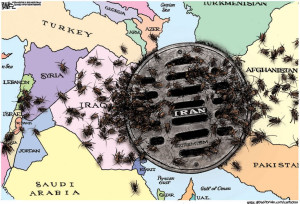
The Middle East roach infestation has originated from Iran – so who will turn on the light to make them scatter?
Source: http://www.ibdeditorials.com/cartoons
We’ve been warning about the Qods Force working to expand their influence in Yemen and model the Houthis after Lebanese Hezbollah. In “Iranian Regime Consolidates Yemeni Gains, Begins Work on Forming Houthi Intel Proxy” we laid out how such work has already been underway. Furthermore, a consistent theme we’ve been touching on in our Arabian Peninsula reporting has been how intelligence collection against US State Department (DoS) personnel and American citizens in the country had dramatically increased with the influx of Hezbollah and Iranian military personnel into the country – so none of this is “new,” although the Obama administration would like to make you think it is, and that the Qods Force doesn’t exercise any control over the Houthis. The inconvenient truth is that they do, and the man calling the shots in the country is Qods Force External Operations Division (Department 400) BG Aboldreza Shahlai.
Iranian Regime Consolidates Yemeni Gains, Begins Work on Forming Houthi Intel Proxy
http://isisstudygroup.com/?p=5580
Check out the following links for additional info on the Qods Force/Houthi/Hezbollah targeting of Americans in Yemen and the greater Arabian Peninsula:
GCC SOF Teams Alerted For Deployment, AQAP Gains Strength and Iran Preps For Attacks Against Saudi Arabia
http://isisstudygroup.com/?p=6056
Saudis Begin Yemen Military OPs as the IRGC-Qods Force Prepares For Round 2
http://isisstudygroup.com/?p=5845
Poised to Fill Yemen’s Power Vacuum – Iran Tightens Grip on the Peninsula
http://isisstudygroup.com/?p=4517
IRGC-Qods Force: The Arabian Peninsula Campaign and President Obama’s Failed Foreign Policy
http://isisstudygroup.com/?p=4478
Yemen’s Houthi Rebels: The Hand of Iran?
http://isisstudygroup.com/?p=1992
AQAP vs. Shia Proxy Fighting Intensifies in Yemen
http://isisstudygroup.com/?p=2972
Shia Proxy Threat to US ISIS Strategy in Saudi Arabia
http://isisstudygroup.com/?p=1837
Regarding BG Aboldreza Shahlai, we first introduced him to our readers in our 04 APR 15 article titled, “AQAP and Qods Force Make Their Moves in Yemen as Saudis Struggle to Maintain Coalition.” At the time our sources inside the country had came across information on the presence of a senior Qods Force External Operations Division official had set up shop in the Sadah-area and tasked with overseeing overall operations in the country. We followed this up with an article a month later (“Failed State: Saudi Coaltion Increases Ground Presence as Iran Begins Targeting the Kingdom, US”) revealing his identity. Most westerners have never heard of the guy, but Iranian expats opposed to the regime know all about him. Shahlai was the architect of the Qods Force’s lethal aid program to Shia proxy forces in Iraq during OIF and was also one of the primary planners for the 2007 attack on the Karbala Provincial Joint Coordination Center (PJCC) that killed five US Servicemen. Known as “Suleimani’s Fist,” he holds considerable influence in the Qods Force commander’s inner-circle for advocating “outside the box” solutions to problems – most of which call for directly targeting America and Israel abroad. He was also the mastermind of the plot to assassinate the Saudi Ambassador to the US in New York City that involved his contacts within the Mexican drug cartel known as Los Zetas. His family member Mansur Arbabsiar was the lead-facilitator for the operation. Perhaps more important is Shahlai’s close ties to Abdul Malik al-Houthi and establishment of alternate weapons smuggling routes coming from Africa.
Failed State: Saudi Coaltion Increases Ground Presence as Iran Begins Targeting the Kingdom, US
http://isisstudygroup.com/?p=6410
AQAP and Qods Force Make Their Moves in Yemen as Saudis Struggle to Maintain Coalition
http://isisstudygroup.com/?p=6078
African Nations to Send 7,500 to Combat Boko Haram – Why is Iran so Interested?
http://isisstudygroup.com/?p=4530
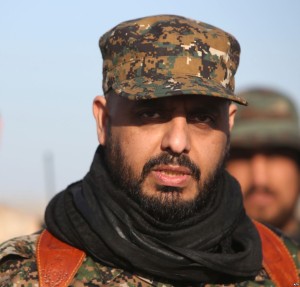
Asaib al-Haq leader Qais al-Khazali worked closely with BG Shahlai during OIF and was a participant in the 2007 attack on the PJCC – he’s now on the front-lines fighting the Islamic State (IS) in Northern Iraq
Source: voanews.com
BG Shahlai’s Yemen assignment is a good indicator that the Iranian regime intends to carry out a campaign targeting American, Israeli and to lesser extent Saudi nationals. With this and Shahlai’s relationship with the Houthis in mind, nobody should be in the least bit surprised that four of our fellow Americans are being held hostage in Yemen. The Houthis have already proven to be very efficient proxies for the Iranians inside Yemen. That said, we will likely see them conducting more operations increasing in complexity and scale within the next 6-9 months across the border into Saudi Arabia itself. They’re already conducting rocket attacks against Saudi border towns and outposts.
Houthi rebels in Yemen are holding multiple Americans prisoner
http://www.washingtonpost.com/world/national-security/houthi-rebels-in-yemen-are-holding-multiple-americans-prisoner/2015/05/29/ac349cc8-0618-11e5-8bda-c7b4e9a8f7ac_story.html
‘Several’ Americans held in Yemen: State Dept
http://news.yahoo.com/several-americans-held-yemen-state-dept-150827072.html
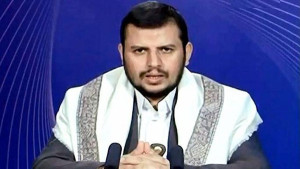
Abdul Malik al-Houthi: Close personal friend to BG Shahlai
Source: al-Arabiya
Its the same situation in Iraq, where we’ve heard from our Baghdad-based contacts reports of an attack being planned by Kataib Hezbollah (KH) targeting the US Embassy. Again, this should surprise no one with the high concentration of Qods Force personnel and proxy forces present inside the country and the capital in particular. We’ve also heard that KH has sympathizers within the Iraqi Security Force (ISF) ranks who are being tapped to assist in the attack. There’s also a considerable anti-air threat in and around BIAP these days coming from both IS and KH fighters. Fortunately, the American forces on the ground are already well aware of this – whether DoS or the Obama administration actually takes the threat serious is another matter entirely.
ISOF Commandos’ Admiration of Their IRGC-Qods Force Embeds
http://isisstudygroup.com/?p=122
The IRGC-Qods Force
http://isisstudygroup.com/?p=101
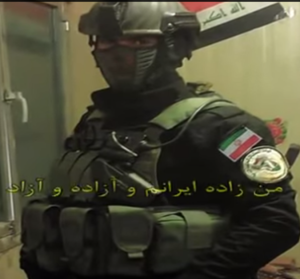
ISOF troopers don’t even try to hide their support of the IRGC-Qods Force Ramazan Corps anymore – a huge red flag for any US military personnel being deployed to Iraq these days
Source: The ISIS Study Group
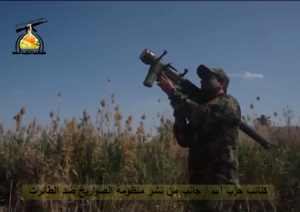
Now why would KH need MANPADs since IS has no Air Force? Perhaps the Qods Force supplied them to KH in order to target someone else?
Source: The ISIS Study Group
Unfortunately these operations aren’t limited to just the Middle East. Security forces in Cyprus recently arrested a man reportedly involved in a line of Hezbollah operations targeting Israeli interests in Europe. When the Cypriot police arrested him, they also confiscated close to two tons of “suspicious materials” in his basement. Although no additional details on the materials has been made public as of this writing, our source informed us that the materials are for producing explosives (ammonium nitrate was the he saw mentioned). The guy they detained was born in Lebanon but had a Canadian passport, which tends to fit the profile of the kind of personnel Hezbollah’s special operations wing and the Qods Force prefers to recruit into their ranks.
Cyprus police foil planned Hezbollah attacks against Israeli targets in Europe
http://www.haaretz.com/news/diplomacy-defense/1.658716?utm_source=dlvr.it&utm_medium=twitter
Cyprus arrest of Hezbollah man ‘uncovered large-scale Iranian terror plot across Europe’
http://www.jpost.com/Arab-Israeli-Conflict/Cyprus-arrest-of-Hezbollah-man-uncovered-large-scale-Iranian-terror-plot-across-Europe-404531
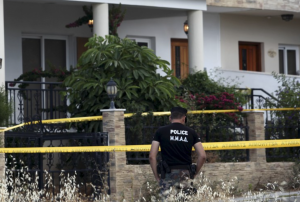
Scene of the crime
Source: Reuters
Qods Force and Hezbollah operations have spiked considerably since 2009 with attacks being executed in places like Bulgaria, India and Thailand along with the disrupted plot that was planned for New York City mentioned earlier. Of these, the NYC and Burgas, Bulgaria plots had the direct involvement of BG Shahlai. The telltale signs are how both plots called for using some of his preferred methods of using third parties to do the dirty work and targeting westerners in areas not known for Iranian activity. In fact, the attack in Burgas also involved a Lebanese Arab in possession of Canadian travel documents. The bombings in New Delhi and Bangkok utilized personnel from the IRGC-Qods Force Department 5000 – which is the equivalent to the US Army’s 1st Special Forces Group in that both units are geographically aligned to the Asia/Pacific region.
Bulgaria Has New Evidence on Hezbollah – Report
http://www.novinite.com/view_news.php?id=151420
Bulgaria names Hezbollah suspects behind bombing of Israeli bus in Burgas
http://www.jpost.com/International/Bulgaria-names-2-suspects-in-Burgas-bus-bombing-321017
Bulgaria says clear signs Hezbollah behind Burgas bombing
http://www.reuters.com/article/2013/07/18/us-bulgaria-hezbollah-idUSBRE96H0XI20130718
Hezbollah Is Blamed for Attack on Israeli Tourists in Bulgaria
Thai Police Widen Search for Iranians
http://www.wsj.com/articles/SB10001424052970204059804577227012899036768
Israel’s Iran warning as police hunt fourth Bangkok bomber with help from prostitute
http://www.telegraph.co.uk/news/worldnews/asia/thailand/9088238/Israels-Iran-warning-as-police-hunt-fourth-Bangkok-bomber-with-help-from-prostitute.html
India names Iranian suspects in Israeli car bombing
http://www.cnn.com/2012/03/15/world/meast/india-iran-israeli-car-bombing/index.html
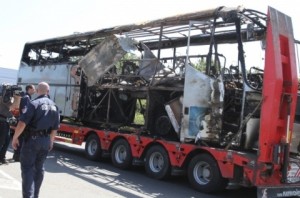
The 2012 Bombing in Burgas, Bulgaria
Source: Reuters
Bibi Netanyahu was absolutely right to visit America and appear before Congress to air his concerns about the Iranian threat. The events that have occurred over the last few months have added strength to his concerns. Unfortunately, the Obama administration has been downplaying the Iranian threat and the American mainstream media let them get away with it by not holding their feet to the same fire that they did to the Bush administration. Sure, a few American media outlets have finally begun asking some national security questions of substance, but far too many seem to be concerned with covering Bruce Jenner’s hormone therapy and President Obama’s March Madness brackets than they are about things that will have a profound impact on our way of life a lot sooner than people think.
The American media needs to start asking the Obama administration, “why are we seeing such a surge in external operations by the IRGC-Qods Force and their proxies if the current engagement strategy with the Iranian regime is “working,” as they claim?” Indeed members of our staff have worked the Iranian problem-set for some time, but it doesn’t require a whole lot in the way of burning calories to connect the dots between this surge in external operations and the ongoing negotiations over Iran’s nuclear weapons program. Had the media truly cared to search for the truth instead of protect an administration they’ve compromised their journalistic integrity for, they would’ve already put out several articles and investigative specials on the subject. If they want to save face and salvage what’s left of their credibility, then we recommend they do some digging on the current threat to the US Embassy in Baghdad coming from KH and their ISF supporters based in the Green Zone. We can assure you that DoS is fully aware of the threat coming from Shia militias that are now being painted to the American people as “the good guys.”
They should also start peppering John Kirby and Marie Harf about the recent counter-terror raid in Cyprus and hammer them about whether the administration ever thought about demanding that the Iranian regime release our citizens in Yemen and US Marine veteran Amir Hekmati during these nuclear weapon talks. We assess that the Qods Force and their proxies are going to continue escalating their actions against our people and our allies for as long as they think they can get away with it. Don’t buy into the Administration’s talk that the regime can’t “control” the Qods Force, because if they say that they’re either lying, extremely ignorant or both. How so? The IRGC as a whole is made up only the most loyal followers of Ayatollah Khameini’s militant ideology. The IRGC-Qods Force are the “most loyal” of those serving in the IRGC – with GEN Suleimani answering only to Khameini. More importantly, the Shia proxy forces won’t take action against the US and its allies unless given authorization to do so by their Qods Force handlers. Make no mistake, this is only the beginning. There will be more attacks coming down the pipe from these guys. Our current national security strategy and foreign policy has set our country on a collision course – is anybody truly paying attention? More importantly, is this administration willing to sacrifice American lives for the appearance of obtaining “peace” with an Iranian regime that has no interest in pursuing normal relations? Something to think about.

Amir Hekmati: Prisoner of Iran
Source: The ISIS Study Group
If you want to know what the Iranian regime is all about, then check out our Inside Iran’s Middle East series:
Inside Iran’s Middle East: the Kurdish Insurgency
http://isisstudygroup.com/?p=4068
Inside Iran’s Middle East: the Southeast Insurgency
http://isisstudygroup.com/?p=2689
Inside Iran’s Middle East: the Charm Offensive
http://isisstudygroup.com/?p=2676
Inside Iran’s Middle East: the “Reformers”
http://isisstudygroup.com/?p=2635
Inside Iran’s Middle East: the Nuclear Weapons Program
http://isisstudygroup.com/?p=2640
Other Related Articles:
Mr. Netanyahu Goes to Washington
http://isisstudygroup.com/?p=5316
Today’s Middle East: The Burning Fuse of the 21st Century’s “Great Game”
http://isisstudygroup.com/?p=6193
The Persian Hustle: How Iran Dupes Clueless US State Dept in Nuke Talks and Moves to Dominate the Middle East
http://isisstudygroup.com/?p=5978
How the North Korean Regime Affects the Middle East
http://isisstudygroup.com/?p=3038
Yemen isn’t on Verge of Civil War, It Already is – And Saudi Arabia Will Get Involved
http://isisstudygroup.com/?p=5810
What Yemen’s Coming Apart at the Seams Means to Arabian Peninsula
http://isisstudygroup.com/?p=5737
The Hezbollah Presence In Iraq
http://isisstudygroup.com/?p=358
Six powers agree on UN sanctions ‘snapback’ in push for Iran deal, sources say
May 31, 2015Six powers agree on UN sanctions ‘snapback’ in push for Iran deal, sources say, Jerusalem Post, May 31, 2015
(Obviously, the tentative “deal” raises more questions than it answers, including its “non-binding” nature and whether Russia, China and even Iran would have vetoes.– DM)
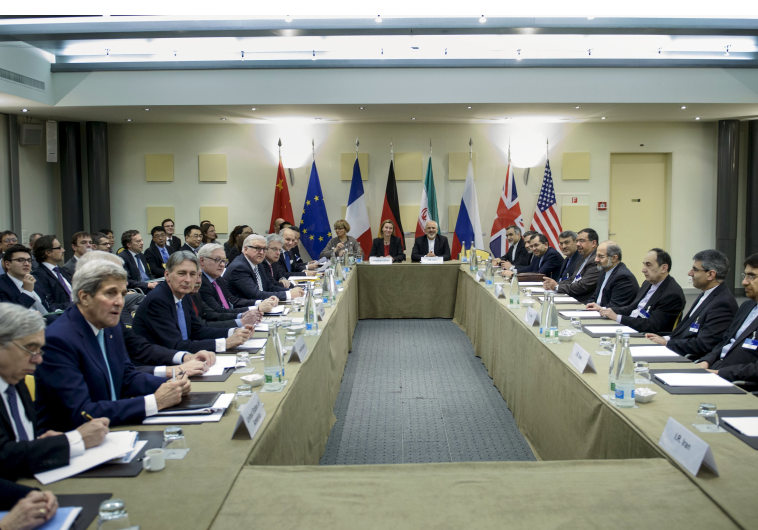 Officials wait for a meeting with officials from P5+1, the European Union and Iran at the Beau Rivage Palace Hotel in Lausanne March 31, 2015.. (photo credit:REUTERS)
As part of the new agreement on sanctions snapback, suspected breaches by Iran would be taken up by a dispute-resolution panel, likely including the six powers and Iran, which would assess the allegations and come up with a non-binding opinion, the officials said.
As part of the new agreement on sanctions snapback, suspected breaches by Iran would be taken up by a dispute-resolution panel, likely including the six powers and Iran, which would assess the allegations and come up with a non-binding opinion, the officials said.
It was unclear exactly how the snapback mechanism would function, and the officials did not discuss the precise details. It was also unclear how the proposal would protect the United States and other permanent Council members from a possible Chinese or Russian veto on sanctions restoration.
**********************
New York, Paris, Ankara – Six world powers have agreed on a way to restore UN sanctions on Iran if the country breaks the terms of a future nuclear deal, clearing a major obstacle to an accord ahead of a June 30 deadline, Western officials told Reuters.
The new understanding on a UN sanctions “snapback” among the six powers – the United States, Britain, France, Germany, Russia and China – brings them closer to a possible deal with Iran, though other hurdles remain, including ensuring United Nations access to Iranian military sites.
The six powers and Iran struck an interim agreement on April 2 ahead of a possible final deal that would aim to block an Iranian path to a nuclear bomb in exchange for lifting sanctions. But the timing of sanctions relief, access and verification of compliance and a mechanism for restoring sanctions if Iran broke its commitments were among the most difficult topics left for further negotiations.
US and European negotiators want any easing of UN sanctions to be automatically reversible if Tehran violates a deal. Russia and China traditionally reject such automatic measures as undermining their veto power as permanent members of the UN Security Council.
As part of the new agreement on sanctions snapback, suspected breaches by Iran would be taken up by a dispute-resolution panel, likely including the six powers and Iran, which would assess the allegations and come up with a non-binding opinion, the officials said.
The International Atomic Energy Agency (IAEA) would also continue regularly reporting on Iran’s nuclear program, which would provide the six powers and the Security Council with information on Tehran’s activities to enable them to assess compliance.
If Iran was found to be in non-compliance with the terms of the deal, then UN sanctions would be restored.
The officials did not say precisely how sanctions would be restored but Western powers have been adamant that it should take place without a Security Council vote, based on provisions to be included in a new UN Security Council resolution to be adopted after a deal is struck.
“We pretty much have a solid agreement between the six on the snapback mechanism, Russians and Chinese included,” a Western official said. “But now the Iranians need to agree.”
Another senior Western official echoed his remarks, describing the agreement as “tentative” because it would depend on Iranian acceptance.
A senior Iranian diplomat said Iran was now reviewing several options for the possible “snapback” of Security Council sanctions against Tehran.
It was unclear exactly how the snapback mechanism would function, and the officials did not discuss the precise details. It was also unclear how the proposal would protect the United States and other permanent Council members from a possible Chinese or Russian veto on sanctions restoration.
US Ambassador to the United Nations Samantha Power has made it clear that Washington does not want Russia’s and China’s recent slew of vetoes on resolutions related to Syria to be repeated with an Iran nuclear agreement.
France’s Ambassador to the United States Gerard Araud said in Washington last week that, under a French idea, sanctions would be reinstated automatically in the event of non-compliance, avoiding the threat of a veto.
Under that idea, which Araud said had not to date been approved by the six powers, the onus would be on Russia or China to propose a Security Council vote not to re-impose sanctions.
Russian and Chinese officials did not respond immediately to requests for confirmation that they signed off on the snapback mechanism.
REVIEWING THE OPTIONS
US Secretary of State John Kerry met with Iranian Foreign Minister Mohammad Javad Zarif in Geneva on Saturday. They discussed progress and obstacles to an agreement in the Iran nuclear talks a month before the deadline for a deal aimed at reducing the risk of another war in the Middle East.
Restoring US and EU sanctions is less difficult than UN sanctions because there is no need for UN Security Council involvement.
For their part, Moscow, Beijing and Tehran have wanted assurances that Washington cannot unilaterally force a sanctions snapback – a risk they see rising if a Republican wins the US presidency in 2016.
A senior Iranian diplomat confirmed that discussions of specific snapback options were underway. He told Reuters Tehran was preparing its own “snapback” in the event the Western powers fail to live up to their commitments under the agreement.
“At least three or four different suggestions have been put on the table, which are being reviewed,” he said. “Iran also can immediately resume its activities if the other parties involved do not fulfill their obligations under the deal.”
He added that it was “a very sensitive issue.”
If Iran accepts the proposed snapback mechanism, there are other hurdles that must be overcome, including IAEA access to Iranian military sites and nuclear scientists and the pace of sanctions relief.
Iran says its nuclear program is entirely peaceful and rejects allegations from Western countries and their allies that it wants the capability to produce atomic weapons. It says all sanctions are illegal and works hard to circumvent them.




 anneinpt
 artaxes
 danmillerinpanama
 davidking1530
 Peter Hofman
 Joseph Wouk
 Peter
Peter Louisiana Steve
 WarSclerotic
Recent Comments