Archive for the ‘Kerry’ category

Obama Admin Threatens U.S. Allies for Disagreeing with Iran Nuke Deal

March 27, 2015

Obama Admin Threatens U.S. Allies for Disagreeing with Iran Nuke Deal, Washington Free Beacon, March 27, 2015

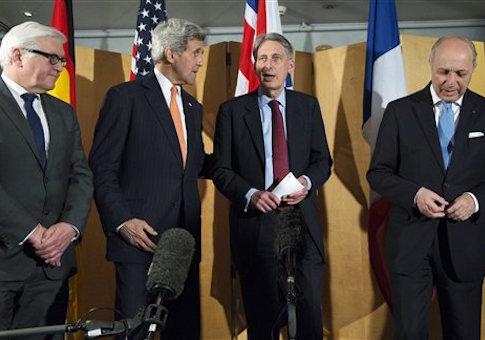
Iran Nuclear TalksFrom left, German Foreign Minister Frank Walter Steinmeier, U.S. Secretary of State John Kerry, British Foreign Secretary Philip Hammond and French Foreign Minister Laurent Fabius talk after Hammond made a statement about their meeting regarding recent negotiations with Iran over Iran’s nuclear program in London, England, Saturday, March 21 / AP

LAUSANNE, Switzerland—Efforts by the Obama administration to stem criticism of its diplomacy with Iran have included threats to nations involved in the talks, including U.S. allies, according to Western sources familiar with White House efforts to quell fears it will permit Iran to retain aspects of its nuclear weapons program.

A series of conversations between top American and French officials, including between President Obama and French President Francois Hollande, have seen Americans engage in behavior described as bullying by sources who spoke to the Washington Free Beacon.

The disagreement over France’s cautious position in regard to Iran threatens to erode U.S. relations with Paris, sources said.

Tension between Washington and Paris comes amid frustration by other U.S. allies, such as Saudi Arabia and Israel. The White House responded to this criticism by engaging in public campaigns analysts worry will endanger American interests.

Western policy analysts who spoke to the Free Beacon, including some with close ties to the French political establishment, were dismayed over what they saw as the White House’s willingness to sacrifice its relationship with Paris as talks with Iran reach their final stages.

A recent phone call between Obama and Hollande was reported as tense as the leaders disagreed over the White House’s accommodation of Iranian red lines.

Amid these tensions, U.S. Ambassador to France Jane Hartley met with her French counterpart, Gerard Araud, Monday to discuss a range of issues.

Benjamin Haddad, who has advised senior French political figures on foreign policy issues, said leaders in Paris have not been shy about highlighting disagreements they have with the White House.

“Fance, like other European countries, has negotiated for more than 10 years and endured most of the sanctions’ burden,” said Haddad, a research fellow at the Hudson Institute.

“The French want a deal, but they see no rush and repeat that Iranians need a deal more than we do, and that we shouldn’t fix artificial deadlines that put more pressure on us than Iran.”

One source in Europe close to the ongoing diplomacy said the United States has begun to adopt a “harsh” stance toward its allies in Paris.

“There have been very harsh expressions of displeasure by the Americans toward French officials for raising substantive concerns about key elements of what the White House and State Department negotiators are willing to concede to Iran,” said the source, who spoke on condition of anonymity. “That is because the clarifications expose just how weak the Americans’ deal is shaping up to be.”

“The meeting between the French ambassador in Washington and the president’s envoy to Paris—not a diplomat but a big fundraiser for his campaigns—comes amid these very harsh words that were spoken privately about the ambassador’s recent comments on the seeming American desperation for a deal, and the tough words that President Obama had for President Hollande in their phone call.”

Strategic differences remain between the United States and its allies over how a final deal should look, the source said. The French remain opposed to a recent range of concessions made by the Obama administration.

“We may agree that denying Iran a nuclear weapon ability is the goal, but apparently the view of what one can leave Iran and assure that is very different,” the source said.

“Clearly these are the differences that must be discussed. I don’t see France suddenly deciding that America is right and French objections to weakness are wrong, nor that silence is preferable to transparency.”

Haddad said the French are hesitant to rush into an agreement.

“The French want a robust deal with clear guarantees on issues like [research and development] and inspections to ensure that Iranians won’t be able to reduce breakout time during the duration of the agreement (also an issue of discussion), or just after thanks to research conducted during the period,” he said. “That is also why they disagreed on lifting sanctions.”

He also said the French “don’t trust Iran and believe an ambiguous deal would lead to regional proliferation.”

Another Western source familiar with the talks said the White House is sacrificing longstanding alliances to cement a contentious deal with Iran before Obama’s term in office ends.

“The President could be hammering out the best deal in the history of diplomacy, and it still wouldn’t be worth sacrificing our alliances with France, Israel, and Saudi Arabia—key partners in Europe, the eastern Mediterranean, and the Gulf,” the source said. “But he’s blowing up our alliances to secure a deal that paves Iran’s way to a bomb.”

A State Department spokesperson declined to comment on the issue.

Meanwhile, talks between the United States and Iran reached a critical juncture Thursday, as Secretary of State John Kerry met with his Iranian counterpoint to hash out differences over key points concerning Iran’s nuclear program.

The sides are hoping to reach a framework agreement by March 31 amid reports that Iran is demanding Saudi Arabia immediately halt airstrikes in Yemen, where Iran-aligned forces are working to bring down the Western-backed government.

The issue could complicate the talks as the United States attempts to balance its regional alliance with Iran in Iraq against competing interests with traditional allies in Saudi Arabia.

U.S. negotiators have reportedly softened their stance in recent days on a range of issues relating to Iran’s continued production of nuclear materials. One of Iran’s nuclear sites in Fordow could continue to operate, according to the Associated Press.

Cartoon of the day

March 23, 2015

Hope n’ Change, March 23, 2015

Trick or Treaty sm

France balks at the US-Iranian deal on five counts – not least with an eye on its Gulf ties

March 21, 2015

France balks at the US-Iranian deal on five counts – not least with an eye on its Gulf ties, DEBKAfile, March 21, 2015

hollande_obama-IranObama and Hollande fail to meet on nuclear Iran.

Why does Washington respect France’s right to balk at its nuclear policy but disallows prime minister Binyamin Netanyahu’s objections in the name of Israel’s security?

The answer is simple. It is easier to put the squeeze on the Israeli prime minister than the president of France or Gulf rulers. Obama has hit on the presentation of Netanyahu’s hawkish attitude as the main hurdle in the way of a nuclear deal as a useful tactic for dealing with the spreading opposition to the deal in Europe and the Persian Gulf.

******************

President Barack Obama failed to shift French President France Hollande from his objections to the nuclear accord taking shape between the US and Iran in the call he put through to the Elysée Friday night, March 30 [sic]. US Secretary of State John Kerry fared no better Saturday, when he met British, French and German Foreign ministers in London for a briefing on the talks’ progress intended to line the Europeans up with the American position. He then found, according to DEBKAfile’s sources, that France was not alone; Germany too balked at parts of the deal in the making.

The French are demanding changes in five main points agreed between Kerry and Iranian Foreign Minister Javad Zarif before the Iranians quit the talks Friday:

They insist that –

  • Iran can’t be allowed to retain all the 6,500 centrifuges (for enriching uranium) conceded by the Americans. This figure must be reduced.
  • Similarly, the stocks of enriched uranium accepted by the US to remain in Iranian hands are too large.
  • France insists on a longer period of restrictions on Iran’s nuclear work before sanctions are eased. It is pushing for a longer moratorium – 25 years rather than the 15 years offered by the Obama administration – and guarantees at every stage.
  • The main sticking point however is France’s insistence that UN sanctions stay in place until Iran fully explains the evidence that has raised suspicions of past development work on a nuclear warhead design. The Iranians counter that they could never satisfy the French condition, because they would never be able to prove a negative and disprove evidence of a weapons program that is forged.There is no chance of Tehran ever admitting to working on a nuclear warhead – or allow US inspectors access to suspected testing sites – because that would belie supreme leader Ayatollah Ali Khamenei’s solemn contention that Iran’s nuclear program is solely for peaceful purposes and always has been.

DEBKAfile’s Gulf sources disclose that the tough French bargaining position in the nuclear stems partly from its intense ties with Saudi Arabia and other Gulf nations, including the United Arab Emirates.

France maintains military bases in the Gulf, including air and unit units in Saudi Arabia and the UAE. The emirates moreover have become the most profitable market for the French munitions industry.

Riyadh and Abu Dhabi have been pushing Paris hard not to sign off on the text shaping up between the Obama administration in Tehran because they believe it would place their national security at grave risk.

This raises an interesting question: Why does Washington respect France’s right to balk at its nuclear policy but disallows prime minister Binyamin Netanyahu’s objections in the name of Israel’s security?

The answer is simple. It is easier to put the squeeze on the Israeli prime minister than the president of France or Gulf rulers. Obama has hit on the presentation of Netanyahu’s hawkish attitude as the main hurdle in the way of a nuclear deal as a useful tactic for dealing with the spreading opposition to the deal in Europe and the Persian Gulf.

Obama’s Unraveling Foreign Policy

March 20, 2015

Obama’s Unraveling Foreign Policy, Front Page Magazine, March 20, 2015

Obama-facepalm-485x350-450x325

Secretary of State John Kerry has long been an admirer of Bashar Assad. He absurdly characterized Assad as “a man who wants change” and advocated the return of Israel’s strategic Golan Heights to the Syrian dictator. Of course, had Israel heeded Kerry’s advice, ISIS, Hezbollah or Iran or perhaps all three would today be swimming in Israel’s Sea of Galilee.  In February 2009, in a sickening display of corrupt morals or lack of scruples, or perhaps both, Kerry was photographed having an intimate dinner with Assad and his wife. In 2011, the year that Assad commenced genocide against his people, he described the autocrat as a “very generous” man.

Kerry hasn’t lost a step since that time. His assessment of regional threats continues to be marred by poor judgment and delusion. On Face the Nation Kerry stated that “we have to negotiate with [Assad].” His State Department quickly backpedaled and tried to clean up the mess by issuing a nonsensical clarification but the very fact that such a statement would be uttered speaks volumes of Kerry’s abject lack of understanding. Imagine if a leader of the Allied command had issued a proclamation of willingness to negotiate with Hitler during World War II. Such a scenario of course would have been unthinkable but in the Obama White House, appeasement and vacillation rule the day.

If that wasn’t bad enough, Kerry astounded analysts when he announced that he had “great respect – great respect – for the religious importance of a fatwa.” The alleged fatwa that he was referencing was purportedly issued by Iran’s “Supreme Leader,” Ayatollah Khamenei, opposing acquisition of nuclear weapons. Kerry has now officially incorporated Islamic fatwas into US foreign policy and is relying on the edicts of a medieval mullah as a cornerstone of his ongoing talks with the Islamic Republic.

Moreover, in an effort to appease the mullahs, the Director of National Intelligence, James Clapper, recently issued a report to the Senate which removed Iran and Hezbollah from its list of terrorism threats. Iran is the world’s premier state sponsor of terrorism and employs proxy militias such as Hezbollah to foment regional instability and expand its hegemony. It has either directly or indirectly through its proxies, committed acts of terrorism on five continents. Yet the report is inexplicably devoid of such references. The only logical conclusion that one can draw is that the administration fears alienating Iran during the nuclear negotiations or alternatively, sees Iran as a positive regional force and a potential ally. Either conclusion is frighteningly surreal and demonstrates with utmost clarity how far removed from reality this administration has become.

But while coddling the mullahs, the administration has been busy at work trying to undermine the region’s only democratic leader. A number of high-level Obama campaign operatives worked relentlessly with a left-wing organization called One Voice and its left-wing Israeli affiliate V-15, to unseat Prime Minister Benjamin Netanyahu. One Voice was also the recipient of a State Department grant of $350,000. Though One Voice and the State Department denied that any money was channeled into the campaign, a US Senate panel has commenced an investigation into possible links between the State Department and efforts to meddle in an overseas election campaign of a long-time ally.

Clearly, One Voice is nervous. Shortly after lawmakers began questioning One Voice’s use of State Department funds, the nonprofit organization filed for a new IRS status that would enable it to engage in political activism. Its current status precludes such activity. It would indeed be interesting to see how quickly the IRS moves to grant One Voice’s application given the way the government agency dragged its heels on 501c3 exemptions for groups perceived to be right-wing or pro-Israel. My guess is that the IRS will move rather quickly on this one.

Despite Obama’s best efforts to publicly disparage Netanyahu – who among us can forget “chickensh*tgate” – and the State Department’s covert meddling campaign, Netanyahu secured a clear and decisive victory over his left-wing rivals. Israeli voters, who overwhelmingly distrust Obama, did not take kindly to Obama’s interference and the voting outcome reflected that.

Irrespective of Obama’s personal animus toward Israel’s democratically elected leader, the Israeli-US alliance transcends personality differences and endures because of shared moral values and strategic interests. That used to be the conventional wisdom before Obama’s ascendancy but the president has done all that is within his power to translate his loathing for Netanyahu to wrecking relations with the Jewish State. During Operation Protective Edge, while Hamas was hurling rockets at Israeli civilian population centers, Obama held up shipments of Hellfire missiles to Israel. His Secretary of State in the meantime, was busy adopting the talking points of Israel’s sworn enemies trying to force the Israelis to accept a ceasefire arrangement – unanimously rejected by the Israeli cabinet – that made no mention of Israel’s security concerns.

But the Mideast is not the only place where Obama has fouled things up. In 1994 the United States (along with Great Britain and the Russian Federation) signed a security agreement with Ukraine whereby the signatories would guarantee Ukraine’s territorial sovereignty and Ukraine would in exchange, relinquish its arsenal of nuclear weapons, relics of the Cold War.

The Budapest Memorandum on Security Assurances, as the memorandum of understanding came to be known, proved to be as worthless as the paper it was written on. Russia’s land grab in Crimea as well as its territorial infringements in eastern Ukraine and Obama’s feckless response to this naked aggression has caused great harm to American credibility. The United States still refuses to supply the poorly equipped Ukrainian army with weapons sorely needed to combat a Russian-backed insurgency.

The lack of seriousness in which the administration regards the dire situation in eastern Ukraine was amply demonstrated by National Security Advisor Susan Rice. Appearing on the Charlie Rose show, Rice was asked about military setbacks experienced by Ukrainian forces in the recent fighting. Her response? Uncontrollable laughter as though she was some vapid, giggling high school teen. It was an embarrassing display, even for an Obama official.

We are currently witnessing the unraveling of a pusillanimous American foreign policy marked by vacillation, indecision and naiveté where dictators are coddled and allies are undermined; where sound decisions based on geo-political dictates are substituted by fatwas and other bizarre religious edicts and where discussion on serious foreign policy issues is addressed with laughter and giggles. The Obama administration has substantially undermined the credibility of the United States among friends and enemies alike. The next administration, Democrat or Republican, will be forced to pick up the shattered pieces of a broken, dysfunctional and directionless foreign policy, the sad but natural result of eight years of Obama.

Hero of the Middle East: The Israeli Messenger

March 18, 2015

Hero of the Middle East: The Israeli Messenger, The Gatestone InstituteBassam Tawil, March 18, 2015

In its evident, inexplicable eagerness to sign just about any deal with Iran to allow it nuclear weapons capability, the U.S. State Department has removed Iran and its proxy, Hezbollah — two of the world most undisguised promoters of terror — from its Foreign Terrorist Organizations List.

Iran’s President, Hassan Rouhani, has even openly admitted that Iran’s diplomacy with the U.S. is an active “jihad.” How much plainer does a message have to get?

The Islamists have nothing but contempt for Europe’s weakness.

The West needs to paralyze Iran, rather than appease it.

A series of significant defeats to Islamist organizations will counter the effects of their efforts to entice young people to join them, especially ISIS.

In these terrible times, critical for the future of our region, Netanyahu spoke to the representatives of the American people, despite the objections of many Israelis and Americans. He was willing to accept personal, political and diplomatic setbacks in order to look after his people’s security.

We are all also hoping that that the government of Israel will focus even more on bringing the Arabs of Israel into the Israeli fold. Otherwise a “fifth column” could form and harden that will drive them into the open and waiting arms of Hamas and other terrorist groups.

Arab-Israeli politicians might also focus more on helping such an effort, rather than, as many Arab politicians do, lash out and blame others for what is wrong — a lazy, destructive substitute for actually helping improve the lives of their people.

Ever since Israel’s Prime Minister, Benjamin Netanyahu, came back from his recent visit to the United States, it has repeatedly been shown that he was right to stand before Congress and issue his warnings. Tehran’s Ayatollahs have not only held a naval exercise in the Strait of Hormuz, where they targeted a simulated a U.S. Navy aircraft carrier, they also displayed new missiles that could paralyze all the shipping in the Gulf.

Iran has already surrounded the oilfields of the Middle East, and is openly increasing its efforts to bring down the “Big Satan,” the United States. Iran’s President, Hassan Rouhani, has even openly admitted that Iran’s diplomacy with the U.S. is an active “jihad.” How much plainer does a message have to get?

Iran has not only taken over Yemen, Lebanon and Syria It is also in the process of taking over — presumably with the help of its negotiations with the U.S. — Bahrain, Iraq, Libya and parts of South America, especially Venezuela, with its vast reserves of uranium, and Bolivia, now with a suspected nuclear installation.

In its evident, inexplicable eagerness to sign just about any deal with Iran to allow it to achieve nuclear capability, the U.S. State Department has removed Iran and its proxy, Hezbollah — two of the world’s most undisguised promoters of terror — from its Foreign Terrorist Organizations List, presumably at Iran’s request.

After Republican Senators sent a letter to Iran warning that any agreement with the U.S. would have to be endorsed by Congress, the Iranians used it to claim that the United States is so weak it is about to fall apart. The king of Saudi Arabia said that if the U.S. did not halt Iran’s nuclear program, Saudi Arabia would begin enriching its own uranium, to acquire a nuclear potential equal to that of Iran.

Ashraf Ramelah, president of the Christian human rights organization Voice of the Copts, asked House Speaker John Boehner to invite Egyptian President Abdel Fattah el-Sisi to address Congress, to warn America of the mistake it clearly intends to make. The members of the Arab League met in Riyadh to warn America of the approaching disaster.

U.S. Secretary of State John Kerry recently hinted that the agreement with Iran was not particularly urgent, and claimed that should the talks fail, the United States had alternatives.

Apparently with the sole objective of embarrassing Netanyahu, no one in the U.S. administration was willing to admit that he was right, or that unfortunately there were many American individuals and organizations actively intervening in the Israeli elections, with the goal of toppling Netanyahu. The U.S. Administration clearly wanted to replace him with Yitzhak Herzog, who is weak — another link in the chain of American foreign policy failures, from Allende and the Shah of Iran to Mubarak, all victims of the political and diplomatic elite’s ignorance and lack of political common sense.

The lesson President Obama has not yet learned from his experience with Arabs is that anyone who deliberately ignores or applauds when his own fanatic Muslim nationals (or guests) kill “infidels” will eventually be repaid with the killing of his own non-extremist Muslims. That is exactly what is going to happen in Iran, Turkey, Qatar, Lebanon and other countries that support terrorism.

The Western world should be wary, and not be tempted into breathing a sigh of relief because the Muslim Brotherhood condemned the burning of the Jordanian pilot. The Muslim Brotherhood, which consistently preaches the murder of innocents of every stripe, is currently trying to cover its tracks regarding murder carried out in the name of Islam through the taqiyya, which permits Muslims to lie to “protect” Islam — in this case against the global wave of outrage against Islamist terrorism. Perhaps they condemn the burning alive of the pilot because, according to Islam, only Allah can burn someone to death. But behind their pious declarations they are overjoyed by his death, and continue inciting their followers to murder more of those they have designated as “infidels,” while every day designating still more.

That Hamas and ISIS identify with one another, collaborate and have almost identical goals was made clear recently by the arrests Hamas operatives in the Palestinian Authority on the grounds that they vandalized the memorial set up in Ramallah for the murdered Jordanian pilot.

In their misguided, fumbling experiments, EU officials, along with the Arab League foreign ministers, are forming a united front to fight Islamist terrorism, while including the very countries known consistently to support it. These include Turkey, which mainly supports ISIS, and Qatar, which supports the Islamist terrorist organizations in the Sinai Peninsula and the Gaza Strip.

Despite the fact that the Muslim Brotherhood and the other Islamist terrorist organizations thrive in Arab states — although in some they have been outlawed — the West, especially the Obama Administration, doggedly refuses to outlaw them and insists they are peace-loving religious organizations. For some intriguing reason, the leaders of the Western world find it impossible to see the relationship between the Muslim Brotherhood and the Islamist terrorist organizations it fosters.

Obama’s behavior underlies the conspiracy theory, common in the Middle East, that he is a Muslim Brotherhood mole.

The U.S. Administration refuses to recognize the dangerous game Turkey is playing by ignoring the West’s sanctions on Iran. Despite the fact that Turkey is a member of NATO, it has, in fact, upgraded and improved its trade agreements with Iran.

The European Union, in its cowardice and folly, has removed Hamas, the Muslim Brotherhood’s Palestinian branch, from its list of designated terrorist organizations. Europe refuses to change its stance, even though barely a week ago, Egypt designated the entire Hamas movement a terrorist organization. Hamas supports ISIS in the Sinai Peninsula and within Egypt itself, as they attack government, security and civilian targets.

The Islamists have nothing but contempt for Europe’s weakness, and in the meantime, ISIS’s wave of success in Iraq and Syria, and its brand as “powerful,” encourage young, impressionable Muslims to join its ranks.

In the meantime, in the wake of rising Islamist sentiment in the Muslim communities of Europe and the U.S., imams and Islamist activists have been falling over themselves to reassure the public. They have opened mosques to casual visitors, in an effort to allay their fears and downplay the threat, as if a Westerner on a guided tour could possibly understand the degree of propaganda and incitement churned out behind closed doors, in classrooms and libraries.

* * *

The wages America pays Iran, in return for questionable aid it may or may not receive in the fight against ISIS, only serve to strengthen the Ayatollahs and their collaborators — Russia, Syria and Hezbollah — and ease the sanctions against Iran to make it stronger, enabling further expansion. And that is before Iran achieves nuclear weapons capability. What about after?

The saga will likely end with an agreement ending the sanctions on Iran, permitting it to build its nuclear bomb “for peaceful purposes,” while in the meantime Iran will have taken over Yemen, completed its new line of “defensive” missiles, of the sort that will be able to reach Europe and be loaded onto submarines.

The soon-to-be-signed agreement between Iran and the United States not only abandons the Sunni Arab states and Israel to their fates; it also paves the way for an inevitable nuclear arms race involving Sunni states, carried out in the vain hope that they will be able to contain the Shi’ites before they launch a nuclear Armageddon on the Middle East.

There is also the rumored approaching death of Iran’s Supreme Leader Ali Khamenei. Thus, any agreement signed with the Iranians won’t be worth the paper it is printed on, because no one knows who will replace him and if his replacement will agree to honor any commitments signed by the previous regime.

Instead of strengthening moderate Sunni states such as Egypt and the Gulf States, both of which are exploring an innovative, moderate, contemporary Islam, America has chosen to support the Muslim Brotherhood, which has fooled it into thinking it is not doing its utmost to weaken those moderate states.

The U.S. is driving a wedge into the unity of the Sunni Arab world and weakening its efforts to counter Iran.

To misrepresent the agreement with Iran, the Obama Administration enlisted European countries to create a smokescreen and media white noise, labeling Israel’s failure to reach a peace agreement with the Palestinians as the only important issue problem the Middle East.

They are using Europe to turn Israel into a leper, as if it is Israel’s bound duty to accept American dictates because of its dependence on the American veto in the UN. Obama’s National Security Advisor, Susan Rice, instead of focusing on the catastrophically serious Iranian threat, recently made the hostile statement that Israel must now resolve the Palestinian issue.

The efforts Israeli Prime Minister Benyamin Netanyahu has made to convince Congress not to support the agreement with Iran were brutally attacked by the White House, which is apparently only open to hearing opinions that agree with it.
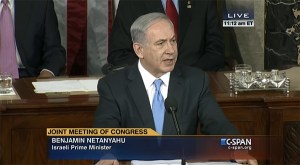
968Israel’s Prime Minister Benjamin Netanyahu speaks before the U.S. Congress, March 4, 2015. (Image source: C-SPAN video screenshot)

Despite reservations regarding Netanyahu’s hard line in Israel’s negotiations with Palestinians, many of us in the Middle East are of the opinion that he is another real hero of the Middle East.

Many people here are also hoping that as the Arab Israeli vote was the third largest bloc in the yesterday’s election, perhaps now the government of Israel will focus more on bringing the Arabs of Israel even closer and more comfortably into the Israeli fold. Otherwise, there is the serious possibility that a “fifth column” could form and harden, one that will drive the Arab Israelis into the open and waiting arms of Hamas and other terrorist groups.

We also hope that the Arab Israeli politicians will focus more on such an effort, rather than, as many Arab politicians do, lashing out and blaming others for what is wrong — a lazy, destructive substitute for actually helping improve the lives of their people.

In these terrible times, critical for the future of our region, Netanyahu spoke to the representatives of the American people, despite the objections of many Israelis and Americans. He was willing to accept personal, political and diplomatic setbacks in order look after his people’s security.

Throughout history, prophets have often been without honor in their own countries, and have been rejected by the very people who should pay attention to them. There is, it seems, in every culture, a deep and real wish to kill the messenger.

The West would do well to understand that anyone really interested in fighting terrorism needs to outlaw the Muslim Brotherhood movement — all its branches, wherever they are. Even more, it needs to paralyze Iran, rather than appease it.

The West’s dark, contradictory dealings with Turkey, Qatar, Iran and other shadowy regimes serve the growth of Islamist terrorist organizations. They destroy the chance for any success against radical Islam.

The fight against Islamist organizations needs to be creative, deliberate and continuous, to keep them from gaining even one victory either on the ground or in their propaganda campaigns. The Muslim public must not view them as attractive, or see joining them a sign of success. A series of significant defeats to Islamist organizations will counter the effects of their efforts to entice young people to join them, especially ISIS.

It is sad that in the face of the coming catastrophe, Western leaders — either blind, naïve or malevolent — are going to make a deal and appease Iran, just as a deal was made to appease Hitler in 1938.
Grand Gas Project Signifies Futility of Anti-Iran Sanctions: President

March 17, 2015

Grand Gas Project Signifies Futility of Anti-Iran Sanctions: President, Tasnim News Agency (Iranian), March 17, 2015

(Iran claims to have done quite well with sanctions, or what sanctions remained after November of 2013, despite all the money it has been spending in Iraq and Syria, not to mention terrorism elsewhere. Why, then, the demand that all sanctions be removed instanter? Will Kerry ask? Not likely.– DM)

139312261516169584940403

TEHRAN (Tasnim) – Iranian President Hassan Rouhani described the inauguration of the 12th development phase of the massive offshore South Pars gas field as a testimony to the ineffectiveness of the Western sanctions against Iran.

“The inauguration of the 12th phase illustrates that sanctions, pressures, and illegal and inhumane measures cannot push the (Iranian) nation back,” President Rouhani said in a Tuesday ceremony in the southern province of Bushehr for the official coming into service of the giant gas field’s 12th phase.The president explained that Iran’s gas production now exceeds 100 million cubic meters, stressing that such a great job has been accomplished while the country has been slapped with the cruel sanctions.Iran has also experienced economic growth and inflation reduction with the sanctions being in place, Rouhani added.

According to Oil Minister Bijan Namdar Zanganeh, the 12th phase, which has been totally designed and developed by the local experts, has cost more than $7.5 billion.

The 12th phase can produce 80 million cubic meters of gas and 120,000 barrels of gas condensates on a daily basis, bringing the country $17.5 million in revenue every day.

Zanganeh has also hailed the new phase as a helpful source of revenue while Iran is hit by “cruel economic sanctions” and the global oil price decline has diminished the country’s financial resources.

The 12th phase extends over an area of approximately 205 square kilometers along Iran-Qatar joint border. Located at a distance of 105 kilometers from the coast, the 12th phase alone contains about 5 percent of the whole gas reserves in the South Pars filed.

South Pars is part of a wider gas field that is shared with Qatar. The larger field covers an area of 9,700 square kilometers, 3,700 square kilometers of which are in Iran’s territorial waters (South Pars) in the Persian Gulf.

Israelis prepare to vote; Palestinians prepare to fight

March 17, 2015

Israelis prepare to vote; Palestinians prepare to fight, The Gatestone InstituteKhaled Abu Toameh, March 16, 2015

For some Palestinians, the election is not about removing Netanyahu from power. Rather, it is about removing Israel from the face of the earth and replacing it with an Islamist empire.

Kerry’s statement about the revival of the peace process shows that he remains oblivious to the reality in the Middle East, particularly with regards to the Palestinians.

Kerry is ignoring the fact that the Palestinians are today divided into two camps; one that wants to destroy Israel through terrorism and jihad and another that is working hard to delegitimize and isolate Israel with the hope of forcing it to its knees.

As Kerry was talking about the revival of the peace process, Hamas announced that it has completed preparations for the next confrontation with Israel.

Abbas will come to the talks with the same demands he and his predecessor have made over the past two decades, namely a full Israeli withdrawal to the pre-1967 lines. And when Israel does not accept all his demands, he will again walk out and demand international intervention to impose a solution on Israel.

Talk about the resumption of the peace process is nothing but a silly joke.

As Israeli voters head to the ballot boxes to elect their new representatives, Palestinians say they are preparing for another war with Israel.

The preparations came even as US Secretary of State John Kerry and some Israeli candidates, especially Zionist Camp leaders Isaac Herzog and Tzipi Livni, continue to talk about the need to revive the Israeli-Palestinian peace process after the election.

For some Palestinians, the election is not about removing Likud leader Binyamin Netanyahu from power. Rather, it is about removing Israel from the face of the earth and replacing it with an Islamist empire.

The next Israeli government will face a two-pronged attack on the Palestinian front — one from the Gaza Strip, where Hamas and Islamic Jihad say they have just completed preparations for the next conflict with Israel, and another from the West Bank, where the Palestinian Authority (PA) says it is determined to pursue its “diplomatic war” against Israel in the international arena.

On the eve of the election, Kerry expressed hope that Israelis will elect a government that “meets the hope for peace.”

Kerry’s statement about the revival of the peace process shows that he remains oblivious to the reality in the Middle East, particularly with regards to the Palestinians.

Kerry is ignoring the fact that the Palestinians are today divided into two camps; one that wants to destroy Israel through terrorism and jihad, and another that is working hard to delegitimize and isolate Israel in the international community with the hope of forcing it to its knees.

Hamas and Islamic Jihad continue to scoff at Kerry’s talk about the resumption of the peace process. The two groups, which control the 1.7 million Palestinians of the Gaza Strip, actually have other plans for the post-election era. Their main plans center around preparing for the next war with Israel.

983Israel’s Prime Minister Binyamin Netanyahu (left) and Hamas leader Ismail Haniyeh (right, in blue shirt).

As Kerry was talking about the revival of the peace process, Hamas’ armed wing, Izaddin al-Qassam, announced that it has completed preparations for the next confrontation with Israel.

These preparations, according to the group, include the reconstruction of Hamas military bases and training centers that were destroyed during the last war, known as Operation Protective Edge. The group says that it has not only rebuilt the destroyed sites, but has also set up new military posts, especially along the border with Israel.

Of course, when Hamas talks about “military bases,” it is also referring to the underground tunnels that it is hoping to use in the next conflict to infiltrate Israel.

Some of the bases are located only a few hundred meters away from the border with Israel, such as the Yarmouk and Palestine posts. Hamas says that the decision to build the military bases so close to the Israeli border is aimed at sending a message of defiance to Israel.

Islamic Jihad also does not seem to be impressed with the recent talk about the resumption of the peace process between Palestinians and Israelis.

Earlier this month, Islamic Jihad too unveiled its preparations for war, by inviting journalists on a tour of its tunnels inside the Gaza Strip.

“We’re on our highest level of alert to counter any attack. We’re used to the occupation breaking its ceasefires,” senior Islamic Jihad commander Abu al-Bara told Agence France Press. “It’s a war that never ends. We’re ready to go to another level against the Zionist occupation and carry out actions we’ve never done before.”

Meanwhile, the Palestinian Authority is also preparing for a confrontation with Israel, albeit one of a different nature.

The PA says it is determined to pursue its effort to seek worldwide support for imposing a solution on Israel. It is hoping to do so with the help of the United Nations, the European Union, the Obama Administration and some Arab countries.

In order to achieve its goal, the Palestinian Authority is currently waging a massive campaign in the international arena whose goal is to delegitimize, isolate and weaken Israel to a point where it would be forced to succumb and make far-reaching concessions, such as a full withdrawal to the pre-1967 lines.

PA President Mahmoud Abbas will find it almost impossible to return to the negotiating table with Israel now that he has told his people that the Palestinians’ next step is to file “war crime” charges against Israel with the International Criminal Court (ICC). Abbas’s aides have even set a date for the filing of the first anti-Israel case with the ICC: April 1.

Even if Abbas does return to the negotiating table — under heavy pressure from the Americans and Europeans — he would be doing so not in order to achieve an agreement with Israel, but to try to show the world that Israel does not want peace.

Abbas will come to the talks with the same demands he and his predecessor have made over the past two decades, namely a full Israeli withdrawal to the pre-1967 lines. When Israel does not accept all his demands, he will again walk out and demand international intervention to impose a solution on Israel. And while he would be waging his diplomatic campaign, Hamas and Islamic Jihad would resume their terror attacks against Israel from the Gaza Strip.

Under the current circumstances, where some Palestinians continue to seek the destruction of Israel and others are unable to make any concessions for peace, any talk about the resumption of the peace process is nothing but a silly joke.

Supporters of Deal Are Strengthening Iran’s Negotiating Position

March 10, 2015

Supporters of Deal Are Strengthening Iran’s Negotiating Position, The Gatestone InstituteAlan M. Dershowitz, March 10, 2015

The reality is that we are in a far stronger negotiating position than advocates of the deal have asserted, but we are negotiating from weakness because we have persuaded the Iranians that we need the deal — any deal — more than they do.

*******************************

Despite repeating the mantra that “no deal is better than a bad deal” with Iran, the United States seems to be negotiating on the basis of a belief that the worst possible outcome of the current negotiations is no deal. Many supporters of the deal that is now apparently on the table are arguing that there is no realistic alternative to this deal. That sort of thinking out loud empowers the Iranian negotiators to demand more and compromise less, because they believe — and have been told by American supporters of the deal — that the United States has no alternative but to agree to a deal that is acceptable to the Iranians.

A perfect example of this mindset was Fareed Zakaria on his CNN show this past Sunday. He had a loaded panel of two experts and a journalist favoring the deal, and one journalist opposed. This followed Zakaria’s opening essay in favor of the deal. All those in favor made the same point: that this deal is better than no deal, and that any new proposal — for example, to condition the sunset provision on Iran stopping the export of terrorism and threatening to destroy Israel — is likely to be rejected by Iran, and is therefore, by definition, “irrational” or “unproductive,” because it would result in no deal.

The upshot of this position is that Iran essentially gets a veto over any proposal, but the United States does not get to make new proposals. If it were true that this deal is better than no deal, it would follow that any proposed change in this deal that Iran doesn’t like is a non-starter.

That’s why Netanyahu’s reasonable proposal that the sunset provision be conditioned on changes in Iranian actions and words has been pooh-poohed by the so-called “experts.” They haven’t tried to respond on the merits. Instead, they are satisfied to argue that Iran would never accept such conditions, and therefore the proposal should be rejected as a deal breaker.

This is the worst sort of negotiation strategy imaginable: telling the other side that any proposal that is not acceptable to them will be taken off the table, and that any leader who offers it will be attacked as a deal breaker. This approach — attacking Netanyahu without responding to his proposal on their merits — characterizes the approach of the administration and its supporters.

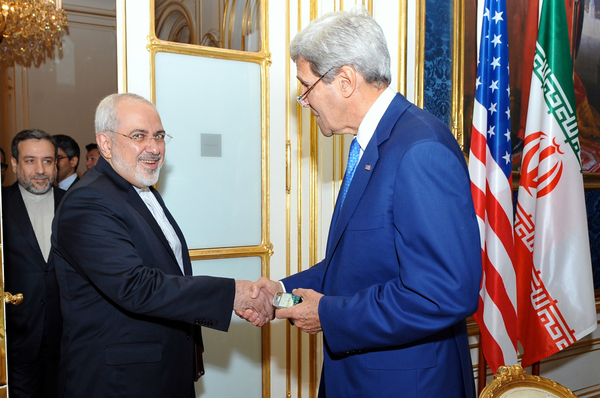
767U.S. Secretary of State John Kerry shakes hands with Iranian Foreign Minister Mohammad Javad Zarif during nuclear talks in Vienna, Austria, July 14, 2014. (Image source: U.S. State Department)

We will now never know whether Iran might have accepted a conditional sunset provision, because the advocates of the current deal, both inside and outside the administration, have told Iran that if they reject this proposal, it will be withdrawn, because it endangers the deal. What incentive would the Iranians then have to consider this proposal on its merits? None!

The current mindset of the deal’s advocates is that the United States needs the deal more than the Iranians do. That is why the U.S. is constantly leaking reports that the Mullahs may be reluctant to sign even this one-sided deal, which has shifted perceptibly in favor of the Iranian position over the past several months. But the truth is that Iran, which is suffering greatly from the combination of sanctions and dropping oil prices, needs this deal — a deal that would end sanctions and allow it unconditionally to develop nuclear weapons within ten years. That doesn’t necessarily mean they will accept it. They may push for even more compromises on the part of the United States. The reality is that we are in a far stronger negotiating position than advocates of the deal have asserted, but we are negotiating from weakness because we have persuaded the Iranians that we need the deal — any deal — more than they do.

Most Israelis seem to be against the current deal, especially the unconditional sunset provision. Author David Grossman, a left-wing dove who is almost always critical of Netanyahu, has accused the United States of “criminal naiveté.” He opposes Netanyahu’s reelection, but urges the world to listen to what Netanyahu told Congress.

“But what [Netanyahu] says about Iran and the destructive part it is playing in the Middle East cannot and should not be ignored,” Grossman said. “Netanyahu is right when he says that according to the emerging deal there is nothing to prevent the Iranians from developing a nuclear bomb once the deal expires in another 10 years, and on this matter there is no difference in Israel between Left and Right.”

There are considerable differences, however, between the Obama administrations’ negotiating position and the views of most Israelis, Saudis, Emiratis, Egyptians and Jordanians — as well as most members of our own Congress. We can get a better deal, but supporters of a deal must abandon their unhelpful public claims that the current deal is the best we can get.

The Pointlessness of the Two-Phased Nuclear Deal

March 5, 2015

The Pointlessness of the Two-Phased Nuclear Deal, Front Page Magazine, March 5, 2015

(The pointless point is: Never mind the pesky details which you wouldn’t understand anyway; Obama achieved peace in our time! — DM)

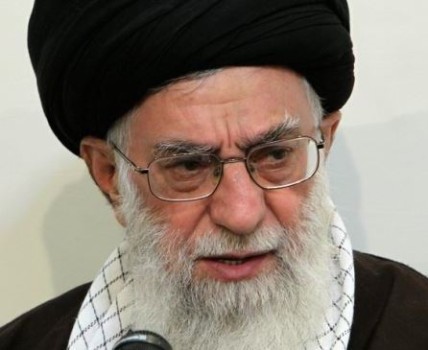
366376_Ayatollah-Khamenei-428x350

According to Kerry and Iranian leaders, the first phase is aimed at reaching a general outline by the end of March, while the second phase will chart a way to agree on the nuances and technical issues by June. But didn’t both sides previously reach an interim deal and discuss the major talking points for the final nuclear talks?

The major objective of this strategy by the Obama administration is to avoid criticism by projecting a pointless picture that “progress” is being made, that Iran is complying with the International Atomic Energy Agency (IAEA) and sanction rules, and that the Obama administration’s policy on Iran is effective. The administration appears to ignore that Iran is already skirting the sanction, as at least $1 billion has been smuggled into Tehran by the Iranian government in bank notes.

****************

The deadline for the “first phase” of nuclear talks between the Islamic Republic and the six world powers (known as the P5+1; the United States, the United Kingdom, Germany, France, Russia, and China) is approaching.

The prolonged negotiations appear to be making progress, according to Secretary of State John Kerry. In addition, Iranian Foreign Minister Mohammad Javad Zarif stated that both sides came to “a better understanding” at the negotiation.

After the interim nuclear deal was reached in November 2013, the nuclear negotiations between the two sides were again divided into two stages in order to reach a final and comprehensive nuclear deal. Kerry previously proposed the two-phased nuclear negotiations.

The question that is being ignored by the mainstream media is: What are the real objectives of dividing the final negotiations into two stages?

According to Kerry and Iranian leaders, the first phase is aimed at reaching a general outline by the end of March, while the second phase will chart a way to agree on the nuances and technical issues by June. But didn’t both sides previously reach an interim deal and discuss the major talking points for the final nuclear talks?

The major objective of this strategy by the Obama administration is to avoid criticism by projecting a pointless picture that “progress” is being made, that Iran is complying with the International Atomic Energy Agency (IAEA) and sanction rules, and that the Obama administration’s policy on Iran is effective. The administration appears to ignore that Iran is already skirting the sanction, as at least $1 billion has been smuggled into Tehran by the Iranian government in bank notes.

For President Obama, striking a ceremonial, pointless, and redundant deal by the proposed March deadline — rather than waiting until June to reach a final accord — would buttress his argument that “progress” is being continuously made with respect to his administration’s efforts to curb Iran’s nuclear program.

Domestically speaking, the administration has been heavily criticized by Congress (by both the Republicans and Democrats) for allowing the Islamic Republic to buy time, making unnecessary and unprecedented concessions, prolonging the talks, and not showing signs of real progress towards a credible final and comprehensive nuclear deal.

In addition, by striking a pointless deal in the “first phase” and projecting that “progress” has been made, President Obama would desire to ratchet up his leverage in vetoing any sanctions bill that might be proposed by Congress against the Islamic Republic’s nuclear and sanctions defiance.

In other words, President Obama will need this unnecessary first-phase deal in order to avoid further domestic pressure, show the effectiveness of spending so much political capital on the nuclear talks with Iran, ease sanctions on Iran, and justify making compromises.

It is in the interest of both President Obama and Hassan Rouhani to reach a deal in the first phase.

In addition to the aforementioned political reasons and interests of the Obama and Rouhani administrations to strike a deal in the first phase, other factors contribute to the increasing likelihood of reaching a general accord by the end of March.

The first phase agreement will not include the technical details regarding Iran’s nuclear program. The accord will likely include the major talking points that both sides repeatedly discussed previously. Some of the crucial points are:

·      US possible flexibility on the breakout timeline (The amount of time that Tehran will need to build a nuclear bomb from highly enriched uranium or Plutonium);

·      Iran’s flexibility for the immediate sanction reliefs;

·      Iran’s acceptance of providing more data regarding the military dimensions of Tehran’s nuclear program;

·      The heavy water Arak Reactor, and the production of plutonium at this site;

·      Flexibility on both sides to reduce and further discuss the scope and capacity of Tehran’s uranium enrichment; and

·      The possibility of allowing Iran to maintain an additional number of centrifuges.

The nuances and the technical details are not part of the first phase accord.  The following crucial questions are less likely to be included in the first phase of the agreement: What exactly will the minimum “breakout” time be? What will the duration of the deal be? 10 years? 15 years? 20 years? How many years will it take to remove all economic sanctions against Iran? Will Tehran keep 1,500, 4,500, or 6,500 centrifuges? What is the exact scope of nuclear research and development that Tehran can maintain?

Since the aforementioned crucial and nuanced questions are not part of the first phase accord, striking this dispensable accord of the first phase is very likely and not a strenuous task.

As a result, reaching this general outline by end of March will not be historic as some mainstream media suggest. It is in fact pointless, unnecessary, redundant, and it is more likely to occur.

Iran calls Obama’s 10-year nuclear demand ‘unacceptable’

March 3, 2015

Iran calls Obama’s 10-year nuclear demand ‘unacceptable’, ReutersArshad Mohammed, March 3, 2015

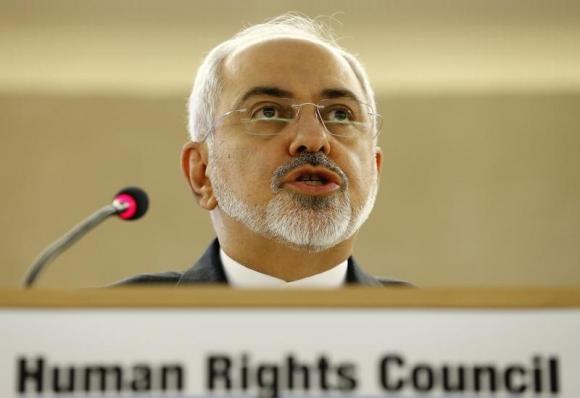
Iranian Foreign Minister  Zarif addresses Human Rights Council at UN in GenevaIranian Foreign Minister Mohammad Javad Zarif addresses the 28th Session of the Human Rights Council at the United Nations in Geneva March 2, 2015. CREDIT: REUTERS/DENIS BALIBOUSE

(Reuters) – Iran on Tuesday rejected as “unacceptable” U.S. President Barack Obama’s demand that it freeze sensitive nuclear activities for at least 10 years, but said it would continue talks aimed at securing a deal, Iran’s semi-official Fars news agency reported.

“Iran will not accept excessive and illogical demands,” Iranian Foreign Minister Mohammad Javad Zarif was quoted as saying by Fars.

“Obama’s stance … is expressed in unacceptable and threatening phrases … ,” he reportedly said, adding that negotiations underway in Switzerland would nonetheless carry on.

Zarif and U.S. Secretary of State John Kerry sat down for a second day of meetings hours after Obama had told Reuters that Iran must commit to a verifiable halt of at least 10 years on sensitive nuclear work for a landmark atomic deal to be reached.

The aim of the negotiations is to persuade Iran to restrain its nuclear program in exchange for relief from sanctions that have crippled the oil exporter’s economy.

The United States and some of its allies, notably Israel, suspect Iran of using its civil nuclear program as a cover to develop a nuclear weapons capability. Iran denies this, saying it is for peaceful purposes such as generating electricity.

Kerry and Zarif met in the Swiss lakeside town of Montreux as Israeli Prime Minister Benjamin Netanyahu prepared to criticize the diplomacy in a speech to Congress in Washington.

Despite the tough tone of Zarif’s remarks quoted by Fars, the Iranian struck a more conciliatory tone when he spoke briefly to reporters after about two hours of talks with Kerry.

Asked if the two sides had reached an agreement, Zarif replied: “We’ll try, that’s why we are here.”

“There is a seriousness that we need to move forward. As we have said all along, we need the necessary political will to understand that the only way to move forward is though negotiations,” he added.

Speaking after the morning round of talks, Kerry told reporters: “We’re working away. Productively.”

The two sides have set a deadline of late March to reach a framework agreement and of June for a comprehensive final settlement that would curb Iran’s nuclear activity to ensure it cannot be put to bomb making in return for the lifting of the economic sanctions.

Iran wants a swift end to sanctions in any deal — one of the sticking points in the high-level negotiations.

While the United States has played the lead role in the talks with Iran, it is representing five other major powers: Britain, China, France, Germany and Russia — a group collectively known both as the P5+1 and the E3+3.

Speaking in Geneva, German Foreign Minister Frank-Walter Steinmeier sounded an upbeat note, saying the negotiations had made more progress in the past year than in the previous decade.

“The talks between the E3+3 and Iran are also advancing well,” he told the U.N.-backed Conference on Disarmament. “I would even go so far as to say that in 10 years of negotiations, we never achieved as much progress as we have made this year.”