H/t Joopklepzeiker

H/t Joopklepzeiker
Is there anything the Iranians could do that would upset President Obama? Jerusalem Post, Eric R. Mandel, June 16, 2015
(Not likely. — DM)
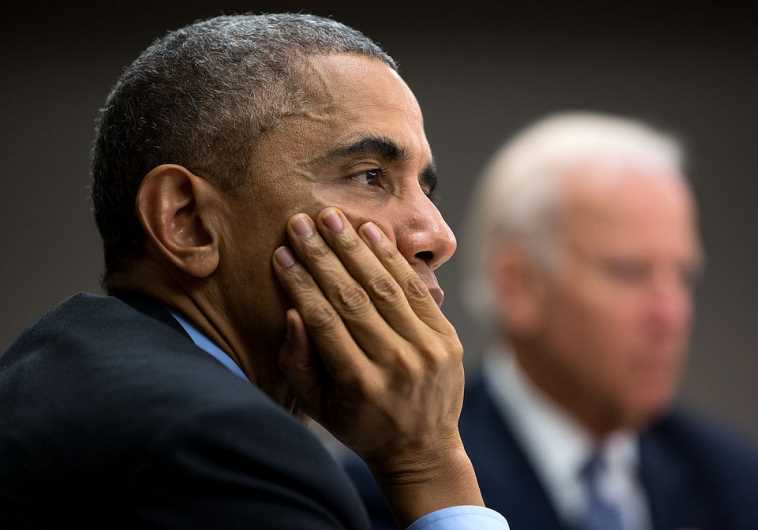 US President Barack Obama (L) and Vice President Joe Biden. (photo credit:OFFICIAL WHITE HOUSE PHOTO BY PETE SOUZA)
The administration’s fear of provoking actions while the nuclear negotiations are ongoing is interpreted by Iran not as pragmatism, but as an invitation to cheat on any future deal.
This schizophrenic foreign policy is not fooling anyone. At best, it is naïve; at worst, it threatens longterm American national security and foreign interests, to say nothing of Israel’s existence.
*****************
It is probably time of us who have strenuously opposed acquiescing in Iran’s development of nuclear weapons to throw in the towel… Mr. Obama’s definition of a satisfactory outcome has evolved… from the complete abandonment… of the Iranian nuclear program to an honor-system reliance on the Iranians.” – Conrad Black, National Review.
What stands out in the following bullets?
• Iran is increasing its financial and military support for the genocidal Syrian ophthalmologist President Bashir Assad.
• The Iranian proxy Hezbollah is helping to prop up the Assad government with its armed forces in Syrian territory.
• US President Barack Obama has stopped supporting Hayya Bina, a “civil society program in Lebanon that seeks to develop alternative Shi’ite political voices to Hezbollah” (The Wall Street Journal).
Reminiscent of the president’s abandonment of the Iranian people during the 2009 Green Revolution, when he sided with the radical mullahs over Iranians seeking a democratic government, the US has decided to leave Lebanese Shi’ites with little choice but the repressive fundamentalist Hezbollah government.
But shouldn’t it be in America’s foreign policy interests to help Iranian and Lebanese Shi’ites break free from the repressive shackles of these anti-Western terrorists and help create the conditions for a peaceful and non-threatening Islam? Anyone paying attention to Iran’s behavior since the Revolution knows that the ayatollah does not reciprocate appeasement. You would have thought after six years of a failed Middle East policy that the president would have learned that unilateral concessions are pocketed, and only encourage more demands and intransigent behavior.
The administration’s fear of provoking actions while the nuclear negotiations are ongoing is interpreted by Iran not as pragmatism, but as an invitation to cheat on any future deal.
The Iranians have been testing the Obama administration with transgressions of the Joint Plan of Action, and their escalating support of the Yemini Houthis, Hezbollah, Hamas, Syria and the Iraqi Shi’ite government. Iran has learned that this American administration would rather bury its head in the sand than act upon almost any transgression.
Iran can be confident that the Obama administration will be the loudest public defender of the deal, knowing it is the president’s foreign policy legacy. Future transgressions will be swept under the table to avoid anything that might unsettle the Iranian regime. Just this week, Iran tested advanced satellite missile launchers, which could be used to deliver nuclear warheads.
Although they contradict current UN Security Council (UNSC) Resolutions, the Obama administration has remained silent, claiming the Iranians are complying with their commitments because the Joint Plan of Action does not address missile systems. The administration conveniently fails to acknowledge is that the JPA does not abrogate the UNSC sanctions.
The president’s outreach to the Iranian-backed Shi’ite Houthis in Yemin, while simultaneously defending the Iranian narrative that it does not support the Shi’ite fighters, fuels the fire that the White House will defend the Iranian narrative after the deal is concluded. Nothing must get in the way of threatening the “success” of the deal.
Even more egregious is the White House’s silence on the blatant violation of a UNSC blacklist. Qassem Suleimani, the head of Iran’s Revolutionary Guard’s elite Quds Force, is barred from traveling to UN member states like Lebanon, Iraq and Syria, yet he travels freely to these nations. For the past eight years, the American government has listed the Quds Force of the Iranian Revolutionary Guard Corps as a terrorist-supporting entity. The Quds Force reports directly to the supreme leader.
The history of the Quds Force’s terrorist activity is well known.
Ahmad Vahidi, who directed the Quds Force at the time, allegedly planned the infamous bombing of the Jewish Center in Buenos Aires in 1994. According to the Obama administration, in 2011 it attempted to assassinate the Saudi ambassador to the US in Washington. No wonder America’s Gulf allies are less than enthusiastic about the US cozying up to the mullahs.
Israel and the Sunni Arab world see the president’s desire to align with Iran as both incomprehensible and inevitable. With little chance of the Senate having the votes to override the president’s almost certain veto this summer, the president is a step closer to his grand plan, in place since his first day in office – to distance America from Israel and the Gulf States, and create a new relationship with the world’s capital for terrorism, Tehran.
The head of the Joint Chiefs of Staff, General Martin Dempsey, went to Israel last week and bluntly told the Israelis that the US expects sanctions relief to increase Iranian support of its proxies, including State Department-designated terrorists Hezbollah and Hamas. The Quds Force can expect a virtual windfall for its overseas terrorist activities. Iran is expected to receive at least $150 billion in sanctions relief, and Dempsey said it would not all be staying in Iran to help its people and economy. Is this administration acting as an indirect supporter of terrorist entities by facilitating their financing? You be the judge.
To deflect charges that the White House is in bed with the Iranians, the administration has allowed the Treasury Department to continue to place some sanctions on Hezbollah members. Like the blacklisting of Quds leader Qassem Suleimani, however, sanctions or blacklisting are one thing, enforcement is another.
This schizophrenic foreign policy is not fooling anyone. At best, it is naïve; at worst, it threatens longterm American national security and foreign interests, to say nothing of Israel’s existence.
Nuclear weapons in the hands of a terrorist state in a decade’s time. That’s a perplexing goal for the leader of the free world.
The Postcolonial Rot Spreads Beyond Middle East Studies, Front Page Magazine,

Middle East Studies programs, Kramer writes, “came under a take-no-prisoners assault, which rejected the idea of objective standards, disguised the vice of politicization as the virtue of commitment, and replaced proficiency with ideology.” The ideology, of course, comprised the old Marxist narrative of Western colonial and imperial crimes, a Third Worldism that idealizes the dark-skinned, innocent “other” victimized by Western depredations, and the juvenile romance of revolutionary violence.
*****************
In theory, Middle East Studies programs are a good idea. One of the biggest impediments to countering modern jihadism has been the lack of historical knowledge about the region and Islam. But even the attention and urgency that followed the terrorist attacks on 9/11 have not led to such knowledge. The result has been policies pursued both by Republicans and Democrats that are doomed to fail, as the current chaos in the region attests.
Rather than enlightening citizens and policy-makers, Middle Eastern Studies programs have darkened our understanding. As Martin Kramer documented in his important 2002 study Ivory Towers on Sand, most programs have become purveyors not of knowledge but of ideology. Under the influence of literary critic Edward Said’s historically challenged book Orientalism––“a work,” historian Robert Irwin has written, “of malignant charlatanry, in which it is hard to distinguish honest mistakes from willful misrepresentations”––Middle East Studies programs, Kramer writes, “came under a take-no-prisoners assault, which rejected the idea of objective standards, disguised the vice of politicization as the virtue of commitment, and replaced proficiency with ideology.” The ideology, of course, comprised the old Marxist narrative of Western colonial and imperial crimes, a Third Worldism that idealizes the dark-skinned, innocent “other” victimized by Western depredations, and the juvenile romance of revolutionary violence.
Yet Said’s baleful influence has not been limited to Middle East Studies programs, one of which has been created at my campus of the California State University, replete with the problems Kramer catalogues. It has insidiously corrupted much of the humanities and social sciences, operating under the innocuous rubric of “postcolonial” studies, which to the unwary suggests a historical rather than an ideological category. Through General Education courses that serve students across the university, and in departments like English that train primary and secondary school teachers, Saidian postcolonial ideology has been shaping the attitudes and presumed knowledge of Islam and the Middle East far beyond the reach of Middle East Studies programs.
Said’s dubious argument in Orientalism is that the work of Western scholars on the Middle East embodied “a Western style for dominating, restructuring, and having authority over the Orient,” thus creating the intellectual infrastructure for justifying colonialism and imperialism. As such, every European scholar perforce was “a racist, an imperialist, and totally ethnocentric.” For social science and humanities departments committed totally to the multiculturalist melodrama of white racism and oppression of the dark-skinned “other,” Said’s work seemingly provides scholarly bona fides to ideas that are in fact expressive of illiberal grievance politics.
English departments have been particularly vulnerable to Said’s work, for he overlaid his bad history with watered down Foucauldian ideas about the relationship of power to discourse. Thus English professors seduced by the poststructuralist theory ascendant in 1978 when Orientalism was published found in that book a seemingly sophisticated theoretical paradigm that shared both poststructuralism’s disdain for objectivity and truth, and its “hermeneutics of suspicion,” the notion that the apparent meaning of a discourse is a mask for the sinister machinations of power at the expense of the excluded “other.”
More important, postcolonialism is a politically activist theory, bound up as it is in the politics of the Middle East, especially the Arab-Israeli conflict. Now English professors could avoid the legitimate charge that poststructuralism, despite its patina of leftist ideology, was in fact an evasion of politics, a “symbolic politics,” as historian Russell Jacoby put it, “a replacement for, and a diversion from, the gritty politics of the community and the street.” On the contrary, the purveyors of postcolonialism were on the barricades, struggling to liberate Palestinians and other Muslims oppressed by a neo-imperialist America and its puppet Israel. Rather than pampered elitists guaranteed jobs for life, now the professors could fancy themselves freedom fighters and champions of the ex-colonial brown peoples still exploited and oppressed by the capitalist, racist West.
Finally, the dogma of multicultural “diversity” now firmly enshrined in American universities likewise has found Saidian postcolonialism a useful tool for interpreting and teaching literature, one that exposes the Western literary canon’s hidden racism and oppression. Moreover, in a university like Fresno State, half of whose students are minorities, a postcolonial perspective can establish a rapport with minority students who are encouraged to interpret their own experiences through the same lens of unjust exclusion and hurtful distortions of their culture and identity. At the same time white students are schooled in their privilege and guilt, minorities can be comforted by a narrative that privileges them as victims of historical oppression, one masked by the unearned prestige of the classics written by “dead white males.” Now minority students learn that Shakespeare’s Caliban is the true hero the Tempest with whom they should identify, the displaced victim of rapacious colonialists and slavers like Prospero who unjustly define the indigenous peoples as savages and cannibals in order to justify the brutal appropriation of their lands and labor.
Over the thirty years I have taught in the California State University, I have seen this transformation of the English department. Reading lists dominated by contemporary ethnic writers are increasingly displacing the classics of English literature, and even when traditional works are on the list, the books are often taught from the postcolonial perspective. New hires more and more comprise those Ph.D.’s whose specialties lie in ethnic or “world” literature, replacing the Shakespeare scholars and others trained to teach the traditional English and American literary canon. The traditional content of a liberal education––“the best which has been thought and said in the world,” as Matthew Arnold wrote––is disappearing, replaced by multicultural melodramas of Western crime and guilt.
More important for the culture at large, many of these students will go on to earn teaching credentials and staff public schools. They will carry the postcolonial ideology into their own classrooms, influencing yet another generation and reinforcing a received wisdom that will shape their students’ understanding of the important threats to our national security and interests emanating from the Middle East, especially jihadism. And it will encourage ordinary citizens to assent to the demonization of our most valuable regional ally, Israel, currently battling the Boycott, Divest, and Sanction movement that can more easily gain traction among those who from grade school to university have been exposed to the postcolonial ideology.
The damage done to our foreign policy by Middle East Studies is obvious. The influence of the godfather of such programs, Edward Said, on the social sciences and humanities departments like English is more insidious and subtle. But it is no less dangerous.
H/t joopklepzeiker
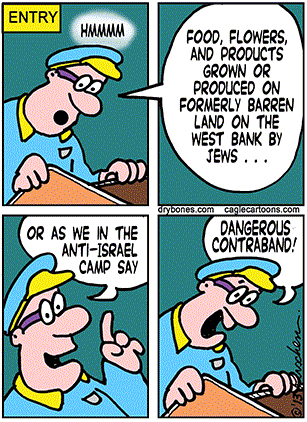
Dan Miller’s Blog, May 15, 2015
(The views expressed in this article are mine and do not necessarily reflect those of Warsclerotic or its other editors. — DM
It is likely that the P5+1 nuke deal with Iran will be approved soon. Military and other nuke sites which Iran has not “disclosed” will not be inspected. Nor will Iran’s nuke ties with North Korea — which P5+1 member China seems to be helping, Iran’s massive support for terrorism and abysmal human rights record be considered because they are also deemed unnecessary for deal approval. Sanctions against Iran are moribund and will not be revived regardless of whether there is a “deal.” However, a bronze bust of Obama may soon be displayed prominently in Supreme Leader Khamenei’s office and one of Khamenei may soon be displayed proudly in Dear Leader Obama’s office.

Part I — Nuke site inspections
According to a June 11, 2015 article by the Middle East Research Institute (MEMRI), Iran’s Supreme Leader has said there will not even be “token” IAEA inspections.
This past week, members of Iran’s nuclear negotiating team revealed details about the Iran-U.S. nuclear negotiations. The negotiations were dealt a blow when Iranian Supreme Leader Ali Khamenei rejected an agreement reached by the two sides concerning a token inspection of military facilities and questioning of several nuclear scientists and “military personnel”; these were to be the response to the IAEA’s open dossier on possible military dimensions (PMD) of Iran’s nuclear program to which Iran has so far refused to respond.
Iranian reports on these developments show that in order to arrive at a comprehensive agreement, the U.S. is willing to forgo actual inspection of Iranian military facilities and to settle for inspection of declared nuclear facilities only, as set forth under the Additional Protocol, while the ongoing monitoring of Iran’s nuclear program will be left to intelligence elements. [Emphasis added.]
Also on June 11th, it was reported that
CIA Director John Brennan likely came to Israel last week to tell Israeli officials that a final nuclear deal with Iran does not have to include a commitment by Tehran to provide access to military bases, or Iranian consent to interview its scientists, a new report by the Middle East Media Research Institute (MEMRI) said. [Emphasis added.]
On June 12th, Iranian President Rouhani reiterated that
the country will never allow its secrets to be exposed under the Additional Protocol of the Nuclear Non-Proliferation Treaty (NPT) or any other treaty.
“Certainly, Iran will not allow its secrets to be obtained by others under the pretext of implementing the (Additional) Protocol or any other treaty,” President Rouhani said at a press conference in Tehran.
He reaffirmed that foreigners will be denied access not only to Iran’s military secrets but also to secret information in other technological fields.
Here’s a video with comments by Former DIA Director Lt. General Michael Flynn and Ambassador Robert Joseph on Iran’s ballistic missile program and other aspects of the “deal:”
Here’s the Obama administration’s most recent waffle on inspections of Iran’s nuclear sites and sanctions relief:
Although the State Department spokesman waffled, his comments were, unfortunately, at least generally consistent with the January 14, 2014 White House Summary of the framework for subsequent P5+1 negotiations. As I noted here in January of 2014, that summary failed even to mention such military sites as Parchin — even though the IAEA “had reason to think that there had been implosion testing in 2011 but was refused access to inspect” it, Iran’s development and testing of rocketry capable of delivering nuclear warheads and its development and testing of nuclear warheads.
It had been reported on November 27, 2013 that
Despite Tehran’s protestations that it has no intention of ever creating a nuclear weapon, Iran, in fact, has been developing a warhead for some 15 years. That design is now near perfect. [Emphasis added.]
It had been reported on November 28, 2013 that
A top Iranian military leader announced late Tuesday that Iran has developed “indigenous” ballistic missile technology, which could eventually allow it to fire a nuclear payload over great distances. [Emphasis added.]
Why does the White House Summary fail to mention such things? Probably because they are not within the parameters of the November 24, 2013 Joint Plan of Action.
The Joint Plan of Action, — on which the White House Summary seems to have been based — states, in a superficially comforting preamble,
The goal for these negotiations is to reach a mutually-agreed long-term comprehensive solution that would ensure Iran’s nuclear programme will be exclusively peaceful. Iran reaffirms that under no circumstances will Iran ever seek or develop any nuclear weapons. This comprehensive solution would build on these initial measures and result in a final step for a period to be agreed upon and the resolution of concerns. This comprehensive solution would enable Iran to fully enjoy its right to nuclear energy for peaceful purposes under the relevant articles of the NPT in conformity with its obligations therein. This comprehensive solution would involve a mutually defined enrichment programme with practical limits and transparency measures to ensure the peaceful nature of the programme. This comprehensive solution would constitute an integrated whole where nothing is agreed until everything is agreed. This comprehensive solution would involve a reciprocal, step-bystep process, and would produce the comprehensive lifting of all UN Security Council sanctions, as well as multilateral and national sanctions related to Iran’s nuclear programme. [Emphasis added.]
There would be additional steps in between the initial measures and the final step, including, among other things, addressing the UN Security Council resolutions, with a view toward bringing to a satisfactory conclusion the UN Security Council’s consideration of this matter. The E3+3 and Iran will be responsible for conclusion and implementation of mutual near-term measures and the comprehensive solution in good faith. A Joint Commission of E3/EU+3 and Iran will be established to monitor the implementation of the near-term measures and address issues that may arise, with the IAEA responsible for verification of nuclear-related measures. The Joint Commission will work with the IAEA to facilitate resolution of past and present issues of concern.
However, while the Joint Plan of Action calls for “enhanced monitoring” of Iran’s facilities, its focus is on nuclear enrichment, not Iran’s militarization of nukes.
Enhanced monitoring:
Provision of specified information to the IAEA, including information on Iran’s plans for nuclear facilities, a description of each building on each nuclear site, a description of the scale of operations for each location engaged in specified nuclear activities, information on uranium mines and mills, and information on source material. This information would be provided within three months of the adoption of these measures.
Submission of an updated DIQ for the reactor at Arak, designated by the IAEA as the IR-40, to the IAEA. Steps to agree with the IAEA on conclusion of the Safeguards Approach for the reactor at Arak, designated by the IAEA as the IR-40.
Daily IAEA inspector access when inspectors are not present for the purpose of Design Information Verification, Interim Inventory Verification, Physical Inventory Verification, and unannounced inspections, for the purpose of access to offline surveillance records, at Fordow and Natanz.
IAEA inspector managed access to: centrifuge assembly workshops; centrifuge rotor production workshops and storage facilities; and, uranium mines and mills.
Despite Obama’s claims, Iran appears to have increased, not rolled-back, its nuclear enrichment program. According to the New York Times on June 1st,
With only one month left before a deadline to complete a nuclear deal with Iran, international inspectors have reported that Tehran’s stockpile of nuclear fuel increased about 20 percent over the last 18 months of negotiations, partially undercutting the Obama administration’s contention that the Iranian program had been “frozen” during that period.
But Western officials and experts cannot quite figure out why. One possibility is that Iran has run into technical problems that have kept it from converting some of its enriched uranium into fuel rods for reactors, which would make the material essentially unusable for weapons. Another is that it is increasing its stockpile to give it an edge if the negotiations fail.
Here’s an “explanation” by Marie Harf, the “the Senior Advisor for Strategic Communications to U.S. Secretary of State John Kerry at the U.S. State Department. . . .”
Iran will not budge on inspection of its military and other sites it has not disclosed and which are claimed by the IAEA to be places where Iran’s weaponization of nukes is likely. The Obama Administration will not budge on permitting Iran to get away with it.
Although Israel has been the only free and democratic nation consistently to oppose the P5+1 “negotiations” and the framework on which they are based from the beginning, France has sometimes opposed Obama’s pursuit of a bad “deal.” Recently, France even demanded the inspection of Iran’s sites as sought by the IAEA and stated that it would not consent to a P5+1 “deal” without them.
However, “the French position creates a problem for President Obama because the deal has to be agreed on by the P5+1, not the ‘P4+1-with-one-vote-in-opposition’.” Of the P5+1 members (China, France, Russia, the United Kingdom, and the United States, plus Germany), France appeared to stand alone on this point. However, the linked article suggests that Obama may be trying to use France’s support for a Palestinian state within Israel to convince her to agree that such inspections are unnecessary.
The first story is about France, a member of the P5+1 negotiating a deal with Iran on nuclear capabilities. The French government has expressed increasing concern that the emerging deal is flawed — perhaps fatally.
The other story is that Obama’s
expressed skepticism about the achievability of an Israeli-Palestinian agreement appears to have given way to the French notion that “all other ways have been explored,” and that it is time to let the UN determine parameters for a “big overarching deal.” And, as it happens, the French draft corresponds with the President Obama’s own — strongly held — belief that Israel has to ascribe to the President’s view, despite having just elected a Prime Minister who disagrees.
. . . .
Smash the two stories together, you get an American president supporting France in its efforts to be a major player in the Middle East in exchange for French support of the P5+1 deal with Iran.
In both cases, guess who pays the price: Israel.
The rest of the “free world,” such as it has become, will also pay a hefty price for such a “deal” with Iran.
On a similar note, it was reported on June 9th that
A senior Western diplomat told Ma’ariv in a report published Tuesday that “a diplomatic attack against Israel is expected soon that will surprise even the pessimists in Jerusalem.” [Emphasis added.]
“In the (UN) Security Council, in western capitals and at EU headquarters, they are just waiting for the Iran deal to be signed and for it to be approved by the American Congress,” warned the diplomatic source.
It appears that the waiting period will likely expire in September, at which time a UN General Assembly will open in tandem with the first shots of the diplomatic barrage against Israel.
Diplomatic sources familiar with Western European positions vis-a-vis Israel said the EU already has a list ready, itemizing sanctions against Israel in the fields of trade, agriculture, science and culture. [Emphasis added.]
That list is to be translated into an economic assault – unless Israel presents a new set of concessions it is willing to make for a new round of peace talks, after the last set of talks was torpedoed by the PA signing a unity deal with the Hamas terrorist organization.
“Senior officials in Jerusalem are aware of the existence of sanctions documents at EU headquarters, some of which have even fallen into their hands,” one diplomatic source revealed to Ma’ariv.
Were Israeli Prime Minister Netanyahu to have agreed with Obama on the Iran nuke “negotiations,” Israel’s punishment by imposing economic sanctions on her as those on Iran cease would now be unlikely.
Obama seems to be happy with any “deal” that Iran is willing to sign, despite Iran’s ongoing nuke militarization, the Iran-North Korea-China connection, Iran’s continued massive support for terrorism and its abysmal human rights record. With such a “deal,” Iran will be able to pursue such goals essentially unimpeded, at least until a different administration takes over in Washington.
 (H/t Freedom is just another word.)
Parts II through ?? of this series will be posted over the next several days.
Islamic State at Israel’s Gate, Front Page Magazine,
(According to Israel National News,
Late on Thursday night “color red” rocket sirens were sounded in the southern coastal city of Ashkelon, as well as throughout the Ashkelon Coast regional council.
At least one rocket was identified as having been fired from Gaza, but IDF officials said it is believed the rocket exploded inside Gaza. No rockets were found in Israeli territory.
— DM)

All this is happening while the Obama administration, by the president’s own admission, has no clear strategy to defeat ISIS. At the same time, President Obama’s “strategy” to deal with Iran is to make concession after concession in order to secure any nuclear deal he can, including the possibility of providing Iran with relief from sanctions that were imposed for non-nuclear related reasons such as Iran’s support for terrorist activities
In short, Israel is facing Iran-backed Hamas from the south, Iran-backed Hezbollah from the north, and an expanding Islamic State presence north and south of Israel and within Israel itself. And that is before Iran gets its hands on a nuclear bomb and the Islamic State has enough radioactive material to build its own weapons of mass destruction.
*****************
Jihadists affiliated with the Islamic State (also known as ISIS or ISIL) are carrying on the rocket war against Israeli civilians from where Hamas left off. Following several rocket attacks in the last several weeks for which the Islamic State has taken credit, rockets launched from Gaza Thursday night exploded in the Ashkelon area.
Israel is still holding Hamas responsible for the attacks as the governing authority in Gaza.
“The IDF understands that Hamas wants quiet and is making an effort to prevent the shooting, but the State of Israel still sees Hamas as responsible for what happens in Gaza,” said Sami Turgeman, head of IDF’s Southern Command.
The Israeli military responded with measured attacks on Hamas facilities, while at the same time trying to avoid setting off a wider war at this time. But Israel’s hand is being forced by the Islamic State, which is evidently working assiduously to supplant Hamas as the authoritative Islamic power in Gaza. The Gaza branch calls itself the Sheikh Omar Hadid Brigade. It is cooperating with another ISIS-affiliated group operating in the Sinai Peninsula, which calls itself Ansar Bayt al-Maqdis.
According to a June 8th report by Debkafile, “Islamic State operatives in the Gaza Strip have been helping themselves to Hamas rockets in recent weeks after furtively penetrating the factory teams operating the group’s production and assembly lines… The jihadis then secretly passed the stolen rockets to their squads for launching against Israel.”
On June 7th Debkafile noted in more general terms Hamas’s loss of control in Gaza in the face of Islamic State infiltration: “The terror infrastructure Hamas built over many years in Sinai has been taken over by ISIS, and its control of the Gaza Strip is slipping, as yet more radical and violent organizations eat away at its authority and seize control of the rocket offensive against Israel.”
Thus, even as Hamas remains committed to the destruction of Israel and is trying to re-build its arms stockpiles with Iran’s help, it is engaged simultaneously in its own battles with the Islamic State. Hamas has arrested some ISIS supporters and bulldozed a Sunni mosque believed to have been used by ISIS affiliated jihadists, while Hamas’s own facilities have come under attack by ISIS affiliated jihadists. Hamas also claimed in a message to Israeli authorities, routed through an Egyptian intermediary, that jihadists affiliated with the Islamic State were deliberately trying to spark a renewed war between Israel and Hamas.
The Islamic State is also trying to position itself to challenge Israel from the north. Israeli TV Channel 2 reported last week that the Islamic State is moving forces in the direction of the Golan Heights and the Israeli border.
Moreover, ISIS is developing an increasing presence within Israel itself. Recruits, influenced by ISIS’s slick social media promotions, are attracted to ISIS’s self-declared purer Islamic ideology. Hamas is apparently too “moderate” for these jihadists’ tastes.
“Dozens of Israeli Arabs and Palestinians have travelled to Syria and Iraq to join insurgent groups.” Israel’s Shin Bet domestic intelligence agency said in a statement released last January 4th. Israel had announced that it managed to crack one Islamic State cell on its soil and arrested its alleged members. An Israeli security official described the cell as “just the tip of the iceberg.”
Last July, the Islamic State previewed its intentions in a statement that it issued regarding jihad against Israel:
As for the massacres taking place in Gaza against the Muslim men, women and children, then the Islamic State will do everything within its means to continue striking down every apostate who stands as an obstacle on its paths towards Palestine. It is only [a] matter of time and patience before it (Islamic State) reaches Palestine to fight the barbaric Jews and kill those of them hiding behind the gharqad trees – the trees of the Jews.
Arutz Sheva reported that a spokesperson for the Islamic State, Nidal Nuseiri, urged patience as the Islamic State wanted first to consolidate its control over Arab Muslim lands, but “reaffirmed that conquering ‘Bayt el-Maqdis’ (Jerusalem) and destroying the State of Israel is central to the group’s jihad.” Thanks to President Obama’s dithering, the Islamic State is well on its way to achieving such consolidation in Iraq and Syria, while spreading to Libya.
At least three questions arise from the emergence of ISIS as a direct threat to Israel. Will Israeli military and security forces, either on their own or in concert with Jordan and Egypt, take on ISIS directly, including going after ISIS’s command and control centers with far more firepower than the Obama administration has used thus far?
To what extent will Israel be willing to outsource military operations against ISIS affiliates in Gaza to Hamas, much as it has outsourced some security operations to the Palestinian Authority in the West Bank? Major-General Turgeman tried to cast Hamas as the lesser of two evils, since, he claimed, “Israel and Hamas have shared interests, including in the current situation, which is quiet and calm and growth and prosperity.” Hamas “does not want global jihad,” he added. This is a truly incredible assertion coming from an Israeli military leader about a group willing to put its own citizens and their homes in harm’s way in order to launch their own thousands of rockets against Israel. What happened to Israeli Prime Minister Benjamin Netanyahu’s concise description of Hamas and the Islamic State as “branches of the same poisonous tree?” This just further demonstrates how completely insane the Middle East has become.
Finally, how successful will Iran be in exploiting the chaotic situation in Gaza, positioning itself as it has in Iraq as an enemy of ISIS, while further bolstering Hamas to Israel’s detriment?
All this is happening while the Obama administration, by the president’s own admission, has no clear strategy to defeat ISIS. At the same time, President Obama’s “strategy” to deal with Iran is to make concession after concession in order to secure any nuclear deal he can, including the possibility of providing Iran with relief from sanctions that were imposed for non-nuclear related reasons such as Iran’s support for terrorist activities.
In short, Israel is facing Iran-backed Hamas from the south, Iran-backed Hezbollah from the north, and an expanding Islamic State presence north and south of Israel and within Israel itself. And that is before Iran gets its hands on a nuclear bomb and the Islamic State has enough radioactive material to build its own weapons of mass destruction.
General Michael Flynn and Ambassador Robert Joseph on Iran’s Missile Program and a Nuclear Deal, Secure Freedom.Org. via You Tube, June 11, 2015
Former DIA Director Lt. General Michael Flynn and Ambassador Robert Joseph discuss their concerns about the exclusion of Iran’s ballistic missile program from the nuclear agreement currently being negotiated with Tehran and their belief that this deal will not stop or slow Iran’s pursuit of nuclear weapons.
Israel’s Druze dilemma: To arm imperiled Syrian Druze community or open door to a flood of refugees, DEBKAfile, June 11, 2015
 Syrian Druze militiaman
Israel has a unique, historic commitment to its Druze citizens and so the dangers besetting more than half a million of their Syrian brethren on Jabal Druze, 88 km from its border, and 38 km from Jordan, confronts the Netanyahu government with a grave dilemma. Israeli Druze leaders are pressing the government to provide Jabal Druze towns and villages with weapons for their defense against the enemies closing in on them: The Syrian-Hizballah army; the Syrian opposition coalition including the Nusra Front – now in control of large parts of southern Syria; and the Islamic State of Iraq and the Levant – ISIS, which has sent a small force up to the eastern approaches to the mountain.
At a reception for the visiting Chairman of the Joint US Chiefs of Staff, Gen. Martin Dempsey Wednesday, June 10, President Reuven Rivlin said: What is going on just now is intimidation and threat to the very existence of half a million Druze on the Druze Mount, which is very close to the Israeli border.”
Officials in the Pentagon denied that this issue had come up in Gen. Dempsey’s talks during his farewell visit to Israel this week, although Syria had been discussed. One official remarked: “It’s the Druze who are asking everyone to arm them. The Druze in Israel have been raising it with Israel with the US, with Jordan – everyone.”
DEBKAfile’s military sources note that this dilemma is the hardest Israel has faced since the Syrian conflict began more than four years ago. Sending arms to the Syrian Druze would mean abandoning the consistent policy of abstaining from direct involvement in that war. It would moreover entail setting up new machinery for establishing, training and arming a Druze army of 20,000 to 30,000 fighting men.
But by withholding support, Israel would make itself responsible for whatever befalls the beleaguered Syrian Druze community, including possibly mass executions by Islamic extremists for their unique faith.
Also taken into account is the proposal Tehran, Damascus and Hizballah put before the Druzes this week: to build them an army and provide it with weapons, against a pledge never to raise arms against Syrian President Bashar Assad or his troops.
No other strings were tied to the offer. The Druze army would not be given any tasks other than to defend Jabal Druze and its hundreds of small towns and villages.
Druze acceptance of Tehran’s proposition would have the effect of strengthening Iran’s hold on Damascus and weakening the Syrian opposition forces fighting in the south, with no guarantees about where this equation would end up in terms of new threats to Israeli security.
Prime Minister Binyamin Netanyahu, Defense Minister Moshe Ya’alon and IDF Chief of Staff, Lt. Gen. Gady Eisenkott, are being intensely lobbied by the leaders of Israel’s Druze community, some of them high-ranking officers in IDF and Border Police units, to come to the aid of their distressed Syrian brethren. They hold up their valuable contribution to the Jewish state’s national security as deserving of Israel’s reciprocation to step up when their community is in peril.
No one is saying this, but the awareness is there that the many Druzes serving in Israeli combat units may decide to simply cross the Golan border and take up arms in defense of Jabal Druze.
The Syria community’s plight is complicated by the sharp internal division among its leaders: One group urges taking up the Iranian offer; a second would rather join forces with the Syrian rebels; and a third, wants to stick to their long-held neutrality in the Syrian arena.
The Lebanese Druze leader Walid Jumblatt, once accepted as such by the entire community, urges Jabal Druze inhabitants to throw in their lot with the rebel groups fighting to topple Assad.
Some Druze sources claim that Israel has promised admission to any fleeing Druze reaching the Golan border fence, an assurance also offered by Jordan. This is not confirmed by any official in either government.
However, it is hard to see how Israel can bar its border if thousands of Druze refugees were to stand at the fence and demand shelter – any more than Jordan could. This may still happen – even if Jerusalem and Amman were to decide to supply the Syrian Druzes with weapons.




 anneinpt
 artaxes
 danmillerinpanama
 davidking1530
 Peter Hofman
 Joseph Wouk
 Peter
Peter Louisiana Steve
 WarSclerotic
Recent Comments