CBC drops story after MUSLIM threatens mosque, Rebel Media via YouTube, March 22, 2017
(To identify the perp would be “Islamophobic.” — DM)
CBC drops story after MUSLIM threatens mosque, Rebel Media via YouTube, March 22, 2017
(To identify the perp would be “Islamophobic.” — DM)
Europe’s ‘Turkish Awakening’, Gatestone Institute, Burak Bekdil, March 14, 2017
Europe looks united in not allowing Erdogan to export Turkey’s sometimes even violent political polarization into the Old Continent.
Erdogan clearly rejected Merkel’s mention of “Islamist terror” on grounds that “the expression saddens Muslims because Islam and terror cannot coexist”.
Turkey increasingly looks like Saddam Hussein’s Iraq. An Iraqi government guide refused to discuss politics: “In Iraq half the population are spies… spying on the other half.”
Officially, Erdogan’s Turkey has embarked on a journey toward Western democracy. Instead, its Islamist ethos is at war with Western democracy.
Turkey, officially, is a candidate for full membership in the European Union. It is also negotiating with Brussels a deal which would allow millions of Turks to travel to Europe without visa. But Turkey is not like any other European country that joined or will join the EU: The Turks’ choice of a leader, in office since 2002, too visibly makes this country the odd one out.
Turkish President Recep Tayyip Erdogan, who is now campaigning to broaden his constitutional powers, which would make him head of state, head of government and head of the ruling party — all at the same time — is inherently autocratic and anti-Western. He seems to view himself as a great Muslim leader fighting armies of infidel crusaders. This image, with which he portrays himself, finds powerful echoes among millions of conservative Turks and [Sunni] Islamists across the Middle East. That, among other excesses in the Turkish style, makes Turkey totally incompatible with Europe in political culture.
Yet, there is always the lighter side of things. Take, for example, Melih Gokcek, the mayor of Ankara and a bigwig in Erdogan’s Justice and Development Party (AKP). In February Gokcek claimed that earthquakes in a western Turkish province could have been organized by dark external powers (read: Western infidels) aiming to destroy Turkey’s economy with an “artificial earthquake” near Istanbul. According to this conspiracy theory, the mayor not only claims that the earthquake in western Turkey was the work of the U.S. and Israel, but also that the U.S. created the radical Islamic State (ISIS). In fact, according to him, the U.S. and Israel colluded to trigger an earthquake in Turkey so they could capture energy from the Turkish fault line.
Matters between Turkey and Europe are far more tense today than ridiculous statements from politicians who want to look pretty to Erdogan. The president, willingly ignoring his own strong anti-Semitic views, recently accused Germany of “fascist actions” reminiscent of Nazi times, in a growing row over the cancellation of political rallies aimed at drumming up support for him among 1.5 million Turkish citizens in Germany.
The Dutch, Erdogan apparently thinks, are no different. In a similar diplomatic row over Turkish political rallies in the Netherlands, Erdogan described the Dutch government as “Nazi remnants and fascists”. After barring Turkish Foreign Minister Mevlut Cavusoglu from entering the country by airplane, the Dutch authorities also escorted another Turkish minister out of the country. Quite a humiliation, no doubt. An angry Erdogan promised the Netherlands would pay a price for that.
 Dutch police in Rotterdam use batons, dogs and water cannon to control a riot that broke out when pro-Erdogan crowds violently protested the Dutch government’s refusal of entry to Turkish government ministers, on March 11, 2017. The Turkish ministers had planned to address political rallies of Turks in the Netherlands. (Image source: RT video screenshot)
Europe, not just Germany and the Netherlands, looks united in not allowing Erdogan to export Turkey’s highly tense and sometimes even violent political polarization into the Old Continent. There are media reports that the owner of a venue in the Swedish capital, Stockholm, has now cancelled a pro-Erdogan rally, although Sweden’s foreign ministry said it was not involved in the decision.
Europe’s anti-Erdogan sentiment is going viral. Denmark’s prime minister, Lars Loekke Rasmussen, said that he asked his Turkish counterpart, Binali Yildirim, to postpone a planned visit because of tensions between Turkey and the Netherlands. Although Turkey thanked France for allowing Foreign Minister Cavusoglu to address a gathering of Turkish “expats” in the city of Metz, French Foreign Minister Jean-Marc Ayrault called on Turkish authorities to “avoid excesses and provocations”.
None of the incidents that forcefully point to Europe’s “Turkish awakening” happened out of the blue. At the beginning of February, German Chancellor Angela Merkel and Erdogan held a tense meeting in Ankara. Erdogan clearly rejected Merkel’s mention of “Islamist terror” on grounds that “the expression saddens Muslims because Islam and terror cannot coexist”. The row came at a time when a German investigation into Turkish imams in Germany spying on Erdogan’s foes made signs of reaching out to other parts of Europe. Peter Pilz, an Austrian lawmaker, said that he was in possession of documents from 30 countries that revealed a “global spying network” at Turkish diplomatic missions.
At the beginning of March, after Turkey said it would defy opposition from German and Dutch authorities and continue holding rallies in both countries, Austrian Chancellor Christian Kern called for an EU-wide ban on campaign appearances by Turkish politicians.
In response, further challenging Europe, Turkey arrested Deniz Yucel, a Turkish-German reporter for a prominent German newspaper, Die Welt, on charges of “propaganda in support of a terrorist organization and inciting the public to violence.” Yucel had been detained after he reported on emails that a leftist hacker collective had purportedly obtained from the private account of Berat Albayrak, Turkey’s energy minister and Erdogan’s son-in-law.
Erdogan’s propaganda war on “infidel” Europe has the potential to further poison both bilateral relations with individual countries and with Europe as a bloc. Not even the Turkish “expats” are happy. The leader of Germany’s Turkish community accused Erdogan of damaging ties between the two NATO allies. Gokay Sofuoglu, chairman of the Turkish Community in Germany, which is an umbrella for 270 member organizations, said: “Erdogan went a step too far. Germany should not sink to his level”.
The most recent wave of tensions between Erdogan’s Turkey and Europe, which it theoretically aspires to join, have once again unveiled the long-tolerated incompatibility between Turkey’s predominantly conservative, Islamist and often anti-Western political culture and Europe’s liberal values.
Turkey increasingly looks like Saddam Hussein’s Iraq. During my 1989 visit to Iraq a Turkish-speaking government guide refused to discuss Iraqi politics, justifying his reluctance as: “In Iraq half the population are spies… spying on the other half.” Erdogan’s Turkey has officially embarked on a journey toward Western democracy. Instead, its Islamist mindset is at war with Western democracy.
Another Axe on Islam’s Crazy Train, Front Page Magazine, Daniel Greenfield, March 13, 2017

We don’t suffer from an outbreak of crazy terrorists. The Muslim terrorists know exactly what they’re doing. It’s the authorities who let them do it, who lie for them and cover up their crimes, who are mad.
*****************************
In a Dusseldorf train station, Fatmir, a Muslim refugee from Kosovo, went on the attack with an axe. His victims included several adults and a 13-year-old girl.
The authorities are blaming his attack on that familiar standby; drug and psychological problems.
There have been quite a few Muslims in Germany boarding the crazy train and trying to ride it all the way to the 72 virgins, dazzling white camels and musk mountains of Islamic paradise.
In July, a Muslim refugee took an axe and assaulted passengers on a train in Würzburg while shouting, “Allahu Akbar”.
Muhammad Riyad, the unaccompanied Afghan minor, had come seeking asylum. He concluded his stay in Germany by slashing and stabbing a family from Hong Kong. His motive was hotly debated.
Bavarian Interior Minister Joachim Herrmann insisted that he wasn’t an ISIS Jihadist. He denied that ISIS had ordered the attack. Then an ISIS flag was found in his room.
The Interior Minister vowed to follow every lead to determine his motive. To help him out, ISIS released a video of Muhammad brandishing a knife while vowing to “slaughter infidels”.
“They will slaughter you in your own back yard and they will live in your houses and break your rules and take your land. We will target you in every village, every city and every airport Allah Willing,” he ranted.
That was a strongly worded hint. But German Interior Minister Thomas de Maiziere argued that the attack occupied “a grey area between a crazed rampage and a terrorist act.”
Poor Muhammad. He had done everything he could. He had the flag. The made a video. He shouted, “Allahu Akbar”. And German authorities remained skeptical that he was really an Islamic terrorist.
What did he have to do? Get a notarized letter to Angela Merkel from the Caliph of ISIS?
A Muslim can put out a video assuring the authorities that he really is a terrorist and they still won’t believe him. Islamic terrorists would more easily conquer Europe than convince European authorities that they really do exist.
Muhammad, it eventually turned out, wasn’t a minor or from Afghanistan. He had lied to improve his odds as a refugee. Uncovered messages showed that his ISIS handler had urged him to use an axe, not a knife. That may have been a reference to previous less successful Muslim knife attacks in Germany.
In May, a knife-wielding attacker shouting, “Allahu Akbar” and “you unbelievers must die” had assaulted passengers at a train station near Munich.
Bavarian Interior Minister Joachim Herrman blamed his, “poor mental state” for the attack. The Munich train station attacker’s actions were attributed to drug abuse and psychological problems.
In February, Safia, a Muslim teenager had stabbed a police officer in the back of the neck. The attack took place at the Hanover train station. Safia had done it for ISIS.
After the Würzburg attack, German Interior Minister Thomas de Maiziere listed 12 counterterrorism measures that had been taken. None of them included securing the border and deporting the flood of migrants. Instead he urged everyone to continue taking in refugees.
Now that is true insanity.
But there appears to be a species of psychological problems unique to Muslims which causes them to head to the nearest train station with an axe or a knife.
A Muslim terrorist went off to the Carcassonne train station in France. He had a machete and a knife. His plan was to kill American and English tourists before going after soldiers and police officers. Even though he was on an Islamist watch list, the authorities blamed psychological problems.
A 19-year-old girl was stabbed as a bus station in Rennes, France, as a “sacrifice” for Ramadan. The perpetrator was promptly sent to a mental institution. Mohamed Boufarkouch attacked a family in Garde-Colombe with a knife. By way of explanation he shouted, “Allahu Akbar”. This attack, like so many others, was attributed to psychological problems.
Muhammad’s handler had suggested he run over people with a car. But he didn’t want to take the time to learn to drive. But when Muslim non-terrorists don’t come down with a compulsive need to stab people at a train station, they experience a compulsion to run them over.
Mohamed Lahouaiej-Bouhlel, the Islamic terrorist who killed 86 people in France by running them over during the Bastille Day celebrations in Nice, had his actions attributed to drug, alcohol and psychological problems. Despite his support for ISIS and ISIS claiming him as one of its own, the media sputtered denials that he was an Islamic terrorist.
The actions of the Muslim terrorist who drove over 11 people in Dijon while shouting, “Allahu Akbar” were also blamed on mental illness. He was frequently described as “confused”. Perhaps he thought that he was supposed to be running over people in some other country.
French Interior Minister Bernard Cazeneuve called him “very unstable”. There’s just something about interior ministers unable and unwilling to see the external reality.
Raouf El-Ayeb, a Muslim Tunisian terrorist, drove a station wagon into soldiers outside a mosque in Valence. He announced that he wanted to kill French soldier and become a martyr. His computer was brimming with Jihadist content, but authorities described him as “confused”.
As hard as it might be to drive in France, Raouf didn’t mistake a bunch of soldiers for a freeway.
Over in Quebec, Martin Couture-Rouleau also became confused. He converted to Islam, took the name Ahmad, and rammed his car into two Canadian soldiers. He died charging police officers with a hunting knife. The media did its best to blame psychological problems and drug use.
Lately it seems that all the Muslim terrorists are suffering from drug, alcohol and psychological problems. Sometimes they’re just confused. Especially if they’re running over people in a car. Other times they come down with a unique disorder that convinces them that they will receive 72 virgins in paradise if they hack and stab enough non-Muslims. There’s a name for this disorder: Allahuakbarism.
Around this time, Obama redirected the FBI to dispatch potential terrorist suspects for psychiatric help. According to the plan’s backers, it would provide an “off ramp” for terrorists.
Unless they get “confused” and run over their psychiatrists.
Why do so many people with drug and psychological problems, who just happen to be Muslim, head to the train station with an axe or a knife? Why aren’t there crowds of Hindus, Buddhists and Jews hacking their way across the commuter train system of Germany? How many times will Europeans listen to the Interior Minister tell them that it was a lone wolf who did some bad LSD and suffers from depression?
But who is really crazy here? Is it the Muslim terrorist swinging away with an axe at a train station or the authorities that insist that, no matter how many times this exact same thing has happened before, that it’s a lone wolf with drug and psychological problems who has no connection to terrorism?
And who is really confused?
The reporters who insist that Muslim terrorists get very confused when driving and don’t realize when they’ve run into a crowd of people… or those foolish enough to believe them?
We don’t suffer from an outbreak of crazy terrorists. The Muslim terrorists know exactly what they’re doing. It’s the authorities who let them do it, who lie for them and cover up their crimes, who are mad.
‘We’re Making Real Progress,’ Say Last 17 Commanders In Afghanistan, Duffel Blog, February 27, 2017

BAGRAM AIRFIELD, Afghanistan — The past 17 commanders of international forces in Afghanistan, as well as other US leaders, say the coalition is making “real progress” towards defeating the Taliban insurgency and stabilizing the country, sources confirmed today.
That positive outlook has offered new hope for peace and stability as the current commander, Gen. John Nicholson, looks to deploy “a few thousand” more troops to theater to build upon all the progress that has already been made
Gen. Tommy Franks served as commander of US Central Command from 2000-2003, and was in charge of operations in the Middle East when the Taliban was conclusively defeated in 2002.
“What a difference 10 months makes in a country like Afghanistan,” Franks said in an interview that year. “Taliban’s gone.”
Many other commanders have talked about the incredible progress that has been achieved in Afghanistan, where NATO has crippled the Taliban and put them against the ropes. As most terror analysts note, the terror group can barely hold on after more than 15 years of fighting.
In 2005, Gen. John Abizaid, who succeeded Franks at CentCom, promisingly judged that international activity in Afghanistan had “shown interesting progress.” He also noted the coalition was making progress in “reconstruction projects that showed some tangible progress” and “the cessation of hostilities after 25 years worth of hostilities in the vast majority of the country.”
And Gen. Dan McNeill, who served as commander of the International Security Assistance Force (ISAF) from 2007-2008, prudently assessed that “there is significant progress in the forward move of the Afghan National Army,” while scrupulously reminding the audience that “NATO’s an interim force in Afghanistan.”
Still, there have been setbacks.
In 2009, Gen. David McKiernan was fired from his post as ISAF commander after brashly stating that the US “must define winning in Afghan terms: meaning improved security, reduced civilian casualties, trustworthy government, economic and social progress.”
He went on to suggest that a satisfactory outcome in Afghanistan would take a decade or more to achieve, despite historical precedent to the contrary and Vice President Dick Cheney’s assertion that the wars in Iraq and Afghanistan were won back in 2004.
After taking the post from McKiernan, Gen. Stanley McChrystal was rightfully relieved in 2010 after failing to recognize the great progress that was being made.
Fortunately, Gen. David Petraeus replaced McChrystal and masterfully implemented a grand strategy to inject more progress into the campaign for progress. In a letter to the troops in July 2010 he declared, “progress has been achieved in some critical areas, and we are poised to realize more.”
Full progress in Afghanistan was achieved definitively in May 2011 with a high-profile raid that killed Osama bin Laden. Vice President Joe Biden then drove a proverbial stake through the heart of the war when he said in 2012, “we are leaving [Afghanistan] in 2014. Period.”
Gen. John Allen paved the path to victory for his successors, stating in 2013, “I think we are on the road to winning,” as he turned over command to Gen. Joseph Dunford.
Before “Fightin’ Joe” closed out the war in 2014, he offered a more somber assessment, saying, “At this point we have made significant progress, but we are not yet at the point where it is completely sustainable.” He also reassured Americans that though there would be a US presence in Afghanistan after 2014, “the actual fighting on a day-to-day basis will all be done by Afghans.”
And as ISAF transitioned to the Resolute Support Mission (RSM) at the end of 2014, Gen. John Campbell maintained a bright outlook.
“Together, we have lifted the Afghan people out of the darkness of despair and given them hope for the future,” he said during the transition ceremony.
Gen. Nicholson, the current RSM commander, is looking to continue the progress made by his predecessors over the past 15 years. He has big shoes to fill, as at least two presidents and perhaps a dozen commanders have successfully won the war thus far.
But his plans are on track, as he stated in a press briefing in July 2016, “I would say overall our mission in Afghanistan is on a positive trajectory.”
Interestingly, Mullah Mohammed Omar, who served as the sole Taliban leader from 1996 until his death in a jet ski accident in 2013, also says the Taliban is making “real progress” in the region.
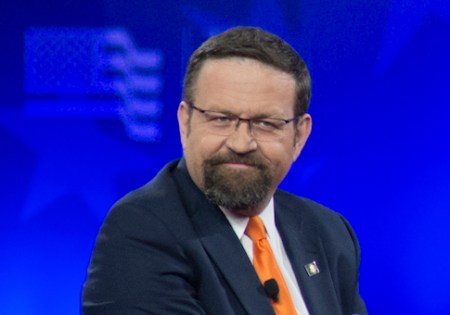 Sebastian Gorka / AP
Today, Gorka sits at the apex of power in the White House as an aide to White House Chief Strategist Steve Bannon. As deputy assistant to the president, Gorka is the key national security figure on the Strategic Initiatives Group, currently led by Trump’s son-in-law Jared Kushner, Bannon and Chief of Staff Reince Priebus and made up of mainly business experts.
************************************
World War II bomber pilots liked to say if you’re not taking flak, you’re not over the target. By any measure, Sebastian Gorka, a counterterrorism adviser to President Donald Trump, is in the eye of an unprecedented flak storm from liberal press outlets. The enemy fire proves he must be doing something right thing.
“Look, these attacks are just too predictable,” Gorka said in an interview. “As they say in the military, ‘you’re only taking flak if you’re over the target.'”
For Gorka, the most revealing aspect of the many column inches devoted to the criticism is that “it’s never truly about our policies or the issues that matter most.”
“It’s always personal, always ad hominem,” he said in an interview at the Conservative Political Action Conference. “That tells you all you need to know about the other side’s true weakness. They can’t win on the merits of their case, so they ‘play the man, not the ball.'”
For the new president, Gorka is an antidote to the politically correct counterterrorism policies of the past eight years under Barack Obama.
The shift has set off controversy. Several news articles about Gorka in recent weeks were laced with personnel attacks, innuendo, and caustic comments from critics. The media assault came from the upper levels of the mainstream press including the New York Times, Washington Post, and Wall Street Journal. Other lesser publications such as Politico piled on. Vanity Fair labeled him Trump’s “jihad whisperer.”
All promoted a common—and to many observers false—narrative asserting that Gorka, deputy assistant to the president and member of the new Strategic Initiatives Group, is unqualified, anti-Islam, racist, fascist, or worse.
“I would be very concerned if the likes of Politico, the New York Times, and Washington Post were not attacking me. And Trump voters would be too,” Gorka said.
Gorka said the goals for the new Trump administration’s counterterrorism program and policies are simple. “As the president said [Friday] we will ‘obliterate’ groups like ISIS and wipe the scourge of radical Islamic terrorism from the face of the earth,” he said.
The media attacks prompted friends and supporters of Gorka on Capitol Hill and in the military and special operations community to voice their support.
“The bottom line is Sebastian Gorka’s work is a necessary tool for all special operations forces in developing critical thinking,” said an Army special operations officer familiar with Gorka’s counterterrorism lectures in Tampa, Florida, and Fort Bragg, North Carolina.
The officer said Gorka has been most valuable in helping hundreds of commandos properly identify and understand the nature of the threat posed by Islamist terrorists.
“Our biggest threat we face is tied to radical Islam,” the officer said. “We teach our Special Forces how to think, not what to think. [Gorka’s] speeches have been 100 percent factual and the reason he has spoken so often is that he has been able to connect with warrant officer candidates.”
“We’ve lived the last decade and a half of war and this is our lives. Having someone like Mr. Gorka who connects with our groups, gives us a solid foundation.”
Retired Army Lt. Gen. John M. Mulholland, a career Special Forces officer, said he has known Gorka from his counterterrorism lectures.
“Seb has always been first and foremost a patriot, dedicated to this country,” Mulholland said in an interview. “He has been very supportive to us in helping us understand the threat so we can apply our capabilities to support the nation against the unconventional warfare threat, in this case, the terrorism threat.”
Mulholland, former deputy commander of the U.S. Special Operations Command, said Gorka has helped special operations commandos to better understand the terrorism threat environment.
“Seb is one of those guys we always turn to to help us understand the threat, and he’s a great friend and supporter of our community and our mission and in helping us in our own endeavor to master the environment,” he added.
Retired Army Lt. Gen. Charles T. Cleveland, former commander of the Army Special Operations Command, also praised Gorka.
“What distinguished [Gorka] was the time he took to understand how the special operations soldiers, many who had multiple tours in the fight, saw the challenges and were dealing with them,” Cleveland said. “As a result, his instruction was crisp, relevant, and a useful part of their education on how to think about today’s threats, especially terrorism.”
Gorka also took part on some occasions on the commander’s advisory group sessions that included former senior civilian and military officials and academic experts.
“These events provided outside opinion on command doctrine and organizational proposals, and I greatly appreciated Dr. Gorka’s participation,” Cleveland said.
Retired Marine Corps. Col. Raymond C. Damm, a professor at Marine Corps University, said recent news stories attacking Gorka harkened back to a period “yellow journalism.”
“They were a hatchet job based on innuendo and painting a story a way you want it to be received,” Damm said.
Damm said Gorka taught at the Marine Corps University and “he made us better because he made us think.”
“Dr. Gorka can be polarizing because he does not follow the party line,” Damm said. However, Gorka helped Marines to better understand what motivates the terrorist threat. “And I am sorry, but being nice to them is not the answer,” Damm said. “They are scary and hate us because they have been taught to hate us their entire lives. Iron sharpens iron. Dr. Gorka made us better while he was here.”
Stephen Sloan, professor emeritus at the University of Oklahoma, said he has known Gorka since the 1990s.
“Over the years, I have served as an informal adviser on his dissertation and was one of his mentors as he pursued his career,” Sloan said. “Sebastian has always impressed me as a man of integrity who has strong feelings and is willing to state them. I believe his concerns about the threat of terrorism as to what he regards to be the new totalitarianism, in part, reflects his family history. His father was imprisoned and almost killed as a result of his opposition to Soviet occupation in Hungary.”
Sloan said Gorka has strong loyalties to America and is proud of his work with the U.S. military and “is concerned about meeting threats to U.S. national security. I appreciate and respect his dedication.”
Sloan said he does not agree with some of Trump’s policies and is concerned about Gorka’s views on how to respond to terrorism. “However, even though we may disagree during this time of intense political debate, I support his right to state his opinions without being condemned,” he said.
The unusual political attacks were not confined to newspapers. On social media, a little-known counterterrorism expert, Michael S. Smith, has launched verbal broadsides against Gorka on Twitter. Smith also tape recorded a call from the White House adviser questioning why Smith was criticizing Gorka so loudly when he had never met him.
The criticism prompted Rep. Robert Pittenger (R., N.C.), chairman of the Congressional Task Force on Terrorism, an advisory group Smith said he worked for, to issue a statement of support.
“Dr. Sebastian Gorka is a friend and trusted adviser on efforts to combat radical Islamic terrorism and increase the safety and security of American families,” Pittenger said in a statement.
Pittenger said Gorka has spoken to more than 600 parliamentarians from 60 nations on how to combat terrorism financing, money laundering, and other national security topics.
“Dr. Gorka has provided expert testimony at these forums and I applaud President Trump for bringing him to the White House,” he said.
Clark Fonda, an aide to Pittenger, said he knew Smith from the caucus. “We used to reject his input regularly,” he said. “I always found him to be unprofessional and a burden to work with, but I was absolutely stunned to see he would record a phone call and distribute it to Newsweek.”
Fonda said Smith also falsely billed himself as a current adviser to the Congressional Taskforce on Terrorism and Unconventional Warfare headed by Pittenger.
“He never ever contributes to what we do,” he said. “I haven’t even spoken to him in the two years I’ve been here.”
Rep. Trent Franks (R., Ariz.) also backed Gorka. “I have followed the recent press and social media attacks against Dr. Sebastian Gorka and am compelled to respond with disgust at the attempt to libel this American patriot,” Franks said in a statement.
Franks criticized media attacks falsely labeling Gorka as anti-Semitic. “Having called upon his expertise on counterterrorism repeatedly in Congress and used his analysis to inform our work, I can attest that Dr. Gorka is the staunchest friend of Israel and the Jewish people,” he said.
“Sebastian Gorka’s service to the nation, his reputation, and his national security credentials are all unimpeachable and I am thrilled he is now serving in the White House as deputy assistant to President Donald J. Trump.”
Gorka has emerged in recent years as one of America’s most outspoken counterterrorism experts. He has been a professor of military theory at the Marine Corps University as well as a vice president of the Institute of World Politics.
His military consulting work has included frequent lectures at the U.S. Army Special Operations Command in North Carolina and at the U.S. Special Operations Command in Tampa, Florida.
He also was a national security editor at Breitbart.com and is a frequent Fox News Channel contributor.
Today, Gorka sits at the apex of power in the White House as an aide to White House Chief Strategist Steve Bannon. As deputy assistant to the president, Gorka is the key national security figure on the Strategic Initiatives Group, currently led by Trump’s son-in-law Jared Kushner, Bannon and Chief of Staff Reince Priebus and made up of mainly business experts.
The mission of the SIG, as it is called, is to provide the White House with greater long-term strategic options in coordination with the National Security Council that normally is focused on dealing with day-to-day issues and crises. It also brings in outside experts.
Gorka came to the attention of Donald Trump in 2015 and worked with the campaign. It was Gorka who is said to have helped Trump criticize the politically correct counterterrorism formulations of the Obama administration.
Obama demanded that government abandon the use of the term radical Islam. Instead, politically correct terms were ordered in describing terrorism, including “workplace violence” for domestic attacks, and “violent extremism”—all in an effort to avoid using the word, Islam.
Trump loudly proclaimed during the presidential campaign that the threat and enemy to be countered under his counterterrorism policies and programs would be radical Islamic terrorism.
Along with his wife, Katherine Gorka, who is an adviser at the Department of Homeland Security, the Gorkas are now one of the most important power couples in Washington.
Gorka is said to have been a key advocate for the Trump executive order banning travelers from seven states linked to terrorism.
For Gorka, the current state of international terrorism, including both al Qaeda and the Islamic State, are all part of what he has termed the “global jihadist movement” a totalitarian movement not unlike the Cold War ideological foe of Soviet communism.
The 2012 book, Fighting the Ideological War, co-edited by Katherine Gorka, includes a chapter by Gorka that seeks to identify radical Islamic terror’s threat doctrine and how to attack it.
“Although we have proven our capacity in the last 10 years kinetically to engage our enemy at the operational and tactical level with unsurpassed effectiveness, we have not even begun to take the war to al Qaeda at the strategic level of counter-ideology—to attack it at its heart—the ideology of global jihad,” he wrote.
Defeating global jihadism requires clearly understanding the enemy and then attacking its ideology, he argues, something that has been lacking in U.S. government efforts.
Gorka’s bestselling book, Defeating Jihad: The Winnable War, concludes that despite differences among the Islamic terror groups they all share a vision of an Islamic supremacist worldview that poses a danger to western civilization.
At a recent Heritage Foundation event, “iWar: Waging Warfare in the Information Age,” Gorka said U.S. operations against terrorism for the past 16 years have been “whack-a-mole”—finding and killing terrorist leaders that are replaced by others.
Gorka said critics who call his style of aggressive counterterrorism programs and their advocates “Islamophobes” are absolutely wrong.
“Half of my students were Muslim and are on the front line and paying a heavy price, more than we are in America,” he said. “This is a war inside Islam, a war for the heart of Islam—which version will be preeminent.”
The United States needs to help western-oriented Muslim states, like Jordan and Egypt, to help defeat the radical jihadists, Gorka says.
Gorka, 46, grew up in England and was part of an intelligence unit of the British Army Reserve. He received his Ph.D. in political science from Corvinus University in Budapest. He spent four years as a member of the faculty at the Program on Terrorism and Security Studies at the George C. Marshall Center in Germany.
At the White House, Gorka is working to establish new strategies and policies he hopes will shift the focus to both military and intelligence to the counter-ideological realm.
One of the first steps said to be under consideration is declaring the Muslim Brotherhood, a key element of the global jihadist movement, to be a terrorist organization.
Under Obama, the U.S. government formally designated the Muslim Brotherhood as the U.S. government’s key alternative to be supported in the war against al Qaeda and later the Islamic State. A secret directive outlining the pro-Muslim Brotherhood policy, known as Presidential Study Directive-11, could be declassified in the future as a first step in the designation of the group as a terrorist organization.
Gorka’s outspoken views on terrorism and Islam and his high profile media appearances have made him a lightning rod for liberal left news outlets.
The New York Times falsely suggested Gorka, the British-born immigrant of Hungarian émigré parents, had Nazi sympathies—despite that fact that Gorka’s father fought against both the Nazis and the Communists in Hungary.
The Post sought to portray Gorka as a minor counterterrorism specialist on the “fringes” of Washington and sought out obscure critics to denounce him. One former CIA analyst told the newspaper he was “nuts” while knowing little about Gorka.
Politico‘s profile of Gorka quoted “puzzled” security experts who criticized him for his outspoken views on Islam, jihad, and the counterterrorism views that closely align with the new president.
The Wall Street Journal quoted numerous think tank terrorism experts who said they did not believe Gorka was part of the “mainstream” of experts.
Gorka said in the interview that victory needs to be defined in the war on terrorism.
“Personally, I want the black flag of jihad to become as despised around the globe as the black, red and white swastika flag of the Nazis is today,” he said. “Then we will have won.”
Sunni States’ Military Spending Sprees Could Fall to Radical Islamists, Investigative Project on Terrorism, Yaakov Lappin, February 7, 2017

Faced with an array of developing threats to their stability and survival, Sunni Arab states have gone on an unprecedented military spending spree, buying up some of the very best capabilities the West has to offer. This development holds the potential for danger should these states be overrun by radical Islamists.
As long as the Sunni governments, guided by concerns over Iran, ISIS and other extremist actors, remain firmly in power, possessing high quality Western weapons in such large quantities will serve their goals of defending themselves.
But should the Sunni countries disintegrate into failed states, or undergo an Islamist revolution – an unfortunate yet distinct possibility in the 21st century, chaotic Middle East – Israel and the West could face an explosively dangerous development.
An organized Islamist rise to power would see the military forces of such states come under the command of belligerent decision makers. Alternatively, a failed state scenario would mean that military bases in these countries could be looted, and deadly platforms taken over.
Either way, the scenario of jihadists seizing game-changing military capabilities is real enough for Israel to acknowledge that it is planning ahead for it as a necessary precaution.
Outgoing Israel Air Force Commander Maj.-Gen. Amir Eshel spoke explicitly of this danger on Jan. 24 at the Institute for National Security Studies in Tel Aviv.
His air force must know how to act as a precise surgeon, Eshel said, able to conduct pinpoint strikes based on fine intelligence. But it also must be able to operate like a “big hammer” able to deal with large-scale threats. In the tumultuous Middle East, he said, it seems unreasonable to believe that the current situation will remain as it is. “In five, 10, or 15 years, states can fall,” he warned.
Eshel was referring to pragmatic Sunni states that, like Israel, are deeply threatened by Iran’s expanding radical Shi’ite axis, and by Salafi jihadist Sunni groups that are bent on destroying all countries that do not fit their vision of an extremist caliphate.
“Even if we have shared regional interests [with these Sunni countries now], we do not know what will happen in the future. Western military sales to these countries have reached $200 billion. This is state of the art weaponry. It is not just about the quantity,” Eshel said. It is the Air Force’s responsibility to assume that “something will collapse.”
Most of the Arab countries’ spending spree has gone into their air forces and surface-to-air missiles. The Israel Air Force must ensure it can deal with these capabilities, he added, in the event of future jihadist revolutions.
In the same week that Eshel spoke, the U.S. State Department announced the first weapons sales to Gulf states under the Trump administration, pending approval by Congress.
The sales reportedly include $400 million worth of helicopter gunship parts and air-to-air missiles to Kuwait, and $525 million for intelligence balloons to Saudi Arabia. ISIS has already built and deployed its own armed drones, according to reports, and if its goal of seizing control of state assets were realized, it could try to use some of the means on the battlefield.
Gulf Arab countries continue to break records in their rush to purchase military hardware. As part of its bid to deter Iran and boost its ability to hit the Islamic Republic’s capital, Tehran, Saudi Arabia modernized its missile arsenal in recent years, purchasing Chinese medium-range surface-to-surface missiles from China, in a deal reportedly facilitated by the CIA.
More recently, the Saudis, who are leading a coalition against Iran-backed Houthi Shi’ite rebels in Yemen, spent $179.1 billion on weapons in 2016, and intend to spend $190 billion in 2017.
Saudi Arabia in recent years has replaced Russia as the third largest defense spender in the world. Salafi jihadists would like nothing more than to topple the Saudi royal court, which they see as a Western puppet, and take control of Islam’s holiest sites, Mecca and Medina.
Last September, the U.S. approved $7 billion worth of fighter jets (F-15s and F-18s) to Kuwait and Qatar, and more than $1 billion in F-16 sales to Bahrain.
Egypt, too, has joined the shopping rush, becoming the world’s fourth largest defense importer in 2016, buying up arms from the U.S. and France, as well as submarines from Germany.
Egypt, which is in a state of deep civil conflict with the Muslim Brotherhood, is also fighting a stubborn ISIS jihadist insurgency in its Sinai province. ISIS’ terror campaign has claimed many lives among Egyptian security forces, and threatens to spread to other areas of the country.
After the fall and disintegration of Syria, Iraq, Libya, Yemen, the idea that the Middle Eastern map will remain unaltered in the coming years is far from certain.
Had Israel, according to international media reports, not bombed Syria’s nuclear weapons production facility in Deir Al-Zor in 2007, the area, now filled with ISIS, could have seen nuclear weapons fall into the hands of genocidal jihadists.
Should Sunni states begin their own nuclear programs in response to Iran’s own future nuclear efforts, the danger of atomic bombs falling into Islamist hands would increase.
There is no alternative but to plan for such contingencies in the current unpredictable regional environment, where today’s rational states could be replaced by sinister forces tomorrow.
To Fix Counterterrorism, End Obama’s ‘Countering Violent Extremism’ Strategy, PJ Media, Andrew C. McCarthy, February 5, 2017
(Please see also, Trump Seeks to End Obama’s ‘Countering Violent Extremism’ Scam. — DM)
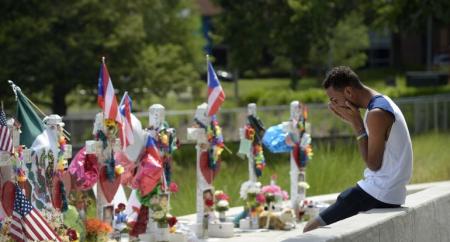
Last June, the jihadist terrorist Omar Mateen opened fire at a gay night club in Orlando, Florida, killing 49 and wounding several other revelers. It quickly became clear that Mateen was yet another “known wolf” – the term popularized by my friend and colleague Patrick Poole to describe the frequent phenomenon of terrorists who manage to plot and strike against the West notwithstanding that their patent radicalism has put them on the radar screen of law-enforcement and intelligence agents.
I have long argued that the cause of this phenomenon is the restrictions on common sense placed on our agents by political correctness, which essentially blind them to the well-known but rarely acknowledged progression from Islamic scripture to sharia-supremacist ideology (what we call “radical Islam”), to enclaves populated by adherents and sympathizers of this ideology, and inevitably to jihadist terror. This iteration of political correctness has been the backbone of Obama administration counterterrorism strategy, known as “Countering Violent Extremism” (CVE). Shortly after the Orlando attack, I delivered a speech at the Westminster Institute – entitled, “Defenseless in the Face of Our Enemies” – in which I addressed CVE. The new Trump administration is in the process of formulating its own counterterrorism strategy. Below, for what it may be worth, is the portion of my speech that addressed CVE:
Of the nearly 36,000 people who work for the FBI, fewer than 14,000 are investigative agents. National security is a crucial part of the Bureau’s portfolio, but the FBI is statutorily the lead investigative agency in virtually every category of criminal offense in federal law. At most, there are a couple thousand agents assigned full-time to counterterrorism. Those numbers are multiplied somewhat by joint federal-state efforts — the Joint Terrorism Task Forces in several metropolitan areas across the nation. Even so, because the Bureau is an intelligence agency as well as a law-enforcement agency, there are over a thousand terrorism investigations ongoing at any one time. The FBI director indicates that there is activity that must be monitored in all 50 states. Unless there are flashing neon signs of imminent attack, the small number of investigators can only spend so much time on any one suspect.
Of course, that time can be maximized, or wasted, depending on whether investigators know what they’re looking for . . . and whether they are permitted to look for it.
Clearly, the FBI spent a lot of time on Mateen. It sent confidential informants to interact with him, conducted physical surveillance, covertly monitored some of his phone calls, and interviewed him face-to-face three separate times. It concluded that his bark was bad, but his bite was non-existent. Honoring guidelines imposed on terrorism investigations, the FBI closed its case. That is, in addition to concluding that no charges should be filed, the Bureau further decided that additional monitoring of Mateen was not warranted.
In retrospect, this seems reckless. But the FBI is not incompetent, far from it. The agency knew Mateen was worth a heavy investigative investment. The problem is that the FBI answers to the Washington political class. The bipartisan Beltway has long ruled that advocacy of radical Islam is protected by the Constitution. It has long instructed its investigators, preposterously, that seditious beliefs and agitation are immune, not just from prosecution, but even from mere inquiry.
What passes for Obama’s national-security strategy, known as “Countering Violent Extremism,” exacerbates this problem. CVE delusionally forbids the conclusion that radical Islamic ideology has any causative effect on terrorist plotting. The FBI is in the impossible position of trying to conduct investigations that follow the facts wherever they lead, while fearing that such investigations — by illuminating the logical progression from Islamic scripture to sharia supremacism to jihadist terror — will enrage its political masters.
Understand: Nothing in the Constitution mandates this suicidal betrayal of national security. It flows from Washington’s lunatic concoction of an imaginary Islam — a belief system the sole tenets of which are peace and anti-terrorism. President Obama and the counsel he keeps (many of whom are connected to insidious Islamist organizations tied to the Muslim Brotherhood) insist this “anti-terrorist” “Religion of Peace” is the only viable interpretation of Islam. We are not just to believe, we are pressured to endorse, the fantasy that sharia supremacism is a “false Islam.” Its palpable mainstream status in the Middle East and elsewhere is not to be spoken of.
The FBI is bound by guidelines promulgated by the Justice Department, most of which have been in place since the administration of President George W. Bush. They impose a caveat on every investigation:
These Guidelines do not authorize investigating or collecting or maintaining information on United States persons solely for the purpose of monitoring activities protected by the First Amendment or the lawful exercise of other rights secured by the Constitution or laws of the United States.
On its face, this admonition should not be problematic. It instructs that agents may not investigate for the sole purpose of monitoring activities protected by federal law. Consequently, if agents have other legitimate purposes for investigating — such as preventing terrorist attacks or probing terrorism conspiracies — the Justice Department guidance is no bar to conducting an investigation in which a mosque or a protest rally may foreseeably come under scrutiny.
Political dissent and the exercise of religion are protected by the First Amendment. But this is a protection against being prosecuted merely for one’s words or religious observance. It is not a shield against investigation for criminal activities that are motivated by religious or political belief.
Not only may one be investigated and prosecuted for criminal offenses that are motivated by one’s beliefs or speech; it has long been the law that evidence of one’s beliefs and speech, which is often highly relevant to proving criminal intent, may be admitted in a prosecution for such offenses.
Simply stated, if you are a Muslim who believes sharia law must be imposed on society, and you tell people that Allah commands the commission of violent jihad to impose sharia, that belief and statement are admissible evidence if you are charged with bombing or terrorism conspiracy crimes. You are not being prosecuted for what you believe or what you said; you are being prosecuted for the crimes. The beliefs and statements are evidence of your state of mind — just as they are in all kinds of criminal cases beyond terrorism.
That being the case, there is nothing inherently wrong with, much less constitutionally offensive about, the concept that radical religious or political beliefs should trigger investigations. That is especially the case if those beliefs are conveyed by aggressive language, or by association with other radicals or mosques known to endorse jihadism.
Here’s an important principle we must get right: It cannot be that evidence an investigator may use to prove guilt of terrorism offenses is somehow insulated from an investigator’s suspicions about potential terrorism offenses. The goal of counterterrorism is supposed to be the prevention of jihadist attacks, not the hope that there may be a living terrorist or two still around to be indicted and tried only after Americans have been murdered.
In law enforcement, however, what matters most is not what the law allows investigators to do. It is what the investigators’ superiors allow them to do.
That brings us to “Countering Violent Extremism.” In essence, CVE holds that terrorism has nothing to do with Islam, or even with Islamist ideology that reviles the United States. President Obama has conclusively proclaimed: “Muslim American communities have categorically condemned terrorism” — end of discussion . . . as if that were an incontestable proposition or one that told the whole story.
Thus, the administration narrative continues, the real threat to our security is not Muslim terrorist plots against us but our provocation of Muslims. By the Obama administration’s lights, our national-defense measures following the 9/11 attacks have conveyed the misimpression that America is at war with Islam.
Remember, we’re in Fantasy Land, so we’re not supposed to pause at this point to ask: What, then, prompted the 9/11 attacks in the first place? What prompted the increasingly audacious series of attacks from the 1993 bombing of the World Trade Center to the 2000 bombing of the U.S.S. Cole — all during those sensitive, Islamophilic Clinton years when, we’re to believe, jihadists didn’t think America was “at war with Islam”?
Instead of asking such impertinent questions, we are simply to accept the president’s say-so that the key to our security is to “partner” with the leadership in Muslim communities — much of which just happens to be tied to or heavily influenced by the Muslim Brotherhood.
In a major 2007–08 prosecution (the Holy Land Foundation case), the Justice Department proved that the Brotherhood financed the Hamas terrorist organization to the tune of millions of dollars. That same Muslim Brotherhood is the main subject of my 2010 book, The Grand Jihad. The title is lifted from an internal Brotherhood memo seized by the FBI and presented at the Holy Land trial — a memo in which Brotherhood honchos stationed in the United States explained that their mission here is a “grand jihad” to “eliminate and destroy Western Civilization from within” — by “sabotage.”
Under CVE, we are to let our Islamist “partners” train the police, and let them be our eyes and ears in Muslim communities. Because we all share the same interests, you see, we should rest assured that these Islamist leaders will alert us if there is any cause for concern.
Makes perfect sense, right?
If it is possible, the practice of CVE is even more of a national-security disaster than the theory. This is probably best documented by my friend Stephen Coughlin in a recent and essential book: Catastrophic Failure: Blindfolding America in the Face of Jihad.
Apart from being an exceptional lawyer, Steve is a trained military intelligence officer who has studied our enemies’ threat doctrine, Islamic supremacism. Again, to be precise, it may be best to call it “sharia supremacism” because it reflects the classic sharia-based Islam that is mainstream in the Middle East. Catastrophic Failure is about how the United States government has systematically stifled the study of this doctrine since before 9/11. CVE is the paragon illustration of how the Obama administration has exacerbated this catastrophic failure — a failure that I have branded “willful blindness” since first encountering it as a prosecutor two decades ago.
As Coughlin demonstrates, CVE is no secret. For example, the Department of Homeland Security’s Office for Civil Rights and Civil Liberties — which is every bit as radical as the infamous Civil Rights Division in the Obama Justice Department — has worked with the National Counterterrorism Center to develop government-agency training programs that “bring together best [CVE] practices.”
One product of this effort is a handy two-page instruction document of CVE “Do’s and Don’ts.” The “Don’ts” tell agents to avoid, among other things, “ventur[ing] too deep into the weeds of religious doctrine and history” or examining the “role of Islam in majority Muslim nations.” The guidance further admonishes:
Don’t use training that equates radical thought, religious expression, freedom to protest, or other constitutionally protected activity, with criminal activity. One can have radical thoughts/ideas, including disliking the U.S. government, without being violent; for example, trainers who equate the desire for Sharia law with criminal activity violate basic tenets of the First Amendment.
As we’ve already observed, this interpretation of the First Amendment is patent rubbish. Again, there is no free-speech protection against having one’s words examined for intelligence or investigative purposes. Free-expression principles protect Americans against laws that subject speech to penalty or prosecution — a protection, by the way, that the Obama administration seeks to deny to speech unflattering to Islam, under a UN resolution it jointly sponsored with several Islamic nations.
In sum, Obama’s CVE strategy expressly instructs our investigators to consider only violent or criminal conduct. They are told to ignore radical ideology, particularly if it has the patina of “religious expression.” They are directed to turn a deaf ear to anti-Americanism and the desire to impose sharia, which just happens to be the principal objective of all violent jihadists, and of the Obama administration’s oft-time consultants, the Muslim Brotherhood.
Our agents, furthermore, are cautioned to avoid doing anything that smacks of subjecting particular groups to heightened scrutiny. After all, that might imply that terrorism committed by Muslims has some connection to Islam — specifically, to the undeniable, unambiguous commands to violent jihad found in Muslim scripture.
Obviously, this CVE guidance is exactly what our investigators follow when they consciously avoid scrutinizing jihadist social-media postings by visa applicants from Muslim-majority countries — such as Tashfeen Malik. She was the Pakistani immigrant who joined her jihadist husband, Syed Farook, in carrying out last December’s mass-murder attack in San Bernardino (in which 14 people were killed and dozens wounded).
There is nothing secret about CVE. Willful blindness is right there in black and white.
Islamophobic French Soldiers Shoot Muslim Terrorist Trying to Behead Them, Front Page Magazine (The Point), Daniel Greenfield, February 3, 2017
The non-existent problem of Islamic terror struck again near the Louvre, the famous French museum, as a terrorist of unknown religion and national origin shouting “Allah Akbar” (a phrase in Arabic that means everyone should be nicer to other people and not behead them) and waving a machete was shot by French soldiers occupying the historic Islamic homeland of Paris..
It’s unknown why the soldiers shot him, but some experts are blaming Islamophobia. Others complain that the soldiers used excessive force, first attempting to fight him off to prevent him from beheading them, before taking the extreme disproportionate approach of shooting him. Sadly, gun control once again failed to accomplish its stated purpose of allowing murderers to kill without any interference.
The assailant, who has been hospitalized, has already complained that his nurses are female, alive and aren’t wearing hijabs. The European Court has promised to take up his case.
While it’s unknown why the man was carrying two machetes around, it’s possible that he wanted to present them as a gift to the soldiers in the traditional fashion by slashing at their heads with it, and they, misunderstanding his intentions due to their prejudices, shot him instead.
Either way it’s a tragedy and we should not jump to any conclusions, but we should welcome more refugees, as long as they’re Muslim, because we don’t want any religious tests, except for non-Muslims.
What we really should take away from this is that it has nothing to do with Islam, but possibly with Islamophobia, and we will shortly be interviewing a number of moderate Muslim Brotherhood spokesmen, most of whom aren’t carrying machetes, but who are very concerned about the Islamophobic backlash and the ability of French soldiers to shoot back.
Al Qaeda Chief: Use of Female Guard Denies Him Justice, Violates Muslim Rights, Judicial Watch, February 2, 2017
An Al Qaeda leader and close associate of 9/11 mastermind Khalid Sheikh Mohammed (KSM) accused the U.S. government of denying him justice because a female guard escorted him to a recent court hearing in violation of his Islamic religious beliefs. His name is Abd al Hadi al Iraqi, one of 17 high-value prisoners at the U.S. military compound in Guantanamo Bay, Cuba and he’s being tried for running Al Qaeda’s army in Afghanistan, ordering attacks against American and coalition forces and civilians.
Judicial Watch was present at Hadi’s proceedings and has covered almost all the Military Commission hearings since KSM’s arraignment in 2008. The Department of Defense (DOD) approved Judicial Watch to monitor the terrorist trials as a Non-Governmental Organization (NGO) and Judicial Watch attorneys, investigators and reporters have witnessed a deep commitment to justice by military and civilian lawyers involved in the proceedings. Trials and hearings are held in a specially constructed, top security courtroom at the Naval Station in southeastern Cuba. Judicial Watch has also covered every proceeding conducted by President Obama’s special Guantanamo Periodic Review Board (PRB) via live broadcasts at the Pentagon. Comprised of senior officials from the departments of Defense, Homeland Security, Justice and State, the board reviews whether continued detention of certain individuals remains necessary to protect against significant threat to the security of the United States.
The charges against Hadi, an Iraqi national in his 50s, extend more than ten pages and outline his relationship with Osama bin Laden and plans to execute Al Qaeda’s objectives of “killing Americans and other civilians.” He is also charged with killing a U.S. solider, injuring and killing numerous German soldiers and planning a number of other attacks. In 2002, Hadi and KSM plotted to assassinate Pakistani President Pervez Musharraf, according to his DOD charging document. At the same time, KSM gave Hadi $100,000 for Al Qaeda operations and Hadi ordered numerous attacks against coalition forces in Afghanistan as well as civilians working for the United Nations. Hadi was captured in Gaziantep, Turkey while traveling from Afghanistan to Iraq in October 2006, the military file states.
During a recent arraignment in Gitmo, Hadi refused to be transferred to the courtroom by a group of guards that included a female because being touched by a strange woman violates his religious beliefs. His attorneys asked the military judge to replace the female guard with a man, but the judge refused. No criminal justice system in the world allows the defendant to decide the rules of the court. Furthermore, sidelining a woman at the request of the defendant goes against any moves the military has made to treat men and women equally. Hadi was eventually brought into the courtroom against his will, shackled into a wheelchair with straps that resembled a seatbelt on an airplane. He waved his arms, requesting permission to address the court and the military judge allowed it. Hadi rambled on about his religious rights and said that when a female guard tries to escort him he will not be able to meet with his lawyers and won’t come to court. “So I don’t know how we can achieve justice here,” he told the judge. A Middle Eastern news report on Hadi’s arraignment points out that the Islamic State is notorious for raping helpless Kurdish women and no extremist organization, including Al Qaeda, complains that it violates Islamic rules.
In 2015 Hadi’s attorneys filed a request for religious accommodation with the Office of Military Commissions in an effort to dictate the compound’s guard schedule. The document says Hadi is a “devout Muslim” and it’s a violation of his Islamic faith to have physical contact with females that aren’t his wife or close relatives. “Islam is two things—worship and rules,” the document states. “Both come from God as revealed to the Prophet.” The document proceeds to reveal that Hadi has been forcibly extracted three times because of his religious beliefs and that he will continue to resist when a female guard is assigned to him. “If female guards must have physical contact with me to bring me to meetings with my attorneys or to court, my faith requires me to refuse those movements, and I will continue to refuse them…”
President Trump is Right to be Angry at Australian PM, Front Page Magazine (The Point), Daniel Greenfield, February 2, 2017
(Please see also, WTF! Obama to import 1,800 Muslim illegals from Australia. President Trump is angry with Obama and Turnbull because both consider America a garbage dump. — DM)
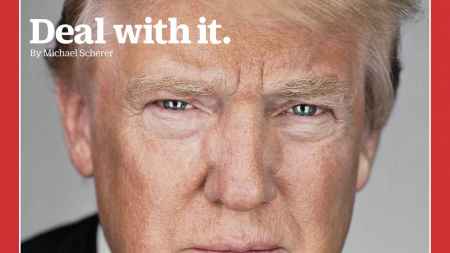
Obama arranged to take in large numbers of illegal, mostly Muslim migrants, that Australia did not want. The deal was made after an election in which voters had very explicitly rejected that position.
The move, like so many others, including those aimed at Jews and Cuban-Americans, was part of a malicious pattern of political vandalism by a defeated movement. Knowing the situation, Australian PM Malcolm Turnbull should never have agreed to it. Just as the United States would not angry [sic?] to say, accept the handover of Sydney to us by an angry outgoing Australian government determined to do as much damage as possible on the way.
It’s common sense and common decency.
Turnbull just saw a way to get rid of an irritating problem and didn’t care that the arrangement would poison relations with the next administration. And he should have.
It wasn’t Trump who torched relations with Australia. It was Turnbull who torched relations with America. He knew that the next United States government would hate the deal and that he was making an arrangement with a lame duck who didn’t really have the authority to make it anymore.
With the phone call, Turnbull had the opportunity to drop the deal once he saw President Trump was opposed to it. Considering the dubiousness of the whole thing, it would have been the sensible thing to do. Instead Turnbull prioritized dumping Muslim illegal migrants on America over his relationship with the United States.
Instead of viewing America as an ally, Turnbull saw it as a dumping ground for people even he didn’t want.
Is anyone really surprised that this infuriated Trump? Forget all the pious lectures about how close allies are treated. Turnbull was the one abusing the alliance. It wasn’t Trump making unreasonable demands of Australia. It was Turnbull insisting that Trump ignore the wishes of his own voters while creating a national security problem for America.
According to the Washington Post, during his call with Turnbull, Trump said the Obama administration’s agreement to take in 1,250 refugees from an Australian detention center was “the worst deal ever,” and accused the country of seeking to send the “next Boston bombers” to the United States. Trump abruptly ended the call with the leader of one of the United States’ closest allies before its scheduled conclusion, the Post reported.
After reports about the phone call started to circulate, Trump took to Twitter to call the Obama administration’s deal “dumb.”
Andrew Bolt at Australia’s Herald Sun has some common sense commentary.
Turnbull thought he could outsmart Donald Trump and trap him into taking 1250 of our boat people.
Huge mistake, and now he’s been humiliated.
There is no surprise that an angry Trump attacked Turnbull in their call at the weekend and hung up halfway through, after just 25 minutes.
What did Turnbull expect?
This political disaster was always on the cards from the moment Turnbull announced, on November 13 last year, that he’d signed a deal with then US president Barack Obama to take our boat people detained on Nauru and Manus Island.
That was very dumb because just five days earlier Trump had been unexpectedly elected the next president, having campaigned hard against exactly this kind of thing.
Trump is angry. And he’s right to be angry.




 anneinpt
 artaxes
 danmillerinpanama
 davidking1530
 Peter Hofman
 Joseph Wouk
 Peter
Peter Louisiana Steve
 WarSclerotic
Recent Comments