Archive for the ‘Iran / Israel War’ category

Op-Ed The consequences of a bad deal with Iran

July 26, 2015

Op-Ed The consequences of a bad deal with Iran, LA Times, John Bolton, July 26, 2015

American weakness has brought us to this difficult moment. While we obsessed about its economic discomfort, Iran wore its duress with pride. It was never an even match. We now have to rely on a tiny ally to do the job for us. But unless we are ready to accept a nuclear Iran (and, in relatively short order, several other nuclear Middle Eastern states), get ready. The easy ways out disappeared long ago.

***************************

President Obama has made an art form of attacking his opponents rather than substantively defending his own policies, most recently regarding the Vienna agreement on Iran’s nuclear program. Essentially, Obama argues that we must either accept his wretched deal or go to war to prevent Iran from acquiring nuclear weapons.

As is typical, Obama posits the wrong choice, apparently to distract from the unpleasant reality that the agreement won’t work. It will not prevent Iran from getting nuclear weapons. So the real choice we are faced with is dealing with the consequences of military action or the consequences of a nuclear Iran. Neither is palatable, but the latter is far worse. If the real objective is stopping Iran from getting nuclear weapons, preemptive military action is now inescapable.

This rock-and-hard-place outcome has long been foreseeable. Iran’s dogged determination to become a nuclear-weapons state was fiercer and stronger than the West’s frail response. Assuming Iran scrupulously complies with every provision agreed to in Vienna — an absurdly unlikely scenario given the ayatollahs’ objectives and history — its ambitions for nuclear weapons will simply have been delayed eight to 10 years.

In all likelihood, the ayatollahs are already at work violating the accords. After all, Iran has systematically breached its voluntarily-assumed obligations under the Nuclear Non-Proliferation Treaty for more than 30 years. Now the president’s deal will allow Iran to keep the fruits of its violations. Yes, the deal includes restrictions on uranium enrichment, but Tehran can retain its enrichment program, with guaranteed international assistance in improving it. These concessions are fatal mistakes.

Moreover, Iran’s ballistic missile efforts — its development of the means to deliver nuclear weapons all over the world — will barely be touched. Nor does the deal in any way address Iran’s clandestine weaponization efforts, which it has denied and hidden from the International Atomic Energy Agency with great skill.

Last week, the news that the administration has not even seen the texts of two agreements between the energy agency and Iran, both crucial to implementation of the Vienna accords, only raises further doubts. President Obama must provide the texts of these “side deals” to Congress before any serious consideration of the overall agreement is possible.

Some critics of Obama’s plan advocate scuttling the deal and increasing economic sanctions against Iran instead. They are dreaming. Iran and the United States’ negotiating partners have already signed the accords and are straining at their leashes to implement them. There will be no other “better deal.” Arguments about what Obama squandered or surrendered along the way are therefore fruitless. As for sanctions, they were already too weak to prevent Iran’s progress toward the bomb, and they will not be reset now. To paraphrase Bruce Springsteen, “These sanctions are going boys, and they ain’t coming back.”

Patrick Clawson, the director for research at the Washington Institute for Near East Policy, provided the most recent thumbs-down assessment of sanctions: “Iran has muddled through the shock of the sanctions imposed in 2012, and its structural [economic] problems are not particularly severe compared to those of other countries.” He estimates Iran’s nuclear and terrorism-support programs to cost only about $10 billion annually. No wonder administration officials have testified that sanctions (including those imposed piecemeal before 2012) did not slow Iran’s nuclear efforts.

Nor will the deal’s “snapback” mechanism (intended to coerce Iran back into compliance if it breaches its obligations) change that reality. Tehran’s belligerent response is expressly stated in the agreement’s text: “If sanctions are reinstated in whole or in part, Iran will treat that as grounds to cease performing its commitments … in whole or in part.” Tehran does risk losing some future economic benefits should sanctions snap back, but by then it will have already cashed in the assets the deal unfreezes and signed new lucrative trade and investment contracts.

Once those benefits begin flowing all around, the pressure on world governments will only increase to ignore Iranian violations, or to treat them as minor or inadvertent, certainly not warranting the reimposition of major sanctions. The ayatollahs have dusted off Lenin’s barb that “the capitalists will sell us the rope with which we will hang them,” and applied it to the age of nuclear proliferation.

If diplomacy and sanctions have failed to stop Iran, diplomacy alone will fail worse. Like it or not, we now face this unpleasant reality: Iran probably will violate the deal; it may not be detected doing so and if detected, it will not be deterred by “snapback” sanctions. So we return to the hard question: Are we prepared to do what will be necessary to stop Iran from getting nuclear weapons?

Obama most certainly is not, which means the spotlight today is on Israel.

If Israel strikes, there will be no general Middle East war, despite fears to the contrary. We know this because no general war broke out when Israel attacked Saddam Hussein’s Osirak reactor in 1981, or when it attacked the North Korean-built Syrian reactor in 2007. Neither Saudi Arabia nor other oil-producing monarchies wanted those regimes to have nuclear weapons, and they certainly do not want Iran to have them today.

However, Iran may well retaliate. At that point, Washington must be ready to immediately resupply Israel for losses incurred by its armed forces in the initial attack, so that Israel will still be able to effectively counter Tehran’s proxies, Hamas and Hezbollah, which will be its vehicles for retaliation. The United States must also provide muscular political support, explaining that Israel legitimately exercised its inherent right of self-defense. Whatever Obama’s view, public and congressional support for Israel will be overwhelming.

American weakness has brought us to this difficult moment. While we obsessed about its economic discomfort, Iran wore its duress with pride. It was never an even match. We now have to rely on a tiny ally to do the job for us. But unless we are ready to accept a nuclear Iran (and, in relatively short order, several other nuclear Middle Eastern states), get ready. The easy ways out disappeared long ago.

Congress can’t see the P5+1 side deals available to Iran’s Parliament

July 25, 2015

Congress can’t see the P5+1 side deals available to Iran’s Parliament, Dan Miller’s Blog, July 25, 2015

(The views expressed in this article are mine and do not necessarily reflect those of Warsclerotic or its other editors. — DM)

Iran scam Part III

Kerry says that although he has neither read nor even seen the”classified” side deals between Iran and the IAEA about the “possible military dimensions” of Iran’s nuclear program, he has been fully briefed, knows “exactly” what they say and will brief Congress in closed session.

Parts I and II of this series deal with the bases for and absurdities of the January 14th U.S. approval of the Joint Comprehensive Plan of Action. From a national security perspective, the published “deal” was absurd even without recently discovered but secret and “classified” side deals about the military dimensions of Iran’s nuclear program. With them, the “deal” has gone from merely absurd to insane.

The “deal” and U.S. law

The  nuke deal provides that the UN International Atomic Energy Agency (IAEA) will

negotiate separately with Iran about the inspection of a facility long-suspected of being used to research long-range ballistic missiles and nuclear weapons.

The Iran Nuclear Agreement Review Act of 2015, signed by Obama on May 22, 2015,

amends the Atomic Energy Act of 1954 to direct the President, within five days after reaching an agreement with Iran regarding Iran’s nuclear program, to transmit to Congress:

the text of the agreement and all related materials and annexes; . . . [Emphasis added.]

It does not exclude any related materials, “classified” or not such as “side deals,” from those required to be provided to the Congress. However, they have been “classified” and cloaked in secrecy to achieve that end.

The side deals

We do not know precisely what the side deals say; only the signatories, Iran and the IAEA, know. However, according to an article titled Iran Bombshell: It Will Inspect Itself,

This week brought the stunning news that Senator Tom Cotton (R., Ark.) and Representative Mike Pompeo (R., Kan.) had discovered, during a meeting with IAEA officials, the existence of secret side deal between the IAEA and Tehrana side deal that will not, like the main nuclear agreement, be shared with Congress. So critics of the agreement were understandably eager to hear an explanation from Secretary of State John Kerry when he and other senior administration officials testified before the Senate Foreign Relations Committee yesterday. [Emphasis added.]

The hearing produced a new bombshell: In its investigation of Iran’s past nuclear-weapons-related work, the IAEA will rely on Iran to collect samples at its Parchin military base and other locations. [Emphasis added.]

. . . .

In his questioning of administration witnesses, Risch said:

Parchin stays in place. Now, does that sound like it’s for peaceful purposes? Let me tell you the worst thing about Parchin. What you guys agreed to was [that] we can’t even take samples there. The IAEA can’t take samples there. [Iranians are] going to be able to test by themselves! Even the NFL wouldn’t go along with this. How in the world can you have a nation like Iran doing their own testing? [Emphasis added.]

. . . Are we going to trust Iran to do this? This is a good deal? This is what we were told we were going to get when we were told, “Don’t worry, we’re going to be watching over their shoulder and we’re going to put in place verification[s] that are absolutely bullet proof”? We’re going to trust Iran to do their own testing? This is absolutely ludicrous.

The issue became even more interesting when Senator Robert Menendez (D., N.J.), who learned about the side deal from Risch’s question, had the following exchange with Kerry:

Menendez: “Is it true that the Iranians are going to be able to take the samples, as Senator Risch said? Because chain of custody means nothing if at the very beginning what you’re given is chosen and derived by the perpetrator.”

Kerry: “As you know, senator, that is a classified component of this that is supposed to be discussed in a classified session. We’re perfectly prepared to fully brief you in a classified session with respect to what will happen. Secretary Moniz has had his team red-team that effort and he has made some additional add-ons to where we are. But it’s part of a confidential agreement between the IAEA and Iran as to how they do it. The IAEA has said they are satisfied that they will be able to do this in a way that does not compromise their needs and that adequately gives them answers that they need. We’ve been briefed on it, and I’d be happy to brief you.” [Emphasis added.]

Menendez: “My time is up. If that is true, it would be the equivalent of the fox guarding the chicken coop.”

Here’s a video of Sen. Menendez questioning Kerry. The interesting part begins at about 10:00 into the video.

Kerry acknowledged that he had neither read nor even seen the side deals but that he and his scientific expert, Secretary Moniz — who leads the effort to uncover the non-existence extent of any “possible military dimensions” (PMD) of Iran’s nuke activities — have been fully briefed and know “exactly” what the side deals say. They promised to tell members of Congress in closed session.

A blast from the past

A blast from the past

Kerry and Moniz, like others in the Obama administration, are committed to the “deal” and to having the Congress accept rather than reject it. Kerry would be very “embarrassed” if the “deal” were killed. So would Obama. It is reasonable to expect that any briefings they provide will be conducted with those goals firmly in mind — just as it is reasonable to expect that Iranian inspections of, and collection of samples from, Parchin and other military sites will be conducted with the goal of negating the existence of any “possible military dimensions.”

Are there additional side deals that have yet to be discovered and reported? At this point, probably only Iran and the IAEA know.

It’s “Déjà vu all over again”

In a “blast from the past,” the UN agency charged with ensuring that all of Syria’s chemical weapons were disposed of properly did not do so:

International inspectors failed to stop Syria from stockpiling chemical weapons, in spite of an international agreement in 2013, according to a new report by the Wall Street Journal on Friday. International inspectors were skeptical of Syria’s claims to have disposed of its stockpiles, but were afraid that reporting violations would destroy the overall deal: “Members of the inspection team didn’t push for answers, worried that it would compromise their primary objective of getting the regime to surrender the 1,300 tons of chemicals it admitted to having.” [Emphasis added.]

. . . .

The Syrian guards assigned to inspections convoys also drove slowly, failed to destroy chemical weapons when asked to do so, and appeared to be intermingled with Iranian soldiers who were guarding Syrian chemical weapons sites. As a result, Syria remains unaccountable.

The IAEA faces comparable difficulties in evaluating Iran’s “possible military dimensions” and, if reports about the side deals are even partially accurate, will continue to bow to Iranian interests in denying the existence of those dimensions.

Conclusions

The “possible military dimensions” of Iran’s nuclear program are why a “deal” was deemed necessary. Aside from its military dimensions, there would have been few objections to a peaceful Iranian nuclear program devoted to electrical generation, medical research and the like. Iran’s conduct over the years and continuing through the present has belied its claims about the exclusively peaceful nature of its actions.

The Obama administration seeks to keep the members of Congress — and the “little people” who elect them — ignorant of gaping holes in the P5+1 “deal,” particularly those relevant to Iran’s militarization of nukes, the most important of all gaping holes thus far discovered. It is now obfuscating, and will continue to obfuscate, the IAEA – Iran side deals.

As a signatory to the side deals with the IAEA, Iran has the texts. The Iranian parliament will approve or reject the “deal,” apparently after the sixty day period granted to the U.S. Congress to review it. The Iranian parliament will be subject to pressures and obfuscations by the Khamenei regime, their nature depending on whether it wants the deal to be approved or rejected. Between shouts of “death to America” and “death to Israel,” Khamenei has given mixed signals about his desires. The Iranian parliament, unlike the U.S. Congress, will likely see the texts of the side deals if, as is also likely, they drastically limit IAEA investigations of Iran’s nuke militarization activities and hence enhance the “deal’s” appeal.

By whom have the texts of the side deals been “classified?” The Obama administration? Treating the texts as “classified” is very likely a ploy to avoid Congressional and public scrutiny. Kerry and Moniz claim to know “exactly” what the unread side deals say, and contend that they will tell members of Congress, in closed session, what they know. They will do so with the goal of making the “deal” appear to be as good for Obama as they can. They may very well persuade many if not most Democrats to approve the “deal.”

If the Obama administration even approached being as transparent as Obama has often claimed, He would waive all relevant classifications and allow the briefings to be in open, rather than closed, session, with the full texts of all side deals before the members of the Congress and available to the public at large. He won’t. He could (but won’t) be threatened with impeachment for blocking legislative action by the Congress. Even if Obama were threatened, He would know it to be an empty gesture; the Senate would reject any bill of impeachment adopted by House.

At least until Obama has left office (hopefully, in January of 2017), we are stuck. Like Obama’s America, Israel, perhaps in conjunction with Saudi Arabia and other Arab nations, has the ability to destroy Iran’s nuclear weaponization facilities which threaten them. Whether they, unlike Obama’s America, have the will to do it is a different matter.

ADDENDUM

According to a Washington Examiner article posted this evening,

House Speaker John Boehner and Senate Majority Leader Mitch McConnell insisted in a letter to President Obama that the administration hand over any side agreements between Iran and the IAEA as well, saying that’s what’s required by a law passed earlier this year giving Congress a chance to review the deal.

How Israel Might Destroy Iran’s Nuclear Program

July 17, 2015

How Israel Might Destroy Iran’s Nuclear Program, National Review Online, Daniel Pipes, via Middle East Forum, July 16, 2015

1505Israeli alternatives in dealing with the Iranian nuclear threat

The Vienna deal has been signed and likely will soon be ratified, which raises the question: Will any government intervene militarily to stop the nearly inevitable Iranian nuclear buildup?

Obviously it will not be the American or Russian governments or any of the other four signatories. Practically speaking, the question comes down to Israel, where a consensus holds that the Vienna deal makes an Israeli attack more likely. But no one outside the Israeli security apparatus, including myself, knows its intentions. That ignorance leaves me free to speculate as follows.

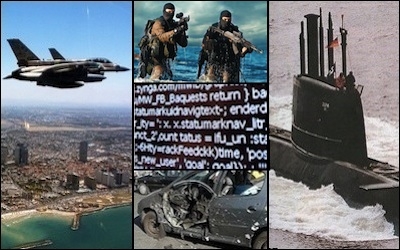
Three scenarios of attack seem possible:

Airplanes. Airplanes crossed international boundaries and dropped bombs in the 1981 Israeli attack on an Iraqi nuclear installation and in the 2007 attack on a Syrian one, making this the default assumption for Iran. Studies show this to be difficult but attainable.

Special ops. These are already underway: computer virus attacks on Iranian systems unconnected to the Internet that should be immune, assassinations of top-ranking Iranian nuclear scientists, and explosions at nuclear installations.

Presumably, Israelis had a hand in at least some of these attacks and, presumably, they could increase their size and scope, possibly disrupting the entire nuclear program. Unlike the dispatch of planes across several countries, special operations have the advantage of reaching places like Fordow, far from Israel, and of leaving little or no signature.

Nuclear weapons. This doomsday weapon, which tends to be little discussed, would probably be launched from submarines. It hugely raises the stakes and so would only be resorted to, in the spirit of “Never Again,” if the Israelis were desperate.

Of these alternatives, I predict the Netanyahu government will most likely opt for the second, which is also the most challenging to pull off (especially now that the great powers promised to help the Iranians protect their nuclear infrastructure). Were this unsuccessful, it will turn to planes, with nuclear weapons as a last resort.

Exclusive Interview – Former Israeli Ambassador Michael Oren

July 17, 2015

Exclusive Interview – Former Israeli Ambassador Michael Oren, Blackfive, July 16, 2015

Why do some in the press want to discredit Oren’s roots?  Possibly because the Ambassador is publicly warning that the Obama Administration is setting a dangerous precedent concerning the Iranian nuclear deal.  As Daniel Silva profoundly wrote in his latest book, The English Spy, “Now the president’s confronted with a world gone mad, and he doesn’t have a clue as to what to do about it.”

***************************

The following interview and book review is a special for BlackFive readers provided by Elise Cooper.  You can read all of our book reviews and author interviews by clicking on the Books category on the right side bar.

Former Israeli Ambassador Michael Oren’s latest book Ally is a riveting description of the relationship between Israel and the United States.  Readers get a behind the scenes look at how the Obama Administration has a one sided point of view. Through his numerous notes and direct insight he tells of the struggles Israel has had with the Obama Administration, especially regarding the Iranian nuclear deal.  He warns that Israel is in existential danger, that his only agenda is a reality check regarding this administration’s policies toward Israel. Blackfive.net interviewed him about his book and the Iranian nuclear deal.

He gave an exclusive to Blackfive.net, stating that he only tells those people “who come to work with me about this clip.  I ask them to watch it so that they will understand me.”  The clip (https://www.youtube.com/watch?v=ImtrifoxW4c) is about the Battle of the Bulge with interviews from participants including Oren’s father, Lester Bornstein, a US Army Corps Engineer whose duty was to clear roads and build bridges during World War II.  Yet, in the Ardennes Forest in France on December 16, 1944, Lester along with his friend Jimmy Hill became infantrymen to help fend off the German advance, which had taken the American military off guard.  He and his friend bravely disabled the first German tank in line, forcing a halt in the advance.

Oren, born in America, feels a kinship with America’s culture, principles, and spirit.  He remembers his father telling the family war stories and during his first combat mission in the war, Operation Peace for the Galilee, thought of his father’s experience, wondering “how I would conduct myself under fire.”

Throughout the book Oren emphasizes the closeness he feels with both America and Israel.  Yet, some in the media like Newsweek’s Jonathan Broder attempt to discredit him by writing, “The American-born Oren, who renounced his U.S. citizenship and now serves as a lawmaker in Netanyahu’s right-wing coalition, transforms from a measured historian into a breathless polemicist.” This is anything but the truth. Oren noted, “By Federal law any American who officially served a foreign county had to renounce their US Citizenship. My loyalties to the United States and the Jewish State are mutually validating.”

He wrote in the book how his love for America is filled with gratitude. “From the time that all four of my grandparents arrived on Ellis Island, through the Great Depression, in which they raised my parents, and the farm-bound community in which I grew up, America held out the chance to excel. True, prejudice was prevalent, but so, too, was our ability to fight it. Unreservedly, I referred to Americans as ‘we.’ The United States and Israel, are both democracies, both freedom-loving, and similarly determined to defend their independence. One could be — in fact, should be — a Zionist as well as a patriotic American, because the two countries stood for identical ideals.” Except now Israel is being thrown under the bus with the Iranian nuclear deal.

Why do some in the press want to discredit Oren’s roots?  Possibly because the Ambassador is publicly warning that the Obama Administration is setting a dangerous precedent concerning the Iranian nuclear deal.  As Daniel Silva profoundly wrote in his latest book, The English Spy, “Now the president’s confronted with a world gone mad, and he doesn’t have a clue as to what to do about it.”

Oren noted to blackfive.net about another irrational period in history and compared it to the current situation; “Lets remember one infamous example, when the Nazis pursued their insane ends.  Even during the last days of World War II, as the Allied armies liberated Europe, they diverted precious military resources to exterminating Jews.  The Israeli position is that this Iranian regime is irrational. Unlike Israel, which is in Iran’s backyard, the US is not threatened by the proximity of national annihilation. This is about our survival as a people. It’s about our children and grandchildren. What may look like an academic debate here in America is for us in Israel a matter of life and death.”

Asked if he agrees with the quote from former CIA Director Michael Hayden, who said of Iran, “the enemy of our enemy is still our enemy,” Oren told blackfive.net, that Americans should not forget that Iran “wants to wipe Israel off the face of the earth, something they have been calling for the last thirty years.  Let’s not forget they also attempted to blow up the Israeli Embassy in Washington DC and assassinate the Saudi Ambassador. Iran and its terrorist groups have killed more Americans than any other terrorist group outside of Al Qaeda.  This does not even include those in the American military who were killed by Iran during the Iraq War.  They are not friends.”

But a true friend, an ally, is defined by Oren as assisting “in saving American lives on and off the battlefield. On an ideological level, an ally is a country that shares America’s values, reflects its founding spirit, and resonates with its people’s beliefs. And an ally stimulates the U.S. economy through trade, technological innovation, and job creation. The two countries I love need to unite on issues vital to both and yet they remain separated ideologically and even strategically. However, on issues of security, anybody in the Israeli military, in the intelligence community, will tell you that security relations between Israel and the United States are better now than probably any other time in the past.”

In the Middle East Israel is America’s staunchest ally. Even though the Obama Administration appears not to recognize this, Americans do. A recent Gallup Poll shows that two out of three Americans sympathize with Israel, with support for Israel in the United States rising, not declining.

Ambassador Oren wrote this book, Ally, to send a clear message, “A friend who stands by his friends on some issues but not others is, in Middle Eastern eyes, not really a friend. In a region famous for its unforgiving sun, any daylight is searing.” Ally is a must read, because it alerts people that Israel faces the greatest challenge they have faced since World War II.

Column One: Obama’s age of nuclear chaos

July 16, 2015

Column One: Obama’s age of nuclear chaos, Jerusalem Post, Caroline Glick, July 16, 2015

ShowImage (2)Iranian Foreign Minister Mohammad Javad Zarif gestures as he talks with journalist from a balcony of the Palais Coburg hotel where the Iran nuclear talks meetings are being held in Vienna, Austria. (photo credit:REUTERS)

Not only will the US and its allies remove the sanctions imposed on Iran over the past decade and so start the flow of some $150 billion to the ayatollahs’ treasury. They will help Iran develop advanced centrifuges.

They even committed themselves to protecting Iran’s nuclear facilities from attack and sabotage.

Israel still may have the ability to attack Iran’s nuclear sites. If it does, then it should attack them as quickly and effectively as possible.

*********************

On Tuesday, we moved into a new nuclear age.

In the old nuclear age, the US-led West had a system for preventing the proliferation of nuclear weapons. It had three components: sanctions, deterrence and military force. In recent years we have witnessed the successful deployment of all three.

In the aftermath of the 1991 Gulf War, the UN Security Council imposed a harsh sanctions regime on Iraq. One of its purposes was to prevent Iraq from developing nuclear weapons. After the US-led invasion of Iraq in 2003, we learned that the sanctions had been successful. Saddam largely abandoned his nuclear program due to sanctions pressure.

The US-led invasion of Iraq terrified several rogue regimes in the region. In the two to three years immediately following the invasion, America’s deterrent strength soared to unprecedented heights.

As for military force, the nuclear installation that Syrian dictator Bashar Assad built in Deir a-Zour with Iranian money and North Korean technicians wasn’t destroyed through sanctions or deterrence. According to foreign media reports, in September 2007, Israel concluded that these paths to preventing nuclear proliferation to Syria would be unsuccessful.

So then-prime minister Ehud Olmert ordered the IDF to destroy it. The outbreak of the Syrian civil war three years later has prevented Assad and his Iranian bosses from reinstating the program, to date.

The old nuclear nonproliferation regime was highly flawed.

Pakistan and North Korea exploited the post-Cold War weaknesses of its sanctions and deterrence components to develop and proliferate nuclear weapons and technologies.

Due to American weakness, neither paid a serious price for its actions.

Yet, for all its flaws and leaks, the damage caused to the nonproliferation system by American weakness toward Pakistan and North Korea is small potatoes in comparison to the destruction that Tuesday’s deal with Iran has wrought.

That deal doesn’t merely show that the US is unwilling to exact a price from states that illicitly develop nuclear weapons. The US and its allies just concluded a deal that requires them to facilitate Iran’s nuclear efforts.

Not only will the US and its allies remove the sanctions imposed on Iran over the past decade and so start the flow of some $150 billion to the ayatollahs’ treasury. They will help Iran develop advanced centrifuges.

They even committed themselves to protecting Iran’s nuclear facilities from attack and sabotage.

Under the deal, in five years, Iran will have unlimited access to the international conventional arms market. In eight years, Iran will be able to purchase and develop whatever missile systems it desires.

And in 10 years, most of the limitations on its nuclear program will be removed.

Because the deal permits Iran to develop advanced centrifuges, when the agreement ends in 10 years, Iran will be positioned to develop nuclear weapons immediately.

In other words, if Iran abides by the agreement, or isn’t punished for cheating on it, in 10 years, the greatest state sponsor of terrorism in the world will be rich, in possession of a modernized military, a ballistic missile arsenal capable of carrying nuclear warheads to any spot on earth, and the nuclear warheads themselves.

Facing this new nuclear reality, the states of the region, including Jordan, Egypt, Saudi Arabia, Turkey and perhaps the emirates, will likely begin to develop nuclear arsenals. ISIS will likely use the remnants of the Iraqi and Syrian programs to build its own nuclear program.

Right now, chances are small that Congress will torpedo Barack Obama’s deal. Obama and his backers plan to spend huge sums to block Republican efforts to convince 13 Democratic senators and 43 Democratic congressmen to vote against the deal and so achieve the requisite two-thirds majority to cancel American participation in the deal.

Despite the slim chances, opponents of the deal, including Israel, must do everything they can to convince the Democrats to vote against it in September. If Congress votes down the deal, the nuclear chaos Obama unleashed on Tuesday can be more easily reduced by his successor in the White House.

If Congress rejects the deal, then US sanctions against Iran will remain in force. Although most of the money that will flow to Iran as a result of the deal is now frozen due to multilateral sanctions, and so will be transferred to Iran regardless of congressional action, retaining US sanctions will make it easier politically and bureaucratically for Obama’s replacement to take the necessary steps to dismantle the deal.

Just as the money will flow to Iran regardless of Congress’s vote, so Iran’s path to the bomb is paved regardless of what Congress does.

Under one scenario, if Congress rejects the deal, Iran will walk away from it and intensify its nuclear activities in order to become a nuclear threshold state as quickly as possible. Since the deal has destroyed any potential international coalition against Iran’s illegal program, no one will bat a lash.

Obama will be deeply bitter if Congress rejects his “historic achievement.” He can be expected to do as little as possible to enforce the US sanctions regime against his Iranian comrades. Certainly he will take no military action against Iran’s nuclear program.

As a consequence, regardless of congressional action, Iran knows that it has a free hand to develop nuclear weapons at least until the next president is inaugurated on January 20, 2017.

The other possible outcome of a congressional rejection of the deal is that Iran will stay in the deal and the US will be the odd man out.

In a bid to tie the hands of her boss’s successor and render Congress powerless to curb his actions, the day before the deal was concluded, Obama’s UN Ambassador Samantha Power circulated a binding draft resolution to Security Council members that would prohibit member nations from taking action to harm the agreement.

If the resolution passes – and it is impossible to imagine it failing to pass – then Iran can stay in the deal, develop the bomb with international support and the US will be found in breach of a binding UN Security Council resolution.

Given that under all scenarios, Tuesday’s deal ensures that Iran will become a threshold nuclear power, it must be assumed that Iran’s neighbors will now seek their own nuclear options.

Moreover, in light of Obama’s end-run around the Congress, it is clear that regardless of congressional action, the deal has already ruined the 70-year old nonproliferation system that prevented nuclear chaos and war.

After all, now that the US has capitulated to Iran, its avowed foe and the greatest state sponsor of terrorism, who will take future American calls for sanctions against nuclear proliferators seriously? Who will be deterred by American threats that “all options are on the table” when the US has agreed to protect Iran’s nuclear installations and develop advanced centrifuges for the same ayatollahs who daily chant, “Death to America”? For Israel, the destruction of the West’s nonproliferation regime means that from here on out, we will be living in a region buzzing with nuclear activity. Until Tuesday, Israel relied on the West to deter most of its neighbors from developing nuclear weapons. And when the West failed, Israel dealt with the situation by sending in the air force. Now, on the one hand Israel has no West to rely on for sanctions or deterrence, and on the other hand, it has limited or no military options of its own against many of the actors that will now seek to develop nuclear arsenals.

Consider Israel’s situation. How could Israel take action against an Egyptian or Jordanian nuclear reactor, for instance? Both neighboring states are working with Israel to defeat jihadist forces threatening them all. And that cooperation extends to other common threats. Given these close and constructive ties, it’s hard to see how Israel could contemplate attacking them.

But on the other hand, the regimes in Amman and Cairo are under unprecedented threat.

In theory they can be toppled at any moment by jihadist forces, from the Muslim Brotherhood to ISIS. It’s already happened once in Egypt.

The same considerations apply to Saudi Arabia.

As for Turkey, its NATO membership means that if Israel were to attack Turkish nuclear sites, it would run the risk of placing itself at war not only with Turkey, but with NATO.

Given Israel’s limited military options, we will soon find ourselves living under constant nuclear threat. Under these new circumstances, Israel must invest every possible effort in developing and deploying active nuclear defenses.

One key aspect to this is missile defense systems, which Israel is already developing.

But nuclear bombs can be launched in any number of ways.

Old fashioned bombs dropped from airplanes are one option.

Artillery is another. Even suicide trucks are good for the job.

Israel needs to develop the means to defend itself against all of these delivery mechanisms. At the same time, we will need to operate in hostile countries such as Lebanon, Syria and elsewhere to destroy deliveries of nuclear materiel whether transferred by air, sea or land.

Here is the place to mention that Israel still may have the ability to attack Iran’s nuclear sites. If it does, then it should attack them as quickly and effectively as possible.

No, a successful Israeli attack cannot turn back the clock. Israel cannot replace the US as a regional superpower, dictating policy to our neighbors. But a successful attack on Iran’s nuclear program along with the adoption of a vigilantly upheld strategy of active nuclear defense can form the basis of a successful Israeli nuclear defense system.

And no, Israel shouldn’t be overly concerned with how Obama will respond to such actions.

Just as Obama’s nuclear capitulation to Iran has destroyed his influence among our Arab neighbors, so his ability to force Israel to sit on the sidelines as he gives Iran a nuclear arsenal is severely constrained.

How will he punish Israel for defying him? By signing a nuclear deal with Iran that destroys 70 years of US nonproliferation strategy, allows the Iranian regime to grow rich on sanctions relief, become a regional hegemon while expanding its support for terrorism and develop nuclear weapons? Years from now, perhaps historians will point out the irony that Obama, who loudly proclaims his goal of making the world free of nuclear weapons, has ushered in an era of mass nuclear proliferation and chaos.

Israel can ill afford the luxury of pondering irony.

One day the nuclear Furies Obama has unleashed may find their way to New York City.

But their path to America runs through Israel. We need to ready ourselves to destroy them before they cross our border.

Michael Oren: Why Israel Won’t Be Celebrating the Iran Deal

July 14, 2015

Michael Oren: Why Israel Won’t Be Celebrating the Iran Deal

Michael B. Oren 7:28 AM ET Via Time 7-14-2015


[Source: Wikipedia]

(Sounding the alarm. Anyone listening? – LS)

The present deal with Iran poses a threat not only to Israel, but to the U.S. and the world

In Israel, one of the world’s rowdiest democracies, politicians rarely agree on anything. Which is why their reaction to the nuclear arms deal with Iran is so unique. For the first time in living memory, virtually all Israelis – left, right, religious, secular, Arabs, Jews – are together calling the deal disastrous.

The reasons might not be clear to many readers of the agreement. According to preliminary reports, its 100 pages contain bewilderingly complex provisions for supposedly delaying Iran from making a bomb. There are international inspections of the Iranians’ nuclear facilities but none that would actually catch them off guard. There are limits to the number of centrifuges with which Iran can enrich uranium to weapons grade, but only for a decade during which not a single centrifuge will be dismantled. And Iran can continue to research and develop more advanced technologies capable of producing nuclear weapons even faster. Most mystifying still, the deal recognizes Iran’s right to peaceful nuclear power without demanding that Iran cease promoting war throughout the Middle East and terror worldwide.

For Israelis, though, there is nothing mystifying about this picture. We see an Iranian regime that will deceive inspectors and, in the end, achieve military nuclear capabilities. We see an Iranian nuclear program that, while perhaps temporarily curtailed, will remain capable of eventually producing hundreds of nuclear weapons.

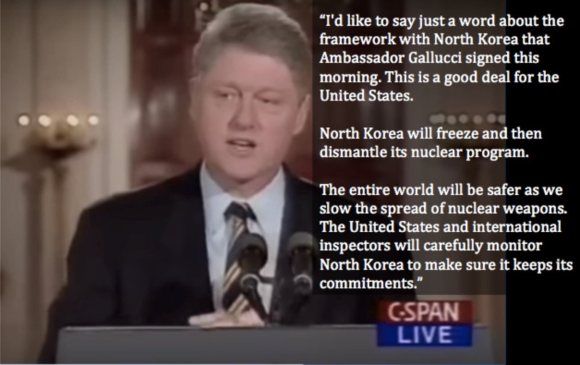
This is a picture that we’ve all seen before. Back in 1994, American negotiators promised a “good deal” with North Korea. Its nuclear plants were supposed to be frozen and dismantled. International inspectors would “carefully monitor” North Korea’s compliance with the agreement and ensure the country’s return to the “community of nations.” The world, we were told, would be a safer place.

It wasn’t. North Korea never forfeited its nuclear plants and the inspections proved useless. The community of nations is threatened by North Korean atomic bombs and the world is anything but safe. And yet, against all logic, a very similar deal has been signed with Iran.

And Iran is not North Korea. It’s far worse. Pyonyang’s dictators never plotted terrorist attacks across five continents and in thirty cities, including Washington, D.C. Tehran’s Ayatollahs did. North Korea is not actively undermining pro-Western governments in its region or planting agents in South America. Iran is. And North Korea – unlike Iran – did not kill many hundreds of U.S. soldiers in Iraq.

So why, then, are only Israelis united in opposing this deal? The answer is that we have the most to lose, at least in the short run. We know that the deal allows Iran to break out and create nuclear bombs in as little as three months, too quickly for the world to react. We know that the Ayatollahs, who have secretly constructed fortified nuclear facilities that have no peaceful purpose and have violated all of their international commitments, will break this deal in steps too small to precipitate a powerful global response. And we know that the sanctions, once lifted, cannot be swiftly revived, and that hundreds of billions of dollars Iran will soon receive will not be spent on better roads and schools. That treasure will fund the shedding of blood – of Israelis but also of many others.

Israelis know that, while the world might weather its deception by North Korea, they cannot afford to be duped by Iran. But neither, in fact, can the United States. Just last week, Iran’s President attended a rally in Tehran where tens of thousands of protesters chanted “Death to America.” The deal will better enable them to carry out that attack – if not today, then against future generations. And Iran’s Supreme Leader has publicly pledged to do just that.

The planned celebrations in Tehran and Iranian declarations of victory contrast starkly with the gloom hanging today over almost all Israelis. We believe that with stronger sanctions and tougher demands, a better deal is still possible. But we also understand that the present deal poses grave dangers not only to us, but ultimately to America and the world.

(UPDATE: Thought I’d throw this in for good measure. – LS):

Clinton

Cartoon of the day

June 18, 2015

H/t Joopklepzeiker

Iran's Iron Dome

A Countdown to War Iran Cannot Win

June 11, 2015

Op-Ed: Iran Wants A Nuclear Deal to Avoid An All-Out War it Cannot Win

By Dr. Joe Tuzara June 10, 2015 Via Israel National News


Iran must realize it’s not much more than a barrel of fish.

(‘Uh uh. I know what you’re thinking. “Did he fire six shots or only five?” Well to tell you the truth in all this excitement I kinda lost track myself. But being this is a .44 Magnum, the most powerful handgun in the world and would blow you head clean off, you’ve gotta ask yourself one question: “Do I feel lucky?” Well, do ya, punk?’ – LS)

As the world powers seek to conclude a ‘comprehensive agreement’ with Iran by the end of June, the onus is on Iran to reach a nuclear deal. However, under the highly imperfect deal on the table now, Iran would give up nothing and maintain its entire nuclear apparatus. Sanctions related to other aspects of Iran’s behavior, such as human-rights issues, support of terrorism and its ballistic-missile program would not be affected.

With all its inevitable additional imperfections, a sham deal that leaves Iran with an intact nuclear infrastructure; if signed, is a de facto recognition of the most dangerous terrorist state in the world as a threshold nuclear power.

Ideally, Iran’s existing enrichment facilities would be dismantled and there would be no nuclear enrichment possible for building weapons grade uranium and an atomic bomb. But it is almost certain that President Barack Obama will accept any deal, no matter how bad, and that he is eager for one to bolster his questionable legacy. Given US capitulation to Iranian demands, Obama has just triggered the countdown to war.

Irrational religious fanatics in Iran who seek the destruction of the state of Israel, support global terrorism and refuse to allow the monitoring of the supply chain and nuclear infrastructures through the UN nuclear watchdog (IAEA) cannot be trusted with advanced technology, let alone with a nuclear weapon. Even before a deal has been reached, Tehran has managed to circumvent the sanctions in key areas, such as laundering cash through Dubai.

Washington’s refusal to admit that nuclear diplomacy has failed becomes more evident as the Obama administration tries to cover up Iran-North Korea Nuclear cooperation and Iran’s violation of the interim agreement.

Overall, the Obama administration’s avowed intent to guarantee that Iran won’t get a nuclear weapon was offset by its secretly offering the Islamist regime a list of dangerous US concessions that will put Iran on the path to those weapons.

Iran’s past history of lying and cheating over its nuclear program is well documented.  Ayatollah Ali Khamenei’s attempt to deceive the public by claiming that the United States has a “real need for the negotiations”, when the truth is exactly the opposite, is another calculated lie.

Iranian unsatisfactory answers to the questions put to them by the IAEA about the possible military dimensions (PMD) of their nuclear program are cause for real worry. Make no mistake about it. Without a “uniquely intrusive inspection and verification regime” to prevent cheating and an extension of Iran’s “breakout capability” for at least a year, talking about a decade or more is an elaborate ruse designed to buy more time for Tehran to build an atomic weapon. After all, if Iran’s nuclear program is purely for civilian purposes, what prevents them from agreeing to vigorous IAEA inspections? What are they hiding?

A sanctions expert at the Foundation for Defense of Democracies, said the end of an arms embargo would allow Iran to become “one of the region’s preeminent military powers, maybe on a par only with Israel.”

Iran wants to retain part of its nuclear program so it could produce fuel in much smaller facilities that can be hidden, enabling it to produce a bomb in secret. Many people may not realize that every nuclear power plant produces plutonium. Plutonium and/or highly-enriched uranium are essential ingredients of nuclear bombs. If a single nuclear power reactor continues operating for a total of 30 years, it will have produced enough plutonium for at least 1,200 bombs.

The potential for smuggling, sabotage or theft at Arak, Isfahan, Bushehr and the heavily-fortified underground uranium enrichment Fordow facility, and other unacknowledged underground military sites would be substantial.

Even worse, the presence of uranium or plutonium in a messianic Islamist country is a potential target for terrorism. Imagine what a nuclear Iran would do as it doles out nuclear bombs to its jihadist proxies. This would place millions of innocent lives in danger and threaten the hope for world survival– and that’s enough evidence that the threat of nuclear terrorism from Iran is for real.

Iran could also use a nuclear weapon as not just a deterrent but as a way to give itself cover for bullying its neighbors and generally projecting more power in the region, where competition for influence is already high, and the stakes are enormous.

Additionally, other dangers inherent in nuclear power plants would remain: the potential for a major accident like Fukushima Daiichi nuclear meltdown in Japan and at the Chernobyl Nuclear Power Plant in Ukraine, which released large quantities of radioactive particles into the atmosphere that spread over much of the western USSR and Europe.

In this scenario, a catastrophic nuclear accident in Iran’s nuclear reactors could spread radiation throughout the Levant in the Mediterranean and the Maghreb. The accumulation of long-lived wastes from the reactors’ continuing operation is an unimaginable spillover waiting to happen in the most unstable and dangerous part of the world.

Thanks to Obama’s appeasement policy, Iran sees the fulfillment of its hegemonic ambition to export the 1979 Islamic revolution as a possibility. Nevertheless, Iran is walking a very tight rope where any miscalculation on its part could determine the ineluctable fate and survival of its clerical regime and cause untold deaths in its own country.  Israel, after all, is under no obligation to accept a nuclear framework under international legitimacy, that gives Iran the ability to retain a vast nuclear infrastructure enabling it to produce fuel for dozens of nuclear bombs with virtually no breakout time. It knows that a nuclear deal that does not cut off uranium, plutonium or block covert “pathways to a bomb” can lead to a swift war with Israel – but one that Tehran cannot possibly win.

If Iran obtained a nuclear bomb, Iran would be committing national suicide if it was used to try to wipe US ally Israel off the face of the earth and then go for the United States. With its own nuclear arsenal of an estimated 200 warheads, Israel alone could reduce Iran’s cities to radioactive rubble.

The well-established logic of nukes would make any war against other nuclear powers a loser for Iran. This is because powers such as the US and Israel have what it called “second-strike capability”, meaning that even if Iran got off a nuclear strike, Iran would still be destroyed by the retaliation.

Although the US “has designed and deployed” an upgraded GBU-57, a 30,000-pound bunker-buster bomb known as Massive Ordnance Penetrator (MOP) that has the ability to end Iran’s nuclear program, there is still doubt over whether the Pentagon has already provided MOPs to Israel.

Nonetheless, the Israelis and their Saudi allies have managed to come up with a roughly comparable substitute for the American MOAB Bunker Buster Bombs and have managed to convert a Boeing 707 tanker to a weaponized platform to carry such bombs.

The beta test was carried out on the Iranian missile base in Yemen during the recent Saudi operation Decisive storm against the Iranian proxies (Houthis) and their Islamic Revolutionary Guards (IRGC) handlers. Finally, the Israeli-Sunni coalition now has a feasible military option against the Iranian nuclear facilities.

Beyond their rhetoric the Iranian leadership understands that they cannot win a military contest against the US or [Israel], nor hold the Strait of Hormuz or the [Gulf of Aden] for longer than a few days. For Iran then, as with Israel, regional war is far from desirable.

Alternately, if Israel decides to go it alone and attack Iran, Iranian retaliation would be unlikely to produce an escalation leading to regional war.

Time is running out. And before it is too late, the Israeli leadership must act now and ask questions later. Nothing else will work. There is no other option left but a preventive strike to stop Tehran from building nuclear weapons.

(As you all know, I’m not one to advocate war.  The above highlight was merely made to  emphasize the author’s position in this grave matter. – LS)

War Weary Americans OK With Israeli Attack on Iran

June 9, 2015

Americans On Iran: Continue Present Negotiations But Okay For Israel To Bomb Facilities

By John Zogby 6/07/2015 @ 8:01PM Via Forbes


Some say we are at the final stage. Photo Credit: Getty

(With over 50,000 wounded soldiers to nurture here at home, it’s no wonder Americans want to step back.  Please support your favorite wounded warrior charity with a generous donation for those who gave so much more.   – LS)

Public opinion on the Iran nuclear deal provides mixed signals for the President and Congress, according to a new Zogby Analytics poll. On the deal itself, the poll asked 909 likely voters nationwide which of the statements represented their views more:

Continue present negotiations between the major powers and Iran that limits nuclear development by the United Nations over ten years and allow for the frequent inspections by the United Nations on exchanges for a gradual lifting of many sanctions currently in place.

OR

Stop the present negotiations and tighten the sanctions against Iran until Iran is ready to end all nuclear development, even if it means the US losing support of countries like France, Germany, and Britain.

Overall the more peaceful and diplomatic approach wins by ten points 42% to 32% for the more aggressive option, with 23% not sure. It is the demographics that are fascinating, however. Men favor the diplomatic option 48% to 36% with only 11% not sure. While the gap between the options is narrower among women (36% to continue negotiations, 28% for ending them), 33% are not sure. Support for diplomacy is reduced with age. Among 18-29 year olds, support for diplomacy is 48%-27%, but 43%-29% among 30-49 year olds, 39%-35% among 50-64 year olds, and tied at 37% among those over 65. Democrats support diplomacy and negotiations 56%-17% as do independents 40%-31%, while Republican favor a more aggressive policy 49% to 28% for continued negotiations.

But that is among a war-weary American public because on the other hand, voters do not mind the US encouraging Israel doing the dirty work. We then asked the following question:

Do you mainly support or oppose the US allowing Israel striking against Iranian nuclear sites?

By a factor of 2 to 1 American voters support the allowing Israel to strike – 45% to 23%, with 32% not sure. Support is stronger among men (56%-25%) than women (36% -21%). Age groups are supportive – 44%-30% among 18-29 year olds, 42%-21% among 30-49 year olds, 49%-20% among 50-64 year olds, and 50%-22% among those over 65. Democrats support allowing Israel to strike (36%-28%), as do independents (42%-25%). But Republicans are in favor 4 to 1 – 59% to 15%.

What should we make of this? First that Americans support active diplomacy and engagement with both Iran and the major powers. They are war weary and they will take a deal to keep the US out of harm’s way. But second, if there is to be a quicker military solution to end this problem, then let Israel do it. Few Americans will cry if Iran’s nuclear acquisition is halted but Americans cannot stomach another long term military engagement.

Bolton Supports Shock and Awe

June 2, 2015

Ambassador Bolton Says Israel Must Strike Iran Soon

By Yoni Kempinski, Ari Yashar First Publish: 6/1/2015, 10:50 AM Via Israel National News

(Iran’s nuclear clock is now reset to 20 months and counting. – LS)

Clock running out as Iran marches to nuclear arsenal with ‘legitimization’ of deal, which is part of Obama’s ‘wrong ideology.’

On the sidelines of the Israel Day Concert in New York’s Central Park on Sunday, former US Ambassador to the UN John Bolton gave a rundown of Iran’s nuclear program and the impending deal on curbing it, in an exclusive Arutz Sheva interview.

While negotiations between Iran and world powers have reached an interim agreement ahead of a June 30 deadline for a final deal, Bolton predicts that the Iran negotiations are “doomed to failure.”

“I don’t think Iran has any intention of giving up its efforts to get deliverable nuclear weapons,” said the former ambassador. “Even if a deal is signed sometime in the summer I think the ayatollahs will violate it even before the ink is dry.”

Lending credence to those suspicions, top Iranian officials have said they will start using advanced IR-8 centrifuges that are 20 times as effective as standard ones as soon as a deal is reached, even as the US asserts a deal will limit the usage of advanced centrifuges.

According to Bolton, the West doesn’t have enough knowledge about Iran’s covert nuclear program, nor does it possess any sufficient mechanism to monitor possible violations of a future deal, meaning such a deal will only “legitimize Iran’s path to nuclear weapons.”

So why is US President Barack Obama so earnestly pressing for a deal with Iran?

In Bolton’s estimation his actions stem from a belief that negotiations can change the nature of the hostile Islamic regime, because Obama “is driven by an ideology that sees American influence as part of the problem, and if he can show the ayatollahs that we are no threat to them that they will happily give up their 30-year pursuit of nuclear weapons. I just think that’s flatly wrong.”

Faced with the threat of a nuclear armed Iran, Israel will have to choose whether to strike Iran’s nuclear facilities based on estimations that within the next 20 months Iran will be able to produce a nuclear arsenal.

Israel must decide soon, he added, because once Iran has the bomb, “any attack would risk nuclear retaliation.”

In the case of an Israeli strike on Iran’s nuclear sites, the Jewish state will have Congressional pressure to help it against Obama’s antagonism to such a development, according to Bolton. Ahead of such a strike it will need to stress how the attack is part of its legitimate right to self-defense, and after the strike it will need to resupply with US aid.