Archive for the ‘Foreign policy’ category

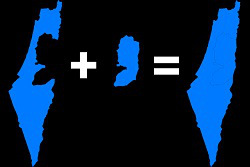
The Single State?

September 27, 2015

The Single State? The Jewish PressMichael Lumish, September 27, 2015

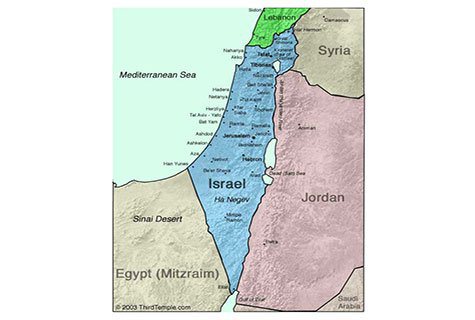
Map-of-Israel


onestate

The significance of Obama’s deal with Iran from a Jewish perspective is that Obama has basically handed Zionism over to the ayatollahs.  In two years or ten years they will decide the fate of the Jewish people, simply because Barack Obama is handing them the car keys.

In the mean time, Israel should solidify its position by declaring its final borders as it plans, and perhaps implement its response to the Iran deal.

**********************
For years I thought that the only reasonable solution to the ongoing Arab war against the Jews was the two-state solution.  A single state solution, we were told, would either undermine Israel as a democratic state or it would undermine Israel as a Jewish state.  Israel could be Jewish, democratic, or with boundaries from the Jordan River to the Mediterranean Sea, but it could not be all three at once.

Those who insist upon this formulation – and I was one for years – are raising reasonable concerns, but there is one thing that proponents of the two-state solution seem never to take into account: the Arabs do not want it.  For almost one hundred years the Palestinian-Arabs have absolutely refused to share the land and tell us on a daily basis that they will never accept Jewish sovereignty on a bit of “historic Palestine.”

There must come a point when we understand that no means no.

There must come a time when we take them at their word.  This being the case, Israel must act unilaterally because there is simply no other choice.  This should not be considered a burden.  It should be considered liberating.  Most of my readers will know that Palestinian-Arab dictator Mahmoud Abbas is, yet again, threatening to quit.  Well, I hope he does quit and I sincerely hope that after he does so Israel rips up the Oslo accords and henceforth refuses to acknowledge the PA, the PLO, Fatah, and Hamas.  It is absolutely pointless in negotiating with, or cooperating with, any of these groups because they are dishonest, utterly corrupt, and filled with the spirit of malice toward the Jewish people.

The Jews in Israel should not have to live with such violent and toxic hatred in their midst, coming from the children of the people who forced into second and third-class non-citizenship for thirteen hundred years.  The Jews are no longer dhimmis in that part of the world – and are thus no longer required to ride mules, rather than horses – and the Arabs don’t like it.

Well, I say, too bad.

The Land of Israel is the land of the Jewish people and has been for almost four thousand years, and that includes today’s boundaries of Judea and Samaria.  We are willing to share, but no one is going to tell me that Judea is Arab rather than Jewish.

This being the case, I have argued in recent years that Israel should declare its final borders, remove the IDF to behind those borders, and – as we say – toss the keys over the shoulder.  I have usually been careful, however, not to advocate for the single-state solution.  I am not Israeli and believe that it should entirely be up to the Israelis to make that determination.

I still believe so.

However, I am becoming less and less convinced that a single state that includes Judea and Samaria, and the eastern section of Jerusalem, cannot be both Jewish and democratic.  What many on the hard-left would argue is that if Israel were to claim sovereignty over the ancient Jewish lands of Judea and Samaria then it is under an obligation to give the entire Arab population in those regions fulls rights to the franchise.  They believe, of course, that doing so would threaten the Jewish character of the state, which is precisely what they want to begin with.

But this is false.

What I would recommend, if Israel were to extend its authority onto the entirety of Judea and Samaria, is offering qualified local Arabs a pathway to Israeli citizenship.  Qualification would require that any particular family or individual under consideration would have no known violent history toward Jewish people and no known history of incitement of hatred toward Jews or Israel.

Those who are not qualified for citizenship, that is, individuals or families with a history of either violence or incitement to violence would be ejected from the country.  This is neither non-democratic, nor illiberal.  The Jews are among the most persecuted and oppressed people in the history of the world.  The Romans decimated our numbers two thousand years ago and the Europeans and Arabs have kept those numbers artificially low ever since.  This being the case it is only common sense, if not basic human decency, for the Jews of Israel to protect their children by removing the threats to them.

This is no more non-democratic than throwing a rapist in prison.

As for the rest of the local Arab population in the annexed Jewish regions I recommend a pathway to full citizenship.  Like pretty much everyone else in Israel they would be required, if they wish citizenship, to give two or three years of community service.  If after that period the individual has shown himself to be free of malice toward either Jews or Israel then that individual should be offered the franchise.

This broad plan – and, yes, obviously, the “devil would be in the details” – would keep Israel Jewish on traditional Jewish land while remaining a democratic country.

Democracy, it should be noted, is never a perfect system in implementation, nor is it a suicide pact.  There are always restrictions, which is why Puerto Ricans are denied the right to vote in US national elections.  They are under American sovereignty, but they do not have full rights to American citizenship, yet no one sane is claiming that the United States in a non-democratic country.

Israel is in a very tough spot, however.  It has a hostile American president who is about to turn an enemy country, Iran, into a nuclear regional power that will rearrange relationships and alliances throughout the region as the Sunni Arab states race to get their own nuclear weaponry.  Zionism is undermined because if Zionism means anything it means that no longer will non-Jews get to determine whether Jewish people live or die.

The significance of Obama’s deal with Iran from a Jewish perspective is that Obama has basically handed Zionism over to the ayatollahs.  In two years or ten years they will decide the fate of the Jewish people, simply because Barack Obama is handing them the car keys.

In the mean time, Israel should solidify its position by declaring its final borders as it plans, and perhaps implement its response to the Iran deal.

US-backed rebels handed over equipment to al Qaeda in Syria

September 26, 2015

US-backed rebels handed over equipment to al Qaeda in Syria, Long War Journal, September 26, 2015

Al-Nusrah-in-Aleppo-300x169

[T]he Jaysh al Fateh alliance, which is led by Al Nusrah and its closest jihadist allies, has captured more territory from Assad’s regime this year than the Islamic State has.

Not only has al Qaeda thwarted America’s first efforts under the overt $500 million train and equip program, which is managed by the US military, it has also taken out rebels who received unofficial support from the US intelligence community.

*****************************

US-backed rebels in the so-called “New Syrian Forces” (NSF) have turned over at least some of their equipment and ammunition to a “suspected” intermediary for Al Nusrah Front, US Central Command (CENTCOM) conceded in a statement released late yesterday. The coalition-provided supplies were given by the rebels to Al Nusrah, an official branch of al Qaeda, in exchange for “safe passage within their operating area.

The “NSF unit contacted Coalition representatives and informed us that on Sept. 21-22 they gave six pick-up trucks and a portion of their ammunition to a suspected Al Nusrah Front intermediary, which equates to roughly 25 percent of their issued equipment,” CENTCOM spokesperson Col. Patrick Ryder said. “If accurate, the report of NSF members providing equipment to Al Nusrah Front is very concerning and a violation of Syria train and equip program guidelines.”

While Ryder left open the possibility that the report is not accurate, he did not offer any explanation for why the NSF unit would lie about giving the equipment to Al Nusrah. The admission further jeopardizes the unit’s ability to receive American arms in the future.

Rebels belonging to Division 30, a group supported by the US, suffered losses immediately upon entering the Syrian fray earlier this year.

More than 50 members of Division 30 were sent into Syria in July. But Al Nusrah quickly thwarted their plans, even though the US-backed rebels intended to fight the Islamic State, Al Nusrah’s bitter rival. A number of Division 30 fighters were captured or killed within days of embarking on their mission.

Al Nusrah released a statement at the time saying that Division 30 is part of an American scheme that is opposed to the interests of the Syrian people. Al Qaeda’s branch accused the group of trying to form “the nucleus” of a “national army” and blasted the attempt to bolster the “moderate opposition.”

Al Nusrah also attacked Division 30’s headquarters in Azaz, a city north of Aleppo. The US responded with airstrikes, killing a number of jihadists, but the damage to the limited US effort was done. US officials said earlier this month that only four or five rebels were left in the fight. Dozens of additional US-supported rebels have entered the war in recent weeks, according to US military officials.

Not only has al Qaeda thwarted America’s first efforts under the overt $500 million train and equip program, which is managed by the US military, it has also taken out rebels who received unofficial support from the US intelligence community.

Al Nusrah Front has consistently resisted the West’s meager attempts to build a reliable opposition force. Late last year, al Qaeda’s branch pushed the Syrian Revolutionaries Front (SRF), which had reportedly received some support from the West, out of its strongholds in the Idlib province. The SRF’s demise helped pave the way for Al Nusrah and its allies in the Jaysh al Fateh (“Army of Conquest”) coalition to capture much of Idlib beginning in late March.

After being vanquished, SRF head Jamaal Maarouf accused Al Nusrah’s emir, Abu Muhammad al Julani, of being a “Kharijite” (or extremist). This was an about-face in the relationship, as the SRF and Al Nusrah had previously fought side-by-side. Maarouf also publicly lamented the limited support he had received from the West.

Earlier this year, Al Nusrah also took the fight to Harakat Hazm (the Hazm Movement) outside of Aleppo. Despite receiving Western support, including US weaponry, Hazm had fought alongside the jihadists in the past and its leaders had praised Al Nusrah. Regardless, it was eventually forced to disband under Al Nusrah’s relentless pressure. Hazm’s remaining members were folded into other rebel groups.

It is suspected that American-made anti-tank TOW missiles fell into al Qaeda’s hands as a result of the battle against Hazm. The weapons were used during the jihadists’ successful assault on Idlib in March, as well as during other key confrontations with the Assad regime.

Recent events demonstrate that the US is consistently underestimating al Qaeda’s presence and capabilities in Syria, and does not have a true strategy for the multi-sided conflict. The rebels who have gone through the train and equip program are supposed to fight the Islamic State and not, according to public accounts, Al Nusrah. But it is Al Nusrah, which has been seeded with al Qaeda veterans in its upper ranks and is openly loyal to al Qaeda emir Ayman al Zawahiri, that has interfered with the US effort.

The US apparently did not anticipate Al Nusrah blocking Division 30’s first foray into northern Syria in July. The al Qaeda branch did so not to support Abu Bakr al Baghdadi’s men, but because it is opposed to any US presence in the country. The US has targeted individual al Qaeda commanders in Syria, especially those believed to pose an immediate threat to the West, but has not sought to degrade the Al Nusrah-led wing of the anti-Assad insurgency. However, the Jaysh al Fateh alliance, which is led by Al Nusrah and its closest jihadist allies, has captured more territory from Assad’s regime this year than the Islamic State has.

Clearing my spindle, Syria edition

September 26, 2015

Clearing my spindle, Syria edition, Power LineScott Johnson, September 26, 2015

The withdrawal of the United States from Iraq and points elsewhere around the Middle East has created a vacuum that has been filled by forces hostile to the United States. Syria is representative. ISIS has moved into Syria from Iraq. Iran and Hezbollah have both moved into Syria to defend the Assad regime from ISIS.

Stalin

The Obama administration has taken a sort of Stalinist tack. Obama has concentrated on building socialism in one country (i.e,, the United States) rather than protecting the national interests of the United States abroad in a difficult foreign theater, especially insofar as doing so might complicate Obama’s dreams of an entente with Iran.

Last week brought a new round of Syria related stories. At the Weekly Standard, Lee Smith noted “Obama’s Syria doctrine.” Obama disclaims responsibility even for his own pathetically failed approach:

In the wake of last week’s embarrassing revelation that only four or five U.S.-trained rebels are currently engaged in fighting the Islamic State, the White House was scrambling to deflect blame. It wasn’t Obama’s fault, said White House press secretary Josh Earnest. The president never wanted to back the rebels in the first place. His hand was forced by administration figures and Republican lawmakers who wanted to aid the rebels. It’s time, said Earnest for “our critics to fess up in this regard as well. They were wrong.”

Enter Russia. Barbara Starr & Ross Levitt report for CNN: Russian fighter jets enter Syria with transponders off”

Lucas Tomlinson & Jennifer Griffin report for FOX News “Russians, Syrians and Iranians setting up military cooperation cell in Baghdad”. Tomlinson and Griffin note:

Russian, Syrian and Iranian military commanders have set up a coordination cell in Baghdad in recent days to try to begin working with Iranian-backed Shia militias fighting the Islamic State, Fox News has learned.

Western intelligence sources say the coordination cell includes low-level Russian generals. U.S. officials say it is not clear whether the Iraqi government is involved at the moment.

Describing the arrival of Russian military personnel in Baghdad, one senior U.S. official said, “They are popping up everywhere.”

The Wall Street Journal published two important stories last week. Dion Nissenbaum & Carol Lee report: “Russians expand military presence in Syria, satellite photos show.” Jay Solomon & Sam Dagher report: “Russia, Iran seen coordinating seen coordinating of Assad regime in Syria.”

And Prime Minister Netanyahu flew to Moscow with two members of the IDF General Staff to meet with Putin about Russia’s moves in Syria. “In Moscow,” the Times of Israel reported, “presence of generals sends a message of military urgency.” President Obama, however, is taking the long view. A couple of weeks ago Obama declared Russia’s Syrian adventure to be “doomed to failure.” Obama’s judgment represents a striking case of projection.

Like it or not, Putin’s is the ‘only game in town’

September 26, 2015

Like it or not, Putin’s is the ‘only game in town’ Gulf News, Mustapha Karkouti, September 26, 2015

(Nature abhors a vacuum and Obama created one in the Middle East. Please see also, A Chinese aircraft carrier docks at Tartus to support Russian-Iranian military buildup. — DM)

With a nearly total absence of any significant US-led coalition presence in Syria, apart from slow-effective air strikes, Moscow seems to be the only dominant player in that region. As the Kremlin clearly stated, Putin’s intention is to prevent a repetition of Libya’s 2011 scenario and avoid the total collapse of Bashar Al Assad’s authority, similar to what happened following Muammar Gaddafi’s overthrow after the badly-planned intervention by Nato. Putin is simply, but clearly, saying to the West: Where you failed in Libya, I’ll do better in Syria.

[W]hatever Putin’s plans are in the long run, his mission in the country is largely seen by the majority of Syrians as a sinister effort to save Al Assad and help him consolidate his authority in Syria.

**********************

It is very rare that a Russian head of state holds top strategic talks with an Israeli prime minister in the Russian capital. This happened just recently when Vladimir Putin met Benjamin Netanyahu to discuss Syria’s latest developments. The two chiefs are not known to have had close and friendly personal relations, but they displayed those sitting side by side in the Kremlin last week. The arrival in Moscow last Monday of Netanyahu accompanied by his chief of staff and head of military intelligence, is by all means unprecedented.

The visit is significant as it is a part of tripartite diplomatic activities that involve discussions with the US as well. The American Defence Secretary Ashton Carter has recently had a long and “useful” discussion with his Russian counterpart over Syria. With the current congestion of military activities in the sky above the region by the Israelis and Americans and the rapidly increasing presence of Russian forces and hardware, there is obviously a need to liaise to avoid any unpredicted conflict, i.e. shooting down one another’s planes by mistake. But both the US and Israel’s main concern goes far beyond the technicalities. They aim mostly at finding out what exactly the Kremlin’s long term purpose in Syria is and how far Moscow is capable of effectively controlling the direction of the tragic game currently being played in this sad country.

Sitting next to Netanyahu, Putin reassuringly explained what he was trying to achieve by stating that Moscow’s main goal was “to protect the Syrian state”, or more accurately, what’s left of it. The Russian president seemed fully aware of Netanyahu’s main concern of the Iran-supported potential attacks by Hezbollah and the Syrian army across the occupied Golan Heights, when he told his visitor that neither Damascus nor the Iranian-financed Lebanese militia was “in any state to open a second front”. In others words, Putin reassured Netanyahu that Moscow was fully engaged with Tehran and Damascus on that front.

Saving Al Assad

With a nearly total absence of any significant US-led coalition presence in Syria, apart from slow-effective air strikes, Moscow seems to be the only dominant player in that region. As the Kremlin clearly stated, Putin’s intention is to prevent a repetition of Libya’s 2011 scenario and avoid the total collapse of Bashar Al Assad’s authority, similar to what happened following Muammar Gaddafi’s overthrow after the badly-planned intervention by Nato. Putin is simply, but clearly, saying to the West: Where you failed in Libya, I’ll do better in Syria.

The timing of Moscow’s build-up along the Syrian coastal area couldn’t be more perfect, particularly with western policy on the country in a state of limbo. Surely, moving dozens of combat aircraft and hundreds of troops to the aid of the encircled Syrian president must have been given the green light a while ago. This is precisely how Putin sees the situation. Under the nose of the Americans and the world community, Russian personnel and Special Forces have re-emerged in large numbers at an old air base of theirs near Al Assad’s stronghold of Latakia. Russia has always had, through the former Soviet Union, significant military presence in Syria during the long years of the Cold War and beyond.

However, whatever Putin’s plans are in the long run, his mission in the country is largely seen by the majority of Syrians as a sinister effort to save Al Assad and help him consolidate his authority in Syria.

After all, Al Assad is the man largely accused of killing thousands of Syrians during the almost five-year war in the country. It has become absolutely clear that all players in the region, including US, Israel, Turkey and Iran are adjusting to the new reality as a result of the speed and scale of Russian’s deployment. It is commonly known now that Israel was made aware of Moscow’s deployment before it began, while Iran had been informed of the move as early as the first week of August. In fact, shipments from Black Sea ports to the Syrian port of Tartous began to pass through the Bosphorus as from August 20.

The Russians had moved by last Tuesday into the coastal stretch between Latakia and Tartous 28 combat jets (12 Su24 bombers, 12 Su25 ground attack aircraft and 4 Su-30 multi-role fighters), two types of drones and 20 multi-purpose helicopters. Almost the equivalent of Al Assad’s entire air power. Pentagon officials have confirmed these deployments and said Russian drones are now fully operating where offensive air attacks could be expected very soon.

Turkey on its part, is willing to dip its hands in ‘Syria’s Cake’ as a highly Turkish informed source told me few days ago, and send troops into the country, provided it gets the green light to set up its ‘no-fly zone’ along Syria’s northern borders. In fact, discussion between Ankara and several European capitals, including Berlin, over the issue has been going on for sometimes as many European leaders consider the no-fly zone option is urgently needed method to help controlling the flow of refugees into European Union countries.

However, with Iran well entrenched behind Al Assad at an annual cost of $6-$10 billion (Dh22-36.7 billion), it is also a decisive regional power of huge influence in shaping events in shrinking Syria and beyond. Additionally, there is newcomer into the killing fields of Syria as China has just officially revealed that it is sending personnel and advisers to assess the situation. And with almost total US absence in the Levant, Russia would militarily and politically remain the most significant power to shore up Al Assad’s regime as long as it is possible.


Progressivism: Easing the Way to Mass Murder

September 26, 2015

Progressivism: Easing the Way to Mass Murder, American ThinkerKenneth Levin, September 26, 2015

The progressive creed as it relates to foreign policy, and as represented most notably by our Progressive-in-Chief, President Obama, holds that the impact of United States behavior in the world has largely been negative. It casts American foreign policy as a variation on European colonialism: exploitative, indifferent to the peoples subjected to American attention and intervention, and inexorably engendering anti-American sentiment among those peoples.

The translation of this comprehension of the world into a progressivism-informed foreign policy has had the effect of making the world safer for mass murder.

President Obama has offered apologies for past American policy to Europeans, to Arabs and the Muslim world more broadly, to the peoples of Central and South America. Various media outlets have noted that, according to a 2011 Wikileaks publication, only a negative response by the Japanese government prevented Mr. Obama from going to Hiroshima in September, 2009, and offering apologies for America’s atomic bomb attack on the city.

But whatever the President’s erstwhile intentions vis-a-vis Hiroshima, the broader focus of his apologetics has been on those nations and peoples that are hostile to America. His key foreign policy syllogism, and that of America’s progressive camp, is that anti-American sentiment is essentially a product of American abuses and that American self-reform and accommodation, a kinder, gentler United States, will bring an end to current hostility and engender a new comity between this nation and its long-time victims.

Most of the world’s nations offer their citizens at best very limited rights. Some authoritarian regimes have close relations with the United States; others are hostile to the United States. One might think that progressives would object to despots of whatever sort and aspire to the liberation of populations from such governments.

But that is not case. The progressivist pattern, rather, is to oppose despotic regimes with which this nation has had positive relations but to be sympathetic and accommodating towards those that have viewed us as the enemy — that view being congruent with progressive orthodoxy.

Moreover, the advocates of genuine democratic reform in closed societies of either sort, pro- or anti-American, are essentially given short shrift. Such advocates typically look to the United States as a model for their aspirations, and that is sufficient to alienate, and preclude any hoped for support from, the progressive camp. Within pro-American authoritarian regimes, American progressives reserve their sympathy primarily for anti-regime forces that likewise look to America as the source of their respective nations’ ills and seek to replace those in power with a despotism of their own, a despotism with an anti-American stamp.

In Latin America, a number of democracies have in recent decades been subverted by left-wing populists who gained power at the ballot box and then proceeded to dismantle their nations’ democratic institutions with, for example, measures against competing parties, a free media and an independent judiciary. The pattern was established by Hugo Chavez, who became president of Venezuela in 1998, and was followed by, among others, Evo Morales in Bolivia and Rafael Correa in Ecuador. The new despots commonly justified their anti-democratic measures as necessary to counter the supposed nefarious aims of parties domestic and foreign, among which the United States is commonly trotted out as key bogeyman.

Obama and his administration displayed a notable sympathy for Chavez and have likewise done so for his emulators. The victims — among media figures or political opponents — that suffered at the hands of the post-democratic strongmen have enjoyed no such sympathy. Amazingly, when President Manuel Zelaya of Honduras likewise sought to undo his nation’s democracy and consolidate his personal control of the country but had his subversion of Honduras’s constitution blocked by the nation’s parliament and courts, the Obama administration backed Zelaya, attacked the “coup” that pushed him from power, and sought his reinstatement.

All of these populist despots were supported, of course, by Castro’s Cuba, which remains the chief example of anti-democratic leftism in Latin America both in terms of its longevity and in terms of its record of thousands murdered and myriad more imprisoned among those who have dared to take issue with the island’s dictatorship. But here, too, the progressive camp, and the Obama administration, have chosen to look upon the regime’s anti-American cant sympathetically, to see the proper way forward as American reform and cultivation of the Castros, and to close their ears and eyes to the regime’s victims.

But this progressivist cultivating of despotic forces which have only their anti-Americanism to recommend them takes on an even more sinister hue — indeed, much more sinister, in terms of the slaughters perpetrated by such forces and essentially ignored by American progressives — in the arena of the Muslim Middle East.

Virtually from its inception, the Obama administration has demonstrated support for the Muslim Brotherhood. The Brotherhood, founded in 1928 and closely linked to the Nazis during World War II, has consistently promoted an anti-American, anti-Western and anti-Semitic agenda. Its offshoot, Hamas, openly declares its dedication not only to the murder of all Israel’s Jews but of all Jews worldwide. Yet the Obama administration has appointed American Muslims associated with the Muslim Brotherhood to government posts and even as liaisons with federal law enforcement and security agencies and the military, and Brotherhood associates have been frequent guests at the White House.

Obama intervened to provide Brotherhood leaders prominent audience placement for his 2009 Cairo speech in which he apologized for America’s past role in the Middle East and sought more generally to propitiate the Arab and broader Muslim world. The President subsequently undercut pro-American Egyptian strongman Hosni Mubarak when the so-called “Arab spring” exploded in Egypt. He helped force Mubarak from office, and, as in Latin America, rather than support moderate, democratically oriented, groups in Egyptian society in the shaping of an alternative to Mubarak (including groups that consisted of Muslims and Coptic Christians working together for a democratic Egypt), threw his support behind the Brotherhood. One expression of this was the administration’s pushing for quick elections, which provided less time for challengers to the Brotherhood — the best organized political group in Egypt — to mount effective campaigns.

The election in June 2012, did bring the Brotherhood to power, with Mohamed Morsi as president and with the White House’s blessing. In the ensuing months, which saw increased murderous Brotherhood assaults on Egypt’s Coptic Christians — more than ten percent of the population and the Middle East’s largest Christian community — as well as Brotherhood cultivation of its Hamas protégés, the Obama administration continued to offer its support. (The only high profile criticism of Morsi came in the wake of the rarest of events, a New York Times front page, above-the-fold piece on Muslim anti-Semitism, in this instance a newly revealed Morsi anti-Semitic diatribe recorded some years earlier. On this occasion, the White House finally felt obliged to break from its typical indulgence of the Brotherhood and its leaders by releasing some comment condemning Morsi’s remarks.)

The Brotherhood ultimately lost popular favor, in large part because of its failure to address Egypt’s economic ills. But Egyptians were also put off by Morsi’s pursuit of the Brotherhood’s Islamist agenda. As, for example, The Economist noted

“… [I]n power the Brotherhood began to abandon its previous caution regarding its foes. Mr Morsi appeared to dismiss secular opponents and minorities as politically negligible. Instead of enacting the deeper reforms that had been a focus of popular revolutionary demands, such as choosing provincial governors by election rather than presidential appointment, or punishing corrupt Mubarak-era officials, the Brothers simply inserted themselves in key positions…

“When nearly all the non-Islamist members of a body charged with drafting a new constitution resigned in November 2012, the Brothers brushed the problem aside. Mr Morsi issued a snap decree rendering him and his constitution-writers immune from court oversight. This was when his popularity started to slide…

“The Brothers pushed through a hastily drafted constitution to a national referendum despite angry criticism from all other parties, and the referendum went Mr Morsi’s way. But his high-handedness lost him a crucial part of the electorate…”

But, again, none of this seemed to dampen Obama’s enthusiasm for Morsi and the Brotherhood, and when the Egyptian army under Abdel Fattah al-Sisi deposed Morsi in July, 2013, with wide popular support, the White House condemned the coup and dismissed its popular backing and the transgressions of the Morsi regime that generated that support. For much of the subsequent two years, the administration has given the pro-American al-Sisi the cold shoulder. Its withholding of military grants and sales to Egypt — only recently softened to some degree — has pushed al-Sisi to renew Egypt’s long dormant military links with Russia.

Before its victory in Egypt, the country where the Muslim Brotherhood had been most successful in gaining power had been Sudan, where its members made up a large part of the government following the 1989 coup d’état by General Omar Hassan al-Bashir. Bashir, who still rules Sudan, led a genocidal campaign against the black and non-Muslim — Christian and animist — population of southern Sudan over many years, until that region successfully seceded and established its independence. He currently continues a campaign of mass murder and displacement of the Muslim — but, again, black rather than Arab — population of Darfur. Bashir is under indictment by the International Criminal Court for genocide in Darfur.

President Obama, during his 2008 campaign as well as in earlier speeches, promised to act against the Darfur genocide. But he has done nothing, even as the slaughter, displacement and suffering continue. On the contrary, the Obama administration has reached out to Bashir. In addition, consistent with the Sudan government’s wishes and despite the horrible consequences for the people of Darfur, the administration appears to be supporting the downsizing of the UN peacekeeping mission in Darfur. Once again, for President Obama, appeasing anti-American entities such as the Muslim Brotherhood, an appeasement consistent with progressive orthodoxy, trumps supporting the victims of those entities.

Obama’s favorite Middle East leader has long been, according to various sources, Turkey’s Recep Tayyip Erdogan. Turkey is, of course, a NATO member and remains so even under Erdogan’s Islamist regime. It is not openly anti-American. But Erdogan has clearly turned away from the West, has developed close ties with the Muslim Brotherhood and has sought to establish himself as the leading figure in a Middle East and broader Muslim world dominated by Islamist policies that emulate those of the Brotherhood.

Having notably described democracy as like a streetcar from which one exits upon reaching one’s destination, Erdogan has done much to undermine Turkish democracy. He has essentially dismantled the nation’s independent judiciary, closed down opposition media and arrested journalists — with Turkey having more journalists incarcerated than either China or Iran — and engineered his Islamist camp’s infiltrating and seizing control over other Turkish institutions, both public and private.

Erdogan was an enthusiastic supporter of the Muslim Brotherhood’s rise to power in Egypt, is reported to have cried over the downfall of Morsi and the Brotherhood, and some months ago declared that he still regards Morsi rather than al-Sisi as Egypt’s president. He remained silent over and apparently indifferent to the Brotherhood’s slaughter of Egyptian Christians both before and during its period in power.

Erdogan likewise supports the Brotherhood offshoot Hamas in its genocidal war against Israel and has, through statements by him and leaders of his party and through his party-controlled media, whipped up domestic anti-Israel and anti-Jewish sentiment. He has opened Turkey as a refuge for members of both Hamas and the Egyptian Brotherhood, and attacks on Israelis, such as the kidnapping and murder of three Israeli teenagers last year, have been orchestrated by senior Hamas agents in Turkey.

Yet none of this seems to have shaken President Obama’s enthusiasm for the Turkish leader. On the contrary, Erdogan’s turning from the West and embracing an agenda close to that of the Brotherhood has, once more consistent with the president’s progressive world view, rendered him worthy of the administration’s propitiation.

Obama’s reaching out to the Iranian mullahs virtually from the moment of his taking office in 2009 is likewise in line with his progressivist comprehension of foreign hostility to the United States as a response to past American transgressions. Following from this, his path to ending the hostility lay in breaking from that past, offering mea culpas for it, and cultivating new policies of understanding and comity.

More particularly, the CIA’s involvement in the overthrow of Iranian Prime Minister Mossadegh in 1953 (which in fact at the time had the support of Iran’s religious establishment) and America’s subsequent ongoing support for Shah Reza Pahlavi are construed as the source of Iranian enmity and the history for which the President seeks to apologize and atone.

The popular uprising that followed the disputed reelection of President Mahmoud Ahmadinejad in June, 2009, led to the regime’s killing of dozens of protesters and the arrest and reported torture and rape of thousands more. Protesters urged the outside world, particularly the United States and President Obama, to support them, but Obama refrained even from offering significant verbal support, apparently not wanting to do anything that might undermine his outreach to the mullahs.

In the ensuing years, torture, including rape, and murder of political prisoners, among them suspected student critics of the regime culled in raids on Iranian universities, have been an ongoing fact of life in Iran. So, too, have been the imprisonment and execution of homosexuals and individuals accused of religious crimes, and abuses targeting members of the embattled Baha’i community and elements of Iran’s ethnic minorities, who represent more than fifty percent of the nation’s population.

But on all of this the Obama administration has been essentially silent as it has pursued its policy of winning over the apocalyptic Iranian theocracy through accommodation and concessions. That policy culminated this summer in the agreement on the Iranian nuclear program, which provides Iran with a path to nuclear weapons and even offers American aid to Iran in defending its nuclear program against sabotage and attack.

Nor has the administration let Iran’s role in killing Americans in Lebanon, Saudi Arabia, Afghanistan and Iraq, and Iran’s assertions of never compromising in its enmity towards America, interfere with Obama’s agenda of pursuing its progressivist fantasies of peace with Iran through accommodation. Nor has the mullahs’ genocidal anti-Semitism, including their openly and repeatedly declared determination to destroy Israel, or their arming and training of Hezb’allah and Hamas to pursue Israel’s annihilation, led to the administration’s wavering from its course. On the contrary, the nuclear agreement appears to offer Iran protection against any Israeli attempt to derail the Islamo-fascist theocracy’s development of nuclear weapons. It also promises to soon provide the regime with tens of billions of dollars in previously embargoed funds, which has already translated into Iran’s embarking on a massive acquisition of advanced warplanes and other major weapons systems from China and Russia and its promising enhanced military aid to Hezb’allah and its other terrorist allies for use in pursuit of Israel’s destruction.

But the off-handedness regarding existential threats to Israel, and regarding as well myriad instances of wholesale human rights abuses, including mass slaughter by those the Obama administration has sought to propitiate, is apparently due to such matters being regarded as of no great consequence when measured against the central international dynamic as construed by progressivism. Administration indifference to the fact of some of those hostile regimes and non-state entities — the objects of American cultivation — having dismantled working democracies or having strangled incipient democratic movements derives from the same worldview. All their various crimes are mere epiphenomena, at most secondary, and potentially an unwelcome distraction, when measured against what is comprehended as the essential world-shaping dynamic: hostility towards America whose roots lie in past American abuses, and an end to hostility and creation of a more peaceful world through American contrition and accommodation.

In this way, Obama’s, and the progressive camp’s, comprehension of reality and playing out of that delusional “reality” on the world stage inexorably makes the world safer for the crimes, including mass murder, of the anti-American forces that are the object of progressivist propitiation.
 

A Chinese aircraft carrier docks at Tartus to support Russian-Iranian military buildup

September 26, 2015

A Chinese aircraft carrier docks at Tartus to support Russian-Iranian military buildup, DEBKAfile, September 26, 2015

liaoning_Tartus_25.9.15

This turn of events has a highly detrimental effect on Israel’s strategic and military position. It also strengthens Iran’s supreme leader Ayatollah Ali Khamenei in his determination to turn the nuclear deal concluded in July into a tool for isolating the US politically, militarily and economically in the Middle East, rather than a milestone on the road to a breakthrough in ties with Iran, as the Obama administration had hoped. 

***********************

As US President Barack Obama welcomed Chinese President Xi Jinping to the White House on Friday, Sept. 25, and spoke of the friendship between the two countries, the Chinese aircraft carrier Liaoning-CV-16 docked at the Syrian port of Tartus, accompanied by a guided missile cruiser. This is revealed exclusively byDEBKAfile.

Beijing is not finding it hard to dance at two weddings, wooing the US for better relations, while at the same time backing Russia in its military intervention in Syria. Coupled with the warm smiles and handshakes exchanged at the lavish reception on the White House lawn, Beijing was clearly bent on showing muscle – not just in the South China Sea, but by allying itself with the Russian-Iranian political and military buildup in support of Syrian President Bashar Assad and his regime.

DEBKAfile’s military sources report that the Chinese aircraft carrier passed through the Suez Canal on Sept. 22, one day after the summit in Moscow between Russian President Vladimir Putin and Israeli Prime Minister Binyamin Netanyahu.

When they talked, Putin made no mention of the Chinese warship entering the eastern Mediterranean or its destination. Its arrival has upended the entire strategic situation surrounding the Syrian conflict, adding a new global dimension to Moscow and Tehran’s military support for Assad.

This was grasped at length by US Secretary of State John Kerry. On Sept. 25, he sent Under Secretary of State Wendy Sherman, who also led the US negotiating team for the nuclear talks with Iran, to announce that the Obama administration is ready for dialogue with Iran about the situation in Syria, and this topic would be raised when Kerry’s met Iranian Foreign Minister Muhammad Jawad Zarif in New York on Sept. 26.

But if the top US diplomat hoped to bypass the Russian initiative in Syria by going straight to Tehran, he was too late. Iran is already moving forward fast to augment its military presence in the war-torn country, buttressed by the ground, air and sea support of two world powers, Russia and China.

This turn of events has a highly detrimental effect on Israel’s strategic and military position. It also strengthens Iran’s supreme leader Ayatollah Ali Khamenei in his determination to turn the nuclear deal concluded in July into a tool for isolating the US politically, militarily and economically in the Middle East, rather than a milestone on the road to a breakthrough in ties with Iran, as the Obama administration had hoped.

Our military sources find evidence that the Chinese forces are digging in for a prolonged stay in Syria. The carrier put into Tartus minus its aircraft contingent. The warplanes and helicopters should be in place on its decks by mid-November – flying in directly from China via Iran or transported by giant Russian transports from China through Iranian and Iraqi airspace.

This explains the urgency of establishing a RussianSyria-Iranian “military coordination cell” in Baghdad in the last couple of days. This mechanism, plus the Russian officers sighted in Baghdad, indicates that the Russian military presence is not limited to Syria but is beginning to spill over into Iraq as well.

The coordination cell – or war room – was presented as necessary to begin working with Iranian-backed Shiite militias fighting the Islamic State in both places. But more immediately, it is urgently needed to control the heavy traffic of Russian, Iranian and Chinese military flights transiting Iraqi air space.

Our sources report that the Chinese will be sending out to Syria a squadron of J-15 Flying Shark fighters, some for takeoff positions on the carrier’s decks, the rest to be stationed at the Russian airbase near Latakia. The Chinese will also deploy Z-18F anti-submarine helicopters and Z-18J airborne early warning helicopters. In addition, Beijing will consign at least 1,000 marines to fight alongside their counterparts from Russia and Iran against terrorist groups, including ISIS.

DEBKAfile’s counterterrorism sources point out that just as Russian marines will be instructed to single out rebel militias with recruits from Chechnya and the Caucasus, the Chinese marines will seek out and destroy Uighur fighters from the northern predominantly Muslim Chinese province of Xinjiang.

In the same way that Putin has no wish to see the Chechen fighters back in Russia, so too Chinese President Xi wants to prevent the Uighurs from returning home from the Syrian battlefields.

Satire|Special Forces To Change ‘Free The Oppressed’ Motto After Complaints From Afghans Holding Sex Slaves

September 26, 2015

Special Forces To Change ‘Free The Oppressed’ Motto After Complaints From Afghans Holding Sex Slaves, Duffel Blog, Bombsquad, Jack S. McQuack, and Jay-B contributed, September 26, 2015

(This fits right in with Saudi Arabia’s new job in the UN Human Rights Council, except that’s not satire. — DM)

Special operations Soldiers listen to the complaints and stories of Afghan detainees at Farrah, Afghanistan May 27.

Special operations Soldiers listen to the complaints and stories of Afghan detainees at Farrah, Afghanistan May 27.

In addition to the change in motto, the Army band has also been directed to record a new version of the “Ballad of the Green Berets,” which was recorded during the Vietnam War. An initial draft of the lyrics include: “Silver wings upon their chest / These are men, America’s best / One hundred slaves get raped today / But all ignored by the Green Beret.”

**********************

FORT BRAGG, N.C. — Top Army leaders have ordered its elite Special Forces unit to change its motto from the Latin “De Opresso Liber” (To liberate the oppressed) to something that would be more culturally sensitive, after a large number of Afghans holding child sex slaves have complained.

“We want to make sure we are not offending our coalition partners and not judging them based on our own biases,” said Col. Dwight S. Barry, a Pentagon spokesperson. “At the end of the day, we just have to respect that raping young boys and mutilating female genitals is just a part of their culture.”

Started in 1952, Army Special Forces chose its Latin motto of “De Opresso Liber” at a time when the U.S. was heavily focused on freeing people around the world from the chains of Soviet Communism. Now decades later, Army leaders want operators to be more aware of cultural differences they may not understand in Iraq, Afghanistan, and Berkeley, California.

The move comes in the wake of numerous complaints from Afghan men, who have chided U.S. military officials over previous run-ins with Special Forces soldiers unaware of the ancient Afghan custom of “bacha bazi.” The practice, which literally translates to “boy play,” consists of chaining children to beds, taking off their clothes, and then sexually assaulting them until they scream “bingo.”

Anger over U.S. military insensitivity toward “bacha bazi” is not the only issue in which Afghans have raised concern. The use of Special Forces “night raids” on high value targets has aroused suspicion among many locals in the past, and U.S. troops expressing discomfort around opium-addicted Afghan policemen as they throw acid in the faces of young girls has strained coalition partnerships.

In one high-profile incident, two Special Forces soldiers beat up an American-backed militia commander after they had learned he had raped a young boy and beat up his mother, a practice which goes back centuries and is perfectly normal in Afghan society. Fortunately, one of the American soldiers decided to leave the Army after the incident, while the other is being kicked out.

“I thought we were all about liberating the oppressed?” said Bob Samuelson, a former weapons sergeant with Army Special Forces. “How is it right for the Army to kick someone out who was literally trying to do that, and free a young boy from assault?”

The Pentagon just recently learned the motto included a typo for decades, and the actual English translation is “to free the oppressors,” according to a senior defense official.

Officials are currently weighing a number of potential mottos as replacements, which include “Tolerate Iniustitia (Tolerate Injustice)” and “Ad Dissimulare (To Turn a Blind Eye).”

In addition to the change in motto, the Army band has also been directed to record a new version of the “Ballad of the Green Berets,” which was recorded during the Vietnam War. An initial draft of the lyrics include: “Silver wings upon their chest / These are men, America’s best / One hundred slaves get raped today / But all ignored by the Green Beret.”


Obama Throws Christian Refugees to Lions

September 24, 2015

Obama Throws Christian Refugees to Lions, Gatestone InstituteRaymond Ibrahim, September 24, 2015

  • Why are Christian minorities, who are the most to suffer from the chaos engulfing the Middle East, the least wanted in the United States?
  • To the Obama administration, the only “real” refugees are those made so due to the actions of Bashar Assad. As for those who are being raped, slaughtered, and enslaved based on their religious identity by so-called “rebel” forces fighting Assad — including the Islamic State — their status as refugees is evidently considered dubious at best.
  • The Obama administration never seems to miss an opportunity to display its bias for Muslims against Christians. The State Dept. is in the habit of inviting scores of Muslim representatives but denying visas to solitary Christian representatives. While habitually ignoring the slaughter of Christians at hands of Boko Haram, the administration called for the “human rights” of the jihadi murderers.
  • In Islamic usage, the “cause of Allah” is synonymous with jihad to empower and enforce Allah’s laws on earth, or Sharia. In this context, immigrating into Western lands is a win-win for Muslims: if they die in the process somehow, paradise is theirs; if they do not, the “locations and abundance” of the West are theirs.
  • Muslims all around the U.S. are supporting the Islamic State and Muslim clerics are relying on the refugee influx to conquer Western nations, in the Islamic tradition of Hijrah, or jihad by emigration.

The fate of those Iraqi Christians who had fled from the Islamic State only to be incarcerated in the United States has finally been decided by the Obama administration: they are to be thrown back to the lions, where they will likely be persecuted, if not slaughtered, like so many Iraqi Christians before them.

Fifteen of the 27 Iraqi Christians that have been held at a detention center in Otay Mesa, California, for approximately six months, are set to be deported in the coming weeks. Some have already been deported and others are being charged with immigration fraud.

Many of the Iraqi Christian community in San Diego — including U.S. citizen family members vouching for the refugees — had hopes that they would eventually be released. Mark Arabo, a spokesman for the Chaldean community, had argued that “They’ve escaped hell. Let’s allow them to reunite with their families.” One of the detained women had begged to see her ailing mother before she died. The mother died before they could reunite, and now the daughter is to be deported, possibly back to the hell of the Islamic State.

1261Members of California’s Iraqi Christian community and their supporters protest the months-long detention of Iraqi Christian asylum-seekers at the Otay Mesa detention center. (Image source Al Jazeera video screenshot)

Why are Christian minorities, who are the most to suffer from the chaos engulfing the Middle East, the least wanted in the United States?

The answer is that the Obama administration defines refugees as people “persecuted by their government.” In other words, the only “real” refugees are those made so due to the actions of Syrian President Bashar Assad. As for those who are being raped, slaughtered, and enslaved based on their religious identity by so-called “rebel” forces fighting Assad — including the Islamic State — their status as refugees is evidently considered dubious at best.

As Abraham H. Miller argues in “No room in America for Christian refugees“:

“What difference does it make which army imperils the lives of innocent Christians? Christians are still be[ing] slaughtered for being Christian, and their government is incapable of protecting them. Does some group have to come along — as Jewish groups did during the Holocaust — and sardonically guarantee that these are real human beings?”

In fact, from the start of Western meddling in the Middle East in the context of the “Arab Spring, “Christians were demonized for being supportive of secular strongmen like Assad. In a June 4, 2012 article discussing the turmoil in Egypt and Syria, the Independent’s Robert Fisk scoffed at how Egyptian presidential candidate “Ahmed Shafiq, the Mubarak loyalist, has the support of the Christian Copts, and Assad has the support of the Syrian Christians. The Christians support the dictators. Not much of a line, is it?”

More than three years later, the Western-supported “Arab Spring” proved an abysmal failure and the same Christian minorities that Fisk took to task were, as expected, persecuted in ways unprecedented in the modern era.

The Obama administration never seems to miss an opportunity to display its bias for Muslims against Christians. The U.S. State Dept. is in the habit of inviting scores of Muslim representatives but denying visas to solitary Christian representatives. While habitually ignoring the slaughter of Christians at hands of Boko Haram, the administration called for the “human rights” of the jihadi murderers. And when persecuted Egyptian Copts planned on joining the anti-Muslim Brotherhood revolution, Obama said no. Then there is the situation that every Arab nation the Obama administration has meddled in — for example, Libya and Syria — has seen a dramatic nosedive in the human rights of Christian minorities.

The Obama administration’s bias is evident even regarding the Iraqi Christians’ illegal crossing of the U.S.-Mexico border, the occasion on which they were arrested. WND correctly observes: “At the same time the Obama administration [is] deporting Christians, it has over the years allowed in hundreds of Muslim migrants from Africa and the Middle East who crossed the Southern border the same way the Chaldeans did.”

Meanwhile, as the Obama administration nitpicks at the definition of refugee and uses it against severely persecuted Christian minorities, it turns out that four out of five migrants — or 80 percent — are not even from Syria.

And while Christian minorities pose little threat to the United States — indeed, they actually bring benefits to U.S. security — Muslims all around the U.S. are supporting the Islamic State and Muslim clerics are relying on the refugee influx to conquer Western nations, in the Islamic tradition of Hijrah, or jihad by emigration. As Koran 4:100 puts it:

And whoever emigrates for the cause of Allah will find on the earth many locations and abundance. And whoever leaves his home as an emigrant to Allah and His Messenger and then death overtakes him — his reward has already become incumbent upon Allah.

In Islamic usage, the “cause of Allah” is synonymous with jihad to empower and enforce Allah’s laws on earth, or Sharia. In this context, immigrating into Western lands is a win-win for Muslims: if they die in the process somehow, paradise is theirs; if they do not, the “locations and abundance” of the West are theirs.

All the while, the Obama administration is turning away Christian refugees fleeing the same hostile Muslim forces as Muslims — who are being welcomed into America and Europe.

Russian marines join Hizballah in first Syrian battle – a danger signal for US, Israel

September 24, 2015

Russian marines join Hizballah in first Syrian battle – a danger signal for US, Israel, DEBKAfile, September 24, 2015

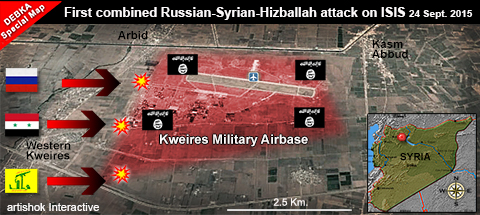
KweirisAir480

[T]he most ominous aspect for the US and Israel of the Russian attack on the Syrian airbase is that Russian marines were combined with Syrian and Hizballah special forces.

*********************

Before dawn on Thursday, Sept. 24, Russian marines went into battle for the first time since their deployment to Syria, DEBKAfile’s military and intelligence sources reveal. Russian Marine Brigade 810 fought with Syrian army and Hizballah special forces in an attack on ISIS forces at the Kweiris airbase, east of Aleppo.

This operation runs contrary to the assurances of President Vladimir Putin to Prime Minister Binyamin Netanyahu on Sept. 21 – just three days ago – that Russian forces in Syria were only there to defend Russian interests and would not engaged in combat with the Syrian army, Hizballah or Iranian troops.

The ISIS force defending the air base is dominated by Chechen fighters under the command of Abu Omar al-Shishani, who is considered one of the terrorist organization’s leading commanders in the last two years. The 27-year-old al-Shishani hails from the Chechen enclave of Pankisi in Georgia, like many others who joined ISIS from 2012.

However, targeting Chechen fighters was not the only reason for the order given by Russian command in Syria to attack the air base.  In DEBKA Weekly 678 of September 11, we predicted that the first Russian mission in Syria would be to break the Syrian rebel siege on Aleppo, Syria’s second-largest city.

As their first step, the Russians would have to prevent the cutoff of highway 5, running from Aleppo to Damascus, and keep it open for Syrian army reinforcements and military equipment to the city.

The offensive to regain Kweiris airbase that fell to ISIS in mid-June is the first step in the implementation of Russia’s operational plan for the Aleppo area.

Meanwhile, little substance was to be found in the reports appearing, mainly in the United States, suggesting that Putin, disappointed by the Obama administration’s unwillingness to send the US Air Force to collaborate with Russia in the fight against ISIS, would try to talk Obama round if and when they meet on the sidelines of the UN General Assembly on September 28.

According to DEBKAfile’s sources, these reports were spread to cover up the serious crisis in the US war against ISIS.

While Russia poured troops and advanced hardware into Syria, establishing bases and launching offensive action, the US anti-Islamic State effort suffered a heavy blow with the decision of Obama’s ISIS war czar, Gen. John Allen, to step down in early November.

Sources close to the general were quoted as referring to his frustration “with the White House micromanagement of the war and its failure to provide adequate resources.”’

The fact that the Russian forces launched their attack on ISIS shortly after the announcement of Allen’s upcoming resignation shows that Putin is not waiting for US cooperation in the war on the Islamist terrorists.    That said, DEBKAfile’s military sources point out that the most ominous aspect for the US and Israel of the Russian attack on the Syrian airbase is that Russian marines were combined with Syrian and Hizballah special forces.

For the first time in 41 years, since the 1974 war of attrition against the IDF on the Golan, Russian troops are fighting alongside Syrian forces. It is also the first time that a world power like Russia is willing to go into battle with an acknowledged terrorist group, such as Hizballah.

Our sources point out that the joint attack was completely counter to the tone and the content of the comments exchanged by Putin and Netanyahu at their summit.

A full report on Russian military activity and strategic objectives in Syria, and a rundown of the content of the Putin-Netanyahu talks in Moscow appear in the coming issue of DEBKA Weekly out Friday, September 25.

Iran Openly Declares That It Intends To Violate UNSCR 2231 That Endorses The JCPOA

September 23, 2015

Iran Openly Declares That It Intends To Violate UNSCR 2231 That Endorses The JCPOA, Middle East Media Research Institute, September 22, 2015

(Please see also, Iran wants to renegotiate parts of the nuke “deal.” That may be good. Iran’s declaration that it intends to violate UNSCR 2231, dealing with missile development and related sanctions, should further prompt the U.S. Congress to repudiate the “deal.”– DM)

When the Americans moved the sanctions on the missile program to UNSCR 2231, Iran did not object, as, according to their statements above, they can violate Security Council resolutions, as they have done in the past, and this will not be regarded as a violation of the JCPOA.

**************************

In statements, three Iranian leaders – President Hassan Rohani, Foreign Minister Zarif, and Deputy Foreign Minister and senior negotiator Abbas Araghchi – emphasized that Iran has no intention of abiding by UNSRC 2231, which includes the JCPOA and another element; rather, that they will abide only by the original JCPOA.

The Iran nuclear deal consists of the following:

A.   A set of understandings between Iran and the P5+1 powers (as well as the remaining disagreements) all in a single package called the JCPOA. It is not a contract between Iran and the P5+1 countries as a group or any single one of them, and hence no document was signed.

B.   This set of mutual understandings (as well as disagreements) packaged in the JCPOA was transferred, following the conclusion of negotiations in Vienna on July 14, 2015, to the UN Security Council, for endorsement as a UN Security Council resolution. The resolution, UNSCR 2231, was passed on July 25, 2015 and it includes, in addition to the JCPOA, another element (Annex B) with further stipulations regarding Iran. For example, it addresses the sanctions on Iran’s missile development project.

To understand why UNSCR 2231 is structured in this way, we can look at statements by top Iranian negotiators about the process that led up to it:

In a July 20, 2015 interview on Iranian Channel 2, Iranian Deputy Foreign Minister and senior negotiator Abbas Araghchi said that there had been tough bargaining between the Iranian and American delegations over the issue of the arms embargo on Iran and the sanctions related to Iran’s missile development project. “The Americans sought their inclusion in the JCPOA, claiming that otherwise they could not face criticism from Arab countries in the region. When they said that they could not lift the sanctions altogether, we told them explicitly that in that case there is no agreement. We told them that the national security issues are non-negotiable and that we will not accept an agreement which continues the embargo on weapons and the sanctions on missile development. In the end, the Americans said, We will put the issue of the embargo and the missiles in the UN Security Council Resolution separate from the agreement.”

In the same interview, Araghchi was asked whether Iran could refrain from carrying out UNSCR 2231; he replied: “Yes we can; just as we refrained from complying with UN Security Council resolutions, we can do so with regards to 2231.”

Araghchi also referred to the Iranian Foreign Ministry statement issued following the passage of UNSCR 2231: “The Iranian Foreign Ministry statement explicitly noted that Iran does not attach legitimacy to any restriction and any threat. If UNSCR 2231 will be violated by Iran, it will be a violation of the Security Council resolution and not of the JCPOA, similar to what happened 10 years ago when we violated Security Council resolutions and nothing happened. The text of the JCPOA notes the fact that the content of the JCPOA and of the UN Security Council resolution are two separate things.”[1]

Foreign Minister Zarif, in an August 9, 2015 media interview, reiterated the Iranian position regarding the difference between the JCPOA and UNSCR 2231, with a focus on the consequences of possible violation of the two by Iran. He said: “There is a difference between the JCPOA and UNSCR 2231. Violating the JCPOA has consequences, while violating UNSCR 2231 has no consequences.”[2]

Indeed, the restrictions regarding missiles are mentioned only in UNSCR 2231, and not in the JCPOA.

On August 29, 2015, Iranian President Hassan Rohani said: “There is nothing about the topic of missiles, defense, and weapons in the JCPOA.  Whatever we have about it is in Resolution [UNSCR] 2231… Moreover, we have formally announced that we are not committed to all the sections that appear in the resolution [2231], and we specified in the JCPOA that violation of the resolution [2231] does not mean violation of the JCPOA…[3]

The meaning of all this is that in everything related to the issue of missile development, Iran will disregard UNSCR 2231. Already during the negotiations, it insisted on no imposition of sanctions on Iran regarding its missile development (and no sanctions at all). When the Americans moved the sanctions on the missile program to UNSCR 2231, Iran did not object, as, according to their statements above, they can violate Security Council resolutions, as they have done in the past, and this will not be regarded as a violation of the JCPOA.

Endnotes:

[1] ISNA.ir/fa/news/94042915462/%D9%85%D9%85%D9%86%D9%88%D8%B9%DB%8C%D8%AA-%D9%87%D8%A7%DB%8C-%D8%AA%D8%B3%D9%84%DB%8C%D8%AD%D8%A7%D8%AA%DB%8C-%D9%88-%D9%85%D9%88%D8%B4%DA%A9%DB%8C-%D8%A8%D9%87- .

[2] Foreign Minister Javad Zarif said this at an August 9, 2015 conference sponsored by the Iranian daily Ittil’atwith other senior negotiators in attendance. See text in Farsi here.

[3] President.ir/fa/89047, August 30, 2015.