Archive for the ‘Department of Defense’ category

Satire | DARPA to Weaponize Thoughts and Prayers

November 22, 2015

DARPA to Weaponize Thoughts and Prayers, Duffel Blog, November 22, 2015

(If this brilliant strategy is not completely successful, Obama plans to tell Supreme Leader Khamenei to issue a fatwa against violent extremism. — DM)

Thoughts-and-Prayers-1-1000x600

“This administration will not hesitate to use any method in the fight against the evil that is ISIS, up to and including international condemnation or the deployment of additional hashtags to the region.”

**********************

WASHINGTON — White House spokesman Josh Earnest announced today that at President Obama’s request, Congress has allocated an additional $176 billion dollars to the military budget for the Defense Advanced Research Projects Agency (DARPA) to weaponize the thoughts and prayers which are routinely offered then discarded after tragedy and terrorism.

Earnest said the program reaffirms President Obama’s commitment to degrading, and ultimately defeating ISIS.

“It is really a brilliant concept,” notes Miles Chamberlain, program lead for the new Mk II “Wishful Thinking” Air Deliverable Engagement Device. “After a major terrorist event, the number one thing guaranteed to come out of western countries are thoughts and prayers. Millions of them. If we can find a way to use them tactically our military options would be limitless.”

“The T&P program has multiple facets,” Earnest said. “The highest priority is better targeting systems for our special operators. Currently the thoughts and prayers are used indiscriminately on family members, friends, and even ordinary citizens in an affected area. We hope to provide a surgical strike capability, eventually being able to deliver millions of thoughts and prayers onto a single target, with devastating effect.”

Chamberlain highlighted the advanced nature of the testing, while acknowledging some setbacks for the program.

“The biggest issue we’re facing is a delivery system. First we proposed printing the thoughts and prayers and air-dropping them over a target area, but we had to stop after environmentalists protested, claiming that the thoughts and prayers from the East Coast alone would cause the deforestation of two national parks,” Chamberlain said.

“Then we collected approximately 650 million tweets, emails, and Facebook posts offering thoughts and prayers to Paris and uploaded them onto a hard drive, but that was canceled after Lockheed demanded a $300 billion dollar software update to synch them with the F-35 targeting computers.”

“We’re still optimistic about this whole process. I just hope this project doesn’t end up as a casualty of the budget wars like other failed programs, including the DX6-Good Intentions Radar, the surface-launched Candlelight Vigil 3.0, or Diplomacy.”

At the press conference Earnest affirmed that the White House is totally committed to defeating the Islamic State, and that in addition to the Wishful Thinking weapons program the President has already initiated a severe hashtag campaign (‪#‎StopTerrorismNow‬), and has facilitated the live-streaming of hundreds of anti-violence and equality rallies on college campuses around the nation.

“Make no mistake,” he said. “This administration will not hesitate to use any method in the fight against the evil that is ISIS, up to and including international condemnation or the deployment of additional hashtags to the region.”


The stories we tell ourselves – South China Sea.

November 6, 2015

The stories we tell ourselves, Foreign Policy Situation Report, November 6, 2015

It appeared to be a simple enough story, but over the last week, Pentagon and Obama administration officials have struggled to explain exactly what the USS Lassen did when it sailed near Subi Reef in the South China Sea. FP’s Dan De Luce and Keith Johnson have been following the ship’s wake, and have found conflicting accounts of what the ship was up to. When questioned by FP, “officials offered conflicting accounts as to whether the ship took steps to directly challenge China’s maritime claims in the strategic waterway — or whether it pulled its punches, tacitly conceding Beijing’s position,” they write.

Good idea, bad P.R. You’ll have to read the story to get a full sense of the linguistic knots the Pentagon is tying itself in, but the crux of the issue is that officials originally insisted the Lassen carried out a “freedom of navigation” operation, which could mean the vessel operated sonar, had its helicopters take off from the deck, or lingered in the area. But some officials weren’t ready to go that far, suggesting the ship might have just sailed through quietly without doing any of those things, making the trip an “innocent passage,” which carries with it the recognition of China’s territorial rights over the area. But doing so would undermine the whole point of the mission in the first place. Read the story.

Fair winds. While debate swirls around what to call the Lassen’s trip, the commanding officer of the ship has been telling reporters that the Chinese warships that shadowed his vessel for 10 days were full of nice, talkative people. Speaking aboard the the aircraft carrier USS Theodore Roosevelt during Defense Secretary Ash Carter’s visit this week, Cmdr. Robert Francis said the Chinese “were very cordial the entire time … even before and after the Spratly islands transit.” Finally, “when they left us they said, ‘Hey, we’re not going to be with you anymore. Wish you a pleasant voyage. Hope to see you again’.”

US senior commander says US will not provide arms ‘as of now’ to YPG units

November 5, 2015

US senior commander says US will not provide arms ‘as of now’ to YPG units, Hurrinet Daily News, November 5, 2015

(Certainly not! The Kurds are the best, if not the only, local forces serious about fighting the Islamic State, et al. Besides, our delightful democratic ally, Turkey — a bastion of human rights and freedom — doesn’t want us to. — DM)

truck with gunAFP photo

“Obviously the Turks have concerns. You know, they’re our partners and allies. We’re going to address those concerns. We’re going to work with them to achieve our common goal, which is to defeat ISIL,” Warren said.

**********************

A senior U.S. commander based in Baghdad, Iraq, for the fight against the Islamic State of Iraq and the Levant (ISIL) said his country, as of now, was not providing arms to the People’s Protection Units (YPG). 

“As of now, we are not providing weapons or ammunition to the YPG. The weapons that we’ve provided thus far, with the ammunition that we’ve provided in our one airdrop executed, was for the Syrian-Arab coalition,” Colonel Steve Warren, a Baghdad-based spokesman for the U.S.-led coalition against ISIL, told reporters via teleconference from Baghdad.

“As of now, future resupplies will also go to Arab-vetted Syrian opposition members,” he added, after a reporter said a senior defense official had recently said the YPG would not be getting any ammunition or weapons. “So, you know, as of now, that’s where our policy stands.”

Turkey regards Syrian Kurdish YPG units in the same category as the outlawed Kurdistan Workers’ Party (PKK), with which the state has been in an armed fight for over 30 years, with a death toll of over 40,000 from both the camps. The state had launched a peace process to solve the Kurdish problem in the country in the early 2010s, which was later halted by the state during the run to Turkey’s general elections on June 7.

Responding a question on whether or not the U.S. would talk to Turkey about the issue, Warren said they were in “very close contact” with Turkey.

“Obviously the Turks have concerns. You know, they’re our partners and allies. We’re going to address those concerns. We’re going to work with them to achieve our common goal, which is to defeat ISIL,” Warren said.

US, Russia edge close to military collaboration in Syria and Iraq

October 27, 2015

US, Russia edge close to military collaboration in Syria and Iraq, DEBKAfile, October 27, 2015

ForcesIaqSyria480

Washington and Moscow appear close to agreeing to their armed forces teaming up for war operations in Syria and Iraq. Nothing definite has so far emerged about this potential collaboration, or even if it is to be conducted covertly and experimentally ad hoc or seriously and out in the open.

A comment suggesting that the Obama administration was ready for a new direction on Syria came from US Defense Secretary Ashton Carter Tuesday, Oct. 27. In testimony before the Senate Armed Services Committee, he said, “we won’t hold back from supporting capable partners in opportunistic attacks against ISIL…or conducting such mission directly, whether by strikes from the air or direct action on the ground.”

According to Pentagon sources, the US intends to deploy small units of Special Operations forces in Syria and “special advisers” in Iraq, which too are believed to be special operations units under another name.

However, DEBKAfile’s military sources point out that small-scale military ventures in open-ended war situations tend to extend beyond the scale originally intended. Therefore, it is more than likely that both the US and Russia will find themselves committing increasing numbers of air and ground troops if the conflicts in the two countries continue.

The way matters are going now, the plan for Iraq is for US forces to join Iraqi and Iranian units in launching an offensive to recover Ramadi, capital of the Western province of Anbar, 110 km West of Baghdad, which ISIS captured in May.

In Syria, American troops plan to work with the northeastern Kurdish PYD-YPG militia for marching on Raqqa, the Islamic State’s headquarters in that country.

At the Senate hearing, Carter pointed to last week’s rescue operation in northern Syria. US Delta commandos and Syrian Kurdish special forces stormed a prison held by the Islamic State and freed dozens of Kurdish prisoners.

This operation was outside the bounds of normal US involvement in the Syrian conflict. After it was over, the US Defense Secretary said the military expects “more raids of this kind.”

This joint US-Kurdish raid brought forth a furious response from Turkey.The Turkish military twice directed machine gun fire at the Syrian Kurdish PYD force in the Syrian town of Tal Abyad Sunday, Oct. 25.

DEBKAfile’s military sources note that Tel Abyad is the closest point to Raqqa to have been reached by America’s Kurdish allies.

Ankara is vehemently opposed to the US partnership with the Kurds of Syria and Iraq, and puts its campaign against their separatist trends ahead of its commitment to the anti-ISIS coalition.

However, the Obama administration appears to have finally come down in favor of a combined operation with the Kurdish forces, even at the expense of its ties with Ankara, another pointer to the up-and-coming US ground operations in Syria.

Neither Washington nor Moscow has commented on their possible military cooperation for the fight to vanquish ISIS. But straws in the wind point in that direction.

Russian President Vladimir Putin has repeated: “I have no plans to put ground troops in Syria,” indicating that Moscow would confine itself to air strikes.

The US Defense Minister Tuesday explicitly mentioned “…direct action on the ground” as well as, ”supporting capable partners in opportunistic attacks against ISIL.”

DEBKAfile’s military sources find common elements in the American and Russian modes of action. Whereas the Americans plan to deploy ground troops for fighting with Kurdish forces, the Russians will stick to aerial attacks in conjunction with certain Syrian rebel groups.

Moscow’s plan unfolded on Monday, Oct. 26, when a delegation of the Free Syrian Army, which is backed by the US, Israel and Saudi Arabia, turned up in Moscow seeking to coordinate its military operations with the Russians.

It is hard to tell if US-Russian military cooperation in the Syrian and Iraqi wars actually ripens into a productive effort or proves ephemeral. Israel’s concerns and its responses to the fast-moving, explosive situation on its northern borders are scheduled to be thrashed out in the talks Defense Minister Moshe Ya’alon is holding this week in Washington with Defense Secretary Carter.

Islamic State grows in Afghanistan, encroaches on Kabul as U.S. remains ‘passive observer’

October 12, 2015

Islamic State grows in Afghanistan, encroaches on Kabul as U.S. remains ‘passive observer’ Washington TimesRowan Scarborough, October 11, 2015

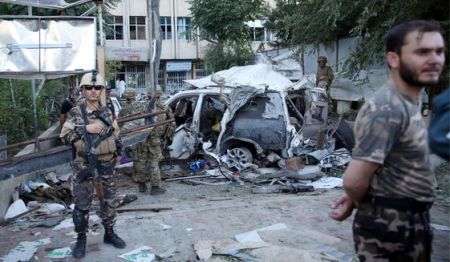
10112015_afghan8201_c0-275-5060-3224_s561x327Photo by: Massoud Hossaini  Afghan security forces and British soldiers inspect the site of a suicide attack in the heart of Kabul, Afghanistan. Loyalists of the Islamic State group are making inroads into Afghanistan, with homegrown militants claiming allegiance to the Islamic State as it controls territory in some parts of the country. (Associated Press)

Afghanistan’s 3,000-member ISIL army is about one-tenth the size of the Afghan Taliban’s forces. But NATO says the Islamic State has reached the next stage of being an emerging threat. If its growth in other regions, such as North Africa, is a gauge, its Afghan component will only expand further as young Muslims are drawn by social media to its ultraviolent ways and Sunni orthodoxy.

************************

The Islamic State is growing at an alarming rate in Afghanistan, within striking distance of the capital, and there does not seem to be a concerted U.S. effort to strike the terrorist army as there is in the Syria-Iraq war theater.

An independent think tank has concluded that the allies are “reacting disjointedly and ineffectively” to the group in Afghanistan and other places outside those two countries.

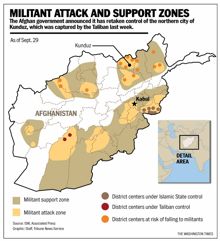
The Islamic State’s numbers now may reach as high as 3,000 in Afghanistan, mostly in Nangarhar province, less than 50 miles east of Kabul. The emergence presents the NATO-backed elected government there with a fifth deadly enemy in addition to the Taliban, al Qaeda, the Haqqani network and elements of the Pakistani intelligence service.

Globally, the Islamic State, also called ISIL and ISIS, has affiliates in nearly 20 countries.

“It’s like a metastasizing cancer spreading throughout certain parts of the Islamic world,” said James Russell, a former Pentagon official and an instructor at the Naval Postgraduate School in Monterey, California. “We have to hope that the antibodies in these societies can ward off the death, misery and destruction that will come raining down upon them if ISIS takes hold in their communities.”
ISIS_s220x241

Afghanistan’s 3,000-member ISIL army is about one-tenth the size of the Afghan Taliban’s forces. But NATO says the Islamic State has reached the next stage of being an emerging threat. If its growth in other regions, such as North Africa, is a gauge, its Afghan component will only expand further as young Muslims are drawn by social media to its ultraviolent ways and Sunni orthodoxy.

Yet unlike in Syria and Iraq, where a U.S.-led coalition conducts a series of daily airstrikes against the Islamic State, there appears to be no such strategy in Afghanistan, where Afghan government forces now have the lead in all combat operations and request NATO air power on an ad hoc basis.

“What concerns me most is the fact that the United States has become a passive observer rather than the driver of the policy,” said Larry Johnson, a former counterterrorism official at the State Department, commenting on the overall U.S. effort against the Islamic State.

U.S. military spokesmen had no immediate comment on the question of American policy toward the Afghan Islamic State. Army Gen. John Campbell, the allied commander in-country, was asked at congressional hearings last week what triggers action against Islamic State. He answered that the criterion is “force protection.”

After the Syria-Iraq war theater, Islamic State’s emergence near Kabul could be the most troublesome for the U.S., whose troop levels have dropped to less than 10,000, and only a small portion of those forces are dedicated to assist in counterterrorism. The Islamic State has shown it can execute brutal attacks and deploy vehicle bombs to take territory and hold it.

Gen. Campbell said Afghanistan’s security forces lack the leadership and troop numbers to respond to every trouble spot.

Meanwhile, the Islamic State is beginning to flex its terrorism muscle in Afghanistan.

Islamic militant competition

The Institute for the Study of War (ISW) in Washington is tracking the Islamic State’s violent ways in Afghanistan and other countries. It said the Islamic State launched attacks in mid-September against a UNICEF convoy, Afghan government forces, the Afghan Taliban and Shiite civilians. In late September the Islamic State “launched coordinated attacks on multiple Afghan security positions” in Nangarhar, the think tank said.

“The group reportedly also shut down several schools in eastern Afghanistan amid other efforts to assert social control,” the institute said. “ISIS has established robust ground campaigns in Libya, Egypt and Afghanistan.”

The ISW said in the special report “ISIS Global Strategy: A Wargame,” written by counterterrorism analyst Harleen Gambhir, that the Islamic State’s expansion stems from its ability to attract local jihadis.

“The coalition is focused on Iraq and Syria, and it is reacting disjointedly and ineffectively to ISIS’s activities in Libya, Egypt, Afghanistan, and other places,” Ms. Gambhir writes. “ISW’s war game demonstrated how this failure enables ISIS to strategically outpace the U.S. and its allies.”

U.S. intelligence agencies are still trying to digest the meaning of Islamic State setting up shop in South Asia.

Nicholas Rasmussen, director of the National Counterterrorism Center, speaks of an “increasing competition between extremist actors” in the Afghanistan-Pakistan region involving al Qaeda, the Taliban and the Islamic State.

“So that’s an additional factor that we’re still trying to understand,” Mr. Rasmussen told the Combating Terrorism Center at West Point in remarks published last month. He characterized the burgeoning competition as an “interesting feature of the South Asia landscape.”

Gen. Campbell, the U.S. commander closest to Islamic State terrorism in Afghanistan, said foreign fighters are arriving to join the Islamic State as they “try to bring in some sort of funding stream to build a place in Nangarhar.”

He said the emergence of Islamic State “has further complicated the theater landscape and potentially expanded the conflict.”

Mr. Johnson, the former counterterrorism official, said the leaders of Middle East and South Asia countries “concede that the U.S. has no appetite for being engaged, especially militarily in the region.”

The struggle between two radical Sunni groups, the Taliban and the Islamic State, may be sparked in part by the Taliban’s willingness to do business with Iran, a Shiite Islamic country.

“The Taliban have always been far more pragmatic in dealing with Iran, and the religious difference is not a critical factor,” Mr. Johnson said. “Not so with the ISIS crowd. For them, theology takes precedence, and Iran is an apostate state that must be destroyed.”

AN ARMY OF MCCLELLANS — The Syria Mess and the Pentagon’s Serial Failures

October 6, 2015

AN ARMY OF MCCLELLANS — The Syria Mess and the Pentagon’s Serial Failures, The American Interest, October 5, 2015

When Robert Gates was Secretary of Defense, he found that the Pentagon was ruled by a culture of bureaucratic delay and careerism. This culture affected even such vital issues as getting effective armor to military vehicles, leading to many unnecessary deaths and mutilations by IEDs. In the middle of war, that is, the Pentagon was still in a peacetime military mode, a mode in which buck-passers, bureaucrats, and time-servers push paper, and award one another certificates of merit. One hand washes the other as everybody gets trophies, medals, and promotions at the end of the year.

The pathetic failure of the Pentagon’s efforts in Syria indicate that if anything, this culture of self-congratulation and failure is getting more entrenched. An extensive autopsy of the now-infamous Syria training program in the Wall Street Journal today has plenty of damning details about the White House’s lack of decisiveness and micromanagement. But it also details numerous lapses from the military leaders tasked with carrying out the training, all of which culminated in this farce:

“We, who are directly in contact with the Pentagon, I swear to God, we have no clue what is going on. It is very complicated,” [U.S.-trained rebel commander] Abu Iskandar said in late August as his group was falling apart.

Pentagon-trained fighters said they stopped wearing military uniforms provided by the Americans, fearful of being attacked. On Sept. 19, Col. Daher withdrew from Division 30, citing a lack of American support and coordination.Col. Patrick Ryder, a U.S. Central Command spokesman, said nine of 54 members of the first class were still operating with the U.S. in Syria. Abu Iskandar said all but three fighters remain.

This isn’t the Pentagon’s only embarrassing, dangerous, and costly failure of late. Think of the collapse of the Iraqi army in the face of ISIS, or the Afghan military. After 14 years of U.S. force building efforts in Afghanistan, we seem to have created a force that is better at raping boys than at fighting the Taliban. The failures in that country show that we have a military culture in which the greatest sin is rocking the boat. It’s apparently far better to let corrupt Afghan soldiers chain slave boys to their beds than to create some kind of public disturbance. This is a strategy of “hearts and minds” that will win popular support against the Taliban?

The U.S. is running a vast, multi-country war effort that has become unhinged from any serious strategic vision, and we have a military system in which the commanders who see the futility and try to do something about it (and there are plenty) are sidelined. Go along to get along is the way things work in Obama’s Pentagon, and both the White House and the Congress are more interested in making the military look pretty on the parade ground than making it perform effectively in the combat zone.

The President and the political overseers in Congress have made their priorities clear: You can persist with strategies that don’t work for years and still get steadily promoted up the ladder as long as you jump through hoops about integrating women and gays into more military roles. There’s nothing wrong with those goals. Integrating the armed services racially was once attacked by traditionalists as a step that would destroy military cohesion, but it’s made both the U.S. and our armed services much stronger over time. But the essence of military leadership (and effective civilian oversight) is to get the combat missions done with the lowest possible cost and loss of life.

Perhaps choosing between successful military operations and reshaping the makeup of the military doesn’t have to be either/or, but under President Obama we have opted for the latter and tanked the former. The Pentagon has failed at its major military objectives in the Middle East. It has not built up the Iraqi Army into an independent force that can defend against ISIS and sectarian militias. It has not made the Afghan army the core of a state that can hold territory and retain the loyalty of its people and so prevent the Taliban’s resurgence. And it has not created an effective rebel force in Syria as a third way between Assad and ISIS. Perhaps these objectives were always unrealistic and the missions should never have been launched, or perhaps they needed more focused and proactive civilian leadership. But in any case, the brass on the Pentagon office doors has been polished to a high shine during the Obama years even as the missions in the field have serially failed.

Failures of military leadership are ultimately failures of civilian oversight. Abraham Lincoln fired General McClellan and promoted General Grant because, while McClellan dressed well, handled himself well in social situations, and polished his army to perfection on the parade ground, he didn’t win battles. General Grant was occasionally drunk, almost always slovenly, and didn’t always say the right things to the press. He did, however, win battles. Right now our political leadership seems to prefer an army of McClellans to an army of Grants, and the consequences are visible across the Middle East.

No moral outrage in the military

October 6, 2015

No moral outrage in the military, Washington Times, James A. Lyons, October 5, 2015

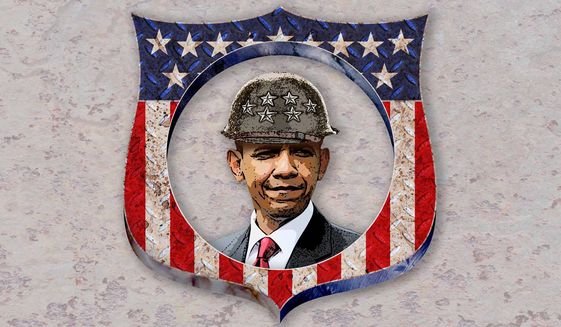
105_2015_b3-lyon-obama-shiel8201_c0-0-2933-1710_s561x327Obama Decimates the U.S. Military Illustration by Greg Groesch/The Washington Times

[T]he degradation of our military’s core principles must be viewed in a much broader perspective. Actually, it is a key element in President Obama’s declaration to fundamentally transform America. When you want to take down a country, the first thing you do is weaken its military.

***************************

Recent articles highlighting horrifying child abuse atrocities inflicted on defenseless children by our Afghan military and police partners are but the latest examples of how President Obama is destroying U.S. military forces.

Our military leadership’s response to these blatant acts of pedophilia by our so-called Afghan partners has been shocking. In short, the guidance provided to our Army and Marine Corps personnel was to just ignore these Muslim and Afghan seventh-century customs and traditions. They have been instructed to not interfere, even when such horrific acts are being committed on our own bases.

Those U.S. military personnel. whose moral outrage will not let them ignore these atrocities and instead act to stop these unconscionable acts against children, are either disciplined or forced to leave the service. In other words, even if you find a young boy chained to a bed so that a local police commander can sodomize him every night and you hear the screams, you are told to look the other way. This is not only un-American but an act against humanity.

Even the Taliban outlawed such practices and freed a number of children, thereby earning the gratitude of village elders. Does the Taliban with its seventh-century mentality have a higher moral code than the U.S. military leadership? It should be clear to any thinking person that when our honorable military personnel are forced to ignore these crimes against humanity, they are viewed as being complicit.

To those who have followed our involvement in Afghanistan, the current policy to ignore acts of pedophilia should come as no surprise. When “green on blue” attacks gained national attention, our military leadership tried to explain it away by claiming the friction that developed between the two forces was because our military personnel were not sensitive enough to Afghan culture and traditions. In other words, if our Afghan partners conduct violence or kill U.S. military personnel, it is our fault. What nonsense.

Other Afghan cultural idiosyncrasies our military personnel are forced to accept without reservation include wife-beating, rape, drug use, thievery, dog torture, desertion and collusion with the enemy, the Taliban. Furthermore, under no circumstances can our military discuss Islam in any form. The genesis for this goes back to the purging of all our training manuals and instructors who presented Islam in an unfavorable light or linked it to terrorism. It is totally against our core principles and everything we stand for as Americans. It clearly has an adverse impact on individual and unit morale, which affects the ultimate goal of the “will to win.” The bottom line is that we are forcing our great military to submit to Islam and its governing Shariah law, or possibly die.

This is exactly the choice offered to infidels who have been vanquished by Islamic jihad. Our military’s silence and acquiescence, particularly by the leadership, is the humiliating price for our coexistence with our Afghan partners. This is unacceptable.

However, the degradation of our military’s core principles must be viewed in a much broader perspective. Actually, it is a key element in President Obama’s declaration to fundamentally transform America. When you want to take down a country, the first thing you do is weaken its military. We cannot ignore the fact that with or without sequestration, the Obama administration has unilaterally disarmed our military forces and, consequently, our capabilities. Further, the social engineering imposed on our military forces — to include the acceptance of gay, lesbian and soon transgender personnel — further undermines the moral fiber of our military and constitutes a further degradation of our military effectiveness. Forcing women into combat roles only further degrades the situation. The restricted rules of engagement imposed on our forces has reduced our military’s effectiveness and caused unnecessary loss of life and debilitating injuries.

Likewise, the pin-prick attacks on the Islamic State cast a shadow over what a dedicated air campaign could accomplish. It projects an image of weakness and ineffectiveness of our true capabilities. It has taken the “awe” of our invincibility and overwhelming force capabilities out of the equation. The net result is that our enemies no longer fear us, and our allies can no longer trust us.

The imposed limit on the application and capability our military force is not limited to the Middle East. For example, in the Western Pacific, to challenge China’s illegal actions in the South China Sea, the Obama administration has restricted the U.S. Navy from enforcing its freedom of seas concept that has been a fundamental principle of the U.S. Navy for more than 238 years. Our Asian allies in the Western Pacific watch carefully how we respond to China’s aggressive actions. Our directed restraint clearly will not raise their confidence level.

Our national security is being deliberately jeopardized. President Obama’s bloviating to Vladimir Putin at the recent U.N. session that he leads the most powerful military in the world was only true on the day he took office. Since then, Obama has systematically degraded our capabilities. The chairmen of the House and Senate Armed Services Committee must take forceful action now to prevent further emasculation of our military capabilities.

12 Hair-Raising Facts from Congressional Terror Report

September 30, 2015

12 Hair-Raising Facts from Congressional Terror Report, Clarion ProjectRyan Mauro, September 30, 2015

Islamic-State-Victory-Parade-HPAn Islamic State victory parade

Yesterday, the House Homeland Security Committee released the final report of its Task Force on Combating Terrorist and Foreign Fighter Travel and its conclusions weren’t pretty. The following are a dozen hair-raising facts from the bipartisan report:

“Today, we are witnessing the largest global convergence of jihadists in history.”

If you consider how the jihad in Afghanistan against the Soviets impacted the terrorist threat to the West, then we’re in for a heap of trouble due to the jihad in Syria, Iraq and elsewhere.

About 10,000 foreign fighters joined the jihad against the Soviets over roughly a 10-year period, with only 3-4,000 fighter joining at once. Today, over 25,000 foreign fighters are currently in Syria and the civil war is only four years old. When it started in 2011, the number of foreign fighters was a mere 1,000.

“We have largely failed to stop Americans from traveling overseas to join jihadists … Several dozen also managed to make it back into America.”

This stunning conclusion will add ammunition to efforts to revoke the passports of Americans who are believed to have joined jihadists overseas. Aside from constitutional objections, one rebuttal has been if the government has the evidence to show an American has joined terrorists, then it can simply arrest them if they try to re-enter. The report shows that these American traitors have been able to evade detection and come back home to potentially carry out attacks and/or radicalize others.

“The U.S. government lacks a national strategy for combating terrorist travel and has not produced one in nearly a decade.”

This statement, unfortunately, speaks for itself.

“The unprecedented speed at which Americans are being radicalized by violent extremists is straining federal law enforcement’s ability to monitor and intercept suspects.”

Over 250 Americans have joined or tried to join the jihadist groups in Iraq and Syria, including around 30 females. They come from 19 states, with 26% coming from Minnesota, 12% from California and 12% from New York/New Jersey.

“There have now been twice as many ISIS-inspired terror plots against the West in 2015 than there were in all of 2014.”

This conclusion is unsettling—and charitable. A review by terrorism expert Patrick Poole found that the number of Islamist terrorism cases in the U.S. this year was double that of the previous two years combined. And that was as of about four months ago.

“[ISIS] is believed to have inspired or directed nearly 60 terrorist plots or attacks against Western countries, including 15 in the United States.”

“Military officials estimate airstrikes have killed over 10,000 [ISIS] extremists, but new foreign fighters replace them almost as quickly as they are killed.”

This substantiates the admission that the U.S. fight with ISIS was at a “stalemate.” Our analysis of the numbers led to thesame conclusion back in May. If you look at ISIS’ membership and territorial expansion, the U.S. is barely making a dent.

Additionally, optimistic claims of success exempt ISIS’ growth outside of Iraq and Syria. The Committee mentions reports that there are “hundreds, if not thousands” of ISIS members in Afghanistan now and the Libyan government believes it is dealing with 5,000 of its own jihadist foreign fighters now.

“Gaping security weaknesses overseas—especially in Europe—are putting the U.S. homeland in danger…”

The report raises several warnings about European security procedures, a pressing issue considering that about 1,550 fighters from France, 700 from Germany and 700 from the United Kingdom have joined the jihad in Syria and Iraq. The Committee found that counter-terrorism checks at European borders and airports are insufficient.

One-third of the international community does not issue fraud-resistant E-Passports or utilize the INTERPOL databases that contain the names of terrorists.

“In short, information about foreign fighters is crossing borders less quickly than the extremists themselves.”

The report emphasizes that intelligence-sharing remains a severe problem. There isn’t even an international comprehensive database of foreign fighter names.

“The federal government has failed to develop clear early intervention strategies—or ‘off-ramps’- to radicalization—to prevent suspects already on law enforcement’s radar from leaving to join extremists.”

Someone who is actively trying to join a group like ISIS or Al-Qaeda is probably too far gone to be rescued, unless they get a brutal wakeup call when they see the caliphate first-hand. The report states that 80% of foreign fighters download extremist propaganda and/or engage a jihadist online. It is critical that we target the ideology that precedes the violent act.

“Few initiatives exist nationwide to raise community awareness about foreign fighter recruitment and to assist communities with spotting warning signs.”

The report says that 75% of foreign fighter arrests in the U.S. happen due to the involvement of a confidential informant who is close enough to the suspect to provide the critical evidence. Presumably, this would be a Muslim in most cases. This is why Islamist propaganda that demonizes the FBI and its informants must be rebutted, such as when the Council on American-Islamic Relations (CAIR) claims that the War on Terror is “made up” by the FBI and its informants are paid to frame innocent Muslims.

“The Administration has launched programs to counter-message terrorist propaganda abroad, but little is being done here at home.”

The report isn’t exactly kind to our ideological strategy abroad, either. It says the U.S. government has not exploited the opportunity presented by “jaded jihadists”— Islamist terrorists who join the caliphate, realize it wasn’t all it was cracked up to be and flee. For example, a State Department video featuring such testimonies had only 500 views over two months.


Unnecessary loss of life – The deadly price of politically correct rules of engagement.

September 30, 2015

Unnecessary loss of life – The deadly price of politically correct rules of engagement.

afghanistan_-_american_soldiers_fob_baylough

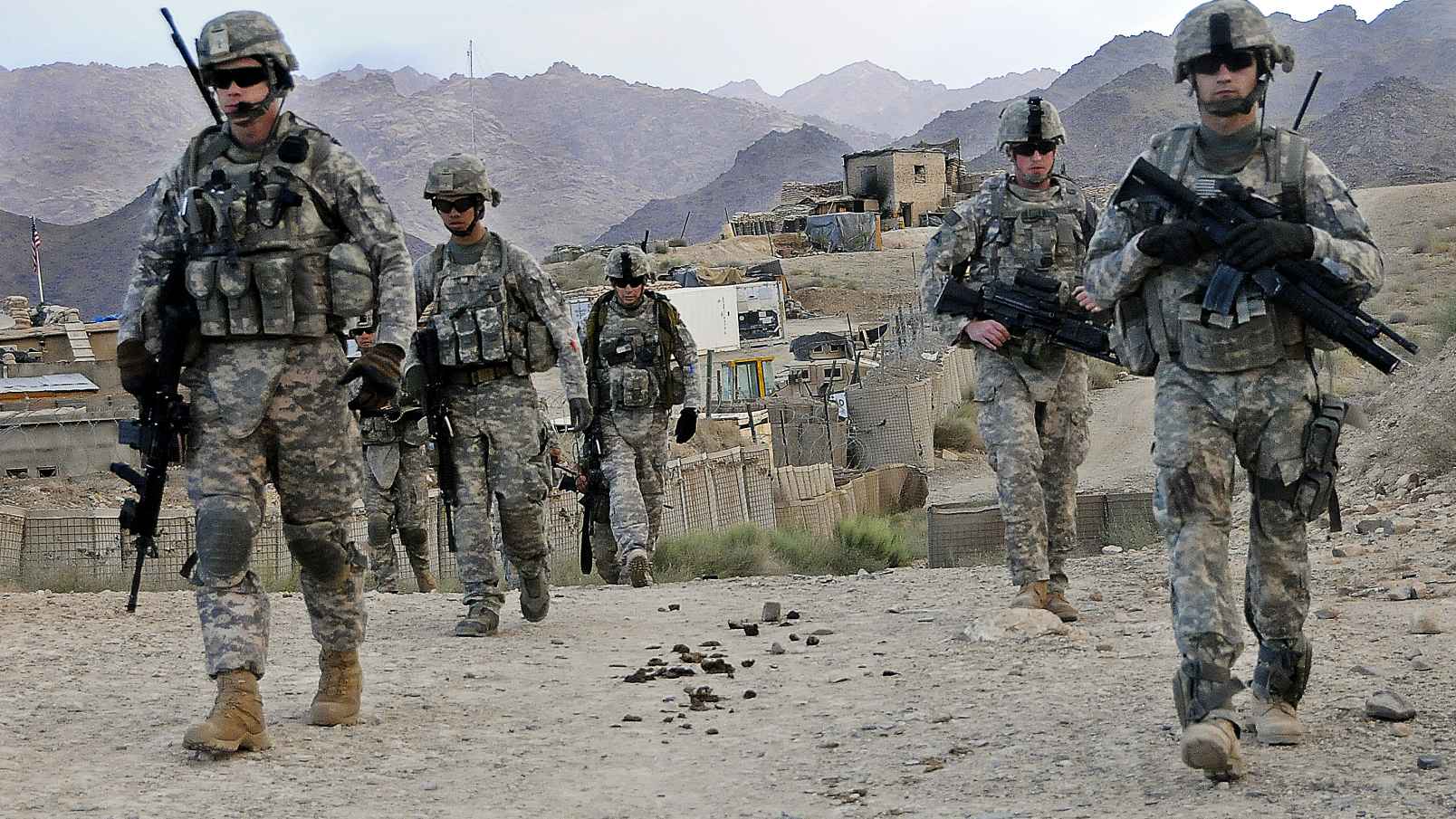
War is nasty, brutal and costly. In our latest wars, many of the casualties suffered by American troops are a direct result of their having to obey rules of engagement created by politicians who have never set foot on — or even seen — a battlefield. Today’s battlefield commanders must be alert to the media and do-gooders who are all too ready to demonize troops involved in a battle that produces noncombatant deaths, so-called collateral damage.

According to a Western Journalism article by Leigh H Bravo, “Insanity: The Rules of Engagement” (http://tinyurl.com/p59nlqs), our troops fighting in Afghanistan cannot do night or surprise searches. Also, villagers must be warned prior to searches. Troops may not fire at the enemy unless fired upon. U.S. forces cannot engage the enemy if civilians are present. And only women can search women. Retired Air Force Lt. Gen. Thomas McInerney said: “We handcuffed our troops in combat needlessly. This was very harmful to our men and has never been done in U.S combat operations that I know of.” Collateral damage and the unintentional killing of civilians are a consequence of war. But the question we should ask is: Are our troops’ lives less important than the inevitable collateral damage?

The unnecessary loss of life and casualties that result from politically correct rules of engagement are about to be magnified in future conflicts by mindless efforts to put women in combat units. In 2013, then-Defense Secretary Leon Panetta officially lifted the ban on women serving in ground combat roles. On Jan. 1, 2016, all branches of the military must either open all positions to women or request exceptions. That boils down to having women serve in combat roles, because any commander requesting exceptions would risk having his career terminated in the wake of the screeching and accusations of sexism that would surely ensue.

The U.S. Army has announced that for the first time, two female officers graduated from the exceptionally tough three-phase Ranger course.

Their “success” will serve as grist for the mills of those who argue for women in combat. Unlike most of their fellow soldiers, these two women had to recycle because they had failed certain phases of the course.

A recent Marine Corps force integration study concluded that combat teams were less effective when they included women. Overall, the report says, all-male teams and crews outperformed mixed-gender ones on 93 out of 134 tasks evaluated. All-male teams were universally faster “in each tactical movement.” The report also says that female Marines had higher rates of injury throughout the experiment.

Should anyone be surprised by the findings of male combat superiority? Young men are overloaded with testosterone, which produces hostility, aggression and competitiveness. Such a physical characteristic produces sometimes-poor behavior in civilian society, occasionally leading to imprisonment, but the same characteristics are ideal for ground combat situations.

You may bet the rent money that the current effort to integrate combat jobs will not end with simply a few extraordinary women. Secretary of the Navy Ray Mabus told the Navy Times that once women start attending SEAL training, it would make sense to examine the standards. He said, “First we’re going to make sure there are standards” and “they’re gender-neutral.” Only after that will the Navy make sure the standards “have something to do with the job.” We’ve heard that before in matters of race. It’s called disparate impact. That is, if the Navy SEALs cannot prove that staying up for 18 hours with no rest or sleep, sitting and shivering in the cold Pacific Ocean, running with a huge log on your shoulder, and being spoken to like a dog are necessary, then those parts of SEAL training will be eliminated so that women can pass.

The most disgusting, perhaps traitorous, aspect of all this is the overall timidity of military commanders, most of whom, despite knowing better, will only publicly criticize the idea of putting women in combat after they retire from service.

Satire | Pentagon Downplays Significance Of Taliban Taking Over All Of Afghanistan Last Night

September 30, 2015

Pentagon Downplays Significance Of Taliban Taking Over All Of Afghanistan Last Night, Duffel Blog, September 30, 2015

150929-D-NI589-068-750x400Photo Credit: Glenn Fawcett with the U.S. Department of Defense

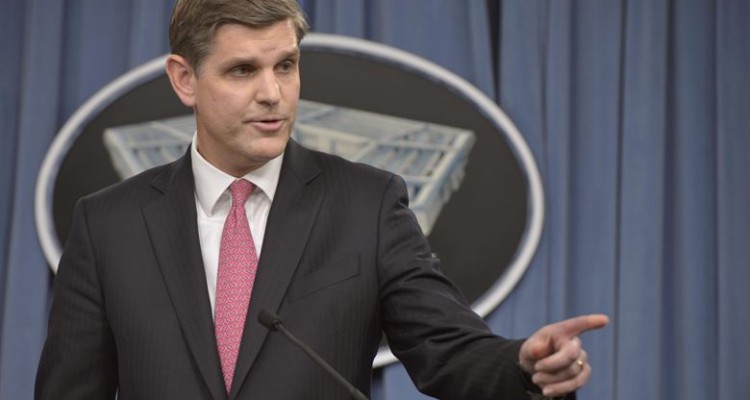
WASHINGTON, D.C. — Following the Taliban’s complete takeover of Afghanistan late last night, Pentagon Press Secretary Peter Cook noted in an early morning press briefing that the Pentagon remains “generally positive” about the war effort and that “there is minimal cause for concern.”

“That’s how things go in a protracted counterinsurgency,” Cook told reporters. “You face some minor setbacks regardless of how many troops lose their lives or how many billions of taxpayer dollars are spent equipping local defense forces incapable of defending their own country.”

After the Taliban overran Afghan forces in Helmand earlier this year and took over the city of Kunduz this week, sources say the Obama Administration and many senior defense officials seemed surprised that major media outlets expressed even the slightest bit of interest in a war over a decade old.

At Central Command in Tampa, Fla., Gen. Lloyd Austin — who oversees forces in the region — assured reporters there was little cause for concern.

“We’ve seen this time and time again,” Austin said. “This modest spike in Taliban attacks shows that our strategy is working. These massive coordinated attacks are merely the death throes of an insurgent movement.”

Austin cited a range of historical and contemporary intelligence analyses to support his claim, adding: “Don’t believe me? Just look at the history of insurgencies. The Tet Offensive, Saigon in ’75, Iraq in 2006, every summer in Afghanistan since 2001.”

Sources at the White House say the president has not been too concerned with the situation for at least a few months, especially after he declared a successful end to the war in 2014 and placed forces there at Defense Condition (DEFCON) “Chill.”

Duffel Blog attempted to reach the commander of U.S. Forces in Afghanistan at his Kabul office but were ultimately unsuccessful. His new spokesman, Mullah Akhtar Mansour, stated that Gen. John Campbell and the U.S. Ambassador were unavailable for comment as they had departed Kabul via C-5 transport just a few hours earlier.