Archive for the ‘Cuba’ category

Cuba and Obama’s ‘Axis of Evil’

March 21, 2016

Cuba and Obama’s ‘Axis of Evil’ Gatestone InstituteA.J. Caschetta, March 21, 2016

♦ Just as the Soviet Union did not subsidize Castro’s tyranny for the good cigars, so too Iran and North Korea are less interested in old weapons and luxury goods than in the one thing Cuba has always offered to America’s enemies — physical proximity. The USSR used Cuba as a forward operating base in the Cold War. Why would Iran and North Korea not do the same?

♦ Iranian and North Korean scientists have been openly cooperating on so many projects that Iran, if it is not already doing so, will likely evade IAEA inspections by testing its weapons in North Korea.

♦ A medium range missile fired from Cuba could reach most of the US. Cuba would also be a good launch point for an EMP attack on the US.

♦ Obama’s diplomatic engagement with Cuba’s octogenarian dictators will ensure that the island prison stays in business. Like Iran, Cuba has been flaunting its tyranny since Obama’s outreach, with 8,616 political arrests in 2015.

When George W. Bush used the term “axis of evil” to describe Iran, Iraq and North Korea in his 2002 State of the Union speech he was derided from all sides. Post-modernists and others among whom ideas of good and evil are quaint but obsolete, sneered that Bush was a simplistic thinker. Others, who agreed that threats to their existence might be evil, seemed less troubled by the ethics than by the accuracy of the term “axis.”

Bush, by linking these three nations, was accused of misunderstanding that members of an axis work together. As Iraq and Iran were mortal enemies, so went the argument, there was no evidence of cooperation.

In 2002 it may have been impossible to prove Iranian-North Korean cooperation, but that has changed. Since at least 2012 when the two countries signed a technological cooperation pact, Iranian and North Korean scientists have been openly cooperating on so many projects that Iran, if it is not already doing so, will likely evade IAEA inspections by testing its weapons in North Korea.

Whether through prescience or luck, Bush was correct about the Iran-North Korea connection. With Saddam out of the picture the “Axis of Evil” has become the “Duo of Evil” — not nearly the same ring. There also is evidence that the Duo is seeking to recruit a new third member to complete the axis.

Putin’s Russia, for instance, could easily be taken for a new member of the axis. Its fingerprints have been showing up in many places: the murder of Russian dissidents, the downing of passenger jets, the invasion of its neighbors. Putin’s decisions to cancel the transfer of S-300 surface-to-air missiles to Iran and withdrawal of troops from Syria suggest a Russia making a strategic retreat for its own best interests at the moment, whatever they may be.

China might also part of the axis. Constructing military bases on artificial islands indicates a budding expansionism. China’s reportedly growing dismay over North Korea’s antics, however, suggest a nation too concerned with its own interests to join any axis seeking to destroy the chief marketplace for its goods.

The less obvious, but more probable, recruit to the axis is Cuba, which shares with Iran and North Korea an institutional hatred for the USA and a history of autocratic rule. Robin Wright has called Cuba and Iran “melancholy twins.”

Most bitterly of all, all three countries might today be far less threatening had U.S. aid not saved them at crucial moments when their tottering regimes might have been toppled.

1519President Barack Obama shakes hands with Cuban dictator Raúl Castro during the Summit of the Americas in Panama City, on April 11, 2015. (Image source: White House/Pete Souza)

Had Jimmy Carter not pulled the regime out from under the Shah, the Iranian Revolution might never have caught on. Carter’s shameful treatment of an imperfect ally is a blight on his presidency. But when the so-called Green Revolution broke out in 2009, a newly-inaugurated President Obama did nothing to help the revolutionaries. Worse, he reached out his open hand, eventually placing billions of dollars at the mullah’s disposal just when sanctions were crippling Iran’s economy.

In 1994, North Korea was not yet a nuclear power. Its economy was almost non-existent, and an ailing Kim Il-Sung was losing the battle of world opinion after the IAEA declared it in violation of non-proliferation safeguards. Just when international opprobrium might have been leveraged against the regime, a semi-retired Jimmy Carter saved the Kims with the worst diplomatic deal the U.S. had ever made. The subsequent Clinton-Carter Agreed Framework provided Kim Jong Il (whose father died during negotiations) regular shipments of heavy fuel oil and, of all things, two light water nuclear plants. In return, Kim promised not to do what he immediately set about doing.

The now-infamous photograph of Kim Jong-Il and Madeleine Albright toasting the deal is an iconic tableau to diplomatic folly on par with Neville Chamberlain triumphantly waving a piece of paper with Hitler’s promise to behave himself, or more recently, John Kerry and Zarif shaking hands over the JCPOA.

Now Cuba is being saved just when its repressive dictatorship was finally vulnerable and fading on the vine, bereft of the welfare it enjoyed first from its Soviet patrons and then from Venezuela’s Hugo Chavez. Obama’s diplomatic engagement with Cuba’s octogenarian dictators will ensure that the island prison stays in business. Like Iran, Cuba has been flaunting its tyranny since Obama’s outreach, with 8,616 political arrests in 2015.

Historical similarities aside, Cuba has cooperated with both Iran and North Korea. Under the Shah, Iran had no diplomatic ties with Cuba; but after 1979, Castro was one of the first nations to recognize Khomeini’s regime as the legitimate government of Iran. Since then, ties between the two have been increasing steadily. In May of 2001, Fidel Castro visited Iran, where he said “Iran and Cuba, in cooperation with each other, can bring American to its knees.” Visiting Cuba at a meeting of the Non-Aligned Movement (NAM) in 2006, then Iranian President Mahmoud Ahmadinejad thanked the Castros for their support of his country’s nuclear program; he visitedCuba again in 2012; by 2014 the relationship had grown even closer.

Cuban relations with North Korea are not as old nor as easily documented as those with Iran. Aside from Castro’s visit to Pyongyang in 1986 and some weapons transfers in the 1980s, there had been little to report, until recently. The Economist offers 2008 as the year that cooperation between Cuba and North Korea began increasing. In 2013, the North Korean ship Chong Chon Gang was interdicted in Panama after leaving Cuba laden with Soviet weaponry hidden under mountains of sugar. There were MiG jets, spare MiG engines, missile parts, radar components, and other weaponry. There were reports that the ship had visited Cuba several times before being caught with the weapons. What else might have been smuggled out of Cuba is far less worrisome than what might have been smuggled into Cuba.

A Cuban role in the axis would be more than ideological. Just as the USSR did not subsidize Castro’s tyranny for the good cigars, so too Iran and North Korea are less interested in old weapons and luxury goods than in the one thing Cuba has always offered to America’s enemies — physical proximity. The USSR used Cuba as a forward operating base in the Cold War. Why would Iran and North Korea not do the same?

Most analysts are focused on North Korea’s intercontinental ballistic missiles (ICBMs), but a medium-range missile fired from Cuba could reach most of the US. Cuba would also be a good launch point for an electromagnetic pulse (EMP) attack on the US.

Just days before North Korea’s purported hydrogen bomb test, the State Department reached out to Kim Jong Un with another lifeline offer. And on March 17, the US removed Cuba from the list of countries deemed to have insufficient port security.

In spite of repeated Iranian violations of the JCPOA, there is no sign that the so-called “snapback sanctions” are even a topic of discussion at the White House. Last week, Russia used its veto at the UN Security Council to prevent any sanctions on Iran.

The biggest difference between the Bush and Obama approach to the “axis of evil” is that Bush was opposed to it; Obama appears infatuated.

Off Topic | Cuban migrant crisis continues in Panama

March 19, 2016

Cuban migrant crisis continues in Panama, Newsroom Panama, March 18, 2016

(Why are these Latin American nations less welcoming to Cuban refugees than The United States? And, in view of Obama’s reset of relations with Cuba, why do so many Cubans want to leave Cuba? — DM)

uban-migrants-620x264The first air-lifted migrants disembark

ON The DAY that a Chiriqui resident fed up with accumulating  filth around his home,  was  videoed attacking a Cuban migrant with a machete and only days after Panama and Costa Rica declared that the airlift of thousands of stranded  Cuban migrants en route to the United States had been completed, another 1,000 Cuban migrants are on the Panama-Costa Rica border, according to an EFE news agency report.

“In Chiriqui, the  province that borders Costa Rica, there are about 1,000 Cubans,” waiting to continue their journey northward, said  Osiris Abrego, the program coordinator for Caritas International, a Catholic Church agency told EFE on Thursday March 17..

The Cuban migrant crisis exploded last Nov. 15 when Nicaragua, decided to close its border, claiming risks to its security and sovereignty, which caused almost 8,000 Cubans to accumulate in Costa Rica.

The Costa Rican government stopped issuing visas to the islanders in mid-December and said it was no longer able to admit any more people. As a result, some 1,000 Cubans were left stranded in Panama, forcing the Panamanian government to strike its own accord with Mexico to fly the migrants northward.

What at the time was believed to be the last of those Cubans – a group of 300 migrants – were flown from Panama to Mexico on a commercial flight on March 15  when Panama  declared the airlift operation, of nine flights over three weeks, to be completed.

Now, however, it seems that the flow of Cubans has not ended. Meanwhile, conditions for the latest group of 1,000 migrants on the Costa Rica border are worse than those faced by the Cubans who came before them, as the Panama  has ceased providing them with humanitarian aid, according to Caritas International.

The migrants also cannot be airlifted to Mexico, because the accord between Panama and Mexico applied only to the Cubans left stranded in Panama when Costa Rica stopped issuing them visas and does not apply to any new arrivals.

According to Caritas, not only is the Panamanian government not providing humanitarian aid, the government is attempting to dismantle their encampments.

T e director of Panama’s National Migration Service, Javier Carrillo, denied those claims and said that the migrants were being cared for.

“Of course we are helping them. Anyway, Costa Rica is causing the problem [by not issuing them visas], What can we do? We cannot force another country to receive foreigners,” Carrillo told EFE.

Cuban nationals receive preferential immigration status upon setting foot in the United States under the Cuban Adjustment Act, commonly known as the “wet foot, dry foot” policy.

But warming relations between the United States and Cuba have led to fears on the island that the policy may come to an end, sparking an unprecedented wave of Cuban migration that hasn’t been seen in decades.

Cartoons of the day

September 26, 2015

H/t Power Line


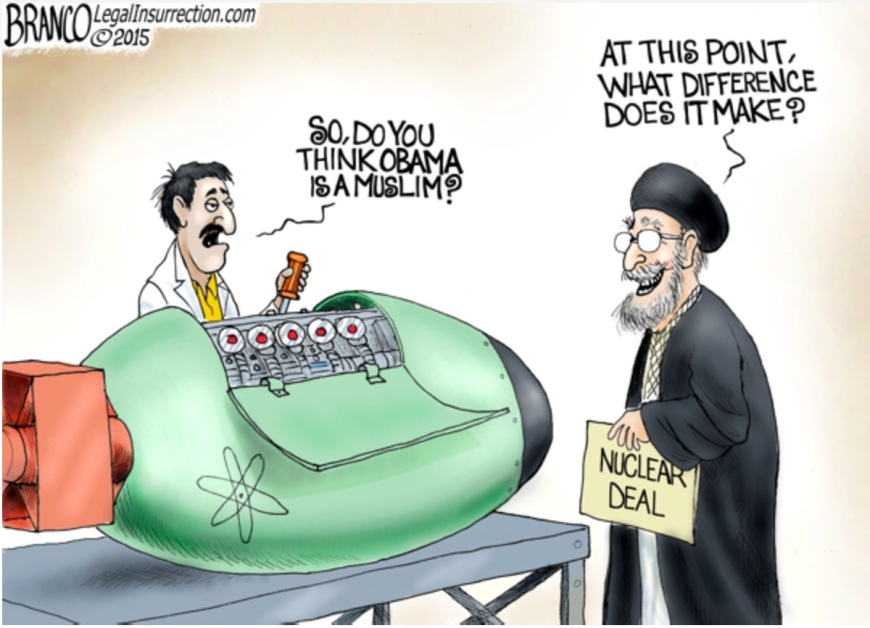
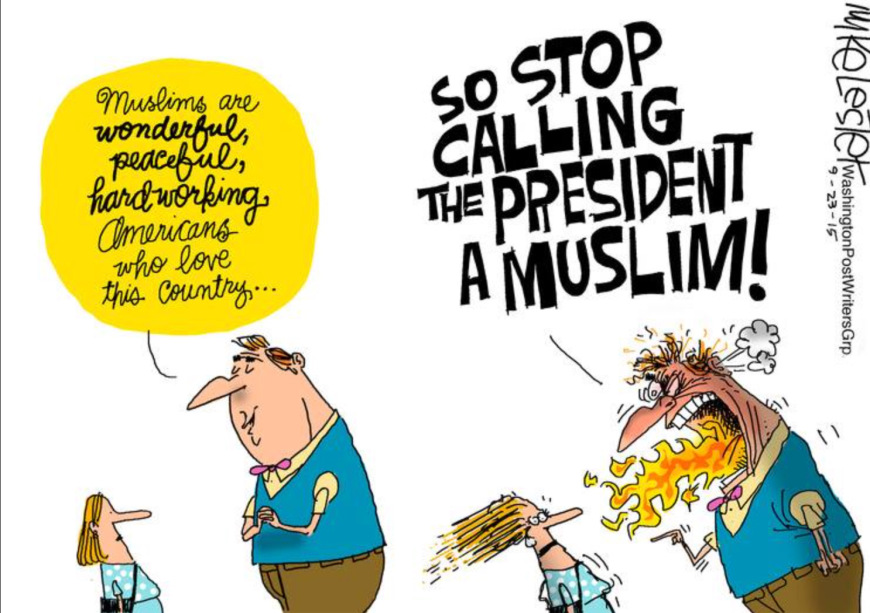
Stop-Calling-Muslim-copy


Obama-Muslim-copy


Pope-Cuba-copy


Capitalism-Confesses-copy

The pope’s misguided defense of Islam

September 24, 2015

The pope’s misguided defense of Islam, Front Page Magazine, Daniel Greenfield, September 24, 2015

pope_francis_in_march_2013


The Pope could have used his forum in Congress to call attention to the plight of Christians.

Unlike Communist Cuba, America hasn’t seized and nationalized Catholic churches and schools. It hasn’t locked up Catholic clergy or installed surveillance equipment in their homes. It hasn’t denounced the Catholic church as “exploiters” and “fascists”. And yet Pope Francis, who had few criticisms of Cuba, came to Congress to denounce the collision between Americans and Indians, and to urge the United States to take in illegal aliens without regard for the law.

There’s a condemnation of the death penalty. Never mind that in the US, the death penalty is used after extensive appeals against some of the worst monsters imaginable, unlike Cuba, where it was used to massacre political opponents of the Castro crime family. And condemnations of selling weapons. Much of this is couched in vague language, but it’s still a sharp contrast from the visit to Cuba.

The Pope even threw in a backhanded defense of Islam…

Our world is increasingly a place of violent conflict, hatred and brutal atrocities, committed even in the name of God and of religion. We know that no religion is immune from forms of individual delusion or ideological extremism. This means that we must be especially attentive to every type of fundamentalism, whether religious or of any other kind…

But there is another temptation which we must especially guard against: the simplistic reductionism which sees only good or evil; or, if you will, the righteous and sinners.

No religion is technically immune from anything if you mean that some members of it might misbehave. But that’s misleading language that tries to avoid the reality by setting up a strawman.

No country is immune from violating human rights, but there’s a big difference between David Cameron and Adolf Hitler. There’s also a huge difference between most religions and Islam when it comes to “violent conflict, hatred and brutal atrocities” committed in the name of religion. Especially when we focus in on the contrast between Western religions in the free world… and Islam.

There’s also a simplistic reductionism in reducing unpleasant truths to strawmen. There are clear cases of evil that have to be addressed. To say that does not mean an inability to see anything except black and white.

To say that no religion is immune to brutal atrocities is true and meaningless. We might as well say that no one human being is immune to evil. It doesn’t get us any closer to dealing with the reality of evil people out there.

It’s easy to talk around problems and Islam is the most talked-around problem today. But the plight of Christians in the Middle East deserves more than more ‘talking around’. Instead of elitist lectures, they need a moral authority to forcefully advocate intervention on their behalf by making it clear that they face genocide. And that it’s up to the West to make Christianity in the region sustainable or evacuate its last remnants.

It’s a much more vital issue than Global Warming, which the Pope mentions repeatedly.

The Pope could have used his forum in Congress to call attention to the plight of Christians in the region and demand action. Instead he talked generally about Syrian refugees, most of whom are Muslims.

Advocates are hoping for more.

Now that Pope Francis is in his first day of his two-day visit to Washington, D.C., advocates for persecuted Christians in the Middle East are urging the pontiff to speak out forcefully on their plight in his meeting with President Obama Wednesday and in his historic address to Congress the following day.

“I’m hoping the Pope points out that thousands of Christians are persecuted, denied their fundamental rights, and killed because of their faith [in the Middle East],” George Marlin, chairman of Aid to the Church in Need USA, told me.

Marlin, who has written a much-praised book on the subject of Christian persecution in the Middle East, emphasized that “someone has to bang pots and pans on this issue. The Administration is not doing it. The national media is not doing it. If the Pope brings this up, it makes front-page news worldwide.”

“If Pope Francis calls it genocide before Congress, there will be a moral clarity added to this issue and it will bring a new ray of hope to persecuted Christians,” said Taimoorazy, herself a refugees from Iran who came to the U.S. in 1991, “The whole world will now be paying attention.”

In underscoring why the Pope must use the word “genocide,” she cited the fact that the Assyrian Christian population in the Middle East was 1.6 million prior to 2003 and “now we only have 300,000.”

I suppose it’s not as important as the critiques of capitalism and Global Warming and illegal aliens and the death penalty.

Why the US government is on track to ‘normalizing’ ISIS

August 25, 2015

Why the US government is on track to ‘normalizing’ ISIS, NY PostAlex VanNess, August 23, 2015

(That “normalizing” the Islamic State would be lunacy is itself a good argument that Obama will do it. — DM)

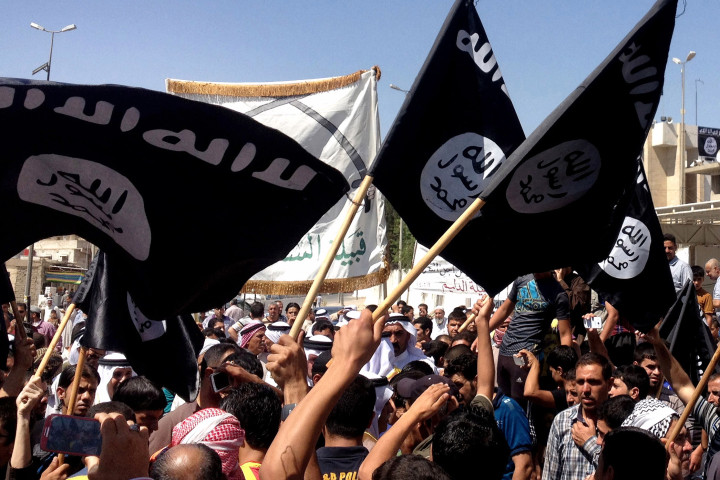
Photo: AP

How long will it take the United States to recognize the Islamic State as a legitimate actor?

That may sound ridiculous. After all, ISIS is a barbaric and sociopathic band of terrorists who proudly highlight their brutality over the Internet. Unfortunately, recent history suggests this doesn’t disqualify them, as horrific as it sounds, from eventual recognition.

Since before 9/11, the Taliban laid claim to numerous terror attacks on civilian populations throughout Afghanistan. They harbored Osama bin Laden, and since the beginning of Operation Enduring Freedom, they’ve been directly responsible for the deaths of more than 2,000 American troops.

Yet in January, White House Press Secretary Josh Earnest cryptically explained that the Taliban was not a terrorist group but instead falls under a “different classification.”

Earnest’s verbal gymnastics were deployed in the service of explaining away the president’s decision to trade five members of the Taliban for the release of American soldier-captive Bowe Bergdahl.

Hamas is an openly anti-Semitic terrorist organization that has claimed responsibility for the deaths of hundreds of innocent civilians, including several Americans. Since its creation, the Gaza-based Hamas has been dedicated to the destruction of Israel and the murder of Jews. Hamas is brutally repressive toward women and gays; they have a tendency to savagely drag dead bodies through the streets.

Last year, Palestinian President Mahmoud Abbas swore in a new unity government that incorporated Hamas-appointed ministers. Instead of cutting off financial support to the new government, as required by US law, the Obama administration jumped through hoops to legitimize the new government. Officials said they would continue supporting the Palestinian government because the new ministers were “technocrats” that “don’t represent . . . hard-core Hamas leadership.”

The legitimacy granted to Hamas by this administration is a reflection of the trend held by many pro-Palestinian protestors who now brazenly chant, “we are Hamas!” through the streets of US cities such as Miami.

Cuba has a long history of human-rights abuse. The Cuban government regularly harasses and imprisons dissidents and has been a state sponsor of terrorism for decades. Cuba continues to serve as a safe haven for terrorists and maintains close ties to both North Korea and Iran.

In 2013, Cuba was caught sending weapons to North Korea. It aids terrorist groups like the Revolutionary Armed Forces of Colombia, Iranian proxy Hezbollah and the Basque Fatherland of Liberty (ETA).

Despite this behavior, the administration still decided to take Cuba off the list of State Sponsors of Terrorism and has begun the process of normalizing the relationship between the United States and Cuba.

The State Department justified this removal by stating that “Cuba has not provided any support for international terrorism during the previous six-months” and citing vague promises that they “will not support acts of international terrorism in the future.”

So to recap, within this past year we have stopped referring to the Taliban as terrorists, provided de facto recognition and funding to Hamas and have opened up to the repressive terror-sponsoring Cuban government.

Why should we assume that ISIS will be treated any differently than these groups?

As each day passes, ISIS solidifies its presence in the region. Sure, ISIS commits terrible atrocities. The group regularly — and indiscriminately — beheads innocent people; rapes women and sells them as sex slaves and employs children as executioners.

But its leaders have undeniably been working to establish the Islamic State as, well, as a functioning state. They issue identification cards, pave roads, pick up trash, operate power stations and offer social-welfare programs.

ISIS has carved out its territory by filling the Middle East’s power vacuums, and are thus, in some places, the only game in town. How long before the international community recognizes the ISIS government?

The past precedent of legitimizing various terrorist groups and repressive dictatorships make this all too real of an issue. It’s imperative that the United States stops this trajectory of providing legitimacy to these regimes and turns back the ISIS tide, or we may one day soon be debating the opening of an embassy to the Islamic State in what used to be Iraq.

Alex VanNess is the manager of public information for the Center for Security Policy.

Springtime for America’s Enemies

July 22, 2015

Springtime for America’s Enemies, The Daily BeastGarry Kasparov, July 22, 2015

(This is from The Daily Pest Beast. — DM)

Dangerous and short-sighted U.S. diplomacy has empowered no one except state sponsors of terrorism and fascistic regimes.

There has never been a better time in history to be an enemy of the United States of America. While America’s traditional allies in Europe and the Middle East express confusion and frustration, Obama’s White House delivers compliments and concessions to some of the most brutal dictatorships in the world. In the span of a single week, the U.S. has restored diplomatic relations with Cuba, pressured Ukraine to accept Vladimir Putin’s butchering of its eastern region, and brokered a deal to liberate Iran from sanctions.

These actions would represent a tremendous series of diplomatic triumphs if they improved human rights in these repressed nations, saved lives in conflict regions, or improved global security. That is, in fact, what the White House says these deals will do, despite copious evidence to the contrary. These negotiations represent willful ignorance of the fundamental nature of the regimes in question, especially those of Iran and Russia. Cuba is a political hotspot in the U.S. and remains a potent symbol of totalitarianism, but despite its regional meddling, especially in Venezuela, it isn’t on the scale of the global threats represented by Iran’s terrorism and nuclear ambitions and Putin’s nuclear-backed expansionism. Regardless of the wishes of the Iranian and Russian people, their leaders have no interest in peace, although they are very interested in never-ending peace negotiations that provide them with cover as they continue to spread violence and hatred.

The vocabulary of negotiation is a pleasant and comforting one, especially to a war-weary America. It’s difficult to argue against civilized concepts like diplomacy and engagement, and the Obama administration and the pundits who support it have made good use of this rhetorical advantage. In contrast, deterrence and isolation are harsh, negative themes that evoke the dark time of the Cold War and its constant shadow of nuclear confrontation. No one would like less a return to those days than me or anyone else born and raised behind the Iron Curtain. The question is how best to avoid such a return.

The favorite straw man of the “peacemongers” is that the only alternative to appeasement is war, which makes no sense when there is already an escalating war in progress. The alternative to diplomacy isn’t war when it prolongs or worsens existing conflicts and gives the real warmongers a free hand. Deterrence is the alternative to appeasement. Isolation is the alternative to years of engagement that has only fueled more aggression.

Perhaps it’s because I grew up in a Communist country that I cannot so casually ignore the suffering of the people being left behind as these treaties are signed. Ronald Reagan was called a warmonger by the same crowd that is praising Obama to the skies today and yet Reagan is the one who freed hundreds of millions of people from the Communist yoke, not the “peacemakers” Richard Nixon and Jimmy Carter.

Diplomacy takes two while capitulation is unilateral. Diplomacy can fail and there is real damage, and real casualties, when it does. Putin’s dictatorship was immeasurably strengthened by the catastrophe known as “the reset,” an Obama/Hillary Clinton policy that gave Putin a fresh start as an equal on the world stage just months after he invaded Georgia. Years that could have been spent deterring Putin’s crackdowns and centralization of power while he still needed foreign engagement were instead spent cultivating a partnership that never really existed. Time that could have been used to establish alternate sources of gas and oil were squandered, leaving Europe vulnerable to energy blackmail.

By 2014, Putin had consolidated power at home completely and, with no significant domestic enemies left and sure he would face little international opposition, he was confident enough to invade Ukraine and annex Crimea. The thousands of dead and hundreds of thousands of displaced people in Ukraine are Putin’s victims, of course, but they must also weigh on the conscience of the bureaucrats, diplomats, and leaders whose cowardice—well-intentioned or not—emboldened Putin to that point.

As recent days and past decades past have shown us, it is easy to paint the critics of nearly any diplomatic process as warmongers. Again, the language of peace and diplomacy is soothing and positive. If we just talk a little longer, if we just delay a little more, if we just concede a little more… To make the peacemonger position even more unassailable, every outbreak of violence large or small can be blamed on the failure of the diplomats to talk, delay, and concede more. And sometimes, to be fair, acceptable compromises are reached and, if not win-win, mutually satisfactory lose-lose agreements can defuse conflicts and avoid bloodshed. Diplomacy is supposed to be the modern way, the civilized way, and it should always be considered first—and second.

But diplomacy also requires a measure of good faith by all parties. It assumes that one side (or both) isn’t lying and cheating. It assumes that there is sufficient coercion and/or self-interest for the deal to hold. A peace treaty assumes that both sides actually want peace; a ceasefire assumes that both sides will cease firing. When these things cannot be assumed, any deal is a likely to be a bad deal. At best it will be meaningless and the regimes operating in bad faith will be quick to exploit the delays and concessions. By signing agreements with regimes that have proven time and again that they cannot be trusted and have no interest in peace or ceasefires, the Obama administration has turned the great game of diplomacy into Russian roulette.

Keeping a firm grip on power is the only thing that matters in a dictatorship. The consequences of losing power in an authoritarian regime rarely involve peaceful retirement and a long life. (Gorbachev is a notable exception, mostly due to his cleverly taking credit for the Soviet collapse he fought so hard to avoid, as well as to the shameful lack of appetite in Russia and the international community for holding Communist leaders accountable.) Both Khamenei and Putin have brutally cracked down on their own people to remove any challenges to their authority. Both rely on vicious propaganda to drum up nationalism and hatred for foreign enemies and “traitors” at home, i.e. anyone who opposes or criticizes the regime. Both wage war and terror on their borders and beyond. Both hold sham elections to provide a distraction for their citizens and fodder for the global press to blather on about the potential for liberalization. And this week, both Putin and Khamenei have been rewarded by President Obama with negotiations that will aid them in causing further suffering to their people and in making the world far less safe. Obama gets his “peace for our time” fanfare and the dictatorships continue with business as usual.

A remark made by Israeli Minister of Foreign Affairs Moshe Dayan is much repeated by the peacemongers in times like these. In a 1977 interview the renowned military man said that “if you want to make peace, you don’t talk to your friends.” This is both clever and true, but what has been forgotten is that Dayan continued, “But the question is whom do we want to make peace with—not just who are our enemies.” It’s delusional to think you can make peace with an unrepentant state sponsor of terror like Iran or a Russian regime that is sending tanks across a European border and adopting fascist propaganda.

It is clear that the Obama administration thinks it should and can make peace with anyone, whether they like it or not, and whether or not they actually change their odious behavior. These terrible deals with Cuba, Russia, and Iran—it’s like the old joke about the businessman who sells each unit at a loss but says he’ll make it up in volume. Cuba continues to jail journalists and dissidents. Putin’s forces are still illegally occupying Crimea and waging war in Eastern Ukraine while Assistant Secretary of State Victoria Nuland bullies the Ukrainian government into the concessions that Putin demanded in the latest Minsk ceasefire accord (which his troops ignore, of course).

Iran will dramatically upgrade its ability to support the military wings of Hezbollah, Hamas, and the Houthis in Yemen it has been supplying with weapons for years. There is little doubt Iran will also continue its attempts to develop a nuclear weapon, and even if it fails it is sure to spark a nuclear arms race in the region. Iran’s hardliners have been cemented in power by escaping sanctions while giving up nothing. Calling all of this a triumph for diplomacy is perverse. By the time Obama is polishing his Nobel Peace Prize in his presidential library, the next president will be left facing two aggressive despotic regimes that are stronger and more confident of their invincibility than ever.

Expansionist dictatorships never transform quietly. They most often end in collapse or violent revolution. Comparisons of the Iran agreement to the opening of China in the 1970s are absurd. China would have starved had they not abandoned Mao’s catastrophic plans and built an export economy, something that required formal relations with the free world. In contrast, petro-dictatorships like Iran don’t need their people or to be on good terms with the West—especially not now that the economic sanctions will be lifted.

The casualties that have resulted from weakness masked as diplomacy far outnumber those stemming from being too hasty to confront and deter aggression. The peacemongers should keep that in mind as Iran uses some of its $100 billion in newly unfrozen assets to arm its terror proxies. Before applauding the next ceasefire in Ukraine as progress they should recall what Putin did during the last two. More than anything, before Obama again praises the tyrannical leaders of Cuba, Iran, and Russia for their cooperation, he should remember that some enemies are worth having.

Thawing U.S. ties: Cuba today, Iran tomorrow?

December 26, 2014

Thawing U.S. ties: Cuba today, Iran tomorrow? Al Arabiya NewsMajid Rafizadeh, December 26, 2014

(Please see also Obama’s Worst Lie About his Dirty Castro Deal is in his First Sentence.

Obama Cuba negotiations

Also, Obama’s need for a legacy consistent with his ideology trumps all else, including Iran’s abysmal human rights record, its theocratic government, its support for terrorism, its hatred for Israel and desire to eliminate her, its duplicity in its P5+1 negotiations and its insistence on getting (or keeping) nukes. True, removal of statutorily based sanctions would require congressional action. However, Obama has little interest in avoiding constitutional irregularities. No congressional approval was granted for the “temporary suspension” of sanctions and laws inconsistent with Obama’s desires can be and are waived. Litigation over the de facto removal of sanctions by executive order would take many years.– DM)

After almost 53 years of Cold War between the U.S. and Cuba, the transformation of ties between these two adversaries has sparked a considerable amount of debate with respect to the normalization of ties with other longstanding rivals. The possibility of resolving other diplomatic imbroglios, specifically the revival of diplomatic ties between the U.S. and Iran is a case that comes to mind.

Some Iranians showed their excitement on Twitter with regards to the Cuban deal. Some showed hope that their government will be next and they could soon see an American embassy in Tehran. However, others thought that an Iran-U.S. deal is an idealistic and unreachable dream.

Indeed, any normalization of diplomatic relationships between the Islamic Republic and the U.S. will likely have significant positive impacts on both nations, leading to a critical strategic and geopolitical shift in the Middle Eastern political chessboard. Currently, both countries have some shared strategic and geopolitical objectives in Iraq and Syria particularly when it comes to fighting ISIS.

A possible Iranian deal will remove the economic sanctions on the Islamic Republic, assisting Tehran to achieve its highest economic potential in exports, imports and wealth. The tourist industry would be revived in Iran, with many European and Americans fond of visiting thousands of years old historical sites in Esfahan Shiraz, Hamadan, and other provinces. Normalization of diplomatic ties will lead to the flow of (primarily) European companies to do business with the Islamic Republic. In addition, as Iranian youth have shown to be in favor of American brands and products, American manufactures will find a share in Iran’s market as well. Further, U.S. airplane companies will begin cooperation with Iranian airlines.

As many people are pondering on the likelihood of a deal similar to the recent Cuba agreement with Iran, the question is whether the executive order to lift the embargo on the Islamic Republic and conducting back channel diplomacy to fully open ties with Tehran is possible?

Iran’s file is more complicated and multilayered

There are some partial similarities between the Obama administration’s method to initiate a deal with Raul Castro’s government and the way it has recently approached the Islamic Republic. The major commonalities are the back channel diplomacy and talks.

Similar to the Cuban deal, the Obama administration has conducted back channel talks with Iranian politicians with respect to Iran’s nuclear program. In addition, President Obama sent a clandestine letter to Iran’s Supreme Leader Ayatollah Ali Khamenei highlighting some of the shared strategic, national and geopolitical interests that both nations have in the Middle East.

Nevertheless, these commonalities in diplomatic approaches have led some scholars, politicians, and policy analysts to jump to the conclusion that the same deal should be applicable to the case of Iran because such an approach was possible with Cuba and the embargo on Cuba was lifted.

But, not too fast.

Iran’s file is much more complicated, multifaceted and multilayered than the Cuban case. While Cuba is a small island close to the state of Florida with a population of approximately 11 million, Iran, with a population of over 80 million, is located in the complex geopolitical chessboard of the Middle East, and entangled among mixture of alliances and enmities in the oil rich region.

Second of all, from Washington’s perspective, Cuba has hardly been a serious threat to American strategic, geopolitical, or economic interests. On the other hand, the Islamic Republic has been a major player in scuttling U.S. foreign policy objectives and opposing its allies (including Israel) in the Middle East.

Third, several crucial regional developments are viewed from the prism of a zero-sum game for both Iranian and American officials. Iranian leaders are less likely to accept any compromises on their top foreign policy priorities, such as: keeping President Bashar al-Assad in power, withdrawing its financial, advisory, intelligence, and military support to the Iraqi and Syrian government, and assisting formidable proxies such as Hezbollah.

Fourth, there was no international consensus on the U.S. embargo and economic sanctions against the Cuban government. As a result, President Obama can issue an executive order to lift the embargo. Many European countries were doing business with the Cuban government and the United Nations repeatedly condemned U.S. sanctions. On the other hand, the four rounds of economic sanctions on Tehran came with the approval of the U.N. Security Council. Unlike Cuba, many regional and global powers are dubious about Iran’s nuclear and regional hegemonic ambitions.

Fifth, several developments in Iran, such as revelations of clandestine nuclear sites, the possibility of testing exploding detonators for nuclear weapons in Parchin military site, and the military dimension of Tehran’s nuclear program, have led to regional and international strain.

Finally, and more fundamentally, unlike Castro, Khamenei has shown no interest in fully normalizing diplomatic ties with the United States. For example, the Obama administration received no positive response from Khamenei through its diplomacy. In addition, there is no official public debate among Iranian politicians, across various spectrums of Iran’s political system, of even allowing the opening of an American embassy in Tehran. The U.S. domestic opposition to normalize ties with Iran, particularly from the Republicans, is much higher in comparison to the Cuban case. Although the Obama administration has taken some back channel steps to negotiate with the Islamic Republic, Iran’s supreme leader has not responded with signs of willingness to normalize relationships and he has been clear in not trusting the “Great Satan. “

The signal that Iranian leaders received from the Cuban deal is not what the Western media depicts- that Iran is optimistic about normalizing ties with the U.S.. The message that Tehran received was that the Islamic Republic has to persist in its policies and that economic sanctions will ultimately fail. As foreign ministry spokeswoman Marzieh Akfham articulated: “The defense by the Cuban government and people of their revolutionary ideals over the past 50 years shows that policies of isolation and sanctions imposed by the major powers against the wishes of independent nations are ineffective.”