Author Archive

The Death Rattle of Obama’s Reputation

December 23, 2017

The Death Rattle of Obama’s Reputation, Commentary Magazine, December 22, 2017

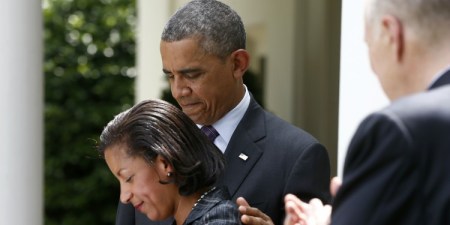
AP Photo/Charles Dharapak

The members of Barack Obama’s administration in exile have become conspicuously noisy of late—even more so than usual. Former CIA Director John Brennan accused Donald Trump and his administration of engaging in “outrageous,” “narcissistic” behavior typical of “vengeful autocrats” by threatening proportionate retaliation against countries that voted to condemn the United States in the United Nations, as though that were unprecedented. It is not. James Clapper, Obama’s director of national intelligence, all but alleged that the president is a Russian “asset.” Perhaps the most acerbic and incendiary series of accusations from the former Democratic president’s foreign-policy professionals were placed in the New York Times by Obama’s national security advisor, Susan Rice. In her estimation, America has abdicated its role as a “force for good.”

It’s no coincidence that these overheated condemnations accompany abundant evidence that the Trump administration is finding its legs. As the last administration’s undeserved reputation as sober-minded foreign policy rationalists is dismantled one retrospective report at a time, its jilted members are lashing out.

Rice’s attacks on the Republican administration deserve the most attention, if only because they are the most apoplectic. Donald Trump’s recently released national-security review paints a “dark,” “almost dystopian” vision of the world, Rice contended. His world is full of “hostile states and lurking threats.” Rice claimed that there is “no common good” in Trump’s worldview. What’s more, there is no “international community” and no “universal values.” There are just “American values.”

Rice takes a theatrically dim view of what is essentially a restatement of the bedrock principle of almost all international-relations theory: The international environment is anarchic. There is no “international community,” because there is no enforceable “international law.” To the extent that such a thing exists, it is dependent upon the willingness of nation states to subordinate their sovereignty to international institutions. There’s no mechanism to make them do this, save for the threat of force. The recognition that nation states exist in a state of perpetual competition is not some grim surrender to the darkest of human impulses. It is reality, the acknowledgment of which only conveys to other nations firm parameters in which they can operate without accidentally triggering a conflict with another sovereign power.

Rice acknowledges that Moscow is a threat to regional stability and peace, “Western values,” and U.S. sovereignty. She implies that Trump is a menace because he declines to recognize that. In fact, it was Obama much more so than Trump who has failed to see the obvious.

Barack Obama was inarguably the least Atlanticist president since the end of World War II. Within a year of Russia’s brazen invasion and dismemberment of the former Soviet Republic of Georgia, Obama scrapped George W. Bush-era agreements to move radar and missile interceptor installations to Central Europe. In 2013, the last of America’s armored combat units left Europe, ending a 69-year footprint on the Continent. By 2014, there were just two U.S. Army brigades stationed in Europe. The folly of this demobilization became abundantly clear when Vladimir Putin became the first Russian leader since Stalin to invade and annex territory in neighboring Ukraine.

A year later, Putin intervened militarily in Syria, where U.S. forces were already operating, resulting in the most dangerous escalation of tensions between the two nuclear powers since the end of the Cold War. Putin’s move in Syria should not have come as a surprise; Barack Obama outsourced the resolution of the Syrian conflict to Moscow in 2013, if only to avoid making good on his self-set “red line” for intervention in that conflict despite the norm-shattering use of WMDs on civilians. Even Rice’s chief complaint about Trump, his failure to condemn Putin’s brazen intervention in the 2016 election, didn’t elicit a reaction from Barack Obama until the final month of his presidency.

By contrast, and to the surprise of just about everyone, the Trump administration has been tough on Russia. Trump has ordered harsh sanctions on Moscow’s Iranian allies for violating United Nations resolutions—a course the Obama administration declined to take even if it allowed Hezbollah terrorists with direct links to Putin to operate with impunity. He ordered long overdue airstrikes on Putin’s vassal regime in Syria, halting any further use of chemical weapons in the process. Trump not only declined to lift Obama-era sanctions on Moscow, as many feared he would, but expanded them. This administration closed Russian consulates and annexes in the United States. It has targeted Putin allies like Chechen strongman Ramzan Kadyrov under the Magnitsky Act—the same act that Kremlin cutout Natalia Veselnitskaya lobbied the Trump campaign to scuttle. Trump has even gone so far as to open U.S. arms sales to Ukraine, representing a significant blow to Putin’s ambitions in Europe. It is without a doubt that Trump now has a stronger record on Russia than Barack Obama ever did. No wonder Susan Rice is so angry.

Rice further alleged that Trump recklessly accused China of being an “avowed opponent” of the U.S. rather than just a competitor, and then insisted that China has not “illegally occupied its neighbors.” Tell that to Brunei, Malaysia, the Philippines, Vietnam, or Taiwan, each of which lay claim to strategic territory in the South China Sea that the People’s Republic seized and turned into forward air and naval bases. Rice suggested that Trump’s “realists” decided to “lump” Beijing in with Moscow, not because it is a rising military and economic power, but because they wanted to “placate” American nationalists. Though this White House declined to defibrillate the Trans-Pacific Partnership free trade agreement back to life when it inherited its corpse, it has done a far more comprehensive job of working with Beijing to isolate Pyongyang than Obama did. As the North Korean nuclear crisis intensifies, China has backed fresh sanctions on North Korean financial institutions, cut off all access to Chinese iron, lead, and coal, and may even scale back petroleum deliveries to the Stalinist state by as much as 90 percent. And all in the space of one year.

Rice bemoaned the fact that Trump’s national security document contained no nods to America’s core ideological principles, such as democracy promotion and human rights. Except it does. The strategy review did declare perfunctory fealty to the idea that America cannot “impose its values” on others, but it criticized nations like China and Russia for making their economies “less free and less fair” and for censoring information “to repress their societies.” It professed America’s intention to oppose “rival actors” who “use propaganda and other matters to discredit democracy.” The document added that this administration intends to “support the dignity of individuals” who “live under oppressive regimes and who seek freedom” and “rule of law.” The U.S. will use “every tool” to “isolate states and leaders who threaten our interests and whose actions run contrary to our values,” including “repressive regimes and human rights abusers.” After all, Dr. Rice, America values are universal values.

Rice contended that the document failed to itemize the discrete identities on whose behalf the U.S. should labor: LGBT people, people in poverty, people with AIDS, people under 30, et cetera. Rather, the document insists that all mankind, regardless of conditions or accidents of birth, are objects of U.S. interest. Rice complained that climate change is no longer viewed as a threat to national security. Good. Climate change is not itself a threat to American national security but a threat multiplier, as the weather has always been. Save for some valid concerns about the prospect of an overly restrictive immigration policy and the precariousness of U.S. free-trade obligations, Rice painted a picture not of a radical administration but one that is returning to a familiar status quo ante. In nearly all respects, it was Obama’s White House, not Trump’s, that adopted an ideological foreign policy and rendered the U.S. and the world less safe as a result.

Even as early as March of 2017, it was clear that the Obama administration’s foreign-policy professionals were quite insecure about how posterity would remember their stewardship of American interests abroad. They had every reason to be. For now, at least, the Trump administration has declined to govern as Trump campaigned; not as a populist firebrand but a conventional Republican. Susan Rice and her former White House colleagues have every reason to worry, but not for the United States. Their reputations, however, are another matter entirely.
Haley’s Moment: “We Will Remember”

December 22, 2017

Haley’s Moment: “We Will Remember” Power Line,  Scott Johnson, December 22, 2017

(Please see Prof. Turley’s rather absurd offering about Ambassador’s Haley’s remarks here.  There are multiple comments, most of which reject Turley’s view. — DM)

The United States will remember this day in which it was singled out for attack in the General Assembly for the very act of exercising our right as a sovereign nation. We will remember it when we are called upon to once again make the world’s largest contribution to the United Nations. And we will remember it when so many countries come calling on us, as they so often do, to pay even more and to use our influence for their benefit.

America will put our embassy in Jerusalem. That is what the American people want us to do, and it is the right thing to do. No vote in the United Nations will make any difference on that.

But this vote will make a difference on how Americans look at the UN and on how we look at countries who disrespect us in the UN. And this vote will be remembered.

*****************************

The Weekly Standard publishes Ambassador’s Haley’s remarks in the General Assembly yesterday in the editorials of its new issue here. The text is posted by our mission to the United Nations here. The Standard’s editorial introduction notes that the resolution before the U.N. chastised the United States for its decision on December 6 to recognize Jerusalem as the capital of Israel and demanded the rescission of that policy. After Haley’s speech, U.N. delegates voted 128 to 9 for the resolution. The New York Times called it a “stinging rebuke to the United States” and a “collective act of defiance toward Washington.” The editors of the Standard disagree: “It was, rather, the U.N.’s shameful business-as-usual to which Haley delivered an overdue stinging rebuke.” Here are Haley’s remarks:

To its shame, the United Nations has long been a hostile place for the state of Israel. Both the current and the previous Secretary-Generals have objected to the UN’s disproportionate focus on Israel. It’s a wrong that undermines the credibility of this institution, and that in turn is harmful for the entire world.

I’ve often wondered why, in the face of such hostility, Israel has chosen to remain a member of this body. And then I remember that Israel has chosen to remain in this institution because it’s important to stand up for yourself. Israel must stand up for its own survival as a nation; but it also stands up for the ideals of freedom and human dignity that the United Nations is supposed to be about.

Standing here today, being forced to defend sovereignty and the integrity of my country – the United States of America – many of the same thoughts have come to mind. The United States is by far the single largest contributor to the United Nations and its agencies. We do this, in part, in order to advance our values and our interests. When that happens, our participation in the UN produces great good for the world. Together we feed, clothe, and educate desperate people. We nurture and sustain fragile peace in conflict areas throughout the world. And we hold outlaw regimes accountable. We do this because it represents who we are. It is our American way.

But we’ll be honest with you. When we make generous contributions to the UN, we also have a legitimate expectation that our good will is recognized and respected. When a nation is singled out for attack in this organization, that nation is disrespected. What’s more, that nation is asked to pay for the “privilege” of being disrespected.

In the case of the United States, we are asked to pay more than anyone else for that dubious privilege. Unlike in some UN member countries, the United States government is answerable to its people. As such, we have an obligation to acknowledge when our political and financial capital is being poorly spent.

We have an obligation to demand more for our investment. And if our investment fails, we have an obligation to spend our resources in more productive ways. Those are the thoughts that come to mind when we consider the resolution before us today.

The arguments about the President’s decision to move the American embassy to Jerusalem have already been made. They are by now well known. The decision was in accordance to U.S. law dating back to 1995, and it’s position has been repeatedly endorsed by the American people ever since. The decision does not prejudge any final status issues, including Jerusalem’s boundaries. The decision does not preclude a two-state solution, if the parties agree to that. The decision does nothing to harm peace efforts. Rather, the President’s decision reflects the will of the American people and our right as a nation to choose the location of our embassy. There is no need to describe it further.

Instead, there is a larger point to make. The United States will remember this day in which it was singled out for attack in the General Assembly for the very act of exercising our right as a sovereign nation. We will remember it when we are called upon to once again make the world’s largest contribution to the United Nations. And we will remember it when so many countries come calling on us, as they so often do, to pay even more and to use our influence for their benefit.

America will put our embassy in Jerusalem. That is what the American people want us to do, and it is the right thing to do. No vote in the United Nations will make any difference on that.

But this vote will make a difference on how Americans look at the UN and on how we look at countries who disrespect us in the UN. And this vote will be remembered.

Chinese State Media: ‘China Is Not Ready’ for Head-On Competition with U.S.

December 22, 2017

Chinese State Media: ‘China Is Not Ready’ for Head-On Competition with U.S., BreitbartFrances Martel, December 21, 2017

The Associated Press

The Chinese state Global Times newspaper published an opinion piece Wednesday sharply deviating from its typical belligerence against the United States, warning that “China is not ready” for competition with the U.S. and that Beijing “must learn from the U.S.” how to grow its economy.

Author Ai Jun’s article, “Is China ready to face direct competition with US?” responds to the title question with a resounding, “No.”

“It is time for China to start deliberating how to face up to direct competition with the US,” Ai advises. “Frankly speaking, China is not ready, since all it has been doing is focusing on its own development and its own growth.”

“Chinese people believe that although the country has become the world’s second-largest economy, a great gap still exists in regard to technology, military, education etc.,” the author notes.

The piece argues that the Chinese government was preparing for a direct challenge from the United States further in the future, when it had properly prepared for confrontation. Now, however, thanks to President Donald Trump, China will have to confront the threat without having the upper hand economically or politically. The United States, it continues, is “disappointed in itself” and the Trump administration is seeking an economic resurgence to boost national morale.

The article notably argues that China needs the United States to advance its economy. “[I]f Beijing wants to become self-sufficient in core technologies like artificial intelligence and electric automobiles and compete with Washington, it must first of all learn from the US.”

It also suggests that Trump’s “America First” policy is as nationalist as China’s policies. “Trump stresses America First doctrine and will not sacrifice US competence when interacting with China. The same goes for Beijing,” it notes.

“Hence China has some hard thinking to do over how to get stronger when the US deems it a major competitor,” the column concludes.

Ai’s assessment echoes, in part, a statement by China’s Ministry of Commerce on Thursday, urging the United States not to compete directly with China.

“Abandoning the Cold War mentality and hegemony, the world’s two largest economies would maintain win-win cooperation and mutual development, and together could push prosperity in the global economy,” Ministry spokesman Gao Feng said, according to the Global Times.

“China has never engaged in, and will never pursue so-called economic aggression policies,” Gao claimed.

President Trump’s National Security Strategy (NSS), published Monday, directly accuses China of such aggression. Calling China a “strategic competitor,” the document accuses China of, among other things, stealing “hundreds of billions of dollars” in American intellectual property; flooding America’s pharmaceutical markets with the deadly opioid fentanyl; using predatory lending practices to establish dominance over developing countries; and targeting its investing abroad to diminish American influence.

In noting that China must learn how to advance technologically from the United States, Ai’s Global Times piece appears to concede that China needs America’s intellectual property to compete on the world stage.

Another article in Chinese state-controlled media appears to take the same conciliary tone as Ai’s, though without conceding that China would lose any direct competition with America. “Nowadays, countries face common challenges and all people aspire to peace, which means the era of settling disputes through conflict has long passed,” writes Curtis Stone. Stone insists that evidence of China’s colonialist push across Asia and Africa exists only in the imagination of those influenced by the “ruthless history of the West and its long-standing goal to run the world.”

“Building a clean and beautiful community of shared future for humankind featuring enduring peace, universal security, common prosperity, and openness and inclusiveness is where the future lies,” the piece notes.

When the Trump NSS first came out on Monday, Chinese government media took a much more strident line, calling the strategy “unbelievable.” Stone, the People’s Daily columnist, declared it “a big joke.”

These newspapers were even more aggressive under President Barack Obama. The Global Times at one point even declared that “war is inevitable” between China and the United States.

How Obama manipulated sensitive secret intelligence for political gain

December 22, 2017

How Obama manipulated sensitive secret intelligence for political gain, Washington TimesGuy Taylor and Dan Boylan, December 21, 2017

President Obama’s White House had a troublesome tendency to mishandle some of the nation’s most delicate intelligence — especially regarding the Middle East — by leaking classified information in an attempt to sway public opinion on sensitive matters. (Associated Press/File)

They wanted him dead.

For years, a clandestine U.S. intelligence team had tracked a man they knew was high in the leadership of al Qaeda — an operative some believed had a hand in plotting the gruesome 2009 suicide attack in Afghanistan that killed seven CIA officers.

Their pursuit was personal, and by early 2014, according to a source directly involved in the operation, the agency had the target under tight drone surveillance. “We literally had a bead on this guy’s head and just needed authorization from Washington to pull the trigger,” said the source.

Then something unexpected happened. While agents waited for the green light, the al Qaeda operative’s name, as well as information about the CIA’s classified surveillance and plan to kill him in Pakistan, suddenly appeared in the U.S. press.

Abdullah al-Shami, it turned out, was an American citizen, and President Obama and his national security advisers were torn over whether the benefits of killing him would outweigh the political and civil liberties backlash that was sure to follow.

In interviews with several current and former officials, the al-Shami case was cited as an example of what critics say was the Obama White House’s troublesome tendency to mishandle some of the nation’s most delicate intelligence — especially regarding the Middle East — by leaking classified information in an attempt to sway public opinion on sensitive matters.

By the end of Mr. Obama’s second term, according to sources who spoke anonymously with The Washington Times, the practices of leaking, ignoring and twisting intelligence for political gain were ingrained in how the administration conducted national security policy.

Those criticisms have resurfaced in the debate over whether overall intelligence fumbling by the Obama White Housein its final months may have amplified the damage wrought by suspected Russian meddling in the U.S. presidential election last year.

On repeated occasions during the Obama era, high-level sources and some lawmakers lamented to The Washington Times, the president’s inner circle ignored classified briefings and twisted intelligence to fit political goals. Long before Donald Trump appeared on the White House campaign scene, many pointed to an incident during the 2012 election cycle as the most dramatic evidence of how that approach affected the handling of national security threats.

‘Understating the threat’

On the campaign trail in 2012, Mr. Obama declared that al Qaeda was “on the run,” despite a flow of intelligence showing that the terrorist group was metastasizing — a circumstance that led to the rise of the Islamic State.

Many Americans believed the president was justifiably touting a major success of his first term with the U.S. Special Forces killing of al Qaeda founder Osama bin Laden in 2011. But the gulf between Mr. Obama’s campaign pronouncements and classified briefings provided to Congress touched off a heated debate in intelligence circles over whether the president was twisting the facts for political gain.

“Candidate Obama was understating the threat,” then-House Permanent Select Committee on Intelligence Committee Chairman Mike Rogers told The Times in an interview after the 2012 election. “To say the core [was] decimated and therefore we [had] al Qaeda on the run was not consistent with the overall intelligence assessment at the time.”

Reflecting back this month, Mr. Rogers suggested that Mr. Obama — like many presidents before him — had a propensity for pushing certain politically advantageous narratives even if they contradicted classified intelligence.

Indeed, controversy has long swirled around politicized intelligence and leaks. The George W. Bush administration was accused of “stovepiping” intelligence it needed for its case to invade Iraq in 2003 while ignoring bits that may have undercut the rationale for war.

That case blossomed into a major scandal known as the “Plame affair.” White House staffer Scooter Libby was convicted of lying to investigators about the leak of the name of covert CIA officer Valerie Plame, whose husband had challenged the administration’s claims about Iraq’s weapons of mass destruction. President Bush later commuted Mr. Libby’s sentence.

With regard to the Obama White House, Mr. Rogers told The Times, the circumstances were different but no less disturbing. “Over the course of their time in office, the Obama administration’s world got smaller and smaller,” said the Michigan Republican, who retired from Congress in 2015. “They listened to fewer and fewer different opinions. When you do that, that is how you miss things.”

‘Heart was never in it’

Chaos and instability in the Middle East factored into one Obama-era intelligence leak that officials now say badly undermined national security.

The CIA’s covert “Train and Equip” program was crafted to aid forces seeking to overthrow Syrian President Bashar Assad after the 2011 Arab Spring protests exploded into a civil war in Syria.

Train and Equip began with a flow of “nonlethal aid” to certain Syrian rebel groups, but as its budget ballooned to some $1 billion, the program morphed into an unwieldy and ineffective effort to assist an unconventional military campaign.

One former senior intelligence official said the program was badly undermined because the White House was constantly leaking details of efforts to build a Free Syrian Army with cash, weapons and intelligence.

“Obama had drawn a red line on Syria over chemical weapons, but then he didn’t do [expletive],” the former official told The Times. “The White House was facing a lot of political pressure to show they had policy for Syria, so they leaked the CIA’s covert action plan. They leaked it for purely political reasons, so they could say, ‘Look, look, we have a Syria strategy.’”

Kenneth Pollack, a former CIA analyst now with the conservative American Enterprise Institute think tank in Washington, said other factors also undermined any chance for the program to succeed. Mr. Obama and his top aides were openly wary of being dragged deeper into the Syrian fight while the administration was trying to execute a strategic “pivot to Asia” — away from the heavy U.S. foreign policy focus on the Middle East.

“Obama’s heart was never in it, and the administration wanted nothing to do with it,” Mr. Pollack told The Times. “He mostly did it to avoid domestic political blowback. We could have done so much more, but the way it was run, it killed itself.”

Mr. Pollack, who once worked in the Clinton White House, said the program’s recruitment vetting was ridiculous. “The [Obama] administration more or less insisted, ‘We will only accept applicants … who had never met a jihadist.’ The vetting standards were absurd and excluded almost everyone who had any contact with the opposition in Syria,” Mr. Pollack said.

“It was like they thought we were going to wage a civil war against the Assad government with members of the social pages of The New York Times,” he said. “The Harvard crew team was not going to show up.”

In the long run, the policy’s failure provided a clear window for Iran and Russia to expand their military presence and political influence into the power vacuum created by Syria’s war.

‘Unmasking’

And then there was unmasking.

Controversy has swirled for the past year around the Obama administration’s use of a process that allowed high-level White House officials to learn the redacted identities of Americans swept up in classified surveillance against suspected foreign operatives during the months surrounding the presidential election.

For decades, national security officials at the highest level have used their security clearances to engage in the process known as “unmasking” while reading raw intercepts from around the world for better understanding of relationships that might impact America’s safety.

President Carter’s hawkish national security adviser, Zbigniew Brzezinski, was known by America’s spies as one who “loved raw intelligence,” according to Bob Woodward’s book “Veil, The Secret Wars of the CIA, 1981-1987.”

“Unmasking itself is not nefarious or conspiratorial; it’s done all the time around the world by ambassadors and CIAstation chiefs,” said one former CIA clandestine service officer who spoke with The Times. “It’s a standard procedure and involves a rigorous and bureaucratic process … to ensure whoever’s seeking the unmasking of names has a legitimate reason.”

But Republicans believe the process — and the safeguards against abuse — went terribly awry in the final months of the bitter campaign between Mr. Trump and Democrat Hillary Clinton and through the transition period between Mr. Trump’s unexpected victory and inauguration.

Remarks by former Trump National Security Adviser Michael Flynn, as well as Mr. Trump’s son-in-law, Jared Kushner, and former top White House strategist Steve Bannon, were all captured in surveillance of a Trump Tower meeting in December 2016. Susan E. Rice, Mr. Obama’s national security adviser, has since acknowledged she asked that the identities of the Americans in the surveillance be revealed, citing what she said were legitimate concerns about the purpose of the group’s meeting with foreigners.

Although the unmasking itself may have been justified, the former CIA clandestine service officer said, what came next was dangerous.

“The issue is when any names that have been unmasked end up getting leaked to the press,” the former officer said. “And that is certainly what looks like happened vis-a-vis the Obama administration’s unmasking of Trump officials who were in meetings with Russians or Turks that were under American intelligence surveillance.”

Rep. Devin Nunes, California Republican and chairman of the House intelligence committee, has gone further, suggesting that Obama administration officials strategically leaked the names to smear Mr. Trump and fuel a narrative that the Trump campaign was secretly working with foreign forces.

‘Come on, Mr. President’

Suspicion that the Obama White House intentionally leaked the unmasked names has been fueled by what intelligence sources say was the administration track record of other sensitive leaks — which stretched back to the Abdullah al-Shami case in Afghanistan.

CIA agents were shocked when their classified drone surveillance against al-Shami suddenly appeared in 2014 reports by The Associated Press and The New York Times, one intelligence source told The Washington Times. “There’s no question this guy got wind of the reports,” said the source. “The leak gave him a heads-up, and he suddenly disappeared. We lost our bead on him.”

Some at the CIA were outraged. Agents had been tracking the al Qaeda operative since early 2009, believing he had been directly involved in a bomb attack that injured several officials at U.S. Forward Operating Base Chapman in AfghanistanAl-Shami’s fingerprints turned up on packing tape around a second bomb that didn’t explode.

Roughly a year later, there was another attack on Chapman, a key clandestine operations center in Afghanistan, in which seven CIA officers were killed. Some suspected al-Shami played a role in that attack as well.

But as badly as the CIA wanted al-Shami dead, the case carried controversial legal questions.

Abdullah al-Shami — Arabic for “Abdullah the Syrian” — was the nom de guerre of a young man named Muhanad Mahmoud al-Farekh. Although raised in Dubai, al-Farekh was an American citizen because he was born in Texas.

By the time the CIA had him in its crosshairs in 2014, Mr. Obama was reeling from the furor sparked by his authorization of a drone strike in 2011 that killed another American citizen: al Qaeda propagandist Anwar al-Awlaki in Yemen.

The American Civil Liberties Union condemned the al-Awlaki strike as a violation of U.S. law because al-Awlaki had “never been charged with any crime” in an American court.

Fearful of a similar reaction, the Obama administration decided the best course of action would be to leak information about the al-Shami case to stir up public awareness of the conundrum facing the president, the former intelligence officials said.

“Look,” said the source, “I actually appreciate that Obama didn’t like the idea of killing another American without due process. But was leaking this stuff really the right way to handle this?

“I mean, come on Mr. President, it’s your finger on the trigger. You’re the one who decides. All we do is aim the gun,” said the source, who said it was fortunate that al-Shami was later captured alive and secretly flown to the United States for trial.

The al Qaeda operative was convicted in September in U.S. federal court in New York on terrorism charges under his birth name, Muhanad Mahmoud al-Farekh.

The 31-year-old is slated to be sentenced next month.

Congress Demands DOJ Turn Over All Docs Related to Obama Scheme to Nix Hezbollah Terror Investigation

December 21, 2017

Congress Demands DOJ Turn Over All Docs Related to Obama Scheme to Nix Hezbollah Terror Investigation, Washinton Free Beacon , December 21, 2017

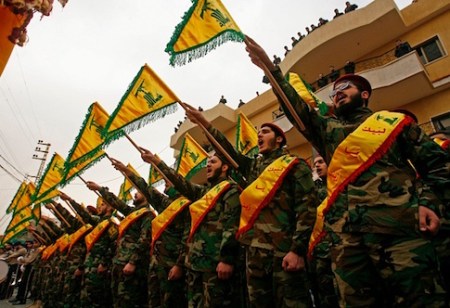
Fighters of the Shiite Hezbollah movement / Getty Images

U.S. drug enforcement agents who spoke to Politico about the matter accused the Obama administration of derailing an investigation into Hezbollah’s drug trafficking and money laundering efforts that began in 2008 under the Bush administration.

The investigation centered on Hezbollah and Iranian-backed militants who allegedly participated in the illicit drug network, which was subject to U.S. wiretaps and undercover operations.

Hezbollah is believed to have been laundering at least $200 million per month just in the United States, according to the report.

*********

Congress instructed the Department of Justice on Thursday to turn over all documents and communications that may be related to newly disclosed efforts by the Obama administration to handicap an investigation into the terror group Hezbollah and its Iranian benefactors, according to a letter sent to Attorney General Jeff Sessions obtained by the Washington Free Beacon.

The letter represents the first salvo in a new investigation by congressional leaders into allegations senior Obama administration officials thwarted a decade-long Drug Enforcement Agency investigation into Hezbollah’s illicit operations.

The Obama administration, in what congressional insiders described to the Free Beacon as a “potentially criminal” enterprise, interfered with the DEA’s investigation into Hezbollah drug activities in order to avoid angering the terror group’s chief patron Iran and preserve the landmark nuclear deal.

“I’ve long believed that the Obama administration could not have done any more to bend over backwards to appease the Iranian regime, yet news that the Obama administration killed the investigation into a billion dollar drug ring that lined the terrorist group Hezbollah’s pockets in order to save its coveted Iran deal may very well take the cake,” DeSantis said.

“Hezbollah is a brutal terrorist group with American blood on its hands and it would be unconscionable for American policy to deliberately empower such a nefarious group,” he said.

Congressional leaders have begun a formal investigation into the matter and petitioned the DOJ to hand over “all documents and communications” that may shine light on “interference with the DEA’s law enforcement efforts against Hezbollah,” according to a letter sent by Reps. Ron DeSantis (R., Fla.) and Jim Jordan (R., Ohio.).

“We have a responsibility to evaluate whether these allegations are true, and if so, did the administration undermine U.S. law enforcement and compromise U.S. national security,” the lawmakers wrote to Sessions, according to a copy of the letter obtained by the Free Beacon.

The lawmakers are requesting the DOJ hand over to Congress all materials relating to a DEA operation known as Project Cassandra, which Politico first reported was part of an effort to investigate Hezbollah’s drug activities across Latin America.

The lawmakers also are demanding files and communications related to other Hezbollah investigations, including, but not limited to, Operation Titan, Operation Perseus, and the Iran-Hezbollah Super Facilitator Initiative, according to the letter.

DeSantis and Jordan also have requested DOJ produce documents related to key individuals linked to these investigations, including those in Hezbollah’s inner circle.

Additionally, the lawmakers are seeking “all documents and communications referring or relating to the potential designation of Hezbollah as a Transnational Criminal Organization,” as well as, “all documents referring or relating to efforts to prosecute targets related to Hezbollah through the” RICO Act.

DOJ must provide Congress with these communications and documents no latter than 5 p.m. on Jan. 8, 2018.

Lawmakers also have required DOJ brief them no later than Jan. 12, 2018, on the matter.

The request for information marks the first investigatory effort by lawmakers since Politico first disclosed that the Obama administration may have thwarted DEA investigations into Hezbollah as part of an effort to avoid upsetting Iran.

Multiple sources who spoke to the Free Beacon about the matter described the Hezbollah meddling as one part of a larger Obama administration effort to overlook Iran’s global terror operations.

Congress is particularly interested to learn whether key senior Obama administration officials, including former National Security Council staffer Ben Rhodes, were involved in meddling with the Hezbollah operation as part of an effort to preserve diplomatic relations with Iran and pave the way towards the nuclear deal.

The investigation by DeSantis and Jordan is being undertaken under the wider umbrella of oversight efforts into the Obama administration’s diplomatic dealings with Iran that led to the nuclear deal.

Congressional officials and others have long maintained the Obama administration misled lawmakers and the American people about the nature of the deal in order to ensure its survival.

In addition to the latest information on the Hezbollah investigation, the Obama administration has been accused of helping Iran skirt international sanctions and providing Tehran with multiple cash infusions to ensure it remained at the bargaining table.

U.S. drug enforcement agents who spoke to Politico about the matter accused the Obama administration of derailing an investigation into Hezbollah’s drug trafficking and money laundering efforts that began in 2008 under the Bush administration.

The investigation centered on Hezbollah and Iranian-backed militants who allegedly participated in the illicit drug network, which was subject to U.S. wiretaps and undercover operations.

Hezbollah is believed to have been laundering at least $200 million per month just in the United States, according to the report

Twilight over the “Palestinian Cause”

December 21, 2017

Twilight over the “Palestinian Cause”, Gatestone InstituteGuy Millière, December 21, 2017

(Please see also, Palestinian claims to Jerusalem lose Saudi as well as US support. — DM)

Reports from the West Bank after the Six Day War show that the Arabs interviewed defined themselves as “Arabs” or “Jordanians”, and evidently did not yet know that they were “the Palestinian people”. Since then, they were taught it. They were also taught that it is their duty is to “liberate Palestine” by killing Jews. The Palestinians are the first people invented to serve as a weapon of mass destruction of another people.

“The Palestinian people does not exist. The creation of a Palestinian state is only a means for continuing our struggle against the state of Israel for our Arab unity. In reality, today there is no difference between Jordanians, Palestinians, Syrians and Lebanese.” — PLO leader Zuheir Mohsen, interview in the Dutch newspaper Trouw, March 1977.

Since the collapse of the Soviet Union, the European Union has become the main financier of the “Palestinian cause”, including its terrorism. They are also contributing to war.

Iran, strengthened enormously by the agreement passed in July 2015 and the massive US funding that accompanied it, has been showing its desire to become a hegemonic power in the Middle East.

The grand mufti of Saudi Arabia, Sheikh Abdulaziz ibn Abdullah Al ash-Sheikh, recently issued a fatwa saying that “fighting the Jews” is “against the will” of Allah and that Hamas is a terrorist organization.

For many years, “Palestine” has not stopped aspiring to new heights in the so called “international community”. “Palestine” has been present at the Olympic Games since 1996, and, later, became a permanent observer to UNESCO and the United Nations. The vast majority of the 95 “embassies” of “Palestine” are in the Muslim world; many others are in Asia, Africa, Latin America and Europe. In 2014, the Spanish Parliament voted in favor of full recognition of “Palestine.” A few weeks later, the French Parliament did the same. 

There is no other instance in the history of the world where a state that does not exist can have missions and embassies presumed to function as if that state did exist.

Now the time has probably come for the “Palestinians” to realize that they have lost and fall back to earth, as noted by the scholar Daniel Pipes.

Have “Palestinian” leaders been showing by their speeches and actions that they are ready to rule a state living in peace with their neighbors and with the rest of the world? All “Palestinian” leaders have incessantly incited terrorism, and do not hide their wish to wipe Israel off the map.

Is there a long-standing aspiration by the “Palestinian people” to have a state and to live peacefully within that state? The answer is actually no. The “Palestinian people” were invented in the late 1960s by the Arab and Soviet propaganda services. As PLO leader Zuheir Mohsen told the Dutch newspaper Trouw in March 1977:

“The Palestinian people does not exist. The creation of a Palestinian state is only a means for continuing our struggle against the state of Israel for our Arab unity. In reality, today there is no difference between Jordanians, Palestinians, Syrians and Lebanese.”

Reports from the West Bank after the Six Day War show that the Arabs defined themselves in interviews as “Arabs” or “Jordanians”; they evidently did not know that they were the “Palestinian people”. Since then, they were taught it. They were also taught that it is their duty to “liberate Palestine” by killing Jews. The Palestinians are the first people invented to serve as a weapon of mass destruction of another people.

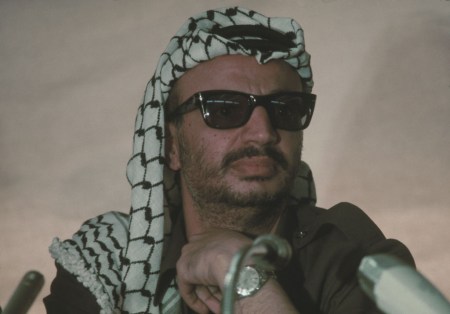
Yasser Arafat, Chairman of the PLO, at the Arab League summit in Rabat, Morocco, 1974. (Photo by Hulton Archive/Getty Images)

Is there at least a historic past that gives legitimacy to the aspiration to create a “Palestinian state”? The answer again is actually no. There is no Palestinian culture distinct from the cultures of the Muslim Arab world, no monument that can be defined as a “Palestinian” historic monument, except by falsifying history.

More basically, would a hypothetical “Palestinian state” be economically viable? Again, the answer is actually no. Territories occupied by the Palestinian movements survive only thanks to international financial assistance from the West.

How then could so many countries wish for so long to create a state whose rulers would likely be regressive, corrupt “Palestinian” leaders; whose inhabitants would be used as killing machines, whose history is non-existent-to-falsified and whose economic potential seems zero?

The answer is simple.

Behind their support for the creation of a “Palestinian state”, those countries have been pursuing other goals. For decades, countries of the Muslim world obsessively wanted one thing: the destruction of Israel.

They tried to reach their goal through conventional warfare, then terrorism, then diplomacy, then propaganda. They blamed only Israel for all the evils of the Middle East.

All the while, they know who the “Palestinian” leaders are and what they do. They know that the “Palestinian people” were invented. They know why the “Palestinian” people were invented. They know that a “Palestinian state” will not have a viable economy. Yet they have been committed to a strategy of destabilizing and demonizing a non-Muslim nation, Israel.

They call the “Palestinians” “victims“; terrorism, “militancy”; and incitement to kill, “resisting occupation”. They have been trampling rightful history and replacing it with myth.

They press “Palestinian” leaders to “negotiate”, knowing perfectly well that no agreement will ever be signed and that negotiations will end in bloodshed.

They propose only “peace plans” they know Israel must reject – those which include the “’49 ‘Auschwitz‘ armistice lines” or the “right of return” for “Palestinian refugees”, who numbered half a million in 1949, but near five million today.

They recognize a “Palestinian state” while knowing that the “state” they recognize is not a state, but rather a terrorist entity without defined borders or territory, and imbued with a will to spill more blood and create more mayhem.

They have relied on turmoil, blackmail and lies to encourage the rest of the world to think the situation requires drastic international intervention.

They have been saying they want a “Palestinian state”, but never that they want this state to renounce terrorism and end the conflict.

Instead, they have been waging a vicious war they have long hoped to win.

For more than thirty years, they benefited from the support of the Soviet Union. It financed wars (19671973), terrorism, diplomacy and propaganda. The Soviet Union made the “Palestinian” enterprise an “anti-imperialist” cause — a means of strengthening Soviet positions and galvanizing the enemies of the West. The Soviet Union collapsed in 1991, but the effects of its support for the “Palestinian cause” for a time remained. Many countries hostile to the West still support and recognize the “Palestinians” while pretending to ignore that they are recognizing a terrorist entity. They are contributing to war.

Countries of the Western world, subjected to the pressures of the Muslim world and the Soviet Union for many years, have gradually given way, some even before any pressure was applied.

France chose its camp in 1967, when General Charles de Gaulle launched what he called an “Arab policy” after its defeat in Algeria. French foreign policy become resolutely “pro-Palestinian” -– in an apparent effort to deflect terrorism, obtain inexpensive oil and compete with the US — and has remained so to this day. Western European countries have gradually adopted positions close to those of France. Since the collapse of the Soviet Union, the European Union has become the main financier of the “Palestinian cause”, including its terrorism. Western European leaders know what the real goals are, yet they repeat without respite that creating a “Palestinian state” is “essential“. They are also contributing to war.

Although a long-time ally of Israel, the United States changed its Middle East policy in the beginning of the 1990s to positions closer to those of the Muslim world. American politicians and diplomats pressured Israelis to negotiate with “Palestinian” leaders and seemed to have lost sight of what the “Palestinian cause” was secretly about. Wishful Israeli leaders agreed to negotiate. The tragic result was the Oslo Accords and the creation of the Palestinian Authority (PA). It quickly became a new base of anti-Israeli terrorism. A wave of lethal, anti-Israel attacks started immediately, with a stepped-up anti-Israel diplomatic and propaganda offensive right after. A “two-state solution” was invoked. American leaders, as if they had slept through several years, started to say that a “Palestinian state” had to exist. Three American Presidents proposed “peace plans“, also contributing to war.

An additional “peace plan” is expected soon, but the parameters will be profoundly different. President Donald Trump appears to wish to break with the past.

He recently told Palestinian leader Mahmoud Abbas that “Palestinian” leaders were liars. None of the American negotiators he chose seems to have the slightest illusion about the “Palestinian” leadership or the “Palestinian cause”.

The Taylor Force Act, passed on December 5 by the US House of Representatives, plans to condition US aid to the “West Bank and Gaza” on “the actions taken by the Palestinian Authority to end violence and terrorism against Israeli citizens”; the Act could be adopted soon by the Senate. The PA rejected all the requirements in the Act.

The Muslim world is also undergoing change. Iran, strengthened enormously by the agreement passed in July 2015 and the massive US funding that accompanied it, has been showing its desire to become a hegemonic power in the Middle East. The mullahs’ regime now holds three capital cities in addition to Teheran: Baghdad, Damascus, and Beirut. Iran attacks Saudi Arabia and supports the war led by the Houthi militia in Yemen; it intends to seize Sanaa and take control of Bab El Mandeb, the gateway to the Red Sea and the Suez Canal. Qatar and Turkey have established close ties with Iran.

Saudi leaders appear aware of the danger. King Salman chose his son, Mohamed bin Salman, as heir to the throne, and gave him broad powers. “MBS”, as he is known, seems intent on leading a real revolution. Militarily, he is head of the 40-member Islamic Military Counter Terrorism Coalition, and has declared his desire to “end terrorism”. Economically, he is in charge of an ambitious reform project aimed at making his country less dependent on oil: Saudi Vision 2030. All Saudi leaders in disagreement with the new orientations of the country were placed under arrest and their assets confiscated. Mohamed bin Salman has identified Iran as the main enemy, and recently described its Supreme Leader, Ali Khamenei, as a “new Hitler.” Qatar and Turkey have been subjected to intense Saudi pressure to distance themselves from the Iranian regime. The grand mufti of Saudi Arabia, Sheikh Abdulaziz ibn Abdullah Al ash-Sheikh, recently issued a fatwa saying that “fighting the Jews” is “against the will” of Allah and that Hamas is a terrorist organization.

Mohamed bin Salman has the support of the Trump administration; Vladimir Putin who, while being allied to Iran, may want a balance of power in the Middle East, and Xi Jinping, who is facing the risk of a Sunni Islamic upheaval in China’s autonomous territory, Xinjiang.

“Palestinian” leader, Mahmoud Abbas was reportedly summoned to Riyadh, where King Salman and Mohammed bin Salman told him that he had to accept the plan proposed by the Trump administration or resign, and that it would “risky” for him to consider launching an uprising – which he has anyway, although being careful to keep it lukewarm.

During the month of October, Egyptian President Abdel Fattah al-Sisi, a close ally of Mohamed bin Salman, invited the leaders of the Palestinian Authority and Hamas to come to Cairo for a “reconciliation”. He apparently demanded control of the Gaza Strip to be handed to the Palestinian Authority. It also seems that the Trump administration and President Sisi told Hamas leaders that they had to approve the terms of the “reconciliation” agreement, and that if they carried out any attacks against Israel, they risked complete destruction.

The “peace plan” evidently to be presented by the Trump administration is provoking the extreme anger of “Palestinian” leaders. The goal of the “plan” seems to be to revive an open ended “peace process”, allowing Saudi Arabia and the members of the Islamic Military Counter Terrorism Coalition to move closer to Israel and push the “Palestinian cause” toward the back burner.

On November 19, an Arab League emergency meeting held in Cairo strongly condemned Hezbollah and Iran. Moreover, for the first time in fifty years, a meeting of the Arab League did not even mention the “Palestinian” question.

President Trump’s recognition on December 6 of Jerusalem as the capital of Israel has led to restlessness and acrimony both in the Muslim world and among Western European leaders. Sunni leaders allied to Saudi Arabia, however, as well as Saudi Arabia itself, seem too concerned about the Iranian threat to quarrel with Israel, the United States or really anyone. Western Europe has almost no weight in what is taking shape; all it has shown is cowardice, fear, and continued contempt for a fellow Western democracy: Israel.

Palestinian Authority President Mahmoud Abbas, now in the twelfth year of his four year term — and apparently seeing that he is getting little support — appeared to seek divine intervention: he asked the Pope for help. There would be “no Palestinian state without East Jerusalem as its capital,” Abbas said. He sounded as if he had begun to understand that the “Palestinian cause” could be fading, and, with other “Palestinian” leaders, called for “three days of rage“. A few protesters burned tires and American flags – the usual.

Turkish President Recep Tayyip Erdogan called on the Organization of Islamic Cooperation to convene in Istanbul on December 13, and urged leaders of Muslim countries to recognize Jerusalem as the “occupied capital of the Palestinian state”. Saudi King Salman stayed well away as did almost all other Sunni leaders. He only sent a message saying that he calls for “a political solution to resolve regional crises”. He added that “Palestinians have right to East Jerusalem” – the least he could do; he did no more. Erdogan is mainly supported by Iran, today’s foremost enemy of Saudi Arabia and other Sunni countries.

“It will not be the end of the war against Israel,” said Israeli Prime Minister Benjamin Netanyahu, “but it could be the beginning of the end of the “Palestinian cause”.

It now seems a good time for Western European leaders who still blindly support the “Palestinian cause” to cut their losses, both politically and economically. Taking the side of Erdogan and the mullahs in order to support a terrorist entity that will never be a “state” will do nothing to help them fight either terrorism or the increasing Islamization of Europe.

Dr. Guy Millière, a professor at the University of Paris, is the author of 27 books on France and Europe.

Putin Could Not Be Reached for Comment

December 21, 2017

Putin Could Not Be Reached for Comment, Power Line,  Scott Johnson, December 21, 2017

Rep. Adam Schiff is a highly partisan proponent of the thesis that the Trump campaign colluded with Putin in the 2016 election. This week he made his incredibly thin case in this Wall Street Journal column (behind the Journal’s paywall). I infer from Schiff’s column that the collusion thesis is impervious to the failure of proof. “Complex global investigations take time,” he explained.

Schiff went further on CNN. There he supported former DNI James Clapper’s proposition that Vladimir Putin is running President Trump as a Russian asset. Decency imposes no limits on these hacks.

The collusion line is not only impervious to the failure of proof, it is impervious to contrary evidence. Yesterday, for example, reversing Obama administration policy pleasing to Putin, the Trump administration approved the sale of lethal weapons to Ukraine. The Washington Post’s Josh Rogin reported:

The Trump administration has approved the first ever U.S. commercial sale of lethal defensive weapons to Ukraine, in a clear break from the de facto U.S. ban on arms sales that dates back to the Obama administration. The move was heavily supported by top Trump national security Cabinet officials and Congress but may complicate President Trump’s stated ambition to work with Russian President Vladimir Putin.

Administration officials confirmed that the State Department this month approved a commercial license authorizing the export of Model M107A1 Sniper Systems, ammunition, and associated parts and accessories to Ukraine, a sale valued at $41.5 million. These weapons address a specific vulnerability of Ukrainian forces fighting a Russian-backed separatist movement in two eastern provinces. There has been no approval to export the heavier weapons the Ukrainian government is asking for, such as Javelin antitank missiles.

Vladimir Putin could not be reached for comment.

And that’s not all. Yesterday the Treasury Department announced that it added five Russians to the list of those sanctioned under the Magnitsky Act. Treasury’s press release is posted here. The press release identifies three of those sanctioned by Treasury’s Office of Foreign Assets Control (OFAC) as a result of their involvement in the scandal uncovered by Magnitsky:

OFAC today designated Alexei Sheshenya for his involvement in the criminal conspiracy uncovered by Magnitsky. Sheshenya was the shareholder of Grand Aktiv, the plaintiff in a lawsuit against Parfenion. The lawsuit involved one of six claims against the three Hermitage Fund subsidiaries, Parfenion, Riland, and Makhaon, illegally re-registered under different ownership in 2007. The judgment in these lawsuits served as the basis for an illegal tax refund in 2007, which Magnitsky exposed.

Yulia Mayorova was also designated for her involvement in the criminal conspiracy uncovered by Magnitsky. Mayorova represented Makhaon and Riland (two of the subsidiaries of the Hermitage Fund illegally re-registered under different ownership in 2007). As noted above, the judgments in the lawsuits served as the basis for an illegal tax refund in 2007, which Magnitsky exposed. The Hermitage Fund had no prior knowledge of or acquaintance with Mayorova and never hired her or authorized her appointment.

OFAC also designated Andrei Pavlov for his involvement in the criminal conspiracy uncovered by Magnitsky. Pavlov represented two of the illegally re-registered Hermitage Fund subsidiaries in separate lawsuits brought by a company he helped to register. The Hermitage Fund had no prior knowledge of or acquaintance with Pavlov and never hired him or authorized his appointment.

Again, Vladimir Putin could not be reached for comment.

Nazi Mosques in America

December 21, 2017

Nazi Mosques in America, FrontPage Magazine, Daniel Greenfield, December 21, 2017

(Please see also, D.C. Transit Cop’s Trial Details Ties Between Neo-Nazism and Islamist Terrorism. — DM)

Hamas has repeatedly made use of his prayer by calling for the extermination of the Jews and Christians. Hamas’ Acting Speaker of the Palestinian Legislative Council had prayed, “Oh Allah, vanquish the Jews and their supporters. Oh Allah, vanquish the Americans and their supporters. Oh Allah, count their numbers, and kill them all, down to the very last one.”

There was no misunderstanding. No one misspoke.

Hamas and the two Islamic centers issued the same genocidal threats because they were referencing the same Islamic teachings. The Islamic Center of Jersey City and the Islamic Center of Davis were all echoing Hamas. And Hamas was echoing the classic Islamic teachings of Sahih Bukhari.

Meanwhile terror mosques continue to enjoy influence and access in America. But then there are the awkward moments when in between the interfaith sessions, the mosques get caught preaching the extermination of the Jews. The mosque leaders mumble something about a misunderstanding. There’s another interfaith session in which leftist Jewish and Christian clergy overlook the calls to genocide and commit to a common struggle against President Trump while chanting, “No Muslim Ban!”

And then on another Friday in Jersey City, Davis or somewhere else, it happens again. “Count them one by one, and kill them down to the very last one.”

**********************************

It was another Friday night in the Islamic Center of Jersey City. And its imam, Sheikh Aymen Elkasaby, had some thoughts about the Jews.

“So long as the Al-Aqsa Mosque remains a humiliated prisoner under the oppression of the Jews, this nation will never prevail,” he screamed belligerently in the World Trade Center bomber’s old mosque.

“Count them one by one, and kill them down to the very last one. Do not leave a single one on the face of the Earth.”

“Kill the Jews” is as much a standard at Friday night mosque services as Springsteen’s Born to Run is on Friday night in bars well downwind of the Islamic Center of Jersey City. But the politicians who stop by the mosques before elections have to pretend that they’re shocked at all the gambling going on.

The Islamic Center of Jersey City’s  president had been a member of the New Jersey Homeland Security Interfaith Advisory Council. Senator Cory Booker had invited him as a guest to the State of the Union and praised him as an example “of how the diversity of America makes us all better.”

Was his imam calling the Jews “apes and pigs” really making us all better? And if the Islamic Center of Jersey City wasn’t making America better with its diversity, then just maybe neither was Senator Cory Booker, the Democrats and their entire Islamic immigration program.

The diversity bus had taken a wrong turn on the road to Utopia and ended up in Nazi Germany

Senator Booker demanded that the mosque disavow its imam and the mosque’s president gaslit the media by claiming that his imam had the wrong idea about Islam and had been misunderstood.

It’s a commonplace misunderstanding.

On another Friday this year, in the Islamic Center of Davis, Imam Ammar Shahin implored, “Oh Allah, liberate the Al-Aqsa Mosque from the filth of the Jews.”

“Oh Allah, count them one by one and annihilate them down to the very last one.”

The Islamic Center of Davis’s initial response was, “If the sermon was misconstrued, we sincerely apologize to anyone offended. “ Then, like the Islamic Center of Jersey City, it touted its interfaith work.

The Islamic Center of Jersey City’s boss whined that its genocidal anti-Semitic clergyman had spoken “in the heat of the moment”. The Islamic Center of Davis’s genocidal imam claimed that, “When we speak with emotion, words might not be put in the right places or understood correctly.”

Both Islamic Centers were preparing their defenses from the same script. They blamed the emotions of their murderous clerics. The actual apologies amounted to, “We’re sorry you misunderstood our death threats.” But both imams were also offering the same genocidal prayer. And that’s because they were both quoting the same Islamic hadith involving a ‘martyred’ Islamic Jihadist cursing his non-Muslim foes.

Hamas has repeatedly made use of his prayer by calling for the extermination of the Jews and Christians. Hamas’ Acting Speaker of the Palestinian Legislative Council had prayed, “Oh Allah, vanquish the Jews and their supporters. Oh Allah, vanquish the Americans and their supporters. Oh Allah, count their numbers, and kill them all, down to the very last one.”

There was no misunderstanding. No one misspoke.

Hamas and the two Islamic centers issued the same genocidal threats because they were referencing the same Islamic teachings. The Islamic Center of Jersey City and the Islamic Center of Davis were all echoing Hamas. And Hamas was echoing the classic Islamic teachings of Sahih Bukhari.

Why would an imam at the Islamic Center of Jersey City echo Hamas? For over a decade, the director of the Islamic Center had been Mohammad Al-HanootiAl-Hanooti was an unindicted co-conspirator in the World Trade Center bombing. The FBI’s counterterrorism director had described him as a “big supporter” of Hamas who had helped raise $6 million for the Islamic terror group.

That’s information that politicians like Senator Booker like to ignore. And then they pretend to be shocked that there’s Jihad going on at an Islamic Center formerly headed up by a Hamas fundraiser.

A few days before the failed suicide bombing in Times Square, imam Qatanani of the Islamic Center of Passaic Country had called for a new intifada and led a “blood and souls” chant in Times Square. Imam Qatanani was an accused Hamas member. His predecessor at the Islamic Center, Mohammad El-Mezai, had been convicted of funneling money to Hamas. Qatanani was able to avoid deportation because of the intervention of a roster of New Jersey pols. Including Chris Christie, who kissed him on the cheek.

Two Jersey sheriffs claimed, “I feel better as a person to be with him” and that the Hamas member “radiates peace.” Cory Booker had attended an anti-Trump protest with him.

And the Times Square Bomber’s brother prayed at the Masjid Al-Salam mosque in Jersey City. That’s the mosque where the Blind Sheikh used to preach. The Sheikh’s followers had carried out the World Trade Center bombing and plotted numerous attacks across New York City. Masjid Al-Salam was also where locals reported Muslims celebrating after 9/11.

The connections aren’t subtle. They’ve never been subtle. They’re just embarrassing to the politicians.

The Islamic Center of Jersey City isn’t firing its imam. The Islamic Center of Davis trotted out its imam for a brief apology tour.

Time will pass and it will be business as usual. Just ask Imam Qatanani.

A mosque can have persistent connections to terrorism, its leaders can be terrorists and politicians will still flock to kiss its imam on the cheek.

That is a big part of why Islamic terrorism continues to be a problem.

Under Bush, the FBI and DOJ went after the big game. Government raids struck at the heart of the Muslim Brotherhood’s operation in America. And then it all went away. Under Obama, law enforcement was retasked to fight the political opposition, whether it was monitoring returning veterans or spying on Trump officials. Counterterrorism was confined to going after lone Al Qaeda and ISIS supporters while the Muslim Brotherhood was integrated into the community policing version of counterterrorism.

Mosques with close links to the World Trade Center bombing, to 9/11 and to Hamas terror finance stayed in business. The Nazi mosques thrived. And they produced a new generation of ‘lone wolves.’

The lone wolf myth is tied to the myth of ‘internet radicalization’ that is detached from any local Islamic institution. Obama’s counterterrorism contended that the local mosque was the best defense against ‘radicalization’. Even if the corner mosque preached a certain amount of terrorism, that was okay.

The corner mosque was the methadone clinic while ISIS was the crack dealer. It would be better for the kids if they got some moderate terrorist agitprop at the local mosque instead of going full Al Qaeda. Unless the mosque was actually the gateway drug and ISIS was just the overdose.

The moderate methadone clinic philosophy is what led to the hundreds of thousands dead in the Arab Spring. What began with the Muslim Brotherhood’s “political Islam” ended in a real Islamic State with sex slaves, brutal torture and genocide. The Muslim Brotherhood’s methadone clinic isn’t how you get off the drug. It’s how you get on it. And the drug is Islamic supremacism, violence and terrorism.

Meanwhile terror mosques continue to enjoy influence and access in America. But then there are the awkward moments when in between the interfaith sessions, the mosques get caught preaching the extermination of the Jews. The mosque leaders mumble something about a misunderstanding. There’s another interfaith session in which leftist Jewish and Christian clergy overlook the calls to genocide and commit to a common struggle against President Trump while chanting, “No Muslim Ban!”

And then on another Friday in Jersey City, Davis or somewhere else, it happens again. “Count them one by one, and kill them down to the very last one.”

Britain: The “Islamophobia” Industry Strikes Again

December 20, 2017

Britain: The “Islamophobia” Industry Strikes Again, Gatestone InstituteBruce Bawer, December 20, 2017

The new report is a remarkable document. Among its premises is that “anti-Muslim hate crime” is a major crisis in the U.K. that demands urgent action by politicians, police, educators, employers, civil-society groups, the media, and pretty much everybody else. As for the far more serious matter of crimes committed by Muslims, the report mentions them only within the context of discussions of anti-Muslim hate. In the town of Rotherham alone, for example, in accordance with orthodox Islamic attitudes toward “uncovered” or “immodest” infidel females, over 1400 non-Muslim girls are known to have been sexually abused by so-called Muslim “grooming” gangs in recent years – but the epidemic of “grooming” is cited in the Runnymede report only as one item on a list of practices and phenomena that it identifies as contributing to British “stereotypes” about Muslims. Similarly, here is the Runnymede Trust report’s solitary reference to the fatwa against Salman Rushdie: “In Britain…many Muslims felt unsupported in their reaction to Salman Rushdie’s The Satanic Verses and faced a backlash from those who they felt prioritized freedom of speech above respect for minorities.” The point here is apparently that Britons who stood up for Rushdie’s right not to be slaughtered for writing a novel were guilty of Islamophobia.

The British government’s program Prevent, the part of its counterterrorism strategy that seeks to inhibit the radicalization of British subjects, also comes in for criticism in Runnymede’s report. Prevent is faulted both for being rooted in the notion (which it finds offensive, true or not) that the chief terrorist threat to the country is posed by “Islamist terrorists” (a term that the report puts in scare quotes) and for “put[ting] the onus on Muslim communities.” The report charges that because the British government, as part of the Prevent program, monitors (for example) imams who preach violence against the West, Prevent represents a violation of free speech. I can find no record of the Runnymede Trust ever criticizing the zealous attempts by British authorities to silence critics of Islam – a practice that has led to the banning from the U.K. of prominent American critics of Islam, even as the government has continued to permit preachers of violent jihad to enter the country

********************************

The Runnymede Trust report’s solitary reference to the fatwa against Salman Rushdie states: “In Britain… many Muslims felt unsupported in their reaction to Salman Rushdie’s The Satanic Verses and faced a backlash from those who they felt prioritized freedom of speech above respect for minorities.” Apparently, Britons who stood up for Rushdie’s right not to be slaughtered for writing a novel were guilty of Islamophobia.

Much of Runnymede’s report is devoted to the high levels of Muslim poverty and unemployment in the U.K. — but instead of seeking reasons for this problem in Islam itself, it blames this problem primarily on “institutional racism,” while avoiding the ticklish question of why Hindus, whom one would also expect to be victims of “institutional racism” in Britain, are economically more successful than any other group in that nation, including ethnic British Christians.

The Runnymede report points out that domestic violence and child abuse are also committed by Westerners; the difference, needless to say, is that while FGM and honor violence enjoy widespread approval in Muslim societies and communities, where they are viewed as justifiable (if not compulsory) under Islam, domestic violence and child abuse are universally condemned in Western society and are never defended on cultural or religious grounds.

Founded in 1968, the Runnymede Trust describes itself as “the UK’s leading independent race equality think tank.” Its chair is Clive Jones CBE, a former executive at Britain’s ITV; its director is Omar Khan, a Governor of the University of East London and member of a variety of advisory groups involving ethnicity and integration. Runnymede’s reports are taken extremely seriously, and its recommendations heeded, at the highest levels of the British government.

In 1994, Runnymede published a report on anti-Semitism. Its title, A Very Light Sleeper, was borrowed from a statement by the author Conor Cruise O’Brien: “Anti-Semitism is a very light sleeper.” Now, anyone familiar with contemporary Britain knows that the alarming contemporary rise in Jew-hatred in that country – as in all of western Europe – is principally a consequence of the growing population of Muslims. But the Runnymede Trust’s report seemed designed mainly to divert attention away from that fact. Tracing anti-Semitism through Luther, Voltaire, Marx, Henry Ford, and Hitler, the report did a splendid job of implicitly identifying anti-Semitism as a Western phenomenon – a product of what the report presented a distinctively Western tendency to divide the world into “us” and “the Other.”

Of course, no civilization is more virulently anti-Semitic than Islamic civilization. But the Runnymede Trust’s 1994 report presented as gospel the at best exaggerated notion that medieval Islamic societies were tolerant of Jews, who were thus “able to play a full part” in those societies. To the extent that the report acknowledged the reality of today’s Muslim anti-Semitism, it depicted that prejudice (a) as being confined to “extremist” groups, such as Hizb ut-Tahrir, that (it was quick to emphasize) are also hostile to many Muslim countries; (b) as being caused by anger over the fact that Jerusalem, “the third most sacred place for Muslims after Mecca and Medina,” is controlled by Israel; or (c) as being caused by irrational fears of the sort that also exist in Christianity and other religions.

But when it came to Jews and Muslims, the thrust of the report is summed up in its assurance that the Koran also “refers to Jews and Christians as People of the Book” – never mind that the Koran also refers to Jews as “apes and swine,” describes them as cursed, calls on Muslims to kill them, and forbids Muslims from befriending them. Reading Runnymede’s report on anti-Semitism, one gathered the impression that it was compiled mostly so that Runnymede could be able to point to it and say that it had, in fact, issued a report on anti-Semitism.

The reality is that the Runnymede Trust does not appear to be terribly interested in anti-Semitism. For many years, it has seemed to be far more exercised about the purported pervasiveness of anti-Muslim prejudice in the U.K. In 1997, it published a report, Islamophobia: A Challenge for Us All, which “was launched at the House of Commons by then-Home Secretary Jack Straw.” Of its 60 recommendations, many were ultimately implemented. This year, on the twentieth anniversary of that report, Runnymede issued a new, 106-page report, Islamophobia: Still a Challenge for Us All, edited by Farah Elahi and Omar Khan.

The new report is a remarkable document. Among its premises is that “anti-Muslim hate crime” is a major crisis in the U.K. that demands urgent action by politicians, police, educators, employers, civil-society groups, the media, and pretty much everybody else. As for the far more serious matter of crimes committed by Muslims, the report mentions them only within the context of discussions of anti-Muslim hate. In the town of Rotherham alone, for example, in accordance with orthodox Islamic attitudes toward “uncovered” or “immodest” infidel females, over 1400 non-Muslim girls are known to have been sexually abused by so-called Muslim “grooming” gangs in recent years – but the epidemic of “grooming” is cited in the Runnymede report only as one item on a list of practices and phenomena that it identifies as contributing to British “stereotypes” about Muslims. Similarly, here is the Runnymede Trust report’s solitary reference to the fatwa against Salman Rushdie: “In Britain…many Muslims felt unsupported in their reaction to Salman Rushdie’s The Satanic Verses and faced a backlash from those who they felt prioritized freedom of speech above respect for minorities.” The point here is apparently that Britons who stood up for Rushdie’s right not to be slaughtered for writing a novel were guilty of Islamophobia.

In the town of Rotherham, England, in accordance with orthodox Islamic attitudes toward “uncovered” or “immodest” infidel females, over 1400 non-Muslim girls are known to have been sexually abused by so-called Muslim “grooming” gangs in recent years. (Photo by Anthony Devlin/Getty Images)

The report does acknowledge the reality of what it euphemistically calls “the terrorist threat,” but it never seriously addresses this threat and excuses this failure by explaining that “this report is about Islamophobia.” While noting, moreover, claims that some individuals that Islam “should be subject to criticism” because it “is a system of beliefs,” the report maintains that this “focus on ideas (or ‘ideologies’) has obscured what instead should be a focus on people.” The point apparently being that even if you’re criticizing Islam strictly as a set of ideas, that act of criticism is still being directed at people – which, again, makes you an Islamophobe. Several paragraphs of the report are, indeed, devoted to a convoluted “explanation” of why, even though Islam is not a race, Islamophobia is nonetheless a form of racism.

The British government’s program Prevent, the part of its counterterrorism strategy that seeks to inhibit the radicalization of British subjects, also comes in for criticism in Runnymede’s report. Prevent is faulted both for being rooted in the notion (which it finds offensive, true or not) that the chief terrorist threat to the country is posed by “Islamist terrorists” (a term that the report puts in scare quotes) and for “put[ting] the onus on Muslim communities.” The report charges that because the British government, as part of the Prevent program, monitors (for example) imams who preach violence against the West, Prevent represents a violation of free speech. I can find no record of the Runnymede Trust ever criticizing the zealous attempts by British authorities to silence critics of Islam – a practice that has led to the banning from the U.K. of prominent American critics of Islam, even as the government has continued to permit preachers of violent jihad to enter the country.

Much of Runnymede’s report is devoted to the high levels of Muslim poverty and unemployment in the U.K. – but instead of seeking reasons for this problem in Islam itself, it blames this problem primarily on “institutional racism,” while avoiding the ticklish question of why Hindus, whom one would also expect to be victims of “institutional racism” in Britain, are economically more successful than any other group in that nation, including ethnic British Christians.

There is nothing in the Runnymede Trust report about Islamic theology – about jihad, sharia, the caliphate, the systematic subjugation of women, the execution of adulterers and apostates and gays. Audaciously, a chapter on women and Islam reduces the whole question to “Western stereotypes of Muslim women as oppressed, passive victims.” Female genital mutilation (FGM) and honor violence, the report asserts, have been “sensationalized” by the British media. In an effort to downplay the importance of these phenomena, the Runnymede report points out that domestic violence and child abuse are also committed by Westerners; the difference, needless to say, is that while FGM and honor violence enjoy widespread approval in Muslim societies and communities, where they are viewed as justifiable (if not compulsory) under Islam, domestic violence and child abuse are universally condemned in Western society and are never defended on cultural or religious grounds.

As for Islamic patriarchy, the report insists that patriarchy exists in the West as well as in the Islamic world. The report’s repeated endeavors to draw this kind of moral equivalency are so patently absurd – and desperate – that they do not even merit a civilized response. Indeed, the report itself – whose authors are manifestly determined throughout to absolve Islam of any blame for anything whatsoever, and to attribute every ill afflicting the British Muslim community to Islamophobia – would not merit any comment at all if the Runnymede Trust were not taken as seriously as it is in the corridors of British power.

Bruce Bawer is the author of the new novel The Alhambra (Swamp Fox Editions). His book While Europe Slept (2006) was a New York Times bestseller and National Book Critics Circle Award finalist.

President Trump’s America First National Security Strategy

December 20, 2017

President Trump’s America First National Security Strategy, FrontPage MagazineJoseph Klein, December 20, 2017

In sum, the United States need not apologize to anyone. President Trump’s America First National Security Strategy is grounded in the strong belief, missing during the previous eight years, that “American principles are a lasting force for good in the world.”

***********************************

President Trump unveiled a new National Security Strategy on December 18th, which is driven by “principled realism that is guided by outcomes, not ideology.” It is based on a sober evaluation of the world as it really is, not as some wish it to be. Policy makers responsible for America’s national security must remain fully cognizant that, as the National Security Strategy document puts it, “a central continuity in history is the contest for power.” This includes economic as well as military power. Today is no different, except that the threats to America’s national security come not only from major Cold War era global players such as Russia and China. They also come from rogue countries such as North Korea, already equipped with nuclear weapons and intercontinental missiles, and Iran, the world’s leading state sponsor of terrorism that harbors nuclear ambitions. And the threats come from Islamic terrorists acting out a hateful jihadist ideology that “justifies murder and slavery, promotes repression, and seeks to undermine the American way of life.”

The Trump administration’s National Security Strategy is a much-needed corrective to the misguided foreign policies of the Obama era. The Obama administration avoided confronting challenges to U.S. national security head-on. It preferred instead to engage in what it called “strategic patience” with North Korea. The Obama administration enabled Iran to mimic North Korea’s path to becoming a nuclear armed nation via its disastrous nuclear deal with Iran. The Obama administration’s foreign policy of “leading from behind,” political correctness and micromanagement of battlefield decisions by bureaucrats in the White House hindered the fight against jihadist terrorist groups. Refusing to acknowledge the common radical Islamist ideology that links the jihadist groups together world-wide compounded the problem. The Obama administration also rushed into multilateral agreements that jeopardized America’s economic security, most notably the Paris Agreement on Climate Change. 

The U.S. government’s first duty, the Trump administration’s National Security Strategy document declares, is to put “America first.” This starts with policies to protect America’s national sovereignty, which means placing top priority on strengthening America’s economic competitiveness, bolstering America’s energy independence, protecting America’s borders and enhancing America’s military preparedness to meet the serious challenges confronting our nation.

The National Security Strategy identifies four vital national interests, or “four pillars” as: (1) protect the homeland, the American people, and American way of life; (2) promote American prosperity; (3) preserve peace through strength; and (4) advance American influence. “Just as American weakness invites challenge, American strength and confidence deters war and promotes peace,” states the National Security Strategy document.

The National Security Strategy addresses, without any equivocation, the key geopolitical challenges to America’s vital national interests, which are more diverse and complex than they were during the Cold War. They include:

  • The “revisionist powers of China and Russia,” which “want to shape a world antithetical to U.S. values and interests” and “are determined to make economies less free and less fair, to grow their militaries, and to control information and data to repress their societies and expand their influence.” Anyone who thought that President Trump would go easy on Russia or would ignore its interference in democratic elections should think again after reading the National Security Strategy document;
  • Dictatorships such as Iran and North Korea that pursue weapons of mass destruction and are “determined to destabilize regions, threaten Americans and our allies, and brutalize their own people;” and
  • jihadist terrorists and other groups “that foment hatred and use violence to advance their supremacist Islamist ideologies.”

a The Trump administration’s National Security Strategy document also focuses on challenges to America’s economic security, which arise from “unfair trade practices” and from countries (particularly China) exploiting “the international institutions we helped to build,” subsidizing their industries, forcing technology transfers, and distorting markets. Excessive regulations and high taxes have stifled growth at home.

Finally, the National Security Strategy document notes the threats to the security of the American people arising from “porous borders and unenforced immigration laws.”

After clearly stating the national security problems facing the United States, the National Security Strategy document lays out a multi-pronged blueprint to surmount them. The jihadist threat, for example, must be countered by a “fight and win” strategy, which President Trump has already implemented by giving battlefield commanders more authority to decide on the appropriate military tactics to use in defeating the enemy decisively. It has paid off with the rapid expulsion of ISIS from their strongholds in Syria and Iraq.

The National Security Strategy views a strong military as the best deterrent against the aggressive designs of our enemies and as the best means in the dangerous world that we inhabit to preserve the peace. “A strong military ensures that our diplomats are able to operate from a position of strength” and will “deter and if necessary, defeat aggression against U.S. interests,” the National Security Strategy document states.

The National Security Strategy also includes the deployment of a more robust, layered missile defense system “focused on North Korea and Iran to defend our homeland against missile attacks.”

Strengthening control over our borders and enforcing our nation’s immigration laws will help “keep dangerous people out of the United States.” President Trump is already implementing this strategy through his “extreme vetting” policies, his plans for constructing a border wall, and the employment of additional enforcement personnel. President Trump intends to put an end to randomized entry and extended-family chain migration, and to refocus our immigration policies around a merit-based admission system.

The Trump administration’s National Security Strategy does not blur the distinction between our allies and partners who “share our aspirations for freedom and prosperity,” and our adversaries who seek to exploit instability, poverty and sectarian conflict. “There can be no moral equivalency between nations that uphold the rule of law, empower women, and respect individual rights and those that brutalize and suppress their people.”

Facing the world as it is, while demonstrating “a positive alternative to political and religious despotism” through our “words and deeds,” is the essence of President Trump’s “principled realism.” A great example of how “principled realism” works is the Trump administration’s 180 degree turn from the Obama administration’s inexplicable coddling of Iran and its willingness to throw our only true ally and the only genuine democracy in the Middle East, Israel, under the bus. The Trump administration’s National Security Strategy recognizes Iran as a major threat to our national security, and Israel as a reliable partner for peace. “Today, the threats from jihadist terrorist organizations and the threat from Iran are creating the realization that Israel is not the cause of the region’s problems. States have increasingly found common interests with Israel in confronting common threats.”

Just about a year after the Obama administration stood by and allowed a blatantly anti-Israel UN Security Council resolution to pass, the Trump administration vetoed a Security Council resolution that sought to invalidate President Trump’s decision to recognize Jerusalem as the capital of Israel and move the U.S. embassy from Tel Aviv to Jerusalem. In discussing the U.S. veto, Ambassador Nikki Haley reminded the other members of the Security Council, who had denounced President Trump’s decision and voted for the resolution, that national sovereignty matters. “The United States will not be told by any country where we can put our embassy,” she said. “The fact that this veto is being done in defense of American sovereignty and in defense of America’s role in the Middle East peace process is not a source of embarrassment for us; it should be an embarrassment to the remainder of the Security Council.”  She added that “the United States had the courage and honesty to recognize a fundamental reality. Jerusalem has been the political, cultural, and spiritual homeland of the Jewish people for thousands of years. They have had no other capital city. But the United States’ recognition of the obvious – that Jerusalem is the capital and seat of the modern Israeli government – is too much for some.”

The UN’s handling of the Palestinian-Israeli conflict, operating under the thin veneer of meaningless diplomatic jargon and self-righteous pronouncements, is divorced from reality, history and morality. It demonstrates why President Trump’s re-examination of the role of international institutions in the context of his administration’s National Security Strategy is so necessary. The United States, as the strategy document states, will “cooperate to advance peace abroad.”  However, the United States will not sit idly by while authoritarian leaders manipulate multilateral institutions to advance their own nefarious agendas to the detriment of the interests and values of the United States and its allies. Moreover, the United States will not cede sovereignty to the so-called international community’s wishes where they are” in conflict with our constitutional framework.”

In sum, the United States need not apologize to anyone. President Trump’s America First National Security Strategy is grounded in the strong belief, missing during the previous eight years, that “American principles are a lasting force for good in the world.”