Archive for December 20, 2017

Trump Threatens To Hit Them Where it Hurts if They Vote Against Jerusalem

December 20, 2017

Trump Threatens To Hit Them Where it Hurts if They Vote Against Jerusalem

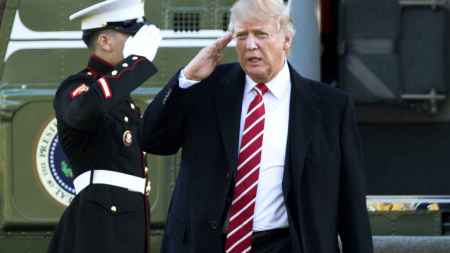
U.S. President Donald J. Trump

Photo Credit: WhiteHouse.gov

U.S. President Donald Trump warned allies and others Wednesday they could lose their foreign aid if they vote in favor of a United Nations General Assembly resolution on Thursday slamming his recognition of Jerusalem as the capital of Israel.

The warning came during a news conference with journalists at the White House in advance of the emergency special UNGA session called at the request of Arab and Muslim-majority nations.

 “They take hundreds of millions of dollars and even billions of dollars, and then they vote against us,” Trump said, according to Reuters. “Well, we’re watching those votes. Let them vote against us. We’ll save a lot. We don’t care.”

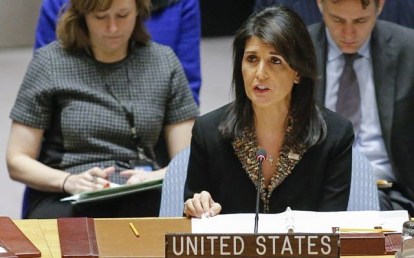
U.S. Ambassador to the UN Nikki Haley likewise warned select American allies and others in a letter she sent on Wednesday, “To be clear, we are not asking that other countries move their embassies to Jerusalem . . . but simply asking that you acknowledge the historical friendship, partnership, and support we have extended and respect our decision about our own embassy… The president will be watching this vote carefully and has requested I report back on those who voted against us.”

Britain: The “Islamophobia” Industry Strikes Again

December 20, 2017

Britain: The “Islamophobia” Industry Strikes Again, Gatestone InstituteBruce Bawer, December 20, 2017

The new report is a remarkable document. Among its premises is that “anti-Muslim hate crime” is a major crisis in the U.K. that demands urgent action by politicians, police, educators, employers, civil-society groups, the media, and pretty much everybody else. As for the far more serious matter of crimes committed by Muslims, the report mentions them only within the context of discussions of anti-Muslim hate. In the town of Rotherham alone, for example, in accordance with orthodox Islamic attitudes toward “uncovered” or “immodest” infidel females, over 1400 non-Muslim girls are known to have been sexually abused by so-called Muslim “grooming” gangs in recent years – but the epidemic of “grooming” is cited in the Runnymede report only as one item on a list of practices and phenomena that it identifies as contributing to British “stereotypes” about Muslims. Similarly, here is the Runnymede Trust report’s solitary reference to the fatwa against Salman Rushdie: “In Britain…many Muslims felt unsupported in their reaction to Salman Rushdie’s The Satanic Verses and faced a backlash from those who they felt prioritized freedom of speech above respect for minorities.” The point here is apparently that Britons who stood up for Rushdie’s right not to be slaughtered for writing a novel were guilty of Islamophobia.

The British government’s program Prevent, the part of its counterterrorism strategy that seeks to inhibit the radicalization of British subjects, also comes in for criticism in Runnymede’s report. Prevent is faulted both for being rooted in the notion (which it finds offensive, true or not) that the chief terrorist threat to the country is posed by “Islamist terrorists” (a term that the report puts in scare quotes) and for “put[ting] the onus on Muslim communities.” The report charges that because the British government, as part of the Prevent program, monitors (for example) imams who preach violence against the West, Prevent represents a violation of free speech. I can find no record of the Runnymede Trust ever criticizing the zealous attempts by British authorities to silence critics of Islam – a practice that has led to the banning from the U.K. of prominent American critics of Islam, even as the government has continued to permit preachers of violent jihad to enter the country

********************************

The Runnymede Trust report’s solitary reference to the fatwa against Salman Rushdie states: “In Britain… many Muslims felt unsupported in their reaction to Salman Rushdie’s The Satanic Verses and faced a backlash from those who they felt prioritized freedom of speech above respect for minorities.” Apparently, Britons who stood up for Rushdie’s right not to be slaughtered for writing a novel were guilty of Islamophobia.

Much of Runnymede’s report is devoted to the high levels of Muslim poverty and unemployment in the U.K. — but instead of seeking reasons for this problem in Islam itself, it blames this problem primarily on “institutional racism,” while avoiding the ticklish question of why Hindus, whom one would also expect to be victims of “institutional racism” in Britain, are economically more successful than any other group in that nation, including ethnic British Christians.

The Runnymede report points out that domestic violence and child abuse are also committed by Westerners; the difference, needless to say, is that while FGM and honor violence enjoy widespread approval in Muslim societies and communities, where they are viewed as justifiable (if not compulsory) under Islam, domestic violence and child abuse are universally condemned in Western society and are never defended on cultural or religious grounds.

Founded in 1968, the Runnymede Trust describes itself as “the UK’s leading independent race equality think tank.” Its chair is Clive Jones CBE, a former executive at Britain’s ITV; its director is Omar Khan, a Governor of the University of East London and member of a variety of advisory groups involving ethnicity and integration. Runnymede’s reports are taken extremely seriously, and its recommendations heeded, at the highest levels of the British government.

In 1994, Runnymede published a report on anti-Semitism. Its title, A Very Light Sleeper, was borrowed from a statement by the author Conor Cruise O’Brien: “Anti-Semitism is a very light sleeper.” Now, anyone familiar with contemporary Britain knows that the alarming contemporary rise in Jew-hatred in that country – as in all of western Europe – is principally a consequence of the growing population of Muslims. But the Runnymede Trust’s report seemed designed mainly to divert attention away from that fact. Tracing anti-Semitism through Luther, Voltaire, Marx, Henry Ford, and Hitler, the report did a splendid job of implicitly identifying anti-Semitism as a Western phenomenon – a product of what the report presented a distinctively Western tendency to divide the world into “us” and “the Other.”

Of course, no civilization is more virulently anti-Semitic than Islamic civilization. But the Runnymede Trust’s 1994 report presented as gospel the at best exaggerated notion that medieval Islamic societies were tolerant of Jews, who were thus “able to play a full part” in those societies. To the extent that the report acknowledged the reality of today’s Muslim anti-Semitism, it depicted that prejudice (a) as being confined to “extremist” groups, such as Hizb ut-Tahrir, that (it was quick to emphasize) are also hostile to many Muslim countries; (b) as being caused by anger over the fact that Jerusalem, “the third most sacred place for Muslims after Mecca and Medina,” is controlled by Israel; or (c) as being caused by irrational fears of the sort that also exist in Christianity and other religions.

But when it came to Jews and Muslims, the thrust of the report is summed up in its assurance that the Koran also “refers to Jews and Christians as People of the Book” – never mind that the Koran also refers to Jews as “apes and swine,” describes them as cursed, calls on Muslims to kill them, and forbids Muslims from befriending them. Reading Runnymede’s report on anti-Semitism, one gathered the impression that it was compiled mostly so that Runnymede could be able to point to it and say that it had, in fact, issued a report on anti-Semitism.

The reality is that the Runnymede Trust does not appear to be terribly interested in anti-Semitism. For many years, it has seemed to be far more exercised about the purported pervasiveness of anti-Muslim prejudice in the U.K. In 1997, it published a report, Islamophobia: A Challenge for Us All, which “was launched at the House of Commons by then-Home Secretary Jack Straw.” Of its 60 recommendations, many were ultimately implemented. This year, on the twentieth anniversary of that report, Runnymede issued a new, 106-page report, Islamophobia: Still a Challenge for Us All, edited by Farah Elahi and Omar Khan.

The new report is a remarkable document. Among its premises is that “anti-Muslim hate crime” is a major crisis in the U.K. that demands urgent action by politicians, police, educators, employers, civil-society groups, the media, and pretty much everybody else. As for the far more serious matter of crimes committed by Muslims, the report mentions them only within the context of discussions of anti-Muslim hate. In the town of Rotherham alone, for example, in accordance with orthodox Islamic attitudes toward “uncovered” or “immodest” infidel females, over 1400 non-Muslim girls are known to have been sexually abused by so-called Muslim “grooming” gangs in recent years – but the epidemic of “grooming” is cited in the Runnymede report only as one item on a list of practices and phenomena that it identifies as contributing to British “stereotypes” about Muslims. Similarly, here is the Runnymede Trust report’s solitary reference to the fatwa against Salman Rushdie: “In Britain…many Muslims felt unsupported in their reaction to Salman Rushdie’s The Satanic Verses and faced a backlash from those who they felt prioritized freedom of speech above respect for minorities.” The point here is apparently that Britons who stood up for Rushdie’s right not to be slaughtered for writing a novel were guilty of Islamophobia.

In the town of Rotherham, England, in accordance with orthodox Islamic attitudes toward “uncovered” or “immodest” infidel females, over 1400 non-Muslim girls are known to have been sexually abused by so-called Muslim “grooming” gangs in recent years. (Photo by Anthony Devlin/Getty Images)

The report does acknowledge the reality of what it euphemistically calls “the terrorist threat,” but it never seriously addresses this threat and excuses this failure by explaining that “this report is about Islamophobia.” While noting, moreover, claims that some individuals that Islam “should be subject to criticism” because it “is a system of beliefs,” the report maintains that this “focus on ideas (or ‘ideologies’) has obscured what instead should be a focus on people.” The point apparently being that even if you’re criticizing Islam strictly as a set of ideas, that act of criticism is still being directed at people – which, again, makes you an Islamophobe. Several paragraphs of the report are, indeed, devoted to a convoluted “explanation” of why, even though Islam is not a race, Islamophobia is nonetheless a form of racism.

The British government’s program Prevent, the part of its counterterrorism strategy that seeks to inhibit the radicalization of British subjects, also comes in for criticism in Runnymede’s report. Prevent is faulted both for being rooted in the notion (which it finds offensive, true or not) that the chief terrorist threat to the country is posed by “Islamist terrorists” (a term that the report puts in scare quotes) and for “put[ting] the onus on Muslim communities.” The report charges that because the British government, as part of the Prevent program, monitors (for example) imams who preach violence against the West, Prevent represents a violation of free speech. I can find no record of the Runnymede Trust ever criticizing the zealous attempts by British authorities to silence critics of Islam – a practice that has led to the banning from the U.K. of prominent American critics of Islam, even as the government has continued to permit preachers of violent jihad to enter the country.

Much of Runnymede’s report is devoted to the high levels of Muslim poverty and unemployment in the U.K. – but instead of seeking reasons for this problem in Islam itself, it blames this problem primarily on “institutional racism,” while avoiding the ticklish question of why Hindus, whom one would also expect to be victims of “institutional racism” in Britain, are economically more successful than any other group in that nation, including ethnic British Christians.

There is nothing in the Runnymede Trust report about Islamic theology – about jihad, sharia, the caliphate, the systematic subjugation of women, the execution of adulterers and apostates and gays. Audaciously, a chapter on women and Islam reduces the whole question to “Western stereotypes of Muslim women as oppressed, passive victims.” Female genital mutilation (FGM) and honor violence, the report asserts, have been “sensationalized” by the British media. In an effort to downplay the importance of these phenomena, the Runnymede report points out that domestic violence and child abuse are also committed by Westerners; the difference, needless to say, is that while FGM and honor violence enjoy widespread approval in Muslim societies and communities, where they are viewed as justifiable (if not compulsory) under Islam, domestic violence and child abuse are universally condemned in Western society and are never defended on cultural or religious grounds.

As for Islamic patriarchy, the report insists that patriarchy exists in the West as well as in the Islamic world. The report’s repeated endeavors to draw this kind of moral equivalency are so patently absurd – and desperate – that they do not even merit a civilized response. Indeed, the report itself – whose authors are manifestly determined throughout to absolve Islam of any blame for anything whatsoever, and to attribute every ill afflicting the British Muslim community to Islamophobia – would not merit any comment at all if the Runnymede Trust were not taken as seriously as it is in the corridors of British power.

Bruce Bawer is the author of the new novel The Alhambra (Swamp Fox Editions). His book While Europe Slept (2006) was a New York Times bestseller and National Book Critics Circle Award finalist.

President Trump’s America First National Security Strategy

December 20, 2017

President Trump’s America First National Security Strategy, FrontPage MagazineJoseph Klein, December 20, 2017

In sum, the United States need not apologize to anyone. President Trump’s America First National Security Strategy is grounded in the strong belief, missing during the previous eight years, that “American principles are a lasting force for good in the world.”

***********************************

President Trump unveiled a new National Security Strategy on December 18th, which is driven by “principled realism that is guided by outcomes, not ideology.” It is based on a sober evaluation of the world as it really is, not as some wish it to be. Policy makers responsible for America’s national security must remain fully cognizant that, as the National Security Strategy document puts it, “a central continuity in history is the contest for power.” This includes economic as well as military power. Today is no different, except that the threats to America’s national security come not only from major Cold War era global players such as Russia and China. They also come from rogue countries such as North Korea, already equipped with nuclear weapons and intercontinental missiles, and Iran, the world’s leading state sponsor of terrorism that harbors nuclear ambitions. And the threats come from Islamic terrorists acting out a hateful jihadist ideology that “justifies murder and slavery, promotes repression, and seeks to undermine the American way of life.”

The Trump administration’s National Security Strategy is a much-needed corrective to the misguided foreign policies of the Obama era. The Obama administration avoided confronting challenges to U.S. national security head-on. It preferred instead to engage in what it called “strategic patience” with North Korea. The Obama administration enabled Iran to mimic North Korea’s path to becoming a nuclear armed nation via its disastrous nuclear deal with Iran. The Obama administration’s foreign policy of “leading from behind,” political correctness and micromanagement of battlefield decisions by bureaucrats in the White House hindered the fight against jihadist terrorist groups. Refusing to acknowledge the common radical Islamist ideology that links the jihadist groups together world-wide compounded the problem. The Obama administration also rushed into multilateral agreements that jeopardized America’s economic security, most notably the Paris Agreement on Climate Change. 

The U.S. government’s first duty, the Trump administration’s National Security Strategy document declares, is to put “America first.” This starts with policies to protect America’s national sovereignty, which means placing top priority on strengthening America’s economic competitiveness, bolstering America’s energy independence, protecting America’s borders and enhancing America’s military preparedness to meet the serious challenges confronting our nation.

The National Security Strategy identifies four vital national interests, or “four pillars” as: (1) protect the homeland, the American people, and American way of life; (2) promote American prosperity; (3) preserve peace through strength; and (4) advance American influence. “Just as American weakness invites challenge, American strength and confidence deters war and promotes peace,” states the National Security Strategy document.

The National Security Strategy addresses, without any equivocation, the key geopolitical challenges to America’s vital national interests, which are more diverse and complex than they were during the Cold War. They include:

  • The “revisionist powers of China and Russia,” which “want to shape a world antithetical to U.S. values and interests” and “are determined to make economies less free and less fair, to grow their militaries, and to control information and data to repress their societies and expand their influence.” Anyone who thought that President Trump would go easy on Russia or would ignore its interference in democratic elections should think again after reading the National Security Strategy document;
  • Dictatorships such as Iran and North Korea that pursue weapons of mass destruction and are “determined to destabilize regions, threaten Americans and our allies, and brutalize their own people;” and
  • jihadist terrorists and other groups “that foment hatred and use violence to advance their supremacist Islamist ideologies.”

a The Trump administration’s National Security Strategy document also focuses on challenges to America’s economic security, which arise from “unfair trade practices” and from countries (particularly China) exploiting “the international institutions we helped to build,” subsidizing their industries, forcing technology transfers, and distorting markets. Excessive regulations and high taxes have stifled growth at home.

Finally, the National Security Strategy document notes the threats to the security of the American people arising from “porous borders and unenforced immigration laws.”

After clearly stating the national security problems facing the United States, the National Security Strategy document lays out a multi-pronged blueprint to surmount them. The jihadist threat, for example, must be countered by a “fight and win” strategy, which President Trump has already implemented by giving battlefield commanders more authority to decide on the appropriate military tactics to use in defeating the enemy decisively. It has paid off with the rapid expulsion of ISIS from their strongholds in Syria and Iraq.

The National Security Strategy views a strong military as the best deterrent against the aggressive designs of our enemies and as the best means in the dangerous world that we inhabit to preserve the peace. “A strong military ensures that our diplomats are able to operate from a position of strength” and will “deter and if necessary, defeat aggression against U.S. interests,” the National Security Strategy document states.

The National Security Strategy also includes the deployment of a more robust, layered missile defense system “focused on North Korea and Iran to defend our homeland against missile attacks.”

Strengthening control over our borders and enforcing our nation’s immigration laws will help “keep dangerous people out of the United States.” President Trump is already implementing this strategy through his “extreme vetting” policies, his plans for constructing a border wall, and the employment of additional enforcement personnel. President Trump intends to put an end to randomized entry and extended-family chain migration, and to refocus our immigration policies around a merit-based admission system.

The Trump administration’s National Security Strategy does not blur the distinction between our allies and partners who “share our aspirations for freedom and prosperity,” and our adversaries who seek to exploit instability, poverty and sectarian conflict. “There can be no moral equivalency between nations that uphold the rule of law, empower women, and respect individual rights and those that brutalize and suppress their people.”

Facing the world as it is, while demonstrating “a positive alternative to political and religious despotism” through our “words and deeds,” is the essence of President Trump’s “principled realism.” A great example of how “principled realism” works is the Trump administration’s 180 degree turn from the Obama administration’s inexplicable coddling of Iran and its willingness to throw our only true ally and the only genuine democracy in the Middle East, Israel, under the bus. The Trump administration’s National Security Strategy recognizes Iran as a major threat to our national security, and Israel as a reliable partner for peace. “Today, the threats from jihadist terrorist organizations and the threat from Iran are creating the realization that Israel is not the cause of the region’s problems. States have increasingly found common interests with Israel in confronting common threats.”

Just about a year after the Obama administration stood by and allowed a blatantly anti-Israel UN Security Council resolution to pass, the Trump administration vetoed a Security Council resolution that sought to invalidate President Trump’s decision to recognize Jerusalem as the capital of Israel and move the U.S. embassy from Tel Aviv to Jerusalem. In discussing the U.S. veto, Ambassador Nikki Haley reminded the other members of the Security Council, who had denounced President Trump’s decision and voted for the resolution, that national sovereignty matters. “The United States will not be told by any country where we can put our embassy,” she said. “The fact that this veto is being done in defense of American sovereignty and in defense of America’s role in the Middle East peace process is not a source of embarrassment for us; it should be an embarrassment to the remainder of the Security Council.”  She added that “the United States had the courage and honesty to recognize a fundamental reality. Jerusalem has been the political, cultural, and spiritual homeland of the Jewish people for thousands of years. They have had no other capital city. But the United States’ recognition of the obvious – that Jerusalem is the capital and seat of the modern Israeli government – is too much for some.”

The UN’s handling of the Palestinian-Israeli conflict, operating under the thin veneer of meaningless diplomatic jargon and self-righteous pronouncements, is divorced from reality, history and morality. It demonstrates why President Trump’s re-examination of the role of international institutions in the context of his administration’s National Security Strategy is so necessary. The United States, as the strategy document states, will “cooperate to advance peace abroad.”  However, the United States will not sit idly by while authoritarian leaders manipulate multilateral institutions to advance their own nefarious agendas to the detriment of the interests and values of the United States and its allies. Moreover, the United States will not cede sovereignty to the so-called international community’s wishes where they are” in conflict with our constitutional framework.”

In sum, the United States need not apologize to anyone. President Trump’s America First National Security Strategy is grounded in the strong belief, missing during the previous eight years, that “American principles are a lasting force for good in the world.”

WATCH: Did Obama let Hezbollah terrorists off the hook to seal Iran deal?

December 20, 2017

Dec 19, 2017

https://unitedwithisrael.org/

Americans and Israelis are furious upon hearing that Obama may have thwarted a counterterrorism probe into Hezbollah in order to secure what Netanyahu repeatedly called “a very, very bad deal.”

This isn’t the first allegation saying the Obama administration was placating the Iranians, but it is the first time that dozens of former federal intelligence analysts say an order to stop the investigation against Hezbollah was politically motivated, a former State Department officer tells Fox News.

Israeli PM Netanyahu pleaded with US-led global powers not to make the “very, very bad deal.” Israelis are furious upon hearing about the previous US administration’s alleged cover-up of Hezbollah terror activities, particularly their trafficking of illegal drugs, in order to secure the agreement – at the expense of the Jewish state and the civilized world.

Americans are also enraged. Congressman Robert Pittenger expressed shock over the fact that while US soldiers were bravely fighting ISIS, with some paying the ultimate price, Obama reportedly protected Hezbollah terrorists.

Watch this Fox News video to get the full picture.


US says it’ll be ‘taking names’ of countries that oppose Jerusalem move at UN 

December 20, 2017

Source: US says it’ll be ‘taking names’ of countries that oppose Jerusalem move at UN | The Times of Israel

Nikki Haley slams emergency meeting of 193-nation assembly ‘criticizing our choice,’ threatens repercussions for those who vote against it

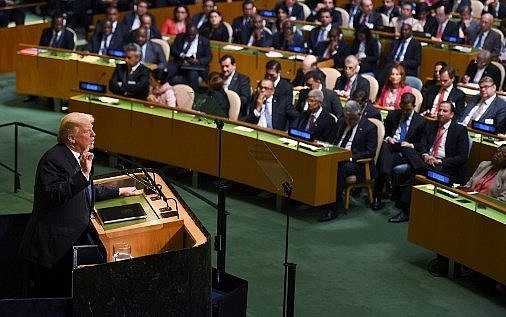
US President Donald Trump addresses the 72nd Annual UN General Assembly in New York on September 19, 2017. (AFP PHOTO / DON EMMERT)

US President Donald Trump addresses the 72nd Annual UN General Assembly in New York on September 19, 2017. (AFP PHOTO / DON EMMERT)

United States Ambassador to the UN Nikki Haley said the US will be “taking names” of countries that support a draft resolution rejecting President Donald Trump’s decision to recognize Jerusalem as Israel’s capital, set for a General Assembly vote Thursday.

Turkey and Yemen requested the urgent meeting of the 193-nation forum on behalf of the Arab group of countries and the Organization of the Islamic Cooperation (OIC) after the US vetoed the measure in the Security Council. The two countries circulated a draft resolution that mirrors the vetoed measure, reaffirming that any decision on the status of Jerusalem has no legal effect and must be rescinded.

Egypt had put forward the draft, which was backed by all 14 other Security Council members in a vote on Monday. Like the Egyptian draft, the text before the assembly does not explicitly mention Trump’s decision but expresses “deep regret at recent decisions concerning the status of Jerusalem.”

Haley reacted angrily to the move, tweeting, “On Thurs there’ll be a vote criticizing our choice. The US will be taking names.”

At the UN we’re always asked to do more & give more. So, when we make a decision, at the will of the American ppl, abt where to locate OUR embassy, we don’t expect those we’ve helped to target us. On Thurs there’ll be a vote criticizing our choice. The US will be taking names.

In a letter sent to several UN ambassadors, Haley warned that she would report back to Trump on the countries that supported the draft resolution.

“The president will be watching this vote carefully and has requested I report back on those countries who voted against us,” she wrote. “We will take note of each and every vote on this issue.”

In an address December 6 from the White House, Trump defied worldwide warnings and insisted that after repeated failures to achieve peace, a new approach was long overdue, describing his decision to recognize Jerusalem as the seat of Israel’s government as merely based on reality. He also said the US embassy would move from Tel Aviv to Jerusalem but did not give a schedule for the relocation.

Trump stressed that he was not specifying the boundaries of Israeli sovereignty in the city, and called for no change in the status quo at the city’s holy sites.

Border Police officers take aim at Palestinian rioters during clashes near the West Bank Qalandiya checkpoint, on the outskirts of Ramallah, on December 15, 2017. (Abbas Momani/AFP)

The announcement was hailed by Prime Minister Benjamin Netanyahu and by leaders across much of the Israeli political spectrum. It was criticized by many countries, condemned by the Arab world, and infuriated Palestinians, who held violent demonstrations for several days in the West Bank and on the Gaza Strip’s border with Israel.

The Palestinian permanent observer in the UN, Riyad Mansour, said he expected “overwhelming support” in the General Assembly vote, stating that Jerusalem is an issue “to be resolved through negotiations” between Israel and the Palestinians.

“The General Assembly will say, without the fear of the veto, that the international community is refusing to accept the unilateral position of the United States,” Mansour told reporters.

No country has veto powers in the 193-nation assembly, contrary to the council, where the United States, along with Britain, China, France and Russia, can block any resolution.

Key US allies Britain, France, Italy, Japan and Ukraine were among the 14 countries in the 15-member council that voted in favor of the measure.

Ambassador Haley described that 14-1 vote “an insult” and warned “it won’t be forgotten.”

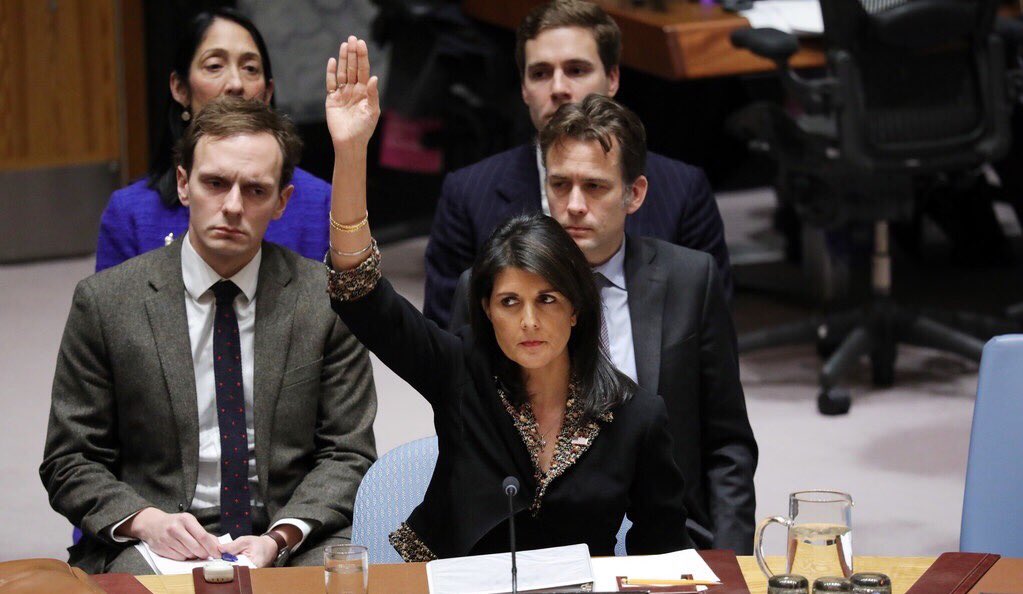
US Ambassador to the UN Nikki Haley speaks during a UN Security Council meeting on the Middle East on December 18, 2017, at UN Headquarters in New York. (AFP Photo/Kena Betancur)

She went further on Monday, warning in her tweet: “At the UN we’re always asked to do more & give more. So, when we make a decision, at the will of the American ppl, abt where to locate OUR embassy, we don’t expect those we’ve helped to target us.”

In a memo to its missions around the world Tuesday, Israel’s Foreign Ministry advised diplomats to encourage their host countries to oppose the resolution at the General Assembly. In the case of countries that are planning to back the resolution, diplomats were urged to encourage their local counterparts to at least refrain from expressing public support for the proposal.

Israeli diplomats were told to emphasize that the resolution is one-sided and will harm prospects for peace by undermining Trump, and may also lead to further violence in the region.

Israel captured East Jerusalem in the 1967 Six Day War and sees the whole of Jerusalem as its undivided capital, while the Palestinians view East Jerusalem as the capital of their future state.

The international community and the liberal media 

December 20, 2017

Source: OUR WORLD: The international community and the liberal media – Opinion – Jerusalem Post

BY CAROLINE B. GLICK
 DECEMBER 19, 2017 21:35
It should be an embarrassment to the New York Times and its colleagues that they have refused to report why Haley and Trump are demonstrably right to stand alone.
US Ambassador to the United Nations Nikki Haley speaks at the United Nations

US Amb US Ambassador to the United Nations Nikki Haley speaks during the United Nations Security Council meeting on the situation in the Middle East. (photo credit: BRENDAN MCDERMID/REUTERS)

Ambassador to the UN Nikki Haley glared at her colleagues at the UN Security Council Monday as she cast the lone nay vote against a draft resolution presented by Egypt to nullify US President Donald Trump’s recognition of Jerusalem as Israel’s capital.

Haley then berated her UN colleagues for their assault against US sovereignty and for their prolonged efforts to delegitimize Israel and blame the Jewish state for the absence of peace. In her words, “The United States refuses to accept the double standard that says we are not impartial when we stand by the will of the American people by moving our US embassy, but somehow the United Nations is a neutral party when it consistently singles out Israel for condemnation.”

The liberal media, led by The New York Times chastised her.

“Punctuating America’s increasing international isolation, the United Nations Security Council demanded on Monday that the Trump administration rescind its decisions to recognize Jerusalem as Israel’s capital and to put the United States Embassy there,” the Times wrote in a purported news article.

While attacking Trump and Haley for isolating the US, the Times and its colleagues failed to explain what an international community-aligned US foreign policy looks like.

Notably, just such a policy and its consequences were the subject of a 15,000-word investigative report published Monday morning by Politico.

“The secret backstory of how Obama let Hezbollah off the hook,” by Josh Meyer, detailed how in the interest of advancing a policy supported by the international community, then president Barack Obama imperiled US public health, national security and its allies.

As Meyer recalled, Obama entered office in 2009 promising to turn over a new leaf with Iran.

By promising to turn over a new leaf in US-Iran relations, Obama signaled his belief that the sorry state of those relations was America’s fault. Because if it wasn’t America’s fault, then no American president could change the situation.

Obama’s assumption was entirely wrong.

The Iranian regime declared war on the US shortly after it seized power. Months later, the regime’s shock troops stormed the US embassy in Tehran and held US diplomats hostage for 444 days.

Despite an uninterrupted record of Iranian aggression, since 1979 every US administration tried to convince the ayatollahs to abandon their hostility to America. Iran pocketed every presidential concession and redoubled its hostile actions against America and its allies and interests.

Ignoring the record, Obama argued he had the Midas touch. Obama made his case for uniqueness to Iran and the Muslim Brotherhood in his speech at Cairo University in June 2009.

There Obama legitimized Iran’s grievances against the US. He invited Iran’s leaders and their Sunni jihadist counterparts in the Muslim Brotherhood to work with him.

At the same time, he attacked Israel and the US’s Sunni Muslim allies.

By attacking the US’s allies and embracing its enemies, Obama signaled Iranians and the Muslim Brotherhood that he was interested in a strategic realignment of America’s Middle East posture.

In its editorial following Obama’s speech, the Times’ editors gushed, “After eight years of [American] arrogance and bullying that has turned even close friends against the United States, it takes a strong president to acknowledge the mistakes of the past.”

IN THE months and years that followed his Cairo speech, Obama’s primary goal in the Middle East was to persuade Iran’s regime to reach a nuclear accord with him. Although Obama and his advisers insisted that his nuclear diplomacy didn’t affect their willingness to confront and punish Iran for its other rogue behavior, their actions showed the opposite was true.

From his earliest days in office, Obama turned a blind eye to all of Iran’s bad behavior.

For instance, just days after his Cairo speech, the regime stole the presidential elections. Then Iranian president Mahmoud Ahmadinejad was declared the winner of the poll against his two chief opponents Mir Hossain Mousavi and Mehdi Karroubi. The public, which came out in the millions for Mousavi and Karroubi, rejected the official results. Millions took to the streets in what became known as the Green Revolution.

Instead of standing with the Iranians in the streets demanding freedom, Obama stood on the sidelines and so effectively sided with the anti-American regime against the Iranian people begging for American support.

In his report, Meyer showed another casualty of Obama’s obsessive desire to reach a nuclear accord with Tehran. Meyer chronicled the shocking fate of Project Cassandra, a multi-year investigation led by the US’s Drug Enforcement Agency. The DEA probe involved 30 US and foreign law enforcement and intelligence agencies. It was directed against Hezbollah’s worldwide narco-terrorist empire, which netted Iran’s foreign legion up to $1 billion annually.

Project Cassandra investigators “followed cocaine shipments, some from Latin America to West Africa and on to Europe and the Middle East, and others through Venezuela and Mexico to the United States. They tracked the river of dirty cash as it was laundered by, among other tactics, buying American used cars and shipping them to Africa. And with the help of some key cooperating witnesses, the agents traced the conspiracy, they believed, to the innermost circle of Hezbollah and its state sponsors in Iran.”

Rather than support the investigation, which showed that Hezbollah was importing thousands of tons of cocaine to the US and using US used car dealerships to launder their drug money, the Obama administration quashed it.

“As Project Cassandra reached higher into the hierarchy of the conspiracy, Obama administration officials threw an increasingly insurmountable series of roadblocks in its way…. When Project Cassandra leaders sought approval for some significant investigations, prosecutions, arrests and financial sanctions, officials at the Justice and Treasury departments delayed, hindered or rejected their requests.”

Meyer reports that Hezbollah used its drug profits to supply Syrian President Bashar Assad with chemical and conventional weapons he used against his own people. It used its drug money to provide tank-destroying roadside bombs to Iranian-controlled Shi’ite militias in Iraq which killed hundreds of US soldiers. It used its drug money to build apartment blocks in south Lebanon which, as the IDF has documented, double as missile launch pads and storage facilities in preparation for its next war against Israel.
And it used the money to turn a slew of Latin American countries into US enemies and Iranian allies in Tehran’s war to destroy America.

As Obama Treasury Department official Katherine Bauer claimed in written testimony before the House Committee on Foreign Affairs last February, “under the Obama administration… these [Hezbollah-related] investigations were tamped down for fear of rocking the boat with Iran and jeopardizing the nuclear deal.”

THIS THEN brings us back to Haley at the UN on Monday, and the US liberal media’s condemnation of her defense of Trump’s decision to recognize Jerusalem as Israel’s capital.

In November 2015, the UN Security Council unanimously approved Obama’s nuclear deal. The resolution was submitted by Obama’s UN ambassador Samantha Power.

The EU, the Russians and the Chinese all happily partnered with the Obama administration in concluding a nuclear deal. That vaunted, unanimously supported deal paved the way for Iran to become a nuclear armed state within a decade.

The international community – along with the US liberal media – cheered as Obama attacked Prime Minister Binyamin Netanyahu for daring to warn of the consequences of his nuclear pact.

At the same time, the international community, the Times and its liberal media counterparts all hid the news of Hezbollah’s narco-terrorism empire and its responsibility for thousands of cocaine-related deaths each year in America. Indeed, as of Tuesday, neither the Times’ nor The Washington Post’s websites mentioned Meyer’s report.

In her statement Monday, Haley said, “This is the first time I have exercised the American right to veto a resolution in the Security Council. The exercise of the veto is not something the United States does often…. We do it with no joy, but we do it with no reluctance.”

She added, “The fact that this veto is being done in defense of American sovereignty and in defense of America’s role in the Middle East peace process is not a source of embarrassment for us; it should be an embarrassment to the remainder of the Security Council.”

And it should be an embarrassment to the New York Times and its colleagues that they have refused to report why Haley and Trump are demonstrably right to stand alone and why Obama was catastrophically wrong to believe that the US should stand with the “international community” against itself.