Archive for July 24, 2017

Israel-Jordan crisis over, diplomats leave embassy

July 24, 2017

Israel-Jordan crisis over, diplomats leave embassy, DEBKAfile, July 24, 2017

DEBKAfile adds: The resolution of the diplomatic crisis between Jerusalem and Amman over this incident did not settle the Israeli-Palestinian impasse over Temple Mount. An Israeli-Jordanian deal was almost certainly struck to ease the crisis over the security measures Israeli installed at the shrine after two of its police officers were shot dead there by terrorists. But any such deal will depend on Palestinian approval, and that remains to be ironed out in further negotiations.

********************************

The diplomatic crisis between Jordan and Israel lasted a day and-a-half before it was resolved. By late Monday, July 24, the Israeli embassy staff was free to leave Amman and drove through the Allenby Bridge crossing on their way home. Among them was the security guard, who Sunday shot dead two Jordanians in a struggle after he was stabbed with a screwdriver. The Jordanian authorities demanded his handover for their investigation and subjected the embassy to a lockdown for most of the day to prevent their departure. Israel rejected this demands on the grounds that the guard had diplomatic immunity.

During the day, Shin Bet Director Nadav Argamon and Donald Trump’s special envoy Jason Greenblatt travelled to Amman to clear up the crisis with senior Jordanian officials. Jordan’s King Abdullah and Prime Minister Binyamin Netanyahu were kept continuously in the picture.  When the two leaders spoke directly Monday evening, the end of the crisis was clearly at hand.

While he was in Amman, Argaman invited Jordanian security officials to come to the embassy and view a reconstruction of the contested incident and participate in the questioning of the guard.

DEBKAfile adds: The resolution of the diplomatic crisis between Jerusalem and Amman over this incident did not settle the Israeli-Palestinian impasse over Temple Mount. An Israeli-Jordanian deal was almost certainly struck to ease the crisis over the security measures Israeli installed at the shrine after two of its police officers were shot dead there by terrorists. But any such deal will depend on Palestinian approval, and that remains to be ironed out in further negotiations.

DEBKAfile described the incident that provoked the diplomatic crisis between Jordan and Israel as it happened on Sunday:

An incident at the Israeli embassy in Amman Sunday, July 23, left two Jordanians shot dead and an Israeli stabbed and in serious condition. Monday morning, amid reports of an impending evacuation of embassy staff, the building was surrounded by Jordanian forces which prevented departures and entries. This followed a long confrontation overnight between the Jordanian and Israeli governments, most likely at the highest level. Amman demands the Israeli guard surrendered for the investigation into the incident. Israel refuses on the grounds that he has diplomatic immunity.

After the story was held back for several hours by the Israeli and Jordanian authorities, the versions which sparked this development released early Monday, combined with earlier international media reports, left more questions than answers.

According to the Israeli official version, an incident occurred in the “space of the Israeli embassy” which is located in the high-end Rabiyeh district of Amman, when a Jordanian workman who came to repair a piece of furniture at the home of the Israeli security guard, attacked him with a screwdriver. The guard pulled a gun and shot him and another Jordanian man described as “the landlord.”

Jordanian General Intelligence stated that when word was received of a shooting at a residential building used by the Israeli embassy and “within its space,” a security force was sent over and locked it down prior to investigating the incident and its circumstances. This account describes three injured individuals, including an Israeli national.

It is not clear in either account whether the Jordanian assailant came from outside and entered one of the most heavily guarded embassy compounds in Amman, or was a member of the embassy staff – in which case his security clearance by Jordan and Israel would have been high.

Other Jordanian sources describe the Jordanian assailant as a member of the embassy’s maintenance staff with whom the Israelis serving in Jordan were well acquainted.

International media carried various accounts hours before the story was officially released for publication. According to one, the Israeli guard was stabbed in a quarrel with a Jordanian and then shot him several times in the chest. The Israeli was then taken in “unstable condition” to hospital. Israel was said to have begun evacuating the Amman embassy.

The two governments appeared to have been engaged in an all-night discussion, most likely at the highest personal level of Prime Minister Binyamin Netanyahu and King Abdullah.

On Friday, thousands of Jordanians protested in Amman against Israel over the installation of metal detectors on Temple Mount, a site in the heart of Jerusalem that is sacred to both Muslims and Jews in Jerusalem. They were installed as a protective measure, after a terrorist on July 14 shot dead two Israeli police officers who were guarding the Lion’s Gate entry to the compound.

Since then, the Waqf and Palestinian leaders have instructed Muslims to refrain from entering Temple Mount for worship at Al Aqsa, but to hold prayers in the street outside the compound.  Major disturbances ensued in Jerusalem and other parts of the country and spilled across the border to Arab capitals, including Amman.

Israel later installed new security cameras on Temple Mount, while considering an alternative to the hotly contested metal detectors. But Waqf and Palestinian officials declared emphatically that no security measures installed by Israel for protecting worshippers and visitors to the shrine will be accepted. The Waqf takes its orders from Amman. The Temple Mount crisis has blown up into a major diplomatic incident between Israel and Jordan.

Right Angle – CALEXIT: Promises, Promises….

July 24, 2017

Right Angle – CALEXIT: Promises, Promises…., Bill Whittle Channel via YouTube, July 24, 2017

(Yes, but you don’t go. — DM)


U.S. Agency Promoting Trade With Iran Despite Trump Opposition

July 24, 2017

U.S. Agency Promoting Trade With Iran Despite Trump Opposition, Washington Free Beacon, July 24, 2017

(Please see also, Trump State Dept Unsure Why Palestinian Terrorists Kill Israelis. Fire the Obama hold-overs or put them where they can not impair President Trump’s agenda. How about air-conditioned igloos in northern Alaska?– DM)

Pistachio trees at an Iranian field that farmers left behind due to the lack of water / Getty Images

The U.S. Department of Agriculture is promoting increased trade with Iran, despite clear opposition to this policy by the Trump White House, according to multiple sources who described the agency’s behavior as rogue and part of a lingering effort by the former Obama administration to promote international trade with the Islamic Republic.

A July report released by USDA praises the Obama administration’s efforts to open trade with Iran following the landmark nuclear agreement that dropped major sanctions on the Islamic Republic. The report contradicts White House policy on Iran, which has taken an increasingly hardline against increased relations with Iran under President Donald Trump.

The report is being viewed by administration insiders and regional experts as the product of efforts by the former Obama administration to promote positive propaganda about Iran in a bid to boost support for the Iran deal.

These sources viewed the report as a sign that Trump administration agencies, including USDA and even the State Department, are taking increasingly rogue action contradicting official White House policy on a range of key issues.

“White House National Security Adviser H.R. McMaster should call his office,” according to Michael Rubin, a former Pentagon adviser and expert on rogue regimes. “A key component of his job—and one that his predecessors let slide—is to coordinate policy across departments. Alas, it seems that the USDA wants to pursue an independent foreign policy, one that is detrimental to broader U.S. national interests.”

The USDA report, which touts renewed prospects for trade between the United States and Iran in light of the Iran deal, outlines “the potential for new opportunities for U.S. producers in the long run.”

The report further touts the Iran deal as an opportunity to help Iran engage with international markets, including those in the United States, to sell products such as pistachios and caviar.

“The lifting of the U.S. import ban on Iranian agricultural products, including pistachios and caviar, [represents] a large new market for Iran’s most valuable export crops,” according to the USDA report. “Arguably as important, however, was the removal of certain U.S. ‘secondary sanctions,’ penalties levied on foreign persons and companies seeking to do business in Iran, particularly in its finance, banking, insurance, and energy sectors.”

“This significant change allows Iran to attract foreign investment, import equipment, and adopt new technologies, all of which bear on Iran’s agricultural production and consumption,” according to the report.

The report further claims that the United States could face competition from Iran in regards to the pistachio market and urges the American market to brace for such a scenario.

“One example of the JCPOA’s [Joint Comprehensive Plan of Action] possible effect on U.S. producers relates to pistachios,” the report states. “With relaxed import restrictions from Iran, U.S. producers potentially face new competition from the world’s largest pistachio producer and second largest pistachio exporter. Decades of sanctions and trade restrictions have pushed Iran out of the large U.S. and European markets, but news reports have suggested that Iranian pistachio imports could resurge.”

One veteran Iran analyst who is in regular contact with the White House described the report as propaganda meant to falsely promote Iranian moderation and the benefits of legitimizing the regime.

“As with Obamacare, the Obama administration conscripted the entire federal government to propagandize on behalf of the Iran deal,” the source said. “The intelligence community produced politicized reports falsely hinting at Iran moderation. The State Department produced reports saying that the Iran deal was working. The Treasury department dismantled its anti-proliferation infrastructure and then declared it couldn’t find anyone to sanction for proliferation.”

“So it’s not surprising the Agriculture Department was tasked with producing pro-deal propaganda about how the deal would benefit Americans,” the source added. “What’s surprising is that the Trump administration hasn’t managed to put a stop to that nonsense.”

Saeed Ghasseminejad, an Iran expert at the Foundation for Defense of Democracies, said the report contradicts efforts by the White House and Congress to increase pressure on Iran as a result of its illicit ballistic missile program and ongoing support for terrorism.

“The White House and Congress seek to put pressure on the mullahs in Tehran, at the same time we see that other parts of the U.S. government are endorsing and recommending policies which are not in line with the White House and Congress’ goal,” Ghasseminejad said. “The Islamic Republic of Iran is a strategic enemy of the United States; unfortunately many in DC prefer to forget this basic point.”

USDA did not respond to multiple requests for comment on the report’s origins and who authorized its production.

Lessons from Europe’s Immigrant Wave: Douglas Murray Cautions America

July 24, 2017

Lessons from Europe’s Immigrant Wave: Douglas Murray Cautions America, Investigative Project on Terrorism, Abigail R. Esman, July 24, 2017
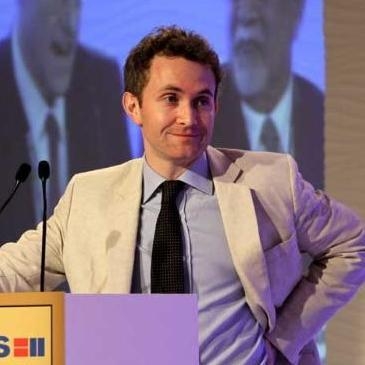
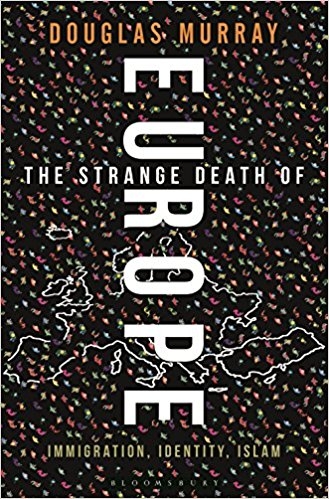
Douglas Murray has long voiced his concern about the growing influence of Muslim culture on the West. The associate editor of Britain’s Spectator, a frequent contributor to the Wall Street Journal, and the founder of the Centre for Social Cohesion, a think tank on radical Islam, he has built an international reputation for his opposition to the demographic changes of the West and the threats to its traditions. In his latest book, The Strange Death of Europe: Immigration, Identity, Islam (Bloomsbury, 2017), he attacks all of these subjects as they relate to the current crisis of migration from the Middle East.

It is a controversial book, particularly for Americans and Jews, but one which also makes important arguments against the multiculturalist ideal. That ideal, which once led much of domestic policy across Europe and the United States, has proven not only a failure, but a threat to the values and national security of Western civilization.

The Investigative Project on Terrorism recently spoke with Murray about his book and the concerns that drove him to write it.

Abigail R. Esman: As an American, a Jew, and an immigrant myself to the Netherlands, there are aspects of your arguments against immigration and asylum that are troublesome to me. I come from a country where we are all immigrants, or our parents or grandparents were likely immigrants. You talk for instance of families where “neither parent speaks English as a first language,” yet my husband is Australian and I am American and neither of us speaks Dutch as a first language. So naturally, I come at these arguments with some concern. Are you saying, basically, close the borders?

Douglas K . Murray: It’s only for me to diagnose what’s happening – to see the truth about what is going on. Policy makers will make their own decisions. I have obviously broad views on it, which is that I think you can’t continue at the rate we have now, and I think you have to be choosy about the people you bring in. But you are right, and there are two groups of people who have had trouble with some of the basic things in this book: one is people of Jewish background, and others who come from nations of immigrants, like America. But Britain isn’t a nation of immigrants – we have been a static society with all the benefits and ills that this brings. And I think it is dishonest to say it is the same thing. I realize people who are predominantly Jewish have a particular sensitivity to it, but I think that that’s a particular issue. And why do we say one migration is just like the other It’s like saying because two vehicles went down the same road they are the same vehicle.

ARE: How is it different?

DKM: In the UK, when Jewish migration happened more than a century ago, the main thing was integration, integration into the society, wanting desperately to be part of British society. Why do synagogues in the UK have a portrait of the Queen? And after services, they often sing the British national anthem. It’s very moving. It’s an effort to demonstrate this is what we are and this is what we want to be. You’d be hard pressed to find a mosque with a picture of the queen who sing the anthem.

ARE: That element of integration is crucial, I agree. In America, in fact, immigrants in the past and often even today are eager to give their children Anglicized names: “Michael,” not “Moishe,” “Henry,” not “Heinrich.” Yet you do not see the name changes in Muslims these days. Why do you think that is?

DKM: Because there is less of a feeling to integrate. They want to stay with the country they’ve left but not deal with its economics. Some people find it flattering – that people want to move to your country – they say well, it shows what a wonderful place we are. No, it shows that your economics work better.

ARE: You also write about Muslim enclaves in Europe where “the women all wear some form of head covering and life goes on much as it would if the people were in Turkey or Morocco.” How is that different than, say, Chinatowns, or Orthodox Jewish neighborhoods in America and say, Belgium, where women wear wigs and men have peyas, or sidelocks?

DKM: The example of Chinatown-like places is a good comparison. These are places that are mini-Chinas, they are enjoyed and liked by people because they are a different place. Well, if people want to have a mini-Bangladesh, that’s one vision of a society. It’s not the vision we were sold in Europe. It was not meant to be the case that portions of our cities were meant to become totally different places. In the 1950s the British and other European authorities said we have to bring people into our countries and we will get a benefit in labor. But if they had said that the downside is that large portions of the area would be unrecognizable to their inhabitants, there would have been an outcry.

And the issue of them being different from Hasidic communities – you’re right, they are similar. You can go to Stamford Hill in North London and see most of the men in hats and so on and that’s because that’s an enclave that wants to keep to itself. That raises questions: one, people don’t mind that, for several reasons – one is the recognition that Orthodox men don’t cause troubles. We don’t have cases of Orthodox men going out and cutting off people’s heads. If four Jewish men from Stamford Hill had blown up buses some years back there would be concern about these enclaves.

And also those enclaves are not growing. If it was the case that these enclaves were becoming areas where all the city was hat-wearing Orthodox Jews, then people would say wait, what is that? You can applaud that or abhor it, but it’s important to mention.it.

ARE: In the Netherlands, which has some of the toughest immigration policies in the world, people from certain countries are required to take “citizenship” courses before they can even enter Dutch borders. They have to learn the language, they have to learn about Dutch values, and that no, you can’t throw stones at Jews and gay people and that gay marriage is legal and women wear short dresses. Would you recommend other countries take on the Dutch policy of citizenship courses?
DKM: I make this point in the book. You say we could have done more and better, but the fundamental thing is that none of it was ever expected in the first place. No one ever thought that we would be in the situation we are now in. We didn’t expect them to stay. That’s a very big misunderstanding. Why wouldyou ask people to become Dutch citizens if you expect them to go home in five years? Why if you only expect them to stay in Britain for only 10 years? But then we realized they would stay and then we said, “we have to let them practice their own culture.” But for us to have acted as you suggest we would have had to know [at the time].

So yes, I think it’s a bare minimum for Europe to have the Dutch policy, even at this very late stage. I’m of the inclination that this is too little too late, but I wish everyone luck with it.

ARE: What about Yazidi women, Syrian Christians?

DKM: Again, it comes down to the Jewish question – because people think that every refugee is like a Jew from Nazi Germany. But if you were to think of a group that was facing an attempt to wipe them off the face of the earth then yes, you’d have the Yazidis. But there are people on all sides of the Syrian civil war, which are a minority of people coming to Europe – these are people fleeing sectarian conflict, but none of them are fleeing an effort to wipe them out as a people. So the lazy view, and it is quite often pushed by Jewish groups which I think is a mistake – is to suggest that it is similar to Nazi Germany. And I wish more care were taken in this.

ARE: Is this in your mind a way of stopping radical Islam? Because so many of the radicalized Muslims are actually converts. How would it help?

DKM: We know that people who convert to anything tend to be fundamentalist. But the important thing is, if you were pliable to be converted, available to be converted, then it raises the question of what kind of Islam do we have in these countries? If it were people finding Sufism, rather than hardcore Salafism, maybe it would be different. I have a friend who is a Muslim who was on a trip some years ago who told me the story of introducing a Muslim woman to one of the senior clerics at Al-Azhar and she wouldn’t shake his hand. He asked her why not. She said, “Because I’m Muslim.” So he asked her how long she’d been a Muslim, and she said “Six years.” He said, “I’ve been a Muslim for eight decades.” And then he turned and said to his friend in Arabic, “What kind of Muslims are you making in Britain?”

ARE: One thing the American Muslim community seems to have over its European brethren is its successful integration into society. Yet at the same time, some of the worst of the radicals are in fact American-born. We have people like Linda Sarsour, who wears the mantle of feminism, but who is really a Trojan horse for the Islamists. She has said things like “Our number one and top priority is to protect and defend our community. It is not to assimilate and lease any other people in authority.” What are the dangers of that kind of message?

DKM: I once spent an evening with Linda Sarsour. She is a very unpleasant, very radical girl. Filled with hate. I was the one having to defend America to Americans in an American audience against an American opponent. What she told that night was all lies, which you would tell either because you are dumb, which she isn’t, or because you want to spread propaganda, which she does.

I just think she is of a type. There are various sides to the issue that are important. There’s an “us” question and a “them” question. The “them” question is, what do people like that believe, what are they doing and how vile are they? But in a way, the “us” question is bigger. Why do we let them do this? What is wrong with America at this time in its history that an obvious demagogue like her can end up leading a feminist march [the 2017 Women’s March]? That’s an illness of America. She’s just a symptom of that.

ARE: And similarly, the Rushdie affair was effective in quashing further expression and criticism related to Islam. And Charlie Hebdo took that to an extreme. We haven’t had anything that severe, but there were the South Park threats and the attempted attack on the Mohammed cartoon contest in Garland. You blame European politicians and media for failing to recognize that those who were shouting “fire” were in fact the arsonists. This seems to be a global challenge – that any criticism or critique of Islam gets shouted down as inherently bigoted. In the U.S., the Southern Poverty Law Center places Maajid Nawaz on a list of “anti-Muslim extremists” for criticizing some tenets of the faith and advocating modernization and reform. In Europe the facts are very pessimism-causing. At the same time, though, there was certainly support for Charlie Hebdo, though you seem to deny it in your book, after the shootings. What’s the proper response to that form of a heckler’s veto?

DKM: I agree with the point. The only ways to reject the assassin’s veto is for civil society to be stronger on the question, for governments to ensure that people deemed to have ‘blasphemed’ are protected (as in the case of Rushdie) and that those who incite violence against them (such as Cat Stevens during the Rushdie affair) are the ones who find themselves on the receiving end of prosecutions. That and – obviously – ensuring that blasphemy laws aren’t allowed in through the back door via new ‘hate speech’ laws and the like.

ARE: In the chapter on multiculturalism, you describe interest groups which “were thrown up that claimed to represent and speak for all manner of identity groups.” These self-appointed voices then become the go-to groups for government. To keep the money flowing, they make the problems facing their community appear worse than they really are.” Is that a universal behavior for interest groups? We certainly see that in the U.S. with CAIR and ISNA.

DKM: Every group is vulnerable to that. With every human rights achievement, there are always some people left on the barricades. And the ones who linger on the barricades linger on without any home to go to. And you get these people who are stranded after it’s over and they have to hustle as if everything was as bad as it once was. Sometimes they are telling the truth; sometimes they wave a warning flag, but for the moment it seems particularly in America every group is claiming that this is basically 1938. It’s a tendency of every commune or group that wants awareness raised.

But it’s true, it’s especially prevalent of Muslim groups because if you keep claiming that you are the victim, then you never have to sort out your own house. And the groups that come to Europe and America, they never have to get their house in order if they spend all their time claiming they are victims of genocide and persecution and so on. And this is a familiar story.

ARE: So what would be your lesson, then, for America, especially in a book which clearly is about Europe?

DKM: Well, it is about Europe, certainly, but it’s connected to the debate America is now beginning to have. The first is to be careful with immigration. We’ve all had the same misunderstanding, the same thought that our societies are vast, immovable, unchanging things to which you could keep bringing people of every imaginable stripe and the results will always be the same. And I think that is just not the case, depending on the people who are in them. So we must take care with what kind of immigration we encourage, and at what pace, and that is something America should be thinking of, as everyone else should.

But America will have a harder time with this, because everyone in America has this vulnerability we don’t have in Europe, which is that we are all migrants. And you have the sense of ‘who am I to keep anyone out?’

ARE: I don’t think that’s the American view. I think it’s more that we all became part of this fabric, and we expect that the new immigrants will, too. But not all of them do.

DM: The whole thing actually seems to be unraveling, more than in Europe. In Europe, we don’t like to think in terms of racial terms. But all anyone in America talks about is race.

ARE: I don’t think so….

DKM: Maybe; but your vision of original sin in America seems to have become all so overwhelming. Your leading cultural figures, like Ta-Nehisi Coates, have this image of America born in terrible sin. The Atlantic’s front cover recently was all about slavery. You would get the impression that slavery only ended about 12 months ago. You are going over and over this in America – this endless sense of original sin. You are discussing reparations for slavery in 2017. You’d be hard-pressed to find publications in the UK calling for reparations to our past. Find me a mainstream publication that runs such a thing in Europe, even of WWII reparations.

So it’s symptomatic of something badly wrong at the structure of the public discussion.

ARE: Which suggests that we should do what?

DKM: What you have to listen out for is very straightforward: are the people raising such issues raising them because they want America to improve, or because they want America to end? I think this is a very central issue. Are you speaking as a critic, or as an enemy of the society in question? If you think the society can do no good, then you are speaking as an enemy. If you think there are things that have been done, that are wrong, that should be righted, campaign for them, speak out for them. Sometimes if you’re lucky you can get a posthumous rectification. But it sounds to me like a lot of this talk is from people who hate America. They don’t want to improve it. They want to end it.

So the lesson is – be careful about immigration. Be choosy. And another is a pretty straightforward one which is to work on the people who are there not to fall into the victim narratives of their special interest groups. And to focus on the “we.” I’ve always felt more optimistic for America in this regard, for the same reason I feel more optimistic than others do about France: because I think there is a very specific identity there, which it is possible to become a part of. I think it’s something other Western European countries, have not accomplished in the same way. So basically to strengthen their own identity.

ARE: Do you consider yourself a pessimist?

DKM: I think in Europe the facts are very pessimism-causing. I think it would be a strange person who would look at 12,000 people landing in Lampedusa, all young men, all without jobs, all without futures, and think, ‘That’s going to go really well. These are going to be just like the Jews of Vienna. These are going to be the receptacles of our culture.’ I don’t see it happening.

Report: Obama Holdovers Slow-Roll Release of Clinton Emails, Officials Cite ‘Diminished Public Interest

July 24, 2017

Report: Obama Holdovers Slow-Roll Release of Clinton Emails, Officials Cite ‘Diminished Public Interest, BreitbartKristina Wong, July 24, 2017

AP/Cliff Owen

Officials from the State and Justice Departments argue a hiring freeze and lack of public interest are responsible for its inability to process and release the 100,000 Hillary Clinton emails as ordered under a Freedom of Information Act lawsuit, according to a report.

A U.S. official familiar with the case told Circa “there are still holdovers” within the State and Justice Departments who don’t want to see the emails released, and are slow-rolling the process. But the report also said the president’s own Justice Department attorneys are citing “diminished public interest” in the emails, and that the president should demand the agencies abide.

According to Judicial Watch President Tom Fitton, the FBI turned over to the State Department a new disk of emails belonging to Clinton aide Huma Abedin that were discovered on a laptop owned by her husband, Anthony Weiner.

State and Justice Department lawyers say they can’t release them until they judge whether they are personal or government, and can be shared publicly. Fitton said there are apparently 7,000 emails on the laptop.

State Department spokeswoman Pooja Jhunjhunwala told Circa that the Department “takes its records management responsibilities seriously and is working diligently to process FOIA requests and to balance the demands of the many requests we have received.”

“We are devoting significant resources to meeting our litigation obligations,” she said.

Fitton argued they are moving too slowly. The State Department was ordered in November to process 500 pages per month, but he said it would take until 2020 for the bulk to be made public.

“President Trump needs to direct his agencies to follow the the law but right now they are making a mockery of it by saying they won’t finish releasing it until 2020,” he said.

Judicial Watch, a conservative watchdog group, released 448 pages of documents the State Department did turn over from Abedin last week. The group said the emails describe preferential treatment “to major donors to the Clinton Foundation and political campaigns.”

“The documents included six Clinton email exchanges not previously turned over to the State Department, bringing the known total to date to at least 439 emails that were not part of the 55,000 pages of emails that Clinton turned over to the State Department, and further contradicting a statement by Clinton that, ‘as far as she knew,’ all of her government emails had been turned over to the State Department,” the group said in a July 14 press release.

Editor Of ‘Al-Sharq Al-Awsat’: The Indian Prime Minister’s Visit To Israel – Cause For Arab Envy

July 24, 2017

Editor Of ‘Al-Sharq Al-Awsat’: The Indian Prime Minister’s Visit To Israel – Cause For Arab Envy, MEMRI,July 24, 2017

Following the recent visit of Indian Prime Minister Narendra Modi to Israel and his failure to visit Ramallah, Ghassan Charbel, editor of the London-based Saudi daily Al-Sharq Al-Awsat, published an article about the economic and cultural gaps between the West and the Arab world and about the contrast between Israel’s successes in science and technology and the weaknesses of its Arab neighbors, as reflected in Modi’s Israel visit. Charbel noted that the West pays close attention to issues such as human rights, protection of the environment, and public health, while the Arab world neglects them, which is why Arabs feel envious of the West. As for Israel, Charbel notes its scientific and technological capabilities and what it has to offer to a giant world power such as India, contrasting it with Israel’s neighbors, mired in extremism and internal wars. Charbel notes that in the past India was the first country to support the Palestinians in every way, while today its Prime Minister, upon visiting the region, ignored them completely. According to Charbel, this causes Arabs to feel not only envious but completely defeated.

The following are excerpts from his article:[1]

Indian Prime Minister Narendra Modi with Israeli Prime Minister Benjamin Netanyahu (image: watanserb.com)

“The Arab feels envy when he comes into contact with the developed world. A friend of mine fled his country, which is sinking into darkness and despair, and settled in London. He bought a house [there] and waited for the war [in his country] to end. One day, a tree in his small garden bothered him and he decided to ‘execute’ it. He asked his British neighbor if he knew someone who could do the job, and the neighbor laughed [and said], ‘you have no right to kill the tree, even if it belongs to you. First, you have to submit a request to the local council and convince it of the reasons [for your wish to cut down the tree]. The law here protects trees. You have to obtain a permit, and only after that comes the job of the murderer.’

“My friend was astonished. He comes from a world in which an [entire] city can be razed and no one would bat an eyelash. A citizen can be killed, and neither his wife nor his mother will have the right to ask why… A tree here [in Britain] has more rights than a citizen of the [Arab] countries of torture and suffering.

“Envy is neither a useful nor a noble emotion and it usually opens the gates of bitterness and hatred, [yet] it is not unusual for an Arab to suffer from this malady [of envy]. If an Arab visits a museum in a developed country he immediately thinks about what happened to the antiquities in Iraq and in Syria… If he notices the attention paid in Oslo to public health he remembers where the sewage flows in some Arab capital or another.

“Trying to minimize his disappointment, the Arab sometimes searches for excuses for the yawning chasm between him and the developed world. We are in a completely different historical phase. Those countries [in Europe] are reaping the fruits of great events that occurred there and changed the face of the world: the French Revolution, the Industrial Revolution, the ideas of the Renaissance, the separation of church and state, German philosophy, and the huge change in the status of women.

“The Arab feels envy again, [because] the Europeans experienced wars between nationalities and sects, border disputes and plans for conquering and wiping out [the other]. They painted the continent and the whole world with blood – but they emerged in the end with conclusions. The empires became [exhibits on] museum shelves and sentences in history books; borders were transformed into bridges, not walls; [the European] societies accepted the right to be different. Minorities are no longer thought of as mines that must be defused. The constitutions [in Europe] prevent the majority from erasing the characteristics of those who disagree with it. These countries no longer seek historic leaders whose biographies are soaked in blood; they seek governments that devote [themselves] to fighting unemployment, developing the economy, encouraging investments, protecting the environment, and [combatting] the problem of climate change. The visiting Arab is consumed with envy.

“Let us set aside talk of trees and antiquities, since there is worse to come. The Arab notes that [Israeli Prime Minister] Benjamin Netanyahu cancelled all his plans so he could graciously receive his guest, Indian Prime Minister Narendra Modi. This was the first visit by an Indian prime minister to Israel. Another thing that attracted attention was that the guest felt no need to visit Ramallah, which gladdened his hosts. We are talking about India, which was the first to express understanding for the aspirations of the Palestinians and did not hesitate to stand alongside them in international forums…

“Modi evidently sees Israel as a technological lighthouse, and spoke about the need for his gigantic country to benefit from Israel’s capabilities in this sphere. The result was that Modi and Netanyahu signed an agreement worth $2 billion, according to which India will receive the Israeli Iron Dome System to [detect and intercept] rockets and artillery. In addition, a Memorandum of Understanding was signed to establish an India-Israel Industrial R&D and Innovation Fund. Other agreements included areas such as water, agricultural development in India, and partnership in economic projects in Africa and the developing world.

“It is not enough to explain what happened by saying that Modi belongs to an extremist nationalist Hindu stream and that ‘jihadist’ terrorism increased his conviction that ties with Israel should be strengthened. The important point is that a country the size of Israel has something to offer the Indian army, beyond the role it [already] played in the past in developing the Soviet and Russian weapons that were owned by India; that it also has something to offer [in the spheres of] agricultural development and treatment of water problems, and [can maintain] a strategic military, security, and economic relationship with a country of the size and stature of India.

“The Arab was disturbed by the arrogance of Netanyahu’s speeches during Modi’s visit, but when he opened the map of the terrifying Middle East, he discovered that Israel had achieved a series of victories in recent years without firing a single bullet. Maps, countries, armies and economies around it have crumbled. Waves of extremism caused catastrophes in some parts of the Arab world compared to which the Palestinian Nakba is but one clause among many.

“This time the Arab felt not only envy, but felt the total defeat of the one who cannot join the [modern] era.”


[1]Al-Sharq Al-Awsat (London), July 10, 2017.

Dispatch from Doklam: Indians Dig in for the Long Haul in Standoff with China

July 24, 2017

Dispatch from Doklam: Indians Dig in for the Long Haul in Standoff with China, Subir Bhaumik,  July 24, 2017

China live fire drill

As I travel up from eastern India’s Bagdogra airport to Gangtok and then to Indian army’s Nathang base near the fraught Doklam area, I count at least six military convoys heading in the direction of Sikkim’s border with China.

At Nathang, a few kilometres from Doklam in the now-famous “tri-junction” of Tibet, Bhutan’s Doklam plateau and Sikkim’s Chumbi valley, the theatre of the ongoing stand-off between Indian and Chinese forces , the build-up is even more palpable, even though vehicles carrying artillery pieces and light tanks slither through the night to avoid public attention.

New bunkers are being built, the ground is being mined to pre-empt Chinese attack, machine-gun nests are being placed at strategic points, and soldiers are performing battle drills at least twice a day. But restraint is still the buzzword.

India soldier stands guard at border crossing

“We are under clear orders not to exacerbate the tensions, so we won’t provoke a scuffle, certainly not a firefight, but we are ready for a suitable response if the Chinese get aggressive,” says a young captain of India’s famous “Black Cats” division at Nathang. The cheerful-looking captain, in his late 20s, can’t be named as he is not authorised to speak to the media. The media isn’t even supposed to be here. The Indian Army isn’t embedding reporters as yet.

Nathang serves as a base to reinforce India’s forward outpost of Lalten in the tri-junction. Lalten is located in higher ground that gives the Indians a clear view of the Chinese movements in Tibet’s Yadong zone that is part of the Chumbi Valley between Indian and Bhutanese hill territory. This part of the Chumbi Valley, at a height of 3,000 metres (9,800 ft) is likened to a broad dagger aimed at the so-called “Chicken’s Neck”, a narrow corridor that connects Indian mainland to its remote Northeast.

Chinese soldiers holding banner in Ladakh, India asking India to withdraw troops.

India is paranoid about the Chicken’s Neck for its potential vulnerability. But this is also where the Indian army has terrain and tactical advantages of higher ground and a clear vantage point in the event of a border clash. “It’s important for us to stop the Chinese here because if we fail, they will roll on to the Chicken’s Neck and can cut off our northeast,” says the captain.

At Lalten, says a lieutenant colonel, the Chinese troops crossed into Indian-held ground in June and smashed two bunkers built by the Black Cats. “We restrained our troops with some difficulty, we ensured nobody fired but we finally pushed back the Chinese physically.”

Chinese and Indian flags at Great Hall of the People in Beijing

The captain says the Indian army is determined to stop construction of the C40 road (capable of carrying a 40-tonne load) that the Chinese have been trying to build through Bhutan’s Doklam plateau from Yadong to connect to the People’s Liberation Army’s (PLA) forward post opposite Lalten.

Under its treaty obligations to Bhutan, India must come to the Buddhist kingdom’s aid in times of military need, and the Chinese efforts to build the road in this undemarcated region was seen as such a provocation. Bhutan joined India in boycotting May’s Belt and Road Summit in Beijing, which is said to have provoked China. Indian analysts believe the Chinese decided to start building the C40 road through Doklam after the summit to test India’s special relations with Bhutan.

“They are trying to show Bhutan who calls the shots in the Himalayas. So we have to ensure we are capable of defending Bhutan’s territorial integrity,” says Maj-Gen Gaganjit Singh, who commanded a division in India’s Northeast before retiring as the deputy chief of the Defence Intelligence Agency (DIA). “We have to prove we can defend Bhutan and we are determined not to lose the current terrain and tactical advantage we have in Chumbi Valley.”

Chumbi Valley is among the few areas in India’s Sikkim state – adjoining the theatre of conflict – in the 3,500km-long disputed border between India and China.

After jettisoning its traditional, defensive “just-hold-the-border” strategy, India has spent the last four years raising a mountain strike corps of about 80,000 for a new limited offensive doctrine in the event of a war.

Young Buddhist monks in region of India near border with China.

“That worries the Chinese PLA, now that we have better infrastructure and a much better strategic airlift capability, with many advance landing grounds in the Himalayas for the newly inducted giant US-built transport aircrafts to operate from,” says Maj-General Apurba Bardalai, who has commanded the Indian Military Training Team in Bhutan and brigade formations in India’s northeast. “With every passing day, we are closing the gap with the Chinese in terms of capabilities.”

And that is exactly what may be fueling the hostilities. “Failing to build the road will undermine the PLA’s domination strategy in the disputed Himalayan border. It will pour water over Chinese attempts to draw Bhutan into its fold by undermining its special relations with India,” says Subir Dutta, a former Intelligence Bureau officer specialising in China.

India has called for resolving the issue through dialogue, but China insists the Indian army must pull back first. “But the moment we vacate our forward posts, the Chinese will build the road through Bhutanese territory. We can’t allow that,” says a brigadier at the Black Cats headquarters.

Mountain pass between India and China.

With so much at stake on both sides, a resolution is unlikely anytime soon. At least that’s what the Black Cats think. “We would love peace to return. We want normal relations with the Chinese in maintaining tranquillity on the border. But we are digging in for a long haul because there’s no let-up in the aggression on the other side,” says the brigadier, who also cannot be identified.

As I am speaking with the brigadier in a tent, the buzz of activity seems to be picking up outside. Soldiers constructing bunkers and building other fortifications try to complete their assignment, racing against time as the sun sets on a cloudy day. “Speed up guys,” barks an officer supervising the construction.

“We don’t want war, but we are prepared for it and this is not 1962. Diplomacy should work and normal relations should be restored, but we are not going to be cowed down by threats,” the brigadier says.

China conducted military exercises in Tibet just after the Doklam stand-off began and its official media has threatened teaching a lesson to the Indian army if it doesn’t pull back from Bhutanese territory.

“But those are routine exercises, so we are not perturbed,” says the brigadier. “We are not leaving Bhutan to its fate, come what may.”

Bhutanese graziers at Jigme Kesar nature reserve just behind the Doklam plateau, however, don’t seem to mind being left alone. “We don’t want war between two large armies like India and China. That won’t be good for Bhutan,” says grazier Pema Namgyal.

Fellow graziers nodded furiously in agreement.

Hero Imams

July 24, 2017

Hero Imams, Gatestone InstituteKhadija Khan, July 24, 2017

(Please see also, Germany’s Quest for ‘Liberal’ Islam and Takfir is extremism’s demonic fruit. The Saudi author of the second article wrote, 

Most of this legacy is the result of man’s interpretation of godly texts – interpretations that are not necessarily the only possible ones for this or that Quranic verse or hadith.

. . . .

There are variables which are related to man’s life and not to his religion as they depend on his interests and the society he lives in. Therefore, it’s not necessary for what was good years ago to be good for applying now. What matters at all times is achieving interests and warding off evil.

Will Saudi Arabia (and perhaps Egypt) eventually lead the way to salutary changes in Islam? –DM)

More than 60 Islamic leaders and imams — from France, Belgium, Britain, Tunisia, and of different Islamic faiths — in a move that may be unprecedented, are touring Europe to denounce Islamic terrorism and to pay homage to the victims of terror in Europe by visiting many of the sites of terror attacks.

The idea seems to have shaken extremists to the core. They have been sending these imams death threats.

It is therefore high time, as mankind faces a crucial turning point, that people will pull together and support any voices of peace such as those of the marching imams, and restrain any hands that would try to sabotage their noble mission.

More than 60 Islamic leaders and imams — from France, Belgium, Britain, Tunisia, and of different Islamic faiths — in a move that may be unprecedented, are touring Europe to denounce Islamic terrorism and to pay homage to the victims of terror in Europe by visiting many of the sites of terror attacks.

It is ironic that while the “liberal” world has been busy in Canada lavishing millions on the “Foreign Terrorist Fighter” Omar Khadr, and in the US pampering extremists such as Linda Sarsour — an apologist for ISIS and Islamist terrorism who calls for a “jihad” on the president, and whose tweets include racist comments such as “How many times to we have to tell White women that we do not need to be saved by them? Is there a code language I need to use to get thru?” — that the press has largely ignored these courageous Islamic leaders. They have travelled from six major European countries and launched a peace march in Europe to show the masses that some Muslims, at least, do condemn terrorism and want nothing to do with terrorists who murder in the name of Islam.

Many consider their efforts a brave stand to win back the trust of those in the West who are justifiably angry about the recent wave of terrorist attacks in United Kingdom, France, Belgium, Israel, Germany, the United States and across much of the world.

These imams, from different Islamic faiths, have done an extraordinary job in unequivocally denouncing the terrorists by visiting the sites of terror attacks to pay homage to victims of terrorism in Europe.

Hassen Chalghoumi (pictured at center on January 8, 2015), the imam of Drancy Mosque in suburban Paris, is leading a peace march of more than 60 Islamic leaders and imams, to denounce Islamic terrorism and pay homage to the victims of terror in Europe. (Photo by Marc Piasecki/Getty Images)

The idea seems to have shaken extremists to the core. They have been sending these imams death threats.

It is not only violent extremists, however, who pose threat to peace efforts and the West. At least what they do can be seen. Possibly more harmful are non-violent Muslims, such as Linda Sarsour, who, in order to prey upon naïve admirers of other cultures, continue to feed to the world a narrative of Muslim victimhood, apparently to try to whip up hostile sentiments.

Sarsour for instance, recommends launching a jihad against the current US administration by calling its members “white nationalists”, “fascists”, and “Islamophobes”. She has also been sending her warm wishes to Assata Shukar, a woman who murdered an American policeman, then, after escaping from prison, fled to Cuba.

It is painful to see such people stoking the fire to support extremists — especially while heroic imams go on a peace mission, only to face threats from extremists.

It is also painful to watch such extremists invoke well-worn words such as jihad and sharia — words the meaning of which is known all too well in the Muslim world — and then later try to paint these words — presumably for gullible Westerners — as symbols of warm-and-fuzzy non-violent “resistance”.

Even though it is partially true that in Islam, jihad is considered a struggle against oneself to eliminate the evils within oneself, if you speak to anyone in the Muslim world and ask what jihad is, that is not the answer you will get.

There are hadiths [the deeds and saying of the Prophet Muhammad], taken literally by hardline Muslims, that order the need for jihad against infidels:

The last hour would not come unless the Muslims will fight against the Jews and the Muslims would kill them until the Jews would hide themselves behind a stone or a tree and a stone or a tree would say: Muslim, or the servant of Allah, there is a Jew behind me; come and kill him…. (Sahih Muslim Book 041, Number 6985)

or:

I have been commanded to fight against people so long as they do not declare that there is no god but Allah, and he who professed it was guaranteed the protection of his property and life on my behalf except for the right affairs rest with Allah. (Hadith Muslim 30)

There are verses in the Quran that state:

And kill them wherever you overtake them and expel them from wherever they have expelled you, and fitnah is worse than killing. And do not fight them at al-Masjid al- Haram until they fight you there. But if they fight you, then kill them. Such is the recompense of the disbelievers. (Quran 2:191-193)

So let those fight in the cause of Allah who sell the life of this world for the Hereafter. And he who fights in the cause of Allah and is killed or achieves victory – We will bestow upon him a great reward. (Quran 4:74)

What is not addressed is how a majority of Muslims have been radicalized over the years by extremist clerics who know nothing about peace. They have apparently adopted a literal interpretation of many versus to take over the non-Muslim world and impose on mankind an Islamic version of religion.

It is also ironic that extremists can take time from their busy schedules to send death threats to these peaceful imams, but never have any problem with people such as Sarsour — perhaps because they are not in her cross-hairs and possibly share the same ideology.

Organizations that are supposedly “non-violent” such as the Muslim Brotherhood, the Council on American-Islamic Relations (CAIR) and the Islamic Society of North America (ISNA), nevertheless represent an ideology, the sole purpose of which is to impose Saudi, Taliban, or Iran-like Sharia law on the world.

Both the Muslim Brotherhood and CAIR, as well as Britain’s Islamic Relief and 80 other organizations, for example, were added to the United Arab Emirates’ list of designated terrorist organizations in 2014. Presumably, all are the fonts from which violent Islam grows. Many on the list, such, as Hezbollah and Boko Haram, already are violent.

These views in Islam no longer have anything to do with the great mystic philosophers, such as Rumi, Saadi and Ibn el Arabi, who considered even the weakest soul an extension of Allah, thus demanding love and respect for all, and with no ambitions of ruling anyone or taking control of the world.

Anyone who is trying to sell Islam and Sharia, which represent an extremist ideology, as something non-militant, only exposes himself or herself as trying to fool the world.

It is also important to keep in mind that extremists consider peaceful Muslims apostates. Mansoor Hallaj for example, who was gruesomely tortured and executed, is a symbol of how these extremist Muslims have savaged anyone who tried to offer a “kinder, gentler” version of Islam.

The only reason that modern-day people — from both East and West — are aware of the violent aspect of jihad is that they have seen bloodbaths and massacres wherever the phrase “Allahu Akbar,” “Allah is the greatest,” was chanted.

Therefore, the word jihad in the current historical context can only trigger suspicion and anger against anyone who announces jihad as a wish.

Extremist Muslims have, in fact, played this game for decades in the West and also in the Muslim world. They have not only poisoned the minds of their own youths against other faiths, but are also preparing them to commit violence against people of other faiths in a bid to take over the world through “jihad”.

Now they have realized that they may be starting to lose the game: many youths have started to question their activities while many governments in the West are running programmes to integrate the brainwashed young people into their societies.

The notion of “Us vs. Them” is beginning to fall apart and finally the world seems to be coming out of the decades-long chaos and cold war(s) that begin after 1940s.

It is therefore high time, as mankind faces a crucial turning point, that people will pull together and support any voices of peace, such as those of the marching imams, and restrain any hands that would try to sabotage their noble mission.

Palestinians, Mother of Terrorist, Celebrate Slaughter of Jewish Family

July 24, 2017

Palestinians, Mother of Terrorist, Celebrate Slaughter of Jewish Family, Front Page MagazineJoseph Klein, July 24, 2017

(Another good opportunity for an American veto at the UN Security Council. — DM)

The United Nations Security Council is meeting in closed session Monday morning to discuss the crisis. Sweden, Egypt and France requested the special meeting. None of these countries have supported Israel in dealing with the ever present threat of Palestinian terrorism. They have bought into the Palestinians’ victimhood narrative.

**********************************

Palestinian mother extolled her 19-year old son’s “accomplishment” in the name of Allah. She exclaimed:  “Praise Allah. I am proud of my son. May Allah be pleased with him.” The mother was not celebrating her son’s graduation, new job, marriage, fatherhood or some other life-affirming event. Rather, she was celebrating the deaths that her terrorist offspring, Omar al-Abed, brought to a Jewish family on July 21st.  The family was about to sit down for a Sabbath dinner and to celebrate the birth of a grandson that same day when the Palestinian terrorist prodigy invaded the family’s home. Wielding a knife, he proceeded to kill a grandfather, his daughter and his son, and to seriously wound the grandmother. The massacre ended only after a neighbor, who belongs to an elite IDF unit and was home on leave, heard cries for help from the house and shot the terrorist. Al-Abed was eventually handcuffed and taken to a hospital for treatment of his wounds.  

The terrorist’s mother was joined in her celebration by Palestinians dancing in the street in Gaza. Hamas leader Ismail Haniyeh reportedly phoned Omar al-Abed’s father to congratulate him for what his son had done to bring “pride to the nation.” 

The trigger for this latest spurt of violence was said to be Israel’s decision to install metal detectors at the entrances leading to the Temple Mount. Israel took this action in response to the killings by terrorists on July 14th of two Israeli police officers guarding the holy site. The murders were carried out by Arab Israeli citizens who used guns previously smuggled into the compound. Israel installed metal detectors to prevent any further smuggling of arms.

Palestinian violence has been spreading since then, resulting in the deaths of four Palestinian rioters in confrontations with Israeli security forces trying to restore calm.

The spiraling violence is being spurred on by Muslim religious leaders and Palestinian officials claiming that Israel’s security actions were defiling the Al Aqsa mosque situated on the Temple Mount. Omar al-Abed picked up on this theme in the “will” he posted on Facebook three hours before his cowardly attack. He said he was acting against “the sons of apes and pigs who defile Al Aqsa.” Hoping for martyrdom, he posted: “I will go to heaven. How sweet death is for the sake of God, his prophet and for Al-Aqsa mosque.” The 19-year old terrorist, who is the apple of his mother’s eye, did not get his wish and will now have to answer for his crimes. No doubt, Palestinian Authority President Mahmoud Abbas will reward the terrorist’s family with a generous stipend while he remains in Israeli custody. That’s the way Abbas operates.

After first mouthing an insincere condemnation of the murderous attack on the police guarding the Temple Mount, Abbas has exploited the situation ever since. He announced that he was going to suspend all contacts with Israel until the metal detectors were removed. Abbas reached out to the United States and the so-called “international community” to pressure Israel into cancelling its heightened security measures. He reportedly said that unless Israel backed down, tensions over access to the holy site could spiral out of control. The United Nations Security Council is meeting in closed session Monday morning to discuss the crisis. Sweden, Egypt and France requested the special meeting. None of these countries have supported Israel in dealing with the ever present threat of Palestinian terrorism. They have bought into the Palestinians’ victimhood narrative.

Israeli Prime Minister Netanyahu’s government has been holding firm so far on its latest security measures. Tzachi Hanegbi, the minister for regional development and a senior member of the ruling Likud party, told Army Radio: “They (metal detectors) will remain. The murderers will never tell us how to search the murderers. If they (Palestinians) do not want to enter the mosque, then let them not enter the mosque.”

However, there is some division within the Israeli government on the utility of the metal detectors. Senior security officials have reportedly warned that the potential danger the metal detectors may pose in being used as a pretext for widespread violence may outweigh their usefulness. Thus, the government could be preparing a way to replace the metal detectors with a less controversial alternative. Israel has begun installing sophisticated security cameras at one of the entrances. While security officials have told Israeli media that the cameras are meant to complement the metal detectors, not replace them, the cameras may provide the Israeli government with a face saving way to defuse the immediate crisis. Prime Minister Netanyahu hinted as much when he said at his weekly cabinet meeting, “The only thing we want is to ensure no one can again take weapons in and carry out another attack. We’re willing to examine alternatives to the metal detectors, so long as the alternative ensures the prevention of the next attack.”

However, it is unlikely that any alternative security measure the Israelis institute will quell the rising level of violence. Indeed, it could have the opposite effect. Already, Abbas is said to be protesting the installation of the cameras. Only the Palestinians have the right to determine what security measures are appropriate outside the entrance to the site of their mosque, he said on Sunday. Moreover, some Muslim religious leaders may argue that photographing of people and other living animate moving beings is forbidden in Islam. They would likely rail against the “Zionist infidel occupiers” taking pictures of Muslim worshippers entering the “sacred” site of a mosque over which the Palestinians claim exclusive sovereignty.

The Palestinian grand mufti, the acting Palestinian chief justice and the Jordanian-sponsored Waqf religious trust issued a no-compromise joint statement:

“We stress our absolute rejection of the electronic gates, and of all measures by the Occupation (Israel) that would change the historical and religious status in Jerusalem and its sacred sites, foremost the blessed Aqsa mosque.” (Emphasis added)

Palestinians continue to reject all paths to a reasonable compromise on any issue related to the conflict that they created in the first place by not accepting a two-state solution seven decades ago. There is no reason to expect any different outcome this time. As Debkafile put it so well: “The Palestinians are consistent in their tactics: First shed Israeli blood, then tell the world they are victims and as martyrs are justified in seeking revenge.” As usual, much of the “international community,” as represented in the UN, will fall for this charade.

Embassy incident: 2 Jordanians dead, Israeli hurt

July 24, 2017

Embassy incident: 2 Jordanians dead, Israeli hurt, DEBKAfile, July 24, 2017

(Please see also, Jordan threatens Israel with diplomatic actions. — DM)

An incident at the Israeli embassy in Amman Sunday, July 23, left two Jordanians shot dead and an Israeli stabbed and in serious condition. Monday morning, amid reports of an impending evacuation of embassy staff, the building was surrounded by Jordanian forces which prevented departures and entries. This followed a long confrontation overnight between the Jordanian and Israeli governments, most likely at the highest level. Amman demands the Israeli guard surrendered for the investigation into the incident. Israel refuses on the grounds that he has diplomatic immunity.

After the story was held back for several hours by the Israeli and Jordanian authorities, the versions which sparked this development released early Monday, combined with earlier international media reports, left more questions than answers.

According to the Israeli official version, an incident occurred in the “space of the Israeli embassy” which is located in the high-end Rabiyeh district of Amman, when a Jordanian workman who came to repair a piece of furniture at the home of the Israeli security guard, attacked him with a screwdriver. The guard pulled a gun and shot him and another Jordanian man described as “the landlord.”

Jordanian General Intelligence stated that when word was received of a shooting at a residential building used by the Israeli embassy and “within its space,” a security force was sent over and locked it down prior to investigating the incident and its circumstances. This account describes three injured individuals, including an Israeli national.

It is not clear in either account whether the Jordanian assailant came from outside and entered one of the most heavily guarded embassy compounds in Amman, or was a member of the embassy staff – in which case his security clearance by Jordan and Israel would have been high.

Other Jordanian sources describe the Jordanian assailant as a member of the embassy’s maintenance staff with whom the Israelis serving in Jordan were well acquainted.

International media carried various accounts hours before the story was officially released for publication. According to one, the Israeli guard was stabbed in a quarrel with a Jordanian and then shot him several times in the chest. The Israeli was then taken in “unstable condition” to hospital. Israel was said to have begun evacuating the Amman embassy.

The two governments appeared to have been engaged in an all-night discussion, most likely at the highest personal level of Prime Minister Binyamin Netanyahu and King Abdullah.

On Friday, thousands of Jordanians protested in Amman against Israel over the installation of metal detectors on Temple Mount, a site in the heart of Jerusalem that is sacred to both Muslims and Jews in Jerusalem. They were installed as a protective measure, after a terrorist on July 14 shot dead two Israeli police officers who were guarding the Lion’s Gate entry to the compound.

Since then, the Waqf and Palestinian leaders have instructed Muslims to refrain from entering Temple Mount for worship at Al Aqsa, but to hold prayers in the street outside the compound.  Major disturbances ensued in Jerusalem and other parts of the country and spilled across the border to Arab capitals, including Amman.

Israel later installed new security cameras on Temple Mount, while considering an alternative to the hotly contested metal detectors. But Waqf and Palestinian officials declared emphatically that no security measures installed by Israel for protecting worshippers and visitors to the shrine will be accepted. The Waqf takes its orders from Amman. The Temple Mount crisis has blown up into a major diplomatic incident between Israel and Jordan.