Archive for November 2016

Obama Offers “Condolences” to Castro’s Family

November 26, 2016

Obama Offers “Condolences” to Castro’s Family, White House Dossier

President Obama Saturday issued a written statement on the death of Fidel Castro that failed to condemn any of the former Cuban leader’s brutality toward his people and that offered condolences to Castro’s family.

Whether because he has some sympathy for Castro or just because he wants to preserve the peace initiative that is helping prop up the Communist regime, Obama skirted Castro’s uncountable crimes against humanity, stating with sordid euphemism that Castro had “altered” people’s lives and leaving it to “history” to judge him.

“We know that this moment fills Cubans – in Cuba and in the United States – with powerful emotions, recalling the countless ways in which Fidel Castro altered the course of individual lives, families, and of the Cuban nation,” Obama said. “History will record and judge the enormous impact of this singular figure on the people and world around him . . . Today, we offer condolences to Fidel Castro’s family, and our thoughts and prayers are with the Cuban people.”

Let’s be clear about who Castro’s family is. It is comprised of an elite in Cuba who have lived the high life at the expense of the Cuban people, and others who fled the island and who hate Fidel. So there is no one to offer condolences to.

Obama’s ideology and obsession with his fading legacy has caused him to ignore the barbarity of one of the world’s worst dictators, who inflicted his tyranny not only on his own people but sought to spread it throughout Latin America and even beyond. Obama’s statement is a moral outrage. Actually, it is immoral. From a man who attempts to preach to the rest of us day after day.

Here’s the statement in full:

At this time of Fidel Castro’s passing, we extend a hand of friendship to the Cuban people. We know that this moment fills Cubans – in Cuba and in the United States – with powerful emotions, recalling the countless ways in which Fidel Castro altered the course of individual lives, families, and of the Cuban nation. History will record and judge the enormous impact of this singular figure on the people and world around him.

For nearly six decades, the relationship between the United States and Cuba was marked by discord and profound political disagreements. During my presidency, we have worked hard to put the past behind us, pursuing a future in which the relationship between our two countries is defined not by our differences but by the many things that we share as neighbors and friends – bonds of family, culture, commerce, and common humanity. This engagement includes the contributions of Cuban Americans, who have done so much for our country and who care deeply about their loved ones in Cuba.

Today, we offer condolences to Fidel Castro’s family, and our thoughts and prayers are with the Cuban people. In the days ahead, they will recall the past and also look to the future. As they do, the Cuban people must know that they have a friend and partner in the United States of America.

US Supertanker begins first mission putting out flames raging across Israel

November 26, 2016

Source: US Supertanker begins first mission putting out flames raging across Israel – Israel News – Jerusalem Post

The Supertanker is the largest aerial firefighting aircraft in the world and is capable of carrying up to 19,600 gallons of retardant or water.

The US Supertanker, which arrived late Friday evening from the United States, took off on its first mission Saturday afternoon. Based on the Boeing 747, the plane was set to help extinguish the flames near Jerusalem, adjacent to Highway 1.

The Supertanker is the largest aerial firefighting aircraft in the world and is capable of carrying up to 19,600 gallons of retardant or water.

“We are here to help you,” said the staff of the plane, who made the fourteen hour journey from Nevada.

Prime Minister Benjamin Netanyahu announced the decision to bring the plane Friday. Contracted through the company Global Super Tanker, the plane was brought in hopes of avoiding the same fate of the Carmel fire disaster, when the Supertanker was brought to Israel too late, rendering it unusable.

In addition to the US Supertanker, other countries including the US, Egypt, Jordan and Azerbaijan committed to sending help in combating the flames; Azerbaijan has dispatched a fire plane, Egypt two helicopters, and Jordan fire trucks and crews. Te US sent 50 firefighters to Israel along with the Supertanker.

Russia, Turkey, Croatia, Italy and Palestinian units have also come to Israel’s assistance during the crisis.

Since the fires began raging across Israel this past Tuesday, 13 suspects have been arrested for arson, the police stated on Saturday.

Trudeau expresses “deep sorrow” on the death of Fidel Castro

November 26, 2016

Trudeau expresses “deep sorrow” on the death of Fidel Castro, CIJ NewsIlana Shneider, November 26, 2016

(I guess someone has to revere a murderous dictator. Heck, many leftists believe that Castro’s enforcer, “Ché” Guevara, was a great and good man.  — DM)

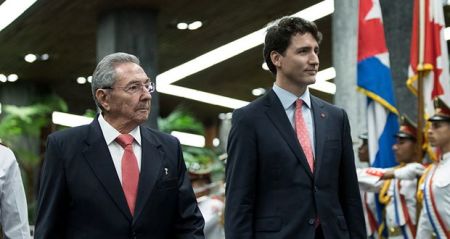
trudeaucastroPrime Minister Justin Trudeau in his first official visit to Cuba. Photo: PMO pm.gc.ca

On November 26, 2016, Prime Minister Trudeau issued the following statement on the death of former Cuban President Fidel Castro:

It is with deep sorrow that I learned today of the death of Cuba’s longest serving President.

Fidel Castro was a larger than life leader who served his people for almost half a century. A legendary revolutionary and orator, Mr. Castro made significant improvements to the education and healthcare of his island nation.

While a controversial figure, both Mr. Castro’s supporters and detractors recognized his tremendous dedication and love for the Cuban people who had a deep and lasting affection for “el Comandante”.

I know my father was very proud to call him a friend and I had the opportunity to meet Fidel when my father passed away. It was also a real honour to meet his three sons and his brother President Raúl Castro during my recent visit to Cuba.

On behalf of all Canadians, Sophie and I offer our deepest condolences to the family, friends and many, many supporters of Mr. Castro. We join the people of Cuba today in mourning the loss of this remarkable leader.”

Earlier this month, Trudeau paid an official to Cuba where he met with Fidel Castro’s brother and current President Raul Castro.

In an interview with a Toronto-based Farsi language blog in August of 2010, while he was still a Liberal MP, Trudeau said amongst other things the following (translated from Farsi): “Fidel Castro talked to my younger brother Michel. During my father’s funeral I met Castro. My father was a staunch supporter of relations with Cuba. This relationship still exists and we can be proud about it. We show that we are different from America. We need a positive and a balanced policy towards Cuba versus the American hegemony (imperialism). This role is very important and I’d like it to continue.”

Following the announcement of Castro’s death, Cuban dissidents and exiles around the world labelled the revolutionary a dictator whose “crimes against his own people” must not be forgotten. To them, Castro represented a repressive regime that jailed political opponents, repressed freedom and democracy, and destroyed the national economy.

Jubilant crowds took to the streets in Little Havana – a Miami neighbourhood home to thousands of Cuban exiles.

Orlando Guiterrez, founder of the opposition Cuban Democratic Directorate in Miami, condemned Castro’s legacy. “I regret that this criminal never faced a tribunal for all the crimes he committed against his own people,” Guiterrez said, according to a translation by the BBC.

“This is a man who leaves a legacy of intolerance, of setting up a family-run dictatorship which had no tolerance for anyone who thought differently, who set up a vicious totalitarian regime where people were persecuted for the most slight deviation from official ideology.”

After coming to power in 1959, Castro banned the democratic elections he once promised, expropriated private property, created a one-party Communist state, ruthlessly suppressed all forms of dissent and opposition and dismantled the once thriving Catholic Church.

Little has changed in Cuba since Castro stepped down as president in 2008 and passed control of the country to his brother. According to Human Rights Watch and Amnesty International, despite renewed relations with the United States, the Cuban government continues to harass and detain peaceful human rights demonstrators and activists, represses dissidents and discourages public criticism. Independent journalists are frequently arrested by authorities and held incommunicado for days. From January to August 2014 alone, there were over 7,188 documented arbitrary detentions.

The Cuban judicial system is controlled by the government and there is an almost complete lack of freedom for human rights and civil associations. All media outlets are overseen by the government and access to information is severely restricted.

According to Armando Valladares, a Cuban dissident who spent 22 years in prison, “hostility to religion is especially enflamed, with one human rights group counting 2,000 churches marked as ‘illegal’ by the government” in 2015.

Former Cuban Communist Leader Fidel Castro Dies Aged 90

November 26, 2016

Former Cuban Leader Fidel Castro Dies Aged 90

BY:
November 26, 2016 1:13 am

Source: Former Cuban Communist Leader Fidel Castro Dies Aged 90

Cuba’s former president Fidel Castro attends the closing ceremony of the seventh Cuban Communist Party congress in Havana, April 2016 / REUTERS

By Marc Frank

HAVANA (Reuters) – Fidel Castro, the Cuban revolutionary leader who built a communist state on the doorstep of the United States and for five decades defied U.S. efforts to topple him, died on Friday, state-run Cuban Television said. He was 90.

Castro had been in poor health since an intestinal ailment nearly killed him in 2006 and he formally ceded power to his younger brother Raul Castro two years later.

It was Raul Castro who announced his brother died on Friday evening.

The bearded Fidel Castro took power in a 1959 revolution and ruled Cuba for 49 years with a mix of charisma and iron will, creating a one-party state and becoming a central figure in the Cold War.

He was demonized by the United States and its allies but admired by many leftists around the world, especially socialist revolutionaries in Latin America and Africa.

Transforming Cuba from a playground for rich Americans into a symbol of resistance to Washington, Castro outlasted nine U.S. presidents in power.

He fended off a CIA-backed invasion at the Bay of Pigs in 1961 as well as countless assassination attempts.

His alliance with Moscow helped trigger the Cuban Missile Crisis in 1962, a 13-day showdown with the United States that brought the world the closest it has been to nuclear war.

Wearing green military fatigues and chomping on cigars for many of his years in power, Castro was famous for long, fist-pounding speeches filled with blistering rhetoric, often aimed at the United States.

At home, he swept away capitalism and won support for bringing schools and hospitals to the poor. But he also created legions of enemies and critics, concentrated among Cuban exiles in Miami who fled his rule and saw him as a ruthless tyrant.

In the end it was not the efforts of Washington and Cuban exiles nor the collapse of Soviet communism that ended his rule. Instead, illness forced him to cede power to his younger brother Raul Castro, provisionally in 2006 and definitively in 2008.

Although Raul Castro always glorified his older brother, he has changed Cuba since taking over by introducing market-style economic reforms and agreeing with the United States in December 2014 to re-establish diplomatic ties and end decades of hostility.

Six weeks later, Fidel Castro offered only lukewarm support for the deal, raising questions about whether he approved of ending hostilities with his longtime enemy.

He lived to witness the visit of U.S. President Barack Obama to Cuba earlier this year, the first trip by a U.S. president to the island since 1928.

Castro did not meet Obama, and days later wrote a scathing column condemning the U.S. president’s “honey-coated” words and reminding Cubans of the many U.S. efforts to overthrow and weaken the Communist government.

In his final years, Fidel Castro no longer held leadership posts. He wrote newspaper commentaries on world affairs and occasionally met with foreign leaders but he lived in semi-seclusion.

His death–which would once have thrown a question mark over Cuba’s future–seems unlikely to trigger a crisis as Raul Castro, 85, is firmly ensconced in power.

Still, the passing of the man known to most Cubans as “El Comandante”–the commander–or simply “Fidel” leaves a huge void in the country he dominated for so long. It also underlines the generational change in Cuba’s communist leadership.

Raul Castro vows to step down when his term ends in 2018 and the Communist Party has elevated younger leaders to its Politburo, including 56-year-old Miguel Diaz-Canel, who is first vice-president and the heir apparent.

Others in their 50s include Foreign Minister Bruno Rodriguez and economic reform czar Marino Murillo.

The reforms have led to more private enterprise and the lifting of some restrictions on personal freedoms but they aim to strengthen Communist Party rule, not weaken it.

“I don’t think Fidel’s passing is the big test. The big test is handing the revolution over to the next generation and that will happen when Raul steps down,” Cuba expert Phil Peters of the Lexington Institute in Virginia said before Castro’s death.

REVOLUTIONARY ICON

A Jesuit-educated lawyer, Fidel Castro led the revolution that ousted U.S.-backed dictator Fulgencio Batista on Jan 1, 1959. Aged 32, he quickly took control of Cuba and sought to transform it into an egalitarian society.

His government improved the living conditions of the very poor, achieved health and literacy levels on a par with rich countries, and rid Cuba of a powerful Mafia presence.

But he also tolerated little dissent, jailed opponents, seized private businesses, and monopolized the media.

Castro’s opponents labeled him a dictator and hundreds of thousands fled the island.

Many settled in Florida, influencing U.S. policy toward Cuba and plotting Castro’s demise. Some even trained in the Florida swamps for the disastrous Bay of Pigs invasion.

But they could never dislodge him.

Generations of Latin American leftists applauded Castro for his socialist policies and for thumbing his nose at the United States from its doorstep just 90 miles (145 km) from Florida.

Castro claimed he survived or evaded hundreds of assassination attempts, including some conjured up by the CIA.

In 1962, the United States imposed a damaging trade embargo that Castro blamed for most of Cuba’s ills, using it to his advantage to rally patriotic fury.

Over the years, he expanded his influence by sending Cuban troops into far-away wars, including 350,000 to fight in Africa. They provided critical support to a left-wing government in Angola and contributed to the independence of Namibia in a war that helped end apartheid in South Africa.

He also won friends by sending tens of thousands of Cuban doctors abroad to treat the poor and bringing young people from developing countries to train them as physicians

‘HISTORY WILL ABSOLVE ME’

Born on August 13, 1926 in Biran in eastern Cuba, Castro was the son of a Spanish immigrant who became a wealthy landowner.

Angry at social conditions and Batista’s dictatorship, Fidel Castro launched his revolution on July 26, 1953, with a failed assault on the Moncada barracks in the eastern city of Santiago.

“History will absolve me,” he declared during his trial for the attack.

He was sentenced to 15 years in prison but was released in 1955 after a pardon that would come back to haunt Batista.

Castro went into exile in Mexico and prepared a small rebel army to fight Batista. It included Argentine revolutionary Ernesto “Che” Guevara, who became his comrade-in-arms.

In December 1956, Castro and a rag-tag band of 81 followers sailed to Cuba aboard a badly overloaded yacht called “Granma”.

Only 12, including him, his brother, and Guevara, escaped a government ambush when they landed in eastern Cuba.

Taking refuge in the rugged Sierra Maestra mountains, they built a guerrilla force of several thousand fighters who, along with urban rebel groups, defeated Batista’s military in just over two years.

Early in his rule, at the height of the Cold War, Castro allied Cuba to the Soviet Union, which protected the Caribbean island and was its principal benefactor for three decades.

The alliance brought in $4 billion worth of aid annually, including everything from oil to guns, but also provoked the 1962 Cuban Missile Crisis when the United States discovered Soviet missiles on the island.

Convinced that the United States was about to invade Cuba, Castro urged the Soviets to launch a nuclear attack.

Cooler heads prevailed. Soviet leader Nikita Khrushchev and U.S. President John F. Kennedy agreed the Soviets would withdraw the missiles in return for a U.S. promise never to invade Cuba. The United States also secretly agreed to remove its nuclear missiles from Turkey.

‘SPECIAL PERIOD’

When the Soviet Union collapsed in 1991, an isolated Cuba fell into a deep economic crisis that lasted for years and was known as the “special period.” Food, transport, and basics such as soap were scarce and energy shortages led to frequent and long blackouts.

Castro undertook a series of tentative economic reforms to get through the crisis, including opening up to foreign tourism.

The economy improved when Venezuela’s socialist leader Hugo Chavez, who looked up to Castro as a hero, came to the rescue with cheap oil. Aid from communist-run China also helped, but an economic downturn in Venezuela since Chavez’s death in 2013 have raised fears it will scale back its support for Cuba.

Plagued by chronic economic problems, Cuba’s population of 11 million has endured years of hardship, although not the deep poverty, violent crime, and government neglect of many other developing countries.

For most Cubans, Fidel Castro has been the ubiquitous figure of their entire life.

Many still love him and share his faith in a communist future, and even some who abandoned their political belief still view him with respect. But others see him as an autocrat and feel he drove the country to ruin.

Cubans earn on average the equivalent of $20 a month and struggle to make ends meet even in an economy where education and health care are free and many basic goods and services are heavily subsidized.

It was never clear whether Fidel Castro fully backed his brother’s reform efforts of recent years. Some analysts believed his mere presence kept Raul from moving further and faster while others saw him as either quietly supportive or increasingly irrelevant.

Cartoons of the Day

November 26, 2016

H/t Power Line

wambulance


obama-star


demthanksgiving


clinton-black-friday


trump-baby-bottles


trump-islam


H/t Power Line article about Fidel Castro

Fidel's last cigar

Fidel’s last cigar


H/t Freedom is Just Another Word

angered


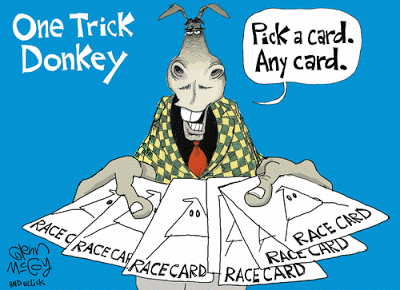
card


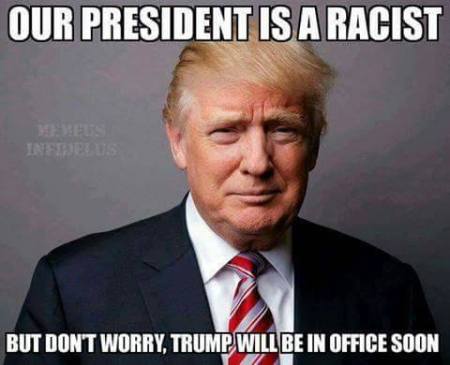
racist


H/t Joop

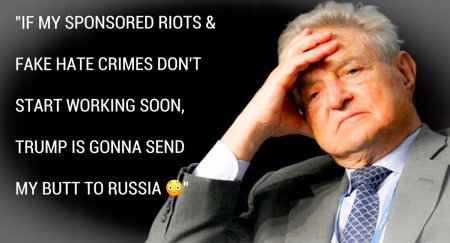
soros2


The Death of the Leftist Project (at Least for Now)

November 26, 2016

The Death of the Leftist Project (at Least for Now), PJ MediaMichael Walsh, November 25, 2016

deathvalleyWelcome to Death Valley. You may be here a while (Shutterstock)

The real “leftist ideal” was the European superstate known as the EU, a more benign form of the Union of Soviet Socialist Republics that collapsed in 1989 with the fall of the Berlin Wall. Although the Washington Post quoted here doesn’t see it that way, everything since then has been a gradual dissolution, as the Americans — and now, the somnambulist Europeans — have awakened to find a void at the center of their existence.

**************************

Goodbye, so long, auf wiedersehen, farewell

When Donald Trump shocked the world with an upset victory in the U.S. presidential election this month, much of Europe was aghast. But in at least one critical sense, the result couldn’t have been more European: Across the continent, parties of the center-left that have dominated politics for decades — and that have given Europe its reputation for generous social welfare systems — now find themselves beaten, divided and directionless. Hillary Clinton and the Democrats are just the latest members of a beleaguered club.In Germany and Britain, once-mighty center-left parties have been badly diminished, locked out of their nations’ top jobs for the foreseeable future. In Spain and Greece, they have been usurped by newer, more radical alternatives. And in France and Italy, they’re still governing — but their days in power may be numbered. The rout of the center-left has even extended deep into Scandinavia, perhaps the world’s premier bastion of social democracy.

Overall, the total vote share for the continent’s traditional center-left parties is now at its lowest level since at least World War II. Like the Democrats, these parties have been marginalized, with little influence over policy as the right prepares to place its stamp on the Western world in a way that could endure for decades.

“If the left and the center-left don’t get their act together, then we’re looking at a period of very unstable right-wing hegemony,” said Alex Callinicos, a European studies professor at King’s College London.

Good. The cultural Marxist threat I outlined in my recent bestseller, The Devil’s Pleasure Palace — on sale at the link this Black Friday weekend! — has at last begun to recede; now the challenge is to restore Western civilization’s cultural confidence again in the primacy if its message: political freedom, artistic creation, technological advancement, radiant spirituality for all who welcome it. The culture of death and decay — quintessentially satanic — is being roundly rejected around the precincts of goodness.

As recently as a decade ago, the picture was very different. Britain’s Tony Blair was at the vanguard of a generation of European center-left leaders who had emulated Bill Clinton’s pragmatic Third Way politics and seemed poised to ride their marriage of social democracy with market liberalization to an unlimited future of electoral success.But the Great Recession — and the bumpy, deeply unequal recovery that followed — fundamentally changed that.

“With the economic crisis, and the negative effects of globalization, the socialists couldn’t convince the populations in their respective countries that the future lies in a liberal Europe,” said Gérard Grunberg, a historian of socialism at Sciences Po in Paris. “This is the end of the European utopia.”

Even better. The “European utopia” was always a daemonic fantasy, born of bloodshed, guilt, mass murder, and displacement, and protected by the American nuclear umbrella.

That “utopia” emerged in the aftermath of 1945, when politicians across war-torn Europe banded together to build a new continent that would never repeat the grave mistakes of the recent past. This was the genesis of the European Union: an economic union that was meant to become, at least in theory,committed to the common cause of social justice, largely a leftist ideal.

The real “leftist ideal” was the European superstate known as the EU, a more benign form of the Union of Soviet Socialist Republics that collapsed in 1989 with the fall of the Berlin Wall. Although the Washington Post quoted here doesn’t see it that way, everything since then has been a gradual dissolution, as the Americans — and now, the somnambulist Europeans — have awakened to find a void at the center of their existence.

Let’s just hope it’s not too late.

Trump Invites Hungarian PM Orbán to Washington D.C.

November 25, 2016

Trump Invites Hungarian PM Orbán to Washington D.C., BreitbartChris Tomilinson, November 25, 2016

orban1ATTILA KISBENEDEK/AFP/Getty Images

U.S. President-Elect Donald Trump has invited Hungarian Prime Minister Viktor Orbán to visit him in Washington D.C.

The Prime Minister said that Mr. Trump then praised the Hungarian government and called the people of Hungary “brave freedom fighters” during a telephone conversation on Thursday night, Hungarian paper Magyar Hirlap reports.

Mr. Orbán also noted that Trump congratulated Hungary for its economic success in recent years saying that he has called the nation’s achievements over the past six years “outstanding”.

After being invited to Washington D.C., Orbán said: “I told him that I hadn’t been there for a long time as I had been treated as a ‘black sheep’, to which he replied, laughing, ‘Me too’.”

On Mr. Trump’s open attitudes toward Hungary, the prime minister said: “He is much more interested in success, efficiency and results than in political theories,” adding: “This is good for us, as the facts are with us. The economic cooperation has always been good, only the ideologies presented obstacles.”

One of the first European politicians to come out in support of Trump, the maverick Hungarian leader has been a fierce opponent of the migrant policies of German Chancellor Angela Merkel and the European Union’s plans to redistribute migrants across the political bloc.

In an exclusive interview with Breitbart Londonshortly after the Hungarian migrant referendum, spokesman for the Hungarian government Zoltán Kovács said the Obama administration had left the country feeling abandoned. “My first-hand experience, the experience of the government, [is that] the U.S. has lost interest, and probably with it, knowledge about the region. Europe in general, but most certainly about Central Europe,” he said.

While Mr. Orbán had come out in support of Mr. Trump, Kovács was more cautious than to offer an official governmental endorsement, but did at the time note that the migrant policies of Trump and the Hungarian government aligned.

“If it’s about migration, which seems to be the most acute challenge we face, it’s definitely true that Mr. Trump and the conservative philosophy on migration is a lot closer to us,” he noted.

Hungary, along with neighbours Slovakia, the Czech Republic, and Poland, constitute the Visegrad 4 group, who have been a major bloc in opposition of mass migration within the European Union. The V4 now look to the presidential elections in Austria for another potential ally in the anti-mass migration Freedom Party (FPÖ) candidate Norbert Hofer.

After meeting with Czech president Miloš Zeman, Hofer related his intentions for Austria to join the group as well.

Speaking to Breitbart London on the issue, spokesman Kovács said: “Austria has always rather belonged to Central Europe, not the Western part of Europe. With the facts and the consequences of what is happening on the southern and eastern borders of Europe now with migration, it would be an interesting turn and development if the Austrians realised that.”

The real mother

November 25, 2016

The real mother, Israel National News, Tzvi Fishman, November 25, 2016

The answer to the question of ownership of the Land of Israel has been answered without turning to the Bible, the UN or the Balfour Declaration in the conflagrations that rage across Israel.

If anyone needs more proof that the Land of Israel belongs to the Jews, here it is. Everyone knows the story of King Solomon and the two women who appeared before him with a baby. Each woman claimed that the child belonged to her. Solomon decreed that the baby be cut in half and divided between the two, and while one woman protested, the other woman was ready to have the baby sliced in half with a sword as long as the other woman didn’t get him, and thus, clearly, wasn’t the child’s real mother.

So too with the fires raging all over Israel. What person would purposely burn his own land, its verdant mountains, woods, trees and stones, kill its helpless forest creatures? The Arabs who are setting fires across the country don’t have any qualms. Why should they? It isn’t their land. What do they care? They aren’t the real mother.

A baby has one mother, not two. Just as France belongs to the French, and Spain to the Spanish, the Land of Israel belongs to the Jews. The idea that Arabs would be happy citizens in the Jewish State was a fallacy from its inception. They want the whole state, with their own language, holidays, and culture, and they want it judenrein.

Sharing the baby doesn’t work. No matter how much you suppress the violence, no matter how much economic incentive you offer, how much you see to equal opportunities, the Arabs in Israel will always want their own country. Haifa, the so-called city of “co-existence,” is the perfect example.

The Arab problem in Israel will not go away. The very existence of the Jewish State creates it. They will continue to use knives and guns, fires and bombs, to try to chase us from our Land.

It is either their Land or ours. Dividing the baby in half is not the solution. Nor will peace come by cutting off an arm here, a leg there. A neighboring “Palestinian” state is no solution either. Its residents will continue to try to reach the Mediterranean Sea by violent means, soon launching rockets and missiles as Hamas does from Gaza.

It is time to lay down the law.  Every Arab, including those in the Knesset, who will not pledge allegiance to the State of Israel, should find another place to live. Those who want to live in peace within the Jewish State, are welcome as they have always been. Just note the number of Israeli Arab MKs, university students, doctors, nurses, lawyers, businessmen and every other field.

But for those who don’t like the way things are run in the State of Israel, then, by all means, there are fifteen Arab countries to choose from. Just leave our beloved baby alone.

The forgotten European slaves of Islamic Barbary North Africa and Islamic Ottoman Turkey

November 25, 2016

The forgotten European slaves of Islamic Barbary North Africa and Islamic Ottoman Turkey, Jihad Watch


Their capture and enslavement was based on elements of Islamic law that are still part of that law in all its various permutations and manifestations.

********************

“Ohio State University history Professor Robert Davis describes the White Slave Trade as minimized by most modern historians in his book Christian Slaves, Muslim Masters: White Slavery in the Mediterranean, the Barbary Coast and Italy, 1500–1800 (Palgrave Macmillan).”

“White slavery” is a common term, but it is unfortunate, as the slaves described in this video were not captured and enslaved because they were white, but because they were non-Muslim. Their capture and enslavement was based on elements of Islamic law that are still part of that law in all its various permutations and manifestations.

Rhode Island: Providence mayor issues exec order to create sharia advisory board

November 25, 2016

Rhode Island: Providence mayor issues exec order to create sharia advisory board, Creeping Sharia, November 25, 2016

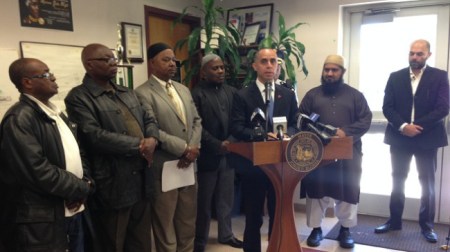
islamistadvisoryboard

Source: Providence mayor creates panel to protect Muslim Americans | WPRI 12 Eyewitness News

Providence Mayor Jorge Elorza has signed an executive order that he says is aimed at better protecting Muslim-American residents from discrimination.

The order, signed by the mayor Tuesday, establishes a new Muslim-American Advisory Board. The five-member volunteer panel will advise Elorza on policies that affect Muslim Americans in an effort to reinforce the city’s founding principles of religious freedom, Elorza said.

Elorza said the decision to establish the board came in response to Donald Trump’s election as president. During his campaign, the president-elect made mention of a ban on Muslim immigration and implementing a Muslim registry.


For the real story, read: The Muslim Registry That Never Was


Trump and his aides have since walked back some of those comments, now saying he is focused on stronger vetting for immigrants from terror-prone nations. He recently appointed a National Security Adviser, Lt. Gen. Michael Flynn from Rhode Island, who has made controversial remarks against Islam. Elorza said he wants to ensure that Muslim Americans in Providence will be protected, regardless of what happens on the federal level.

“We’ve heard a lot, not only from the president-elect, but also from the folks that surround him, that really worry us and frankly, really frighten us,” the mayor said. “So that’s why it’s more important than ever that we come together at the local level.”

Monsurat Ottun, a Muslim-American Pawtucket resident, said Trump’s comments have caused concern in the local community. “Everyone is afraid,” Ottun said, adding that women who wear a hijab, or head covering, are particularly concerned because they are easily identifiable as Muslim by their attire. “It’s unfortunate that I’ve lived in this country my entire life, and I’ve never felt afraid like I do now.”

“I constantly have to watch my back everywhere I go,” she said.

Imam Mufti Ikram from the Masjid Al-Islam mosque in North Smithfield said he feels reassured by the mayor’s executive order, and hopes it sets an example for other cities.

“The cities across the nation are going to see a light, a hope for a community that is being bullied, that is being harassed by a lot of people,” Ikram said.

Another Imam, Muyideen Ibiyemi of the Muslim Community Center of Rhode Island, said his daughter was afraid to wear her hijab to school after the election. But he said there has also been a glimmer of hope; someone dropped off an anonymous card at MCCRI that read, “we are with you.”

Elorza’s order states that the panel was also created due to the “rash of hate crimes targeting minorities,” citing a statistic from the FBI that hate crimes against Muslims have increased nationwide by 67 percent since 2014.

Providence Police Maj. Oscar Perez vowed to enforce the law if hate crimes are perpetrated against Muslims in Providence.

“I want them to know that we support them,” Perez said. “If anybody decides to discriminate against anybody in the city…the city will prosecute to the extent of the law.”  A spokesperson for Providence Police said she hadn’t heard of any specific reports of local crimes against Muslims since the election.

The board will meet no less than twice a year and members will serve two-year terms. Elorza’s office said anyone interested in serving “should send a cover letter expressing interest and experience as well as a copy of their resume to mayor@providenceri.gov for review.”

This is the second announcement Elorza has made in anticipation of President-elect Trump’s administration. Last week, Elorza vowed to continue the city’s current policy of not referring undocumented immigrants who are not facing criminal charges to federal immigration officials. Elorza said he’ll make one announcement or hold one gathering each week to reinforce support for various groups in Providence before Inauguration Day.


Another Islamo-pandering, sanctuary city mayor who should be in jail for failing to uphold his oath of office.