Archive for November 11, 2016

Trump can eviscerate Obama’s policies by dropping lawsuits, revoking memos

November 11, 2016

Trump can eviscerate Obama’s policies by dropping lawsuits, revoking memos, Washington Times, Stephen Dinan, November 11, 2016

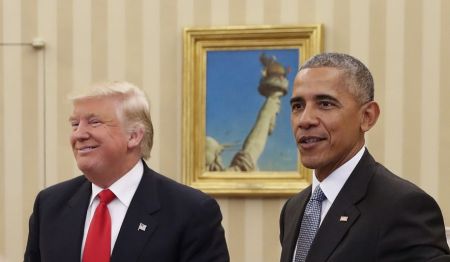
trumpandbammyPresident Barack Obama meets with President-elect Donald Trump in the Oval Office of the White House in Washington, Thursday, Nov. 10, 2016. (AP Photo/Pablo Martinez Monsivais)
Forget about waiting for Congress — Donald Trump can eviscerate Obamacare and cripple President Obama’s global warming framework all on his first few days in office by directing policy from the White House and ordering his Justice Department to drop lawsuits that the current administration is pursuing.

Lawyers said getting rid of the government’s mandate that schools allow transgender students to choose their bathrooms could be as simple as retracting an Education Department letter, then letting judges know that is no longer the administration’s position.

Mr. Obama’s 2014 deportation amnesty, which is also the subject of court challenges, could be nixed by revoking the Homeland Security memo that laid out the policy, then telling judges it’s gone. No memo, no case.

It was always the danger lurking in Mr. Obama’s penchant for going it alone and declining to work with Congress — a new president who disagrees with him can quickly reverse many of his big-ticket accomplishments.

“What Obama’s pen and phone giveth, Trump’s Sharpie and Twitter will taketh away,” said Josh Blackman, an associate professor at the South Texas College of Law.

While repealing Obamacare outright would take congressional action, several controversial provisions could quickly be halted. The administration’s ongoing fight with Catholic nuns and other religious charities, demanding that they play a role in opting out of paying for contraceptives, could end.

It was always the danger lurking in Mr. Obama’s penchant for going it alone and declining to work with Congress — a new president who disagrees with him can quickly reverse many of his big-ticket accomplishments.

“What Obama’s pen and phone giveth, Trump’s Sharpie and Twitter will taketh away,” said Josh Blackman, an associate professor at the South Texas College of Law.

While repealing Obamacare outright would take congressional action, several controversial provisions could quickly be halted. The administration’s ongoing fight with Catholic nuns and other religious charities, demanding that they play a role in opting out of paying for contraceptives, could end.

Even bigger damage could be done to the House of Representatives’ lawsuit arguing that the administration broke the law by paying out Obamacare money that Congress specifically refused to spend.

A district court ruled this year that the administration violated the Constitution by doling out the money despite Congress’ wishes. The Obama administration has appealed, and the lower court judge’s ruling is on hold, but a Trump administration could drop that appeal.

“In this case, the withdrawal of the appeal would effectively accomplish what the Trump administration would likely support,” said Jonathan Turley, a professor at George Washington Law School who is serving as the House’s attorney in the case.

On the environment, rules from the Environmental Protection Agency and the Army Corps of Engineers governing power plants’ carbon emissions and water runoff could also get the heave-ho from a Trump Justice Department that decides they aren’t worth defending.

Senate Majority Leader Mitch McConnell, Kentucky Republican, said he hoped that would happen quickly. “Day One would be a good idea,” he told reporters.

There is precedent for making those kinds of decisions. Mr. Turley pointed to the Obama administration’s refusal to defend in courts the Defense of Marriage Act, which was enacted by Congress and signed by President Clinton.

“Changes in policy or presidents can result in substantial changes in the posture of litigation,” Mr. Turley said. “That’s a perfectly natural process, particularly when you have such a radical change in administrations. There’s no reason why one administration should pursue a policy initiative in court that they now oppose.”

Mr. Turley said Mr. Trump could even ask the Obama administration to request that judges halt the cases for now, to give the next administration a chance to have its say.

“Much of President Obama’s legacy stands on clay feet. The vast majority of his cited accomplishments were unilateral actions taken by executive authority,” he said. “What a president giveth, a president can take away.”

One of the areas where Mr. Obama stretched his authority the most was in immigration. He used prosecutorial discretion and a guidance memo from the Homeland Security Department to create a deportation amnesty for as many as 5 million illegal immigrants. Federal courts put a halt to the 2014 amnesty, but illegal immigrants have sued, saying the judges got it wrong.

Mr. Blackman, who has closely followed that case, said Mr. Trump could end all doubt by having his Homeland Security Department revoke the 2014 memo and let the judges know the case is moot.

Immigrant rights advocates have vowed to fight a Trump administration on immigration and are circling the wagons to defend a 2012 amnesty for illegal immigrant Dreamers.

“We will fight tirelessly alongside our partner organizations to protect DACA and ensure that immigrant youths are safe from deportation and that families aren’t separated,” said Cesar J. Blanco, head of the Latino Victory Fund.

Minority advocacy groups are also likely to howl over the direction a Trump administration could take on voting rights cases.

The current Justice Department has sided with challengers who say voter ID laws are too strict and has even refused to defend the federal Election Assistance Commission, which ruled this year that states can require people to prove citizenship as they register to vote.

That refusal to step in drew a stern rebuke from U.S. District Judge Richard J. Leon. “This is the first time in 14 years I’ve seen this,” he said.

Kris W. Kobach, the secretary of state in Kansas who was left to defend his state law and the EAC, said a Trump administration could change that.

“The Department of Justice can, and should, immediately start defending the federal agency, and that means defending the correct interpretation of the [motor-voter law] so that states may be permitted to ask for proof of citizenship,” he said.

Mr. Kobach said a Trump administration could also put an end to sue-and-settle practices. That is when agencies essentially collude with interest groups, inviting them to sue to force action. The agency then agrees to a settlement that ends up writing rules that the interest groups want.

The U.S. Chamber of Commerce says dozens of EPA regulations, including the power plant greenhouse gas emissions rules, were written this way, outside of the usual public process.

Hans von Spakovsky, senior legal fellow at The Heritage Foundation and a Justice Department lawyer under President George W. Bush, said one challenge will be surmounting inertia on the part of the lawyers who now work there.

“The Trump administration is going to have to clean out the Justice Department from top to bottom because of the complete politicalization by [Attorney Generals Eric H.] Holder and [Loretta E.] Lynch that destroyed the professionalism and ethics of the department — it will be a monumental task as difficult as Hercules having to clean out the Augean stables,” he said.

The Communists Behind the Anti-Trump Protests

November 11, 2016

The Communists Behind the Anti-Trump Protests, Front Page MagazineJohn Perazzo, November 11, 2016

(Please see also, ‘Professional protesters’ riot over Trump’s election, attacking bystanders and vandalizing cars, property. — DM)

antitrumpprotest

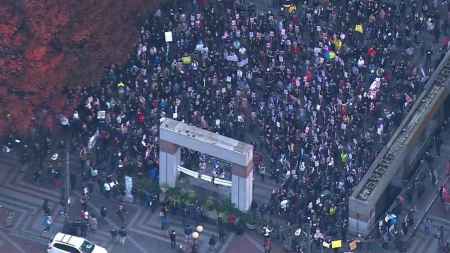
Ever since Donald Trump’s election victory Tuesday night, the media have been abuzz with stories about massive, sometimes violent, anti-Trump protests breaking out in cities all across the country. We’ve been told that ordinary Americans everywhere are so frightened and angered by the prospect of a Trump presidency—as opposed to a Hillary Clinton presidency—that they’re taking to the streets to express their grave concerns for the future of the country.

In Chicago, for instance, thousands of people held an “emergency protest” outside a Trump hotel, chanting: “No Trump, No KKK, No Fascist USA!”

In New York, some 5,000 people (including the political oracle Lady Gaga) demonstrated outside Trump Tower. “Their concerns,” said CNN, “ranged from policies, such as Trump’s proposed plan to build a wall along the U.S.-Mexican border, to the polarizing tenor of his campaign that they say stoked xenophobic fears.”

In Oakland, some of the 7,000+ demonstrators damaged police cars, vandalized businesses, hurled Molotov cocktails and rocks at law-enforcement officers, and started at least 40 separate fires.

And in Los Angeles, more than 1,000 people filled the streets, burned Trump in effigy, and sang John Lennon’s Give Peace a Chance. “Several protesters said they feared that family or friends might be deported once Trump takes office,” said CNN.

From reading the various mainstream media accounts of these events, one comes away with the distinct impression that they are grassroots actions that began organically among ordinary, concerned, well-meaning citizens.

But alas, if one were to think that, one would be wrong.

Contrary to media misrepresentations, many of the supposedly spontaneous, organic, anti-Trump protests we have witnessed in cities from coast to coast were in fact carefully planned and orchestrated, in advance, by a pro-Communist organization called the ANSWER Coalition, which draws its name from the acronym for “Act Now to Stop War and End Racism.” ANSWER was established in 2001 by Ramsey Clark’s International Action Center, a group staffed in large part by members of the Marxist-Leninist Workers World Party. In 2002, the libertarian author Stephen Suleyman Schwartz described ANSWER as an “ultra-Stalinist network” whose members served as “active propaganda agents for Serbia, Iraq, and North Korea, as well as Cuba, countries they repeatedly visit and acclaim.”

Since its inception, ANSWER has consistently depicted the United States as a racist, sexist, imperialistic, militaristic nation guilty of unspeakable crimes against humanity—in other words, a wellspring of pure evil. When ANSWER became a leading organizer of the massive post-9/11 demonstrations against the Patriot Act and the U.S. invasions of Afghanistan and Iraq, it formed alliances with other likeminded entities such as Not In Our Name (a project of the Revolutionary Communist Party) and United For Peace and Justice (a pro-Castro group devoted to smearing America as a cesspool of bigotry and oppression).

Another key organizer of the current anti-Trump protests is a group called Socialist Alternative, which describes “the global capitalist system” as “the root cause of … poverty, discrimination, war, and environmental destruction.” Explaining that “the dictatorships that existed in the Soviet Union and Eastern Europe were [unfortunate] perversions of what socialism is really about,” this organization calls for a happy-faced “democratic socialism where ordinary people will have control over our daily lives.”

And, lo and behold, many components of Socialist Alternative’s agenda mesh seamlessly with Hillary Clinton’s political priorities. For instance, Socialist Alternative seeks to: (a) “raise the federal minimum wage to $15 an hour, as a step toward a living wage for all”; (b) provide “free [taxpayer-funded] … public education for all from pre-school through college”; (c) create “a publicly funded single-payer [healthcare] system as a step towards fully socialized medicine”; (d) impose absolutely “no budget cuts [on] education and social services”; and (e) legislate “a major increase in taxes on the rich and big business.”

In short, the anti-Trump protests that are currently making headlines are 100% contrived, fake, phony exhibitions of street theater, orchestrated entirely by radicals and revolutionaries whose chief objective is to push America ever farther to the political left. Moreover, they seek to utterly demoralize conservatives into believing that public opposition to their own (conservative) political and social values is growing more powerful, more passionate, and more widespread with each passing day.

The bottom line is this: The leaders and organizers of the anti-Trump protests that are currently making so much noise in cities across America, are faithfully following the blueprint of Hillary Clinton’s famous mentor, Saul Alinsky, who urged radical activists to periodically stage loud, defiant, massive protest rallies expressing rage and discontent. Such demonstrations are designed to give onlookers the impression that a mass movement is preparing to shift into high gear, and that its present size is but a fraction of what it eventually will become. A “mass impression,” said Alinsky, can be lasting and intimidating: “Power is not only what you have but what the enemy thinks you have…. The threat is usually more terrifying than the thing itself.”

And that is precisely what we are witnessing at the moment.

Qatar’s Shopping Spree to Buy and Displace the West?

November 11, 2016

Qatar’s Shopping Spree to Buy and Displace the West? Gatestone Institute,Giulio Meotti, November 11, 2016

Qatar sits on the executive board of the United Nations Educational, Scientific and Cultural Organization (UNESCO), the UN agency that has just erased 3000 years of Jewish history in Jerusalem, and has set its sights on the main chair at UNESCO: as the successor of UNESCO’s secretary general, Irina Bokova.

Human rights organizations have already promoted a campaign to prevent Qatar’s Kawari from taking the UNESCO seat. Citing a vast amount of anti-Semitic material present at the Doha Book Fair, Kawari’s flagship, the Simon Wiesenthal Center launched a campaign against his candidacy.

Qatar is the puppeteer behind UNESCO’s anti-Semitic resolution on Jerusalem, and a world center of Islamic extremism. Qatar does not make a secret of trying to submit Western culture to the Muslim crescent.

The Soviet Union, during the Cold War, invested in propaganda operations in the West to subvert capitalism and democracy. Communism found precious allies in the so-called “useful idiots” who facilitated Soviet work in academia, newspapers and publishing houses. Political Islam has been using the same convenient outlets and mechanisms to spread Islamic sharia law in the West.

The old role of Soviet propaganda has now been taken up by Islamic regimes. Qatar, for instance, is not only interested in buying large segments of Europe’s economy (Hochtief, Volkswagen, Porsche, Canary Wharf and Deutsche Bank), but also in playing a key role in Europe’s culture.

Qatar sits on the executive board of the United Nations Educational, Scientific and Cultural Organization (UNESCO), the UN agency that has just erased 3000 years of Jewish history in Jerusalem, and has set its sights on the main chair at UNESCO: as the successor of UNESCO’s secretary general, Irina Bokova.

The favorite for this race is, in fact, the former minister of culture of Qatar from 2008 to 2016, Hamad bin Abdulaziz al Kawari, who currently serves as “cultural adviser to the Emir,” Sheikh Tamim bin Hamad Al Thani. In 2017, the UNESCO leadership is supposed to go to a representative of the Arab world, according to the rule of geographic rotation; Kawari will have to defeat the candidacy of a Lebanese and an Egyptian.

Kawari recently landed in Rome, apparently to start his promotional tour, and he met with its mayor, Virginia Raggi, who received the Islamic emirate’s delegation. Kawari received an honorary degree from Tor Vergata University, Rome’s second most important university. The photo of the ceremony speaks volumes about political Islam’s level of penetration in Europe’s academic culture. Abdullah Bin Hamad Al Attiyah, Qatar’s former deputy prime minister, even spoke at Tor Vergata.

2037Qatar’s Hamad bin Abdulaziz al Kawari (center), who serves as “cultural adviser to the Emir,” is pictured receiving an honorary degree from Rome’s Tor Vergata University last month. (Image source: Askanews video screenshot)

Kawari also had a meeting with Italy’s minister of culture, Dario Franceschini and minister of education, Stefania Giannini.

Last June, Kawari was also in the Vatican to meet with Pope Francis and sign an agreement between the Vatican Apostolic Library and the Qatar Foundation for Education. Kawari, fluent in Arabic, English and French, is an affable man of the world, at home in Paris, where he graduated from Sorbonne University; his climb to the leadership of UNESCO has the support of the rulers of the Gulf and Saudi Arabia.

Human rights organizations have already promoted a campaign to prevent Kawari from taking the UNESCO seat. Citing a vast amount of anti-Semitic material present at the Doha Book Fair, Kawari’s flagship, the Simon Wiesenthal Center launched a campaign against his candidacy. In a letter to Kawari, Shimon Samuels, Director for International Relations of the Wiesenthal Center, said the material on display every year in Doha “violates the values promoted by Unesco“.

Samuels listed at least 35 anti-Semitic titles, including nine editions of the anti-Semitic forgery The Protocols of the Elders of Zion, four editions of Mein Kampf by Adolf Hitler, and four editions of Henry Ford’s The International Jew. “From this point of view, Doha is far from Paris,” said Samuels, referring to the general headquarters of UNESCO.

Qatar is the puppeteer behind UNESCO’s anti-Semitic resolution on Jerusalem, and a world center of Islamic extremism. Doha just held a meeting between the Palestinian Authority’s leader, Mahmoud Abbas, and the heads of Hamas, a terrorist organization devoted to the destruction of the State of Israel. Qatar does not make a secret of trying to submit Western culture to the Muslim crescent. The only question is, which country’s culture will UNESCO erase next?

The Qatari royal family is now much involved in “the arts.” According to the BBC, “To take a recent example, the Qatari royal family sponsored the Tate’s Damien Hirst retrospective. It’s now moved to Doha, where Tate director Nicholas Serota attended the official launch.” Major works by Warhol, Bacon, Rothko, Koons and Hirst are all thought to have made their way to Qatar.

Qatar is buying academic chairs in Europe’s universities, such as the pact between Doha and Rome’s Tor Vergata. What is the university presumably expected to do for Qatar in exchange for that? Qatar academic purchases are also the subject of Le Monde’s investigation entitled, “Tariq Ramadan: le sphinx,” which details how Tariq Ramadan, the well-known European Muslim intellectual, was been able to obtain a chair at the University of Oxford. Mediapart, the French leftist magazine, ran a long exposé about Tariq Ramadan as “Qatar’s showcase.”

The Qatari monarchy, in 2015 alone, donated £11 million to renew Oxford’s St Antony’s College, where Tariq Ramadan works. Sheikha Moza, the wife of Emir Al Thani, inaugurated the magnificent building designed by the late architect, Zaha Hadid.

Qatar also financed the creation of an Islamic section at the Bloomsbury publishing house and the “Doha Debates” program that aired on the BBC. It would be interesting to know how Qatar’s sharia can find agreement with the sybaritic Bloomsbury’s British culture.

The attorney-general of Qatar also signed an agreement with the president of Sorbonne University, Philippe Boutry, in Paris, for the enrollment of hundreds of migrants from the Middle East. The Sorbonne accepted 600,000 euros a year, for three years.

Many British universities also receive large donations from Qatar. University College London, for example, has an archeology campus in Qatar. The Qatar Development Fund recently donated $4.3 million to the Margaret Thatcher Scholarship Trust at Oxford University.

Qatar is also having a shopping spree in American universities, and is funding their university departments in the Arabian desert. Universities such as Cornell, Carnegie Mellon, Georgetown, Texas A&M and Virginia Commonwealth have all signed agreements with Emir Al Thani. Each will receive $320 million dollars a year.

Students of American Universities based in Doha are also invited to attend the sermons of Yusuf al-Qaradawi, the spiritual mentor of the Muslim Brotherhood, who is known for his hate-ridden religious edicts. The Simon Wiesenthal Center has called it “outrageous” for Cornell University to decide to open a campus in Doha while the kingdom funds Hamas’s war against Israel.

The Financial Times once called Qatar “the world’s most aggressive deal hunter.” Emir Al Thani is now promoting a takeover of Western culture. But very few in Europe seem to care about that. Is it because “it is difficult to avoid its money and influence“, especially for an economically depressed Europe? With their telling silence, are they simply aligning with Qatar’s sharia rulers, and hoping they will chosen to be bought out next?

US must bolster its credibility

November 11, 2016

Source: Israel Hayom | US must bolster its credibility

The new administration will have to work hard to restore the U.S.’s superpower status, badly eroded in Obama’s presidency • A Trump administration will be more Israel-friendly, but we must always strive to improve Israel-U.S. relations even more.

Maj. Gen. (ret.) Yaakov Amidror
U.S. President-elect Donald Trump faces many challenges ahead

 Photo credit: AP

America voted for change

November 11, 2016

Source: Israel Hayom | America voted for change

The results of the U.S. presidential elections speak volumes about Americans’ desire for a change • This was a revolt against the establishment and anyone trying to dictate the American mindset • “Trumpquake” will go down in history.

Boaz Bismuth
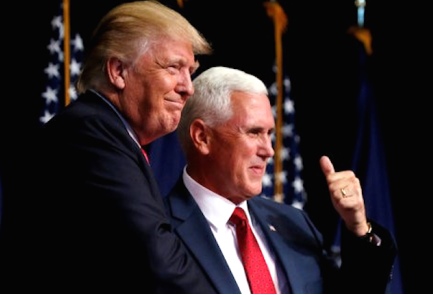
U.S. President-elect Donald Trump and Vice President-elect Mike Pence

 Photo credit: Reuters

Editor’s Notes: A New Era of US-Israel relations

November 11, 2016

Source: Editor’s Notes: A New Era of US-Israel relations – Opinion – Jerusalem Post

On Tuesday night, Netanyahu went to sleep thinking – like the rest of the world – that he would wake up to Hillary Clinton as the next president of the United States.

A week before the 2013 Israeli election, Donald Trump uploaded a surprising video to YouTube. Prime Minister Benjamin Netanyahu was facing fierce opposition from two new political stars – Yair Lapid and Naftali Bennett – and while polls showed him winning, there was some doubt how easily he would succeed in forming a coalition.

In the video, Trump threw his support behind Netanyahu. “You truly have a great prime minister – Benjamin Netanyahu,” Trump said in the short video. “There is nobody like him. He’s a winner, he’s highly respected, and he’s highly thought of by all… so vote for Benjamin. Terrific guy, terrific leader.”
That was January 2013. It would be another 17 months before Trump would announce his bid for the White House. Was he thinking already then about making a run and working one day with Netanyahu? Anything is possible.

On Tuesday night, Netanyahu went to sleep thinking – like the rest of the world – that he would wake up to Hillary Clinton as the next president of the United States.

While Netanyahu and Clinton had their differences over the years – there were a number of hostile conversations between the two when she was secretary of state – there seemed to be a feeling in Jerusalem that she was the preferred candidate for Israel. Netanyahu could anticipate what Clinton would do and what her policies would be when it comes to Israel.

When Haim Saban – the Israeli-American billionaire and Clinton supporter – was in Israel a few months ago, he met with Netanyahu, Defense Minister Avigdor Liberman and other Israeli politicians. Like the rest of the world, Israel saw Clinton as president, and Saban was someone Netanyahu was investing in to help smooth over difficult issues that were bound to come up.

But when Netanyahu woke up in his Jerusalem residence, the elections were heading in a completely different direction. Within a few hours, Trump had declared victory.

Trump is an enigma. His positions on Israel have swung throughout the campaign. Early on, he said he would be “neutral” when it comes to the Palestinian conflict, and also that he would demand that allies pay for the assistance they receive from the US. He then swung in the other direction. Advisers of his said he would support construction in West Bank settlements, would oppose a Palestinian state, and would move the US Embassy from Tel Aviv to Jerusalem.

Nevertheless, Trump is something of a “dream come true” for Netanyahu. Throughout all of his terms as prime minister, Netanyahu – often described as the ultimate Israeli version of a Republican – has worked only with Democratic presidents. In the 1990s it was Bill Clinton, and for the last eight years it has been Barack Obama.

The difference is that Trump is not really a Republican. He doesn’t come from the party’s rank and file, and doesn’t necessarily adhere to its policies and ideology.

If that’s what he wanted, Netanyahu would not have been alone in his desire to see Clinton as the next president.

According to polls in Israel – even though polls cannot really be trusted after Tuesday’s mega survey disaster – Israelis preferred Clinton as president. The most recent poll, taken just a few weeks ago, found that 49% of Israelis preferred Clinton compared with 32% who preferred Trump.

Why the discrepancy?

On the surface, Trump should have been appealing for the Israeli people. A dominant personality, or “winner” as he likes to call himself, surrounded by pro-Israel advisers with a seemingly positive track record when it comes to Israel.

This is without even comparing Trump’s running mate, Mike Pence – one of the staunchest and outspoken supporters of Israel in the US government – to Clinton’s running mate, Sen. Tim Kaine, a liberal democrat who boycotted Netanyahu’s speech to Congress last year.

Even if they are not completely accurate, what the polls do indicate is that Israelis look for a leader with a steady hand. That is why Israelis have consistently voted for Netanyahu, and would likely reelect him if elections were held in the near future.

Israelis dismiss different alternatives – Lapid, Bennett, Kahlon, Liberman and Herzog – as inexperienced, too extreme, immature, or too fake. Netanyahu, they believe, leads them with a steady hand, and that is what they also saw in Clinton: someone with experience, knowledge of the region, and someone they thought they could rely on.

What people didn’t expect though was the overwhelming populist revolt that Americans would wage with this election against the government and the political elites. It seems that a direct line can be drawn between Donald Trump’s victory and two other historic votes that took place recently.

First there was Brexit. Then-British prime minister David Cameron openly campaigned and urged Britons to vote in favor of staying in the European Union. The people refused to listen and voted against Cameron, pushing him to resign.

In October, Colombian President Juan Manuel Santos brought the peace deal he had negotiated with FARC for a national referendum. Instead of approving the deal and ending a 52-year war, Colombians rejected it.

The presidential elections on Tuesday were similar. Britons voted against the EU and the Colombians voted against a peace deal. The vote for Trump was against every imaginable American establishment – the Democratic and Republican parties, Obama, the Senate, and the Congress. Basically, the entire political establishment and system of government America has known since its inception.

This was something pollsters apparently couldn’t read. They couldn’t sense the disappointment, frustration and anger white Americans felt for Clinton and the political establishment. Maybe people lied in polls. Maybe they didn’t. It doesn’t really matter anymore. What we witnessed was the formation of a massive movement that took over the White House and is probably not done yet.

On Wednesday, just hours after Trump’s victory speech, I spoke with David Friedman, a New York lawyer and close friend of Trump who has served as the president- elect’s Israel adviser throughout the campaign, and is rumored to be the next US ambassador to Israel.

“The level of friendship between the US and Israel is going to grow like never before, and it will be better than ever, even the way it was under Republican administrations in the past,” Friedman told me.

Together with his co-chair on the Trump Israel Advocacy Committee Jason Greenblatt, Friedman promised throughout the campaign that relations between the two countries would dramatically improve, almost like hitting a reset button. According to a document they issued on the eve of the election, Greenblatt and Friedman said that a Trump administration would not automatically support the establishment of a Palestinian state. That is a 180-degree change in US policy.

“The US cannot support the creation of a new state where terrorism is financially incentivized, terrorists are celebrated by political parties and government institutions, and the corrupt diversion of foreign aid is rampant,” the document says.

Two other issues that seem to align Trump and Netanyahu are Iran and construction in West Bank settlements.

Netanyahu’s opposition to the Iran deal – highlighted by his controversial speech to Congress in 2015 – made him the odd man out in the US. From this week, the next president of the US is a man just as opposed to the deal.

Trump has called the nuclear pact a “disaster,” “the worst deal ever negotiated,” and that his “No. 1 priority” would be to dismantle it.

Whether he will be able to cancel the deal or make changes remains to be seen, but this new joint viewpoint could translate into new policy.

On settlement construction, Trump has signaled that he would be different than the current administration, which Israel has consistently clashed with for the past eight years whenever new housing plans were announced in Jerusalem or the West Bank. With Trump, that won’t seem to be the case.

Is this certain? Not exactly. A lot can still change, and Israel is not the only ally and country the US will have to work with. Trump will find a series of challenges and constraints when he enters the Oval Office on January 20. Israel will just be one of them, and will need to fit into a larger foreign policy puzzle.

When it comes to campaign promises though, Israel would do well to remember what its own prime minister Levi Eshkol once said. “Yes, I promised, but I didn’t promise to follow through.”

Either way, starting on January 20, a new era will begin in Israeli-US relations. Time will tell how it will be defined.

A once-in-a-lifetime night

November 11, 2016

Source: Israel Hayom | A once-in-a-lifetime night

ANALYSIS: Against all odds, one swing state after another turned red, until the national media had no choice but to declare Donald Trump the next president of the United States • The pundits and experts never understood that he was no ordinary candidate.

Boaz Bismuth and Israel Hayom Staff
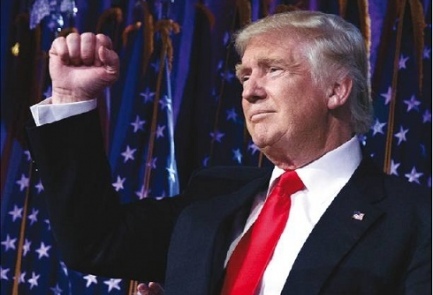
President-elect Donald Trump speaks to his supporters on election night

 Photo credit: AP

Israel Hayom | Media misled the public

November 11, 2016

Source: Israel Hayom | Media misled the public

Amos Regev

Our sample was small. We worked the old-fashioned way — taking to the streets, talking to people and getting a feel of the situation on the ground. Talking to the doorman and grocer, the barman and the diner waitress, the truck driver and the waste collector — ordinary, hardworking Americans. Who will you vote for, we asked. Nearly all of them — whites, blacks and Hispanics — said the same thing: Donald Trump.

This was the case when the American media featured daily polls categorically declaring that Trump would lose the 2016 presidential elections, alongside reports about the skeletons in his closet, criticism and admonishments, jokes, scorn and slander.

The difference between media punditry and the voice of the simple people was a clear indication that something big was going on, that beneath the surface, right under the pollsters’, experts’ and pundits’ noses, a tremendous shift was taking place. This shift emerged with full force on the one day that counts — Election Day.

The pollsters, experts and pundits — in the United States and Israel — were all wrong. Now let them eat their words.

They were wrong, and they purposely misled the public. And this was no accident; no good-faith action gone wrong.

With all due modesty, we can say Israel Hayom was right. Because we spoke to people, looking them in the eye. And because we recognized the story where others did not.

For over a year, we have been witnessing the biggest story in the world. The story of how America is struggling for its identity, values and global role. The story of fateful choices, the result of which will see someone take the White House and what this individual does or does not do while in the Oval Office, will impact the entire world.

Until Tuesday, everyone was sure this person would be Democratic presidential candidate Hillary Clinton. Eager to convince themselves, the pundits did not let the simple facts confuse them. This is why they are likely to be wrong again, the first chance they get.

Sixteen candidates vied for the Republican nomination — veteran, respected politicians along newcomers. Donald Trump was not considered a likely candidate, but rather an anecdotal one.

We saw something different. Boaz Bismuth, Israel Hayom’s foreign news editor, has been covering the news for 30 years. His journalistic instincts are sharper than those of most of his counterparts.

Bismuth first met Trump when no one thought the businessman was a viable candidate, and he was impressed. Later, we both met him.

Up close and personal, Trump is an impressive man. Charismatic, sharp and articulate. Miles away from the image painted by the media. True, Trump also had a hand in painting that image, but he was able get through to the American public on what it holds dearest: pride, patriotism, family and hard work.

U.S. President Barack Obama tried to change America for eight years. With eyes wide open, Obama was determined to undermine the very values that have been the heart and soul of America since its inception; values that reflect ideas first propounded by the Founding Fathers, then shaped during President Andrew Jackson’s term (1829-1837).

Obama’s term in office ends with a divided, polarized America, which questions its role in the world, and where ordinary people, blue-collar people, question their ability to make an honest living.

Trump brought the promise of change, with a different meaning, seeking to recapture the days of Americana and self-respect. Obama tore America at the seams — Trump promised to mend the rifts, warning that Hillary Clinton’s administration would be a direct continuation of Obama’s eight years in office, and therefore continued deterioration. He promised to return America to its past greatness.

And it worked. The indications were right there, among ordinary Americans. But the American media chose to ignore the signs, to delude itself, to deceive voters, and to try to create a reality of its own making.

It did not work in the U.S. any more than it worked in Israel.

Israel Hayom was perhaps the first to compare Trump and President Jackson. The political and economic establishment fought against Jackson, the man of the people.

During one confrontation with a strong bank, the financiers’ representatives tried to convince Jackson to give to banks more leeway “for the people.” “But sir,” Jackson replied, “the people side with me.”

Some of the people were always with Trump. But the media kept that from the public. In the U.S. and in Israel.

Some 95% percent of American media mobilized against Trump. Not only with commentary, with their routine coverage as well. Anything argued against him caused a media earthquake, while any allegation made against Clinton was downplayed and sidelined.

Sound familiar?

Of course it does.

This is exactly how the media conducted itself vis-a-vis Prime Minister Benjamin Netanyahu in the 2015 election — in truth, since 1996. The U.S. media treated Clinton with kid gloves, and the Israeli media does the same to anyone who ever has — or might — challenge Netanyahu.

Some in the U.S. have already admitted Wednesday that New York is a “bubble.” The same was said of Tel Aviv after the 2015 election. All one had to do was look at the faces of most American news anchors to grasp the magnitude of the blow dealt to the media.

This was the case with the Israeli media as well on Wednesday. The more victorious Trump emerged, the more morose they became. We saw the same long faces in Israel following the 2015 elections. For months, the Israeli media has been following the lead of its American counterpart. They were wrong, and they misled the public — big time.

Truth be told, the inability to predict public — any public — sentiment is a shared problem worldwide. The polls failed to predict the results of Brexit — the referendum held in the U.K. on its withdrawal from the European Union, and they failed to predict the results of the elections in Greece, Colombia and even tiny Iceland.

American media should have known better than to count on the polls. Israeli media should know better as well.

I do not know what the results of the elections bode for the American polling industry. I have already seen several mea culpa articles from pollsters.

The media, however, usually prefer to demand explanations from anyone but themselves. The Israeli media, for its part, refuses to learn from its mistakes, carrying on as if nothing has happened.

Those who failed to predict the Israeli public’s sentiment, had no real hope of predicting what could happen in another election, overseas.

But where they failed, Israel Hayom succeeded. This is why the media should do some serious soul-searching. They owe that to their readers, viewers and listeners, and they owe that to themselves.

Our sample was small. We worked the old-fashioned way — taking to the streets, talking to people and getting a feel of the situation on the ground. Talking to the doorman and grocer, the barman and the diner waitress, the truck driver and the waste collector — ordinary, hardworking Americans. Who will you vote for, we asked. Nearly all of them — whites, blacks and Hispanics — said the same thing: Donald Trump.

This was the case when the American media featured daily polls categorically declaring that Trump would lose the 2016 presidential elections, alongside reports about the skeletons in his closet, criticism and admonishments, jokes, scorn and slander.

The difference between media punditry and the voice of the simple people was a clear indication that something big was going on, that beneath the surface, right under the pollsters’, experts’ and pundits’ noses, a tremendous shift was taking place. This shift emerged with full force on the one day that counts — Election Day.

The pollsters, experts and pundits — in the United States and Israel — were all wrong. Now let them eat their words.

They were wrong, and they purposely misled the public. And this was no accident; no good-faith action gone wrong.

With all due modesty, we can say Israel Hayom was right. Because we spoke to people, looking them in the eye. And because we recognized the story where others did not.

For over a year, we have been witnessing the biggest story in the world. The story of how America is struggling for its identity, values and global role. The story of fateful choices, the result of which will see someone take the White House and what this individual does or does not do while in the Oval Office, will impact the entire world.

Until Tuesday, everyone was sure this person would be Democratic presidential candidate Hillary Clinton. Eager to convince themselves, the pundits did not let the simple facts confuse them. This is why they are likely to be wrong again, the first chance they get.

Sixteen candidates vied for the Republican nomination — veteran, respected politicians along newcomers. Donald Trump was not considered a likely candidate, but rather an anecdotal one.

We saw something different. Boaz Bismuth, Israel Hayom’s foreign news editor, has been covering the news for 30 years. His journalistic instincts are sharper than those of most of his counterparts.

Bismuth first met Trump when no one thought the businessman was a viable candidate, and he was impressed. Later, we both met him.

Up close and personal, Trump is an impressive man. Charismatic, sharp and articulate. Miles away from the image painted by the media. True, Trump also had a hand in painting that image, but he was able get through to the American public on what it holds dearest: pride, patriotism, family and hard work.

U.S. President Barack Obama tried to change America for eight years. With eyes wide open, Obama was determined to undermine the very values that have been the heart and soul of America since its inception; values that reflect ideas first propounded by the Founding Fathers, then shaped during President Andrew Jackson’s term (1829-1837).

Obama’s term in office ends with a divided, polarized America, which questions its role in the world, and where ordinary people, blue-collar people, question their ability to make an honest living.

Trump brought the promise of change, with a different meaning, seeking to recapture the days of Americana and self-respect. Obama tore America at the seams — Trump promised to mend the rifts, warning that Hillary Clinton’s administration would be a direct continuation of Obama’s eight years in office, and therefore continued deterioration. He promised to return America to its past greatness.

And it worked. The indications were right there, among ordinary Americans. But the American media chose to ignore the signs, to delude itself, to deceive voters, and to try to create a reality of its own making.

It did not work in the U.S. any more than it worked in Israel.

Israel Hayom was perhaps the first to compare Trump and President Jackson. The political and economic establishment fought against Jackson, the man of the people.

During one confrontation with a strong bank, the financiers’ representatives tried to convince Jackson to give to banks more leeway “for the people.” “But sir,” Jackson replied, “the people side with me.”

Some of the people were always with Trump. But the media kept that from the public. In the U.S. and in Israel.

Some 95% percent of American media mobilized against Trump. Not only with commentary, with their routine coverage as well. Anything argued against him caused a media earthquake, while any allegation made against Clinton was downplayed and sidelined.

Sound familiar?

Of course it does.

This is exactly how the media conducted itself vis-a-vis Prime Minister Benjamin Netanyahu in the 2015 election — in truth, since 1996. The U.S. media treated Clinton with kid gloves, and the Israeli media does the same to anyone who ever has — or might — challenge Netanyahu.

Some in the U.S. have already admitted Wednesday that New York is a “bubble.” The same was said of Tel Aviv after the 2015 election. All one had to do was look at the faces of most American news anchors to grasp the magnitude of the blow dealt to the media.

This was the case with the Israeli media as well on Wednesday. The more victorious Trump emerged, the more morose they became. We saw the same long faces in Israel following the 2015 elections. For months, the Israeli media has been following the lead of its American counterpart. They were wrong, and they misled the public — big time.

Truth be told, the inability to predict public — any public — sentiment is a shared problem worldwide. The polls failed to predict the results of Brexit — the referendum held in the U.K. on its withdrawal from the European Union, and they failed to predict the results of the elections in Greece, Colombia and even tiny Iceland.

American media should have known better than to count on the polls. Israeli media should know better as well.

I do not know what the results of the elections bode for the American polling industry. I have already seen several mea culpa articles from pollsters.

The media, however, usually prefer to demand explanations from anyone but themselves. The Israeli media, for its part, refuses to learn from its mistakes, carrying on as if nothing has happened.

Those who failed to predict the Israeli public’s sentiment, had no real hope of predicting what could happen in another election, overseas.

But where they failed, Israel Hayom succeeded. This is why the media should do some serious soul-searching. They owe that to their readers, viewers and listeners, and they owe that to themselves.

Medvedev in Jerusalem as Putin waits for Trump

November 11, 2016

Source: Medvedev in Jerusalem as Putin waits for Trump

DEBKAfile Special Report November 11, 2016, 7:57 AM (IDT)
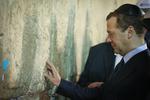
Russian Prime Minister at Western Wall, Jerusalem

Russian Prime Minister at Western Wall, Jerusalem

Peter the Great, Russian guided missile cruiser heads for the Mediterranean
Russian President Vladimir Putin sent his prime minister Dmitry Medvedev to Israel Wednesday, Nov. 9 as a gesture to mark the 25th anniversary of the resumption of diplomatic relations between the two countries.

It was not the only one: Almost his first action on arrival was a symbolic visit to the Western Wall, the eternal Jewish shrine in Jerusalem. Medvedev chose this gesture to underscore the comment he made last week: “Russia never denied Israel’s or the Jewish people’s rights in Jerusalem and in its holy sites, and the subject has been blown out of proportion.”
The Russian prime minister was therefore demonstrating Moscow’s recognition for Jewish rights in Israel, Jerusalem and its holy places – most of all Temple Mount – not just for the Palestinians. It was a message directed by the Kremlin to extremist Muslim organizations, which have set themselves the goal of “liberating Jerusalem from Israeli occupation.”

On the broader level, Putin through Medvedev was telling the world, and the US in particular, that Russia was ready to act as peacemaker between the Arab world and Israel, with greater flexibility on the Jerusalem question than Washington has exhibited.

Since his visit to the Western Wall took place Thursday, the day after Donald Trump, who recognizes Jerusalem as the capital of the Jewish state, was elected US president, the Russian prime minister was also extending the hand of cooperation to the new administration on a long list of Middle East issues.

In Moscow, a few hours later, Russia’s deputy foreign minister Sergei Ryabkov made this disclosure in relation to the president elect: “There were contacts before the election. We continue this work of course.”

Another official source elaborated on this: Representatives of the Russian embassy in Washington had met members of the Trump campaign, he said, whereas Hillary Clinton’s advisers had refused to meet.
Both Putin and the incoming American president had therefore shown they would be open to doing business together.
This did not prevent Moscow making another sort of telling gesture on America’s election day: It was announced that the carrier strike group from Russia’s northern fleet, along with additional ships from the Black Sea fleet, were on their way to the Mediterranean to launch a crushing bombing and cruise missile assault on the Syrian rebels holding out in eastern Aleppo.

This fleet is led formidably by the Admiral Kuznetsov carrier, the Peter the Great guided missile cruiser and the Admiral Grigorovich guided missile frigate.

debkafile’s military and intelligence sources report that this demonstration of Russian naval might and its mission did not catch the US administration by surprise. Some weeks ago, Putin informed President Barack Obama that he was determined to go through with the capture of Aleppo, Syria’s second city, and hand it over to Bashar Assad.

Moscow almost certainly moved these pieces on the board in readiness for the election of Hillary Clinton rather than Trump. The ships would have loosed a hellish barrage on Aleppo as soon as her victory was announced. The Russian president has a long reckoning with Clinton ever since she was US Secretary of State, and especially when in early 2011, she rebuffed his appeal for cooperation to save the life of the Libyan ruler Muammar Qaddafi after he was ousted by a NATO operation managed from Washington.
The Russian operation to reclaim Aleppo for the Assad regime was originally set to show the incoming US president that the Russians have no qualms about using military force in other confrontation arenas, too, if that’s what it takes to achieve their ends.

But like most of the world, the Kremlin was sure that Hillary would win the presidency and was taken aback when Donald Trump walked off with the prize. In view of this surprise, Putin may now decide to pause for second thoughts before bombing the Syrian rebels in Aleppo, or just hold off until his first direct meeting or contact with President elect Trump.