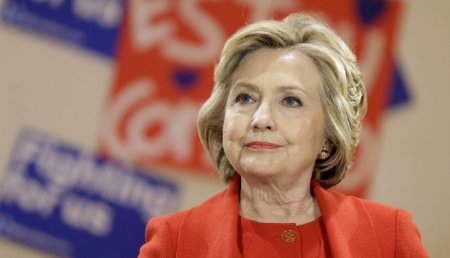
This is not how Democratic presidential candidate Hillary Clinton wanted this week to end.
It was supposed to be a much bigger success: a week in which she and her campaign would both finally recover; a week in which President Barack Obama would deliver his last speech at the U.N. General Assembly and lay out his “I believe” (“the world is safer and more prosperous than ever, we need to take in more refugees”); a week in which Clinton would exploit her experience as a previous secretary of state to meet world leaders, either formally or informally, in the hallways of the United Nations, among them Egyptian President Abdel-Fattah el-Sissi, Japanese Prime Minister Shinzo Abe and Ukrainian President Petro Poroshenko.
But then the terrorist Ahmad Khan Rahami came along, spoiling the Obama-Clinton duo’s plans.
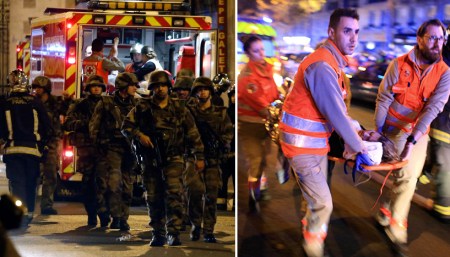
The terrorist attack in New York City’s Chelsea neighborhood, and the additional bombs across the Hudson River in New Jersey, hovered like a dark cloud over the president’s speech. When a bomb explodes in the middle of the street in Manhattan, and when almost simultaneously the son of Somali immigrants screams “Allahu akbar” (“God is great”) while stabbing 10 people in a Minnesota shopping mall, the average American citizen can’t do much other than doubt Obama’s words. The average American finds it a tad difficult to agree that the world has never been better, or to suddenly believe in the advantages of globalization.
In comparison to the exceedingly violent 14th century, the situation today really never has been better. But the everyday citizen is more interested in the present than in the distant past, and in the present there are terrorist attacks in San Bernardino, in Orlando, and now in New York and Minnesota (even though Obama doesn’t see any connection between the incidents).
One more thing that escapes the American citizen’s understanding: How is it possible that, despite Ahmad Khan Rahami’s visit to Afghanistan and his growing religious observance, the authorities in the U.S. failed to put him under surveillance? After all, even his father, Mohammad, warned the FBI two years ago: “My son is a terrorist.” But in Obama’s America, apparently, Rahami was able to walk around freely.
It doesn’t matter how you look at it, the terrorist attack in New York does not look good for Obama and certainly not for the successor to his path, Clinton, who wanted to spend the past week showing the American citizen how she is embracing the outgoing president’s legacy. Immediately following the explosion in Chelsea, New York Mayor Bill de Blasio tried easing tensions, saying it was unclear whether the explosion was a terrorist attack or not.
The Americans did not like what de Blasio, who supports Clinton, had to say. When her husband, Bill Clinton, was running for office in 1992, one of his advisers coined the phrase “It’s the economy, stupid.” If Trump wins in November, he can apply that line to the present: “It’s the terrorism, stupid.”
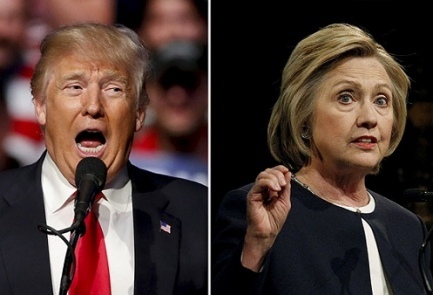
Even if Hillary Clinton continues leading in most polls and maintains an advantage in the Electoral College (just a week ago, the candidates the candidates were neck and neck in this area), the momentum has shifted to Trump just days ahead of their first televised debate, in New York on Monday.
The fight in the key undecided states is still close: In New Hampshire and Colorado, both candidates received similar support in the polls. An assessment this week by renowned pollster Nate Silver, which weighed numerous factors other than just polling results, gave Clinton a 55% chance of winning the elections. This is another warning sign for her: It is the first time since July that Silver has her below the 60% barrier. Trump, on the other hand, hit a high mark this week, which predicted his chances of winning the elections at 44.5%.
‘The most watched debate in history’
The person who can expect to benefit most from recent events is Republican candidate Donald Trump. The terrorist attacks provided him the opportunity to repeat what he has already said countless times: The terrorists need to be hit hard; the war needs to be taken to their territory; immigrants need to be vetted; immigration from Muslim countries needs to be stopped. Clinton, for her part, asked the public to wait before jumping to conclusions.
CNN’s website summed it up well: Trump, it wrote, spoke to the emotions of Americans, while Clinton spoke “like a bureaucrat.” All in all, it was not a good week for someone seeking to usher in “a third Obama term.”
On Monday, at Hofstra University in New York, the moment of truth will arrive. The first presidential debate is expected to receive the highest viewership rating in the history of televised debates since their beginning in 1960 (with Richard Nixon vs. John F. Kennedy). Facebook has also realized the monumental nature of the occasion, and will broadcast the event live.
“This is going to be the most watched debate ever,” said Dr. Rosanna Perotti, associate professor of political science at Hofstra. “It is important to pay attention to which candidate has the strongest presence, who gives the American [citizen] the impression that they have the greater ability to lead.”
The issues to be debated: “the direction America is headed,” “acquiring prosperity,” “and preserving the security of the United States.” It will not be simple.
For Trump, the debate is coming at a perfect time. He even allowed himself to joke around and take a jab at his rival, who took a day off this week (“Sleep well, Hillary — see you at the debate!”). He can’t afford to be complacent: During the Republican primary debates he may have beaten his opponents, but then, due to the large number of contenders, he had less time to speak and less opportunity to make mistakes. On Monday, the spotlight will focus on two people alone, and even though the questions about Clinton’s health make her the center of attention, a great many people are looking forward to seeing Trump stumble. It’s certainly possible that Monday will be the toughest test both candidates have had to face thus far.
The sin of hubris
Either way, play time is over. The real race has begun, and without even realizing it we have reached the final stretch. Everyone knew September would likely be the turning point, because only now most Americans are waking up from their political slumber. We still didn’t expect the hot season to end with the political thunderstorm we experienced this month. The polls have for several weeks been showing that the candidates are locked in a tie, while the trend is boding well for Trump, who last week even took the lead in the key swing state of Ohio. On the other hand, some polls show Clinton is recovering — one poll this week gave her a 5 percent lead — and everything is still wide open.
Like any election campaign, the polls show two different things at the same time. First, that the voters are divided almost equally along party lines. To be more specific, the two candidates represent two tribes more than they represent two worldviews currently existing in America. Secondly, we learn how the United States is still perceived within the national ethos: a country where one must work hard to move ahead and acquire power. In this country, no one likes a person who claims to deserve victory, especially if he projects that no one is more fitting and worthy of the title.
Al Gore tried to do this in 2000, with only very partial success (depending on how the votes were counted in Florida), and this is precisely what Clinton is always trying to convey. She served as a senator and secretary of state and tried to run for president in 2008. Now, after her husband Bill and after Obama, it’s her turn.
What a shame that things don’t work like that in America. People don’t vote for a candidate who deems himself most worthy or because he or she believes it is his turn. During the debate, Clinton will likely present Trump as inexperienced and incapable, but Americans expect more than that. They want to hear what she has to offer, beyond derision toward Trump. They want her campaign to be less negative and more positive.
Trump also needs to heed this advice. He would be wise to use these final weeks of the race to create a positive, optimistic vision for his presidency. The real estate magnate from New York awakened Americans from the Obama dream, but now he must offer a new dream. After all, the land of endless possibilities was built thanks to dreams.
Back in May, we learned that Trump had essentially secured the Republican nomination after the Indiana primaries. We can assume Clinton’s campaign headquarters didn’t wait long before popping the champagne. They were certain God had granted them a gift in the form of Trump and his wind-challenged head of hair. It’s quite possible that this is where Clinton’s problems began: with the sin of hubris. In May, she thought the race was a mere formality, and perhaps she had even begun choosing the color of the furniture for the Oval Office. She was sure Trump’s verbal gaffes and the demographic situation in the key states would suffice. She thought she could keep irritating press conferences to a minimum and avoid providing satisfactory explanations regarding the email scandal.
She was wrong on all counts.
Trump, however, precisely because no one expects him to reach his rival’s level, is perceived as a different, refreshing character. While Clinton tried turning the elections into a national referendum on Trump’s character, in the hope this would spare her from having to work too hard, the Republican candidate made full use of his opportunity and essentially hijacked the news cycle (for better or for worse). Except, of course, when Clinton made headlines, most of the time unwillingly, over the email affair, the Clinton Foundation’s dubious ties, and, of course, her recent fainting spell.
Stay on the stage
The upcoming debate could prove to be the turning point. Going into a debate, the underdog holds the advantage, because expectations of him are lower and his potential impact is greater. Mitt Romney defeated Obama in their first debate in 2012. Only in the next two did the president manage to fight back.
The candidates need to be careful. Every step they take, every word they speak, every supposedly innocuous motion, can be influential and even decisive. In one of the debates between George Bush Sr. and Bill Clinton, back in 1992, the former took a look at his watch. Maybe he felt time was running short, but the impression it created was different. It appeared as if Bush believed he was “doing a favor” by just appearing before the voters.
This is precisely the feeling that Hillary Clinton has fostered to this point, when she refused until recently to hold press conferences to keep voters abreast on certain important matters, including her allegedly innocent bout with pneumonia. The debate can finally give her a chance to look Americans in the eye. She has never been able to do so. Like her husband, she has always created the feeling — perhaps correctly — that she is hiding something.
If Clinton fails to point to the problems and to prove she can solve them, she will be abandoning the stage to Trump, who is approaching the first debate like an athlete getting ready for the Olympics, at the top of his game. His opponent can no longer just attack. She also has to demonstrate that she is willing to fight for every vote, and present a real plan that makes people at home nod their heads instead of being bored by the details.
During the debate, Clinton will need to connect with independent voters — those in the Republican camp who aren’t thrilled with Trump, but still aren’t ready to stand behind her. Meanwhile, she also has to wink to the voters on the far Left, who support her as a default and would rather be voting for her Democratic rival in the primaries, Bernie Sanders.
Clinton could find herself begging these voters not to jump ship in favor of the protest parties — Jill Stein’s Green Party and Gary Johnson’s Libertarian Party — which have failed to pass the minimum polling threshold for participation in the first debate, and apparently for the others as well.
If she cannot keep her own voters at home and fails to excite the independents peeking in Trump’s direction, there is a possibility that she won’t reach 270 electoral votes. Trump has almost zero room for error with the Electoral College: Not only will he have to win the states that Romney won in 2012, he will have to make strides in several other crucial states to pass the required electoral threshold.
In Clinton’s nightmares, the undecided voters could turn their backs on her, just as voters did to former British Prime Minister David Cameron in the national referendum over leaving the European Union. The separation from the EU was an expression of protest and a small window of hope, at least for the British working class and those who don’t belong to the “State of London.” All of this is applicable to the Americans who were left behind during the globalization party and new global economy, and their reasons for supporting Trump. As is well known, Cameron, who didn’t realize the need to secure the voters on the fence, ended up being forced to resign.
How did he do it?
On Monday, the best show in town is expected to provide us with one of its most scintillating battles. From Trump’s perspective, the momentum he has is encouraging. Suddenly, the political website The Hill is reporting that his standing among Hispanic voters has improved tremendously. In essence, the polls show that Trump has the same support among Hispanics as Romney did in 2012. This figure is embarrassing for Democrats and surprising for Republicans. After everything he said about Mexican immigrants and building a wall, after he called some of them “rapists,” how has Trump done it?
Among Hispanic voters are those who believe the media has demonized Trump. “They are unhappy with Hillary after eight years of Obama,” one Hispanic voter told The Hill. “He [Obama] promised immigration reforms and didn’t deliver. He never even got close to delivering.” And Clinton wants to carry Obama’s torch, while Trump signals a change.
In a week where terror in America returned to the headlines and Trump reached new heights among Hispanic voters, it’s not surprising that Clinton is still floundering. The pair will continue racing neck and neck until the debate on Monday, and eventually the elections, separate them for good.







 anneinpt
 artaxes
 danmillerinpanama
 davidking1530
 Peter Hofman
 Joseph Wouk
 Peter
Peter Louisiana Steve
 WarSclerotic
Recent Comments