Archive for August 2016

 Germany to tell people to stockpile food and water in case of attacks

August 21, 2016

Germany to tell people to stockpile food and water in case of attacks Following two attacks last month, Germany has instructed its citizens to prepare emergency supplies of food and water in case of a major, wide scale attack or catastrophe; this is the first time such an order has been issued since the Cold War.

Reuters|Published: 21.08.16 , 19:08

Source: Ynetnews News – Germany to tell people to stockpile food and water in case of attacks

BERLIN – For the first time since the end of the Cold War, the German government plans to tell citizens to stockpile food and water in case of an attack or catastrophe, the Frankfurter Allgemeine
Sonntagszeitung newspaper reported on Sunday. Germany is currently on high alert after two Islamist attacks and a shooting rampage by a mentally unstable teenager last month. Berlin announced measures earlier this month to spend considerably more on its police and security forces and to create a special unit to counter cyber crime and terrorism. 

“The population will be obliged to hold an individual supply of food for ten days,” the newspaper quoted the government’s “Concept for Civil Defense” – which has been prepared by the Interior Ministry – as saying.


Police in Germany (Photo: AFP)

Police in Germany (Photo: AFP)


The paper said a parliamentary committee had originally commissioned the civil defense strategy in 2012.

A spokesman for the Interior Ministry said the plan would be discussed by the cabinet on Wednesday and presented by the minister that afternoon. He declined to give any details on the content.


People will be required to stockpile enough drinking water to last for five days, according to the plan, the paper said.


The 69-page report does not see an attack on Germany’s territory, which would require a conventional style of national defense, as likely.

However, the precautionary measures demand that people “prepare appropriately for a development that could threaten our existence and cannot be categorically ruled out in the future,” the paper cited the report as saying.


It also mentions the necessity of a reliable alarm system, better structural protection of buildings and more capacity in the health system, the paper said.


A further priority should be more support of the armed forces by civilians, it added.


Germany’s Defense Minister said earlier this month the country lay in the “crosshairs of terrorism” and pressed for plans for the military to train more closely with police in preparing for potential large-scale militant attacks.


Don’t Be like the Man Who Married His Mother-in-Law

August 21, 2016

Don’t Be like the Man Who Married His Mother-in-Law, American ThinkerClarice Feldman, August 21, 2016

There’s a strange story out of India in the Daily Mail about a man who divorced his wife to marry his mother-in-law and now regrets his decision and is trying to undo it.

In a way this reminds me of conservatives whose preferred candidates lost the nomination and now as NeverTrumpers are making the election of Hillary more possible. It’s a variation of the song “You Can’t Always get What You Want”, but instead of the next line being “but you can sometimes get what you need”, it reads, “but you can get what you don’t want or need”. In this case, Hillary Clinton, the most corrupt politician in U.S. history, a decision impossible of reversal or even to hold in check once done.

If you are torn about the Republican voters’ choice of nominee, but still unhappy about the notion of Hillary, America’s nightmare mother-in-law, winning (and certain that the independent candidates are no better and, in any event, without a chance) here are some writers whose views may help you overcome your reluctance to cast the vote for Trump.

1. The Claim That Trump’s Just Not Presidential

(A) He’s More Presidential than Obama or his designated successor Hillary

While Hillary and Obama vacation on Martha’s Vineyard, there’s been a disastrous flood in Louisiana and a large humanitarian crisis as people’s homes and possessions are destroyed and aid difficult to get to those who need it,

When people chided Obama’s non-response, he issued “a 16-page guidance “in which he “warned Louisiana recipients of federal disaster assistance against engaging in “unlawful discrimination on the basis of race, color, or national origin (including limited English proficiency).”

Trump flew down there in his own plane, talked to local leaders, toured the devastation and donated an 18-wheeler truckload of supplies. A resident of the area, Courtney Falker Peters, posted a description on Facebook of what Trump’s visit was like and what it meant to the stricken residents:

Ok since the media will not tell anyone about this I will at least tell my friends and make this public so y’all can share and tell yours as well because I think it needs to be said.

[snip]

Donald Trump visited Louisiana today. He brought with him a truck loaded with food, supplies, and toys that he personally passed out. He also donated money to a flood relief charity. He went and walked flooded houses in a community. He didn’t ask for state police or military security, I imagine he may have had his personal security with him but hey he pays them so not my business. He didn’t ask for any road to be closed to bring him in or an escort to his destination, matter of fact he didn’t inform the government of his visit at all. He didn’t care if the government knew he was coming, he just came and brought needing people needed supplies. And the news covered it about 15 seconds and then used it as a hit piece to plug Obama’s visit that will happen. It was just wrong on many levels. No matter [i]f you agree with Trump political are not what he done today was honorable and good, and he did it without making a big deal of himself. I hope more people of his statu[r]e will do the same in the same way, without all the hype of announcing their visit with intent of a public photo op.

Of course, now that we have a Democratic president who tardily agreed to show up there this Tuesday (after he attends Bill Clinton’s boffo birthday bash on Martha’s Vineyard), the same people, including Hillary and Obama, who criticized Bush for waiting to land his plane in New Orleans when it was struck by Hurricane Katrina because he did not want to overwhelm local authorities with a presidential tour, now criticize Trump for going in and helping without requiring local police and responders to pave the way for his visit.

(B) Attention to Detail

On one hand, we have Hillary (and Obama), “big thinkers” who can’t be bothered with details and have made a hash of everything they touch. On the other hand, we have someone who keeps his eye on things.

Here’s an account in Forbes by a man with first-hand knowledge of this, having engaged in a significant negotiation with him:

The first thing I noticed about Mr. Trump was that he was a stickler for detail. As a politician, he may affect a breezy platform style, but in the office, he was all business. Right off the bat, he corrected my team’s estimates of future financing requirements. He must have phoned an expert minutes before the meeting, because he said that by the latest market information he had, our current interest rates were off by 0.1% [snip] In the end, I can say that Mr. Trump drove a hard bargain. But he was honest, and he was a square dealer. When we were through — in less time than we had expected — we had reached an agreement that was ethical, profitable and fair to all parties concerned. It was also an agreement that meant good jobs for working people and healthy tax revenues for the local government.

If we didn’t come away from the table liking Mr. Trump, there’s no question that we came away with a lot of respect for him. He was a tough, shrewd, no-nonsense executive who knew how to get things done, and done quickly. He was also an adversary whom no one would want to mess with.

Isn’t that what really matters in a president?

2.The Claim that He’s a “Racist”

The term has become so overused that it now just means he says things the left disagrees with. Nevertheless, people — including those who know better — are flinging it about with no evidence to support it but their own bilious dislike of him. On the other hand, no less than Thomas Sowell, the brilliant black economist from Stanford, and David Horowitz, champion of civil liberties and a real conservative, both found his speeches on the Democratic Party’s destruction of blacks compelling. (Here are transcripts of his Dimondale and West Allis speeches for those who didn’t see it and whose news sources didn’t bother to publish them.)

Here’s Thomas Sowell:

Who would have thought that Donald Trump, of all people, would be addressing the fact that the black community suffers the most from a breakdown of law and order? But sanity on racial issues is sufficiently rare that it must be welcomed, from whatever source it comes.

When establishment Republicans have addressed the problems of blacks at all, it has too often been in terms of what earmarked benefits can be offered in exchange for their votes. And there was very little that Republicans could offer to compete with the Democrats’ whole universe of welfare state earmarks.

Law and order, however, is not an earmarked benefit for any special group. It is a policy for all that is especially needed by law-abiding blacks who are the principal victims of those who are not law-abiding.

[snip]

Education is a slam dunk issue for Republicans trying to appeal to black parents with school-age children, as distinguished from trying to appeal to all black voters, as if all blacks are the same.

Education is an issue with little, if any, down side for the Republicans, because the teachers’ unions are the single biggest obstacle to black youngsters getting a decent education — and among the biggest donors to the Democrats.

[snip]

As long as blacks vote automatically for Democrats, while the teachers’ unions insist on getting their money’s worth, it is all but inevitable that the education of black children will be sacrificed in the public schools, wherever Democrats are in control.

[snip]

Blacks voters are not the property of the NAACP, and they need to be addressed directly as individuals, over the heads of special interest organizations that have led blacks into the blind alley of being a voting bloc that has been taken for granted far too long. [/quote]

And here’s David Horowitz:

Trump’s Dimondale speech was a pledge to African Americans trapped in the blighted zones and killing fields of inner cities exclusively ruled by Democrats for half a century and more, and exploited by their political leaders for votes, and also used as fodder for slanders directed at their Republican opponents.

[Snip]

But here is Trump articulating the very message we have been waiting for — support for America’s inner city poor – a message that should have been front and center of every Republican campaign for the last fifty years.

[Snip]

Tying the fight to liberate African Americans and other minorities from the violent urban wastelands in which Democrats have trapped them to his other proposals – secure borders, law and order to make urban environments safe, jobs for American workers, putting Americans first – these are a sure sign that Trump has an integrated vision of the future towards which he is working. Call it populism if you will. To me it seems like a clear-eyed conservative plan to restore American values and even to unify America’s deeply fractured electorate.

[Snip]

Not to forget the #NeverTrumpers on the Republican side. These defectors are among the loudest slanderers, smearing Trump as a racist and a bigot when he is obviously the very opposite of that. In fact, when you look at what Trump is actually saying and actually doing, Never Trumpism appears as the newest racism of low expectations.

3. He’s a Threat

He is a threat to the entrenched elites who’ve made such a hash of things, but not to the country for whom Hillary is a far more dangerous threat, Dennis Prager makes that clear:

With either a Republican or a Democratic Congress, a President Donald Trump could be held in check, if that proves to be necessary. And there is always the possibility that he could be a good president — appointing conservative Supreme Court and federal judges, cutting taxes, and slashing regulations. But no Congress could stop a President Hillary Clinton. She will finish the job her predecessor started: to fundamentally transform the United States of America. Perhaps forever.

4. Not voting for him is a “Protest Vote”

There’s no such thing as a “protest vote.”  Bookwormroom put me on to this wonderful blogger, Clay Shirky, who said it best:

In 2016, that system will offer 130 million or so voters just three options:

A. I prefer Donald Trump be President, rather than Hillary Clinton.
B. I prefer Hillary Clinton be President, rather than Donald Trump.
C. Whatever everybody else decides is OK with me.

That’s it. Those are the choices. All strategies other than a preference for Trump over Clinton or vice-versa reduce to Option C.

People who believe in protest votes do so because they confuse sending a message with receiving one. You can send any message you like: “I think Jill Stein should be President” or “I think David Duke should be President” or “I think Park Eunsol should be President.”

Similarly, you can send any message you like by not voting. You can say you are sitting out the election because both parties are neo-liberal or because an election without Lyndon LaRouche is a sham or because 9/11 was an inside job. The story you tell yourself about your political commitments are yours to construct.

But it doesn’t matter what message you think you are sending, because no one will receive it. No one is listening. The system is set up so that every choice other than ‘R’ or ‘D’ boils down to “I defer to the judgement of my fellow citizens.” It’s easy to argue that our system shouldn’t work like that. It’s impossible to argue it doesn’t work like that.

5. Putting “Principle Before Party”

That sort of “electoral sabotage” is the justification of sore losers, observes Michael Walsh. People, he notes, who claim they are putting country before party” when, in fact, they are doing the opposite.

Their preferred candidates lost the nomination and now they want to attack the man who won and prevent him from winning.

Dismount from your high horses and vote for Trump or marry an insufferable, dishonest, and authoritarian mother-in-law.


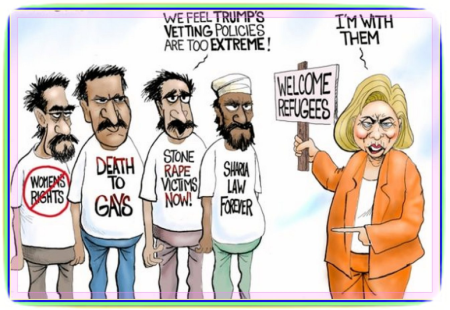
Cartoons of the Day

August 21, 2016

H/t Joop

with her


H/t Freedom is Just Another Word

infamous-last-words-1-1


sleep


Israeli Air Force, tanks strike Hamas targets in Gaza after rocket hits Sderot

August 21, 2016

Israeli Air Force, tanks strike Hamas targets in Gaza after rocket hits Sderot

Published time: 21 Aug, 2016 12:37 Edited time: 21 Aug, 2016 13:20

Source: Israeli Air Force, tanks strike Hamas targets in Gaza after rocket hits Sderot — RT News

© Amir Cohen / Reuters

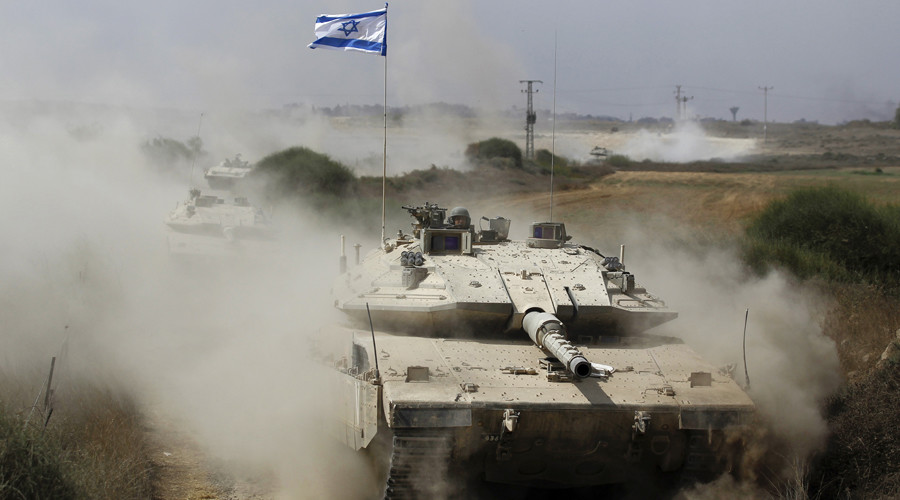
The Israeli military have launched strikes against two Hamas positions in the north of the Gaza Strip, the IDF reported on Twitter, saying the operation was a response to an earlier rocket attack from Gaza.

On Sunday afternoon, both the Israeli Air Force and armored corps on the ground targeted Hamas, who is considered a terrorist organization in Israel.

Earlier in the day, a rocket exploded in the southern Israeli city of Sderot, with the Israeli Defense Force (IDF) saying the missile had been launched from the Gaza Strip.

No injuries or damage have been reported in Sderot, which has a population of 19,000, while the police have called on members of the public to stay away from the scene.

In Gaza, Israeli artillery fire was reported, Haaretz said, citing Palestinian eyewitnesses. Rocket sirens have been sounded in Sderot and nearby communities on the Gaza border, the Israeli media reported.

There so far have been no reports of Palestinian casualties.

In July 2014, rockets from Gaza reportedly left two Sderot residential buildings in ruins. Some 15 people were said to be injured on the Palestinian side in Israel’s attack.

France: “First the Saturday People, then the Sunday People”

August 21, 2016

France: “First the Saturday People, then the Sunday People”, Gatestone InstituteGuy Millière, August 21, 2016

♦ The path of Adel Kermiche, born in France to immigrant parents from Algeria, and one of the two men who murdered the elderly priest Father Jacques Hamel, looks like the path followed by many young French Muslims: school failure, delinquency, shift towards a growing hatred of France and the West, return to Islam, transition to radical Islam.

♦ The French education system does not teach young people to love France and the West. It teaches them instead that colonialism plundered many poor countries, that colonized people had to fight to free themselves, and that the fight is not over. It teaches them to hate France.

♦ All political parties, including the National Front, talk about the need to establish an “Islam of France”. They never explain how, in the internet age, the “Islam of France” could be different from Islam as it is everywhere else.

♦ Many French Jews fleeing the country recalled an Islamic phrase in Arabic: “First the Saturday people, then the Sunday people.” In other words, first Muslims attack Jews; then when the Jews are gone, they attack Christians. It is what we have been seeing throughout the Middle East.

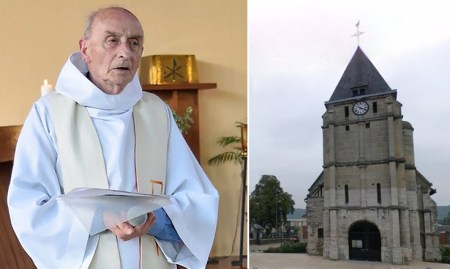
The slaughter of French priest Father Jacques Hamel on July 26 in Saint-Étienne-du-Rouvray was significant. The church where Father Jacques Hamel was saying mass was nearly empty. Five people were present; three nuns and two faithful. Most of the time, French churches are empty.

Christianity in France is dying out. Jacques Hamel was almost 86 years old; despite his age, he did not want to retire. He knew it would be difficult to find someone to replace him. Priests of European descent are now rare in France, as in many European countries. The priest officially in charge of the parish of Saint-Étienne-du-Rouvray, Auguste Moanda-Phuati, is Congolese.

The reaction of the French bishops was also significant. Speaking in their name, Georges Pontier, chairman of the Conference of Bishops of France, called on Catholics for a day of fasting and prayer. He also asked Muslims living in France to come to church to “share the grief of Christians.” He added that Muslims are welcome in France.

The decision to deliver a message of brotherhood is consistent with the spirit of Christianity. The wish to welcome Muslims to France but to leave completely aside that the assassins of Father Jacques Hamel acted in the name of Islam and jihad seem signs of willful blindness, severely pathological denial, and a resigned, suicidal acceptance of what is coming.

The assassins of Father Jacques Hamel are what is coming. One of them, Adel Kermiche, was born in France to immigrant parents from Algeria. His path looks like the path followed by many young French Muslims: school failure, delinquency, shift towards a growing hatred of France and the West, return to Islam, transition to radical Islam. The other, Abdel Malik Petitjean, was born in France too. His mother is Muslim. His father comes from a Christian family. Abdel Malik Petitjean nevertheless followed the same path as Adel Kermiche. A growing number of young French-born Muslims radicalize. A growing number of young French people who have not been educated in Islam nevertheless turn to Islam, then to radical Islam.

1734 (1)Father Jacques Hamel was murdered on July 26, in the church of Saint-Étienne-du-Rouvray, by Islamic jihadists.

The French education system does not teach young people to love France and the West. It teaches them instead that colonialism plundered many poor countries, that colonized people had to fight to free themselves, and that the fight is not over. It teaches them to hate France. But it erroneously describes Islam as a religion that brought “justice, dignity and tolerance” wherever it reigned. Seventh-grade students spend the first month of the school year learning what Islamic civilization brought to the world in science, architecture, philosophy and wealth. A few weeks later, they have to memorize texts explaining that the Church committed countless atrocious crimes. Economics textbooks are steeped in Marxism and explain that capitalism exploits human beings and ravages nature. The Holocaust is still in the curriculum, but is taught less and less; teachers who dare to speak of it face aggressive remarks from Muslim students. A 2002 book,The Lost Territories of the Republic (Les territoires perdus de la république), exposed the problem. Since then, the situation has worsened considerably.

French mainstream media do their best to hide the truth. Abdel Malik Petitjean and Adel Kermiche are described as troubled and depressed young people who slipped “inexplicably” towards barbarity. Their actions are widely presented as having nothing to do with Islam. The same words were used to depict Mohamed Lahouaiej Bouhlel, the jihadist who murdered 86 people in Nice on July 14th. These words were used to depict all the jihadists who killed in France during the last few years. Each time, Muslim intellectuals are invited to speak, and invariably explain that Islam is peaceful and that Muslims are guilty of nothing.

The anger expressed by political leaders after the attack in Nice has already faded. Some political leaders in France call for tougher measures, but speak of “Islamic terrorism ” very rarely. They know that speaking too much of “Islamic terrorism” could be extremely bad for their future careers.

All political parties, including the National Front, talk about the need to establish an “Islam of France.” They never explain how, in the internet age, the “Islam of France could be different from Islam as it is everywhere else.

Prime Minister Manuel Valls recently said that France would become an example — a “center of excellence” in the “teaching of Islamic theology.”

For several days after the attack in Nice, it seemed that the country was on the verge of explosion. This is no longer so. The French population seems resigned.

Manuel Valls was criticized when he argued that the French should learn to live with terrorism. Critics of that view now are rarer. The French sense that Islam in France is here to stay. They see that the risks of riots in lawless zones are huge and that all those in positions of responsibility think and act as if it were too late to reverse the course. Fear fills the air.

The French Jewish philosopher Shmuel Trigano recently published an article entitled, “Sacrificing victims for not having to fight the murderers.” The French collectively accept the sacrifice of victims because they feel France will not have the strength and the fortitude to fight ruthless murderers. Most of the French seem helpless.

A book written by Antoine Leiris, the husband of one of the victims of the attacks of November 13, 2015 became a bestseller. It is called, You Will Not Have My Hatred. (Vous n’aurez pas ma haine) The author describes what happened at the Bataclan concert hall as a twist of fate, and say that he feels “compassion” for those who killed his wife.

What is happening today is a continuation of what has been happening here so far this century. In 2001-2003, France experienced a huge wave of anti-Semitic attacks by Muslims supporting the “Palestinian cause.” The French government denied that the attacks were anti-Semitic. It also denied that they were perpetrated by Muslims. It chose appeasement, expressed loudly its own support for the “Palestinian cause,” and added that the revolt of a “part of the population” was “understandable.” It asked Jewish organizations to remain silent. French Jews began to leave France. Many of them recalled an Islamic phrase in Arabic: “First the Saturday people, then the Sunday people.” In other words, first Muslims attack Jews; then when the Jews are gone, they attack Christians. It is what we have been seeing throughout the Middle East.

Attacks against non-Jews began in 2005: riots broke out all over France. The French government again chose appeasement, and said that the revolt of a “part of the population” would be “heard.”

A Jew, Ilan Halimi, was tortured for three weeks and then murdered in Paris in 2006. Then, more Jews were murdered in Toulouse in 2012 and in a Paris suburb in 2015.

Now more and more often, non-Jews are attacked. The French government has repeatedly talked of war, but each time returns to a policy of appeasement.

Today, appeasement reigns, virtually unchallenged. All French political parties are choosing appeasement over confrontation, and hardly dare to call the danger by its name: radical Islam. The French choose submission: they have no real alternative.

Jews continue to flee. Synagogues and Jewish schools throughout the country are guarded around the clock by armed soldiers. Jews who are still in France know that wearing a skullcap or a Star of David is extremely dangerous. They seem to see that appeasement is a dead end. They often emigrate to the country that appeasers treat as a scapegoat and that Islamists want to destroy: Israel. They know that when in Israel, they might have to confront jihadists like those who kill in France, but they also know that Israelis are more ready to fight to defend themselves.

French non-Jews now see that appeasement will not allow them to be spared.

If they look around them in Western Europe, they see there are no more safe places; they have nowhere else to go. They know that hundreds of thousands of migrants in Germany can easily cross nonexistent borders. They know there are thousands potential jihadists in France, that the worst jihadi crimes in France are still to come, and that the authorities have no will to stop them.

There will be no civil war in France. The jihadists have won. They will kill again. They love to kill. They love death. They say, “we love death more than you love life.”

One of the nuns present in the empty church said that after slaughtering Father Jacques Hamel, Adel Kermiche and Abdel Malik Petitjean smiled. They were happy.

Obama and Hillary Let Iran Take Israel and the Jews Hostage

August 21, 2016

Blue State Blues: Obama & Hillary Let Iran Take Israel and the Jews Hostage

by Joel B. Pollak

19 Aug 2016

Source: Obama and Hillary Let Iran Take Israel and the Jews Hostage

Breitbart News

The Obama administration was finally forced to admit this week that it had paid a $400 million cash ransom to the Iranian regime to secure the release of four Americans at the same time the nuclear deal went into effect.

President Barack Obama insisted earlier this month: “We do not pay ransom.” He added: “This wasn’t some nefarious deal.” (Thursday, admitting the cash secured the Americans’ release, the White House called it “leverage,” not ransom — a distinction without a difference.)

The payoff is problematic for several reasons. One is the fact that it creates new incentives for foreign regimes, and terrorists, to seize Americans. Another is that the Obama administration has threatened private citizens, such as the family of James Foley, lest they pay ransom to terrorists; as ever, the Obama administration is above the law.

Yet another reason is that the $400 million is part of a larger $1.7 billion settlement that the Iranian regime has already directed to its military, including potential terrorist operations, plus the ongoing war effort in Syria, where Iran has abetted that regime’s staggering atrocities.

But there are still hostages that remain — both direct and indirect. The direct hostages are those Americans that Iran has taken prisoner since the release in January.

And the indirect hostages are the State of Israel, which is in constant danger of attack by Iran or its terrorist proxies; as well as the Jewish people as a whole, whom Iran continues to target in word and in deed.

Israel’s vulnerability was laid bare this week when it was revealed that Russian warplanes are using a base in Iran to launch attacks inside Syria. In the past, Israel has tried to thwart the delivery of advanced Russian S-300 missiles to Iran as a “red line,” since the missiles would make any attack on Iran’s nuclear facilities, if necessary, more difficult. Instead of crossing that line, Russia has just walked around it. Putting Russian air assets inside Iran risks a wider conflict if Israel ever strikes.

That is a major strategic failure for Obama and the West. As my friend Ed Morrissey notes at HotAir:

For centuries, the West has employed a policy to deny Russia easy access to major shipping lanes in the Arabian Sea and the Indian Ocean by denying them access to a warm-water port. That is the reason that both Great Britain and later the US deemed Iran and Afghanistan strategically critical. Russian entry into these shipping lanes could create dangerous confrontations and will certainly require more vigorous oversight.

(Amidst all the talk about Donald Trump’s friendly posture towards Russia, it is important to remember just how weak and accommodating Obama and former Secretary of State Hillary Clinton have been.)

Obama’s strategic failure is Israel’s strategic disaster. Iran now enjoys a Russian military and diplomatic shield, meaning that it can continue to threaten Israel — and Europe, by the way — with ballistic missiles and a creeping nuclear research program.

Moreover, Iran can continue to threaten Jewish communities around the world.

In 2012, Iran — via Hezbollah — carried out a terror attack on an Israeli tourist bus in Bulgaria. In 2014, Alberto Nisman, the Argentine prosecutor investigating Iran’s role in a huge terror attack against a Jewish community center in Buenos Aires, was assassinated.

These events happened even as the Obama administration — including Hillary Clinton — were pursuing early negotiations with Iran over its nuclear program.

Israel and the Jews are in grave danger, thanks to Obama. And the person he has endorsed is no better.

Not even Clinton’s best defenders can name one thing she has done for Israel. She has embraced the antisemitic Black Lives Matter movement, which accuses Israel of “genocide.” And she not only supported the Iran deal, but also chose a running mate who boycotted Israeli Prime Minister Benjamin Netanyahu’s 2015 speech against it.

Can we take four more — eight more — years of being hostages?

Joel B. Pollak is Senior Editor-at-Large at Breitbart News. His new book, See No Evil: 19 Hard Truths the Left Can’t Handle, is available from Regnery through Amazon. Follow him on Twitter at @joelpollak.

Iranian Dissidents Visit Israel, View Iran after the Nuclear Deal

August 21, 2016

Iranian Dissidents Visit Israel, View Iran after the Nuclear Deal, Jerusalem Center via YouTube, August 21, 2016


FBI, DOJ launch Probe into Firm of Clinton Campaign Chairman John Podesta

August 21, 2016

FBI, DOJ launch Probe into Firm of Clinton Campaign Chairman John Podesta, BreitbartJerome Hudson, August 20, 2016

clin podGetty

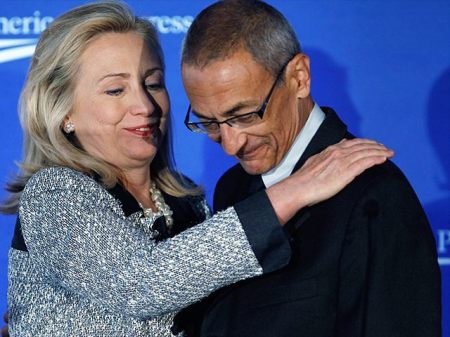
The FBI and Justice Department have launched an investigation into whether the Podesta Group, the lobbying and public relations firm co-founded by Hillary Clinton presidential campaign chairman John Podesta, has any connections to alleged corruption that occurred in the administration of former President of Ukraine Viktor Yanukovych.

The federal probe is, CNN reports, “examining the work of other firms linked to the former Ukrainian government, including that of the Podesta Group.”

The Podesta Group, run by John Podest’s brother Tony Podesta, was retained by the Russia-controlled firm UraniumOne in 2012, 2014, and 2015, to lobby Hillary Clinton’s State Department. The lobbying firm was paid a total of $180,000 according to public records.

Yanukovych took office in February 2010. He was forced to flee to Russian after a political uprising in Ukraine. Federal prosecutors are probing the work Yanukovych’s regime paid the Podesta Group to do while he was the head of the Ukrainian government.

As it was first detailed in the New York Times bestselling book Clinton CashUranium One — which hired the Podesta Group — is the firm that funneled millions to the Clinton Foundation as the Russian government gained ownership of the company.

According to the New York Times, Russian President Vladimir Putin had a “goal of controlling much of the global uranium supply chain.”

The Times reported last April:

As the Russians gradually assumed control of Uranium One in three separate transactions from 2009 to 2013, Canadian records show, a flow of cash made its way to the Clinton Foundation. Uranium One’s chairman used his family foundation to make four donations totaling $2.35 million. Those contributions were not publicly disclosed by the Clintons, despite an agreement Mrs. Clinton had struck with the Obama White House to publicly identify all donors. Other people with ties to the company made donations as well.

“And shortly after the Russians announced their intention to acquire a majority stake in Uranium One, Mr. Clinton received $500,000 for a Moscow speech from a Russian investment bank with links to the Kremlin that was promoting Uranium One stock,” the Times report said.

According to the Daily Caller, Uranium One “paid the Podesta Group $40,000 to lobby the State Department, the Senate, the National Park Service, and the National Security Council for ‘international mining projects,’ according to a July 20, 2012 filing.”

Distancing itself from the work it did for an organization with ties to Yanukovych’s pro-Russian regime, the Podesta group said it hired lawyers to examine its relationship with the organization linked to the ousted Ukrainian president.

“The firm has retained Caplin & Drysdale as independent, outside legal counsel to determine if we were misled by the Centre for a Modern Ukraine or any other individuals with regard to the Centre’s potential ties to foreign governments or political parties,” a Podesta Group statement said, according to CNN. The statement continued:

When the Centre became a client, it certified in writing that ‘none of the activities of the Centre are directly or indirectly supervised, directed, controlled, financed or subsidized in whole or in part by a government of a foreign country or a foreign political party.’ We relied on that certification and advice from counsel in registering and reporting under the Lobbying Disclosure Act rather than the Foreign Agents Registration Act. We will take whatever measures are necessary to address this situation based on Caplin & Drysdale’s review, including possible legal action against the Centre.

The FBI and DOJ investigation is also examining former Donald Trump presidential campaign manager Paul Manafort’s firm, according to CNN.

Spokesman from the federal agencies as well as Manafort’s firm have not commented on the ongoing investigation.

Why the Ayatollah Thinks He Won – WSJ

August 21, 2016

Source: Why the Ayatollah Thinks He Won – WSJ

The U.S. hoped that the nuclear deal would boost Iran’s moderates, but after more than a year, Supreme Leader Ali Khamenei and his allies seem to be the big winners

Iran’s supreme leader, Ayatollah Ali Khamenei, at a meeting with university students in Tehran, Iran, in a picture released by his office’s website on July 11, 2015.
Iran’s supreme leader, Ayatollah Ali Khamenei, at a meeting with university students in Tehran, Iran, in a picture released by his office’s website on July 11, 2015. Photo: Office of the Iranian Supreme Leader/Associated Press

Since the completion last year of a landmark deal limiting Iran’s nuclear program, the country’s supreme leader, Ayatollah Ali Khamenei, has lashed out again and again at the U.S. for its supposed failure to live up to its end of the bargain. But a speech he gave on Aug. 1 in Tehran took his anti-American rhetoric to a new level. He accused the Obama administration of a “bullying policy” and of failing to lift sanctions in a way that benefited “the life of the people.” Mr. Khamenei ruled out cooperation with the U.S. in the fight against Islamic State in Iraq and Syria, telling his audience that Iran’s experience with the nuclear deal “showed us that we cannot speak to [the Americans] on any matter like a trustworthy party.” Many in the crowd chanted anti-U.S. slogans.

Is Iran preparing to walk away from the accord? It’s unlikely. Mr. Khamenei’s speech was classical political posturing intended to rally his hard-line followers. But more than that, his bluster conceals a deeper strategic calculus. For all his complaints about American treachery, Mr. Khamenei and his allies recognize that the nuclear deal has produced significant benefits for their hobbled theocracy and may serve to further entrench the regime brought to power in the 1979 revolution.

President Barack Obama defined the nuclear deal primarily as an arms-control exercise, designed to constrain Tehran’s nuclear program for at least a decade and to keep the U.S. from becoming embroiled in yet another Middle East war. But the White House and its top diplomats, including Secretary of State John Kerry, also quietly suggested that the agreement might open the door to a broader rapprochement between Tehran and Washington and empower Iran’s moderate political forces, particularly its elected president, Hassan Rouhani.

U.S. officials have always cautioned that it would take time for the salutary effects of engagement with Iran to take effect. They have even conceded that, in the short term, the agreement might energize hard-liners opposed to engagement with the West—and that, indeed, seems to be what is happening.

Since the accord was announced last summer, Mr. Khamenei and his elite military unit, the Islamic Revolutionary Guard Corps, have moved to solidify their hold. As international sanctions against Iran have slackened, the ayatollah and his core allies have expanded the Iranian military and pursued new business opportunities for the companies and foundations that finance the regime’s key ideological cadres. Iran has continued to fund and arm its major regional allies, including the Assad regime in Syria, the Lebanese militia Hezbollah and Houthi rebels in Yemen—all of which are at war with America’s regional partners—and the regime has continued to test and develop ballistic missiles. The government has also stepped up arrests of opposition leaders and political activists.

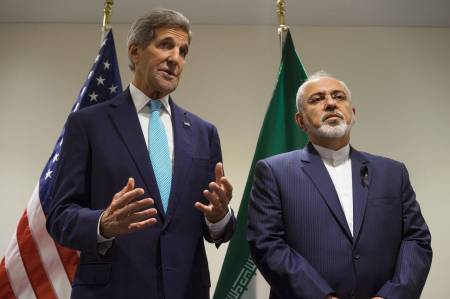
U.S. Secretary of State John Kerry (left) and Iranian Foreign Minister Javad Zarif during a meeting at U.N. headquarters, Sept. 26, 2015.
U.S. Secretary of State John Kerry (left) and Iranian Foreign Minister Javad Zarif during a meeting at U.N. headquarters, Sept. 26, 2015. Photo: Craig Ruttle/Associated Press

Mr. Khamenei has been deeply involved from the start with his country’s talks with the U.S. After the U.N. Security Council imposed tough sanctions on Iran in 2010, he became alarmed by the drain on Tehran’s finances. In 2012, he backed secret talks in hopes of relieving the crippling financial pressure. A collapse in global oil prices made Iran even more vulnerable. As the talks evolved into public negotiations with the U.S. and its partners, Mr. Khamenei instructed his representatives to ensure that Iran could keep the major infrastructure of its nuclear and military programs.

Today, the 77-year-old ayatollah—who reportedly suffers from cancer—is seeking to cement his legacy and to shape the political transition that will occur once he is gone. The nuclear agreement provides him with the building blocks to do that, and for now, at least, Mr. Khamenei and his allies look to be the deal’s big winners. The next U.S. administration is likely to face an unhappy choice: to continue to work with Iran or to challenge an increasingly entrenched supreme leader and his Revolutionary Guard.

For its part, the Obama administration says that the nuclear deal blocks Iran from all paths to develop an atomic bomb and that the agreement’s success doesn’t depend on political change taking root in Tehran. They note that the deal is still in its early stages and suggest that an opening of Iran’s economy could help reformists over time. They also insist that it has served the cause of peace in the region. “The president and I both had a sense that we were on an automatic pilot toward a potential conflict, because no one wanted to talk to anybody or find out what was possible,” Mr. Kerry said in an interview. “I have no doubt that we avoided a war. None.”

To understand Mr. Khamenei’s perspective on the negotiations and the resulting deal, the best place to start is Iran’s nuclear program. The agreement requires Iran to accept key limitations: Previously, the country had nearly 20,000 centrifuge machines producing nuclear fuel and was on the cusp of possessing weapons-grade uranium. A plutonium-producing reactor was also nearly online.

Today, only 5,000 centrifuges are spinning, the plutonium-making reactor has been made inoperable, and most of Iran’s enriched uranium has been shipped out of the country. Iran also agreed to grant greater access to its nuclear sites to inspectors from the U.N.’s nuclear watchdog, the International Atomic Energy Agency, to prevent the country from diverting fissile materials to banned military purposes. “There are serious constraints on their nuclear program for 15 years,” Energy Secretary Ernest Moniz, an important player in the negotiations, said earlier this year. “Fifteen years, with serious verification measures, should give considerably more comfort to our allies in the region.”

Mr. Khamenei, however, doesn’t appear to share this view of the deal’s constraints. Just as Iran’s negotiators were agreeing to these terms in July 2014, the supreme leader delivered a speech about the nuclear program—without consulting his chief negotiator, Foreign Minister Javad Zarif, according to U.S. and European officials. In the address, Mr. Khamenei said that his oil-rich country needed at least 100,000 centrifuges to power its civilian nuclear program in the coming decades. This was more than 20 times what the Obama administration envisaged. Western diplomats wondered whether Iran’s diplomats really spoke for the supreme leader.

Workers in front of Iran’s Bushehr nuclear power plant, south of Tehran, Oct. 26, 2010.
Workers in front of Iran’s Bushehr nuclear power plant, south of Tehran, Oct. 26, 2010. Photo: Mehr News Agency/Reuters

Over the next year, the U.S. and its partners brought the Iranians back down to a capacity of just 5,000 machines. Washington hailed this as a major negotiating victory, but there was a twist: After a decade, the international community would go along with Mr. Khamenei’s vision of an Iran that could develop an industrial-scale, civilian nuclear program without checks on the number or capacity of the centrifuges spinning. The U.S. had won only a short-term pause in the expansion of the Iranian program, and the supreme leader had gained international approval for his longer-term plan.

Indeed, in recent weeks, Iranian officials have talked of their preparations to build 10 new nuclear reactors with Russian help. This will require a steady supply of nuclear fuel from centrifuges that will be allowed to go online in a decade. “The agreement gives us time, provided Iran implements it. But it’s limited,” said Mark Hibbs, a Berlin-based expert on nuclear programs at the Carnegie Endowment for International Peace. “The Revolutionary Guard controls the program, and there’s a risk that in 10 or 15 years, they might decide to restart their [weaponization] activities.”

Mr. Khamenei also came away from the talks with much of what he wanted for reviving Iran’s economy—a longstanding anxiety for the regime. Before the nuclear deal, Iran had been on the financial ropes, especially after the Obama administration ratcheted up international sanctions. The deal relieved that pressure.

The U.S.-led international sanctions campaign against Iran raised alarm bells in the supreme leader’s office in 2013, according to Iranian officials. In just over a year, Iran’s oil exports had been cut by more than half, and its banks were almost completely shut off from the international financial system. Iran’s currency, the rial, fell by two-thirds against the dollar, spurring massive inflation and unemployment. This gave the U.S. an opportunity to extract new concessions from Tehran.

The more moderate Mr. Rouhani was elected president that year with a mandate to improve Iran’s economy and ease the sanctions. His aides say that Mr. Rouhani convinced Mr. Khamenei that sanctions posed an existential threat to the government.

Iran's President Hassan Rouhani waved to reporters after a press conference in Tehran Saturday, Aug. 29, 2015.
Iran’s President Hassan Rouhani waved to reporters after a press conference in Tehran Saturday, Aug. 29, 2015. Photo: Ebrahim Noroozi/Associated Press

Mr. Rouhani got many of the U.S.-imposed penalties lifted under last year’s nuclear agreement. The impact on Iran’s economy has been mixed so far, stoking charges from Iranian leaders that the U.S. hasn’t lived up to its commitments. Iran’s oil exports have largely returned to their pre-2012 levels, and the World Bank projects that Iran will see nearly 5% growth in its gross domestic product next year. But European and Asian banks remain skittish of financing projects in Iran, and the U.S. Treasury Department maintains its ban on dollar transactions with Iran.

This path of modest growth has worked to Mr. Khamenei’s advantage, Iran analysts say. Far from hoping for a flood of foreign investment, the supreme leader has repeatedly warned his people that Western culture and business could undermine the revolution and its values.

Mr. Khamenei says that Iran must remain economically self-sufficient and independent of the West, running a “resistance economy” fueled by domestic production and capacity. “With its calm appearance, and with the soft and glib tongue of its officials, America is damaging us from behind the scenes,” Mr. Khamenei said in his speech earlier this month.

Mr. Khamenei is managing the economy the way that he wants it—with enough money to avoid a financial crisis but not so much that it might threaten his system. The supreme leader’s “system wants technology, and he wants access to imports,” said a political adviser to President Rouhani. “But his ‘resistance economy’ is a way to keep the West out of Iran.”

In an apparent effort to ward off foreign influence, the Revolutionary Guard has stepped up arrests of dual nationals from the U.S., Europe and Canada over the past year. One of the detained Americans, Siamak Namazi, is an oil-industry executive who has written and spoken about the need for Iran to embrace economic and political reforms. Friends and family of Mr. Namazi say that his arrest was a warning to Iranian expatriates not to return home to pursue business dealings. Many Iranian-Americans have heeded the message. The economy is now dominated by the Revolutionary Guard, which controls many of Iran’s largest companies.

As for conventional military capabilities, the deal didn’t do much to curtail Iran’s ambitions. The supreme leader demanded a provision weakening a U.N. Security Council resolution that prohibits Tehran’s ballistic-missile development—and got it. He wanted the U.N. embargo lifted on Iran’s ability to buy or export conventional arms—and got it, in five years. He wanted to retain Iran’s ability to export arms—and the deal does nothing to interfere with that.

“Ayatollah Khamenei has emerged as the single most powerful man in the Middle East,” said Karim Sadjadpour, an Iran expert and senior associate at the Carnegie Endowment for International Peace in Washington. “It will take years to assess the full impact of the nuclear deal on the Middle East and in Iran internally, but the hope that the deal would weaken Khamenei and the Revolutionary Guards so far hasn’t been borne out.”

Finally, the nuclear deal also seems to have boosted Mr. Khamenei’s ability to influence the region. In the ornate former palaces and six-star hotels where the nuclear talks took place in Austria and Switzerland last year, U.S. and European officials talked optimistically about using the deal to stabilize a roiling Middle East. They hoped that Iran, the region’s great Shiite power, might play a constructive role in ending conflicts in Yemen, Iraq and, above all, Syria.

Ayatollah Ali Khamenei in July
Ayatollah Ali Khamenei in July Photo: HO/Agence France-Presse/Getty Images

It hasn’t worked out that way. Even as the talks continued, Mr. Khamenei and his generals were plotting a much broader military campaign in Syria in partnership with Russian President Vladimir Putin, according to European, Arab and Iranian officials. Starting in January 2015, the supreme leader’s top aides began a series of visits to the Kremlin to chart out a plan to bolster the embattled regime of Syrian President Bashar al-Assad.

The result was a highly coordinated operation in Syria that began just weeks after the nuclear deal was completed. Mr. Putin’s air force has pounded Syrian rebels, bombing not just Sunni jihadists associated with Islamic State or al Qaeda but also U.S.-backed fighters. At the same time, Mr. Khamenei’s Revolutionary Guard mobilized thousands of soldiers and Shiite militiamen to launch a ground offensive, with Iranian troops fighting alongside militants from Hezbollah and other Shiite militias. The joint Iranian-Russian operation drove back Syrian rebels who had been advancing on the Assad regime’s stronghold on the Mediterranean coast, according to Arab and U.S. officials, and allowed the minority regime to retake large swaths of territory. The Kremlin announced this week that it has started launching airstrikes in Syria from Iranian territory.

Mr. Khamenei has sworn off any collaboration with the U.S. in the Middle East, even against shared regional enemies like Islamic State. Instead, he has continued Iran’s campaign to control the oil-rich Persian Gulf and weaken the influence of the U.S., Israel and its Sunni Arab allies across the region. U.S. military commanders say that they have seen no tapering off of Revolutionary Guard support for its allies in Yemen, Iraq or the Palestinian territories.

Mr. Khamenei cannot know how the U.S. will respond to his uncompromising stance, especially with a new administration soon to take office. But he may figure that he wins either way. If the deal falls apart, he could call it proof that the Americans never could be trusted and figure that another round of biting U.N. sanctions will prove too difficult to assemble. If the deal survives, he will have his military continue to develop missiles and conventional arms to position Iran to become a latent nuclear weapons power in 10 years.

Either way, it is Mr. Khamenei, not his more moderate rivals, who are acting as if they have been strengthened by the nuclear deal. “Our problems with American and the likes of America…on regional matters and on various other matters are not solved through negotiations,” Mr. Khamenei said in his Aug. 1 speech. “We ourselves should choose a path and then take it. You should make the enemy…run after you.”

Mr. Solomon is chief foreign affairs correspondent for the Journal. His new book, “The Iran Wars: Spy Games, Bank Battles, and the Secret Deals That Reshaped the Middle East,” will be published next week by Random House.

Gazan Rocket Hits Sderot

August 21, 2016

By: Jewish Press News Briefs

Published: August 21st, 2016

Source: The Jewish Press » » Gazan Rocket Hits Sderot

Rocket crossing!
Photo Credit: Asher Schwartz

Two rocket alerts went off in communities near the Gaza border and in Sderot at around 2:25PM on Sunday.

2:35 PM Residents near the Gaza border are reporting that they heard at least one explosion, possibly two.

2:43 PM Confirmed reports that one rocket from Gaza landed in Sderot between 2 houses. No one was injured.

The rocket was launched from Beit Hanoun.

Police are asking citizens to not go to the area where the rocket fell do the the danger.

3:00 PM Arab sources report that the IDF is striking Beit Hanoun area.

There are no reports on why Iron Dome did not take down he rocket.