Archive for March 2016

‘Al-Sharq Al-Awsat’ Columnist: The Arab Spring Exposed The Failure Of All Shades Of Arab Opposition

March 25, 2016

‘Al-Sharq Al-Awsat’ Columnist: The Arab Spring Exposed The Failure Of All Shades Of Arab Opposition, MEMRI, March 24, 2016

“In Egypt, the Muslim Brotherhood showed an additional model, according to which the Islamic Arab parties, or most of them, tend to impose a dictatorship because they do not believe in democracy. They adopt it as a tactic only in order to attain their objectives, and when they take power, their true face is revealed, and they turn to tyranny and absolute rule.”

**********************

In his column in the London-based Saudi daily Al-Sharq Al-Awsat, ‘Uthman Al-Mirghani argued that the Arab Spring had exposed not only the failure of the Arab regimes, but also the various Arab oppositions’ failure to constitute an alternative to the tyrannical regimes that had been brought down. He stated that these oppositions, of all political shades – liberal, leftist, rightist, and Islamic – were just as opportunistic, egocentric, and dictatorial as the regimes they had deposed. Furthermore, he wrote, they had distanced themselves from the Arab peoples so much that the peoples now yearned for the previous regimes. In light of the powerlessness and failure of all the oppositions in the Arab world, he added, it is no wonder that the young people have abandoned them and turned to the ‘online party’ as an arena for opposition and for voicing their distress.”

Below are translated excerpts from the column:[1]
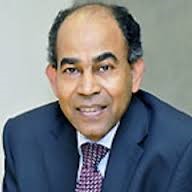
27372‘Uthman Al-Mirghani (Image: Alarabiya.net)

“Many maintain that the ‘Arab Spring’ failed to actualize even one of the hopes and dreams pinned on it in its initial days and months – and that, on the contrary, it even led the region to a series of disasters and crises. Undoubtedly, there are many factors in how the fleeting ‘[Arab] Spring ended as it did, in chaos, crises and wars…

“[However,] what is most important of all is that the Arab Spring exposed not only our crisis and the crisis of the regimes against which the peoples rose up, but also the failure of the [various] Arab oppositions to present themselves as a convincing, credible alternative [to these regimes] that could actualize the peoples’ hopes and aspirations. The crisis of the Arab oppositions definitely preceded the Arab Spring, but is etched more deeply in the people’s minds [since the Arab Spring] because of these oppositions’ frustrating performance, the disappointing outcomes[of their actions], and the current regression, wars, and chaos.

“The widespread impression today is that the weakness of the opposition parties and groups, and likewise their internal division and their intense preoccupation with their own interests and dreams of power, have distanced them from the people, and they have become detached from the issues that preoccupy the people. For this reason, [these opposition elements] can no longer convince [the people] that they are fit to rule as an option that is better than the regimes that they oppose. To prove this, we need only point out that today the people are lamenting, yearning for the past and for the era of the regimes that [the opposition elements] brought down, against the backdrop of widespread fear that change could mean [only] chaos and wars.

“The problem with the Arab oppositions is not with a specific stream of thought, but is general and crosses ideological boundaries. It includes the liberal streams as well as parties of the left or those who wield religious slogans. Many of the opposition parties accusing the existing regimes of tyranny are, within themselves, undemocratic. Thus, for example, some opposition leaders’ leadership of their own parties predates the regimes of the rulers whom they oppose and accuse of dictatorship and of stubbornly clinging to power. The leftist parties have, in the eyes of the people, become a model of the elitism that is sunk in developing theories, while the Islamic parties have become a model of egocentrism and opportunism.

“In Egypt, the Muslim Brotherhood showed an additional model, according to which the Islamic Arab parties, or most of them, tend to impose a dictatorship because they do not believe in democracy. They adopt it as a tactic only in order to attain their objectives, and when they take power, their true face is revealed, and they turn to tyranny and absolute rule. In Sudan, the Islamists carried out a military coup against democracy when they were still part of the parliament, and saw fit to impose their rule with tanks instead of obeying the ballot box.

“Some may argue that the Islamic parties in Tunisia and Morocco are currently presenting a different model, and that they have proven their desire for a peaceful and democratic transfer of power. A response to this is that, while the experience in both these countries justifiably sparks hope, it is [just] at the beginning of its path, and we must wait and monitor it to see how it develops before taking a stand on it.

“It is not only the Islamists who have not passed the test of democracy. The left, with its communist and national parties, has also [failed it],by turning to coups that they call revolutions; the region’s history is rife with examples [of such revolutions] that have left in their wake dictatorships, wars and crises. There are of course other streams and parties, that transcend the label of political left and religious right, but they too are helpless and failing, like the other Arab oppositions, with all their elements.

“So it is no wonder that the young people have abandoned the traditional opposition, as became clear in the Arab Spring revolutions, and have turned to what can be called ‘the online party’ as an arena for opposition and for voicing their distress… The young people are not alone in this, of course, because frustration becomes generalized when people see the internecine wars and the internal rift – such as in Libya, Syria, Iraq, and Yemen – that is caused by the failure of the political elites and opposition [there]…

“The Arab Spring…was not a message just to the regimes, as some people think. Its outcomes are an indictment of the Arab oppositions, which seem, to this day, not to have gotten the message.”


Endnote:

[1]  Al-Sharq Al-Awsat (London), January 21, 2016.
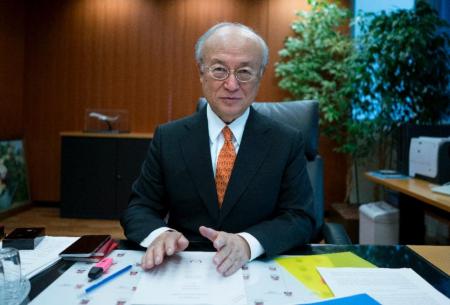
UN atomic chief warns on ‘nuclear terrorism’

March 25, 2016

UN atomic chief warns on ‘nuclear terrorism’ Yahoo News, Simon Sturdee, March 25, 2016

UN Nuke chiefInternational Atomic Energy Agency (IAEA) chief Yukiya Amano

Vienna (AFP) – The world needs to do more to prevent “nuclear terrorism”, the head of the UN atomic watchdog has warned ahead of an important summit and in the wake of the Brussels terror attacks.

“Terrorism is spreading and the possibility of using nuclear material cannot be excluded,” International Atomic Energy Agency (IAEA) chief Yukiya Amano told AFP in an interview late Thursday.

“Member states need to have sustained interest in strengthening nuclear security,” he said. “The countries which do not recognise the danger of nuclear terrorism is the biggest problem.”

Amano’s comments came before a summit of around 50 leaders in Washington on March 31-April 1 on ensuring that nuclear material in the world’s roughly 1,000 atomic facilities are secured.

Highlighting the risks, in December Belgian police investigating the November 13 Paris terror attacks found 10 hours of video of the comings and goings of a senior Belgian nuclear official.

The material, filmed by a camera in bushes outside the official’s home, was reportedly found at the property of Mohamed Bakkali, incarcerated in Belgium for his links to the Paris attackers.

One Belgian newspaper reported that the device was collected by none other than brothers Ibrahim and Khalid El Bakraoui — two of the suicide bombers in this week’s Brussels attacks.

– Grapefruit-sized –

The Washington summit is part of a process begun by US President Barack Obama in a speech in Prague in 2009 and follows similar gatherings in Seoul in 2012 and The Hague in 2014.

Major progress has been made, with countries reducing stockpiles of nuclear material, experts say. Japan for example is this month returning to the US enough plutonium to make 50 nuclear bombs.

But according to the International Panel on Fissile Materials, enough plutonium and highly enriched uranium still exist to make 20,000 weapons of the magnitude that levelled Hiroshima in 1945.

A grapefruit-sized amount of plutonium can be fashioned into a nuclear weapon, and according to Amano it is “not impossible” that extremists could manage to make a “primitive” device — if they got hold of the material.

“It is now an old technology and nowadays terrorists have the means, the knowledge and the information,” he said.

But he said that a far likelier risk was a “dirty bomb”.

This is a device using conventional explosives to disperse radioactive material other than uranium or plutonium.

Such material can be found in small quantities in universities, hospitals and other facilities the world over, often with little security.

“Dirty bombs will be enough to (drive) any big city in the world into panic,” Amano said. “And the psychological, economic and political implications would be enormous.”

This is thought to be well within the capabilities of extremists. The Islamic State group has already used chemical weapons, CIA director John Brennan told CBS News in February.

– Tip of the iceberg –

Since the mid-1990s, almost 2,800 incidents of illicit trafficking, “unauthorised possession” or loss of nuclear materials have been recorded in an IAEA database. One such incident occurred in Iraq last year.

Only a few involved substances that could be used to make a actual nuclear weapon, but some could be used to create a dirty bomb.

“It is very possible this is the tip of the iceberg,” Amano told AFP.

A vital step, he said, would be the entry into force of the arcane-sounding but important 2005 Amendment to the Convention on the Physical Protection of Nuclear Material (CPPNM).

It is the only legally-binding international undertaking for the physical protection of nuclear material.

Amano said it will reduce the likelihood of a dirty bomb by making it legally binding for countries to protect nuclear facilities and to secure nuclear material in domestic use, storage and transport.

Pakistan this week became the latest country to ratify the CPPNM, bringing to just eight the number of adherences still required.

“The weakest link (in nuclear security) is that this amendment. .. has not entered into force. This is a top priority,” Amano said, expressing hope that this could happen “in the coming months”.

So agreeable: Hillary Clinton nods almost non-stop during roundtable

March 25, 2016

So agreeable: Hillary Clinton nods almost non-stop during roundtable, Washington Free Beacon via You Tube, March 24, 2016


You Know What Plays Right into ISIS’ Hands? Muslim Immigration

March 25, 2016

You Know What Plays Right into ISIS’ Hands? Muslim Immigration, Front Page Magazine, Daniel Greenfield, March 24, 2016

2015-09-09_0134_1

After every Muslim terror attack, the media starts claiming that anyone warning about Muslim terrorism is “playing right into ISIS’ hands”. Google and you’ll see too many examples of this meme to count after the Brussels attacks.

“Playing right into ISIS’ hands” is another version of “Shoot the messenger”. If you point out the problem, you’re responsible for it. If you talk about Muslim terrorism, ISIS will be able to recruit more terrorists. Unlike when Obama decided to ignore them and they seized major parts of Syria and Iraq.

Warning that there’s a problem is the only way to solve it. Pretending the problem isn’t there solves nothing. The technical term for it is cover-up.

Muslims don’t join ISIS because people warn about Islamic terrorism. They join ISIS because they believe in rebuilding a Caliphate and living under full Islamic law. They aren’t jobless, marginalized or desperate youth. They’re fanatical killers.

But do you know what really plays into ISIS’ hands? Muslim immigration.

ISIS does not care what Americans say about it. It cares a great deal about the strategic problems of carrying out attacks abroad. The only way to do that is Muslim immigration, in the past, present or future tense. Without it, ISIS has no way of doing anything here. With it, it can strike anywhere that the Muslim settler population is embedded.

Warning about Muslim terrorism doesn’t play into the hands of ISIS. Bringing millions of Muslims to as a recruiting base for Muslim terrorists does.

Cartoons of the Day

March 25, 2016

H/t Vermont Loon Watch

happy-daze


Via Dry Bones

Blindness


H/t Freedom is Just Another Word

bros


H/t Joopklepzeiker

screenshot_3311


screenshot_3211

Robert Spencer on Fox and Friends Discusses the Brussels Jihad Massacre

March 25, 2016

Robert Spencer on Fox and Friends Discusses the Brussels Jihad Massacre, Fox News via You Tube, March 24, 2016

Addressing terrorism: what’s the plan?

March 25, 2016

Addressing terrorism: what’s the plan? Sharyl Attkisson, March 24, 2016

Obama and Raul

[W]e’ve been convinced that we’re disallowed from taking most any action that would be logical or effective in protecting ourselves. That’s not to argue that all or even one of these specific measures should be taken. But the fact is, more Americans can probably cite the list of things we won’t do; it would be helpful for us to understand what we will do.

********************

In early 2014, I was in a small meeting with a high-ranking Obama administration official who was involved in counterterrorism. When asked, he made several candid assertions:

  • Al-Qaeda was never on the run. The President’s terrorism experts never told him it was. They were mystified by his 2012 campaign claims that seemed to the contrary.
  • Al-Qaeda and related terrorists had vastly expanded to other nations and grown more powerful during President Obama’s tenure.
  • The wave of terrorist violence had spread from the Mideast to North Africa and would next hit Europe, then the U.S. The official said this matter-of-factly, with no visible sense of urgency or distress, as if a fait accompli.
  • The terrorists, he acknowledged, had a better and more developed strategy than did the U.S. In fact, he said the U.S. did not have a strategy for addressing the terrorist threat.

In the two years since that conversation, the official’s predictions about terror spreading to Europe and then the U.S. have come to pass. ISIS has emerged as a driving force. And most Americans would say there’s still no discernible plan.

The debates over securing the border and tightening the screening of immigrants are an outgrowth of the absence of a national plan. In order to feel a sense of security, Americans need to believe there’s a cohesive strategy with stated goals and explicit tactics. We don’t need to know all the fine points. Sensitive tactical details, for example, should be protected. But we should be able to understand how our leaders are using their authority and our billions of tax dollars to protect us. What’s the plan?

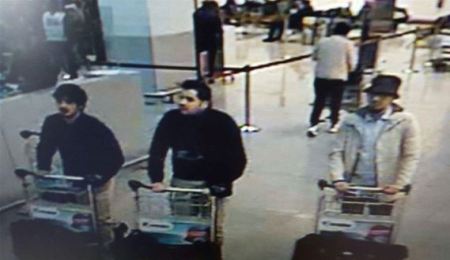
Brussels_suspects_CCTV-1March 2016 Brussels terrorist suspects

n the defense of this (or any) administration, it’s the most difficult plan to devise. It’s hard to imagine a more daunting task than defeating terrorist fighters who play by no rules; while the U.S. is bound by ethics, politics, guidelines and international agreements. And there’s little disincentive for Islamic extremists to join the jihad. After all, what’s the worst that can happen to these barbaric fighters who may come from primitive and destitute circumstances? They get captured by the U.S. and get a better way of life: three meals a day, a roof over their head, a shirt on their back, security, interrogation that promises not to get too tough, free health care and American advocates who will fight to make sure they have recreation, literature and religious expression.

Yet the academic and military discussions about strategy to date have been a source of confusion rather than clarity. The administration may say it’s not changing strategy while the military says it is. At best, the expressed “battle plans” are piecemeal. We’re working to retake cities we already once controlled…but walked away from? Then what? What’s the plan?

President_of_the_United_States_Barack_Obama_making_a_call_in_a_sensitive_compartmented_information_facility_SCIF-1-768x512President Obama in a sensitive compartmented information facility (SCIF)

The conundrum evokes complaints from Vietnam War-era soldiers who said they never really knew what they were doing. They would battle to the death to take a village or a hill, then be ordered to simply walk away from it a few days later, relinquishing it back to the enemy. What was the plan?

It reminds me of the border. While some politicians claim the southern U.S. border is secure, federal and local law enforcement who are there say that couldn’t be farther from the truth. They insist there’s no will or leadership from Washington to bring the border under control, and no strategy to do so. In fact, the only strategy they can verbalize, when asked, is the one they infer: to be as lax as possible in policing the border and enforcing immigration law. What’s the plan?

We’re left with presidential candidates who have attempted to put plan to paper. Because of her experience and knowledge, Hillary Clinton may seem best positioned to verbalize a clear strategy. Yet as secretary of state, her own miscalculations arguably hastened the rise of ISIS from the ashes of Libya. Her emails from the time confirm that she took the lead in aggressively pursuing the poorly-conceived ouster of Libyan dictator Muammar Ghaddafi without foreseeing the vacuum it would create. In its wake: the tragedy of Benghazi, and the transformation of Libya into a new proving ground for Islamic extremists. It doesn’t inspire confidence that a Clinton leadership would competently address what she failed to foresee as a top Obama official. On the other hand, it could be argued that mistakes of the past provide important lessons for those open to learning from them.

Hillary_Clinton_official_Secretary_of_State_portrait_cropHillary Clinton as secretary of state

There’s little doubt that, left its own devices, the world’s strongest military and best intelligence structure could do much better. But they’re hampered by the growing list of what we won’t do.

We won’t secure our southern border that FBI and Homeland Security officials have warned terrorists seek to exploit.

We won’t tighten up visa and immigration security because of the special interests who would cry racism.

We won’t send more terrorists captured in the field to Guantanamo Bay, lest we be criticized.

We won’t question detainees harshly to get information; that’s viewed as inhumane.

We won’t bomb targets in a way that may hurt a civilian or destroy assets. Obviously, the enemy has thus learned to live and work among civilians.

We’re told to report suspicions by the same authorities that view suspicion as racist.

In short, we’ve been convinced that we’re disallowed from taking most any action that would be logical or effective in protecting ourselves. That’s not to argue that all or even one of these specific measures should be taken. But the fact is, more Americans can probably cite the list of things we won’t do; it would be helpful for us to understand what we will do.

It’s an arduous question. But answering it is under the purview of our chosen leaders. What’s the plan?

Share

New video corroborates Hebron soldier’s testimony, supporters say

March 25, 2016

New video corroborates Hebron soldier’s testimony, supporters say, Times of Israel, Staff, March 25, 2016

(Sentence first, trial later, said the mad queen.

angryqueen[1]_thumb[3]

— DM)

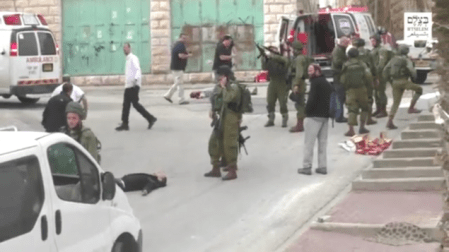
Screen-Shot-2016-03-24-at-14.30.03-635x357An IDF soldier loading his weapon before he appears to shoot an unarmed, prone Palestinian assailant in the head following a stabbing attack in Hebron on March 24, 2016. (Screen capture: B’Tselem)

Supporters of an IDF soldier being investigated for shooting an apparently disarmed Palestinian assailant in the West Bank city of Hebron on Thursday posted a video online of the moments before the shooting, which they say shows as reasonable the soldier’s claim that he feared the attacker may have had an explosive device.

The soldier was arrested Thursday after he was filmed shooting the Palestinian shortly after the latter had stabbed a different soldier. When the suspect shot him, the Palestinian was already lying on the ground wounded, as a result of troops’ gunfire during his attack.

The soldier was brought to the Jaffa Military Court Friday for an extension of his remand. He is now being treated as a murder suspect.

The Palestinian was one of two stabbers who attacked soldiers near the Tel Rumeida neighborhood in Hebron.

F160324WH01Israeli soldiers remove the body of a Palestinian man who stabbed a soldier in the West Bank city of Hebron on March 24, 2016. The Palestinian was shot at the scene after stabbing and lightly wounding an Israeli soldier. (Wissam Hashlamon/Flash90)

The soldier’s shooting drew widespread condemnation, including from Defense Minister Moshe Ya’alon and Prime Minister Benjamin Netanyahu, who called it a violation of the army’s ethical code. The army’s Military Police have launched a criminal investigation into the incident.

An investigation was also launched Thursday by the Central Command into the apparent failure of two officers on the scene to prevent the shooting.

But in a video posted on the Ynet news site, rescue crews are shown moments before the shooting, with the conversation clearly focused on the possibility that the stabber continued to constitute a threat to those around him.

“That terrorist is still alive, the dog! Don’t let him attack us!” one medic is heard saying after apparently seeing the Palestinian moving.

“It looks like he has a bomb on him,” shouts another voice. “Until a sapper comes, nobody touches him!”

The video appears to corroborate the suspect’s own testimony to investigators according to which the Palestinian was still “moving underneath his jacket, where he could have been hiding explosives or weapons,” as the soldier’s attorney Benjamin Malka explained Thursday.

This warning, however, was not unique to this incident. It is standard IDF operating procedure to assume that an assailant has an explosive device to carry out a secondary attack on first responders.

Other soldiers can also be seen in the two videos from the scene standing next to the two Palestinian assailants, making it unclear how serious the threat of an explosive device was considered by the people on the scene.

The graphic video of the Thursday morning incident went viral on Israeli social media, sparking controversy.

But lawyer Malka told Ynet shortly after the incident that his client should not be judged before an army investigation is completed.

In the video, the soldier is partially blocked from view by other members of his unit when the shot is fired. However, the impact of the bullet can be seen. The Palestinian man can then be seen bleeding from the head.

(Video contains graphic images)


In an earlier interview with Army Radio, Malka called his client an “outstanding soldier, salt of the earth,” adding that “he has yet to be allowed to defend his innocence.”

The video prompted the IDF to launch an investigation into what it said was “a very grave” incident.

IDF spokesman Brig. Gen. Moti Almoz said the soldier had been arrested and pledged that there would be a thorough investigation into the shooting. “This is not the IDF, these are not the values of the IDF and these are not the values of the Jewish people,” Almoz said.

Ya’alon said the case would be handled “with all due severity,” saying the soldier’s apparent actions were “in utter breach of IDF values and our code of ethics in combat.”

As news of the shooting spread, Israeli lawmakers from the center-left reacted harshly, warning of the dangers of moral decline and of loose rules of engagement in the military.

The Palestinian Authority, meanwhile, accused Israel of committing “a war crime,” with PA Health Minister Jawad Awwad saying the Palestinian assailant had been “executed” by soldiers, and claimed the footage was “irrefutable evidence that Israeli soldiers commit field executions.”

Israel has come under criticism from Europe and the United States for allegedly using excessive force in stopping Palestinian terrorists. The PA and some countries, notably Sweden, have accused Israel of extra-judicial executions — something Israel has vigorously denied.

The incident in Hebron marked the first attack since Saturday, breaking a rare calm spell amid a wave of violence in the West Bank and Israel that has raged for nearly half a year.

In the nearly six months of Palestinian terrorism and violence since October, 29 Israelis and four foreign nationals have been killed. About 190 Palestinians have also been killed, some two-thirds of them while attacking Israelis, and the rest during clashes with troops, according to the Israeli army.

Report: Belgian Muslims Refuse to Help Police Find Terrorists

March 25, 2016

Report: Belgian Muslims Refuse to Help Police Find Terrorists, Truth RevoltTiffany Gabbay, March 24, 2016

(Here’s a video of Donald Trump addressing Muslim lack of cooperation with police to identify terrorists.

— DM)


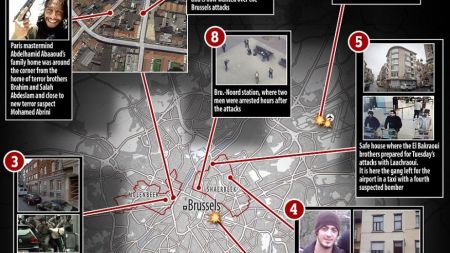
brussels_terror_neighborhood_mail

There is a reason why Israel razes the homes of terrorists. It is because Israelis know that a terrorist cannot plot and carry out an attack without the knowledge and help of his or her immediate relatives, and further, the entire community. Punitive home demolition is meant to serve as a deterrent, the idea being that a would-be terrorist’s family will fear losing their home and thus persuade him or her against the attack.

In fact, knowing that it “takes a village” to aid and abet a terrorist is precisely why the terrorists responsible for the Paris and recent Brussels bombings could operate “right under the noses” of their victims. And it is why some are calling for heightened scrutiny of Muslim communities across the West, and right here in the U.S., despite cries of Islamophobia.

The MailOnline reports that police in Molenbeek — a district known for spawning jihadis like the France and Brussels attackers — have pleaded with local Muslims for help in finding the terror suspects only to have their pleas rebuffed:

The seeds of the terror blasts that shook Europe were planted by a brotherhood of childhood friends who grew up just a few doors away from each other in a part of Brussels dubbed the ‘crucible of terror’.

Police following the trail of the terrorist murderers behind the atrocities in France and Belgium have repeatedly arrived at a single block of housing in Molenbeek, a district of Brussels known as a hotbed of jihadism.

The centre of the deadly network is the Abdeslam family home, a first floor apartment on Gemeenteplaats, behind the local police station – and just round the corner from the home of Abdelhamid Abaaoud, the brains behind the Paris attacks. Abaaoud, the linchpin of the terror cell, was killed in a furious shootout with police in Saint-Denis, Paris, in the aftermath of the November massacres. He has emerged as the group’s ringleader, along with Salah Abdeslam.

Brothers Salah and Brahim Abdeslam were involved in the carnage in Paris, in which Brahim, 31, was killed in a suicide attack on the Comptoir Voltaire restaurant. It is understood that Salah, 26, went on the run without detonating his suicide vest.

Salah, who is accused of making the bombs used in the attacks, was arrested last week round the corner from the family home in a frantic police raid after four months on the run. He is also thought to have been involved in the Brussels attacks with a ‘new network’ of fanatics.

Just a few doors down from the Abdeslam and Abaaoud apartments is the family home of Mohamed Abrini, 30, who drove the Abdeslam brothers to Paris to carry out the attacks and is accused of being involved with the Brussels plot. He remains at large, and police are desperately trying to track him down.

Abrini is a childhood friend of Salah Abdeslam, and it is thought that the two became radicalised together. Moreover, Abrini’s younger brother Souleymane, 20, died in 2014 in Syria while fighting in the same ISIS military unit as Abaaoud, [sic] […] The tight-knit network doesn’t end there. A short distance from the Abdeslam and Abrini residences is the home of Ayoub El Khazzani, the terrorist who launched the botched gun and bomb attack on the Amsterdam-to-Paris express train in August last year.

The above passage is just meant to provide insight into how entrenched these terror networks have been and how interconnected members of the community truly are.

Police meanwhile are running into a brick wall because Muslims in the towns of  Molenbeek, and also nearby Schaerbeek, where the bomb factory used by the el Bakraoui brothers is located, simply refuse to help.

During a recent raid near the Ahl Allah mosque following the Brussels attack, police were met not with cooperation, but rather, hostility. They were verbally assaulted and taunted by throngs of angry young Muslim men.

“There is no terrorist on this street. The police are making it up to make Muslims look bad,” said 27-year-old Mohammed.

“It is a set-up.” The Mail continues:

The local community there views police with contempt, they added, and are unlikely to report terrorists to the authorities even if they do not have jihadi sympathies themselves.

‘Frankly I wasn’t surprised,’ a policewoman who wished to remain anonymous told MailOnline. ‘Nobody takes what happens in this district seriously. Every day we arrest well-known criminals and the next day they are back on the streets.

‘It is frustrating that we are doing our work but the justice system doesn’t back us up.

‘These people are not being prosecuted or fined, they are just being released. We arrest them and nothing happens to them.

‘One or two hours later they smile and mock us, believing they are on the winning side.’

The ‘lack of respect for police and for Belgium’ in the local multicultural community meant that the terror cell could operate without fear of being reported, she added.

This made Schaerbeek – which has been ‘off the radar’ for terror police – the ideal place for a deadly jihadi to hide out.

‘We have been asking for the higher authorities to take this district more seriously but it hasn’t happened,’ she said.

Her commanding officer, who also did not want to be named, agreed. ‘We have not been blind to the fact that something serious has been going on here,’ he said.

‘We have several people under surveillance but there are others that are unknown and blending in with the wall.

‘They are deeply embedded in the local community. They know each other and have family here, but nobody says anything.

According to Mohammed Abdeslam, one of the suspect’s brothers, speaking to reporters or authorities will get a community member into “very big trouble.”

“I can’t tell you if my brother was supposed to be involved in today’s attack because if I told you I knew, I’d be in very big trouble right now,” the man told The Mail before speeding off in his BMW.

And that, folks, is why the myth of the “small minority” is just that, a myth. Terrorism and radicalism goes far beyond just the person willing to the pull the ripcord him- or herself; it goes also to those who aid and abet those who pull the trigger. It extends even to those who simply turn a blind eye and refuse to help authorities stop the carnage when they’ve valuable information that can save lives. There are few innocents here in these Muslim enclaves, despite what the apologists will tell you. How our respective leaders chose to deal with that truth will make the difference in thwarting or not thwarting future attacks.

Palestinian Campuses “More Hamas than Hamas”

March 25, 2016

Palestinian Campuses “More Hamas than Hamas”

by Khaled Abu Toameh March 25, 2016 at 5:00 am

Source: Palestinian Campuses “More Hamas than Hamas”

  • While the anti-Israel activists are busy protesting against Israel on Western campuses, Palestinian students and professors are persecuted by their own Palestinian Authority (PA) and Hamas governments.
  • Let us redefine “pro-Palestinian.” Instead of bashing Israel, real pro-Palestinians will demand democracy for those they champion, and scream for public freedoms for Palestinians under the PA and Hamas regimes, which have always smashed dissent with an iron fist.
  • PA security forces systematically target students and academics under various pretexts. Hundreds of students have been rounded up. Many remain in detention without the possibility of seeing a lawyer or a family member.
  • Palestinians on campuses in the West Bank and the Gaza Strip have once again been reminded that they remain as far as ever from achieving a state that would look any different from the other Arab dictatorships in the region. The campus incidents, which have hardly caught the attention of the international media and anti-Israel activists in the West, also expose the media double standard about human rights violations.
  • In the first case of its kind under the PA, Kadoori University in Tulkarem suspended a student who hugged his fiancée in public.

These are the days when everything is backwards. The “pro-Palestinian” activists on university campuses throughout the Western world have gotten into the spirit: Palestinian students and academics in the West Bank and Gaza Strip endure daily harassment by the Palestinian Authority (PA) and Hamas, because all that gets the activists going are “Israeli abuses.”

Apparently, today, to be “pro-Palestinian” one has to be “anti-Israel.”

For the self-appointed advocates of the Palestinians at Western university campuses, the Palestinian issue is nothing but a vehicle for spewing hatred toward Israel. In good, backwards form, Israel is castigated, and the PA and Hamas are free to abuse their own people.

It seems that in the view of the anti-Israel folks, the Palestinians should not even hope for human rights under the Palestinian regimes.

So while the anti-Israel activists are busy protesting against Israel on Western campuses, Palestinian students and professors are left to be persecuted by their own governments.

Instead of campaigning for reform and democracy in the West Bank and Gaza, these activists spend precious energy trying to take down Israel. The Palestinian students and academics are left to their own devices.

Palestinians living under the Palestinian Authority and Hamas suffer an abysmal level of freedom of expression — and always have. This is the grim reality that the international community and protesting students prefer to ignore. For them, human rights violations must have a “made in Israel” sticker on them.

Here is a suggestion: Let us redefine “pro-Palestinian.” Instead of bashing Israel, the real pro-Palestinians will reveal themselves by demanding democracy for those they champion. True pro-Palestinian activists will scream for public freedoms for the Palestinians under the PA and Hamas regimes, which have always smashed dissent with an iron fist.

In the past few days, Palestinians on campuses in the West Bank and the Gaza Strip have once again been reminded that they remain as far as ever from achieving a state that would look any different from the other Arab dictatorships in the region. The campus incidents, which have hardly caught the attention of the international media and anti-Israel activists in the West, also expose the media double standard about human rights violations in the territories.

In the most recent case, Hamas security guards detained a number of students at Palestine University in the Gaza Strip who protested against the administration’s refusal to allow them to sit for examinations because they had not paid tuition in full.

The students complained that the guards conducted “humiliating” body searches and confiscated their mobile phones. Some said they were physically assaulted.

In another high-profile incident in the Gaza Strip last week, The Islamic University suspended UK-educated Professor Salah Jadallah for criticizing Hamas and the university administration on Facebook. The move drew sharp condemnation from many Palestinian students and academics, who took to social media to voice their fury over the suspension.

Professor Jadallah’s suspension is far from unusual in the Hamas-ruled Gaza Strip, where students, journalists and social media activists have repeatedly fallen victim to the Islamist movement’s harsh clampdowns.

A founder of Hamas in northern Gaza, Professor Jadallah was until recently considered within Hamas’s inner circle. His scathing remarks on Hamas, which he posted on his Facebook page, have turned him into a persona non grata on campus and he is being treated as a “fifth column” by his erstwhile Hamas colleagues. Professor Jadallah is being targeted: what, one might ask, is happening to ordinary Palestinians?

Campuses in the West Bank are faring no better. The Palestinian Authority’s security forces systematically target students and academics under various pretexts. Hundreds of students have been rounded up by these security forces in recent years as part of a crackdown on critics and Hamas “supporters.” Many of the students remain in detention without the possibility of seeing a lawyer or a family member.

Just this week, Palestinian security forces arrested four more university students and teachers: Izaddin Zaitwai, Ehab Ashour, Zuhdi Kawarik and Awni Fares.

It is not only political critics of the PA and Hamas, however, who are of interest to the security forces in Palestinian regimes.

In the first case of its kind under the Palestinian Authority, the Kadoori University in Tulkarem suspended a student who hugged his fiancée in public after offering her a wedding ring. The student, whose identity was not revealed, was accused of “immodest conduct” and is facing a disciplinary hearing. A university spokesman accused the “hugging” student of “slandering” the university’s reputation and defended the punishment.

Left: Hamas supporters are shown in a video screenshot marching during a student council election rally at Bir Zeit University, near Ramallah, on April 20, 2015. Right: Kadoori University in Tulkarem this month suspended a student who hugged his fiancé in public. The student was accused of “immodest conduct” and is facing a disciplinary hearing.



The decision to suspend the student sparked a social media storm, with many Palestinians accusing the Palestinian Authority and Kadoori University of seeking to be “more Hamas than Hamas.”

If the putative champions of the Palestinians in the West continue to disregard the trampling of Palestinian human rights by the PA and Hamas, there may not be any Palestinians left to champion.

Khaled Abu Toameh, an award-winning journalist, is based in Jerusalem.