Archive for March 25, 2016

Our Secretary-General In Chief

March 25, 2016

Our Secretary-General In Chief, Washington Free Beacon, March 25, 2016

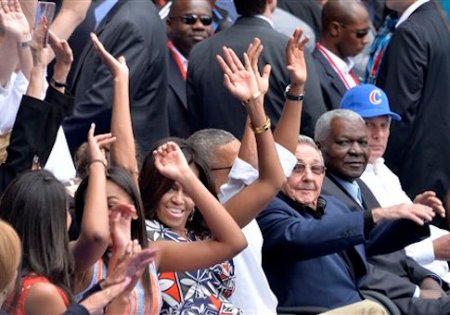
U.S. President Barack Obama with the First Family and Cuban President Raul Castro make the wave during a baseball game on March 22, 2016 in Havana, Cuba. Mr. Obama, who is on a 48 hour trip to Cuba, is the first sitting U.S. President to visit Cuba in almost 90 years.Photo by Olivier Douliery/Sipa USA

U.S. President Barack Obama with the First Family and Cuban President Raul Castro make the wave during a baseball game on March 22, 2016 in Havana, Cuba. Mr. Obama, who is on a 48 hour trip to Cuba, is the first sitting U.S. President to visit Cuba in almost 90 years.Photo by Olivier Douliery/Sipa USA

[Obama] is far more interested in constraining American power in a shortsighted effort not to repeat the supposed mistakes of his predecessor than in unleashing the full might of the American power and leading a serious and sustained international effort to deny ISIS legitimacy by depriving it of safe haven.

***************

Terror in Brussels leaves at least 30 dead. Visiting Cuba, President Obama responds. For 51 seconds. Then he gets back to burying the Cold War. Which ended in 1991.

Later in Havana, explaining to ESPN why he followed through with plans to attend a baseball game despite the international crisis, the president invoked David Ortiz of the Red Sox, who rallied Boston after the 2013 marathon bombing. What Obama said of Ortiz is revealing.

“That is the kind of resilience and kind of strength that we have to continually show in the face of these terrorists,” he said. “They cannot defeat America. They can’t—they don’t produce anything. They don’t have a message that appeals to the vast majority of Muslims or the vast majority of people around the world. But what they can do is scare us and make people afraid and disrupt our daily lives and divide us. As long as we don’t allow that to happen, we’ll be ok.”

Whew, what a relief. Islamic holy warriors bomb, kill, maim, mutilate, decapitate, rape, crucify, and shoot civilians of every sex, age, race, and creed—but they won’t win, so long as the president maintains the fortitude to stick to his schedule and watch a baseball game with a Communist dictator. Now watch Raul and me do the wave.

Rarely has Obama’s attitude toward terrorism been brought into such stark relief. Why does he respond so perfunctorily, so coolly, so stoically to the mayhem? Not because he lacks sympathy. Because he believes his job is to restrain America from overreaction, from hubris, from our worst instincts of imperialism and oppression.

Yes, the thinking goes, ISIS and al Qaeda are threats to be fought, contained, defeated. But the greater threat, in Obama’s view, is that Americans may become scared, afraid, disrupted, divided. We might invade Iraq again, or cut off immigration and trade, or discriminate against the Muslim minority. That is the real danger against which this president stands. Terrorism will burn itself out. The problem of American maximalism remains.

This is not the sort of thing you expect to hear from an American president. It’s what you expect from a secretary general of the United Nations, from the president of the European Commission, from the foreign ministry of France circa 2002. It’s the worldview of the international NGO, of the multilateral bureaucrat: Terrorism? We can manage. But the U.S. hyper-power? We’ve got to put a lid on this problem, stat.

Liberal internationalists have agonized over the wanton use of our power for years. The treaties and institutions they support are brakes on American unilateralism. They bind America’s freedom of action. “It was the Gulliver effect,” wrote Charles Krauthammer in “Democratic Realism.” “Call a committee meeting of countries with hostile or contrary interests—i.e., the U.N. Security Council—and you have guaranteed yourself another 12 years of inaction.”

What makes Obama unique is not that he subscribes to the multilateral worldview but that he applies it to the American people themselves. He seeks not only to constrain the American military but also the American citizenry, to tamp down our anger and worry and frustration, replace our false consciousness with consciousness-raising, check the emotional and hawkish impulses of a media-addled people. He’s the Ban Ki-moon of the Potomac.

The president, writes Jeffrey Goldberg of the Atlantic, “has never believed that terrorism poses a threat to America commensurate with the fear it generates.” When ISIS began its killing spree in the summer of 2014, Obama told an adviser, “They’re not coming here to chop our heads off.” Goldberg reports that Obama has taken to wandering the halls of the White House, reminding “his staff that terrorism takes far fewer lives in America than handguns, car accidents, and falls in bathtubs do.”

Figures: If terrorism kills fewer Americans than bathtubs, why miss the baseball game? But Obama’s logic is ridiculous. It rests on the mother of all category errors. Auto crashes and life-threatening falls are the result of bad luck. Terrorism and gun crime are acts of human agency. Individuals are behind them. And in the case of terrorism (and of gangs) these individuals are embedded in networks of radicalization, training, equipment, and support.

There is no global conspiracy of Jacuzzis to murder Americans. But there is, as the last decade and a half has made disturbingly clear, a widespread effort by an ideological movement to kill as many people as possible—most of whom, we ought to remember, are Muslims themselves—in the revanchist pursuit of a twenty-first century Caliphate. You insure against accidents. But you fight crime and terrorism and global jihad by raising defenses, securing territory, and disrupting the bad actors before they disrupt you.

“Several years ago,” Goldberg writes, President Obama “expressed to me his admiration for Israelis’ ‘resilience’ in the face of constant terrorism, and it is clear that he would like to see resilience replace panic in American society.” What a low view of the American people is expressed in this anecdote—and what a backhanded compliment of Israel. For there is no “panic” gripping America other than the desire for the president to treat the problem of ISIS and Islamic terrorism more seriously than he has. And Israel’s response to Palestinian terrorism goes far beyond “resilience” in the face of suicide bombs and rocket attacks—to include a global campaign against terror networks, the forward deployment of forces in the West Bank, and retaliatory offensives against Hezbollah in Lebanon and Hamas in Gaza that the president and his multilateral friends are always so quick to criticize and bring to an end.

There is an old joke about how the U.S. ambassador to the United Nation so often acts as the U.N. ambassador to the United States. As the threat of Islamic radicalism has grown and the lands under its dominion have expanded, President Obama has fallen into the role of the hapless diplomat. He is far more interested in constraining American power in a shortsighted effort not to repeat the supposed mistakes of his predecessor than in unleashing the full might of the American power and leading a serious and sustained international effort to deny ISIS legitimacy by depriving it of safe haven. It must give Barack Obama cold comfort to know that his successor is far more likely to act not as secretary-general of the United States, but as its commander-in-chief.
IRA, ISIS and the Fate of Great Britain

March 25, 2016

IRA, ISIS and the Fate of Great Britain, Clarion Project, JC Dash, March 25, 2016

(Here’s a video, in honor of Easter Week, which eventually ended oppressive British rule over Ireland after more than a century.

Did I mention that I’m half Irish? — DM)


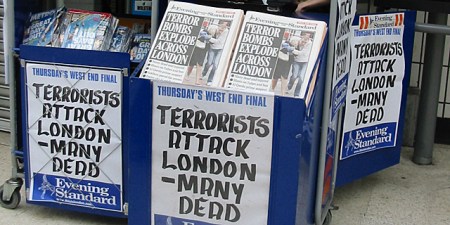
London-bombing-7-77/7/05 is a day etched in the collective memory of the British. (Source: https://commons.wikimedia.org/w/index.php?curid=215746)

The first time I was invited to Belfast I have to admit I was terrified. After a lull with relatively few bombings in the 80’s the 90’s there was a resurgence of bombing campaigns. I was travelling in the wake of a double bombing in London in several other places on mainland Britain. At the time the Irish population in England was forced to live in the shadows. The Irish communities came under enormous amounts of surveillance and Irish residents were viewed with the same suspicion.

The United Kingdom was not bound by the constraints of political correctness and threats from the Irish community. The government was concerned with the safety and security of its citizens. That’s not to say Britain did not make mistakes. Many were made but Britain recognized the problems and dealt with them.

So what changed?

On July 7, 2005 a series of deadly bombings hit London. ‘Traditional terrorism’ died and radical Islam took up the terror reigns.

(This video looks at that fateful day🙂 (The video refuses to embed. You will have to click on it to see it. — DM)

There are many differences between the terrorism of the IRA and today’s radical Islamists. Let’s not fool ourselves, both are cruel and heartless with no respect for human life. But the Irish conflict itself was stalled by a peace initiative. The IRA stopped the bombing, even the splinter groups have been relatively quiet for 15 years.

Let’s put one myth to bed. Islamist extremism has no political or religious agenda. It is about world domination under a man-made system of laws perverting the religion of Islam to suit their own means.

They kill without prejudice. Men, women, children of all nationalities and all religions, even Islam, are targeted. They do not bomb to force a political process they bomb to dominate.

It is not just the terror that is forcing Britain to its knees but the hyper-successful way Islamists have penetrated the government, intelligentsia and liberal elite controlling political correctness to breed a generation of apologists. Schools, municipalities, government officials and influencers all willingly feed on their Islamist agenda.

In the wake of the attacks by ISIS in France and Belgium, Britain needs to wake up. David Cameron, the UK’s prime minister, is among the few with the guts to speak out. Britain needs to decide what is more important, protecting the people, cultural identity and the rule of law or appeasing radical Islam and just giving up.

Make no mistake, Islamist extremism is also alive and well across the Atlantic. In fact it’s a global problem.

It’s time the U.S. admitted there is a problem, joined the dots and make sure it doesn’t repeat the same mistakes as the United Kingdom.

‘Al-Sharq Al-Awsat’ Columnist: The Arab Spring Exposed The Failure Of All Shades Of Arab Opposition

March 25, 2016

‘Al-Sharq Al-Awsat’ Columnist: The Arab Spring Exposed The Failure Of All Shades Of Arab Opposition, MEMRI, March 24, 2016

“In Egypt, the Muslim Brotherhood showed an additional model, according to which the Islamic Arab parties, or most of them, tend to impose a dictatorship because they do not believe in democracy. They adopt it as a tactic only in order to attain their objectives, and when they take power, their true face is revealed, and they turn to tyranny and absolute rule.”

**********************

In his column in the London-based Saudi daily Al-Sharq Al-Awsat, ‘Uthman Al-Mirghani argued that the Arab Spring had exposed not only the failure of the Arab regimes, but also the various Arab oppositions’ failure to constitute an alternative to the tyrannical regimes that had been brought down. He stated that these oppositions, of all political shades – liberal, leftist, rightist, and Islamic – were just as opportunistic, egocentric, and dictatorial as the regimes they had deposed. Furthermore, he wrote, they had distanced themselves from the Arab peoples so much that the peoples now yearned for the previous regimes. In light of the powerlessness and failure of all the oppositions in the Arab world, he added, it is no wonder that the young people have abandoned them and turned to the ‘online party’ as an arena for opposition and for voicing their distress.”

Below are translated excerpts from the column:[1]

27372‘Uthman Al-Mirghani (Image: Alarabiya.net)

“Many maintain that the ‘Arab Spring’ failed to actualize even one of the hopes and dreams pinned on it in its initial days and months – and that, on the contrary, it even led the region to a series of disasters and crises. Undoubtedly, there are many factors in how the fleeting ‘[Arab] Spring ended as it did, in chaos, crises and wars…

“[However,] what is most important of all is that the Arab Spring exposed not only our crisis and the crisis of the regimes against which the peoples rose up, but also the failure of the [various] Arab oppositions to present themselves as a convincing, credible alternative [to these regimes] that could actualize the peoples’ hopes and aspirations. The crisis of the Arab oppositions definitely preceded the Arab Spring, but is etched more deeply in the people’s minds [since the Arab Spring] because of these oppositions’ frustrating performance, the disappointing outcomes[of their actions], and the current regression, wars, and chaos.

“The widespread impression today is that the weakness of the opposition parties and groups, and likewise their internal division and their intense preoccupation with their own interests and dreams of power, have distanced them from the people, and they have become detached from the issues that preoccupy the people. For this reason, [these opposition elements] can no longer convince [the people] that they are fit to rule as an option that is better than the regimes that they oppose. To prove this, we need only point out that today the people are lamenting, yearning for the past and for the era of the regimes that [the opposition elements] brought down, against the backdrop of widespread fear that change could mean [only] chaos and wars.

“The problem with the Arab oppositions is not with a specific stream of thought, but is general and crosses ideological boundaries. It includes the liberal streams as well as parties of the left or those who wield religious slogans. Many of the opposition parties accusing the existing regimes of tyranny are, within themselves, undemocratic. Thus, for example, some opposition leaders’ leadership of their own parties predates the regimes of the rulers whom they oppose and accuse of dictatorship and of stubbornly clinging to power. The leftist parties have, in the eyes of the people, become a model of the elitism that is sunk in developing theories, while the Islamic parties have become a model of egocentrism and opportunism.

“In Egypt, the Muslim Brotherhood showed an additional model, according to which the Islamic Arab parties, or most of them, tend to impose a dictatorship because they do not believe in democracy. They adopt it as a tactic only in order to attain their objectives, and when they take power, their true face is revealed, and they turn to tyranny and absolute rule. In Sudan, the Islamists carried out a military coup against democracy when they were still part of the parliament, and saw fit to impose their rule with tanks instead of obeying the ballot box.

“Some may argue that the Islamic parties in Tunisia and Morocco are currently presenting a different model, and that they have proven their desire for a peaceful and democratic transfer of power. A response to this is that, while the experience in both these countries justifiably sparks hope, it is [just] at the beginning of its path, and we must wait and monitor it to see how it develops before taking a stand on it.

“It is not only the Islamists who have not passed the test of democracy. The left, with its communist and national parties, has also [failed it],by turning to coups that they call revolutions; the region’s history is rife with examples [of such revolutions] that have left in their wake dictatorships, wars and crises. There are of course other streams and parties, that transcend the label of political left and religious right, but they too are helpless and failing, like the other Arab oppositions, with all their elements.

“So it is no wonder that the young people have abandoned the traditional opposition, as became clear in the Arab Spring revolutions, and have turned to what can be called ‘the online party’ as an arena for opposition and for voicing their distress… The young people are not alone in this, of course, because frustration becomes generalized when people see the internecine wars and the internal rift – such as in Libya, Syria, Iraq, and Yemen – that is caused by the failure of the political elites and opposition [there]…

“The Arab Spring…was not a message just to the regimes, as some people think. Its outcomes are an indictment of the Arab oppositions, which seem, to this day, not to have gotten the message.”


Endnote:

[1]  Al-Sharq Al-Awsat (London), January 21, 2016.

UN atomic chief warns on ‘nuclear terrorism’

March 25, 2016

UN atomic chief warns on ‘nuclear terrorism’ Yahoo News, Simon Sturdee, March 25, 2016

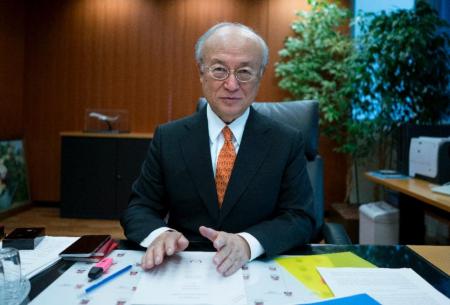
UN Nuke chiefInternational Atomic Energy Agency (IAEA) chief Yukiya Amano

Vienna (AFP) – The world needs to do more to prevent “nuclear terrorism”, the head of the UN atomic watchdog has warned ahead of an important summit and in the wake of the Brussels terror attacks.

“Terrorism is spreading and the possibility of using nuclear material cannot be excluded,” International Atomic Energy Agency (IAEA) chief Yukiya Amano told AFP in an interview late Thursday.

“Member states need to have sustained interest in strengthening nuclear security,” he said. “The countries which do not recognise the danger of nuclear terrorism is the biggest problem.”

Amano’s comments came before a summit of around 50 leaders in Washington on March 31-April 1 on ensuring that nuclear material in the world’s roughly 1,000 atomic facilities are secured.

Highlighting the risks, in December Belgian police investigating the November 13 Paris terror attacks found 10 hours of video of the comings and goings of a senior Belgian nuclear official.

The material, filmed by a camera in bushes outside the official’s home, was reportedly found at the property of Mohamed Bakkali, incarcerated in Belgium for his links to the Paris attackers.

One Belgian newspaper reported that the device was collected by none other than brothers Ibrahim and Khalid El Bakraoui — two of the suicide bombers in this week’s Brussels attacks.

– Grapefruit-sized –

The Washington summit is part of a process begun by US President Barack Obama in a speech in Prague in 2009 and follows similar gatherings in Seoul in 2012 and The Hague in 2014.

Major progress has been made, with countries reducing stockpiles of nuclear material, experts say. Japan for example is this month returning to the US enough plutonium to make 50 nuclear bombs.

But according to the International Panel on Fissile Materials, enough plutonium and highly enriched uranium still exist to make 20,000 weapons of the magnitude that levelled Hiroshima in 1945.

A grapefruit-sized amount of plutonium can be fashioned into a nuclear weapon, and according to Amano it is “not impossible” that extremists could manage to make a “primitive” device — if they got hold of the material.

“It is now an old technology and nowadays terrorists have the means, the knowledge and the information,” he said.

But he said that a far likelier risk was a “dirty bomb”.

This is a device using conventional explosives to disperse radioactive material other than uranium or plutonium.

Such material can be found in small quantities in universities, hospitals and other facilities the world over, often with little security.

“Dirty bombs will be enough to (drive) any big city in the world into panic,” Amano said. “And the psychological, economic and political implications would be enormous.”

This is thought to be well within the capabilities of extremists. The Islamic State group has already used chemical weapons, CIA director John Brennan told CBS News in February.

– Tip of the iceberg –

Since the mid-1990s, almost 2,800 incidents of illicit trafficking, “unauthorised possession” or loss of nuclear materials have been recorded in an IAEA database. One such incident occurred in Iraq last year.

Only a few involved substances that could be used to make a actual nuclear weapon, but some could be used to create a dirty bomb.

“It is very possible this is the tip of the iceberg,” Amano told AFP.

A vital step, he said, would be the entry into force of the arcane-sounding but important 2005 Amendment to the Convention on the Physical Protection of Nuclear Material (CPPNM).

It is the only legally-binding international undertaking for the physical protection of nuclear material.

Amano said it will reduce the likelihood of a dirty bomb by making it legally binding for countries to protect nuclear facilities and to secure nuclear material in domestic use, storage and transport.

Pakistan this week became the latest country to ratify the CPPNM, bringing to just eight the number of adherences still required.

“The weakest link (in nuclear security) is that this amendment. .. has not entered into force. This is a top priority,” Amano said, expressing hope that this could happen “in the coming months”.

So agreeable: Hillary Clinton nods almost non-stop during roundtable

March 25, 2016

So agreeable: Hillary Clinton nods almost non-stop during roundtable, Washington Free Beacon via You Tube, March 24, 2016


You Know What Plays Right into ISIS’ Hands? Muslim Immigration

March 25, 2016

You Know What Plays Right into ISIS’ Hands? Muslim Immigration, Front Page Magazine, Daniel Greenfield, March 24, 2016

2015-09-09_0134_1

After every Muslim terror attack, the media starts claiming that anyone warning about Muslim terrorism is “playing right into ISIS’ hands”. Google and you’ll see too many examples of this meme to count after the Brussels attacks.

“Playing right into ISIS’ hands” is another version of “Shoot the messenger”. If you point out the problem, you’re responsible for it. If you talk about Muslim terrorism, ISIS will be able to recruit more terrorists. Unlike when Obama decided to ignore them and they seized major parts of Syria and Iraq.

Warning that there’s a problem is the only way to solve it. Pretending the problem isn’t there solves nothing. The technical term for it is cover-up.

Muslims don’t join ISIS because people warn about Islamic terrorism. They join ISIS because they believe in rebuilding a Caliphate and living under full Islamic law. They aren’t jobless, marginalized or desperate youth. They’re fanatical killers.

But do you know what really plays into ISIS’ hands? Muslim immigration.

ISIS does not care what Americans say about it. It cares a great deal about the strategic problems of carrying out attacks abroad. The only way to do that is Muslim immigration, in the past, present or future tense. Without it, ISIS has no way of doing anything here. With it, it can strike anywhere that the Muslim settler population is embedded.

Warning about Muslim terrorism doesn’t play into the hands of ISIS. Bringing millions of Muslims to as a recruiting base for Muslim terrorists does.

Cartoons of the Day

March 25, 2016

H/t Vermont Loon Watch

happy-daze


Via Dry Bones

Blindness


H/t Freedom is Just Another Word

bros


H/t Joopklepzeiker

screenshot_3311


screenshot_3211

Robert Spencer on Fox and Friends Discusses the Brussels Jihad Massacre

March 25, 2016

Robert Spencer on Fox and Friends Discusses the Brussels Jihad Massacre, Fox News via You Tube, March 24, 2016

Addressing terrorism: what’s the plan?

March 25, 2016

Addressing terrorism: what’s the plan? Sharyl Attkisson, March 24, 2016

Obama and Raul

[W]e’ve been convinced that we’re disallowed from taking most any action that would be logical or effective in protecting ourselves. That’s not to argue that all or even one of these specific measures should be taken. But the fact is, more Americans can probably cite the list of things we won’t do; it would be helpful for us to understand what we will do.

********************

In early 2014, I was in a small meeting with a high-ranking Obama administration official who was involved in counterterrorism. When asked, he made several candid assertions:

  • Al-Qaeda was never on the run. The President’s terrorism experts never told him it was. They were mystified by his 2012 campaign claims that seemed to the contrary.
  • Al-Qaeda and related terrorists had vastly expanded to other nations and grown more powerful during President Obama’s tenure.
  • The wave of terrorist violence had spread from the Mideast to North Africa and would next hit Europe, then the U.S. The official said this matter-of-factly, with no visible sense of urgency or distress, as if a fait accompli.
  • The terrorists, he acknowledged, had a better and more developed strategy than did the U.S. In fact, he said the U.S. did not have a strategy for addressing the terrorist threat.

In the two years since that conversation, the official’s predictions about terror spreading to Europe and then the U.S. have come to pass. ISIS has emerged as a driving force. And most Americans would say there’s still no discernible plan.

The debates over securing the border and tightening the screening of immigrants are an outgrowth of the absence of a national plan. In order to feel a sense of security, Americans need to believe there’s a cohesive strategy with stated goals and explicit tactics. We don’t need to know all the fine points. Sensitive tactical details, for example, should be protected. But we should be able to understand how our leaders are using their authority and our billions of tax dollars to protect us. What’s the plan?

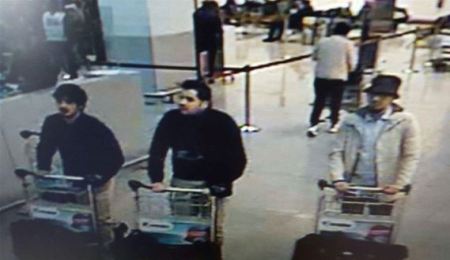
Brussels_suspects_CCTV-1March 2016 Brussels terrorist suspects

n the defense of this (or any) administration, it’s the most difficult plan to devise. It’s hard to imagine a more daunting task than defeating terrorist fighters who play by no rules; while the U.S. is bound by ethics, politics, guidelines and international agreements. And there’s little disincentive for Islamic extremists to join the jihad. After all, what’s the worst that can happen to these barbaric fighters who may come from primitive and destitute circumstances? They get captured by the U.S. and get a better way of life: three meals a day, a roof over their head, a shirt on their back, security, interrogation that promises not to get too tough, free health care and American advocates who will fight to make sure they have recreation, literature and religious expression.

Yet the academic and military discussions about strategy to date have been a source of confusion rather than clarity. The administration may say it’s not changing strategy while the military says it is. At best, the expressed “battle plans” are piecemeal. We’re working to retake cities we already once controlled…but walked away from? Then what? What’s the plan?

President_of_the_United_States_Barack_Obama_making_a_call_in_a_sensitive_compartmented_information_facility_SCIF-1-768x512President Obama in a sensitive compartmented information facility (SCIF)

The conundrum evokes complaints from Vietnam War-era soldiers who said they never really knew what they were doing. They would battle to the death to take a village or a hill, then be ordered to simply walk away from it a few days later, relinquishing it back to the enemy. What was the plan?

It reminds me of the border. While some politicians claim the southern U.S. border is secure, federal and local law enforcement who are there say that couldn’t be farther from the truth. They insist there’s no will or leadership from Washington to bring the border under control, and no strategy to do so. In fact, the only strategy they can verbalize, when asked, is the one they infer: to be as lax as possible in policing the border and enforcing immigration law. What’s the plan?

We’re left with presidential candidates who have attempted to put plan to paper. Because of her experience and knowledge, Hillary Clinton may seem best positioned to verbalize a clear strategy. Yet as secretary of state, her own miscalculations arguably hastened the rise of ISIS from the ashes of Libya. Her emails from the time confirm that she took the lead in aggressively pursuing the poorly-conceived ouster of Libyan dictator Muammar Ghaddafi without foreseeing the vacuum it would create. In its wake: the tragedy of Benghazi, and the transformation of Libya into a new proving ground for Islamic extremists. It doesn’t inspire confidence that a Clinton leadership would competently address what she failed to foresee as a top Obama official. On the other hand, it could be argued that mistakes of the past provide important lessons for those open to learning from them.

Hillary_Clinton_official_Secretary_of_State_portrait_cropHillary Clinton as secretary of state

There’s little doubt that, left its own devices, the world’s strongest military and best intelligence structure could do much better. But they’re hampered by the growing list of what we won’t do.

We won’t secure our southern border that FBI and Homeland Security officials have warned terrorists seek to exploit.

We won’t tighten up visa and immigration security because of the special interests who would cry racism.

We won’t send more terrorists captured in the field to Guantanamo Bay, lest we be criticized.

We won’t question detainees harshly to get information; that’s viewed as inhumane.

We won’t bomb targets in a way that may hurt a civilian or destroy assets. Obviously, the enemy has thus learned to live and work among civilians.

We’re told to report suspicions by the same authorities that view suspicion as racist.

In short, we’ve been convinced that we’re disallowed from taking most any action that would be logical or effective in protecting ourselves. That’s not to argue that all or even one of these specific measures should be taken. But the fact is, more Americans can probably cite the list of things we won’t do; it would be helpful for us to understand what we will do.

It’s an arduous question. But answering it is under the purview of our chosen leaders. What’s the plan?

Share

New video corroborates Hebron soldier’s testimony, supporters say

March 25, 2016

New video corroborates Hebron soldier’s testimony, supporters say, Times of Israel, Staff, March 25, 2016

(Sentence first, trial later, said the mad queen.

angryqueen[1]_thumb[3]

— DM)

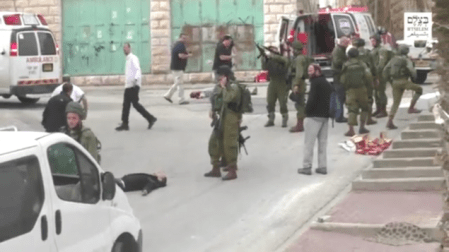
Screen-Shot-2016-03-24-at-14.30.03-635x357An IDF soldier loading his weapon before he appears to shoot an unarmed, prone Palestinian assailant in the head following a stabbing attack in Hebron on March 24, 2016. (Screen capture: B’Tselem)

Supporters of an IDF soldier being investigated for shooting an apparently disarmed Palestinian assailant in the West Bank city of Hebron on Thursday posted a video online of the moments before the shooting, which they say shows as reasonable the soldier’s claim that he feared the attacker may have had an explosive device.

The soldier was arrested Thursday after he was filmed shooting the Palestinian shortly after the latter had stabbed a different soldier. When the suspect shot him, the Palestinian was already lying on the ground wounded, as a result of troops’ gunfire during his attack.

The soldier was brought to the Jaffa Military Court Friday for an extension of his remand. He is now being treated as a murder suspect.

The Palestinian was one of two stabbers who attacked soldiers near the Tel Rumeida neighborhood in Hebron.

F160324WH01Israeli soldiers remove the body of a Palestinian man who stabbed a soldier in the West Bank city of Hebron on March 24, 2016. The Palestinian was shot at the scene after stabbing and lightly wounding an Israeli soldier. (Wissam Hashlamon/Flash90)

The soldier’s shooting drew widespread condemnation, including from Defense Minister Moshe Ya’alon and Prime Minister Benjamin Netanyahu, who called it a violation of the army’s ethical code. The army’s Military Police have launched a criminal investigation into the incident.

An investigation was also launched Thursday by the Central Command into the apparent failure of two officers on the scene to prevent the shooting.

But in a video posted on the Ynet news site, rescue crews are shown moments before the shooting, with the conversation clearly focused on the possibility that the stabber continued to constitute a threat to those around him.

“That terrorist is still alive, the dog! Don’t let him attack us!” one medic is heard saying after apparently seeing the Palestinian moving.

“It looks like he has a bomb on him,” shouts another voice. “Until a sapper comes, nobody touches him!”

The video appears to corroborate the suspect’s own testimony to investigators according to which the Palestinian was still “moving underneath his jacket, where he could have been hiding explosives or weapons,” as the soldier’s attorney Benjamin Malka explained Thursday.

This warning, however, was not unique to this incident. It is standard IDF operating procedure to assume that an assailant has an explosive device to carry out a secondary attack on first responders.

Other soldiers can also be seen in the two videos from the scene standing next to the two Palestinian assailants, making it unclear how serious the threat of an explosive device was considered by the people on the scene.

The graphic video of the Thursday morning incident went viral on Israeli social media, sparking controversy.

But lawyer Malka told Ynet shortly after the incident that his client should not be judged before an army investigation is completed.

In the video, the soldier is partially blocked from view by other members of his unit when the shot is fired. However, the impact of the bullet can be seen. The Palestinian man can then be seen bleeding from the head.

(Video contains graphic images)


In an earlier interview with Army Radio, Malka called his client an “outstanding soldier, salt of the earth,” adding that “he has yet to be allowed to defend his innocence.”

The video prompted the IDF to launch an investigation into what it said was “a very grave” incident.

IDF spokesman Brig. Gen. Moti Almoz said the soldier had been arrested and pledged that there would be a thorough investigation into the shooting. “This is not the IDF, these are not the values of the IDF and these are not the values of the Jewish people,” Almoz said.

Ya’alon said the case would be handled “with all due severity,” saying the soldier’s apparent actions were “in utter breach of IDF values and our code of ethics in combat.”

As news of the shooting spread, Israeli lawmakers from the center-left reacted harshly, warning of the dangers of moral decline and of loose rules of engagement in the military.

The Palestinian Authority, meanwhile, accused Israel of committing “a war crime,” with PA Health Minister Jawad Awwad saying the Palestinian assailant had been “executed” by soldiers, and claimed the footage was “irrefutable evidence that Israeli soldiers commit field executions.”

Israel has come under criticism from Europe and the United States for allegedly using excessive force in stopping Palestinian terrorists. The PA and some countries, notably Sweden, have accused Israel of extra-judicial executions — something Israel has vigorously denied.

The incident in Hebron marked the first attack since Saturday, breaking a rare calm spell amid a wave of violence in the West Bank and Israel that has raged for nearly half a year.

In the nearly six months of Palestinian terrorism and violence since October, 29 Israelis and four foreign nationals have been killed. About 190 Palestinians have also been killed, some two-thirds of them while attacking Israelis, and the rest during clashes with troops, according to the Israeli army.