Archive for March 7, 2016

Arizona Atty. Gen. Finds Money Trail Between Middle East, Mexican Smugglers

March 7, 2016

Arizona Atty. Gen. Finds Money Trail Between Middle East, Mexican Smugglers, Family Security Matters, Judicial Watch, March 6, 2016

Border agent

Months after six Middle Eastern men who entered the U.S. illegally through Mexico were arrested in Arizona state authorities have uncovered an extensive money trail between the Middle East and Mexico. This includes more than a dozen wire transfers sent from the Middle East to known Mexican smugglers in at least two different regions of the Latin American nation, according to the Arizona Attorney General’s Office.

report issued by the AG exposes the disturbing money trail between Mexico and terrorist nations in the Middle East as well as evidence of smuggling routes tying the region to America’s southern border. An excerpt of the AG’s findings was obtained by a local media outlet that published it this week. It states that the Mexican city of Tapachula, a known human smuggling hub located near the Guatemalan border in the state of Chiapas, was the top destination of Middle Eastern money transfers. Nogales, which is situated adjacent to the Arizona border, is the second destination, the investigation found. “Agents conducted a comprehensive geographic analysis of possible terrorist related transactions and/or money transfers involving human smuggling networks,” the state report says.

Officials launched the probe shortly after six men-one from Afghanistan, five from Pakistan-were arrested in Patagonia, a quaint ranch town that sits 20 miles north of Nogales, on November 17. Judicial Watch investigated the matter as part of an ongoing probe on the dire national security issues created by the famously porous southern border. Special Agent Kurt Remus in the Federal Bureau of Investigation’s (FBI) Phoenix headquarters told JW that the agency’s Joint Terrorism Task Forces vetted and interviewed the six men and determined that there were “no obvious signs of terrorism” so they were returned to Immigration and Customs Enforcement (ICE) custody.

But a few days later, in a story reported exclusively by JW, five young Middle Eastern men were apprehended in the nearby Arizona town of Amado, which is located about 30 miles from the Mexican border. Two of the Middle Eastern men were carrying stainless steel cylinders in backpacks, law enforcement and other sources told JW, alarming Border Patrol officials enough to call the Department of Homeland Security (DHS) for backup. Only three of the men’s names were entered in the Border Patrol’s E3 reporting system, which is used by the agency to track apprehensions, detention hearings and removals of illegal immigrants. E3 also collects and transmits biographic and biometric data including fingerprints for identification and verification of individuals encountered at the border. The other two men were listed as “unknown subjects,” which is unheard of, according to a JW federal law enforcement source. “In all my years I’ve never seen that before,” a veteran federal law enforcement agent told JW.

The money trail exposed by Arizona officials in the aftermath of these two major incidents is extremely troublesome. The AG’s Financial Crimes Task Force quickly identified suspicious wire transfers sent from Middle Eastern and African nations by people with Middle Eastern names to Mexico. In 2015, one human smuggler in Mexico received 70 money transfers from 69 senders, the task force found. “All of the 69 sender names appeared to be of Middle Eastern origin,” the AG writes in its report. This seems to confirm JW’s reporting in the last few years on the dangerous alliance between Mexican smugglers and Middle Eastern extremists who want to attack the U.S.

Last summer JW broke a story about a Mexican drug cartel operation that smuggles foreigners from countries with terrorist links into a small Texas rural town near El Paso. They use remote farm roads-rather than interstates-to elude the Border Patrol and other law enforcement barriers, according to sources on both sides of the Mexico-U.S. border. The foreigners are then transported to stash areas in Acala, a rural crossroads located around 54 miles from El Paso on a state road – Highway 20. In 2015 JW also reported that the Islamic State of Iraq and Greater Syria (ISIS) is operating camps near the U.S. border in areas known as Anapra and Puerto Palomas west of Ciudad Juárez in the Mexican state of Chihuahua. That information came from high-level sources just months after JW exposed an ISIS plot orchestrated from Ciudad Juárez to attack the U.S. with car bombs or other vehicle borne improvised explosive devices (VBIED). As a result of JW’s reporting Ft. Bliss, the U.S. Army base in El Paso, increased security. The threat was imminent enough to place agents across a number of Homeland Security, Justice and Defense agencies on alert. As far back as 2014 JW reported that four ISIS terrorists were arrested by federal authorities and the Texas Department of Public Safety in McAllen and Pharr.


Cartoon of the Day

March 7, 2016

Via The Jewish Press


Palestinian-Archaeology

IAEA: Iran Nuke Deal Limits Public Reporting on Possible Violations

March 7, 2016

IAEA: Iran Nuke Deal Limits Public Reporting on Possible Violations, Washington Free Beacon, , March 7, 2016

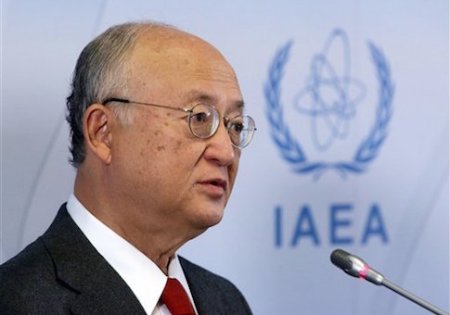
Director General of the International Atomic Energy Agency, IAEA, Yukiya Amano of Japan addresses the media during a news conference after a meeting of the IAEA board of governors at the International Center in Vienna, Austria, Monday, March 7, 2016. (AP Photo/Ronald Zak)

Director General of the International Atomic Energy Agency, IAEA, Yukiya Amano of Japan addresses the media during a news conference after a meeting of the IAEA board of governors at the International Center in Vienna, Austria, Monday, March 7, 2016. (AP Photo/Ronald Zak)

The head of the international community’s nuclear watchdog organization disclosed Monday that certain agreements reached under the Iran nuclear deal limit inspectors from publicly reporting on potential violations by the Islamic Republic.

Yukiya Amano, chief of the International Atomic Energy Agency, or IAEA, which is responsible for ensuring Iran complies with the agreement, told reporters that his agency is no longer permitted to release details about Iran’s nuclear program and compliance with the deal.

Amano’s remarks come on the heels of a February IAEA oversight report that omitted many details and figures related to Iran’s nuclear program. The report sparked questions from outside nuclear experts and accusations from critics that the IAEA was not being transparent with its findings.

Amano disclosed in response to questions from reporters that the last report was intentionally vague because the nuclear agreement prohibits the IAEA from publishing critical data about Iran’s program that had been disclosed by the agency in the past.

“The misunderstanding is that the basis of reporting is different,” Amano said. “In the previous reports, the bases were the previous [United Nations] Security Council Resolutions and Board of Governors. But now they are terminated. They are gone.”

Most U.N. measures pertaining to Iran—including its military buildup and illicit work on nuclear technology—were removed following the nuclear agreement, which essentially rewrote the organization’s overall approach to the country.

The IAEA, which operates under the U.N. umbrella, must now follow the new resolutions governing the implementation of the nuclear pact, Amano said.

“These two resolutions and the other resolutions of the Security Council and Board are very different,” he said. “And as the basis is different, the consequences are different.”

Amano said that going forward, the agency would only release reports that are consistent with the most recent Security Council resolutions on Iran, meaning that future reports are likely to impact the international community’s ability to determine if Iran is fully complying with its end of the agreement.

Last month’s report was viewed as particularly significant because it allowed the nuclear agreement to proceed to its implementation stage. However, the dearth of information in it has angered some experts.

The latest report “provides insufficient details on important verification and monitoring issues,” Olli Heinonen, the IAEA’s former deputy director general, stated in a policy brief.

“The report does not list inventories of nuclear materials and equipment or the status of key sites and facilities,” Heinonen said in his analysis, which was published by the Foundation for Defense of Democracies. “Without detailed reporting, the international community cannot be sure that Iran is upholding its commitments under the nuclear deal.”

The IAEA’s latest report also failed to disclose information about Iran’s stockpiles of low-enriched uranium, which is supposed to be significantly reduced as part of the nuclear deal.

Additional information about Iran’s nuclear centrifuges, the machines responsible for enriching uranium, also was withheld by the IAEA.

Other critics accused the Obama administration of misleading Congress during negotiations over the deal. White House officials maintained at the time that the agreement would provide increased transparency into Iran’s nuclear endeavors.

“When nuclear negotiations began in late 2013, the administration asked Congress to stand down on pressuring the Iranians, and promised to force the Iranians to dismantle significant parts of their nuclear program if Congress gave negotiators space,” Omri Ceren, an official with The Israel Project, which works with Congress on the Iran issue, wrote in an analysis sent to reporters on Monday.

“U.S. negotiators eventually caved on any demands that would have required the destruction of Iran’s uranium infrastructure, and instead went all-in on verification and transparency: Yes, the Iranians would get to keep what they’d built, and yes, their program would eventually be fully legal, but the international community would have full transparency into everything from uranium mining to centrifuge production to enriched stockpiles,” Ceren explained.

However, “now Amano has revealed that the nuclear deal gutted the ability of journalists and the public to have insight into Iran’s nuclear activities,” he said. “In critical areas, it’s not even clear that the IAEA has been granted the promised access.”

Turkish Gov’t Bans Int’l Women’s Day March Due to ‘Security’

March 7, 2016

Turkish Gov’t Bans Int’l Women’s Day March Due to ‘Security,’ Clarion Project, Meora Svorsly, March 7, 2016

TUrkey-Womens-Day-Protesters-HPTurkish women defying a ban on marching for International Women’s Day are met by police. (Photo: Video screenshot)

Turkish women, defying a ban issued by Istanbul’s governor prohibiting demonstrations marking International Women’s Day demonstrations, took to the streets en masse to call attention to the challenges faced by women in Turkey.

The demonstrations, three days ahead of the official March 8 commemoration, were met by a brutal police force, which fired rubber bullets into the crowd and shoved and arrested demonstrators.

“We have always said that we would never leave the streets for the March 8 demonstration, and we never will. Neither the police nor the government can stop us,” protester Guris Ozen said, speaking to told Reuters. “You see the power of women. We are here despite every obstacle and we will continue to fight for our cause.”

Women also defied the ban in Ankara, where protestors were similarly manhandled by police officers.

The official reason cited for the demonstration ban was security concerns, but with increasing frequency and brutality, Turkey’s Islamist ruling party – under the direction of President (and former prime minister) Recep Tayyip Erdogan – has cracked down on any and all institutions not in line with his Islamist agenda.

In the past, Erdogan has drawn ire for commenting that Islam defines the role of women as motherhood, adding “You cannot explain this to feminists because they don’t accept the concept of motherhood.” In an earlier comment, he told a delegation of women’s rights activists “I don’t believe in equality between men and women.”

His deputy prime minister, Bulent Arinc, was met with derision after saying that women should refrain from laughing in public because it’s immodest.

The current demonstrations sought to call attention to the dire position of women in Turkey, which was ranked 130 out of 145 states in the 2015 Global Gender Gap Index and last in Europe and Central Asia.

In addition, it has been reported that 40% of women in Turkey suffer from violent abuse from a spouse or family member. The report, compiled by Turkey’s Ministry of Family and Social Policy, had been long suppressed.

Violence against women in Turkey has skyrocketed since Erdogan came to power. According to the Turkish Ministry of Justice, from 2003, when Erdogan took power, until 2010, there was a 1,400 percent increase in the number of murders of women.

In 2014, there were at least 287 cases of women being murdered because they asked for a divorce.

According to the U.N., Turkish women are 10 times more likely to be victims of domestic violence than women in any other European country.

Professor Aysel Çelikel, head of the Support for Contemporary Living Association, or ÇYDD, cited the root cause behind the alarming rise in violence against women saying, “Women’s rights are going backward as much as [Islamist] conservatism is increasing in society.”

The sickening footage of women being abused by plain-clothed and uniformed police (see video below) is an indication of how far Turkish women will need to push back to obtain their rights.

In the words of one protester, “You see the power of women. We are here despite every obstacle and we will continue to fight for our cause.”

Turkish women will need to dig in for a long and hard fight.

Watch women defy the ban on demonstrations in honor of International Women’s Day. Note: The plain clothed men in the video footage are almost entirely police. 

Muslims Responsible for ‘Worst Year in Modern History of Christian Persecution’

March 7, 2016

Muslims Responsible for ‘Worst Year in Modern History of Christian Persecution’ Front Page MagazineRaymond Ibrahim, March 7, 2016

ws

Open Doors, an organization that advocates for persecuted Christians, recently released its latest World Watch List—a report that highlights and ranks the 50 worst nations to be Christian.  It found that 2015 was the “worst year in modern history for Christian persecution.”

Who claims the lion’s share of this unprecedented persecution?  Muslims—of all races, nationalities, languages, and socio-political circumstances: Muslims from among America’s closest allies (Saudi Arabia #14 worst persecutor) and its opponents (Iran #9); Muslims from economically rich nations (Qatar #21) and from poor nations (Somalia #7 and Yemen #11); Muslims from “Islamic republic” nations (Afghanistan #4) and from “moderate” nations (Malaysia #30 and Indonesia #43); Muslims from nations rescued by America (Kuwait #41) and Muslims from nations claiming “grievances” against the U.S. (fill in the blank __).

The report finds that “Islamic extremism” is the main source of persecution in 41 of the top 50 countries—that is, 82 percent of the world’s persecution of Christians is being committed by Muslims.  As for the top ten worst countries persecuting Christians, nine of them are Muslim-majority—that is, 90 percent of nations where Christians experience “extreme persecution” are Muslim.

Still, considering that the 2016 World Watch List ranks North Korea—non-Islamic, communist—as the number one worst persecutor of Christians, why belabor the religious identity of Muslims?  Surely this suggests that Christian persecution is not intrinsic to the Islamic world but is rather a product of repressive regimes and other socio-economic factors—as the North Korean example suggests and as many politicians and other talking heads maintain?

Here we come to some critically important but rarely acknowledged distinctions.   While Christians are indeed suffering extreme persecution in North Korea, these fall into the realm of the temporal and aberrant.  Something as simple as overthrowing Kim Jong-un’s regime could lead to a quick halt to the persecution—just as the fall of Communist Soviet Union saw the end of religious persecution. The vibrancy of Christianity in South Korea is suggestive of what may be in store—and thus creates such fear for—its northern counterpart.

In the Islamic world, however, a similar scenario would not alleviate the sufferings of Christians by an iota.  Quite the opposite; where dictators fall (often thanks to U.S. intervention)—Saddam in Iraq, Qaddafi in Libya, and ongoing attempts against Assad in Syria—Christian persecution dramatically rises.  Today Iraq is the second worst nation in the world in which to be Christian, Syria fifth, and Libya tenth.  A decade ago under the “evil” dictators, Iraq was ranked 32, Syria 47, and Libya 22.

The difference between Muslim and non-Muslim persecution (e.g., communist) of Christians is that the latter is often rooted in a particular regime.  Conversely, Muslim persecution of Christians is perennial, existential, and far transcends this or that regime or ruler.  It is part and parcel of the history, doctrines, and socio-political makeup of Islam—hence its tenacity; hence its ubiquity.

Moreover, atheistic communism is a relatively new phenomenon—about a century old—and, over the years, its rule (if not variants of its ideology) has greatly waned, so that only a handful of nations today are communist.

On the other hand, Muslim persecution of Christians is as old as Islam. It is a well-documented, even if suppressed, history.

To further understand the differences between temporal and existential persecution, consider Russia. Under communism, its own Christians were persecuted; yet today, after the fall of the USSR, Russia is again reclaiming its Orthodox Christian heritage.

North Korea—where Kim Jong-un is worshipped as a god and the people are shielded from reality—seems to be experiencing what Russia did under the Soviet Union.  But if the once mighty USSR could not persevere, surely it’s a matter of time before tiny North Korea’s walls also come crumbling down, with the resulting religious freedom that former communist nations have experienced. (Tellingly, the only countries that were part of the USSR that still persecute Christians are Muslim, such as Uzbekistan, #15, and Turkmenistan, #19.)

Time, however, is not on the side of Christians living amid Muslims; quite the opposite.

In short, Muslim persecution of Christians exists in 41 nations today as part of a continuum—or “tradition”—that started nearly 14 centuries ago.  As I document in Crucified Again: Exposing Islam’s New War on Christians, the very same patterns of Christian persecution prevalent throughout the Muslim world today are often identical to those from centuries past.

A final consideration: North Korea, the one non-Muslim nation making the top ten worst persecutors list, is governed by what is widely seen as an unbalanced megalomaniac; conversely, the other nine nations are not dominated by any “cults-of-personalities” and are variously governed: including through parliamentarian democracies (Iraq), parliamentarian republics (Pakistan and Somalia), one-party or presidential republics (Eritrea, Sudan and Syria), Islamic republics (Afghanistan and Iran), and transitional/disputed governments (Libya).  Looking at the other Muslim nations that make the top 50 persecutors’ list and even more forms of governments proliferate, for example monarchies (Saudi Arabia #14).

The common denominator is that they are all Islamic nations.

Thus, long after North Korea’s psychotic Kim Jong-un has gone the way of the dodo, tens of millions of Christians and other “infidels” will continue to suffer extreme persecution, till what began in the seventh century reaches fruition and the entire Islamic world becomes “infidel” free.

Confronting this discomforting and better-left-unsaid fact is the first real step to alleviating the sufferings of the overwhelming majority of Christians around the world.

Unfortunately, however, while some are willing to point out that Christians are being persecuted around the Muslim world—why that is the case, why 82% of the world’s persecution is committed by Muslims from a variety of backgrounds and circumstances—is the great elephant in the room that few wish to address.  For doing so would cause some long held and cherished premises of the modern West—chiefly the twin doctrines of religious relativism and multiculturalism—to come crashing down.

Arab Knesset Members back Hezbollah

March 7, 2016

Arab Knesset Members back Hezbollah, Israel National News, David Rosenberg, March 7, 2016

Arab Joint ListArab Joint List MKs Miriam Alster/Flash 90

Knesset members representing the Arab Joint List party issued a formal condemnation on Monday of the decision by a number of Arab states labeling Hezbollah a terrorist organization.

Last week, the Gulf Cooperation Council, which represents Saudi Arabia, Bahrain, Kuwait, Qatar, the United Arab Emirates, and Oman voted to recognize the radical Iran-proxy Shi’ite organization as a terrorist group, joining the United States, France, and Canada among others in labeling Hezbollah a terrorist organization.

Hezbollah, which enjoys representation in the Lebanese parliament, has organized terror attacks against not only Israel, but Western powers including the massive 1983 Beirut barracks bombing, which left more than 300 dead, including hundreds of US Marines and dozens of French soldiers.

The Joint List, however, rejected the designation of Hezbollah as a terror group, blasting the decision as an endorsement of the “occupation” and claiming that it “could serve Israel’s interests”. Ignoring the organization’s history, the Joint List asserted there were no grounds to condemn Hezbollah.

Transportation Minister Yisrael Katz (Likud) responded to the Joint List’s condemnation saying “It’s simply unbelievable that Knesset members would harm Israel’s interests.”

Katz blasted the Joint List’s leadership, drawing parallels to disgraced former MK Azmi Bishara. Bishara, the founder of the Balad faction currently within the Joint List, fled Israel in 2007 after it was revealed he had provided technical support to Hezbollah during the 2006 war with Lebanon, when he guided its missiles to hit Israeli civilians.

“Ayman Odeh and Jamal Zahalka, go join Azmi Bishara in Qatar or Syria – that’s the place for traitors to our country.”

Christian Movement Growing in Iran; Up to 1 Million

March 7, 2016

Christian Movement Growing in Iran; Up to 1 Million, Clarion Project, March 7, 2016

Iran-Christian-Captive-IP
Maryam Rostampour was imprisoned in Iran for practicing Christianity. (Photo: Video screenshot)

While Christians are routinely arrested and imprisoned for practicing their faith in Iran, estimates of the number of Christians worshipping in secret number in the hundreds of thousands and that is only growing.

Open Doors USA, a non-profit Christian group that provides support to persecuted Christians living under oppressive regimes, records about 450,000 Christians in Iran. Others place the number closer to a million.

Christians in Iran are forced to keep their religion under wraps. They worship in house churches with a maximum of four to five others. The group must change their meeting place each time they get together.

A push to train Christian leaders was launched by the London-based Pars Theological Centre, which says it is currently training 200 Iranian Christians.

“This is not a political movement at all, but it will have political implications because it is touching the core foundations of society,” a spokesperson for Pars stated. “If you want to live in a country that doesn’t fund terrorists, you have to develop the values of the grassroots.”

The spokesperson emphasized the leadership training is not “anti-Iranian” in nature, but rather a means to “transform the Iranian society from the bottom up.”

The majority of the leadership training is done in Iran through offline computer training materials. Students stay in touch with their mentors through email.  In addition, Pars broadcasts courses into Iran through two satellite channels.

Sweden: Sexual Assaults at Swimming Pools

March 7, 2016

Sweden: Sexual Assaults at Swimming Pool, Gatestone InstituteIngrid Carlqvist, March 7, 2016

♦ Young male asylum seekers have turned Sweden’s public swimming pools into ordeals of rape and sexual assault.

♦ Swedish politicians seem convinced that some education on “equality” will change the ways of men, who, since childhood, have been taught that it is the responsibility of women not to arouse them — and therefore the woman’s fault if the man feels like raping her.

♦ More and more Swedes are now avoiding public pools altogether.

♦ Staff at Malmö’s Hylliebadet family adventure pool were given strict instructions not to report certain things, and above all, never to mention the ethnicity or religion of those who cause problems at the pool.

♦ “What the Afghans are doing is not wrong in Afghanistan, so your rules are completely alien to them. … If you want to stop Afghans from molesting Swedish girls, you need to be tough on them. Making them take classes on equality and how to treat women is pointless. The first time they behave badly, they should be given a warning, and the second time you should deport them from Sweden.” — Mr. Azizi, manager of a hotel in Kabul, Afghanistan.

Men and women, in a Swedish tradition, have swum together in public pools for over 100 years. Many people are now wondering if we will be forced to give up this practice — because young male asylum seekers have turned public swimming pools into ordeals of rape and sexual assault.

Mixed bathing in Sweden started in the small southern fishing village of Mölle. Around 1890, the “Sin of Mölle” gained notoriety. Men and women were swimming together! Out in the open and shamelessly flaunting their striped bathing attire. It was a sensation that echoed all over Europe, and people came from everywhere to partake in the exciting new activity. Danes poured in, and even the German Emperor Wilhelm II made his way to Mölle in July 1907.

It should come as surprise to no one that men from the Middle East and North Africa have quite a different view of women than Swedish men do. The only mystery is why Swedish politicians have got it in their heads that everyone who sets foot on Swedish soil will immediately embrace our values, our view of women and our traditions.

Now that it is finally beginning to dawn on them that many Afghan, Somali, Iraqi and Syrian men (the largest immigrant groups coming to Sweden now) think that women who run around scantily clad are fair game, the politicians are dumbfounded. Of course, they cannot admit that this — to Swedes — completely alien view of women has anything to do with Islam, because then they would become victims of their own claim that everyone who criticizes Islam is an “Islamophobe.”

For many years, it was possible to cover up the abuse, not least because the mainstream media chose to call the perpetrators “youth gangs,” and never mention that they were almost always immigrants from Muslim countries. In Malmö, one of the most immigrant-heavy cities in Sweden, and where Swedes have actually been a minority since 2013, the problems at public pools started at least 15 years ago.

In 2003, “youth gangs” were so disruptive to other guests at the indoor water park Aq-va-kul that on several occasions, the establishment was forced to close. Despite investing 750,000 kronor ($88,000) in taller entrance gates, a glass-enclosed reception desk, surveillance cameras, and an Arabic-speaking “pool host” to tackle the security problems, things just kept getting worse. In 2005, senior staff member Bertil Lindberg told the local daily newspaper, Sydsvenskan: “Things have escalated this year. Large gangs of 10-20 young people threaten and provoke other guests as well as the staff. They did not come here to swim; they are just looking for trouble.”

One of the problems is that young Muslim men refuse to take a shower before bathing, and keep their underwear on under their swim trunks. For obvious reasons, this is not allowed, and when the staff call out the violators on this, trouble and threats ensue. On several occasions, gangs have ambushed staff members on their way home from work, and the company was forced to hire guards to make sure employees get home in one piece. Events reached a climax in 2013, when youth gangs smashed the interior, threw objects in the water and threatened other patrons. Aq-va-kul was closed, and the pool was drained and cleaned of shattered glass. A few days later the pool was reopened, but it closed permanently to the public in 2015. Now the facility has been renovated, but is only open to competitive swimmers and swim clubs.

In Stockholm, the Husbybadet pool in the heavily-immigrant suburb of Husby was the first public pool hit by trouble. In 2007, it was reported that the municipality was forced to build a separate sewage treatment facility, costing millions of kronor. The reason was unusually high levels of nitrogen in the water, because many young people insisted on bathing with their dirty underwear on. The municipality property director told daily newspaper, Dagens Nyheter:

“Nitrogen is food for bacteria and a high nitrogen level produces malodorous air and filthy water. The nitrogen comes from urine and sweat. Quite simply, we have a problem with people keeping their dirty underwear on under their swim trunks. And then they get in the 38-degree [100-degree Fahrenheit] water in the hot tub. It is like sitting in your washing machine’s delicates cycle, and we use that water all the time. People should have swimwear on, not bathe in their regular clothes.”

The attitude towards nudity in Scandinavia is very different from that in the Middle East. Sweden has many nude beaches, where men and women swim together without a stitch of clothing, without the slightest hint of sexual harassment. In the gender-separated changing rooms at public pools, there is no sign of shyness. Swedish men and women see it as a matter of course to shower and wash properly before getting in the pool, and a couple of decades ago stern overseers even patrolled the changing rooms to check the patrons’ shower habits.

In Muslim countries, nudity is an extremely private thing, and one does not willingly take showers with others, not even with members of the same sex. All the public pool personnel with whom Gatestone has spoken confirm that Muslim men and women shower with their underwear on, and then keep them on under their swimwear. Many Muslim women bathe in a so-called burkini, a garment that covers the entire body, so when Muslim men see Swedish women in a bikini, many of them conclude that they must be “easy” women whom one is “allowed” to grope.

In 2015, when roughly 163,000 asylum seekers came to Sweden, the problems at public pools increased exponentially. More than 35,000 young people, so-called “unaccompanied refugee children,” arrived — 93% of whom are male and claim to be 16-17 years old. To prevent complete idleness, many municipalities give them free entrance to the public pools.

During the past few months, the number of reports of sexual assaults and harassment against women at public pools has been overwhelming. Most of the “children” are from Afghanistan, widely considered among the most dangerous places in the world for women. When the daily Aftonbladet visited the country in 2013, 61-year-old Fatima told the paper what it is like to be a woman in Afghanistan: “What happens if we do not obey? Well, our husbands or sons beat us of course. We are their slaves.”

To expect men from a culture that views women as men’s slaves to behave like Swedish men is not just stupid — it is dangerous. Mr. Azizi, the manager of a large hotel in Kabul, told Gatestone how an average Afghan man sees sexual attacks on women:

“What the Afghans are doing is not wrong in Afghanistan, so your rules are completely alien to them. Women stay at home in Afghanistan, and if they need to go out they are always accompanied by a man. If you want to stop Afghans from molesting Swedish girls, you need to be tough on them. Making them take classes on equality and how to treat women is pointless. The first time they behave badly, they should be given a warning, and the second time you should deport them from Sweden.”

One of the first reported incidents occurred in 2005, when a 17-year-old girl was raped at Husbybadet, in Stockholm. The 16-year-old perpetrator started groping her in the hot tub, and when the girl moved to a cave with streaming water, he and his friend followed her. They forced the girl into a corner, and while the friend held her down, the 16-year-old pulled off the girl’s bikini and raped her. During the trial, it emerged that some 30 people had witnessed the attack, but the teenagers continued the rape anyway.

The 16-year-old rapist was sentenced to three months in juvenile detention and his friend was acquitted. The victim was badly traumatized and had to be treated in a psychiatric care facility, after several failed suicide attempts.

Since then, virtually all public pools in Sweden have become dangerous places, especially to women. During the first two months of this year, reports of rape, sexual assault and sexual harassment came in rapid succession. A few examples:

In Stockholm, during the first week of January, Sweden’s national swimming arena, Eriksdalsbadet, decided to separate men and women in the hot tubs. A controversial decision in Sweden, it came after several incidents in the pools had been reported to the police, mainly in November and December 2015. Conservative Anna König Jerlmyr (moderaterna), Stockholm city Commissioner in Opposition, did not believe that separating men and women was the right way to address the problems: “It is totally unacceptable for a public swimming pool to act this way. This is tantamount to giving in to the sexual harassment and sending signals in favor of a view of women that is utterly reprehensible. More staff, and banning offenders from the premises, would have been preferable,” she told the daily, Dagens Nyheter.

Olof Öhman, head of the Sports Administration in Stockholm, told the paper: “There are similar problems at all the public pools in Stockholm, even if most complaints regard Eriksdalsbadet.”

On January 14, officials at the Rosenlundsbadet water park in Jönköping reported that they would increase security. According to Operations Manager Gunnel Eriksson, the decision was mainly due to the behavior of a new group of bathers — unaccompanied refugee boys: “You can tell from their behavior that they come from a different culture; there is a cultural clash. We can see that they react to the undressed bit.” The heightened security is also necessary because many of the young migrant men cannot swim, overestimate their abilities, and end up in dangerous situations.

On January 15, a local paper, Kungälvsposten, wrote that two girls had been sexually assaulted in an elevator at the Oasen public pool Oasen, in Kungälv. The two suspected perpetrators are “unaccompanied refugee children.” Jonas Arngården, Municipal Director of Social Affairs, told the paper: “This shows that we need to step up the work concerning issues of equality and interaction among our new arrivals, in schools as well as at the asylum houses.”

The attack caused members of the Nordic Resistance Movement (Nordiska motståndsrörelsen), a supposed neo-Nazi organization, to show up at Oasen on February 13. They put on green shirts with the word “Security Host” (Trygghetsvärd) printed on the back, and “patrolled” the facility.

The municipality had not reacted strongly to the sexual assault, but the visit by vigilantes scared the municipal management, and it immediately called the Oasen management to a meeting. Mayor Miguel Odhner told the daily, Expressen/GT: “It is completely unacceptable to have some kind of disguised vigilantes at municipal pools. It is very, very serious that we have violent extremism vying for greater foothold in our municipality.”

1499 (1)The Eriksdalsbadet national swimming arena in Stockholm (left) has become infamous for the many incidents of migrants sexually assaulting women and children at the facility. At the Oasen pool in Kungälv (right), two girls were recently sexually assaulted by “unaccompanied refugee children.” In response, members of the “Nordic Resistance Movement” showed up, wearing shirts bearing the label “Security Host” (Trygghetsvärd), and “patrolled” the facility.

On January 18, the management of the Fyrishov public pool, in Uppsala, revealed that in 2015, it there were seven reported cases of child molestation at the facility. According to Fyrishov, the suspected offenders are all newly-arrived migrants — teenage boys who do not speak Swedish. The facility increased security in August, hiring guards and giving the staff stricter monitoring instructions.

On January 21, there were reports that the number of sexual assaults had increased dramatically at the Aquanova adventure pool in Borlänge. In 2014, one case was reported; in 2015, about 20 cases were reported. The incidents involved women having their bikinis ripped off, being groped in the water slide and sexually assaulted in the restrooms. Ulla-Karin Solum, the CEO of Aquanova, told the public broadcaster Sveriges Television that many incidents “are due to cultural clashes.”

Aquanova Staff member Anette Nohrén confirmed that all the suspects are born abroad, and complained that “it is a huge problem. It steals the focus from our primary task, which is safety concerns, when we are constantly forced to intervene to try and prevent assaults, and afterwards, to try and figure out what happened.”

Aquanova now implemented new rules; among them, that young men from asylum houses need to have a responsible adult accompanying them — one adult for every three underage asylum seekers. The adult needs to stay with them in the changing room as well as in the pool area.

On January 25, the daily newspaper Expressen revealed that a girl was raped at the now infamous Eriksdalsbadet swimming arena at the beginning of the month. The police will now increase their presence at the facility, and will patrol inside regularly.

On January 26, there were reports that a woman and two girls had recently been sexually assaulted by a group of young men who spoke neither Swedish nor English, at the Storsjöbadet pool in Östersund. Despite the incident, the young men were not removed from the premises — a lapse the staff later admitted was a mistake.

On January 27, Växjö municipality announced that it plans to hire a security guard to patrol the local public pool. After two 11-year-old girls were sexually assaulted by a group of boys. The boys attacked the girls in an area hidden from the view of lifeguards. Mikael Linnander, father of one of the girls, told the daily, Kvällsposten: “Seven or eight guys attacked the girls. Two of them touched them between their legs and groped their breasts.” The abuse did not stop until a woman swimming with her children reprimanded the boys. After the incident, the two boys were barred from the adventure pool area, but were allowed to stay at the facility.

On February 1, local media reported that at least five girls and women had been sexually assaulted at a public pool in Vänersborg during the previous few weeks. The victims were girls under 15, as well as women in their thirties. The police said they had no suspects, but stated that the case had high priority.

On February 25, another sexual assault was reported at the Eriksdalsbadet swimming arena in Stockholm. Police spokesman Johan Renberg told Expressen that a group of girls had found themselves surrounded by some 10 young men who tried to grope them. A staff member saw what was happening and called the police. The girls were able to identify the young men, whose ethnicity the paper did not report. The men were not arrested, but will be questioned at a later time.

Given the recent wave of sexual assaults at public pools, it is something of a mystery why the recently-opened Hylliebadet family adventure pool in multicultural Malmö has not reported any sexual assaults at all. Hylliebadet, which cost 349 million kronor (about $41 million) to build, had a chaotic opening week in August 2015. After only a few days, 27 “incidents” had been reported, but none involved sexual assaults.

“No, I have never heard of anything like that happening here,” a Hylliebadet employee told Gatestone. However, when we spoke to other staff members off the record, they told us they had been given strict instructions not to report certain things, and above all, never to mention the ethnicity or religion of those who cause problems at the pool. Another employee told Gatestone:

“Of course we have had incidents here, particularly involving Afghan men groping girls. Not long ago, a man of Arab descent was caught masturbating in the hot tub. But we are not allowed to report things like that. These men understand that it is forbidden when we tell them, but they keep doing it anyway. They just smile and keep on doing it.”

It seems unlikely that Swedish politicians will start deporting sex offenders. The politicians seem convinced that some education on “equality” will change the ways of men, who, since childhood, have been taught that it is the responsibility of women not to arouse them — and therefore the woman’s fault if the man feels like raping her. Such a shift in attitude seems as likely as if a Swede visiting Saudi Arabia would suddenly renounce alcohol just because it is forbidden there. The Swede would follow the rules as long as somebody was watching, and then take every opportunity to drink his schnapps, because it is a thousand-year-old Swedish tradition, and something most Swedes feel is agreeable as well as just.

Another public pool employee told Gatestone that the refugee boys frighten away ordinary patrons and that more and more Swedes are now avoiding public pools altogether.

“Even Swedes who have bought expensive season tickets stay away now, because they think the mood is unsettling. Considering that they young asylum seekers get their entrance fee paid by the municipalities, one could rightfully say that tax money is being used to drive away those who would pay.”
Is Biden’s Israel visit opening shot for White House bid?

March 7, 2016

Is Biden’s Israel visit opening shot for White House bid? DEBKAfile, March 7, 2016

Clinton_BidenKotere480t

US Vice President Joe Biden will start his five-day Middle East tour in Israel Tuesday, March 8, by presenting the multibillion financial and defense aid package promised by the Obama administration to redress the imbalance in Israeli security generated by the nuclear deal with Iran. DEBKAfile’s sources report that Prime Minister’s Binyamin Netanyahu was also quietly tipped from Biden’s close circle that he may decide to use the handover of this package as the opening shot of his run for the Democratic presidential nomination, despite past repudiations.

Our sources in Jerusalem reveal that Israeli officials in charge of staging the Biden visit were directed to handle the visitor to all intents and purposes as a candidate running for election to the White House on Nov. 4.

His presentation of an impressive US assistance program is meant to convey President Barack Obama’s desire to straighten out his rocky relations with Netanyahu before his departure, while also portraying his vice president to American Jews as a successor who will continue to look after Israel’s security interests.

The two governments have been negotiating for months on the size of US military assistance committed by Washington for preserving Israel’s qualitative military and security edge in the next decade, in the course of which Iran and the Islamic Republic’ will substantially upgrade the military capabilities of its armed forces and radical Revolutionary Guards Corps.

In recent talks between US Defense Secretary Ashton Carter and Israel’s Defense Minister Moshe Ya’alon, Israel put in a bid for $50 billion to be spread over 10 years, so raising the US military aid package for Israel from $3.5 bn to $5 bn a year. The Americans said this sum required further negotiation.

According to sources close to the prime minister, the vice president will be bringing the administration’s compromise proposal of between $40 billion and $50 billion, to be spread out over 13-15 years. He will also throw in to the deal US weaponry and items of cutting-edge military technology withheld hitherto from the IDF.

That list was agreed last week when Gen. Joseph Dunford, the Chairman of the US Chiefs of Staff sat down in Tel Aviv with IDF chief of staff Lt. Gen. Gady Eisenkot and his top officers.

As for Biden’s intentions, it should be noted that, although in February, he denied intending to contest the presidential nomination, he surprised political observers when, on Feb. 19, he sharply criticized the campaigns run by Democratic hopefuls Hillary Clinton and Senator Bernie Sanders. He accused them of “doom and gloom” and not doing enough to combat the idea that the country is in decline.

Talking to a Democratic Party audience in California on Feb. 28, Biden congratulated Clinton on her successes in the primaries.

Political observers who are familiar with the vice president’s thought patterns say those comments were well calculated. They expect him to continue to stay in the wings of the campaign and watch Hillary get tied in knots over events in her past, not least the affair of the private emails she sent as Secretary of State. He expects her to be forced by the baggage she carries to give up her run for the presidency. Biden will then step in as the shining savior of the Democratic Party.  He and many of his backers are sure that he is the only Democrat capable of stopping Donald Trump’s inexorable run for the presidency.

At the annual Gridiron Club anniversary dinner Saturday night, March 5, Joe Biden was reported to have quoted a reputed comment by Winston Churchill, “When eagles are silent, the parrots begin to jabber,” he said, adding: “Our kids are watching. The world is watching. The American people are better than this.”

These remarks indicate that Biden is guided by a strong sense of mission.