Archive for July 2015

Yes We Can’t Defeat ISIS

July 8, 2015

Yes We Can’t Defeat ISIS

Obama wants to fight ISIS in a battle of wits.

July 8, 2015

Daniel Greenfield

via Yes We Can’t Defeat ISIS | Frontpage Mag.


Daniel Greenfield, a Shillman Journalism Fellow at the David Horowitz Freedom Center, is a New York writer focusing on radical Islam.

On the anniversary of the Battle of Heliopolis, Barack Hussein Obama stopped by the Pentagon to tell everyone there that their big guns couldn’t beat ISIS because “Ideologies are not defeated with guns”.

This would be news to the American GIs that beat Nazism, not with hashtags, but with bullets. WW2 propaganda, much of it of a crude nature that would make a modern sophisticated progressive turn up his nose, helped boost morale, but it was the firepower that took down Adolf’s armies.

On a July 6th, long ago, the Muslim hordes that were the ISIS of the day defeated Byzantium in the Battle of Heliopolis. Since this was the 7th century, it is safe to say that there were no hashtags involved. The outcome of that battle however is the reason why Obama’s middle name is Hussein instead of Harry.

The Battle of Heliopolis gave the Caliphate control of Egypt and opened the gates to Africa. Islam was the last man standing among the ruins of empires and it proceeded to enslave, oppress and convert by force to expand its ranks in a manner quite similar to its modern ISIS successor.

Obama isn’t wrong when he suggests that ideas need to be defeated with ideas. But they’re not the ideas that he has in mind. ISIS’ idea is that its enemies are subhuman cretins and that its victories are inevitable. Obama’s idea is that we are a deeply flawed and racist nation, but still sorta better than ISIS.

The only people inspired by that idea are the Americans converting to Islam and joining ISIS.

The uncertainty of the Byzantine Empire doomed it to defeat at the Battle of Heliopolis. The Muslim invaders benefited once again from a united front while their enemies were divided and quarreling among themselves. Without these divisions among Christians, between Christians and Jews, and the various pagan tribes, Islam would never have become anything other than an obscure silly cult.

At the Pentagon, Obama stated, “Ideologies are not defeated with guns, they are defeated by better ideas. We will never be at war with Islam.” He isn’t talking about uniting us behind a better idea. Instead he would like Muslims to unite behind some sort of better idea. It’s not clear what that idea is, but he can tell us that it doesn’t involve accepting the reality that we are being attacked in the name of Islam.

Obama wants to fight ISIS in a battle of ideas without having any ideas. It’s like being unarmed in a battle of wits, except it’s more like the witless trying to fight a battle of ideas while being shot at.

Like the Byzantine Empire, we’re a divided people wearied by war and burdened with poor leaders. The 7th century ISIS that beat them wasn’t so much tactically brilliant as it used daring and deception to exploit opportunities created by the incompetence and demoralization of a falling empire.

Obama is speaking in terms of an ideological thirty years war, saying, “This larger battle for hearts and minds is going to be a generational struggle.” But like the armies of the Caliph pouring through the porous borders of a retreating empire, ISIS is moving far too quickly to wait around that long.

Liberal foreign policy experts give a great deal of credit to its social media presence while misunderstanding its significance. The Islamic State’s use of social media to message, recruit and gloat is part of its larger tactical strength as a mobile and adaptable organization. ISIS isn’t winning the war on Twitter. It’s using Twitter the way that it adapts and uses everything else that it comes across.

ISIS is not winning because it has the better hashtags. It’s winning because it’s utterly ruthless. Arguing about its ideology on social media not only misses the point about ISIS, it misses the point about Islam.

Islam did not build a worldwide empire by winning theological arguments. It won by winning. Islam is not an empire of faith. It is an empire of war that divides the world up into the Dar-al-Islam and the Dar-al-Harb; the House of Islam and the House of War. Harb originally meant sword. When ISIS beheads prisoners, it is meting out the same treatment that Mohammed did to those in the House of War.

Indeed Mohammed’s sword, one of them at any rate as he had quite a few, was named Dhu al-Faqar or “Cleaver of Vertebrae”. This is the same sword that appeared on the war flags of the Ottoman Caliphate which, like Obama’s middle name, would never have existed if the Byzantine Empire hadn’t lost the war.

The Cleaver of Vertebrae, like the House of War, is one of those dividing elements of Islamic ideology. It divides the world between Islam and everyone else and divides heads from bodies. It is the central idea of Islam that we need a better idea to fight if we intend to keep our own heads.

Islamic ideas are simple, rather than sophisticated. They depend on tribalism and terror to mobilize force. They rely on honor and shame to mark defeats and victories. The only way to argue with them is on those same terms. Islam’s only big idea is that power is religion and victory is proof of its rightness.

The theological counterargument to the Islamic State is crushing it on the battlefield.

Obama’s Hearts and Minds strategy tries to win the war by losing it, putting us at a strategic disadvantage with restrictive rules of engagement on the battlefield to win over Muslims while potential ISIS recruits are shipped into the United States by the hundreds of thousands as Muslim immigrants.

If this “generational struggle” for “hearts and minds” fails, as it must, then we will be in the same position as the old Byzantine Empire, exhausted, weary of war, fighting among ourselves and ready for defeat after having filled our countries with enemies while turning our soldiers into social workers.

Not even the worst leaders of the Byzantine Empire were as foolish as that.

Even now the war is on again for Egypt as ISIS fights in the Sinai. The Islamic Caliphate forces that defeated Byzantium passed through the Sinai. Their armies were invigorated by Sinai Bedouins joining them. Today the Islamic State once again wages war in the Sinai using the Bedouin.

Obama speaks of offering “a more attractive, more compelling vision”, but what does he have to offer that can compete with the reunification of the lands of Islam and the dominance of a Caliph? He has already tried offering his ideas in Cairo. Today Egyptians hate both him and his ideas.

The Battle of Heliopolis on a July 6th long ago shows us that the best way to defeat an enemy is not by appeasing it, but by fighting it with a united front. It was the Democrats who shattered the nation’s unity after September 11 by standing up for terrorists. Obama continues that tradition today as he tells us that we can’t win because our enemies are our friends and that we disgusting intolerant bigots.

America does not need to win the hearts and minds of Muslims. It needs to win the hearts and minds of its own people. We do not need the goodwill of those who believe that we are less than human. What we need is confidence in our nation, our values and ourselves. The best antidote to July 6th is July 4th.

A strong and united nation can see off any number of barbarian raiders. A divided civilization struggling over bitter grudges can easily be divided and conquered even by bands of worthless murderous savages.

The ideas for defeating ISIS are those which unite us, which make us stronger and which resist foreign invasion. The ideas that make it easier for ISIS to defeat us can be found in any Obama speech.

France Drops Pro-Palestinian UN Resolution

July 8, 2015

France is back-pedaling from a UNSC resolution forcing Israel to renew negotiations with the Palestinian Authority.

By: Hana Levi Julian

Published: July 8th, 2015

via The Jewish Press » » France Drops Pro-Palestinian UN Resolution.

French Foreign Minister Laurent Fabius.

French Foreign Minister Laurent Fabius.
Photo Credit: Wikipedia

France is back-pedaling from a decision to submit a resolution to the United Nations Security Council forcing Israel to renew negotiations with the Palestinian Authority.

PA foreign minister Fiyad al-Maliki told Voice of Palestine radio on Tuesday that France was instead advancing a suggestion to form a negotiations support committee.

The move follows a visit to Israel in early June, during which French Foreign Minister Laurent Fabius urged the resumption of final status talks between Israel and the PA.

Netanyahu warned in remarks prior to his meeting with Fabius that the international community’s ideas for peace with the Palestinian Authority ignore the security needs of Israel.

Fabius subsequently discussed the issue in depth with Prime Minister Binyamin Netanyahu, President Reuven Rivlin, Defense Minister Moshe Ya’alon and a host of other top government officials.

PA Chairman Mahmoud Abbas had already rejected out of hand the most recent French proposal for a resolution in the UN Security Council giving both sides 18 months to reach an agreement. The reason: Under the French resolution, the PA would be required to recognize Israel as a “Jewish” state.

“I can say that the idea of the French draft resolution in the Security Council is not a main topic for decision makers in France anymore,” Maliki said, after a meeting with French Foreign Minister Laurent Fabius in Cairo.

However, said Maliki, a negotiations support committee would only make sense if talks are under way. The committee would be comprised of representatives from the members of the UN Security Council, in addition to Egypt, Jordan and Saudi Arabia, he added.

U.S.-brokered talks between Israel and the PA collapsed in April 2014 with the decision by PA Chairman Mahmoud Abbas to instead form a unity government with Gaza’s ruling Hamas terror organization, whose charter calls for the annihilation of the State of Israel.

Goodnight Vienna (6)

July 8, 2015

Goodnight Vienna (6), Power LineScott Johnson, July 7, 2015

There are no surprises in Omri Ceren’s latest email update from Vienna, but if you have been following his reports, you will find this of interest (footnoted URLs at the bottom). Omri writes:

The parties missed another deadline this morning, and talks are now expected to go through the end of the week. Mogherini told reporters this morning: “I am not talking about extension. I am talking about taking the hours we need to try to complete our work”(?). The overwhelming consensus from press and analysts here in Vienna nonetheless hasn’t changed: the parties will indeed announce some kind of agreement before they leave, though it will almost certainly have details that will need to be sorted out in future negotiations. How that aligns with the administration’s legal obligation to provide Congress with all final details the deal is anyone’s guess at this point.

Meanwhile the Obama administration and its allies are laying the groundwork for another U.S. collapse, this time on inspections. Couple of indicators:

(1) They’re giving up on promising the most robust inspection/verification regime in history– Here’s President Obama during his April 2 speech about the Lausanne announcement: “Iran has also agreed to the most robust and intrusive inspections and transparency regime ever negotiated for any nuclear program in history” [a]. Here’s White House spokesman Josh Earnest at the beginning of May echoing the boast: “what President Obama has indicated must be part of any nuclear agreement… is the most intrusive set of inspections that have ever been imposed on a country’s nuclear program” [b].

But now here’s White House validator Daryl Kimball talking to Politico a couple days ago: “this particular agreement will establish the most extensive, multilayered system of nuclear monitoring and verification for any country not defeated in a war” [c]. Catch the caveat about wartime defeat? The talking point had already been floated at the beginning of the Vienna talks by RAND’s Alireza Nader talking the JTA: “If the goal is ‘anytime, anywhere’ access and unlimited inspections, it’s not realistic asking a sovereign country not defeated in war.” [d]. Yesterday Jofi Joseph, a former nonproliferation official in the Obama White House, told the LAT that the Iranians can’t be expected to submit to anytime/anywhere inspections for the same reason: “What is forgotten is that Iraq was militarily defeated in a humiliating rout and had little choice but to accept [anytime/anywhere inspections]” [e].

For 20 months the administration promised Congress that Iran had been sufficiently coerced by sanctions that Tehran would accept anytime/anywhere inspections. Many in Congress disagreed and urged the administration to boost American leverage by working with the Hill to pass time-triggered sanctions. The administration responded with two different media wars that included accusations – including some by the President – describing lawmakers as warmongers beholden to “donor” money. Congress was right and the administration was wrong. Why would lawmakers now accept a weaker inspection regime than what the administration said it could secure, and what administration officials smeared lawmakers for doubting?

(2) A new talking point is that the IAEA’s technology makes up for the P5+1 collapsing on inspections – This appeared in two articles yesterday (the NYT [f] and the Daily Beast [g]). The two stories are fantastically geeky reads about the IAEA’s toys, but that’s not what the administration officials and validators wanted to focus on. Instead you had Energy Secretary Moniz telling the NYT that the technology “lowers the requirement for human inspectors going in” and Kimball telling the Daily Beast that the technology meant that the IAEA would be able to “detect [nuclear activities] without going directly into certain areas.”

This argument is terrible and scientists should be embarrassed they’re making it. In its story the NYT quoted Olli Heinonen – a 27-year veteran of the IAEA who sat atop the agency’s verification shop – all but rolling his eyes:

Mr. Heinonen, the onetime inspection chief, sounded a note of caution, saying it would be naïve to expect that the wave of technology could ensure Iran’s compliance with the nuclear deal. In the past, he said, Tehran has often promised much but delivered little. “Iran is not going to accept it easily,” he said, referring to the advanced surveillance. “We tried it for 10 years.” Even if Tehran agrees to high-tech sleuthing, Mr. Heinonen added, that step will be “important but minor” compared with the intense monitoring that Western intelligence agencies must mount to see if Iran is racing ahead in covert facilities to build an atomic bomb.

The most fundamental problem is that IAEA procedures require physical environmental samples to confirm violations. They can use futuristic lasers and satellites to *detect* that Iran is cheating. But to *confirm* the cheating they need environmental samples, and usually multiple rounds of samples. Without that level of proof – which requires access – the agency simply wouldn’t tell the international community that it was certain Iran is violation. If you need a paragraph on the procedure click on this link and ctrl-f to “Yet if Iran tries to conceal what it is doing…” [h]. If inspectors can’t get into a facility, it’s highly unlikely they’d ever be comfortable declaring that Iran was violating its obligations.

That’s before even beginning the discussion about why technology can’t make up for access to people, facilities, and documents – without which the IAEA won’t even know where to point its lasers and satellites.

But is what the administration has left: the Iranians can’t be expected to grant anytime/anywhere access but that’s OK because the IAEA has cool toys.

________________

[a] https://www.whitehouse.gov/the-press-office/2015/04/02/statement-president-framework-prevent-iran-obtaining-nuclear-weapon
[b] https://www.whitehouse.gov/the-press-office/2015/05/02/press-briefing-press-secretary-josh-earnest-512015
[c] http://www.politico.com/story/2015/07/the-iran-watchers-119665.html
[d] http://www.jta.org/2015/06/29/news-opinion/politics/as-iran-deadline-approaches-skeptics-draw-dueling-red-lines
[e] http://www.latimes.com/world/europe/la-fg-iran-bargain-20150706-story.html
[f] http://www.nytimes.com/2015/07/07/world/middleeast/nuclear-inspectors-await-chance-to-use-modern-tools-in-iran.html
[g] http://www.thedailybeast.com/articles/2015/07/06/the-spy-tech-that-will-keep-iran-in-line.html
[h] http://www.washingtoninstitute.org/policy-analysis/view/irans-nuclear-breakout-time-a-fact-sheet

White House Instructs Allies To Lean On ‘Jewish Community’ to Force Iran Deal

July 8, 2015

White House Instructs Allies To Lean On ‘Jewish Community’ to Force Iran Deal

Officials push polling from fringe left-wing J Street organization

BY:
July 7, 2015 3:02 pm

via White House Instructs Allies To Lean On ‘Jewish Community’ to Force Iran Deal | Washington Free Beacon.


VIENNA—The White House is targeting Jewish groups in its latest push to blunt congressional criticism of an Iran deal that observers expect to be sealed in the coming days, according to a recording of a strategy conference call obtained by the Washington Free Beacon and experts familiar with the call.

The White House’s liaison to the Jewish community on Monday advised dozens of progressive groups to push a poll commissioned and distributed by the liberal fringe group J Street, which has been defending a deal with Iran.

Matt Nosanchuk, an official in the White House Office of Public Engagement, who also serves as Jewish liaison, cited J Street’s poll and urged liberal activists present on the call to cite its numbers when defending a deal with Iran.

The private strategy call, which included more than 100 participants, was organized by the Ploughshares Fund, a liberal group that has spent millions of dollars to slant Iran-related coverage and protect the Obama administration’s diplomatic efforts.

Nosanchuk told participants there is support for the deal “within the Jewish community, where J Street has recently done a poll that shows even in that community when you describe the terms of a deal you have upwards of 78 percent of respondents supporting it.”

Virtually all polling stretching back several months, including polling featured on conservative and progressive outlets, shows that while Americans are divided on the wisdom of negotiations, they believe that a deal would not prevent Iran from constructing a nuclear weapon.

Critics of J Street’s poll have pointed out that it polled respondents on a hypothetical deal that does not actually exist.

J Street, which has received money from Ploughshares, has long been viewed as a pariah in the mainstream Jewish community. The group’s consistent attacks on Israel and criticism of its policies has unnerved and angered many Jewish leaders, including some in Congress.

“The lies this White House and its allies will tell about this deal seem to know no bounds, and now there exists the audiotape to prove it,” said a top official with a leading pro-Israel group. “No matter the facts of the deal, they will send Americans to lie to each other to further Obama’s legacy.”

Nosanchuk went on to tell participants that the issue of Iran has been the president’s chief priority in the Oval Office since day one.

“This has really been on the front burner from a foreign perspective, although not in the public eye necessarily, since the very beginning,” Nosanchuk said. “This is not an issue of the day, this is really an issue of the presidency.”

Robert Creamer, a member of the liberal political shop Democracy Partners who was also featured on the conference call, told participants they need to prepare for “a real war” against skeptics of the White House’s diplomacy.

Nosanchuk’s role in organizing the call is generating controversy and suspicions that the White House is targeting the Jewish community as part of its campaign against critics who accuse the administration of having made excessive concessions to Iran.

“Why is @WhiteHouse “Jewish Liaison” @MattNosanchuk leading #IranDeal charge?” the advocacy group United Against a Nuclear Iran tweeted following the initial Free Beacon report on the call. “Concerns ALL Americans.”

One senior official at a D.C.-based Jewish organization said there was nothing surprising about the White House’s strategy.

“This is a White House that has, from the very beginning of nuclear negotiations with Iran, used whatever Jewish groups it could find as cover for making staggering concessions to the Iranians,” said the official, who would only speak on background, citing concerns that the administration has been known to retaliate against critics in the Jewish world. “Apparently some groups haven’t learned their lesson yet—or, like J Street, don’t seem to want to learn.”

President Barack Obama acknowledged in an interview months ago that the deal would, after roughly a decade, leave Iran months away from being able to produce a nuclear weapon.

Another official with an advocacy group that has been critical of the administration’s Iran policy also expressed displeasure that the administration’s Jewish liaison is coordinating efforts to back the Iran deal.

“It leaves a bad taste in the mouth that the White House Jewish Liaison is leading efforts to sell the Iran deal to the American public,” said the source, who also expressed fear about discussing the issue on record. “This is a matter that concerns all Americans. It seems the administration sees advantages in compartmentalizing this as a Jewish, pro-Israel issue instead of a broader national security one.”

U.S. and Iranian negotiators agreed on Tuesday to extend the talks for a second time as the two sides attempt to resolve key differences and secure a final deal.

Iranian officials continue to insist that the United States “give up their excessive demands.”

Tehran maintains that economic sanctions must be lifted in full before international inspectors are given entry to its military facilities.

12 Times the Obama Administration Caved to Iran on Nuclear Deal | SUPERcuts! #211

July 7, 2015

12 Times the Obama Administration Caved to Iran on Nuclear Deal | SUPERcuts! Washington Free Beacon via You Tube, July 6, 2015

With their own words, Barack Obama, John Kerry and their team trying to make a nuclear deal with Iran have caved time and time again.


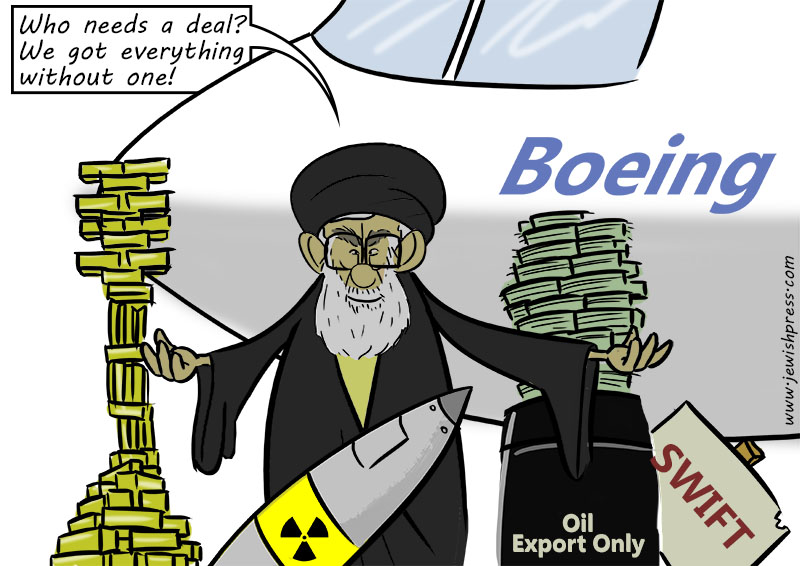
Cartoon of the day

July 7, 2015

H/t The Jewish Press

No-Deal-with-Nuke


Here’s the most critical part of Iran’s nuclear program that nobody is talking about

July 7, 2015

Here’s the most critical part of Iran’s nuclear program that nobody is talking about, Business Insider, Michael Eisenstadt, The Washington Institute For Near East Policy, July 7, 2015

(Please see also, Iran’s Rafsanjani Reiterates ‘Israel Will Be Wiped Off The Map.’  — DM)

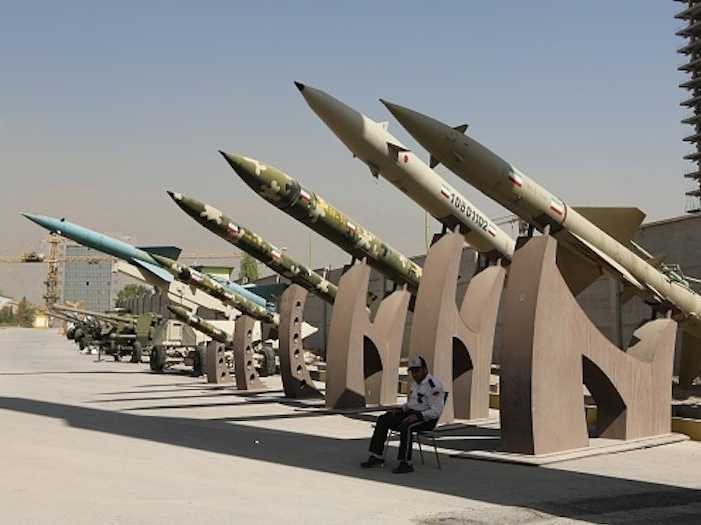
iran-missiles-exhibition-commemorationAtta Kenare/AFP/Getty Images. Missiles are displayed during ‘Sacred Defense Week,’ to commemorate the 1980-88 Iran-Iraq war. Photo taken on Sept. 28, 2014 at a park in northern Tehran.

Early in the P5+1 negotiations, US officials stated that “every issue,” including the missile program, would be on the table. In February 2014, however, Undersecretary of State for Political Affairs Wendy Sherman stated, “If we are successful in assuring ourselves and the world community that Iran cannot obtain a nuclear weapon,” then that “makes delivery systems … almost irrelevant.”

****************

According to the latest reports stemming from the P5+1 talks, Iran is now insisting that UN sanctions on its ballistic missile program be lifted as part of a long-term nuclear accord.

In addition to further complicating already fraught negotiations, this development highlights the importance Tehran attaches to its missile arsenal, as well as the need to answer unresolved questions about possible links between its missile and nuclear programs.

Iran is believed to have the largest strategic missile force in the Middle East, producing short- and medium-range ballistic missiles, a long-range cruise missile, and long-range rockets. Although all of its missiles are conventionally armed at present, its medium-range ballistic missiles could deliver a nuclear weapon if Iran were to build such a device.

Early in the P5+1 negotiations, US officials stated that “every issue,” including the missile program, would be on the table. In February 2014, however, Undersecretary of State for Political Affairs Wendy Sherman stated, “If we are successful in assuring ourselves and the world community that Iran cannot obtain a nuclear weapon,” then that “makes delivery systems … almost irrelevant.”

Yet many observers remain concerned that personnel and facilities tied to Iran’s missile program were, and may still be, engaged in work related to possible military dimensions (PMD) of the nuclear program. These concerns underscore the need to effectively address the missile issue as part of the UN Security Council resolution that will backstop the long-term nuclear accord now being negotiated, if it will not be dealt with in the accord itself.

screen shot 2015-06-11 at 8.47.42 am copyEstimated Range of Iranian Long-Range Missile Forces

Deterrence, warfighting, and propaganda

The Iran-Iraq War convinced Tehran that a strong missile force is critical to the country’s security, and it has given the highest priority to procuring and developing various types of missiles and rockets. Missiles played an important role throughout that war and a decisive role in its denouement.

During the February-April 1988 “War of the Cities,” Iraq was able to hit Tehran with extended-range missiles for the first time. Iranian morale was devastated: more than a quarter of Tehran’s population fled the city, contributing to the leadership’s decision to end the war.

Since then, missiles have been central to Iran’s “way of war,” which emphasizes the need to avoid or deter conventional conflict while advancing its anti-status quo agenda via proxy operations and propaganda activities.

Iran’s deterrence triad rests on its ability to (1) threaten navigation through the Strait of Hormuz, (2) undertake terrorist attacks on multiple continents, and (3) conduct long-range strikes, primarily by missiles (or with rockets owned by proxies such as Hezbollah).

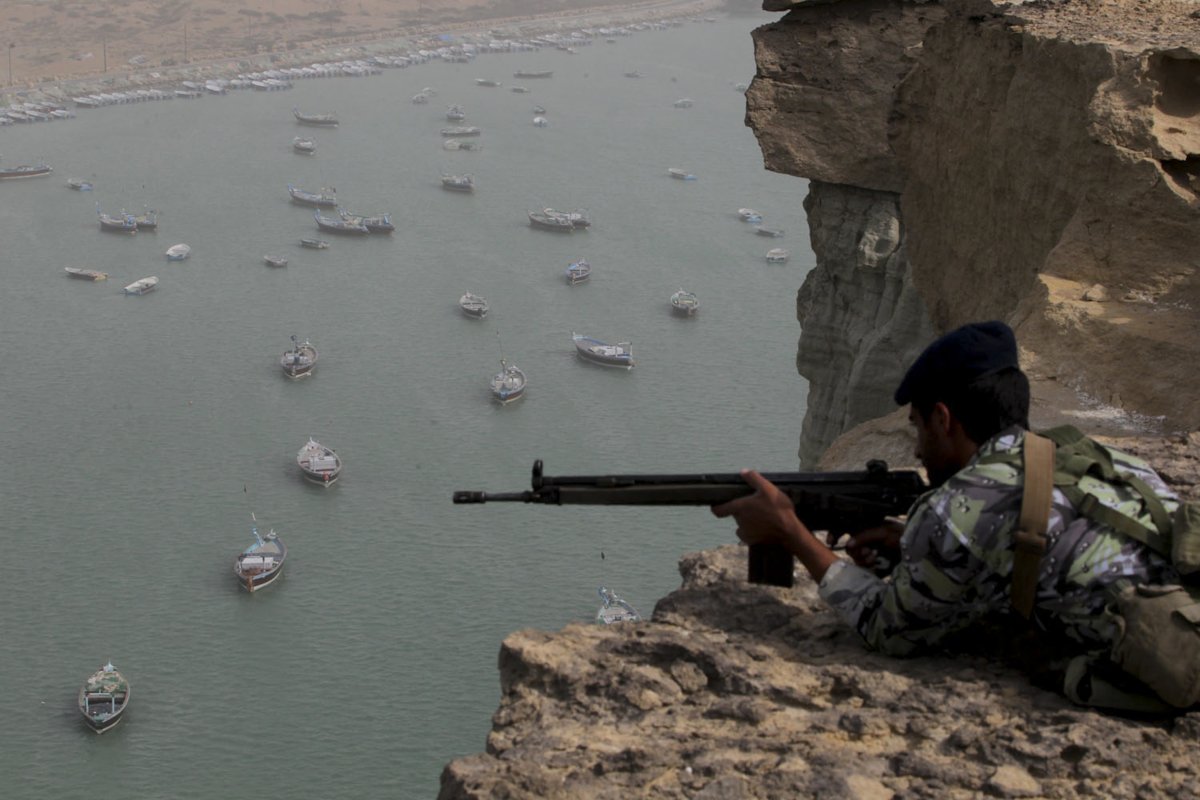
rtr2vqx9REUTERS/Fars News/Hamed Jafarnejad. Iranian military personnel participate in the Velayat-90 war game in unknown location near the Strait of Hormuz in southern Iran December 30, 2011.

Yet the first two options carry limitations.

Closing the strait would be a last resort because nearly all of Iran’s oil exports go through it and Tehran’s ability to wage terror has atrophied in recent years (as demonstrated by a series of bungled attacks on Israeli targets in February 2012). Therefore, Iran’s missile force is the backbone of its strategic deterrent.

Missiles enable Iran to mass fires against civilian population centers and undermine enemy morale. If their accuracy increases in the future, they could further stress enemy defenses (as every incoming missile would have to be intercepted) and enable Iran to target military facilities and critical infrastructure.

Although terrorist attacks afford a degree of standoff and deniability, missiles permit a quicker, more flexible response in a rapidly moving crisis — for example, after an initial series of preplanned terrorist attacks, Tehran or its proxies might need weeks to organize follow-on operations. Missile salvos can also generate greater cumulative effects in a shorter period than terrorist attacks.

Indeed, missiles are ideally suited to Iran’s “resistance doctrine,” which states that achieving victory entails demoralizing one’s enemies by bleeding their civilian population and denying them success on the battlefield. In this context, rockets are as important as missiles, since they yield the same psychological effect on the targeted population.

The manner in which Hezbollah and Hamas used rockets in their recent wars with Israel provides a useful template for understanding the role of conventionally armed missiles in Iran’s warfighting doctrine.

flickr_-_israel_defense_forces_-_damage_caused_by_rockets_fired_from_gaza_(10)Israel Defense Forces via Wikimedia Commons. An apartment building in the town of Kiryat Malachi, damaged as a result of rockets fired from Hamas.

Missiles are also Iran’s most potent psychological weapon. They are a central fixture of just about every regime military parade, frequently dressed with banners calling for “death to America” and declaring that “Israel should be wiped off the map.”

They are used as symbols of Iran’s growing military power and reach. And as the delivery system of choice for nuclear weapons states, they are a key element of Iran’s nascent doctrine of nuclear ambiguity and its attempts at “nuclear intimidation without the bomb.”

Finally, while most nuclear weapons states created their missile forces years after joining the “nuclear club” (due to the significant R&D challenges involved), Iran will already have a sophisticated missile force and infrastructure in place if or when it opts to go that route.

This ensures that a nuclear breakout would produce a dramatic and rapid transformation in Iran’s military stature and capabilities.

Iran’s missle force

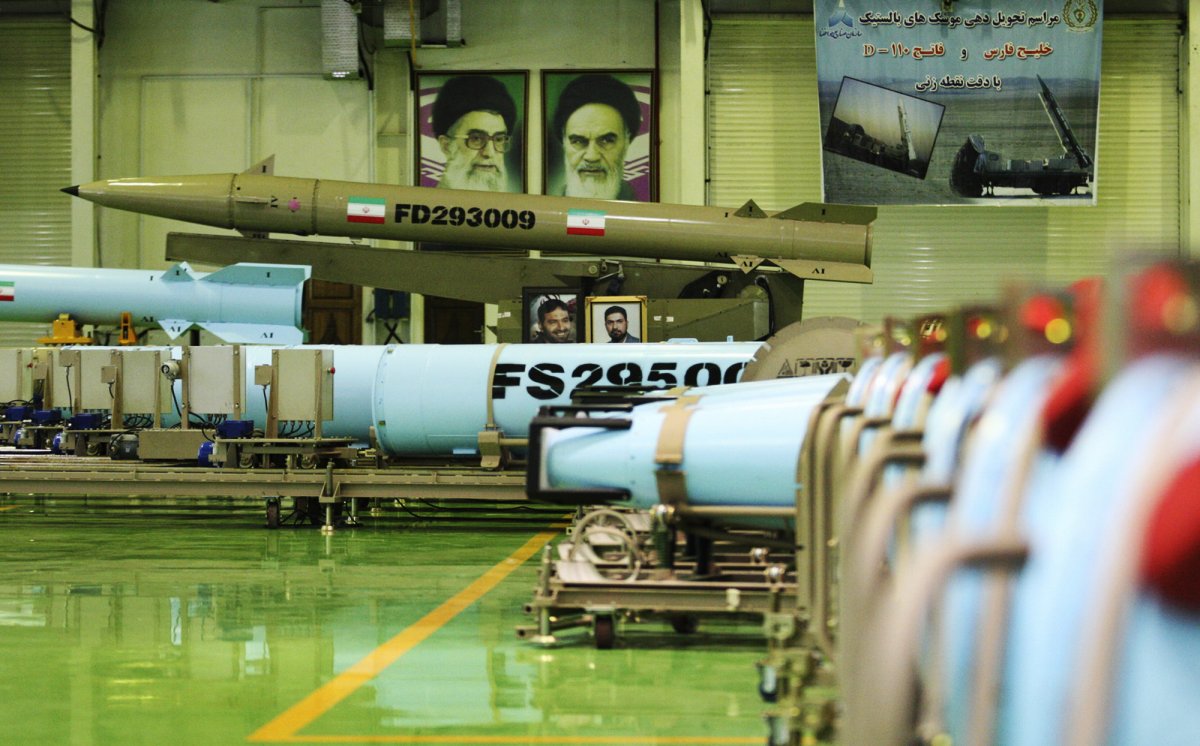
Iran has a large, capable missile force, with a likely inventory of more than 800 short- and medium-range ballistic missiles.

These include single-stage liquid-fuel missiles such as the Shahab-1 (300 km range), Shahab-2 (500 km), Qiam (500-750 km), Shahab-3 (1,000-1,300 km), and Qadr (1,500-2,000 km).

Nearly all of them can reach US military targets in the Persian Gulf, and the latter two can reach Israel. These missiles, which include several subvariants, are believed to be conventionally armed with unitary high-explosive or submunition (cluster) warheads.

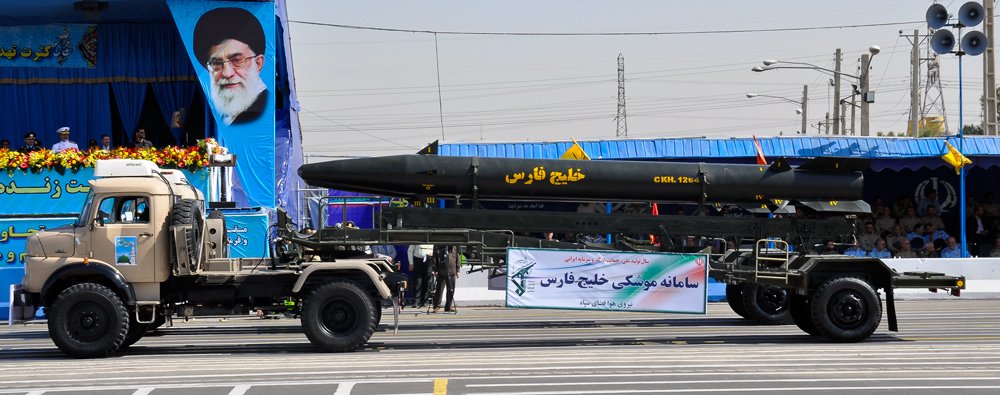
persian-gulf-missileKhalij Fars missile on a transporter.

Additionally, Iran has tested a two-stage solid-fuel missile, the Sejjil-2, whose range of over 2,000 km would allow it to target southeastern Europe — though it is apparently still not operational. In a June 28, 2011, press statement, Tehran claimed that it was capping the range of its missiles at 2,000 km (sufficient to reach Israel but not Western Europe), implicitly eschewing the development of intercontinental ballistic missiles in a presumed bid to deflect US and European concerns.

Yet its Safir launch vehicle, which has put four satellites into orbit since 2009, could provide the experience and knowhow needed to build an ICBM. (According to a May 2010 report by the International Institute for Strategic Studies, the Safir struggled to put a very small satellite into low-earth orbit and has probably reached the outer limits of its performance envelope, so it could not serve as an ICBM itself.) In 2010, Iran displayed a mockup of a larger two-stage satellite launch vehicle, the Simorgh, which it has not yet flown.

Tehran has also claimed an antiship ballistic missile capability that it probably intends for potential use against U.S. aircraft carriers: the Khalij-e Fars and its derivatives, the Hormuz-1/2, each with a claimed range of 300 km. Yet it is not clear that these systems are sufficiently accurate or effective to pose a credible threat to U.S. surface elements in the Gulf.

In addition, Iran recently unveiled the Soumar land-attack cruise missile, which is reportedly a reverse-engineered version of the Russian Raduga Kh-55. It has a claimed range of 2,500-3,000 km, though it may not be operational yet.

The Kh-55 was the Soviet air force’s primary nuclear delivery system.

Iran also fields a very large number of rockets, including the Noor 122 mm (with a range of 20 km), the Fajr-3 and -5 (45 and 75 km), and the Zelzal-1, -2, and -3 (with claimed ranges of 125 to 400 km). During the Iran-Iraq War, rockets played a major role in bombarding Iraqi cities along the border, and they are central to the “way of war” of Iranian proxies and allies such as Hezbollah and Hamas.

Tehran has built this massive inventory so that it can saturate and thereby overwhelm enemy missile defenses in any conflict. It would likely use such tactics whether its missile force remains conventional or becomes nuclear-armed, since conventional missiles could serve as decoys that enable nuclear missiles to penetrate defenses. Numbers would also enable Iran to achieve cumulative strategic effects on enemy morale and staying power by conventional means.

missilesiranAP Photo/Iranian Defense Ministry. To outwork missile defense systems, Iran would use a high volume of missiles.

Finally, many of Iran’s missiles are mounted on mobile launchers, and a growing number are based in silo fields located mainly in the northwest and toward the frontier with Iraq.

This mix of launch options is likely intended to impede preemptive enemy targeting of its missile force. The resources invested in this effort are unprecedented for a conventionally armed force, which indicates that at least some of these missiles would likely be nuclear armed if Iran eventually goes that route.

Nuclear connections

In the annex of a November 8, 2011, report regarding the nuclear program’s possible military dimensions, the International Atomic Energy Agency said it possessed credible information and documents connecting Iran’s missile and nuclear programs. These indicated that, prior to the end of 2003, Iran had:

  • conducted engineering studies on integrating a spherical payload (possibly a nuclear implosion device) into a Shahab-3 reentry vehicle (RV);
  • tested a multipoint initiation system to set off a hemisphere-shaped high-explosive charge whose dimensions were consistent with the Shahab-3’s payload chamber; and
  • worked on a prototype firing system that would enable detonation upon impact or in an airburst 600 meters above a target (a suitable height for a nuclear device).

Moreover, in 2004, Iran began deploying triconic (or “stepped”) RVs — a design almost exclusively associated with nuclear missiles — on its Shahab variants.

Some experts (including Uzi Rubin and Michael Elleman) believe that Iran may have deployed the triconic RV to enhance the stability and thus the accuracy of its conventional warheads, and perhaps to achieve higher terminal velocities that could reduce reaction time for missile defenses.

But if Iran were able to build a miniaturized nuclear device, its experience in designing, testing, and operating missiles with triconic RVs could expedite deployment of this weapon. Indeed, David Albright claimed in his 2010 book Peddling Peril that members of the A. Q. Khan nuclear smuggling network possessed plans for smaller, more advanced nuclear weapon designs that might have found their way to Iran, though most experts doubt the regime’s ability to build such a compact device at this time.

russianukeDesmond Boylan/Reuter

Could Iran have smuggled in a nuclear bomb?

These reports underscore why Washington and its partners must insist that Tehran respond to the IAEA’s questions about past engineering studies, design work, tests, and other elements of the PMD file prior to the lifting of sanctions.

They also highlight the need for a UN Security Council resolution (as called for in the Lausanne parameters) that would impose limitations on Iran’s missile R&D work and threaten real consequences for those who assist Iran’s missile program.

Failure to do so would signal tacit acceptance of activities that could enable Iran to deploy its first nuclear weapon atop a medium-range missile — an achievement that took most nuclear weapons states, including the United States and Soviet Union, about a decade to accomplish.

This development would in turn magnify the destabilizing impact of an Iranian breakout, while incentivizing other regional states to either take preventive action or move toward nuclear capabilities of their own before Iran crosses that threshold.

The No Deal Deal | Faster, Please!

July 7, 2015

The No Deal Deal

Here’s why…

by Michael Ledeen

July 6, 2015 – 3:58 pm

via The No Deal Deal | Faster, Please!.

I don’t want to be the sole bearer of bad news for Ben Rhodes and his fellow gurus, but here it is:  the Iranians at Vienna won’t sign anything, per their instructions from Supreme Leader Ali Khamenei.

Full credit for this diplomatic accomplishment goes to President Obama, Secretary of State Kerry, Guru Rhodes and the rest of the administration strategists.  Their constant offer of more–more money, more gold, more limits on annoying inspections, more cooperation in the air and on the ground with Iranian forces, etcetera etcetera–solidified Khamenei’s conviction that there is no reason for him to approve a hated deal with the devil.  It’s much better to keep talking until all the sanctions are gone, and Iran’s “right” to pursue its nuclear projects is fully recognized.

Keep reminding yourself that Khamenei has two fixed principles:  no “new relationship” with the Great Satan, and relentless pursuit of the atomic bomb.

Obama/Kerry/Rhodes won’t take “no” for a definitive answer, so we’re probably going to see a new form of creative appeasement.  Short version:  It will be a “no deal deal.”  Iran promises to try really really hard to be nice and we pay for it.  Everyone agrees to commit to a “real” agreement by the end of the year.  Iran gets money–the continuation of the monthly payoff, and under-the-table arrangements like the gold shipment the South Africans delivered to Khamenei–and we get smiles.

There is no deal, per se–nobody signs anything–but we get the worst of it any how.  If John Kerry thinks that’s enough for a Nobel Peace Prize, he’s got an even lower opinion of the judgment of the Oslo crowd than I do.  And he may be right.  Chamberlain was widely praised as a great peacemaker for a while, and Carter was greatly admired when he proclaimed we had given up our “inordinate fear of Communism.”  And we’ll keep talking, won’t we?  And Obama just reiterated–at the Pentagon no less–that guns don’t defeat ideologies, only good ideas do.

If I were a Pentagon official and I heard the president say that, I’d have resigned on the spot.

There are some interesting political consequences to the “no deal deal,” and if I have it right, our Congressional warriors seem to have been mooted.  They voted themselves the right to be heard on any Iran deal, but does that apply to this arrangement?  Are they entitled to insist that current sanctions be vigorously enforced?  The White House doesn’t want any such thing, since that would throw a real spanner into the works of the various payoffs to Tehran.  The “international community” doesn’t much want that either;  we’ve read a lot about “Western” businessmen/government officials lining up at the entrances to Persian bazaars.  Some of them will press on.  That includes our own wheelers.  I am told that Iran’s fleet of Boeing jets–you know, the “civilian” aircraft that had been grounded for decades–have been refurbished.

What will Corker/Menendez et al do?  Kredo has reported that the White House is whipping the Dems into a pliable herd to ensure Congress can’t/won’t stop the appeasement of the evil murderers around Ali Khamenei.  If they succed, as any serious gambler would wage, then the Islamic Republic will continue to slaughter Syrians, Kurds, Yeminis, Saudis…you know the list…until they finally get on with the mission assigned them by the 12th Imam:  destroy us.

If the next president is paying attention, he/she will take names, and campaign against the appeasers.  Then fire all those pathetic “military leaders” who stood at attention as Obama proclaimed them irrelevant to the great global war of our time.

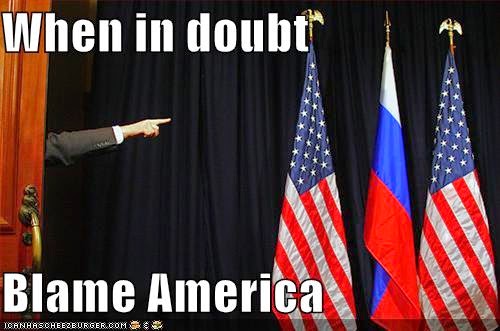
Stop Blaming America for Every Damned Thing Wrong with this World.

July 7, 2015

Let’s stop blaming America

Dr. Khalid Alnowaiser (Yep, an Arab) Published — Saturday 28 May 2011 (Many years ago) Via Arab News


The easy way out. [Source: Unknown]

(Pardon me while I release a little steam. – LS)

We are still the prisoners of a culture of conspiracy and inferiority.

I AM a proud and loyal Saudi citizen, but I am tired of hearing constant criticism from most Arabs of everything the United States does in its relations with other countries and how it responds to global crises. No nation is perfect, and certainly America has made its share of mistakes such as Vietnam, Cuba and Iraq. I am fully aware of what happened when the atomic bombs were dropped on Hiroshima and Nagasaki and the unprecedented abuses at Guantanamo and Abu Ghraib. However, what would we do if America simply disappeared from the face of the earth such as what happened to the Soviet Union and ancient superpowers like the Roman and Greek empires? These concerns keep me up day and night. It’s frustrating to hear this constant drumbeat of blame directed toward the United States for everything that is going wrong in the world. Who else do we think of to blame for our problems and failures? Do we take personal responsibility for the great issues that affect the security and prosperity of Arab countries? No, we look to America for leadership and then sit back and blame it when we don’t approve of the actions and solutions it proposes or takes.

For instance, if a dictator seizes and holds power such as Egypt’s Mubarak and Libya’s Qaddafi, fingers are pointed only at America for supporting these repressive leaders. If the people overthrow a dictator, fingers are pointed at America for not having done enough to support the protestors. If a nation fails to provide its people with minimum living standards, fingers are pointed at America. If a child dies in an African jungle, America is criticized for not providing necessary aid. If someone somewhere sneezes, fingers are pointed at America. Many other examples exist, too numerous to mention.

I am not pro-American nor am I anti-Arab, but I am worried that unless we wake up, the Arab world will never break out of this vicious and unproductive cycle of blaming America. We must face the truth: Sadly, we are still the prisoners of a culture of conspiracy and cultural inferiority. We have laid the blame on America for all our mistakes, for every failure, for every harm or damage we cause to ourselves. The US has become our scapegoat upon whom our aggression and failures can be placed. We accuse America of interfering in all our affairs and deciding our fate, although we know very well that this is not the case as no superpower can impose its will upon us and control every aspect of our lives. We must acknowledge that every nation, no matter how powerful, has its limitations.

Moreover, we conveniently forget that America’s role is one of national self-interest, not to act as a Mother Teresa. Every great nation throughout history has used its power and gained ascendancy in order to serve its own strategic interests. America is not just its foreign policy. We must not forget who promoted education and respected learning, who took on research as a way to discovery, who made the airplane that carries us to our destination and the luxurious car we want to own, who created the Internet and developed social media that has transformed the way we do business and interact with one another, who conducted the scientific research that has saved lives and treated cancer, renal failure, AIDS, malaria, poliomyelitis, and who discovered genetic engineering. When man walked on the Moon, it was an American. Who did Japan turn to for help after the devastating earthquake and tsunami? America that led and organized the international relief effort of the Red Cross. Who do people turn to for support when their leaders seek to brutalize them? Who organized NATO air cover and saved the Libyan city of Benghazi from certain destruction by Qaddafi’s brutal armed forces?

Anyone who is a student of history knows that America is simply doing what all other civilizations before it have done for thousands of years, which is to protect and further its own self-interest. The Greek civilization could not have lasted had it not served its own interests, and the same applies to the Persian, Roman, and Chinese civilizations. All of these civilizations put their own welfare before all others, and by doing so, they strived to achieve great things. The truth is that no nation can ever become great without understanding this reality. Indeed, the Islamic civilization has been through horrible and cruel phases. Hideous events that send goose bumps up one’s spine can be extracted from Islamic history, such as that of As-Saffah (The Shedder of Blood), founder of the Abbasid Caliphate, who took out the remains of the caliphs of Bani Umayyah, one after the other, but found nothing but the tip of a nose from the remains of Hisham Bin Abdul Malak. He took him out and whipped him. He then crucified and burned him and sprinkled his ashes in the wind, without mercy, oblivious to any religious or moral restraints.

There are many other similar examples. But does this mean that Islam is unholy? Of course not. Does this imply that Islamic civilization only had Saffahs? Absolutely not. Islamic civilization has given the world brilliant examples in the areas of art and education and promoted a culture of forgiveness, peace and love. However, today, we as people, not Islam, are in desperate need of an intellectual earthquake, a cultural tsunami to get us back on track, to revive Islam’s cultural intellect and combat our undeniable inferiority complex.

The Holy Qur’an states Allah will not change the condition of a people until they change what is in themselves. He has the power to change them, but He prefers that they change with their own will power which He respects.

What we are seeing now in the Arab streets is a new hope and a step forward to change what is in ourselves. I remain very optimistic because we have now begun to realize that simply blaming the United States for our problems will not help us progress toward great personal freedoms. Our enemy is not America but an inferiority complex from which I am sure the Arab world with its rich culture and history will eventually recover.

— Dr. Khalid Alnowaiser is a columnist and a Saudi attorney with offices in Riyadh and Jeddah. He can be reached at: Khalid@lfkan.com and/or Twitter (kalnowaiser).

Israel’s ISIS Option

July 7, 2015

Israel’s ISIS Option

Why an ISIS Gaza might help end terrorism.

July 7, 2015

Daniel Greenfield

via Israel’s ISIS Option | Frontpage Mag.

Daniel Greenfield, a Shillman Journalism Fellow at the Freedom Center, is a New York writer focusing on radical Islam.

Long after the PLO had outlived its role as an even halfway plausible peace partner; Israel was forced to keep the terrorist group on life support as a bulwark against Hamas.

PLO leaders posture about having the UN declare a state, but not only would that state instantly be more bankrupt than ten Greek economies piled on top of each other, but its collection of terrorists who are great at running drugs and shaking down West Bank storekeepers for protection money would last all of 5 seconds in a grudge match with Hamas.

We know that last one is true because that was how it went when the PLO tried to take on Hamas in Gaza. The PLO had American weapons, training and support. Its illegal military slash police force had been nurtured by the United States and the European Union. They still lost fast and they lost hard.

The PLO’s crack troops, who were experts at sniper attacks on Jewish babies or drive-by attacks on Israeli families headed home from weddings, ran away faster than an Iraqi army division.

The billion dollars in security assistance lavished on the Palestinian Authority forces bought nothing except panicking PLO terrorists fleeing Gaza; some of whom had to be evacuated by Israel. That year, the US had promised around $50 million in security assistance to PLO boss Abbas’ 4,700 member elite “presidential guard”. $3 million was to be sent to terror boss Mohammed Dahlan who has been accused of trying to undermine Hamas by funding Al Qaeda groups in Gaza. Those groups are now turning to ISIS.

By trying to find moderate Islamic terrorists to fight extreme Islamic terrorists, the US helped create ISIS in Gaza. The second best way to stop Islamic terrorism is to stop supporting moderate terrorists.

The PLO pretended to run the first Palestinian state in the West Bank while disavowing such legal niceties as elections and Hamas ran its second Palestinian state in Gaza. Despite all the PLO’s rants about Israel, if Israel ever stepped aside, Hamas could take the West Bank with a few hundred gunmen. The PLO has gambled all along that Israel would never actually let Hamas win.

The PLO was the only alternative to Hamas. And Hamas’ terrorists were the real “extremists”.

Now with the rise of ISIS, Hamas is being passed off as the bulwark against the Islamic State and Iran. The old extremists are the new moderates. The Saudis and Egypt want to polish up Hamas, put it on a shelf and offer it a lot of goodies in exchange for cutting its ties with Iran. Israel is supposed to go along.

Hamas is committed to wiping out the Jews and taking over Egypt, but for the moment it’s a cheap way to keep ISIS out of Gaza. Just like the PLO was supposed to keep Hamas out of Gaza.

And even those who know better will mumble, ”What’s the alternative?” No one wants ISIS taking over Gaza do they? Just think, if ISIS controlled Gaza, it might fire rockets into major Israeli cities and drag opponents around main streets face down tethered to motorcycles.

You know, the sorts of things that Hamas does.

If Hamas, a genocidal terrorist group that is part of the Muslim Brotherhood’s world terror network bent on global conquest, is a reasonable moderate alternative to ISIS, then can’t ISIS one day come to seem like a reasonable alternative to some even more horrifying Islamic terror group?

ISIS is a chip of the old block of the Al Qaeda network and Al Qaeda is a splinter group of the Muslim Brotherhood.

A splinter group of ISIS that will be even more dementedly vicious than it is an almost certain development. One day we’ll look back on its beheadings, drowning and auto-da-fés as relics of a simpler time before terrorists from SuperDuperJihad or IslamAwayAllInfidels weren’t engaging in ritual cannibalism and child rape on camera. And that ISIS state in the Sinai will be considered moderate.

 When it comes to terrorists, “moderate” and “extreme” are mostly meaningless terms. When the moderates are mass murderers, they don’t look any better just because the extremists are worse.

It’s not clear that the Islamic State taking over Gaza would be any worse for Israel. It might even be a good deal better if Gaza were run by an Islamic terrorist group that couldn’t count on weapons from Iran and support from the Democratic Party’s Code Pink donors. Even they might actually draw the line at ISIS, if only because the Free Gaza activists would be beheaded as soon as their boat landed.

Protecting the PLO from Hamas has improved Israel’s security situation in the short term, while worsening its overall situation in the long term as the PLO and Hamas trade off diplomatic and terrorist attacks. Protecting Hamas from ISIS would be an even bigger disaster. If this madness goes on, Israel will have to protect ISIS from SuperDuperJihad while absorbing terrorist attacks from the greater and lesser evils.

The Israeli strategy after the collapse of Oslo was to prove that the PLO does not want peace. That strategy has failed for the same reason that politicians won’t stop calling Islam the religion of peace or insisting that ISIS is un-Islamic. It’s easier to simplify and ‘niceify’ problems than to deal with reality.

Believing that you can prove a point to anyone using reason and logic is a notorious Jewish weakness. In the Talmud any issue can be resolved using a complex set of proofs. In real life most issues are resolved with fait accomplis. In one of the first diplomatic exchanges, the biblical judge Jephthah dispatched a missive to the King of Ammon laying out a claim to the land based on history, religion and logic tying reason and emotion together into an irrefutable argument. The King of Ammon invaded anyway.

If American liberals have a weakness for wishful thinking, Netanyahu has a weakness for reasoned argument. These arguments will fail because they lack the seductiveness of Obama’s promises.

The current efforts at drawing Hamas into some sort of anti-ISIS and anti-Iran coalition may be in the interests of the Saudis and Egypt, but they are not in Israel’s interests. And despite the unbridled enthusiasm among some in the pro-Israel camp over these new ties, both countries continue to consider Israel a useful enemy. This is the same old attitude that they have had before.

Israelis should know by now better than anyone else that Islamic terrorists cannot be defanged.

The Islamic State is a threat to Israel, but less so than Hamas or the PLO. ISIS is an opportunity because it is undisguised Islamic terrorism. ISIS not only refuses to deal with Israel, but with any of the enablers of Hamas and PLO terrorism in Europe and America. Whatever strengths it has, it is incapable of exploiting the greatest strategic weakness of its enemies for appeasement.

If ISIS were to take over Gaza, Israel would have no choice except to fight it. And no one in the world would be able to offer any other options. There would be no last minute diplomatic rescues for ISIS, the way that there were for Hamas and the PLO. Israel would not be forced to tolerate the bombing of its cities due to worthless accords rammed through by Washington D.C. and Cairo.

The destabilization of the Middle East threatens the rest of the region far more than it does Israel. The unweaving of tribal and religious ties among Muslims can’t take down Israel the way that it could Egypt, Syria and Jordan. While having terrorists on every border would be a serious threat, every one of Israel’s neighbors has already been providing sanctuary to terrorists targeting Israel.

If they want Israel’s help keeping ISIS away, then instead of letting them aid Hamas, Israel should make ending their support for terrorism into the price for its aid.

If they want secure borders, Israel should be able to expect secure borders in return.

Israel has spent too long protecting the PLO and Jordan from their neighbors. Expecting it to protect Hamas from ISIS is simply insane. It might be time for Israel to step back and let the natural course of terrorism have its way. The end result will be ugly, but it will end Israel’s obligation to nurture its foes.

The Jewish State has tried its best to find a middle ground that works. It’s time to let the “moderate” terrorists and their foreign appeasers live with the consequences of their terrorism.

When reason can’t win the argument, reality eventually wins the debate.