Posted tagged ‘Saudi Arabia’

Iranian ships in Gulf of Aden: How far might Yemen escalation go? Op-Edge

October 16, 2016

Iranian ships in Gulf of Aden: How far might Yemen escalation go?

Source: Iranian ships in Gulf of Aden: How far might Yemen escalation go? — RT Op-Edge

The U.S. Navy guided-missile destroyer USS Mason © Blake Midnight / Reuters

With Iranian warships in the Gulf of Aden, political analyst and expert on American studies, Sayed Mohammad Marandi says the Iranians feel their presence is to facilitate trade and shipping while the American presence serves to create further chaos.

Iran has established a military presence off the coast of Yemen hours after Washington carried out its first direct strikes against Houthi forces. Two Iranian warships were sent to the Gulf of Aden reportedly to protect trade vessels from piracy.

The White House insists its strike was a defensive measure against a reported attempt by the Houthis to target a US navy vessel in the Red Sea.

Read more

FILE PHOTO Iranian navy warship © Stringer

RT: Now there are Iranian warships in the Gulf of Aden. How far might this escalation over Yemen go?

Sayed Mohammad Marandi: I don’t think this is all that important. The Iranians have a permanent presence in that part of the world because of the problems with shipping thanks to the American policies over the past few decades. There is a lot of instability in the Red Sea. And the Iranian ships are there basically to prevent pirates from boarding Iranian ships. They’ve been doing this for a number of years now. The Iranians have also protected the ships of other countries as well. The problem really is the US presence. Iranians are confident the Americans are lying about missile attacks on American vessels. They say this is a fabricated story that the US could enter the fray on behalf of Saudi Arabia to boost Saudi morale.

Because after all the Saudis after bombing weddings, funerals, schools and hospitals despite the fact that the Western media is completely silent about it and Western leaders like Boris Johnson don’t seem to care about the Yemenis who are being massacred in the country. But despite all that the Saudis are losing the war. They have lost the war. And the Yemeni resistance, the Houthis and Ansar Allah and the Yemeni army they have succeeded in defeating Saudi-backed forces and Saudi forces on the border between Yemen and Saudi Arabia. The Iranians feel that their presence is one to help facilitate trade and shipping while the American presence as in the past few decades is only serving to create further chaos.

Middle East affairs commentator Ali Rizk says the Americans and Saudis are guilty of double standards: “Some US figures who favor intervention are now saying: “Look, the Houthis are attacking the US navy vessels therefore we have to get more deeply involved. That is in a very contrast to Syria. I think it shows the clear double standards and that shows also very clearly that the US and Saudi Arabia in particular have no interest in democracy or anything else. What is going on is part of the geopolitical game.”

RT: Isn’t it a danger here that now both sides will see each other as a threat?I

MM: The Iranians believe that the Americans have already lost the war in Yemen. Their support for Saudi Arabia has failed. And the Americans are just as responsible for the atrocities in Yemen as is the Saudi regime. The American president has blood on his hands just like the Saudi King, Crown Prince and the Deputy Crown Prince. The Iranians feel the Americans are not really in a position to escalate further. What they want to do is put pressure on Ansar Allah so that the Saudis could negotiate from a stronger position. And also I think in order to increase pressure on the US after the Saudi regime deliberately targeted the funeral killing 150 people and injuring hundreds more. A lot of people in the West have been increasingly protesting in the media and otherwise against America’s support for the Wahhabi regime.

Read more

A still image from video released October 13, 2016 shows U.S. military launching cruise missile strikes from U.S. Navy destroyer USS Nitze to knock out three coastal radar sites in areas of Yemen controlled by Houthi forces. ©

This latest fabricated accusation by the US that Ansar Allah fired missiles despite the denials by Ansar Allah and the Yemeni army. This was basically to draw attention away from the killings in the funeral to ease pressure so that the US could continue supporting the Wahhabi regime in Saudi Arabia.

RT: Do you expect Washington to in any way review its co-operation with Saudi Arabia which it suggested it might do after Saturday’s carnage at the funeral in Sana’a?

MM: No, they are being completely dishonest. The Americans from the very beginning when the Saudis were using cluster bombs, they continued to give them weapons, when they bombed hospitals, they continued to support them, when they bombed weddings…The Americans have no problem with what the Saudis are doing on Yemen. It is uncomfortable so they every now and then, they complain about it…

The statements, views and opinions expressed in this column are solely those of the author and do not necessarily represent those of RT.

Kerry Negotiating Ceasefire W/Death to America Terrorists After They Attack US Ships

October 14, 2016

Kerry Negotiating Ceasefire W/Death to America Terrorists After They Attack US Ships, Front Page Magazine, Daniel Greenfield

kerry_whitehousegov-1

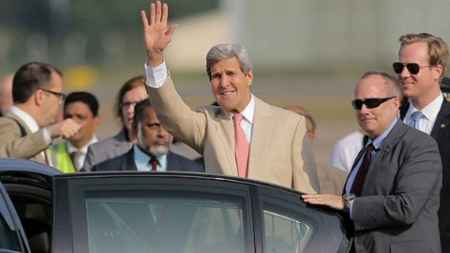
John Kerry never changes. Whatever happens, he can always be found rushing to appease the enemies of this country. After Iranian backed Houthi Islamic Jihadists attacked a US ship, Kerry has jumped into action to do his usual thing

As the U.S. launched missile attacks Thursday on Houthi-controlled areas of Yemen, behind the scenes Secretary of State John Kerry has been trying to negotiate a temporary cease-fire and reinvigorate a political process to end the country’s civil war.

The conflict has dragged on for over two years now, since the Shiite rebels seized control of the capital of Sanaa in September of 2014. The conflict escalated in March 2015 and since then over 4,000 civilians have been killed, the U.N. has said.

“What the Secretary has been pushing hard for is to get back … to a cessation of hostilities, a 72-hour cessation of hostilities which can at least then create some kind of climate where a political dialogue or a dialogue can begin again,” State Department Deputy Spokesperson Mark Toner said Thursday.

Here’s whom Kerry wants a dialogue with. The Houthis are not “rebels”, they’re Islamic Jihadists, backed by Iran. Their slogan is, “Allah Akbar, Death to America, Death to Israel, A curse upon the Jews, Victory to Islam.”

But part of that is Kerry and Obama’s slogan too. Meanwhile Obama’s NSC put out a statement warning the Saudis about further attacks on the Houthis.

U.S. security cooperation with Saudi Arabia is not a blank check. Even as we assist Saudi Arabia regarding the defense of their territorial integrity, we have and will continue to express our serious concerns about the conflict in Yemen and how it has been waged. In light of this and other recent incidents, we have initiated an immediate review of our already significantly reduced support to the Saudi-led Coalition and are prepared to adjust our support so as to better align with U.S. principles, values and interests, including achieving an immediate and durable end to Yemen’s tragic conflict. We call upon the Saudi-led Coalition, the Yemeni government, the Houthis and the Saleh-aligned forces to commit publicly to an immediate cessation of hostilities and implement this cessation based on the April 10th terms.

Maybe Kerry and the Houthis can bond over their mutual hatred of America.

Column One: From Yemen to Turtle Bay

October 14, 2016

Column One: From Yemen to Turtle Bay, Jerusalem Post, Caroline Glick, October 13, 2016

sana-yemen


As far as Obama is concerned, Iran is a partner, not an adversary.

****************************

Off the coast of Yemen and at the UN Security Council we are seeing the strategic endgame of Barack Obama’s administration. And it isn’t pretty.

Since Sunday, Iran’s Houthi proxies in Yemen have attacked US naval craft three times in the Bab al-Mandab, the narrow straits at the mouth of the Red Sea. The Bab al-Mandab controls maritime traffic in the Red Sea, and ultimately controls the Suez Canal.

Whether the Iranians directed these assaults or simply green-lighted them is really beside the point. The point is that these are Iranian strikes on the US. The Houthis would never have exposed themselves to US military retaliation if they hadn’t been ordered to do so by their Iranian overlords.

The question is why has Iran chosen to open up an assault on the US? The simple answer is that Iran has challenged US power at the mouth of the Red Sea because it believes that doing so advances its strategic aims in the region.

Iran’s game is clear enough. It wishes to replace the US as the regional hegemon, at the US’s expense.

Since Obama entered office nearly eight years ago, Iran’s record in advancing its aims has been one of uninterrupted success.

Iran used the US withdrawal from Iraq as a means to exert its full control over the Iraqi government. It has used Obama’s strategic vertigo in Syria as a means to exert full control over the Assad regime and undertake the demographic transformation of Syria from a Sunni majority state to a Shi’ite plurality state.

In both cases, rather than oppose Iran’s power grabs, the Obama administration has welcomed them. As far as Obama is concerned, Iran is a partner, not an adversary.

Since like the US, Iran opposes al-Qaida and ISIS, Obama argues that the US has nothing to fear from the fact that Iranian-controlled Shiite militias are running the US-trained Iraqi military.

So, too, he has made clear that the US is content to stand by as the mullahs become the face of Syria.

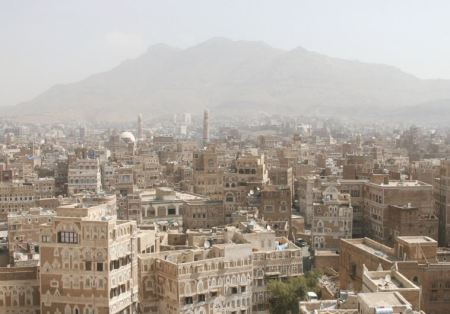
In Yemen, the US position has been more ambivalent. In late 2014, Houthi rebel forces took over the capital city of Sanaa. In March 2015, the Saudis led a Sunni campaign to overthrow the Houthi government. In a bid to secure Saudi support for the nuclear agreement it was negotiating with the Iranians, the Obama administration agreed to support the Saudi campaign. To this end, the US military has provided intelligence, command and control guidance, and armaments to the Saudis.

Iran’s decision to openly assault US targets then amounts to a gamble on Tehran’s part that in the twilight of the Obama administration, the time is ripe to move in for the kill in Yemen. The Iranians are betting that at this point, with just three months to go in the White House, Obama will abandon the Saudis, and so transfer control over Arab oil to Iran.

For with the Strait of Hormuz on the one hand, and the Bab al-Mandab on the other, Iran will exercise effective control over all maritime oil flows from the Arab world.

It’s not a bad bet for the Iranians, given Obama’s consistent strategy in the Middle East.

Obama has never discussed that strategy.

Indeed, he has deliberately concealed it. But to understand the game he has been playing all along, the only thing you need to do listen to his foreign policy soul mate.

According to a New York Times profile published in May, Obama’s deputy national security adviser Ben Rhodes is the president’s alter ego. The two men’s minds have “melded.”

Rhodes’s first foreign policy position came in the course of his work for former congressman Lee Hamilton.

In 2006, then-president George W. Bush appointed former secretary of state James Baker and Hamilton to lead the Iraq Study Group. Bush tasked the group with offering a new strategy for winning the war in Iraq. The group released its report in late 2006.

The Iraq Study Group’s report contained two basic recommendations. First, it called for the administration to abandon Iraq to the Iranians.

The group argued that due to Iran’s opposition to al-Qaida, the Iranians would fight al-Qaida for the US.

The report’s second recommendation related to Israel. Baker, Hamilton and their colleagues argued that after turning Iraq over to Iran, the US would have to appease its Sunni allies.

The US, the Iraq Study Group report argued, should simultaneously placate the Sunnis and convince the Iranians of its sincerity by sticking it to Israel. To this end, the US should pressure Israel to give the Golan Heights to Syria and give Judea and Samaria to the PLO.

Bush rejected the Iraq Study Group report. Instead he opted to win the war in Iraq by adopting the surge counterinsurgency strategy.

But once Bush was gone, and Rhodes’s intellectual twin replaced him, the Iraq Study Group recommendations became the unstated US strategy in the Middle East.

After taking office, Obama insisted that the US’s only enemy was al-Qaida. In 2014, Obama grudgingly expanded the list to include ISIS.

Obama has consistently justified empowering Iran in Iraq and Syria on the basis of this narrow definition of US enemies. Since Iran is also opposed to ISIS and al-Qaida, the US can leave the job of defeating them both to the Iranians, he has argued.

Obviously, Iran won’t do the US’s dirty work for free. So Obama has paid the mullahs off by giving them an open road to nuclear weapons through his nuclear deal, by abandoning sanctions against them, and by turning his back on their ballistic missile development.

Obama has also said nothing about the atrocities that Iranian-controlled militia have carried out against Sunnis in Iraq and has stopped operations against Hezbollah.

As for Israel, since his first days in office, Obama has been advancing the Iraq Study Group’s recommendations. His consistent, and ever escalating condemnations of Israel, his repeated moves to pick fights with Jerusalem are all of a piece with the group’s recommended course of action. And there is every reason to believe that Obama intends to make good on his threats to cause an open rupture in the US alliance with Israel in his final days in office.

Prime Minister Benjamin Netanyahu’s phone call with Secretary of State John Kerry on Saturday night made this clear enough. In the course of their conversation, Netanyahu reportedly asked Kerry if Obama intended to enable an anti-Israel resolution to pass in the UN Security Council after the presidential election next month. By refusing to rule out the possibility, Kerry all but admitted that this is in fact Obama’s intention.

And this brings us back to Iran’s assaults on US ships along the coast of Yemen.

Early on Sunday morning, the US responded to the Houthi/Iranian missile assaults by attacking three radar stations in Houthi-controlled territory. The nature of the US moves gives credence to the fear that the US will surrender Yemen to Iran.

This is so for three reasons. First, the administration did not allow the USS Mason destroyer to respond to the sources of the missile attack against it immediately. Instead, the response was delayed until Obama himself could determine how best to “send a message.”

That is, he denied US forces the right to defend themselves.

Second, it is far from clear that destroying the radar stations will inhibit the Houthis/Iranians.

It is not apparent that radar stations are necessary for them to continue to assault US naval craft operating in the area.

Finally, the State Department responded to the attack by reaching out to the Houthis. In other words, the administration is continuing to view the Iranian proxy is a legitimate actor rather than an enemy despite its unprovoked missile assaults on the US Navy.

Then there is the New York Times’ position on Yemen.

The Times has repeatedly allowed the administration to use it as an advocate of policies the administration itself wishes to adopt. Last week for instance, the Times called for the US to turn on Israel at the Security Council.

On Tuesday, the Times published an editorial calling for the administration to end its military support for the Saudi campaign against the Houthis/Iran in Yemen.

Whereas the Iranian strategy makes sense, Obama’s strategy is nothing less than disastrous.

Although the Iraq Study Group, like Obama, is right that Iran also opposes ISIS, and to a degree, al-Qaida, they both ignored the hard reality that Iran also views the US as its enemy. Indeed, the regime’s entire identity is tied up in its hatred for the US and its strategic aim of destroying America.

Obama is not the only US president who has sought to convince the Iranians to abandon their hatred for America. Every president since 1979 has tried to convince the mullahs to abandon their hostility. And just like all of his predecessors, Obama has failed to convince them.

What distinguishes Obama from his predecessors is that he has based US policy on a deliberate denial of the basic reality of Iranian hostility. Not surprisingly, the Iranians have returned his favor by escalating their aggression against America.

The worst part about Obama’s strategy is that it is far from clear that his successor will be able to improve the situation.

If Hillary Clinton succeeds him, his successor is unlikely to even try. Not only has Clinton embraced Obama’s policies toward Iran.

Her senior advisers are almost all Obama administration alumni. Wendy Sherman, the leading candidate to serve as her secretary of state, was Obama’s chief negotiator with the Iranians.

If Donald Trump triumphs next month, assuming he wishes to reassert US power in the region, he won’t have an easy time undoing the damage that Obama has caused.

Time has not stood still as the US has engaged in strategic dementia. Not only has Iran been massively empowered, Russia has entered the Middle East as a strategic spoiler.

Moreover, since 2001, the US has spent more than a trillion dollars on its failed wars in the Middle East. That investment came in lieu of spending on weapons development. Today Russia’s S-400 anti-aircraft missiles in Syria reportedly neutralize the US’s air force.

US naval craft in the Bab al-Mandab have little means to defend themselves against missile strikes.

The US’s trillion-dollar investment in the F-35 fighter jet has tethered its air wings to a plane that has yet to prove its capabilities, and may never live up to expectations.

Israel is justifiably worried about the implications of Obama’s intention to harm it at the UN.

But the harm Israel will absorb at the UN is nothing in comparison to the long-term damage that Obama’s embrace of the Iraq Study Group’s disastrous strategic framework has and will continue to cause Israel, the US and the entire Middle East.

First Iranian-Yemeni missile attack on US flotilla

October 12, 2016

First Iranian-Yemeni missile attack on US flotilla, DEBKAfile, October 12, 2016

uss_mason_fires__9-10-16_an_sm-2

Contrary to Tehran’s assurance to Washington in August that Iranian arms supplies to Yemeni Houthi rebels had been suspended, the rebels took delivery last week of the largest consignment of Iranian weapons to date.

According to DEBKAfile’s military sources, the shipment included highly sophisticated Scud D surface-to-surface missiles with a range of 800km; and C-802 anti-ship missiles (an upgraded version of the Chinese YJ-8 NATO-named CSS-N-8 and renamed by Iran Saccade).

They came with Iranian Revolutionary Guards officers and radar systems to fine-tune the targeting of these missiles by Iran’s Yemeni proxies.

The Scuds were given to the Houthi forces fighting in northern Yemen on the Saudi border, while the C-802s were delivered to the Houthis’ Ansar Allah faction, which is under direct Iranian Rev Guards command.

The missiles were posted at special launch bases constructed by Iran outside Yemen’s two principal Red Sea ports of Mokha and Hudaydah.

Since no more than 62km of Red Sea water divides the Saudi and African coasts, the Iranian missiles are well able to block shipping and tanker traffic plying to and from the Gulf of Suez and the Persian Gulf. Therefore, the threat of blockade hangs imminently over one-third of Saudi and Gulf Emirate oil exports.

The same threat hangs over Israeli civilian and naval shipping from its southern port of Eilat through the Gulf of Aden and out to the Indian Ocean.

One of the most troubling aspects of this pivotal new menace to an international waterway was that US, Saudi, Egyptian and Israeli intelligence agencies missed the huge consignment of Iranian missiles as it headed towards Yemen. Neither did they pick up on the construction by Iranian military engineers of three ballistic missile bases – one facing Saudi Arabia and two Red Sea traffic.

Tehran’s Yemeni proxies moreover landed large-scale military strength on Perim island in the mouth of the Bab al-Mandeb strait, the chokepoint for ingress and egress from the Red Sea.

Since the strait is just 20km wide, control of this island empowers this force to regulate shipping movements through this strategic strait.

Tehran wasted no time after all its assets were in place to begin using them:

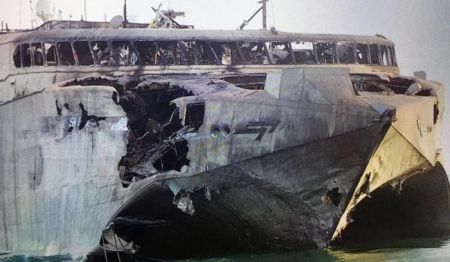
1. On Oct. 1, Iran’s Houthi surrogates launched C-8-1 missiles against a United Arab Emirates transport HSV-2 Swift logistics catamaran as it was about to pass through the strait. The ship, on lease from the US Navy, was badly damaged. No information was released about casualties.

uae_hsv-2_1-1-16

DEBKAfile’s military and intelligence sources discerned that the aim of this attack was to choke off the movements of UAE warships from the southern Yemeni port of Aden, where large Emirate and Saudi forces are concentrated, to the Eritrean port of Assab, where the UAE has established a large naval base.

This attack did finally evoke a US response. The guided missile destroyers, USS Mason and USS Nitze, were dispatched to the Red Sea, along with the USS Ponce afloat forward staging base, to patrol the strait opposite the Yemeni coast

2. This did not deter Tehran or its Yemeni pawns: On Oct. 9, they fired an additional barrage of C-802 at the American flotilla, which according to a US spokesman, missed aim.

The Mason hit back with two Standard Missile-2s and a single Enhanced Sea Sparrow Missile.

There has been no official word about whether these weapons destroyed a Yemeni launching site. But the event itself was a landmark as the first direct Iranian-Houthi attack of its kind on an American naval vessel.

3. That same day, the Houthis fired Scud-D missiles at the Saudi town of Ta’if, 700 km from the Yemeni border and only 70km from the Muslim shrine city Mecca. This was meant as a direct assault on the Saudi royal house and its claim to legitimacy, by virtue of its role as Guardian of the Holy Places of Islam.

In America’s heated presidential campaign, the Democratic contender Hillary Clinton boasts repeatedly that as Secretary of State she helped “put the lid on Iran’s nuclear program without firing a single shot.”

That is factually true. America did not fire a single shot. Iran did the shooting and still does, constantly upgrading its arsenal with sophisticated ballistic missiles.

Saudi Arabia and Qatar Funding The Islamic State

October 11, 2016

Saudi Arabia and Qatar Funding The Islamic State, Understanding the Threat, October 10, 2016

Why wouldn’t Saudi Arabia, Qatar, and all other wealthy Muslim countries fund ISIS, ISIL, or whatever we are calling the leading army of Mohammad this week?

In the latest Wikileaks download, a series of emails between then Secretary of State Hillary Clinton and John Podesta, former Chief of Staff to President Bill Clinton and Counselor to President Obama, dated August and September 2014 reveal Saudi Arabia and Qatar are funding and providing support to ISIS.

In the email Mrs. Clinton states:  “We need to use our diplomatic and more traditional intelligence assets to bring pressure on the governments of Qatar and Saudi Arabia, which are providing clandestine financial and logistic support to ISIL and other radical Sunni groups in the region.”

saudi

We know from the recently released portions of the 9/11 Report a large volume of evidence exists revealing Saudi Arabia funds jihadi training materials and Islamic Centers/Mosques in the United States, among other direct support to fund the global jihad against the U.S. and the West.

Pakistan provided direct support via their intelligence agency (ISI) to Al Qaeda fighters after the attacks on the United States on 9/11/2001, and, provided safe haven for Osama bin Laden.

Turkey’s policies and open hostility towards the United States make clear they cannot be trusted at all.

Saudi Arabia and Qatar are giving financial and logistical support to ISIS.

The questions that remain:

*Why are key facilities in Saudi Arabia and Qatar not on our target list?

*Which Muslim country in the world is not hostile to the United States and supporting the armies of Mohammad (ISIS, Al Qaeda, Hamas, etc)?

Hillary Clinton’s “play for pay” campaign

October 6, 2016

Hillary Clinton’s “play for pay” campaign, Israel National News, Lee Kaplan, October 6, 2016

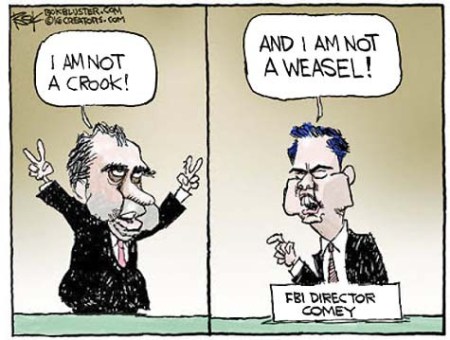
President Harry Truman once said that any politician who became wealthy as a result of being in public service was a crook. As the American presidential election looms near, Hillary Clinton is showing the former president’s statement to be true.

On leaving the White House at the end of her husband’s presidency, Hillary Clinton cried poverty. Yet today, after her stint in Congress and as the U.S. Secretary of State, her net worth is in excess of 100 billion dollars. To this day Mrs. Clinton has not openly told the truth about where all the money is coming from. Most of this largesse is the result of donations from foreign dictators (notably the Gulf Sheikhs in Saudi Arabia, Qatar, Kuwait and the UAE) and the Organization of Islamic Cooperation (OIC) to which these dictators belong.

What is the OIC?

It is a consortium of the Gulf Sheiks that also became a part of the United Nations. One of its key purposes of late is to try and have blasphemy laws created in the West and worldwide when criticism of Islam is voiced. It is also designed to get the Gulf Sheiks whatever they want from pusillanimous diplomats in the West.

The crux of the matter is how Hillary Clinton criticizes her presidential opponent by trying to suggest he is xenophobic, or more specifically “islamophobic” ( a silly term touted and promoted by UC Berkeley Hamas apparatchik Hatem Bazian, who also called for an “intifada” in America).  She says this is anathema to her humanitarian concern for Syrian refugees with which she wants to flood American shores.

Whereas Barack Obama brought in 10,000 such refugees and seeks to double the numbers, Ms. Clinton insists she wants this number increased to 550,000 or possibly even 600,000. Voters should note not only the fact that such a large number is bound to have many more refugees who are not vetted for security purposes – as is already being discussed in the Press. In fact, her insistence on these increased numbers is a glaring example of her engaging in “Pay for Play”:

The OIC pays her and she promises them she will absorb the refugees so OIC member nations won’t have to do it.

And one doesn’t need a deleted email to see this. To date, not one Gulf sheikh who donated to her foundation has offered to take in even one Syrian refugee. The Saudis, incredibly, have housing and bedding for three million refugees in their country. Originally created to house visitors for the Hajj pilgrimage to Mecca every year, these domiciles have air conditioning, running water and all the facilities to take in more than the 600,000 refugees that Hillary is proposing.

But that might interfere with the solid gold faucets planned for the next palace. Just as American boys can die to save Kuwait, so to can the American taxpayer absorb the flotsam and jetsam of the Arab world.

As Secretary of State, Clinton oversaw a state department that somehow lost 3 billion dollars in tax dollars that are unaccounted for according to the GAO, that spent other tax dollars on building mosques overseas through USAID, that funds UNWRA “camps” where Palestinian children are taught they are to be the next generation of suicide bombers and terrorists, and that pays salaries to convicted terrorist murderers in Israel jails. Those salaries are sometimes greater than many Americans earn. USAID also funds 100% of Palestinian television that incites Arabs to murder the Jews.

In fairness, many of these things were started under the Bush administration, but just as many others were started or propagated during Bill Clinton’s presidency.

As Secretary of State she could have stopped much of this, but she chose not to do so. She let the Arab world indirectly have the US as a piggy bank for totalitarians, letting the Saudis fund world terrorism and rule the roost in Washington. All of this was part of “Pay for Play” as she solicited funds from the Sheikhs for her foundation.

One campaign clip had Clinton saying “We must not insult Islam!”  This was spoken like a true IOC campaigner and an example of a politician pandering to her money source. As terrorist attacks come to the U.S. in St. Cloud, in Phoenix and New York, we can hear Hillary carrying on about how the US must swallow up 600,000 more Muslim refugees – because she must have promised this to the Shieikhs. That’s real play for the pay.

Every one of those Syrian refugees will cost the US taxpayer dearly as well. They will require government health care that we can ill afford, plus food, education and other benefits. Even those who have no terrorists connections will bring with them anti-Semitism and a support ideology that will promote the Sheikhs and other totalitarian enemies of the United States, just as President Obama has done in surrendering nuclear control over Iran. Remember – Hillary presided over that one too. Meanwhile, Mrs. Clinton will be paying back her funders at the expense of the American taxpayer as billions pour into her foundation in the form of funds that she can ultimately draw on, starting with daughter Chelsea.

Harry Truman obviously knew what he was talking about.


Cartoons of the Day

October 2, 2016

H/t Vermont Loon Watch

obamalegacy


H/t Vermont Loon Watch

moving-vote


a-chat


H/t Vermont Loon Watch

lynch-1


jarts


liars1


Meet the New Authoritarian Masters of the Internet

September 29, 2016

Meet the New Authoritarian Masters of the Internet

by John Hayward

29 Sep 2016

Source: Meet the New Authoritarian Masters of the Internet – Breitbart

Getty Images

President Barack Obama’s drive to hand off control of Internet domains to a foreign multi-national operation will give some very unpleasant regimes equal say over the future of online speech and commerce.

In fact, they are likely to have much more influence than America, because they will collectively push hard for a more tightly controlled Internet, and they are known for aggressively using political and economic pressure to get what they want.

Here’s a look at some of the regimes that will begin shaping the future of the Internet in just a few days, if President Obama gets his way.

China

China wrote the book on authoritarian control of online speech. The legendary “Great Firewall of China” prevents citizens of the communist state from accessing global content the Politburo disapproves of. Chinese technology companies are required by law to provide the regime with backdoor access to just about everything.

The Chinese government outright banned online news reporting in July, granting the government even tighter control over the spread of information. Websites are only permitted to post news from official government sources. Chinese online news wasn’t exactly a bastion of freedom before that, of course, but at least the government censors had to track down news stories they disliked and demand the site administrators take them down.

Unsurprisingly, the Chinese Communists aren’t big fans of independent news analysis or blogging, either. Bloggers who criticize the government are liable to be charged with “inciting subversion,” even when the writer in question is a Nobel Peace Prize winner.

Chinese citizens know better than to get cheeky on social media accounts, as well. Before online news websites were totally banned, they were forbidden from reporting news gathered from social media, without government approval. Spreading anything the government decides is “fake news” is a crime.

In a report labeling China one of the worst countries for Internet freedom in the world, Freedom House noted they’ve already been playing games with Internet registration and security verification:

The China Internet Network Information Center was found to be issuing false digital security certificates for a number of websites, including Google, exposing the sites’ users to “man in the middle” attacks.

The government strengthened its real-name registration laws for blogs, instant-messaging services, discussion forums, and comment sections of websites.

A key feature of China’s online censorship is that frightened citizens are not entirely certain what the rules are. Huge ministries work tirelessly to pump out content regulations and punish infractions. Not all of the rules are actually written down. As Foreign Policy explained:

Before posting, a Chinese web user is likely to consider basic questions about how likely a post is to travel, whether it runs counter to government priorities, and whether it calls for action or is likely to engender it. Those answers help determine whether a post can be published without incident — as it is somewhere around 84 percent or 87 percent of the time — or is instead likely to lead to a spectrum of negative consequences varying from censorship, to the deletion of a user’s account, to his or her detention, even arrest and conviction.

This was accompanied by a flowchart demonstrating “what gets you censored on the Chinese Internet.” It is not a simple flowchart.

Beijing is not even slightly self-conscious about its authoritarian control of the Internet. On the contrary, their censorship policies are trumpeted as “Internet sovereignty,” and they aggressively believe the entire world should follow their model, as the Washington Post reported in a May 2016 article entitled “China’s Scary Lesson to the World: Censoring the Internet Works.”

China already has a quarter of the planet’s Internet users locked up behind the Great Firewall. How can anyone doubt they won’t use the opportunity Obama is giving them, to pursue their openly stated desire to lock down the rest of the world?

Russia

Russia and China are already working together for a more heavily-censored Internet. Foreign Policy reported one of Russia’s main goals at an April forum was to “harness Chinese expertise in Internet management to gain further control over Russia’s internet, including foreign sites accessible there.”

Russia’s “top cop,” Alexander Bastrykin, explicitly stated Russia needs to stop “playing false democracy” and abandon “pseudo-liberal values” by following China’s lead on Internet censorship, instead of emulating the U.S. example. Like China’s censors, Russian authoritarians think “Internet freedom” is just coded language for the West imposing “cultural hegemony” on the rest of the world.

Just think what Russia and China will be able to do about troublesome foreign websites, once Obama surrenders American control of Internet domains!

Russian President Vladimir Putin has “chipped away at Internet freedom in Russia since he returned to the Kremlin in 2012,” as International Business Times put it in a 2014 article.

One of Putin’s new laws requires bloggers with over 3,000 readers to register with the government, providing their names and home addresses. As with China, Russia punishes online writers for “spreading false information,” and once the charge is leveled, it’s basically guilty-until-proven-innocent. For example, one of the “crimes” that can get a blogger prosecuted in Russia is alleging the corruption of a public official, without ironclad proof.

Human-rights group Agora estimates that Russian Internet censorship grew by 900% in 2015 alone, including both court orders and edicts from government agencies that don’t require court approval. Censorship was expected to intensify even further throughout 2016. Penalties include prison time, even for the crime of liking or sharing banned content on social media.

Putin, incidentally, has described the entire Internet as a CIA plot designed to subvert regimes like his. There will be quite a few people involved in the new multi-national Internet control agency who think purging the Web of American influence is a top priority.

The Russian government has prevailed upon Internet Service Providers to block opposition websites during times of political unrest, in addition to thousands of bans ostensibly issued for security, crime-fighting, and anti-pornography purposes.

Many governments follow the lead of Russia and China in asserting the right to shut down “extremist” or “subversive” websites. In the United States, we worry about law enforcement abusing its authority while battling outright terrorism online, arguing that privacy and freedom of speech must always be measured against security, no matter how dire the threat. In Russia, a rough majority of the population has no problem with the notion of censoring the Internet in the name of political stability, and will countenance absolutely draconian controls against perceived national security threats. This is a distressingly common view in other nations as well: stability justifies censorship and monitoring, not just physical security.

Turkey

Turkey’s crackdown on the Internet was alarming even before the aborted July coup attempt against authoritarian President Recep Tayyip Erdogan.

Turkey has banned social media sites, including temporary bans against even giants like Facebook and YouTube, for political reasons. Turkish dissidents are accustomed to such bans coming down on the eve of elections. The Turkish telecom authority can impose such bans without a court order, or a warning to offending websites.

Turkey is often seen as the world leader in blocking Twitter accounts, in addition to occasionally shutting the social media service down completely, and has over a 100,000 websites blacklisted. Criticizing the government online can result in anything from lost employment to criminal charges. And if you think social-media harassment from loyal supporters of the government in power can get pretty bad in the U.S., Turks sometimes discover that hassles from pro-regime trolls online are followed by visits from the police.

Turkish law infamously makes it a crime to insult the president, a law Erdogan has already attempted to impose beyond Turkey’s borders. One offender found himself hauled into court for creating a viral meme – the sort of thing manufactured by the thousands every hour in America – that noted Erdogan bore a certain resemblance to Gollum from Lord of the Rings. The judge in his case ordered expert testimony on whether Gollum was evil to conclusively determine whether the meme was an illegal insult to the president.

The Turkish example introduces another idea common to far too many of the countries Obama wants to give equal say over the future of the Internet: intimidation is a valid purpose for law enforcement. Many of Turkey’s censorship laws are understood to be mechanisms for intimidating dissidents, raising the cost of free speech enough to make people watch their words very carefully. “Think twice before you Tweet” might be good advice for some users, but regimes like Erdogan’s seek to impose that philosophy on everyone. This runs strongly contrary to the American understanding of the Internet as a powerful instrument that lowers the cost of speech to near-zero, the biggest quantum leap for free expression in human history. Zero-cost speech is seen as a big problem by many of the governments that will now place strong hands upon the global Internet rudder.

Turkey is very worried about “back doors” that allow citizens to circumvent official censorship, a concern they will likely bring to Internet control, along with like-minded authoritarian regimes. These governments will make the case that a free and open Internet is a direct threat to their “sovereign right” to control what their citizens read. As long as any part of the Internet remains completely free, no sector can be completely controlled.

Saudi Arabia

The Saudis aren’t too far behind China in the Internet rankings by Freedom House. Dissident online activity can bring jail sentences, plus the occasional public flogging.

This is particularly lamentable because Saudi Arabia is keenly interested in modernization, and sees the Internet as a valuable economic resource, along with a thriving social media presence. Freedom House notes the Internet “remains the least repressive space for expression in the country,” but “it is by no means free.”

“While the state focuses on combatting violent extremism and disrupting terrorist networks, it has clamped down on nonviolent liberal activists and human rights defenders with the same zeal, branding them a threat to the national order and prosecuting them in special terrorism tribunals,” Freedom House notes.

USA Today noted that as of 2014, Saudi Arabia had about 400,000 websites blocked, “including any that discuss political, social or religious topics incompatible with the Islamic beliefs of the monarchy.”

At one point the blacklist included the Huffington Post, which was banned for having the temerity to run an article suggesting the Saudi system might “implode” because of oil dependency and political repression. The best response to criticism that your government is too repressive is a blacklist!

The Saudis have a penchant for blocking messaging apps and voice-over-IP services, like Skype and Facetime. App blocking got so bad that Saudi users have been known to ask, “What’s the point of having the Internet?”

While some Saudis grumble about censorship, many others are active, enthusiastic participants in enforcement, filing hundreds of requests each day to have websites blocked. Religious figures supply many of these requests, and the government defends much of its censorship as the defense of Islamic values.

As with other censorious regimes, the Saudi monarchy worries about citizens using web services beyond its control to evade censorship, a concern that will surely be expressed loudly once America surrenders its command of Internet domains.

For the record, the Saudis’ rivals in Iran are heavy Internet censors too, with Stratfor listing them as one of the countries seeking Chinese assistance for “solutions on how best to monitor the Iranian population.”

North Korea

You can’t make a list of authoritarian nightmares without including the psychotic regime in Pyongyang, the most secretive government in the world.

North Korea is so repressive the BBC justly puts the word “Internet” in scare quotes, to describe the online environment. It doesn’t really interconnect with anything, except government propaganda and surveillance. Computers in the lone Internet cafe in Pyongyang actually boot up to a customized Linux operating system called “Red Star,” instead of Windows or Mac OS. The calendar software in Red Star measures the date from the birth of Communist founder Kim Il-sung, rather than the birth of Christ.

The “Internet” itself is a closed system called Kwangmyong, and citizens can only access it through a single state-run provider, with the exception of a few dozen privileged families that can punch into the real Internet.

Kwangmyong is often compared to the closed “intranet” system in a corporate office, with perhaps 5,000 websites available at most. Unsurprisingly, the content is mostly State-monitored messaging and State-supplied media. Contributors to these online services have reportedly been sent to re-education camps for typos. The North Koreans are so worried about outside contamination of their closed network that they banned wi-fi hotspots at foreign embassies, having noticed information-starved North Korean citizens clustering within range of those beautiful, uncensored wireless networks.

This doesn’t stop South Koreans from attempting cultural penetration of their squalid neighbor’s dismal little online network. Lately they’ve been doing it by loading banned information onto cheap memory sticks, tying them to balloons, and floating them across the border.

Sure, North Korea is the ultimate totalitarian nightmare, and since they have less than two thousand IP addresses registered in the entire country, the outlaw regime won’t be a big influence on Obama’s multi-national Internet authority, right?

Not so fast. As North Korea expert Scott Thomas Bruce told the BBC, authoritarian governments who are “looking at what is happening in the Middle East” see North Korea as a model to be emulated.

“They’re saying rather than let in Facebook, and rather than let in Twitter, what if the government created a Facebook that we could monitor and control?” Bruce explained.

Also, North Korea has expressed some interest in using the Internet as a tool for economic development, which means there would be more penetration of the actual global network into their society. They’ll be very interested in censoring and controlling that access, and they’ll need a lot more registered domains and IP addresses… the very resource Obama wants America to surrender control over.

Bottom line: contrary to left-wing cant, there is such a thing as American exceptionalism – areas in which the United States is demonstrably superior to every other nation, a leader to which the entire world should look for examples. Sadly, our society is losing its fervor for free expression, and growing more comfortable with suppressing “unacceptable” speech, but we’re still far better than anyone else in this regard.

The rest of the world, taken in total, is very interested in suppressing various forms of expression, for reasons ranging from security to political stability and religion. Those governments will never be comfortable, so long as parts of the Internet remain outside of their control. They have censorship demands they consider very reasonable, and absolutely vital. The website you are reading right now violates every single one of them, on a regular basis.

There may come a day we can safely remand control of Internet domains to an international body, but that day is most certainly not October 1, 2016.

Abbas to Arab Leaders: Go to Hell!

September 27, 2016

Abbas to Arab Leaders: Go to Hell!

by Khaled Abu Toameh

September 26, 2016 at 5:00 am

Source: Abbas to Arab Leaders: Go to Hell!


  • Abbas and Fatah leaders in Ramallah claim that Egypt, Saudi Arabia, Jordan and the United Arab Emirates (the “Arab Quartet”) are using and promoting Abbas’s rival, Mohamed Dahlan, in order to facilitate their mission of rapprochement with Israel.
  • Many Palestinians were surprised to see veteran Palestinian official Ahmed Qurei, a former Palestinian Authority (PA) prime minister and one of the architects of the Oslo Accord, come out in favor of the Arab plan, which basically envisions ousting Abbas from power.
  • This, and not Israeli policy, is Abbas’s true nightmare. After all, he knows that without Israel’s presence in the West Bank, his regime would have long fallen into the hands of Hamas or even his political rivals in Fatah.
  • The “Arab Quartet” plan shows that some Arab countries are indeed fed up with Abbas’s failure to lead his people towards a better life. These states, which have long been politically and financially supportive of the Palestinians, have had enough of Abbas’s efforts to secure unending power — at the direct cost of the well-being of his people.

In his speech last week before the United Nations General Assembly in New York, Palestinian Authority (PA) President Mahmoud Abbas trotted out his usual charges against Israel, citing “collective punishment,” “house demolitions,” “extrajudicial executions” and “ethnic cleansing.” However, Abbas’s thoughts seem to be elsewhere these days. He is facing a new challenge from unexpected parties, namely several Arab countries that have come together to demand that he reform his ruling Fatah faction and pave the way for the emergence of a new Palestinian leadership.

Yet this was not included in the UN speech. Indeed, why would Abbas share with world leaders that his Arab brothers are pressuring him to introduce major reforms in Fatah and end a decade-long power struggle with Hamas that has resulted in the creation of two separate Palestinian entities in the West Bank and Gaza Strip.

Abbas, his aides admit, is today more worried about the “Arab meddling” in the internal affairs of the Palestinians than he is about “collective punishment” or “settlement activities.” In fact, he is so worried that he recently lashed out at those Arab countries that have launched an initiative to “re-arrange the Palestinian home from within” and bring about changes in the Palestinian political scene.

The Arab countries behind the initiative — Egypt, Saudi Arabia, Jordan and the United Arab Emirates — are being referred to by many Palestinians as the “Arab Quartet.”

In an unprecedented critique of these countries, Abbas recently declared:

“The decision is ours and we are the only ones who make decisions. No one has authority over us. No one can dictate to us what to do. I don’t care about the discomfort of Washington or Moscow or other capitals. I don’t want to hear about these capitals. I don’t want the money of these capitals. Let’s free ourselves from the ‘influence’ of these capitals.”

Although he did not mention the four Arab countries by name, it was clear that Abbas was referring to the “Arab Quartet” when he was talking about “capitals” and their influence and money. Abbas’s message: “How dare any Arab country tell me what to do, no matter how wealthy and influential it may be.” Abbas sees the demand by these Arab countries for new Palestinian leadership, unity and reforms in Fatah as “unacceptable meddling in the internal affairs of the Palestinians.”

So what exactly is it in the new Arab initiative that has so enraged Abbas, to the point that he is prepared to place at risk his relations with four of the Arab world’s preeminent states?

According to reports in Arab media outlets, the “Arab Quartet” has drafted a plan to “activate the Palestinian portfolio” by ending the dispute between Abbas’s Fatah and Hamas. The plan also calls for ending the schism within Fatah by allowing some of its expelled leaders, including Mohamed Dahlan, to return to the faction. The overall aim of the plan is to unite the West Bank and Gaza Strip under one authority and end the state of political anarchy in the territories controlled by the Palestinian Authority and Hamas. The “Arab Quartet” has even formed a committee to oversee the implementation of any “reconciliation” agreements reached between Fatah and Hamas and Abbas and his adversaries in Fatah. According to the plan, if such an agreement is not reached, the Arab League will intervene to “enforce reconciliation” between the rival Palestinian parties.

When Palestinian Authority President Mahmoud Abbas addressed the UN General Assembly on Sept. 22, 2016, he did not share with world leaders that his Arab brothers are pressuring him to introduce major reforms in his Fatah faction, and allow some of its expelled leaders, including Abbas’s rival Mohamed Dahlan (inset), to return.



Abbas’s main concern is not a “reconciliation” with Hamas. In fact, he has repeatedly expressed his readiness to form a unity government with Hamas and end the dispute with the Islamist movement. In recent weeks, there has even been renewed talk of Fatah-Hamas talks in Qatar to achieve “unity” and “reconciliation” between the two rival parties. Rather, it is the attempt to coerce Abbas into reconciling with Dahlan that is really getting to the PA president. In the view of a source close to Abbas, he (Abbas) would rather make peace with Hamas than “swallow the cup of poison” of patching things up with Dahlan.

Abbas harbors a very particular dislike for Dahlan. Until five years ago, Dahlan was a senior Fatah official who had long been closely associated with Abbas. Once, Abbas and Dahlan, a former security commander in the Gaza Strip, formed an alliance against Yasser Arafat, the former president of the PA. But the honeymoon between Abbas and Dahlan came to an end a few tears ago after the Abbas and his lieutenants in Ramallah began suspecting that Dahlan has ambitions to replace or succeed Abbas. At the request of Abbas, Dahlan was expelled from Fatah and accused of murder, financial corruption and conspiring to overthrow Abbas’s regime. From his exile in the United Arab Emirates, Dahlan has since been waging a campaign against the 81-year-old Abbas, accusing him and his two wealthy sons of running the PA as if it were their private fiefdom.

Such is Abbas’s contempt for Dahlan that last week he reportedly instructed the PA authorities to ban Dahlan’s wife, Jalilah, from entering the Gaza Strip. Jalilah runs and funds a number of charities in the Hamas-controlled Gaza Strip. Her activities are seen by Abbas as an attempt to build power bases for her husband and pave the way for his return to the political scene. Abbas’s decision to ban her from entering the Gaza Strip came following reports that she and her husband were planning to organize and fund a collective wedding for dozens of impoverished Palestinian couples. The funding, of course, comes from the United Arab Emirates, whose rulers have been providing the Dahlan couple with shelter and money for several years.

When Abbas says that he “does not want the money” of certain Arab capitals, then, he is referring to the United Arab Emirates and Saudi Arabia. He strongly suspects that these two wealthy countries are investing funds in Dahlan as part of a scheme to replace him and pave the way for the emergence of a new Palestinian leadership. For Abbas, who has refused to name a deputy or promote a potential successor, this is a very serious threat to his autocratic rule and a “conspiracy” by outside parties against him and his Palestinian Authority leadership.

Abbas and Fatah leaders in Ramallah are convinced that the “Arab Quartet” members are actually planning to pave the way for promoting “normalization” between the Arab world and Israel — all at the expense of the Palestinians. They claim that the four Arab countries are using and promoting Dahlan in order to facilitate their mission of rapprochement with Israel. These countries have reached the conclusion that as long as Abbas and the current PA leadership are around, it would be very difficult to initiate any form of “normalization” or peace treaties between Arab countries and Israel. The PA leadership’s position has always been that peace between the Arab countries and Israel should come only after, and not before, the Israeli-Palestinian conflict is resolved.

According to Palestinian political analyst Mustafa Ibrahim:

“The plan of the Arab Quartet prepares for the transitional post-Abbas era and negotiations for peace between Arab countries and Israel. The plan is designed to serve the interests of Arab regimes more than ending divisions among the Palestinians. The goal is to eliminate the Palestinian cause and find an alternative to President Abbas.”

This analysis reflects the views of Abbas and his veteran Palestinian Authority leaders in Ramallah, who continue to be extremely wary of any talk about succession in the PA leadership.

Interestingly, the “Arab Quartet” initiative for now seems to have divided Palestinian officials, with some welcoming it, and others rejecting it.

Criticizing Abbas and the Fatah leadership for coming out against the plan, Hassan Asfour, a senior Fatah official and former PA minister of state, urged Abbas to reconsider his “impractical, irrational and hasty” decision to dismiss the initiative of the four Arab countries. Asfour pointed out that Abbas’s recent criticism of these countries was “harmful” and “unjustified.” Abbas’s close aides have retorted by claiming that Asfour was a political ally of Dahlan and therefore has a clear agenda.

Many Palestinians were surprised to see veteran Palestinian official Ahmed Qurei, a former PA prime minister and one of the architects of the Oslo Accord, come out in favor of the “Arab Quartet” plan, which basically envisions ousting Abbas from power. Abbas’s close advisors claim that Qurei has joined Dahlan in his effort to bring about regime change in Ramallah.

Dahlan, for his part, has launched his own initiative by calling for an “expanded” gathering of Palestinian factions in Cairo, to discuss ways of bringing about real change in the Palestinian political arena. Thus, Dahlan has moved from behind-the-scenes activities to topple Abbas to public moves. And in this he enjoys the political and financial backing of at least four important Arab countries that would also like to see an end to the Abbas era. This is the first time that a senior Palestinian official has openly challenged the PA leadership with the support of Arab countries. It is predicted that at least 600 people will attend the Dahlan-sponsored conference in the Egyptian capital. The PA leadership is now threatening to retaliate against anyone who attends the conference by cutting off their salaries. This will only deepen the crisis in Abbas’s Fatah and yield yet more infighting.

Abbas undoubtedly had these thoughts in mind when he addressed the UN General Assembly — the new Arab “conspiracy” to replace him with Dahlan, or someone else. This, and not Israeli policy, is Abbas’s true nightmare. After all, he knows that without Israel’s presence in the West Bank, his regime would have long fallen into the hands of Hamas or even his political rivals in Fatah.

The “Arab Quartet” plan shows that some Arab countries are indeed fed up with Abbas’s failure to lead his people towards a better life. These states, which have long been politically and financially supportive of the Palestinians, have had enough of Abbas’s efforts to secure unending power — at the direct cost of the well-being of his people. It will not take long before we see whether these Arab countries, now mocked by Abbas, will succeed in ridding the Palestinians of leaders who lead them toward nothing but ruin.

CAIR’s Awad: Anti-Terror JASTA Bill Part of “War on Islam”

September 26, 2016

CAIR’s Awad: Anti-Terror JASTA Bill Part of “War on Islam” Investigative Project on Terrorism,  September 26, 2016

It might be one of the few things on which Donald Trump and Hillary Clinton agree: President Obama was wrong Friday when he vetoed the “Justice Against Sponsors of Terrorism Act.”

The bill, which passed the U.S. House Sept. 9 after passing the Senate May 17, would allow Americans victimized by foreign terrorist attacks to sue countries responsible. Specifically, 9/11 victims could sue Saudi Arabia, which generated 15 of the 19 hijackers who struck the World Trade Center, Pentagon and Flight 93, which crashed in a Pennsylvania field after passengers fought back.

But in an interview with the Arabic-language Al Sharq Al Awsat, Council on American-Islamic Relations Executive Director Nihad Awad cast the legislation as an anti-Muslim attack.

The bill “is a continuation of the series of [actions] attaching terrorism to Islamic societies, the Islamic world and Islamic countries, as well as Islamic personalities, since it aims to demonize Islam,” an Investigative Project on Terrorism translation of Awad’s remarks said. “… so that things have reached the point of attaching the accusation of terrorism against Saudi Arabia, which is the heart of the Muslim world, and accusing it is an accusation of Muslims all over the world.”

He compared the bill to campaigns against mosque construction in the United States and said it is pushed by the same ideology that “supports the campaign of Republican presidential candidate Donald Trump, saying that those who voted for the resolution in the Congress are those waging war on Islam and they always vote for wars and conflicts, and are exploiting the families of the victims in this crisis.”

Sen. Charles Schumer, D-N.Y., co-sponsored and advocated for the bill, which enjoyed bipartisan support. In a statement, he pledged to make this President Obama’s first veto to be over-ridden by Congress.

More importantly, Awad’s description that the bill’s supporters “are those waging war on Islam” is especially dangerous and reckless. That message, that the West is at war against Islam, is considered the most effective at radicalizing Muslims.

CAIR officials used to repeatedly invoke that message, but seemed to have backed away from it in recent years. Awad’s revival was directed at an Arabic-speaking audience.
Former U.S. Sen. Bob Graham, who served as co-chairman of a congressional 9/11 inquiry, has long advocated for the release of 28 pages of his committee’s report focusing on the hijackers’ connections to Saudi government officials. Those pages were released in July. In a New York Times oped earlier this month, Graham said they raise more questions and advocated for the release of more investigative material still deemed classified.

His motivation for this campaign, and for supporting JASTA, had nothing to do with Muslims, he explained.

“It can mean justice for the families that have suffered so grievously. It can also mean improving our national security, which has been compromised by the extreme form of Islam that has been promoted by Saudi Arabia,” Graham wrote.

President Obama claims he vetoed the bill out of concern for unintended consequences, that it might open the door to similar litigation against U.S. military and government officials in other countries and “would neither protect Americans from terrorist attacks nor improve the effectiveness of our response to such attacks.”

Both Trump and Clinton said they would sign the bill if elected president, CNN reported.