Posted tagged ‘Obama’s foreign failures’

How Iran actually lost in Aleppo

December 26, 2016

How Iran actually lost in Aleppo, American ThinkerHeshmat Alavi, December 26, 2016

For 16 years America has failed to adopt a correct policy in the Middle East despite having huge opportunities to make significant changes. The 2003 war literally gift-wrapped Iraq to Iran, parallel to the highly flawed mentality of preferring Shiite fundamentalism to Sunni fundamentalism. This allowed Iran take full advantage of such failures and resulting voids.

Aleppo will be a short-lived success story for Iran. The tides are changing across the globe and Iran will no longer enjoy opportunities from West rapprochement. Understanding this very well, this is exactly why Tehran has resorted to such atrocities and sought to massacre all in Aleppo.

In contrast to how the U.S. handed Iraq in  a silver plate to Iran, Russia never entered the Syria mayhem to hand it over to Iran. The roots of Aleppo remain in the hearts of all Syrians. As world powers, especially the U.S. and Russia review their future objectives, Iran will be the first and ultimate party to suffer.
***********************************

Following a historic period of perseverance, Syrian rebels and their families were forced to evacuate eastern Aleppo after its liberation back in 2012. An unjust, intense war was launched upon Aleppo by Iran’s Revolutionary Guards (IRGC) and its proxy forces on the ground: Russia with its indiscriminate air strikes, and a lame-duck Syrian army of less than 20,000 deployable forces.

After more than 15 months continuous air raids and a long-lasting inhumane siege, Syrian rebels and civilians sealed an international agreement to depart Syria’s once economic and cultural hub.

In the past few weeks widespread bombing campaigns continued relentlessly on civilian areas. No Aleppo hospital was spared. The IRGC and its foot-soldiers, numbering at the tens of thousands, spearheaded the military of Syrian dictator Bashar Assad in horrific mass executions of innocent people. The United Nations reported 82 individuals, including women and children, were murdered on the spot in the streets and in their homes. God knows how many more incidents have gone unreported.

The amazing perseverance shown by Aleppo locals for years now in the face of atrocious airstrikes and artillery shelling is unprecedented to say the least. Amidst all this, the silence and inaction seen from the West, especially the United States, will remain forever a source of shame.

Conflict of Interests

In the pro-Assad camp there are three decision-makers. First Russia, second Iran, and third the Syrian regime. The role played by Assad and his military in such scenes is next to nothing.

The West and Turkey became frantic for a ceasefire in Aleppo in the early days of the war due to the negative public opinion resulting from shocking crimes. They sought to have the rebels and remaining civilians transferred to other Syrian opposition controlled areas.

On December 13th, Washington and Moscow reached what can be described a ceasefire agreement. Intense negotiations between Turkey and Russia were started afterwards, resulting in an agreement between the Syrian opposition with Russia and Turkey to evacuate Aleppo. Practically, the parties involved in the talks were Aleppo representatives and Russia, hosted by Turkey. All necessary preparations were made to begin evacuating the city from the morning of Wednesday, December 14th.

However, Iran disrupted this agreement and the IRGC hindered the evacuation process. It was crystal clear Russia and Iran were pursuing different objectives and sets of interests. Iran sought not to have Aleppo evacuated but to exterminate all Syrian rebels and civilians.

Twenty-four hours later, pressure from the international community forced the implementation of the Russia-Syrian rebel agreement on December 15th. On the morning of that day the first convoy carrying the wounded exited Aleppo, only to face roadblocks imposed by Iran-backed forces and the Assad military.

Iran raised certain conditions for the evacuation. Russia later threatened to airstrike any party hindering the evacuation, an obvious warning to Iran. Tehran was forced to wind back under Moscow pressure.

As a result, the last phase of this war and the method chosen to evacuate Aleppo was a defeat for Iran and a victory for the Syrian opposition. Especially since the conflict of interest between Iran/Assad and Russia became crystal clear. Politically speaking, Iran has become a secondary party in Syria.

“For Putin, a political settlement now makes sense. Staying involved in an ongoing insurgency does not. But for that, he needs the opposition — which is fractured — to accept a political outcome, and there is little prospect of that so long as Assad remains in power,” as explained by Dennis Ross, who served as the Director of Policy Planning in the State Department under President George H. W. Bush, the special Middle East coordinator under President Bill Clinton, and was a special adviser for the Persian Gulf and Southwest Asia (which includes Iran) to the former Secretary of State Hillary Clinton.

Is this the end?

The turn of events does not spell the end of the Syrian opposition. The opposition controls large swathes of Syria, with areas over ten times larger than Aleppo and millions of residents. Idlib Province has at a three million strong population; the western coast of the Euphrates in the Turkish border, recently liberated by the Free Syrian Army from Daesh (ISIS/ISIL); large portions of Deraa Province neighboring Jordan; a strategically important section in the north in Latakia Province on the Turkish border; large portions of areas in the Damascus vicinity and large portions in the Aleppo vicinity.

In contrast to Western mainstream media reporting, the Syrian opposition enjoys the capability to rise once again.

Despite all its differences, a comparison made to the Iran-Iraq War may help. In 1986, Iran made significant advances taking control over the Faw peninsula in southern Iraq. Western media and think-tanks all forecasted further advances by Iran and a defeat for Iraq. In 1988 Iran was forced into a U.N.-brokered ceasefire agreement.

Deep divisions between the Syrian nation and the Assad regime have reached the point of no return. Nearly 500,000 have been killed and more than half of the Syrian population displaced. The Syrian nation will never accept the continuation of this regime. Despite sporadic military advances, Assad has no place in Syria’s future.

Where Iran stands in Syria

Iran will not be the final victor in Syria.

First — For Iran, it is vital to maintain Assad in power. His fall will mark the end of Iran’s crusades in Syria. Even if the Syrian opposition becomes weaker, the overall crisis will continue while Assad remains in power. Assad is no longer acceptable in the international stage with an international consensus over his resort to war crimes and crimes against humanity.

Second — While Iran is financing and providing the ground forces, in this war, it no longer enjoys the first and final word. Russia calls the shots now with stark differences in interest, as seen in Aleppo.

Trump’s America

U.S. President Barack Obama’s weak foreign policy, especially the failed engagement with Iran, prolonged the Syrian crisis, allowed Tehran to take advantage, Russia to take the helm and America be sidelined.

Where will developments lead with Donald Trump in the White House? What will be the new U.S. foreign policy vis-à-vis Syria, Iran and the Middle East? How can we define Washington’s relationship with Moscow, and what practical measures will Trump take against Daesh (ISIS/ISIL)? Time will tell.

Good relations between the U.S. and Russia will at least not have a negative impact on the region, and this is good news for the Syrian opposition. Russia has weighable interests in Syria. However, what will Trump do with Iran? Considering Trump’s harsh tone on Iran to this day, far more positive outcomes can be forecasted for the Syrian opposition.

Second, Trump and secretary of state nominee Rex Tillerson have the potential of eventually convincing Russia to provide concessions. This is not in Iran’s interests, as Tehran remembers Russia ditching Libyan the dictator Muammar Qaddafi.

Lesson learned in Syria

For 16 years America has failed to adopt a correct policy in the Middle East despite having huge opportunities to make significant changes. The 2003 war literally gift-wrapped Iraq to Iran, parallel to the highly flawed mentality of preferring Shiite fundamentalism to Sunni fundamentalism. This allowed Iran take full advantage of such failures and resulting voids.

Aleppo will be a short-lived success story for Iran. The tides are changing across the globe and Iran will no longer enjoy opportunities from West rapprochement. Understanding this very well, this is exactly why Tehran has resorted to such atrocities and sought to massacre all in Aleppo.

In contrast to how the U.S. handed Iraq in a silver plate to Iran, Russia never entered the Syria mayhem to hand it over to Iran. The roots of Aleppo remain in the hearts of all Syrians. As world powers, especially the U.S. and Russia review their future objectives, Iran will be the first and ultimate party to suffer.
 

Lies and Hypocrisy over Aleppo

December 21, 2016

Lies and Hypocrisy over Aleppo, Front Page Magazine, Daniel Greenfield, December 21, 2016

aleppo4

There are no good guys in an Islamic civil war. Both sides operate by Mohammed’s ancient Islamic rules that treat the property and women of conquered populations as the rightful loot of the attackers. The atrocities of Shiites and Sunnis, Iranians and Alawites, ISIS, Al-Nusra and the countless Sunni bands are not aberrations from civilized norms, they are the entire horrid purpose of this Islamic conflict.

There are no innocent victims in an Islamic civil war because neither side believes in anything except demonstrating the Allahu Akbaring supremacy of their religious doctrine by subjugating the other.

Aleppo was once a great center of civilization. Under Islam, it became a sad remnant of its former past. Whoever wins in Aleppo, it is a victory for Islamist triumphalism and a defeat for human civilization.

The bigger question is not who wins in Aleppo, but who will win in Paris, Brussels and Rome.

***********************

250,000 Christians lived in Aleppo before the Sunni-Shiite Islamic civil war began. Today their numbers have fallen to 40,000.

There were no worldwide protests over this ethnic cleansing of Christians from Aleppo as there are over the fall of the Sunni Islamic state whose Jihadis are euphemistically described as rebels. There were no photos of crying Christian children blanketing every media outlet. But today you can hardly open a newspaper without seeing a teary Sunni Muslim kid allegedly being evacuated from Aleppo.

Given a chance, the weeping Sunni Muslims did to their Christian neighbors in Aleppo what they had done to them back during the Aleppo Massacre a hundred years ago when they were upset that the decline of Islamic Sharia power led to Christians gaining some civil rights. The Jewish population of Aleppo, which had once made up 5% of the city, had already been wiped out in the 1947 Muslim riots.

The last Jewish family was evacuated from Aleppo to escape the Sunni Jihadis two years ago.

The destruction of the Jewish and Christian communities of Aleppo happened without a fraction of the hysterical tumult over the defeat of the Sunni Jihadis and their fellow Muslim religious dependents.

“Aleppo will join the ranks of those events in world history that define modern evil, that stain our conscience decades later,” Samantha Power declared at the United Nations.

Why doesn’t the ethnic cleansing of 210,000 Christians stain Power’s conscience? Or the church bombings by Islamists in Egypt, the stabbings of Jewish women in Israel and the Boko Haram genocide of Christians in Nigeria? True modern evil is the righteous conviction of liberals that only Muslim lives matter and that their Christian, Jewish and other non-Muslim victims somehow have it coming.

The fall of the Sunni theocracy is denounced as an outrage that will stain the conscience of the world. Journalists have taken a break from their ski vacations to lecture us on how we should have done something. That “something” being the thing they didn’t want us to do in Iraq, where Saddam Hussein had butchered hundreds of thousands, but that is somehow now a moral imperative in Syria.

Why do the Sunni Muslims of Aleppo matter while the ethnically cleansed Christians of Aleppo don’t? And why was removing Saddam Hussein, a Sunni, a crime that liberals still howl about while removing Assad, an Alawite Shiite, is a moral imperative? Because the “righteousness” axis of our foreign policy is controlled by the Sunni Muslim Brotherhood, the Sunni Saudis and the rest of their Sunni Gulfie ilk.

The Muslim Brotherhood set our agenda for the Arab Spring. It’s why our government and our human rights organization backed the popular overthrow of Mubarak, but fought the popular overthrow of the Muslim Brotherhood’s Morsi. Kenneth Roth, the head of Human Rights Watch, an organization which despite its name has solicited money from the Saudis, the sugar daddies of the Sunni Jihad, sneers at Copts for supporting the “persecution” of the Muslim Brotherhood. That’s not just Orwellian. It’s evil.

The outrage over Aleppo is a surreal partnership between Islamist butchers and their left-wing enablers.

“Are you truly incapable of shame?” Samantha Power demanded of Syria, Russia and Iran at the UN.

It goes without saying that three brutal dictatorships whose crimes run the gamut from raping teenage girls so that they won’t die as virgins and be allowed into Islamic paradise to radioactive poisonings of its political opponents have nothing that resembles shame or conscience.

But where is Samantha Power’s shame? The Iranian advance in Aleppo is funded by illegal cash shipments that Obama put on unmarked cargo planes and delivered to Iran’s Shiite Jihadists. Iran’s military budget increased 39% thanks to Obama’s cargo pallets full of Swiss Francs and Euros.

The barrel bombs that Power so angrily condemns were bought and paid for by her own boss. They were enabled by every American liberal who switched from defending the proposed Iranian nuclear genocide of millions of Jews to bewailing the Iranian attack on the Muslim Brotherhood in Aleppo.

Where is their shame? Is the American leftist even capable of shame anymore?

Obama’s inaction in Syria wasn’t caused by any philosophical struggle over the limits of intervention, as his media lackeys would have us to believe. The truth is uglier, simpler and more outrageous.

The Nobel Peace Prize winner couldn’t make up his mind if he wanted to back the Sunni or Shiite Islamists. Russia, which went all in on the Shiites, won. Obama tried to play both Islamist sides, funneling arms to the Sunni Jihadists in Syria and cash pallets to the Army of the Guardians of the Islamic Revolution in Iran. He backed the Shiite regime in Baghdad over the Sunnis in Iraq. But he aided the Sunni Jihadis in Syria over the Shiite government in Damascus. Yet he was afraid to go all in for fear of trashing the Iran nuke sellout that even he admits will create a Shiite bomb in a little over a decade.

All the noise over Aleppo doesn’t testify to an atrocity, but to the enormous power of the Muslim Brotherhood and the Saudi lobby to control not only our politicians, but our national narratives.

There is no doubt that the Shiite Jihadist gangs will extract their blood price from Sunnis in Aleppo, that money and gems will disappear, women will be raped and bodies will wind up in mass graves. But the death toll will fall far short of the hysterical rhetoric about Rwanda. And what will happen to Sunnis in Aleppo is the same thing that happened to Shiites when Sunni Jihadists seized a town or village.

There are no good guys in an Islamic civil war. Both sides operate by Mohammed’s ancient Islamic rules that treat the property and women of conquered populations as the rightful loot of the attackers. The atrocities of Shiites and Sunnis, Iranians and Alawites, ISIS, Al-Nusra and the countless Sunni bands are not aberrations from civilized norms, they are the entire horrid purpose of this Islamic conflict.

There are no innocent victims in an Islamic civil war because neither side believes in anything except demonstrating the Allahu Akbaring supremacy of their religious doctrine by subjugating the other.

Beheading captives, raping their wives and looting their belongings was how Islamic Jihadis, dating back to Mohammed, knew that Allah was on their side and favored their murderous cause.

The Jewish population of the Middle East now exists almost entirely in Israel, protected by guns wielded, as often as not, by the descendants of Jewish refugees from Islamic oppression in Syria, Egypt, Iraq and Iran. The Christian population, lacking an independent state of its own, continues to dwindle, dependent on the shaky goodwill of dictators like Mubarak or Assad who find them temporarily useful.

There is no future for non-Muslims in the Muslim world. Christians and Jews in the Middle East first achieved civil rights when European powers gained sway over the region. As Muslim migrants swarm into Europe, Jews and Christians now face Muslim persecution in France, Sweden and Germany.

But the media is far less interested in the tears on the face of 8-year-old Miriam Monsonego in Toulouse when a Muslim terrorist grabbed her by the hair, put a gun to her head in the schoolyard where she had been playing moments ago and pulled the trigger. The gun jammed. He switched guns and shot her. Then, as she lay bleeding, he lifted up her little head and shot the dying Jewish girl two more times.

Muslims in France consider the Muslim terrorist who did this a hero. A child was even named after him.

The Sunni Muslim Jihadis fleeing Aleppo like rats are the same breed of Allah’s killers as the murderer of a little girl in Toulouse, as the hijackers of September 11, as the San Bernardino shooters, the Boston Marathon bombers, the Benghazi militias, the rapists of Yazidi girls and the bombers of Coptic churches.

They are human predators that have nothing that resembles a conscience as we understand it. Their religious doctrine has taught them that preying on non-Muslims and the wrong kind of Muslims is their duty. They believe that their rapes and murders are proof that they love Allah and Allah loves them.

It is as impossible for us to coexist with Islamic supremacists as it was for the Christians and Jews of Aleppo. You can share a room with a tiger, but eventually the tiger will try to eat you.

Aleppo is a tragedy, but not because of the hypocritical theater of lies that the media has put on for us. The tragedy of Aleppo isn’t that of the Sunni Jihadis who failed to conquer the city and complete their ethnic cleansing of the last Christians living there, but of the endless war of Islam against non-Muslims.

And of the collaboration of those who call themselves liberals in that war against human civilization.

Aleppo was once a great center of civilization. Under Islam, it became a sad remnant of its former past. Whoever wins in Aleppo, it is a victory for Islamist triumphalism and a defeat for human civilization.

The bigger question is not who wins in Aleppo, but who will win in Paris, Brussels and Rome.

The Consequences of Inaction

November 7, 2016

The Consequences of Inaction, Gatestone InstituteBarry Shaw, November 7, 2016

The reality is that the actors who are replacing a once powerful and influential America are malevolently reshaping both the Middle East and Asia in their own image.

“I announce my separation from the United States… I’ve realigned myself in your ideological flow, and maybe I will also go to Russia to talk to Putin and tell him that there are three of us against the world — China, Philippines and Russia.” — Philippines President Rodrigo Dutere, in a speech to China’s leaders in Beijing, Oct. 20, 2016.<

Statements that relations were “steady and trusted” by US Assistant Secretary of State, David Russel did nothing to hide the fact that America’s self-imposed impotence is being felt in Asia.

Action, including inaction, has consequences. We have seen this in the failure of the US to respond to:

  • Syria’s effective genocide of its own people;
  • Russia’s unhindered aggression in the Ukraine, Crimea, Syria and in the oil-rich Arctic circle;
  • China building military islands in the South China Sea in an apparent attempt to control international maritime routes
  • ISIS’s metastization into 18 countries in three years;
  • Iran, now billions of dollars richer, stepping up its aggression into Yemen, continuing work on its offensive military program, and holding new Americans hostage for ransom;
  • North Korea continuing to develop its nuclear weapons for both itself and Iran;
  • Turkey now threatening adventures in both and Syria and Iraq, where it will probably be thwarted respectively by Russia and Iran.

Most recently, on October 9th, 12th and 15th, missiles were launched against US Navy ships off the coast of Yemen. They were launched by Iranian-backed Houthi rebels and were deliberately fired at American warships.

These attacks followed one aimed at the HSV Swift on October 1. The missiles were all identified by the US Naval Institute as being Chinese-produced C-802 anti-ship missiles, sold to Iran, and now being fired at United States vessels by proxy fighters of Tehran.

Then, Turkish President Recep Tayyip Erdogan responded to Iraqi demands that Turkey withdraw its troops from northern Iraq by telling Iraqi Prime Minister, Haider al-Abadi at the Eurasian Islamic Council meeting in Istanbul:

“It’s not important at all how you shout from Iraq. You should know that we will do what we want to do. First, know your place. The army of the Republic of Turkey had not lost its standing so as to take orders from you!”

This is the direct consequence of a deal done between the US State Department and Erdogan whereby the US is allowed to use the Turkish airbase at Incirlik in return for Washington turning a blind eye to Turkish actions against the Kurds. Turkey has been allowed to trespass into Iraq and Syria by the US Administration, under the pretext of adding Istanbul to an Obama coalition of nations fighting ISIS. However, facts on the ground clearly show that Turkey has disproportionately been targeting Kurds rather than Islamic State. Turkish warplanes bombed Kurdish fighters, who were fighting ISIS in northern Syria, on October 20.

Egypt and Russia held a week-long joint military exercise in Egypt at the end of October. That followed renewed Russian supplies of military equipment to Cairo after Obama’s refusal to restock the government of Egypt’s Abdel Fattah el-Sisi with US-made weapons and equipment. The US had apparently been upset when in 2013 el-Sisi overthrew the Morsi-led government, backed by the Muslim Brotherhood, with whom the US would apparently and incomprehensibly like to be allied.

Philippines President Rodrigo Dutere announced his country’s separation from the United States on October 20, by declaring that he has realigned it with China as the two nations agreed to resolved their South China Sea dispute. Dutere made his remarks in Beijing on an official visit to which he brought two hundred business people, saying in his address to China’s leadership: “I announce my separation from the United States… I’ve realigned myself in your ideological flow, and maybe I will also go to Russia to talk to Putin and tell him that there are three of us against the world — China, Philippines and Russia.”

Statements that relations were “steady and trusted” by US Assistant Secretary of State David Russel did nothing to hide the fact that America’s impotence is being felt in Asia.

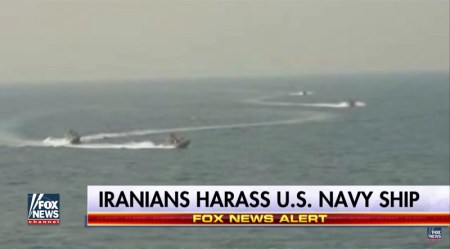
Back to Iran, where a top admiral, Ali Fadavi, said that the US lacks the power to confront Iran militarily. He backed that up by having four Iranian naval speedboats harass US naval ships in the Persian Gulf.

2026Four armed speedboats of Iran’s Islamic Revolutionary Guards Corps harass the US Navy destroyer USS Nitze, on August 24, 2016. (Image source: Fox News video screenshot)

Alon Ben David, chief military correspondent for Israeli TV Channel 10 News, wrote that American foreign policy is turning Iran into a world power by allowing it free range to act in Syria and Yemen, and even having the Obama Administration allow Iran to supply and support a Shi’ite militia taking part in the battle for Mosul.

The acts of global aggression are all the result of an American policy to do little or nothing to stop other actors from strutting the global stage in a dangerous and shifting world.

Many countries evidently believe that America’s role in recent years has been one of damaging everything it touches — or does not touch — leaving them nervously sitting on the sidelines, criticizing what they perceive as the mistakes of others. The reality is that the actors who are replacing a once powerful and influential America are malevolently reshaping both the Middle East and Asia in their own image.

The result has not been a more peaceful world but one in which the vacuum left by America vacating strategically important areas is rapidly being filled by troublesome power-players that leave countries once dependent on US protection feeling increasingly vulnerable.

The consequences of inaction can only soon be damaging to US interests at home as well as abroad.

Column One: From Yemen to Turtle Bay

October 14, 2016

Column One: From Yemen to Turtle Bay, Jerusalem Post, Caroline Glick, October 13, 2016

sana-yemen


As far as Obama is concerned, Iran is a partner, not an adversary.

****************************

Off the coast of Yemen and at the UN Security Council we are seeing the strategic endgame of Barack Obama’s administration. And it isn’t pretty.

Since Sunday, Iran’s Houthi proxies in Yemen have attacked US naval craft three times in the Bab al-Mandab, the narrow straits at the mouth of the Red Sea. The Bab al-Mandab controls maritime traffic in the Red Sea, and ultimately controls the Suez Canal.

Whether the Iranians directed these assaults or simply green-lighted them is really beside the point. The point is that these are Iranian strikes on the US. The Houthis would never have exposed themselves to US military retaliation if they hadn’t been ordered to do so by their Iranian overlords.

The question is why has Iran chosen to open up an assault on the US? The simple answer is that Iran has challenged US power at the mouth of the Red Sea because it believes that doing so advances its strategic aims in the region.

Iran’s game is clear enough. It wishes to replace the US as the regional hegemon, at the US’s expense.

Since Obama entered office nearly eight years ago, Iran’s record in advancing its aims has been one of uninterrupted success.

Iran used the US withdrawal from Iraq as a means to exert its full control over the Iraqi government. It has used Obama’s strategic vertigo in Syria as a means to exert full control over the Assad regime and undertake the demographic transformation of Syria from a Sunni majority state to a Shi’ite plurality state.

In both cases, rather than oppose Iran’s power grabs, the Obama administration has welcomed them. As far as Obama is concerned, Iran is a partner, not an adversary.

Since like the US, Iran opposes al-Qaida and ISIS, Obama argues that the US has nothing to fear from the fact that Iranian-controlled Shiite militias are running the US-trained Iraqi military.

So, too, he has made clear that the US is content to stand by as the mullahs become the face of Syria.

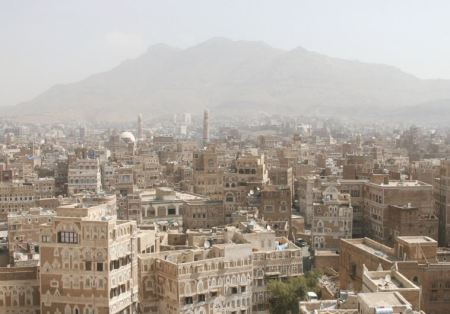
In Yemen, the US position has been more ambivalent. In late 2014, Houthi rebel forces took over the capital city of Sanaa. In March 2015, the Saudis led a Sunni campaign to overthrow the Houthi government. In a bid to secure Saudi support for the nuclear agreement it was negotiating with the Iranians, the Obama administration agreed to support the Saudi campaign. To this end, the US military has provided intelligence, command and control guidance, and armaments to the Saudis.

Iran’s decision to openly assault US targets then amounts to a gamble on Tehran’s part that in the twilight of the Obama administration, the time is ripe to move in for the kill in Yemen. The Iranians are betting that at this point, with just three months to go in the White House, Obama will abandon the Saudis, and so transfer control over Arab oil to Iran.

For with the Strait of Hormuz on the one hand, and the Bab al-Mandab on the other, Iran will exercise effective control over all maritime oil flows from the Arab world.

It’s not a bad bet for the Iranians, given Obama’s consistent strategy in the Middle East.

Obama has never discussed that strategy.

Indeed, he has deliberately concealed it. But to understand the game he has been playing all along, the only thing you need to do listen to his foreign policy soul mate.

According to a New York Times profile published in May, Obama’s deputy national security adviser Ben Rhodes is the president’s alter ego. The two men’s minds have “melded.”

Rhodes’s first foreign policy position came in the course of his work for former congressman Lee Hamilton.

In 2006, then-president George W. Bush appointed former secretary of state James Baker and Hamilton to lead the Iraq Study Group. Bush tasked the group with offering a new strategy for winning the war in Iraq. The group released its report in late 2006.

The Iraq Study Group’s report contained two basic recommendations. First, it called for the administration to abandon Iraq to the Iranians.

The group argued that due to Iran’s opposition to al-Qaida, the Iranians would fight al-Qaida for the US.

The report’s second recommendation related to Israel. Baker, Hamilton and their colleagues argued that after turning Iraq over to Iran, the US would have to appease its Sunni allies.

The US, the Iraq Study Group report argued, should simultaneously placate the Sunnis and convince the Iranians of its sincerity by sticking it to Israel. To this end, the US should pressure Israel to give the Golan Heights to Syria and give Judea and Samaria to the PLO.

Bush rejected the Iraq Study Group report. Instead he opted to win the war in Iraq by adopting the surge counterinsurgency strategy.

But once Bush was gone, and Rhodes’s intellectual twin replaced him, the Iraq Study Group recommendations became the unstated US strategy in the Middle East.

After taking office, Obama insisted that the US’s only enemy was al-Qaida. In 2014, Obama grudgingly expanded the list to include ISIS.

Obama has consistently justified empowering Iran in Iraq and Syria on the basis of this narrow definition of US enemies. Since Iran is also opposed to ISIS and al-Qaida, the US can leave the job of defeating them both to the Iranians, he has argued.

Obviously, Iran won’t do the US’s dirty work for free. So Obama has paid the mullahs off by giving them an open road to nuclear weapons through his nuclear deal, by abandoning sanctions against them, and by turning his back on their ballistic missile development.

Obama has also said nothing about the atrocities that Iranian-controlled militia have carried out against Sunnis in Iraq and has stopped operations against Hezbollah.

As for Israel, since his first days in office, Obama has been advancing the Iraq Study Group’s recommendations. His consistent, and ever escalating condemnations of Israel, his repeated moves to pick fights with Jerusalem are all of a piece with the group’s recommended course of action. And there is every reason to believe that Obama intends to make good on his threats to cause an open rupture in the US alliance with Israel in his final days in office.

Prime Minister Benjamin Netanyahu’s phone call with Secretary of State John Kerry on Saturday night made this clear enough. In the course of their conversation, Netanyahu reportedly asked Kerry if Obama intended to enable an anti-Israel resolution to pass in the UN Security Council after the presidential election next month. By refusing to rule out the possibility, Kerry all but admitted that this is in fact Obama’s intention.

And this brings us back to Iran’s assaults on US ships along the coast of Yemen.

Early on Sunday morning, the US responded to the Houthi/Iranian missile assaults by attacking three radar stations in Houthi-controlled territory. The nature of the US moves gives credence to the fear that the US will surrender Yemen to Iran.

This is so for three reasons. First, the administration did not allow the USS Mason destroyer to respond to the sources of the missile attack against it immediately. Instead, the response was delayed until Obama himself could determine how best to “send a message.”

That is, he denied US forces the right to defend themselves.

Second, it is far from clear that destroying the radar stations will inhibit the Houthis/Iranians.

It is not apparent that radar stations are necessary for them to continue to assault US naval craft operating in the area.

Finally, the State Department responded to the attack by reaching out to the Houthis. In other words, the administration is continuing to view the Iranian proxy is a legitimate actor rather than an enemy despite its unprovoked missile assaults on the US Navy.

Then there is the New York Times’ position on Yemen.

The Times has repeatedly allowed the administration to use it as an advocate of policies the administration itself wishes to adopt. Last week for instance, the Times called for the US to turn on Israel at the Security Council.

On Tuesday, the Times published an editorial calling for the administration to end its military support for the Saudi campaign against the Houthis/Iran in Yemen.

Whereas the Iranian strategy makes sense, Obama’s strategy is nothing less than disastrous.

Although the Iraq Study Group, like Obama, is right that Iran also opposes ISIS, and to a degree, al-Qaida, they both ignored the hard reality that Iran also views the US as its enemy. Indeed, the regime’s entire identity is tied up in its hatred for the US and its strategic aim of destroying America.

Obama is not the only US president who has sought to convince the Iranians to abandon their hatred for America. Every president since 1979 has tried to convince the mullahs to abandon their hostility. And just like all of his predecessors, Obama has failed to convince them.

What distinguishes Obama from his predecessors is that he has based US policy on a deliberate denial of the basic reality of Iranian hostility. Not surprisingly, the Iranians have returned his favor by escalating their aggression against America.

The worst part about Obama’s strategy is that it is far from clear that his successor will be able to improve the situation.

If Hillary Clinton succeeds him, his successor is unlikely to even try. Not only has Clinton embraced Obama’s policies toward Iran.

Her senior advisers are almost all Obama administration alumni. Wendy Sherman, the leading candidate to serve as her secretary of state, was Obama’s chief negotiator with the Iranians.

If Donald Trump triumphs next month, assuming he wishes to reassert US power in the region, he won’t have an easy time undoing the damage that Obama has caused.

Time has not stood still as the US has engaged in strategic dementia. Not only has Iran been massively empowered, Russia has entered the Middle East as a strategic spoiler.

Moreover, since 2001, the US has spent more than a trillion dollars on its failed wars in the Middle East. That investment came in lieu of spending on weapons development. Today Russia’s S-400 anti-aircraft missiles in Syria reportedly neutralize the US’s air force.

US naval craft in the Bab al-Mandab have little means to defend themselves against missile strikes.

The US’s trillion-dollar investment in the F-35 fighter jet has tethered its air wings to a plane that has yet to prove its capabilities, and may never live up to expectations.

Israel is justifiably worried about the implications of Obama’s intention to harm it at the UN.

But the harm Israel will absorb at the UN is nothing in comparison to the long-term damage that Obama’s embrace of the Iraq Study Group’s disastrous strategic framework has and will continue to cause Israel, the US and the entire Middle East.

Obama’s baffling swan song

September 23, 2016

Obama’s baffling swan song, Israel Hayom, David M. Weinberg, September 23, 2016

In his preachy, philosophical and snooty address to the U.N. General Assembly on Wednesday, Obama expressed deep disappointment with the world. Alas, it seems peoples and nations are just not sophisticated enough to comprehend his sage sermonizing, smart enough to follow his enlightened example, or deep enough to understand his perfect policies.

It falls to Congress and the next president to redirect U.S. policy and hopefully base it less on whimsical, wayward beliefs and more on a hard-nosed, forceful reassertion of Western interests.

************************

U.S. President Barack Obama sang his swan song this week at the United Nations, and seemed baffled by the stubborn refusal of the world to reform itself in his image and on his say-so.

How can there still be “deep fault lines in the international order,” Obama wondered aloud, with “societies filled with uncertainty and unease and strife?”

Shouldn’t his identity as a man “made up of flesh and blood and traditions and cultures and faiths from a lot of different parts of the world” have served as a shining and irresistible example of blended global peace? How can it be that, after eight years of his visionary leadership, peoples everywhere aren’t marching to his tune of self-declared superior “moral imagination”?

It is indeed a “paradox,” Obama declared.

In his preachy, philosophical and snooty address to the U.N. General Assembly on Wednesday, Obama expressed deep disappointment with the world. Alas, it seems peoples and nations are just not sophisticated enough to comprehend his sage sermonizing, smart enough to follow his enlightened example, or deep enough to understand his perfect policies.

Why does the world not snap to order as he imperiously wishes and drool in his presence?

The answer to these questions lies in the main thing missing from Obama’s U.N. address and indeed from his entire presidency: a willingness to project power.

From day one, Obama has made it clear he rejects the traditional and time-tested hard power tools of statecraft. He abjures the use of military force and other forms of raw American power. He is willing to “speak out forcefully” — how courageous and decisive of him! — but that’s it.

Obama is ashamed of America’s “overbearing” record of decisive global leadership in past. Even in this final U.N. speech, he was apologizing for American mega-wealth, “soulless capitalism,” “unaccountable mercantilist policies,” insufficient foreign assistance, and “strongman” pushing of its liberal democratic preferences.

This leaves America shorn of its ability to actually shape the world in the fine directions Obama desires. All that is left is Obama’s exhortations for brotherhood in his image, declarations that flow so naturally from his deeply narcissistic soul.

The words “enemy, “threat” or “adversary” do not appear even once in Obama’s 5,600-word address. They are not part of his lexicon, nor are concepts like “victory” for the West or “beating” the bad guys. He won’t even names foes, such as “radical Islam” or “Islamist terror.”

All this high-minded intellectualizing, self-doubt and equivocation leave the U.S. with little ability to actually drive towards a more ordered world and provide a modicum of global security.

Instead, we have only Obama’s “belief” that Russia’s imperialist moves in Ukraine and Syria, China’s power grabs in Asia, and Iran’s hegemonic trouble-making in the Middle East (and by inference, Israel’s settlement policies in Judea and Samaria) will “ultimately backfire.”

Obama has many such unsubstantiated and illusory “beliefs.” It is very important for him to tell us what he “believes,” and he does so repeatedly. Clearly, he believes in the overwhelming potency of his own beliefs, despite the global security collapse. In fact, the U.N. speech reads like chapter one of the expected Obama memoirs, which surely will be filled with more inane “beliefs” and other ostentation.

Obama has only a short time left to act on his beliefs. At the moment, it seems his beliefs are being expressed mainly through repeated cash transfers of billions of dollars to the Islamic Republic of Iran.

According to testimony given this week to the U.S. Senate Subcommittee on National Security and International Trade and Finance by former Undersecretary of Defense Professor Eric Edelman, Iran may have received $33.6 billion in cash from the U.S. over the past two years, as well as the $1.3 billion that was flown to Tehran in January and February this year.

Basing his comments on research by the Foundation for Defense of Democracies, by Claudia Rosett of the Independent Women’s Forum, and by JINSA’s Gemunder Center Iran Task Force, Edelman noted that Iran has no incentive to discontinue the dangerous behavior that led to it being paid.

“It was only half-jokingly that a reporter asked the State Department spokesman last month whether the United States still owed Iran 13 cents in interest and was it holding onto the small change for leverage. Due to the administration’s actions, that may be the only leverage the Obama administration has left,” Edelman said.

It falls to Congress and the next president to redirect U.S. policy and hopefully base it less on whimsical, wayward beliefs and more on a hard-nosed, forceful reassertion of Western interests.

Iran: No Range Limit for Our New Ballistic Missiles

August 29, 2016

Iran: No Range Limit for Our New Ballistic Missiles, Clarion Project, Meira Svirski, August 29, 2016

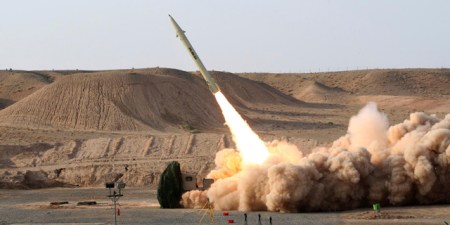
Iran-Missile-HP_9An Iranian missile test (Photo: © Reuters)

Iran has successfully played America as the fool, challenging the U.S. to stand up to its belligerence. Every time America backs down, by either making excuses for the Islamic Republic (i.e., by redefining the deal) or ignoring their latest outrage, Iran becomes more empowered.

Sanctions relief let the Iranian genie out of the bottle. Now, the terror-supporting and oppressive regime is taking its place on the world stage unrestrained and unopposed.

********************

The Iranian defense minister recently pronounced that the Islamic Republic has “no limit for the range” of the ballistic missiles it is developing.

In making the pronouncement, General Hossein Dehqan also said that Iran is now on par with world standards for most of its weapons and military equipment, specifically, that “production of the national individual weapons and efforts to improve the quality and precision-striking power of ballistic missiles are among the defense ministry’s achievements…”

One of the advanced weapons Iran has developed is a ballistic missile that deploys multiple warheads against a single target. As the government-aligned Fars News Agency reported, “This makes for an efficient area attack weapon.”

(Never mind that just three months ago, that the state-owned IranianPress TV announced that “all these advancements on the military level are only for defensive reasons.”)

In addition, Iran has now deployed the long-awaited Russian-made, long-range S-300 missile system. The system was deployed to protect the country’s Fordo nuclear facility, which the commander of Iran’s air force calls paramount “in all circumstances.”

Western officials, who tried to block the delivery of the missile system, said that once in place, the S-300 would essentially eliminate the military option to stop Iran from obtaining nuclear weapons.

The nuclear deal made with Iran and the world powers was sold to the public as a way to contain not just Iran’s nuclear weapons program, but its ballistic missile program as well.

Ballistic missiles are mainly used to deliver nuclear warheads. Under the terms of the agreement we were told that the current UN restrictions on Iran’s ballistic missile program would remain in effect for eight years, including forbidding Iran from testing of ballistic missiles.

Less than two months after the deal was formalized, a senior figure in the Iranian Revolutionary Guards Corps (IRGC), Brigadier General Amirali Hajizadeh, announced, “Some wrongly think Iran has suspended its ballistic missile programs in the last two years and has made a deal on its missile program … We will have a new ballistic missile test in the near future that will be a thorn in the eyes of our enemies.”

As far as the defense minister Dehqan, commenting about the restrictions, he said, “To follow our defense programs, we don’t ask permission from anyone.”

After the first ballistic missile test conducted by Iran after the agreement was made, the U.S. administration backtracked, saying that the test was really not a violation of the nuclear agreement but there were “strong indications” that the test violated UN restrictions.

The second ballistic missile test came as U.S. Vice President Joe Biden was visiting Israel. Painted on the two missiles (which had the capability of reaching the Jewish state) were written the word in Hebrew, “Israel should be wiped out.”

Hajizadeh said at the time, “The 1,240-mile range of our missiles is to confront the Zionist regime. IRNA, Iran’s state news agency, reported the head of the Islamic Revolutionary Guards Corps as saying the test had Iran’s enemies “shivering from the roar” of the missiles.

For his part, Biden said at the time, the U.S. would “act” if Iran broke the nuclear agreements.

Judging from its lack of action, the U.S. ostensibly does not count this as a violation of the agreement, despite clear evidence to the contrary.

Since the signing of the nuclear agreement Iran has engaged in aprovocative “cat and mouse” game with the U.S.

In addition, to the ballistic missile tests, since signing the agreement:

●      In September, Iran simulated a missile attack on a US aircraft carrier in an agitprop video titled “If Any War happens.”

●      In October, just three days after one of the ballistic tests, Iranian state TV aired unprecedented footage of an underground missile base.

●      In December, Iran tested rockets with live fire within 1,500 yards of American warships in the Strait of Hormuz

●      In January, Iran test-fired an upgraded surface-to surface cruise missile in a new set of wargames code-named Velayat-94

●      In January, an unarmed Iranian surveillance drone flew near U.S. and French aircraft carriers in the Gulf, managing to take “precise” photos while the ship was involved in an ongoing naval drill. An Iranian submarine was also detected in close proximity to the aircraft carriers.

●      In January, Iran captured 10 U.S. sailors whose boat had strayed into Iranian territorial waters. The soldiers were humiliated and held for 15 hours. Iran has since used the incident to mocked America in videos and plays.

“Without understanding Iranian culture, it is impossible to understand what is going on,” said Harold Rhode, an expert on Islamic culture who worked for the Pentagon for 28 years, in an interview with The Algemeiner. “Nothing is in and of itself. The way negotiations work among Iranians is that an agreement as we understand it means nothing. It is nothing more than a step along the way to getting what they want.”

“From an Iranian cultural point of view, at all times there is a balance — ‘Are you giving it or are you getting it?’ … It’s simply domination; it’s simply power.”

Iran has successfully played America as the fool, challenging the U.S. to stand up to its belligerence. Every time America backs down, by either making excuses for the Islamic Republic (i.e., by redefining the deal) or ignoring their latest outrage, Iran becomes more empowered.

Sanctions relief let the Iranian genie out of the bottle. Now, the terror-supporting and oppressive regime is taking its place on the world stage unrestrained and unopposed.

Humor |Navy to build USS Thanks Obama for deployment to every disaster

August 1, 2016

Navy to build USS Thanks Obama for deployment to every disaster, Duffel Blog, August 1, 2016

USS Obama

WASHINGTON — The Navy announced today it would build and commission the USS Thanks Obama, a new frigate that will be used solely for rapid deployment to disasters around the world.

“We want to honor our president and thank him for all his hard work,” said Navy Secretary Ray Mabus. “While at the same time, fielding a ship that is more than capable of deploying to hotspots he has sternly tweeted about.”

The planned ship will be an updated design of the Littoral Combat Ship — which many view as one of the best ships in the Navy — though it will have integrated solar panels as its main power source. The USS Thanks Obama will also be put on the water long before its ready and will be billions over budget, in keeping with both Obama administration and Navy tradition.

The Thanks Obama will also have a more modern galley filled with vegan options, a gym that plays “Let’s Move” videos on repeat, and a medical facility with state-of-the-art waiting rooms.

Mabus also said it would be the first ship equipped with a magazine of six auxiliary captains onboard, for rapid firing and replacement.


Iranian Ayatollah Shirazi: America Is No Longer What It Used to Be; Iran Has Global Final Say

May 23, 2016

Iranian Ayatollah Shirazi: America Is No Longer What It Used to Be; Iran Has Global Final Say, MEMRI-TV via YouTube, May 23, 2016

(You should probably turn the audio off; someone in the background is attempting, poorly, a simultaneous translation. — DM)

https://www.youtube.com/watch?v=8BdlosMQoF8

The blurb beneath the video states,

Qom-Based Iranian Ayatollah Naser Makarem Shirazi said in an interview with Lebanese channel Mayadeen TV that the U.S. and Britain are no longer what they used to be and that “Iran now has the final say in the progress of events in the world.” In light of the progress of Iranian ideology, Ayatollah Shirazi said, it is “somewhat realistic” to say that “one of these days we shall hear the azan call to prayer in America.” Ayatollah Shirazi accused the U.S. of trying to ignite a sectarian war in the region as an alternative to the lifted sanctions. The interview aired on May 19.

Syrian Opposition Official: West Responsible For Assad Remaining In Power; U.S. Enabled Russia To Become Main Player In Syria Crisis

May 19, 2016

Syrian Opposition Official: West Responsible For Assad Remaining In Power; U.S. Enabled Russia To Become Main Player In Syria Crisis, MEMRI, May 18, 2016

Khaled Khoja, who served as president of the National Coalition for Syrian Revolutionary and Opposition Forces until March 2016, gave an interview to the London-based Saudi daily Al-Sharq Al-Awsat on April 17, 2016, in which he harshly attacked the international community and particularly the U.S. Khoja argued that the U.S. never desired regime change in Syria and therefore did not take a decisive stand against Bashar Al-Assad despite his many crimes, and did not significantly support the Syrian opposition. According to him, the Americans showed apathy regarding the crisis, enabling Russia to fill the vacuum that they had created in a way that suited Russian interests. He added that the purpose of American military aid to the Kurds was to create a Kurdish canton, which would effectively lead to the splintering of Syria. Khoja stressed that the Syrian High Negotiations Committee remains insistent that the first step is to establish a transitional governing body, and only then can a new constitution, elections, and other topics be addressed.

It should be mentioned that the interview was given prior to the April 19 announcement by the head of the Syrian High Negotiations Committee, Riyad Hijab, that its delegation was suspending its participation in the Geneva talks.

Following are excerpts from the interview:[1]

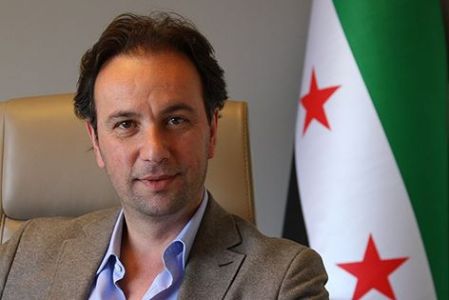
28054Khaled Khoja (image: Zamanalwsl.net)

We Insist On A Serious Transition Of Power And All Authority

Khoja started by mentioning the Syrian High Negotiations Committee’s expectations from the current round of the Geneva talks: “We are here to focus on forming the governing body for the transitional phase. U.S. Special Envoy Staffan de Mistura is continuing his relentless efforts to begin discussing the political transitional phase, which will be based on establishing the ‘governing body,’ as stated in the Geneva announcement, UN Security Council Resolution 2218, and other resolutions. We have been empowered by opposition forces to discuss realizing these goals and we cannot deviate from them. Negotiations today should pick up where Geneva II left off [in February 2014] under the supervision of [former UN Special Envoy to Syria] Lakhdar Brahimi. We must start by forming this [governing] body and then proceeding to discuss the issues of the constitution, the elections, and other matters that fall under the governing body’s authority. Naturally, we have clear views on all these issues, which we will reveal at the appropriate time. I wish to say that we reject the verbal slips replacing the phrase ‘transitional governing body’ with ‘transitional regime’ or ‘transitional government’ and adhere to ‘transitional phase governing body’ and all it implies – meaning a serious transition of power and all authority.”

International And American Support For The Opposition Is Feeble

According to Khoja, “the position of international, and especially American, support for the Syrian opposition is feeble. The sad thing is that the true positions [of the U.S. and international community] regarding Assad is still feeble and vague despite all the evidence marking Bashar Al-Assad as a ‘war criminal,’ and despite the many official American statements that hold him responsible for ongoing killing and acts of slaughter. The lack of international political desire to push for the start of the transitional political phase in Syria has provided Assad and the parties supporting him, whether Iranians or Russians, with room to maneuver, enabling him [Assad] to continue heading the regime and to remain a chaos-creating factor in the region, [a factor] which exacerbates the refugee crisis and uses it as a card for pressuring neighboring countries and Europe, and which exports ISIS and terrorism…”

U.S. Apathy Is A Main Factor In Russia Becoming The Main Player In The Crisis

Khoja said further: “There is clearly American apathy regarding the Middle East, which opens the door for Russia to fill the vacuum left by the Americans… When we speak of the mass extermination of the Syrian people, their expulsion, the use of chemical weapons against them, the documentation of regime crimes in detention centers, forced disappearances, preplanned acts of murder, and red lines that have become green lights – all this causes observers to lose faith in the American position… Had the Americans not created this vacuum, we would not have been in the state we are in today, and Russia would not have become the main player in the crisis, holding the reins of initiative… Politically speaking, I believe the American position has not changed much since the onset of the Syrian revolution… [From the start] there was no real American support for change… The military aid we received [from the U.S.] is no match for the [American] military aid received by the Kurdish [Democratic] Union Party and the Kurdish People’s Defense Unit militias [YPG]. We believe that this aid for the Kurds was meant to create a new Kurdish ‘canton’ and to enforce a new reality as a foregone conclusion. American apathy has turned Syria into a series of ‘cantons’. The ‘Southern Canton,’ which is apart from the ‘Northern Canton,’ the ‘Kurdish Canton,’ and the ‘Alawi Canton.’ We cannot discount the possibility that as part of the political process, we will see a strengthening of [the phenomenon] of these cantons, but we will absolutely not agree to this…”

Syria Cannot Remain A Group Of Cantons In The Medium And Long Term

Khoja said that during the second round of negotiations there was talk of a federal solution that was “marketed by the Americans, the Russians, and UN Special Envoy de Mistura, who spoke openly and explicitly in one press conference on the topic of federation. Except that he did not discuss this issue with us, but rather only with other parties. The Russians did not hide their support for the federal solution and in my opinion, there is a serious attempt to create facts on the ground in Syria in order to strengthen the ‘canton’ situation.

“Any international solution, regardless of which parties promote it, cannot impose a situation that the Syrian people do not agree to. It is possible that the current situation will continue in the near future, but not in the medium and long term. The proof of this is that in the 1920s, the French tried to establish four statelets in Syria, but they only lasted a few years.”


Endnotes:


[1] Al-Sharq Al-Awsat (London), April 17, 2016.

President Failure’s Smart Diplomacy

May 5, 2016

President Failure’s Smart Diplomacy, Bill Whittle via Truth Revolt via YouTube, May 5, 2016